Transcriber’s Notes
The cover image was provided by the transcriber and is placed in the public domain.
Punctuation has been standardized.
Most of the non-common abbreviations used to save space in printing have been expanded to the non-abbreviated form for easier reading. Abbreviations without clear meanings have been left unchanged.
Most common abbreviations have been expanded in tool-tips for screen-readers and may be seen by hovering the mouse over the abbreviation.
This book was written in a period when many words had not become standardized in their spelling. Words may have multiple spelling variations or inconsistent hyphenation in the text. These have been left unchanged unless indicated with a Transcriber’s Note.
Index references have not been checked for accuracy.
The symbol ‘‡’ indicates the description in parenthesis has been added to an illustration. This may be needed if there is no caption or if the caption does not describe the image adequately.
Footnotes are identified in the text with a superscript number and are shown immediately below the paragraph in which they appear.
Transcriber’s Notes are used when making corrections to the text or to provide additional information for the modern reader. These notes are identified by ♦♠♥♣ symbols in the text and are shown immediately below the paragraph in which they appear.
UNDER THE EDITORSHIP OF
The Rev. SAMUEL ROLLES DRIVER, D.D.
Regius Professor of Hebrew, Oxford
The Rev. ALFRED PLUMMER, M.A., D.D.
Late Master of University College, Durham
AND
The Rev. CHARLES AUGUSTUS BRIGGS, D.D.
Professor of Theological Encyclopædia and Symbolics
Union Theological Seminary, New York
The International Critical Commentary
On the Holy Scriptures of the Old and New Testaments
EDITORS’ PREFACE
THERE are now before the public many Commentaries, written by British and American divines, of a popular or homiletical character. The Cambridge Bible for Schools, the Handbooks for Bible Classes and Private Students, The Speaker’s Commentary, The Popular Commentary (Schaff), The Expositor’s Bible, and other similar series, have their special place and importance. But they do not enter into the field of Critical Biblical scholarship occupied by such series of Commentaries as the Kurzgefasstes exegetisches Handbuch zum Alten Testament; De Wette’s Kurzgefasstes exegetisches Handbuch zum Neuen Testament; Meyer’s Kritisch-exegetischer Kommentar; Keil and Delitzsch’s Biblischer Commentar über das Alte Testament; Lange’s Theologisch-homiletisches Bibelwerk; Nowack’s Handkommentar zum Alten Testament; Holtzmann’s Handkommentar zum Neuen Testament Several of these have been translated, edited, and in some cases enlarged and adapted, for the English-speaking public; others are in process of translation. But no corresponding series by British or American divines has hitherto been produced. The way has been prepared by special Commentaries by Cheyne, Ellicott, Kalisch, Lightfoot, Perowne, Westcott, and others; and the time has come, in the judgment of the projectors of this enterprise, when it is practicable to combine British and American scholars in the production of a critical, comprehensive Commentary that will be abreast of modern biblical scholarship, and in a measure lead its van.
Messrs. Charles Scribner’s Sons of New York, and Messrs. T. & T. Clark of Edinburgh, propose to publish such a series of Commentaries on the Old and New Testaments, under the editorship of Prof. C. A. Briggs, D.D., D.Litt., in America, and of Prof. S. R. Driver, D.D., D.Litt., for the Old Testament, and the Rev. Alfred Plummer, D.D., for the New Testament, in Great Britain.
The Commentaries will be international and inter-confessional, and will be free from polemical and ecclesiastical bias. They will be based upon a thorough critical study of the original texts of the Bible, and upon critical methods of interpretation. They are designed chiefly for students and clergymen, and will be written in a compact style. Each book will be preceded by an Introduction, stating the results of criticism upon it, and discussing impartially the questions still remaining open. The details of criticism will appear in their proper place in the body of the Commentary. Each section of the Text will be introduced with a paraphrase, or summary of contents. Technical details of textual and philological criticism will, as a rule, be kept distinct from matter of a more general character; and in the Old Testament the exegetical notes will be arranged, as far as possible, so as to be serviceable to students not acquainted with Hebrew. The History of Interpretation of the Books will be dealt with, when necessary, in the Introductions, with critical notices of the most important literature of the subject. Historical and Archæological questions, as well as questions of Biblical Theology, are included in the plan of the Commentaries, but not Practical or Homiletical Exegesis. The Volumes will constitute a uniform series.
The International Critical Commentary
ARRANGEMENT OF VOLUMES AND AUTHORS
THE OLD TESTAMENT
GENESIS. The Rev. John Skinner, D.D., Principal and Professor of Old Testament Language and Literature, College of Presbyterian Church of England, Cambridge, England.
[Now Ready.
EXODUS. The Rev. A. R. S. Kennedy, D.D., Professor of Hebrew, University of Edinburgh.
LEVITICUS. J. F. Stenning, M.A., Fellow of Wadham College, Oxford.
NUMBERS. The Rev. G. Buchanan Gray, D.D., Professor of Hebrew, Mansfield College, Oxford.
[Now Ready.
DEUTERONOMY. The Rev. S. R. Driver, D.D., D.Litt., Regius Professor of Hebrew, Oxford.
[Now Ready.
JOSHUA. The Rev. George Adam Smith, D.D., LL.D., Professor of Hebrew, United Free Church College, Glasgow.
JUDGES. The Rev. George Moore, D.D., LL.D., Professor of Theology, Harvard University, Cambridge, Mass.
[Now Ready.
SAMUEL. The Rev. H. P. Smith, D.D., Professor of Old Testament Literature and History of Religion, Meadville, Pa.
[Now Ready.
KINGS. The Rev. Francis Brown, D.D., D.Litt., LL.D., President and Professor of Hebrew and Cognate Languages, Union Theological Seminary, New York City.
CHRONICLES. The Rev. Edward L. Curtis, D.D., Professor of Hebrew, Yale University, New Haven, Conn.
[Now Ready.
EZRA AND NEHEMIAH. The Rev. L. W. Batten, Ph.D., D.D., Rector of St. Mark’s Church, New York City, sometime Professor of Hebrew, P. E. Divinity School, Philadelphia.
PSALMS. The Rev. Charles A. Briggs, D.D., D.Litt., Graduate Professor of Theological Encyclopædia and Symbolics, Union Theological Seminary, New York.
[2 volumes. Now Ready.
PROVERBS. The Rev. C. H. Toy, D.D., LL.D., Professor of Hebrew, Harvard University, Cambridge, Mass.
[Now Ready.
JOB. The Rev. S. R. Driver, D.D., D.Litt., Regius Professor of Hebrew, Oxford.
ISAIAH. Chapters I‒XXXIX. The Rev. G. Buchanan Gray, D.D., Professor of Hebrew, Mansfield College, Oxford.
ISAIAH. Chapters XL‒LXVI. The Rev. A. S. Peake, M.A., D.D., Dean of the Theological Faculty of the Victoria University and Professor of Biblical Exegesis in the University of Manchester, England.
JEREMIAH. The Rev. A. F. Kirkpatrick, D.D., Dean of Ely, sometime Regius Professor of Hebrew, Cambridge, England.
EZEKIEL. The Rev. G. A. Cooke, M.A., Oriel Professor of the Interpretation of Holy Scripture, University of Oxford, and the Rev. Charles F. Burney, D.Litt., Fellow and Lecturer in Hebrew, St. John’s College, Oxford.
DANIEL. The Rev. John P. Peters, Ph.D., D.D., sometime Professor of Hebrew, P. E. Divinity School, Philadelphia, now Rector of St. Michael’s Church, New York City.
AMOS AND HOSEA. W. R. Harper, Ph.D., LL.D., sometime President of the University of Chicago, Illinois.
[Now Ready.
MICAH TO HAGGAI. Prof. John P. Smith, University of Chicago; Prof. Charles P. Fagnani, D.D., Union Theological Seminary, New York; W. Hayes Ward, D.D., LL.D., Editor of The Independent, New York; Prof. Julius A. Bewer, Union Theological Seminary, New York, and Prof. H. G. Mitchell, D.D., Boston University.
ZECHARIAH TO JONAH. Prof. H. G. Mitchell, D.D., Prof. John P. Smith and Prof. J. A. Bewer.
ESTHER. The Rev. L. B. Paton, Ph.D., Professor of Hebrew, Hartford Theological Seminary.
[Now Ready.
ECCLESIASTES. Prof. George A. Barton, Ph.D., Professor of Biblical Literature, Bryn Mawr College, Pa.
[Now Ready.
RUTH, SONG OF SONGS AND LAMENTATIONS. Rev. Charles A. Briggs, D.D., D.Litt., Graduate Professor of Theological Encyclopædia and Symbolics, Union Theological Seminary, New York.
THE NEW TESTAMENT
ST. MATTHEW. The Rev. Willoughby C. Allen, M.A., Fellow and Lecturer in Theology and Hebrew, Exeter College, Oxford.
[Now Ready.
ST. MARK. Rev. E. P. Gould, D.D., sometime Professor of New Testament Literature, P. E. Divinity School, Philadelphia.
[Now Ready.
ST. LUKE. The Rev. Alfred Plummer, D.D., sometime Master of University College, Durham.
[Now Ready.
ST. JOHN. The Very Rev. John Henry Bernard, D.D., Dean of St. Patrick’s and Lecturer in Divinity, University of Dublin.
HARMONY OF THE GOSPELS. The Rev. William Sanday, D.D., LL.D., Lady Margaret Professor of Divinity, Oxford, and the Rev. Willoughby C. Allen, M.A., Fellow and Lecturer in Divinity and Hebrew, Exeter College, Oxford.
ACTS. The Rev. C. H. Turner, D.D., Fellow of Magdalen College, Oxford, and the Rev. H. N. Bate, M.A., Examining Chaplain to the Bishop of London.
ROMANS. The Rev. William Sanday, D.D., LL.D., Lady Margaret Professor of Divinity and Canon of Christ Church, Oxford, and the Rev. A. C. Headlam, M.A., D.D., Principal of King’s College, London.
[Now Ready.
CORINTHIANS. The Right Rev. Archbishop Robertson, D.D., LL.D., Lord Bishop of Exeter, the Rev. Alfred Plummer, D.D., and Dawson Walker, D.D., Theological Tutor in the University of Durham.
GALATIANS. The Rev. Ernest D. Burton, D.D., Professor of New Testament Literature, University of Chicago.
EPHESIANS AND COLOSSIANS. The Rev. T. K. Abbott, B.D., D.Litt., sometime Professor of Biblical Greek, Trinity College, Dublin, now Librarian of the same.
[Now Ready.
PHILIPPIANS AND PHILEMON. The Rev. Marvin R. Vincent, D.D., Professor of Biblical Literature, Union Theological Seminary, New York City.
[Now Ready.
THESSALONIANS. The Rev. James E. Frame, M.A., Professor of Biblical Theology, Union Theological Seminary, New York.
THE PASTORAL EPISTLES. The Rev. Walter Lock, D.D., Warden of Keble College and Professor of Exegesis, Oxford.
HEBREWS. The Rev. A. Nairne, M.A., Professor of Hebrew in King’s College, London.
ST. JAMES. The Rev. James H. Ropes, D.D., Bussey Professor of New Testament Criticism in Harvard University.
PETER AND JUDE. The Rev. Charles Bigg, D.D., sometime Regius Professor of Ecclesiastical History and Canon of Christ Church, Oxford.
[Now Ready.
THE EPISTLES OF ST. JOHN. The Rev. E. A. Brooke, B.D., Fellow and Divinity Lecturer in King’s College, Cambridge.
REVELATION. The Rev. Robert H. Charles, M.A., D.D., sometime Professor of Biblical Greek in the University of Dublin.
GENESIS
JOHN SKINNER, D.D.
The International Critical Commentary
A
CRITICAL AND EXEGETICAL
COMMENTARY
ON
GENESIS
BY
JOHN SKINNER, D.D., Honorary M.A. (Cambridge)
PRINCIPAL AND PROFESSOR OF OLD TESTAMENT LANGUAGE AND LITERATURE,
WESTMINSTER COLLEGE, CAMBRIDGE
NEW YORK
CHARLES SCRIBNER’S SONS
1910
TO
MY WIFE
It is a little over six years since I was entrusted by the Editors of “The International Critical Commentary” with the preparation of the volume on Genesis. During that time there has been no important addition to the number of commentaries either in English or in German. The English reader still finds his best guidance in Spurrell’s valuable Notes on the text, Bennett’s compressed but suggestive exposition in the Century Bible, and Driver’s thorough and masterly work in the first volume of the Westminster Commentaries; all of which were in existence when I commenced my task. While no one of these books will be superseded by the present publication, there was still room for a commentary on the more elaborate scale of the “International” series; and it has been my aim, in accordance with the programme of that series, to supply the fuller treatment of critical, exegetical, literary, and archæological questions, which the present state of scholarship demands.
The most recent German commentaries, those of Holzinger and Gunkel, had both appeared before 1904; and I need not say that to both, but especially to the latter, I have been greatly indebted. Every student must have felt that Gunkel’s work, with its æsthetic appreciation of the genius of the narratives, its wider historical horizons, and its illuminating use of mythological and folklore parallels, has breathed a new spirit into the investigation of Genesis, whose influence no writer on the subject can hope or wish to escape. The last-mentioned feature is considerably emphasised in the third edition, the first part of which (1909) was published just too late to be utilised for this volume. That I have not neglected the older standard commentaries of Tuch, Delitzsch, and Dillmann, or less comprehensive expositions like that of Strack, will be apparent from the frequent acknowledgments in the notes. The same remark applies to many books of a more general kind (mostly cited in the list of “Abbreviations”), which have helped to elucidate special points of exegesis.
The problems which invest the interpretation of Genesis are, indeed, too varied and far-reaching to be satisfactorily treated within the compass of a single volume. The old controversies as to the compatibility of the earlier chapters with the conclusions of modern science are no longer, to my mind, a living issue; and I have not thought it necessary to occupy much space with their discussion. Those who are of a different opinion may be referred to the pages of Dr. Driver, where they will find these matters handled with convincing force and clearness. Rather more attention has been given to the recent reaction against the critical analysis of the Pentateuch, although I am very far from thinking that that movement, either in its conservative or its more radical manifestation, is likely to undo the scholarly work of the last hundred and fifty years. At all events, my own belief in the essential soundness of the prevalent hypothesis has been confirmed by the renewed examination of the text of Genesis which my present undertaking required. It will probably appear to some that the analysis is pushed further than is warranted, and that duplicates are discovered where common sense would have suggested an easy reconciliation. That is a perfectly fair line of criticism, provided the whole problem be kept in view. It has to be remembered that the analytic process is a chain which is a good deal stronger than its weakest link, that it starts from cases where diversity of authorship is almost incontrovertible, and moves on to others where it is less certain; and it is surely evident that when the composition of sources is once established, the slightest differences of representation or language assume a significance which they might not have apart from that presumption. That the analysis is frequently tentative and precarious is fully acknowledged; and the danger of basing conclusions on insufficient data of this kind is one that I have sought to avoid. On the more momentous question of the historical or legendary character of the book, or the relation of the one element to the other, opinion is likely to be divided for some time to come. Several competent Assyriologists appear to cherish the conviction that we are on the eve of fresh discoveries which will vindicate the accuracy of at least the patriarchal traditions in a way that will cause the utmost astonishment to some who pay too little heed to the findings of archæological experts. It is naturally difficult to estimate the worth of such an anticipation; and it is advisable to keep an open mind. Yet even here it is possible to adopt a position which will not be readily undermined. Whatever triumphs may be in store for the archæologist,—though he should prove that Noah and Abraham and Jacob and Joseph are all real historical personages,—he will hardly succeed in dispelling the atmosphere of mythical imagination, of legend, of poetic idealisation, which are the life and soul of the narratives of Genesis. It will still be necessary, if we are to retain our faith in the inspiration of this part of Scripture, to recognise that the Divine Spirit has enshrined a part of His Revelation to men in such forms as these. It is only by a frank acceptance of this truth that the Book of Genesis can be made a means of religious edification to the educated mind of our age.
As regards the form of the commentary, I have endeavoured to include in the large print enough to enable the reader to pick up rapidly the general sense of a passage; although the exigencies of space have compelled me to employ small type to a much larger extent than was ideally desirable. In the arrangement of footnotes I have reverted to the plan adopted in the earliest volume of the series (Driver’s Deuteronomy), by putting all the textual, grammatical, and philological material bearing on a particular verse in consecutive notes running concurrently with the main text. It is possible that in some cases a slight embarrassment may result from the presence of a double set of footnotes; but I think that this disadvantage will be more than compensated to the reader by the convenience of having the whole explanation of a verse under his eye at one place, instead of having to perform the difficult operation of keeping two or three pages open at once.
In conclusion, I have to express my thanks, first of all, to two friends by whose generous assistance my labour has been considerably lightened: to Miss E. I. M. Boyd, M.A., who has rendered me the greatest service in collecting material from books, and to the Rev. J. G. Morton, M.A., who has corrected the proofs, verified all the scriptural references, and compiled the Index. My last word of all must be an acknowledgment of profound and grateful obligation to Dr. Driver, the English Editor of the series, for his unfailing interest and encouragement during the progress of the work, and for numerous criticisms and suggestions, especially on points of philology and archæology, to which in nearly every instance I have been able to give effect.
JOHN SKINNER.
Cambridge,
April 1910.
○ List of Abbreviations
○ Introduction
○ § 1. Introductory: Canonical Position of the Book—its general Scope—and Title
A. Nature of the Tradition.
○ § 2. History or Legend?
○ § 3. Myth and Legend—Foreign Myths—Types of mythical Motive
○ § 4. Historical Value of the Tradition
○ § 5. Preservation and Collection of the Traditions
B. Structure and Composition of the Book.
○ § 6. Plan and Divisions
○ § 7. The Sources of Genesis
○ § 8. The collective Authorship of Yahwist and Elohist
○ § 9. Characteristics of Yahwist and Elohist—their Relation to Literary Prophecy
○ § 10. Date and Place of Origin—Redaction of Jehovist
○ § 11. The Priestly Code and the Final Redaction
○ Commentary
Extended Notes:—
○ The Divine Image in Man
○ The Hebrew and Babylonian Sabbath
○ Babylonian and other Cosmogonies
○ The Site of Eden
○ The ‘Protevangelium’
○ The Cherubim
○ Origin and Significance of the Paradise Legend
○ Origin of the Cain Legend
○ The Cainite Genealogy
○ The Chronology of Chapter 5, etc.
○ The Deluge Tradition
○ Noah’s Curse and Blessing
○ The Babel Legend
○ Chronology of 1110 ff.
○ Historic Value of Chapter 14
○ Circumcision
○ The Covenant-Idea in Priestly-Code
○ Destruction of the Cities of the Plain
○ The Sacrifice of Isaac
○ The Treaty of Gilead and its historical Setting
○ The Legend of Peniel
○ The Sack of Shechem
○ The Edomite Genealogies
○ The Degradation of Reuben
○ The Fate of Simeon and Levi
○ The “Shiloh” Prophecy of 4910
○ The Zodiacal Theory of the Twelve Tribes
Index—
○ I. English
○ II. Hebrew
1. SOURCES (see pages xxxiv ff.), TEXTS, AND VERSIONS.
| E | Elohist, or Elohistic Narrative. |
| J | Yahwist, or Yahwistic Narrative. |
| JE | Jehovist, or the combined narrative of Yahwist and Elohist. |
| P or PC | The Priestly Code. |
| Pᵍ | The historical kernel or framework of Priestly-Code (see page lvii). |
| Rᴱ | Redactors within the schools of Elohist, Yahwist, and Priestly-Code, respectively. |
| Rᴶ | |
| Rᴾ | |
| Rᴶᴱ | The Compiler of the composite work Jehovist. |
| Rᴶᴱᴾ | The Final Redactor of the Pentateuch. |
| EV[V] | English Version[s] (Authorised or Revised). |
| Jub. | The Book of Jubilees. |
| MT | Massoretic Text. |
| OT | Old Testament. |
| Aq. | Greek Translation of Aquila. |
| Θ | Greek Translation of Theodotion. |
| Σ | Greek Translation of Symmachus. |
| Gr.-Ven. | Codex ‘Græcus Venetus’ (14th or 15th century.). |
| G | The Greek (Septuagint) Version of the Old Testament (edited by A. E. Brooke and N. M‘Lean, Cambridge, 1906). |
| Gᴸ | Lucianic recension of the LXX, edited by Lagarde, Librorum Veteris Testamenti canonicorum pars prior Græce, etc. (1883). |
| GA, B, E, M, etc. | Codices of LXX (see Brooke and M‘Lean, page v.). |
| L | Old Latin Version. |
| S | The Syriac Version (Peshiṭtå). |
| ⅏ | The Samaritan Recension of the Pentateuch (Walton’s ‘London Polyglott’). |
| Tᴼ | The Targum of Onkelos [2nd century A.D.] (edited by Berliner, 1884). |
| Tᴶ | The Targum of Jonathan [8th century A.D.] (edited by Ginsburger, 1903). |
| V | The Vulgate. |
2. COMMENTARIES.
| Ayles | Herbert Henry Baker Ayles, A critical Commentary on Genesis ii. 4‒iii. 25 (1904). |
| Ba[ll] | Charles James Ball, The Book of Genesis: Critical Edition of the Hebrew Text printed in colours exhibiting the composite structure of the book, with Notes (1896). See SBOT. |
| Ben[nett] | William Henry Bennett, Genesis (Century Bible). |
| Calv[in] | Mosis Libri V cum Johannis Calvini Commentariis. Genesis seorsum, etc. (1563). |
| De[litzsch] | Franz Delitzsch, Neuer Commentar über die Genesis (5th edition, 1887). |
| Di[llmann] | Die Genesis. Von der dritten Auflage an erklärt von August Dillmann (6th edition, 1892). The work embodies frequent extracts from earlier editions by Knobel: these are referred to below as “Knobel-Dillmann” |
| Dr[iver] | The Book of Genesis with Introduction and Notes, by Samuel Rolles Driver (7th edition, 1909). |
| Gu[nkel] | Genesis übersetzt und erklärt, von Hermann Gunkel (2nd edition, 1902). |
| Ho[lzinger] | Genesis erklärt, von Heinrich Holzinger (1898). |
| IEz. | Abraham Ibn Ezra († circa 1167). |
| Jer[ome], Qu. | Jerome († 420), Quæstiones sive Traditiones hebraicæ in Genesim. |
| Kn[obel] | August Wilhelm Knobel. |
| Kn.-Di. | See Dillmann. |
| Ra[shi] | Rabbi Shelomoh Yiẓḥaḳi († 1105). |
| Spurrell | George James Spurrell, Notes on the Text of the Book of Genesis (2nd edition, 1896). |
| Str[ack] | Die Genesis übersetzt und ausgelegt, von Hermann Leberecht Strack (2nd edition, 1905). |
| Tu[ch] | Friedrich Tuch, Commentar über die Genesis (2nd edition, 1871). |
3. WORKS OF REFERENCE AND GENERAL LITERATURE.
| Barth, ES | Jakob Barth, Etymologische Studien zum semitischen insbesondere zum hebraischen Lexicon (1893). |
| Barth, NB | Die Nominalbildung in den semitischen Sprachen (1889‒91). |
| Barton, SO | George Aaron Barton, A Sketch of Semitic Origins (1902). |
| B.-D. | Seligmann Baer and Franz Delitzsch, Liber Genesis (1869). The Massoretic Text, with Appendices. |
| BDB | Francis Brown, Samuel Rolles Driver, and Charles Augustus Briggs, A Hebrew and English Lexicon of the Old Testament (1891‒ ). |
| Benz[inger], Arch.² | Immanuel Benzinger, Hebräische Archäologie (2nd edition, 1907). |
| Ber. R. | The Midrash Bereshith Rabba (translated into German by August Wünsche, 1881). |
| Bochart, Hieroz. | Samuel Bochartus, Hierozoicon, sive bipertitum opus de animalibus Sacræ Scripturæ (edited by Rosenmüller, 1793‒96). |
| Bu[dde], Urg. | Karl Budde, Die biblische Urgeschichte (1883). |
| Buhl, GP | Frants Buhl, Geographie des alten Palaestina (1896). |
| Buhl | Geschichte der Edomiter (1893). |
| Burck[hardt] | John Lewis Burckhardt, Notes on the Bedouins and Wahábys. |
| Travels in Syria and the Holy Land. | |
| Che[yne], TB[A]I | Thomas Kelly Cheyne, Traditions and Beliefs of Ancient Israel (1907). |
| CIS | Corpus Inscriptionum Semiticarum (1881‒ ). |
| Cook, Gl. | Stanley Arthur Cook, A Glossary of the Aramaic Inscriptions (1898). |
| Cooke, NSI | George Albert Cooke, A Textbook of North-Semitic Inscriptions (1903). |
| Co[rnill], Einl. | Carl Heinrich Cornill, Einleitung in das Alte Testament (see page xl, note). |
| Co[rnill], Hist. | History of the People of Israel (Translated, 1898). |
| Curtiss, PSR | Samuel Ives Curtiss, Primitive Semitic Religion to-day (1902). |
| Dav[idson] | Andrew Bruce Davidson, Hebrew Syntax. |
| Dav[idson] OTTh. | The Theology of the Old Testament (1904). |
| DB | A Dictionary of the Bible, edited by James Hastings (1898‒1902). |
| Del[itzsch], Hwb. | Friedrich Delitzsch, Assyrisches Handwörterbuch (1896). |
| Del[itzsch], Par. | Wo lag das Paradies? Eine biblisch-assyriologische Studie (1881). |
| Del[itzsch], Prol. | Prolegomena eines neuen hebräisch-aramäischen Wörterbuchs zum Alten Testament (1886). |
| Del[itzsch] | See BA below. |
| Doughty, AD | Charles Montagu Doughty, Travels in Arabia Deserta (1888). |
| Dri[ver], LOT | Samuel Rolles Driver, An Introduction to the Literature of the Old Testament (Revised edition, 1910). |
| Dri[ver], Sam. | Notes on the Hebrew Text of the Books of Samuel (1890). |
| Dri[ver], T. | A Treatise on the use of the Tenses in Hebrew (3rd edition, 1892). |
| EB | Encyclopædia Biblica, edited by Thomas Kelly Cheyne and John Sutherland Black (1899‒1903). |
| EBL | See Hilprecht. |
| Ee[rdmans] |
Bernardus Dirk Eerdmans, Alttestamentliche Studien: i. Die Komposition der Genesis. ii. Die Vorgeschichte Israels. |
| Erman, LAE | Adolf Erman, Life in Ancient Egypt (translated by Helen Mary Tirard, 1894). |
| Erman, Hdbk. | A Handbook of Egyptian Religion (translated by Agnes Sophia Griffith, 1907). |
| Ew[ald], Gr. | Heinrich Ewald, Ausführliches Lehrbuch der hebräischen Sprache des alten Bundes (8th edition, 1870). |
| Ew[ald], HI | History of Israel [English translation, 1871]. |
| Ew[ald], Ant. | Antiquities of Israel [English translation, 1876]. |
| Field | Frederick Field, Origenis Hexaplorum quæ supersunt; sive Veterum Interpretum Græcorum in totum Vetus Testamentum Fragmenta (1875). |
| Frazer, AAO | James George Frazer, Adonis Attis Osiris: Studies in the history of Oriental Religion (1906). |
| Frazer, GB | The Golden Bough; a Study in Magic and Religion (2nd edition, 1900). |
| Frazer | Folklore in the Old Testament (1907). |
| v. Gall, CSt. | August Freiherr von Gall, Altisraelitische Kultstätten (1898). |
| G.-B. | Wilhelm Gesenius’ Hebräisches und aramäisches Handwörterbuch über das Alte Testament (14th edition by Buhl, 1905). |
| Geiger, Urschr. | Abraham Geiger, Urschrift und Uebersetzungen der Bibel in ihrer Abhängigkeit von der innern Entwickelung des Judenthums (1857). |
| Ges[enius], Th. | Wilhelm Gesenius, Thesaurus philologicus criticus Linguæ Hebrææ et Chaldææ Veteris Testamenti (1829‒58). |
| G.-K. | Wilhelm Gesenius’ Hebräische Grammatik, völlig umgearbeitet von Emil Kautzsch (26th edition, 1896) [English translation, 1898]. |
| Glaser, Skizze | Eduard Glaser, Skizze der Geschichte und Geographie Arabiens, ii. (1890). |
| Gordon, ETG | Alexander Reid Gordon, The Early Traditions of Genesis (1907). |
| Gray, HPN | George Buchanan Gray, Studies in Hebrew Proper Names (1896). |
| Gu[nkel], Schöpf. | Hermann Gunkel, Schöpfung und Chaos in Urzeit und Endzeit (1895). |
| Guthe, GI | Hermann Guthe, Geschichte des Volkes Israel (1899). |
| Harrison, Prol. | Jane Ellen Harrison, Prolegomena to the study of Greek Religion (2nd edition, 1908). |
| Hilprecht, EBL | Hermann Vollrat Hilprecht, Explorations in Bible Lands during the 19th century [with the co-operation of Benzinger, Hommel, Jensen, and Steindorff] (1903). |
| Ho[lzinger], Einl. or Hex. |
Heinrich Holzinger, Einleitung in den Hexateuch (1893). |
| Hom[mel], AA | Fritz Hommel, Aufsätze und Abhandlungen arabistisch-semitologischen Inhalts (i‒iii, 1892‒ ). |
| Hom[mel], AHT | The Ancient Hebrew Tradition as illustrated by the Monuments (1897). |
| Hom[mel], AOD | Die altorientalischen Denkmäler und das Alte Testament (1902). |
| Hom[mel], Gesch. | Geschichte Babyloniens und Assyriens (1885). |
| Hom[mel], SA Chrest. | Süd-arabische Chrestomathie (1893). |
| Hupf[eld], Qu. | Hermann Hupfeld, Die Quellen der Genesis und die Art ihrer Zusammensetzung (1853). |
| Jastrow, RBA | Morris Jastrow, The Religion of Babylonia and Assyria (1898). |
| JE | The Jewish Encyclopædia. |
| Je[remias], ATLO² | Alfred Jeremias, Das Alte Testament im Lichte des alten Orients (2nd edition, 1906). |
| Jen[sen], Kosm. | Peter Jensen, Die Kosmologie der Babylonier (1890). |
| KAT² | Die Keilinschriften und das Alte Testament, by Schrader (2nd edition, 1883). |
| KAT3 | Die Keilinschriften und das Alte Testament. Third edition, by Zimmern and Winckler (1902). |
| Kent, SOT | Charles Foster Kent, Narratives of the Beginnings of Hebrew History [Students’ Old Testament] (1904). |
| KIB | Keilinschriftliche Bibliothek, edited by Eberhard Schrader (1889‒ ). |
| Kit[tel], BH | Rudolf Kittel, Biblia Hebraica (Genesis) (1905). |
| Kit[tel], GH | Geschichte der Hebräer (1888‒92). |
| Kön[ig], Lgb. | Friedrich Eduard König, Historisch-kritisches Lehrgebäude der hebräischen Sprache (2 volumes, 1881‒95). |
| Kön[ig], S | Historisch-comparative Syntax der hebräischen Sprache (1897). |
| KS | Emil Kautzsch and Albert Socin, Die Genesis mit aüsserer Unterscheidung der Quellenschriften. |
| Kue[nen], Ges. Abh. | Abraham Kuenen, Gesammelte Abhandlungen (see page xl, note). |
| Kue[nen], Ond. | Historisch-critisch Onderzoek naar het ontstaan en de verzameling van de boeken des Ouden Verbonds (see page xl, note). |
| Lag[arde], Ank. | Paul Anton de Lagarde, Ankündigung einer neuen Ausgabe der griech. Uebersezung des Alte Testament (1882). |
| Lag[arde], Ges. Abh. | Gesammelte Abhandlungen (1866). |
| Lag[arde], Mitth. | Mittheilungen, i‒iv (1884‒91). |
| Lag[arde] | Orientalia, 1, 2 (1879‒80). |
| Lag[arde], Sem. | Semitica, 1, 2 (1878). |
| Lag[arde], Symm. | Symmicta, 2 parts (1877‒80). |
| Lag[arde], OS | Onomastica Sacra (1870). |
| Lane, Lex. | Edward William Lane, An Arabic-English Lexicon (1863‒93). |
| Lane, ME | An Account of the Manners and Customs of the Modern Egyptians (5th edition, 1860). |
| Len[ormant], Or. | François Lenormant, Les Origines de l’histoire, (i‒iii, 1880‒84). |
| Levy, Ch. Wb. | Jacob Levy, Chaldäisches Wörterbuch über die Targumim und Midraschim (3rd edition, 1881). |
| Lidz[barski], Hb. or NSEpigr. | Mark Lidzbarski, Handbuch der nordsemitischen Epigraphik (1898). |
| Lu[ther], INS | See Meyer, INS. |
| Marquart | Josef Marquart, Fundamente israelitischer und jüdischer Geschichte (1896). |
| Meyer, Entst. | Eduard Meyer, Die Entstehung des Judenthums (1896). |
| Meyer, GA¹ | Geschichte des Alterthums (Band i. 1884). |
| Meyer, GA² | Geschichte des Alterthums (2nd edition, 1909). |
| Meyer, INS | Die Israeliten und ihre Nachbarstämme, von Eduard Meyer, mit Beiträgen von Bernhard Luther (1906). |
| Müller, AE | Wilhelm Max Müller, Asien und Europa nach altägyptischen Denkmälern (1893). |
| Nestle, MM | Eberhard Nestle, Marginalien und Materialien (1893). |
| Nö[ldeke], Beitr. | Theodor Nöldeke, Beiträge zur semitischen Sprachwissenschaft (1904). |
| Nö[ldeke], Unters. | Untersuchungen zur Kritik des Alte Testament (1869). |
| OH | Oxford Hexateuch = Carpenter and Harford-Battersby, The Hexateuch (see page xl, note). |
| Oehler, ATTh | Gustav Friedrich Oehler, Theologie des Alten Testaments (3rd edition, 1891). |
| Ols. | Justus Olshausen. |
| Orr, POT | James Orr, The Problem of the Old Testament (1906). |
| OS | See Lagarde. |
| P[ayne] Sm[ith], Thes. | Robert Payne Smith, Thesaurus Syriacus (1879, 1901). |
| Petrie | William Flinders Petrie, A History of Egypt. |
| Pro[cksch] | Otto Procksch, Das nordhebräische Sagenbuch: die Elohimquelle (1906). |
| Riehm, Hdwb. | Eduard Carl August Riehm, Handwörterbuch des biblischen Altertums (2nd edition, 1893‒94). |
| Robinson, BR | Edward Robinson, Biblical Researches in Palestine (2nd edition, 3 volumes, 1856). |
| Sayce, EHH | Archibald Henry Sayce, The Early History of the Hebrews (1897). |
| Sayce, HCM | The Higher Criticism and the Verdict of the Monuments (2nd edition, 1894). |
| SBOT | The Sacred Books of the Old Testament, a critical edition of the Hebrew Text printed in Colours, under the editorial direction of Paul Haupt. |
| Schenkel, BL | Daniel Schenkel, Bibel-Lexicon (1869‒75). |
| Schr[ader], KGF | Eberhard Schrader, Keilinschriften und Geschichtsforschung (1878). |
| Schr[ader] | See KAT and KIB above. |
| Schultz, OTTh | Hermann Schultz, Old Testament Theology (English translation, 1892). |
| Schürer, GJV | Emil Schürer, Geschichte des jüdischen Volkes im Zeitalter Jesu Christi (3rd and 4th editions, 1898‒1901). |
| Schw[ally] | Friedrich Schwally, Das Leben nach dem Tode (1892). |
| Semitische Kriegsaltertümer, i. (1901). | |
| Smend, ATRG | Rudolf Smend, Lehrbuch der alttestamentlichen Religionsgeschichte (2nd edition, 1899). |
| GASm[ith], HG | George Adam Smith, Historical Geography of the Holy Land (1895). |
| Rob. Smith, KM² | William Robertson Smith, Kinship and Marriage in Early Arabia (2nd edition, 1903). |
| Rob. Smith, OTJC² | The Old Testament in the Jewish Church (2nd edition, 1892). |
| Rob. Smith, Pr.² | The Prophets of Israel (2nd edition, 1895). |
| Rob. Smith, RS² | Lectures on the Religion of the Semites (2nd edition, 1894). |
| Spiegelberg | Wilhelm Spiegelberg, Aegyptologische Randglossen zum Alten Testament (1904). |
| Der Aufenthalt Israels in Aegypten im Lichte der aegyptischen Monumente (3rd edition, 1904). | |
| Sta[de] | Bernhard Stade, Ausgewählte akademische Reden und Abhandlungen (1899). |
| Sta[de], BTh | Biblische Theologie des Alten Testaments, i. (1905). |
| Sta[de], GVI | Geschichte des Volkes Israel (1887‒89). |
| Steuern[agel], Einw. | Carl Steuernagel, Die Einwanderung der israelitischen Stämme in Kanaan (1901). |
| TA | Tel-Amarna Tablets [Keilinschriftliche Bibliothek, v; Knudtzon, Die el-Amarna Tafeln (1908‒ )]. |
| Thomson, LB | William McClure Thomson, The Land and the Book (3 volumes, 1881‒86). |
| Tiele, Gesch. | Cornelis Petrus Tiele, Geschichte der Religion im Altertum, i. (German edition, 1896). |
| Tristram, NHB | Henry Baker Tristram, The Natural History of the Bible (9th edition, 1898). |
| We[llhausen], Comp.² | Julius Wellhausen, Die Composition des Hexateuchs und der historischen Bücher des Alten Testaments (2nd edition, 1889). |
| We[llhausen], De gent. | De gentibus et familiis Judæis quæ 1 Chronicles 2. 4 enumerantur (1870). |
| We[llhausen], Heid. | Reste arabischen Heidentums (2nd edition, 1897). |
| We[llhausen], Prol.⁶ | Prolegomena zur Geschichte Israels (6th edition, 1905). |
| We[llhausen] | Skizzen und Vorarbeiten. |
| We[llhausen], TBS | Der Text der Bücher Samuelis (1871). |
| Wi[nckler], AOF | Hugo Winckler, Altorientalische Forschungen (1893- ). |
| Wi[nckler], ATU | Alttestamentliche Untersuchungen (1892). |
| Wi[nckler], GBA | Geschichte Babyloniens und Assyriens (1892). |
| Wi[nckler], GI | Geschichte Israels in Einzeldarstellungen (i. ii., 1895, 1900). |
| Wi[nckler] | See KAT³ above. |
| Zunz, GdV | Leopold Zunz, Die gottesdienstlichen Vorträge der Juden (2nd edition, 1892). |
4. PERIODICALS, ETC.
| AJSL | American Journal of Semitic Languages and Literatures (continuing Hebraica). |
| AJTh | American Journal of Theology (1897‒ ). |
| ARW | Archiv für Religionswissenschaft. |
| BA | Beiträge zur Assyriologie und semitischen Sprachwissenschaft, herausgegeben von Friedrich Delitzsch und Paul Haupt (1890‒ ). |
| BS | Bibliotheca Sacra and Theological Review (1844‒ ). |
| Deutsche Litteraturzeitung (1880‒ ). | |
| Exp. | The Expositor. |
| ET | The Expository Times. |
| GGA | Göttingische gelehrte Anzeigen (1753— ). |
| GGN | Nachrichten der königl. Gesellschaft der Wissenschaften zu Göttingen. |
| Hebr. | Hebräica (1884‒95). See AJSL. |
| JBBW | [Ewald’s] Jahrbücher der biblischen Wissenschaft (1849‒1865). |
| J[S]BL | Journal of [the Society of] Biblical Literature and Exegesis (1881‒ ). |
| JPh | The Journal of Philology (1872‒ ). |
| JQR | The Jewish Quarterly Review. |
| JRAS | Journal of the Royal Asiatic Society of Great Britain and Ireland (1834‒ ). |
| JTS | The Journal of Theological Studies (1900‒ ). |
| Lit[erarisches] Zentralbl[att für Deutschland] (1850‒ ). | |
| M[B]BA | Monatsberichte der Königlich-Preussischen Akadamie der Wissenschaften zu Berlin. Continued in Sitzungsberichte der Königlich-Preussischen Akadamie der Wissenschaften zu Berlin (1881‒ ). |
| MVAG | Mittheilungen der vorderasiatischen Gesellschaft (1896‒ ). |
| NKZ | Neue kirchliche Zeitschrift (1890‒ ). |
| OLz | Orientalische Litteraturzeitung (1898‒ ). |
| PAOS | Proceedings [Journal] of the American Oriental Society (1851‒ ). |
| PEFS | Palestine Exploration Fund: Quarterly Statements. |
| PSBA | Proceedings of the Society of Biblical Archæology (1878‒ ). |
| SBBA | See MBBA above. |
| SK | Theologische Studien und Kritiken (1828‒ ). |
| ThLz | Theologische Litteraturzeitung (1876‒ ). |
| ThT | Theologisch Tijdschrift (1867‒ ). |
| TSBA | Transactions of the Society of Biblical Archæology. |
| ZA | Zeitschrift für Assyriologie (1886‒ ). |
| ZATW | Zeitschrift für die alttestamentliche Wissenschaft (1881‒ ). |
| ZDMG | Zeitschrift der deutschen morgenländischen Gesellschaft (1845‒ ). |
| ZDPV | Zeitschrift des deutschen Palästina-Vereins (1878‒ ). |
| ZKF | Zeitschrift für Keilschriftsforschung (1884‒85). |
| ZVP | Zeitschrift für Völkerpsychologie und Sprachwissenschaft (1860‒ ). |
5. OTHER SIGNS AND CONTRACTIONS.
| NH | ‘New Hebrew’: the language of the Mishnah, Midrashim, and parts of the Talmud. | |
| v.i. | vide infra | Used in references from commentary to footnotes, and vice versâ. |
| v.s. | vide supra | |
| * | Frequently used to indicate that a section is of composite authorship. | |
| † | After Old Testament references means that all occurrences of the word or usage in question are cited. | |
| √ | Root or stem. | |
| ׳ | Sign of abbreviation in Hebrew words. | |
| וגו׳ | = וגומר = ‘and so on’: used when a Hebrew citation is incomplete. | |
The Book of Genesis (on the title see at the end of this §) forms the opening section of a comprehensive historical work which, in the Hebrew Bible, extends from the creation of the world to the middle of the Babylonian Exile (2 Kings 25³⁰). The tripartite division of the Jewish Canon has severed the later portion of this work (Joshua‒Kings), under the title of the “Former Prophets” (הנביאים הראשונים), from the earlier portion (Genesis‒Deuteronomy), which constitutes the Law (התורה),—a seemingly artificial bisection which results from the Tôrāh having attained canonical authority soon after its completion in the time of Ezra and Nehemiah, while the canonicity of the Prophetical scriptures was not recognised till some centuries later.¹ How soon the division of the Tôrāh into its five books (חמשה חומשי התורה: ‘the five fifths of the Law’) was introduced we do not know for certain; but it is undoubtedly ancient, and in all probability is due to the final redactors of the Pentateuch.² In the case of Genesis, at all events, the division is obviously appropriate. Four centuries of complete silence lie between its close and the beginning of Exodus, where we enter on the history of a nation as contrasted with that of a family; and its prevailing character of individual biography suggests that its traditions are of a different quality, and have a different origin, from the national traditions preserved in Exodus and the succeeding books. Be that as it may, Genesis is a unique and well-rounded whole; and there is no book of the Pentateuch, except Deuteronomy, which so readily lends itself to monographic treatment.
Genesis may thus be described as the Book of Hebrew Origins. It is a peculiarity of the Pentateuch that it is Law-book and history in one: while its main purpose is legislative, the laws are set in a framework of narrative, and so, as it were, are woven into the texture of the nation’s life. Genesis contains a minimum of legislation; but its narrative is the indispensable prelude to that account of Israel’s formative period in which the fundamental institutions of the theocracy are embedded. It is a collection of traditions regarding the immediate ancestors of the Hebrew nation (chapters 12‒50), showing how they were gradually isolated from other nations and became a separate people; and at the same time how they were related to those tribes and races most nearly connected with them. But this is preceded (in chapters 1‒11) by an account of the origin of the world, the beginnings of human history and civilisation, and the distribution of the various races of mankind. The whole thus converges steadily on the line of descent from which Israel sprang, and which determined its providential position among the nations of the world. It is significant, as already observed, that the narrative stops short just at the point where family history ceases with the death of Joseph, to give place after a long interval to the history of the nation.
The Title.—The name ‘Genesis’ comes to us through the Vulgate from the LXX, where the usual superscription is simply Γένεσις (LXXEM, most cursives), rarely ἡ γένεσις (LXX⁷²), a contraction of Γένεσις κόσμου (LXXA, 121). An interesting variation in one cursives. (129)—ἡ βίβλος τῶν γενέσεων (compare 2⁴ 5¹)¹—might tempt one to fancy that the scribe had in view the series of Tôlĕdôth (see page xxxiv), and regarded the book as the book of origins in the wide sense expressed above. But there is no doubt that the current Greek title is derived from the opening theme of the book, the creation of the world.²—So also in Syriac (sephrå dabrīthå), Theodore of Mopsuestia (ἡ κτίσις), and occasionally among the Rabbis (ספר יצירה).—The common Jewish designation is בראשית, after the first word of the book (Origen, in Eusebius Church History, vi. 25; Jerome, Prologus Galeatus, and Questions on Genesis); less usual is חומש ראשון, ‘the first fifth.’—Only a curious interest attaches to the unofficial appellation ספר הישר (based on 2 Samuel 1¹⁸) or ס׳ הישרים (the patriarchs) see Carpzov, Introductio in libros canonicos bibliorum Veteris Testamenti page 55; Delitzsch, 10.
The first question that arises with regard to these ‘origins’ is whether they are in the main of the nature of history or of legend,—whether (to use the expressive German terms) they are Geschichte, things that happened, or Sage, things said. There are certain broad differences between these two kinds of narrative which may assist us to determine to which class the traditions of Genesis belong.
History in the technical sense is an authentic record of actual events based on documents contemporary, or nearly contemporary, with the facts narrated. It concerns itself with affairs of state and of public interest,—with the actions of kings and statesmen, civil and foreign wars, national disasters and successes, and such like. If it deals with contemporary incidents, it consciously aims at transmitting to posterity as accurate a reflexion as possible of the real course of events, in their causal sequence, and their relations to time and place. If written at a distance from the events, it seeks to recover from contemporary authorities an exact knowledge of these circumstances, and of the character and motives of the leading personages of the action.—That the Israelites, from a very early period, knew how to write history in this sense, we see from the story of David’s court in 2 Samuel and the beginning of 1 Kings. There we have a graphic and circumstantial narrative of the struggles for the succession to the throne, free from bias or exaggeration, and told with a convincing realism which conveys the impression of first-hand information derived from the evidence of eye-witnesses. As a specimen of pure historical literature (as distinguished from mere annals or chronicles) there is nothing equal to it in antiquity, till we come down to the works of Herodotus and Thucydides in Greece.
Quite different from historical writing of this kind is the Volkssage,—the mass of popular narrative talk about the past, which exists in more or less profusion amongst all races in the world. Every nation, as it emerges into historical consciousness, finds itself in possession of a store of traditional material of this kind, either circulating among the common people, or woven by poets and singers into a picture of a legendary heroic age. Such legends, though they survive the dawn of authentic history, belong essentially to a pre-literary and uncritical stage of society, when the popular imagination works freely on dim reminiscences of the great events and personalities of the past, producing an amalgam in which tradition and phantasy are inseparably mingled. Ultimately they are themselves reduced to writing, and give rise to a species of literature which is frequently mistaken for history, but whose true character will usually disclose itself to a patient and sympathetic examination. While legend is not history, it has in some respects a value greater than history. For it reveals the soul of a people, its instinctive selection of the types of character which represent its moral aspirations, its conception of its own place and mission in the world; and also, to some indeterminate extent, the impact on its inner life of the momentous historic experiences in which it first woke up to the consciousness of a national existence and destiny.¹
In raising the question to which department of literature the narratives of Genesis are to be referred, we approach a subject beset by difficulty, but one which cannot be avoided. We are not entitled to assume a priori that Israel is an exception to the general rule that a legendary age forms the ideal background of history: whether it be so or not must be determined on the evidence of its records. Should it prove to be no exception, we shall not assign to its legends a lower significance as an expression of the national spirit than to the heroic legends of the Greek or Teutonic races. It is no question of the truth or religious value of the book that we are called to discuss, but only of the kind of truth and the particular mode of revelation which we are to find in it. One of the strangest theological prepossessions is that which identifies revealed truth with matter-of-fact accuracy either in science or in history. Legend is after all a species of poetry, and it is hard to see why a revelation which has freely availed itself of so many other kinds of poetry—fable, allegory, parable—should disdain that form of it which is the most influential of all in the life of a primitive people. As a vehicle of religious ideas, poetic narrative possesses obvious advantages over literal history; and the spirit of religion, deeply implanted in the heart of a people, will so permeate and fashion its legendary lore as to make it a plastic expression of the imperishable truths which have come to it through its experience of God.
The legendary aspect of the Genesis traditions appears in such characteristics as these: (1) The narratives are the literary deposit of an oral tradition which, if it rests on any substratum of historic fact, must have been carried down through many centuries. Few will seriously maintain that the patriarchs prepared written memoranda for the information of their descendants; and the narrators nowhere profess their indebtedness to such records. Hebrew historians freely refer to written authorities where they used them (Kings, Chronicles); but no instance of this practice occurs in Genesis. Now oral tradition is the natural vehicle of popular legend, as writing is of history. And all experience shows that apart from written records there is no exact knowledge of a remote past. Making every allowance for the superior retentiveness of the Oriental memory, it is still impossible to suppose that an accurate recollection of bygone incidents should have survived twenty generations or more of oral transmission. Nöldeke, indeed, has shown that the historical memory of the pre-Islamic Arabs was so defective that all knowledge of great nations like the Nabatæans and Thamudites had been lost within two or three centuries.¹ (2) The literary quality of the narratives stamps them as products of the artistic imagination. The very picturesqueness and truth to life which are sometimes appealed to in proof of their historicity are, on the contrary, characteristic marks of legend (Dillmann, 218). We may assume that the scene at the well of Ḥarran (chapte 24) actually took place; but that the description owes its graphic power to a reproduction of the exact words spoken and the precise actions performed on the occasion cannot be supposed; it is due to the revivifying work of the imagination of successive narrators. But imagination, uncontrolled by the critical faculty, does not confine itself to restoring the original colours of a faded picture; it introduces new colours, insensibly modifying the picture till it becomes impossible to tell how much belongs to the real situation and how much to later fancy. The clearest proof of this is the existence of parallel narratives of an event which can only have happened once, but which emerges in tradition in forms so diverse that they may even pass for separate incidents (1210 ff. ∥ 201 ff. ∥ 266 ff.; 16. ∥ 218 ff.; 15. ∥ 17, etc.).—(3) The subject-matter of the tradition is of the kind congenial to the folk-tale all the world over, and altogether different from transactions on the stage of history. The proper theme of history, as has been said, is great public and political events; but legend delights in genre pictures, private and personal affairs, trivial anecdotes of domestic and everyday life, and so forth,—matters which interest the common people and come home to their daily experience. That most of the stories of Genesis are of this description needs no proof; and the fact is very instructive.² A real history of the patriarchal period would have to tell of migrations of peoples, of religious movements, probably of wars of invasion and conquest; and accordingly most modern attempts to vindicate the historicity of Genesis proceed by way of translating the narratives into such terms as these. But this is to confess that the narratives themselves are not history. They have been simplified and idealised to suit the taste of an unsophisticated audience; and in the process the strictly historic element, down to a bare residuum, has evaporated. The single passage which preserves the ostensible appearance of history in this respect is chapter 14; and that chapter, which in any case stands outside the circle of patriarchal tradition, has difficulties of its own which cannot be dealt with here (see page 271 ff.).—(4) The final test—though to any one who has learned to appreciate the spirit of the narratives it must seem almost brutal to apply it—is the hard matter-of-fact test of self-consistency and credibility. It is not difficult to show that Genesis relates incredibilities which no reasonable appeal to miracle will suffice to remove. With respect to the origin of the world, the antiquity of man on the earth, the distribution and relations of peoples, the beginnings of civilisation, etc., its statements are at variance with the scientific knowledge of our time;³ and no person of educated intelligence accepts them in their plain natural sense. We know that angels do not cohabit with mortal women, that the Flood did not cover the highest mountains of the world, that the ark could not have accommodated all the species of animals then existing, that the Euphrates and Tigris have not a common source, that the Dead Sea was not first formed in the time of Abraham, etc. There is admittedly a great difference in respect of credibility between the primæval (chapters 1‒11) and the patriarchal (12‒50) traditions. But even the latter, when taken as a whole, yields many impossible situations. Sarah was more than sixty-five years old when Abraham feared that her beauty might endanger his life in Egypt; she was over ninety when the same fear seized him in Gerar. Abraham at the age of ninety-nine laughs at the idea of having a son; yet forty years later he marries and begets children. Both Midian and Ishmael were grand-uncles of Joseph; but their descendants appear as tribes trading with Egypt in his boyhood. Amalek was a grandson of Esau; yet the Amalekites are settled in the Negeb in the time of Abraham.⁴—It is a thankless task to multiply such examples. The contradictions and violations of probability and scientific possibility are intelligible, and not at all disquieting, in a collection of legends; but they preclude the supposition that Genesis is literal history.
It is not implied in what has been said that the tradition is destitute of historical value. History, legendary history, legend, myth, form a descending scale, with decreasing emphasis on the historical element, and the lines between the first three are vague and fluctuating. In what proportions they are combined in Genesis it may be impossible to determine with certainty. But there are three ways in which a tradition mainly legendary may yield solid historical results. In the first place, a legend may embody a more or less exact recollection of the fact in which it originated. In the second place, a legend, though unhistorical in form, may furnish material from which history can be extracted. Thirdly, the collateral evidence of archæology may bring to light a correspondence which gives a historical significance to the legend. How far any of these lines can be followed to a successful issue in the case of Genesis, we shall consider later (§ 4), after we have examined the obviously legendary motives which enter into the tradition. Meanwhile the previous discussion will have served its purpose if any readers have been led to perceive that the religious teaching of Genesis lies precisely in that legendary element whose existence is here maintained. Our chief task is to discover the meaning of the legends as they stand, being assured that from the nature of the case these religious ideas were operative forces in the life of ancient Israel. It is a suicidal error in exegesis to suppose that the permanent value of the book lies in the residuum of historic fact that underlies the poetic and imaginative form of the narratives.¹
1. Are there myths in Genesis, as well as legends? On this question there has been all the variety of opinion that might be expected. Some writers, starting with the theory that mythology is a necessary phase of primitive thinking, have found in the Old Testament abundant confirmation of their thesis.¹ The more prevalent view has been that the mythopœic tendency was suppressed in Israel by the genius of its religion, and that mythology in the true sense is unknown in its literature. Others have taken up an intermediate position, denying that the Hebrew mind produced myths of its own, but admitting that it borrowed and adapted those of other peoples. For all practical purposes, the last view seems to be very near the truth.
For attempts to discriminate between myth and legend, see Tuch, pages I‒XV; Gunkel, page XVII; Höffding, Philosophy of Religion (Engish translation), 199 ff.; Gordon, 77 ff.; Procksch, Das nordhebräische Sagenbuch, I. etc.—The practically important distinction is that the legend does, and the myth does not, start from the plane of historic fact. The myth is properly a story of the gods, originating in an impression produced on the primitive mind by the more imposing phenomena of nature, while legend attaches itself to the personages and movements of real history. Thus the Flood-story is a legend if Noah be a historical figure, and the kernel of the narrative an actual event; it is a myth if it be based on observation of a solar phenomenon, and Noah a representative of the sun-god (see page 180 f.). But the utility of this distinction is largely neutralised by a universal tendency to transfer mythical traits from gods to real men (Sargon of Agadé, Moses, Alexander, Charlemagne, etc.); so that the most indubitable traces of mythology will not of themselves warrant the conclusion that the hero is not a historical personage.—Gordon differentiates between spontaneous (nature) myths and reflective (ætiological) myths; and, while recognising the existence of the latter in Genesis, considers that the former type is hardly represented in the Old Testament at all. The distinction is important, though it may be doubted if ætiology is ever a primary impulse to the formation of myths, and as a parasitic development it appears to attach itself indifferently to myth and legend. Hence there is a large class of narratives which it is difficult to label either as mythical or as legendary, but in which the ætiological or some similar motive is prominent (see page xi ff.).
2. The influence of foreign mythology is most apparent in the primitive traditions of chapters 1‒11. The discovery of the Babylonian versions of the Creation- and Deluge-traditions has put it beyond reasonable doubt that these are the originals from which the biblical accounts have been derived (pages 45 ff., 177 f.). A similar relation obtains between the antediluvian genealogy of chapter 5 and Berossus’s list of the ten Babylonian kings who reigned before the Flood (page 137 f.). The story of Paradise has its nearest analogies in Iranian mythology; but there are faint Babylonian echoes which suggest that it belonged to the common mythological heritage of the East (page 90 ff.). Both here and in chapter 4 a few isolated coincidences with Phœnician tradition may point to the Canaanite civilisation as the medium through which such myths came to the knowledge of the Israelites.—All these (as well as the story of the Tower of Babel) were originally genuine myths—stories of the gods; and if they no longer deserve that appellation, it is because the spirit of Hebrew monotheism has exorcised the polytheistic notions of deity, apart from which true mythology cannot survive. The few passages where the old heathen conception of godhead still appears (1²⁶ 322. 24 61 ff. 111 ff.), only serve to show how completely the religious beliefs of Israel have transformed and purified the crude speculations of pagan theology, and adapted them to the ideas of an ethical and monotheistic faith.
The naturalisation of Babylonian myths in Israel is conceivable in a variety of ways; and the question is perhaps more interesting as an illustration of two rival tendencies in criticism than for its possibilities of actual solution. The tendency of the literary school of critics has been to explain the process by the direct use of Babylonian documents, and to bring it down to near the dates of our written Pentateuch sources.¹ Largely through the influence of Gunkel, a different view has come to prevail, viz., that we are to think rather of a gradual process of assimilation to the religious ideas of Israel in the course of oral transmission, the myths having first passed into Canaanite tradition as the result (immediate or remote) of the Babylonian supremacy prior to the Tell-Amarna period, and thence to the Israelites.² The strongest argument for this theory is that the biblical versions, both of the Creation and the Flood, give evidence of having passed through several stages in Hebrew tradition. Apart from that, the considerations urged in support of either theory do not seem to me conclusive. There are no recognisable traces of a specifically Canaanite medium having been interposed between the Babylonian originals and the Hebrew accounts of the Creation and the Flood, such as we may surmise in the case of the Paradise myth. It is open to argue against Gunkel that if the process had been as protracted as he says, the divergence would be much greater than it actually is. Again, we cannot well set limits to the deliberate manipulation of Babylonian material by a Hebrew writer; and the assumption that such a writer in the later period would have been repelled by the gross polytheism of the Babylonian legends, and refused to have anything to do with them, is a little gratuitous. On the other hand, it is unsafe to assert with Stade that the myths could not have been assimilated by Israelite theology before the belief in Yahwe’s sole deity had been firmly established by the teaching of the prophets. Monotheism had roots in Hebrew antiquity extending much further back than the age of written prophecy, and the present form of the legends is more intelligible as the product of an earlier phase of religion than that of the literary prophets. But when we consider the innumerable channels through which myths may wander from one centre to another, we shall hardly expect to be able to determine the precise channel, or the approximate date, of this infusion of Babylonian elements into the religious tradition of Israel.
It is remarkable that while the patriarchal legends exhibit no traces of Babylonian mythology, they contain a few examples of mythical narrative to which analogies are found in other quarters. The visit of the angels to Abraham (see page 302 f.), and the destruction of Sodom (page 311 f.), are incidents of obviously mythical origin (stories of the gods); and to both, classical and other parallels exist. The account of the births of Esau and Jacob embodies a mythological motive (page 359), which is repeated in the case of Zeraḥ and Pereẓ (chapter 38). The whole story of Jacob and Esau presents several points of contact with that of the brothers Hypsouranios (Šamem-rum) and Usōos in the Phœnician mythology (Usōos = Esau: see pages 360, 124). There appears also to be a Homeric variant of the incest of Reuben (page 427). These phenomena are among the most perplexing which we encounter in the study of Hebrew tradition.¹ We can as yet scarcely conjecture the hidden source from which such widely ramified traditions have sprung, though we may not on that account ignore the existence of the problem. It would be at all events a groundless anticipation that the facts will lead us to resolve the patriarchs into mythological abstractions. They are rather to be explained by the tendency already referred to (page ix), to mingle myth with legend by transferring mythical incidents to historic personages.
3. It remains, before we go on to consider the historical elements of the tradition, to classify the leading types of mythical, or semi-mythical (page ix), motive which appear in the narratives of Genesis. It will be seen that while they undoubtedly detract from the literal historicity of the records, they represent points of view which are of the greatest historical interest, and are absolutely essential to the right interpretation of the legends.¹
(a) The most comprehensive category is that of ætiological or explanatory myths; i.e., those which explain some familiar fact of experience by a story of the olden time. Both the questions asked and the answers returned are frequently of the most naïve and childlike description: they have, as Gunkel, Genesis übersetzt und erklärt has said, all the charm which belongs to the artless but profound reasoning of an intelligent child. The classical example is the story of Paradise and the Fall in chapters 2, 3, which contains one explicit instance of ætiology (2²⁴: why a man cleaves to his wife), and implicitly a great many more: why we wear clothes and detest snakes, why the serpent crawls on his belly, why the peasant has to drudge in the fields, and the woman to endure the pangs of travail, etc. (page 95). Similarly, the account of creation explains why there are so many kinds of plants and animals, why man is lord of them all, why the sun shines by day and the moon by night, etc.; why the Sabbath is kept. The Flood-story tells us the meaning of the rainbow, and of the regular recurrence of the seasons: the Babel-myth accounts for the existing diversities of language amongst men. Pure examples of ætiology are practically confined to the first eleven chapters; but the same general idea pervades the patriarchal history, specialised under the headings which follow.
(b) The commonest class of all, especially in the patriarchal narratives, is what may be called ethnographic legends. It is an obvious feature of the narratives that the heroes of them are frequently personifications of tribes and peoples, whose character and history and mutual relationships are exhibited under the guise of individual biography. Thus the pre-natal struggle of Jacob and Esau prefigures the rivalry of ‘two nations’ (25²³); the monuments set up by Jacob and Laban mark the frontier between Israelites and Aramæans (3144 ff.); Ishmael is the prototype of the wild Bedouin (16¹²), and Cain of some ferocious nomad-tribe; Jacob and his twelve sons represent the unity of Israel and its division into twelve tribes; and so on. This mode of thinking was not peculiar to Israel (compare the Hellen, Dorus, Xuthus, Aeolus, Achæus, Ion, of the Greeks);¹ but it is one specially natural to the Semites from their habit of speaking of peoples as sons (i.e. members) of the collective entity denoted by the tribal or national name (sons of Israel, of Ammon, of Ishmael, etc.), whence arose the notion that these entities were the real progenitors of the peoples so designated. That in some cases the representation was correct need not be doubted; for there are known examples, both among the Arabs and other races in a similar stage of social development, of tribes named after a famous ancestor or leader of real historic memory. But that this is the case with all eponymous persons—e.g. that there were really such men as Jerahmeel, Midian, Aram, Sheba, Amalek, and the rest—is quite incredible; and, moreover, it is never true that the fortunes of a tribe are an exact copy of the personal experiences of its reputed ancestor, even if he existed. We must therefore treat these legends as symbolic representations of the ethnological affinities between different tribes or peoples, and (to a less extent) of the historic experiences of these peoples. There is a great danger of driving this interpretation too far, by assigning an ethnological value to details of the legend which never had any such significance; but to this matter we shall have occasion to return at a later point (see page xix ff.).
(c) Next in importance to these ethnographic legends are the cult-legends. A considerable proportion of the patriarchal narratives are designed to explain the sacredness of the principal national sanctuaries, while a few contain notices of the origin of particular ritual customs (circumcision, chapter 17 [but compare Exodus 424 ff.]; the abstinence from eating the sciatic nerve, 32³³). To the former class belong such incidents as Hagar at Lahairoi (16), Abraham at the oak of Mamre (18), his planting of the tamarisk at Beersheba (21³³), Jacob at Bethel—with the reason for anointing the sacred stone, and the institution of the tithe—(2810 ff.), and at Peniel (3224 ff.); and many more. The general idea is that the places were hallowed by an appearance of the deity in the patriarchal period, or at least by the performance of an act of worship (erection of an altar, etc.) by one of the ancestors of Israel. In reality the sanctity of these spots was in many cases of immemorial antiquity, being rooted in the most primitive forms of Semitic religion; and at times the narrative suffers it to appear that the place was holy before the visit of the patriarch (see on 12⁶). It is probable that inauguration-legends had grown up at the chief sanctuaries while they were still in the possession of the Canaanites. We cannot tell how far such legends were transferred to the Hebrew ancestors, and how far the traditions are of native Israelite growth.
(d) Of much less interest to us is the etymological motive which so frequently appears as a side issue in legends of wider scope. ♦Speculation on the meaning and origin of names is fascinating to all primitive peoples; and in default of a scientific philology the most fantastic explanations are readily accepted. That it was so in ancient Israel could be easily shown from the etymologies of Genesis. Here, again, it is just conceivable that the explanation given may occasionally be correct (though there is hardly a case in which it is plausible); but in the majority of cases the real meaning of the name stands out in palpable contradiction to the alleged account of its origin. Moreover, it is not uncommon to find the same name explained in two different ways (many of Jacob’s sons, chapter 30), or to have as many as three suggestions of its historic origin (Ishmael, 16¹¹ 17²⁰ 21¹⁷; Isaac, 17¹⁷ 18¹² 21⁹). To claim literal accuracy for incidents of this kind is manifestly futile.
(e) There is yet another element which, though not mythical or legendary, belongs to the imaginative side of the legends, and has to be taken account of in interpreting them. This is the element of poetic idealisation. Whenever a character enters the world of legend, whether through the gate of history or through that of ethnographic personification, it is apt to be conceived as a type; and as the story passes from mouth to mouth the typical features are emphasised, while those which have no such significance tend to be effaced or forgotten. Then the dramatic instinct comes into play—the artistic desire to perfect the story as a lifelike picture of human nature in interesting situations and action. To see how far this process may be carried, we have but to compare the conception of Jacob’s sons in the Blessing of Jacob (chapter 49) with their appearance in the younger narratives of Joseph and his brethren. In the former case the sons are tribal personifications, and the characters attributed to them are those of the tribes they represent. In the latter, these characteristics have almost entirely disappeared, and the central interest is now the pathos and tragedy of Hebrew family life. Most of the brothers are without character or individuality; but the accursed Reuben and Simeon are respected members of the family, and the ‘wolf’ Benjamin has become a helpless child whom the father will hardly let go from his side. This, no doubt, is the supreme instance of romantic or ‘novelistic’ treatment which the book contains; but the same idealising tendency is at work elsewhere, and must constantly be allowed for in endeavouring to reach the historic or ethnographic basis from which the legends start.
It has already been remarked (page vii) that there are three chief ways in which an oral, and therefore legendary, tradition may yield solid historical results: first, through the retention in the popular memory of the impression caused by real events and personalities; secondly, by the recovery of historic (mainly ethnographic) material from the biographic form of the tradition; and thirdly, through the confirmation of contemporary ‘archæological’ evidence. It will be convenient to start with the last of these, and consider what is known about—
1. The historical background of the patriarchal traditions.—The period covered by the patriarchal narratives¹ may be defined very roughly as the first half of the second millennium (2000‒1500) B.C. The upper limit depends on the generally accepted assumption, based (somewhat insecurely, as it seems to us) on chapter 14, that Abraham was contemporary with Ḫammurabi, the 6th king of the first Babylonian dynasty. The date of Ḫammurabi is probably circa 2100 B.C.² The lower limit is determined by the Exodus, which is usually assigned (as it must be if Exodus 1¹¹ is genuine) to the reign of Merneptah of the Nineteenth Egyptian dynasty (circa 1234‒1214 B.C.). Allowing a sufficient period for the sojourn of Israel in Egypt, we come back to about the middle of the millennium as the approximate time when the family left Palestine for that country. The Hebrew chronology assigns nearly the same date as above to Abraham, but a much earlier one for the Exodus (circa 1490), and reduces the residence of the patriarchs in Canaan to 215 years; since, however, the chronological system rests on artificial calculations (see pages 135 f., 234), we cannot restrict our survey to the narrow limits which it assigns to the patriarchal period in Palestine. Indeed, the chronological uncertainties are so numerous that it is desirable to embrace an even wider field than the five centuries mentioned above.³
In the opinion of a growing and influential school of writers, this period of history has been so illumined by recent discoveries that it is no longer possible to doubt the essential historicity of the patriarchal tradition.¹ It is admitted that no external evidence has come to light of the existence of such persons as Abraham, Isaac, Jacob, and Joseph, or even (with the partial exception of Joseph) of men playing parts at all corresponding to theirs. But it is maintained that contemporary documents reveal a set of conditions into which the patriarchal narratives fit perfectly, and which are so different from those prevailing under the monarchy that the situation could not possibly have been imagined by an Israelite of that later age. Now, that recent archæology has thrown a flood of light on the period in question, is beyond all doubt. It has proved that Palestinian culture and religion were saturated by Babylonian influences long before the supposed date of Abraham; that from that date downwards intercourse with Egypt was frequent and easy; and that the country was more than once subjected to Egyptian conquest and authority. It has given us a most interesting glimpse from about 2000 B.C. of the natural products of Canaan, and the manner of life of its inhabitants (Tale of Sinuhe). At a later time (Tell-Amarna letters) it shows the Egyptian dominion threatened by the advance of Hittites from the north, and by the incursion of a body of nomadic marauders called Ḫabiri (see page 218). It tells us that Jakob-el (and Joseph-el?) was the name of a place in Canaan in the first half of the 15th century (pages 360, 389 f.), and that Israel was a tribe living in Palestine about 1200 B.C.; also that Hebrews (‛Apriw) were a foreign population in Egypt from the time of Ramses II. to that of Ramses IV. (Heyes, Bibel und Ägypten: Abraham und seine Nachkommen in Ägypten 146 ff.; Eerdmans, Alttestamentliche Studien 52 ff.; The Expositor l.c. 197). All this is of the utmost value; and if the patriarchs lived in this age, then this is the background against which we have to set their biographies. But the real question is whether there is such a correspondence between the biographies and their background that the former would be unintelligible if transplanted to other and later surroundings. We should gladly welcome any evidence that this is the case; but it seems to us that the remarkable thing about these narratives is just the absence of background and their general compatibility with the universal conditions of ancient Eastern life.² The case for the historicity of the tradition, based on correspondences with contemporary evidence from the period in question, appears to us to be greatly overstated.
The line of argument that claims most careful attention is to the following effect: Certain legal customs presupposed by the patriarchal stories are now known to have prevailed (in Babylon) in the age of Ḫammurabi; these customs had entirely ceased in Israel under the monarchy; consequently the narratives could not have been invented by legend-writers of that period (Jeremias, Das Alte Testament im Lichte des alten Orients², 355 ff.). The strongest case is the truly remarkable parallel supplied by Code of Ḫammurabi 146 to the position of Hagar as concubine-slave in chapter 16 (below, page 285). Here everything turns on the probability that this usage was unknown in Israel in the regal period; and it is surely pressing the argumentum ex silentio too far to assert confidently that if it had been known it would certainly have been mentioned in the later literature. We must remember that Genesis contains almost the only pictures of intimate family life in the Old Testament, and that it refers to many things not mentioned later simply because there was no occasion to speak of them. Were twin-births peculiar to the ♦patriarchal period because two are mentioned in Genesis and none at all in the rest of the Old Testament? The fact that the custom of the concubine-slave has persisted in Mohammedan countries down to modern times, should warn us against such sweeping negations.—Again, we learn (ib. 358) that the simultaneous marriage with two sisters was permitted by ancient Babylonian law, but was proscribed in Hebrew legislation as incestuous. Yes, but the law in question (Leviticus 18¹⁸) is late; and does not its enactment in the Priestly-Code rather imply that the practice against which it is directed survived in Israel till the close of the monarchy?—The distinction between the mōhar, or purchase price of a wife, and the gift to the bride (ib.), should not be cited: the mōhar is an institution everywhere prevailing in early pastoral societies; it is known to Hebrew jurisprudence (Exodus 22¹⁶); its name is not old Babylonian; and even its transmutation into personal service is in accordance with Arab practice (page 383 below).¹—In short, it does not appear that the examples given differ from another class of usages, “die nicht spezifisch altbabylonisch sind, sondern auch spätern bez. intergentilen Rechtszuständen entsprechen, die aber ... wenigstens teilweise eine interessante Beleuchtung durch den Code Ḫammurabi erfahren.” The “interessante Beleuchtung” will be freely admitted.
Still less has the new knowledge of the political circumstances of Palestine contributed to the direct elucidation of the patriarchal tradition, although it has brought to light certain facts which have to be taken into account in interpreting that tradition. The complete silence of the narratives as to the protracted Egyptian dominion over the country is very remarkable, and only to be explained by a fading of the actual situation from the popular memory during the course of oral transmission. The existence of Philistines in the time of Abraham is, so far as archæology can inform us, a positive anachronism. On the whole it must be said that archæology has in this region created more problems than it has solved. The occurrence of the name Yaḳob-el in the time of Thothmes III., of Asher under Seti I. and Ramses II., and of Israel under Merneptah; the appearance of Hebrews (Ḫabiri?) in Palestine in the 15th century, and in Egypt (‛Apriw?) from Ramses II. to Ramses IV., present so many difficulties to the adjustment of the patriarchal figures to their original background. We do not seem as yet to be in sight of a historical construction which shall enable us to bring these conflicting data into line with an intelligible rendering of the Hebrew tradition.
It is considerations such as these that give so keen an edge to the controversy about the genuineness of chapter 14. That is the only section of Genesis which seems to set the figure of Abraham in the framework of world history. If it be a historical document, then we have a fixed centre round which the Abrahamic traditions, and possibly those of the other patriarchs as well, will group themselves; if it be but a late imitation of history, we are cast adrift, with nothing to guide us except an uncertain and artificial scheme of chronology. For an attempt to estimate the force of the arguments on either side we must refer to the commentary below (page 271 ff.). Here, however, it is in point to observe that even if the complete historicity of chapter 14 were established, it would take us but a little way towards the authentication of the patriarchal traditions as a whole. For that episode confessedly occupies a place entirely unique in the records of the patriarchs; and all the marks of contemporary authorship which it is held to present are so many proofs that the remaining narratives are of a different character, and lack that particular kind of attestation. The coexistence of oral traditions and historic notices relating to the same individual proves that the former rest on a basis of fact; but it does not warrant the inference that the oral tradition is accurate in detail, or even that it faithfully reflects the circumstances of the period with which it deals. And to us the Abraham of oral tradition is a far more important religious personality than Abram the Hebrew, the hero of the exploit recorded in chapter 14.
2. Ethnological theories.—The negative conclusion expressed above (page xvii f.) as to the value of ancient Babylonian analogies to the patriarchal tradition, depends partly on the assumption of the school of writers whose views were under consideration: viz., that the narratives are a transcript of actual family life in that remote age, and therefore susceptible of illustration from private law as we find it embodied in the Code of Ḫammurabi. It makes, however, little difference if for family relations we substitute those of clans and peoples to one another, and treat the individuals as representatives of the tribes to which Israel traced its origin. We shall then find the real historic content of the legends in migratory movements, tribal divisions and fusions, and general ethnological phenomena, which popular tradition has disguised as personal biographies. This is the line of interpretation which has mostly prevailed in critical circles since Ewald;¹ and it has given rise to an extraordinary variety of theories. In itself (as in the hands of Ewald) it is not necessarily inconsistent with belief in the individual existence of the patriarchs; though its more extreme exponents do not recognise this as credible. The theories in question fall into two groups: those which regard the narratives as ideal projections into the past of relations subsisting, or conceptions formed, after the final settlement in Canaan;² and those which try to extract from them a real history of the period before the Exodus. Since the former class deny a solid tradition of any kind behind the patriarchal story, we may here pass them over, and confine our attention to those which do allow a certain substratum of truth in the pictures of the pre-Exodus period.
As a specimen of this class of theories, neither better nor worse than others that might be chosen, we may take that of Cornill. According to him, Abraham was a real person, who headed a migration from Mesopotamia to Canaan about 1500 B.C. Through the successive separations of Moab, Ammon, and Edom, the main body of immigrants was so reduced that it might have been submerged, but for the arrival of a fresh contingent from Mesopotamia under the name Jacob (the names, except Abraham’s, are all tribal or national). This reinforcement consisted of four groups, of which the Leah-group was the oldest and strongest. The tribe of Joseph then aimed at the hegemony, but was overpowered by the other tribes, and forced to retire to Egypt. The Bilhah-group, thus deprived of its natural support, was assailed by the Leah-tribes led by Reuben; but the attempt was foiled, and Reuben lost his birthright. Subsequently the whole of the tribes were driven to seek shelter in Egypt, when Joseph took a noble revenge by allowing them to settle by its side in the frontier province of Egypt (History of Israel, 29 ff.).
It will be seen that the construction hangs mainly on two leading ideas: tribal affinities typified by various phases of the marriage relation; and migrations. As regards the first, we have seen (page xii) that there is a true principle at the root of the method. It springs from the personification of a tribe under the name of an individual, male or female; and we have admitted that many names in Genesis have this significance, and probably no other. If, then, two eponymous ancestors (Jacob and Esau) are represented as twin brothers, we may be sure that the peoples in question were conscious of an extremely close affinity. If a male eponym is married to a female, we may presume (though with less confidence) that the two tribes were amalgamated. Or, if one clan is spoken of as a wife and another as a concubine, we may reasonably conclude that the latter was somehow inferior to the former. But beyond a few simple analogies of this kind (each of which, moreover, requires to be tested by the inherent probabilities of the case) the method ceases to be reliable; and the attempt to apply it to all the complex family relationships of the patriarchs only lands us in confusion.¹—The idea of migration is still less trustworthy. Certainly not every journey recorded in Genesis (e.g. that of Joseph from Hebron to Shechem and Dothan, 3714 ff.: pace Steuernagel) can be explained as a migratory movement. Even when the ethnological background is apparent, the movements of tribes may be necessary corollaries of the assumed relationships between them (e.g. Jacob’s journey to Ḥarran: page 357); and it will be difficult to draw the line between these and real migrations. The case of Abraham is no doubt a strong one; for if his figure has any ethnological significance at all, his exodus from Ḥarran (or Ur) can hardly be interpreted otherwise than as a migration of Hebrew tribes from that region. We cannot feel the same certainty with regard to Joseph’s being carried down to Egypt; it seems to us altogether doubtful if this be rightly understood as an enforced movement of the tribe of Joseph to Egypt in advance of the rest (see page 441).
But it is when we pass from genealogies and marriages and journeys to pictorial narrative that the breakdown of the ethnological method becomes complete. The obvious truth is that no tribal relationship can supply an adequate motive for the wealth of detail that meets us in the richly coloured patriarchal legends; and the theory stultifies itself by assigning ethnological significance to incidents which originally had no such meaning. It will have been noticed that Cornill utilises a few biographical touches to fill in his scheme (the youthful ambition of Joseph; his sale into Egypt, etc.), and every other theorist does the same. Each writer selects those incidents which fit into his own system, and neglects those which would ♦embarrass it. Each system has some plausible and attractive features; but each, to avoid absurdity, has to exercise a judicious restraint on the consistent extension of its principles. The consequence is endless diversity in detail, and no agreement even in general outline.¹
It is evident that such constructions will never reach any satisfactory result unless they find some point of support in the history of the period as gathered from contemporary sources. The second millennium B.C. is thought to have witnessed one great movement of Semitic tribes to the north, viz., the Aramæan. About the middle of the millennium we find the first notices of the Aramæans as nomads in what is now the Syro-Arabian desert. Shortly afterwards the Ḫabiri make their appearance in Palestine. It is a natural conjecture that these were branches of the same migration, and it has been surmised that we have here the explanation of the tradition which affirms the common descent of Hebrews and Aramæans. The question then arises whether we can connect this fact with the patriarchal tradition, and if so with what stratum of that tradition. Isaac and Joseph are out of the reckoning, because neither is ever brought into contact with the Aramæans; Rebekah is too insignificant. Abraham is excluded by the chronology, unless (with Cornhill) we bring down his date to circa 1500, or (with Steuernagel) regard his migration as a traditional duplicate of Jacob’s return from Laban. But if Jacob is suggested, we encounter the difficulty that Jacob must have been settled in Canaan some generations before the age of the Ḫabiri. In the case of Abraham there may be a conflation of two traditions,—one tracing his nativity to Ḥarran and the other to Ur; and it is conceivable that he is the symbol of two migrations, one of which might be identified with the arrival of the Ḫabiri, and the other might have taken place as early as the age of Ḫammurabi. But these are speculations no whit more reliable than any of those dealt with above; and it has to be confessed that as yet archæology has furnished no sure basis for the reconstruction of the patriarchal history. It is permissible to hope that further discoveries may bring to light facts which shall enable us to decide more definitely than is possible at present how far that history can be explained on ethnological lines.¹
3. The patriarchs as individuals.—We come, in the last place, to consider the probability that the oral tradition, through its own inherent tenacity of recollection, may have retained some true impression of the events to which it refers. After what has been said, it is vain to expect that a picture true in every detail will be recoverable from popular tales current in the earliest ages of the monarchy. The course of oral tradition has been too long, the disturbing influences to which it has been exposed have been too numerous and varied, and the subsidiary motives which have grafted themselves on to it too clearly discernible, to admit of the supposition that more than a substantial nucleus of historic fact can have been preserved in the national memory of Israel. It is not, however, unreasonable to believe that such a historical nucleus exists; and that with care we may disentangle from the mass of legendary accretions some elements of actual reminiscence of the prehistoric movements which determined the subsequent development of the national life.¹ It is true that in this region we have as a rule only subjective impressions to guide us; but in the absence of external criteria a subjective judgement has its value, and one in favour of the historic origin of the tradition is at least as valid as another to the contrary effect.—The two points on which attention now falls to be concentrated are: (a) the personalities of the patriarchs; and (b) the religious significance of the tradition.
(a) It is a tolerably safe general maxim that tradition does not invent names, or persons. We have on any view to account for the entrance of such figures as Abraham, Isaac, Jacob, and Joseph into the imagination of the Israelites; and amongst possible avenues of entrance we must certainly count it as one, that they were real men, who lived and were remembered. What other explanations can be given? The idea that they were native creations of Hebrew mythology (Goldziher) has, for the present at least, fallen into disrepute; and there remain but two theories as alternatives to the historic reality of the patriarchs: viz., that they were originally personified tribes, or that they were originally Canaanite deities.
The conception of the patriarchs as tribal eponyms, we have already seen to be admissible, though not proved. The idea that they were Canaanite deities is not perhaps one that can be dismissed as transparently absurd. If the Israelites, on entering Canaan, found Abraham worshipped at Hebron, Isaac at Beersheba, Jacob at Bethel, and Joseph at Shechem, and if they adopted the cult of these deities, they might come to regard themselves as their children; and in course of time the gods might be transformed into human ancestors around whom the national legend might crystallise. At the same time the theory is destitute of proof; and the burden of proof lies on those who maintain it. Neither the fact (if it be a fact) that the patriarchs were objects of worship at the shrines where their graves were shown, nor the presence of mythical traits in their biographies, proves them to have been superhuman beings.—The discussion turns largely on the evidence of the patriarchal names; but this, too, is indecisive. The name Israel is national, and in so far as it is applied to an individual it is a case of eponymous personification. Isaac, Jacob, and Joseph (assuming these to be contractions of Yiẓḥaḳ-el, etc.) are also most naturally explained as tribal designations. Meyer, after long vacillation, has come to the conclusion that they are divine names (Die Israeliten und ihre Nachbarstämme, 249 ff.); but the arguments which formerly convinced him that they are tribal seem to us more cogent than those to which he now gives the preference. That names of this type frequently denote tribes is a fact; that they may denote deities is only a hypothesis. That they may also denote individuals (Yaḳub-ilu, Yašup-ilu) is true; but that only establishes a possibility, hardly a probability; for it is more likely that the individual was named after his tribe than that the tribe got its name from an individual.—The name Abram stands by itself. It represents no ethnological entity, and occurs historically only as the name of an individual; and though it is capable of being interpreted in a sense appropriate to deity, all analogy is in favour of explaining it as a theophorous human name. The solitary allusion to the biblical Abram in the monuments—the mention of the ‘Field of Abram’ in Shishak’s inscription (see page 244)—is entirely consistent with this acceptation.—It is probably a mistake to insist on carrying through any exclusive theory of the patriarchal personalities. If we have proved that Abram was a historical individual, we have not thereby proved that Isaac and Jacob were so also; and if we succeed in resolving the latter into tribal eponyms, it will not follow that Abraham falls under the same category.
There is thus a justification for the tendency of many writers to put Abraham on a different plane from the other patriarchs, and to concentrate the discussion of the historicity of the tradition mainly on his person. An important element in the case is the clearly conceived type of character which he represents. No doubt the character has been idealised in accordance with the conceptions of a later age; but the impression remains that there must have been something in the actual Abraham which gave a direction to the idealisation. It is this perception more than anything else which invests the figure of Abraham with the significance which it has possessed for devout minds in all ages, and which still resists the attempt to dissolve him into a creation of religious phantasy. If there be any truth in the description of legend as a form of narrative conserving the impression of a great personality on his age, we may venture, in spite of the lack of decisive evidence, to regard him as a historic personage, however dim the surroundings of his life may be.¹
(b) It is of little consequence to know whether a man called Abraham lived about 2000 B.C., and led a caravan from Ur or Ḥarran to Palestine, and defeated a great army from the east. One of the evil effects of the controversial treatment of such questions is to diffuse the impression that a great religious value attaches to discussions of this kind. What it really concerns us to know is the spiritual significance of the events, and of the mission of Abraham in particular. And it is only when we take this point of view that we do justice to the spirit of the Hebrew tradition. It is obvious that the central idea of the patriarchal tradition is the conviction in the mind of Israel that as a nation it originated in a great religious movement, that the divine call which summoned Abraham from his home and kindred, and made him a stranger and sojourner on the earth, imported a new era in God’s dealings with mankind, and gave Israel its mission in the world (Isaiah 418 f.). Is this conception historically credible?
Some attempts to find historic points of contact for this view of Abraham’s significance for religion will be looked at presently; but their contribution to the elucidation of the biblical narrative seems to us disappointing in the extreme. Nor can we unreservedly assent to the common argument that the mission of Moses would be unintelligible apart from that of Abraham. It is true, Moses is said to have appealed to the God of the fathers; and if that be a literally exact statement, Moses built on the foundation laid by Abraham. But that the distinctive institutions and ideas of the Yahwe-religion could not have originated with Moses just as well as with Abraham, is more than we have a right to affirm. In short, positive proof, such as would satisfy the canons of historical criticism, of the work of Abraham is not available. What we can say is, in the first place, that if he had the importance assigned to him, the fact is just of the kind that might be expected to impress itself indelibly on a tradition dating from the time of the event. We have in it the influence of a great personality, giving birth to the collective consciousness of a nation; and this fact is of a nature to evoke that centripetal ‘intensification of memory’ which Höffding emphasises as the distinguishing mark and the preserving salt of legend as contrasted with myth. In the second place, the appearance of a prophetic personality, such as Abraham is represented to have been, is a phenomenon with many analogies in the history of religion. The ethical and spiritual idea of God which is at the foundation of the religion of Israel could only enter the world through a personal organ of divine revelation; and nothing forbids us to see in Abraham the first of that long series of prophets through whom God has communicated to mankind a saving knowledge of Himself. The keynote of Abraham’s piety is faith in the unseen,—faith in the divine impulse which drove him forth to a land which he was never to possess; and faith in the future of the religion which he thus founded. He moves before us on the page of Scripture as the man through whom faith, the living principle of true religion, first became a force in human affairs. It is difficult to think that so powerful a conception has grown out of nothing. As we read the story, we may well trust the instinct which tells us that here we are face to face with a decisive act of the living God in history, and an act whose essential significance was never lost in Israelite tradition.
The significance of the Abrahamic migration in relation to the general movements of religious thought in the East is the theme of Winckler’s interesting pamphlet, Abraham als Babylonier, Joseph als Aegypter (1903). The elevation of Babylon, in the reign of Ḫammurabi, to be the first city of the empire, and the centre of Babylonian culture, meant, we are told, a revolution in religion, inasmuch as it involved the deposition of Sin, the old moon-god, from the supreme place in the pantheon in favour of the ‘Deliverer Marduk,’ the tutelary deity of Babylon. Abraham, a contemporary, and an adherent of the older faith, opposed the reformation; and, after vainly seeking support for his protest at Ur and Ḥarran, the two great centres of the worship of Sin, migrated to Canaan, beyond the limits of Ḫammurabi’s empire, to worship God after his fashion. How much truth is contained in these brilliant generalisations it is difficult for an ordinary man to say. In spite of the ingenuity and breadth of conception with which the theory is worked out, it is not unfair to suggest that it rests mostly on a combination of things that are not in the Bible with things that are not in the monuments. Indeed, the only positive point of contact between the two data of the problem is the certainly remarkable fact that tradition does connect Abraham with two chief centres of the Babylonian moon-worship. But what we chiefly desiderate is some evidence that the worship of the moon-god had greater affinities with monotheism than the worship of Marduk, the god of the vernal sun. [The attempt to connect Joseph with the abortive monotheistic reform of Chuenaten (Amenophis IV.) is destitute of plausibility.]—To a similar effect Jeremias, Das Alte Testament im Lichte des alten Orients², 327 ff.: “A reform movement of protest against the religious degeneration of the ruling classes” was the motive of the migration (333), perhaps connected with the introduction of a new astronomical era, the Taurus-epoch (which, by the way, had commenced nearly 1000 years before! compare 66). The movement assumed the form of a migration—a Hegira—under Abraham as Mahdi, who preached his doctrine as he went, made converts in Ḥarran, Egypt, Gerar, Damascus, and elsewhere, finally establishing the worship of Yahwe at the sanctuaries of Palestine. This is to write a new Abrahamic legend, considerably different from the old.
In all popular narration the natural unit is the short story, which does not too severely tax the attention of a simple audience, and which retains its outline and features unchanged as it passes from mouth to mouth.¹ A large part of the Book of Genesis consists of narratives of this description,—single tales, of varying length but mostly very short, each complete in itself, with a clear beginning and a satisfying conclusion. As we read the book, unities of this kind detach themselves from their context, and round themselves into independent wholes; and it is only by studying them in their isolation, and each in its own light, that we can fully appreciate their charm and understand, in some measure, the circumstances of their origin. The older stratum of the primæval history, and of the history of Abraham, is almost entirely composed of single incidents of this kind: think of the story of the Fall, of Cain and Abel, of Noah’s drunkenness, of the Tower of Babel; and again of Abraham in Egypt, of the flight or expulsion of Hagar, of the sacrifice of Isaac, etc., etc. When we pass the middle of the book, the mode of narration begins to change. The biography of Jacob is much more a consecutive narrative than that of Abraham; but even here the separate scenes stand out in their original distinctness of outline (e.g. the transference of the birthright, Jacob at Bethel, the meeting with Rachel at the well, the wrestling at Peniel, the outrage on Dinah, etc.). It is not till we come to the history of Joseph that the principle of biographical continuity gains the upper hand. Joseph’s story is, indeed, made up of a number of incidents; but they are made to merge into one another, so that each derives its interest from its relation to the whole, and ends (except the last) on a note of suspense and expectation rather than of rest. This no doubt is due to the greater popularity and more frequent repetition of the stories of Jacob and Joseph; but at the same time it bears witness to a considerable development of the art of story-telling, and one in which we cannot but detect some degree of professional aptitude and activity.
The short stories of Genesis, even those of the most elementary type, are exquisite works of art, almost as unique and perfect in their own kind as the parables of our Lord are in theirs. They are certainly not random productions of fireside gossip, but bear the unmistakable stamp of individual genius (Gunkel, Genesis übersetzt und erklärt page xxx). Now, between the inception of the legends (which is already at some distance from the traditional facts) and the written form in which they lie before us, there stretches an interval which is perhaps in some instances to be measured by centuries. Hence two questions arise: (1) What was the fate of the stories during this interval? Were they cast adrift on the stream of popular talk,—with nothing to secure their preservation save the perfection of their original form,—and afterwards collected from the lips of the people? Or were they taken in hand from the first by a special class of men who made it their business to conserve the integrity of the narratives, and under whose auspices the mass of traditional material was gradually welded into its present shape? And (2), how is this whole process of transmission and consolidation related to the use of writing? Was the work of collecting and systematising the traditions primarily a literary one, or had it already commenced at the stage of oral narration?
To such questions, of course, no final answers can be given. (1) It is not possible to discriminate accurately between the modifications which a narrative would undergo through constant repetition, and changes deliberately made by responsible persons. On the whole, the balance of presumption seems to us to incline towards the hypothesis of professional oversight of some sort, exercised from a very early time. On this assumption, too, we can best understand the formation of legendary cycles; for it is evident that no effective grouping of tradition could take place in the course of promiscuous popular recital. (2) As to the use of writing, it is natural to suppose that it came in first of all as an aid to the memory of the narrator, and that as a knowledge of literature extended the practice of oral recitation gradually died out, and left the written record in sole possession of the field. In this way we may imagine that books would be formed, which would be handed down from father to son, annotated, expanded, revised, and copied; and so collections resembling our oldest pentateuchal documents might come into existence.¹
Here we come upon one important fact which affords some guidance in the midst of these speculations. The bulk of the Genesis-tradition lies before us in two closely parallel and practically contemporaneous recensions (see page xliii ff. below). Since there is every reason to believe that these recensions were made independently of each other, it follows that the early traditions had been codified, and a sort of national epos had taken shape, prior to the compilation of these documents. When we find, further, that each of them contains evidence of earlier collections and older strata of tradition, we must assume a very considerable period of time to have elapsed between the formation of a fixed corpus of tradition and the composition of Yahwist and Elohist. Beyond this, however, we are in the region of vaguest conjecture. We cannot tell for certain what kind of authority had presided over the combination of the legends, nor whether it was first done in the oral or the literary stage of translation. We may think of the priesthoods of the leading sanctuaries as the natural custodians of the tradition:¹ the sanctuaries were at least the obvious repositories of the cult-legends pertaining to them. But we cannot indicate any sanctuary of such outstanding national importance as to be plausibly regarded as the centre of a national epic.² Or we may assign a conspicuous share in the work to the prophetic guilds which, in the time of Samuel, were foci of enthusiasm for the national cause, and might conceivably have devoted themselves to the propagation of the national tradition. Or, finally, we may assume, with Gunkel, Genesis übersetzt und erklärt, that there existed in Israel, as among the Arabs, guilds of professional story-tellers, exercising their vocation at public festivals and such like gatherings, for the entertainment and instruction of the people. The one certainty is that a considerable time must be allowed for the complex mental activities which lie behind our earliest literary sources. It is true that the rise of a national epos presupposes a strongly developed consciousness of national unity; but in Israel the national ideal was much older than its realisation in the form of a state, and therefore we have no reason for placing the unification of the traditions later than the founding of the monarchy. From the age of Samuel at least all the essential conditions were present; and a lower limit than that will hardly meet the requirements of the case.
We may here refer to a matter of great importance in its bearing on the possibility of accurate oral transmission of the legends: viz. the recent effort of Sievers (Metrische Studien, ii., 1904‒5) to resolve the whole of Genesis into verse. If his theory should be established, it would not merely furnish the most potent instrument of literary analysis conceivable, but it would render credible a very high degree of verbal exactitude during the period of unwritten tradition. The work of Sievers is viewed with qualified approval both by Gunkel, Genesis übersetzt und erklärt (page xxix f.) and Procksch, Das nordhebräische Sagenbuch: die Elohimquelle (210 ff.), and it is certain to evoke interesting discussion. The present writer, who is anything but a ‘Metriker von Fach,’ does not feel competent to pronounce an opinion on its merits. Neither reading aloud, nor counting of syllables, has convinced him that the scansion holds, or that Hebrew rhythm in general is so rigorously exact as the system demands. The prejudice against divorcing poetic form from poetic feeling and diction (of the latter there is no trace in what have been considered the prose parts of Genesis) is not lightly to be overcome; and the frequent want of coincidence between breaks in sense and pauses in rhythm disturbs the mind, besides violating what used to be thought a fundamental feature of Hebrew poetry. Grave misgivings are also raised by the question whether the Massoretic theory of the syllable is (as Sievers assumes) a reliable guide to the pronunciation and rhythm of the early Hebrew language. It seems therefore hazardous to apply the method to the solution of literary problems, whether by emendation of the text, or by disentanglement of sources.
That the Book of Genesis forms a literary unity has been a commonplace of criticism since the maiden work of Ewald¹ put an end to the Fragmentary Hypothesis of Geddes and Vater. The ruling idea of the book, as has already been briefly indicated (page ii), is to show how Israel, the people of God, attained its historical position among the nations of the world; in particular, how its peculiar relation to God was rooted in the moral greatness and piety of its three common ancestors, Abraham, Isaac, and Jacob; and how through God’s promise to them it had secured an exclusive right to the soil of Canaan.² This purpose, however, appears less in the details of the history (which are obviously governed by a variety of interests) than in the scope and arrangement of the work as a whole, especially in the ‘framework’ which knits it together, and reveals the plan to which the entire narrative is accommodated. The method consistently followed is the progressive isolation of the main line of Israel’s descent by brief genealogical summaries of the collateral branches of the human family which diverge from it at successive points.
A clue to the main divisions of the book is thus furnished by the editor’s practice of inserting the collateral genealogies (Tôlĕdôth) at the close of the principal sections (1110‒30; 2512‒18; 36).¹ This yields a natural and convenient division into four approximately equal parts, namely:
| I. | The Primæval History of mankind: i.‒xi.² |
| II. | The History of Abraham: xii. 1‒xxv. 18. |
| III. | The History of Jacob: xxv. 19‒xxxvi. 43. |
| IV. | The Story of Joseph and his brethren: xxxvii.‒l. |
A detailed analysis of the contents is given at the commencement of the various sections.
It is commonly held by writers on Genesis that the editor has marked the headings of the various sections by the formula [וִ]אֵלֶּה תּוֹלְדוֹת, which occurs eleven times in the book: 24a 5¹¹ 6⁹ 10¹ 11¹⁰ 11²⁷ 25¹² 25¹⁹ 36¹ 36⁹ 37². Transposing 24a to the beginning, and disregarding 36⁹ (both arbitrary proceedings), we obtain ten parts; and these are actually adopted by Franz Delitzsch, Neuer Commentar über die Genesis as the divisions of his commentary. But the scheme is of no practical utility,—for it is idle to speak of 1110‒26 or 2512‒18 as sections of Genesis on the same footing as 25¹⁹‒35²⁹ or 37²‒50²⁶; and theoretically it is open to serious objection. Here it will suffice to point out the incongruity that, while the histories of Noah and Isaac fall under their own Tôlĕdôth, those of Abraham, Jacob, and Joseph fall under the Tôlĕdôth of their respective fathers. See, further, page 40 f.
The Book of Genesis has always been the strategic position of Pentateuchal literary criticism. It was the examination of this book that led Astruc, in 1753,¹ to the important discovery which was the first positive achievement in this department of research. Having noticed the significant alternation of the divine names in different sections of the book, and having convinced himself that the phenomenon could not be explained otherwise than as due to the literary habit of two writers, Astruc proceeded to divide the bulk of Genesis into two documents, one distinguished by the use of the name אֱלֹהִים, and the other by the use of יְהֹוָה; while a series of fragmentary passages where this criterion failed him brought the total number of his mémoires up to twelve. Subsequent investigations served to emphasise the magnitude of this discovery, which Eichhorn² speedily put on a broader basis by a characterisation of the style, contents, and spirit of the two documents. Neither Astruc nor Eichhorn carried the analysis further than Exodus 2,—partly because they were influenced by the traditional opinion (afterwards abandoned by Eichhorn) of Mosaic authorship, and did not expect to find traces of composition in the history contemporaneous with Moses. We shall see presently that there is a deeper reason why this particular clue to the analysis could not at first be traced beyond the early chapters of Exodus.
While the earlier attempts to discredit Astruc’s discovery took the direction of showing that the use of the two divine names is determined by a difference of meaning which made the one or the other more suitable in a particular connexion, the more recent opposition entrenches itself mostly behind the uncertainties of the text, and maintains that the Versions (especially LXX) show the Massoretic Text to be so unreliable that no analysis of documents can be based on its data: see Klostermann, Der Pentateuch (1893), page 20 ff.; Dahse, Archiv für Religionswissenschaft., vi. (1903), 305 ff.; Redpath, American Journal of Theology, viii. (1904), 286 ff.; Eerdmans, Die Komposition der Genesis (1908), 34 ff.; Wiener, Bibliotheca Sacra and Theological Review (1909), 119 ff.—It cannot be denied that the facts adduced by these writers import an element of uncertainty into the analysis, so far as it depends on the criterion of the divine names; but the significance of the facts is greatly overrated, and the alternative theories propounded to account for the textual phenomena are improbable in the extreme. (1) So far as I have observed, no attention is paid to what is surely a very important factor of the problem, the proportion of divergences to agreements as between LXX and Massoretic Text. In Genesis the divine name occurs in one or other form about 340 times (in Massoretic Text, יהוה 143 times + אלהים 177 times + י׳ א׳ 20 times). The total deviations registered by Redpath (296 ff.) number 50; according to Eerdmans (34 f.) they are 49; i.e. little more than one-seventh of the whole. Is it so certain that that degree of divergence invalidates a documentary analysis founded on so much larger a field of undisputed readings? (2) In spite of the confident assertions of Dahse (309) and Wiener (131 f.) there is not a single instance in which LXX is ‘demonstrably’ right against Massoretic Text. It is readily conceded that it is probably right in a few cases; but there are two general presumptions in favour of the superior fidelity of the Massoretic tradition. Not only (a) is the chance of purely clerical confusion between κ̅ς and θ̅ς greater than between יהוה and אלהים, or even between י׳ and א׳, and (b) a change of divine names more apt to occur in translation than in transcription, but (c) the distinction between a proper name יהוה and a generic אלהים is much less likely to have been overlooked in copying than that between two appellatives κύριος and θεός. An instructive example is 4²⁶, where LXX κύριος ὁ θεός is ‘demonstrably’ wrong. (3) In the present state of textual criticism it is impossible to determine in particular cases what is the original reading. We can only proceed by the imperfect method of averages. Now it is significant that while in Genesis LXX substitutes θεός for יהוה 21 times, and κύριος ὁ θεός 19 times (40 in all), there are only 4 cases of κύριος and 6 of κύριος ὁ θεός for אלהים (10 in all: the proportions being very much the same for the whole Pentateuch). LXX thus reveals a decided (and very natural) preference for the ordinary Greek θεός over the less familiar κύριος. Dahse urges (page 308) that Massoretic Text betrays an equally marked preference for יהוה, and has frequently substituted it for אלהים; but that is much less intelligible. For although the pronunciation of יהוה as אֲדֹנָי might have removed the fear of the Tetragrammaton,—and that would be a very good reason for leaving יהוה where it was,—it suggests no motive at all for inserting it where it was not. There is force, however, in Gray’s remark on a particular case (A Critical and Exegetical Commentary on Numbers page 311), that “wherever [ὁ] κ̅ς appears in LXX it deserves attention as a possible indication of the original text.” (4) The documentary theory furnishes a better explanation of the alternation of the names than any other that has been propounded. Redpath’s hypothesis of a double recension of the Pentateuch, one mainly Yahwistic and the other wholly (?) Elohistic, of which one was used only where the other was illegible, would explain anything, and therefore explains nothing; least of all does it explain the frequent coincidence of hypothetical illegibility with actual changes of style, phraseology, and standpoint. Dahse (following out a hint of Klostermann) accounts for the phenomena of Massoretic Text (and The Samaritan Recension of the Pentateuch) by the desire to preserve uniformity within the limits of each several pericope of the Synagogue lectionary; but why some pericopes should be Yahwistic and others Elohistic, it is not easy to conceive. He admits that his view cannot be carried through in detail; yet it is just of the kind which, if true, ought to be verifiable in detail. One has but to read consecutively the first three chapters of Genesis, and observe how the sudden change in the divine name coincides with a new vocabulary, representation, and spiritual atmosphere, in order to feel how paltry all such artificial explanations are in comparison with the hypothesis that the names are distinctive of different documents. The experience repeats itself, not perhaps quite so convincingly, again and again throughout the book; and though there are cases where the change of manner is not obvious, still the theory is vindicated in a sufficient number of instances to be worth carrying through, even at the expense of a somewhat complicated analysis, and a very few demands (see page xlviii f.) on the services of a redactor to resolve isolated problems. (5) It was frankly admitted by Kuenen long ago (see Historisch-critisch Onderzoek naar het ontstaan en de verzameling van de boeken des Ouden Verbonds i. pages 59, 62) that the test of the divine names is not by itself a sufficient criterion of source or authorship, and that critics might sometimes err through a too exclusive reliance on this one phenomenon.¹ Nevertheless the opinion can be maintained that the Massoretic Text is far superior to the Versions, and that its use of the names is a valuable clue to the separation of documents. Truth is sometimes stranger than fiction; and, however surprising it may appear to some, we can reconcile our minds to the belief that the Massoretic Text does reproduce with substantial accuracy the characteristics of the original autographs. At present that assumption can only be tested by the success or failure of the analysis based on it. It is idle to speculate on what would have happened if Astruc and his successors had been compelled to operate with LXX instead of Massoretic Text; but it is a rational surmise that in that case criticism would still have arrived, by a more laborious route, at very much the positions it occupies to-day.
The next great step towards the modern documentary theory of the Pentateuch was Hupfeld’s¹ demonstration that אלהים is not peculiar to one document, but to two; so that under the name Elohist two different writers had previously been confused. It is obvious, of course, that in this inquiry the divine names afford no guidance; yet by observing finer marks of style, and the connexion of the narrative, Hupfeld succeeded in proving to the ultimate satisfaction of all critics that there was a second Elohistic source (now called Elohist), closely parallel and akin to the Yahwistic (Yahwist), and that both Yahwist and Elohist had once been independent consecutive narratives. An important part of the work was a more accurate delimitation of the first Elohist (now called the Priestly Code: Priestly-Code), whose outlines were then first drawn with a clearness to which later investigation has had little to add.²
Though Hupfeld’s work was confined to Genesis, it had results of the utmost consequence for the criticism of the Pentateuch as a whole. In particular, it brought to light a fact which at once explains why Genesis presents a simpler problem to analysis than the rest of the Pentateuch, and furnishes a final proof that the avoidance of יהוה by two of the sources was not accidental, but arose from a theory of religious development held and expressed by both writers. For both Priestly-Code (Exodus 62 ff.) and Elohist (Exodus 313 ff.) connect the revelation of the Tetragrammaton with the mission of Moses; while the former states emphatically that God was not known by that name to the patriarchs.¹ Consistency demanded that these writers should use the generic name for Deity up to this point; while Yahwist, who was bound by no such theory, could use יהוה from the first.² From Exodus 6 onwards Priestly-Code regularly uses יהוה; Elohist’s usage fluctuates between א׳ and י׳ (perhaps a sign of different strata within the document), so that the criterion no longer yields a sure clue to the analysis.
It does not lie within the scope of this Introduction to trace the extension of these lines of cleavage through the other books of the Hexateuch; and of the reflex results of the criticism of the later books on that of Genesis only two can here be mentioned. One is the recognition of the unique position and character of Deuteronomy in the Pentateuch, and the dating of its promulgation in the eighteenth year of Josiah.¹ Although this has hardly any direct influence on the criticism of Genesis, it is an important landmark in the Pentateuch problem, as furnishing a fixed date by reference to which the age of the other documents can partly be determined. The other point is the question of the date of Priestly-Code. The preconception in favour of the antiquity of this document (based for the most part on the fact that it really forms the framework of the Pentateuch) was nearly universal among scholars down to the publication of Wellhausen’s Geschichte Israels, i., in 1878; but it had already been shown to be groundless by Graff² and Kuenen in 1866‒69.
This revolutionary change was brought about by a comparison of the layers of legislation in the later Pentateuch books with one another, and with the stages of Israel’s religious history as revealed in the earlier historical books; from which it appeared that the laws belonging to Priestly-Code were later than Deuteronomy, and that their codification took place during and after, and their promulgation after, the Exile. There was hesitation at first in extending this conclusion to the narratives of Priestly-Code, especially those of them in Genesis and Exodus 1‒11. But when the problem was fairly faced, it was perceived, not only that Priestly-Code in Genesis presented no obstacle to the theory, but that in many respects its narrative was more intelligible as the latest than as the oldest stratum of the book.
The chief positions at which literary criticism has arrived with regard to Genesis are, therefore, briefly these: (1) The oldest sources are Yahwist and Elohist, closely parallel documents, both dating from the best period of Hebrew literature, but distinguished from each other by their use of the divine name, by slight idiosyncrasies of style, and by quite perceptible differences of representation. (2) These sources were combined into a composite narrative (Jehovist) by a redactor (RedactorJehovist), whose hand can be detected in several patches of a literary complexion differing from either of his authorities. He has done his work so deftly that it is frequently difficult, and sometimes impossible, to sunder the documents. It is generally held that this redaction took place before the composition of Deuteronomy, so that a third stage in the history of the Pentateuch would be represented by the symbols Jehovist + Deuteronomy. (3) The remaining source Priestly-Code is a product of the Exilic or post-Exilic age, though it embodies older material. Originally an independent work, its formal and schematic character fitted it to be the framework of the Pentateuchal narrative; and this has determined the procedure of the final redactor (RedactorPentateuch), by whom excerpts from Jehovist have been used to fill up the skeleton outline which Priestly-Code gave of the primitive and patriarchal history.
The above statement will, it is hoped, suffice to put the reader in possession of the main points of the critical position occupied in the Commentary. The evidence by which they are supported will partly be given in the next four §§; but, for a full discussion of the numerous questions involved, we must here refer to works specially devoted to the subject.¹
Some idea of the extent to which conservative opinion has been modified by criticism, may be gathered from the concessions made by Professor Orr, whose book, The Problem of the Old Testament, deservedly ranks as the ablest assault on the critical theory of the Pentateuch that has recently appeared in English. Dr. Orr admits (a) that Astruc was right in dividing a considerable part of Genesis into Elohistic and Yahwistic sections; (b) that Eichhorn’s characterisation of the style of the two documents has, in the main, ‘stood the test of time’; (c) that Hupfeld’s observation of a difference in the Elohistic sections of Genesis ‘in substance corresponds with facts’; and (d) that even Graf and Wellhausen ‘mark an advance,’ in making Priestly-Code a relatively later stratum of Genesis than Jehovist (pages 196‒201). When we see so many defences evacuated one after another, we begin to wonder what is left to fight about, and how a theory which was cradled in infidelity, and has the vice of its origin clinging to all its subsequent developments (Orr, 195 f.), is going to be prevented from doing its deadly work of spreading havoc over the ‘believing view’ of the Old Testament. Dr. Orr thinks to stem the torrent by adopting two relatively conservative positions from Klostermann. (1) The first is the denial of the distinction between Yahwist and Elohist (216 ff.). As soon as Hupfeld had effected the separation of Elohist from Priestly-Code, it ought to have been perceived, he seems to suggest, that the sections thus disentangled are really parts of Yahwist (217). And yet, even to Dr. Orr, the matter is not quite so simple as this, and he makes another concession. The distinction in the divine names remains; and so he is driven to admit that Yahwist and Elohist were, not indeed independent works, but different literary recensions of one and the same old work (229). What is meant by two versions in circulation alongside of each other, which never had currency as separate documents, is a point on which Dr. Orr owes his readers some explanation; if there were two recensions they certainly existed separately; and he cannot possibly know how far their agreement extended. The issue between him and his critical opponents is, nevertheless, perfectly clear: they hold that Yahwist and Elohist are independent recensions of a common body of tradition, while he maintains that they were recensions of a single document, differing in nothing but the use of יהוה or אלהים. What reasons, then, hinder us from deserting the critical view, and coming over to the side of Dr. Orr? In the first place, the difference between Yahwist and Elohist is not confined to the divine names. The linguistic evidence is very much clearer than Dr. Orr represents; and differences of conception, though slight, are real. It is all very well to quote from candid and truth-loving opponents admissions of the close resemblance of the narratives, and the difficulty and uncertainty of the analysis, in particular instances, and to suggest that these admissions amount to a throwing up of the case; but no man with an independent grasp of the subject will be imposed on by so cheap a device. In the second place, Yahwist and Elohist consist largely of duplicate narratives of the same event. It is true, this argument is lost on Dr. Orr, who has no difficulty in conceiving that Abraham twice told the same lie about his wife, and that his son Isaac followed his example, with very similar results in the three cases. But he will hardly affect to be surprised that other men take a more natural view,¹ and regard the stories as traditional variations of the same theme.—(2) The second position is that Priestly-Code was never a distinct or self-subsisting document, but only a “framework” enclosing the contents of Jehovist (341‒377). Again we have to ask what Dr. Orr means by a ‘framework,’ which, in his own words, “has also, at certain points, its original, and, in parts, considerable contributions to bring to the history” (272); and how he can possibly tell that these original and considerable contributions did not come from an independent work. The facts that it is now closely interwoven with Jehovist, and that there are gaps in its narrative (even if these gaps were more considerable than there is any reason to suppose), prove nothing except that it has passed through the hands of a redactor. That its history presupposes a knowledge of Jehovist, and is too meagre to be intelligible apart from it, is amply explained by the critical view that the author wished to concentrate attention on the great religious turning-points in the history (the Creation, the Flood, the Covenant with Abraham, the Blessing of Jacob by Isaac, the origin of the name Israel, the Settlement in Egypt, etc.), and dismissed the rest with a bare chronological epitome. When we add that on all these points, as well as others, the ‘original and considerable contributions’ are (Dr. Orr’s protestations notwithstanding) radically divergent from the older tradition, we have every proof that could be desired that Priestly-Code was an independent document, and not a mere supplementary expansion of an earlier compilation (see, further, page lvii ff. below). But now, supposing Dr. Orr to have made good his contentions, what advantage has he gained? So far as we can see, none whatever! He does indeed go on to assert a preference for the term ‘collaboration’ as expressing the ‘kind and manner of the activity which brought the Pentateuchal books into their present shape’ (375).² But that preference might just as easily have been exercised on the full literary results of the critical theory. And Dr. Orr deceives himself if he imagines that that flimsy hypothesis will either neutralise the force of the arguments that have carried criticism past the barren eccentricities of Klostermann, or save what he chooses to consider the ‘essential Mosaicity’ of the Pentateuch.
Professor Eerdmans of Leiden, in a series of recent publications, has announced his secession from the Graf-Wellhausen school, and commenced to lay down the programme of a new era in Old Testament criticism (Hibbert Journal vii. [1909], 813 ff.). His Komposition der Genesis (1908) gives a foretaste of his literary method; and certainly the procedure is drastic enough. The divine names are absolutely misleading as a criterion of authorship; and the distinction between Priestly-Code and Jehovist goes overboard along with that between Yahwist and Elohist. Criticism is thus thrown back into its original chaos, out of which Eerdmans proceeds to evoke a new kosmos. His one positive principle is the recognition of a polytheistic background behind the traditions, which has been obscured in various degrees by the later monotheistic interpretation. By the help of this principle, he distinguishes four stages in the development of the tradition. (1) The first is represented by remnants of the original undiluted polytheism, where Yahwe does not appear at all; e.g. 351‒7; the Israel-recension of the Joseph-stories; the groundwork of chapters 1. 20. 281‒9 6⁹‒9¹⁷. (2) Legends which recognise Yahwe as one among many gods; 4. 918‒27 22. 27. 2811‒22 29. 30. 31. 39. (3) In the third stage, polytheistic legends are transferred to Yahwe as the only God: 2. 3. 61‒8 71‒5 820‒22 111‒9 16. 18. 19. 24. 2519‒34 26. (4) Late additions of purely monotheistic complexion: 151‒6 17. 359‒15 483‒6. Now, we are quite prepared to find traces of all these stages of religion in the Genesis-narratives, if they can be proved; and, indeed, all of them except the second are recognised by recent critics. But while any serious attempt to determine the age of the legends from their contents rather than from their literary features is to be welcomed, it is difficult to perceive the distinctions on which Eerdmans’s classification is based, or to admit that, for example, chapter 17 is one whit more monotheistic than 20 or 27, or 24. In any case, on Eerdmans’s own showing, the classification affords no clue to the composition and history of the book. In order to get a start, he has to fall back on the acknowledged literary distinction between a Jacob-recension and an Israel-recension of the Joseph-narratives (on this see page 439 below). Since the former begins אלה תלדות יעקב, it is considered to have formed part of a comprehensive history of the patriarchs, commencing with Adam (5¹), set in a framework of Tôlĕdôth. This is the groundwork of Genesis. It is destitute of monotheistic colouring (it contains, however, legends of all the first three classes!), Yahwe being to the compiler simply one of the gods; and must therefore have originated before the Exile: a lower limit is 700 B.C. This collection was soon enlarged by the addition of legends not less ancient than its own; and by the insertion of the Israel-recension, which is as polytheistic in character as the Tôlĕdôth-collection! The monotheistic manipulation of the work set in after Deuteronomy; but how many editions it went through we cannot tell for certain. The last thorough-going reviser was the author of chapter 17; but additions were made even later than that, etc. etc. A more bewildering hypothesis it has never been our lot to examine; and we cannot pretend to believe that it contains the rudiments of a successful analysis. There is much to be learned from Eerdmans’s work, which is full of acute observations and sound reasoning in detail; but as a theory of the composition of Genesis it seems to us utterly at fault. What with Winckler and Jerome, and Cheyne, and now Eerdmans, Old Testament scholars have a good many new eras dawning on them just now. Whether any of them will shine unto the perfect day, time will show.
In Yahwist and Elohist we have, according to what has been said above, the two oldest written recensions of a tradition which had at one time existed in the oral form. When we compare the two documents, the first thing that strikes us is their close correspondence in outline and contents. The only important difference is that Elohist’s narrative does not seem to have embraced the primitive period, but to have commenced with Abraham. But from the point where Elohist strikes into the current of the history (at chapter 20, with a few earlier traces in chapter 15), there are few incidents in the one document to which the other does not contain a parallel.¹. What is much more remarkable, and indeed surprising, is that the manner of narration changes in the two documents pari passu. Thus the transition from the loose connexion of the Abraham legends to the more consecutive biography of Jacob, and then to the artistic unity of the Joseph-stories (see page xxviii f.), is equally noticeable in Yahwist and in Elohist. It is this extraordinarily close parallelism, both in matter and form, which proves that both documents drew from a common body of tradition, and even suggests that that tradition had already been partly reduced to writing.²
Here we come back, from the side of analysis, to a question which was left unsettled in § 5; the question, namely, of the process by which the oral tradition was consolidated and reduced to writing. It has been shown with great probability that both Yahwist and Elohist are composite documents, in which minor legendary cycles have been incorporated, and different strata of tradition are embedded. This presupposes a development of the tradition within the circle represented by each document, and leads eventually to the theory advocated by most recent critics, that the symbols Yahwist and Elohist must be taken to express, not two individual writers but two schools, i.e., two series of narrators, animated by common conceptions, following a common literary method, and transmitting a common form of the tradition from one generation to another.
The phenomena which suggest this hypothesis are fully described in the body of the commentary, and need only be recapitulated here. In Yahwist, composite structure has been most clearly made out in the Primæval History (chapters 1‒11), where at least two, and probably more, strands of narrative can be distinguished (pages 1‒4). Gunkel seems to have shown that in 12‒25 two cycles of Abraham-legends have been interwoven (page 240); also that in 25 ff. the Jacob-Esau and the Jacob-Laban legends were originally independent of each other: this last, however, applies to Yahwist and Elohist alike, so that the fusion had probably taken place in the common tradition which lies behind both. Further, chapters 34 and 38 (pages 418, 450) belong to an older stratum of tradition than the main narrative; and the same might be said of chapter 49 (page 512), which may very plausibly be regarded as a traditional poem of the ‘school’ of Yahwist, and the oldest extant specimen of its repertoire.—With regard to Elohist, the proof of composite authorship lies chiefly in the Books of Exodus, Numbers, and Joshua; in Genesis, however, we have imperfectly assimilated fragments of a more ancient tradition in 34 (? if Elohist be a component there), 351‒7 48²² and perhaps some other passages.—The important fact is that these passages exhibit all the literary peculiarities of the main source to which they are assigned; at least, no linguistic differentiæ of any consequence have yet been discovered.¹ The problem is to frame a theory which shall do justice at once to their material incongruities and their literary homogeneity.
While the fact of collective authorship of some kind is now generally recognised, there is no agreement as to the interpretation which best explains all the phenomena. Some scholars are impressed (and the impression is certainly very intelligible) by the unity of conception and standpoint and mode of treatment which characterise the two collections, and maintain that (in the case of Yahwist especially) the stamp of a powerful and original personality is too obvious to leave much play for the activity of a ‘school.’¹ It is very difficult to hold the balance even between the claims of unity and complexity in the documents; but the theory of single authorship may easily be pressed too far. If we could get through with only a Yahwist¹ and Yahwist², Elohist¹, Elohist² etc.,—i.e., with the theory of one main document supplemented by a few later additions,—it would be absurd to speak of ‘schools.’ And even if the case were considerably more complicated, it might still be possible to rest satisfied (as a majority of critics do) with the idea of literary schools, manipulating written documents under the influence of tendencies and principles which had become traditional within special circles. Gunkel goes, however, much further with his conception of Yahwist and Elohist as first of all guilds of oral narrators, whose stories gradually took written shape within their respective circles, and were ultimately put together in the collections as we now have them. The theory, while not necessarily excluding the action of an outstanding personality in shaping either the oral or the literary phase of the tradition, has the advantage of suggesting a medium in which the traditional material might have assumed its specifically Yahwistic or Elohistic form before being incorporated in the main document of the school. It is at all events a satisfactory working hypothesis; and that is all that can be looked for in so obscure a region of investigation. Whether it is altogether so artificial and unnatural as Professor Orr would have us believe, the reader must judge for himself.
It is not the purpose of this section to give an exhaustive characterisation of the literary or general features of the two older documents of Genesis. If Yahwist and Elohist are to be regarded as, in the main, recensions of a common body of oral tradition, and if they are the work of schools rather than of individuals, it is obvious that the search for characteristic differences loses much of its interest; and in point of fact the attempt to delineate two well-defined literary types is apt to be defeated by the widely contrasted features which have to find a place in one and the same picture. Our object here is simply to specify some outstanding differences which justify the separation of sources, and which may assist us later to determine the relative ages of the two documents.
Yahwist presents, on the whole, a more uniform literary texture than Elohist. It is generally allowed to contain the best examples of pure narrative style in the Old Testament; and in Genesis it rarely, if ever, falls below the highest level. But while Elohist hardly attains the same perfection of form, there are whole passages, especially in the more ample narratives, in which it is difficult to assign to the one a superiority over the other. Yahwist excels in picturesque ‘objectivity’ of description,—in the power to paint a scene with few strokes, and in the delineation of life and character: his dialogues, in particular, are inimitable “for the delicacy and truthfulness with which character and emotions find expression in them” (compare Genesis 4418 ff.).¹ Elohist, on the other hand, frequently strikes a deeper vein of subjective feeling, especially of pathos; as in the account of Isaac’s sacrifice (22), of the expulsion of Hagar (218 ff.), the dismay of Isaac and the tears of Esau on the discovery of Jacob’s fraud (2735 ff.), Jacob’s lifelong grief for Rachel (48⁷), or his tenderness towards Joseph’s children (48¹⁴).² But here again no absolute distinction can be drawn; in the history of Joseph, e.g., the vein of pathos is perhaps more marked in Yahwist than in Elohist. Where parallels are sufficiently distinct to show a tendency, it is found in several instances that Yahwist’s objectivity of treatment has succeeded in preserving the archaic spirit of a legend which in Elohist is transformed by the more refined sentiment of a later age. The best example is Yahwist’s picture of Hagar, the intractable, indomitable Bedawi woman (chapater 16), as contrasted with Elohist’s modernised version of the incident (218 ff.), with its affecting picture of the mother and child all but perishing in the desert. So again, Elohist (chapter 20) introduces an extenuation of Abraham’s falsehood about his wife which is absent from the older narrative of Yahwist (1210 ff.).
It is not surprising, considering the immense variety of material comprised in both documents, that the palpable literary differences reduce themselves for the most part to a preference for particular phrases and turns of expression in the one recension or the other. The most important case is, of course, the distinctive use (in the pre-Mosaic period) of Yahwe in Yahwist and Elohim in Elohist.¹ But round this are grouped a number of smaller linguistic differences which, when they occur in any degree of profusion in a consecutive passage, enable us to assign it with confidence to one or other of the sources.
The divine names.—While the possibility of error in the Massoretic textual tradition is fully recognised, cases of inadvertence in the use of יהוה and אלהים are in Genesis singularly few. In Elohist contexts, יהוה occurs 2211. 14 bis 28²¹ 31⁴⁹, where its presence seems due to the intentional action of a redactor. Yahwist has אלהים (a) in 31‒5 4²⁵ (a special case: see pages 2, 53); (b) where the contrast between the divine and the human is to be emphasised, 32²⁹; (c) in conversations with, or references to, heathen (real or supposed), 9²⁷ 39⁹ 4132b. 38 4328. 29 44¹⁶; there are also (d) some doubtful examples which are very probably to be assigned to Elohist, 335b. 10b. 11 42²⁸. It is only in the last group (if even there), with the possible addition (see page 155) of 8¹, that redactional alteration or scribal error need be suspected.
For the inhabitants of Canaan, Yahwist uses כנעני, 1018b. 19 12⁶ (? Redactor), 243. 37 50¹¹ + (with פרזי, 13⁷ (Redactor?) 34³⁰); Elohist אמרי, 15¹⁶ 48²² +.¹
For the name Jacob, Yahwist substitutes Israel after 35²² (except 465b); Elohist consistently uses Jacob (except 46² 488. 11. 21 [50²⁵?]).
The following are selected lists of expressions (in Genesis) highly characteristic of Yahwist and Elohist respectively:
Yahwist: אבי and ושם אחיו in genealogies: the former, 420. 21 10²¹ 11²⁹ 22²¹; the latter, 4²¹ 10²⁵ (compare 22²¹ 25²⁶ 3829 f.).—זְקֻנִים (in connexion with a late-born child), 212a. 7 24³⁶ 37³ 44²⁰.—מצא חן, 6⁸ 18³ 19¹⁹ 30²⁷ 32⁶ 338. 10. 15 34¹¹ 39⁴ 4725. 29 50⁴ +.—טרם (without ב), 2⁵ 19⁴ 2415. 45 +.—ידע (in sexual sense), 41. 17. 25 195. 8 24¹⁶ 38²⁶ (also in Priestly-Code).—ילד (= ‘beget’), 4¹⁸ 108. 13. 15. 26 22²³ 25³.—יש, 2423. 42. 49 28¹⁶ 394. 5. 8 42² 434. 7 4419. 20. 26 476b + (42¹ Elohist?).—Derivatives of √ עצב, ♦316. 17 5²⁹ 6⁶ 455a.—הפעם, 2²³ 18³² 2934. 35 3020b 46³⁰ +.—צעיר, צעירה (for the younger of two brothers or sisters), 1931. 34. 35. 38 25²³ 29²⁶ 43³³ 48¹⁴.—קרא בשם י׳, 4²⁶ 12⁸ 13⁴ 21³³ 26²⁵ +.—רוץ לקראת, 18² [19¹] 24¹⁷ 29¹³ 33⁴.—שפחה, 12¹⁶ 161. 5. 6. 8 24³⁵ 307. 10. 12. 43 326. 23 331. 2. 6 (20¹⁴ 30¹⁸ Redactor: also common in Priestly-Code); see on אמה below.—השקיף, 18¹⁶ 19²⁸ 26⁸ +.—מעט with following genitive, 18⁴ 2417. 43 432. 11 44²⁵.—Particles: בעבור, 3¹⁷ 8²¹ 1213. 16 1826. 29. 31. 32 21³⁰ 26²⁴ 274. 10. 19. 31 46³⁴.—כי־על־כן, 18⁵ 19⁸ 33¹⁰ 38²⁶ +.—לבלתי, 3¹¹ 4¹⁵ 19²¹ 38⁹ + (in Elohist and Priestly-Code once each).—נא, in Yahwist about 40 times, in Elohist about 6 times (in Genesis).
Elohist: אמה, 20¹⁷ 2110. 12. 13 30³ 31³³ + (see שפחה above).—גדול and קטן (‘elder’ and ‘younger’), 2916. 18 4213. 15. 20. 32. 34 (compare 4151 f.).—כלכל, 45¹¹ 47¹² 50²¹.—משכרת, 29¹⁵ 317. 41.—A very characteristic idiom of Elohist is the vocative (sometimes doubled: 22¹¹ 46², Exodus 3⁴, [1 Samuel 3⁴ LXX] +) with the answer הנני: 221. 7. 11 271b. 18 31¹¹ 37¹³ 46² +.—Elohist is further distinguished by a number of rare or archaic words or phrases: אמנה, 20¹² + Joshua 7²⁰; דגה, 48¹⁶ +; זבד, 30²⁰; חמת, 2114. 15. 19 +; טחה, 21¹⁶ +; כן (‘honest’), 4211. 19. 31. 33. 34; מנים, 317. 41 +; נין ונכד, 21²³ (compare Isaiah 14²², Job 18¹⁹ +); עקד, 22⁹ +; פלל, 48¹¹; פתר, 408 ff. 418 ff. +; פתרון, 405 ff. 41¹¹ +; צנום, 41²³; קשיטה, 33¹⁹ + Joshua 24³² [Job 42¹¹] +; by a partiality for rare infinitive forms (31²⁸ 46³ 50²⁰ 48¹¹ +), and the occasional use of long forms of the nominal suffix (21²⁹ [31⁶] 41²¹ 42³⁶).
The religious and theological conceptions of the two documents are in the main identical, though a certain difference of standpoint appears in one or two features. Both evince towards the popular cultus an attitude of friendly toleration, with a disposition to ignore its cruder aspects; and this tendency is carried somewhat further in Yahwist than in Elohist. Thus, while neither countenances the Asherah, or sacred pole, Elohist alludes, without offence, to the Maẓẓebah, or sacred pillar (2818. 22 3113. 45 ff. 35²⁰); whereas Yahwist nowhere allows to the maẓẓebah a legitimate function in the worship of Yahwe. A very singular circumstance is that while both frequently record the erection of altars by the patriarchs, they are remarkably reticent as to the actual offering of sacrifice: Elohist refers to it only twice (22. 46¹), and Yahwist never at all in the patriarchal history (contrast 43 ff. 820 ff.). It is difficult to imagine that the omission is other than accidental: the idea that it indicates an indifference (Gunkel), or a conscious opposition (Luther), to the cultus, can hardly be entertained; for after all the altar had no use or significance except as a means of sacrifice.—The most striking diversity appears in the representation of the Deity, and especially of the manner of His revelation to men. The antique form of the theophany, in which Yahwe (or the Angel of Yahwe) appears visibly in human form, and in broad daylight, is peculiar to Yahwist (chapters 16. 18. 19), and corresponds to the highly anthropomorphic language which is observed in other parts of the document (chapters 2. 3. 7. 8. 115. 7). Elohist, on the contrary, records no daylight theophanies, but prefers the least sensible forms of revelation,—the dream or night-vision (15¹ 203. 6 21¹² [compare ¹⁴] 221 ff. 2810 ff. 3111. 24 46²),¹ or the voice of the angel from heaven (21¹⁷). In this respect Elohist undoubtedly represents a more advanced stage of theological reflexion than Yahwist.—The national feeling in both sources is buoyant and hopeful: the ‘scheue heidnische Stimmung,’ the sombre and melancholy view of life which marks the primæval history of Yahwist disappears absolutely when the history of the immediate ancestors of Israel is reached. The strongly pessimistic strain which some writers note as characteristic of Elohist finds no expression whatever in Genesis; and so far as it exists at all (Joshua 24), it belongs to secondary strata of the document, with which we are not here concerned.
Here we touch on a question of great importance, and one fortunately capable of being brought to a definite issue: viz., the relation of Yahwist and Elohist to the literary prophecy of the 8th and following centuries. It is usual to speak of the combined Jehovist as the Prophetical narrative of the Pentateuch, in distinction from Priestly-Code, the Priestly narrative; and in so far as the name is employed (as, e.g., by Driver An Introduction to the Literature of the Old Testament⁸, 117) to emphasise that contrast, it is sufficiently appropriate. As used, however, by many writers, it carries the implication that the documents—or that one to which the epithet is applied—show unmistakable traces of the influence of the later prophets from Amos downwards. That view seems to us entirely erroneous. It is undoubtedly the case that both Yahwist and Elohist are pervaded by ideas and convictions which they share in common with the writing prophets: such as, the monotheistic conception of God, the ethical view of His providential government, and perhaps a conscious opposition to certain emblems of popular cultus (asheras, maẓẓebas, teraphim, etc.). But that these and similar principles were first enunciated by the prophets of the 8th century, we have no reason to suppose. Nor does the fact that Abraham, as a man of God, is called Nābî’ (20⁷, compare Deuteronomy 34¹⁰) necessarily imply that the figure of an Amos or an Isaiah was before the mind of the writers. We must bear in mind that the 9th century witnessed a powerful prophetic movement which, commencing in Northern Israel, extended into Judah; and that any prophetic influences discoverable in Genesis are as likely to have come from the impulse of that movement as from the later development which is so much better known to us. But in truth it is questionable if any prophetic impulse at all, other than those inherent in the religion from its foundation by Moses, is necessary to account for the religious tone of the narratives of Genesis. The decisive fact is that the really distinctive ideas of written prophecy find no echo in those parts of Yahwist and Elohist with which we have to do. These are: the presentiment of the impending overthrow of the Israelitish nationality, together with the perception of its moral necessity, the polemic against foreign deities, the denunciation of prevalent oppression and social wrong, and the absolute repudiation of cultus as a means of recovering Yahwe’s favour. Not only are these conceptions absent from our documents, but it is difficult to conceive that they should have been in the air in the age when the documents were composed. For, though it is true that very different religious ideas may exist side by side in the same community, it is scarcely credible that Yahwist and Elohist could have maintained their confident hope for the future of the nation intact against the tremendous arraignment of prophecy. This consideration gains in force from the fact that the secondary strata of Elohist, and the redactional additions to Jehovist, which do come within the sweep of the later prophetic movement, clearly show that the circles from which these writings emanated were sensitively responsive to the sterner message of the prophets.
On the relative age of Yahwist and Elohist, there exists at present no consensus of critical opinion. Down to the appearance of Wellhausen’s Geschichte Israels in 1878, scholars were practically unanimous in assigning the priority to Elohist.¹ Since then, the opposite view has been strongly maintained by the leading exponents of the Grafian theory,² although a number of critics still adhere to the older position.³ The reason for this divergence of opinion lies not in the paucity of points of comparison, but partly in the subjective nature of the evidence, and partly in the fact that such indications as exist point in opposite directions.
To take a few examples from Genesis: Chapter 161‒14 (Yahwist) produces an impression of greater antiquity than the parallel 219‒19 (Elohist); Yahwist’s explanation of the name Issachar, with its story of the love-apples (3014‒16), is more primitive than that of Elohist (30¹⁷); Yahwist (3028‒43) attributes the increase of Jacob’s flocks to his own cunning, whereas Elohist (314‒13) attributes it to the divine blessing. On the other hand, Elohist’s recension of the Bethel-theophany (2811 f. 17 ff.) is obviously more antique than Yahwist’s (13‒16); and in the Joseph narratives the leadership of Reuben (Elohist) is an element of the original tradition which Yahwist has altered in favour of Judah. A peculiarly instructive case is 1210 ff. (Yahwist) ∥ 20 (Elohist) ∥ 267 ff. (Yahwist), where it seems to us (though Kuenen and others take a different view) that Gunkel is clearly right in holding that Yahwist has preserved both the oldest and the youngest form of the legend, and that Elohist represents an intermediate stage.
This result is not surprising when we understand that Yahwist and Elohist are not individual writers, but guilds or schools, whose literary activity may have extended over several generations, and who drew on a store of unwritten tradition which had been in process of codification for generations before that. This consideration forbids us also to argue too confidently from observed differences of theological standpoint between the two documents. It is beyond doubt that Elohist, with its comparative freedom from anthropomorphisms and sensible theophanies, with its more spiritual conception of revelation, and its greater sensitiveness to ethical blemishes on the character of the patriarchs (page xlviii), occupies, on the whole, a higher level of reflexion than Yahwist; but we cannot tell how far such differences are due to the general social milieu in which the writers lived, and how far to esoteric tendencies of the circles to which they belonged. All that can safely be affirmed is that, while Elohist has occasionally preserved the more ancient form of the tradition, there is a strong presumption that Yahwist as a whole is the earlier document.
In attempting to determine the absolute dates of Yahwist and Elohist, we have a fixed point of departure in the fact that both are earlier than the age of written prophecy (page li f.); in other words, 750 B.C. is the terminus ad quem for the composition of either. If it be the case that 37⁸ in Elohist presupposes the monarchy of the house of Joseph, the terminus a quo for that document would be the disruption of the kingdom, circa 930 (compare Deuteronomy 33⁷); and indeed no one proposes to fix it higher. Between these limits, there is little to guide us to a more precise determination. General considerations, such as the tone of political feeling, the advanced conception of God, and traces of the influence of 9th-century prophecy, seem to us to point to the later part of the period, and in particular to the brilliant reign of Jeroboam II. (785‒745), as the most likely time of composition.¹ In Yahwist there is no unequivocal allusion to the divided kingdom; and nothing absolutely prevents us from putting its date as early as the reign of Solomon. The sense of national solidarity and of confidence in Israel’s destiny is even more marked than in Elohist; and it has been questioned, not without reason, whether such feelings could have animated the breast of a Judæan in the dark days that followed the dissolution of Solomon’s empire.² That argument is not greatly to be trusted: although the loss of the northern provinces was keenly felt in Judah (Isaiah 7¹⁷), yet the writings of Isaiah show that there was plenty of flamboyant patriotism there in the 8th century, and we cannot tell how far in the intervening period religious idealism was able to overcome the depression natural to a feeble and dependent state, and keep alive the sense of unity and the hope of reunion with the larger Israel of the north. In any case, it is improbable that Yahwist and Elohist are separated by an interval of two centuries; if Elohist belongs to the first half of the 8th century, Yahwist will hardly be earlier than the 9th.³
Specific historical allusions which have been thought to indicate a more definite date for Yahwist (or Elohist) prove on examination to be unreliable. If 3144 ff. 4923 ff. contained references to the wars between Israel and Aram under Omri and his successors, it would be necessary to bring the date of both documents down to that time; but Gunkel has shown that interpretation to be improbable.—2740b presupposes the revolt of Edom from Judah (circa 840); but that prosaic half-verse is probably an addition to the poetic passage in which it occurs, and therefore goes to show that the blessing itself is earlier, instead of later, than the middle of the 9th century.—The curse on Canaan (923 ff.) does not necessarily assume the definite subjugation of the Canaanites by Israel; and if it did, would only prove a date not earlier than Solomon.—Other arguments, such as the omission of Asshur and the inclusion of Kelaḥ and Nineveh in the list of Assyrian cities in 10¹¹ etc., are still less conclusive.
While it is thus impossible to assign a definite date to Yahwist and Elohist, there are fairly solid grounds for the now generally accepted view that the former is of Judæan and the latter of Ephraimite origin. Only, it must be premised that the body of patriarchal tradition which lies behind both documents is native to northern, or rather central, Israel, and must have taken shape there.¹ The favourite wife of Jacob is not Leah but Rachel, the mother of Joseph (Ephraim-Manasseh) and Benjamin; and Joseph himself is the brightest figure in all the patriarchal gallery. The sacred places common to both recensions—Shechem, Bethel, Mahanaim, Peniel, Beersheba—are, except the last, all in Israelite territory; and Beersheba, though belonging geographically to Judah, was for some unknown reason a favourite resort of pilgrims from the northern kingdom (Amos 5⁵ 8¹⁴, 1 Kings 19³).—It is when we look at the divergence between the two sources that the evidence of the Ephraimite origin of Elohist and the Judæan of Yahwist becomes consistent and clear. Whereas Elohist never evinces the slightest interest in any sanctuary except those mentioned above, Yahwist makes Hebron the scene of his most remarkable theophany, and thus indelibly associates its sanctity with the name of Abraham. It is true that he also ascribes to Abraham the founding of the northern sanctuaries, Shechem and Bethel (127. 8); but we can hardly fail to detect something perfunctory in his description, as compared with Elohist’s impressive narrative of Jacob’s dream at Bethel (2810‒12. 17‒22), or his own twofold account of the founding of Beersheba (chapters 21. 26). It is Elohist alone who records the place of Rachel’s grave (35¹⁹), of those of Rebekah’s nurse Deborah (⁸), of Joseph (Joshua 24³²), and Joshua (³⁰),—all in the northern territory. The sections peculiar to Yahwist (page xliii) are nearly all of local Judæan interest: in 18 the scene is Hebron; 191‒28 is a legend of the Dead Sea basin; 1930 ff. deals with the origin of the neighbouring peoples of Moab and Ammon; 38 is based on the internal tribal history of Judah (and is not, as has been supposed, charged with animosity towards that tribe: see page 455). Finally, while Joseph’s place of honour was too firmly established to be challenged, it is Yahwist who, in defiance of the older tradition, transfers the birthright and the hegemony from Reuben to Judah (498 ff. 3522 f., the Joseph narratives).—These indications make it at least relatively probable that in Yahwist we have a Judæan recension of the patriarchal tradition, while Elohist took its shape in the northern kingdom.
The composite work Jehovist is the result of a redactional operation, which was completed before the other components (♦D and Priestly-Code) were incorporated in the Pentateuch.¹ The redactors (RedactorJehovist) have done their work (in Genesis) with consummate skill and care, and have produced a consecutive narrative whose strands it is often difficult to unravel. They have left traces of their hand in a few harmonising touches, designed to remove a discrepancy between Yahwist and Elohist (169 f. 2821b? 3149 ff. (passim) 39¹ 4150? 46¹ 5010 f.): some of these, however, may be later glosses. Of greater interest are a number of short additions, of similar import and complexion but occurring both in Yahwist and Elohist, which may, not with certainty but with great probability, be assigned to these editors (1314‒17 1817‒19 2215‒18 263b‒5 28¹⁴ 3210‒13 463bβ): to this redaction we are disposed also to attribute a thorough revision of chapter 15. In these passages we seem to detect a note of tremulous anxiety regarding the national future of Israel and its tenure of the land of Canaan, which is at variance with the optimistic outlook of the original sources, and suggests that the writers are living under the shadow of impending exile. A slight trace of Deuteronomic phraseology in 1817 ff. and 263b ff. confirms the impression that the redaction took place at some time between the publication of Deuteronomy and the Exile.
It is fortunately not necessary to discuss in this place all the intricate questions connected with the history and structure of the Priests’ Code. The Code as a whole is, even more obviously than Yahwist or Elohist, the production of a school,—in this case a school of juristic writers, whose main task was to systematise the mass of ritual regulations which had accumulated in the hands of the Jerusalem priesthood, and to develop a theory of religion which grew out of them. Evidence of stratification appears chiefly in the legislative portions of the middle Pentateuch, where several minor codes are amalgamated, and overlaid with considerable accretions of later material. Here, however, we have to do only with the great historical work which forms at once the kernel of the Code and the framework of the Pentateuch, the document distinguished by Wellhausen as Q (Quatuor foederum liber), by Kuenen as Priestly-Code², by others as Priestly-CodeKernel.¹ Although this groundwork shows traces of compilation from pre-existing material (see pages 8, 35, 40, 130, 169, 428 f., etc.), it nevertheless bears the impress of a single mind, and must be treated as a unity.
No critical operation is easier or more certain than the separation of this work, down even to very small fragments, from the context in which it is embedded. When this is done, and the fragments pieced together, we have before us, almost in its original integrity, an independent document, which is a source, as well as the framework, of Genesis. We have seen (page xli) that the opposite opinion is maintained by Klostermann and Orr, who hold that Priestly-Code is merely a supplementing redactor of, or ‘collaborator’ with, Jehovist. But two facts combine to render this hypothesis absolutely untenable. (1) The fragments form a consecutive history, in which the lacunæ are very few and unimportant, and those which occur are easily explicable as the result of the redactional process. The precise state of the case is as follows: In the primæval history no hiatus whatever can be detected. Dr. Orr’s assertion (The Problem of the Old Testament, 348 f.) that Priestly-Code’s account of the Flood must have contained the episodes of the birds and the sacrifice, because both are in the Babylonian version, will be worth considering when he has made it probable either that Priestly-Code had ever read the Babylonian story, or that, if he had, he would have wished to reproduce it intact. As matter of fact, neither is in the least degree probable; and, as we shall see presently, Noah’s sacrifice is an incident which Priestly-Code would certainly have suppressed if he had known of it.—In the history of Abraham there is again no reason to suspect any omission. Here is a literal translation of the disjecta membra of Priestly-Code’s epitome of the biography of Abraham, with no connexions supplied, and only one verse transposed (19²⁹): 124b “Now Abram was 75 years old when he went out from Ḥarran. ⁵ And Abram took Sarai his wife, and Lot his brother’s son, and all their possessions which they had acquired, and all the souls whom they had procured; and they went out to go to the land of Canaan, and they came to the land of Canaan. 13⁶ And the land could not bear them so that they might dwell together, for their possessions were great, and they were not able to dwell together. 11b So they separated from one another: 12ab Abram dwelt in the land of Canaan, and Lot dwelt in the cities of the Oval. 19²⁹ And when God destroyed the cities of the Oval, God remembered Abraham, and sent Lot away from the midst of the overthrow, when he overthrew the cities in which Lot dwelt.—16¹ Now Sarai, Abram’s wife, had borne him no children. ³ So Sarai, Abram’s wife, took Hagar the Egyptian, her maid, after Abram had dwelt ten years in the land of Canaan, and gave her to Abram her husband for a wife to him. ¹⁵ And Hagar bore to Abram a son, and Abram called the name of his son whom Hagar bore to him Ishmael. ¹⁶ And Abram was 86 years old when Hagar bore Ishmael to Abram.—17¹ And when Abram was 99 years old, Yahwe appeared to Abram, and said to him,” etc. Here follows the account of the covenant with Abraham, the change of his name and that of Sarai, the institution of circumcision, and the announcement of the birth of Isaac to Sarah (chapter 17).—The narrative is resumed in 211b “And Yahwe did to Sarah as he had spoken, 2b at the appointed time which God had mentioned. ³ And Abraham called the name of his son who was born to him, whom Sarah bore to him, Isaac. ⁴ And Abraham circumcised Isaac his son when he was 8 days old, as God had commanded him. ⁵ And Abraham was 100 years old when Isaac his son was born to him.—23¹ And the life of Sarah was 127 years; ² and Sarah died in Kiryath Arba, that is Hebron, in the land of Canaan.” This introduces the story of the purchase of Machpelah as a burying-place (chapter 23), and this brings us to—25⁷ “And these are the days of the years of the life of Abraham which he lived: 175 years; ⁸ and he expired. And Abraham died in a good old age, an old man and full [of years], and was gathered to his father’s kin. ⁹ And his sons Isaac and Ishmael buried him in the cave of Machpelah, in the field of Ephron the son of Zohar, the Hittite, which is opposite Mamre: ¹⁰ the field which Abraham bought from the sons of Heth: there was Abraham buried, and Sarah his wife.—¹¹ And after the death of Abraham, God blessed Isaac his son.” The reader can judge for himself whether a narrative so continuous as this, every isolated sentence of which has been detached from its context by unmistakable criteria of the style of Priestly-Code, is likely to have been produced by the casual additions of a mere supplementer of an older work. And if he objects to the transposition of 19²⁹, let him note at the same time how utterly meaningless in its present position that verse is, considered as a supplement to 191‒28.—In the sections on Isaac, Jacob, and Joseph, there are undoubtedly omissions which we can only supply from Jehovist; and if we were to judge from these parts alone, the supplementary theory would be more plausible than it is. We miss, e.g., accounts of the birth of Jacob and Esau, of Jacob’s arrival in Paddan Aram, of his marriage to Leah and Rachel, of the birth of Joseph, of his slavery and elevation in Egypt, his reconciliation with his brethren, and perhaps some other particulars. Even here, however, the theory is absolutely negatived by the contradictions to Jehovist which will be specified immediately. Dr. Orr’s argument on this point (The Problem of the Old Testament, 343 ff.) really assumes that the account of Jehovist is the only way in which the gaps of Priestly-Code could be filled up; but the examination of the story of Abraham has shown that that is not the case. The facts are fully explained by the supposition that a short epitome of the history, similar to that of the history of Abraham, has been abridged in the redaction, by the excision of a very few sentences, in favour of the fuller narrative of Jehovist.—(2) The second fact which makes Dr. Orr’s hypothesis untenable is this, that in almost every instance where Priestly-Code expands into circumstantial narration it gives a representation of the events which is distinctly at variance with the older documents. The difference between Priestly-Code’s cosmogony and Yahwist’s account of the Creation is such that it is ludicrous to speak of the one as a supplement or a ‘framework’ to the other; and the two Flood stories are hardly less irreconcilable (see page 148). In the life of Abraham, we have two parallel accounts of the covenant with Abraham in chapter 15 (Jehovist) and 17 (Priestly-Code); and it is evident that the one supersedes and excludes the other. Again, Priestly-Code’s reason for Jacob’s journey to Mesopotamia (281‒9) is quite inconsistent with that given by Jehovist in chapter 27 (page 374 f.); and his conception of Isaac’s blessing as a transmission of the blessing originally bestowed on Abraham (28⁴) is far removed from the idea which forms the motive of chapter 27. In Jehovist, Esau takes up his abode in Seir before Jacob’s return from Mesopotamia (32³); in Priestly-Code he does not leave Canaan till after the burial of Isaac (35⁶). Priestly-Code’s account of the enmity between Joseph and his brethren is unfortunately truncated, but enough is preserved to show that it differed essentially from that of Jehovist (see page 444). It is difficult to make out where Jacob was buried according to Yahwist and Elohist, but it certainly was not at Machpelah, as in Priestly-Code (see page 538 f.). And so on. Everywhere we see a tendency in Priestly-Code to suppress or minimise discords in the patriarchal households. It is inconceivable that a supplementer should thus contradict his original at every turn, and at the same time leave it to tell its own story. When we find that the passages of an opposite tenor to Jehovist form parts of a practically complete narrative, we cannot avoid the conclusion that Priestly-CodeKernel is an independent document, which has been preserved almost entire in our present Book of Genesis. The question then arises whether these discrepancies spring from a divergent tradition followed by Priestly-CodeKernel or from a deliberate re-writing of the history as told by Jehovist, under the influence of certain theological ideals and principles, which we now proceed to consider.
The central theme and objective of Priestly-CodeKernel is the institution of the Israelitish theocracy, whose symbol is the Tabernacle, erected, after its heavenly antitype, by Moses at Mount Sinai. For this event the whole previous history of mankind is a preparation. The Mosaic dispensation is the last of four world-ages: from the Creation to the Flood, from Noah to Abraham, from Abraham to Moses, and from Moses onwards. Each period is inaugurated by a divine revelation, and the last two by the disclosure of a new name of God: El Shaddai to Abraham (17¹), and Yahwe to Moses (Exodus 6³). Each period, also, is marked by the institution of some permanent element of the theocratic constitution, the Levitical system being conceived as a pyramid rising in four stages: the Sabbath (22 f.); permission of the slaughter of animals, coupled with a restriction on the use of the blood (91 ff.); circumcision (17); and, lastly, the fully developed Mosaic ritual. Not till the last stage is reached is sacrificial worship of the Deity authorised. Accordingly neither altars nor sacrifices are ever mentioned in the pre-Mosaic history; and even the distinction between clean and unclean animals is supposed to be unknown at the time of the Flood. It is particularly noteworthy that the profane, as distinct from the sacrificial, slaughter of animals, which even the Deuteronomic law treats as an innovation, is here carried back to the covenant with Noah.
Beneath this imposing historical scheme, with its ruling idea of a progressive unfolding of God’s will to men, we discover a theory of religion which, more than anything else, expresses the spirit of the Priestly school to which the author of Priestly-CodeKernel belonged. The exclusive emphasis on the formal or institutional aspect of religion, which is the natural proclivity of a sacerdotal caste, appears in Priestly-CodeKernel in a very pronounced fashion. Religion is resolved into a series of positive enactments on the part of God, and observance of these on the part of man. The old cult-legends (page xii f.), which traced the origin of existing ritual usages to historic incidents in the lives of the fathers, are swept away; and every practice to which a religious value is attached is referred to a direct command of God. In the deeper problems of religion, on the other hand, such as the origin of evil, the writer evinces no interest; and of personal piety—the disposition of the heart towards God—his narrative hardly furnishes an illustration. In both respects he represents a theology at once more abstract and shallower than that of Yahwist or Elohist, whose more imaginative treatment of religious questions shows a true apprehension of the deeper aspects of the spiritual life (chapter 3. 6⁵ 8²¹ 1823 ff. 45⁸ etc.), and succeeds in depicting the personal religion of the patriarchs as a genuine experience of inward fellowship with God (compare 22. 2412 ff. 329 ff. 4815 f. etc.). It would be unfair to charge the author of Priestly-CodeKernel with indifference to the need for vital godliness, for he lacks the power of delineating character and emotion in any relation of life; but his defects are none the less characteristic of the type of mind that produced the colourless digest of history, which suffices to set forth the dominant ideas of the Priestly theology.
Another characteristic distinction between Jehovist and Priestly-Code is seen in the enhanced transcendentalism of the latter’s conception of Deity. Anthropomorphic, and still more anthropopathic, expressions are studiously avoided (an exception is Genesis 22 f.: compare Exodus 3117b); revelation takes the form of simple speech; angels, dreams, and visions are never alluded to. Theophanies are mentioned, but not described; God is said to ‘appear’ to men, and to ‘go up from them’ (Genesis 171. 22 f. 359. 13 48³, Exodus 6³), but the manner of His appearance is nowhere indicated save in the supreme manifestation at Sinai (Exodus 241 ff. 3429b 4034 f.). It is true that a similar inconcreteness often characterises the theophanies of Yahwist and Elohist, and the later strata of these documents exhibit a decided approximation to the abstract conceptions of Priestly-Code. But a comparison of the parallels chapter 17 with 15, or 359 ff. with 2810 ff., makes it clear that Priestly-Code’s departure from the older tradition springs from a deliberate intention to exclude sensuous imagery from the representation of Godhead.
It remains to consider, in the light of these facts, Priestly-Code’s attitude to the traditional history of the patriarchs. In the first place, it is clear that he accepts the main outline of the history as fixed in tradition. But whether he knew that tradition from other sources than Yahwist and Elohist, is a question not so easily answered. For the primitive period, direct dependence on Yahwist is improbable, because of the marked diversity in the accounts of the Creation and the Flood: here Priestly-Code seems to have followed a tradition closely akin to, but not identical with, that of Yahwist. In the history of the patriarchs there seems no reason to suppose that he had any other authorities than Yahwist and Elohist. The general course of events is the same, and differences of detail are all explicable from the known tendencies of the Code. But the important facts are that nearly the whole of the history, both primitive and patriarchal, is reduced to a meagre summary, with little save a chronological significance, and that the points where the narrative becomes diffuse and circumstantial are (with one exception) precisely those which introduce a new religious dispensation: viz. the Creation, the Flood, the Abrahamic covenant, and the Exodus. The single exception is the purchase of Machpelah (chapter 23), an event which doubtless owes its prominence to its connexion with the promise of the land to Abraham and his seed. For the rest, a certain emphasis naturally lies on outstanding events, like the origin of the name Israel (359 f.), or the settlement of Jacob’s family in Egypt (475‒11); and the author lingers with interest on the transmission of the patriarchal blessing and promise from Isaac to Jacob (28³ 35¹²), and from Jacob to his sons (483 f.). But these are practically all the incidents to which Priestly-CodeKernel attaches any sort of significance of their own; and even these derive much of their importance from their relation to the chronological scheme into which they are fitted.—Hence to say that Priestly-Code’s epitome would be ‘unintelligible’ apart from Jehovist, is to confuse his point of view with our own. It is perfectly true that from Priestly-Code alone we should know very little of the characters of the patriarchs, of the motives which governed their actions, or of the connexion between one event and another. But these are matters which Priestly-Code had no interest in making ‘intelligible.’ He is concerned solely with events, not with causes or motives. The individual is sufficiently described when we are told whose son he was, how long he lived, what children he begot, and such like. He is but a link in the generations that fill up the history; and even where he is the recipient of a divine revelation, his selection for that privilege depends on his place in the divine scheme of chronology, rather than on any personal endowment or providential training.
The style of Priestly-CodeKernel can be characterised without the reserves and qualifications which were necessary in speaking of the difference between Yahwist and Elohist (page xlvii f.); there is no better illustration of the dictum le style c’est l’homme than in this remarkable document. Speaking broadly, the style reflects the qualities of the legal mind, in its stereotyped terminology, its aim at precise and exhaustive statement, its monotonous repetitions, and its general determination to leave no loophole for misinterpretation or misunderstanding. The jurist’s love of order and method appears in a great facility in the construction of schemes and schedules—genealogical tables, systematic enumerations, etc.—as well as in the carefully planned disposition of the narrative as a whole. It is necessary to read the whole work consecutively in order to realise the full effect of the laboured diffuseness, the dry lucidity and prosaic monotony of this characteristic product of the Priestly school of writers. On the other hand, the style is markedly deficient in the higher elements of literature. Though capable at times of rising to an impressive dignity (as in Genesis 1. 477‒11), it is apt to degenerate into a tedious and meaningless iteration of set phrases and rigid formulæ (see Numbers 7). The power of picturesque description, or dramatic delineation of life and character, is absent: the writer’s imagination is of the mechanical type, which cannot realise an object without the help of exact quantitative specification or measurement. Even in chapter 23, which is perhaps the most lifelike narrative in the Code, the characteristic formalism asserts itself in the measured periodic movement of the action, and the recurrent use of standing expressions from the opening to the close. That such a style might become the property of a school we see from the case of Ezekiel, whose writings show strong affinities with Priestly-Code; but of all the Priestly documents, Priestly-CodeKernel is the one in which the literary bent of the school is best exemplified, and (it may be added) is seen to most advantage.
The following selection (from Driver, An Introduction to the Literature of the Old Testament⁸, 131 ff.) of distinctive expressions of Priestly-Code, occurring in Genesis, will give a sufficient idea of the stylistic peculiarity of the book, and also of its linguistic affinities with the later literature, but especially with the Book of Ezekiel.
אלהים as the name of God, uniformly in Genesis, except 17¹ 211b.—מין, ‘kind’: 111. 12. 21. 24. 25 6²⁰ 7¹⁴ (Leviticus 11, Deuteronomy 14; only again Ezekiel 47¹⁰).—שָׁרַץ, ‘to swarm’: 120. 21 7²¹ 8¹⁷ 9⁷ +¹ (outside of Priestly-Code only Psalms 105³⁰, Ezekiel 47⁹).—שֶׁרֶץ, ‘swarming things’: 1²⁰ 7²¹ + (only in Priestly-Code and Deuteronomy 14¹⁹).—פרה ורבה: 122. 28 8¹⁷ 91. 7 17²⁰ 28³ 35¹¹ 47²⁷ 48⁴ (Exodus 1⁷, Leviticus 26⁹; elsewhere only Jeremiah 3¹⁶ [inverted], 23³, Ezekiel 36¹¹).—לאכלה: 129. 30 6²¹ 9³ + (elsewhere only in Ezekiel (10 times), and (as infinitive) Jeremiah 12⁹).—תולדות: 10³² 25¹³ + (elsewhere 1 Chronicles 5⁷ 72. 4. 9 8²⁸ 99. 34 26³¹). The phrase [ו]אלה תולדות occurs in Priestly-Code 10 times in Genesis (see page xxxiv), and in Numbers 3¹; elsewhere only Ruth 4¹⁸, 1 Chronicles 1²⁹.—גוע: 6¹⁷ 7²¹ 258. 17 35²⁹ 49²³ + (elsewhere poetical: Zechariah 13⁸, Psalms 88¹⁶ 104²⁹, Lamentations 1¹⁹, and 8 times in Job).—עִמְּךָ, אִתְּךָ, etc. (appended to enumerations): 6¹⁸ 77. 13 816. 18 9⁸ 28⁴ 466. 7 +.—אחריכם, etc. (after ‘seed’): 9⁹ 177. 8. 9. 10. 19 35¹² 48⁴ +.—עצם היום הזה: 7¹³ 1723. 26 +; only in Priestly-Code and Ezekiel 2³ 24² 40¹ (Joshua 10²⁷ redactional).—יהם—למשפחותם: 8¹⁹ 105. 20. 31 36⁴⁰ + (very often in Priestly-Code: elsewhere only Numbers 11¹⁰ [Jehovist], 1 Samuel 10²¹, 1 Chronicles 5⁷ 647. 48).—ברית עולם: 9¹⁶ 177. 13. 19 +, only in Priestly-Code.—במאד מאד: 172. 6. 20 + Exodus 1⁷; elsewhere only Ezekiel 9⁹ 16¹³.—רכוש: 12⁵ 13⁶ 31¹⁸ 36⁷ 46⁶ +; elsewhere Genesis 1411. 12. 16. 21 15¹⁴; and 15 times in Chronicles, Ezra, Daniel.—רָכַשׁ: 12⁵ 31¹⁸ 36⁶ 46⁶ +.—נפש (= ‘person’): 12⁵ 36⁶ 4615. 18. 22. 25. 26. 27 +; “much more frequent in Priestly-Code than elsewhere.”—יכם—לדרתם: 177. 9. 12 + 36 times (only in Priestly-Code).—מגורים: 17⁸ 28⁴ 36⁷ 37¹ 47⁹ + Exodus 6⁴; elsewhere Ezekiel 20³⁸, Psalms 55¹⁶ 119⁵⁴, Job 18¹⁹ +.—אחזה: 17⁸ 234. 9. 20 36⁴³ 47¹¹ 48⁴ 49³⁰ 50¹³ +. Often in Ezekiel (44²⁸ 455. 6. 7. 8 4616. 18 4820. 21. 22); elsewhere Psalms 2⁸, 1 Chronicles 7²⁸ 9² [= Nehemiah 11³], 2 Chronicles 11¹⁴ 31¹ +.—מקנה: 1712. 13. 23. 27 23¹⁸ + (confined to Priestly-Code except Jeremiah 3211. 12. 14. 16).—עמים (= ‘father’s kin’): 17¹⁴ 258. 17 35²⁹ 49³³ + (also Ezekiel 18¹⁸; elsewhere Judges 5¹⁴?, Hosea 10¹⁴ +).—תושב: 23⁴ + 10 times (also 1 Kings 17¹?, 1 Chronicles 29¹⁵, Psalms 39¹³).—קנון: 31¹⁸ [34²³] 36⁶ + (outside of Priestly-Code, only Ezekiel 3812 f.; Proverbs 4⁷, Psalms 104²⁴ 105²¹).
In the choice of synonymous expressions, Priestly-Code exhibits an exclusive preference for הוליד in the sense of ‘beget’ over ילד (in the genealogies of Yahwist), and for the form אני of the 1st person pronoun (אנכי only in Genesis 23⁴).
Geographical designations peculiar to Priestly-CodeKernel are: Kiryath-’Arba‛ (for Hebron) 23² 35²⁷ +; Machpelah, 239. 17. 19 25⁹ 49³⁰ 50¹³ +; Paddan-Aram, 25²⁰ 282. 5. 6. 7 31¹⁸ 33¹⁸ 359. 26 46¹⁵ +.—To these may be added ארץ כנען, 11³¹ 12⁵ 13¹² 16³ 17⁸ 232. 19 31¹⁸ 33¹⁸ 35⁶ 37¹ +; the expression is found in Jehovist only in the Joseph-section (chapters 42, 44, 45, 47). Priestly-CodeKernel has כנען without ארץ only in בנות כנען (28¹ 36²).
In view of all these and similar peculiarities (for the list is by no means exhaustive), the attempt to obliterate the linguistic and stylistic distinction between Priestly-Code and Jehovist (Eerdmans) is surely a retrograde step in criticism.
The date of the composition of Priestly-CodeKernel lies between the promulgation of the Deuteronomic law (621 B.C.), and the post-Exilic reformation under Ezra and Nehemiah (444). It is later than Deuteronomy, because it assumes without question the centralisation of worship at one sanctuary, which in Deuteronomy is only held up as an ideal to be realised by a radical reform of established usage. A nearer determination of date depends on questions of the internal analysis of Priestly-Code which are too complex to be entered on here. That the Code as a whole is later than Ezekiel is proved by the fact that the division between priests and Levites, which is unknown to the writer of Deuteronomy, and of which we find the origin and justification in Ezekiel 446‒16, is presupposed as already established (Numbers 3. 4. 8, etc.). It is possible, however, that that distinction belongs to a stratum of the legislation not included in Priestly-CodeKernel; in which case Priestly-CodeKernel might very well be earlier than Ezekiel, or even than the Exile. The question does not greatly concern us here. For the understanding of Genesis, it is enough to know that Priestly-CodeKernel, both in its theological conceptions and its attitude towards the national tradition, represents a phase of thought much later than Yahwist and Elohist.
The view that Priestly-CodeKernel was written before the Exile (in the end of the 7th century) is advocated by Procksch (l.c. 319 ff.), who reduces this part of Priestly-Code to narrower limits than most critics have done. He regards it as an essentially historical work, of considerable literary merit, embracing hardly any direct legislation except perhaps the Law of Holiness (Priestly-Codeʰ), and recognising the priestly status of the entire tribe of Levi, just as in Deuteronomy (Numbers 1716‒24 and Priestly-Codeʰ in its original form). If that fact could be established, it would go far to show that the document is older than Ezekiel. It is admitted both by Kuenen and Wellhausen (Prolegomena zur Geschichte Israels⁶ 116) that the disparity of priests and Levites is accentuated in the later strata of Priestly-Code as compared with Priestly-CodeKernel, but that it is not recognised in Priestly-CodeKernel is not clear. As to pre-Exilic origin, the positive arguments advanced by Procksch are not very cogent; and it is doubtful whether, even on his own ground, he has demonstrated more than the possibility of so early a date. In Genesis, the only fact which points in that direction is one not mentioned by Procksch: viz. that the priestly Table of Nations in chapter 10 bears internal evidence of having been drawn up some considerable time before the 5th century B.C. (page 191 below); but that may be sufficiently explained by the assumption that the author of Priestly-CodeKernel made use of pre-existing documents in the preparation of his work.
The last distinguishable stage in the formation of the Pentateuch is the amalgamation of Priestly-Code with the older documents,—in Genesis the amalgamation of Priestly-CodeKernel with Jehovist. That this process has left traces in the present text is quite certain a priori; though it is naturally difficult to distinguish redactional changes of this kind from later explanatory glosses and modifications (compare 6⁷ 77. 22. 23 10²⁴ 27⁴⁶ etc.). The aim of the redactor was, in general, to preserve the ipsissima verba of his sources as far as was consistent with the production of a complete and harmonious narrative; but he appears to have made it a rule to find a place for every fragment of Priestly-Code that could possibly be retained. It is not improbable that this rule was uniformly observed by him, and that the slight lacunæ which occur in Priestly-Code after chapter 25 are due to the activity of later scribes in smoothing away redundancies and unevennesses from the narrative. That such changes might take place after the completion of the Pentateuch we see from 475 ff., where LXX has preserved a text in which the dovetailing of sources is much more obvious than in Massoretic Text.—If the lawbook read by Ezra before the congregation as the basis of the covenant (Nehemiah 81 ff.) was the entire Pentateuch (excepting late additions),¹ the redaction must have been effected before 444 B.C., and in all probability the redactor was Ezra himself. On the other hand, if (as seems to the present writer more probable) Ezra’s lawbook was only the Priestly Code, or part of it (Priestly-CodeKernel + Priestly-Codeʰ),² then the final redaction is brought down to a later period, the terminus ad quem being the borrowing of the Jewish Pentateuch by the Samaritan community. That event is usually assigned, though on somewhat precarious grounds, to Nehemiah’s second term of office in Judæa (circa 432 B.C.).
Of far greater interest and significance than the date or manner of this final redaction, is the fact that it was called for by the religious feeling of post-Exilic Judaism. Nothing else would have brought about the combination of elements so discordant as the naïve legendary narratives of Jehovist and the systematised history of the Priestly Code. We can hardly doubt that the spirit of the Priestly theology is antipathetic to the older recension of the tradition, or that, if the tendencies represented by the Code had prevailed, the stories which are to us the most precious and edifying parts of the Book of Genesis would have found no place in an authoritative record of God’s revelation of Himself to the fathers. But this is not the only instance in which the spiritual insight of the Church has judged more wisely than the learning of the schools. We know that deeper influences than the legalism and institutionalism of Priestly-Code’s manifesto—necessary as these were in their place—were at work in the post-Exilic community: the individualism of Jeremiah, the universalism of the second Isaiah, the devotion and lyric fervour of the psalmists, and the daring reflexion of the writer of Job. And to these we may surely add the vein of childlike piety which turned aside from the abstractions and formulas of the Priestly document, to find its nutriment in the immortal stories through which God spoke to the heart then, as He speaks to ours to-day.
COMMENTARY.
Chapters I‒XI.
It has been shown in the Introduction (page xxxiii) that the most obvious division of the book of Genesis is into four nearly equal parts, of which the first (chapters 1‒11) deals with the Creation of the world, and the history of primitive mankind prior to the call of Abraham. These chapters are composed of excerpts from two of the main sources of the Pentateuch, the Priestly Code, and the Yahwistic document. Attempts have been made from time to time (e.g. by Schrader, Dillmann, and more recently Winckler) to trace the hand of the Elohist in chapters 1‒11; but the closest examination has failed to produce any substantial evidence that Elohist is represented in the Primitive History at all. By the great majority of critics the non-Priestly traditions in this part of Genesis are assigned to the Yahwistic cycle: that is to say, they are held to have been collected and arranged by the school of rhapsodists to whose literary activity we owe the document known as Yahwist.
To the Priests’ Code, whose constituents can here be isolated with great certainty and precision, belong: 1. The Cosmogony (1¹‒24a); 2. The List of Patriarchs from Adam to Noah (5); 3. An account of the Flood (6⁹‒9²⁹*); 4. A Table of Peoples (10*); 5. The Genealogies of Shem (1110‒26), and Terah (1127‒32*), ending with Abraham. There is no reason to suppose either that the original Priestly-Code contained more than this, or, on the other hand, that Priestly-Code was written to supplement the older tradition, and to be read along with it. It is in accordance with the purpose and tendency of the document that the only events recorded in detail—the Creation and the Flood—are those which inaugurate two successive World-ages or Dispensations, and are associated with the origin of two fundamental observances of Judaism—the Sabbath (2³), and the sanctity of the blood (94 ff.).
In marked contrast to the formalism of this meagre epitome is the rich variety of life and incident which characterises the Yahwistic sections, viz.: 1. The Creation and Fall of Man (24b‒3²⁴); 2. Cain and Abel (41‒16); 3. The Genealogy of Cain (417‒24); 4. A fragmentary Sethite Genealogy (425 f. ... 5²⁹ ...); 5. The marriages with divine beings (61‒4); 6. An account of the Flood (6⁵‒8²²*); 7. Noah’s Curse and Blessing (920‒27); 8. A Table of Peoples (10*); 9. The Tower of Babel (111‒9); 10. A fragment of the Genealogy of Teraḥ (1128‒30). Here we have a whole gallery of varied and graphic pictures, each complete in itself and essentially independent of the rest, arranged in a loosely chronological order, and with perhaps a certain unity of conception, in so far as they illustrate the increasing wickedness that accompanied the progress of mankind in civilisation. Even the genealogies are not (like those of Priestly-Code) bare lists of names and figures, but preserve incidental notices of new social or religious developments associated with particular personages (417. 20‒22. 26 5²⁹), besides other allusions to a more ancient mythology from which the names have been drawn (419. 22. 23 f.).
Composition of Yahwist.—That a narrative composed of so many separate and originally independent legends should present discrepancies and discontinuities is not surprising, and is certainly by itself no proof of literary diversity. At the same time there are many indications that Yahwist is a composite work, based on older collections of Hebrew traditions, whose outlines can still be dimly traced. (1) The existence of two parallel genealogies (Cainite and Sethite) at once suggests a conflate tradition. The impression is raised almost to certainty when we find that both are derived from a common original (page 138 f.). (2) The Cainite genealogy is incompatible with the Deluge tradition. The shepherds, musicians, and smiths, whose origin is traced to the last three members of the genealogy, are obviously not those of a bygone race which perished in the Flood, but those known to the author and his contemporaries (page 115 f.). (3) Similarly, the Table of Nations and the story of the Confusion of Tongues imply mutually exclusive explanations of the diversities of language and nationality: in one case the division proceeds slowly and naturally on genealogical lines, in the other it takes place by a sudden interposition of almighty power. (4) There is evidence that the story of the Fall was transmitted in two recensions (page 52 f.). If Gunkel be right, the same is true of Yahwist’s Table of Peoples, and of the account of the Dispersion; but there the analysis is less convincing. (5) In 4²⁶ we read that Enosh introduced the worship of Yahwe. The analogy of Exodus 62 f. (Priestly-Code) affords a certain presumption that the author of such a statement will have avoided the name יהוה up to this point; and as a matter of fact אֱלֹהִים occurs immediately before in verse ²⁵. It is true that the usage is observed in no earlier Yahwistic passage except 31‒5, where other explanations might be thought of. But throughout chapters 2 and 3 we find the very unusual compound name יהוה אלהים, and it is a plausible conjecture that one recension of the Paradise story was distinguished by the use of Elohim, and that Yahwe was inserted by a harmonising Yahwistic editor (so Budde, Gunkel, al.: see page 53).
To what precise extent these phenomena are due to documentary differences is a question that requires to be handled with the utmost caution and discrimination. It is conceivable that a single author should have compiled a narrative from a number of detached legends which he reported just as he found them, regardless of their internal consistency. Nevertheless, there seems sufficient evidence to warrant the conclusion that (as Wellhausen has said) we have to do not merely with aggregates but with sequences; although to unravel perfectly the various strands of narrative may be a task for ever beyond the resources of literary criticism. Here it will suffice to indicate the principal theories.—(a) Wellhausen (Die Composition des Hexateuchs und der historischen Bücher des Alten Testaments² 9‒14) seems to have been the first to perceive that 41‒16a is a late expansion based (as he supposed) on 416‒24 and on chapters 2, 3; that originally chapters 2‒4 existed not only without 41‒16a, but also without 425 f. and 5²⁹; and that chapters 2. 3. 416‒24 111‒9 form a connexion to which the story of the Flood is entirely foreign and irrelevant.—(b) The analysis was pushed many steps further by Budde (Biblische Urgeschichte, passim), who, after a most exhaustive and elaborate examination, arrived at the following theory: the primary document (Yahwist¹) consisted of 24b‒9. 16‒25 31‒19. 21 6³ 3²³ 41. 2bβ. 16b. 17‒24 61. 2. 4 10⁹ 111‒9 920‒27. This was recast by Yahwist² (substituting אלהים for יהוה down to 4²⁶), whose narrative contained a Cosmogony (but no Paradise story), the Sethite genealogy, the Flood-legend, the Table of Nations, and a seven-membered Shemite genealogy. These two recensions were then amalgamated by Yahwist³, who inserted dislocated passages of Yahwist¹ in the connexion of Yahwist², and added 41‒5 5²⁹ etc. Yahwist² attained the dignity of a standard official document, and is the authority followed by Priestly-Code at a later time. The astonishing acumen and thoroughness which characterise Budde’s work have had a great influence on critical opinion, yet his ingenious transpositions and reconstructions of the text seem too subtle and arbitrary to satisfy any but a slavish disciple. One feels that he has worked on too narrow a basis by confining his attention to successive overworkings of the same literary tradition, and not making sufficient allowance for the simultaneous existence of relatively independent forms.—(c) Stade (Zeitschrift für die alttestamentliche Wissenschaft, xiv. 274 ff. [= Ausgewählte akademische Reden und Abhandlungen 244‒251]) distinguishes three main strata: (1) chapters 2. 3. 111‒9; (2) 425 f. 17‒22 920‒27 10⁹? 61. 2?; (3) the Flood-legend, added later to the other two, by a redactor who also compiled a Sethite genealogy (425 f. ... 5²⁹ ...) and inserted the story of Cain and Abel, and the Song of Lamech (423 f.).—(d) Gunkel (Genesis übersetzt und erklärt² 1 ff.) proceeds on somewhat different lines from his predecessors. He refuses in principle to admit incongruity as a criterion of source, and relies on certain verses which bear the character of connecting links between different sections. The most important is 5²⁹ (belonging to the Sethite genealogy), where we read: “This (Noah) shall comfort us from our labour and from the toil of our hands on account of the ground which Yahwe has cursed.” Here there is an unmistakable reference backward to 3¹⁷, and forward to 920 ff.. Thus we obtain a faultless sequence, forming the core of a document where יהוה was not used till 4²⁶, and hence called Yahwistᵉ, consisting of: one recension of the Paradise story; the (complete) Sethite genealogy; and Noah’s discovery of wine. From this sequence are excluded obviously: the second recension of the Paradise story; the Cainite genealogy; and (as Gunkel thinks) the Flood-legend, where Noah appears in quite a different character: these belong to a second document (Yahwistʲ). Again, 918 f. form a connecting link between the Flood and the Table of Nations; but Gunkel distinguishes two Yahwistic strata in the Table of Nations and assigns one to each of his documents: similarly with the section on the Tower of Babel. The legend of Cain and Abel is regarded (with Wellhausen, Budde, Stade, al.) as an editorial expansion.
In this commentary the analysis of Gunkel is adopted in the main; but with the following reservations: (1) The account of the Flood cannot be naturally assigned to Yahwistʲ, because of its admitted incompatibility with the assumption of the Cainite genealogy (see above). Gunkel, indeed, refuses to take such inconsistencies into account; but in that case there is no reason for giving the Flood to Yahwistʲ rather than to Yahwistᵉ. There is no presumption whatever that only two documents are in evidence; and the chapters in question show peculiarities of language which justify the assumption of a separate source (Stade), say Yahwistᵈ. (2) With the Flood passage goes the Yahwistic Table of Peoples (918 f.). The arguments for two Yahwists in chapter 10 are hardly decisive; and Yahwistᵉ at all events had no apparent motive for attaching an ethnographic survey to the name of Noah. (3) Gunkel’s analysis of 111‒9 appears on the whole to be sound; but even so there is no ground for identifying the two components with Yahwistᵉ and Yahwistʲ respectively. On the contrary, the tone of both recensions has a striking affinity with that of Yahwistʲ: note especially (with Wellhausen) the close resemblance in form and substance between 11⁶ and 3²². Thus:
Such constructions, it need hardly be added, are in the highest degree precarious and uncertain; and can only be regarded as tentative explanations of problems for which it is probable that no final solution will be found.
A short Introduction describing the primæval chaos (11. 2) is followed by an account of the creation of the world in six days, by a series of eight divine fiats, viz.: (1) the creation of light, and the separation of light from darkness, 3‒5; (2) the division of the chaotic waters into two masses, one above and the other below the ‘firmament,’ 6‒8; (3) the separation of land and sea through the collecting of the lower waters into “one place,” 9. 10; (4) the clothing of the earth with its mantle of vegetation, 11‒13; (5) the formation of the heavenly bodies, 14‒19; (6) the peopling of sea and air with fishes and birds, 20‒23; (7) the production of land animals, 24. 25; and (8) the creation of man, 26‒31. Finally, the Creator is represented as resting from His works on the seventh day; and this becomes the sanction of the Jewish ordinance of the weekly Sabbath rest (21‒3).
Character of the Record.—It is evident even from this bare outline of its contents that the opening section of Genesis is not a scientific account of the actual process through which the universe originated. It is a world unknown to science whose origin is here described,—the world of antique imagination, composed of a solid expanse of earth, surrounded by and resting on a world-ocean, and surmounted by a vault called the ‘firmament,’ above which again are the waters of a heavenly ocean from which the rain descends on the earth (see on verses 6‒8).¹ That the writer believed this to be the true view of the universe, and that the narrative expresses his conception of how it actually came into being, we have, indeed, no reason to doubt (Wellhausen, Prolegomena zur Geschichte Israels⁶ 296). But the fundamental difference of standpoint just indicated shows that whatever the significance of the record may be, it is not a revelation of physical fact which can be brought into line with the results of modern science. The key to its interpretation must be found elsewhere.
In order to understand the true character of the narrative, we must compare it with the cosmogonies which form an integral part of all the higher religions of antiquity. The demand for some rational theory of the origin of the world as known or conceived is one that emerges at a very early stage of culture; and the efforts of the human mind in this direction are observed to follow certain common lines of thought, which point to the existence of a cosmological tradition exerting a widespread influence over ancient speculation on the structure of the universe. There is ample evidence, as will be shown later (below, page 45 ff.), that the Hebrew thinkers were influenced by such a tradition; and in this fact we find a clue to the inner meaning of the narrative before us. The tradition was plastic, and therefore capable of being moulded in accordance with the genius of a particular religion; at the same time, being a tradition, it retained a residuum of unassimilated material derived from the common stock of cosmological speculation current in the East. What happened in the case of the biblical cosmogony is this: that during a long development within the sphere of Hebrew religion it was gradually stripped of its cruder mythological elements, and transformed into a vehicle for the spiritual ideas which were the peculiar heritage of Israel. It is to the depth and purity of these ideas that the narrative mainly owes that character of sobriety and sublimity which has led many to regard it as the primitive revealed cosmogony, of which all others are grotesque and fantastic variations (Dillmann, page 10).
The religious significance of this cosmogony lies, therefore, in the fact that in it the monotheistic principle of the Old Testament has obtained classical expression. The great idea of God, first proclaimed in all its breadth and fulness by the second Isaiah during the Exile, is here embodied in a detailed account of the genesis of the universe, which lays hold of the imagination as no abstract statement of the principle could ever do. The central doctrine is that the world is created,—that it originates in the will of God, a personal Being transcending the universe and existing independently of it. The pagan notion of a Theogony—a generation of the gods from the elementary world-matter—is entirely banished. It is, indeed, doubtful if the representation goes so far as a creatio ex nihilo, or whether a pre-existent chaotic material is postulated (see on verse ¹); it is certain at least that the kosmos, the ordered world with which alone man has to do, is wholly the product of divine intelligence and volition. The spirituality of the First Cause of all things, and His absolute sovereignty over the material He employs, are further emphasised in the idea of the word of God—the effortless expression of His thought and purpose—as the agency through which each successive effect is produced; and also in the recurrent refrain which affirms that the original creation in each of its parts was ‘good,’ and as a whole ‘very good’ (verse ³¹), i.e. that it perfectly reflected the divine thought which called it into existence. The traces of mythology and anthropomorphism which occur in the body of the narrative belong to the traditional material on which the author operated, and do not affect his own theological standpoint, which is defined by the doctrines just enumerated. When to these we add the doctrine of man, as made in the likeness of God, and marked out as the crown and goal of creation, we have a body of religious truth which distinguishes the cosmogony of Genesis from all similar compositions, and entitles it to rank among the most important documents of revealed religion.
The Framework.—The most noteworthy literary feature of the record is the use of a set of stereotyped formulæ, by which the separate acts of creation are reduced as far as possible to a common expression. The structure of this ‘framework’ (as it may be called) is less uniform than might be expected, and is much more regular in LXX than in Massoretic Text. It is impossible to decide how far the irregularities are due to the original writer, and how far to errors of transmission. Besides the possibility of accident, we have to allow on the one hand for the natural tendency of copyists to rectify apparent anomalies, and on the other hand for deliberate omissions, intended to bring out Sacred numbers in the occurrences of the several formulæ.¹
The facts are of some importance, and may be summarised here: (a) The fiat (And God said, Let ...) introduces (both in Massoretic Text and LXX) each of the eight works of creation (verses3. 6. 9. 11. 14. 20. 24. 26). (b) And it was so occurs literally 6 times in Massoretic Text, but virtually 7 times: i.e. in connection with all the works except the sixth (verses[3]. 7. 9. 11. 15. 24. 30); in LXX also in verse ²⁰. (c) The execution of the fiat (And God made ...—with variations) is likewise recorded 6 times in Massoretic Text and 7 times in LXX (verses7. [9]. 12. 16. 21. 25. 27). (d) The sentence of divine approval (And God saw that it was good) is pronounced over each work except the second (in LXX there also), though in the last instance with a significant variation: see verses4. [8]. 10. 12. 18. 21. 25. 31. (e) The naming of the objects created (And God called ...) is peculiar to the three acts of separation (verses5. 8. 10). (f) And God blessed ... (3 times) is said of the sixth and eighth works and of the Sabbath day (verses22. 28 2³). (g) The division into days is marked by the closing formula, And it was evening, etc., which, of course, occurs 6 times (verses5. 8. 13. 19. 23. 31), being omitted after the third and seventh works.
The occurrence of the ויהו כן before the execution of the fiat produces a redundancy which may be concealed but is not removed by substituting so for and in the translation (So God made, etc.). When we observe further that in 5 cases out of the 6 (in LXX 5 out of 7) the execution is described as a work, that the correspondence between fiat and fulfilment is often far from complete, and finally that 22a seems a duplicate of 2¹, the question arises whether all these circumstances do not point to a literary manipulation, in which the conception of creation as a series of fiats has been superimposed on another conception of it as a series of works. The observation does not carry us very far, since no analysis of sources can be founded on it; but it is perhaps a slight indication of what is otherwise probable, viz. that the cosmogony was not the free composition of a single mind, but reached its final form through the successive efforts of many writers (see below).¹
The Seven Days’ Scheme.—The distribution of the eight works over six days has appeared to many critics (Ilgen, Ewald, Schrader, Wellhausen, Dillmann, Budde, Gunkel, al.) a modification introduced in the interest of the Sabbath law, and at variance with the original intention of the cosmogony. Before entering on that question, it must be pointed out that the adjustment of days to works proceeds upon a clear principle, and results in a symmetrical arrangement. Its effect is to divide the creative process into two stages, each embracing four works and occupying three days, the last day of each series having two works assigned to it. There is, moreover, a remarkable, though not perfect, parallelism between the two great divisions. Thus the first day is marked by the creation of light, and the fourth by the creation of the heavenly bodies, which are expressly designated ‘light-bearers’; on the second day the waters which afterwards formed the seas are isolated and the space between heaven and earth is formed, and so the fifth day witnesses the peopling of these regions with their living denizens (fishes and fowls); on the third day the dry land emerges, and on the sixth terrestrial animals and man are created. And it is hardly accidental that the second work of the third day (trees and grasses) corresponds to the last appointment of the sixth day, by which these products are assigned as the food of men and animals. Broadly speaking, therefore, we may say that “the first three days are days of preparation, the next three are days of accomplishment” (Driver Genesis 2). Now whether this arrangement belongs to the original conception of the cosmogony, or at what stage it was introduced, are questions very difficult to answer. Nothing at all resembling it has as yet been found in Babylonian documents; for the division into seven tablets of the Enuma eliš series has no relation to the seven days of the biblical account.¹ If therefore a Babylonian origin is assumed, it seems reasonable to hold that the scheme of days is a Hebrew addition; and in that case it is hard to believe that it can have been introduced without a primary reference to the distinctively Israelitish institution of the weekly Sabbath. It then only remains to inquire whether we can go behind the present seven days’ scheme, and discover in the narrative evidence of an earlier arrangement which either ignored the seven days altogether, or had them in a form different from what we now find.
The latter position is maintained by Wellhausen (Die Composition des Hexateuchs und der historischen Bücher des Alten Testaments² 187 ff.), who holds that the scheme of days is a secondary addition to the framework as it came from the hand of its Priestly author (Q). In the original cosmogony of Q a division into seven days was recognised, but in a different form from what now obtains; it was moreover not carried through in detail, but merely indicated by the statement of 2² that God finished His work on the seventh day. The key to the primary arrangement he finds in the formula of approval, the absence of which after the second work he explains by the consideration that the separation of the upper waters from the lower and of the lower from the dry land form really but one work, and were so regarded by Q. Thus the seven works of creation were (1) separation of light from darkness; (2) separation of waters (verses6‒10); (3) creation of plants; (4) luminaries; (5) fish and fowl; (6) land animals; (7) man. The statement that God finished His work on the seventh day Wellhausen considers to be inconsistent with a six days’ creation, and also with the view that the seventh was a day of rest; hence in chapter 2, he deletes 2b and 3b, and reads simply: “and God finished His work which He made on the seventh day, and God blessed the seventh day and sanctified it.”—This theory has been subjected to a searching criticism by Budde (Die biblische Urgeschichte 487 ff.; compare also Dillmann 15), who rightly protests against the subsuming of the creation of heaven and that of land and sea under one rubric as a ‘separation of waters,’ and gets rid of the difficulty presented by 22a by reading sixth instead of seventh (see on the verse). Budde urges further that the idea of the Sabbath as a day on which work might be done is one not likely to have been entertained in the circles from which the Priestly Code emanated,¹ and also (on the ground of Exodus 20¹¹) that the conception of a creation in six days followed by a divine Sabbath rest must have existed in Israel long before the age of that document.—It is to be observed that part of Budde’s argument (which as a whole seems to me valid against the specific form of the theory advanced by Wellhausen) only pushes the real question a step further back; and Budde himself, while denying that the seven days’ scheme is secondary to Priestly-Code, agrees with Ewald, Dillmann, and many others in thinking that there was an earlier Hebrew version of the cosmogony in which that scheme did not exist.
The improbability that a disposition of the cosmogony in eight works should have obtained currency in Hebrew circles without an attempt to bring it into some relation with a sacred number has been urged in favour of the originality of the present setting (Holzinger, 23 f.). That argument might be turned the other way; for the very fact that the number 8 has been retained in spite of its apparent arbitrariness suggests that it had some traditional authority behind it. Other objections to the originality of the present scheme are: (a) the juxtaposition of two entirely dissimilar works under the third day; (b) the separation of two closely related works on the second and third days; (c) the alternation of day and night introduced before the existence of the planets by which their sequence is regulated (thus far Dillmann 15), and (d) the unnatural order of the fourth and fifth works (plants before heavenly bodies). These objections are not all of equal weight; and explanations more or less plausible have been given of all of them. But on the whole the evidence seems to warrant the conclusions: that the series of works and the series of days are fundamentally incongruous, that the latter has been superimposed on the former during the Hebrew development of the cosmogony, that this change is responsible for some of the irregularities of the disposition, and that it was introduced certainly not later than Priestly-Code, and in all probability long before his time.
Source and Style.—As has been already hinted, the section belongs to the Priestly Code (Priestly-Code). This is the unanimous opinion of all critics who accept the documentary analysis of the Hexateuch, and it is abundantly proved both by characteristic words and phrases, and general features of style. Expressions characteristic of Priestly-Code are (besides the divine name אלהים): ברא (see on verse¹), זכר ונקבה ²⁷, חיתו ארץ [חית ה׳] 24. 25. 30, לאכלה 29. 30, מין 11. 12. 21. 24. 25, מקוה ¹⁰, פרה ורבה 22. 28, רָמַשׂ, רֶמֶשׂ 21. 24. 25. 26. 28. 30, שָׁרַץ, שֶׁרֶץ 20. 21, and תולדות in 24a.—Compare the lists in Dillmann, page 1; Gunkel, page 107, and Oxford Hexateuch, i. 208‒220; and for details see the Commentary below.—Of even greater value as a criterion of authorship is the unmistakable literary manner of the Priestly historian. The orderly disposition of material, the strict adherence to a carefully thought out plan, the monotonous repetition of set phraseology, the aim at exact classification and definition, and generally the subordination of the concrete to the formal elements of composition: these are all features of the ‘juristic’ style cultivated by this school of writers,—“it is the same spirit that has shaped Genesis 1 and Genesis 5” (Gunkel).—On the artistic merits of the passage very diverse judgments have been pronounced. Gunkel, whose estimate is on the whole disparaging, complains of a lack of poetic enthusiasm and picturesqueness of conception, poorly compensated for by a marked predilection for method and order. It is hardly fair to judge a prose writer by the requirements of poetry; and even a critic so little partial to Priestly-Code as Wellhausen is impressed by “the majestic repose and sustained grandeur” of the narrative, especially of its incomparable exordium (Prolegomena zur Geschichte Israels⁶ 297). To deny to a writer capable of producing this impression all sense of literary effect is unreasonable; and it is perhaps near the truth to say that though the style of Priestly-Code may, in technical descriptions or enumerations, degenerate into a pedantic mannerism (see an extreme case in Numbers 7), he has found here a subject suited to his genius, and one which he handles with consummate skill. It is a bold thing to desiderate a treatment more worthy of the theme, or more impressive in effect, than we find in the severely chiselled outlines and stately cadences of the first chapter of Genesis.
In speaking of the style of Priestly-Code it has to be borne in mind that we are dealing with the literary tradition of a school rather than with the idiosyncrasy of an individual. It has, indeed, often been asserted that this particular passage is obviously the composition ‘at one heat’ of a single writer; but that is improbable. If the cosmogony rests ultimately on a Babylonian model, it “must have passed through a long period of naturalisation in Israel, and of gradual assimilation to the spirit of Israel’s religion before it could have reached its present form” (Driver, Genesis 31). All, therefore, that is necessarily implied in what has just been said is that the later stages of that process must have taken place under the auspices of the school of Priestly-Code, and that its work has entered very deeply into the substance of the composition.—Of the earlier stages we can say little except that traces of them remain in those elements which do not agree with the ruling ideas of the last editors. Budde has sought to prove that the story had passed through the school of Yahwist before being adopted by that of Priestly-Code; that it was in fact the form into which the cosmogony had been thrown by the writer called Yahwist². Of direct evidence for that hypothesis (such as would be supplied by allusions to Genesis 1 in other parts of Yahwist²) there is none: it is an inference deduced mainly from these premises: (1) that the creation story shows traces of overworking which presuppose the existence of an older Hebrew recension; (2) that in all other sections of the prehistoric tradition Priestly-Code betrays his dependence on Yahwist²; and (3) that Yahwist² in turn is markedly dependent on Babylonian sources (see Die biblische Urgeschichte 463‒496, and the summary on page 491 f.). Even if all these observations be well founded, it is obvious that they fall far short of a demonstration of Budde’s thesis. It is a plausible conjecture so long as we assume that little was written beyond what we have direct or indirect evidence of (ib. 463¹); but when we realise how little is known of the diffusion of literary activity in ancient Israel, the presumption that Yahwist² was the particular writer who threw the Hebrew cosmogony into shape becomes very slender indeed.
1. We are confronted at the outset by a troublesome question of syntax which affects the sense of every member of verse ¹. While all ancient versions and many moderns take the verse as a complete sentence, others (following Rashi and Ibn Ezra) treat it as a temporal clause, subordinate either to verse ³ (Rashi, and so most) or verse ² (Ibn Ezra, apparently). On the latter view the verse will read: In the beginning of God’s creating the heavens and the earth: בְּרֵאשִׁית being in the construct state, followed by a clause as genitive (compare Isaiah 29¹, Hosea 1² etc.; and see Gesenius-Kautzsch, § 130 d; Davidson § 25). In a note below reasons are given for preferring this construction to the other; but a decision is difficult, and in dealing with verse ¹ it is necessary to leave the alternative open.—In the beginning] If the clause be subordinate the reference of ראשית is defined by what immediately follows, and no further question arises. But if it be an independent statement beginning is used absolutely (as in John 1¹), and two interpretations become possible: (a) that the verse asserts the creation (ex nihilo) of the primæval chaos described in verse ²; or (b) that it summarises the whole creative process narrated in the chapter. The former view has prevailed in Jewish and Christian theology, and is still supported by the weighty authority of Wellhausen. But (1) it is not in accordance with the usage of ראשית (see below); (2) it is not required by the word ‘create,’—a created chaos is perhaps a contradiction (Isaiah 45¹⁸ לֹא־תֹהוּ בְרָאָהּ), and Wellhausen himself admits that it is a remarkable conception; and (3) it is excluded by the object of that verb: the heavens and the earth. For though that phrase is a Hebrew designation of the universe as a whole, it is only the organised universe, not the chaotic material out of which it was formed, that can naturally be so designated. The appropriate name for chaos is ‘the earth’ (verse ²); the representation being a chaotic earth from which the heavens were afterwards made (6 f.). The verse therefore (if an independent sentence at all) must be taken as an introductory heading to the rest of the chapter.¹—God created.] The verb בָּרָא contains the central idea of the passage. It is partly synonymous with עָשָׂה (compare verses 21. 27 with ²⁵), but 2³ shows that it had a specific shade of meaning. The idea cannot be defined with precision, but the following points are to be noted: (a) The most important fact is that it is used exclusively of divine activity—a restriction to which perhaps no parallel can be found in other languages (see Wellhausen Prolegomena zur Geschichte Israels⁶ 304). (b) The idea of novelty (Isaiah 486 f. 41²⁰ 6517 f., Jeremiah 31²¹) or extraordinariness (Exodus 34¹⁰, Numbers 16³⁰ [Yahwist]) of result is frequently implied, and it is noteworthy that this is the case in the only two passages of certainly early date where the word occurs. (c) It is probable also that it contains the idea of effortless production (such as befits the Almighty) by word or volition² (Psalms 33⁹). (d) It is obvious (from this chapter and many passages) that the sense stops short of creatio ex nihilo,—an idea first explicitly occurring in 2 Maccabees 7²⁸. At the same time the facts just stated, and the further circumstance that the word is always used with accusative of product and never of material, constitute a long advance towards the full theological doctrine, and make the word ‘create’ a suitable vehicle for it.
1.—ראשית] The form is probably contracted from רְאֵשִׁית (compare שְׁאֵרִית), and therefore not derived directly from רֹאשׁ. It signifies primarily the first (or best) part of a thing: Genesis 10¹⁰ (‘nucleus’), 49³ (‘first product’), Deuteronomy 33²¹, Amos 6⁶ etc. (On its ritual sense as the first part of crops, etc., see Gray’s note, Numbers 226 ff.). From this it easily glides into a temporal sense, as the first stage of a process or series of events: Hosea 9¹⁰ (‘in its first stage’), Deuteronomy 11¹² (of the year), Job 8⁷ 40¹⁹ (a man’s life), Isaiah 46¹⁰ (starting point of a series), etc. Wellhausen (Prolegomena zur Geschichte Israels⁶ 386) has said that Deuteronomy 11¹² is the earliest instance of the temporal sense; but the distinction between ‘first part’ and ‘temporal beginning’ is so impalpable that not much importance can be attached to the remark. It is of more consequence to observe that at no period of the language does the temporal sense go beyond the definition already given, viz. the first stage of a process, either explicitly indicated or clearly implied. That being so, the prevalent determinate construction becomes intelligible. That in its ceremonial sense the word should be used absolutely was to be expected (so Leviticus 2¹² [Numbers 18¹²] Nehemiah 12⁴⁴: with these may be taken also Deuteronomy 33²¹). In its temporal applications it is always defined by genitive or suffix except in Isaiah. 46¹⁰, where the antithesis to אחרית inevitably suggests the intervening series of which ר׳ is the initial phase. It is therefore doubtful if בָּר׳ could be used of an absolute beginning detached from its sequel, or of an indefinite past, like בָּראשנה or בַּתּחלה (see Isaiah 1²⁶, Genesis 13³).—This brings us to the question of syntax. Three constructions have been proposed: (a) verse ¹ an independent sentence (all versions and the great majority of commentaries, including Calvin, Delitzsch, Tuch, Wellhausen, Driver). In sense this construction (taking the verse as superscription) is entirely free from objection: it yields an easy syntax, and a simple and majestic opening. The absence of the article tells against it, but is by no means decisive. At most it is a matter of pointing, and the sporadic Greek transliterations Βαρησηθ (Field, Origenis Hexaplorum quæ supersunt; sive Veterum Interpretum Græcorum in totum Vetus Testamentum Fragmenta), and Βαρησεθ (Lagarde, Ankündigung einer neuen Ausgabe der griech. Uebersezung des Alte Testament 5), alongside of Βρησιθ, may show that in ancient times the first word was sometimes read בָּר׳. Even the Massoretic pointing does not necessarily imply that the word was meant as construct; ר׳ is never found with articles, and Delitzsch has well pointed out that the stereotyped use or omission of articles with certain words is governed by a subtle linguistic sense which eludes our analysis (e.g. מִקֶּדֶם, מֵרֹאשׁ, בָּרִאשֹׁנָה: compare König Historisch-comparative Syntax der hebräischen Sprache § 294 g). The construction seems to me, however, opposed to the essentially relative idea of ר׳,—its express reference to that of which it is the beginning (see above). (b) verse ¹ protasis: verse ² parenthesis: verse ³ apodosis;—When God began to create ...—now the earth was ...—God said, Let there be light. So Rashi, Ewald, Dillmann,¹ Holzinger, Gunkel, al.—practically all who reject (a). Although first appearing explicitly in Rashi († 1105), it has been argued that this represents the old Jewish tradition, and that (a) came in under the influence of LXX from a desire to exclude the idea of an eternal chaos preceding the creation.² But the fact that TargumOnkelos agrees with LXX militates against that opinion. The one objection to (b) is the ‘verzweifelt geschmacklose Construction’ (Wellhausen) which it involves. It is replied (Gunkel, al.) that such openings may have been a traditional feature of creation stories, being found in several Babylonian accounts, as well as in Genesis 24b‒6. In any case a lengthy parenthesis is quite admissible in good prose style (see 1 Samuel 32aβ‒3, with Driver Notes on the Hebrew Text of the Books of Samuel, ad loc.), and may be safely assumed here if there be otherwise sufficient grounds for adopting it. The clause as genitive is perfectly regular, though it would be easy to substitute infinitive בְּרֹא (mentioned but not recommended by Rashi). (c) A third view, which perhaps deserves more consideration than it has received, is to take verse ¹ as protasis and verse ² as apodosis, ‘When God began to create the heavens and the earth, the earth was, etc.’ (Abraham Ibn Ezra? but see Cheyne, in Hebräica ii. 50). So far as sense goes the sequence is eminently satisfactory; the ויאמר of verse ³ is more natural as a continuation of verse ² than of verse ¹. The question is whether the form of verse ² permits its being construed as apodosis. The order of words (subject before predicate) is undoubtedly that proper to the circumstantial clause (Driver A Treatise on the use of the Tenses in Hebrew § 157; Davidson § 138 (c)); but there is no absolute rule against an apodosis assuming this form after a time-determination (see Driver A Treatise on the use of the Tenses in Hebrew § 78). Close parallels (for it is hard to see that the ויהי makes any essential difference) are Genesis 7¹⁰ (Yahwist), 22¹ (Elohist), or (with imperfect), Leviticus 716b (Priestly-Code). The construction is not appreciably harsher than in the analogous case of 2⁵, where it has been freely adopted.—ברא] enters fully into Old Testament usage only on the eve of the Exile. Apart from three critically dubious passages (Amos 4¹³, Isaiah 4⁵, Jeremiah 31²¹), its first emergence in prophecy is in Ezekiel (3 times); it is specially characteristic of II Isaiah (20 times), in Priestly-Code 10 times, and in other late passages 8 times. The proof of pre-exilic use rests on Exodus 34¹⁰, Numbers 16³⁰ (Yahwist), Deuteronomy 4³². There is no reason to doubt that it belongs to the early language; what can be fairly said is that at the Exile the thought of the divine creation of the world became prominent in the prophetic theology, and that for this reason the term which expressed it technically obtained a currency it had not previously enjoyed. The primary idea is uncertain. It is commonly regarded as the root of a Piel meaning ‘cut,’ hence ‘form by cutting,’ ‘carve,’ ‘fashion,’ (Aramaic baraʸ, Phœnician ברא [Corpus Inscriptionum Semiticarum, i. 347⁴]: see Brown-Driver-Briggs, s.v.; Lane, A Hebrew and English Lexicon of the Old Testament 197 b; Lidzbarski, Handbuch der nordsemitischen Epigraphik 244 [with ?]); but the evidence of the connexion is very slight. The only place where בֵּרֵא could mean ‘carve’ is Ezekiel 2124 bis; and there the text is almost certainly corrupt (see Cornill, Toy, Kraetschmar, ad loc.). Elsewhere it means ‘cut down’ (Ezekiel 23⁴⁷) or ‘clear ground by hewing down trees’ (Joshua 1715. 18 [Yahwist])—a sense as remote as possible from fashion or make (Dillmann, Gesenius-Buhl s.v.; Wellhausen Prolegomena zur Geschichte Israels⁶ 387). The Aramaic bara’a (used chiefly of creation of animate beings) is possibly borrowed from Hebrew. Native philologists connect it, very unnaturally, with bari’a, ‘be free’; so that ‘create’ means to liberate (from the clay, etc.) (Lane, 178 b, c): Dillmann’s view is similar. Barth (Zeitschrift für Assyriologie, iii. 58) has proposed to identify ברא (through mutation of liquids) with the Assyrian verb for ‘create,’ banū; but rejects the opinion that the latter is the common Semitic בנה ‘build’ (Die Keilinschriften und das Alte Testament³, 498¹), with which ברא alternates in Sabæan (Müller in Zeitschrift der deutschen morgenländischen Gesellschaft, xxxvii. 413, 415).
2. Description of Chaos.—It is perhaps impossible to unite the features of the description in a single picture, but the constitutive elements of the notion of chaos appear to be Confusion (תהו ובהו), Darkness, and Water (תהום, מים). The weird effect of the language is very impressive. On the syntax, see above.—waste and void] The exact meaning of this alliterative phrase—Tōhû wā-Bōhû—is difficult to make out. The words are nouns; the connotation of תהו ranges from the concrete ‘desert’ to the abstract ‘nonentity’; while בהו possibly means ‘emptiness’ (v.i.). The exegetical tendency has been to emphasise the latter aspect, and approximate to the Greek notion of chaos as empty space (Gunkel). But our safest guide is perhaps Jeremiah’s vision of Chaos-come-again (423‒26), which is simply that of a darkened and devastated earth, from which life and order have fled. The idea here is probably similar, with this difference, that the distinction of land and sea is effaced, and the earth, which is the subject of the sentence, must be understood as the amorphous watery mass in which the elements of the future land and sea were commingled.—Darkness (an almost invariable feature of ancient conceptions of chaos) was upon the face of the Deep] The Deep (תְּהוֹם) is the subterranean ocean on which the earth rests (Genesis 7¹¹ 8² 49²⁵, Amos 7⁴ etc.); which, therefore, before the earth was formed, lay bare and open to the superincumbent darkness. In the Babylonian Creation-myth the primal chaos is personified under the name Ti’āmat. The Hebrew narrative is free from mythological associations, and it is doubtful if even a trace of personification lingers in the name תהום. In Babylonian, ti’āmatu or tāmtu is a generic term for ‘ocean’; and it is conceivable that this literal sense may be the origin of the Hebrew conception of the Deep (see page 47).—The Spirit of God was brooding] not, as has sometimes been supposed, a wind sent from God to dry up the waters (TargumOnkelos, Abraham Ibn Ezra, and a few moderns), but the divine Spirit, figured as a bird brooding over its nest, and perhaps symbolising an immanent principle of life and order in the as yet undeveloped chaos. Compare Milton, Paradise Lost, i. 19 ff., vii. 233 ff. It is remarkable, however, if this be the idea, that no further effect is given to it in the sequel. (1) The idea of the Spirit as formative principle of the kosmos, while in the line of the Old Testament doctrine that he is the source of life (Psalms 33⁶ 10429 f.), yet goes much beyond the ordinary representation, and occurs only here (possibly Isaiah 40¹³). (2) The image conveyed by the word brooding (מְרַחֶפֶת) is generally considered to rest on the widespread cosmogonic speculation of the world-egg (so even Delitzsch and Dillmann), in which the organised world was as it were hatched from the fluid chaos. If so, we have here a fragment of mythology not vitally connected with the main idea of the narrative, but introduced for the sake of its religious suggestiveness. In the source from which this myth was borrowed the brooding power might be a bird-like deity¹ (Gunkel), or an abstract principle like the Greek Ἔρως, the Phœnician Πόθος, etc.: for this the Hebrew writer, true to his monotheistic faith, substitutes the Spirit of God, and thereby transforms a “crude material representation ... into a beautiful and suggestive figure” (Driver The Book of Genesis with Introduction and Notes 5).
The conceptions of chaos in antiquity fluctuate between that of empty space (Hesiod, Aristotle, Lucretius, etc.) and the ‘rudis indigestaque moles’ of Ovid (Metamorphoses i. 7). The Babylonian representation embraces the elements of darkness and water, and there is no doubt that this is the central idea of the Genesis narrative. It is singular, however, that of the three clauses of verse ² only the second (which includes the two elements mentioned) exercises any influence on the subsequent description (for on any view the ‘waters’ of the third must be identical with the Tĕhôm of the second). It is possible, therefore, that the verse combines ideas drawn from diverse sources which are not capable of complete synthesis. Only on this supposition would it be possible to accept Gunkel’s interpretation of the first clause as a description of empty space. In that case the earth is probably not inclusive of, but contrasted with, Tĕhôm: it denotes the space now occupied by the earth, which being empty leaves nothing but the deep and the darkness.
2. תהו ובהו] LXX ἀόρατος καὶ ἀκατασκεύαστος;
Aquila κένωμα καὶ οὐθέν;
Symmachus ἀργὸν καὶ ἀδιάκριτον;
Theodotion κενὸν (or οὐθὲν) καὶ οὐθὲν; Vulgate inanis et vacua;
TargumOnkelos צדיא וריקניא
(‘desolate and empty’); Peshiṭtå 
 .
The fragmentary Jerome Targum has a double translation: “And the earth was תהיא ובהיא,
and (compare TargumOnkelos) desolate from the sons of men, and empty of work.” תהו
occurs along with בהו
in Jeremiah 4²³, Isaiah 34¹¹; תהו
alone in 17 passages besides. The meaning varies between two extremes: (a) a
(trackless) desert (Job 12²⁴ [= Psalms 107⁴⁰] 6¹⁸, Deuteronomy 32¹⁰), and (b) unsubstantiality (שאין לו ממש,
Abraham Ibn Ezra) or ‘nonentity,’ a sense all but peculiar to II
Isaiah (also 1 Samuel 12²¹, and perhaps Isaiah 29²¹), but very frequent there. The primary idea is uncertain. It is perhaps easier on the whole to suppose that the abstract sense of ‘formlessness,’ or the like, gave rise to a poetic name for desert, than that the concrete ‘desert’ passed over into the abstract ‘formlessness’; but we have no assurance that either represents the actual development of the idea. It seems not improbable that the Old Testament usage is entirely based on the traditional description of the primæval chaos, and that the word had no definite connotation in Hebrew, but was used to express any conception naturally associated with the idea of chaos—‘formlessness,’ ‘confusion,’ ‘unreality,’ etc.—בהו]
(never found apart from תהו)
may be connected with bahiya = ‘be empty’; though Aramaic is hardly a safe guide in the case of a word with a long history behind it. The identification with Βααυ,
the mother of the first man in Phœnician mythology (see page 49 f.), is probable.—תהום]
is undoubtedly the philological equivalent of Babylonian Ti’āmat: a connexion with Aramaic Tihāmat, the Red Sea littoral province (Hoffmann in Zeitschrift für die alttestamentliche Wissenschaft, iii.
118), is more dubious (see Lane, 320 b, c; Jensen, Keilinschriftliche Bibliothek, vi.
1, 560). In early Hebrew the word is rare, and always (with possible exception of Exodus 155. 8) denotes the subterranean ocean, which is the source from which earthly springs and fountains are fed (Genesis 49²⁵, Deuteronomy 33¹³, Amos 7⁴, and so Deuteronomy 8⁷, Genesis 7¹¹ 8² (Priestly-Code); compare Homer Iliad xxi. 195),
and is a remnant of the primal chaos (Genesis 1², Psalms 104⁶, Proverbs 8²⁷). In later writings it is used of the sea (plural, seas), and even of torrents of water (Psalms 42⁸); but, the passages being poetic, there is probably always to be detected a reference to the world-ocean, either as source of springs, or as specialised in earthly oceans (see Ezekiel 26¹⁹). Though the word is almost confined to poetry (except Genesis 1² 7¹¹ 8², Deuteronomy 8⁷, Amos 7⁴), the only clear cases of personification are Genesis 49²⁵, Deuteronomy 33¹³ (Tĕhôm that coucheth beneath). The invariable absence of the article (except with plural in Psalms 106⁹, Isaiah 63¹³) proves that it is a proper name, but not that it is a personification (compare the case of שְׁאוֹל).
On the other hand, it is noteworthy that תהום,
unlike most Hebrew names of fluids, is feminine, becoming occasionally masculine only in later times when its primary sense had been forgotten (compare Albrecht, Zeitschrift für die alttestamentliche Wissenschaft, xvi. 62):
this might be due to an original female personification.—מרחפת]
Greek Versions and Vulgate express merely the idea of motion (ἐπεφέρετο, ἐπιφερόμενον, ferebatur);
TargumOnkelos מנשבא
(‘blow’ or ‘breathe’); Peshiṭtå
.
The fragmentary Jerome Targum has a double translation: “And the earth was תהיא ובהיא,
and (compare TargumOnkelos) desolate from the sons of men, and empty of work.” תהו
occurs along with בהו
in Jeremiah 4²³, Isaiah 34¹¹; תהו
alone in 17 passages besides. The meaning varies between two extremes: (a) a
(trackless) desert (Job 12²⁴ [= Psalms 107⁴⁰] 6¹⁸, Deuteronomy 32¹⁰), and (b) unsubstantiality (שאין לו ממש,
Abraham Ibn Ezra) or ‘nonentity,’ a sense all but peculiar to II
Isaiah (also 1 Samuel 12²¹, and perhaps Isaiah 29²¹), but very frequent there. The primary idea is uncertain. It is perhaps easier on the whole to suppose that the abstract sense of ‘formlessness,’ or the like, gave rise to a poetic name for desert, than that the concrete ‘desert’ passed over into the abstract ‘formlessness’; but we have no assurance that either represents the actual development of the idea. It seems not improbable that the Old Testament usage is entirely based on the traditional description of the primæval chaos, and that the word had no definite connotation in Hebrew, but was used to express any conception naturally associated with the idea of chaos—‘formlessness,’ ‘confusion,’ ‘unreality,’ etc.—בהו]
(never found apart from תהו)
may be connected with bahiya = ‘be empty’; though Aramaic is hardly a safe guide in the case of a word with a long history behind it. The identification with Βααυ,
the mother of the first man in Phœnician mythology (see page 49 f.), is probable.—תהום]
is undoubtedly the philological equivalent of Babylonian Ti’āmat: a connexion with Aramaic Tihāmat, the Red Sea littoral province (Hoffmann in Zeitschrift für die alttestamentliche Wissenschaft, iii.
118), is more dubious (see Lane, 320 b, c; Jensen, Keilinschriftliche Bibliothek, vi.
1, 560). In early Hebrew the word is rare, and always (with possible exception of Exodus 155. 8) denotes the subterranean ocean, which is the source from which earthly springs and fountains are fed (Genesis 49²⁵, Deuteronomy 33¹³, Amos 7⁴, and so Deuteronomy 8⁷, Genesis 7¹¹ 8² (Priestly-Code); compare Homer Iliad xxi. 195),
and is a remnant of the primal chaos (Genesis 1², Psalms 104⁶, Proverbs 8²⁷). In later writings it is used of the sea (plural, seas), and even of torrents of water (Psalms 42⁸); but, the passages being poetic, there is probably always to be detected a reference to the world-ocean, either as source of springs, or as specialised in earthly oceans (see Ezekiel 26¹⁹). Though the word is almost confined to poetry (except Genesis 1² 7¹¹ 8², Deuteronomy 8⁷, Amos 7⁴), the only clear cases of personification are Genesis 49²⁵, Deuteronomy 33¹³ (Tĕhôm that coucheth beneath). The invariable absence of the article (except with plural in Psalms 106⁹, Isaiah 63¹³) proves that it is a proper name, but not that it is a personification (compare the case of שְׁאוֹל).
On the other hand, it is noteworthy that תהום,
unlike most Hebrew names of fluids, is feminine, becoming occasionally masculine only in later times when its primary sense had been forgotten (compare Albrecht, Zeitschrift für die alttestamentliche Wissenschaft, xvi. 62):
this might be due to an original female personification.—מרחפת]
Greek Versions and Vulgate express merely the idea of motion (ἐπεφέρετο, ἐπιφερόμενον, ferebatur);
TargumOnkelos מנשבא
(‘blow’ or ‘breathe’); Peshiṭtå  .
Jerome (Quæstiones sive Traditiones hebraicæ in Genesim):
“incubabat sive confovebat in similitudinem volucris ova calore animantis.”
It is impossible to say whether ‘brood’ or ‘hover’ is the exact image here, or in Deuteronomy 32¹¹,—the only other place where the Piel occurs (the Qal in Jeremiah 23⁹ may be a separate root). The Syriac verb has great latitude of meaning; it describes, e.g.,
the action of Elisha in laying himself on the body of the dead child (2 Kings 4³⁴); and is used of angels hovering over the dying Virgin. It is also applied to a waving of the hands (or of fans) in certain ecclesiastical functions, etc.
(see Payne Smith, Thesaurus Syriacus 3886).
.
Jerome (Quæstiones sive Traditiones hebraicæ in Genesim):
“incubabat sive confovebat in similitudinem volucris ova calore animantis.”
It is impossible to say whether ‘brood’ or ‘hover’ is the exact image here, or in Deuteronomy 32¹¹,—the only other place where the Piel occurs (the Qal in Jeremiah 23⁹ may be a separate root). The Syriac verb has great latitude of meaning; it describes, e.g.,
the action of Elisha in laying himself on the body of the dead child (2 Kings 4³⁴); and is used of angels hovering over the dying Virgin. It is also applied to a waving of the hands (or of fans) in certain ecclesiastical functions, etc.
(see Payne Smith, Thesaurus Syriacus 3886).
3‒5. First work: Creation of light.—[And] God said] On the connexion, see above, pages 13 ff.; and on the significance of the fiat, page 7.—Let there be light] The thought of light as the first creation, naturally suggested by the phenomenon of the dawn, appears in several cosmogonies; but is not expressed in any known form of the Babylonian legend. There the creator, being the sun-god, is in a manner identified with the primal element of the kosmos; and the antithesis of light and darkness is dramatised as a conflict between the god and the Chaos monster. In Persian cosmogony also, light, as the sphere in which Mazda dwells, is uncreated and eternal (Tiele, Geschichte der Religion im Altertum ii. 295 f.). In Isaiah 45⁷ both light and darkness are creations of Yahwe, but that is certainly not the idea here. Compare Milton’s Paradise Lost, iii. 1 ff.:
“Hail, holy Light! offspring of heaven first-born;
Or, of the Eternal co-eternal beam,” etc.
3. ויהי אור corresponds to the ויהי כן of subsequent acts.
4. saw that the light was good] The formula of approval does not extend to the darkness, nor even to the coexistence of light and darkness, but is restricted to the light. “Good” expresses the contrast of God’s work to the chaos of which darkness is an element. Gunkel goes too far in suggesting that the expression covers a ‘strong anthropomorphism’ (the possibility of failure, happily overcome). But he rightly calls attention to the bright view of the world implied in the series of approving verdicts, as opposed to the pessimistic estimate which became common in later Judaism.—And God divided, etc.]. To us these words merely suggest alternation in time; but Hebrew conceives of a spatial distinction of light and darkness, each in its own ‘place’ or abode (Job 3819 f.). Even the separate days and nights of the year seem thought of as having independent and continuous existence (Job 3⁶).
The Hebrew mind had thus no difficulty in thinking of the existence of light before the heavenly bodies. The sun and moon rule the day and night, but light and darkness exist independently of them. It is a mistake, however, to compare this with the scientific hypothesis of a cosmical light diffused through the nebula from which the solar system was evolved. It is not merely light and darkness, but day and night, and even the alternation of evening and morning (verse ⁵), that are represented as existing before the creation of the sun.
4. האור כי טוב] with attracted object: see Gesenius-Kautzsch § 117 h; Davidson § 146.
5. And God called, etc.] The name—that by which the thing is summoned into the field of thought—belongs to the full existence of the thing itself. So in the first line of the Babylonian account, “the heaven was not yet named” means that it did not yet exist.—And it became evening, etc.] Simple as the words are, the sentence presents some difficulty, which is not removed by the supposition that the writer follows the Jewish custom of reckoning the day from sunset to sunset (Tuch, Gunkel, Bennett, etc.). The Jewish day may have begun at sunset, but it did not end at sunrise; and it is impossible to take the words as meaning that the evening and morning formed the first (second, etc.) day. Moreover, there could be no evening before the day on which light was created. The sentence must refer to the close of the first day with the first evening and the night that followed, leading the mind forward to the advent of a new day, and a new display of creative power (Delitzsch, Dillmann, Holzinger, al.). One must not overlook the majestic simplicity of the statement.
The interpretation of יום as æon, a favourite resource of harmonists of science and revelation, is opposed to the plain sense of the passage, and has no warrant in Hebrew usage (not even Psalms 90⁴). It is true that the conception of successive creative periods, extending over vast spaces of time, is found in other cosmogonies (Delitzsch 55); but it springs in part from views of the world which are foreign to the Old Testament. To introduce that idea here not only destroys the analogy on which the sanction of the sabbath rests, but misconceives the character of the Priestly Code. If the writer had had æons in his mind, he would hardly have missed the opportunity of stating how many millenniums each embraced.
5. יום in popular parlance denotes the period between dawn and dark, and is so used in 5a. When it became necessary to deal with the 24-hours’ day, it was most natural to connect the night with the preceding period of light, reckoning, i.e., from sunrise to sunrise; and this is the prevailing usage of Old Testament (יום ולילה). In post-exilic times we find traces of the reckoning from sunset to sunset in the phrase לילה ויום (νυχθήμερον), Isaiah 27³ 34¹⁰, Esther 4¹⁶. Priestly-Code regularly employs the form ‘day and night’; and if Leviticus 23³² can be cited as a case of the later reckoning, Exodus 12¹⁸ is as clearly in favour of the older (see Marti, Encyclopædia Biblica, 1036; König, Zeitschrift der deutschen morgenländischen Gesellschaft, lx. 605 ff.). There is therefore no presumption in favour of the less natural method in this passage.—קָ֫רָא] Mil‛el, to avoid concurrence of two accented syllables.—♦לַ֫יְלָה] (also Mil‛el) a reduplicated form (לַיְלַי; compare Aramaic ליליא): see Nöldeke, Mandäische Grammatik § 109; Prätorius, Zeitschrift für die alttestamentliche Wissenschaft, iii. 218; König ii. § 52 c.—יום אחד] ‘a first day,’ or perhaps better ‘one day.’ On אהד as ordinal, see Gesenius-Kautzsch §§ 98 a, 134 p; Davidson § 38, R. 1; but compare Wellhausen Prolegomena zur Geschichte Israels⁶ 387.
6‒8. Second work: The firmament.—The second fiat calls into existence a firmament, whose function is to divide the primæval waters into an upper and lower ocean, leaving a space between as the theatre of further creative developments. The “firmament” is the dome of heaven, which to the ancients was no optical illusion, but a material structure, sometimes compared to an “upper chamber” (Psalms 104¹³, Amos 9⁶) supported by “pillars” (Job 26¹¹), and resembling in its surface a “molten mirror” (Job 37¹⁸). Above this are the heavenly waters, from which the rain descends through “windows” or “doors” (Genesis 7¹¹ 8², 2 Kings 72. 19) opened and shut by God at His pleasure (Psalms 78²³). The general idea of a forcible separation of heaven and earth is widely diffused; it is perhaps embodied in our word ‘heaven’ (from heave?) and Old English ‘lift.’ A graphic illustration of it is found in Egyptian pictures, where the god Shu is seen holding aloft, with outstretched arms, the dark star-spangled figure of the heaven-goddess, while the earth-god lies prostrate beneath (see Jeremias Das Alte Testament im Lichte des alten Orients², 7).¹ But the special form in which it appears here is perhaps not fully intelligible apart from the Babylonian creation-myth, and the climatic phenomena on which it is based (see below, page 46).
Another interpretation of the firmament has recently been propounded (Winckler, Himmels- und Weltbild der Babylonier, 25 ff.; Das Alte Testament im Lichte des alten Orients², 164, 174) which identifies it with the Babylonian šupuk šamē, and explains both of the Zodiac. The view seems based on the highly artificial Babylonian theory of a point-for-point correspondence between heaven and earth, according to which the Zodiac represents a heavenly earth, the northern heavens a heavenly heaven (atmospheric), and the southern a heavenly ocean. But whatever be the truth about šupuk šamē, such a restriction of the meaning of רקיע is inadmissible in Hebrew. In Psalms 19², Daniel 12³ it might be possible; but even there it is unnecessary, and in almost every other case it is absolutely excluded. It is so emphatically in this chapter, where the firmament is named heaven, and birds (whose flight is not restricted to 10° on either side of the ecliptic) are said to fly ‘in front of the firmament.’
6. רָקִיעַ] (LXX στερέωμα, Vulgate firmamentum) a word found only in Ezekiel, Priestly-Code, Psalms 19² 150¹, Daniel 12³. The absence of article shows that it is a descriptive term, though the only parallels to such a use would be Ezekiel 122 f. 25 f. 10¹ (compare Phœnician מרקע = ‘dish’ [Blechschale]: Corpus Inscriptionum Semiticarum, i. 90¹; see Lidzbarski 370, 421). The idea is solidity, not thinness or extension: the sense ‘beat thin’ belongs to the Piel (Exodus 39³ etc.); and this noun is formed from the Qal, which means either (intransitive) to ‘stamp with the foot’ (Ezekiel 6¹¹), or (transitive), ‘stamp firm,’ ‘consolidate’ (Isaiah 42⁵ etc.). It is curious that the verb is used of the creation of the earth, never of heaven, except Job 37¹⁸.—ויחי מבדיל] on participle expressing permanence, see Driver A Treatise on the use of the Tenses in Hebrew § 135, 5.—בֵּין־לְ: König Historisch-comparative Syntax der hebräischen Sprache § 319 n.—וַיַּבְדֵּל] LXX supplies as subject ὁ θεός.—7. ויהי כן] transposed in LXX to end of verse ⁶, its normal position,—if indeed it be not a gloss in both places (Wellhausen).—8. LXX also inserts here the formula of approval: on its omission in Hebrew, see above, pages 8, 9.
9, 10. Third work: Dry land and sea.—The shoreless lower ocean, which remained at the close of the second day, is now replaced by land and sea in their present configuration. The expressions used: gathered together ... appear—seem to imply that the earth already existed as a solid mass covered with water, as in Psalms 1045. 6; but Dillmann thinks the language not inconsistent with the idea of a muddy mixture of earth and water, as is most naturally suggested by verse ². Henceforth the only remains of the original chaos are the subterranean waters (commonly called Tĕhôm, but in Psalms 24² ‘sea’ and ‘streams’), and the circumfluent ocean on which the heaven rests (Job 26¹⁰, Psalms 139⁹, Proverbs 8²⁷), of which, however, earthly seas are parts.
Wellhausen’s argument, that verses 6‒10 are the account of a single work (above, page 9 f.), is partly anticipated by Abraham Ibn Ezra, who points out that what is here described is no true creation, but only a manifestation of what was before hidden and a gathering of what was dispersed. On the ground that earth and heaven were made on one day (2⁴), he is driven to take ויאמר as pluperfect, and assign verses 9. 10 to the second day. Some such idea may have dictated the omission of the formula of approval at the close of the second day’s work.
9. יִקָּווּ] in this sense, only Jeremiah 3¹⁷. For מָקוֹם read with LXX מִקְוֶה = ‘gathering-place,’ as in verse ¹⁰. Nestle (Marginalien und Materialien, 3) needlessly suggests for the latter מִקְרֶה, and for יקוו, יִקָּרוּ.—מִתַּחַת] not ‘from under’ but simply ‘under’ (see verse ¹⁰); Gesenius-Kautzsch § 119 c².—וְתֵרָאֶה] jussive unapocopated, as often near the principal pause; Gesenius-Kautzsch § 109 a.—At the end of the verse LXX adds: καὶ συνήχθη τὸ ὕδωρ τὸ ὑποκάτω τοῦ οὐρανοῦ εἰς τὰς συναγωγὰς αὐτῶν καὶ ὤφθη ἡ ξηρά: i.e. וַיִּקָּווּ הַמַּיִם אֲשֶׁר מִתַּחַת הַשָּׁמַיִם אֶל־מִקְוֵיהֶם וַתֵּרָא הַיַּבָּשָׁה. The addition is adopted by Ball, and the plural αὐτῶν proves at least that it rests on a Hebrew original, ὕδωρ being singular in Greek (Wellhausen).—10. יַמִּים] the plural (compare Genesis 49¹³, Deuteronomy 33¹⁹, Psalms 463 f. [where it is construed as singular] 24² etc.) is mostly poetic and late prose; it is probably not numerical, but plural of extension like מַיִם, שָׁמַיִם, and therefore to be rendered as singular.
11‒13. Fourth work: Creation of plants.—The appearing of the earth is followed on the same day, not inappropriately, by the origination of vegetable life. The earth itself is conceived as endowed with productive power—a recognition of the principle of development not to be explained as a mere imparting of the power of annual renewal (Dillmann); see to the contrary verse ¹² compared with verse ²⁴.—11. Let the earth produce verdure] דֶּשֶׁא means ‘fresh young herbage,’ and appears here to include all plants in the earliest stages of their growth; hence the classification of flora is not threefold—grass, herbs, trees (Dillmann, Driver, al.)—but twofold, the generic דשא including the two kinds עֵשֶׂב and עֵץ (Delitzsch, Gunkel, Holzinger, etc.). The distinction is based on the methods of reproduction; the one kind producing seed merely, the other fruit which contains the seed.—The verse continues (amending with the help of LXX): grass producing seed after its kind, and fruit-tree producing fruit in which (i.e. the fruit) is its (the tree’s) seed after its (the tree’s) kind.—after its kind] v.i.—upon the earth] comes in very awkwardly; it is difficult to find any suitable point of attachment except with the principal verb, which, however, is too remote.
11. תַּֽדְשֵׁא דֶּשֶׁא]
literally ‘vegetate vegetation,’ the noun being accusative cognate with the verb.—תַּֽ׳ is ἅπαξ λεγόμενον;
on the pointing with Metheg (Baer-Delitzsch page 74) see König i.
§ 42, 7. Peshiṭtå ( )
must have read תוצא
as verse ¹².—דֶּשֶׁא עֵשֶׂב] LXX (βοτάνην χόρτου)
and Vulgate treat the words as in annexion, contrary to the accents and the usage of the terms. It is impossible to define them with scientific precision; and the twofold classification given above—herb and tree—is more or less precarious. It recurs, however, in Exodus 9²⁵ 1012. 15 (all Yahwist), and the reasons for rejecting the other are, first, the absence of וְ before עשב;
and, second, the syntactic consideration that דשא
as cognate accusative may be presumed to define completely the action of the verb.—דשׁא
denotes especially fresh juicy herbage¹
(Proverbs 27²⁵) and those grasses which never to appearance get beyond that stage. עשב,
on the other hand (unlike דּ׳),
is used of human food, and therefore includes cultivated plants (the cereals, etc.)
(Psalms 104¹⁴).—עץ] read וִעֵץ
with The Samaritan Recension of the Pentateuch, LXX
Vulgate, Peshiṭtå, and 3 Hebrew MSS
(Ball).—למינו, למינהו]
On form of suffix see Gesenius-Kautzsch § 91 d. LXX
in verse ¹¹ inserts the word after זרע
(rendering strangely κατὰ γένος καὶ καθ’ ὁμοιότητα,—and
so verse ¹²), and later in the verse (κατὰ γένος εἰς ὁμοιότητα)
transposes as indicated in the translation above.—מין]
a characteristic word of Priestly-Code, found elsewhere only in Deuteronomy 1413. 14. 15. 18 (from Leviticus 11), and (dubiously) Ezekiel 47¹⁰,—everywhere with suffix. The etymology is uncertain. If connected with תְּמוּנָה
(form, likeness), the meaning would be ‘form’ (Latin, species); but in usage it seems to mean simply ‘kind,’ the singular suffix here being distributive: “according to its several kinds.” In Syriac the corresponding word denotes a family or tribe. For another view, see Friedrich Delitzsch, Prolegomena eines neuen hebräisch-aramäischen Wörterbuchs zum Alten Testament
143 f.—12. ותוצא]
One is tempted to substitute the rare ותדשא
as in verse ¹¹ (so Ball).—After עץ LXX adds פרי:
Ball deletes the פרי in verse ¹¹.
)
must have read תוצא
as verse ¹².—דֶּשֶׁא עֵשֶׂב] LXX (βοτάνην χόρτου)
and Vulgate treat the words as in annexion, contrary to the accents and the usage of the terms. It is impossible to define them with scientific precision; and the twofold classification given above—herb and tree—is more or less precarious. It recurs, however, in Exodus 9²⁵ 1012. 15 (all Yahwist), and the reasons for rejecting the other are, first, the absence of וְ before עשב;
and, second, the syntactic consideration that דשא
as cognate accusative may be presumed to define completely the action of the verb.—דשׁא
denotes especially fresh juicy herbage¹
(Proverbs 27²⁵) and those grasses which never to appearance get beyond that stage. עשב,
on the other hand (unlike דּ׳),
is used of human food, and therefore includes cultivated plants (the cereals, etc.)
(Psalms 104¹⁴).—עץ] read וִעֵץ
with The Samaritan Recension of the Pentateuch, LXX
Vulgate, Peshiṭtå, and 3 Hebrew MSS
(Ball).—למינו, למינהו]
On form of suffix see Gesenius-Kautzsch § 91 d. LXX
in verse ¹¹ inserts the word after זרע
(rendering strangely κατὰ γένος καὶ καθ’ ὁμοιότητα,—and
so verse ¹²), and later in the verse (κατὰ γένος εἰς ὁμοιότητα)
transposes as indicated in the translation above.—מין]
a characteristic word of Priestly-Code, found elsewhere only in Deuteronomy 1413. 14. 15. 18 (from Leviticus 11), and (dubiously) Ezekiel 47¹⁰,—everywhere with suffix. The etymology is uncertain. If connected with תְּמוּנָה
(form, likeness), the meaning would be ‘form’ (Latin, species); but in usage it seems to mean simply ‘kind,’ the singular suffix here being distributive: “according to its several kinds.” In Syriac the corresponding word denotes a family or tribe. For another view, see Friedrich Delitzsch, Prolegomena eines neuen hebräisch-aramäischen Wörterbuchs zum Alten Testament
143 f.—12. ותוצא]
One is tempted to substitute the rare ותדשא
as in verse ¹¹ (so Ball).—After עץ LXX adds פרי:
Ball deletes the פרי in verse ¹¹.
14‒19. Fifth work: The heavenly luminaries.—On the parallelism with the first day’s work see above, page 8 f. The verses describe only the creation of sun and moon; the clause and the stars in verse ¹⁶ appears to be an addition (v.i.). The whole conception is as unscientific (in the modern sense) as it could be—(a) in its geocentric standpoint, (b) in making the distinction of day and night prior to the sun, (c) in putting the creation of the vegetable world before that of the heavenly bodies. Its religious significance, however, is very great, inasmuch as it marks the advance of Hebrew thought from the heathen notion of the stars to a pure monotheism. To the ancient world, and the Babylonians in particular, the heavenly bodies were animated beings, and the more conspicuous of them were associated or identified with the gods. The idea of them as an animated host occurs in Hebrew poetry (Judges 5²⁰, Isaiah 40²⁶, Job 38⁷ etc.); but here it is entirely eliminated, the heavenly bodies being reduced to mere luminaries, i.e. either embodiments of light or perhaps simply ‘lamps’ (v.i.). It is possible, as Gunkel thinks, that a remnant of the old astrology lurks in the word dominion; but whereas in Babylonia the stars ruled over human affairs in general, their influence here is restricted to that which obviously depends on them, viz. the alternation of day and night, the festivals, etc. Compare Job 38³³, Psalms 1367‒9 (Jeremiah 31³⁵). It is noteworthy that this is the only work of creation of which the purpose is elaborately specified.—luminaries (מְא[וֹ]רֹת)] i.e. bearers or embodiments of light. The word is used most frequently of the sevenfold light of the tabernacle (Exodus 25⁶ etc.); and to speak of it as expressing a markedly prosaic view of the subject (Gunkel) is misleading.—in the firmament, etc.] moving in prescribed paths on its lower surface. This, however, does not justify the interpretation of רקיע as the Zodiac (above, page 22).—to separate between the day, etc.]. Day and night are independent entities; but they are now put under the rule of the heavenly bodies, as their respective spheres of influence (Psalms 121⁶).—for signs and for seasons, etc.] מוֹעֲדִים (seasons) appears never (certainly not in Priestly-Code) to be used of the natural seasons of the year (Hosea 2¹¹, Jeremiah 8⁷ are figurative), but always of a time conventionally agreed upon (see Exodus 9⁵), or fixed by some circumstance. The commonest application is to the sacred seasons of the ecclesiastical year, which are fixed by the moon (compare Psalms 104¹⁹). If the natural seasons are excluded, this seems the only possible sense here; and Priestly-Code’s predilection for matters of cultus makes the explanation plausible.—אֹתֹת (signs) is more difficult, and none of the explanations given is entirely satisfactory (v.i.).—16. for dominion over the day ... night] in the sense explained above; and so verse ¹⁸.—and the stars] Since the writer seems to avoid on principle the everyday names of the objects, and to describe them by their nature and the functions they serve, the clause is probably a gloss (but v.i.). On the other hand, it would be too bold an expedient to supply an express naming of the planets after the analogy of the first three works (Tuch).
The laboured explanation of the purposes of the heavenly bodies is confused, and suggests overworking (Holzinger). The clauses which most excite suspicion are the two beginning with והיו (the difficult 14b and 15aα);—note in particular the awkward repetition of למארות וגו׳. The functions are stated with perfect clearness in 16‒18: (a) to give light upon the earth, (b) to rule day and night, and (c) to separate light from darkness. I am disposed to think that 14b was introduced as an exposition of the idea of the verb משׁל, and that 15aα was then added to restore the connexion. Not much importance can be attached to the insertions of LXX (v.i.), which may be borrowed from verse 17 f..
14. יהי מארת] (∥ יהי אור in verse ³). On the breach of concord, see Gesenius-Kautzsch § 145 o; Davidson § 113 b.—מאור] a late word, is used of heavenly bodies in Ezekiel 32⁸, Psalms 74¹⁶; it never means ‘lamp’ exactly, but is often applied collectively to the seven-armed lampstand of the tabernacle; once it is used of the eyes (Proverbs 15³⁰), and once of the divine countenance (Psalms 90⁸).—ברקיע הש׳] the genitive is not partitive but explicative: Davidson § 24 (a).—LXX inserts at this point: εἰς φαῦσιν τῆς γῆς, καὶ ἄρχειν τῆς ἡμέρας καὶ τῆς νυκτὸς, καί.—לאתת] In Jeremiah 10² אתות השמים are astrological portents such as the heathen fear, and that is commonly taken as the meaning here, though it is not quite easy to believe the writer would have said the sun and moon were made for this purpose.¹ If we take אֹת in its ordinary sense of ‘token’ or ‘indication,’ we might suppose it defined by the words which follow. Tuch obtains a connexion by making the double ו = both ... and (“as signs, both for [sacred] seasons and for days and years”): others by a hendiadys (“signs of seasons”). It would be less violent to render the first ו und zwar (videlicet): “as signs, and that for seasons,” etc.; see Brown-Driver-Briggs, s. וְ 1. b, where some of the examples come, at any rate, very near the sense proposed. Olshausen arrives at the same sense by reading לְמוֹ׳ simply (Monatsberichte der Königlich-Preussischen Akadamie der Wissenschaften zu Berlin., 1870, 380).—16. ואת הכ׳] Driver (Hebrew ii. 33) renders “and the lesser light, as also the stars, to rule,” etc. The construction is not abnormal; but would the writer have said that the stars rule the night?—18. וּֽלְהַבדיל] On the comparative sheva see König i. § 10, 6 e.
20‒23. Sixth work: Aquatic and aërial animals.—Let the waters swarm with swarming things—living creatures, and let fowl fly, etc.] The conjunction of two distinct forms of life under one creative act has led Gunkel to surmise that two originally separate works have been combined in order to bring the whole within the scheme of six days. Bennett (rendering and fowl that may fly) thinks the author was probably influenced by some ancient tradition that birds as well as fishes were produced by the water (so Rashi and Abraham Ibn Ezra on 2¹⁹). The conjecture is attractive, and the construction has the support of all Greek versions and Vulgate; but it is not certain that the verb can mean “produce a swarm.” More probably (in connexions like the present: see Exodus 7²⁸ [Yahwist] [English Version 8³], Psalms 105³⁰) the sense is simply teem with, indicating the place or element in which the swarming creatures abound, in which case it cannot possibly govern עוֹף as objective.—שֶׁרֶץ has a sense something like ‘vermin’: i.e. it never denotes ‘a swarm,’ but is always used of the creatures that appear in swarms (v.i.).—נֶפֶשׁ חַיָּה] literally, ‘living soul’; used here collectively, and with the sense of נפש weakened, as often, to ‘individual’ or ‘being’ (contrast verse ³⁰ and see on 2⁷). The creation of the aquatic animals marks, according to Old Testament ideas, the first appearance of life on the earth, for life is nowhere predicated of the vegetable kingdom.—over the earth in front of the firmament] i.e. in the atmosphere, for which Hebrew has no special name.—21. created] indistinguishable from made in verse ²⁵.—the great sea monsters] The introduction of this new detail in the execution of the fiat is remarkable. הַתַּנִינִם here denotes actual marine animals; but this is almost the only passage where it certainly bears that sense (Psalms 148⁷). There are strong traces of mythology in the usage of the word: Isaiah 27¹ 51⁹ (Gunkel Schöpfung und Chaos in Urzeit und Endzeit 30‒33), Psalms 74¹³(?); and it may have been originally the name of a class of legendary monsters like Ti’āmat. The mythological interpretation lingered in Jewish exegetical tradition (see below).—22. And God blessed them, etc.] In contrast with the plants, whose reproductive powers are included in their creation (verse 11 ff.), these living beings are endowed with the right of self-propagation by a separate act—a benediction (see verse ²⁸). The distinction is natural.—be fruitful, etc.] “There is nothing to indicate that only a single pair of each kind was originally produced” (Bennett); the language rather suggests that whole species, in something like their present multitude, were created.
20. ישרצו ... שרץ] On syntax see Davidson § 73, R. 2. The root has in Aramaic the sense of ‘creep,’ and there are many passages in Old Testament where that idea would be appropriate (Leviticus 1129. 41‒43 etc.); hence Robertson Smith (Lectures on the Religion of the Semites², 293), ‘creeping vermin generally.’ But here and Genesis 8¹⁷ 9⁷, Exodus 1⁷ 7²⁸, Psalms 105³⁰ it can only mean ‘teem’ or ‘swarm’; and Driver (Genesis 12) is probably right in extending that meaning to all the passages in Hebrew Genesis 120 f., Exodus 7²⁸, Psalms 105³⁰ are the only places where the construct with cognitive accusative appears; elsewhere the animals themselves are subject of the verb. The words, except in three passages, are peculiar to the vocabulary of Priestly-Code.—But for the fact that שֶׁרָץ never means ‘swarm,’ but always ‘swarming thing,’ it would be tempting to take it as construct state before נפש חיה (LXX, Aquila, Vulgate). As it is, נ׳ ח׳ has all the awkwardness of a gloss (see 2¹⁹). The phrase is applied once to man, 2⁷ (Yahwist); elsewhere to animals,—mostly in Priestly-Code (Genesis 121. 24. 30 910. 12. 15. 16, Leviticus 1110. 46 etc.).—ועוף יעופף] The order of words as in verse ²² (והעוף ירב), due to emphasis on the new subject. The use of descriptive imperfect (LXX, Aquila, Symmachus, Theodotion, Vulgate) is mostly poetic, and for reasons given above must here be refused.—על פני] = ‘in front of’: see Brown-Driver-Briggs, s. פנה, II. 7, a,—LXX inserts ויהי כן at the end of the verse.—21. התנינם] It is naturally difficult to determine exactly how far the Hebrew usage of the word is coloured by mythology. The important point is that it represents a power hostile to God, not only in the passages cited above, but also in Job 7¹². There are resemblances in the Aramaic tinnīn, a fabulous amphibious monster, appearing now on land and now in the sea (personification of the waterspout? Lectures on the Religion of the Semites², 176), concerning which the Arabian cosmographers have many wonderful tales to relate (Mas‛ūdī, i. 263, 266 ff.; Kazwīnī, Ethé’s translation i. 270 ff.). Rashi, after explaining literally, adds by way of Haggada that these are ‘Leviathan and his consort,’ who were created male and female, but the female was killed and salted for the righteous in the coming age, because if they had multiplied the world would not have stood before them (compare Enoch 607‒9, 4 Esdras 649‒52, Bereshith Rabba chapter 7).¹—ואת כל־נפש הח׳ Compare 9¹⁰, Leviticus 11¹⁰; נ׳ though without article is really determined by כל (but see Driver A Treatise on the use of the Tenses in Hebrew § 209 (1)).—אשר שרצו] א׳, accusative of definition, as שֶׁרֶץ in verse ²⁰.—22. פְּרוּ וּרְבוּ] highly characteristic of Priestly-Code (only 3 times elsewhere).
24, 25. Seventh work: Terrestrial animals.—24. Let the earth bring forth living creatures] נפש חיה (again collectively) is here a generic name for land animals, being restricted by what precedes—‘living animals that spring from the earth.’ Like the plants (verse ¹²), they are boldly said to be produced by the earth, their bodies being part of the earth’s substance (27. 19); this could not be said of fishes in relation to the water, and hence a different form of expression had to be employed in verse ²⁰.—The classification of animals (best arranged in verse ²⁵) is threefold: (1) wild animals, חַיַּת הָאָרֶץ (roughly, carnivora); (2) domesticated animals, בְּהֵמָה (herbivora); (3) reptiles, רֶמֶשׂ הָאֲדָמָה, including perhaps creeping insects and very small quadrupeds (see Driver A Dictionary of the Bible, i. 518). A somewhat similar threefold division appears in a Babylonian tablet—‘cattle of the field, beasts of the field and creatures of the city’ (Jensen Keilinschriftliche Bibliothek, vi. 1, 42 f.; King, The Seven Tablets of Creation 112 f.).—25. God saw that it was good] The formula distinctly marks the separation of this work from the creation of man, which follows on the same day. The absence of a benediction corresponding to verses 22. 28 is surprising, but it is idle to speculate on the reason.
24. The distinctions noted above are not strictly observed throughout the Old Testament. בהמה (from a root signifying ‘be dumb’—Aramaic and Ethiopic) denotes collectively, first, animals as distinguished from man (Exodus 9¹⁹ etc.), but chiefly the larger mammals; then, domestic animals (the dumb creatures with which man has most to do), (Genesis 34²³ 36⁶ etc.). Of wild animals specially it is seldom used alone (Deuteronomy 32²⁴, Habakkuk 2¹⁷), but sometimes with an addition (אֶרֶץ, שָׂדֶה, יַעַר) which marks the unusual reference. As a noun of unity, Nehemiah 212. 14. See Brown-Driver-Briggs, s.v.—חַיְתוֹ אֶרֶץ] an archaic phrase in which וֹ represents the old case ending of the nominative, u or um (Gesenius-Kautzsch, § 90 n). So Psalms 79²; חיתו in other combinations Isaiah 56⁹, Zephaniah 2¹⁴, Psalms 104¹¹; Psalms 50¹⁰ 104²⁰. In sense it is exactly the same as the commoner חַיַּת הָאָרֶץ 125. 30 92. 10 etc.), and usually denotes wild animals, though sometimes animals in general (ζῶον).—רמש and שרץ naturally overlap; but the first name is derived from the manner of movement, and the second from the tendency to swarm (Driver l.c.).
26‒28. Eighth work: Creation of man.—As the narrative approaches its climax, the style loses something of its terse rigidity, and reveals a strain of poetic feeling which suggests that the passage is moulded on an ancient creation hymn (Gunkel). The distinctive features of this last work are: (a) instead of the simple jussive we have the cohortative of either self-deliberation or consultation with other divine beings; (b) in contrast to the lower animals, which are made each after its kind or type, man is made in the image of God; (c) man is designated as the head of creation by being charged with the rule of the earth and all the living creatures hitherto made.—26. Let us make man] The difficulty of the 1st person plural has always been felt.
Amongst the Jews an attempt was made to get rid of it by reading נַֽעֲשֶׂה as participle Niphal—a view the absurd grammatical consequences of which are trenchantly exposed by Abraham Ibn Ezra. The older Christian commentaries generally find in the expression an allusion to the Trinity (so even Calvin); but that doctrine is entirely unknown to the Old Testament, and cannot be implied here. In modern times it has sometimes been explained as plural of self-deliberation (Tuch), or after the analogy of the ‘we’ of royal edicts; but Dillmann has shown that neither is consistent with native Hebrew idiom. Dillmann himself regards it as based on the idea of God expressed by the plural אלהים, as ‘the living personal synthesis of a fulness of powers and forces’ (so Driver); but that philosophic rendering of the concept of deity appears to be foreign to the theology of the Old Testament.
26. בצלמנו כדמותנו] LXX κατ’ εἰκόνα ἡμετέραν καὶ καθ’ ὁμοίωσιν.
Mechilta (see above, page 14), gives as LXX’s reading בצלם ובדמות.—On
the בְּ
‘of a model,’ compare Exodus 25⁴⁰; Brown-Driver-Briggs, s.v. III. 8.—צלם]
Assyrian ṣalmu, the technical expression for the statue of a god (Die Keilinschriften und das Alte Testament³,
476³); Aramaic and Syrian צַלְמָא,
= ‘image’; the root is not ẓalima, ‘be dark,’ but possibly ṣalama, ‘cut off’ (Nöldeke, Zeitschrift für die alttestamentliche Wissenschaft, xvii. 185 f.).
The idea of ‘pattern’ or ‘model’ is confined to the Priestly-Code passages cited above; it stands intermediate between the concrete sense just noted (an artificial material reproduction: 1 Samuel 6⁵ etc.)
and another still more abstract, viz.
‘an unreal semblance’ (Psalms 39⁷ 73²⁰).—דְּמוּת
is the abstract noun resemblance; but also used concretely (2 Chronicles 4³, like Syrian  );
Aramaic dumyat = ‘effigy.’ The ו
is radical (form דִּמְוַת,
compare Aramaic); hence the ending וּת
is no proof of Aramaic influence (Wellhausen Prolegomena zur Geschichte Israels⁵
388); see Driver The Journal of Philology xi. 216.—ובכל־הארץ]
Insert חַיַּת
with Peshiṭtå (v.s.).
Other versions agree with Massoretic Text.
);
Aramaic dumyat = ‘effigy.’ The ו
is radical (form דִּמְוַת,
compare Aramaic); hence the ending וּת
is no proof of Aramaic influence (Wellhausen Prolegomena zur Geschichte Israels⁵
388); see Driver The Journal of Philology xi. 216.—ובכל־הארץ]
Insert חַיַּת
with Peshiṭtå (v.s.).
Other versions agree with Massoretic Text.
The most natural and most widely accepted explanation is that God is here represented as taking counsel with divine beings other than Himself, viz. the angels or host of heaven: compare 3²² 11⁷, Isaiah 6⁸, 1 Kings 2219‒22 (so Philo, Rashi, Abraham Ibn Ezra, Delitzsch, Holzinger, Gunkel, Bennett, al.). Dillmann objects to this interpretation, first, that it ascribes to angels some share in the creation of man, which is contrary to scriptural doctrine;¹ and, second, that the very existence of angels is nowhere alluded to by Priestly-Code at all. There is force in these considerations; and probably the ultimate explanation has to be sought in a pre-Israelite stage of the tradition (such as is represented by the Babylonian account: see below, page 46), where a polytheistic view of man’s origin found expression. This would naturally be replaced in a Hebrew recension by the idea of a heavenly council of angels, as in 1 Kings 22, Job 1, 38⁷, Daniel 4¹⁴ 7¹⁰ etc. That Priestly-Code retained the idea in spite of his silence as to the existence of angels is due to the fact that it was decidedly less anthropomorphic than the statement that man was made in the image of the one incomparable Deity.—in our image, according to our likeness] The general idea of likeness between God and man frequently occurs in classical literature, and sometimes the very term of this verse (εἰκών, ad imaginem) is employed. To speak of it, therefore, as “the distinctive feature of the Bible doctrine concerning man” is an exaggeration; although it is true that such expressions on the plane of heathenism import much less than in the religion of Israel (Dillmann). The idea in this precise form is in the Old Testament peculiar to Priestly-Code (51. 3 9⁶); the conception, but not the expression, appears in Psalms 8⁶: later biblical examples are Sirach 173 ff., Wisdom 2²³ (where the ‘image’ is equivalent to immortality), 1 Corinthians 11⁷, Colossians 3¹⁰, Ephesians 4²⁴, James 3⁹.
The origin of the conception is probably to be found in the Babylonian mythology. Before proceeding to the creation of Ea-bani, Aruru forms a mental image (zikru: see Jensen Keilinschriftliche Bibliothek, vi. 1, 401 f.) of the God Anu (ib. 120, l. 33); and similarly, in the Descent of Ištar, Ea forms a zikru in his wise heart before creating Aṣūšunamir (ib. 86. l. 11). In both cases the reference is obviously to the bodily form of the created being. See, further, Die Keilinschriften und das Alte Testament³ 506; Das Alte Testament im Lichte des alten Orients², 167.
The patristic and other theological developments of the doctrine lie beyond the scope of this commentary;¹ and it is sufficient to observe with regard to them—(1) that the ‘image’ is not something peculiar to man’s original state, and lost by the Fall; because Priestly-Code, who alone uses the expression, knows nothing of a Fall, and in 9⁶ employs the term, without any restriction, of post-diluvian mankind. (2) The distinction between εἰκών (imago) and ὁμοίωσις (similitudo)—the former referring to the essence of human nature and the latter to its accidents or its endowments by grace—has an apparent justification in LXX, which inserts καί between the two phrases (see below), and never mentions the ‘likeness’ after 1²⁶; so that it was possible to regard the latter as something belonging to the divine idea of man, but not actually conferred at his creation. The Hebrew affords no basis for such speculations: compare 51. 3 9⁶.—(3) The view that the divine image consists in dominion over the creatures (Gregory of Nyssa, Chrysostom, Socinians, etc.) is still defended by Holzinger; but it cannot be held without an almost inconceivable weakening of the figure, and is inconsistent with the sequel, where the rule over the creatures is, by a separate benediction, conferred on man, already made in the image of God. The truth is that the image marks the distinction between man and the animals, and so qualifies him for dominion: the latter is the consequence, not the essence, of the divine image (compare Psalms 86 ff., Sirach 172‒4)—(4) Does the image refer primarily to the spiritual nature or to the bodily form (upright attitude, etc.) of man? The idea of a corporeal resemblance seems free from objection on the level of Old Testament theology; and it is certainly strongly suggested by a comparison of 5³ with 5¹. God is expressly said to have a ‘form’ which can be seen (תְּמוּנָה, Numbers 12⁸, Psalms 17¹⁵); the Old Testament writers constantly attribute to Him bodily parts; and that they ever advanced to the conception of God as formless spirit would be difficult to prove. On the other hand, it may well be questioned if the idea of a spiritual image was within the compass of Hebrew thought. Dillmann, while holding that the central idea is man’s spiritual nature, admits a reference to the bodily form in so far as it is the expression and organ of mind, and inseparable from spiritual qualities.² It might be truer to say that it denotes primarily the bodily form, but includes those spiritual attributes of which the former is the natural and self-evident symbol.³—Note the striking parallel in Ovid, Metamorphoses i. 76 ff.
Man (אָדָם) is here generic (the human race), not the proper name of an individual, as 5³. Although the great majority of commentaries take it for granted that a single pair is contemplated, there is nothing in the narrative to bear out that view; and the analogy of the marine and land animals is against it on the whole (Tuch and Bennett).—fish of the sea, etc.] The enumeration coincides with the classification of animals already given, except that the earth occurs where we should expect wild beast of the earth. חַיַּת should undoubtedly be restored to the text on the authority of Peshiṭtå.—27. in his image, in the image of God, etc.] The repetition imparts a rhythmic movement to the language, which may be a faint echo of an old hymn on the glory of man, like Psalms 8 (Gunkel).—male and female] The persistent idea that man as first created was bi-sexual and the sexes separated afterwards (mentioned by Rashi as a piece of Haggada, and recently revived by Schwally, Archiv für Religionswissenschaft., ix. 172 ff.), is far from the thought of the passage.—28. A benediction is here again the source of fertility, but this time also of dominion: Gunkel regards this as another fragment of a hymn.
27. בצלמו] LXX omitted. The curious paraphrase of Symmachus appears to reflect the Ebionite tendency of that translator: ἐν εἰκόνι διαφόρῳ ὄρθιον ὁ θεὸς ἔκτισεν αὐτόν (Geiger, Jüdische Zeitschrift für Wissenschaft und Leben, i. 40 f.). See, however, Nestle, Marginalien und Materialien, 3 f., who calls attention to the ὄρθιον in LXX of 1 Samuel 28¹⁴, and considers this word the source of the idea that the upright form of man is part of the divine image. But LXX in 1 Samuel probably misread זקן as זקף.—אֹתוֹ] constructio ad formam: אֹתָם constructio ad sensum, אדם being collective: see Gesenius-Kautzsch § 132 g.—זכר ונקבה] The phrase confined to Priestly-Code except Deuteronomy 4¹⁶; נ׳ alone in Jeremiah 31²¹ (a gloss?). Although the application to a single pair of individuals predominates in the Law, the collective sense is established by Genesis 7¹⁶, and is to be assumed in some other cases (Numbers 5³ etc.). On its etymology see Gesenius Thesaurus philologicus criticus Linguæ Hebrææ et Chaldææ Veteris Testamenti, s.v., and (for a different view) Schwally, Zeitschrift für die alttestamentliche Wissenschaft, xi. 181 f.—28. ויאמר להם] LXX λέγων; perhaps original.—וכבשֻׁהָ] The only instance of a verbal suffix in this chapter: a strong preference for expression of accusative by את with suffix is characteristic of the style of Priestly-Code (Wellhausen Prolegomena zur Geschichte Israels⁶ 389).—הרמשת] participle with article = relative clause: see Davidson § 99, R. 1. The previous noun is defined by כל, as in verse ²¹ (The Samaritan Recension of the Pentateuch inserts the article).—After שמים Peshiṭtå read ובבהמה (so Ball). LXX has for the end of the verse: καὶ πάντων τῶν κτηνῶν καὶ πάσης τῆς γῆς καὶ πάντων [τῶν ἑρπετῶν] τῶν ἑρπόντων ἐπὶ τῆς γῆς.
29‒31. The record of creation closes with another (tenth) divine utterance, which regulates in broad and general terms the relation of men and animals to the vegetable world. The plants are destined for food to man and beast. The passage is not wholly intelligible apart from 92 ff., from which we see that its point is the restriction on the use of animal food, particularly on the part of man. In other words, the first stage of the world’s history—that state of things which the Creator pronounced very good—is a state of peace and harmony in the animal world. This is Priestly-Code’s substitute for the garden of Eden.
A distinction is made between the food of man and that of animals: to the former (a) seeding plants (probably because the seed is important in cultivation, and in cereals is the part eaten), and (b) fruit-bearing trees; to the latter all the greenness of herbage, i.e. the succulent leafy parts. The statement is not exhaustive: no provision is made for fishes, nor is there any mention of the use of such victuals as milk, honey, etc. Observe the difference from chapters 2. 3, where man is made to live on fruit alone, and only as part of the curse has herbs (עשב) assigned to him.—31. The account closes with the divine verdict of approval, which here covers a survey of all that has been made, and rises to the superlative ‘very good.’
Verses 29 f. differ significantly in their phraseology from the preceding sections: thus זֹרֵעַ instead of מַזְרִיעַ (11. 12); העץ אשר בו פרי עץ זרע זרע instead of the far more elegant עץ עשה פרי אשר זרעו בו; the classification into beasts, birds, and reptiles (contrast 24. 25); נפש חיה of the inner principle of life instead of the living being as in 20 f. 24; ירק עשב instead of דשא. These linguistic differences are sufficient to prove literary discontinuity of some kind. They have been pointed out by Kraetschmar (Die Bundesvorstellung im Alten Testament 103 f.), who adds the doubtful material argument that the prohibition of animal food to man nullifies the dominion promised to him in verses 26. 28. But his inference (partly endorsed by Holzinger) that the verses are a later addition to Priestly-Code does not commend itself; they are vitally connected with 92 ff., and must have formed part of the theory of the Priestly writer. The facts point rather to a distinction in the sources with which Priestly-Code worked,—perhaps (as Gunkel thinks) the enrichment of the creation-story by the independent and widespread myth of the Golden Age when animals lived peaceably with one another and with men. The motives of this belief lie deep in the human heart—horror of bloodshed, sympathy with the lower animals, the longing for harmony in the world, and the conviction that on the whole the course of things has been from good to worse—all have contributed their share, and no scientific teaching can rob the idea of its poetic and ethical value.
29. נתתי] = ‘I give’; Davidson § 40 b; Driver A Treatise on the use of the Tenses in Hebrew § 13.—זרע (over Athnach)] wrongly omitted by LXX.—אכלה] found only in Priestly-Code and Ezekiel, and always preceded by לְ. It is strictly feminine infinitive, and perhaps always retains verbal force (see Driver The Journal of Philology xi. 217). The ordinary cognate words for food are אֹכֶל and מַֽאֲכָל.—30. ולכל וגו׳ The construction is obscure. The natural interpretation is that ³⁰ expresses a contrast to ²⁹—the one specifying the food of man, the other that of animals. To bring out this sense clearly it is necessary (with Ewald al.) to insert נתתי before את־כל־ירק. The text requires us to treat לכם יהיה לאכלה in ²⁹ as a parenthesis (Dillmann) and את־כל־ירק as still under the regimen of the distant נתתי.—רוֹמֵשׂ] LXX ἑρπετῷ τῷ ἕρποντι—assimilating.—נֶפֶשׁ] here used in its primary sense of the soul or animating principle (see later on 2⁷), with a marked difference from verses 20 f. 24.—ירק עשׂב] so 9³, = י׳ דֶּשֶׁא Psalms 37². יֶרֶק (verdure) alone may include the foliage of trees (Exodus 10¹⁵); י׳ הַשָּׂדֶה = ‘grass’ (Numbers 22⁴). The word is rare (6 times); a still rarer form יָרָק may sometimes be confounded with it (Isaiah 37²⁷ = 2 Kings 17²⁶?).—31. יום הששי] The article with the number appears here for the first time in the chapter. On the construction, see Driver A Treatise on the use of the Tenses in Hebrew § 209 (1), where it is treated as the beginning of a usage prevalent in post-biblical Hebrew, which often in a definite expression uses the article with the adjective alone (כנסת הגדולה, etc.). Compare Gesenius-Kautzsch § 126 w (with footnote); Holzinger Einleitung in den Hexateuch 465; Driver The Journal of Philology xi. 229 f.
II. 1‒3. The rest of God.—The section contains but one idea, expressed with unusual solemnity and copiousness of language,—the institution of the Sabbath. It supplies an answer to the question, Why is no work done on the last day of the week? (Gunkel). The answer lies in the fact that God Himself rested on that day from the work of creation, and bestowed on it a special blessing and sanctity.—The writer’s idea of the Sabbath and its sanctity is almost too realistic for the modern mind to grasp: it is not an institution which exists or ceases with its observance by man; the divine rest is a fact as much as the divine working, and so the sanctity of the day is a fact whether man secures the benefit or not. There is little trace of the idea that the Sabbath was made for man and not man for the Sabbath; it is an ordinance of the kosmos like any other part of the creative operations, and is for the good of man in precisely the same sense as the whole creation is subservient to his welfare.
1. And all their host] The ‘host of heaven’ (צְבָא הַשָּׁמַיִם) is frequently mentioned in the Old Testament, and denotes sometimes the heavenly bodies, especially as objects of worship (Deuteronomy 4¹⁹ etc.), sometimes the angels considered as an organised army (1 Kings 22¹⁹ etc.). The expression ‘host of the earth’ nowhere occurs; and it is a question whether the plural suffix here is not to be explained as a denominatio a potiori (Holzinger), or as a species of attraction (Driver). If it has any special meaning as applied to the earth, it would be equivalent to what is elsewhere called מְלֹא הארץ (Isaiah 6³ 34¹, Deuteronomy 33¹⁶ etc.)—the contents of the earth, and is most naturally limited to those things whose creation has just been described.¹ In any case the verse yields little support to the view of Smend and Wellhausen, that in the name ‘Yahwe of Hosts’ the word denotes the complex of cosmical forces (Smend, Lehrbuch der alttestamentlichen Religionsgeschichte 201 ff.), or the demons in which these forces were personified (Wellhausen, Die kleinen Propheten 77).—2. And God finished, etc.] The duplication of verse ¹ is harsh, and strongly suggests a composition of sources.—on the seventh day] The Samaritan Recension of the Pentateuch, LXX, Peshiṭtå read sixth day (so also Jubilees, ii. 16, and Jerome, Quæstiones sive Traditiones hebraicæ in Genesim), which is accepted as the original text by many commentaries (Ilgen, Olshausen, Budde, al.).² But sixth is so much the easier reading that one must hesitate to give it the preference. To take the verb as pluperfect (Calvin al.) is grammatically impossible. On Wellhausen’s explanation, see above, page 9 f. The only remaining course is to give a purely negative sense to the verb finish: i.e. ‘desisted from,’ ‘did not continue’ (Abraham Ibn Ezra, Delitzsch, Dillmann, Driver, al.). The last view may be accepted, in spite of the absence of convincing parallels.—and he rested] The idea of שָׁבַת is essentially negative: cessation of work, not relaxation (Driver): see below. Even so, the expression is strongly anthropomorphic, and warns us against exaggerating Priestly-Code’s aversion to such representations.³—3. blessed ... sanctified] The day is blessed and sacred in itself and from the beginning; to say that the remark is made in view of the future institution of the Sabbath (Driver), does not quite bring out the sense. Both verbs contain the idea of selection and distinction (compare Sirach 36 [33] 7‒9), but they are not synonymous (Gunkel). A blessing is the effective utterance of a good wish; applied to things, it means their endowment with permanently beneficial qualities (Genesis 27²⁷, Exodus 23²⁵, Deuteronomy 28¹²). This is the case here: the Sabbath is a constant source of well-being to the man who recognises its true nature and purpose. To sanctify is to set apart from common things to holy uses, or to put in a special relation to God.—which God creatively made] see the footnote.—Although no closing formula for the seventh day is given, it is contrary to the intention of the passage to think that the rest of God means His work of providence as distinct from creation: it is plainly a rest of one day that is thought of. It is, of course, a still greater absurdity to suppose an interval of twenty-four hours between the two modes of divine activity. The author did not think in our dogmatic categories at all.
The origin of the Hebrew Sabbath, and its relation to Babylonian usages, raise questions too intricate to be fully discussed here (see Lotz, Quaestiones de historia Sabbati [1883]; Jastrow, American Journal of Theology ii. [1898], 312 ff.; Die Keilinschriften und das Alte Testament³, 592 ff.; Driver A Dictionary of the Bible, s.v., and The Book of Genesis with Introduction and Notes 34; Stade Biblische Theologie des Alten Testaments § 88, 2). The main facts, however, are these: (1) The name šab[p]attu occurs some five or six times in cuneiform records; but of these only two are of material importance for the Sabbath problem, (a) In a syllabary (II R. 32, 16 a, b) šabattu is equated with ûm nûḫ libbi, which has been conclusively shown to mean ‘day of the appeasement of the heart (of the deity),’—in the first instance, therefore, a day of propitiation or atonement (Jensen Zeitschrift für Assyriologie, iv. 274 ff.; Jastrow l.c. 316 f.). (b) In a tablet discovered by Pinches in 1904, the name šapattu is applied to the fifteenth day of the month (as full-moon-day?) (Pinches Proceedings of the Society of Biblical Archæology, xxvi. 51 ff.; Zimmern, Zeitschrift der deutschen morgenländischen Gesellschaft, lviii. 199 ff., 458 ff.). (2) The only trace of a Babylonian institution at all resembling the Hebrew Sabbath is the fact that in certain months of the year (Elul, Marchešvan, but possibly the rest as well) the 7th, 14th, 21st and 28th days, and also the 19th (probably as the 7 × 7th from the beginning of the previous month), had the character of dies nefasti (‘lucky day, unlucky day’), on which certain actions had to be avoided by important personages (king, priest, physician) (IV R. 32 f., 33). Now, no evidence has ever been produced that these dies nefasti bore the name šabattu; and the likelihood that this was the case is distinctly lessened by the Pinches fragment, where the name is applied to the 15th day, but not to the 7th, although it also is mentioned on the tablet. The question, therefore, has assumed a new aspect; and Meinhold (Sabbat und Woche im Alten Testament [1905], and more recently [1909], Zeitschrift für die alttestamentliche Wissenschaft, xxix. 81 ff.), developing a hint of Zimmern, has constructed an ingenious hypothesis on the assumption that in Babylonian šabattu denotes the day of the full moon. He points to the close association of new-moon and Sabbath in nearly all the pre-exilic references (Amos 8⁵, Hosea 2¹³, Isaiah 1¹³, 2 Kings 422 f.); and concludes that in early Israel, as in Babylon, the Sabbath was the full-moon festival and nothing else. The institution of the weekly Sabbath he traces to a desire to compensate for the loss of the old lunar festivals, when these were abrogated by the Deuteronomic reformation. This innovation he attributes to Ezekiel; but steps towards it are found in the introduction of a weekly day of rest during harvest only (on the ground of Deuteronomy 16⁹; compare Exodus 34²¹), and in the establishment of the sabbatical year (Leviticus 25), which he considers to be older than the weekly Sabbath. The theory involves great improbabilities, and its net result seems to be to leave the actual Jewish Sabbath as we know it without any point of contact in Babylonian institutions. It is hard to suppose that there is no historical connexion between the Hebrew Sabbath and the dies nefasti of the Babylonian calendar; and if such a connexion exists, the chief difficulties remain where they have long been felt to lie, viz., (a) in the substitution of a weekly cycle running continuously through the calendar for a division of each month into seven-day periods, probably regulated by the phases of the moon; and (b) in the transformation of a day of superstitious restrictions into a day of joy and rest. Of these changes, it must be confessed, no convincing explanation has yet been found. The established sanctity of the number seven, and the decay or suppression of the lunar feasts, might be contributory causes; but when the change took place, and whether it was directly due to Babylonian influence, or was a parallel development from a lunar observance more primitive than either, cannot at present be determined. See Hehn, Siebenzahl und Sabbat bei den Babyloniern und im Alten Testament, 91 ff., especially 114 ff.; compare Gordon, The Early Traditions of Genesis, 216 ff.
1. צבא] Literally ‘host’ or ‘army’; then ‘period of service’ (chiefly military), LXX κόσμος and Vulgate ornatus look like a confusion with צְבִי. Used of the host of heaven, Deuteronomy 4¹⁹ 17³, Isaiah 24²¹ 40²⁶, where Vulgate has in the first case astra, in the others militia; LXX κόσμος in all.—2. ויכל] For the alleged negative sense of Piel (see above), examine Numbers 17²⁵, or (with מן) 1 Samuel 10¹³, Exodus 34³³ etc.—מלאכה] the word “used regularly of the work or business forbidden on the Sabbath (Exodus 209. 10 35², Jeremiah 1722. 24 al.)” (Driver); or on holy convocations (Exodus 12¹⁶, Leviticus 16²⁹ 2328 ff., Numbers 29⁷). It has the prevailing sense of regular occupation or business, as Genesis 39¹¹, Jonah 1⁸.—השביעי¹] The Samaritan Recension of the Pentateuch, LXX, Peshiṭtå, The Book of Jubilees., Bereshith Rabba הששי, given as LXX’s reading in Mechilta (compare page 14 above).—וישבת] The omission of continued subject (אלהים) might strengthen Wellhausen’s contention that the clause is a gloss (see page 10 above): it occurs nowhere else in the passage except possibly 1⁷. The verb שבת (possibly connected with Aramaic sabata = ‘cut off,’ or Assyrian šabātu = ‘cease,’ ‘be completed’: but see Die Keilinschriften und das Alte Testament³, 593 f.) appears in Old Testament in three quite distinct senses: (a) ‘cease to be,’ ‘come to an end’; (b) ‘desist’ (from work, etc.); (c) ‘keep Sabbath’ (denominative). Of the last there are four undoubted cases, all very late: Leviticus 25² 23³² 2634 f., 2 Chronicles 36²¹. But there are five others where this meaning is at least possible: Genesis 22. 3, Exodus 16³⁰ 23¹² 34²¹ 31¹⁷; and of these Exodus 23¹² 34²¹ are pre-exilic. Apart from these doubtful passages, the sense ‘desist’ (b) is found only in Hosea 7⁴, Job 32¹ (Qal); Exodus 5⁵, Joshua 22²⁵, Ezekiel 16⁴¹ 34¹⁰ (Hiphil); of which Hosea 7⁴ (a corrupt context) and Exodus 5⁵, alone are possibly pre-exilic. In all other occurrences (about 46 in all; 9 Qal, 4 Niphal, 33 Hiphil) the sense (a) ‘come to an end’ obtains; and this usage prevails in all stages of the literature from Amos to Daniel; the pre-exilic examples being Genesis 8²², Joshua 5¹²(?) (Qal); Isaiah 17³ (Niphal); Amos 8⁴, Hosea 1⁴ 2¹³, Isaiah 16¹⁰(?) 30¹¹, Deuteronomy 32²⁶, 2 Kings 235. 11, Jeremiah 7³⁴ 16⁹ 36²⁹ (Hiphil). These statistics seem decisive against Hehn’s view (l.c. 93 ff.) that שָׁבַת is originally a denominative from שַׁבָּת. If all the uses are to be traced to a single root-idea, there can be no doubt that (b) is primary. But while a dependence of (a) on (b) is intelligible (compare the analogous case of חָדַל), ‘desist’ from work, and ‘come to an end’ are after all very different ideas; and, looking to the immense preponderance of the latter sense (a), especially in the early literature, it is worth considering whether the old Hebrew verb did not mean simply ‘come to an end,’ and whether the sense ‘desist’ was not imported into it under the influence of the denominative use (c) of which Exodus 23¹² 34²¹ might be early examples. [A somewhat similar view is now expressed by Meinhold (Zeitschrift für die alttestamentliche Wissenschaft, 1909, 100 f.), except that he ignores the distinction between ‘desist’ and ‘come to an end,’ which seems to me important.]—3. ברא ... לעשות] The awkward construction is perhaps adopted because ברא could not directly govern the substantive מלאכה. LXX has ἤρξατο ... ποιῆσαι.
4a. These are the generations, etc.] The best sense that can be given to the expression is to refer the pronoun to what precedes, and render the noun by ‘origin’: ‘This is the origin of,’ etc. But it is doubtful if תולדות can bear any such meaning, and altogether the half-verse is in the last degree perplexing. It is in all probability a redactional insertion.
The formula (and indeed the whole phraseology) is characteristic of Priestly-Code; and in that document it invariably stands as introduction to the section following. But in this case the next section (24b‒4²⁶) belongs to Yahwist; and if we pass over the Yahwist passages to the next portion of Priestly-Code (chapter 5), the formula would collide with 5¹, which is evidently the proper heading to what follows. Unless, therefore, we adopt the improbable hypothesis of Strack, that a part of Priestly-Code’s narrative has been dropped, the attempt to treat 24a in its present position as a superscription must be abandoned. On this ground most critics have embraced a view propounded by Ilgen, that the clause stood originally before 1¹, as the heading of Priestly-Code’s account of the creation.¹ But this theory also is open to serious objection. It involves a meaning of תולדות which is contrary both to its etymology and the usage of Priestly-Code (see footnote). Whatever latitude of meaning be assigned to the word, it is the fact that in this formula it is always followed by genitive of the progenitor, never of the progeny: hence by analogy the phrase must describe that which is generated by the heavens and the earth, not the process by which they themselves are generated (so Lagarde, Orientalia ii. 38 ff., and Holzinger). And even if that difficulty could be overcome (see Lagarde), generation is a most unsuitable description of the process of creation as conceived by Priestly-Code. In short, neither as superscription nor as subscription can the sentence be accounted for as an integral part of the Priestly Code. There seems no way out of the difficulty but to assume with Holzinger that the formula in this place owes its origin to a mechanical imitation of the manner of Priestly-Code by a later hand. The insertion would be suggested by the observation that the formula divides the book of Genesis into definite sections; while the advantage of beginning a new section at this point would naturally occur to an editor who felt the need of sharply separating the two accounts of the creation, and regarded the second as in some way the continuation of the first. If that be so, he probably took ת׳ in the sense of ‘history’ and referred אֵלֶּה to what follows. The analogy of 5¹, Numbers 3¹ would suffice to justify the use of the formula before the ביום of 4b.—It has been thought that LXX has preserved the original form of the text: viz. זה ספר ת׳ וגו׳ (compare 5¹); the redactor having, “before inserting a section from the other document, accidentally copied in the opening words of 5¹, which were afterwards adapted to their present position” (Bennett). That is improbable. It is more likely that LXX deliberately altered the text to correspond with 5¹. See Field, Origenis Hexaplorum quæ supersunt; sive Veterum Interpretum Græcorum in totum Vetus Testamentum Fragmenta, ad loc.; Nestle, Marginalien und Materialien, 4.
4a. תולדות] only in plural constructs or with suffix; and confined to Priestly-Code, Chronicles and Ruth 4¹⁸. Formed from Hiphil of ילד, it means properly ‘begettings’; not, however, as noun of action, but concretely (= ‘progeny’); and this is certainly the prevalent sense. The phrase א׳ ת׳ (only Priestly-Code [all in Genesis except Numbers 3¹], 1 Chronicles 1²⁹, Ruth 4¹⁸) means primarily “These are the descendants”; but since a list of descendants is a genealogy, it is practically the same thing if we render, “This is the genealogical register.” In the great majority of instances (Genesis [5¹] 10¹ 11¹⁰ 11²⁷ 25¹² 361. 9, 1 Chronicles 1²⁹, Ruth 4¹⁸) this sense is entirely suitable; the addition of a few historical notices is not inconsistent with the idea of a genealogy, nor is the general character of these sections affected by it. There are just three cases where this meaning is inapplicable: Genesis 6⁹ 25¹⁹ 37². But it is noteworthy that, except in the last case, at least a fragment of a genealogy follows; and it is fair to inquire whether 37² may not have been originally followed by a genealogy (such as 3522b‒26 or 468‒27 [see Hupfeld, Die Quellen der Genesis und die Art ihrer Zusammensetzung, 102‒109, 213‒216]) which was afterwards displaced in the course of redaction (see page 423, below). With that assumption we could explain every occurrence of the formula without having recourse to the unnatural view that the word may mean a “family history” (Gesenius-Buhl s.v.), or “an account of a man and his descendants” (Brown-Driver-Briggs). The natural hypothesis would then be that a series of תולדות formed one of the sources employed by Priestly-Code in compiling his work: the introduction of this genealogical document is preserved in 5¹ (so Holzinger); the recurrent formula represents successive sections of it, and 24a is a redactional imitation. When it came to be amalgamated with the narrative material, some dislocations took place: hence the curious anomaly that a man’s history sometimes appears under his own Tôlĕdôth, sometimes under those of his father; and it is difficult otherwise to account for the omission of the formula before 12¹ or for its insertion in 36⁹. On the whole, this theory seems to explain the facts better than the ordinary view that the formula was devised by Priestly-Code to mark the divisions of the principal work.—בהבראם] ‘in their creation’ or ‘when they were created.’ If the literal minuscule has critical significance (Tuch, Dillmann) the primary reading was infinitive Qal (בְּבָרְאָם); and this requires to be supplemented by אלהים as subject. It is in this form that Dillmann thinks the clause originally stood at the beginning of Genesis. (see on 1¹). But the omission of אלהים and the insertion of the ה minuscule are no necessary consequences of the transposition of the sentence; and the small ה may be merely an error in the archetypal MS, which has been mechanically repeated in all copies.
1. The outlines of Babylonian cosmogony have long been known from two brief notices in Greek writers: (1) an extract from Berossus (3rd century B.C.) made by Alexander Polyhistor, and preserved by Syncellus from the lost Chronicle of Eusebius (lib. i.); and (2) a passage from the Neo-Platonic writer Damascius (6th century A.D.). From these it was apparent that the biblical account of creation is in its main conceptions Babylonian. The interest of the fragments has been partly enhanced, but partly superseded, since the discovery of the closely parallel ‘Chaldæan Genesis,’ unearthed from the debris of Asshurbanipal’s library at Nineveh by George Smith in 1873. It is therefore unnecessary to examine them in detail; but since the originals are not very accessible to English readers, they are here reprinted in full (with emendations after Die Keilinschriften und das Alte Testament³, 488 ff.):
(1) Berossus: Γενέσθαι φησὶ χρόνον ἐν ᾧ τὸ πᾶν σκότος καὶ ὕδωρ εἶναι, καὶ ἐν τούτοις ζῶα τερατώδη, καὶ ἰδιοφυεῖς [emphatic by Richt., codex εἰδιφυεῖς] τὰς ἰδέας ἔχοντα ζωογονεῖσθαι· ἀνθρώπους γὰρ διπτέρους γεννηθῆναι, ἐνίους δὲ καὶ τετραπτέρους καὶ διπροσώπους· καὶ σῶμα μὲν ἔχοντας ἕν, κεφαλὰς δὲ δύο, ἀνδρείαν τε καὶ γυναικείαν, καὶ αἰδοῖα δὲ [corrected by von Gutschmid, codex τε], δισσὰ, ἄῤῥεν καὶ θῆλυ· καὶ ἑτέρους ἀνθρώπους τοὺς μὲν αἰγῶν σκέλη καὶ κέρατα ἔχοντας, τοὺς δὲ ἵππου πόδας [corrected by von Gutschmid, codex ἱππόποδας], τοὺς δὲ τὰ ὀπίσω μὲν μέρη ἵππων, τὰ δὲ ἔμπροσθεν ἀνθρώπων, οὓς [ὡς? von Gutschmid] ἱπποκενταύρους τὴν ἰδέαν εἶναι. Ζωογονηθῆναι δὲ καὶ ταύρους ἀνθρώπων κεφαλὰς ἔχοντας καὶ κύνας τετρασωμάτους, οὐρὰς ἰχθύος ἐκ τῶν ὄπισθεν μερῶν ἔχοντας, καὶ ἵππους κυνοκεφάλους καὶ ἀνθρώπους, καὶ ἕτερα ζῶα κεφαλὰς μὲν καὶ σώματα ἵππων ἔχοντα, οὐρὰς δὲ ἰχθύων· καὶ ἄλλα δὲ ζῶα παντοδαπῶν θηρίων μορφὰς ἔχοντα. Πρὸς δὲ τούτοις ἰχθύας καὶ ἑρπετὰ καὶ ὄφεις καὶ ἄλλα ζῶα πλείονα θαυμαστὰ καὶ παρηλλαγμένας [emphatic by von Gutschmid, codex παρηλλαγμένα] τὰς ὄψεις ἀλλήλων ἔχοντα· ὧν καὶ τὰς εἰκόνας ἐν τῷ τοῦ Βηλου ναῷ ἀνακεῖσθαι, ἄρχειν δὲ τούτων πάντων γυναῖκα ᾗ ὄνομα Ὀμορκα [corrected by Scaliger, codex Ὁμορωκα] εἶναι· τοῦτο δὲ Χαλδαϊστὶ μὲν Θαμτε [corrected by W. R. Smith, Zeitschrift für Assyriologie, vi. 339, codex Θαλατθ], Ἑλληνιστὶ δὲ μεθερμηνεύεται θάλασσα κατὰ δὲ ἰσόψηφον σελήνη. Οὕτως δὲ τῶν ὅλων συνεστηκότων, ἐπανελθόντα Βηλον σχίσαι τὴν γυναῖκα μέσην, καὶ τὸ μὲν ἥμισυ αὐτῆς ποιῆσαι γῆν, τὸ δὲ ἄλλο ἥμισυ οὐρανὸν, καὶ τὰ ἐν [σὺν? von Gutschmid] αὐτῇ ζῶα ἀφανίσαι, ἀλληγορικῶς δέ φησι τοῦτο πεφυσιολογῆσθαι· ὑγροῦ γὰρ ὄντος τοῦ παντὸς καὶ ζώων ἐν αὐτῷ γεγεννημένων [A]¹ τοιῶνδε [emphatic by von Gutschmid, codex τὸν δὲ] Βηλον, ὃν Δία μεθερμηνεύουσι, μέσον τεμόντα τὸ σκότος χωρίσαι γῆν καὶ οὐρανὸν ἀπ’ ἀλλήλων, καὶ διατάξαι τὸν κόσμον. Τὰ δὲ ζῶα οὐκ ἐνεγκόντα τὴν τοῦ φωτὸς δύναμιν φθαρῆναι, ἰδόντα δὲ τὸν Βηλον χώραν ἔρημον καὶ ἀκαρποφόρον [emphatic by Gunkel, codex καρποφόρον] κελεῦσαι ἑνὶ τῶν θεῶν τὴν κεφαλὴν ἀφελόντι ἑαυτοῦ τῷ ἀποῤῥυέντι αἵματι φυρᾶσαι τὴν γῆν καὶ διαπλάσαι ἀνθρώπους καὶ θηρία τὰ δυνάμενα τὸν ἀέρα φέρειν. Ἀποτελέσαι δὲ τὸν Βηλον καὶ ἄστρα καὶ ἥλιον καὶ σελήνην καὶ τοὺς πέντε πλανήτας. Ταῦτά φησιν ὁ πολυΐστωρ Ἀλέξανδρος τὸν Βηρωσσὸν ἐν τῇ πρώτῃ φάσκειν [B]¹ τοῦτον τὸν θεὸν ἀφελεῖν τὴν ἑαυτοῦ κεφαλὴν καὶ τὸ ῥυὲν αἷμα τοὺς ἄλλους θεοὺς φυρᾶσαι τῇ γῇ, καὶ διαπλάσαι τοὺς ἀνθρώπους· διὸ νοερούς τε εἶναι καὶ φρονήσεως θείας μετέχειν.
(2) Damascius: Τῶν δὲ βαρβάρων ἐοίκασι Βαβυλώνιοι μὲν τὴν μίαν τῶν ὅλων ἀρχὴν σιγῇ παριέναι, δύο δὲ ποιεῖν Ταυθε καὶ Ἀπασων, τὸν μὲν Ἀπασων ἄνδρα τῆς Ταυθε ποιοῦντες, ταύτην δὲ μητέρα θεῶν ὀνομάζοντες, ἐξ ὧν μονογενῆ παῖδα γεννηθῆναι τὸν Μωυμιν, αὐτὸν οἶμαι τὸν νοητὸν κόσμον ἐκ τῶν δυοῖν ἀρχῶν παραγόμενον. Ἐκ δὲ τῶν αὐτῶν ἄλλην γενεὰν προελθεῖν, Λαχην [codex Δαχην] καὶ Λαχον [codex Δαχον]. Εἶτα αὖ τρίτην ἐκ τῶν αὐτῶν, Κισσαρη καὶ Ἀσσωρον, ἐξ ὧν γενέσθαι τρεῖς, Ἀνον καὶ Ἰλλινον καὶ Ἀον· τοῦ δὲ Ἀου καὶ Δαυκης υἱὸν γενέσθαι τὸν Βηλον, ὃν δημιουργὸν εἶναί φασιν.[B]¹
2. The only cuneiform document which admits of close and continuous comparison with Genesis 1 is the great Creation Epos just referred to. Since the publication, in 1876, of the first fragments, many lacunæ have been filled up from subsequent discoveries, and several duplicates have been brought to light; and the series is seen to have consisted of seven Tablets, entitled, from the opening phrase, Enuma eliš (= ‘When above’).¹ The actual tablets discovered are not of earlier date than the 7th century B.C., but there are strong reasons to believe that the originals of which these are copies are of much greater antiquity, and may go back to 2000 B.C., while the myth itself probably existed in writing in other forms centuries before that. Moreover, they represent the theory of creation on which the statements of Berossus and Damascius are based, and they have every claim to be regarded as the authorised version of the Babylonian cosmogony. It is here, therefore, if anywhere, that we must look for traces of Babylonian influences on the Hebrew conception of the origin of the world. The following outline of the contents of the tablets is based on King’s analysis of the epic into five originally distinct parts (The Seven Tablets of Creation, page lxvii).
i. The Theogony.—The first twenty-one lines of Tablet I. contain a description of the primæval chaos and the evolution of successive generations of deities:
First Laḥmu and Laḥamu,³ then Ansar and Kisar,⁴ and lastly (as we learn from Damascius, whose report is in accord with this part of the tablet, and may safely be used to make up a slight defect) the supreme triad of the Babylonian pantheon, Anu, Bel, and Ea.⁵
ii. The Subjugation of Apsu by Ea.—The powers of chaos, Apsu, Tiamat, and a third being called Mummu (Damascius Μωυμις), take counsel together to ‘destroy the way’ of the heavenly deities. An illegible portion of Tablet I. must have told how Apsu and Mummu were vanquished by Ea, leaving Tiamat still unsubdued. In the latter part of the tablet the female monster is again incited to rebellion by a god called Kingu, whom she chooses as her consort, laying on his breast the ‘Tables of Destiny’ which the heavenly gods seek to recover. She draws to her side many of the old gods, and brings forth eleven kinds of monstrous beings to aid her in the fight.
iii. The conflict between Marduk and Tiamat.—Tablets II. and III. are occupied with the consultations of the gods in view of this new peril, resulting in the choice of Marduk as their champion; and Tablet IV. gives a graphic description of the conflict that ensues. On the approach of the sun-god, mounted on his chariot and formidably armed, attended by a host of winds, Tiamat’s helpers flee in terror, and she alone confronts the angry deity. Marduk entangles her in his net, sends a hurricane into her distended jaws, and finally despatches her by an arrow shot into her body.
iv. The account of creation commences near the end of Tablet IV. After subduing the helpers of Tiamat and taking the Tables of Destiny from Kingu, Marduk surveys the carcase, and ‘devised a cunning plan’:
He split her up like a flat fish into two halves;
One half of her he stablished as a covering for the heaven.
He fixed a bolt, he stationed a watchman,
And bade them not to let her waters come forth.
He passed through the heavens, he surveyed the regions (thereof),
And over against the Deep he set the dwelling of Nudimmud.¹
And the lord measured the structure of the Deep
And he founded E-šara, a mansion like unto it.
The mansion E-šara which he created as heaven,
He caused Anu, Bel, and Ea in their districts to inhabit.
Berossus says, what is no doubt implied here, that of the other half of Tiamat he made the earth; but whether this is meant by the founding of E-šara, or is to be looked for in a lost part of Tablet V., is a point in dispute (see Jensen Die Kosmologie der Babylonier 185 ff., 195 ff.; and Keilinschriftliche Bibliothek, vi. 1, 344 f.). Tablet V. opens with the creation of the heavenly bodies:
He made the stations for the great gods;
The stars, their images, as the stars of the Zodiac, he fixed.
He ordained the year and into sections he divided it;
For the twelve months he fixed three stars.
The Moon-god he caused to shine forth, the night he entrusted to him.
He appointed him, a being of the night, to determine the days;
Every month without ceasing with the crown he covered(?) him, (saying,)
“At the beginning of the month, when thou shinest upon the land,
Thou commandest the horns to determine six days,
And on the seventh day,” etc. etc.
The rest of Tablet V., where legible, contains nothing bearing on the present subject; but in Tablet VI. we come to the creation of man, which is recorded in a form corresponding to the account of Berossus:
When Marduk heard the word of the gods,
His heart prompted him, and he devised (a cunning plan).
He opened his mouth and unto Ea (he spake),
(That which) he had conceived in his heart he imparted (unto him):
“My blood will I take and bone will I (fashion),
I will make man, that man may ... (...)
I will create man, who shall inhabit (the earth),
That the service of the gods may be established,” etc. etc.
At the end of the tablet the gods assemble to sing the praises of Marduk; and the last tablet is filled with a
v. Hymn in honour of Marduk.—From this we learn that to Marduk was ascribed the creation of vegetation and of the ‘firm earth,’ as well as those works which are described in the legible portions of Tablets IV.‒VI.
How far, now, does this conception of creation correspond with the cosmogony of Genesis 1? (1) In both we find the general notion of a watery chaos, and an etymological equivalence in the names (Ti’āmat, Tĕhôm) by which it is called. It is true that the Babylonian chaos is the subject of a double personification, Apsu representing the male, and Tiamat the female principle by whose union the gods are generated. According to Jensen (Keilinschriftliche Bibliothek, 559 f.), Apsu is the fresh, life-giving water which descends from heaven in the rain, while Tiamat is the ‘stinking,’ salt water of the ocean: in the beginning these were mingled (Tablet I. 5), and by the mixture the gods were produced. But in the subsequent narrative the rôle of Apsu is insignificant; and in the central episode, the conflict with Marduk, Tiamat alone represents the power of chaos, as in Hebrew Tĕhôm.—(2) In Enuma eliš the description of chaos is followed by a theogony, of which there is no trace in Genesis. The Babylonian theory is essentially monistic, the gods being conceived as emanating from a material chaos. Lukas, indeed (l.c. 14 ff., 24 ff.), has tried to show that they are represented as proceeding from a supreme spiritual principle, Anu. But while an independent origin of deity may be consistent with the opening lines of Tablet I., it is in direct opposition to the statement of Damascius, and is irreconcilable with the later parts of the series, where the gods are repeatedly spoken of as children of Apsu and Tiamat. The biblical conception, on the contrary, is probably dualistic (above, pages 7, 15), and at all events the supremacy of the spiritual principle (Elohim) is absolute. That a theogony must have originally stood between verses ² and ³ of Genesis 1 (Gunkel) is more than can be safely affirmed. Gunkel thinks it is the necessary sequel to the idea of the world-egg in the end of verse ². But he himself regards that idea as foreign to the main narrative; and if in the original source something must have come out of the egg, it is more likely to have been the world itself (as in the Phœnician and Indian cosmogonies) than a series of divine emanations.—(3) Both accounts assume, but in very different ways, the existence of light before the creation of the heavenly bodies. In the Babylonian legend the assumption is disguised by the imagery of the myth: the fact that Marduk, the god of light, is himself the demiurge, explains the omission of light from the category of created things. In the biblical account that motive no longer operates, and accordingly light takes its place as the first creation of the Almighty.—(4) A very important parallel is the conception of heaven as formed by a separation of the waters of the primæval chaos. In Enuma eliš the septum is formed from the body of Tiamat; in Genesis it is simply a rākî‛a—a solid structure fashioned for the purpose. But the common idea is one that could hardly have been suggested except by the climatic conditions under which the Babylonian myth is thought to have originated. Jensen has shown, to the satisfaction of a great many writers, how the imagery of the Babylonian myth can be explained from the changes that pass over the face of nature in the lower Euphrates valley about the time of the vernal equinox (see Die Kosmologie der Babylonier 307 ff.; compare Gunkel Schöpfung und Chaos in Urzeit und Endzeit 24 ff.; Gordon). Chaos is an idealisation of the Babylonian winter, when the heavy rains and the overflow of the rivers have made the vast plain like a sea, when thick mists obscure the light, and the distinction between heaven and sea seems to be effaced. Marduk represents the spring sun, whose rays pierce the darkness and divide the waters, sending them partly upwards as clouds, and partly downwards to the sea, so that the dry land appears. The ‘hurricane,’ which plays so important a part in the destruction of the chaos-monster, is the spring winds that roll away the dense masses of vapour from the surface of the earth. If this be the natural basis of the myth of Marduk and Tiamat, it is evident that it must have originated in a marshy alluvial region, subject to annual inundations, like the Euphrates valley.—(5) There is, again, a close correspondence between the accounts of the creation of the heavenly bodies (see page 21 f.). The Babylonian is much fuller, and more saturated with mythology: it mentions not only the moon but the signs of the Zodiac, the planet Jupiter, and the stars. But in the idea that the function of the luminaries is to regulate time, and in the destination of the moon to rule the night, we must recognise a striking resemblance between the two cosmogonies.—(6) The last definite point of contact is the creation of man (page 30 f.). Here, however, the resemblance is slight, though the deliberative 1st person plural in Genesis 1²⁶ is probably a reminiscence of a dialogue like that between Marduk and Ea in the Enuma eliš narrative.—(7) With regard to the order of the works, it is evident that there cannot have been complete parallelism between the two accounts. In the tablets the creation of heaven is followed naturally by that of the stars. The arrangement of the remaining works, which must have been mentioned in lost parts of Tablets V. and VI., is, of course, uncertain; but the statement of Berossus suggests that the creation of land animals followed instead of preceding that of man. At the same time it is very significant that the separate works themselves, apart from their order: Firmament, Luminaries, Earth, Plants, Animals, Men,—are practically identical in the two documents: there is even a fragment (possibly belonging to the series) which alludes to the creation of marine animals as a distinct class (King, The Seven Tablets of Creation, lix, lxxxvi). Gordon (Early Traditions of Genesis) holds that the differences of arrangement can be reduced to the single transposition of heavenly bodies and plants (see his table, page 51).
In view of these parallels, it seems impossible to doubt that the cosmogony of Genesis 1 rests on a conception of the process of creation fundamentally identical with that of the Enuma eliš tablets.
3. There is, however, another recension of the Babylonian creation story from which the fight of the sun-god with chaos is absent, and which for that reason possesses a certain importance for our present purpose. It occurs as the introduction to a bilingual magical text, first published by Pinches in 1891.¹ Once upon a time, it tells us, there were no temples for the gods, no plants, no houses or cities, no human inhabitants:
The Deep had not been created, Eridu had not been built;
Of the holy house, the house of the gods, the habitation
had not been made.
All lands were sea (tāmtu).
Then arose a ‘movement in the sea’; the most ancient shrines and cities of Babylonia were made, and divine beings created to inhabit them. Then
Marduk laid a reed¹ on the face of the waters;
He formed dust and poured it out beside the reed,
That he might cause the gods to dwell in the habitation
of their heart’s desire.
He formed mankind; the goddess Aruru together with him
created the seed of mankind.
Next he formed beasts, the rivers, grasses, various kinds of animals, etc.; then, having ‘laid in a dam by the side of the sea,’ he made reeds and trees, houses and cities, and the great Babylonian sanctuaries. The whole description is extremely obscure, and the translations vary widely. The main interest of the fragment lies in its non-legendary, matter-of-fact representation of the primæval condition of things, and of the process of world-building. Of special correspondences with Genesis 1 there are perhaps but two: (a) the impersonal conception of chaos implied in the appellative sense of tāmtu (Tĕhôm) for the sea; (b) the comparison of the firmament to a canopy, if that be the right interpretation of the phrase. In the order of the creation of living beings it resembles more the account in Genesis 2; but from that account it is sharply distinguished by its assumption of a watery chaos in contrast to the arid waste of Genesis 2⁵. It is therefore inadmissible to regard this text as a more illuminating parallel to Genesis 1 than the Enuma eliš tablets. The most that can be said is that it suggests the possibility that in Babylonia there may have existed recensions of the creation story in which the mythical motive of a conflict between the creator and the chaos-monster played no part, and that the biblical narrative goes back directly to one of these. But when we consider that the Tiamat myth appears in both the Greek accounts of Babylonian cosmogony, that echoes of it are found in other ancient cosmogonies, and that in these cases its imagery is modified in accordance with the religious ideas of the various races, the greater probability is that the cosmogony of Genesis 1 is directly derived from it, and that the elimination of its mythical and polytheistic elements is due to the influence of the pure ethical monotheism of the Old Testament.—Gunkel in his Schöpfung und Chaos was the first to call attention to possible survivals of the creation myth in Hebrew poetry. We find allusions to a conflict between Yahwe and a monster personified under various names (Rahab, the Dragon, Leviathan, etc.—but never Tĕhôm); and no explanation of them is so natural as that which traces them to the idea of a struggle between Yahwe and the power of chaos, preceding (as in the Babylonian myth) the creation of the world. The passages, however, are late; and we cannot be sure that they do not express a literary interest in foreign mythology rather than a survival of a native Hebrew myth.²
4. The Phœnician cosmogony, of which the three extant recensions are given below,¹ hardly presents any instructive points of comparison with Genesis 1. It contains, however, in each of its recensions, the idea of the world-egg—a very widespread cosmological speculation to which no Babylonian analogies have been found, but which is supposed to underlie the last clause of Genesis 1². In Sanchuniathon, the union of ‘gloomy, breath-like Air’ with ‘turbid dark Chaos’ produces a miry watery mixture called Μωτ, in which all things originate, and first of all certain living beings named ‘watchers of heaven’ (צֹפֵי שָׁמַיִם). These appear to be the constellations, and it is said that they are ‘shaped like the form of an egg,’ i.e., probably, are arranged in the sky in that form. In Eudemos, the first principles are Χρόνος, Πόθος, and Ὀμίχλη: the two latter give birth to Ἀήρ and Αὔρα, and from the union of these again proceeds ‘an egg.’ More striking is the expression of the idea in Mochos. Here the union of Αἰθήρ and Ἀήρ produces Οὐλωμος (עוֹלָם), from which proceed Χουσωρος, ‘the first opener,’ and then ‘an egg.’ It is afterwards explained that the egg is the heaven, and that when it is split in two (? by Χουσωρος) the one half forms the heaven and the other the earth. It may introduce consistency into these representations if we suppose that in the process of evolution the primæval chaos (which is coextensive with the future heaven and earth) assumes the shape of an egg, and that this is afterwards divided into two parts, corresponding to the heaven and the earth. The function of Χουσωρος is thus analogous to the act of Marduk in cleaving the body of Tiamat in two. But obviously all this throws remarkably little light on Genesis 1².—Another supposed point of contact is the resemblance between the name Βααυ and the Hebrew בֹּהוּ. In Sanchuniathon Βααυ is explained as night, and is said to be the wife of the Kolpia-wind, and mother of Αἰών and Πρωτόγονος, the first pair of mortals. It is evident that there is much confusion in this part of the extract; and it is not unreasonably conjectured that Αἰών and Πρωτόγονος were really the first pair of emanations, and Kolpia and Baau the chaotic principles from which they spring; so that they may be the cosmological equivalents of Tōhû and Bōhû in Genesis. There is a strong probability that the name Βααυ is connected with Bau, a Babylonian mother-goddess (see Das Alte Testament im Lichte des alten Orients², 161); but the evidence is too slight to enable us to say that specifically Phœnician influences are traceable in Genesis 1².
5. A division of creation into six stages, in an order similar to that of Genesis 1, appears in the late book of the Bundehesh (the Parsee Genesis), where the periods are connected with the six annual festivals called Gahanbars, so as to form a creative year, parallel to the week of Genesis 1. The order is: 1. Heaven; 2. Water; 3. Earth; 4. Plants; 5. Animals; 6. Men. We miss from the enumeration: Light, which in Zoroastrianism is an uncreated element; and the Heavenly bodies, which are said to belong to an earlier creation (Tiele, Geschichte der Religion im Altertum, ii. 296). The late date of the Bundehesh leaves room, of course, for the suspicion of biblical influence; but it is thought by some that the same order can be traced in a passage of the younger Avesta, and that it may belong to ancient Iranian tradition (Tiele, l.c., and Archiv für Religionswissenschaft., vi. 244 ff.; Caland, Theologisch Tijdschrift, xxiii. 179 ff.).—The most remarkable of all known parallels to the six days’ scheme of Genesis is found in a cosmogony attributed to the ancient Etruscans by Suidas (Lexicon, s.v. Τυρρηνία). Here the creation is said to have been accomplished in six periods of 1000 years, in the following order: 1. Heaven and Earth; 2. the Firmament; 3. Sea and Water; 4. Sun and Moon; 5. Souls of Animals; 6. Man (see K. O. Müller, Die Etrusker, ii. 38; Das Alte Testament im Lichte des alten Orients², 154 f.). Suidas, however, lived not earlier than the 10th century A.D., and though his information may have been derived from ancient sources, we cannot be sure that his account is not coloured by knowledge of the Hebrew cosmogony.
The passage forms a complete and closely articulated narrative,¹ of which the leading motive is man’s loss of his original innocence and happiness through eating forbidden fruit, and his consequent expulsion from the garden of Eden. The account of creation in 24b ff. had primarily, perhaps, an independent interest; yet it contains little that is not directly subservient to the main theme developed in chapter 3. It is scarcely to be called a cosmogony, for the making of ‘earth and heaven’ (24b) is assumed without being described; the narrative springs from an early phase of thought which was interested in the beginnings of human life and history, but had not advanced to speculation on the origin of heaven and earth (compare Frankenberg in Gunkel² 24). From chapter 1 it differs fundamentally both in its conception of the primal condition of the world as an arid, waterless waste (25 f.: contrast 1²), and in the order of creative works: viz. Man (⁷), Trees (⁹), Animals (18‒20), Woman (21‒23). Alike in this arrangement and in the supplementary features—the garden (8. 10 ff.), the miraculous trees (9b), the appointments regarding man’s position in the world (15‒17), and the remarkable omissions (plants, fishes, etc.)—it is governed by the main episode to which it leads up (chapter 3), with its account of the temptation by the serpent (1‒5), the transgression (6. 7), the inquest (8‒13), the sentences (14‒19), and the expulsion from Eden (22‒24).
The story thus summarised is one of the most charming idylls in literature: chapter 3 is justly described by Gunkel as the ‘pearl of Genesis.’ Its literary and æsthetic character is best appreciated by comparison with chapter 1. Instead of the formal precision, the schematic disposition, the stereotyped diction, the aim at scientific classification, which distinguish the great cosmogony, we have here a narrative marked by childlike simplicity of conception, exuberant though pure imagination, and a captivating freedom of style. Instead of lifting God far above man and nature, this writer revels in the most exquisite anthropomorphisms; he does not shrink from speaking of God as walking in His garden in the cool of the day (3⁸), or making experiments for the welfare of His first creature (218 ff.), or arriving at a knowledge of man’s sin by a searching examination (39 ff.), etc. While the purely mythological phase of thought has long been outgrown, a mythical background everywhere appears; the happy garden of God, the magic trees, the speaking serpent, the Cherubim and Flaming Sword, are all emblems derived from a more ancient religious tradition. Yet in depth of moral and religious insight the passage is unsurpassed in the Old Testament. We have but to think of its delicate handling of the question of sex, its profound psychology of temptation and conscience, and its serious view of sin, in order to realise the educative influence of revealed religion in the life of ancient Israel. It has to be added that we detect here the first note of that sombre, almost melancholy, outlook on human life which pervades the older stratum of Genesis 1‒11. Compare the characterisation in Wellhausen Prolegomena zur Geschichte Israels⁶ 302 ff.; Gunkel page 22 ff.
Source.—The features just noted, together with the use of the divine name יהוה, show beyond doubt that the passage belongs to the Yahwistic cycle of narratives (Yahwist). Expressions characteristic of this document are found in קדמת 2¹⁴, הפעם 2²³, מה־זאת 3¹³, ארור 314. 17, עצבון 316. 17, בעבור 3¹⁷; and (in contrast to Priestly-Code) יצר, ‘create,’ instead of ברא, חית השדה instead of ח׳ הארץ, נשמת חיים instead of רוח ח׳ (see on 7²²); and the constant use of accusative suffix to the verb.
Traces of Composition.—That the literary unity of the narrative is not perfect there are several indications, more or less decisive. (1) The geographical section 210‒14 is regarded by most critics (since Ewald) as a later insertion, on the grounds that it is out of keeping with the simplicity of the main narrative, and seriously interrupts its sequence. The question is whether it be merely an isolated interpolation, or an extract from a parallel recension. If the latter be in evidence, we know too little of its character to say that 210‒14 could not have belonged to it. At all events the objections urged would apply only to 11‒14; and there is much to be said, on this assumption, for retaining ¹⁰ (or at least 10a) as a parallel to verse ⁶ (Holzinger).—(2) A more difficult problem is the confusion regarding the two trees on which the fate of man depends, a point to which attention was first directed by Budde. According to 29b the tree of life and the tree of the knowledge of good and evil grew together in the midst of the garden, and in 2¹⁷ the second alone is made the test of the man’s obedience. But chapter 3 (down to verse ²¹) knows of only one tree in the midst of the garden, and that obviously (though it is never so named) the tree of knowledge. The tree of life plays no part in the story except in 322. 24, and its sudden introduction there only creates fresh embarrassment; for if this tree also was forbidden, the writer’s silence about it in 2¹⁷ 3³ is inexplicable; and if it was not forbidden, can we suppose that in the author’s intention the boon of immortality was placed freely within man’s reach during the period of his probation? So far as the main narrative is concerned, the tree of life is an irrelevance; and we shall see immediately that the part where it does enter into the story is precisely the part where signs of redaction or dual authorship accumulate.—(3) The clearest indication of a double recension is found in the twofold account of the expulsion from Eden: 323. 24. Here ²² and ²⁴ clearly hang together; ²⁰ and ²¹ are as clearly out of their proper position; hence ²³ may have been the original continuation of ¹⁹, to which it forms a natural sequel. There is thus some reason to believe that in this instance, at any rate, the ‘tree of life’ is not from the hand of the chief narrator.—(4) Other and less certain duplicates are: 2⁶ ∥ 210 (11‒14) (see above), 8a ∥ 9a (the planting of the garden); and 8b 15a (the placing of man in it); 2²³ ∥ 3²⁰ (the naming of the woman).—(5) Budde (Die biblische Urgeschichte 232 ff.) was the first to suggest that the double name יהוה אלהים (which is all but peculiar to this section) has arisen through amalgamation of sources. His theory in its broader aspects has been stated on page 3, above; it is enough here to point out its bearing on the compound name in Genesis 2 f. It is assumed that two closely parallel accounts existed, one of which (Yahwistᵉ) employed only אלהים, the other (Yahwistʲ) only יהוה. When these were combined the editor harmonised them by adding אלהים to יהוה everywhere in Yahwistʲ, and prefixing יהוה to אלהים everywhere in Yahwistᵉ except in the colloquy between the serpent and the woman (31‒5), where the general name was felt to be more appropriate.¹ The reasoning is precarious; but if it be sound, it follows that 31‒5 must be assigned to Yahwistᵉ; and since these verses are part of the main narrative (that which speaks only of the tree of knowledge), there remain for Yahwistʲ only 322. 24, and possibly some variants and glosses in the earlier part of the narrative.—On the whole, the facts seem to warrant these conclusions: of the Paradise story two recensions existed; in one, the only tree mentioned was the tree of the knowledge of good and evil, while the other certainly contained the tree of life (so van Doorninck, Theologisch Tijdschrift, xxxix. 225 f.) and possibly both trees;² the former supplied the basis of our present narrative, and is practically complete, while the second is so fragmentary that all attempt to reconstruct even its main outlines must be abandoned as hopeless.
On the somewhat involved construction of the section, see the footnote.—4b. At the time when Yahwe Elohim made, etc.] The double name יַהְוֶה אֱלֹהִים, which is all but peculiar to Genesis 2 f., is probably to be explained as a result of redactional operations (v.i.), rather than (with Reuss, Ayles, al.) as a feature of the isolated source from which these two chapters were taken.—earth and heaven] The unusual order (which is reversed by The Samaritan Recension of the Pentateuch, LXX, Peshiṭtå) appears again only in Psalms 148¹³.—5. there was as yet no bush, etc.] Or (on Dillmann’s construction) while as yet there was no, etc. The rare word שִׂיחַ denotes elsewhere (21¹⁵ [Elohist], Job.304. 7) a desert shrub (so Syrian, Arabic); but a wider sense is attested by Assyrian and Phœnician. It is difficult to say whether here it means wild as opposed to cultivated plants (Hupfeld, Gunkel), or perennials as opposed to annuals (Holzinger).—For the earth’s barrenness two reasons are assigned: (1) the absence of rain, and (2) the lack of cultivation. In the East, however, the essence of husbandry is irrigation; hence the two conditions of fertility correspond broadly to the Arabian (and Talmudic) contrast between land watered by the Baal and that watered by human labour (Robinson, Smend, Lectures on the Religion of the Semites², 96 ff.).—to till the ground] This, therefore, is man’s original destiny, though afterwards it is imposed on him as a curse,—an indication of the fusion of variant traditions. אֲדָמָה, both here and verse ⁶, has probably the restricted sense of ‘soil,’ ‘arable land’ (compare 4¹⁴).—6. but a flood (or mist, v.i.) used to come up (periodically)] “The idea of the author appears to be that the ground was rendered capable of cultivation by the overflow of some great river” (Ayles).
It is certainly difficult to imagine any other purpose to be served by the ‘flood’ than to induce fertility, for we can hardly attribute to the writer the trivial idea that it had simply the effect of moistening the soil for the formation of man, etc. (Rashi, al., compare Gunkel, Cheyne, Traditions and Beliefs of Ancient Israel, 87). But this appears to neutralise 5bα, since rain is no longer an indispensable condition of vegetation. Holzinger, accordingly, proposes to remove ⁶ and to treat it as a variant of 10‒14. The meaning might be, however, that the flood, when supplemented by human labour, was sufficient to fertilise the ’ădāmāh, but had, of course, no effect on the steppes, which were dependent on rain. The difficulty is not removed if we render ‘mist’; and the brevity of the narrative leaves other questions unanswered; such as, When was rain first sent on the earth? At what stage are we to place the creation of the cereals? etc.
If the above explanation be correct, there is a confusion of two points of view which throws an interesting light on the origin of the story. The rain is suggested by experience of a dry country, like Palestine. The flood, on the other hand, is a reminiscence of the entirely different state of things in an alluvial country like the Euphrates valley, where husbandry depends on artificial irrigation assisted by periodic inundations. While, therefore, there may be a Babylonian basis to the myth, it must have taken its present shape in some drier region, presumably in Palestine. To say that it “describes ... the phenomena witnessed by the first colonists of Babylonia,” involves more than ‘mythic exaggeration’ (Cheyne Encyclopædia Biblica, 949).
4b‒7. The sudden change of style and language shows that the transition to the Yahwistic document takes place at the middle of verse ⁴. The construction presents the same syntactic ambiguity as 11‒3
(see the note there); except, of course, that there can be no question of taking 4b as an independent sentence. We may also set aside the conjecture (Wellhausen Prolegomena zur Geschichte Israels⁶ 297 f.; Kautzsch-Socin, al.)
that the clause is the conclusion of a lost sentence of Yahwist, as inconsistent with the natural position of the time determination in Hebrew. 4b must therefore be joined as protasis to what follows; and the question is whether the apodosis commences at ⁵ (Tuch, Strack, Driver, al.), or (with 5 f.
as a parenthesis) at ⁷ (Dillmann, Gunkel, al.).
In syntax either view is admissible; but the first yields the better sense. The state of things described in 5 f.
evidently lasted some time; hence it is not correct to say that Yahwe made man at the time when He made heaven and earth: to connect ⁷ directly with 4b is “to identify a period (verse ⁶) with a point (verse ⁷) of time” (Spurrell).—On the form of apodosis, see again Driver A Treatise on the use of the Tenses in Hebrew § 78.—4. בְּיוֹם
always emphasises contemporaneousness of two events (compare 2¹⁷ 3⁵); the indefiniteness lies in the substantive, which often covers a space of time (= ‘when’: Exodus 6²⁸ 32³⁴, Jeremiah 11⁴ etc.).—יהוה אלהים]
in Hexateuch only Exodus 9³⁰; elsewhere 2 Samuel 722. 25, Jonah 4⁶, Psalms 72¹⁸ 849. 12, 1 Chronicles 17¹⁶, 2 Chronicles 6⁴¹. LXX
uses the expression frequently up to 9¹², but its usage is not uniform even in chapters 2. 3. The double name has sometimes been explained by the supposition that an editor added אלהים
to the original יהוה
in order to smooth the transition from Priestly-Code to Yahwist, or as a hint to the Synagogue reader to substitute אלהים for יהוה;
but that is scarcely satisfactory. A more adequate solution is afforded by the theory of Budde and Gunkel, on which see page 53.
Barton and Cheyne (Traditions and Beliefs of Ancient Israel, 99 f.)
take it as a compound of the same type as Melek-Aštart, etc.,
an utterly improbable suggestion.—5. שיח
is probably the same as Assyrian šiḫtu, from √ = ‘grow high’ (Delitzsch Assyrisches Handwörterbuch),
and hence might include trees, as rendered by Peshiṭtå, Targum.—On עשב,
see on 1¹¹. The genitive השדה,
common to both, denotes open country, as opposed sometimes to cities or houses, sometimes to enclosed cultivated land (Delitzsch, 96).—On טֶרֶם
with imperfect, see Gesenius-Kautzsch § 107 c;
Driver, A Treatise on the use of the Tenses in Hebrew § 27 β. The rendering ‘before’ (LXX
[one of the deviations mentioned in Mechilta—see on 1¹] Vulgate) would imply בְּטֶרֶם,
and is wrong.—6. אֵד] LXX πηγή Aquila ἐπιβλυσμός, Vulgate fons, Peshiṭtå  ,
TargumOnkelos עננא.
Cheyne conjecture יְאֹר; others עַיִן
(after versions). The word has no etymology in Hebrew, and the only other occurrence (Job 36²⁷) is even more obscure than this. ‘Cloud’ (Targum) or ‘mist’ is a natural guess, and it is doubtful if it be anything better. The meaning ‘flood’ comes from Assyrian edû, applied to the annual overflow of a river (Delitzsch Assyrisches Handwörterbuch),—note
the frequent imperfect. Gunkel thinks it a technical semi-mythological term of the same order as Tĕhôm, with which Rashi seems to connect it; while Abraham Ibn Ezra interprets ‘cloud,’ but confounds the word with אֵיד,
‘calamity’ (Zephaniah 1¹⁵); so Aquila, who renders the latter by ἐπιβλυσμός
in Proverbs 1²⁶, Job 30¹² (see Bereshith Rabba § 13).—On the tenses, see Gesenius-Kautzsch § 112 e;
Driver A Treatise on the use of the Tenses in Hebrew § 113, 4 (β).
,
TargumOnkelos עננא.
Cheyne conjecture יְאֹר; others עַיִן
(after versions). The word has no etymology in Hebrew, and the only other occurrence (Job 36²⁷) is even more obscure than this. ‘Cloud’ (Targum) or ‘mist’ is a natural guess, and it is doubtful if it be anything better. The meaning ‘flood’ comes from Assyrian edû, applied to the annual overflow of a river (Delitzsch Assyrisches Handwörterbuch),—note
the frequent imperfect. Gunkel thinks it a technical semi-mythological term of the same order as Tĕhôm, with which Rashi seems to connect it; while Abraham Ibn Ezra interprets ‘cloud,’ but confounds the word with אֵיד,
‘calamity’ (Zephaniah 1¹⁵); so Aquila, who renders the latter by ἐπιβλυσμός
in Proverbs 1²⁶, Job 30¹² (see Bereshith Rabba § 13).—On the tenses, see Gesenius-Kautzsch § 112 e;
Driver A Treatise on the use of the Tenses in Hebrew § 113, 4 (β).
7. Yahwe Elōhîm moulded man] The verb יָצַר (avoided by Priestly-Code) is used, in the participle, of the potter; and that figure underlies the representation. An Egyptian picture shows the god Chnum forming human beings on the potter’s disc (Das Alte Testament im Lichte des alten Orients², 146).—The idea of man as made of clay or earth appears in Babylonian; but is indeed universal, and pervades the whole Old Testament.—breath of life] Omit the article. The phrase recurs only 7²² (Yahwist), where it denotes the animal life, and there is no reason for supposing another meaning here. “Subscribere eorum sententiæ non dubito qui de animali hominis vita locum hunc exponunt” (Calvin).—man became a living being] נֶפֶשׁ here is not a constituent of human nature, but denotes the personality as a whole.
The verse has commonly been treated as a locus classicus of Old Testament anthropology, and as determining the relations of the three elements of human nature—flesh, soul, spirit—to one another. It is supposed to teach that the soul (נֶפֶשׁ) arises through the union of the universal life-principle (רוּחַ) with the material frame (בָּשָׂר): compare e.g. Grüneisen, Ahnenkultus, 34 f. No such ideas are expressed: neither בשר nor רוח is mentioned, while נפשׁ is not applied to a separate element of man’s being, but to the whole man in possession of vital powers. “All that seems in question here is just the giving of vitality to man. There seems no allusion to man’s immaterial being, to his spiritual element.... Vitality is communicated by God, and he is here represented as communicating it by breathing into man’s nostrils that breath which is the sign of life” (Davidson, The Theology of the Old Testament 194). At the same time, the fact that God imparts his own breath to man, marks the dignity of man above the animals: it is Yahwist’s equivalent for the ‘image of God.’
7. אדם ... אדמה] Both words are of uncertain etymology. The old derivation from the verb ‘be red’ (... πυῤῥόν· ἐπειδήπερ ἀπὸ τῆς πυῤῥᾶς γῆς φυραθείσης ἐγεγόνει: Josephus Antiquities of the Jews i. 34) is generally abandoned, but none better has been found to replace it (recent theories in Dillmann 53 f.). According to Nöldeke (Zeitschrift der deutschen morgenländischen Gesellschaft, xl. 722), אדם appears in Arabic as ’ānām (compare Haupt, ib. lxi. 194). Friedrich Delitzsch’s view, that both words embody the idea of tillage, seems (as Dillmann says) to rest on the ambiguity of the German bauen; but it is very near the thought of this passage: man is made from the soil, lives by its cultivation, and returns to it at death.—עפר] Accusative of material, Gesenius-Kautzsch § 117 hh. Gunkel regards it as a variant to האדמה from Yahwistʲ.—נפש חיה] This appears to be the only place where the phrase is applied to man; elsewhere to animals (120. 24 etc.). נ׳, primarily ‘breath,’ denotes usually the vital principle (with various mental connotations), and ultimately the whole being thus animated—the person. The last is the only sense consistent with the structure of the sentence here.
That the planting of the garden was subsequent to the creation of man is the undoubted meaning of the writer; the rendering plantaverat (Vulgate: so Abraham Ibn Ezra) is grammatically impossible, and is connected with a misconception of מקדם below.—a garden in Eden] This is perhaps the only place where Eden (as a geographical designation) is distinguished from the garden (compare 210. 15 323. 24 4¹⁶, Isaiah 51³, Ezekiel 28¹³ 319. 16. 18 36³⁵, Joel 2³, Sirach 40²⁷). The common phrase גַּן עֵדֶן would suggest to a Hebrew the idea ‘garden of delight,’ as it is rendered by LXX (often) and Vulgate (v.i.). There is no probability that the proper name was actually coined in this sense. It is derived by the younger Delitzsch and Schrader from Babylonian edinu, ‘plain,’ ‘steppe,’ or ‘desert’ (Delitzsch Wo lag das Paradies? 80; Die Keilinschriften und das Alte Testament², 26 f.; Die Keilinschriften und das Alte Testament³, 539); but it is a somewhat precarious inference that the garden was conceived as an oasis in the midst of a desert (Holzinger).—מִקֶּדֶם] ‘in the (far) East’; i.e. from the Palestinian standpoint of the author; not, of course, to be identified with any other עֶדֶן within the geographical horizon of the Israelites (see 2 Kings 19¹² [= Isaiah 37¹²], Ezekiel 27²³, Amos 1⁵).
Besides the passages cited above, the idea of a divine garden appears also in Genesis 13¹⁰, Ezekiel 31⁸. Usually it is a mere symbol of luxuriant fertility, especially in respect of its lordly trees (Ezekiel 318 f. 16. 18); but in Ezekiel 28¹³ it is mentioned as the residence of a semi-divine being. Most of the allusions are explicable as based on Genesis 2 f.; but the imagery of Ezekiel 28 reveals a highly mythological conception of which few traces remain in the present narrative. If the idea be primitive Semitic (and גַּן is common to all the leading dialects), it may originate in the sacred grove (Hima) “where water and verdure are united, where the fruits of the sacred trees are taboo, and the wild animals are ’anīs, i.e. on good terms with man, because they may not be frightened away” (Wellhausen Prolegomena zur Geschichte Israels⁶ 303²; compare Reste arabischen Heidentums 141; Barton, A Sketch of Semitic Origins¹, 96). In early times such spots of natural fertility were the haunts of the gods or supernatural beings (Lectures on the Religion of the Semites², 102 ff.). But from the wide diffusion of the myth, and the facts pointed out on page 93 f. below, it is plain that the conception has been enriched by material from different quarters, and had passed through a mythological phase before it came into the hands of the biblical writers. Such sacred groves were common in Babylonia, and mythological idealisations of them enter largely into the religious literature (see Das Alte Testament im Lichte des alten Orients², 195 ff.).
8. גן] LXX παράδεισος (compare פרדס, Canticles 4¹³, Ecclesiastes 2⁵, Nehemiah 2⁸: probably from Persian), and so Vulgate, Peshiṭtå.—עֵדֶן] is regularly treated as a proper noun by TargumOnkelos, Peshiṭtå, by Vulgate only 4¹⁶ (everywhere else as appellative: voluptas, deliciæ). LXX has Ἐδεμ only in 28. 10 4¹⁶; elsewhere τρυφή[ς], except Isaiah 51³ (παράδεισος).—מקדם] Literally ‘in front’ (on the מן see König Historisch-kritisches Lehrgebäude der hebräischen Sprache ii. page 318; Brown-Driver-Briggs, 578ᵇ): in the history books it always means ‘east’ or ‘eastward’; but in prophets and Psalms it usually has temporal sense (‘of old’); and so it is misunderstood here by all versions except LXX (Vulgate in principio, etc.).—9. כל־עץ] Gesenius-Kautzsch § 127 b.—הדעת] The use of article with infitive construct is very rare (Davidson § 19), but is explained by the frequent use of דעת as abstract noun. Otherwise the construction is regular, טוב ורע being accusative, not genitive of object.—Budde (Die biblische Urgeschichte 51 f.) objects to the splitting up of the compound object by the secondary predicate בתוך הגן, and thinks the original text must have been ובתוך הגן עץ הדעח וגו׳; thus finding a confirmation of the theory that the primary narrative knew of only one tree, and that the tree of knowledge (page 52; so Ball, Holzinger, Gunkel, al.). In view of the instances examined by Driver in Hebraica, ii. 33, it is doubtful if the grammatical argument can be sustained; but if it had any force it ought certainly to lead to the excision of the second member rather than of the first (Kuenen Theologisch Tijdschrift, 1884, 136; van Doorninck, ib., 1905, 225 f.; Eerdmans, ib. 494 ff.). A more important point is the absence of את before the definite object. The writer’s use of this participle is very discriminating; and its omission suggests that 9b is really a nominal clause, as rendered above. If we were to indulge in analysis of sources, we might put 9b (in whole or in part) after 8a, and assign it to that secondary stratum of narrative which undoubtedly spoke of a tree of life (3²²).
9. all sorts of trees ... food] The primitive vegetation is conceived as consisting solely of trees, on whose fruit man was to subsist; the appearance of herbs is a result of the curse pronounced on the ground (317 f.).—and the tree of life (was) in the midst] On Budde’s strictures on the form of the sentence, v.i. The intricate question of the two trees must be reserved for separate discussion (pages 52 f., 94); for the present form of the story both are indispensable. The tree of life, whose fruit confers immortality (3²²; compare Proverbs 3¹⁸ 11³⁰ 13¹² 15⁴; further, Ezekiel 47¹², Revelation 22²), is a widely diffused idea (see Dillmann 49; Wünsche, Die Sagen vom Lebensbaum und Lebenswasser). The tree of knowledge is a more refined conception; its property of communicating knowledge of good and evil is, however, magical, like that of the other; a connexion with oracular trees (Lenormant, Les Origines de l’histoire i. 85 f.; Baudissin, Studien zur semitischen Religionsgeschichte ii. 227) is not so probable. As to what is meant by ‘knowing good and evil,’ see page 95 ff.
The primitive Semitic tree of life is plausibly supposed by Barton (A Sketch of Semitic Origins¹, 92 f.) to have been the date-palm; and this corresponds to the sacred palm in the sanctuary of Ea at Eridu (IV R. 15*), and also to the conventionalised sacred tree of the seals and palace-reliefs, which is considered to be a palm combined with some species of conifer. Compare also the sacred cedar in the cedar forest of Gilgamesh, Tablets IV. V. For these and other Babylonian parallels, see Das Alte Testament im Lichte des alten Orients², 195 ff.
10. a river issued (or issues) from Eden] The language does not necessarily imply that the fountain-head was outside the garden (Driver, Bennett); the verb יָצָא is used of the rise of a stream at its source (Exodus 17⁶, Numbers 20¹¹, Judges 15¹⁹, Ezekiel 47¹, Zechariah 14⁸, Joel 4¹⁸). Whether the participle expresses past or present time cannot be determined.—from thence it divides itself] The river issues from the garden as a single stream, then divides into four branches, which are the four great rivers of the world. The site of Paradise, therefore, is at the common source of the four rivers in question (page 62‒66 below). That is the plain meaning of the verse, however inconsistent it may be with physical geography.—11. Pîšôn] The name occurs (along with Tigris, Euphrates, Jordan, and Gihon) in Sirach 24²⁵, but nowhere else in Old Testament. That it was not a familiar name to the Hebrews is shown by the topographical description which follows. On the various speculative identifications, see Delitzsch and Dillmann, and page 64 f. below.—the whole land of Ḥăvîlāh] The phraseology indicates that the name is used with some vagueness, and considerable latitude. In 107. 29 25¹⁸ etc., Ḥavilah seems to be a district of Arabia (see page 202); but we cannot be sure that it bears the same meaning in the mythically coloured geography of this passage.—12. Two other products of the region are specified; but neither helps to an identification of the locality.—bĕdōlaḥ] a substance well known to the Israelites (Numbers 11⁷), is undoubtedly the fragrant but bitter gum called by the Greeks βδέλλιον or βδέλλα. Pliny (Naturalis Historia, xii. 35 f.) says the best kind grew in Bactriana, but adds that it was found also in Arabia, India, Media, and Babylonia.—the šōham stone] A highly esteemed gem (Job 28¹⁶), suitable for engraving (Exodus 28⁹ etc.), one of the precious stones of Eden (Ezekiel 28¹³), and apparently used in architecture (1 Chronicles 29²). From the Greek equivalents it is generally supposed to be either the onyx or the beryl (v.i.). According to Pliny, the latter was obtained from India, the former from India and Arabia (Naturalis Historia, xxxvii. 76, 86).—13. Gîḥôn] The name of a well on the East of Jerusalem (the Virgin’s spring: 1 Kings 1³³ etc.), which Abraham Ibn Ezra strangely takes to be meant here. In Jewish and Christian tradition it was persistently identified with the Nile (Sirach 24²⁷; LXX of Jeremiah 2¹⁸ [where שִׁחוֹר is translated Γηών]; Josephus Antiquities of the Jews i. 39, and the Fathers generally). The great difficulty of that view is that the Nile was as well known to the Hebrews as the Euphrates, and no reason appears either for the mysterious designation, or the vague description appended to the name.—land of Kûš] Usually Ethiopia; but see on 10⁶.—14. Ḥiddeḳel] is certainly the Tigris, though the name occurs only once again (Daniel 10⁴).—in front of ’Aššûr] Either between it and the spectator, or to the east of it: the latter view is adopted by nearly all commentaries; but the parallels are indecisive, and the point is not absolutely settled. Geographically the former would be more correct, since the centre of the Assyrian Empire lay East of the Tigris. The second view can be maintained only if אַשּׁוּר be the city which was the ancient capital of the Empire, now Ḳal‛at Šerḳāt on the West bank of the river. But that city was replaced as capital by Kalḫi as early as 1300 B.C., and is never mentioned in Old Testament. It is at least premature to find in this circumstance a conclusive proof that the Paradise legend had wandered to Palestine before 1300 B.C. (Gressmann, Archiv für Religionswissenschaft., x. 347).—Euphrates] The name (פְּרָת) needed no explanation to a Hebrew reader: it is the נָהָר par excellence of the Old Testament (Isaiah 8⁷ and often).
The site of Eden.—If the explanation given above of verse ¹⁰ be correct,—and it is the only sense which the words will naturally bear,—it is obvious that a real locality answering to the description of Eden exists and has existed nowhere on the face of the earth. The Euphrates and Tigris are not and never were branches of a single stream; and the idea that two other great rivers sprang from the same source places the whole representation outside the sphere of real geographical knowledge. In 10‒14, in short, we have to do with a semi-mythical geography, which the Hebrews no doubt believed to correspond with fact, but which is based neither on accurate knowledge of the region in question, nor on authentic tradition handed down from the ancestors of the human race. Nevertheless, the question where the Hebrew imagination located Paradise is one of great interest; and many of the proposed solutions are of value, not only for the light they have thrown on the details of 10‒14, but also for the questions they raise as to the origin and character of the Paradise-myth. This is true both of those which deny, and of those which admit, the presence of a mythical element in the geography of 10‒14.
1. Several recent theories seek an exact determination of the locality of Paradise, and of all the data of 10‒14, at the cost of a somewhat unnatural exegesis of verse ¹⁰. That of Friedrich Delitzsch (Wo lag das Paradies?, 1881) is based partly on the fact that North of Babylon (in the vicinity of Bagdad) the Euphrates and Tigris approach within some twenty miles of each other, the Euphrates from its higher level discharging water through canals into the Tigris, which might thus be regarded as an offshoot of it. The land of Eden is the plain (edinu) between the two rivers from Tekrit (on the Tigris: nearly a hundred miles North of Bagdad) and ‛Ana (on the Euphrates) to the Persian Gulf; the garden being one specially favoured region from the so-called ‘isthmus’ to a little South of Babylon. The river of verse ¹⁰ is the Euphrates; Pishon is the Pallakopas canal, branching off from the Euphrates on the right a little above Babylon and running nearly parallel with it to the Persian Gulf; Giḥon is the Shaṭṭ en-Nil, another canal running East of the Euphrates from near Babylon and rejoining the parent river opposite Ur; Ḥiddeḳel and Euphrates are, of course, the lower courses of the Tigris and Euphrates respectively, the former regarded as replenished through the canal system from the latter. Ḥavilah is part of the great Syrian desert lying West and South of the Euphrates; and Kush is a name for northern and middle Babylonia, derived from the Kaššite dynasty that once ruled there. In spite of the learning and ingenuity with which this theory has been worked out, it cannot clear itself of an air of artificiality at variance with the simplicity of the passage it seeks to explain. That the Euphrates should be at once the undivided Paradise-stream and one of the ‘heads’ into which it breaks up is a glaring anomaly; while verse ¹⁴ shows that the narrator had distinctly before his mind the upper course of the Tigris opposite Assur, and is therefore not likely to have spoken of it as an effluent of the Euphrates. The objection that the theory confuses rivers and canals is fairly met by the argument that the Babylonian equivalent of נָהָר is used of canals, and also by the consideration that both the canals mentioned were probably ancient river-beds; but the order in which the rivers are named tells heavily against the identifications. Moreover, the expression ‘the whole land of Ḥavilah’ seems to imply a much larger tract of the earth’s surface than the small section of desert enclosed by the Pallakopas; and to speak of the whole of northern Babylonia as ‘surrounded’ by the Shaṭṭ en-Nil is an abuse of language.—According to Sayce The Higher Criticism and the Verdict of the Monuments, 95 ff.; A Dictionary of the Bible, i. 643 f.), the garden of Eden is the sacred garden of Ea at Eridu; and the river which waters it is the Persian Gulf, on the shore of which Eridu formerly stood. The four branches are, in addition to Euphrates and Tigris (which in ancient times entered the Gulf separately), the Pallakopas and the Choaspes (now the Kerkha), the sacred river of the Persians, from whose waters alone their kings were allowed to drink (Herodotus i. 188). Besides the difficulty of supposing that the writer of verse ¹⁰ meant to trace the streams upwards towards their source above the garden, the theory does not account for the order in which the rivers are given; for the Pallakopas is West of Euphrates, while the Choaspes is East of the Tigris.¹ Further, although the description of the Persian Gulf as a ‘river’ is fully justified by its Babylonian designation as Nâr Marratum (‘Bitter River’), it has yet to be made probable that either Babylonians or Israelites would have thought of a garden as watered by ‘bitter’ (i.e. salt) water.—These objections apply with equal force to the theory of Hommel (Aufsätze und Abhandlungen arabistisch-semitologischen Inhalts, iii. 1, page 281 ff., etc., The Ancient Hebrew Tradition as illustrated by the Monuments, 314 ff.), who agrees with Sayce in placing Paradise at Eridu, in making the single stream the Persian Gulf, and one of the four branches the Euphrates. But the three other branches, Pishon, Giḥon, and Ḥiddeḳel, he identifies with three North Arabian wādīs,—Wadi Dawāsir, Wadi Rummā, and Wadi Sirhān (the last the ‘wādī of Diḳlah’ = ḫad-deḳel [see on verse ¹⁴ above], the name having been afterwards transferred to the Tigris).
2. Since none of the above theories furnishes a satisfactory solution of the problem, we may as well go back to what appears the natural interpretation of verse ¹⁰, and take along with it the utopian conception of four great rivers issuing from a single source. The site of Paradise is then determined by the imaginary common source of the two known rivers, Euphrates and Tigris. As a matter of fact, the western arm of the Euphrates and the eastern arm of the Tigris do rise sufficiently near each other to make the supposition of a common source possible to ancient cosmography; and there is no difficulty in believing that the passage locates the garden in the unexplored mountains of Armenia. The difficulty is to find the Pishon and the Giḥon. To seek them amongst the smaller rivers of Armenia and Trans-Caucasia is a hopeless quest; for a knowledge of these rivers would imply a knowledge of the country, which must have dispelled the notion of a common source. Van Doorninck has suggested the Leontes and Orontes (Theologisch Tijdschrift, xxxix. 236), but a Hebrew writer must surely have known that these rivers rose much nearer home than the Euphrates and Tigris. There is more to be said for the opinion that they represent the two great Indian rivers, Ganges and Indus, whose sources must have been even more mysterious than those of the Euphrates and Tigris, and might very well be supposed to lie in the unknown region from Armenia to Turkestan.¹ The attraction of this view is that it embraces all rivers of the first magnitude that can have been known in western Asia (for, as we shall see, even the Nile is not absolutely excluded); and it is no valid objection to say that the Indian rivers were beyond the horizon of the Israelites, since we do not know from what quarter the myth had travelled before it reached Palestine. Yet I find no modern writer of note who accepts the theory in its completeness. Delitzsch and Dillmann identify the Pishon with the Indus, but follow the traditional identification of Giḥon with the Nile (see page 61 above). But if the biblical narrator believed the Nile to rise with Euphrates and Tigris, it is extremely likely that he regarded its upper waters as the Indus, as Alexander the Great did in his time;² and we might then fall back on the old identification of Pishon with the Ganges.³ But it must be admitted that the names Ḥavilah and Kush are a serious difficulty to this class of theories. The latter, indeed, may retain its usual Old Testament meaning if Giḥon be the upper Nile, either as a continuation of the Indus or a separate river; but if it be the Indus alone, Kush must be the country of the Kaššites, conceived as extending indefinitely East of Babylonia. Ḥavilah has to be taken as a name for India considered as an extension of North-east Arabia, an interpretation which finds no support in the Old Testament. At the same time, as Dillmann observes, the language employed (‘the whole land of Ḥavilah’) suggests some more spacious region than a limited district of Arabia; and from the nature of the passage we can have no certainty that the word is connected with the Ḥavilah of Genesis 10.—An interesting and independent theory, based on ancient Babylonian geographical documents, has been propounded by Haupt. The common source of the four rivers is supposed to have been a large (imaginary) basin of water in North Mesopotamia: the Euphrates and Tigris lose themselves in marshes; the Pishon (suggested by the Kerkha) is conceived as continued in the Nâr Marratum (Persian Gulf) and the Red Sea, and so ‘encompasses’ the whole of Ḥavilah (Arabia); beyond this there was supposed to be land, through which the Giḥon (suggested by the Karun) was supposed to reach Kush (Ethiopia), whence it flowed northwards as the Nile. The theory perhaps combines more of the biblical data in an intelligible way than any other that has been proposed; and it seems to agree with those just considered in placing the site of Eden at the common source of the rivers, to the North of Mesopotamia.⁴
3. It seems probable that the resources of philology and scientific geography are well-nigh exhausted by theories such as have been described above, and that further advance towards a solution of the problem of Paradise will be along the line of comparative mythology. Discussions precisely similar to those we have examined are maintained with regard to the Iranian cosmography—whether, e.g., the stream Ranḥa be the Oxus or the Yaxartes or the Indus; the truth being that Ranḥa is a mythical celestial stream, for which various earthly equivalents might be named (see Tiele, Geschichte der Religion im Altertum ii. 291 f.). If we knew more of the diffusion and history of cosmological ideas in ancient religions, we should probably find additional reason to believe that Genesis 210‒14 is but one of many attempts to localise on earth a representation which is essentially mythical. Gunkel (¹33, ²31), adopting a suggestion of Stucken, supposes the original Paradise to have been at the North pole of the heavens (the summit of the mountain of the gods: compare Ezekiel 28¹⁴), and the river to be the Milky Way, branching out—[but does it?]—into four arms (there is some indication that the two arms between Scorpio and Capricornus were regarded in Babylonia as the heavenly counterparts of Euphrates and Tigris: see Die Keilinschriften und das Alte Testament³, 528). It is not meant, of course, that this was the idea in the mind of the biblical writer, but only that the conception of the mysterious river of Paradise with its four branches originated in mythological speculation of this kind. If this be the case, we need not be surprised if it should prove impossible to identify Pishon and Giḥon with any known rivers: on the other hand, the mention of the well-known Tigris and Euphrates clearly shows that the form of the myth preserved in Genesis 210‒14 located the earthly Paradise in the unknown northerly region whence these rivers flowed. And the conclusion is almost inevitable that the myth took shape in a land watered by these two rivers,—in Babylonia or Mesopotamia (see Gressmann, Archiv für Religionswissenschaft., x. 346 f.).
10. יפרד] Frequently imperfect? So Driver, A Treatise on the use of the Tenses in Hebrew §§ 30 α, 113, 4 β; Gesenius-Kautzsch § 107 d
(‘always taking place afresh’), Davidson § 54 (b).
That seems hardly natural. Is it possible that for once מִשָּׁם
could have the effect of אָז
in transporting the mind to a point whence a new development takes place? (Davidson § 45, R. 2).—רָאשִׁים]
Not ‘sources’ but ‘branches’; as Arabic ra’s en-nahr (as distinct from ra’s el-‛ain) means the point of divergence of two streams (Wetzstein, quoted by Delitzsch, page 82). So Assyrian rîš nâri or rîš nâr, of the point of divergence (Ausgangsort) of a canal (Delitzsch Wo lag das Paradies?
98, 191).—11. האחד]
See on 1⁵.—הוא הסבב]
On the determination of predicate, Davidson § 19, R. 3; compare Gesenius-Kautzsch § 126 k (so verse 13 f.).—החוילה]
If the article be genuine, it shows that the name was significant (‘sandland,’ from חוֹל?);
but everywhere else it is wanting, and The Samaritan Recension of the Pentateuch omits it here.—12. וּֽזֲהב]
On metheg and hataf-pathach, see Gesenius-Kautzsch §§ 10 g, 16 e, f; König i. § 10, 6 e δ (compare 1¹⁸).—הִוא]
The first instance of this Qrê perpetuum of the Pentateuch, where the regular הִיא
is found only Genesis 14² 20⁵ 38²⁵, Leviticus 2¹⁵ 11³⁹ 1310. 21 16³¹ 21⁹, Numbers 513 f.. König (Historisch-kritisches Lehrgebäude der hebräischen Sprache i. page 124 ff.)
almost alone amongst modern scholars still holds to the opinion that the epicene consonantal form is genuinely archaic; but the verdict of philology and of Hexateuch criticism seems decisive against that view. It must be a graphic error of some scribe or school of scribes: whether proceeding from the original script definition הִא
or not does not much matter (see Driver and White’s note on Leviticus 1¹³ in The Sacred Books of the Old Testament, page 25 f.).—טוב]
The Samaritan Recension of the Pentateuch + מְאֹד.—הבדלח]
Of the ancient versions LXX
alone has misunderstood the word, rendering here ὁ ἄνθραξ
(red garnet), and in Numbers 11⁷ (the only other occurrence) κρύσταλλος. Peshiṭtå  can only be a clerical error. That it is not a gem is proved by the absence of אבן.—אבן השהם] LXX ὁ λίθος ὁ πράσινος
(leek-green stone); other Greek versions ὄνυξ, and so Vulgate (onychinus); Peshiṭtå
can only be a clerical error. That it is not a gem is proved by the absence of אבן.—אבן השהם] LXX ὁ λίθος ὁ πράσινος
(leek-green stone); other Greek versions ὄνυξ, and so Vulgate (onychinus); Peshiṭtå  ,
TargumOnkelos בורלא.
Philology has as yet thrown no light on the word, though a connexion with Babylonian sâmtu is probable. Myres (Encyclopædia Biblica, 4808 f.)
makes the interesting suggestion that it originally denoted malachite, which is at once striped and green, and that after malachite ceased to be valued tradition wavered between the onyx (striped) and the beryl (green). Petrie, on the other hand (A Dictionary of the Bible, iv.
620), thinks that in early times it was green felspar, afterwards confused with the beryl. It is at least noteworthy that Jensen (Keilinschriftliche Bibliothek, vi.
1, 405) is led on independent grounds to identify sâmtu with malachite. But is malachite found in any region that could be plausibly identified with Ḥavilah?—13. גיחון]
Probably from √ גיח
(Job 38⁸ 40²³) = ‘bursting forth.’—14. שֵׁם] LXX omitted.—חדקל]
Babylonian Idigla, Diglat, Aramaic דִּגְלַת and
,
TargumOnkelos בורלא.
Philology has as yet thrown no light on the word, though a connexion with Babylonian sâmtu is probable. Myres (Encyclopædia Biblica, 4808 f.)
makes the interesting suggestion that it originally denoted malachite, which is at once striped and green, and that after malachite ceased to be valued tradition wavered between the onyx (striped) and the beryl (green). Petrie, on the other hand (A Dictionary of the Bible, iv.
620), thinks that in early times it was green felspar, afterwards confused with the beryl. It is at least noteworthy that Jensen (Keilinschriftliche Bibliothek, vi.
1, 405) is led on independent grounds to identify sâmtu with malachite. But is malachite found in any region that could be plausibly identified with Ḥavilah?—13. גיחון]
Probably from √ גיח
(Job 38⁸ 40²³) = ‘bursting forth.’—14. שֵׁם] LXX omitted.—חדקל]
Babylonian Idigla, Diglat, Aramaic דִּגְלַת and  ,
Arabic Diǧlat; then Old Persian Tigrâ, Pehlevi Digrat, Greek Τίγρις and Τίγρης.
The Persian Tigrâ was explained by a popular etymology as ‘arrow-swift’ (Strabo); and similarly it was believed that the Hebrews saw in their name a compound of חַד,
‘sharp,’ and קַל,
‘swift,’—a view given by Rashi, and mentioned with some scorn by Abraham Ibn Ezra. Hommel’s derivation (The Ancient Hebrew Tradition as illustrated by the Monuments, 315) from ḫadd, ‘wādī,’ and דִּקְלָה
(= ‘wādī of Diḳlah,’ Genesis 10²⁷), is of interest only in connexion with his peculiar theory of the site of Paradise.—קדמת]
Rendered ‘in front’ by LXX (κατέναντι), Peshiṭtå (
,
Arabic Diǧlat; then Old Persian Tigrâ, Pehlevi Digrat, Greek Τίγρις and Τίγρης.
The Persian Tigrâ was explained by a popular etymology as ‘arrow-swift’ (Strabo); and similarly it was believed that the Hebrews saw in their name a compound of חַד,
‘sharp,’ and קַל,
‘swift,’—a view given by Rashi, and mentioned with some scorn by Abraham Ibn Ezra. Hommel’s derivation (The Ancient Hebrew Tradition as illustrated by the Monuments, 315) from ḫadd, ‘wādī,’ and דִּקְלָה
(= ‘wādī of Diḳlah,’ Genesis 10²⁷), is of interest only in connexion with his peculiar theory of the site of Paradise.—קדמת]
Rendered ‘in front’ by LXX (κατέναντι), Peshiṭtå ( )
and Vulgate (contra); as ‘eastward’ by Aquila, Symmachus (ἐξ ἀνατολῆς)
and TargumOnkelos (למדנחא).
This last is also the view of Rashi, Abraham Ibn Ezra, and of most moderns. But see Nöldeke Zeitschrift der deutschen morgenländischen Gesellschaft, xxxiii.
532, where the sense ‘eastward’ is decisively rejected. The other examples are 4¹⁶, 1 Samuel 13⁵, Ezekiel 39¹¹†.—פרת]
Babylonian Purâtu, Old Persian Ufrâtu, whence Greek Εὐφράτης.
)
and Vulgate (contra); as ‘eastward’ by Aquila, Symmachus (ἐξ ἀνατολῆς)
and TargumOnkelos (למדנחא).
This last is also the view of Rashi, Abraham Ibn Ezra, and of most moderns. But see Nöldeke Zeitschrift der deutschen morgenländischen Gesellschaft, xxxiii.
532, where the sense ‘eastward’ is decisively rejected. The other examples are 4¹⁶, 1 Samuel 13⁵, Ezekiel 39¹¹†.—פרת]
Babylonian Purâtu, Old Persian Ufrâtu, whence Greek Εὐφράτης.
15. to till it and to guard it] To reject this clause (Budde), or the second member (Dillmann), as inconsistent with 317 ff. are arbitrary expedients. The ideal existence for man is not idle enjoyment, but easy and pleasant work; “the highest aspiration of the Eastern peasant” (Gunkel) being to keep a garden. The question from what the garden had to be protected is one that should not be pressed.—16 f. The belief that man lived originally on the natural fruit of trees (observe the difference from 1²⁹) was widespread in antiquity, and appears in Phœnician mythology.¹ Here, however, the point lies rather in the restriction than the permission,—in the imposition of a taboo on one particular tree.—For the words of the knowledge of good and evil it has been proposed to substitute “which is in the midst of the garden” (as 3³), on the ground that the revelation of the mysterious property of the tree was the essence of the serpent’s temptation and must not be anticipated (3⁵) (Budde, Holzinger, Gunkel, al.). But the narrative ought not to be subjected to such rigorous logical tests; and, after all, there still remained something for the serpent to disclose, viz. that such knowledge put man on an equality with God.—in the day ... die] The threat was not fulfilled; but its force is not to be weakened by such considerations as that man from that time became mortal (Jerome, al.), or that he entered on the experience of miseries and hardships which are the prelude of dissolution (Calvin, al.). The simple explanation is that God, having regard to the circumstances of the temptation, changed His purpose and modified the penalty.
15. The verse is either a resumption of 8b after the insertion of 10‒14, or a duplicate from a parallel document. It is too original to be a gloss; and since there was no motive for making an interpolation at 8b, the excision of 10‒14 seems to lead necessarily to the conclusion that two sources have been combined.—את־האדם] LXX + ὃν ἔπλασεν (as verse ⁸).—וינּיחהו] On the two Hiphils of נוח and their distinction in meaning, see Gesenius-Kautzsch § 72 ee, and the Lexicon.—עדן] LXXLucian and most cursives render τῆς τρυφῆς: LXXᴬ and uncials omit the word.—לעבדָהּ וגו׳] Since גן is nowhere feminine, it is better to point לעבדֹה ולשמרֹה (see Albrecht, Zeitschrift für die alttestamentliche Wissenschaft, xvi. 53).—16. האדם] LXX Ἀδαμ, Vulgate ei. Except in verse ¹⁸, the word is regularly, but wrongly, treated as a proper noun by these two versions from this point onwards.—17. מות תמות] Symmachus θνητὸς ἔσῃ. In LXX the verbs of this verse are all plural (as 33. 4).
The Creator, taking pity on the solitude of the man, resolves to provide him with a suitable companion. The naïveté of the conception is extraordinary. Not only did man exist before the beasts, but the whole animal creation is the result of an unsuccessful experiment to find a mate for him. Of the revolting idea that man lived for a time in sexual intercourse with the beasts (see page 91), there is not a trace.—18. a helper] The writer seems to be thinking (as in 2⁵), not of the original, but of the present familiar conditions of human life.—כְּנֶגְדּוֹ] (only here) literaly ‘as in front of him,’ i.e. corresponding to him.—19. The meaning cannot be that the animals had already been created, and are now brought to be named (Calvin, al. and recently Delitzsch, Stade): such a sense is excluded by grammar (see Driver A Treatise on the use of the Tenses in Hebrew § 76, Obsolete), and misses the point of the passage.—to see what he would call it] To watch its effect on him, and (eventually) to see if he would recognise in it the associate he needed,—as one watches the effect of a new experience on a little child.—whatever the man should call it, that (was to be) its name] The spontaneous ejaculation of the first man becomes to his posterity a name: such is the origin of (Hebrew) names.—The words נֶפֶשׁ חַיָּה are incapable of construction, and are to be omitted as an explanatory gloss (Ewald, al.).—20. The classification of animals is carried a step further than in ¹⁹ (domestic and wild animals being distinguished), but is still simpler than in chapter 1. Fishes and ‘creeping things’ are frankly omitted as inappropriate to the situation.—21. It has appeared that no fresh creation ‘from the ground’ can provide a fit companion for man: from his own body, therefore, must his future associate be taken.—תַּרְדֵּמָה] is a hypnotic trance, induced by supernatural agency (compare Duhm on Isaiah 29¹⁰). The purpose here is to produce anæsthesia, with perhaps the additional idea that the divine working cannot take place under human observation (Dillmann, Gunkel).—one of his ribs] A part of his frame that (it was thought) could easily be spared. There is doubtless a deeper significance in the representation: it suggests “the moral and social relation of the sexes to each other, the dependence of woman upon man, her close relationship to him, and the foundation existing in nature for ... the feelings with which each should naturally regard the other” (Driver). The Arabs use similarly a word for ‘rib,’ saying hūa lizḳī or hūa bilizḳī for ‘he is my bosom companion.’ On the other hand, the notion that the first human being was androgynous, and afterwards separated into man and woman (see Schwally Archiv für Religionswissenschaft., ix. 172 ff.), finds no countenance in the passage.—22. built up the rib ... into a woman] So in the Egyptian “Tale of the two brothers,” the god Chnum ‘built’ a wife for his favourite Batau, the hieroglyphic determinative showing that the operation was actually likened to the building of a wall (see Wiedemann, A Dictionary of the Bible, Sup. 180).—23. By a flash of intuition the man divines that the fair creature now brought to him is part of himself, and names her accordingly. There is a poetic ring and rhythm in the exclamation that breaks from him.—This at last] Literally, ‘This, this time’ (v.i.): note the thrice repeated זֹאת.—bone of my bones, etc.] The expressions originate in the primitive notion of kinship as resting on “participation in a common mass of flesh, blood, and bones” (William Robertson Smith Lectures on the Religion of the Semites², 273 f.: compare Kinship and Marriage in Early Arabia², 175 f.), so that all the members of a kindred group are parts of the same substance, whether acquired by heredity or assimilated in the processes of nourishment (compare 29¹⁴ 37²⁷, Judges 9², 2 Samuel 5¹ 19¹³). The case before us, where the material identity is expressed in the manner of woman’s creation, is unique.—shall be called Woman] English is fortunate in being able to reproduce this assonance (’Κ, ’Iššā) without straining language: other translations are driven to tours de force (e.g. Jerome Virago; Luther, Männin). Whether even in Hebrew it is more than an assonance is doubtful (v.i.).—24. An ætiological observation of the narrator: This is why a man leaves ... and cleaves ... and they become, etc.] It is not a prophecy from the standpoint of the narrative; nor a recommendation of monogamic marriage (as applied in Matthew 194 ff., Mark 106 ff., 1 Corinthians 6¹⁶, Ephesians 5³¹); it is an answer to the question, What is the meaning of that universal instinct which impels a man to separate from his parents and cling to his wife? It is strange that the man’s attachment to the woman is explained here, and the woman’s to the man only in 3¹⁶.
It has been imagined that the verse presupposes the primitive custom called beena marriage, or that modification of it in which the husband parts from his own kindred for good, and goes to live with his wife’s kin (so Gunkel: compare Kinship and Marriage in Early Arabia², 87, 207); and other instances are alleged in the patriarchal history. But this would imply an almost incredible antiquity for the present form of the narrative; and, moreover, the dominion of the man over the wife assumed in 316b is inconsistent with the conditions of beena marriage. Compare Benzinger Encyclopædia Biblica, 2675: “The phrase ... may be an old saying dating from remote times when the husband went to the house (tent) of the wife and joined her clan. Still the passage may be merely the narrator’s remark; and even if it should be an old proverb we cannot be sure that it really carries us so far back in antiquity.”—See, however, Gressmann, Archiv für Religionswissenschaft., x. 353¹; van Doorninck, Theologisch Tijdschrift, xxxix. 238 (who assigns 2²⁴ and 3¹⁶ to different recensions).
one flesh] If the view just mentioned could be maintained, this phrase might be equivalent to ‘one clan’ (Leviticus 25⁴⁹); for “both in Hebrew and Arabic ‘flesh’ is synonymous with ‘clan’ or kindred group” (Lectures on the Religion of the Semites², 274). More probably it refers simply to the connubium.—25. naked ... not ashamed] The remark is not merely an anticipation of the account given later of the origin of clothing (3⁷, compare ²¹). It calls attention to the difference between the original and the actual condition of man as conceived by the writer. The consciousness of sex is the result of eating the tree: before then our first parents had the innocence of children, who are often seen naked in the East (Doughty, Travels in Arabia Deserta, ii. 475).
Verse ²⁵ is a transition verse, leading over to the main theme to which all that goes before is but the prelude. How long the state of primitive innocence lasted, the writer is at no pains to inform us. This indifference to the non-essential is as characteristic of the popular tale as its graphic wealth of detail in features of real interest. The omission afforded an opportunity for the exercise of later Midrashic ingenuity; Jubilees iii. 15 fixes the period at seven years, while R. Eliezer (Bereshith Rabba) finds that it did not last six hours.
18. אעשה] May be cohortative (Gesenius-Kautzsch § 75 l); LXX, Vulgate render as 1st
person plural (as 1²⁶).—עזר]
(usually ‘succour’) = ‘helper’ (abstractum pro concreto)
is used elsewhere chiefly of God (Deuteronomy 337. 26, Psalms 33²⁰ 1159 ff. etc.);
possible exceptions are Ezekiel 12¹⁴ (if text right), Hosea 13⁹ (if emended with Wellhausen): see Brown-Driver-Briggs.—כנגדו] LXX κατ’ αὐτόν
(but verse ²⁰ ὅμοιος αὐτῷ); Aquila ὡς κατέναντι αὐτοῦ;
Symmachus ἀντικρὺς αὐτοῦ; Vulgate similis sibi (ejus, verse ²⁰); Peshiṭtå  ;
TargumOnkelos כקיבליהּ.—19.
The Samaritan Recension of the Pentateuch, LXX insert עוֹד after אלהים.—Omission
of את־ before כל־חית
is remarkable in this chapter (see on verse ⁹), and is rectified by The Samaritan Recension of the Pentateuch.—נפש חיה]
The only construction possible would be to take לו
as dative ethical, and נ׳ ח׳
as direct object to יקרא;
but that is contrary to the writer’s usage, and yields a jejune sense. Even if (with Rashi) we transpose and read ‘every living thing which the man called [by a name], that was its name,’ the discord of gender would be fatal, to say nothing of the addition of שֵׁם.—20. ולעוף]
Read with MSS LXX,
Vulgate, Peshiṭtå TargumJonathan ולכלֹ־עוף
(Ball).—וּלְאָדָם]
Here the Massoretic takes Adam as a proper name. Delitzsch, al.
explain it as generic = ‘for a human being’ (Gunkel); Olshausen emends וְהָאדם.
The truth is that the Massoretic loses no opportunity presented by the Kethîb of treating אדם
as noun proper. Point וְלָֽאָדָם.—לא מצא] Tuch, al.
take God as subject; but it may be passive expressed by indefinite subject (Gesenius-Kautzsch § 144 d, e)
= ‘there was not found.’—21. תרדמה] LXX ἔκστασιν; Aquila καταφοράν; Symmachus κάρον; Peshiṭtå
;
TargumOnkelos כקיבליהּ.—19.
The Samaritan Recension of the Pentateuch, LXX insert עוֹד after אלהים.—Omission
of את־ before כל־חית
is remarkable in this chapter (see on verse ⁹), and is rectified by The Samaritan Recension of the Pentateuch.—נפש חיה]
The only construction possible would be to take לו
as dative ethical, and נ׳ ח׳
as direct object to יקרא;
but that is contrary to the writer’s usage, and yields a jejune sense. Even if (with Rashi) we transpose and read ‘every living thing which the man called [by a name], that was its name,’ the discord of gender would be fatal, to say nothing of the addition of שֵׁם.—20. ולעוף]
Read with MSS LXX,
Vulgate, Peshiṭtå TargumJonathan ולכלֹ־עוף
(Ball).—וּלְאָדָם]
Here the Massoretic takes Adam as a proper name. Delitzsch, al.
explain it as generic = ‘for a human being’ (Gunkel); Olshausen emends וְהָאדם.
The truth is that the Massoretic loses no opportunity presented by the Kethîb of treating אדם
as noun proper. Point וְלָֽאָדָם.—לא מצא] Tuch, al.
take God as subject; but it may be passive expressed by indefinite subject (Gesenius-Kautzsch § 144 d, e)
= ‘there was not found.’—21. תרדמה] LXX ἔκστασιν; Aquila καταφοράν; Symmachus κάρον; Peshiṭtå  (‘tranquillity’); Vulgate sopor;
TargumOnkelos and some Greek versions (Field) have ‘sleep’ simply. The examples of its use (15¹², 1 Samuel 26¹², Isaiah 29¹⁰, Job 4¹³ 33¹⁵, Proverbs 19¹⁵†),
all except the last, confirm Duhm’s view that hypnotic sleep is indicated. It is true that in the verb (Niphal) that sense is less marked.—23. זאת הפעם]
The construction rendered above takes זאת
as subject of the sentence and הפעם
= ‘this time,’ the article having full demonstrative force, as in 2934 f.
30²⁰ 46³⁰, Exodus 9²⁷ (so LXX,
Symmachus, Theodotion, Vulgate; Delitzsch, Dillmann, Gunkel, al.).
The accents, however, unite the words in one phrase ‘this time,’ after the rather important analogy of זֶה פַעֲמַיִם
(27³⁶ 43¹⁰), leaving the subject unexpressed. This sense is followed by Peshiṭtå, TargumOnkelos-Jonathan, and advocated by Stade (Zeitschrift für die alttestamentliche Wissenschaft, xvii. 210 ff.);
but it seems less acceptable than the other.—אִישׁ, אִשָּׁה]
The old derivation of these words from a common √ אנשׁ
is generally abandoned, אישׁ
being assigned to a hypothetical √ אוּשׁ
= ‘be strong’ (Gesenius Thesaurus philologicus criticus Linguæ Hebrææ et Chaldææ Veteris Testamenti).
Arabic and Aramaic, indeed, show quite clearly that the √ seen in the plural אֲנָשִׁים
(and in אֱנוֹשׁ)
and that of (אִנְשָׁה) אשָּׁה
are only apparently identical, the one having s where the other has ṯ. The masculine and feminine are therefore etymologically distinct, and nothing remains but a very strong assonance. The question whether we are to postulate a third √ for the singular אִישׁ
does not greatly concern us here; the arguments will be found in Brown-Driver-Briggs, s.v. See Nöldeke Zeitschrift der deutschen morgenländischen Gesellschaft, xl. 740 (“Aber אִישׁ
möchte ich doch bei אנשׁ
lassen”).
In imitation of the assonance, Symmachus has ἄνδρις, Vulgate Virago. Theodotion λῆψις, represents אֶשָּׂא,
‘I will take’: a curious blunder which is fully elucidated by the quotation from Origen given in Field, page 15³².—For מאיש,
The Samaritan Recension of the Pentateuch, LXX,
TargumOnkelos read מֵאִישָׁהּ,
which is by no means an improvement.—לֽקֳחָה־זּאת]
See Gesenius-Kautzsch §§ 10 h, 20 c.—24. והיו] Add שְׁנֵיהֶם with LXX,
Vulgate, Peshiṭtå, TargumJonathan and New Testament citations. The Samaritan Recension of the Pentateuch has והיה משניהם,
referring to the offspring.—25. עֲרוּמִּים] עָרוּם
‘naked,’ to be carefully distinguished from עָרוּם (√ ערם)
‘crafty,’ in 3¹, is either a by-form of עֵירֹם (√ עוּר
= ‘be bare’) in 310 f.,
or (more probably) a different formation from √ ערה
(‘be bare’). See Brown-Driver-Briggs, s.vv.—יתבששו]
The Hithpael (only here) probably expresses reciprocity (‘ashamed before one another’); the imperfect is frequentative.
(‘tranquillity’); Vulgate sopor;
TargumOnkelos and some Greek versions (Field) have ‘sleep’ simply. The examples of its use (15¹², 1 Samuel 26¹², Isaiah 29¹⁰, Job 4¹³ 33¹⁵, Proverbs 19¹⁵†),
all except the last, confirm Duhm’s view that hypnotic sleep is indicated. It is true that in the verb (Niphal) that sense is less marked.—23. זאת הפעם]
The construction rendered above takes זאת
as subject of the sentence and הפעם
= ‘this time,’ the article having full demonstrative force, as in 2934 f.
30²⁰ 46³⁰, Exodus 9²⁷ (so LXX,
Symmachus, Theodotion, Vulgate; Delitzsch, Dillmann, Gunkel, al.).
The accents, however, unite the words in one phrase ‘this time,’ after the rather important analogy of זֶה פַעֲמַיִם
(27³⁶ 43¹⁰), leaving the subject unexpressed. This sense is followed by Peshiṭtå, TargumOnkelos-Jonathan, and advocated by Stade (Zeitschrift für die alttestamentliche Wissenschaft, xvii. 210 ff.);
but it seems less acceptable than the other.—אִישׁ, אִשָּׁה]
The old derivation of these words from a common √ אנשׁ
is generally abandoned, אישׁ
being assigned to a hypothetical √ אוּשׁ
= ‘be strong’ (Gesenius Thesaurus philologicus criticus Linguæ Hebrææ et Chaldææ Veteris Testamenti).
Arabic and Aramaic, indeed, show quite clearly that the √ seen in the plural אֲנָשִׁים
(and in אֱנוֹשׁ)
and that of (אִנְשָׁה) אשָּׁה
are only apparently identical, the one having s where the other has ṯ. The masculine and feminine are therefore etymologically distinct, and nothing remains but a very strong assonance. The question whether we are to postulate a third √ for the singular אִישׁ
does not greatly concern us here; the arguments will be found in Brown-Driver-Briggs, s.v. See Nöldeke Zeitschrift der deutschen morgenländischen Gesellschaft, xl. 740 (“Aber אִישׁ
möchte ich doch bei אנשׁ
lassen”).
In imitation of the assonance, Symmachus has ἄνδρις, Vulgate Virago. Theodotion λῆψις, represents אֶשָּׂא,
‘I will take’: a curious blunder which is fully elucidated by the quotation from Origen given in Field, page 15³².—For מאיש,
The Samaritan Recension of the Pentateuch, LXX,
TargumOnkelos read מֵאִישָׁהּ,
which is by no means an improvement.—לֽקֳחָה־זּאת]
See Gesenius-Kautzsch §§ 10 h, 20 c.—24. והיו] Add שְׁנֵיהֶם with LXX,
Vulgate, Peshiṭtå, TargumJonathan and New Testament citations. The Samaritan Recension of the Pentateuch has והיה משניהם,
referring to the offspring.—25. עֲרוּמִּים] עָרוּם
‘naked,’ to be carefully distinguished from עָרוּם (√ ערם)
‘crafty,’ in 3¹, is either a by-form of עֵירֹם (√ עוּר
= ‘be bare’) in 310 f.,
or (more probably) a different formation from √ ערה
(‘be bare’). See Brown-Driver-Briggs, s.vv.—יתבששו]
The Hithpael (only here) probably expresses reciprocity (‘ashamed before one another’); the imperfect is frequentative.
Attention is at once directed to the quarter where the possibility of evil already lurked amidst the happiness of Eden—the preternatural subtlety of the serpent: But the serpent was wily] The wisdom of the serpent was proverbial in antiquity (Matthew 10¹⁶: see Bochart, Hierozoicon, sive bipertitum opus de animalibus Sacræ Scripturæ iii. 246 ff.), a belief probably founded less on observation of the creature’s actual qualities than on the general idea of its divine or demonic nature: πνευματικώτατον γὰρ τὸ ζῶον πάντων τῶν ἑρπετῶν (Sanchuniathon, in Eusebius Præparatio Evangelica i. 10). Hence the epithet עָרוּם might be used of it sensu bono (φρόνιμος), though the context here makes it certain that the bad sense (πανοῦργος) is intended (see below).—beyond any beast, etc.] The serpent, therefore, belongs to the category of ‘beasts of the field,’ and is a creature of Yahwe; and an effort seems to be made to maintain this view throughout the narrative (verse ¹⁴). At the same time it is a being possessing supernatural knowledge, with the power of speech, and animated by hostility towards God. It is this last feature which causes some perplexity. To say that the thoughts which it instils into the mind of the woman were on the serpent’s part not evil, but only extremely sagacious, and became sin first in the human consciousness (so Merx, Dillmann, al.), is hardly in accordance with the spirit of the narrative. It is more probable that behind the sober description of the serpent as a mere creature of Yahwe, there was an earlier form of the legend in which he figured as a god or a demon.
The ascription of supernatural characters to the serpent presents little difficulty even to the modern mind. The marvellous agility of the snake, in spite of the absence of visible motor organs, its stealthy movements, its rapid death-dealing stroke, and its mysterious power of fascinating other animals and even men, sufficiently account for the superstitious regard of which it has been the object amongst all peoples.¹ Accordingly, among the Arabs every snake is the abode of a spirit, sometimes bad and sometimes good, so that ǧānn and ġūl and even Shaitān are given as designations of the serpent (Wellhausen Reste arabischen Heidentums 152 f.; compare William Robertson Smith Lectures on the Religion of the Semites², 120¹, 129 f., 442).² What is more surprising to us is the fact that in the sphere of religion the serpent was usually worshipped as a good demon. Traces of this conception can be detected in the narrative before us. The demonic character of the serpent appears in his possession of occult divine knowledge of the properties of the tree in the middle of the garden, and in his use of that knowledge to seduce man from his allegiance to his Creator. The enmity between the race of men and the race of serpents is explained as a punishment for his successful temptation; originally he must have been represented as a being hostile, indeed, to God, but friendly to the woman, who tells her the truth which the Deity withheld from man (see Gressman l.c. 357). All this belongs to the background of heathen mythology from which the materials of the narrative were drawn; and it is the incomplete elimination of the mythological element, under the influence of a monotheistic and ethical religion, which makes the function of the serpent in Genesis 3 so difficult to understand. In later Jewish theology the difficulty was solved, as is well known, by the doctrine that the serpent of Eden was the mouthpiece or impersonation of the devil. The idea appears first in Alexandrian Judaism in Wisdom 2²⁴ (‘by the envy of the devil, death entered into the world’): possibly earlier is the allusion in Enoch lxix. 6, where the seduction of Eve is ascribed to a Satan called Gadreel. Compare Secrets of Enoch xxxi. 3 ff., Psalms of Solomon 4⁹; also Bereshith Rabba 29, the name נָחָשׁ הַקַּדְמֹנִי (Sifrê 138 b), and in the New Testament, John 8⁴⁴, 2 Corinthians 11³, Romans 16²⁰, Apocalypse 12⁹ 20² (see Whitehouse, A Dictionary of the Bible, iv. 408 ff.). Similarly in Persian mythology the serpent Dahâka, to whose power Yima, the ruler of the golden age, succumbs, is a creature and incarnation of the evil spirit Angro-Mainyo (Vend. i. 8, xxii. 5, 6, 24; Yaçna ix. 27; compare Dillmann 70). The Jewish and Christian doctrine is a natural and legitimate extension of the teaching of Genesis 3, when the problem of evil came to be apprehended in its real magnitude; but it is foreign to the thought of the writer, although it cannot be denied that it may have some affinity with the mythological background of his narrative. The religious teaching of the passage knows nothing of an evil principle external to the serpent, but regards himself as the subject of whatever occult powers he displays: he is simply a creature of Yahwe distinguished from the rest by his superior subtlety. The Yahwistic author does not speculate on the ultimate origin of evil; it was enough for his purpose to have so analysed the process of temptation that the beginning of sin could be assigned to a source which is neither in the nature of man nor in God. The personality of the Satan (the Adversary) does not appear in the Old Testament till after the Exile (Zechariah, Job, Chronicles).
The serpent shows his subtlety by addressing his first temptation to the more mobile temperament of the woman (Rashi, al.), and by the skilful innuendo with which he at once invites conversation and masks his ultimate design.—Ay, and so God has said, etc.!] Something like this seems to be the force of אַף כִּי (v.i.). It is a half-interrogative, half-reflective exclamation, as if the serpent had brooded long over the paradox, and had been driven to an unwelcome conclusion.—Ye shall not eat of any tree] The range of the prohibition is purposely exaggerated in order to provoke inquiry and criticism. The use of the name אֱלֹהִים is commonly explained by the analogy of other passages of Yahwist, where the name יהוה is avoided in conversation with heathen (39⁹ etc.), or when the contrast between the divine and the human is reflected upon (32²⁹). But Yahwist’s usage in such cases is not uniform, and it is doubtful what is the true explanation here (see page 53).—2, 3. The woman’s first experience of falsehood leads to an eager repudiation of the serpent’s intentional calumny, in which she emphasises the generosity of the divine rule, but unconsciously intensifies the stringency of the prohibition by adding the words: nor shall ye touch it] A Jewish legend says that the serpent took advantage of this innocent and immaterial variation by forcing her to touch the fruit, and then arguing that as death had not followed the touch, so it would not follow the eating (Bereshith Rabba, Rashi). Equally futile inferences have been drawn by modern commentaries, and the surmise that the clause is redactional (Budde Die biblische Urgeschichte 241) is hypercritical.—the tree ... midst] See page 66 f.—4. Ye shall assuredly not die] On the syntax, v.i. The serpent thus advances to an open challenge of the divine veracity, and thence to the imputation of an unworthy motive for the command, viz. a jealous fear on God’s part lest they should become His equals.—5. But God knoweth, etc.] And therefore has falsely threatened you with death. The gratuitous insinuation reveals the main purpose of the tempter, to sow the seeds of distrust towards God in the mind of the woman.—your eyes shall be opened] The expression denotes a sudden acquisition of new powers of perception through supernatural influence (21¹⁹, Numbers 22³¹, 2 Kings 6¹⁷).—as gods] or ‘divine beings,’ rather than ‘as God’: the rendering ‘as angels’ (Abraham Ibn Ezra) expresses the idea with substantial accuracy. The likeness to divinity actually acquired is not equality with Yahwe (see Gunkel on verse ²²).—knowing good and evil] See page 95 ff.—“The facts are all, in the view of the narrator, correctly stated by the serpent; he has truly represented the mysterious virtue of the tree; knowledge really confers equality with God (3²²); and it is also true that death does not immediately follow the act of eating. But at the same time the serpent insinuates a certain construction of these facts: God is envious, inasmuch as He grudges the highest good to man:—φθονερὸν τὸ θεῖον, an antique sentiment familiar to us from the Greeks” (Gunkel).—6. The spiritual part of the temptation is now accomplished, and the serpent is silent, leaving the fascination of sense to do the rest. The woman looks on the tree with new eyes; she observes how attractive to taste and sight its fruit seems, and how desirable for obtaining insight (so most) or to contemplate (LXX, Vulgate, Peshiṭtå; so Tuch, Gesenius, Delitzsch, Gunkel, al.). The second translation is the more suitable—for how could she tell by sight that the fruit would impart wisdom?—although the verb is not elsewhere used in Hebrew for mere looking (v.i.).—gave also to her husband] “The process in the man’s case was no doubt the same as that just described, the woman taking the place of the serpent” (Bennett). That Adam sinned with his eyes open in order not to be separated from his wife has been a common idea both among Jews and Christians (Bereshith Rabba, Rashi, Abraham Ibn Ezra, Milton, etc.), but is not true to the intention of the narrative.—7. the eyes ... opened] The prediction of the serpent is so far fulfilled; but the change fills them with guilty fear and shame.—they knew that they were naked] The new sense of shame is spoken of as a sort of Werthurtheil passed by the awakened intelligence on the empirical fact of being unclothed. A connexion between sexual shame and sin (Dillmann) is not suggested by the passage, and is besides not true to experience. But to infer from this single effect that the forbidden fruit had aphrodisiac properties (see Barton, A Sketch of Semitic Origins¹, 93 ff.; Gressmann, page 356) is a still greater perversion of the author’s meaning; he merely gives this as an example of the new range of knowledge acquired by eating of the tree. It is the kind of knowledge which comes with maturity to all,—the transition “from the innocence of childhood into the knowledge which belongs to adult age” (Driver).—foliage of the fig-tree] To the question, Why fig-leaves in particular? the natural answer is that these, if not very suitable for the purpose, were yet the most suitable that the flora of Palestine could suggest (Dillmann, Driver, Bennett, al.). An allusion to the so-called fig-tree of Paradise, a native of India (probably the plantain), is on every ground improbable;—“ein geradezu philisterhafter Einfall” (Budde). For allegorical interpretations of the fig-leaves, see Lagarde, Mittheilungen i. 73 ff., who adds a very original and fantastic one of his own.
1. והנחש היה] The usual order of words when a new subject is introduced, Gesenius-Kautzsch § 142 d; Davidson § 105.—ערום] LXX φρονιμώτατος,
Aquila, Theodotion πανοῦργος, Symmachus πανουργότερος Vulgate callidior.
The good sense (which appears to be secondary, compare Arabic ‛arama = ‘be ill-natured’) is confined to Proverbs; elsewhere (Job 5¹² 15⁵) it means ‘crafty,’ ‘wily.’ The same distinction is observed in all forms of the √ except that in Job 5¹³ עֹרֶם
has the good sense. The resemblance to ערומים
in 2²⁵ is perhaps accidental.—ויאמר LXX, Peshiṭtå + הנחש.—אף כי]
as a compound particple generally means ‘much more (or less),’ ‘not to mention,’ etc.,
as in 1 Samuel 14³⁰, 1 Kings 8²⁷, Proverbs 11³¹ etc.
In some cases the simple אף
has this sense, and the כי
(= ‘when,’ ‘if’) introduces the following clause (1 Samuel 23³, 2 Samuel 410 f. etc.).
It would be easy to retain this sense in verse ¹ (‘How much more when God has said,’ etc.),
if we might assume with many commentaries that some previous conversation had taken place; but that is an unwarrantable assumption. The rendering on which Driver (Brown-Driver-Briggs) bases the ordinary meaning of אף כי—‘’Tis
indeed that’—requires but a slight interrogative inflexion of the voice to yield the shade of meaning given above: ‘So it is the case that God,’ etc.?
The versions all express a question: LXX τί ὅτι, Aquila μὴ ὅτι, Symmachus πρὸς τί, Vulgate cur, Peshiṭtå  ,
TargumOnkelos בקושטא
(= ‘really’?).—לא ... מכל]
= ‘not of any’: Gesenius-Kautzsch § 152 b.—2. מפרי] LXX מִכֹּל, Peshiṭtå מפרי כל.—3.
ומפרי]
Not ‘concerning the tree.’ There is an anakolouthon at אמר אלהים,
and the emphatically placed מפרי
is resumed by ממנו.—העץ]
The Samaritan Recension of the Pentateuch + הַזָּה.—תמתון]
On the ending, see Gesenius-Kautzsch §§ 47 m, 72 u.—4. לא מות תמתון]
On the unusual order, see Davidson § 86 (b);
Gesenius-Kautzsch § 113 v.
It is often explained as a negation of the threat in 2¹⁷, adopting the same form of words; but the phrase had not been used by the woman, and the exact words are not repeated. More probably its effect is to concentrate the emphasis on the negative participle rather than on the verbal idea (compare Amos 9⁸, Psalms 49⁸).—5. כאלהים] LXX ὡς θεοί,
TargumOnkelos כרברבין.—6.
העץ²] LXX Vulgate omitted.—להשכיל] LXX κατανοῆσαι, Vulgate adspectu, and Peshiṭtå
,
TargumOnkelos בקושטא
(= ‘really’?).—לא ... מכל]
= ‘not of any’: Gesenius-Kautzsch § 152 b.—2. מפרי] LXX מִכֹּל, Peshiṭtå מפרי כל.—3.
ומפרי]
Not ‘concerning the tree.’ There is an anakolouthon at אמר אלהים,
and the emphatically placed מפרי
is resumed by ממנו.—העץ]
The Samaritan Recension of the Pentateuch + הַזָּה.—תמתון]
On the ending, see Gesenius-Kautzsch §§ 47 m, 72 u.—4. לא מות תמתון]
On the unusual order, see Davidson § 86 (b);
Gesenius-Kautzsch § 113 v.
It is often explained as a negation of the threat in 2¹⁷, adopting the same form of words; but the phrase had not been used by the woman, and the exact words are not repeated. More probably its effect is to concentrate the emphasis on the negative participle rather than on the verbal idea (compare Amos 9⁸, Psalms 49⁸).—5. כאלהים] LXX ὡς θεοί,
TargumOnkelos כרברבין.—6.
העץ²] LXX Vulgate omitted.—להשכיל] LXX κατανοῆσαι, Vulgate adspectu, and Peshiṭtå  all take the verb as verb of sight; TargumOnkelos לאסתכלא ביה
is indeterminate (see Levy, Chaldäisches Wörterbuch über die Targumim und Midraschim
163 a). In Old Testament the word is used of mental vision (insight, or attentive consideration: Deuteronomy 32²⁹, Psalms 41², Proverbs 21¹² etc.);
in New Hebrew and Aramaic it means ‘to look at,’ but only in Hithpael (Ithp.). On the other view the Hiph. is intransitive (= ‘for acquiring wisdom’: Psalms 94⁸) rather than causative (= ‘to impart wisdom’: Psalms 32⁸ etc.).—Gunkel
considers the clause ונחמד העץ לה׳
a variant from another source.—ותקח] LXXLucian + האשׁה.—ויאכל]
The Samaritan Recension of the Pentateuch, LXX ויאכלו.—7. עירמים]
See on 2²⁵.—עלה]
collectively; but some MSS
and The Samaritan Recension of the Pentateuch have עֲלֵי.
all take the verb as verb of sight; TargumOnkelos לאסתכלא ביה
is indeterminate (see Levy, Chaldäisches Wörterbuch über die Targumim und Midraschim
163 a). In Old Testament the word is used of mental vision (insight, or attentive consideration: Deuteronomy 32²⁹, Psalms 41², Proverbs 21¹² etc.);
in New Hebrew and Aramaic it means ‘to look at,’ but only in Hithpael (Ithp.). On the other view the Hiph. is intransitive (= ‘for acquiring wisdom’: Psalms 94⁸) rather than causative (= ‘to impart wisdom’: Psalms 32⁸ etc.).—Gunkel
considers the clause ונחמד העץ לה׳
a variant from another source.—ותקח] LXXLucian + האשׁה.—ויאכל]
The Samaritan Recension of the Pentateuch, LXX ויאכלו.—7. עירמים]
See on 2²⁵.—עלה]
collectively; but some MSS
and The Samaritan Recension of the Pentateuch have עֲלֵי.
Thus far the narrative has dealt with what may be called the natural (magical) effects of the eating of the tree—the access of enlightenment, and the disturbance thus introduced into the relations of the guilty pair to each other. The ethical aspect of the offence comes to light in their first interview with Yahwe; and this is delineated with a skill hardly surpassed in the account of the temptation itself.—8. they heard the sound] קוֹל used of footsteps, as 2 Samuel 5²⁴, 1 Kings 14⁶, 2 Kings 6³²: compare Ezekiel 312 f., Joel 2⁵.—of Yahwe God as He walked] The verb is used (Leviticus 26¹², Deuteronomy 23¹⁵, 2 Samuel 7⁶) of Yahwe’s majestic marching in the midst of Israel; but it mars the simplicity of the representation if (with Delitzsch) we introduce that idea here.—in the cool (literally ‘at the breeze’) of the day] i.e. towards evening, when in Eastern lands a refreshing wind springs up (compare Canticles 2¹⁷ 4⁶: but v.i.), and the master, who has kept his house or tent during the ‘heat of the day’ (18¹), can walk abroad with comfort (24⁶³). Such, we are led to understand, was Yahwe’s daily practice; and the man and woman had been wont to meet Him with the glad confidence of innocence. But on this occasion they hid themselves, etc.—9. Where art thou?] (compare 4⁹). The question expresses ignorance; it is not omniscience that the writer wishes to illustrate, but the more impressive attribute of sagacity.—10. I feared ... naked] With the instinctive cunning of a bad conscience, the man hopes to escape complete exposure by acknowledging part of the truth; he alleges nakedness as the ground of his fear, putting fear and shame in a false causal connexion (Holzinger).—11. Hast thou eaten, etc.?] All unwittingly he has disclosed his guilty secret: he has shown himself possessed of a knowledge which could only have been acquired in one way.—12. The man cannot even yet bring himself to make a clean breast of it; but with a quaint mixture of cowardice and effrontery he throws the blame directly on the woman, and indirectly on God who gave her to him.—13. The woman in like manner exculpates herself by pleading (truly enough) that she had been deceived by the serpent.—The whole situation is now laid bare, and nothing remains but to pronounce sentence. No question is put to the serpent, because his evil motive is understood: he has acted just as might have been expected of him. Calvin says, “the beast had no sense of sin, and the devil no hope of pardon.”
8. מתהלך] accusative of condition: Davidson § 70 (a).—לרוח היום] LXX τὸ δειλινόν, Vulgate ad auram post meridiem, Peshiṭtå 
 ,
TargumOnkelos למנח יומא.
On this use of לְ
(= ‘towards’), see Brown-Driver-Briggs, s.v.
6 a; and compare 8¹¹ 17²¹, Isaiah 7¹⁵, Job 24¹⁴. With רוח
compare Arabic rawāḥ = tempus vespertinum.
Jewish exegesis (Bereshith Rabba) and Calvin suppose the morning (sea) breeze to be meant, as is probably the case in Canticles
2¹⁷ 4⁶, and would seem more in accordance with Palestinian conditions. But it is manifestly improbable here.—עץ] collectively, as often. LXXLucian
omitted.—9. איכה]
Gesenius-Kautzsch § 100 o. LXX
supplies ‘Adam’ before, and Peshiṭtå after, the interrogative.—10. שׁמעתי] LXX + περιπατοῦντος
(as verse ⁸).—11. לבלתי]
See Gesenius-Kautzsch § 114 s.—Before μὴ φαγεῖν LXX has τούτου μόνου.—13. מה־זאת]
So commonly with עשה;
with other verbs מה־זה
(Gesenius-Kautzsch § 136 c; Davidson § 7 (c)).
,
TargumOnkelos למנח יומא.
On this use of לְ
(= ‘towards’), see Brown-Driver-Briggs, s.v.
6 a; and compare 8¹¹ 17²¹, Isaiah 7¹⁵, Job 24¹⁴. With רוח
compare Arabic rawāḥ = tempus vespertinum.
Jewish exegesis (Bereshith Rabba) and Calvin suppose the morning (sea) breeze to be meant, as is probably the case in Canticles
2¹⁷ 4⁶, and would seem more in accordance with Palestinian conditions. But it is manifestly improbable here.—עץ] collectively, as often. LXXLucian
omitted.—9. איכה]
Gesenius-Kautzsch § 100 o. LXX
supplies ‘Adam’ before, and Peshiṭtå after, the interrogative.—10. שׁמעתי] LXX + περιπατοῦντος
(as verse ⁸).—11. לבלתי]
See Gesenius-Kautzsch § 114 s.—Before μὴ φαγεῖν LXX has τούτου μόνου.—13. מה־זאת]
So commonly with עשה;
with other verbs מה־זה
(Gesenius-Kautzsch § 136 c; Davidson § 7 (c)).
This section contains the key to the significance of the story of the Fall. It is the first example of a frequently recurring motive of the Genesis narratives, the idea, viz., that the more perplexing facts in the history of men and peoples are the working out of a doom or ‘weird’ pronounced of old under divine inspiration, or (as in this case) by the Almighty Himself: see 4¹⁵ 821 ff. 925 ff. 16¹² 2727 ff. 39 f. 4819 ff., chapter 49; compare Numbers 23 f., Deuteronomy 33. Here certain fixed adverse conditions of the universal human lot are traced back to a primæval curse uttered by Yahwe in consequence of man’s first transgression. See, further, page 95 below.—The form of the oracles is poetic; but the structure is irregular, and no definite metrical scheme can be made out.
14, 15. The curse on the serpent is legible, partly in its degraded form and habits (¹⁴), and partly in the deadly feud between it and the human race (¹⁵).—14. on thy belly, etc.] The assumption undoubtedly is that originally the serpent moved erect, but not necessarily that its organism was changed (e.g. by cutting off its legs, etc. Rabbis). As a matter of fact most snakes have the power of erecting a considerable part of their bodies; and in mythological representations the serpent often appears in the upright position (Bennett). The idea probably is that this was its original posture: how it was maintained was perhaps not reflected upon.—dust shalt thou eat] Compare Micah 7¹⁷, Isaiah 65²⁵. It is a prosaic explanation to say that the serpent, crawling on the ground, inadvertently swallows a good deal of dust (Bochart Hierozoicon, sive bipertitum opus de animalibus Sacræ Scripturæ iii. 245; Dillmann, al.); and a mere metaphor for humiliation (like Assyrian ti-ka-lu ip-ra; Keilinschriftliche Bibliothek, v. 232 f.) is too weak a sense for this passage. Probably it is a piece of ancient superstition, like the Arabian notion that the ǧinn eat dirt (Wellhausen Reste arabischen Heidentums 150).—all the days of thy life] i.e. each serpent as long as it lives, and the race of serpents as long as it lasts. It is not so certain as most commentaries seem to think that these words exclude the demonic character of the serpent. It is true that the punishment of a morally irresponsible agent was recognised in Hebrew jurisprudence (9⁵, Exodus 2128 f., Leviticus 2015 f.). But it is quite possible that here (as in verse ¹⁵) the archetypal serpent is conceived as re-embodied in all his progeny, as acting and suffering in each member of the species.—15. The serpent’s attempt to establish unholy fellowship with the woman is punished by implacable and undying enmity between them.¹—thy seed and her seed] The whole brood of serpents, and the whole race of men.—He shall bruise thee on the head, etc.] In the first clause the subject (הוּא) is the ‘seed’ of the woman individualised (or collectively), in the second (אַתָּה) it is the serpent himself, acting through his ‘seed.’ The current reading of Vulgate (ipsa) may have been prompted by a feeling that the proper antithesis to the serpent is the woman herself. The general meaning of the sentence is clear: in the war between men and serpents the former will crush the head of the foe, while the latter can only wound in the heel. The difficulty is in the verb שׁוּף, which in the sense ‘bruise’ is inappropriate to the serpent’s mode of attack. We may speak of a serpent striking a man (as in Latin feriri a serpente), but hardly of bruising. Hence many commentaries (following LXX al.) take the verb as a by-form of שָׁאַף (strictly ‘pant’), in the sense of ‘be eager for,’ ‘aim at’ (Gesenius, Ewald, Dillmann, al.); while others (Gunkel al.) suppose that by paronomasia the word means ‘bruise’ in the first clause, and ‘aim at’ in the second. But it may be questioned whether this idea is not even less suitable than the other (Driver). A perfectly satisfactory interpretation cannot be given (v.i.).
The Messianic interpretation of the ‘seed of the woman’ appears in TargumJonathan and Targum Jerome, where the verse is explained of the Jewish community and its victory over the devil “in the days of King Messiah.” The reference to the person of Christ was taught by Irenæus, but was never so generally accepted in the Church as the kindred idea that the serpent is the instrument of Satan. Mediæval exegetes, relying on the ipsa of the Vulgate, applied the expression directly to the Virgin Mary; and even Luther, while rejecting this reference, recognised an allusion to the virgin birth of Christ. In Protestant theology this view gave way to the more reasonable view of Calvin, that the passage is a promise of victory over the devil to mankind, united in Christ its divine Head. That even this goes beyond the original meaning of the verse is admitted by most modern expositors; and indeed it is doubtful if, from the standpoint of strict historical exegesis, the passage can be regarded as in any sense a Protevangelium. Dillmann (with whom Driver substantially agrees) finds in the words the idea of man’s vocation to ceaseless moral warfare with the ‘serpent-brood’ of sinful thoughts, and an implicit promise of the ultimate destruction of the evil power. That interpretation, however, is open to several objections. (1) A message of hope and encouragement in the midst of a series of curses and punishments is not to be assumed unless it be clearly implied in the language. It would be out of harmony with the tone not only of the Paradise story, but of the Yahwistic sections of chapters 1‒11 as a whole: it is not till we come to the patriarchal history that the “note of promise and of hope” is firmly struck. (2) To the mind of the narrator, the serpent is no more a symbol of the power of evil or of temptation than he is an incarnation of the devil. He is himself an evil creature, perhaps a demonic creature transmitting his demonic character to his progeny, but there is no hint that he represents a principle of evil apart from himself. (3) No victory is promised to either party, but only perpetual warfare between them: the order of the clauses making it specially hard to suppose that the victory of man was contemplated. Dillmann admits that no such assurance is expressed; but finds it in the general tenor of the passage: “a conflict ordained by God cannot be without prospect of success.” But that is really to beg the whole question in dispute. If it be said that the words, being part of the sentence on the serpent, must mean that he is ultimately to be defeated, it may be answered that the curse on the serpent is the enmity established between him and the human race, and that the feud between them is simply the manifestation and proof of that antagonism.—It is thus possible that in its primary intention the oracle reflects the protest of ethical religion against the unnatural fascination of snake-worship. It is psychologically true that the instinctive feelings which lie at the root of the worship of serpents are closely akin to the hatred and loathing which the repulsive reptile excites in the healthy human mind; and the transformation of a once sacred animal into an object of aversion is a not infrequent phenomenon in the history of religion (see Gressman l.c. 360). The essence of the temptation is that the serpent-demon has tampered with the religious instinct in man by posing as his good genius, and insinuating distrust of the goodness of God; and his punishment is to find himself at eternal war with the race whom he has seduced from their allegiance to their Creator. And that is very much the light in which serpent-worship must have appeared to a believer in the holy and righteous God of the Old Testament.—The conjecture of Gunkel, that originally the ‘seed of the woman’ and the ‘seed of the serpent’ may have been mythological personages (compare Das Alte Testament im Lichte des alten Orients², 217 f.), even if confirmed by Assyriology, would have little bearing on the thought of the biblical narrator.
14. מכל] On this use of מן
(= e numero), see Gesenius-Kautzsch § 119 w,
and compare Exodus 19⁵, Deuteronomy 14² 33²⁴, Judges 5²⁴ etc. Stade’s argument (Zeitschrift für die alttestamentliche Wissenschaft, xvii.
209) for deleting מכל הבהמה ו,
on the ground that the serpent belongs to the category of חית השדה
but not to בהמה,
is logical, but hardly convincing.—גחון]
Probably from √ גחן
(Aramaic) = ‘curve’ or ‘bend’ (Delitzsch, Brown-Driver-Briggs), occurs again only Leviticus 11⁴², of reptiles. Vulgate renders pectus, LXX combines στῆθος and κοιλία.—15. זֶרַע]
in the sense of ‘offspring,’ is nearly always collective. In a few cases where it is used of an individual child (425 ? 21¹³, 1 Samuel 1¹¹) it denotes the immediate offspring as the pledge of posterity, never a remote descendant (see Nöldeke Archiv für Religionswissenschaft., viii. 164 ff.).
The Messianic application therefore is not justified in grammar.—הוא] the rendering ipsa
(Vulgate) is said not to be found in the Fathers before Ambrose and Augustine (Zapletal, ATliches, 19). Jerome at all events knew that ipse should be read.—ישופך ... תשופנו]
The form שוף
recurs only Job 9¹⁷, Psalms 139¹¹, and, in both, text and meaning are doubtful. In Aramaic and New Hebrew the √ (ע״ו or ע״ע)
has the primary sense of ‘rub,’ hence ‘wear down by rubbing’ = ‘crush’; in Syriac it also means to crawl. There are a few examples of a tendency of ע״ו
verbs to strengthen themselves by insertion of א (König i.
439), and it is often supposed that in certain passages (Ezekiel 36³, Amos 2⁷ 8⁴, Psalms 562. 3 57⁴) שׁוף
is disguised under the by-form שׁאף.
But the only places where the assumption is at all necessary are Amos 2⁷ 8⁴, where the א may be simply mater lectionis
for the â of the participle (compare וְקָאם,
Hosea 10¹⁴); in the other cases the proper sense of שָׁאַף
‘pant’ or metaphor ‘long for’) suffices. The reverse process (substitution of שוף for שאף)
is much less likely; and the only possible instance would be Job 9¹⁷, which is too uncertain to count for anything. There is thus not much ground for supposing a confusion in this verse; and Delitzsch points out that verbs of hostile endeavour, as distinct from hostile achievement הכּה, רצח, etc.),
are never construed with double accusative. The gain in sense is so doubtful that it is better to adhere to the meaning ‘crush.’ The old versions felt the difficulty and ambiguity. The idea of crushing is represented by Aquila προστρίψει, Symmachus θλίψει, LXXCodex Coislinianus τρίψει
(see Field) and Jerome (Quæstiones sive Traditiones hebraicæ in Genesim) conterere; ‘pant after’ by LXXA al. τηρήσει[ς]
(if not a mistake for τρήσει[ς] or τειρήσει[ς]).
A double sense is given by Vulgate conteret ... insidiaberis,
and perhaps Peshiṭtå  ...
...  ;
while TargumOnkelos paraphrases: הוא יהא דכיר מה דעבדת ליה מלקדמין ואת תהי נטר ליה לסופא.
;
while TargumOnkelos paraphrases: הוא יהא דכיר מה דעבדת ליה מלקדמין ואת תהי נטר ליה לסופא.
16. The doom of the woman: consisting in the hardships incident to her sex, and social position in the East. The pains of childbirth, and the desire which makes her the willing slave of the man, impressed the ancient mind as at once mysterious and unnatural; therefore to be accounted for by a curse imposed on woman from the beginning.—I will multiply, etc.] More strictly, ‘I will cause thee to have much suffering and pregnancy’ (see Davidson § 3, R. (2)). It is, of course, not an intensification of pain to which she is already subject that is meant.—For הֵרֹנַךְ, LXX read some word meaning ‘groaning’ (v.i.); but to prefer this reading on the ground that Hebrew women esteemed frequent pregnancy a blessing (Gunkel) makes a too general statement. It is better (with Holzinger) to assume a hendiadys: ‘the pain of thy conception’ (as in the explanatory clause which follows).—in pain ... children] The pangs of childbirth are proverbial in Old Testament for the extremity of human anguish (Isaiah 21³ 13⁸, Micah 4⁹, Psalms 48⁶, and often: Exodus 1¹⁹ cannot be cited to the contrary).—to thy husband ... desire] It is quite unnecessary to give up the rare but expressive תְּשׁוּקָה of the Hebrew for the weaker תְּשׁוּבָה of LXX, etc. (v.i.). It is not, however, implied that the woman’s sexual desire is stronger than the man’s (Knobel, Gunkel); the point rather is that by the instincts of her nature she shall be bound to the hard conditions of her lot, both the ever-recurring pains of child-bearing, and subjection to the man.—while he (on his part) shall rule over thee] The idea of tyrannous exercise of power does not lie in the verb; but it means that the woman is wholly subject to the man, and so liable to the arbitrary treatment sanctioned by the marriage customs of the East. It is noteworthy that to the writer this is not the ideal relation of the sexes (compare 218. 23). There is here certainly no trace of the matriarchate or of polyandry (see on 2²⁴).
16. אל] Read וְאֶל־,
with The Samaritan Recension of the Pentateuch, LXX, Peshiṭtå.—הרבה ארבה]
So 16¹⁰ 22¹⁷. On the irregular form of infinitive absolute, see Gesenius-Kautzsch § 75 ff.—עצבון]
(3¹⁷) 5²⁹† [Yahwist]). LXX λύπας (= עַצְּבוֹתֵךְ ?).—והרנך] (√ הרה):
The Samaritan Recension of the Pentateuch והריונך
(Ruth 4¹³, Hosea 9¹¹). Olshausen (Monatsberichte der Königlich-Preussischen Akadamie der Wissenschaften zu Berlin.,
1870, 380) conjecture בְּהריונך,
to avoid the harsh use of וְ. LXX τὸν στεναγμόν σου
probably = הגיונך; יְגוֹנַךְ
(‘sorrow’) has also been suggested (Gunkel); and צָרָתֵךְ
(Dillmann, Holzinger, al.).
The other versions follow Massoretic Text.—בעצב]
The Samaritan Recension of the Pentateuch בעצבון; LXX likewise repeats ἐν λύπαις.—תשוקה]
Probably connected with Arabic šauḳ, ‘ardent desire’ (Rahlfs “עָנִי und עָנָו,”
page 71); compare שקק,
Isaiah 29⁸, Psalms 107⁹. Aquila συνάφεια, Symmachus ὁρμή.
Although it recurs only 4⁷ and Canticles
7¹¹, it is found in New Hebrew and should not be suspected. LXX ἡ ἀποστροφή σου and Peshiṭtå  point to the reading תְּשׁוּבָתֵךְ,
preferred by many, and defended by Nestle (Marginalien und Materialien,
6) as a technical expression for the relation here indicated, on the basis of LXX’s
text of 2 Samuel 17³. His parallel between the return of the woman to her source (the man) and the return of the man to his source (the ground, verse ¹⁹) is perhaps fanciful.
point to the reading תְּשׁוּבָתֵךְ,
preferred by many, and defended by Nestle (Marginalien und Materialien,
6) as a technical expression for the relation here indicated, on the basis of LXX’s
text of 2 Samuel 17³. His parallel between the return of the woman to her source (the man) and the return of the man to his source (the ground, verse ¹⁹) is perhaps fanciful.
17‒19. The man’s sentence.—The hard, unremitting toil of the husbandman, wringing a bare subsistence from the grudging and intractable ground, is the standing evidence of a divine curse, resting, not, indeed, on man himself, but on the earth for his sake. Originally, it had provided him with all kinds of fruit good for food,—and this is the ideal state of things; now it yields nothing spontaneously but thorns and briars; bread to eat can only be extorted in the sweat of the brow,—and this is a curse: formerly man had been a gardener, now he is a fellaḥ. It does not appear that death itself is part of the curse. The name death is avoided; and the fact is referred to as part of the natural order of things,—the inevitable ‘return’ of man to the ground whence he was taken. The question whether man would have lived for ever if he had not sinned is one to which the narrative furnishes no answer (Gunkel).—17. And to the man] v.i. The sentence is introduced by a formal recital of the offence.—Cursed is the ground] As exceptional fertility was ascribed to a divine blessing (27²⁸ etc.), and exceptional barrenness to a curse (Isaiah 24⁶, Jeremiah 23¹⁰), so the relative unproductiveness of the whole earth in comparison with man’s expectations and ideals is here regarded as the permanent effect of a curse.—in suffering (bodily fatigue and mental anxiety) shalt thou eat [of] it] See 5²⁹. The ‘laborious work’ of the husbandman is referred to in Sirach 7¹⁵; but this is not the prevailing feeling of the Old Testament; and the remark of Knobel, that “agriculture was to the Hebrew a divine institution, but at the same time a heavy burden,” needs qualification. It is well to be reminded that “ancient Israel did not live constantly in the joy of the harvest festival” (Gunkel); but none the less it would be a mistake to suppose that it lived habitually in the mood of this passage.—18. the herb of the field] See on 1¹¹. The creation of this order of vegetation has not been recorded by Yahwist. Are we to suppose that it comes into existence simply in consequence of the earth’s diminished productivity caused by the curse? It seems implied at all events that the earth will not yield even this, except under the compulsion of human labour (see 2⁵).—19. in the sweat of thy brow, etc.] A more expressive repetition of the thought of 17bβ. The phrase eat bread may mean ‘earn a livelihood’ (Amos 7¹²), but here it must be understood literally as the immediate reward of man’s toil.—till thou return, etc.] hardly means more than ‘all the days of thy life’ (in verse ¹⁷). It is not a threat of death as the punishment of sin, and we have no right to say (with Dillmann) that verses 16‒19 are simply an expansion of the sentence of 2¹⁷. That man was by nature immortal is not taught in this passage; and since the Tree of Life in verse ²² belongs to another recension, there is no evidence that the main narrative regarded even endless life as within man’s reach. The connexion of the closing words is rather with 2⁷: man was taken from the ground, and in the natural course will return to it again.—and to dust, etc.] Compare Job 10⁹ 34¹⁵, Psalms 90³ 146⁴, Ecclesiastes 3²⁰ 12⁷ etc.: ἐκ γαίας βλαστὼν γαῖα πάλιν γέγονα.
The arrangement of the clauses in 17‒19 is not very natural, and the repeated variations of the same idea have suggested the hypothesis of textual corruption or fusion of sources. In Jubilees iii. 25 the passage is quoted in an abridged form, the line ‘Cursed ... sake’ being immediately followed by ‘Thorns ... to thee,’ and 18b, being omitted. This is, of course, a much smoother reading, and leaves out nothing essential; but 17b is guaranteed by 5²⁹. Holzinger rejects 18b, and to avoid the repetition of אכל proposes תעבדנה instead of תאכלנה in ¹⁷. Gunkel is satisfied with verse 17 f. as they stand, but assigns 19aα (to לחם) and 19b to another source (Yahwistʲ), as doublets respectively of 17bβ and 19aβ. This is perhaps on the whole the most satisfactory analysis.—The poetic structure of the verses, which might be expected to clear up a question of this kind, is too obscure to afford any guidance. Sievers, e.g. (II. 10 f.) finds nothing, except in verse ¹⁹, to distinguish the rhythm from that of the narrative in which it is embedded, and all attempts at strophic arrangement are only tentative.
17. Point וְלָאדם; there is no conceivable reason why אדם should be a proper name here (compare 2²⁰ 3²¹).—לאמר ... ממנו] LXX reads τούτου μόνου (see verse ¹¹) μὴ φαγεῖν, ἀπ’ αὐτοῦ ἔφαγες.—בעבורך] LXX (ἐν τοῖς ἔργοις σου), Symmachus, Vulgate read בַּֽעֲבָדֶךָ, Theodotion ἐν τῇ παραβάσει σου (בְּעָבְרְךָ). The phrase is characteristic of Yahwist; out of 22 instances in the Hexateuch, only about 3 can be assigned to Elohist (none to Priestly-Code).—תאכלנה] The government of direct accusative seems harsh, but is not unexampled: see Jeremiah 36¹⁶.—18. LXX omits initial וְ: so Vulgate Jubilees.—קוץ ודרדר] Hosea 10⁸; דרדר occurs nowhere else in Old Testament. It is still used in Syria (dardār) as a general name for thistles.—19. זעה] (√ יזע, waḏa‛a) is ἅπαξ λεγόμενον; compare יָזַע, Ezekiel 44¹⁸.—לחם] LXX Jubilees לחמך.
20. The naming of the woman can hardly have come in between the sentence and its execution, or before there was any experience of motherhood to suggest it. The attempts to connect the notice with the mention of child-bearing in 15 f. (Delitzsch al.), or with the thought of mortality in ¹⁹ (Knobel), are forced. The most suitable position in the present text would be before (so Jubilees iii. 33) or after 4¹; and accordingly some regard it as a misplaced gloss in explanation of that verse. But when we consider (a) that the name Ḥavvāh must in any case be traditional, (b) that it is a proper name, whereas הָאָדָם remains appellative throughout, and (c) that in the following verses there are unambiguous traces of a second recension of the Paradise story, it is reasonable to suppose that verse ²⁰ comes from that recension, and is a parallel to the naming of the woman in 2²³, whether it stands here in the original order or not. The fact that the name Eve has been preserved, while there is no distinctive name for the man, suggests that חוה is a survival from a more primitive theory of human origins in which the first mother represented the unity of the race.—the mother of every living thing] According to this derivation, חַוָּה would seem to denote first the idea of life, and then the source of life—the mother.¹ But the form חוה is not Hebrew, and the real meaning of the word is not settled by the etymology here given (v.i.).—כָּל־חַי commonly includes all animals (8²¹ etc.), but is here restricted to mankind (as Psalms 143², Job 30²³). Compare however, πότνια θηρῶν, ‘Lady of wild things,’ a Greek epithet of the Earth-mother (Miss Harrison, Prolegomena to the study of Greek Religion 264).—21. Another detached notice describing the origin of clothing. It is, of course, not inconsistent with verse ⁷, but neither can it be said to be the necessary sequel to that verse; most probably it is a parallel from another source.—coats of skin] “The simplest and most primitive kind of clothing in practical use” (Driver).
An interesting question arises as to the connexion between this method of clothing and the loss of pristine innocence. That it exhibits God’s continued care for man even after the Fall (Dillmann al.) may be true as regards the present form of the legend; but that is hardly the original conception. In the Phœnician legend of Usōos, the invention is connected with the hunting of wild animals, and this again with the institution of sacrifice: ... ὃς σκέπην τῷ σώματι πρῶτος ἐκ δερμάτων ὧν ἴσχυσε συλλαβεῖν θηρίων εὗρε ... ἅμα τε σπένδειν αὐταῖς ἐξ ὧν ἤγρευε θηρίων (Præparatio Evangelica i. 10; Orelli, page 17 f.). Since sacrifice and the use of animal food were inseparably associated in Semitic antiquity, it may be assumed that this is conceived as the first departure from the Golden Age, when men lived on the spontaneous fruits of the earth. Similarly, William Robertson Smith (Lectures on the Religion of the Semites², 306 ff.) found in the verse the Yahwistic theory of the introduction of the sacrifice of domestic animals, which thus coincided, as in Greek legend, with the transition from the state of innocence to the life of agriculture.
20. חוה] LXX Εὕα [Εὔα] (in 4¹), Aquila Αὖα, Vulgate Heva,
Jerome Eva (English Eve); in this verse LXX translates Ζωή, Symmachus Ζωογόνος.
The similarity of the name to the Aramaic word for ‘serpent’ (חַוֵּי, חִוְיָא,
Syriac  , Syro-Palestinian
  [Matthew 7¹⁰]); (compare Arabic ḥayyat from ḥauyat [Nöldeke]) has always been noticed, and is accepted by several modern scholars as a real etymological equivalence (Nöldeke Zeitschrift der deutschen morgenländischen Gesellschaft, xlii. 487; Stade Geschichte des Volkes Israel, i. 633; Wellhausen Reste arabischen Heidentums
154). The ancient idea was that Eve was so named because she had done the serpent’s work in tempting Adam (Bereshith Rabba; Philo, De Agricultura Noë, 21; Clement of Alexandria Protrepticus ii. 12. 1).
Quite recently the philological equation has acquired fresh significance from the discovery of the name חות
on a leaden Punic tabella devotionis
(described by Lidzbarski Ephemeris, i. 26 ff.;
see Cooke, A Textbook of North-Semitic Inscriptions, 135), of which the first line reads: “O Lady ḤVT, goddess, queen...!” Lidzbarski sees in this mythological personage a goddess of the under-world, and as such a serpent-deity; and identifies her with the biblical Ḥavvah. Ḥavvah would thus be a ‘depotentiated’ deity, whose prototype was a Phœnician goddess of the Under-world, worshipped in the form of a serpent, and bearing the title of ‘Mother of all living’ (see Gressman l.c. 359 f.).
Precarious as such combinations may seem, there is no objection in principle to an explanation of the name Ḥavvah on these lines. Besides the Ḥivvites of the Old Testament (who were probably a serpent-tribe), Wellhausen cites examples of Semitic princely families that traced their genealogy back to a serpent. The substitution of human for animal ancestry, and the transference of the animal name to the human ancestor, are phenomena frequently observed in the transition from a lower to a higher stage of religion. If the change took place while a law of female descent still prevailed, the ancestry would naturally be traced to a woman (or goddess); and when the law of male kinship was introduced she would as naturally be identified with the wife of the first man. It need hardly be said that all this, while possibly throwing some light on the mythical background of the biblical narrative, is quite apart from the religious significance of the story of the Fall in itself.—אם כל־חי]
William Robertson Smith renders ‘mother of every ḥayy,’—ḥayy being the Arabic word which originally denoted a group of female kinship. Thus “Eve is the personification of the bond of kinship (conceived as exclusively mother-kinship), just as Adam is simply ‘man,’ i.e.
the personification of mankind” (Kinship and Marriage in Early Arabia², 208). The interpretation has found no support.—21. Point לָאָדָם,
as in verse ¹⁷.
[Matthew 7¹⁰]); (compare Arabic ḥayyat from ḥauyat [Nöldeke]) has always been noticed, and is accepted by several modern scholars as a real etymological equivalence (Nöldeke Zeitschrift der deutschen morgenländischen Gesellschaft, xlii. 487; Stade Geschichte des Volkes Israel, i. 633; Wellhausen Reste arabischen Heidentums
154). The ancient idea was that Eve was so named because she had done the serpent’s work in tempting Adam (Bereshith Rabba; Philo, De Agricultura Noë, 21; Clement of Alexandria Protrepticus ii. 12. 1).
Quite recently the philological equation has acquired fresh significance from the discovery of the name חות
on a leaden Punic tabella devotionis
(described by Lidzbarski Ephemeris, i. 26 ff.;
see Cooke, A Textbook of North-Semitic Inscriptions, 135), of which the first line reads: “O Lady ḤVT, goddess, queen...!” Lidzbarski sees in this mythological personage a goddess of the under-world, and as such a serpent-deity; and identifies her with the biblical Ḥavvah. Ḥavvah would thus be a ‘depotentiated’ deity, whose prototype was a Phœnician goddess of the Under-world, worshipped in the form of a serpent, and bearing the title of ‘Mother of all living’ (see Gressman l.c. 359 f.).
Precarious as such combinations may seem, there is no objection in principle to an explanation of the name Ḥavvah on these lines. Besides the Ḥivvites of the Old Testament (who were probably a serpent-tribe), Wellhausen cites examples of Semitic princely families that traced their genealogy back to a serpent. The substitution of human for animal ancestry, and the transference of the animal name to the human ancestor, are phenomena frequently observed in the transition from a lower to a higher stage of religion. If the change took place while a law of female descent still prevailed, the ancestry would naturally be traced to a woman (or goddess); and when the law of male kinship was introduced she would as naturally be identified with the wife of the first man. It need hardly be said that all this, while possibly throwing some light on the mythical background of the biblical narrative, is quite apart from the religious significance of the story of the Fall in itself.—אם כל־חי]
William Robertson Smith renders ‘mother of every ḥayy,’—ḥayy being the Arabic word which originally denoted a group of female kinship. Thus “Eve is the personification of the bond of kinship (conceived as exclusively mother-kinship), just as Adam is simply ‘man,’ i.e.
the personification of mankind” (Kinship and Marriage in Early Arabia², 208). The interpretation has found no support.—21. Point לָאָדָם,
as in verse ¹⁷.
22‒24. The actual expulsion.—22. Behold ... one of us] This is no ‘ironica exprobatio’ (Calvin al.), but a serious admission that man has snatched a divine prerogative not meant for him. The feeling expressed (compare 11⁶) is akin to what the Greeks called the ‘envy of the gods,’ and more remotely to the Old Testament attribute of the zeal or jealousy of Yahwe,—His resentment of all action that encroaches on His divinity (see page 97). In verse ⁵ the same words are put in the mouth of the serpent with a distinct imputation of envy to God; and it is perhaps improbable that the writer of that verse would have justified the serpent’s insinuation, even in form, by a divine utterance. There are several indications (e.g. the phrase ‘like one of us’) that the secondary recension to which verse ²² belongs represents a cruder form of the legend than does the main narrative; and it is possible that it retains more of the characteristically pagan feeling of the envy of the gods.—in respect of knowing, etc.] Man has not attained complete equality with God, but only God-likeness in this one respect. Gressman’s contention that the verse is self-contradictory (man has become like a god, and yet lacks the immortality of a god) is therefore unfounded.—And now, etc.] There remains another divine attribute which man will be prompt to seize, viz. immortality: to prevent his thus attaining complete likeness to God he must be debarred from the Tree of Life. The expression put forth his hand suggests that a single partaking of the fruit would have conferred eternal life (Budde Die biblische Urgeschichte 52); and at least implies that it would have been an easy thing to do. The question why man had not as yet done so is not impertinent (Delitzsch), but inevitable; so momentous an issue could not have been left to chance in a continuous narrative. The obvious solution is that in this recension the Tree of Life was a (or the) forbidden tree, that man in his first innocence had respected the injunction, but that now when he knows the virtue of the tree he will not refrain from eating. It is to be observed that it is only in this part of the story that the idea of immortality is introduced, and that not as an essential endowment of human nature, but as contingent on an act which would be as efficacious after the Fall as before it.—On the aposiopesis at the end of the verse, v.i.—23 is clearly a doublet of ²⁴; and the latter is the natural continuation of ²². Verse ²³ is a fitting conclusion to the main narrative, in which it probably followed immediately on verse ¹⁹.—24. He drove out the man and made [him] dwell on the east of ... [and stationed] the Cherubim, etc.] This is the reading of LXX (v.i.), and it gives a more natural construction than Massoretic Text, which omits the words in brackets. On either view the assumption is that the first abode of mankind was east of the garden. There is no reason to suppose that the verse represents a different tradition as to the site of Eden from 2⁸ or 210 ff.. It is not said in 2⁸ that it was in the extreme east, or in 2¹⁰ that it was in the extreme north; nor is it here implied that it was further west than Palestine. The account of the early migration of the race in 11² is quite consistent with the supposition that mankind entered the Euphrates valley from a region still further east.—the Cherubim and the revolving sword-flame] Literally ‘the flame of the whirling sword.’ It has usually been assumed that the sword was in the hand of one of the cherubim; but probably it was an independent symbol, and a representation of the lightning. Some light may be thrown on it by an inscription of Tiglath-pileser I. (Keilinschriftliche Bibliothek, i. 36 f.), where the king says that when he destroyed the fortress of Ḫunusa he made ‘a lightning of bronze.’ The emblem appears to be otherwise unknown, but the allusion suggests a parallel to the ‘flaming sword’ of this passage.
The Cherubim.—See the notes of Dillmann, Gunkel, Driver; Die Keilinschriften und das Alte Testament³, 529 f., 631 ff.; Cheyne in Encyclopædia Biblica, 741 ff.; Jeremias Das Alte Testament im Lichte des alten Orients², 218; Haupt, The Sacred Books of the Old Testament, Numbers, 46; Polychrome Bible, 181 f.; Furtwängler, in Roscher’s Ausführliches Lexikon der griechischen und römischen Mythologie article Gryps.—The derivation of the word is uncertain. The old theory of a connexion with γρύψ (Greif, griffin, etc.) is not devoid of plausibility, but lacks proof. The often quoted statement of Lenormant (Les Origines de l’histoire i. 118), that kirubu occurs on an amulet in the de Clercq collection as a name of the winged bulls of Assyrian palaces, seems to be definitely disproved (see Jeremias 218).—A great part of the Old Testament symbolism could be explained from the hypothesis that the Cherubim were originally wind-demons, like the Harpies of Greek mythology (Harrison, Prolegomena to the study of Greek Religion 178 ff.). The most suggestive analogy to this verse is perhaps to be found in the winged genii often depicted by the side of the tree of life in Babylonian art. These figures are usually human in form with human heads, but sometimes combine the human form with an eagle’s head, and occasionally the human head with an animal body. They are shown in the act of fecundating the date-palm by transferring the pollen of the male tree to the flower of the female; and hence it has been conjectured that they are personifications of the winds, by whose agency the fertilisation of the palm is effected in nature (Tylor, Proceedings of the Society of Biblical Archæology, xii. 383 ff.). Starting with this clue, we can readily explain (1) the function of the Cherub as the living chariot of Yahwe, or bearer of the Theophany, in Psalms 18¹¹ (2 Samuel 22¹¹). It is a personification of the storm-wind on which Yahwe rides, just as the Babylonian storm-god Zû was figured as a bird-deity. The theory that it was a personification of the thunder-cloud is a mere conjecture based on Psalms 1811 f., and has no more intrinsic probability than that here suggested. (2) The association of the winged figures with the Tree of Life in Babylonian art would naturally lead to the belief that the Cherubim were denizens of Paradise (Ezekiel 2814. 16), and guardians of the Tree (as in this passage). (3) Thence they came to be viewed as guardians of sacred things and places generally, like the composite figures placed at the entrances of Assyrian temples and palaces to prevent the approach of evil spirits. To this category belong probably in the first instance the colossal Cherubim of Solomon’s temple (1 Kings 623 ff. 86 f.), and the miniatures on the lid of the ark in the Tabernacle (Exodus 2518 ff. etc.); but a trace of the primary conception appears in the alternation of cherubim and palm-trees in the temple decoration (1 Kings 629 ff., Ezekiel 4118 ff.; see, further, 1 Kings 729 ff., Exodus 261. 31). (4) The most difficult embodiment of the idea is found in the Cherubim of Ezekiel’s visions—four composite creatures combining the features of the ox, the lion, the man, and the eagle (Ezekiel 15 ff. 101 ff.). These may represent primarily the ‘four winds of heaven’; but the complex symbolism of the Merkābāh shows that they have some deeper cosmic significance. Gunkel (page 20) thinks that an older form of the representation is preserved in Apocalypse 46 ff., where the four animal types are kept distinct. These he connects with the four constellations of the Zodiac which mark the four quarters of the heavens: Taurus, Leo, Scorpio (in the earliest astronomy a scorpion-man), and Aquila (near Aquarius). See Die Keilinschriften und das Alte Testament³, 631 f.
22. כאחד]
Construct before preposition; Gesenius-Kautzsch § 130 a.—מִמֶּנּוּ]
The so-called oriental punctuation (which distinguishes 1st plural from 3rd singular masculine suffix) has מִמֵּנֿוּ,
‘from us’ (Baer-Delitzsch page 81). TargumOnkelos (יחידי בעלמא מינה)
and Symmachus (ὁμοῦ ἀφ’ ἑαυτοῦ)
treat the form as 3rd singular: compare
Rashi’s paraphrase: “alone below, as I am alone above.”—לדעת]
‘in [respect of] knowing’: gerundial infinitive; Davidson § 93; Gesenius-Kautzsch § 114 o;
Driver A Treatise on the use of the Tenses in Hebrew § 205.—The pregnant use of פֶּן־
(= ‘I fear lest’) is common (Genesis 19¹⁹ 26⁹ 38¹¹ 44³⁴, Exodus 13¹⁷ etc.).
Here it is more natural to assume an anakolouthon, the clause depending on a cohortative, converted in verse ²³ into a historic tense.—גם] LXX,
Peshiṭtå omit.—24. LXX καὶ ἐξέβαλεν τὸν Ἀδὰμ καὶ κατῴκισεν αὐτὸν ἀπέναντι τοῦ παραδείσου τῆς τρυφῆς, καὶ ἔταξεν τὰ χερουβὶν κτλ. = ויגרש את־האדם וישכן מקדם לגן עדן וַיָּשֶׂם את־הכרובים וגו׳.
Ball rightly adopts this text, inserting אֹתוֹ after וישכן,
against Yahwist’s usage. There is no need to supply any pronoun object whatever: see 2¹⁹ 18⁷ 38¹⁸, 1 Samuel 19¹³ etc.
For the first three words Peshiṭtå has simply  , and for וישכן
  (with the cherubim, etc.,
as object).—המתהפכת]
Hithpael in the sense of ‘revolve,’ Judges 7¹³, Job 37¹²; in Job 38¹⁴ it means ‘be transformed.’
(with the cherubim, etc.,
as object).—המתהפכת]
Hithpael in the sense of ‘revolve,’ Judges 7¹³, Job 37¹²; in Job 38¹⁴ it means ‘be transformed.’
The Origin and Significance of the Paradise Legend.
1. Ethnic parallels.—The Babylonian version of the Fall of man (if any such existed) has not yet been discovered. There is in the British Museum a much-debated seal-cylinder which is often cited as evidence that a legend very similar to the biblical narrative was current in Babylonia. It shows two completely clothed figures seated on either side of a tree, and each stretching out a hand toward its fruit, while a crooked line on the left of the picture is supposed to exhibit the serpent.¹ The engraving no doubt represents some legend connected with the tree of life; but even if we knew that it illustrates the first temptation, the story is still wanting; and the details of the picture show that it can have had very little resemblance to Genesis 3.—The most that can be claimed is that there are certain remote parallels to particular features or ideas of Genesis 2⁴‒3²⁴, which are yet sufficiently close to suggest that the ultimate source of the biblical narrative is to be sought in the Babylonian mythology. Attention should be directed to the following:—
(a) The account of Creation in 24 ff. has undoubted resemblances to the Babylonian document described on page 47 f., though they are hardly such as to prove dependence. Each starts with a vision of chaos, and in both the prior existence of heaven and earth seems to be assumed; although the Babylonian chaos is a waste of waters, while that of Genesis 25 f. is based rather on the idea of a waterless desert (see page 56 above). The order of creation, though not the same, is alike in its promiscuous and unscientific character: in the Babylonian we have a hopeless medley—mankind, beasts of the field, living things of the field, Tigris and Euphrates, verdure of the field, grass, marshes, reeds, wild-cow, ewe, sheep of the fold, orchards, forests, houses, and cities, etc. etc.—but no separate creation of woman.—The creation of man from earth moistened by the blood of a god, in another document, may be instanced as a distant parallel to 2⁷ (pages 42, 45).
(b) The legend of Eabani, embedded in the Gilgameš-Epic (Tablet I. Column ii. line 33 ff.: Keilinschriftliche Bibliothek, vi. 1, page 120 ff.), seems to present us (it has been thought) with a ‘type of primitive man.’ Eabani, created as a rival to Gilgameš by the goddess Aruru from a lump of clay, is a being of gigantic strength who is found associating with the wild animals, living their life, and foiling all the devices of the huntsman. Eager to capture him, Gilgameš sends with the huntsman a harlot, by whose attractions he hopes to lure Eabani from his savagery. Eabani yields to her charms, and is led, a willing captive, to the life of civilisation:
When she speaks to him, her speech pleases him,
One who knows his heart he seeks, a friend.
But later in the epic, the harlot appears as the cause of his sorrows, and Eabani curses her with all his heart. Apart from its present setting, and considered as an independent bit of folk-lore, it cannot be denied that the story has a certain resemblance to Genesis 218‒24. Only, we may be sure that if the idea of sexual intercourse with the beasts be implied in the picture of Eabani, the moral purity of the Hebrew writer never stooped so low (see Jastrow, American Journal of Semitic Languages and Literatures, xv. 198 ff.; Stade, Zeitschrift für die alttestamentliche Wissenschaft, xxiii. 174 f.).
(c) Far more instructive affinities with the inner motive of the story of the Fall are found in the myth of Adapa and the South-wind, discovered amongst the Tel-Amarna Tablets, and therefore known in Palestine in the 15th century B.C. (Keilinschriftliche Bibliothek, vi. 1, 92‒101). Adapa, the son of the god Ea, is endowed by him with the fulness of divine wisdom, but denied the gift of immortality:
“Wisdom I gave him, immortality I gave him not.”
While plying the trade of a fisherman on the Persian Gulf, the south-wind overwhelms his bark, and in revenge Adapa breaks the wings of the south-wind. For this offence he is summoned by Anu to appear before the assembly of the gods in heaven; and Ea instructs him how to appease the anger of Anu. Then the gods, disconcerted by finding a mortal in possession of their secrets, resolve to make the best of it, and to admit him fully into their society, by conferring on him immortality. They offer him food of life that he may eat, and water of life that he may drink. But Adapa had previously been deceived by Ea, who did not wish him to become immortal. Ea had said that what would be offered to him would be food and water of death, and had strictly cautioned him to refuse. He did refuse, and so missed immortal life. Anu laments over his infatuated refusal:
“Why, Adapa! Wherefore hast thou not eaten,
not drunken, so that
Thou wilt not live...?” “Ea, my lord,
Commanded, ‘Eat not and drink not!’”
“Take him and bring him back to his earth!”
This looks almost like a travesty of the leading ideas of Genesis 3; yet the common features are very striking. In both we have the idea that wisdom and immortality combined constitute equality with deity; in both we have a man securing the first and missing the second; and in both the man is counselled in opposite directions by supernatural voices, and acts on that advice which is contrary to his interest. There is, of course, the vital difference that while Yahwe forbids both wisdom and immortality to man, Ea confers the first (and thus far plays the part of the biblical serpent) but withholds the second, and Anu is ready to bestow both. Still, it is not too much to expect that a story like this will throw light on the mythological antecedents of the Genesis narrative, if not directly on that narrative itself (see below, page 94).
What is true of Babylonian affinities holds good in a lesser degree of the ancient mythologies as a whole: everywhere we find echoes of the Paradise myth, but nowhere a story which forms an exact parallel to Genesis 2. 3. The Græco-Roman traditions told of a ‘golden age,’ lost through the increasing sinfulness of the race,—an age when the earth freely yielded its fruits, and men lived in a happiness undisturbed by toil or care or sin (Hesiod, Opera et Dies, 90‒92, 109‒120; Ovid, Metamorphoses i. 89‒112, etc.); but they knew nothing of a sudden fall. Indian and Persian mythologies told, in addition, of sacred mountains where the gods dwelt, with bright gold and flashing gems, and miraculous trees conferring immortality, and every imaginable blessing; and we have seen that similar representations were current in Babylonia. The nearest approach to definite counterparts of the biblical narrative are found in Iranian legends, where we read of Meshia and Meshiane, who lived at first on fruits, but who, tempted by Ahriman, denied the good god, lost their innocence, and practised all kinds of wickedness; or of Yima, the ruler of the golden age, under whom there was neither sickness nor death, nor hunger nor thirst, until (in one tradition) he gave way to pride, and fell under the dominion of the evil serpent Dahaka (see Dillmann page 47 ff.). But these echoes are too faint and distant to enable us to determine the quarter whence the original impulse proceeded, or where the myth assumed the form in which it appears in Genesis. For answers to these questions we are dependent mainly on the uncertain indications of the biblical narrative itself. Some features (the name Ḥavvah [page 85 f.], and elements of chapter 4) seem to point to Phœnicia as the quarter whence this stratum of myth entered the religion of Israel; others (the Paradise-geography) point rather to Babylonia, or at least Mesopotamia. In the present state of our knowledge it is a plausible conjecture that the myth has travelled from Babylonia, and reached Israel through the Phœnicians or the Canaanites (Wellhausen Prolegomena zur Geschichte Israels⁶ 307; Gressman Archiv für Religionswissenschaft., x. 345 ff.; compare Bevan, The Journal of Theological Studies, iv. 500 f.). A similar conclusion might be drawn from the contradiction in the idea of chaos, if the explanation given above of 2⁶ be correct: it looks as if the cosmogony of an alluvial region had been modified through transference to a dry climate (see page 56). The fig-leaves of 3⁷ are certainly not Babylonian; though a single detail of that kind cannot settle the question of origin. But until further light comes from the monuments, all speculations on this subject are very much in the air.
2. The mythical substratum of the narrative.—The strongest evidence of the non-Israelite origin of the story of the Fall is furnished by the biblical account itself, in the many mythological conceptions, of which traces still remain in Genesis. “The narrative,” as Driver says, “contains features which have unmistakable counterparts in the religious traditions of other nations; and some of these, though they have been accommodated to the spirit of Israel’s religion, carry indications that they are not native to it” (The Book of Genesis with Introduction and Notes 51). Amongst the features which are at variance with the standpoint of Hebrew religion we may put first of all the fact that the abode of Yahwe is placed, not in Canaan or at Mount Sinai, but in the far East. The strictly mythological background of the story emerges chiefly in the conceptions of the garden of the gods (see page 57 f.), the trees of life and of knowledge (page 59), the serpent (page 72 f.), Eve (page 85 f.), and the Cherubim (page 89 f.). It is true, as has been shown, that each of these conceptions is rooted in the most primitive ideas of Semitic religion; but it is equally true that they have passed through a mythological development for which the religion of Israel gave no opportunity. Thus the association of trees and serpents in Semitic folk-lore is illustrated by an Arabian story, which tells how, when an untrodden thicket was burned down, the spirits of the trees made their escape in the shape of white serpents (Lectures on the Religion of the Semites², 133); but it is quite clear that a long interval separates that primitive superstition from the ideas that invest the serpent and the tree in this passage. If proof were needed, it would be found in the suggestive combinations of the serpent and the tree in Babylonian and Phœnician art; or in the fabled garden of the Hesperides, with its golden fruit guarded by a dragon, always figured in artistic representations as a huge snake coiled round the trunk of the tree (compare Lenormant, Les Origines de l’Histoire, i. 93 f.: see the illustrations in Roscher, Ausführliches Lexikon der griechischen und römischen Mythologie 2599 f.). How the various elements were combined in the particular myth which lies immediately behind the biblical narrative, it is impossible to say; but the myth of Adapa suggests at least some elements of a possible construction, which cannot be very far from the truth. Obviously we have to do with a polytheistic legend, in which rivalries and jealousies between the different deities are almost a matter of course. The serpent is himself a demon; and his readiness to initiate man in the knowledge of the mysterious virtue of the forbidden tree means that he is at variance with the other gods, or at least with the particular god who had imposed the prohibition. The intention of the command was to prevent man from sharing the life of the gods; and the serpent-demon, posing as the good genius of man, defeats that intention by revealing to man the truth (similarly Gunkel 30). To the original heathen myth we may also attribute the idea of the envy of the gods, which the biblical narrator hardly avoids, and the note of weariness and melancholy, the sombre view of life,—the ‘scheue heidnische Stimmung,’—which is the ground-tone of the passage.
It is impossible to determine what, in the original myth, was the nature of the tree (or trees) which man was forbidden to eat. Gressman (l.c. 351 ff.) finds in the passage traces of three primitive conceptions: (1) the tree of the knowledge of good and evil, whose fruit imparts the knowledge of magic,—the only knowledge of which it can be said that it makes man at once the equal and the rival of the deity; (2) the tree of knowledge, whose fruit excites the sexual appetite and destroys childlike innocence (3⁷); (3) the tree of life, whose fruit confers immortality (3²²). The question is immensely complicated by the existence of two recensions, which do not seem so hopelessly inseparable as Gressman thinks. In the main recension we have the tree of knowledge, of which man eats to his hurt, but no hint of a tree of life. In the secondary recension there is the tree of life (of which man does not eat), and apparently the tree of knowledge of which he had eaten; but this depends on the word גַּם in 3²², which is wanting in LXX, and may be an interpolation. Again, the statement that knowledge of good and evil really amounts to equality with God, is found only in the second recension; in the other it is doubtful if the actual effect of eating the fruit was not a cruel disappointment of the hope held out by the serpent. How far we are entitled to read the ideas of the one into the other is a question we cannot answer. Eerdmans’ ingenious but improbable theory (Theologisch Tijdschrift, xxxix. 504 ff.) need not here be discussed. What is meant by knowledge of good and evil in the final form of the narrative will be considered under the next head.
3. The religious ideas of the passage.—Out of such crude and seemingly unpromising material the religion of revelation has fashioned the immortal allegory before us. We have now to inquire what are the religious and moral truths under the influence of which the narrative assumed its present form, distinguishing as far as possible the ideas which it originally conveyed from those which it suggested to more advanced theological speculation.
(1) We observe, in the first place, that the ætiological motive is strongly marked throughout. The story gives an explanation of many of the facts of universal experience,—the bond between man and wife (2²⁴), the sense of shame which accompanies adolescence (3⁷), the use of clothing (3²¹), the instinctive antipathy to serpents (3¹⁵). But chiefly it seeks the key to the darker side of human existence as seen in a simple agricultural state of society,—the hard toil of the husbandman, the birth-pangs of the woman, and her subjection to the man. These are evils which the author feels to be contrary to the ideal of human nature, and to the intention of a good God. They are results of a curse justly incurred by transgression, a curse pronounced before history began, and shadowing, rather than crushing, human life always and everywhere. It is doubtful if death be included in the effects of the curse. In verse ¹⁹ it is spoken of as the natural fate of a being made from the earth; in verse ²² it follows from being excluded from the tree of life. Man was capable of immortality, but not by nature immortal; and God did not mean that he should attain immortality. The death threatened in 2¹⁷ is immediate death; and to assume that the death which actually ensues is the exaction of that deferred penalty, is perhaps to go beyond the intention of the writer. Nor does it appear that the narrative seeks to account for the origin of sin. It describes what was, no doubt, the first sin; but it describe it as something intelligible, not needing explanation, not a mystery like the instinct of shame or the possession of knowledge, which are produced by eating the fruit of the tree.
(2) Amongst other things which distinguish man’s present from his original state, is the possession of a certain kind of knowledge which was acquired by eating the forbidden fruit. This brings us to the most difficult question which the narrative presents: what is meant by the knowledge of good and evil?¹ Keeping in mind the possibility that the two recensions may represent different conceptions, our data are these: In 3²² knowledge of good and evil is an attainment which (a) implies equality with God, (b) was forbidden to man, (c) is actually secured by man. In the leading narrative (b) certainly holds good (2¹⁷), but (a) and (c) are doubtful. Did the serpent speak truth when he said that knowledge of good and evil would make man like God? Did man actually attain such knowledge? Was the perception of nakedness a first flash of the new divine insight which man had coveted, or was it a bitter disenchantment and mockery of the hopes inspired by the serpent’s words? It is only the habit of reading the ideas of 3²² into the story of the temptation which makes these questions seem superfluous. Let us consider how far the various interpretations enable us to answer them.—i. The suggestion that magical knowledge is meant may be set aside as inadequate to either form of the biblical narrative: magic is not godlike knowledge, nor is it the universal property of humanity.—ii. The usual explanation identifies the knowledge of good and evil with the moral sense, the faculty of discerning between right and wrong. This view is ably defended by Budde (Die biblische Urgeschichte 69 ff.), and is not to be lightly dismissed, but yet raises serious difficulties. Could it be said that God meant to withhold from man the power of moral discernment? Does not the prohibition itself presuppose that man already knew that obedience was right and disobedience sinful? We have no right to say that the restriction was only temporary, and that God would in other ways have bestowed on man the gift of conscience; the narrative suggests nothing of the sort.—iii. Wellhausen (Prolegomena zur Geschichte Israels⁶ 299 ff.) holds that the knowledge in question is insight into the secrets of nature, and intelligence to manipulate them for human ends; and this as a quality not so much of the individual as of the race,—the knowledge which is the principle of human civilisation. It is the faculty which we see at work in the invention of clothing (3²¹ ?), in the founding of cities (4¹⁷), in the discovery of the arts and crafts (419 ff.), and in the building of the tower (111 ff.). The undertone of condemnation of the cultural achievements of humanity which runs through the Yahwistic sections of chapters 1‒11 makes it probable that the writer traced their root to the knowledge acquired by the first transgression; and of such knowledge it might be said that it made man like God, and that God willed to withhold it permanently from His creatures.—iv. Against this view Gunkel (11 f., 25 f.) urges somewhat ineptly that the myth does not speak of arts and aptitudes which are learned by education, but of a kind of knowledge which comes by nature, of which the instinct of sex is a typical illustration. Knowledge of good and evil is simply the enlargement of capacity and experience which belongs to mature age,—ripeness of judgment, reason,—including moral discernment, but not identical with it.—The difference between the last two explanations is not great; and possibly both are true. Wellhausen’s seems to me the only view that does justice to the thought of 3²²; and if 416 ff. and 111‒9 be the continuation of this version of the Fall, the theory has much to recommend it. On the other hand, Gunkel’s acceptation may be truer to the teaching of 31 ff.. Man’s primitive state was one of childlike innocence and purity; and the knowledge which he obtained by disobedience is the knowledge of life and of the world which distinguishes the grown man from the child. If it be objected that such knowledge is a good thing, which God could not have forbidden to man, we may be content to fall back on the paradox of Christ’s idea of childhood: “Except ye turn, and become as little children, ye shall in no wise enter into the kingdom of heaven.”
(3) The next point that claims attention is the author’s conception of sin. Formally, sin is represented as an act of disobedience to a positive command, imposed as a test of fidelity; an act, therefore, which implies disloyalty to God, and a want of the trust and confidence due from man to his Maker. But the essence of the transgression lies deeper: God had a reason for imposing the command, and man had a motive for disobeying it; and the reason and motive are unambiguously indicated. Man was tempted by the desire to be as God, and Yahwe does not will that man should be as God. Sin is thus in the last instance presumption,—an overstepping of the limits of creaturehood, and an encroachment on the prerogatives of Deity. It is true that the offence is invested with every circumstance of extenuation,—inexperience, the absence of evil intention, the suddenness of the temptation, and the superior subtlety of the serpent; but sin it was nevertheless, and was justly followed by punishment.—How far the passage foreshadows a doctrine of hereditary sin, it is impossible to say. The consequences of the transgression, both privative and positive, are undoubtedly transmitted from the first pair to their posterity; but whether the sinful tendency itself is regarded as having become hereditary in the race, there is not evidence to show.
(4) Lastly, what view of God does the narrative present? It has already been pointed out that 3²² borders hard on the pagan notion of the ‘envy’ of the godhead, a notion difficult to reconcile with the conceptions of Old Testament religion. But of that idea there is no trace in the main narrative of the temptation and the Fall, except in the lying insinuation of the serpent: the writer himself does not thus ‘charge God foolishly.’ His religious attitude is one of reverent submission to the limitations imposed on human life by a sovereign Will, which is determined to maintain inviolate the distinction between the divine and the human. The attribute most conspicuously displayed is closely akin to what the prophets called the ‘holiness’ of God, as illustrated, e.g., in Isaiah 212 ff.. After all, the world is God’s world and not man’s, and the Almighty is just, as well as holy, when He frustrates the impious aspiration of humanity after an independent footing and sphere of action in the universe. The God of Genesis 3 is no arbitrary heathen deity, dreading lest the sceptre of the universe should be snatched from his hand by the soaring ambition of the race of men; but a Being infinitely exalted above the world, stern in His displeasure at sin, and terrible in His justice; yet benignant and compassionate, slow to anger, and ‘repenting Him of the evil.’ Through an intensely anthropomorphic medium we discern the features of the God of the prophets and the Old Testament; nay, in the analogy of human fatherhood which underlies the description, we can trace the lineaments of the God and Father of Jesus Christ. That is the real Protevangelium which lies in the passage: the fact that God tempers judgment with mercy, the faith that man, though he has forfeited innocence and happiness, is not cut off from fellowship with his Creator.
Critical Analysis.—Chapter 4 consists of three easily separable sections: (a) the story of Cain and Abel (1‒16), (b) a Cainite genealogy (17‒24),¹ and (c) a fragment of a Sethite genealogy (25. 26). As they lie before us, these are woven into a consecutive history of antediluvian mankind, with a semblance of unity sufficient to satisfy the older generation of critics.² Closer examination seems to show that the chapter is composite, and that the superficial continuity conceals a series of critical problems of great intricacy.
1. We have first to determine the character and extent of the Cainite genealogy. It is probable that the first link occurs in verse 1 ff., and has to be disentangled from the Cain legend (so Wellhausen, Budde); whether it can have included the whole of that legend is a point to be considered later (page 100). We have thus a list of Adam’s descendants through Cain, continued in a single line for seven generations, after which it branches into three, and then ceases. It has no explicit sequel in Genesis; the sacred number 7 marks it as complete in itself; and the attempts of some scholars to remodel it in accordance with its supposed original place in the history are to be distrusted. Its main purpose is to record the origin of various arts and industries of civilised life; and apart from the history of Cain there is nothing whatever to indicate that it deals with a race of sinners, as distinct from the godly line of Seth. That this genealogy belongs to Yahwist has hardly been questioned except by Dillmann, who argues with some hesitation for assigning it to Elohist, chiefly on the ground of its discordance with verses 25. 26. Budde (page 220 ff.) has shown that the stylistic criteria point decidedly (if not quite unequivocally) to Yahwist;¹ and in the absence of any certain trace of Elohist in chapters 1‒11, the strong presumption is that the genealogy represents a stratum of the former document. The question then arises whether it be the original continuation of chapter 3. An essential connexion cannot, from the nature of the case, be affirmed. The primitive genealogies are composed of desiccated legends, in which each member is originally independent of the rest; and we are not entitled to assume that an account of the Fall necessarily attached itself to the person of the first man. If it were certain that 3²⁰ is an integral part of one recension of the Paradise story, it might reasonably be concluded that that recension was continued in 4¹, and then in 417‒24. In the absence of complete certainty on that point the larger question must be left in suspense; there is, however, no difficulty in supposing that in the earliest written collection of Hebrew traditions the genealogy was preceded by a history of the Fall in a version partly preserved in chapter 3. The presumption that this was the case would, of course, be immensely strengthened if we could suppose it to be the intention of the original writer to describe not merely the progress of culture, but also the rapid development of sin (so Wellhausen).
2. The fragmentary genealogy of verses 25. 26 corresponds, so far as it goes, with the Sethite genealogy of Priestly-Code in chapter 5. It will be shown later (page 138 f.) that the lists of 417‒24 and 5 go back to a common original; and if the discrepancy had been merely between Yahwist and Priestly-Code, the obvious conclusion would be that these two documents had followed different traditional variants of the ancient genealogy. But how are we to account for the fact that the first three names of Priestly-Code’s list occur also in the connexion of Yahwist? There are four possible solutions. (1) It is conceivable that Yahwist, not perceiving the ultimate identity of the two genealogies, incorporated both in his document (compare Ewald Jahrbücher der biblischen Wissenschaft, vi. page 4); and that the final redactor (RedactorPriestly-Code) then curtailed the second list in view of chapter 5. This hypothesis is on various grounds improbable. It assumes (see 25b) the murder of Abel by Cain as an original constituent of Yahwist’s narrative; now that story takes for granted that the worship of Yahwe was practised from the beginning, whereas 26b explicitly states that it was only introduced in the third generation. (2) It has not unnaturally been conjectured that verse 25 f. are entirely redactional (Ewald, Schrader, al.); i.e., that they were inserted by an editor (RedactorPriestly-Code) to establish a connexion between the genealogy of Yahwist and that of Priestly-Code. In favour of this view the use of אדם (as a proper name) and of אלהים has been cited; but again the statement of 26b presents an insurmountable difficulty. Priestly-Code has his own definite theory of the introduction of the name יהוה (see Exodus 62 ff.), and it is incredible that any editor influenced by him should have invented the gratuitous statement that the name was in use from the time of Enosh. (3) A third view is that verses 25. 26 stood originally before verse ¹ (or before verse ¹⁷), so that the father of Cain and Abel (or of Cain alone) was not Adam but Enosh; and that the redactor who made the transposition is responsible also for some changes on verse ²⁵ to adapt it to its new setting (so Stade) (see on the verse). That is, no doubt, a plausible solution (admitted as possible by Dillmann), although it involves operations on the structure of the genealogy too drastic and precarious to be readily assented to. It is difficult also to imagine any sufficient motive for the supposed transposition. That it was made to find a connexion for the (secondary) story of Cain and Abel is a forced suggestion. The tendency of a redactor must have been to keep that story as far from the beginning as possible, and that the traditional data should have been deliberately altered so as to make it the opening scene of human history is hardly intelligible. (4) There remains the hypothesis that the two genealogies belong to separate strata within the Yahwistic tradition, which had been amalgamated by a redactor of that school (RedactorJahwist) prior to the incorporation of Priestly-Code; and that the second list was curtailed by RedactorPriestly-Code because of its substantial identity with that of the Priestly Code in chapter 5. The harmonistic glossing of verse ²⁵ is an inevitable assumption of any theory except (1) and (2); it must have taken place after the insertion of the Cain and Abel episode; and on the view we are now considering it must be attributed to RedactorJahwist. In other respects the solution is free from difficulty. The recognition of the complex character of the source called Yahwist is forced on us by many lines of proof; and it will probably be found that this view of the genealogies yields a valuable clue to the structure of the non-Priestly sections of chapters 2‒11 (see pages 3, 134). One important consequence may here be noted. Eve’s use of the name אלהים, and the subsequent notice of the introduction of the name יהוה, suggest that this writer had previously avoided the latter title of God (as Elohist and Priestly-Code previously to Exodus 314 ff. and Exodus 62 ff.). Hence, if it be the case that one recension of the Paradise story was characterised by the exclusive use of אלהים (see page 53), 425. 26 will naturally be regarded as the sequel to that recension.
3. There remains the Cain and Abel narrative of verses 1‒16. That it belongs to Yahwist in the wider sense is undisputed,¹ but its precise affinities within the Yahwistic cycle are exceedingly perplexing. If the theory mentioned at the end of the last paragraph is correct, the consistent use of the name יהוה² would show that it was unknown to the author of verses 25. 26 and of that form of the Paradise story presupposed by these verses. Is it, then, a primary element of the genealogy in which it is embedded? It certainly contains notices—such as the introduction of agriculture and (perhaps) the origin of sacrifice—in keeping with the idea of the genealogy; but the length and amplitude of the narration would be without parallel in a genealogy; and (what is more decisive) there is an obvious incongruity between the Cain of the legend, doomed to a fugitive unsettled existence, and the Cain of the genealogy (verse ¹⁷), who as the first city-builder inaugurates the highest type of stable civilised life.³ Still more complicated are the relations of the passage to the history of the Fall in chapter 3. On the one hand, a series of material incongruities seem to show that the two narratives are unconnected: the assumption of an already existing population on the earth could hardly have been made by the author of chapter 3; the free choice of occupation by the two brothers, and Yahwe’s preference for the shepherd’s sacrifice, ignore the representation (3¹⁹) that husbandry is the destined lot of the race; and the curse on Cain is recorded in terms which betray no consciousness of a primal curse resting on the ground. It is true, on the other hand, that the literary form of 41‒16 contains striking reminiscences of that of chapter 3. The most surprising of these (47b ∥ 316b) may be set down to textual corruption (see the note on the verse); but there are several other turns of expression which recall the language of the earlier narrative: compare 49. 10. 11 with 39. 13. 17. In both we have the same sequence of sin, investigation and punishment (in the form of a curse), the same dramatic dialogue, and the same power of psychological analysis. But whether these resemblances are such as to prove identity of authorship is a question that cannot be confidently answered. There is an indistinctness of conception in 41‒16 which contrasts unfavourably with the convincing lucidity of chapter 3, as if the writer’s touch were less delicate, or his gift of imaginative delineation more restricted. Such impressions are too subjective to be greatly trusted; but, taken along with the material differences already enumerated, they confirm the opinion that the literary connexion between chapter 3 and 41 ff. is due to conscious or unconscious imitation of one writer by another.—On the whole, the evidence points to the following conclusion: The story of Cain and Abel existed as a popular legend entirely independent of the traditions regarding the infancy of the race, and having no vital relation to any part of its present literary environment. It was incorporated in the Yahwistic document by a writer familiar with the narrative of the Fall, who identified the Cain of the legend with the son of the first man, and linked the story to his name in the genealogy. How much of the original genealogy has been preserved it is impossible to say: any notices that belonged to it have certainly been rewritten, and cannot now be isolated; but verse ¹ (birth of Cain) may with reasonable probability be assigned to it (so Budde), possibly also 2bβ (Cain’s occupation), and 3b (Cain’s sacrifice).—Other important questions will be best considered in connexion with the original significance of the legend (page 111 ff.).
Eve bears to her husband two sons, Cain and Abel; the first becomes a tiller of the ground, and the second a keeper of sheep (1. 2). Each offers to Yahwe the sacrifice appropriate to his calling; but only the shepherd’s offering is accepted, and Cain is filled with morose jealousy and hatred of Abel (3‒5). Though warned by Yahwe (6 f.), he yields to his evil passion and slays his brother (⁸). Yahwe pronounces him accursed from the fertile ground, which will no longer yield its substance to him, and he is condemned to the wandering life of the desert (10‒12). As a mitigation of his lot, Yahwe appoints him a sign which protects him from indiscriminate vengeance (14 f.); and he departs into the land of Nod, east of Eden (¹⁶).
1‒5. Birth of Cain and Abel: their occupation, and sacrifice.—1. On the naming of the child by the mother, see Benzinger, Hebräische Archäologie² 116. It is peculiar to the oldest strata (Yahwist and Elohist) of the Hexateuch, and is not quite consistently observed even there (4²⁶ 5²⁹ 2525 f., Exodus 2²²): it may therefore be a relic of the matriarchate which was giving place to the later custom of naming by the father (Priestly-Code) at the time when these traditions were taking shape.—The difficult sentence קָנִיתִי אִישׁ אֶת־יַהְוֶה connects the name קַיִן with the verb קָנָה. But קנה has two meanings in Hebrew: (a) to (create, or) produce, and (b) to acquire; and it is not easy to determine which is intended here.
The second idea would seem more suitable in the present connexion, but it leads to a forced and doubtful construction of the last two words, (a) To render אֵת ‘with the help of’ (Dillmann and most) is against all analogy. It is admitted that ͏את itself nowhere has this sense (in 49²⁵ the true reading is וְאֵל, and Micah 3⁸ is at least doubtful); and the few cases in which the synonym עִם can be so translated are not really parallel. Both in 1 Samuel 14⁴⁵ and Daniel 11³⁹, the עם denotes association in the same act, and therefore does not go beyond the sense ‘along with.’ The analogy does not hold in this verse if the verb means ‘acquire’; Eve could not say that she had acquired a man along with Yahwe. (b) We may, of course, assume an error in the text and read מֵאֵת = ‘from’ (Budde al. after TargumOnkelos). (c) The idea that את is the sign of accusative (TargumJonathan, al.), and that Eve imagined she had given birth to the divine ‘seed’ promised in 3¹⁵ (Luther, al.) may be disregarded as a piece of antiquated dogmatic exegesis.—If we adopt the other meaning of קנה, the construction is perfectly natural: I have created (or produced) a man with (the co-operation of) Yahwe (compare Rashi: “When he created me and my husband he created us alone, but in this case we are associated with him”). A strikingly similar phrase in the bilingual Babylonian account of Creation (above, page 47) suggests that the language here may be more deeply tinged with mythology than has been generally suspected. We read that “Aruru, together with him [Marduk], created (the) seed of mankind”: Aruru zí-ír a-mí-lu-ti it-ti-šu ib-ta-nu (Keilinschriftliche Bibliothek, vi. 1, 40 f.; King, The Seven Tablets of Creation i. 134 f.). Aruru, a form of Ištar, is a mother-goddess of the Babylonians (see Die Keilinschriften und das Alte Testament³, 430), i.e., a deified ancestress, and therefore so far the counterpart of the Hebrew חַוָּה (see on 3²⁰). The exclamation certainly gains in significance if we suppose it to have survived from a more mythological phase of tradition, in which Ḥawwah was not a mortal wife and mother, but a creative deity taking part with the supreme god in the production of man. See Cheyne, Traditions and Beliefs of Ancient Israel, 104, who thinks it “psychologically probable that Eve congratulated herself on having ‘created’ a man.”—That אִישׁ is not elsewhere used of a man-child is not a serious objection to any interpretation (compare גָּבֶר in Job 3³); though the thought readily occurs that the etymology would be more appropriate to the name אֱנוֹשׁ (4²⁶) than to קַיִן.
1. והאדם ידע] A pluperfect sense (Rashi) being unsuitable, the peculiar order of words is difficult to explain; see on 3¹, and compare 21¹. Stade (Ausgewählte akademische Reden und Abhandlungen
239) regards it as a proof of editorial manipulation.—The euphemistic use of ידע
is peculiar to Yahwist in the Hexateuch (7 times): Numbers 3117. 18. 35 (Priestly-Code: compare Judges 2111. 12) are somewhat different. Elsewhere Judges 11³⁹ 1922. 25, 1 Samuel 1¹⁹, 1 Kings 1⁴,—all in the older historiography, and some perhaps from the literary school of Yahwist.—קַיִן] √ קין
(Arabic ḳāna). In Arabic ḳain means ‘smith’; = Syrian  ,
‘worker in metal’ (see 4²² 5⁹). Nöldeke’s remark, that in Arabic ḳain several words are combined, is perhaps equally true of Hebrew קַיִן
(Encyclopædia Biblica, 130). Many critics (Wellhausen, Budde, Stade, Holzinger, al.)
take the name as eponym of the Ḳenites (קַיִן, קַינִי):
see page 113 below.—קָנִיתִי]
All versions express the idea of ‘acquiring’ (ἐκτησάμην, possedi, etc.).
The sense ‘create’ or ‘originate,’ though apparently confined to Hebrew and subordinate even there, is established by Deuteronomy 32⁶, Proverbs 8²², Psalms 139¹³, Genesis 1419. 22.—את]
Of the versions TargumOnkelos alone can be thought to have read מֵאֵת (מן קדם);
one anonymous Greek translation (see Field) took the word as notional accusative (ἄνθρωπον κύριον);
the rest vary greatly in rendering (as was to be expected from the difficulty of the phrase), but there is no reason to suppose they had a different text: LXX διὰ τοῦ θεοῦ, Symmachus σὺν κ., ὁ Ἑβρ. καὶ Σύρ.: ἐν θ.,
Vulgate per Deum, Peshiṭtå
,
‘worker in metal’ (see 4²² 5⁹). Nöldeke’s remark, that in Arabic ḳain several words are combined, is perhaps equally true of Hebrew קַיִן
(Encyclopædia Biblica, 130). Many critics (Wellhausen, Budde, Stade, Holzinger, al.)
take the name as eponym of the Ḳenites (קַיִן, קַינִי):
see page 113 below.—קָנִיתִי]
All versions express the idea of ‘acquiring’ (ἐκτησάμην, possedi, etc.).
The sense ‘create’ or ‘originate,’ though apparently confined to Hebrew and subordinate even there, is established by Deuteronomy 32⁶, Proverbs 8²², Psalms 139¹³, Genesis 1419. 22.—את]
Of the versions TargumOnkelos alone can be thought to have read מֵאֵת (מן קדם);
one anonymous Greek translation (see Field) took the word as notional accusative (ἄνθρωπον κύριον);
the rest vary greatly in rendering (as was to be expected from the difficulty of the phrase), but there is no reason to suppose they had a different text: LXX διὰ τοῦ θεοῦ, Symmachus σὺν κ., ὁ Ἑβρ. καὶ Σύρ.: ἐν θ.,
Vulgate per Deum, Peshiṭtå  .
Conjectures: Marti (Lit. Centralbl., 1897, xx. 641) and Zeydner (Zeitschrift für die alttestamentliche Wissenschaft, xviii. 120): אִישׁ אֹת יַהְוֶה
= ‘the man of the Jahwe sign’ (verse ¹⁵); Gunkel אִישׁ אָתְאַוֶּה
= ‘man whom I desire.’
.
Conjectures: Marti (Lit. Centralbl., 1897, xx. 641) and Zeydner (Zeitschrift für die alttestamentliche Wissenschaft, xviii. 120): אִישׁ אֹת יַהְוֶה
= ‘the man of the Jahwe sign’ (verse ¹⁵); Gunkel אִישׁ אָתְאַוֶּה
= ‘man whom I desire.’
2. And again she bare, etc.] The omission of the verb הָרָה is not to be pressed as implying that the brothers were twins, although that may very well be the meaning. The Old Testament contains no certain trace of the widespread superstitions regarding twin-births.—The sons betake themselves to the two fundamental pursuits of settled life: the elder to agriculture, the younger to the rearing of small cattle (sheep and goats). The previous story of the Fall, in which Adam, as representing the race, is condemned to husbandry, seems to be ignored (Gunkel).
The absence of an etymology of הֶבֶל
is remarkable (but compare verse ¹⁷), and hardly to be accounted for by the supposition that the name was only coined afterwards in token of his brief, fleeting existence (Dillmann). The word (= ‘breath’) might suggest that to a Hebrew reader, but the original sense is unknown. Gunkel regards it as the proper name of an extinct tribe or people; Ewald, Wellhausen, al.
take it to be a variant of יָבָל,
the father of nomadic shepherds (4²⁰); and Cheyne has ingeniously combined both names with a group of Semitic words denoting domestic animals and those who take charge of them (e.g. Syrian  = ‘herd’; Arabic ’abbāl = ‘camel-herd,’ etc.):
the meaning would then be ‘herdsman’ (Encyclopædia Biblica, i.
6). The conjecture is retracted in Traditions and Beliefs of Ancient Israel, in the interests of Yeraḥme’el.
= ‘herd’; Arabic ’abbāl = ‘camel-herd,’ etc.):
the meaning would then be ‘herdsman’ (Encyclopædia Biblica, i.
6). The conjecture is retracted in Traditions and Beliefs of Ancient Israel, in the interests of Yeraḥme’el.
3. An offering] מִנְחָה, literally a present or tribute (3214 ff. 33¹⁰ 4311 ff., 1 Samuel 10²⁷ etc.): see below. The use of this word shows that the ‘gift-theory’ of sacrifice (Lectures on the Religion of the Semites², 392 ff.) was fully established in the age when the narrative originated.—of the fruit of the ground] “Fruit in its natural state was offered at Carthage, and was probably admitted by the Hebrews in ancient times.” “The Carthaginian fruit-offering consisted of a branch bearing fruit, ... it seems to be clear that the fruit was offered at the altar, ... and this, no doubt, is the original sense of the Hebrew rite also” (Lectures on the Religion of the Semites², 221 and note 3). Cain’s offering is thus analogous to the first-fruits (בִּכּוּרִים: Exodus 2316. 19 3422. 26, Numbers 13²⁰ etc.) of Hebrew ritual; and it is arbitrary to suppose that his fault lay in not selecting the best of what he had for God.—4. Abel’s offering consisted of the firstlings of his flock, namely (see Gesenius-Kautzsch § 154 a, N. 1 (b)) of their fat-pieces] compare Numbers 18¹⁷. Certain fat portions of the victim were in ancient ritual reserved for the deity, and might not be eaten (1 Samuel 2¹⁶ etc.: for Levitical details, see Driver-White, Leviticus, Polychrome Bible, pages 4, 65).—4b, 5a. How did Yahwe signify His acceptance of the one offering and rejection of the other? It is commonly answered (in accordance with Leviticus 9²⁴, 1 Kings 18³⁸ etc.), that fire descended from heaven and consumed Abel’s offering (Theodotion, Rashi, Abraham Ibn Ezra, Delitzsch, al.). Others (Dillmann, Gunkel) think more vaguely of some technical sign, e.g. the manner in which the smoke ascended (Ewald, Strack); while Calvin supposes that Cain inferred the truth from the subsequent course of God’s providence. But these conjectures overlook the strong anthropomorphism of the description: one might as well ask how Adam knew that he was expelled from the garden (3²⁴). Perhaps the likeliest analogy is the acceptance of Gideon’s sacrifice by the Angel of Yahwe (Judges 6²¹).—Why was the one sacrifice accepted and not the other? The distinction must lie either (a) in the disposition of the brothers (so nearly all commmentaries), or (b) in the material of the sacrifice (Tuch). In favour of (a) it is pointed out that in each case the personality of the worshipper is mentioned before the gift. But since the reason is not stated, it must be presumed to be one which the first hearers would understand for themselves; and they could hardly understand that Cain, apart from his occupation and sacrifice, was less acceptable to God than Abel. On the other hand, they would readily perceive that the material of Cain’s offering was not in accordance with primitive Semitic ideas of sacrifice (see Lectures on the Religion of the Semites², Lecture VIII.).
From the fact that the altar is not expressly mentioned, it has been inferred that sacrifice is here regarded as belonging to the established order of things (Stade al.). But the whole manner of the narration suggests rather that the incident is conceived as the initiation of sacrifice,—the first spontaneous expression of religious feeling in cultus.¹ If that impression be sound, it follows also that the narrative proceeds on a theory of sacrifice: the idea, viz., that animal sacrifice alone is acceptable to Yahwe. It is true that we cannot go back to a stage of Hebrew ritual when vegetable offerings were excluded; but such sacrifices must have been introduced after the adoption of agricultural life; and it is quite conceivable that in the early days of the settlement in Canaan the view was maintained among the Israelites that the animal offerings of their nomadic religion were superior to the vegetable offerings made to the Canaanite Baals. Behind this may lie (as Gunkel thinks) the idea that pastoral life as a whole is more pleasing to Yahwe than husbandry.
3. מקץ ימים]
After some time, which may be longer (1 Samuel 29³) or shorter (24⁵⁵). To take ימים
in the definite sense of ‘year’ (1 Samuel 1²¹ 2¹⁹ 20⁶ etc.)
is unnecessary, though not altogether unnatural (Abraham Ibn Ezra al.).—הֵבִיא]
the ritual use is well established: Leviticus 22. 8, Isaiah 1¹³, Jeremiah 17²⁶ etc.—מִנְחָה:
Arabic minḥat = ‘gift,’ ‘loan’: √ manaḥa.¹
On the uses of the word, see Driver A Dictionary of the Bible, iii.
587b. In sacrificial terminology there are perhaps three senses to be distinguished: (1) Sacrifice in general, conceived as a tribute or propitiatory present to the deity, Numbers 16¹⁵, Judges 6¹⁸, 1 Samuel 217. 29 26¹⁹, Isaiah 1¹³, Zephaniah 3¹⁰, Psalms 96⁸ etc.
(2) The conjunction of מנחה and זֶבַח
1 Samuel 2²⁹ 3¹⁴, Isaiah 19²¹, Amos 5²⁵ etc.)
may show that it denotes vegetable as distinct from animal oblations (see Lectures on the Religion of the Semites², 217, 236). (3) In Priestly-Code and late writings generally it is restricted to cereal offerings: Exodus 30⁹, Numbers 18⁹ etc.
Whether the wider or the more restricted meaning be the older it is difficult to say.—4. וּמֵֽחֶלְבֵֿהֶן]
On Metheg, see Gesenius-Kautzsch § 16 d.
We might point as singular of the noun (חֶלְבְּהֶן,
Leviticus 816. 25; Gesenius-Kautzsch § 91 c);
but The Samaritan Recension of the Pentateuch has scriptio plena of the plural ומחלביהן.—וישע] LXX καὶ ἔπιδεν (in verse ⁵ προσέσχεν); Aquila ἐπεκλίθη; Symmachus ἐτέρφθη; Theodotion ἐνεπύρισεν (see above); ὁ Σύρ. εὐδόκησεν; Vulgate respexit; Peshiṭtå  ;
TargumOnkelos והות רעוא קדם יי.
There is no exact parallel to the meaning here; the nearest is Exodus 5⁹ (‘look away [from their tasks] to’ idle words).—5. חרה]
in Hebrew always of mental heat (anger); LXX wrongly ἐλύπησεν;
so Peshiṭtå. On impersonal construct, see Gesenius-Kautzsch § 144 b; compare
1830. 32 31³⁶ 34⁷, Numbers 16¹⁵ etc.
The word is not used by Priestly-Code.—For נפל,
Peshiṭtå has
;
TargumOnkelos והות רעוא קדם יי.
There is no exact parallel to the meaning here; the nearest is Exodus 5⁹ (‘look away [from their tasks] to’ idle words).—5. חרה]
in Hebrew always of mental heat (anger); LXX wrongly ἐλύπησεν;
so Peshiṭtå. On impersonal construct, see Gesenius-Kautzsch § 144 b; compare
1830. 32 31³⁶ 34⁷, Numbers 16¹⁵ etc.
The word is not used by Priestly-Code.—For נפל,
Peshiṭtå has  (literally ‘became black’).
5b. Cain’s feeling is a mixture of anger (it became very hot to him) and dejection (his face fell: compare Job 29²⁴, Jeremiah 3¹²). This does not imply that his previous state of mind had been bad (Dillmann al.). In tracing Cain’s sin to a disturbance of his religious relation to God, the narrator shows his profound knowledge of the human heart.
6‒12. Warning, murder, and sentence.—7. The point of the remonstrance obviously is that the cause of Cain’s dissatisfaction lies in himself, but whether in his general temper or in his defective sacrifice can no longer be made out. Every attempt to extract a meaning from the verse is more or less of a tour de force, and it is nearly certain that the obscurity is due to deep-seated textual corruption (v.i.).—8. And Cain said] אָמַר never being quite synonymous with דִּבֵּר, the sentence is incomplete: the missing words, Let us go to the field, must be supplied from versions; see below (so Ewald, Dillmann, Driver, al.). That Cain, as a first step towards reconciliation, communicated to Abel the warning he had just received (Tuch al.), is perhaps possible grammatically, but psychologically is altogether improbable.—the field] the open country (see on 2⁵), where they were safe from observation (1 Kings 11²⁹).—9. Yahwe opens the inquisition, as in 3⁹, with a question, which Cain, unlike Adam, answers with a defiant repudiation of responsibility. It is impossible to doubt that here the writer has the earlier scene before his mind, and consciously depicts a terrible advance in the power of sin.—10. Hark! Thy brother’s blood is crying to me, etc.] צָעַק denotes strictly the cry for help, and specially for redress or vengeance (Exodus 2222. 26, Judges 4³, Psalms 1076. 28 etc.). The idea that blood exposed on the ground thus clamours for vengeance is persistently vivid in the Old Testament (Job 16¹⁸, Isaiah 26²¹, Ezekiel 247. 8, 2 Kings 9²⁶): see Lectures on the Religion of the Semites², 417⁵. In this passage we have more than a mere metaphor, for it is the blood which is represented as drawing Yahwe’s attention to the crime of Cain.—11. And now cursed art thou from (off) the ground] i.e., not the earth’s surface, but the cultivated ground (compare verse ¹⁴, and see on 2⁵). To restrict it to the soil of Palestine (Wellhausen, Stade, Holzinger) goes beyond the necessities of the case.—which has opened her mouth, etc.] a personification of the ground similar to that of Sheol in Isaiah 5¹⁴ (compare Numbers 16³²). The idea cannot be that the earth is a monster greedy of blood; it seems rather akin to the primitive superstition of a physical infection or poisoning of the soil, and through it of the murderer, by the shed blood (see Miss Harrison, Prolegomena to the study of Greek Religion, 219 ff.). The ordinary Old Testament conception is that the blood remains uncovered (compare Euripides Electra, 318 f.). The relation of the two notions is obscure.—12. The curse ‘from off the ground’ has two sides: (1) The ground will no longer yield its strength (Job 31³⁹) to the murderer, so that even if he wished he will be unable to resume his husbandry; and (2) he is to be a vagrant and wanderer in the earth. The second is the negative consequence of the first, and need not be regarded as a separate curse, or a symbol of the inward unrest which springs from a guilty conscience.
7. The difficulties of the present text are “the curt and ambiguous expression שְׂאֵת;
further, the use of חַטָּאת
as masculine, then the whole tenor of the sentence, If thou doest not well...; finally, the exact and yet incongruous parallelism of the second half-verse with 3¹⁶” (Olshausen Monatsberichte der Königlich-Preussischen Akadamie der Wissenschaften zu Berlin.,
1870, 380).—As regards 7a, the main lines of interpretation are these: (1) The infinitive שְׂאֵת
may be complementary to תֵּיטיב
as a relative verb (Gesenius-Kautzsch § 120, 1), in which case שׂ׳
must have the sense of ‘offer’ sacrifice (compare 43³⁴, Ezekiel 20³¹). So (a) LXX οὐκ ἐὰν ὀρθῶς προσενέγκῃς, ὀρθῶς δὲ μὴ διέλῃς, ἥμαρτες; ἡσύχασον
(reading לְנַתַּח for לַפֶּתַח,
and pointing the next two words חָטָאתָ רְבַץ)
= ‘Is it not so—if thou offerest rightly, but dost not cut in pieces rightly, thou hast sinned? Be still!’ Ball strangely follows this fantastic rendering, seemingly oblivious of the fact that נַתַּח (compare
Exodus 29¹⁷, Leviticus 16. 12, 1 Kings 1823. 33 etc.)—for
which he needlessly substitutes בַּֽתֵּר
(15¹⁰)—has no sense as applied to a fruit-offering.—(b)
Somewhat similar is a view approved by Budde as “völlig befriedigend” (Die biblische Urgeschichte 204 f.):
‘Whether thou make thine offering costly or not, at the door,’ etc.
[‘Whether thou offerest correctly or not,’ would be the safer rendering].—(2) The infinitive may be taken as compressed apodosis, and תּ׳
as an independent verb = ‘do well’ (as often). שׂ׳
might then express the idea of (a)
elevation of countenance (= שׂ׳ פנים: compare
Job 11¹⁵ 22²⁶): ‘If thou doest well, shall there not be lifting up?’ etc.
(so Tuch, Ewald, Delitzsch, Dillmann, Driver, al.); or (b) acceptance (שׂ׳ פ׳
as Genesis 19²¹, 2 Kings 3¹⁴, Malachi 18. 9): so Aquila (ἀρέσεις), Theodotion (δεκτόν), Peshiṭtå ( ), Vulgate (recipies); or (c)
forgiveness (as Genesis 50¹⁷, Exodus 32³²): so Symmachus (ἀφήσω),
TargumOnkelos, Jerome, and recently Holzinger. Of these renderings 2 (a) or 1 (b)
are perhaps the most satisfying, though both are cumbered with the unnatural metaphor of sin as a wild beast couching at the door (of what?), and the harsh discord of gender. The latter is not fairly to be got rid of by taking רֹבֵץ
as a noun (‘sin is at the door, a lurker’: Ewald al.),
though no doubt it might be removed by a change of text. Of the image itself the best explanation would be that of Holzinger, who regards רָבַץ
as a technical expression for unforgiven sin (compare Deuteronomy 29¹⁹). Jewish interpreters explain it of the evil impulse in man (יֵצֶר הָרַע),
and most Christians similarly of the overmastering or seductive power of sin; 7b being regarded as a summons to Cain to subdue his evil passions.—7b reads smoothly enough by itself, but connects badly with what precedes. The antecedent to the pronoun suffix is usually taken to be Sin personified as a wild beast, or less commonly (Calvin al.)
Abel, the object of Cain’s envy. The word תְּשׁוּקָה
is equally unsuitable, whether it be understood of the wild beast’s eagerness for its prey or the deference due from a younger brother to an older; and the alternative תְּשׁוּבָה of LXX
and Peshiṭtå (see on 3¹⁶) is no better. The verbal resemblance to 316b is itself suspicious; a facetious parody of the language of a predecessor is not to be attributed to any early writer. It is more likely that the erroneous words were afterwards adjusted to their present context: in Peshiṭtå the suffix are actually reversed (
), Vulgate (recipies); or (c)
forgiveness (as Genesis 50¹⁷, Exodus 32³²): so Symmachus (ἀφήσω),
TargumOnkelos, Jerome, and recently Holzinger. Of these renderings 2 (a) or 1 (b)
are perhaps the most satisfying, though both are cumbered with the unnatural metaphor of sin as a wild beast couching at the door (of what?), and the harsh discord of gender. The latter is not fairly to be got rid of by taking רֹבֵץ
as a noun (‘sin is at the door, a lurker’: Ewald al.),
though no doubt it might be removed by a change of text. Of the image itself the best explanation would be that of Holzinger, who regards רָבַץ
as a technical expression for unforgiven sin (compare Deuteronomy 29¹⁹). Jewish interpreters explain it of the evil impulse in man (יֵצֶר הָרַע),
and most Christians similarly of the overmastering or seductive power of sin; 7b being regarded as a summons to Cain to subdue his evil passions.—7b reads smoothly enough by itself, but connects badly with what precedes. The antecedent to the pronoun suffix is usually taken to be Sin personified as a wild beast, or less commonly (Calvin al.)
Abel, the object of Cain’s envy. The word תְּשׁוּקָה
is equally unsuitable, whether it be understood of the wild beast’s eagerness for its prey or the deference due from a younger brother to an older; and the alternative תְּשׁוּבָה of LXX
and Peshiṭtå (see on 3¹⁶) is no better. The verbal resemblance to 316b is itself suspicious; a facetious parody of the language of a predecessor is not to be attributed to any early writer. It is more likely that the erroneous words were afterwards adjusted to their present context: in Peshiṭtå the suffix are actually reversed (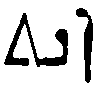




 ).—The
paraphrase of TargumOnkelos affords no help, and the textual confusion is probably irremediable; tentative emendations like those of Gunkel (page 38)
are of no avail. Cheyne Traditions and Beliefs of Ancient Israel, 105, would remove verse ⁷ as a gloss, and make 8a (reading אחי)
Cain’s answer to verse ⁶.
).—The
paraphrase of TargumOnkelos affords no help, and the textual confusion is probably irremediable; tentative emendations like those of Gunkel (page 38)
are of no avail. Cheyne Traditions and Beliefs of Ancient Israel, 105, would remove verse ⁷ as a gloss, and make 8a (reading אחי)
Cain’s answer to verse ⁶.
8. אָמַר, in the sense of ‘speak,’ ‘converse’ (2 Chronicles 32²⁴), is excessively rare and late: the only instance in early Hebrew is apparently Exodus 19²⁵, where the context has been broken by a change of document. It might mean ‘mention’ (as 43²⁷ etc.), but in that case the object must be indicated. Usually it is followed, like English ‘say,’ by the actual words spoken. Hence נֵלְכָה הַשָּׂדֶה is to be supplied with The Samaritan Recension of the Pentateuch, LXX, Peshiṭtå, Vulgate, but not Aquila (Tuch, Delitzsch: see the scholia in Field): a Pisqa in some Hebrew MSS, though not recognised by the Massoretic, supports this view of the text. To emend וַיִּשְׁמֹר (Olshausen al.) or וַיָּמֶר, וַיֵּמַר (Gesenius-Kautzsch) is less satisfactory.—9. אֵי] The Samaritan Recension of the Pentateuch אַיֵּה.—10. On the interjectional use of קוֹל, see Gesenius-Kautzsch § 146 b; Nöldeke Mandäische Grammatik page 482.—צֹעֲקִים] The Samaritan Recension of the Pentateuch צעק, agreeing with קוֹל (?).—11. אָרוּר ... מִן] pregnant construct, Gesenius-Kautzsch § 119 x, y, ff. This sense of מִן is more accurately expressed by מֵעַל in verse ¹⁴, but is quite common (compare especially 27³⁹). Other renderings, as from (indicating the direction from which the curse comes) or by, are less appropriate; and the comparison more than is impossible.—12. תֹסֵף] jussive form with לֹא (Gesenius-Kautzsch § 109 d, h; Davidson §§ 63, R. 3, 66, R. 6); followed by infinitive without ל (Gesenius-Kautzsch § 114 m).—נָע וָנָד] an alliteration, as in 1². Best rendered in anonymous Greek versions (Field): σαλευόμενος καὶ ἀκαταστατῶν; Vulgate vagus et profugus; LXX (incorrectly) στένων καὶ τρέμων.
13‒16. Mitigation of Cain’s punishment.—13. My punishment is too great to be borne] So the plea of Cain is understood by all modern authorities. The older rendering: my guilt is too great to be forgiven (which is in some ways preferable), is abandoned because the sequel shows that Cain’s reflexions run on the thought of suffering and not of sin; see below.—14. from Thy face I shall be hidden] This anguished cry of Cain has received scant sympathy at the hands of commentaries (except Gunkel). Like that of Esau in 27³⁴, it reveals him as one who had blindly striven for a spiritual good,—as a man not wholly bad who had sought the favour of God with the passionate determination of an ill-regulated nature and missed it: one to whom banishment from the divine presence is a distinct ingredient in his cup of misery.—every one that findeth me, etc.] The object of Cain’s dread is hardly the vengeance of the slain man’s kinsmen (so nearly all commentaries); but rather the lawless state of things in the desert, where any one’s life may be taken with impunity (Gunkel). That the words imply a diffusion of the human race is an incongruity on either view, and is one of many indications that the Cain of the original story was not the son of the first man.
This expostulation of Cain, with its rapid grasp of the situation, lights up some aspects of the historic background of the legend. (1) It is assumed that Yahwe’s presence is confined to the cultivated land; in other words, that He is the God of settled life, agricultural and pastoral. To conclude, however, that He is the God of Canaan in particular (compare 1 Samuel 26¹⁹), is perhaps an over-hasty inference. (2) The reign of right is coextensive with Yahwe’s sphere of influence: the outer desert is the abode of lawlessness; justice does not exist, and human life is cheap. That Cain, the convicted murderer, should use this plea will not appear strange if we remember the conditions under which such narratives arose.
13. On עָוֹן (√ ġawaʸ = ‘go astray’: Driver Notes on the Hebrew Text of the Books of Samuel 134 f.) in the sense of punishment of sin, see the passages cited in Brown-Driver-Briggs, s.v. 3. נשא ע׳, in the sense of ‘bear guilt,’ seems peculiar to Priestly-Code and Ezekiel; elsewhere it means to ‘pardon iniquity’ (Exodus 34⁷, Numbers 14¹⁸, Hosea 14³, Micah 7¹⁸, Psalms 32⁵). This consideration is not decisive; but there is something to be said for the consensus of ancient versions (LXX ἀφεθῆναι; Vulgate veniam merear, etc.) in favour of the second interpretation, which might be retained without detriment to the sense if the sentence could be read as a question.—14. אֹתִי] instead of suffix is unlike Yahwist. In the next verse אֹתוֹ after infinitive was necessary to avoid confusion between subject and object.
15. What follows must be understood as a divinely appointed amelioration of Cain’s lot: although he is not restored to the amenities of civilised life, Yahwe grants him a special protection, suited to his vagrant existence, against indiscriminate homicide.—Whoso kills Ḳayin (or ‘whenever any one kills Ḳ’), it (the murder) shall be avenged sevenfold] by the slaughter of seven members of the murderer’s clan. See below.—appointed a sign for Ḳayin] or set a mark on Ḳ. The former is the more obvious rendering of the words; but the latter has analogies, and is demanded by the context.
The idea that the sign is a pledge given once for all of the truth of Yahwe’s promise, after the analogy of the prophetic אוֹת, is certainly consistent with the phrase שֵׁים ... לְ: compare e.g. Exodus 15²⁵, Joshua 24²⁵ with Exodus 10² etc. So some authorities in Bereshith Rabba, Abraham Ibn Ezra, Tuch, al. But Exodus 411a proves that it may also be something attached to the person of Cain (Calvin, Bereshith Rabba, Delitzsch, and most); and that אוֹת may denote a mark appears from Exodus 139. 16 etc. Since the sign is to serve as a warning to all and sundry who might attempt the life of Cain, it is obvious that the second view alone meets the requirements of the case: we must think of something about Cain, visible to all the world, marking him out as one whose death would be avenged sevenfold. Its purpose is protective and not penal: that it brands him as a murderer is a natural but mistaken idea.—It is to be observed that in this part of the narrative Ḳayin is no longer a personal but a collective name. The clause כָל־הֹרֵג ק׳ (not מִי יַֽהֲרֹג, or אֲשֶׁר י׳) has frequentative force (examples below), implying that the act might be repeated many times on members of the tribe Ḳayin: similarly the sevenfold vengeance assumes a kin-circle to which the murderer belongs. See, further, page 112.
15. לָכֵן] οὐχ οὕτως (LXX,
Symmachus, Theodotion) implies לֹא כֵן:
so Peshiṭtå, Vulgate; but this would require to be followed by כִּי.—כָּל־הֹרֵג ק׳]
see Gesenius-Kautzsch § 116 w; compare
Exodus 12¹⁵, Numbers 35³⁰, 1 Samuel 2¹³ 3¹¹ etc.—יֻקַּם]
The subject might be קַיִן
(as verse ²⁴) or (more probably) impersonal (Exodus 21²¹), certainly not the murderer of Cain.—שִׁבְעָתַיִם]
= ‘7 times’: Gesenius-Kautzsch § 134 r. Versions: LXX ἑπτὰ ἐκδικούμενα παραλύσει;
Aquila ἑπταπλασίως ἐκδικηθήσεται;
Symmachus ἑβδόμως ἐκδίκησιν δώσει;
Theodotion δι’ ἑβδομάδος ἐκδικήσει;
Vulgate septuplum punietur; Peshiṭtå 

 ;
TargumOnkelos לשבעא דרין יתפרע מיניה
(hence the idea that Cain was killed by Lamech the 7th
from Adam [see on verse ²⁴]).
;
TargumOnkelos לשבעא דרין יתפרע מיניה
(hence the idea that Cain was killed by Lamech the 7th
from Adam [see on verse ²⁴]).
16. and dwelt in the land of Nôd] The verb יָשֶׂב is not necessarily inconsistent with nomadic life, as Stade alleges (see Genesis 13¹², 1 Chronicles 5¹⁰ etc.). It is uncertain whether the name נוֹד is traditional (Wellhausen, Gunkel), or was coined from the participle נָד = ‘land of wandering’ (so most); at all events it cannot be geographically identified. If the last words קדמת עדן belong to the original narrative, it would be natural to regard Ḳayin as representative of the nomads of Central Asia (Knobel al.); but the phrase may have been added by a redactor to bring the episode into connexion with the account of the Fall.
16. נוד] The Samaritan Recension of the Pentateuch נד, LXX Ναϊδ (ניד ?) with variants (see Nestle, Marginalien und Materialien, page 9).—Symmachus, Theodotion, Vulgate (habitavit profugus in terra) [Targum?] take the word as a participle; but the order of words forbids this.—קדמת] see on 2¹⁴. ‘In front of Eden’ and ‘East of Eden’ would here be the same thing (3²⁴).
The exposition of 41‒16 would be incomplete without some account of recent speculations regarding the historical or ethnological situation out of which the legend arose. The tendency of opinion has been to affirm with increasing distinctness the view that the narrative “embodies the old Hebrew conception of the lawless nomad life, where only the blood-feud prevents the wanderer in the desert from falling a victim to the first man who meets him.”¹ A subordinate point, on which undue stress is commonly laid, is the identity of Cain with the nomadic tribe of the Ḳenites. These ideas, first propounded by Ewald,² adopted by Wellhausen,³ and (in part) by William Robertson Smith,⁴ have been worked up by Stade, in his instructive essay on ‘The sign of Cain,’⁵ into a complete theory, in which what may be called the nomadic motive is treated as the clue to the significance of every characteristic feature of the popular legend lying at the basis of the narrative. Although the questions involved are too numerous to be fully dealt with here, it is necessary to consider those points in the argument which bear more directly on the original meaning of verses 1‒16.
1. That the figure of Cain represents some phase of nomadic life may be regarded as certain. We have seen (page 110) that in verse 13 ff. the name Cain has a collective sense; and every descriptive touch in these closing verses is characteristic of desert life. His expulsion from the אדמה and the phrase נע ונד, express (though not by any means necessarily,—see below) the fundamental fact that his descendants are doomed to wander in the uncultivated regions beyond the pale of civilisation. The vengeance which protects him is the self-acting law of blood-revenge,—that ‘salutary institution’ which, in the opinion of Burckhardt, has done more than anything else to preserve the Bedouin tribes from mutual extermination.¹ The sign which Yahwe puts on him is most naturally explained as the “sharṭ or tribal mark which every man bore in his person, and without which the ancient form of blood-feud, as the affair of a whole stock and not of near relations alone, could hardly have been worked.”² And the fact that this kind of existence is traced to the operation of a hereditary curse embodies the feeling of a settled agricultural or pastoral community with regard to the turbulent and poverty-stricken life of the desert.
2. While this is true, the narrative cannot be regarded as expressing reprobation of every form of nomadism known to the Hebrews. A disparaging estimate of Bedouin life as a whole is, no doubt, conceivable on the part of the settled Israelites (compare Genesis 16¹²); but Cain is hardly the symbol of that estimate. (1) The ordinary Bedouin could not be described as ‘fugitives and vagabonds in the earth’: their movements are restricted to definite areas of the desert, and are hardly less monotonous than the routine of husbandry.¹ (2) The full Bedouin are breeders of camels, the half-nomads of sheep and goats; and both live mainly on the produce of their flocks and herds (see Meyer, Die Israeliten und ihre Nachbarstämme, 303 ff.). But to suppose Cain to exemplify the latter mode of life is inconsistent with the narrative, for sheep-rearing is the distinctive profession of Abel; and it is hardly conceivable that Hebrew legend was so ignorant of the proud spirit of the full Bedouin as to describe them as degraded agriculturists. If Cain be the type of any permanent occupation at all, it must be one lower than agriculture and pasturage; i.e. he must stand for some of those rude tribes which subsist by hunting or robbery. (3) It is unlikely that a rule of sevenfold revenge was generally observed amongst Semitic nomads in Old Testament times. Among the modern Arabs the law of the blood-feud is a life for a life: it is only under circumstances of extreme provocation that a twofold revenge is permissible. We are, therefore, led to think of Cain as the impersonation of an inferior race of nomads, maintaining a miserable existence by the chase, and practising a peculiarly ferocious form of blood-feud.—The view thus suggested of the fate of Cain finds a partial illustration in the picture given by Burckhardt and Doughty of a group of low-caste tribes called Solubba or Sleyb. These people live partly by hunting, partly by coarse smith-work and other gipsy labour in the Arab encampments; they are forbidden by their patriarch to be cattle-keepers, and have no property save a few asses; they are excluded from fellowship and intermarriage with the regular Bedouin, though on friendly terms with them; and they are the only tribes that are free of the Arabian deserts to travel where they will, ranging practically over the whole peninsula from Syria to Yemen. It is, perhaps, of less significance that they sometimes speak of themselves as decayed Bedouin, and point out the ruins of the villages where their ancestors dwelt as owners of camels and flocks.² The name קַיִן, signifying ‘smith’ (page 102), would be a suitable eponym for such degraded nomads. The one point in which the analogy absolutely fails is that tribes so circumstanced could not afford to practise the stringent rule of blood-revenge indicated by verse ¹⁵.—It thus appears that the known conditions of Arabian nomadism present no exact parallel to the figure of Cain. To carry back the origin of the legend to pre-historic times would destroy the raison d’être of Stade’s hypothesis, which seeks to deduce everything from definite historical relations: at the same time it may be the only course by which the theory can be freed from certain inconsistencies with which it is encumbered.³
3. The kernel of Stade’s argument is the attractive combination of Cain the fratricide with the eponymous ancestor of the Ḳenites.¹ In historical times the Ḳenites appear to have been pastoral nomads (Exodus 216 ff. 3¹) frequenting the deserts south of Judah (1 Samuel 27¹⁰ 30²⁹), and (in some of their branches) clinging tenaciously to their ancestral manner of life (Judges 411. 17 5²⁴, Jeremiah 35⁷ compared with 1 Chronicles 2⁵⁵). From the fact that they are found associated now with Israel (Judges 1¹⁶ etc.), now with Amaleḳ (Numbers 2421 ff., 1 Samuel 15⁶), and now with Midian (Numbers 10²⁹), Stade infers that they were a numerically weak tribe of the second rank; and from the name, that they were smiths. The latter character, however, would imply that they were pariahs, and of that there is no evidence whatever. Nor is there any indication that the Ḳenites exercised a more rigorous blood-feud than other Semites: indeed, it seems an inconsistency in Stade’s position that he regards the Ḳenites as at once distinguished by reckless bravery in the vindication of the tribal honour, and at the same time too feeble to maintain their independence without the aid of stronger tribes. There is, in short, nothing to show that the Ḳenites were anything but typical Bedouin; and all the objections to associating Cain with the higher levels of nomadism apply with full force to his identification with this particular tribe. When we consider, further, that the Ḳenites are nearly everywhere on friendly terms with Israel, and that they seem to have cherished the most ardent attachment to Yahwism, it becomes almost incredible that they should have been conceived as resting under a special curse.
4. It is very doubtful if any form of the nomadic or Ḳenite theory can account for the rise of the legend as a whole. The evidence on which it rests is drawn almost exclusively from verses 13‒16. Stade justifies his extension of the theory to the incident of the murder by the analogy of those temporary alliances between Bedouin and peasants in which the settled society purchases immunity from extortion by the payment of a fixed tribute to the nomads (compare 1 Samuel 252 ff.). This relation is spoken of as a brotherhood, the tributary party figuring as the sister of the Bedouin tribe. The murder of Abel is thus resolved into the massacre of a settled pastoral people by a Bedouin tribe which had been on terms of formal friendship with it. But the analogy is hardly convincing. It would amount to this: that certain nomads were punished for a crime by being transformed into nomads: the fact that Cain was previously a husbandman is left unexplained.—Gunkel, with more consistency, finds in the narrative a vague reminiscence of an actual (prehistoric) event,—the extermination of a pastoral tribe by a neighbouring agricultural tribe, in consequence of which the latter were driven from their settlements and lived as outlaws in the wilderness. Such changes of fortune must have been common in early times on the border-land between civilisation and savagery;¹ and Gunkel’s view has the advantage over Stade’s that it makes a difference of sacrificial ritual an intelligible factor in the quarrel (see page 105 f.). But the process of extracting history from legend is always precarious; and in this case the motive of individual blood-guilt appears too prominent to be regarded as a secondary interest of the narrative.
The truth is that in the present form of the story the figure of Cain represents a fusion of several distinct types, of which it is difficult to single out any one as the central idea of the legend. (1) He is the originator of agriculture (verse ²). (2) He is the founder of sacrifice, and (as the foil to his brother Abel) exhibits the idea that vegetable offerings alone are not acceptable to Yahwe (see on verse ³). (3) He is the individual murderer (or rather shedder of kindred blood) pursued by the curse, like the Orestes, Alcmæon, Bellerophon, etc., of Greek legend (verse 8 ff.). Up to verse ¹² that motive not only is sufficient, but is the only one naturally suggested to the mind: the expression נָע וָנָד being merely the negative aspect of the curse which drives him from the ground.¹ (4) Lastly, in verses 13‒16 he is the representative of the nomad tribes of the desert, as viewed from the standpoint of settled and orderly civilisation. Ewald pointed out the significant circumstance, that at the beginning of the ‘second age’ of the world’s history we find the counterparts of Abel and Cain in the shepherd Jabal and the smith Tubal-Cain (verse 20 ff.). It seems probable that some connexion exists between the two pairs of brothers: in other words, that the story of Cain and Abel embodies a variation of the tradition which assigned the origin of cattle-breeding and metal-working to two sons of Lamech. But to resolve the composite legend into its primary elements, and assign each to its original source, is a task obviously beyond the resources of criticism.
This genealogy, unlike that of Priestly-Code in chapter 5, is not a mere list of names, but is compiled with the view of showing the origin of the principal arts and institutions of civilised life.¹ These are: Husbandry (verse ²; see above), city-life (¹⁷), [polygamy (¹⁹) ?], pastoral nomadism, music and metal-working (20‒22). The Song of Lamech (23 f.) may signalise an appalling development of the spirit of blood-revenge, which could hardly be considered an advance in culture; but the connexion of these verses with the genealogy is doubtful.—It has commonly been held that the passage involves a pessimistic estimate of human civilisation, as a record of progressive degeneracy and increasing alienation from God. That is probably true of the compiler who placed the section after the account of the Fall, and incorporated the Song of Lamech, which could hardly fail to strike the Hebrew mind as an exhibition of human depravity. In itself, however, the genealogy contains no moral judgment on the facts recorded. The names have no sinister significance; polygamy (though a declension from the ideal of 2²⁴) is not generally condemned in the Old Testament (Deuteronomy 21¹⁵); and even the song of Lamech (which is older than the genealogy) implies no condemnation of the reckless and bloodthirsty valour which it celebrates.—The institutions enumerated are clearly those existing in the writer’s own day; hence the passage does not contemplate a rupture of the continuity of development by a cataclysm like the Flood. That the representation involves a series of anachronisms, and is not historical, requires no proof (see Driver The Book of Genesis with Introduction and Notes 68).—On the relation of the section to other parts of the chapter, see page 98 above: on some further critical questions, see the concluding Note (page 122 ff.).
17. Enoch and the building of the first city.—The question where Cain got his wife is duly answered in Jubilees iv. 1, 9: she was his sister, and her name was ‛Âwân. For other traditions, see Marmorstein, ‘Die Namen der Schwestern Kains und Abels,’ etc., Zeitschrift für die alttestamentliche Wissenschaft, xxv. 141 ff.—and he became a city-builder] So the clause is rightly rendered by Delitzsch, Budde, Holzinger, Gunkel, al. (compare 2120b, Judges 16²¹, 2 Kings 15⁵). The idea that he happened to be engaged in the building of a city when his son was born would probably have been expressed otherwise, and is itself a little unnatural.
That קַיִן is the subject of וַיְהִי only appears from the phrase כְּשֵׁם בְּנוֹ towards the end. Budde (120 ff.) conjectures that the original text was כִּשְׁמוֹ, making Enoch himself the builder of the city called after him (so Holzinger). The emendation is plausible: it avoids the ascription to Cain of two steps in civilisation—agriculture and city-building; and it satisfies a natural expectation that after the mention of Enoch we should hear what he became, not what his father became after his birth,—especially when the subject of the immediately preceding verbs is Cain’s wife. But the difficulty of accounting for the present text is a serious objection, the motive suggested by Budde (123) being far-fetched and improbable.—The incongruity between this notice and verses 11‒16 has already been mentioned (page 100). Lenormant’s examples of the mythical connexion of city-building with fratricide (Les Origines de l’histoire², i. 141 ff.) are not to the point; the difficulty is not that the first city was founded by a murderer, but by a nomad. More relevant would be the instances of cities originating in hordes of outlaws, collected by Frazer, as parallels to the peopling of Rome (Fort. Rev. 1899, April, 650‒4). But the anomaly is wholly due to composition of sources: the Cain of the genealogy was neither a nomad nor a fratricide. It has been proposed (Holzinger, Gunkel) to remove 17b as an addition to the genealogy, on the ground that no intelligent writer would put city-building before cattle-rearing; but the Phœnician tradition is full of such anachronisms, and shows how little they influenced the reasoning of ancient genealogists.—The name חֲנוֹךְ occurs (besides 518 ff., 1 Chronicles 1³) as that of a Midianite tribe in 25⁴ (1 Chronicles 1³³), and of a Reubenite clan in 46⁹ (Exodus 6¹⁴, Numbers 26⁵, 1 Chronicles 5³). It is also said that חנך is a Sabæan tribal name (Gesenius-Buhl¹² s.v.),¹ which has some importance in view of the fact that קֵינָן (59 ff.) is the name of a Sabæan deity. As the name of a city, the word would suggest to the Hebrew mind the thought of ‘initiation’ (v.i.). The city חנוך cannot be identified. The older conjectures are given by Dillmann (page 99); Sayce (Zeitschrift für Keilschriftsforschung, ii. 404; Hibbert Lectures, 185) and Cheyne (Encyclopædia Biblica, 624; but see now Traditions and Beliefs of Ancient Israel, 106) connect it with Unuk, the ideographic name of the ancient Babylonian city of Erech.
17. On וידע, see on verse ¹.—The verb חָנַךְ appears from Arabic ḥanaka to be a denominative from ḥanak (Hebrew חֵךְ), and means to rub the palate of a new-born child with chewed dates: hence tropically ‘to initiate’ (Lane, s.v.; Wellhausen Reste arabischen Heidentums 173). In Hebrew it means to ‘dedicate’ or ‘inaugurate’ a house, etc. (Deuteronomy 20⁵, 1 Kings 8⁶³: compare חֲנֻכָּה, Numbers 7¹¹, Nehemiah 12²⁷ etc.); and also to ‘teach’ (Proverbs 22⁶). See, further, on 5¹⁸.
18. The next four generations are a blank so far as any advance in civilisation is concerned. The only question of general interest is the relation of the names to those of chapter 5.
On the first three names, see especially Lagarde, Orientalia, ii. 33‒38; Budde Die biblische Urgeschichte 123‒9.—עִירָד] LXX Γαιδαδ (= עֵידָד), Peshiṭtå עִידָר (the latter supported by Philo), corresponds to יֶרֶד in 515 ff.. The initial guttural, and the want of a Hebrew etymology, would seem to indicate עירד as the older form which has been Hebraized in ירד; but the conclusion is not certain. If the root be connected with Arabic ‛arada (which is doubtful in view of LXX’s Γ), the idea might be either ‘fugitive’ (Dillmann al.), or ‘strength, hardness, courage’ (Budde). Sayce (Zeitschrift für Keilschriftsforschung, ii. 404) suggests an identification with the Chaldean city Eridu; Holzinger with עֲרָד in the Negeb (Judges 1¹⁶ etc.).—The next two names are probably (but not certainly: see Gray, Studies in Hebrew Proper Names, 164 f.) compounds with אֵל. The first is given by Massoretic Text in two forms, מְחוּיָאֵל and מְחִיָּ[י]אֵל. The variants of LXX are reducible to three types, Μαιηλ (מחייאל), Μαουιηλ (מחויאל), Μαλελεηλ (= מהללאל, 513 ff.). Lagarde considers the last original, though the first is the best attested. Adopting this form, we may (with Budde) point the Hebrew מַחְיִי אֵל or מְחַיִּי אֵל = ‘God makes me live’: so virtually Philo ἀπὸ ζωῆς θεοῦ, and Jerome ex vita Deus (cited by Lagarde). Both Massoretic forms undoubtedly imply a bad sense: ‘destroyed (or smitten) of God’ (though the form is absolutely un-Hebraic, see Driver Notes on the Hebrew Text of the Books of Samuel 14).—מְתוּשָׁאֵל is now commonly explained by Assyrian mutu-ša-ili, ‘Man of God,’¹ though the relative ša presents a difficulty (Gray, l.c.). The true LXX reading is Μαθουσαλα (= מְתוּשֶׁלַח, 521 ff.); Μαθουσαηλ occurs as a correction in some MSS—לֶמֶךְ] again inexplicable from Hebrew or even Arabic. Sayce (Hibbert Lectures 186) and Hommel connect it with Lamga, a Babylonian name of the moon-god, naturalised in South Arabia.²
18. On accusative אֵת with passive see Gesenius-Kautzsch § 116 a, b.—יָלַד in the sense of ‘beget’ is a sure mark of the style of Yahwist (see Holzinger Einleitung in den Hexateuch 99).—מְתוּ] archaic nominative case (Gesenius-Kautzsch § 90 o) of an old Semitic word (also Egyptian according to Erman) מֵת = ‘man’ (male, husband, etc.): compare Gesenius-Buhl s.v.
19. The two wives of Lamech.—No judgment is passed on Lamech’s bigamy, and probably none was intended. The notice may be due simply to the fact that the names of the wives happened to be preserved in the song afterwards quoted.
Of the two female names by far the most attractive explanation is that of Ewald (Jahrbücher der biblischen Wissenschaft, vi. 17), that עָדָה means Dawn (Arabic ġadin, but LXX has Ἀδα), and צִלָּה (feminie of צֵל) Shadow,—a relic of some nature-myth (compare Lenormant Les Origines de l’histoire² 183 f.). Others (Holzinger) take them as actual proper names of inferior stocks incorporated in the tribe Lamech; pointing out that עדה recurs in 362 ff. as a Canaanite clan amalgamated with Esau. This ethnographic theory, however, has very little foothold in the passage. For other explanations, see Dillmann page 100.
20‒22. The sons of Lamech and their occupations.—At this point the genealogy breaks up into three branches, introducing (as Ewald thinks) a second age of the world. But since it is nowhere continued, all we can say is that the three sons represent three permanent social divisions, and (we must suppose) three modes of life that had some special interest for the authors of the genealogy. On the significance of this division, see at the close.—20. Yābāl, son of ‛Adah, became the father (i.e. originator: TargumOnkelos רַב) of tent- and cattle-dwellers (v.i.); i.e. of nomadic shepherds. מִקְנֶה, however, is a wider term than צאן (verse ²), including all kinds of cattle, and even camels and asses (Exodus 9³). The whole Bedouin life is thus assigned to Jabal as its progenitor.—21. Yûbāl, also a son of ‛Adah, is the father of all who handle lyre and pipe; the oldest and simplest musical instruments. These two occupations, representing the bright side of human existence, have ‛Adah (the Dawn?) as their mother; recalling the classical association of shepherds with music (see Lenormant i. 207).—22. Equally suggestive is the combination of Tûbal-ḳáyin, the smith, and Na‛ămāh (‘pleasant’), as children of the dark Ẓillah; compare the union of Hephæstos and Aphrodite in Greek mythology (Dillmann al.).—The opening words of aβ are corrupt. We should expect: he became the father of every artificer in brass and iron (see footnote). The persistent idea that Tubal-cain was the inventor of weapons, Bereshith Rabba, Rashi, and most, which has led to a questionable interpretation of the Song, has no foundation. He is simply the metal-worker, an occupation regarded by primitive peoples as a species of black-art,¹ and by Semitic nomads held in contempt.
On the names in these verses see the interesting discussion of Lenormant Les Origines de l’histoire² i. 192 ff.—The alliterations, Yābāl—Yûbāl—Tûbal, are a feature of legendary genealogies: compare Arabic Habîl and Ḳabîl, Shiddîd and Shaddâd, Mâlik and Milkân, etc. (Lenormant. 192). יבל (LXX Ἰωβελ -ηλ) and יובל (Ἰουβαλ) both suggest יֹבֵל (Hebrew and Phœnician), which means primarily ‘ram,’ then ‘ram’s horn’ as a musical instrument (Exodus 19¹³), and finally ‘joyous music’ (in the designation of the year of Jubilee). On a supposed connexion of יבל with הֶבֶל in the sense of ‘herdsman,’ see above, page 103.—תּוּבַל is a Japhetic people famous in antiquity for metal-working (see on 10²); and it is generally held that their heros eponymus supplies the name of the founder of metallurgy here; but the equation is doubtful. A still more precarious combination with a word for smith (tumā́l, dubalanza, etc.) in Somali and other East African dialects, has been propounded by Merker (Die Masai, 306). The compound תובל קין (written in Oriental MSS as one word) may mean either ‘Tubal [the] smith’ (in which case קין [we should expect הקין] is probably a gloss), or ‘Tubal of (the family of) Cain.’¹ LXX has simply Θοβελ; but see the footnote. Tuch and others adduce the analogy of the Τελχῖνες, the first workers in iron and brass, and the makers of Saturn’s scythe (Strabo, XIV. ii. 7); and the pair of brothers who, in the Phœnician legend, were σιδήρου εὑρεταὶ καὶ τῆς τούτου ἐργασίας.—נַֽעֲמָה (LXX Νοεμα) seems to have been a mythological personage of some importance. A goddess of that name is known to have been worshipped by the Phœnicians.² In Jewish tradition she figures as the wife of Noah (Bereshith Rabba), as a demon, and also as a sort of St. Cecilia, a patroness of vocal music (TargumJonathan: compare Lagarde Onomastica Sacra, 180, 56: Νοεμὶν ψάλλουσα φωνῇ οὐκ ἐν ὀργάνῳ [Nestle, Marginalien und Materialien, 10]).
20. ישֵׁב אֹהֶל וּמִקְנֶה]
LXX οἰκούντων ἐν σκηναῖς κτηνοτρόφων,
perhaps reading אהלי מקנה
as in 2 Chronicles 14¹⁵ (so Ball). Vulgate (atque pastorum) takes מַקְנֶה
as a participle; Peshiṭtå inserts  ,
and TargumOnkelos ומרי,
before ‘cattle’; similarly Kuenen proposed וקנה מקנה.
The zeugma is somewhat hard, but is retained by most commentaries for the sake of conformity with verse 21 f.;
Gesenius-Kautzsch § 117 bb, 118 g.—21. וְשֵׁם אָחִיו] compare
10²⁵ (Yahwist) (1 Chronicles 7¹⁶).—אבי וגו׳] LXX καταδείξας ψαλτήριον καὶ κιθάραν.—כִּנּוֹר וְעוּגָב]
Vulgate cithara et organo; Peshiṭtå
,
and TargumOnkelos ומרי,
before ‘cattle’; similarly Kuenen proposed וקנה מקנה.
The zeugma is somewhat hard, but is retained by most commentaries for the sake of conformity with verse 21 f.;
Gesenius-Kautzsch § 117 bb, 118 g.—21. וְשֵׁם אָחִיו] compare
10²⁵ (Yahwist) (1 Chronicles 7¹⁶).—אבי וגו׳] LXX καταδείξας ψαλτήριον καὶ κιθάραν.—כִּנּוֹר וְעוּגָב]
Vulgate cithara et organo; Peshiṭtå 
 ;
TargumOnkelos כנורא ואבובא (∥ נבלא).
See Benzinger, Hebräische Archäologie², 237‒246;
Wellhausen Psalms (Polychrome Bible), 219 f., 222 f.; Riehm, Handwörterbuch des biblischen Altertums 1043 ff. The כנור
is certainly a stringed instrument, played with the hand (1 Samuel 16²³ etc.),
probably the lyre (Greek κινύρα). The עוגב
(associated with the כנור
in Job 21¹² 30³¹: elsewhere only Psalms 150⁴) is some kind of wind instrument (Vulgate, TargumOnkelos),—a flute or reed-pipe, perhaps the Pan’s pipe (σύριγξ).—22. גם הוא]
in genealogies (as here, 4²⁶ 10²¹ 19³⁸ 2220. 24 [Judges 8³¹]) is characteristic of Yahwist.—תובל קין] LXX Θοβελ· καὶ ἦν.
Other versions have the compound name, and on the whole it is probable that καὶ ἦν is a corruption of Καιν,
although the next clause has Θοβελ alone.—לֹטֵשׁ וגו׳] LXX καὶ ἦν σφυροκόπος, χαλκεὺς χαλκοῦ καὶ σιδήρου,
Vulgate qui fuit malleator et faber in cuncta opera aer. et f;
Peshiṭtå
;
TargumOnkelos כנורא ואבובא (∥ נבלא).
See Benzinger, Hebräische Archäologie², 237‒246;
Wellhausen Psalms (Polychrome Bible), 219 f., 222 f.; Riehm, Handwörterbuch des biblischen Altertums 1043 ff. The כנור
is certainly a stringed instrument, played with the hand (1 Samuel 16²³ etc.),
probably the lyre (Greek κινύρα). The עוגב
(associated with the כנור
in Job 21¹² 30³¹: elsewhere only Psalms 150⁴) is some kind of wind instrument (Vulgate, TargumOnkelos),—a flute or reed-pipe, perhaps the Pan’s pipe (σύριγξ).—22. גם הוא]
in genealogies (as here, 4²⁶ 10²¹ 19³⁸ 2220. 24 [Judges 8³¹]) is characteristic of Yahwist.—תובל קין] LXX Θοβελ· καὶ ἦν.
Other versions have the compound name, and on the whole it is probable that καὶ ἦν is a corruption of Καιν,
although the next clause has Θοβελ alone.—לֹטֵשׁ וגו׳] LXX καὶ ἦν σφυροκόπος, χαλκεὺς χαλκοῦ καὶ σιδήρου,
Vulgate qui fuit malleator et faber in cuncta opera aer. et f;
Peshiṭtå 



 ;
TargumOnkelos רבהון דכל ידעי עיבידת נ׳ וב׳.
To get any kind of sense from Massoretic Text, it is necessary either (a) to take לֹטֵשּׁ
(‘sharpener’ or ‘hammerer’) in the sense of ‘instructor’; or (b) take חֹרֵשׁ
as neuter (‘a hammerer of every cutting implement of,’ etc.); or (c) adopt
the quaint construction (mentioned by Budde 138): ‘a hammerer of all (sorts of things),—a (successful) artificer in bronze,’ etc.!
All these are unsatisfactory; and neither the omission of כל with LXX
(Dillmann), nor the insertion of אבי
before it yields a tolerable text. Budde’s emendation (139 ff.) ויהי למך חֹרֵשׁ וגו׳
[for קין]
is much too drastic, and stands or falls with his utterly improbable theory that Lamech and not Tubal-cain was originally designated as the inventor of weapons. The error must lie in the words קין לטש,
for which we should expect, הוא היה אבי
(Olshausen, Ball). The difficulty is to account for the present text: it is easy to say that לטש and קין
are glosses, but there is nothing in the verse to require a gloss, and neither of these words would naturally have been used by a Hebrew writer for that purpose.—בַּֽרְזָל]
The Semitic words for ‘iron’ (Assyrian parzillu, Aramaic פַּרְזָל
;
TargumOnkelos רבהון דכל ידעי עיבידת נ׳ וב׳.
To get any kind of sense from Massoretic Text, it is necessary either (a) to take לֹטֵשּׁ
(‘sharpener’ or ‘hammerer’) in the sense of ‘instructor’; or (b) take חֹרֵשׁ
as neuter (‘a hammerer of every cutting implement of,’ etc.); or (c) adopt
the quaint construction (mentioned by Budde 138): ‘a hammerer of all (sorts of things),—a (successful) artificer in bronze,’ etc.!
All these are unsatisfactory; and neither the omission of כל with LXX
(Dillmann), nor the insertion of אבי
before it yields a tolerable text. Budde’s emendation (139 ff.) ויהי למך חֹרֵשׁ וגו׳
[for קין]
is much too drastic, and stands or falls with his utterly improbable theory that Lamech and not Tubal-cain was originally designated as the inventor of weapons. The error must lie in the words קין לטש,
for which we should expect, הוא היה אבי
(Olshausen, Ball). The difficulty is to account for the present text: it is easy to say that לטש and קין
are glosses, but there is nothing in the verse to require a gloss, and neither of these words would naturally have been used by a Hebrew writer for that purpose.—בַּֽרְזָל]
The Semitic words for ‘iron’ (Assyrian parzillu, Aramaic פַּרְזָל  ,
Arabic farzil) have no Semitic etymology, and are probably borrowed from a foreign tongue. On the antiquity of iron in West Asia, see Ridgeway, Early Age of Greece i. 616 ff.
,
Arabic farzil) have no Semitic etymology, and are probably borrowed from a foreign tongue. On the antiquity of iron in West Asia, see Ridgeway, Early Age of Greece i. 616 ff.
23, 24. The song of Lamech.—A complete poem in three distichs, breathing the fierce implacable spirit of revenge that forms the chief part of the Bedouin’s code of honour. It is almost universally assumed (since Herder) that it commemorates the invention of weapons by Tubal-cain, and is accordingly spoken of as Lamech’s ‘Sword Song.’ But the contents of the song furnish no hint of such an occasion (Wellhausen); and the position in which it stands makes its connexion with the genealogy dubious. On that point see, further, below. It is necessary to study it independently, as a part of the ancient legend of Lamech which may have supplied some of the material that has been worked into the genealogy.—The verses may be rendered:
²³Adah and Zillah, hear my voice!
Wives of Lamech, attend to my word!
For I kill a man for a wound to me,
And a boy for a scar.
²⁴For Cain takes vengeance seven times,
But Lamech seventy times and seven!
23a. Holzinger raises the question whether the words ‘Adah and Zillah’ belong to the song or the prose introduction; and decides (with Vulgate) for the latter view, on the ground that in the remaining verses the second member is shorter than the first (which is not the case). The exordium of the song might then read:
Hear my voice, ye women of Lamech!
Attend to my word!—
the address being not to the wives of an individual chieftain, but to the females of the tribe collectively. It appears to me that the alteration destroys the balance of clauses, and mars the metrical effect: besides, strict syntax would require the repetition of the לְ.—23b. The meaning is that (the tribe?) Lamech habitually avenges the slightest personal injury by the death of man or child of the tribe to which the assailant belongs. According to the principle of the blood-feud, אִישׁ and יֶלֶד (י׳ is not a fighting ‘youth,’—a sense it rarely bears: 1 Kings 128 ff., Daniel 14 ff.,—but an innocent man-child [Budde, Holzinger]) are not the actual perpetrators of the outrage, but any members of the same clan. The parallelism therefore is not to be taken literally, as if Lamech selected a victim proportionate to the hurt he had received.—24. Cain is mentioned as a tribe noted for the fierceness of its vendetta (7 times); but the vengeance of Lamech knows no limit (70 and 7 times).
The Song has two points of connexion with the genealogy: the names of the two wives, and the allusion to Cain. The first would disappear if Holzinger’s division of 23a were accepted; but since the ordinary view seems preferable, the coincidence in the names goes to show that the song was known to the authors of the genealogy and utilised in its construction. With regard to the second, Gunkel rightly observes that glorying over an ancestor is utterly opposed to the spirit of antiquity; the Cain referred to must be a rival contemporary tribe, whose grim vengeance was proverbial. The comparison, therefore, tells decidedly against the unity of the passage, and perhaps points (as Stade thinks) to a connection between the song and the legendary cycle from which the Cain story of 13 ff. emanated.—The temper of the song is not the primitive ferocity of “a savage of the stone-age dancing over the corpse of his victim, brandishing his flint tomahawk,” etc. (Lenormant); its real character was first divined by Wellhausen, who, after pointing out the baselessness of the notion that it has to do with the invention of weapons, describes it as “eine gar keiner besonderen Veranlassung bedürftige Prahlerei eines Stammes (Stammvaters) gegen den anderen. Und wie die Araber sich besonders gern ihren Weibern gegenüber als grosse Eisenfresser rühmen, so macht es hier auch Lamech” (Die Composition des Hexateuchs und der historischen Bücher des Alten Testaments² 305). On this view the question whether it be a song of triumph or of menace does not arise; as expressing the permanent temper and habitual practice of a tribe, it refers alike to the past and the future. The sense of the passage was strangely misconceived by some early Fathers (perhaps by LXX, Vulgate), who regarded it as an utterance of remorse for an isolated murder committed by Lamech. The rendering of TargumOnkelos is based on the idea (maintained by Kalisch) that Lamech’s purpose was to represent his homicide as justifiable and himself as guiltless: ‘I have not slain a man on whose account I bear guilt, nor wounded a youth for whose sake my seed shall be cut off. When 7 generations were suspended for Cain, shall there not be for Lamech his son 70 and 7?’ Hence arose the fantastic Jewish legend that the persons killed by Lamech were his ancestor Cain and his own son Tubal-cain (Rashi al.; compare Jerome Epistula Hieronymi ad Damasum papam, 125).¹—The metrical structure of the poem is investigated by Sievers in Metrische Studien, i. 404 f., and ii. 12 f., 247 f. According to the earlier and more successful analysis, the song consists of a double tetrameter, followed by two double trimeters. Sievers’ later view is vitiated by an attempt to fit the poem into the supposed metrical scheme of the genealogy, and necessitates the excision of עדה וצלה as a gloss.
Apart from verse 23 f., the most remarkable feature of the genealogy is the division of classes represented by the three sons of Lamech. It is difficult to understand the prominence given to this classification of mankind into herdsmen, musicians, and smiths, or to imagine a point of view from which it would appear the natural climax of human development. Several recent scholars have sought a clue in the social conditions of the Arabian desert, where the three occupations may be said to cover the whole area of ordinary life. Jabal, the first-born son, stands for the full-blooded Bedouin with their flocks and herds,¹—the élite of all nomadic-living men, and the ‘flower of human culture’ (Budde 146). The two younger sons symbolise the two avocations to which the pure nomad will not condescend, but which are yet indispensable to his existence or enjoyment—smith-work and music (Stade 232). The obvious inference is that the genealogy originated among a nomadic people, presumably the Hebrews before the settlement in Canaan (Budde); though Holzinger considers that it embodies a specifically Ḳenite tradition in which the eponymous hero Cain appears as the ancestor of the race (so Gordon, The Early Traditions of Genesis, 188 ff.).—Plausible as this theory is at first sight, it is burdened with many improbabilities. If the early Semitic nomads traced their ancestry to (peasants and) city-dwellers, they must have had very different ideas from their successors the Bedouin of the present day.² Moreover, the circumstances of the Arabian peninsula present a very incomplete parallel to the classes of verses 20‒22. Though the smiths form a distinct caste, there is no evidence that a caste of musicians ever existed among the Arabs; and the Bedouin contempt for professional musicians is altogether foreign to the sense of the verses, which certainly imply no disparaging estimate of Jubal’s art. And once more, as Stade himself insists, the outlook of the genealogy is world-wide. Jabal is the prototype of all nomadic herdsmen everywhere, Jubal of all musicians, and Tubal (the Tibareni?) of all metallurgists.—It is much more probable that the genealogy is projected from the standpoint of a settled, civilised, and mainly agricultural community. If (with Budde) we include verses ² and 17b, and regard it as a record of human progress, the order of development is natural: husbandmen, city-dwellers, wanderers [?] (shepherds, musicians, and smiths). The three sons of Lamech represent not the highest stage of social evolution, but three picturesque modes of life, which strike the peasant as interesting and ornamental, but by no means essential to the framework of society.—This conclusion is on the whole confirmed by the striking family likeness between the Cainite genealogy and the legendary Phœnician history preserved by Eusebius from Philo Byblius, and said to be based on an ancient native work by Sanchuniathon. Philo’s confused and often inconsistent account is naturally much richer in mythical detail than the Hebrew tradition; but the general idea is the same: in each case we have a genealogical list of the legendary heroes to whom the discovery of the various arts and occupations is attributed. Whether the biblical or the Phœnician tradition is the more original may be doubtful; in any case “it is difficult,” as Driver says, “not to think that the Hebrew and Phœnician representations spring from a common Canaanite cycle of tradition, which in its turn may have derived at least some of its elements from Babylonia” (The Book of Genesis with Introduction and Notes page 74).³
23. The Introduction of the song is imitated in Isaiah 28³² 32⁹; compare also Deuteronomy 32¹. The words הֶֽאֱזין and אִמְרָה are almost exclusively poetical.—On the form שְׁמַעַן, see Gesenius-Kautzsch § 46 f.—הָרַגְתִּי is perfect of experience (Davidson § 40 (c); Driver A Treatise on the use of the Tenses in Hebrew § 12), rather than of single completed action, or of certainty (Abraham Ibn Ezra, Delitzsch, Budde, al.).—כִּי is not recitative, but gives the reason for the call to attention.—לְפִצְעִי, לְחַבּוּרָתִי] On this use of לְ see Brown-Driver-Briggs, s.v. 5, f.: LXX εἰς τραῦμα [μώλωπα] ἐμοί; Vulgate in vulnus [livorem] meum.—24. כִּי] again introducing the reason, which, however, “lies not in the words immediately after כי, but in the second part of the sentence” (Brown-Driver-Briggs, s.v. 3, c): compare Deuteronomy 18¹⁴, Jeremiah 30¹¹.—יֻקּם on accusative, see Gesenius-Kautzsch § 29 g. The Niphal יִקֹּם would yield a better sense: ‘avenges himself’ (Budde, Dillmann, Holzinger).
The verses are the beginning of a Yahwistic genealogy (see above, page 99), of which another fragment has fortunately been preserved in 5²⁹ (Noah). Since it is thus seen to have contained the three names (Seth, Enos, Noah) peculiar to the genealogy of Priestly-Code, it may be assumed that the two lists were in substantial agreement, each consisting of ten generations. That that of Yahwist was not a dry list of names and numbers appears, however, from every item of it that has survived. The preservation of 425 f. is no doubt due to the important notice of the introduction of Yahwe-worship (26b), the redactor having judged it more expedient in this instance to retain Yahwist’s statement intact. The circumstance shows on how slight a matter far-reaching critical speculations may hang. But for this apparently arbitrary decision of the redactor, the existence of a Sethite genealogy in Yahwist would hardly have been suspected; and the whole analysis of the Yahwist document into its component strata might have run a different course.
25. And Adam knew, etc.] see on verse ¹. That יָדַע denotes properly the initiation of the conjugal relation (Budde) is very doubtful: see 38²⁶, 1 Samuel 1¹⁹.—And she called] see again on verse ¹.—God has appointed me seed] (the remainder of the verse is probably an interpolation). Compare 3¹⁵. Eve’s use of אלהים is not ‘surprising’ (Dillmann); it only proves that the section is not from the same source as verse ¹. On the other hand, it harmonises with the fact that in 31 ff. אלהים is used in dialogue. It is at least a plausible inference that both passages come from one narrator, who systematically avoided the name יהוה up to 4²⁶ (see page 100).
The verse in its present form undoubtedly presupposes a knowledge of the Cain and Abel narrative of 41‒16; but it is doubtful if the allusions to the two older brothers can be accepted as original (see Budde 154‒159). Some of Budde’s arguments are strained; but it is important to observe that the word עוד is wanting in LXX, and that the addition of אחר תחת הבל destroys the sense of the preceding utterance, the idea of substitution being quite foreign to the connotation of the verb שׁית. The following clause כי הרגו קין reads awkwardly in the mouth of Eve (who would naturally have said אשר ה׳ ק׳), and is entirely superfluous on the part of the narrator. The excision of these suspicious elements leaves a sentence complete in itself, and exactly corresponding in form to the naming of Cain in verse ¹: שת לי אלהים זרע, ‘God has appointed me seed’ (i.e. posterity). There is an obvious reference to 3¹⁵, where both the significant words שׁית and זרע occur. But this explanation really implies that Seth was the first-born son (according to this writer), and is unintelligible of one who was regarded as a substitute for another. How completely the mind of the glossator is preoccupied by the thought of substitution is further shown by the fact that he does not indicate in what sense Cain has ceased to be the ‘seed’ of Eve.—As a Hebrew word (with equivalents in Phœnician, Arabic, Syrian, Jewish-Aramaic: compare Nöldeke Mandäische Grammatik page 98) שֵׁת would mean ‘foundation’ (not Setzling, still less Ersatz); but its real etymology is, of course, unknown. Hommel’s attempt (Die altorientalischen Denkmäler und das Alte Testament, page 26 ff.) to establish a connexion with the second name in the list of Berossus (below, page 137) involves too many doubtful equations, and even if successful would throw no light on the name. In Numbers 24¹⁷ שֵׁת appears to be a synonym for Moab; but the text is doubtful (Meyer, Die Israeliten und ihre Nachbarstämme, 219). The late Gnostic identification of Seth with the Messiah may be based on the Messianic interpretation of 3¹⁵, and does not necessarily imply a Babylonian parallel.
25. אָדָם] here for the first time unambiguously a proper name. There is no reason to suspect the text: the transition from the generic to the individual sense is made by Priestly-Code only in 51‒3, and is just as likely to have been made by Yahwist.—LXX reads Εὕαν in place of עוֹד; Peshiṭtå has both words.—Before ותלד LXX, Peshiṭtå insert וַתַּהַר.—ותקרא] The Samaritan Recension of the Pentateuch ויקרא.—כִּי] LXX λέγουσα; so Vulgate and even TargumOnkelos.
26. On the name אֱנוֹשׁ (= Man, and therefore in all probability the first member of an older genealogy), see below.—Then men began to call, etc.] Better (with LXX, etc., v.i.): He was the first to call on the name of Yahwe (compare 9²⁰ 10⁸), i.e. he was the founder of the worship of Yahwe; compare 12⁸ 13⁴ 21³³ 26²⁵ (all Yahwist). What historic reminiscence (if any) lies behind this remarkable statement we cannot conjecture; but its significance is not correctly expressed when it is limited to the institution of formal public worship on the part of a religious community (Delitzsch); and the idea that it is connected with a growing sense of the distinction between the human and the divine (Ewald, Delitzsch, al.) is a baseless fancy. It means that ’Enôš was the first to invoke the Deity under this name; and it is interesting chiefly as a reflexion, emanating from the school of Yahwist, on the origin of the specifically Israelite name of God. The conception is more ingenuous than that of Elohist (Exodus 313‒15) or Priestly-Code (6³), who base the name on express revelation, and connect it with the foundation of the Hebrew nationality.
The expression קרא בשם י׳ (literally ‘call by [means of] the name of Yahwe’) denotes the essential act in worship, the invocation (or rather evocation) of the Deity by the solemn utterance of His name. It rests on the widespread primitive idea that a real bond exists between the person and his name, such that the pronunciation of the latter exerts a mystic influence on the former.¹ The best illustration is 1 Kings 1824 ff., where the test proposed by Elijah is which name—Baal or Yahwe—will evoke a manifestation of divine energy.—The cosmopolitan diffusion of the name יהוה, from the Babylonian or Egyptian pantheon, though often asserted,² and in itself not incredible, has not been proved. The association with the name of Enoš might be explained by the supposition that the old genealogy of which Enoš was the first link had been preserved in some ancient centre of Yahwe-worship (Sinai? or Kadesh?).
26. גם הוּא]
(Gesenius-Kautzsch § 135 h) LXX omitted.—אֱנוֹשׁ] like אדם,
properly a collective: Enôš is a personification of mankind. The word is rare and mostly poetic in Hebrew (especially Job, Psalms); but is common in other Semitic dialects (Arabic, Aramaic, Nabatean, Palmyren, Sabaean, Assyrian). Nestle’s opinion (Marginalien und Materialien, 6 f.),
that it is in Hebrew an artificial formation from אֲנָשִׁים,
and that the genealogy is consequently late, has no sort of probability; the only ‘artificiality’ in Hebrew is the occasional individual use. There is a presumption, however, that the genealogy originated among a people to whom אנוש
or its equivalent was the ordinary name for mankind (Aramæan or Arabian).—אז הוחל]
so Aquila, Symmachus; The Samaritan Recension of the Pentateuch אז החל; LXX οὗτος ἤλπισεν (from √ יחל)
implies either זה החל or הוא ה׳;
so Vulgate (iste coepit) and Jubilees iv. 12; Peshiṭtå has 
 .
The true text is that read by LXX, etc.;
and if the alteration of Massoretic Text was intentional (which is possible), we may safely restore הוּא הֵחֵל
after 10⁸. The Jewish exegesis takes הוּחַל
in the sense ‘was profaned,’ and finds in the verse a notice of the introduction of idolatry (Jerome Quæstiones sive Traditiones hebraicæ in Genesim,
TargumOnkelos-Jonathan, Rashi, al.),—although
the construction is absolutely ungrammatical (Abraham Ibn Ezra).—After יהוה LXX adds carelessly τοῦ θεοῦ.
.
The true text is that read by LXX, etc.;
and if the alteration of Massoretic Text was intentional (which is possible), we may safely restore הוּא הֵחֵל
after 10⁸. The Jewish exegesis takes הוּחַל
in the sense ‘was profaned,’ and finds in the verse a notice of the introduction of idolatry (Jerome Quæstiones sive Traditiones hebraicæ in Genesim,
TargumOnkelos-Jonathan, Rashi, al.),—although
the construction is absolutely ungrammatical (Abraham Ibn Ezra).—After יהוה LXX adds carelessly τοῦ θεοῦ.
In the Priestly Code the interval between the Creation (1¹‒24a) and the Flood (69 ff.) is bridged by this list of ten patriarchs, with its chronological scheme fixing the duration of the period (in Massoretic Text) at 1656 years. The names are traditional, as is shown by a comparison of the first three with 425 f., and of numbers 4‒9 with 417 ff.. It has, indeed, been held that the names of the Cainite genealogy were intentionally modified by the author of Priestly-Code, in order to suggest certain views as to the character of the patriarchs. But that is at best a doubtful hypothesis, and could only apply to three or four of the number. It is quite probable that if we had the continuation of Yahwist’s Sethite genealogy, its names would be found to correspond closely with those of chapter 5.—The chronology, on the other hand, is based on an artificial system, the invention of which may be assigned either to Priestly-Code or to some later chronologist (see page 136 below).—What is thoroughly characteristic of Priestly-Code is the framework in which the details are set. It consists of (a) the age of each patriarch at the birth of his first-born, (b) the length of his remaining life (with the statement that he begat other children), and (c) his age at death.¹ The stiff precision and severity of the style, the strict adherence to set formulæ, and the monotonous iteration of them, constitute a somewhat pronounced example of the literary tendencies of the Priestly school of writers.
The distinctive phraseology of Priestly-Code (אֱלֹהִים, בָּרָא, דְּמוּת, זָכָר וּנְקֵבָה) is seen most clearly in verse 1b. 2, which, however, may be partly composed of glosses based on 126 ff. (see on the verses). Note also תּוֹלְדֹת (1a), צֶלֶם, דְּמוּת (³), הוֹלִיד (throughout), הִתְהַלֵּךְ אֶת־הָאֱלֹהִים (22. 24, compare 6⁹); the syntax of the numerals (which, though not peculiar to Priestly-Code, is a mark of late style: see Gesenius-Kautzsch, § 134 i; Davidson § 37, R. 3); the naming of the child by the father (³).—The one verse which stands out in marked contrast to its environment is ²⁹, which is shown by the occurrence of the name יהוה and the allusion to 3¹⁷ to be an extract from Yahwist, and in all probability a fragment of the genealogy whose first links are preserved in 425. 26.
“The aim of the writer is by means of these particulars to give a picture of the increasing population of the earth, as also of the duration of the first period of its history, as conceived by him, and of the longevity which was a current element in the Hebrew conception of primitive times” (Driver The Book of Genesis with Introduction and Notes page 75). With regard to the extreme longevity attributed to the early patriarchs, it must be frankly recognised that the statements are meant to be understood literally, and that the author had in his view actual individuals. The attempts to save the historicity of the record by supposing (a) that the names are those of peoples or dynasties, or (b) that many links of the genealogy have been omitted, or (c) that the word שָׁנָה denotes a space of time much shorter than twelve months (see Dillmann 107), are now universally discredited. The text admits of no such interpretation. It is true that “the study of science precludes the possibility of such figures being literally correct”; but “the comparative study of literature leads us to expect exaggerated statements in any work incorporating the primitive traditions of a people” (Ryle, quoted by Driver page 75).
The author of Priestly-Code knows nothing of the Fall, and offers no explanation of the ‘violence’ and ‘corruption’ with which the earth is filled when the narrative is resumed (6¹²). It is doubtful whether he assumes a progressive deterioration of the race, or a sudden outbreak of wickedness on the eve of the Flood; in either case he thinks it unnecessary to propound any theory to account for it. The fact reminds us how little dogmatic importance was attached to the story of the Fall in Old Testament times. The Priestly writers may have been repelled by the anthropomorphism, and indifferent to the human pathos and profound moral psychology, of Genesis 3; they may also have thought that the presence of sin needs no explanation, being sufficiently accounted for by the known tendencies of human nature.
Budde (Die biblische Urgeschichte 93‒103) has endeavoured to show that the genealogy itself contains a cryptic theory of degeneration, according to which the first five generations were righteous, and the last five (commencing with Jered [= ‘descent’], but excepting Enoch and Noah) were wicked. His chief arguments are (a) that the names have been manipulated by Priestly-Code in the interest of such a theory, and (b) that the Samaritan chronology (which Budde takes to be the original: see below, page 135 f.) admits of the conclusion that Jered, Methuselah, and Lamech perished in the Flood.¹ Budde supports his thesis with close and acute reasoning; but the facts are susceptible of different interpretations, and it is not probable that a writer with so definite a theory to inculcate should have been at such pains to conceal it. At all events it remains true that no explanation is given of the introduction of evil into the world.
Consisting of a superscription (1a), followed by an account of the creation and naming of Adam (1b. 2).—1a. This is the book of the generations of Adam] See the critical note below; and on the meaning of תּוֹלְדֹת, see on 24a.—1b. When God created Man (or Adam) he made him in the likeness of God] a statement introduced in view of the transmission of the divine image from Adam to Seth (verse ³). On this and the following clauses see, further, 126 ff..—2. And called their name Adam] v.i.
The verses show signs of editorial manipulation. In 1a אָדָם is presumably a proper name (as in 3 ff.), in ² it is certainly generic (note the plural suffix), while in 1b it is impossible to say which sense is intended. The confusion seems due to an attempt to describe the creation of the first man in terms borrowed almost literally from 126 ff., where אדם is generic. Since the only new statement is and he called their name Adam, we may suppose the writer’s aim to have been to explain how אדם, from being a generic term, came to be a proper name. But he has no clear perception of the relation; and so, instead of starting with the generic sense and leading up to the individual, he resolves the individual into the generic, and awkwardly resumes the proper name in verse ³. An original author would hardly have expressed himself so clumsily. Holzinger observes that the heading זה ספר תולדת אדם reads like the title of a book, suggesting that the chapter is the opening section of an older genealogical work used by Priestly-Code as the skeleton of his history; and the fuller formula, as compared with the usual אלה תולדת, at least justifies the assumption that this is the first occurrence of the heading. Dillmann’s opinion, that it is a combination of the superscription of Yahwist’s Sethite genealogy with that of Priestly-Code, is utterly improbable. On the whole, the facts point to an amalgamation of two sources, the first using אדם as a designation of the race, and the other as the name of the first man.
1. For אדם LXX has 1º ἀνθρώπων, 2º Ἀδάμ; Vulgate conversely 1º Adam, 2º hominem.—2. שְׁמָם] LXXLucian שְׁמוֹ.
Adam begat [a son] in his likeness, etc.] (see on 1²⁶): implying, no doubt, a transmission of the divine image (verse ¹) from Adam to all his posterity.
3. וַיּוֹלֶד] inserted בֵּן as object (Olshausen al.). הוֹלִיד confined to Priestly-Code in Pentateuch; Yahwist, and older writers generally, using יָלַד both for ‘beget’ and ‘bear.’—בִּדְמוּתוֹ כְּצַלְמוֹ] LXX κατὰ τὴν εἰδέαν αὐτοῦ καὶ κατὰ τὴ νεἰκόνα αὐτοῦ.—avoiding ὁμοίωσις (see the note on 1²⁶).—4. ויהיו ימי אדם] LXXLucian inserted ἃς ἔζησε, as in verse ⁵. Peshiṭtå reads וַיְחִי אדם (but see Ball’s note) as in verses 7. 10 etc. But verses 3‒5 contain several deviations from the regular formula: note אשר חי in verse ⁵, and the order of numerals (hundreds before tens). The reverse order is observed elsewhere in the chapter.
The sections on Seth, Enoš, Ḳenan, Mahalalel, and Yered rigidly observe the prescribed form, and call for no detailed comment, except as regards the names.
6‒8. Šēth: compare 4²⁵. For the Jewish, Gnostic, and Mohammedan legends about this patriarch, see Lenormant Les Origines de l’histoire² 217‒220,
and Charles, Book of Jubilees, 33 ff.—9‒11.
’Ĕnôš: see on 4²⁶.—12‒14.
Ḳênān is obviously a fuller form of Ḳáyin in the parallel genealogy of 417 ff.;
and possibly, like it, means ‘smith’ or ‘artificer’ (compare Syrian  :
see on 4¹). Whether the longer or the shorter form is the more ancient, we have no means of judging. It is important to note that קינן or קנן
is the name of a Sabæan deity, occurring several times in inscriptions: see Mordtmann, Zeitschrift der deutschen morgenländischen Gesellschaft, xxxi. 86; Baethgen, Beiträge zur Geschichte Cölestins 127 f., 152.—15‒17.
Mahălal’ēl (= ‘Praise of God’) is a compound with the ἅπαξ λεγόμενον מַֽהֲלָל
(Proverbs 27²¹). But there the versions read the participle; and so LXX must have done here: Μαλελεηλ = מְהַלֶּלְאֵל, i.e.
‘Praising God.’ Proper names compounded with a participle are rare and late in Old Testament (see Driver Notes on the Hebrew Text of the Books of Samuel 14²; Gray, Studies in Hebrew Proper Names, 201), but are common in Assyrian. Nestle’s inference that the genealogy must be late (Marginalien und Materialien, 7 f.)
is not certain, because the word might have been borrowed, or first borrowed and then hebraized: Hommel conjectures (not very plausibly) that it is a corruption of Amil-Arûru in the list of Berossus (see Die altorientalischen Denkmäler und das Alte Testament, 29). מ׳
is found as a personal or family name in Nehemiah 11⁴.—18‒20.
Yéred (1 Chronicles 4¹⁸) would signify in Hebrew ‘Descent’; hence the Jewish legend that in his days the angels descended to the earth (The Book of Genesis with Introduction and Notes 6²): compare Jubilees iv. 15; Enoch vi. 6, cvi. 13.
On Budde’s interpretation, see page 129
above. The question whether עִירָד or יֶרֶד
be the older form must be left open. Hommel (30) traces both to an original Babylonian ‛I-yarad = ‘descent of fire.’
:
see on 4¹). Whether the longer or the shorter form is the more ancient, we have no means of judging. It is important to note that קינן or קנן
is the name of a Sabæan deity, occurring several times in inscriptions: see Mordtmann, Zeitschrift der deutschen morgenländischen Gesellschaft, xxxi. 86; Baethgen, Beiträge zur Geschichte Cölestins 127 f., 152.—15‒17.
Mahălal’ēl (= ‘Praise of God’) is a compound with the ἅπαξ λεγόμενον מַֽהֲלָל
(Proverbs 27²¹). But there the versions read the participle; and so LXX must have done here: Μαλελεηλ = מְהַלֶּלְאֵל, i.e.
‘Praising God.’ Proper names compounded with a participle are rare and late in Old Testament (see Driver Notes on the Hebrew Text of the Books of Samuel 14²; Gray, Studies in Hebrew Proper Names, 201), but are common in Assyrian. Nestle’s inference that the genealogy must be late (Marginalien und Materialien, 7 f.)
is not certain, because the word might have been borrowed, or first borrowed and then hebraized: Hommel conjectures (not very plausibly) that it is a corruption of Amil-Arûru in the list of Berossus (see Die altorientalischen Denkmäler und das Alte Testament, 29). מ׳
is found as a personal or family name in Nehemiah 11⁴.—18‒20.
Yéred (1 Chronicles 4¹⁸) would signify in Hebrew ‘Descent’; hence the Jewish legend that in his days the angels descended to the earth (The Book of Genesis with Introduction and Notes 6²): compare Jubilees iv. 15; Enoch vi. 6, cvi. 13.
On Budde’s interpretation, see page 129
above. The question whether עִירָד or יֶרֶד
be the older form must be left open. Hommel (30) traces both to an original Babylonian ‛I-yarad = ‘descent of fire.’
The account of Enoch contains three extraordinary features: (a) The twice repeated וַיִּתְהַלֵּךְ אֶת־הָאֱלֹהִים. In the Old Testament such an expression (used also of Noah, 6⁹) signifies intimate companionship (1 Samuel 25¹⁵), and here denotes a fellowship with God morally and religiously perfect (compare Micah 6⁸, Malachi 2⁶ [הָלַךְ]), hardly differing from the commoner ‘walk before God’ (17¹ 24⁴⁰) or ‘after God’ (Deuteronomy 13⁵, 1 Kings 14⁸). We shall see, however, that originally it included the idea of initiation into divine mysteries. (b) Instead of the usual וֵיָּמֹת we read וְאֵינֶנּוּ כּי־לָקַח אֹתוֹ אֱלֹהִים; i.e. he was mysteriously translated ‘so as not to see death’ (Hebrews 11⁵). Though the influence of this narrative on the idea of immortality in later ages is not to be denied (compare Psalms 49¹⁶ 73²⁴), it is hardly correct to speak of it as containing a presentiment of that idea. The immortality of exceptional men of God like Enoch and Elijah suggested no inference as to the destiny of ordinary mortals, any more than did similar beliefs among other nations (Gunkel). (c) His life is much the shortest of the ante-diluvian patriarchs. It has long been surmised that the duration of his life (365 years) is connected with the number of days in the solar year; and the conjecture has been remarkably verified by the Babylonian parallel mentioned below.
The extraordinary developments of the Enoch-legend in later Judaism (see below) could never have grown out of this passage alone; everything goes to show that the record has a mythological basis, which must have continued to be a living tradition in Jewish circles in the time of the Apocalyptic writers. A clue to the mystery that invests the figure of Enoch has been discovered in Babylonian literature. The 7th name in the list of Berossus is Evedoranchus (see Die Keilinschriften und das Alte Testament³, 532),—a corruption (it seems certain) of Enmeduranki, who is mentioned in a ritual tablet from the library of Asshurbanipal (K 2486 + K 4364: translated in Die Keilinschriften und das Alte Testament³, 533 f.) as king of Sippar (city of Šamaš, the sun-god), and founder of a hereditary guild of priestly diviners. This mythical personage is described as a ‘favourite of Anu, Bel [and Ea],’ and is said to have been received into the fellowship of Šamaš and Ramman, to have been initiated into the mysteries of heaven and earth, and instructed in certain arts of divination which he handed down to his son. The points of contact with the notice in Genesis are (1) the special relation of Enmeduranki to the sun-god (compare the 365 of verse ²³); and (2) his peculiar intimacy with the gods (‘walked with God’): there is, however, no mention of a translation. His initiation into the secrets of heaven and earth is the germ of the later view of Enoch as the patron of esoteric knowledge, and the author of Apocalyptic books. In Sirach 44¹⁶ he is already spoken of as אות דעת לדור ודור. Compare Jubilees iv. 17 ff. (with Charles’s note ad loc.); and see Lenormant Les Origines de l’histoire² 223; Charles, Book of Enoch (1893), passim.
22. ויתהלך—את־האלהים] LXX εὐηρέστησεν τῷ θεῷ (LXXLucian adds καὶ ἔζησεν Ἐνωχ),
Symmachus ἀνεστρέφετο, Peshiṭtå 
 ,
TargumOnkelos הליך בדחלתא דיי:
Aquila and Vulgate render literally. The article before א׳
is unusual in Priestly-Code (see 69. 11). The phrase must have been taken from a traditional source, and may retain an unobserved trace of the original polytheism (‘with the gods’).—23. ויהי] Read ויהיו (MSS,
The Samaritan Recension of the Pentateuch, LXX, etc.).—24. ואיננו]
indicating mysterious disappearance (3729 f.
4213. 32. 36 [Elohist] 1 Kings 20⁴⁰); see Gesenius-Kautzsch § 152 m.—לקח] LXX μετέθηκεν, Vulgate tulit,
but TargumOnkelos אמית.
The verb became, as Duhm (on Psalms 49¹⁶) thinks, a technical expression for translation to a higher existence; compare 2 Kings 2¹⁰, Psalms 49¹⁶ 73²⁴. The Rabbinical exegesis (TargumOnkelos, Bereshith Rabba, Rashi) understood it of removal by death, implying an unfavourable judgment on Enoch which may be due in part to the reaction of
legalism against the Apocalyptic influence.
,
TargumOnkelos הליך בדחלתא דיי:
Aquila and Vulgate render literally. The article before א׳
is unusual in Priestly-Code (see 69. 11). The phrase must have been taken from a traditional source, and may retain an unobserved trace of the original polytheism (‘with the gods’).—23. ויהי] Read ויהיו (MSS,
The Samaritan Recension of the Pentateuch, LXX, etc.).—24. ואיננו]
indicating mysterious disappearance (3729 f.
4213. 32. 36 [Elohist] 1 Kings 20⁴⁰); see Gesenius-Kautzsch § 152 m.—לקח] LXX μετέθηκεν, Vulgate tulit,
but TargumOnkelos אמית.
The verb became, as Duhm (on Psalms 49¹⁶) thinks, a technical expression for translation to a higher existence; compare 2 Kings 2¹⁰, Psalms 49¹⁶ 73²⁴. The Rabbinical exegesis (TargumOnkelos, Bereshith Rabba, Rashi) understood it of removal by death, implying an unfavourable judgment on Enoch which may be due in part to the reaction of
legalism against the Apocalyptic influence.
25‒27. Methuselah.—מְתוּשֶׁלַח commonly explained as ‘man of the dart (or weapon),’ hence tropically ‘man of violence,’ which Budde (99) regards as a deliberate variation of מתושאל (4¹⁸) intended to suggest the wickedness of the later generations before the Flood (see above, page 129). Lenormant (247) took it as a designation of Saggitarius, the 9th sign of the Zodiac; according to Hommel, it means ‘sein Mann ist das Geschoss’ (!), and is connected with the planet Mars.¹ If the 8th name in the list of Berossus be rightly rendered ‘man of Sin (the moon-god),’² a more probable view would be that שֶׁלַח is a divine proper name. Hommel, indeed, at one time regarded it as a corruption of šarraḫu, said to be an ancient name of the moon-god³ (compare Cheyne, Encyclopædia Biblica, 625, 4412).
27. After מתושלח LXX inserts ἃς ἔζησεν (compare verse ⁵).
29. An extract from Yahwist, preserving an oracle uttered by Lamech on the birth of Noah.—This (זֶה; compare זֹאת in 2²³) shall bring us comfort from our labour, and from the toil of our hands [proceeding] from the ground, etc.] The utterance seems to breathe the same melancholy and sombre view of life which we recognise in the Paradise narrative; and Dillmann rightly calls attention to the contrast in character between the Lamech of this verse and the truculent bravo of 423 f..
There is an obvious reference backwards to 3¹⁷ (compare עִצְּבוֹן, הָאֲדָמָה—אֵֽרֲרָהּ). The forward reference cannot be to the Flood (which certainly brought no comfort to the generation for whom Lamech spoke), but to Noah’s discovery of vine-culture: 920 ff. (Budde 306 ff. al.). This is true even if the hero of the Flood and the discoverer of wine were traditionally one person; but the connexion becomes doubly significant in view of the evidence that the two figures were distinct, and belong to different strata of the Yahwist document. Dillmann’s objection, that a biblical writer would not speak of wine as a comfort under the divine curse, has little force: see Judges 9¹³, Psalms 104¹⁵.—In virtue of its threefold connexion with the story of the Fall, the Sethite genealogy of Yahwist, and the incident of 920 ff., the verse has considerable critical importance. It furnishes a clue to the disentanglement of a strand of Yahwistic narrative in which these sections formed successive stages.—The fragment is undoubtedly rhythmic, and has assonances which suggest rhyme; but nothing definite can be said of its metrical structure (perhaps 3 short lines of 3 pulses each).
28‒31. Lamech.—The scheme is here interrupted by the insertion of verse.
29. יְנַֽחֲמֵנוּ] LXX διαναπαύσει ἡμᾶς: hence Ball, Kittel יְנִיהֵנוּ. The emendation is attractive on two grounds: (a) it yields an easier construction with the following מן; and (b) a more correct etymology of the name נֹח. The harshness of the etymology was felt by Jewish authorities (Bereshith Rabba § 25; compare Rashi); and Wellhausen (De gentibus et familiis Judæis quæ 1 Chronicles 2. 4 enumerantur 38³) boldly suggested that נֹח in this verse is a contracted writing of נֹחָם = ‘comforter.’—Whether נֹחַ (always written defectively) be really connected with נוּחַ = ‘rest’ is very uncertain. If a Hebrew name, it will naturally signify ‘rest,’ but we cannot assume that a name presumably so ancient is to be explained from the Hebrew lexicon. The views mentioned by Dillmann (page 116) are very questionable. Goldziher (Zeitschrift der deutschen morgenländischen Gesellschaft, xxiv. 207 ff.) shows that in mediæval times it was explained by Arab writers from Arabic nāḥa, ‘to wail’; but that is utterly improbable.—מַֽעֲשֶׁנוּ] Some MSS and The Samaritan Recension of the Pentateuch have מַֽעֲשֵׂינוּ (plural); so LXX, etc.
32. The abnormal age of Noah at the birth of his first-born is explained by the consideration that his age at the Flood was a fixed datum (76. 11), as was also the fact that no grandchildren of Noah were saved in the ark. The chronologist, therefore, had to assign an excessive lateness either to the birth of Shem, or to the birth of Shem’s first-born.
I. The Chronology of Chapter 5.—In this chapter we have the first instance of systematic divergence between the three chief recensions, the Hebrew, the Samaritan, and the LXX. The differences are best exhibited in tabular form as follows (after Holzinger):
| Massoretic. |
Samaritan (Jubilees). |
LXX. |
Year (A.M.) of Death. | |||||||||
|---|---|---|---|---|---|---|---|---|---|---|---|---|
| First- born. |
Add’l. | Total. | First- born. |
Add’l. | Total. | First- born. |
Add’l. | Total. | MT. | Sam. | LXX. | |
| 1. Adam | 130 | 800 | 930 | 130 | 800 | 930 | 230 | 700 | 930 | 930 | 930 | 930 |
| 2. Seth | 105 | 807 | 912 | 105 | 807 | 912 | 205 | 707 | 912 | 1042 | 1042 | 1142 |
| 3. Enos | 90 | 815 | 905 | 90 | 815 | 905 | 190 | 715 | 905 | 1140 | 1140 | 1340 |
| 4. Kenan | 70 | 840 | 910 | 70 | 840 | 910 | 170 | 740 | 910 | 1235 | 1235 | 1535 |
| 5. Mahalalel | 65 | 830 | 895 | 65 | 830 | 895 | 165 | 730 | 895 | 1290 | 1290 | 1690 |
| 6. Jered | 162 | 800 | 962 | 62 | 785 | 847 | 162 | 800 | 962 | 1422 | 1307 | 1922 |
| 7. Enoch | 65 | 300 | 365 | 65 | 300 | 365 | 165 | 200 | 365 | 987 | 887 | 1487 |
| 8. Methuselah | 187 | 782 | 969 | 67 | 653 | 720 | 167¹ | 802¹ | 969 | 1656 | 1307 | 2256 |
| 9. Lamech | 182 | 595 | 777 | 53 | 600 | 653 | 188 | 565 | 753 | 1651 | 1307 | 2207 |
| 10. Noah | 500 | 500 | 500 | |||||||||
| Till the Flood | 100 | 100 | 100 | |||||||||
| Year of the Flood | 1656 | 1307 | 2242 | |||||||||
These differences are certainly not accidental. They are due to carefully constructed artificial systems of chronology; and the business of criticism is first to ascertain the principles on which the various schemes are based, and then to determine which of them represents the original chronology of the Priestly Code. That problem has never been satisfactorily solved; and all that can be done here is to indicate the more important lines of investigation along which the solution has been sought.
1. Commencing with the Massoretic Text, we may notice (a) the remarkable relation discovered by Oppert¹ between the figures of the biblical account and those of the list of Berossus (see the next note). The Chaldean chronology reckons from the Creation to the Flood 432,000 years, the Massoretic Text 1656 years. These are in the ratio (as nearly as possible) of 5 solar years (of 365¼ days) to 1 week. We might, therefore, suppose the Hebrew chronologist to have started from the Babylonian system, and to have reduced it by treating each lustrum (5 years) as the equivalent of a Hebrew week. Whether this result be more than a very striking coincidence it is perhaps impossible to say. (b) A widely accepted hypothesis is that of von Gutschmid,² who pointed out that, according to the Massoretic chronology, the period from the Creation to the Exodus is 2666 years:³ i.e. 26⅔ generations of 100 years, or ⅔ of a world-cycle of 4000 years. The subdivisions of the period also show signs of calculation: the duration of the Egyptian sojourn was probably traditional; half as long (215 years) is assigned to the sojourn of the patriarchs in Canaan: from the Flood to the birth of Abraham, and from the latter event to the descent into Egypt are two equal periods of 290 years each, leaving 1656 years from the Creation to the Flood. (c) A more intricate theory has been propounded by Bousset (Zeitschrift für die alttestamentliche Wissenschaft, xx. 136‒147). Working on lines marked out by Kuenen (Abhandlungen, translated by Budde, 108 ff.), he shows, from a comparison of 4 Esdra 938 ff. 1045 f., Josephus Antiquities of the Jews viii. 61 f., x. 147 f., and Assumption of Moses, 1² 10¹², that a chronological computation current in Jewish circles placed the establishment of the Temple ritual in A.M. 3001, the Exodus in 2501, the migration of Abraham in 2071; and divided this last interval into an Ante-diluvian and Post-diluvian period in the ratio of 4 : 1 (1656 : 414 years). Further, that this system differed from Massoretic Text only in the following particulars: For the birth year of Terah (Genesis 11²⁴) it substituted (with LXX and The Samaritan Recension of the Pentateuch) 79 for 29; with the same authorities it assumed 215 (instead of 430) years as the duration of the Egyptian sojourn (Exodus 12⁴⁰); and, finally, it dated the dedication of the Temple 20 years after its foundation (as 1 Kings 6¹ LXX). For the details of the scheme, see the article cited above.
These results, impressive as they are, really settle nothing as to the priority of the Massoretic Text. It would obviously be illegitimate to conclude that of b and c one must be right and the other wrong, or that that which is preferred must be the original system of Priestly-Code. The natural inference is that both were actually in use in the first century A.D., and that consequently the text was in a fluid condition at that time. A presumption in favour of Massoretic Text would be established only if it could be shown that the numbers of The Samaritan Recension of the Pentateuch and LXX are either dependent on Massoretic Text, or involve no chronological scheme at all.
2. The Samaritan version has 1307 years from the Creation to the Flood. It has been pointed out that if we add the 2 years of Genesis 11¹⁰, we obtain from the Creation to the birth of Arpachshad 187 × 7 years; and it is pretty obvious that this reckoning by year-weeks was in the mind of the writer of Jubilees (see page 233 f.). It is worth noting also that if we assume Massoretic Text of Exodus 12⁴⁰ to be the original reading (as the form of the sentence renders almost certain), we find that The Samaritan Recension of the Pentateuch counts from the Creation to the entrance into Canaan 3007 years.¹ The odd 7 is embarrassing; but if we neglect it (see Bousset, 146) we obtain a series of round numbers whose relations can hardly be accidental. The entire period was to be divided into three decreasing parts (1300 + 940 + 760 = 3000) by the Flood and the birth of Abraham; and of these the second exceeds the third by 180 years, and the first exceeds the second by (2 × 180 =) 360. Shem was born in 1200 A.M., and Jacob in 2400. Since the work of Priestly-Code closed with the settlement in Canaan, is it not possible that this was his original chronological period; and that the systems of Massoretic Text (as explained by von Gutschmid and Bousset) are due to redactional changes intended to adapt the figures to a wider historical survey? A somewhat important objection to the originality of The Samaritan Recension of the Pentateuch is, however, the disparity between chapter 5 and 1110 ff. with regard to the ages at the birth of the first-born.
3. A connexion between LXX and The Samaritan Recension of the Pentateuch is suggested by the fact that the first period of LXX (2242) is practically equivalent to the first two of The Samaritan Recension of the Pentateuch (1300 + 940 = 2240), though it does not appear on which side the dependence is. Most critics have been content to say that the LXX figures are enhancements of those of Massoretic Text in order to bring the biblical chronology somewhat nearer the stupendous systems of Egypt or Chaldæa. That is not probable; though it does not seem possible to discover any distinctive principle of calculation in LXX. Klostermann (Neue kirchliche Zeitschrift, v. 208‒247 [= Der Pentateuch (1907) 1‒41]), who defends the priority of LXX, finds in it a reckoning by jubilee periods of 49 years; but his results, which are sufficiently ingenious, are attained by rather violent and arbitrary handling of the data. Thus, in order to adjust the ante-diluvian list to his theory, he has to reject the 600 years from the birth of Noah to the Flood, and substitute the 120 years of Genesis 6³! This reduces the reckoning of LXX to 1762 years, and, adding 2 years for the Flood, we obtain 1764 = 3 × 12 × 49.
See, further, on 1110 ff. (page 234 f.).
II. The Ten Ante-diluvian Kings of Berossus.—The number ten occurs with singular persistency in the traditions of many peoples¹ as that of the kings or patriarchs who reigned or lived in the mythical age which preceded the dawn of history. The Babylonian form of this tradition is as yet known only from a passage of Berossus extracted by Apollodorus and Abydenus;² although there are allusions to it in the inscriptions which encourage the hope that the cuneiform original may yet be discovered.³ Meanwhile, the general reliability of Berossus is such, that scholars are naturally disposed to attach considerable importance to any correspondence that can be made out between his list and the names in Genesis 5. A detailed analysis was first published by Hommel in 1893,⁴ another was given by Sayce in 1899.⁵ The first-named writer has subsequently abandoned some of his earlier proposals,⁶ substituting others which are equally tentative; and while some of his combinations are regarded as highly problematical, others have been widely approved.⁷
The names of the Kings before the Flood in Berossus are: 1. Ἄλωρος, 2. Ἀλάπαρος, 3. Ἀμήλων [Ἀμίλλαρος], 4. Ἀμμένων, 5. Μεγάλαρος [Μεγάλανος], 6. Δάωνος [Δάως], 7. Εὐεδώραχος, 8. Ἀμέμψινος, 9. Ὠτιάρτης [Read Ὠπάρτης], 10. Ξίσουθρος. Of the suggested Babylonian equivalents put forward by Hommel, the following are accepted as fairly well established by Jeremias and (with the exception of number 1) by Zimmern: 1. Aruru (see page 102), 2. Adapa (page 126), 3. Amelu (= Man), 4. Ummanu (= ‘workman’), 7. Enmeduranki (page 132), 8. Amel-Sin (page 133), 9. Ubar-Tutu (named as father of Ut-Napištim), and 10. Ḫasisatra, or Atraḫasis (= ‘the superlatively Wise,’—a title applied to Ut-Napištim, the hero of the Deluge). On comparing this selected list with the Hebrew genealogy, it is evident that, as Zimmern remarks, the Hebrew name is in no case borrowed directly from the Babylonian. In two cases, however, there seems to be a connexion which might be explained by a translation from the one language into the other: viz. 3. אֱנוֹשׁ (= Man), and 4. קֵינָן (= ‘workman’); while 8 is in both series a compound of which the first element means ‘Man.’ The parallel between 7. חֲנוֹךְ ∥ Enmeduranki, has already been noted (page 132); and the 10th name is in both cases that of the hero of the Flood. Slight as these coincidences are, it is a mistake to minimise their significance. When we have two parallel lists of equal length, each terminating with the hero of the Flood, each having the name for ‘man’ in the 3rd place and a special favourite of the gods in the 7th, it is too much to ask us to dismiss the correspondence as fortuitous. The historical connexion between the two traditions is still obscure, and is complicated by the double genealogy of chapter 4; but that a connexion exists it seems unreasonable to deny.
III. Relation of the Sethite and Cainite Genealogies.—The substantial identity of the names in Genesis 41. 17. 18 with numbers 3‒9 of chapter 5 seems to have been first pointed out by Buttmann (Mythologus, i. 170 ff.) in 1828, and is now universally recognised by scholars. A glance at the following table shows that each name in the Cainite series corresponds to a name in the other, which is either absolutely the same, or is the same in meaning, or varies but slightly in form:
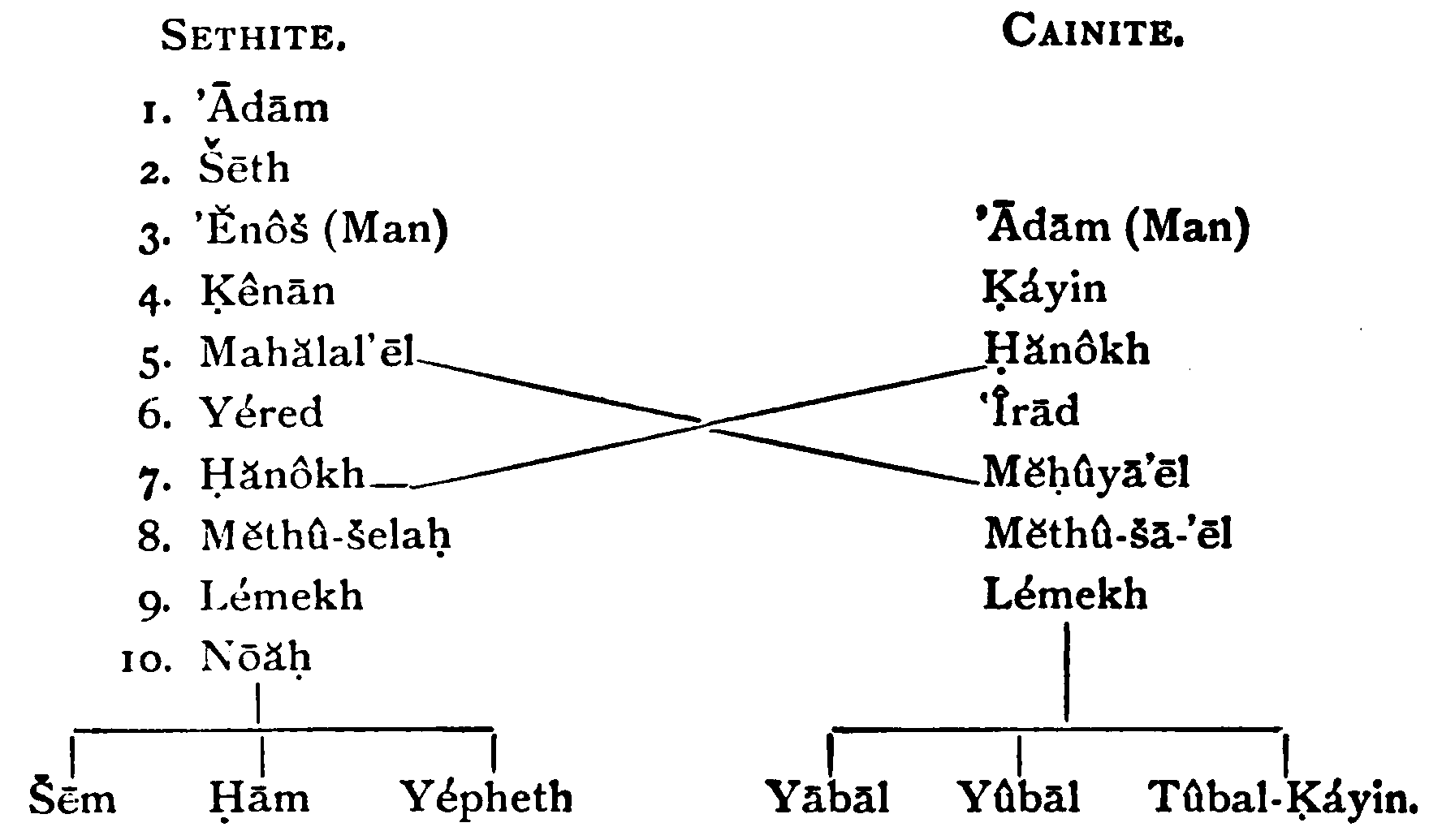
While these resemblances undoubtedly point to some common original, the variations are not such as can be naturally accounted for by direct borrowing of the one list from the other. The facts that each list is composed of a perfect number, and that with the last member the single stem divides into three branches, rather imply that both forms were firmly established in tradition before being incorporated in the biblical documents. If we had to do merely with the Hebrew tradition, the easiest supposition would perhaps be that the Cainite genealogy and the kernel of the Sethite are variants of a single original which might have reached Israel through different channels;¹ that the latter had been expanded by the addition of two names at the beginning and one at the end, so as to bring it into line with the story of the Flood, and the Babylonian genealogy with which it was linked. The difficulty of this hypothesis arises from the curious circumstance that in the Berossian list of kings, just as in the Sethite list of patriarchs, the name for ‘Man’ occupies the third place. It is extremely unlikely that such a coincidence should be accidental; and the question comes to be whether the Assyriologists or the biblical critics can produce the most convincing explanation of it. Now Hommel (Die altorientalischen Denkmäler und das Alte Testament, 26 ff.) argues that if the word for Man is preceded by two others, these others must have been names of superhuman beings; and he thinks that his interpretation of the Babylonian names bears out this anticipation. The first, Aruru, is the creative earth-goddess, and the second, Adapa (= Marduk) is a sort of Logos or Demiurge—a being intermediate between gods and men, who bears elsewhere the title zir amiluti (‘seed of mankind’) but is not himself a man.² And the same thing must, he considers, hold good of Adam and Seth: Adam should be read אֱדֹם, a personification of the earth, and Seth is a mysterious semi-divine personality who was regarded even in Jewish tradition as an incarnation of the Messiah. If these somewhat hazardous combinations be sound, then, of course, the inference must be accepted that the Sethite genealogy is dependent on the Babylonian original of Berossus, and the Cainite can be nothing but a mutilated version of it. It is just conceivable, however, that the Babylonian list is itself a secondary modification of a more primitive genealogy, which passed independently into Hebrew tradition.³
This obscure and obviously fragmentary narrative relates how in the infancy of the human race marriage alliances were believed to have been formed by supernatural beings with mortal women (verses 1. 2); and how from these unnatural unions there arose a race of heroes or demi-gods (verse ⁴), who must have figured largely in Hebrew folklore. It is implied, though not expressly said, that the existence of such beings, intermediate between the divine and the human, introduced an element of disorder into the Creation which had to be checked by the special interposition of Yahwe (verse ³).
The fragment belongs to the class of ætiological myths. The belief in Nĕphîlîm is proved only by Numbers 13³³ (Elohist?); but it is there seen to have been associated with a more widely attested tradition of a race of giants surviving into historic times, especially among the aboriginal populations of Canaan (Deuteronomy 1²⁸ 210. 11. 21 9², Joshua 15¹⁴, Amos 2⁹ etc.). The question was naturally asked how such beings came to exist, and the passage before us supplied the answer. But while the ætiological motive may explain the retention of the fragment in Genesis, it is not to be supposed that the myth originated solely in this reflexion. Its pagan colouring is too pronounced to permit of its being dissociated from two notions prevalent in antiquity and familiar to us from Greek and Latin literature: viz. (1) that among the early inhabitants of the earth were men of gigantic stature;¹ and (2) that marriages of the gods with mortals were not only possible but common in the heroic age.² Similar ideas were current among other peoples. The Ḳoran has frequent references to the peoples of ‛sons of Godal races noted for their giant stature and their daring impiety, to whom were attributed the erection of lofty buildings and the excavation of rock-dwellings, and who were believed to have been destroyed by a divine judgment.³ The legend appears also in the Phœnician traditions of Sanchuniathon, where it is followed by an obscure allusion to promiscuous sexual intercourse which appears to have some remote connexion with Genesis 6².⁴
That the source is Yahwist is not disputed.¹ Dillmann, indeed, following Schrader (Einleitung in das Alte Testament 276), thinks it an extract from Elohist which had passed through the hands of Yahwist; but borrowing by the original Yahwist from the other source is impossible, and the only positive trace of Elohist would be the word נפילים, which in Numbers 13³³ is by some critics assigned to Elohist. That argument would at most prove overworking, and it is too slight to be considered.—The precise position of the fragment among the Yahwistic traditions cannot be determined. The introductory clause “when mankind began to multiply,” etc., suggests that it was closely preceded by an account of the creation of man. There is, however, no reason why it should not have followed a genealogy like that of 417‒24 or 425 f. (against Holzinger), though certainly not that of Priestly-Code in chapter 5. The idea that it is a parallel to the story of the Fall in chapter 3 (Schrader, Dillmann, Wellhausen, Schultz) has little plausibility, though it would be equally rash to affirm that it presupposes such an account.—The disconnectedness of the narrative is probably due to drastic abridgment either by the original writer or later editors, to whom its crudely mythological character was objectionable, and who were interested in retaining no more than was needful to account for the origin of the giants.
There remains the question whether the passage was from the first an introduction to the story of the Deluge. That it has been so regarded from a very early time is a natural result of its present position. But careful examination fails to confirm that impression. The passage contains nothing to suggest the Flood as its sequel, except on the supposition (which we shall see to be improbable) that the 120 years of verse ³ refer to an impending judgment on the whole human race. Even if that view were more plausible than it is, it would still be remarkable that the story of the Flood makes no reference to the expiry of the allotted term; nor to any such incident as is here recorded. The critical probability, therefore, is that 61‒4 belongs to a stratum of Yahwist which knows nothing of a flood (page 2 ff.). The Babylonian Flood-legend also is free from any allusion to giants, or mingling of gods and men. O. Gruppe, however (Philologus, Neue Folge, i. 93 ff.; Zeitschrift für die alttestamentliche Wissenschaft, ix. 134 ff.), claims to have recovered from Greek sources a Phœnician legend of intermarriages between deities and mortals, which presents some striking affinities with Genesis 61‒4, and which leads up to an account of the Flood. Of the soundness of Gruppe’s combinations I am unable to judge; but he himself admits that the Flood is a late importation into Greek mythology, and indeed he instances the passage before us as the earliest literary trace of the hypothetical Phœnician legend. Even, therefore, if his speculations be valid, it would have to be considered whether the later form of the myth may not have been determined partly by Jewish influence, and whether the connexion between the divine intermarriages and the Flood does not simply reproduce the sequence of events given in Genesis. That this is not inconceivable is shown by the fact that on late Phrygian coins the biblical name ΝΩ appears as that of the hero of the Deluge (see page 180 below).
1, 2. The sense of these verses is perfectly clear. The sons of God (בני האלהים) are everywhere in Old Testament members (but probably inferior members) of the divine order, or (using the word with some freedom) angels (v.i.).
“The angels are not called ‘sons of God’ as if they had actually derived their nature from Him as a child from its father; nor in a less exact way, because though created they have received a nature similar to God’s, being spirits; nor yet as if on account of their steadfast holiness they had been adopted into the family of God. These ideas are not found here. The name Elohim or sons (i.e. members of the race) of the Elohim is a name given directly to angels in contrast with men ... the name is given to God and angels in common; He is Elohim pre-eminently, they are Elohim in an inferior sense” (Davidson, Job, Cambridge Bible, page 6).
1. וַיְהִי כִּי] peculiar to Yahwist in Hexateuch; 26⁸ 27¹ 43²¹ 44²⁴, Exodus 1²¹ 13¹⁵, Joshua 17¹³. See Budde 6. The apodosis commences with verse ².—הֵחֵל]
see Holzinger Einleitung in den Hexateuch
97.—על־פני האדמה]
see Oxford Hexateuch i. 187.—2. בני [ה]אלהים]
Job 1⁶ 2¹ 38⁷, [Daniel 3²⁵]; compare ב׳ אלים,
Psalms 29¹ 89⁷. In all these places the superhuman character of the beings denoted is evident,—‘belonging to the category of the gods.’ On this Semitic use of בן,
see William Robertson Smith Kinship and Marriage in Early Arabia², 17; The Prophets of Israel² 85, 389 f.
(1) The phrase is so understood by LXX (οἱ ἄγγελοι [also υἱοὶ] τοῦ θεοῦ),
Theodotion, Jubilees v. 1, Enoch vi. 2 ff.
(Jude ⁶, 2 Peter 2⁴), Josephus Antiquities of the Jews i. 73;
Fathers down to Cyprian and Lactantius, and nearly all moderns. [Peshiṭtå transliterates 
 as in Job 1⁶ 2¹.] (2) Amongst the Jews this view was early displaced by another, according to which the ‘sons of the gods’ are members of aristocratic families in distinction from women of humble rank: TargumOnkelos-Jonathan (בני רברביא),
Symmachus (τῶν δυναστευόντων),
Bereshith Rabba, Rashi, Abraham Ibn Ezra [Aquila (υἱοὶ τῶν θεῶν)
is explained by Jeremias as ‘deos intelligens sanctos sive angelos’].
So Spinoza, Herder, al.
(3) The prevalent Christian interpretation (on the rise of which see Charles’s valuable Note, Book of Jubilees 33 ff.)
has been to take the phrase in an ethical sense as denoting pious men of the line of Seth: Julius Africanus, most Fathers, Luther, Calvin, al.:
still maintained by Strack. Against both these last explanations it is decisive that בנות האדם
cannot have a narrower reference in verse ² than in verse ¹; and that consequently בני ה׳
cannot denote a section of mankind. For other arguments, see Lenormant, Les Origines de l’histoire² 291 ff.;
the Commentary of Delitzsch (146 ff.), Dillmann (119 f.), or Driver (82 f.).
On the eccentric theory of Stuart Poole, that the sons of God were a wicked pre-Adamite race, see Lenormant 304 ff.—ויקחו ... נשים]
= ‘marry’: 4¹⁹ 11²⁹ 25¹ 36² etc.—מכּל אשר]
‘consisting of all whom,’—the rare מן
of explication; Brown-Driver-Briggs, s.v.
3b (e); compare Gesenius-Kautzsch § 119 w²:
Genesis 7²² 9¹⁰.
as in Job 1⁶ 2¹.] (2) Amongst the Jews this view was early displaced by another, according to which the ‘sons of the gods’ are members of aristocratic families in distinction from women of humble rank: TargumOnkelos-Jonathan (בני רברביא),
Symmachus (τῶν δυναστευόντων),
Bereshith Rabba, Rashi, Abraham Ibn Ezra [Aquila (υἱοὶ τῶν θεῶν)
is explained by Jeremias as ‘deos intelligens sanctos sive angelos’].
So Spinoza, Herder, al.
(3) The prevalent Christian interpretation (on the rise of which see Charles’s valuable Note, Book of Jubilees 33 ff.)
has been to take the phrase in an ethical sense as denoting pious men of the line of Seth: Julius Africanus, most Fathers, Luther, Calvin, al.:
still maintained by Strack. Against both these last explanations it is decisive that בנות האדם
cannot have a narrower reference in verse ² than in verse ¹; and that consequently בני ה׳
cannot denote a section of mankind. For other arguments, see Lenormant, Les Origines de l’histoire² 291 ff.;
the Commentary of Delitzsch (146 ff.), Dillmann (119 f.), or Driver (82 f.).
On the eccentric theory of Stuart Poole, that the sons of God were a wicked pre-Adamite race, see Lenormant 304 ff.—ויקחו ... נשים]
= ‘marry’: 4¹⁹ 11²⁹ 25¹ 36² etc.—מכּל אשר]
‘consisting of all whom,’—the rare מן
of explication; Brown-Driver-Briggs, s.v.
3b (e); compare Gesenius-Kautzsch § 119 w²:
Genesis 7²² 9¹⁰.
In an earlier polytheistic recension of the myth, they were perhaps called אלהים simply. It is only a desire to save the credibility of the record as literal history, that has prompted the untenable interpretations mentioned in the note below.—2. These superhuman beings, attracted by the beauty of the daughters of men (i.e. mortal women) took to themselves as wives (strictly implying permanent marriages, but this must not be pressed) whomsoever they chose. No sin is imputed to mankind or to their daughters in these relations. The guilt is wholly on the side of the angels; and consists partly, perhaps, in sensuality, partly in high-handed disregard of the rights of God’s lower creatures.—It is to be noted, in contrast with analogous heathen myths, that the divine element is exclusively masculine.
3. A divine sentence on the human race, imposing a limit on the term of man’s life.—My spirit shall not [... in?] man for ever; [...?] he is flesh, and his days shall be 120 years.
A complete exegesis of these words is impossible, owing first to the obscurity of certain leading expressions (see the footnote), and second to the want of explicit connexion with what precedes. The record has evidently undergone serious mutilation. The original narrative must have contained a statement of the effects on human life produced by the superhuman alliances,—and that opens up a wide field of speculation;¹—and possibly also an account of the judgment on the sons of God, the really guilty parties in the transaction. In default of this guidance, all that can be done is to determine as nearly as possible the general sense of the verse, assuming the text to be fairly complete, and a real connexion to exist with verses 1. 2.—(i.) Everything turns on the meaning of the word רוּחַ, of which four interpretations have been given: (1) That רוּחִי is the Spirit of Yahwe as an ethical principle, striving against and ‘judging’ the prevalent corruption of men (as in Isaiah 63¹⁰); so Symmachus, TargumJonathan, Luther, al. There is nothing to suggest that view except the particular acceptation of the verb ידון associated with it, and it is now practically abandoned. (2) Even less admissible is the conception of Klostermann, who understands רוּחִי subjectively of the divine feeling (Gemüt) excited by human sin² (similarly Rashi). (3) The commonest view in modern times (see Dillmann) has been that רוּחַ is the divine principle of life implanted in man at creation, the tenor of the decree being that this shall not ‘abide’³ in man eternally or indefinitely, but only in such measure as to admit a maximum life of 120 years. There are two difficulties in this interpretation: (a) It has no connexion with what precedes, for everything the verse contains would be quite as intelligible apart from the marriages with the angels as in relation to them.⁴ (b) The following words הוא בשׂר have no meaning: as a reason for the withdrawal of the animating spirit they involve a hysteron proteron; and as an independent statement they are (on the supposition) not true, man as actually constituted being both flesh and spirit (2⁷). (4) The most probable sense is that given by Wellhausen (Die Composition des Hexateuchs und der historischen Bücher des Alten Testaments² 305 ff.), viz. that רוח is the divine substance common to Yahwe and the angels, in contrast to בָּשָׂר, which is the element proper to human nature (compare Isaiah 31³): so Holzinger, Gunkel. The idea will then be that the mingling of the divine and human substances brought about by illicit sexual unions has introduced a disorder into the creation which Yahwe cannot suffer to ‘abide’ permanently, but resolves to end by an exercise of His supreme power.—(ii.) We have next to consider whether the 120 years, taken in its natural sense of the duration of individual life (v.i.), be consistent with the conclusion just reached. Wellhausen himself thinks that it is not: the fusion of the divine and human elements would be propagated in the race, and could not be checked by a shortening of the lives of individuals. The context requires an announcement of the annihilation of the race, and the last clause of the verse must be a mistaken gloss on the first. If this argument were sound it would certainly supply a strong reason either for revising Wellhausen’s acceptation of 3a, or for understanding 3b as an announcement of the Flood. But a shortening of the term of life, though not a logical corollary from the sin of the angels, might nevertheless be a judicial sentence upon it. It would ensure the extinction of the giants within a measurable time; and indirectly impose a limit on the new intellectual powers which we may suppose to have accrued to mankind at large through union with angelic beings.⁵ In view of the defective character of the narrative, it would be unwise to press the antagonism of the two clauses so as to put a strain on the interpretation of either.
3. יהוה] LXX Κύριος ὁ θεός.—יָדוֹן] There are two traditional interpretations: (a) ‘abide’: so LXX (καταμείνῃ), Vulgate, Peshiṭtå, TargumOnkelos; (b) ‘judge’ (Symmachus κρινεῖ: so TargumJonathan). The former is perhaps nothing more than a plausible guess at the meaning, though a variant text has been suspected (ילון, ידור, יִכּוֹן, etc.). The latter traces the form to the √ דין; but the etymology is doubtful, since that √ shows no trace of medial ו in Hebrew (Nöldeke Zeitschrift der deutschen morgenländischen Gesellschaft, xxxvii. 533 f.); and to call it a jussive or intransitive form is an abuse of grammatical language (see Gesenius-Kautzsch § 71 r). A Jewish derivation, mentioned by Abraham Ibn Ezra and Calvin, connects the verb with נָדָן, ‘sheath’ (1 Chronicles 21²⁷),—the body being compared to the sheath of the spirit. The Arabic dāna (medial w) = ‘be humbled’ or ‘degraded,’ yields but a tolerable sense (Tuch, Ewald, al.); the Egyptian Arabic dāna, which means ‘to do a thing continually’ (Socin; see Gesenius-Buhl s.v.), would suit the context well, but can hardly be the same word. Vollers (Zeitschrift für Assyriologie, xiv. 349 ff.) derives it from √ דנן, Assyrian danânu = ‘be powerful’; the idea being that the life-giving spirit shall no longer have the same force as formerly, etc. It would be still better if the verb could be taken as a denominative from Assyrian dinânu, ‘bodily appearance,’ with the sense “shall not be embodied in man for ever.”—בָּאָדָם] LXX ἐν τοῖς ἀνθρώποις τούτοις, whence Klostermann restores באדם הַזֶּה¹ = ‘this humanity,’ as distinguished from that originally created,—an impossible exegesis, whose sole advantage is that it gives a meaning to the גַּם in בְּשֶׂגַּם (v.i.).—לְעוֹלָם—לֹא (thus separated)] here = ‘not ... for ever,’ as Jeremiah 3¹², Lamentations 3³¹; elsewhere (Psalms 15⁵ etc.) the phrase means ‘never.’—בְּשֶׂגָּם] so pointed in the majority of MSS, is infinitive construct of שָׁגַג, ‘err,’ with suffix. This sense is adopted by many (Tuch, Ewald, Budde, Holzinger, al.), but it can hardly be right. If we refer the suffix to הָאָדָם, the enallage numeri (‘through their erring he is flesh’) would be harsh, and the idea expressed unsuitable. If we refer it to the angels, we can avoid an absurdity only by disregarding the accents and joining the word with what precedes: ‘shall not (abide?) in man for ever on account of their (the angels’) erring; he is flesh, and,’ etc. The sentence is doubly bad in point of style: the first member is overloaded at the end by the emphatic word; and the second opens awkwardly without a connecting participle. Moreover, it is questionable if the idea of שׁגג (inadvertent transgression) is appropriate in the connexion. Margoliouth (Expositor, 1898, ii. 33 ff.) explains the obscure word by Aethiopian shegā = ‘body’; but the proposed rendering, ‘inasmuch as their body (or substance) is flesh,’ is not grammatically admissible. The correct Massoretic reading is בְּשֶׂגַּם (i.e. גַּם + שֶׁ + בְּ) = inasmuch as he too. The objections to this are (a) that the relative שֶׁ is never found in Pentateuch, and is very rare in the older literature (Judges 5⁷ 6¹⁷ 7¹² 8²⁶), while compounds like בְּ׳ do not appear before Ecclesiastes (e.g. 2¹⁶); and (b) that the גַּם has no force, there being nothing which serves as a contrast to הוּא. Wellhausen observes that בְּ׳ must represent a causal particle and possibly nothing more. The old translators, LXX (διὰ τὸ εἶναι αὐτοὺς) Peshiṭtå, Vulgate, TargumOnkelos seem to have been of the same opinion; and it is noticeable that none of them attempt to reproduce the גַּם. The conjectures of Olshausen (לָבַשׁ גַּם), Cheyne (בְּמִשְׁכְּנוֹת בָּשָׂר), and others are all beside the mark.—והיו ימיו וגו׳] The only natural reference is to the (maximum) term of human life (so Josephus, Tuch, Ewald, and most since), a man’s יָמִים being a standing expression for his lifetime, reckoning from his birth (see chapter 5. 35²⁸, Isaiah 65²⁰ etc.). The older view (TargumOnkelos-Jonathan, Jerome, Rashi, Abraham Ibn Ezra, Calvin, al.: so Delitzsch, Klostermann), that the clause indicates the interval that was to elapse before the Flood, was naturally suggested by the present position of the passage, and was supported by the consideration that greater ages were subsequently attained by many of the patriarchs. But these statements belong to Priestly-Code, and decide nothing as to the meaning of the words in Yahwist.
4. The Nĕphîlîm were (or arose) in the earth in those days] Who were the נְפִלִים? The name recurs only in Numbers 13³³, where we learn that they were conceived as beings of gigantic stature, whose descendants survived till the days of Moses and Joshua. The circumstantial form of the sentence here (compare 12⁶ 13⁷) is misleading, for the writer cannot have meant that the נ׳ existed in those days apart from the alliances with the angels, and that the result of the latter were the גִּבּוֹרִים (Lenormant, al.). The idea undoubtedly is that this race arose at that time in consequence of the union of the divine ‘spirit’ with human ‘flesh.’—and also afterwards whenever (LXX ὡς ἂν) the sons of the gods came in ... and they (the women) bore unto them] That is to say, the production of Nephîlîm was not confined to the remote period indicated by verse 1 f., but was continued in after ages through visits of angels to mortal wives,—a conception which certainly betrays the hand of a glossator. It is perhaps enough to remove וְגַם אַֽחֲרֵי־כֵן as an interpolation, and connect the אֲשֶׁר with בַּֽיָּמִים הָהֵם; though even then the phrasing is odd (v.i.).—Those are the heroes (הַגִּבּוֹּרִים) that were of old, the men of fame] (אַנְשֵׁי הַשֵּׁם, compare Numbers 16²). הֵמָּה has for its antecedent not אֲשֶׁר as objective to יָֽלְדוּ (Wellhausen), but הַנְּפִלִים. There is a touch of euhemerism in the notice (Wellhausen), the archaic and mythological נְפִלִים being identified with the more human גִּבּוֹרִים who were renowned in Hebrew story.
It is probable that the legend of the Nephîlîm had a wider circulation in Hebrew tradition than could be gathered from its curt handling by the editors of the Hexateuch. In Ezekiel 32 we meet with the weird conception of a mighty antique race who are the original denizens of Sheol, where they lie in state with their swords under their heads, and are roused to a transient interest in the newcomers who disturb their majestic repose. If Cornill’s correction of verse ²⁷ (גבורים נְפִלִים מעולם) be sound, these are to be identified with the Nephîlîm of our passage; and the picture throws light on two points left obscure in Genesis: viz., the character of the primæval giants, and the punishment meted out to them. Ezekiel dwells on their haughty violence and warlike prowess, and plainly intimates that for their crimes they were consigned to Sheol, where, however, they enjoy a kind of aristocratic dignity among the Shades. It would almost seem as if the whole conception had been suggested by the supposed discoveries of prehistoric skeletons of great stature, buried with their arms beside them, like those recorded by Pausanias (i. 35. 5 f., viii. 29. 3, 32. 4) and other ancient writers (see William Robertson Smith in Driver A critical and exegetical commentary on Deuteronomy 40 f.).
4. הַנְּפִלִים] LXX οἱ γίγαντες; Aquila οἱ ἐπιπίπτοντες; Symmachus οἱ βίαιοι; Peshiṭtå  ;
TargumOnkelos גבריא.
The etymology is uncertain (see Dillmann 123). There is no allusion to a ‘fall’ (√ נָפַל)
of angels from heaven (TargumJonathan, Jerome¹,
Rashi), or to a ‘fall’ of the world through their action (Bereshith Rabba, Rashi). A connexion with נֵפֶל,
‘abortive birth’ (from נָפַל,
‘fall dead’), is not improbable (Schwally, Zeitschrift für die alttestamentliche Wissenschaft, xviii. 144 ff.).
An attractive emendation of Cornill (נְפִילִים מֵעוֹלָם)
in Ezekiel 32²⁷ not only yields a striking resemblance to this verse, but supports the idea that the נ׳ (like the רְפָאִים)
were associated with the notion of Sheol.—אחרי כן אשר]
cannot mean ‘after’ (as conjunction), which would require a perfect to follow, but only ‘afterwards, when.’ On any view, יָבֹאוּ; and וְיָלְדוּ
are frequentative tenses.—בוא אל]
(as euphemism) is characteristic of Jehovist (especially Yahwist) in Hexateuch (Budde 39, Anm.). Compare William Robertson Smith Kinship and Marriage in Early Arabia², 198 ff.—חַגִּבּוֹרִים]
literally ‘mighty ones’ (Aquila δυνατοί; Vulgate potentes; LXX,
Symmachus, Peshiṭtå, TargumOnkelos do not distinguish from נפילים).
The word is thoroughly naturalised in Hebrew speech, and nearly always in a good sense. But passages like Ezekiel 3212 ff.
show that it had another aspect, akin to Arabic ǧabbār (proud, audacious, tyrannical). The Arabic and Syrian equivalents are used as names of the constellation Orion (Lane, An Arabic-English Lexicon i. 375 a; Robert Payne Smith Thesaurus Syriacus 646).—אשר מעולם] compare עַם עוֹלָם,
Ezekiel 26²⁰, probably an allusion to a wicked ancient race thrust down to Sheol.—The whole verse has the appearance of a series of antiquarian glosses; and all that can be strictly inferred from it is that there was some traditional association of the Nephîlîm with the incident recorded in verse 1 f.
At the same time we may reasonably hold that the kernel of the verse reproduces in a hesitating and broken fashion the essential thought of the original myth. The writer apparently shrinks from the direct statement that the Nephîlîm were the offspring of the marriages of verses 1. 2, and tantalises the curiosity of his readers with the cautious affirmation that such beings then existed. A later hand then introduced a reminder that they existed ‘afterwards’ as well.—Budde, who omits verse ³, restores the original connexion with verse 1 f. as follows: [והיה כאשר] יבאו בני האלהים ... [וכן] היו הנפלים בארץ בימים ההם.
Some such excellent sentence may very well have stood in the original; but it was precisely this perspicuity of narration which the editor wished to avoid.
;
TargumOnkelos גבריא.
The etymology is uncertain (see Dillmann 123). There is no allusion to a ‘fall’ (√ נָפַל)
of angels from heaven (TargumJonathan, Jerome¹,
Rashi), or to a ‘fall’ of the world through their action (Bereshith Rabba, Rashi). A connexion with נֵפֶל,
‘abortive birth’ (from נָפַל,
‘fall dead’), is not improbable (Schwally, Zeitschrift für die alttestamentliche Wissenschaft, xviii. 144 ff.).
An attractive emendation of Cornill (נְפִילִים מֵעוֹלָם)
in Ezekiel 32²⁷ not only yields a striking resemblance to this verse, but supports the idea that the נ׳ (like the רְפָאִים)
were associated with the notion of Sheol.—אחרי כן אשר]
cannot mean ‘after’ (as conjunction), which would require a perfect to follow, but only ‘afterwards, when.’ On any view, יָבֹאוּ; and וְיָלְדוּ
are frequentative tenses.—בוא אל]
(as euphemism) is characteristic of Jehovist (especially Yahwist) in Hexateuch (Budde 39, Anm.). Compare William Robertson Smith Kinship and Marriage in Early Arabia², 198 ff.—חַגִּבּוֹרִים]
literally ‘mighty ones’ (Aquila δυνατοί; Vulgate potentes; LXX,
Symmachus, Peshiṭtå, TargumOnkelos do not distinguish from נפילים).
The word is thoroughly naturalised in Hebrew speech, and nearly always in a good sense. But passages like Ezekiel 3212 ff.
show that it had another aspect, akin to Arabic ǧabbār (proud, audacious, tyrannical). The Arabic and Syrian equivalents are used as names of the constellation Orion (Lane, An Arabic-English Lexicon i. 375 a; Robert Payne Smith Thesaurus Syriacus 646).—אשר מעולם] compare עַם עוֹלָם,
Ezekiel 26²⁰, probably an allusion to a wicked ancient race thrust down to Sheol.—The whole verse has the appearance of a series of antiquarian glosses; and all that can be strictly inferred from it is that there was some traditional association of the Nephîlîm with the incident recorded in verse 1 f.
At the same time we may reasonably hold that the kernel of the verse reproduces in a hesitating and broken fashion the essential thought of the original myth. The writer apparently shrinks from the direct statement that the Nephîlîm were the offspring of the marriages of verses 1. 2, and tantalises the curiosity of his readers with the cautious affirmation that such beings then existed. A later hand then introduced a reminder that they existed ‘afterwards’ as well.—Budde, who omits verse ³, restores the original connexion with verse 1 f. as follows: [והיה כאשר] יבאו בני האלהים ... [וכן] היו הנפלים בארץ בימים ההם.
Some such excellent sentence may very well have stood in the original; but it was precisely this perspicuity of narration which the editor wished to avoid.
Analysis of the Flood-Narrative.—The section on the Flood (6⁵‒9¹⁷) is, as has often been observed, the first example in Genesis of a truly composite narrative; i.e., one in which the compiler “instead of excerpting the entire account from a single source, has interwoven it out of excerpts taken alternatively from Yahwist and Priestly-Code, preserving in the process many duplicates, as well as leaving unaltered many striking differences of representation and phraseology” (Driver 85). The resolution of the compound narrative into its constituent elements in this case is justly reckoned amongst the most brilliant achievements of purely literary criticism, and affords a particularly instructive lesson in the art of documentary analysis (compare the interesting exposition by Gunkel² 121 ff.). Here it must suffice to give the results of the process, along with a summary of the criteria by which the critical operation is guided and justified. The division generally accepted by recent critics is as follows:
| Yahwist | Priestly-Code |
|---|---|
| 65‒8 | |
| 9‒22 | |
| 71‒5 | |
| ⁶ | |
| 7 (8. 9). 10 | |
| ¹¹ | |
| ¹² | |
| 13‒16a | |
| 16b | |
| 17a | |
| 17b | |
| 18‒21 | |
| 22. 23 | |
| 7²⁴ 81. 2a | |
| 2b. 3a | |
| 3b‒5 | |
| 6‒12 | |
| 13a | |
| 13b | |
| 14‒19 | |
| 20‒22 | |
| 91‒17 |
The minutiæ of glosses, transpositions, etc., are left to be dealt with in the Notes. Neglecting these, the scheme as given above represents the results of Budde (to whom the finishing touches are due: Die biblische Urgeschichte 248 ff.) Gunkel and Holzinger. Dillmann agrees absolutely, except that he assigns 7¹⁷ wholly to Yahwist, and 723b to Priestly-Code; and Wellhausen, except with regard to 7¹⁷ (Yahwist) 83. 13, which are both assigned entirely to Priestly-Code. The divergences of Kuenen and Cornill are almost equally slight; and indeed the main outlines of the analysis were fixed by the researches of Hupfeld, Nöldeke, and Schrader.—This remarkable consensus of critical opinion has been arrived at by four chief lines of evidence: (1) Linguistic. The key to the whole process is, of course, the distinction between the divine names יהוה (65. 6. 7. 8 71. 5. 16b 820. 21) and אלהים (69. 11. 12. 13. 22 716a 81. 15 91. 6. 8. 12. 16. 17). Besides this, a number of characteristic expressions differentiate the two sources. Thus Yahwist’s איש ואשתו (7²) answers to Priestly-Code’s זכר ונקבה¹ (6¹⁹ 7(9). 16); מחה (6⁷ 74. 23) to שִׁחֵת and השחית (613. 17 911. 15); מות (7²²) to גָוַע¹ (6¹⁷ 7²¹); כל־היקום (74. 23) to כל־בשר¹ (612. 13. 17 7²¹ and often); קל (88. 11) and שוּב (73a) to חסר (8⁵); חרב (813b) to יבש (8¹⁴) [but see on 813b]; נשמת חיים (8²²) to רוח חיים (6¹⁷); לְחַיּוֹת (7³) to לְהַֽחֲיוֹת (619. 20); כל־ביתך (7¹) to the specific enumerations of 6¹⁸ 7(7). 13 816. 18. (Compare the list in Holzinger Genesis erklärt page 68).—(2) Diversity of representation. In Yahwist clean and unclean animals are distinguished, the former entering the ark by sevens and the latter in pairs (7², compare 8²⁰); in Priestly-Code one pair of every kind without distinction is admitted (619 f. 715 f.). According to Yahwist, the cause of the Flood is a forty-days’ rain which is to commence seven days after the command to enter the ark (74. 10. 12 82b. 6)—the latter passage showing that the waters began to subside after the 40 days. In Priestly-Code we have (7¹¹ 82a) a different conception of the cause of the Flood; and, in 76. 11. 13. 24 83b. 4. 5. 13a. 14, a chronological scheme according to which the waters increase for 150 days, and the entire duration of the Flood is one year (see page 167 ff.).—(3) Duplicates. The following are obviously parallels from the two documents: 65‒8 ∥ 611‒13 (occasion of the Flood); 71‒5 ∥ 617‒22 (command to enter the ark, and announcement of the Flood); 7⁷ ∥ 7¹³ (entering of the ark); 7¹⁰ ∥ 7¹¹ (coming of the Flood); 717b ∥ 7¹⁸ (increase of the waters: floating of the ark); 722 f. ∥ 7²¹ (destruction of terrestrial life); 82b. 3a ∥ 81 f. (abatement of the Flood); 813b ∥ 813a. 14 (drying of the earth); 820‒22 ∥ 98 ff. (promise that the Flood shall not recur).—(4) The final confirmation of the theory is that the two series of passages form two all but continuous narratives, which exhibit the distinctive features of the two great sources of the primitive history, Yahwist and Priestly-Code. The Yahwist sections are a graphic popular tale, appealing to the imagination rather than to the reasoning faculties. The aim of the writer, one would say, was to bring the cosmopolitan (Babylonian) Flood-legend within the comprehension of a native of Palestine. The Deluge is ascribed to a familiar cause, the rain; only, the rain lasts for an unusual time, 40 days. The picturesque incident of the dove (see 8⁹) reveals the touch of descriptive genius which so often breaks forth from this document. The boldest anthropomorphisms are freely introduced into the conception of God (66 f. 716b 8²¹); and the religious institutions of the author’s time are unhesitatingly assumed for the age of Noah.—Still more pronounced are the characteristics of Priestly-Code in the other account. The vivid details which are the life and charm of the older narrative have all disappeared; and if the sign of the rainbow (912‒17) is retained, its æsthetic beauty has evaporated. For the rest, everything is formal, precise, and calculated,—the size of the ark, the number of the persons and the classification of the animals in it, the exact duration of the Flood in its various stages, etc.: if these mathematical determinations are removed, there is little story left. The real interest of the writer is in the new departure in God’s dealings with the world, of which the Flood was the occasion,—the modification of the original constitution of nature, 91‒7, and the establishment of the first of the three great covenants, 98‒17. The connexion of the former passage with Genesis 1 is unmistakably evident. Very significant are the omission of Noah’s sacrifice, and the ignoring of the laws of cleanness and uncleanness amongst animals.²
The success of the critical process is due to the care and skill with which the Redactor (RedactorJahwist/Priestly-Code) has performed his task. His object evidently was to produce a synthetic history of the Flood without sacrificing a scrap of information that could with any plausibility be utilised for his narrative. The sequence of Priestly-Code he appears to have preserved intact, allowing neither omissions nor transpositions. Of Yahwist he has preserved quite enough to show that it was originally a complete and independent narrative; but it was naturally impracticable to handle it as carefully as the main document. Yet it is doubtful if there are any actual lacunæ except (a) the account of the building of the ark (between 6⁸ and 7¹), and (b) the notice of the exit from it (between 813b and ²⁰). The middle part of the document, however, has been broken up into minute fragments, and these have been placed in position where they would least disturb the flow of narration. Some slight transpositions have been made, and a number of glosses have been introduced; but how far these last are due to the Redactor himself and how far to subsequent editors, we cannot tell (for details see the notes). Duplicates are freely admitted, and small discrepancies are disregarded; the only serious discrepancy (that of the chronology) is ingeniously surmounted by making Yahwist’s 40 days count twice, once as a stage of the increase of the Flood (7¹²) and once as a phase of its decrease (8⁶).¹ This compound narrative is not destitute of interest; but for the understanding of the ideas underlying the literature the primary documents are obviously of first importance. We shall therefore treat them separately.
VI. 5‒8. The occasion of the Flood:—Yahwe’s experience of the deep-seated and incurable sinfulness of human nature. It is unnecessary to suppose that a description of the deterioration of the race has been omitted, or displaced by 61‒4 (Holzinger). The ground of the pessimistic estimate of human nature so forcibly expressed in verse ⁵ is rather the whole course of man’s development as hitherto related, which is the working out of the sinful knowledge acquired by the Fall. The fratricide of Cain, the song of Lamech, the marriages with the angels, are incidents which, if not all before the mind of the writer of the Flood-story, at least reveal the gloomy view of the early history which characterises the Yahwistic tradition.—5. the whole bent (literally ‘formation’) of the thoughts of his heart] It is difficult to say whether יֵצֶר is more properly the ‘form’ impressed on the mind (the disposition or character), or ‘that which is formed’ by the mind (imagination and purpose—Sinnen und Trachten): compare 8²¹, Deuteronomy 31²¹, Isaiah 26³ (Psalms 103¹⁴?), 1 Chronicles 28⁹ 29¹⁸; v.i.—6. The anthropopathy which attributes to Yahwe regret (וַיִּנָּחֶם) and vexation (וַיִּתְעַצֵּב) because He had created man is unusually strong. Although in the sense of mere change of purpose, the former is often ascribed to God (Exodus 32¹⁴, Jeremiah 187. 8 263. 13, Joel 2¹³, Jonah 3¹⁰ etc.), the cases are few where divine regret for accomplished action is expressed (1 Samuel 15¹¹). The whole representation was felt to be inadequate (Numbers 23¹⁹, 1 Samuel 15¹¹); yet it continued to be used as inseparable from the religious view of history as the personal agency of Yahwe.—7. God’s resolve to blot out (מָחָה) the race: not as yet communicated to Noah, but expressed in monologue.—8. But Noah had found favour, etc.] doubtless on account of his piety; but see on 7¹. The Yahwistic narrative must have contained some previous notice of Noah, probably at the end of a genealogy.
5. יהוה LXX Κύριος ὁ θεός (so verse ⁸).—וכל־יצר וגו׳] LXX loosely: καὶ πᾶς τις διανοεῖται (יֹצֵר?) ἐν τῇ καρδίᾳ αὐτοῦ ἐπιμελῶς ἐπὶ τὰ πονηρά; Vulgate cuncta cogitatio. Another Greek rendering (ὁ Ἑβρ., see Field, ad loc.) is φυσικὸν τοῦ ἀνθ.; but in 8²¹ the same translator has τὸ πλάσμα τῆς καρ. ἀνθ. On the later Jewish theologoumenon of the יצר הרע (the evil impulse in man, also called יצר simply) which is based on this passage, and by Jewish commentaries (Rashi on 8²¹) is found here; see Taylor, Sayings of Jewish Fathers², 37, 148 ff.; Frank C. Porter, Biblical and Semitic Studies; critical and historical essays by the members of the Semitic and Biblical faculty of Yale University (1901), 93 ff.—כל־היום] ‘continually’; see Brown-Driver-Briggs, 400 b.—6. יהוה] LXX ὁ θεός (so verse ⁷).—ויתעצב] Genesis 34⁷; compare Isaiah 63¹⁰ (Piel). Rashi softens the anthropomorphism by making the impending destruction of the creatures the immediate object of the divine grief.—7. אמחה] compare 74. 23. In the full sense of ‘exterminate’ (as distinct from ‘obliterate’ [name, memory, etc.]) the verb is peculiar to Yahwist’s account of the Flood; contrast Numbers 5²³ 34¹¹ (Priestly-Code).—The verse is strongly interpolated. The clauses אשר בראתי and מאדם ... השמים are in the style of Priestly-Code (compare 6²⁰ 714. 21 817. 19 9² etc.); and the latter is, besides, an illogical specification of האדם. They are redactional glosses, the original text being אמחה את־האדם מעל פני האדמה כי נחמתי כי עשיתים (Budde 249 ff.; Dillmann 125).—8. מצא חן בעיני] characteristic of, though not absolutely confined to, Yahwist: 19¹⁹ 32⁶ 338. 15 34¹¹ 39⁴ 47²⁵ etc. (Holzinger Einleitung in den Hexateuch 97 f.).
VII. 1‒5. Announcement of the Flood.—The section is an almost exact parallel to 617‒22 (Priestly-Code). Verse ¹ presupposes in Yahwist a description of the building of the ark, which the redactor has omitted in favour of the elaborate account of Priestly-Code. Not till the work is finished does Yahwe reveal to Noah the purpose it is to serve: verse ⁴ is obviously the first intimation that has been given of the approaching deluge. The building of the ark in implicit obedience to the divine command is thus a great test and proof of Noah’s faith; compare Hebrews 11⁷.—1. Thou and all thy house] Yahwist’s brevity is here far more expressive than the formal enumerations of Priestly-Code (6¹⁸ 7¹³ 816. 18). The principle involved is the religious solidarity of the family; its members are saved for the righteousness of its head (compare 19¹²).—thee have I seen (to be) righteous (צַדִּיק, see on 6⁹)] Budde and others take this to be a judgement based on Noah’s obedience in building the ark; but that is hardly correct. The verb is not מצא but ראה, which has precisely the same force as the וירא of 6⁵. Compare also 6⁸.—2. clean (טְהוֹר) means, practically, fit for sacrifice and human food; the technical antithesis is טָמֵא, which, however, is here avoided, whether purposely (Delitzsch 174) or not it is impossible to say. The distinction is not, as was once supposed (see Tuch), a proof of Yahwist’s interest in Levitical matters, but, on the contrary, of the naïveté of his religious conceptions. He regards it as rooted in the nature of things, and cannot imagine a time when it was not observed. His view is nearer the historical truth than the theory of Priestly-Code, who traces the distinction to the positive enactments of the Sinaitic legislation (Leviticus 11, Deuteronomy 14), and consequently ignores it here. The same difference of standpoint appears with regard to sacrifice, altars, etc.: see 43 f. 8²⁰ 12⁷ etc.—שִׁבְעָה שִׁבְעָה] by sevens (Gesenius-Kautzsch § 134 q); i.e. ‘7 (individuals) of each kind’ (Delitzsch, Stade, al.), rather than ‘7 pairs’ (Bereshith Rabba, Abraham Ibn Ezra, Dillmann, Gunkel, al.),—in spite of the following איש ואשתו. It is a plausible conjecture (Rashi, Delitzsch, Strack) that the odd individual was a male destined for sacrifice (8²⁰).—3a presents an impure text (v.i.), and must either be removed as a gloss (Kuenen, Budde, Holzinger, Gunkel, al.) or supplemented with LXX (Ball, Bennett).—3b. to keep seed alive, etc.] reads better as the continuation of ² than of 3a.—4. With great rhetorical effect, the reason for all these preparations—the coming of the Flood—is reserved to the end. Yahwist knows no other physical cause of the Deluge than the 40 days’ rain (compare verse ¹²).—5. Compare 6²² (Priestly-Code).
1. יהוה] The Samaritan Recension of the Pentateuch, Peshiṭtå אלהים; LXX Κύριος ὁ θεός.—צדיק]
predicate accusative; Davidson § 76.—2. For שנים,
The Samaritan Recension of the Pentateuch, LXX,
Peshiṭtå, Vulgate read שנים שנים,—probably
correctly.—איש ואשתו (bis)]
The Samaritan Recension of the Pentateuch זכר ונקבה,
assimilating Yahwist to Priestly-Code.—3a. The distinction to be expected between clean and unclean birds is made imperfectly by The Samaritan Recension of the Pentateuch and Peshiṭtå, which insert הטהור after השמים;
and fully by LXX,
which goes further and adds the words καὶ ἀπὸ παντῶν τῶν πετεινῶν τῶν μὴ καθαρῶν δύο δύο ἄρσεν καὶ θῆλυ.
Ball accepts this, thinking the omission in Massoretic Text due to homoioteleuton. But the phrase זכר ונקבה
shows that 3a has been manipulated; and it is on the whole more likely that it is entirely redactional. Birds may be included in the הבהמה
of verse ²; though Budde’s parallels (Exodus 813 f.
99. 22. 25, Jeremiah 32⁴³ 3310. 12 36²⁹, Psalms 36⁷) are not quite convincing.—3b. לְחַיּוֹת]
Priestly-Code uses Hiphil (619 f.).—זֶרַע]
as Jeremiah 31²⁷.—4. לימים] On לְ
as denoting the close of a term (compare verse ¹⁰), see Brown-Driver-Briggs, s.v. 6b.—הַיְקוּם]
a rare word (only 7²³, Deuteronomy 11⁶), meaning ‘that which subsists’ (√ קום). LXX ἀνάστεμα
(other examples in Field, ἐξανάστασιν), Vulgate substantia, Peshiṭtå 
 .
On the form see Barth, Die Nominalbildung in den Semitischen Sprachen
181; König ii.
146; Gesenius-Kautzsch § 85 d.
.
On the form see Barth, Die Nominalbildung in den Semitischen Sprachen
181; König ii.
146; Gesenius-Kautzsch § 85 d.
7‒10, 12, 16b, 17b, 22, 23.—Entrance into the ark and description of the Flood.—Yahwist’s narrative has here been taken to pieces by the Redactor, who has fitted the fragments into a new connexion supplied by the combined accounts of Yahwist and Priestly-Code. The operation has been performed with such care and skill that it is still possible to restore the original order and recover a succinct and consecutive narrative, of which little if anything appears to be lost. The sequence of events is as follows: At the end of the seven days, the Flood comes (verse ¹⁰); Noah enters the ark (⁷) and Yahwe shuts him in (16b). Forty days’ rain ensues (¹²), and the waters rise and float the ark (17b). All life on the earth’s surface is extinguished; only Noah and those in the ark survive (22 f.).
The rearrangement here adopted (10. 7. 16b. 12. 17b. 22. 23) is due mainly to the acute criticism of Budde (Die biblische Urgeschichte 258 ff.), who has probably added the last refinements to a protracted process of literary investigation. Some points (e.g. the transposition of verses ⁷ and ¹⁰) are, of course, more or less doubtful; others (e.g. 16b) are seen to be necessary as soon as the components of Yahwist have been isolated. The most difficult thing is to clear the text of the glosses which inevitably accompanied the work of redaction; but this also has been accomplished with a considerable degree of certainty and agreement amongst recent commentaries. The most extensive interpolations are part of verse ⁷, the whole of verses ⁸ and ⁹, and part of ²³. For details see the footnote.
7. וּבָנָיו—אִתּוֹ] The enumeration is in the manner of Priestly-Code (obsolete also אִתּוֹ); the words either replace וכל־ביתו (as verse ¹), or are a pure insertion;—in either case redactional.—מי המבול] so 7¹⁰ (Yahwist), 9¹¹ (Priestly-Code) (contrast הַמּ׳ מַיִם, 6¹⁷ 7⁶).—מַבּוּל] LXX κατακλυσμός; Vulgate diluvium; Peshiṭtå and TargumOnkelos טופנא (TargumJonathan טובענא). The word has usually been derived from יבל, ‘streaming’ (see Gesenius Thesaurus philologicus criticus Linguæ Hebrææ et Chaldææ Veteris Testamenti, Dillmann); but is more probably a foreign word without Hebrew etymology (see Nöldeke Zeitschrift der deutschen morgenländischen Gesellschaft, xl. 732). Delitzsch (Wo lag das Paradies? 156) proposed the derivation from Assyrian nabâlu, ‘destroy,’ which is accepted by König (ii. 153), Ball (page 53), and others. The Babylonian technical equivalent is abûbu, which denotes both a ‘light-flood’ and a ‘water-flood’: the double sense has been thought to explain Priestly-Code’s addition of מַיִם to the word (see on 6¹⁷). A transformation of the one name into the other is, however, difficult to understand (see Die Keilinschriften und das Alte Testament³, 495¹, 546²). In Psalms 29¹⁰ מבול appears to be used in a general sense without a historic reference to the Noachic Deluge (see Duhm, ad loc.).—8, 9 present a mixed text. The distinction of clean and unclean points to Yahwist; but all other features (אלהים [though a reading יהוה seems attested by The Samaritan Recension of the Pentateuch, Vulgate, TargumJonathan, and MSS of LXX]; זכר ונקבה; the undiscriminated שנים שנים; the categorical enumeration [to which LXX adds the birds at the beginning of verse ⁸]) to Priestly-Code. In Priestly-Code the verses are not wanted, because they are a duplicate of 13‒16: they must therefore be assigned to an interpolator (Budde al.).
10. At the end of the 7 days (compare verse ⁴)] The interval (we may suppose) was occupied in assembling the animals and provisioning the ark.—the waters of the Flood] הַמַּבּוּל, a technical name for the Deluge, common to both sources (v.i.).—7. Noah enters the ark on account of the ... Flood: hence verse ⁷ presupposes verse ¹⁰. The same order of events is found in Priestly-Code (11. 13) and in the Babylonian legend: “when the lords of the darkness send at evening a (grimy?) rain, enter into the ship and close thy door” (1. 88 f.).—16b (which must in any case follow immediately on verse ⁷) contains a fine anthropomorphism, which (in spite of the Babylonian parallel just cited) it is a pity to spoil by deleting יהוה and making Noah the implicit subject (Klostermann Neue kirchliche Zeitschrift, i. 717).—12. forty days and forty nights] This determination, which in Yahwist expresses the entire duration of the Flood, seems to have been treated by Redactor as merely a stage in the increase of the waters (compare 8⁶). It obviously breaks the connexion of Priestly-Code. The Babylonian deluge lasted only six days and nights (1. 128).—17b. Parallel to ¹⁸ (Priestly-Code).—22, 23. A singularly effective description of the effect of the Flood, which is evidently conceived as universal.
10. On the construction of the sentence, see Gesenius-Kautzsch § 164 a, and on verse ⁶ below.—12. גֶּשֶׁם] (√ ǧasuma = ‘be massive’) commonly used of the heavy winter rain (Ezra 10⁹, Canticles 2¹¹): see George Adam Smith Historical Geography of the Holy Land, 64.—16b. יהוה] LXX Κύριος ὁ θεός + τὴν κιβωτόν.—17b. Since ¹⁸ belongs to Priestly-Code (ויגברו, מאד), its duplicate 17b must be from Yahwist, where it forms a natural continuation of ¹². 17a, on the other hand (in spite of the 40 days), must be assigned to Priestly-Code (see page 164).—22. נשמת רוח חיים] is an unexampled combination, arising from confusion of a phrase of Yahwist (נשמת חיים, 2⁷) with one of Priestly-Code (רוח חיים, 6¹⁷ 7¹⁵). The verse being from Yahwist (compare חָרָבָה instead of יַבָּשָׁה; מתו instead of ויגוע, ²¹), רוח is naturally the word to be deleted.—23a as a whole is Yahwist (מחה, יקום, על־פני האדמה); but the clause מאדם ... השמים seems again (compare 6⁷) to be redactional, and the three words following must disappear with it. 23b might be assigned with almost equal propriety to Yahwist or to Priestly-Code.—וַיִּמַֿח] (apocopated imperfect Qal) is a better attested Massoretic reading than וַיִּמַּח (Niphal). It is easier, however, to change the pointing (to Niphal) than to supply יהוה as subject, and the sense is at least as good.—Gunkel’s rearrangement (23aα. 22. 23b) is a distinct improvement: of the two homologous sentences, that without וְ naturally stands second.
VIII. (1b?), 2b, 3a, (4?), 6‒12, 13b. Subsidence of the waters.—The rain from heaven having ceased, the Flood gradually abates. [The ark settles on some high mountain; and] Noah, ignorant of his whereabouts and unable to see around, sends out first a raven and then a dove to ascertain the condition of the earth.
The continuity of Yahwist’s narrative has again been disturbed by the redaction. Verse 6a, which in its present position has no point of attachment in Yahwist, probably stood originally before 2b, where it refers to the 40 days’ duration of the Flood (Wellhausen Die Composition des Hexateuchs und der historischen Bücher des Alten Testaments² 5). It was removed by Redactor so as to make up part of the interval between the emergence of the mountain-tops and the drying of the ground.—There are two small points in which a modification of the generally accepted division of sources might be suggested. (1) 1b (the wind causing the abatement of the waters) is, on account of אלהים, assigned to Priestly-Code. But the order 1b. 2a is unnatural, and transpositions in Priestly-Code do not seem to have been admitted. The idea is more in accord with Yahwist’s conception of the Flood than with Priestly-Code’s; and but for the name אלהים the half-verse might very well be assigned to Yahwist, and inserted between 2b and 3a. (2) Verse ⁴ is also almost universally regarded as Priestly-Code’s (see Budde 269 f.). But this leaves a lacuna in Yahwist between 3a and 6b, where a notice of the landing of the ark must have stood: on the other hand, 5b makes it extremely doubtful if Priestly-Code thought of the ark as stranded on a mountain at all. The only objection to assigning ⁴ to Yahwist is the chronology: if we may suppose the chronological scheme to have been added or retouched by a later hand (see page 168), there is a great deal to be said for the view of Hupfeld and Reuss that the remainder of the verse belongs to Yahwist.¹—The opening passage would then read as follows:
3a. הלוך ושוב] Gesenius-Kautzsch § 113 u. LXX has misunderstood the idiom both here and in verse ⁷.
6a. At the end of 40 days, 2b. the rain from heaven was restrained; 1b. and Yahwe (?) caused a wind to pass over the earth, and the waters abated. 3a. And the waters went on decreasing from off the earth, 4. and the ark rested on the mountains of Ararat.—On the landing-place of the ark, see page 166 below.
6b‒12. The episode of the sending out of the birds appears in many forms of the Deluge-tradition; notably in the Babylonian. It is here related as an illustration of Noah’s wisdom (Gunkel). Tuch quotes from Pliny, vi. 83 (on the Indians): “siderum in navigando nulla observatio; septentrio non cernitur; sed volucres secum vehunt, emittentes sæpius, meatumque earum terram petentium comitantur.”—7. He sent out a raven] The purpose of the action is not stated till verse ⁸; partly for this reason, partly because the threefold experiment with the dove is complete and more natural, the genuineness of the verse has been questioned (Wellhausen, Holzinger, Gunkel, al.). Dahse, Zeitschrift für die alttestamentliche Wissenschaft, xxviii. 5 f., calls attention to the fact that in LXXᴹ the verse is marked with the obelus. The Babylonian account has three experiments, but with different birds (dove, swallow, raven).—8. And he sent out a dove] perhaps immediately; see LXX below. But if verse ⁷ be a later insertion, we must supply and he waited 7 days (see verse ¹⁰).—9. The description of the return and admission of the dove is unsurpassed even in the Yahwistic document for tenderness and beauty of imagination.—10. Seven other days] implying a similar statement before either verse ⁷ or verse ⁸.—11. a freshly plucked olive leaf] The olive does not grow at great altitudes, and was said to flourish even under water (Tuch). But it is probable that some forgotten mythological significance attaches to the symbol in the Flood-legend (see Gunkel page 60). Compare the classical notices of the olive branch as an emblem of peace: Virgil, Aeneid, viii. 116 (Paciferaeque manu ramum prætendit olivæ); Livy, xxiv. 30, xxix. 16.—12. The third time the dove returns no more; and then at last—13b. Noah ventures to remove the covering of the ark, and sees that the earth is dry.
7. הערב] on the article see Gesenius-Kautzsch § 126 r; but compare Smith’s note, Lectures on the Religion of the Semites², 126.—LXX here supplies τοῦ ἰδεῖν εἰ κεκόπακεν τὸ ὕδωρ, as in verse ⁸.—ויצא יצוא ושוב] LXX καὶ ἐξελθὼν οὐχ ὑπέστρεψεν; so Vulgate, Peshiṭtå (accepted by Ball): see on 3a.—8. מֵאִתּוֹ] LXX ὀπίσω αὐτοῦ (= אַֽחֲרָיו); assuming that both birds were sent forth on the same day.—10. וַיָּחֶל] compare וַיִּיָּחֶל, verse ¹² (The Samaritan Recension of the Pentateuch has ויחל both times). Both forms are incorrect: read in each case וַיְיַחֵל (Budde, Dillmann, al.).—13b. מִכְסֵה] possibly described in Yahwist’s account of the building of the ark. Elsewhere only of the covering of the Tabernacle (Priestly-Code); but compare מְכַסֶּה, Ezekiel 27⁷.—חרבו] LXX ins. τὸ ὕδωρ ἀπό.
20‒22. Noah’s sacrifice.—Yahwist’s account of the leaving of the ark has been suppressed. Noah’s first act is to offer a sacrifice, not of thanksgiving but (as verse ²¹ shows) of propitiation: its effect is to move the Deity to gracious thoughts towards the new humanity. The resemblance to the Babylonian parallel is here particularly close and instructive (see page 177): the incident appears also in the Greek and Indian legends.—20. an altar] Literally ‘slaughtering-place.’ The sacrificial institution is carried back by Yahwist to the remotest antiquity (see on 43 f. 72 f.), but this is the first mention of the altar, and also of sacrifice by fire: see page 105 above.—עֹלֹת] holocausts,—that form of sacrifice which was wholly consumed on the altar, and which was naturally resorted to on occasions of peculiar solemnity (e.g. 2 Samuel 24²⁵).—21. smelled the soothing odour] רֵיחַ נִיחֹחַ (κνίση, nidor)¹ becomes a technical term of the Levitical ritual, and is never mentioned elsewhere except in Priestly-Code and Ezekiel. This, Gunkel points out, is the only place where Yahwe is actually described as smelling the sacrifice; but compare 1 Samuel 26¹⁹. It is probably a refinement of the crude eudæmonism of the Babylonian story (see page 177 below); and it is doubtful how far it elucidates primitive Hebrew ideas of the effect of sacrifice. That “the pleasing odour is not the motive but merely the occasion of this gracious purpose” (Knobel), may be sound theology, but it hardly expresses the idea of the passage.—21b is a monologue (אֶל־לִבּוֹ).—כִּי יֵצֶר וגו׳ (see on 6⁵) may be understood either as epexegetical of בַּֽעֲבוּר הָאָדָם (a reason why Yahwe might be moved to curse the ground, though he will not [Holzinger]), or as the ground of the promise not to visit the earth with a flood any more. The latter is by far the more probable. The emphasis is on מִנְּעֻרָיו, from his youth; the innate sinfulness of man constitutes an appeal to the divine clemency, since it cannot be cured by an undiscriminating judgement like the Flood, which arrests all progress toward better things (compare Isaiah 54⁹).—22. The pledge of Yahwe’s patience with humanity is the regularity of the course of nature, in which good and bad men are treated alike (Matthew 5⁴⁵). A division of the year into six seasons (Rashi), or even into two halves (Delitzsch), is not intended; the order of nature is simply indicated by a series of contrasts, whose alternation is never more to be interrupted by a catastrophe like the Flood. This assurance closes Yahwist’s account of the Deluge. It rests on an interior resolve of Yahwe; whereas in Priestly-Code it assumes the form of a ‘covenant’ (9¹¹),—a striking instance of the development of religious ideas in the direction of legalism: compare Jeremiah 3135 f. 3320 f. 25 f..
20. ליהוה] LXX τῷ θεῷ.—21. יהוה] LXX Κύριος ὁ θεός (bis).—ריח הניחח]
Peshiṭtå 


 —conflate?—לְקַלֵּל]
a different verb from that used in 3¹⁷ 4¹¹ 5²⁹ (ארר).
Holzinger points out that Piel of קלל
is never used with God as subject (compare Genesis 12³); and for this and other reasons regards 21a as an unskilful attempt to link the Noah of the Flood with the prophecy of 5²⁹. But 21a can only refer to the Flood, while the curse of 5²⁹ belongs to the past: moreover, an interpolator would have been careful to use the same verb. The sense given to קִלֵּל
is fully justified by the usage of Pual (Psalms 37²², Job 24¹⁸, Isaiah 65²⁰).—בעבור] LXX διὰ τὰ ἔργα,
as 3¹⁷.—כי יצר וגו׳] LXX ὅτι ἔγκειται ἡ διάνοια τοῦ ἀνθρώπου ἐπιμελῶς κτλ.
See on 6⁵.—22. עֹד] LXX omitted; Ball, עַד—.ישבתו]
‘come to an end’: see on 2².
—conflate?—לְקַלֵּל]
a different verb from that used in 3¹⁷ 4¹¹ 5²⁹ (ארר).
Holzinger points out that Piel of קלל
is never used with God as subject (compare Genesis 12³); and for this and other reasons regards 21a as an unskilful attempt to link the Noah of the Flood with the prophecy of 5²⁹. But 21a can only refer to the Flood, while the curse of 5²⁹ belongs to the past: moreover, an interpolator would have been careful to use the same verb. The sense given to קִלֵּל
is fully justified by the usage of Pual (Psalms 37²², Job 24¹⁸, Isaiah 65²⁰).—בעבור] LXX διὰ τὰ ἔργα,
as 3¹⁷.—כי יצר וגו׳] LXX ὅτι ἔγκειται ἡ διάνοια τοῦ ἀνθρώπου ἐπιμελῶς κτλ.
See on 6⁵.—22. עֹד] LXX omitted; Ball, עַד—.ישבתו]
‘come to an end’: see on 2².
VI. 9‒12. Noah’s piety; The corruption of the earth.—9. This is the genealogy of Noah] The formula is usually taken as the heading of the section of Priestly-Code dealing with the Flood; but see on 928 f..—Noah is characterised as righteous (צַדִּיק) and faultless (תָּמִים): on the construction v.i. There is perhaps a correspondence between these two epithets and the description of the state of the world which follows; צדיק being opposed to the ‘violence,’ and תמים to the ‘corruption’ of verse 11 f.. צדיק, a forensic term, denotes one whose conduct is unimpeachable before a judge; תמים is sacerdotal in its associations (Exodus 12⁵, Leviticus 1³ etc.), meaning ‘free from defect,’ integer (compare 17¹).—in his generations (v.i.)] i.e. alone among his contemporaries (compare 7¹). That Noah’s righteousness was only relative to the standard of his age is not implied.¹—walked with God] see on 5²². The expression receives a fuller significance from the Babylonian legend, where Ut-napištim, like the Biblical Enoch, is translated to the society of the gods (page 177 below).—11 f. וְהִנֵּה נִשְׁחָתָה] is the intentional antithesis to the וְהִנֵּה טוֹב מְאֹד of 1³¹ (Delitzsch).—All flesh had corrupted its way] had violated the divinely-appointed order of creation. The result is violence (חָמָס, LXX ἀδικία)—ruthless outrage perpetrated by the strong on the weak. A “nature red in tooth and claw with ravin” is the picture which rises before the mind of the writer; although, as has been already remarked (page 129), the narrative of Priestly-Code contains no explanation of the change which had thus passed over the face of the world.
The fundamental idea of verse 11 f. is the disappearance of the Golden Age, or the rupture of the concord of the animal world established by the decree of 129 f.. The lower animals contribute their share to the general ‘corruption’ by transgressing the regulation of 1³⁰, and commencing to prey upon each other and to attack man (see 9⁵): so Rashi. To restrict כל־בשר to mankind (TargumOnkelos, Tuch, Strack, Driver, Bennett al.) is therefore unnecessary and unwarranted. The phrase properly denotes ‘all living beings,’ and is so used in 8 out of the 13 occurrences in Priestly-Code’s account of the Flood (Driver ad loc.). In 6¹⁹ 715. 16 8¹⁷ it means animals apart from man; but that in the same connexion it should also mean mankind apart from animals is not to be expected, and could only be allowed on clear evidence.—The difference of standpoint between Priestly-Code and Yahwist (6⁵) on this matter is characteristic.
9. צדיק תמים] (so Job 12⁴). The asyndeton is harsh; but it is hardly safe to remedy it on the authority of The Samaritan Recension of the Pentateuch (ותמים) and Vulgate, against LXX. To remove צדיק as a gloss from Yahwist (7¹) (Ball) is too bold. Perhaps the sentence should be broken up into two clauses, one nominal and the other verbal: ‘Noah was a righteous man; perfect was he,’ etc.—The forensic sense of צדיק given above may not be the original: see S. A. Cook, The Journal of Theological Studies, ix. 632¹, who adduces some evidence that it meant what was ‘due’ among a definite social group, and between it and its gods.—בְּדֹרֹתָיו] LXX ἐν τῇ γενέσει αὐτοῦ. The feminine plural is highly characteristic of Priestly-Code (Holzinger Einleitung in den Hexateuch 341); but apparently always as a real plural (series of generations): contrast the solitary use of singular in Priestly-Code, Exodus 1⁶. Here, accordingly, it seems fair to understand it, not of the individual contemporaries of Noah (Tuch, Wellhausen, Holzinger, al.), but of the successive generations covered by his lifetime. The resemblance to צדיק בדור הזה (7¹) is adduced by Wellhausen (Prolegomena zur Geschichte Israels⁶ 390) as a proof of Priestly-Code’s dependence on Yahwist.—11. הָאלהים] One of the few instances of Priestly-Code’s use of the article with א׳—12. אלהים] LXX Κύριος ὁ θεός.
13‒16. Directions for building the ark.—13. Announcement in general terms of some vast impending catastrophe, involving the end of all flesh (all living beings, as verse ¹²).—14‒16. Description of the Ark.—An Ark (chest) of gopher wood] probably some resinous wood. In Hebrew תֵּבָה is used only of Noah’s ark and the vessel in which Moses was saved (Exodus 23. 5); the name ark comes to us through Vulgate (arca), where, however, it is also applied to the ark of the testimony (Exodus 25¹⁰ etc.). The Babylonian Flood-narrative has the ordinary word for ship (elippu).—The vessel is to consist internally of cells (literally ‘nests’), and is to be coated inside and out with bitumen (compare Exodus 2³). Somewhat similar details are given of the ship of Ut-napištim (page 176). Asphalt is still lavishly applied in the construction of the rude boats used for the transport of naphtha on the Euphrates (see Cernik, quoted by Suess, The Face of the Earth, 27).—15. Assuming that the cubit is the ordinary Hebrew cubit of six handbreadths (about 18 inches: see Kennedy, A Dictionary of the Bible, iv. 909), the dimensions of the ark are such as modern shipbuilding has only recently exceeded (see Bennett 140); though it is probably to be assumed that it was rectangular in plan and sections. That a vessel of these proportions would float, and hold a great deal (though it would not carry cannon!), it hardly needed the famous experiment of the Dutchman Peter Janson in 1609‒21 to prove (see Michaelis, Orientalische und exegetische Bibliothek xviii. 27 f.).—16. The details here are very confused and mostly obscure. The word צֹהַר (ἅπαξ λεγόμενον) is generally rendered ‘light’ or ‘opening for light,’—either a single (square) aperture (Tuch), or “a kind of casement running round the sides of the ark (except where interrupted by the beams supporting the roof) a little below the roof” (Driver, so Delitzsch, Dillmann, al.). Exegetical tradition is in favour of this view; but the material arguments for it (see Dillmann 141) are weak, and its etymological basis is doubtful (v.i.). Others (Ewald, Gunkel, Gesenius-Buhl al.) take it to mean the roof (literally ‘back’: Arabic ẓahr).¹ The clause and to a cubit thou shalt finish it above is unintelligible as it stands: some suggestions are given in the footnote.—The door of the ark is to be in its (longer?) side; and the cells inside are to be arranged in three stories. The ship of Ut-napištim appears to have had six decks, divided into nine compartments (lines 61‒63).
13. בָּא לְפָנַי] not (as Esther 9¹¹) ‘has come to my knowledge,’ but ‘has entered into my purpose.’ This is better than (with Dillmann) to take קֵץ בָּא
absolutely (as Amos 8²), and לפני
as ‘according to my purpose.’—מִפְּנֵיהֶם]
through them; Exodus 8²⁰ 9¹¹, Judges 6⁶ etc.—[מַשְׁחִיתָם] את־הארץ
LXX καὶ τὴν γῆν; Vulgate cum terra;
so Peshiṭtå, TargumOnkelos-Jonathan. As Olshausen says, we should expect מֵעַל ה׳ (מֵאֵת
[Graetz] is unsuitable). But the error probably lies deeper. Ball emends מַשְׁחִית אֹתָם וִאֵת־ה׳;
Budde מַשְׁחִיחָם כי [הם] מַשְׁחִיתִם את־ה׳;
Gunkel וְהִנָּם מַשְׁחִיתִם את־ה.
Eerdmans (Alttestamentliche Studien, i.
29) finds a proof of original polytheism. He reads הִנֶנּוּ מַשְׁחִיתִם וגו׳:
“we [the gods] are about to destroy the earth.”—14. תֵּבָה] LXX, Peshiṭtå κιβωτὸς; ♦Targum תיבותא.
The word is the Egyptian ṭeb(t) = ‘chest,’ ‘sarcophagus’ (θίβις, θίβη, in LXX
of Exodus 23. 5): see Gesenius Thesaurus philologicus criticus Linguæ Hebrææ et Chaldææ Veteris Testamenti; Erman, Zeitschrift der deutschen morgenländischen Gesellschaft, xlvi.
123. Jensen (Zeitschrift für Assyriologie, iv. 272 f.),
while admitting the Egyptian etymology, suggests a connexion with the Assyrian ilippu ṭí-bi-tum (a kind of ship). I am informed by Dr.
C. H. W. Johns that while the word is written as the determinative for ‘ship,’ it is not certain that it was pronounced elippu. He thinks it possible that it covers the word tabû, found in the phrase ta-bi-e Bêl ilâni Marduk (Delitzsch Assyrisches Handwörterbuch
699 a), which he is inclined to explain of the processional barques of the gods. If this conjecture be correct, we may have here the Babylonian original of Hebrew תֵּבָה.
See Cambridge Biblical Essays (1909), page 37 ff.—עֲצֵי־גֹפֶר]
The old translators were evidently at a loss: LXX (ἐκ) ξύλων τετραγώνων;
Vulgate (de) lignis lævigatis; Jerome ligna bituminata: the word being ἅπαξ λεγόμενον.
Lagarde (Semitica i. 64 f.; Symmicta ii. 93 f.)
considered it a mistaken contraction from גָפְרִית
(brimstone), or rather a foreign word of the same form which meant originally ‘pine-wood.’ Others (Bochart, al.)
suppose it to contain the root of κυπάρισσος,
‘cypress,’ a wood used by the Phœnicians in shipbuilding, and by the Egyptians for sarcophagi (Delitzsch).—קִנִּים]
Lagarde’s conjecture, קנים קנים (Onomastica Sacra¹, ii.
95), has been happily confirmed from Philo, Quaestiones in Genesis ii. 3 (loculos loculos:
see Budde 255), and from a Palestinian Syriac Lectionary (Nestle, cited by Holzinger). On the idiom, see Gesenius-Kautzsch § 123 e.—כֹּפֶר] also ἅπαξ λεγόμενον,
= ‘bitumen’ (LXX,
Vulgate, Peshiṭtå, TargumOnkelos), Arabic ḳufr, Aramaic כופרא
Assyrian kupru (used in the Babylonian Flood-story). The native Hebrew word for ‘bitumen’ is חֵמָר
(11³ 14¹⁰, Exodus 2³).—15. אֹתָהּ] LXX אָת־הַתֵּבָה.—16. צֹהַר] LXX ἐπισυνάγων (reading צֹבֵר?);
all other versions express the idea of light (Aquila μεσημβρινόν, Symmachus διαφανές, Vulgate fenestram, Peshiṭtå  ,
‘windows,’ TargumOnkelos ניהור).
They connected it (as Aquila shows) with צָֽהֳרַיִם,
‘noon day’; but if צהרים
means properly ‘summit’ (see Gesenius-Buhl; Brown-Driver-Briggs, s.v.),
there seems nothing in Hebrew to connect the root with the idea of light. The meaning ‘back’ is supported by Arabic ẓahr.—ואל־אמה תְּכַלֶּנָּה מלמעלה]
The suffix may refer either to the צהר
(whose gender is unknown: compare König Historisch-comparative Syntax der hebräischen Sprache
page 163) or to the תֵּבָה:
the latter is certainly most natural after כִּלָּה.
The prevalent explanation—that the cubit indicates either the breadth of the light-opening, or its distance below the roof (see Dillmann)—is mere guess-work. Budde (following Wellhausen) removes the first three words to the end of the verse, rendering: “and according to the cubit thou shalt finish it (the ark)”: Dillmann objects that this would require הָאמה.
Ball reads וְאֶל־אָרְכָּהּ תְכַסֶּנָּה מל׳,
“and for its (the ark’s) whole length thou shalt cover it above”; Gunkel: ואל־א׳ תְּגֻלֶּנָה,
“and on a pivot (see Isaiah 6⁴) thou shalt make it (the roof) revolve,”—a doubtful suggestion.
,
‘windows,’ TargumOnkelos ניהור).
They connected it (as Aquila shows) with צָֽהֳרַיִם,
‘noon day’; but if צהרים
means properly ‘summit’ (see Gesenius-Buhl; Brown-Driver-Briggs, s.v.),
there seems nothing in Hebrew to connect the root with the idea of light. The meaning ‘back’ is supported by Arabic ẓahr.—ואל־אמה תְּכַלֶּנָּה מלמעלה]
The suffix may refer either to the צהר
(whose gender is unknown: compare König Historisch-comparative Syntax der hebräischen Sprache
page 163) or to the תֵּבָה:
the latter is certainly most natural after כִּלָּה.
The prevalent explanation—that the cubit indicates either the breadth of the light-opening, or its distance below the roof (see Dillmann)—is mere guess-work. Budde (following Wellhausen) removes the first three words to the end of the verse, rendering: “and according to the cubit thou shalt finish it (the ark)”: Dillmann objects that this would require הָאמה.
Ball reads וְאֶל־אָרְכָּהּ תְכַסֶּנָּה מל׳,
“and for its (the ark’s) whole length thou shalt cover it above”; Gunkel: ואל־א׳ תְּגֻלֶּנָה,
“and on a pivot (see Isaiah 6⁴) thou shalt make it (the roof) revolve,”—a doubtful suggestion.
17‒22. The purpose of the ark.—Gunkel thinks that verse ¹⁷ commences a second communication to Noah; and that in the source from which Priestly-Code drew, the construction of the ark was recorded before its purpose was revealed (as in the parallel account of Yahwist: see on 7¹). That, of course, is possible; but that Priestly-Code slurred over the proof of Noah’s faith because he had no interest in personal religion can hardly be supposed. There is really nothing to suggest that 17 ff. are not the continuation of 13‒16.—17. Behold I am about to bring the Flood] הַמַּבּוּל: see above on 7⁷ (Yahwist), and in the Note below.—18. I will establish my covenant, etc.] anticipating 99 ff.. Delitzsch and Gunkel distinguish the two covenants, taking that here referred to as a special pledge to Noah of safety in the coming judgement; but that is contrary to the usage of Priestly-Code, to whom the בְּרִית is always a solemn and permanent embodiment of the divine will, and never a mere occasional provision (Kraetzschmar, Die Bundesvorstellung im Alten Testament 197 f.). The entering of the ark is therefore not the condition to be fulfilled by Noah under the covenant, but the condition which makes the establishment of the promised covenant possible (Holzinger).—Thou and thy sons, etc.] The enumeration is never omitted by Priestly-Code except in 8¹; compare 7¹³ 816. 18: contrast Yahwist in 7¹.—19 f. One pair of each species of animals (fishes naturally excepted) is to be taken into the ark. The distinction of clean and unclean kinds belongs on the theory of Priestly-Code to a later dispensation—20. The classification (which is repeated with slight variations in 714. 21 8¹⁹ 92 f. 10) here omits wild beasts (חַיָּה): v.i. on verse ¹⁹.—יָבֹאוּ does not necessarily imply that the animals came of themselves (Rashi, Abraham Ibn Ezra, al.), any more than תָּבִיא (verse ¹⁹) necessarily means that Noah had to catch them.—21. all food which is (or may be) eaten] according to the prescriptions of 129 f..—22. so did he] the pleonastic sentence is peculiar to Priestly-Code; compare especially Exodus 40¹⁶ (also Exodus 7⁶ 1228. 50 3932. 42 f., Numbers 1⁵⁴, and often).
17. ואני הנני] compare Driver The Journal of Philology xi. 226.—המבול מַיִם (compare 7⁶)] The מים is certainly superfluous grammatically, but על־הארץ is necessary to the completeness of the sentence. LXX omits מים in 7⁶, and inserts it in 911b (Priestly-Code). Whether it be an explanatory gloss of the unfamiliar מבול (so most), or a peculiar case of nominal apposition (see Driver A Treatise on the use of the Tenses in Hebrew § 188), it is difficult to decide: on the idea that it is meant to distinguish the water-flood from the light-flood, see above, page 154. The pointing מִיָּם (Michaelis al.) is objectionable on various grounds: for one thing, Priestly-Code never speaks of the Flood as coming ‘from the sea.’ Yahwist’s phrase is מי המבול: 77. 10; compare 911a (Priestly-Code).—לְשֶׂחֵת] The Samaritan Recension of the Pentateuch, לשחית; but elision of ה in Hiphil is unusual: some Samaritan MSS have לחשחית (Ball).—יִגְוַע] ‘expire,’—peculiar to Priestly-Code in Hexateuch. (compare 7²¹ 258. 17 35²⁹ 49³³,—12 total in all); elsewhere only in poetry (Holzinger Einleitung in den Hexateuch 341).—19. הָחַי] (on anomalous pointing of article, see Gesenius-Kautzsch § 35 f (1)). The Samaritan Recension of the Pentateuch reads החיה as in 8¹⁷; and so LXX, which takes the word in the limited sense of wild animals, reading [καὶ ἀπὸ πάντων τῶν κτηνῶν καὶ ἀπὸ πάντων τῶν ἑρπετῶν] καὶ ἀπὸ πάντων τῶν θηρίων] (see 714. 21 8¹⁹).—שׁנים] LXX, Peshiṭtå שנים שנים as in 79. 15. So also verse ²⁰.—20. מכל־רמש] Inserted וְ with The Samaritan Recension of the Pentateuch, LXX, Peshiṭtå, Vulgate, TargumOnkelos; the וְ is necessary to the sense.—LXX has כל before each class, but Massoretic Text rightly confines it to the heterogeneous רמש (Holzinger). For רמש האדמה, The Samaritan Recension of the Pentateuch, LXX have אשר רמש על הא׳.—21. לאכלה] see on 1²⁹.—22. אלהים] LXX Κύριος ὁ θεός.
VII. 6, 11, 13‒17a. Commencement of the Flood.—These verses (omitting 16b [Yahwist]) appear to form an uninterrupted section of the Priestly narrative, following immediately on 6²².—6. Date of the Flood by the year of Noah’s life. The number 600 is a Babylonian ner; it has been thought that the statement rests ultimately on a Babylonian tradition.—11. This remarkably precise date introduces a sort of diary of the Flood, which is carried through to the end: see below, page 167 f. Verse ⁶, though consistent with ¹¹, is certainly rendered superfluous by it; and it is not improbable that we have here to do with a fusion of authorities within the Priestly tradition (page 168).—the fountains of the Great Deep] (תְּהוֹם רַבָּה: see on 1²). Outbursts of subterranean water are a frequent accompaniment of seismic disturbances in the alluvial districts of great rivers (Suess, 31‒33); and a knowledge of this physical fact must have suggested the feature here expressed. In accordance with ancient ideas, however, it is conceived as an eruption of the subterranean ocean on which the earth was believed to rest (see page 17). At the same time the windows of heaven were opened] allowing the waters of the heavenly ocean to mingle with the lower. The Flood is thus a partial undoing of the work of creation; although we cannot be certain that the Hebrew writer looked on it from that point of view. Contrast this grandiose cosmological conception with the simple representation of Yahwist, who sees nothing in the Flood but the result of excessive rain.
Gunkel was the first to point out the poetic character and structure of 11b: note the phrase תהום רבה (Amos 7⁴, Isaiah 51¹⁰, Psalms 36⁷), and the parallelismus membrorum. He considers the words a fragment of an older version of the legend which (like the Babylonian) was written in poetry. A similar fragment is found in 8².
6. On the syntax of the time-relation, see Gesenius-Kautzsch § 164 a.—מַיִם] see 6¹⁷.—11. בשנת—שנה] ‘in the year of 600 years’; compare Gesenius-Kautzsch § 134 o.—For ‘17th day’ LXX has ‘27th’; see page 167 below.—אֲרֻבֹּת השמים] 8², Malachi 3¹⁰, = א׳ בשמים, 2 Kings 72. 19 = מִמָּרוֹם, Isaiah 24¹⁸. Apart from these phrases the word א׳ is rare, and denotes a latticed opening, Hosea 13³, Isaiah 60⁸, Ecclesiastes 12³. Here it can only mean ‘sluices’; the καταράκται of LXX “unites the senses of waterfalls, trap-doors, and sluices” (Delitzsch).
13. On that very day] continuing verse ¹¹. The idea that all the animals entered the ark on one day (Yahwist allows a week) has been instanced as an example of Priestly-Code’s love of the marvellous (Holzinger, Gunkel).—14‒16. See on 619 f..—17a. the Flood came upon the earth] as a result of the upheaval, verse ¹¹.—The words forty days are a gloss based on 74. 12 (v.i.); the Redactor treating Yahwist’s forty days as an episode in the longer chronology: see on verse ¹² (Yahwist).
13. בעצם היום הזה] 1723. 26, Exodus 1217. 41. 51, Leviticus 2314. 21. 28. 29. 30, Deuteronomy 32⁴⁸, Joshua 5¹¹ (all Priestly-Code); Holzinger Einleitung in den Hexateuch 346.—שְׁלשֶׁת] irregular gender: Gesenius-Kautzsch § 97 c.—אִתָּם] Better as LXX, Peshiṭtå אִתּוֹ (816. 18).—14. הַחַיָּה] distinguishing wild beasts from domestic (compare verse ²¹); see on 6¹⁹.—כל צפור וגו׳] LXX omitted. Compare Ezekiel 17²³ 39⁴.—17a. ארבעים יום] Budde (264) ingeniously suggests that the last three consonants of the gloss ([ארבע]מים) represent the genuine מַיִם of Priestly-Code (6¹⁷ 7⁶). LXX adds וארבעים לילה. The half-verse cannot be assigned to Yahwist, because it would be a mere repetition of verse ¹².
18‒21, 24. Magnitude and effect of the Flood.—While Yahwist confines himself to what is essential—the extinction of life—and leaves the universality of the Flood to be inferred, Priestly-Code not only asserts its universality, but so to speak proves it, by giving the exact height of the waters above the highest mountains.—18, 19. prevailed] גָּבַר, literally ‘be strong’ (LXX ἐπεκράτει, Aquila ἐνεδυναμώθη). The Flood is conceived as a contest between the water and the dry land.—20. fifteen cubits] is just half the depth of the ark. The statement is commonly explained in the light of 8⁴: when the Flood was at its height the ark (immersed to half its depth, and therefore drawing fifteen cubits of water) was just over one of the highest mountains; so that on the very slightest abatement of the water it grounded! The explanation is plausible enough (on the assumption that 8⁴ belongs to Priestly-Code); but it is quite as likely that the choice of the number is purely arbitrary.—24. 150 days] the period of ‘prevalence’ of the Flood, reckoned from the outbreak (verse ¹¹): see page 168.
19. וַיְכֻסּוּ] LXX וַיְכַסּוּ, with מַיִם as subject (better). So verse ²⁰.—20. גָּבְרוּ] LXX גָּבְהוּ (ὑψώθη), is preferable to Massoretic Text (compare Psalms 103¹¹).—הֶהָרִים] LXX (and Peshiṭtå) add τὰ ὑψηλά as in ¹⁹.—21. וכל האדם] here distinguished from כל־בשר.
VIII. 1, 2a, 3b‒5, 13a, 14. Abatement of the Flood.—The judgement being complete, God remembers the survivors in mercy. The Flood has no sooner reached its maximum than it begins to abate (3b), and the successive stages of the subsidence are chronicled with the precision of a calendar.—1. remembered] in mercy, as 19²⁹ 30²² etc. The inclusion of the animals in the kindly thought of the Almighty is a touch of nature in Priestly-Code which should not be overlooked.—1b. The mention of the wind ought certainly to follow the arrest of the cause of the Deluge (2a). It is said in defence of the present order that the sending of the wind and the stopping of the elemental waters are regarded as simultaneous (Dillmann); but that does not quite meet the difficulty. See, further, page 155 above.—3b. at the end of the 150 days] (7²⁴). See the footnote.—4. The resting of the ark.—on (one of) the mountains of ’Ărārāṭ] which are probably named as the highest known to the Hebrews at the time of writing; just as one form of the Indian legend names the Himalayas, and the Greek, Parnassus. Araraṭ (Assyrian Urarṭu) is the North-east part of Armenia; compare 2 Kings 19³⁷ = Isaiah 37³⁸, Jeremiah 51²⁷. The name Mount Araraṭ, traditionally applied to the highest peak (Massis, Agridagh: c. 17,000 feet) of the Armenian mountains, rests on a misunderstanding of this passage.
The traditions regarding the landing-place of the ark are fully discussed by Lenormant Les Origines de l’histoire² ii. 1 ff.: compare Tuch 133‒136; Nöldeke Untersuchungen zur Kritik des Alte Testament 145 ff.—The district called Araraṭ or Urarṭu is properly that named in Armenian Ayrarat, and is probably identical with the country of the Alarodians of Herodotus iii. 94, vii. 79. It is the province of Armenia lying North-east of Lake Van, including the fertile plain watered by the Araxes, on the right (South-west) side of which river Mt. Massis rises.¹ Another tradition, represented by Berossus (page 177 below) and TargumOnkelos Peshiṭtå קַרְדּוּ², locates the mountain in Kurdistan, viz. at Ǧebel Ǧûdî, which is a striking mountain South-west of Lake Van, commanding a wide view over the Mesopotamian plain. This view is adopted in the Koran (Surah xi. 46), and has become traditional among the Moslems.—The ‘mountain of Niṣir’ of the cuneiform legend lies still further south, probably in one of the ranges between the Lower Zab and the next tributary to the South, the Adhem (Radânu) (Streck, Zeitschrift für Assyriologie, xv. 272). Tiele and Kosters, however (Encyclopædia Biblica, 289), identify it with Elburz, the sacred mountain of the Iranians (South of the Caspian Sea); and find a trace of this name in the μέγα ὄρος κατὰ τὴν Ἀρμενίαν Βάρις λεγόμενον indicated as the mountain of the ark by Nicolaus Damascenus (Josephus Antiquities of the Jews i. 95).—What the original Hebrew tradition was, it is impossible to say. The writers just named conjecture that it was identical with the Babylonian, Araraṭ being here a corruption of Hara haraiti (the ancient Iranian name of Elburz), which was afterwards confused with the land of Urarṭu. Nöldeke and Holzinger think it probable that TargumOnkelos and Peshiṭtå preserve the oldest name (Ḳardu), and that Araraṭ is a correction made when it was discovered that the northern mountains are in reality higher than those of Kurdistan.
1. The addition of LXX καὶ παντῶν τῶν πετεινῶν καὶ παντῶν τῶν ἑρπετῶν is here very much in place.—וַיָּשֹׁכּוּ] The √ is rare and late: Numbers 17²⁰ (Priestly-Code), Jeremiah 5²⁶, Esther 2¹ 7¹⁰.—3b. מקצה חמשים] Read מקץ החמשים (Strack, Holzinger, Gunkel). The Samaritan Recension of the Pentateuch מקץ ח׳.—4. For 17th LXX has 27th (7¹¹).
5. the tops of the mountains] i.e. (as usually explained) the other (lower) mountains. The natural interpretation would be that the statement is made absolutely, from the viewpoint of an imaginary spectator; in which case it is irreconcilable with verse ⁴ (compare Hupfeld Die Quellen der Genesis und die Art ihrer Zusammensetzung 16 f.).—13a, 14. On New Year’s day the earth’s surface was uncovered, though still moist; but not till the 27th of the 2nd month was it dry (arefacta: compare Jeremiah 50³⁸).
5. היו הלוך וחסור] ‘went on decreasing’ (Gesenius-Kautzsch § 113 u); less idiomatic than 3a (Yahwist).—Tenth] LXX eleventh.—13a. After שנה LXX adds לחיי נח (7¹¹).
15‒19. Exit from the ark: blessing on the animals.—17b. A renewal of the benediction of 1²², which had been forfeited by the excesses before the Flood. The corresponding blessing on man is reserved for 91 ff..—19. The animals leave the ark according to their families,—an example of Priestly-Code’s love of order.
The Chronology of the Flood presents a number of intricate though unimportant problems.—The Dates, according to Massoretic Text and LXX,¹ are as follows:
1. Commencement of Flood, 600th year, 2nd month, 17th day (LXX 27th)
2. Climax (resting of ark), 600th year, 7th month, 17th day (LXX 27th)
3. Mountain tops visible, 600th year, 10th (LXX 11th) month, 1st day
4. Waters dried up 601st year, 1st month, 1st day
5. Earth dry 601st year, 2nd month, 27th day
The chief points are these: (a) In LXX the duration of the Flood is exactly 12 months; and since the 5 months between (1) and (2) amount to 150 days (7²⁴ 8³), the basis of reckoning is presumably the Egyptian solar year (12 months of 30 days + 5 intercalated days). The 2 months’ interval between (3) and (4) also agrees, to a day, with the 40 + 21 days of 86‒12 (Yahwist). In Massoretic Text the total duration is 12 months + 10 days; hence the reckoning appears to be by lunar months of c. 29½ days, making up a solar year of 364 days.¹—(b) The Massoretic scheme, however, produces a discrepancy with the 150 days; for 5 lunar months fall short of that period by two or three days. Either the original reckoning was by solar months (as in LXX), or (what is more probable) the 150 days belong to an older computation independent of the Calendar.² It has been surmised that this points to a 10 months’ duration of the Flood (150 days’ increase + 150 days’ subsidence); and (Ewald, Dillmann) that a trace of this system remains in the 74 days’ interval between (2) and (3), which amounts to about one-half of the period of subsidence.—(c) Of the separate data of the Calendar no satisfactory explanation has yet been given. The only date that bears its significance on its face is the disappearance of the waters on the 1st day of the year; and even this is confused by the trivial and irrelevant distinction between the drying up of the waters and the drying of the earth. Why the Flood began and ended in the 2nd month, and on the 17th or 27th day, remains, in spite of all conjectures, a mystery.³ (d) The question whether the months are counted from the old Hebrew New Year in the autumn, or, according to the post-Exilic (Babylonian) calendar, from the spring, has been discussed from the earliest times, and generally decided in favour of the former view (Jubilees, Josephus Antiquities of the Jews i. 80, TargumJonathan, Rashi, and most).⁴ The arguments on one side or the other have little weight. If the second autumn month (Marchešwan) is a suitable time for the commencement of the Flood, because it inaugurates the rainy season in Palestine and Babylonia, it is for the same reason eminently unsuitable for its close. Priestly-Code elsewhere follows the Babylonian calendar, and there is no reason to suppose he departs from his usual procedure here (so Tuch, Gunkel, al.).—(e) The only issue of real interest is how much of the chronology is to be attributed to the original Priestly Code. If there be two discordant systems in the record, the 150 days might be the reckoning of Priestly-Code, and the Calendar a later adjustment (Dillmann); or, again, the 150 days might be traditional, and the Calendar the work of Priestly-Code himself (Gunkel). On the former (the more probable) assumption the further question arises whether the additions were made before or after the amalgamation of Yahwist and Priestly-Code. The evidence is not decisive; but the divergences of LXX from Massoretic Text seem to prove that the chronology was still in process of development after the formation of the Canon.—See Dahse, Zeitschrift für die alttestamentliche Wissenschaft, xxviii. 7 ff., where it is shewn that a group of Greek MSS agree closely with Jubilees, and argued (but unconvincingly) that the original reckoning was a solar year, beginning and ending with the 27th of the 2nd month.
15. אלהים] LXX Κύριος ὁ θεός.—17. The Samaritan Recension of the Pentateuch, LXX, Peshiṭtå read וְכל־החיה; so verse ¹⁹.—הוצא] Why Qrê substitutes in this solitary instance הַיְצֵא is not clear: see König i. page 641.—וּפָרוּ וְרָבוּ] LXX וּפְרוּ וּרְבוּ (Improved), omitting the previous ושרצו בארץ. This is perhaps the better text: see on 91 ff. Vulgate reads the whole as Improved.—19. כל־הרמש—רמש] LXX (better) וכל־הבהמה וכל־העוף וכל הרֶפֶשׂ הרֹמֵשׂ.—למשפחתיהם] (Jeremiah 15³); the plural of מין (Priestly-Code’s word in chapter 1) is not in use (Holzinger).
IX. 1‒7. The new world-order.—The religious significance of the Flood to the mind of the Priestly writers appears in this and the following sections. It marks the introduction of a new and less ideal age of history, which is that under which mankind now lives. The original harmonious order of nature, in which all forms of slaughter were prohibited, had been violated by both men and animals before the Flood (see on 611 f.). This is now replaced by a new constitution, in which the slaughter of animals for human food is legalised; and only two restrictions are imposed on the bloodthirsty instincts of the degenerate creatures: (1) Man may not eat the ‘life’ of an animal, and (2) human blood may not be shed with impunity either by man or beast.
The Rabbinical theologians were true to the spirit of the passage when they formulated the idea of the ‘Noachic commandments,’ binding on men generally, and therefore required of the ‘proselytes of the gate’; though they increased their number. See Schürer, iii. 128 f.
Verses 1‒7, both in substance and expression (compare לכם יהיה לאכלה, נתתי לכם את־כל, and especially ירק עשב), form a pendant to 129 f. We have seen (page 35) that these verses are supplementary to the cosmogony; and the same is true of the present section in relation to the story of the Flood. It does not appear to be an integral part of the Deluge tradition; and has no parallel (as verses 8‒16 have) in Yahwist or the Babylonian narrative (Gunkel). But that neither this nor 129 f. is a secondary addition to Priestly-Code is clear from the phraseology here, which is moulded as obviously on 122. 27 f. as on 129 f.. To treat 94‒6 as a later insertion (Holzinger) is arbitrary. On the contrary, the two passages represent the characteristic contribution of Priestly-Code to the ancient traditions.
1. An almost verbal repetition of 1²⁸. The wives of Noah and his sons are not mentioned, women having no religious standing in the Old Testament (so verse ⁸). It is perhaps also significant that here (in contrast to 1²²) the animals are excluded from the blessing (though not from the covenant—verses 10. 12. 15 ff.).—2. Man’s ‘dominion’ over the animals is re-established, but now in the form of fear and dread (compare Deuteronomy 11²⁵) towards him on their part.—into your hand they are given] conveying the power of life and death (Leviticus 26²⁵, Deuteronomy 19¹² etc.).—3. The central injunction: removal of the prohibition of animal food.—moving thing that is alive] an unusually vague definition of animal life.—Observe Priestly-Code’s resolute ignoring of the distinction between clean and unclean animals.—4. The first restriction. Abstention from eating blood, or flesh from which the blood has not been drained, is a fundamental principle of the Levitical legislation (Leviticus 7²⁷ 1710. 14); and though to our minds a purely ceremonial precept, is constantly classed with moral laws (Ezekiel 3325 f. etc.). The theory on which the prohibition rests is repeatedly stated (Leviticus 1711. 14, Deuteronomy 12²³): the blood is the life, and the life is sacred, and must be restored to God before the flesh can be eaten. Such mystic views of the blood are primitive and widespread; and amongst some races formed a motive not for abstinence, but for drinking it.¹ All the same it is unnecessary to go deeper in search of a reason for the ancient Hebrew horror of eating with the blood (1 Samuel 1432 ff.²).—5, 6. The second restriction: sanctity of human life. ‘Life’ is expressed alternately by דָּם and נֶפֶשׁ.—On לנפשתיכם, v.i.—I will require] exact an account of, or equivalent for (42²², Ezekiel 33⁶, Psalms 9¹³ etc.). That God is the avenger of blood is to Yahwist (chapter 4) a truth of nature; to Priestly-Code it rests on a positive enactment.—from the hand of every beast] see Exodus 2128 f..—6a is remarkable for its assonances and the perfect symmetry of the two members: שֹׁפֵךְ דַּם הָאָדָם | בָּאָדָם דָּמוֹ יִשָּׁפֵךְ. It is possibly an ancient judicial formula which had become proverbial (Gunkel). The ♦Targum (v.i.) read into the text the idea of judicial procedure; others (Tuch, al.) suppose the law of blood-revenge to be contemplated. In reality the manner of execution is left quite indefinite.—6b. The reason for the higher value set on the life of man. On the image of God see on 126 f..—7. The section closes, as it began, with the note of benediction.
1. LXX adds at end καὶ κατακυριεύσατε αὐτῆς,
as 1²⁸.—2. בכל—ובכל] LXX, Peshiṭtå ובכל (bis). The בְּ
cannot be that of specification (7²¹ 8¹⁷ 910. 16 etc.),
since no comprehensive category precedes; yet it is harsh to take it as continuing the sense of על (LXX),
and not altogether natural to render ‘along with’ (Dillmann).—נִתָּנוּ]
The Samaritan Recension of the Pentateuch LXX נְתַתִּיו:—3.
נתתי לכם את־כל]
seems a slavish repetition from 1²⁹. We should at least expect the article, which The Samaritan Recension of the Pentateuch (הכל)
supplies.—4. דמו
is an explanatory apposition (if not a gloss) to בנפשו; but LXX renders ἐν αἵματι ψυχῆς,
and Peshiṭtå (
 ), Symmachus (οὗ σὺν ψυχῇ αἷμα αὐτοῦ)
as a relative clause.—5. ואך
is suspicious after the preceding אך.
The Samaritan Recension of the Pentateuch (ואת־דמכם)
omits.—לנפשתיכם]
usually taken as circumscription of genitive, emphasising the suffix: ‘your blood, your own’—in contrast with the animals. It is better to render ‘according to your persons,’ i.e.
individually;—“dem eloh. Sprachgebrauch entspricht distributive Fassung des ל
doch am besten”
(Delitzsch).—מיד איש אחיו]
‘from the hand of one man that of another.’ The full expression would be מיד איש את־נפש אחיו
(Olshausen); but all languages use breviloquence in the expression of reciprocity. The construction is hardly more difficult than in 15¹⁰ 4225. 35; and an exact parallel occurs in Zechariah 7¹⁰. See Gesenius-Kautzsch § 139 c;
Budde 283 ff. The ואחיו
of The Samaritan Recension of the Pentateuch, Peshiṭtå, Vulgate makes nonsense; LXX omits the previous ומיד האדם.
It would be better to move the Athnach so as to commence a new clause with מיד איש.—6.
באדם]
Vulgate omitted; TargumOnkelos בסהדין ממימר דיניא:
TargumJonathan is still more explicit.—7. ורבו בה] Vulgate et implete eam
(as verse ¹). Read ורדו בה
after 1²⁸ (Nestle in Ball).
), Symmachus (οὗ σὺν ψυχῇ αἷμα αὐτοῦ)
as a relative clause.—5. ואך
is suspicious after the preceding אך.
The Samaritan Recension of the Pentateuch (ואת־דמכם)
omits.—לנפשתיכם]
usually taken as circumscription of genitive, emphasising the suffix: ‘your blood, your own’—in contrast with the animals. It is better to render ‘according to your persons,’ i.e.
individually;—“dem eloh. Sprachgebrauch entspricht distributive Fassung des ל
doch am besten”
(Delitzsch).—מיד איש אחיו]
‘from the hand of one man that of another.’ The full expression would be מיד איש את־נפש אחיו
(Olshausen); but all languages use breviloquence in the expression of reciprocity. The construction is hardly more difficult than in 15¹⁰ 4225. 35; and an exact parallel occurs in Zechariah 7¹⁰. See Gesenius-Kautzsch § 139 c;
Budde 283 ff. The ואחיו
of The Samaritan Recension of the Pentateuch, Peshiṭtå, Vulgate makes nonsense; LXX omits the previous ומיד האדם.
It would be better to move the Athnach so as to commence a new clause with מיד איש.—6.
באדם]
Vulgate omitted; TargumOnkelos בסהדין ממימר דיניא:
TargumJonathan is still more explicit.—7. ורבו בה] Vulgate et implete eam
(as verse ¹). Read ורדו בה
after 1²⁸ (Nestle in Ball).
8‒17. The Covenant and its Sign.—In Priestly-Code as in Yahwist (820‒22) the story of the Flood closes with an assurance that the world shall never again be visited by such a catastrophe; and in both the promise is absolute, not contingent on the behaviour of the creatures. In Priestly-Code it takes the form of a covenant between God and all flesh,—the first of two covenants by which (according to this writer) the relations of the Almighty to His creatures are regulated. On the content and scope of this Noachic covenant, see the concluding note, page 173 f.—9. establish my covenant] in fulfilment of 6¹⁸. Priestly-Code’s formula for the inauguration of the covenant is always הֵקִים בְּרִית or נָתַן בּ׳ (17², Numbers 25¹²) instead of the more ancient and technical כָּרַת בּ׳.—11. The essence of the covenant is that the earth shall never be devastated by a Flood. Whether its idea be exhausted by this assurance is a difficult question, on which see page 173 below.—12‒17. The sign of the covenant. “In times when contracts were not reduced to writing, it was customary, on the occasion of solemn vows, promises, and other ‘covenant’ transactions, to appoint a sign, that the parties might at the proper time be reminded of the covenant, and a breach of its observance be averted. Examples in common life: Genesis 21³⁰, compare 3817 f.” (Gunkel).¹ Here the sign is a natural phenomenon—the rainbow; and the question is naturally asked whether the rainbow is conceived as not having existed before (so Abraham Ibn Ezra, Tuch). That is the most obvious assumption, though not perhaps inevitable. That the laws of the refraction and reflection of light on which the rainbow depends actually existed before the time of Noah is a matter of which the writer may very well have been ignorant.—For the rest, the image hardly appears here in its original form. The brilliant spectacle of the upturned bow against the dark background of the retreating storm naturally appeals to man as a token of peace and good-will from the god who has placed it there; but of this thought the passage contains no trace: the bow is set in the cloud by God to remind Himself of the promise He has given. It would seem as if Priestly-Code, while retaining the anthropomorphism of the primitive conception, has sacrificed its primary significance to his abstract theory of the covenant with its accompanying sign. On the mythological origin of the symbol, see below.—14‒16. Explanation of the sign.—14b continues 14a: and (when) the bow appears in the cloud; the apodosis commencing with ¹⁵ (against Delitzsch).—The bow seems conceived as lodged once for all in the cloud (so Abraham Ibn Ezra), to appear at the right moment for recalling the covenant to the mind of God.—16. an everlasting covenant] so 177. 13. 19, Exodus 31¹⁶, Leviticus 24⁸, Numbers 18¹⁹ 25¹³ (all Priestly-Code).
The idealisation of the rainbow occurs in many mythologies. To the Indians it was the battle-bow of Indra, laid aside after his contest with the demons; among the Arabs “Kuzah shoots arrows from his bow, and then hangs it up in the clouds” (Wellhausen Prolegomena zur Geschichte Israels⁶ 311); by Homer it was personified as Ἶρις, the radiant messenger of the Olympians (Iliad ii. 786, iii. 121; compare Ovid Metamorphoses i. 270 f.), but also regarded as a portent of war and storm (xi. 27 f., xvii. 547 ff.). In the Icelandic Eddas it is the bridge between heaven and earth. A further stage of idealisation is perhaps found in the Babylonian Creation-myth, where Marduk’s bow, which he had used against Tiamat, is set in the heavens as a constellation. (See Jeremias Das Alte Testament im Lichte des alten Orients², 248; Dillmann 155 f.; Gunkel 138 f.; Driver 99).—These examples go far to prove a mythological origin of the symbolism of this passage. It springs from the imagery of the thunderstorm; the lightnings are Yahwe’s arrows; when the storm is over, His bow (compare Habakkuk 39‒11, Psalms 713 f.) is laid aside and appears in the sky as a sign that His anger is pacified. The connexion with the Flood-legend (of which there are several examples, though no Babylonian parallel has yet been discovered) would thus be a later, though still ancient, adaptation. The rainbow is only once again mentioned in Old Testament (Ezekiel 1²⁸ הקשת אשר יהיה בענן ביום הגשם: but see Sirach 4311 f. 50⁷), and it is pointed out (by Wellhausen, al.) that elsewhere קֶשֶׁת always denotes the bow as a weapon, never an arc of a circle.
With regard to the covenant itself, the most important question theologically is whether it includes the regulations of verses 1‒6, or is confined to the unconditional promise that there shall no more be a flood. For the latter view there is undoubtedly much to be said (see Valeton, Zeitschrift für die alttestamentliche Wissenschaft, xii. 3 f.). Verses 1‒7 and 8‒17 are certainly distinct addresses, and possibly of different origin (page 169); and while the first says nothing of a covenant, the second makes no reference to the preceding stipulations. Then, the sign of the covenant is a fact independent of human action; and it is undoubtedly the meaning of the author that the promise stands sure whether the precepts of 1‒7 be observed or not. On the other hand, it is difficult to believe that Priestly-Code, to whom the ברית means so much, should have dignified by that name the negative assurance of verse ¹¹. In the case of the Abrahamic covenant, the ברית marks a new ordering of the relations between God and the world, and is capable of being observed or violated by those with whom it is established. Analogy, therefore, is so far in favour of including the ordinances of 1‒7 in the terms of the covenant (so Isaiah 245 f.). Kraetzschmar (Die Bundesvorstellung im Alten Testament 192 ff.) solves the difficulty by the supposition that the idea of verses 8‒17 is borrowed by Priestly-Code from Yahwist, and represents the notion of the covenant characteristic of that document. It is much simpler to recognise the existence of different tendencies within the priestly school; and we have seen that there are independent reasons for regarding verses 1‒7 as supplementary to the Deluge tradition followed by Priestly-Code. If that be the case, it is probable that these verses were inserted by the priestly author with the intention of bringing under the Noachic ברית those elementary religious obligations which he regarded as universally binding on mankind.—On the conception of the ברית in Yahwist and Priestly-Code, see chapters 15 and 17.
10. מכל] ‘as many as’; see on 6².—לכל חית הארץ] LXX omitted.—לְכל] perhaps = ‘in short’: compare 23¹⁰, see Gesenius-Kautzsch § 143 e. The sense of ח׳ ה׳ = ‘animals’ in general, immediately after the same expression in the sense of ‘wild animals,’ makes the phrase suspicious (Holzinger).—11. מבול] The Samaritan Recension of the Pentateuch המבול; LXX adds מַיִם.—לשחת] The Samaritan Recension of the Pentateuch להשחית; so verse ¹⁵.—12. אלהים] LXX Κύριος ὁ θεός + (with Peshiṭtå) אל־נח.—13. נתתי] hardly historic perfect (‘I have set’), but either perfect of instant action (‘I do set’), or perfect of certainty (‘I will set’); see Gesenius-Kautzsch § 106 i, m, n.—14. בענני ענן] literally ‘when I cloud with cloud’; see Gesenius-Kautzsch §§ 52 d and 117 r.—הקשת] LXX, Vulgate קשתי; so LXX in verse ¹⁶.—15. חיה] The Samaritan Recension of the Pentateuch, Peshiṭtå החיה אשר אתכם (compare verse ¹²).—16. לִזְכֹּר Peshiṭtå, TargumOnkelos לְזֵכֶר.—בין אלהים] LXX ביני.
28, 29.
The death of Noah.
The form of these verses is exactly that of the genealogy, chapter 5; while they are at the same time the conclusion of the תולדת נח (6⁹). How much was included under that rubric? Does it cover the whole of Priestly-Code’s narrative of the Flood (so that תולדת is practically equivalent to ‘biography’), or does it refer merely to the account of his immediate descendants in 6¹⁰? The conjecture may be hazarded that 69. 10 7⁶ 928. 29 formed a section of the original book of תולדת, and that into this skeleton the full narrative of the Flood was inserted by one of the priestly writers (see the notes on 24a). The relation of the assumed genealogy to that of chapter 5 would be precisely that of the תולדת of Terah (1127 ff.) to the תולדת of Shem (1110‒26). In each case the second genealogy is extremely short; further, it opens by repeating the last link of the previous genealogy (in each case the birth of three sons, 5³² 6¹⁰); and, finally, the second genealogy is interspersed with brief historical notices. It may, of course, be held that the whole history of Abraham belongs to the תולדת of Terah; that is the accepted view, and the reasons for disputing it are those mentioned on page 40 f. Fortunately the question is of no great importance.
29. ויהי, Hebrew MSS (London Polyglott) and The Samaritan Recension of the Pentateuch ויהיו.
1. Next to cosmogonies, flood-legends present perhaps the most interesting and perplexing problem in comparative mythology. The wide, though curiously unequal, distribution of these stories, and the frequent occurrence of detailed resemblances to the biblical narrative, have long attracted attention, and were not unnaturally accepted as independent evidence of the strictly historical character of the latter.¹ On the question of the universality of the Deluge² they have, of course, no immediate bearing, though they frequently assert it; for it could never be supposed that the mere occurrence of a legend in a remote part of the globe proved that the Flood had been there. The utmost that could be claimed is that there had been a deluge coextensive with the primitive seat of mankind; and that the memory of the cataclysm was carried with them by the various branches of the race in their dispersion. But even that position, which is still maintained by some competent writers, is attended by difficulties which are almost insuperable. The scientific evidence for the antiquity of man all over the world shows that such an event (if it ever occurred) must have taken place many thousands of years before the date assigned to Noah; and that the tradition should have been preserved for so long a time among savage peoples without the aid of writing is incredible. The most reasonable line of explanation (though it cannot here be followed out in detail) is that the great majority of the legends preserve the recollection of local catastrophes, such as inundations, tidal waves, seismic floods accompanied by cyclones, etc., of which many historical examples are on record; while in a considerable number of cases these local legends have been combined with features due either to the diffusion of Babylonian culture or to the direct influence of the Bible through Christian missionaries.³ In this note we shall confine our attention to the group of legends most closely affiliated to the Babylonian tradition.
2. Of the Babylonian story the most complete version is contained in the eleventh Tablet of the Gilgameš Epic.¹ Gilgameš has arrived at the Isles of the Blessed to inquire of his ancestor Utnapištim how he had been received into the society of the gods. The answer is the long and exceedingly graphic description of the Flood which occupies the bulk of the Tablet. The hero relates how, while he dwelt at Šurippak on the Euphrates, it was resolved by the gods in council to send the Flood (abûbu) on the earth. Ea, who had been present at the council, resolved to save his favourite Utnapištim; and contrived without overt breach of confidence to convey to him a warning of the impending danger, commanding him to build a ship (elippu) of definite dimensions for the saving of his life. The ‘superlatively clever one’ (Atra-ḥasis, a name of Utnapištim) understood the message and promised to obey; and was furnished with a misleading pretext to offer his fellow-citizens for his extraordinary proceedings. The account of the building of the ship (line 48 ff.) is even more obscure than Genesis 614‒16: it is enough to say that it was divided into compartments and was freely smeared with bitumen. The lading of the vessel, and the embarking of the family and dependants of Utnapištim (including artizans), with domestic and wild animals, are then described (line 81 ff.); and last of all, in the evening, on the appearance of a sign predicted by Šamaš the sun-god, Utnapištim himself enters the ship, shuts his door, and hands over the command to the steersman, Puzur-Bel (90 ff.). On the following morning the storm (magnificently described in lines 97 ff.) broke; and it raged for six days and nights, till all mankind were destroyed, and the very gods fled to the heaven of Anu and “cowered in terror like a dog.”
“When the seventh day came, the hurricane,
the Flood, the battle-storm was stilled,
Which had fought like a (host?) of men.
The sea became calm, the tempest was still,
the Flood ceased.
When I saw the day, no voice was heard,
And the whole of mankind was turned to clay.
When the daylight came, I prayed,
I opened a window and the light fell on my face,
I knelt, I sat, and wept,
On my nostrils my tears ran down.
I looked on the spaces in the realm of the sea;
After twelve double-hours an island stood out.
At Nisir² the ship had arrived.
The mountain of Nisir stayed the ship....”
(line 130‒142).
This brings us to the incident of the birds (146‒155):
“When the seventh day³ came
I brought out a dove and let it go.
The dove went forth and came back:
Because it had not whereon to stand it returned.
I brought forth a swallow and let it go.
The swallow went forth and came back:
Because it had not whereon to stand it returned.
I brought forth a raven and let it go.
The raven went forth and saw the decrease of the waters,
It ate, it ... it croaked, but returned not again.”
On this Utnapištim released all the animals; and, leaving the ship, offered a sacrifice:
“The gods smelt the savour,
The gods smelt the goodly savour
The gods gathered like flies over the sacrificer”
(160 ff.).
The deities then begin to quarrel, Ištar and Ea reproaching Bel for his thoughtlessness in destroying mankind indiscriminately, and Bel accusing Ea of having connived at the escape of Utnapištim. Finally, Bel is appeased; and entering the ship blesses the hero and his wife:
“‘Formerly Utnapištim was a man;
But now shall Utnapištim and his wife be like to us the gods:
Utnapištim shall dwell far hence at the mouth of the streams.’
Then they took me, and far away at the mouth of the streams
they made me dwell” (202 ff.).⁴
3. The dependence of the biblical narrative on this ancient Babylonian legend hardly requires detailed proof. It is somewhat more obvious in the Yahwistic recension than in the Priestly; but there is enough in the common substratum of the two accounts to show that the Hebrew tradition as a whole was derived from Babylonia. Thus both Yahwist and Priestly-Code agree with the Babylonian story in the general conception of the Flood as a divine visitation, its universality (so far as the human race is concerned), the warnings conveyed to a favoured individual, and the final pacification of the deity who had caused the Deluge. Yahwist agrees with Babylonia in the following particulars: the entry of the hero into the ark after the premonitory rain; the shutting of the door; the prominence of the number 7; the episode of the birds; the sacrifice; and the effect of its ‘savour’ on the gods. Priestly-Code has also its peculiar correspondences (though some of these may have been in Yahwist originally): e.g. the precise instructions for building the ark; the mention of bitumen (a distinctively Babylonian touch); the grounding of the ark on a mountain; the blessing on the survivors.¹ By the side of this close and marked parallelism, the material differences on which Nickel (page 185) lays stress—viz. as to (a) the chronology, (b) the landing-place of the ark, (c) the details of the sending out of the birds, (d) the sign of the rainbow (absent in Babylonian), and (e) the name of the hero—sink into insignificance. They are, indeed, sufficient to disprove immediate literary contact between the Hebrew writers and the Gilgameš Tablets; but they do not weaken the presumption that the story had taken the shape known to us in Babylonia before it passed into the possession of the Israelites. And since we have seen (page 177) that the Babylonian legend was already reduced to writing about the time usually assigned to the Abrahamic migration, it is impossible to suppose that the Hebrew oral tradition had preserved an independent recollection of the historical occurrence which may be assumed as the basis of fact underlying the Deluge tradition.—The differences between the two narratives are on this account all the more instructive. While the Genesis narratives are written in prose, and reveal at most occasional traces of a poetic original (8²² in Yahwist, 711b 82a in Priestly-Code), the Babylonian epic is genuine poetry, which appeals to a modern reader in spite of the strangeness of its antique sentiment and imagery. Reflecting the feelings of the principal actor in the scene, it possesses a human interest and pathos of which only a few touches appear in Yahwist, and none at all in Priestly-Code. The difference here is not wholly due to the elimination of the mythological element by the biblical writers: it is characteristic of the Hebrew popular tale that it shuns the ‘fine frenzy’ of the poet, and finds its appropriate vehicle in the unaffected simplicity of prose recitation. In this we have an additional indication that the story was not drawn directly from a Babylonian source, but was taken from the lips of the common people; although in Priestly-Code it has been elaborated under the influence of the religious theory of history peculiar to that document (page lx f.). The most important divergences are naturally those which spring from the religion of the Old Testament—its ethical spirit, and its monotheistic conception of God. The ethical motive, which is but feebly developed in the Babylonian account, obtains clear recognition in the hands of the Hebrew writers: the Flood is a divine judgement on human corruption; and the one family saved is saved on account of the righteousness of its head. More pervasive still is the influence of the monotheistic idea. The gods of the Babylonian version are vindictive, capricious, divided in counsel, false to each other and to men; the writer speaks of them with little reverence, and appears to indulge in flashes of Homeric satire at their expense. Over against this picturesque variety of deities we have in Genesis the one almighty and righteous God,—a Being capable of anger and pity, and even change of purpose, but holy and just in His dealings with men. It is possible that this transformation supplies the key to some subtle affinities between the two streams of tradition. Thus in the Babylonian version the fact that the command to build the ark precedes the announcement of the Flood, is explained by the consideration that Ea cannot explicitly divulge the purpose of the gods; whereas in Yahwist it becomes a test of the obedience of Noah (Gunkel page 66). Which representation is older can scarcely be doubted. It is true, at all events, that the Babylonian parallel serves as a “measure of the unique grandeur of the idea of God in Israel, which was powerful enough to purify and transform in such a manner the most uncongenial and repugnant features” of the pagan myth (ib.); and, further, that “the Flood-story of Genesis retains to this day the power to waken the conscience of the world, and was written by the biblical narrator with this pædagogic and ethical purpose” (Das Alte Testament im Lichte des alten Orients², page 252).
4. Of other ancient legends in which some traces of the Chaldean influence may be suspected, only a very brief account can here be given. The Indian story, to which there is a single allusion in the Vedas, is first fully recorded in the Çatapatha Brāhmaṇa, i. 8. 1‒10.¹ It relates how Manu, the first man, found one day in the water with which he performed his morning ablution a small fish, which begged him to take care of it till it should attain its full growth, and then put it in the sea. Manu did so, and in gratitude for its deliverance the fish warned him of the year in which the Flood would come, promising, if he would build a ship, to return at the appointed time and save him. When the Flood came the fish appeared with it; Manu attached the cable of his ship to the fish’s horn, and was thus towed to the mountain of the north, where he landed, and whence he gradually descended as the waters fell. In a year’s time a woman came to him, announcing herself as his daughter, produced from the offerings he had cast into the water; and from this pair the human race sprang. In a later form of the tradition (Mahābhārata, iii. 187. 2 ff.),² the Babylonian affinities are somewhat more obvious; but even in the oldest version they are not altogether negligible, especially when we remember that the fish (which in the Mahābhārata is an incarnation of Brahma) was the symbol of the god Ea.³—The Greeks had several Flood-legends, of which the most widely diffused was that of Deukalion, best known from the account of Apollodorus (i. 7. 2 ff.).⁴ Zeus, resolved to destroy the brazen race, sends a heavy rain, which floods the greater part of Greece, and drowns all men except a few who escape to the mountain tops. But Deukalion, on the advice of his father Prometheus, had prepared a chest, loaded it with provisions, and taken refuge in it with his wife Pyrrha. After 9 days and nights they land on Parnassus; Deukalion sacrifices to Zeus and prays for a new race of men: these are produced from stones which he and his wife, at the command of the god, throw over their shoulders. The incident of the ark seems here incongruous, since other human beings were saved without it. It is perhaps an indication of the amalgamation of a foreign element with local Deluge traditions.—A Syrian tradition, with some surprising resemblances to Priestly-Code in Genesis, has been preserved by the Pseudo-Lucian (De dea Syra, 12, 13). The wickedness of men had become so great that they had to be destroyed. The fountains of the earth and the flood-gates of heaven were opened simultaneously; the whole world was submerged, and all men perished. Only the pious Deukalion-Sisuthros⁵ was saved with his family in a great chest, into which as he entered all sorts of animals crowded. When the water had disappeared, Deukalion opened the ark, erected altars, and founded the sanctuary of Derketo at Hierapolis. The hole in the earth which swallowed up the Flood was shown under the temple, and was seen by the writer, who thought it not quite big enough for the purpose. In Usener’s opinion we have here the Chaldean legend localised at a Syrian sanctuary, there being nothing Greek about it except the name Deukalion.—A Phrygian localisation of the Semitic tradition is attested by the epithet κιβωτός applied to the Phrygian Apameia (Kelainai) from the time of Augustus (Strabo, xii. 8. 13, etc.); and still more remarkably by bronze coins of that city dating from the reign of Septimius Severus. On these an open chest is represented, bearing the inscription ΝΩΕ, in which are seen the figures of the hero and his wife; a dove is perched on the lid of the ark, and another is flying with a twig in its claws. To the left the same two human figures are seen standing in the attitude of prayer.⁶ The late date of these coins makes the hypothesis of direct Jewish, or even Christian, influence extremely probable.—The existence of a Phœnician tradition is inferred by Usener (248 ff.) from the discovery in Etruria and Sardinia of bronze models of ships with various kinds of animals standing in them: one of them is said to date from the 7th century B.C. There is no extant written record of the Phœnician legend: on Gruppe’s reconstruction from the statements of Greek mythographers see above, page 141.
5. There remains the question of the origin of this widespread and evidently very popular conception of a universal Deluge. That it embodies a common primitive tradition of an historic event we have already seen to be improbable. If we suppose the original story to have been elaborated in Babylonia, and to have spread thence to other peoples, it may still be doubtful whether we have to do “with a legend based upon facts” or “with a myth which has assumed the form of a history.” The mythical theory has been most fully worked out by Usener, who finds the germ of the story in the favourite mythological image of “the god in the chest,” representing the voyage of the sun-god across the heavenly ocean: similar explanations were independently propounded by Cheyne (Encyclopædia Biblica, 1063 f.) and Zimmern (ib. 1058 f.; Die Keilinschriften und das Alte Testament³, 555). Of a somewhat different order is the astrological theory advocated by Jeremias (249 ff.). The Babylonian astronomers were aware that in the course of ages the spring equinox must traverse the watery (southern) region of the Zodiac: this, on their system, signified a submergence of the whole universe in water; and the Deluge-myth symbolises the safe passage of the vernal sun-god through that part of the ecliptic.—Whatever truth there may be in these theories, it is certain that they do not account for the concrete features of the Chaldean legend; and if (as can hardly be denied) mythical motives are present, it seems just as likely that they were grafted on to a historic tradition as that the history is merely the garb in which a solar or astral myth arrayed itself. The most natural explanation of the Babylonian narrative is after all that it is based on the vague reminiscence of some memorable and devastating flood in the Euphrates valley, as to the physical possibility of which, it may suffice to quote the (perhaps too literal) description of an eminent geologist: “In the course of a seismic period of some duration the water of the Persian Gulf was repeatedly driven by earthquake shocks over the plain at the mouth of the Euphrates. Warned by these floods, a prudent man, Ḥasîs-adra, i.e. the god-fearing philosopher, builds a ship for the rescue of his family, and caulks it with pitch, as is still the custom on the Euphrates. The movements of the earth increase; he flees with his family to the ship; the subterranean water bursts forth from the fissured plain; a great diminution in atmospheric pressure, indicated by fearful storm and rain, probably a true cyclone, approaches from the Persian Gulf, and accompanies the most violent manifestations of the seismic force. The sea sweeps in a devastating flood over the plain, raises the rescuing vessel, washes it far inland, and leaves it stranded on one of those Miocene foot-hills which bound the plain of the Tigris on the north and north-east below the confluence of the Little Zab” (Eduard Suess, The Face of the Earth, i. 72). See, however, the criticism of Sollas, The Age of the Earth, 316.
Noah is here introduced in an entirely new character, as the discoverer of the culture of the vine; and the first victim to immoderate indulgence in its fruit. This leads on to an account of the shameless behaviour of his youngest son, and the modesty and filial feeling of the two elder; in consequence of which Noah pronounces a curse on Canaan and blessings on Shem and Japheth.—The Noah of verses 20‒27 almost certainly comes from a different cycle of tradition from the righteous and blameless patriarch who is the hero of the Flood. The incident, indeed, cannot, without violating all probability, be harmonised with the Flood-narrative at all. In the latter, Noah’s sons are married men who take their wives into the ark (so expressly in Priestly-Code, but the same must be presumed for Yahwist); here, on the contrary, they are represented as minors living in the ‘tent’ with their father; and the conduct of the youngest is obviously conceived as an exhibition of juvenile depravity (so Dillmann, Budde, al.). The presumption, therefore, is that verses 20‒27 belong to a stratum of Yahwist which knew nothing of the Flood; and this conclusion is confirmed by an examination of the structure of the passage.
First of all, we observe that in verse ²⁴ the offender is the youngest son of Noah, and in verse ²⁵ is named Canaan; while Shem and Japheth are referred to as his brothers. True, in verse ²² the misdeed is attributed to ‘Ham the father of Canaan’; but the words חָם אֲבִי have all the appearance of a gloss intended to cover the transition from 18 f. to 20 ff.; and the clause וְחָם הוּא אֲבִי כְנַעַן in 18b can have no other purpose. Now 18a is the close of Yahwist’s¹ account of the Flood; and ¹⁹ points forward either to Yahwist’s list of Nations (chapter 10), or to the dispersion of the Tower of Babel. Verses 20‒27 interrupt this connexion, and must accordingly be assigned to a separate source. That that source is, however, still Yahwistic, is shown partly by the language (יַהְוֶה, verse ²⁶ [in spite of אֱלֹהִים in verse ²⁷]; and וַיָּחֶל, verse ²⁰); and more especially by the connexion with 5²⁹ (see pages 3, 133 f.). It is clear, therefore, that a redactor (RedactorJahwist) has here combined two Yahwistic documents, and sought to reduce the contradiction by the glosses in 18b and ²².
18, 19. Connecting verses (see above).—Noah’s sons are here for the first time named in Yahwist, in harmony, however, with the repeated notices of Priestly-Code (5³² 6¹⁰ 7¹³). On the names see on chapter 10 (page 195 f.).—20. Noah the husbandman was the first who planted a vineyard]—a fresh advance in human civilisation. The allusion to Noah as the husbandman is perplexing. If the text be right (v.i.), it implies a previous account of him as addicted to (perhaps the inventor of) agriculture, which now in his hands advances to the more refined stage of vine-growing. See the note on page 185.
Amongst other peoples this discovery was frequently attributed to a god (Dionysus among the Greeks, Osiris among the Egyptians), intoxication being regarded as a divine inspiration. The orgiastic character of the religion of the Canaanites makes it probable that the same view prevailed amongst them; and it has even been suggested that the Noah of this passage was originally a Canaanitish wine-god (see Niebuhr, Geschichte des ebräischen Zeitalters, 36 ff.). The native religion of Israel (like that of Mohammed) viewed this form of indulgence with abhorrence; and under strong religious enthusiasm the use of fermented drinks was entirely avoided (the Nazirites, Samson, the Rechabites). This feeling is reflected in the narrative before us, where Noah is represented as experiencing in his own person the full degradation to which his discovery had opened the way. It exhibits the repugnance of a healthy-minded race towards the excesses of a debased civilisation.—Since the vine is said to be indigenous to Armenia and Pontus (see Delitzsch, Dillmann), it has naturally been proposed to connect the story with the landing of the ark in Ararat. But we have seen that the passage has nothing to do with the Deluge-tradition; and it is more probable that it is an independent legend, originating amidst Palestinian surroundings.
19. נפצה כל־הארץ] ‘the whole (population of the) earth was scattered.’ For the construction compare 10⁵.—נָֽפְצָה] hardly contracted Niphal from √ פצץ [= פוץ] (Gesenius-Kautzsch § 67 dd); but from √ נפץ, whether this be a secondary formation from √ פוץ (Gesenius-Buhl¹⁴ 465 f.), or an independent word (Brown-Driver-Briggs, 659). Compare 1 Samuel 13¹¹, Isaiah 11¹² 33³.—20. ויחל וגו׳] compare 4²⁶ 6¹ 10⁸ 11⁶ 44¹² (Yahwist) 41⁵⁴ (Elohist). The rendering ‘Noah commenced as a husbandman’ (Davidson § 83, R. 2) is impossible on account of the article (contrast 1 Samuel 3²): to insert להיות (Ball) does not get rid of the difficulty. The construction with ו construct, instead of infinitive, is very unusual (Ezra 3⁸); hence Cheyne (Encyclopædia Biblica, 3426²), following Kuenen (Theologisch Tijdschrift, xviii. 147), proposes לַֽחֲרשׁ for אִישׁ: ‘Noah was the first to plough the ground.’ That reading would be fatal to any connexion of the section with Genesis 3, unless we suppose a distinction between עבד (manual tillage) and חרשׁ. Strangely enough, Rashi (on 5²⁹) repeats the Haggadic tradition that Noah invented the ploughshare; but this is probably a conjecture based on a comparison of 3¹⁷ with 5²⁹.¹
21. uncovered himself] the same result of drunkenness in Habakkuk 2¹⁵, Lamentations 4²¹.—22. There is no reason to think (with Holzinger and Gunkel) that Canaan was guilty of any worse sin than the Schadenfreude implied in the words. Hebrew morality called for the utmost delicacy in such matters, like that evinced by Shem and Japheth in verse ²³—24. בְּנוֹ הַקָּטָן cannot mean ‘his younger son’ (LXX, Vulgate) (i.e. as compared with Shem); still less ‘his contemptible son’ (Rashi); or Ham’s youngest (Abraham Ibn Ezra). The conclusion is not to be evaded that the writer follows a peculiar genealogical scheme in which Canaan is the youngest son of Noah.—25‒27. Noah’s curse and blessings must be presumed to have been legible in the destinies of his reputed descendants at the time when the legend took shape (compare 2728 f. 39 f. 49) (on the fulfilment see the concluding note, page 186 f.). The dominant feature is the curse on Canaan, which not only stands first, but is repeated in the blessings on the two brothers.—25. The descendants of Canaan are doomed to perpetual enslavement to the other two branches of the human family.—a servant of servants] means ‘the meanest slave’ (Gesenius-Kautzsch § 133 i).—to his brethren] not the other members of the Hamitic race, but (as is clear from the following verses) to Shem and Japheth.—26. Blessed be Yahwe the God of Shem] The idea thus expressed is not satisfactory. To ‘bless’ Yahwe means no more than to praise Him; and an ascription of praise to Yahwe is only in an oblique sense a blessing on Shem, inasmuch as it assumes a religious primacy of the Shemites in having Yahwe for their God. Budde (294 f.) proposed to omit אֱלֹהֵי and read בְּרוּךְ יַהְוֶה שֵׁם: Blessed of Yahwe be Shem (compare 24³¹ 26²⁹ [both Yahwist]). Dillmann’s objection, that this does not express wherein the blessing consists, applies with quite as much force to the received text. Perhaps a better emendation is that of Graetz בָּרֵךְ י׳ אָֽהֳלֵי שֵׁ (יְבָרֵךְ would be still more acceptable): [May] Yahwe bless the tents of Shem; see the next verse.—27. May God expand (יַפְתְּ) Yepheth: a play on the name (יֶפֶת). The use of the generic אלהים implies that the proper name יהוה was the peculiar property of the Shemites.—and may he dwell] or that he may dwell. The subject can hardly be God (Jubilees, TargumOnkelos, Bereshith Rabba, Rashi, Abraham Ibn Ezra, Nöldeke, al.), which would convey no blessing to Japheth; the wish refers most naturally to Japheth, though it is impossible to decide whether the expression ‘dwell in the tents of’ denotes friendly intercourse (so most) or forcible dispossession (Gunkel). For the latter sense compare Psalms 78⁵⁵, 1 Chronicles 5¹⁰.—A Messianic reference to the ingathering of the Gentiles into the Jewish or Christian fold (TargumJonathan, Fathers, Delitzsch, al.) is foreign to the thought of the passage: see further below.
The question of the origin and significance of this remarkable narrative has to be approached from two distinct points of view.—I. In one aspect it is a culture-myth, of which the central motive is the discovery of wine. Here, however, it is necessary to distinguish between the original idea of the story and its significance in the connexion of the Yahwistic document. Read in its own light, as an independent fragment of tradition, the incident signalises the transition from nomadic to agricultural life. Noah, the first husbandman and vine-grower, is a tent-dweller (verse ²¹); and this mode of life is continued by his oldest and favoured son Shem (²⁷). Further, the identification of husbandry and vine culture points to a situation in which the simpler forms of agriculture had been supplemented by the cultivation of the grape. Such a situation existed in Palestine when it was occupied by the Hebrews. The sons of the desert who then served themselves heirs by conquest to the Canaanitish civilisation escaped the protracted evolution of vine-growing from primitive tillage, and stepped into the possession of the farm and the vineyard at once. From this point of view the story of Noah’s drunkenness expresses the healthy recoil of primitive Semitic morality from the licentious habits engendered by a civilisation of which a salient feature was the enjoyment and abuse of wine. Canaan is the prototype of the population which had succumbed to these enervating influences, and is doomed by its vices to enslavement at the hands of hardier and more virtuous races.—In the setting in which it is placed by the Yahwist the incident acquires a profounder and more tragic significance. The key to this secondary interpretation is the prophecy of Lamech in 5²⁹, which brings it into close connexion with the account of the Fall in chapter 3 (page 133). Noah’s discovery is there represented as an advance or refinement on the tillage of the ground to which man was sentenced in consequence of his first transgression. And the oracle of Lamech appears to show that the invention of wine is conceived as a relief from the curse. How far it is looked on as a divinely approved mode of alleviating the monotony of toil is hard to decide. The moderate use of wine is certainly not condemned in the Old Testament: on the other hand, it is impossible to doubt that the light in which Noah is exhibited, and the subsequent behaviour of his youngest son, are meant to convey an emphatic warning against the moral dangers attending this new step in human development, and the degeneration to which it may lead.
II. In the narrative, however, the cultural motive is crossed by an ethnographic problem, which is still more difficult to unravel. Who are the peoples represented by the names Shem, Japheth, and Canaan? Three points may be regarded as settled: that Shem is that family to which the Hebrews reckoned themselves; that Canaan stands for the pre-Israelitish inhabitants of Palestine; and that the servitude of Canaan to Shem at least includes the subjugation of the Canaanites by Israel in the early days of the monarchy. Beyond this everything is uncertain. The older view, which explains Shem and Japheth in terms of the Table of Nations (chapter 10),—i.e. as corresponding roughly to what we call the Semitic and Aryan races,—has always had difficulty in discovering a historic situation combining Japhetic dominion over the Canaanites with a dwelling of Japheth in the tents of Shem.¹ To understand the latter of an ideal brotherhood or religious bond between the two races brings us no nearer a solution, unless we take the passage as a prophecy of the diffusion of Christianity; and even then it fails to satisfy the expressions of the text (Dillmann, who explains the figure as expressing the more kindly feeling of the Hebrew towards these races, as compared with the Canaanites).—A number of critics, starting from the assumption that the oracles reflect the circumstances and aspirations of the age when the Yahwistic document originated, take Shem as simply a name for Israel, and identify Japheth either with the Philistines (Wellhausen, Meyer) or the Phœnicians (Budde, Stade, Holzinger). But that the Hebrews should have wished for an enlargement of the Philistines at their own expense is incredible; and as for the Phœnicians, though their colonial expansion might have been viewed with complacency in Israel, there is no proof that an occupation of Israelitish territory on their part either took place, or would have been approved by the national sentiment under the monarchy. The alienation of a portion of Galilee to the Tyrians (1 Kings 911‒13) (Budde) is an event little likely to have been idealised in Hebrew legend. The difficulties of this theory are so great that Bertholet has proposed to recast the narrative with the omission of Japheth, leaving Shem and Canaan as types of the racial antipathy between the Hebrews and Canaanites: the figure of Japheth, and the blessing on him, he supposes to have been introduced after the time of Alexander the Great, as an expression of the friendly feeling of the Jews for their Hellenic conquerors.²—Gunkel’s explanation, which is put forward with all reserve, breaks ground in an opposite direction. Canaan, he suggests, may here represent the great wave of Semitic migration which (according to some recent theories) had swept over the whole of Western Asia (circa 2250 B.C.), leaving its traces in Babylonia, in Phœnicia, perhaps even in Asia Minor,³ and of which the later Canaanites of Palestine were the sediment. Shem is the Hebræo-Aramaic family, which appears on the stage of history after 1500 B.C., and no doubt took possession of territory previously occupied by Canaanites. It is here represented as still in the nomadic condition. Japheth stands for the Hittites, who in that age were moving down from the north, and establishing their power partly at the cost of both Canaanites and Arameans. This theory hardly explains the peculiar contempt and hatred expressed towards Canaan; and it is a somewhat serious objection to it that in 10¹⁵ (which Gunkel assigns to the same source as 920 ff.) Heth is the son of Canaan. A better defined background would be the struggle for the mastery of Syria in the 14th century B.C.⁴ If, as many Assyriologists think probable, the Ḥabiri of the Tel-Amarna Letters be the עִבְרִים of the Old Testament,—i.e. the original Hebrew stock to which Israel belonged,—it would be natural to find in Shem the representative of these invaders; for in 10²¹ (Yahwist) Shem is described as ‘the father of all the sons of Eber.’ Japheth would then be one or other of the peoples who, in concert with the Ḥabiri, were then seeking a foothold in the country, possibly the Suti or the Amurri, less probably (for the reason mentioned above) the Hittites.—These surmises must be taken for what they are worth. Further light on that remote period of history may yet clear up the circumstances in which the story of Noah and his sons originated; but unless the names Shem and Japheth should be actually discovered in some historic connexion, the happiest conjectures can never effect a solution of the problem.
22. ויַּגֵּד] LXX prefered καὶ ἐξελθών.—23. הַשֵּׁמְלָה] On the article, see Gesenius-Kautzsch § 126 r. That it was the שׂ׳ which Canaan had previously taken away, and that this notice was deliberately omitted by Yahwist (Gunkel), is certainly not to be inferred. The שׂ׳ is the upper garment, which was also used for sleeping in (Exodus 22²⁶ etc.).—24. וַיִּיקֶץ] on the irregular seghol, see Gesenius-Kautzsch § 70 n.—26. לָמוֹ may stand either for לָהֶם (collective) or לוֹ: see Note 3 in Gesenius-Kautzsch § 103 f. The latter is the more natural here. Olshausen (Monatsberichte der Königlich-Preussischen Akadamie der Wissenschaften zu Berlin., June 1870, 382) proposed to omit 26b, substituting 27aβ (וישכן—שם), and retain 27b with reflexive of plural suffix to אֶחָיו. LXX has αὐτοῦ in 26b and αὐτῶν in 27b.—27. יַפְתְּ] LXX πλατύναι, Vulgate dilatet, etc. The √ פתה in the sense ‘be spacious’ is extremely rare in Hebrew (Proverbs 20¹⁹ [?24²⁸]), and the accepted rendering not beyond challenge. Nöldeke (Bibel-Lexicon, iii. 191) denies the geographical sense, and explains the word from the frequent Semitic figure of spaciousness for prosperity. This would almost require us to take the subject of the following clause to be God (v.s.).
In its present form, the chapter is a redactional composition, in which are interwoven two (if not three) successive attempts to classify the known peoples of the world, and to exhibit their origin and mutual relationships in the form of a genealogical tree.
Analysis.—The separation of the two main sources is due to the lucid and convincing analysis of Wellhausen (Die Composition des Hexateuchs und der historischen Bücher des Alten Testaments² 6 ff.). The hand of Priestly-Code is easily recognised in the superscription (1a אֵלֶּה תּוֹלְדֹת), and the methodical uniformity of the tripartite scheme, with its recurrent opening and closing formulæ. The headings of the three sections are: בְּנֵי יֶפֶת (²), וּבְנֵי חָם (⁶), and בְּנֵי שֵׁם (²²); the respective conclusions are found in 5. (mutilated) 20. 31, verse ³² being a final summary. This framework, however, contains several continuous sections which obviously belong to Yahwist. (a) 8‒12; the account of Nimrod (who is not even mentioned by Priestly-Code among the sons of Kush) stands out both in character and style in strong contrast to Priestly-Code: note also יָלַד; instead of הוֹלִיד (⁸), יהוה (⁹). (b) 13 f.: the sons of Mizraim (verb יָלַד). (c) 15‒19: the Canaanites (יָלַד). (d) 21. 25‒30: the Shemites (יֻלַּד 21. 25; יָלַד ²⁶).—Duplication of sources is further proved by the twofold introduction to Shem (²¹ ∥ ²²), and the discrepancy between ⁷ and 28 f. regarding חֲוִילָה and שְׁבָא. The documents, therefore, assort themselves as follows:
Priestly-Code: 1a; 2‒5; 6 f. 20; 22 f. 31; ³².
Yahwist: 1b (?); 8‒12; 13 f.; 15‒19; 21. 25‒30.
Verses 9. 16‒18a and ²⁴ are regarded by Wellhausen and most subsequent writers as interpolations: see the notes. The framework of Priestly-Code is made the basis of the Table; and so far as appears that document has been preserved in its original order. In Yahwist the genealogy of Shem (21. 25‒30) is probably complete; that of Ham (13 f. 15 ff.) is certainly curtailed; while every trace of Japheth has been obliterated (see, however, page 208). Whether the Yahwistic fragments stand in their original order, we have no means of determining.
The analysis has been carried a step further by Gunkel (² 74 f.), who first raised the question of the unity of the Yahwistic Table, and its connexion with the two recensions of Yahwist which appear in chapter 9. He agrees with Wellhausen, Dillmann, al. that 918 f. forms the transition from the story of the Flood to a list of nations which is partly represented in chapter 10; 101b being the immediate continuation of 9¹⁹ in that recension of Yahwist (JehovistJahwist). But he tries to show that 920‒27 was also followed by a Table of Nations, and that to it most of the Yahwistic fragments in chapter 10 belong (8. 10‒12. 15. 21. 25‒29 = JehovistElohist). This conclusion is reached by a somewhat subtle examination of verse ²¹ and verses 15‒19. In verse ²¹ Shem is the ‘elder brother of Japheth,’ which seems to imply that Japheth was the second son of Noah as in 920 ff.; hence we may surmise that the third son was not Ham but Canaan. This is confirmed by the apparent contradiction between ¹⁵ and 18b. 19. In ¹⁹ the northern limit of the Canaanites is Ẓidon, whereas in ¹⁵ Canaan includes the Ḥittites, and has therefore the wider geographical sense which Gunkel postulates for 920‒27 (see page 186 above). He also calls attention to the difference in language between the eponymous כְּנַעַן in ¹⁵ and the gentilic הַכְּנַֽעֲנִי in 18b. 19, and considers that this was a characteristic distinction of the two documents. From these premises the further dissection of the Table follows easily enough. Verses 8‒12 may be assigned to JehovistElohist because of the peculiar use of הֵחֵל in ⁸ (compare 9²⁰ 4²⁶). verse 13 f. must in any case be JehovistJahwist, because it is inconceivable that Egypt should ever have been thought of as a son of Canaan; 25‒29 follow ²¹ (JehovistElohist). Verse ³⁰ is assigned to JehovistJahwist solely on account of its resemblance to ¹⁹. It cannot be denied that these arguments (which are put forward with reserve) have considerable cumulative force; and the theory may be correct. At the same time it must be remembered (1) that the distinction between a wider and a narrower geographical conception of Canaan remains a brilliant speculation, which is not absolutely required either by 920 ff. or 10¹⁵; and (2) that there is nothing to show that the story of Noah, the vine-grower, was followed by a Table of Nations at all. A genealogy connecting Shem with Abraham was no doubt included in that document; but a writer who knows nothing of the Flood, and to whom Noah was not the head of a new humanity, had no obvious motive for attaching an ethnographic survey to the name of that patriarch. Further criticism may be reserved for the notes.
The names in the Table are throughout eponymous: that is to say, each nation is represented by an imaginary personage bearing its name, who is called into existence for the purpose of expressing its unity, but is at the same time conceived as its real progenitor. From this it was an easy step to translate the supposed affinities of the various peoples into the family relations of father, son, brother, etc., between the eponymous ancestors; while the origin of the existing ethnic groups was held to be accounted for by the expansion and partition of the family. This vivid and concrete mode of representation, though it was prevalent in antiquity, was inevitably suggested by one of the commonest idioms of Semitic speech, according to which the individual members of a tribe or people were spoken of as ‘sons’ or ‘daughters’ of the collective entity to which they belonged. It may be added that (as in the case of the Arabian tribal genealogies) the usage could only have sprung up in an age when the patriarchal type of the family and the rule of male descent were firmly established (see William Robertson Smith Kinship and Marriage in Early Arabia², 3 ff.).
That this is the principle on which the Tables are constructed appears from a slight examination of the names, and is universally admitted. With the exception of Nimrod, all the names that can be identified are those of peoples and tribes (Madai, Sheba, Dedan, etc.) or countries (Miẓraim, Ḥavilah, etc.—in most cases it is impossible to say whether land or people is meant) or cities (Zidon); some are gentilicia (Jebusite, Ḥivvite, etc.); and some are actually retained in the plural (Rodanim, Ludim, etc.). Where the distinctions between national and geographical designations, between singular, plural, and collective names, are thus effaced, the only common denominator to which the terms can be reduced is that of the eponymous ancestor. It was the universal custom of antiquity in such matters to invent a legendary founder of a city or state;¹ and it is idle to imagine any other explanation of the names before us.—It is, of course, another question how far the Hebrew ethnographers believed in the analogy on which their system rested, and how far they used it simply as a convenient method of expressing racial or political relations. When a writer speaks of Lydians, Lybians, Philistines, etc., as ‘sons’ of Egypt, or ‘the Jebusite,’ ‘the Amorite,’ ‘the Arvadite’ as ‘sons’ of Canaan, it is difficult to think, e.g., that he believed the Lydians to be descended from a man named ‘Lydians’ (לוּדִים), or the Amorites from one called ‘the Amorite’ (הָֽאֱמֹרִי); and we may begin to suspect that the whole system of eponyms is a conventional symbolism which was as transparent to its authors as it is to us.² That, however, would be a hasty and probably mistaken inference. The instances cited are exceptional,—they occur mostly in two groups, of which one (16 ff.) is interpolated, and the other (13 f.) may very well be secondary too; and over against them we have to set not only the names of Noah, Shem, etc., but also Nimrod, who is certainly an individual hero, and yet is said to have been ‘begotten’ by the eponymous Kush (Gunkel). The bulk of the names lend themselves to the one view as readily as to the other; but on the whole it is safer to assume that, in the mind of the genealogist, they stand for real individuals, from whom the different nations were believed to be descended.
The geographical horizon of the Table is very restricted; but is considerably wider in Priestly-Code than in Yahwist.¹ Yahwist’s survey extends from the Hittites and Phœnicians in the North to Egypt and southern Arabia in the South; on the Elohist he knows Babylonia and Assyria and perhaps the Kašši, and on the West the Libyans and the south coast of Asia Minor.² Priestly-Code includes in addition Asia Minor, Armenia, and Media on the North and North-east, Elam on the East, Nubia in the South, and the whole Mediterranean coast on the West. The world outside these limits is ignored, for the simple reason that the writers were not aware of its existence. But even within the area thus circumscribed there are remarkable omissions, some of which defy reasonable explanation.
The nearer neighbours and kinsmen of Israel (Moabites, Ishmaelites, Edomites, etc.) are naturally reserved for the times when they broke off from the parent stem. It would appear, further, that as a rule only contemporary peoples are included in the lists; extinct races and nationalities like the Rephaim, Zuzim, etc., and possibly the Amalekites, being deliberately passed over; while, of course, peoples that had not yet played any important part in history are ignored. None of these considerations, however, accounts for the apparent omission of the Babylonians in Priestly-Code,—a fact which has perhaps never been thoroughly explained (see page 205).
From what has just been said it ought to be possible to form some conclusion as to the age in which the lists were drawn up. For Priestly-Code the terminus a quo is the 8th century, when the Cimmerian and Scythian hordes (2 f.) first make their appearance south of the Caucasus: the absence of the Minæans among the Arabian peoples, if it has any significance, would point to the same period (see page 203). A lower limit may with less certainty be found in the circumstance that the names פָּרַם and עֲרָב, עֲרָבִי (Persians and Arabs, first mentioned in Jeremiah and Ezekiel) do not occur. It would follow that the Priestly List is pre-exilic, and represents, not the viewpoint of the Priestly-Code (5th century), but one perhaps two centuries earlier (so Gunkel). Hommel’s opinion (Aufsätze und Abhandlungen arabistisch-semitologischen Inhalts 314 ff.), that the Table contains the earliest ethnological ideas of the Hebrews fresh from Arabia, and that its “Grundstock” goes back to Mosaic times and even the 3rd millennium B.C., is reached by arbitrary excisions and alterations of the names, and by unwarranted inferences from those which are left¹ (see Jeremias Das Alte Testament im Lichte des alten Orients², 252).—The lists of Yahwist, on the other hand, yield no definite indications of date. The South Arabian tribes (25‒30) might have been known as early as the age of Solomon (Brown, Encyclopædia Biblica, ii. 1699),—they might even have been known earlier,—but that does not tell us when they were systematically tabulated. The (interpolated) list of Canaanites (16‒18) is assigned by Jeremias (l.c. 256) to the age of Tiglath-pileser III.; but since a considerable percentage of the names occurs in the Tel-Amarna letters (v.i.), the grounds of that determination are not apparent. With regard to the section on Nimrod (8‒12), all that can fairly be said is that it is probably later than the Kaššite conquest of Babylonia: how much later, we cannot tell. On the attempt to deduce a date from the description of the Assyrian cities, see page 212.—There are, besides, two special sources of error which import an element of uncertainty into all these investigations. (a) Since only two names (שְׁבָא and חֲוִילָה) are really duplicated in Priestly-Code and Yahwist,² we may suppose that the redactor has as a general practice omitted names from one source which he gives in the other; and we cannot be quite sure whether the omission has been made in Priestly-Code or in Yahwist. (b) According to Jewish tradition, the total number of names is 70; and again the suspicion arises that names may have been added or deleted so as to bring out that result.³
The threefold division of mankind is a feature common to Priestly-Code and Yahwist, and to both recensions of Yahwist if there were two (above, page 188 f.). It is probable, also, though not certain, that each of the Tables placed the groups in the reverse order of birth: Japheth—Ham—Shem; or Canaan—Japheth—Shem (see verse ²¹). The basis of the classification may not have been ethnological in any sense; it may have been originally suggested by the tradition that Noah had just three sons, in accordance with a frequently observed tendency to close a genealogy with three names (419 ff. 5³² 11²⁶ etc.). Still, the classification must follow some ethnographic principle, and we have to consider what that principle is. The more obvious distinctions of colour, language, and race are easily seen to be inapplicable.
The ancient Egyptian division of foreigners into Negroes (black), Asiatics (light brown), and Libyans (white) is as much geographical as chromatic (Erman, Life in Ancient Egypt, 32); but in any case the survey of Genesis 10 excludes the true negroes, and differences of colour amongst the peoples included could not have been sufficiently marked to form a basis of classification. It is certainly noteworthy that the Egyptian monuments represent the Egyptians, Kōš, Punt, and Phœnicians (Priestly-Code’s Hamites) as dark brown (Dillmann 167); but the characteristic was not shared by the offshoots of Kush in Arabia; and a colour line between Shem and Japheth could never have been drawn.—The test of language also breaks down. The perception of linguistic affinities on a wide scale is a modern scientific attainment, beyond the apprehension of an antique people, to whom as a rule all foreign tongues were alike ‘barbarous.’ So we find that the most of Priestly-Code’s Hamites (the Canaanites and nearly all the Kushites) are Semitic-speaking peoples, while the language of Elam among the sons of Shem belongs to an entirely different family; and Greek was certainly not spoken in the regions assigned to sons of Javan.—Of race, except in so far as it is evidenced by language, modern science knows very little; and attempts have been made to show that where the linguistic criterion fails the Table follows authentic ethnological traditions: e.g. that the Canaanites came from the Red Sea coast and were really related to the Cushites; or that Babylonia was actually colonised from central Africa, etc. But none of these speculations can be substantiated; and the theory that true racial affinity is the main principle of the Table has to be abandoned. Thus, while most of the Japhetic peoples are Indo-European, and nearly all the Shemitic are Semites in the modern sense, the correspondence is no closer than follows necessarily from the geographic arrangement to be described presently. The Hamitic group, on the other hand, is destitute alike of linguistic and ethnological unity.—Similarly, when Yahwist assigns Phœnicians and Hittites (perhaps also Egyptians) to one ethnic group, it is plain that he is not guided by a sound ethnological tradition. His Shemites are, indeed, all of Semitic speech; what his Japhetic peoples may have been we cannot conjecture (see page 188).
So far as Priestly-Code is concerned, the main principle is undoubtedly geographical: Japheth representing the North and West, Ham the South, and Shem the East. Canaan is the solitary exception, which proves the rule (see pge 201 f.). The same law appears (so far as can be ascertained) to govern the distribution of the subordinate groups; although too many of the names are uncertain to make this absolutely clear. There is very little ground for the statement that the geographical idea is disturbed here and there by considerations of a historical or political order.
The exact delimitation of the three regions is, of course, more or less arbitrary: Media might have been reckoned to the Eastern group, or Elam to the Southern; but the actual arrangement is just as natural, and there is no need to postulate the influence of ethnology in the one case or of political relations in the other. Lûd would be a glaring exception if the Lydians of Asia Minor were meant, but that is probably not the case (page 206). The Mediterranean coasts and islands are appropriately enough assigned to Javan, the most westerly of the sons of Japheth. It can only be the assumption that Shem represents a middle zone between North and South that makes the position of Kittîm appear anomalous to Dillmann. Even if the island of Cyprus be meant (which, however, is doubtful; page 199), it must, on the view here taken, be assigned to Japheth. It is true that in Yahwist traces of politico-historical grouping do appear (אַשּׁוּר and בָּבֶל in 8‒12; כַּפתֹּרִים, פְּלִשְׁתִּים in 13 f.).—As to the order within the principal groups (of Priestly-Code), it is impossible to lay down any strict rule. Jensen (Zeitschrift für Assyriologie, x. 326) holds that it always proceeds from the remoter to the nearer nations; but though that may be true in the main, it cannot be rigorously carried through, nor can it be safely used as an argument for or against a particular identification.
The defects of the Table, from the standpoint of modern ethnology, are now sufficiently apparent. As a scientific account of the origin of the races of mankind, it is disqualified by its assumption that nations are formed through the expansion and genealogical division of families; and still more by the erroneous idea that the historic peoples of the old world were fixed within three or at most four generations from the common ancestor of the race. History shows that nationalities are for the most part political units, formed by the dissolution and re-combination of older peoples and tribes; and it is known that the great nations of antiquity were preceded by a long succession of social aggregates, whose very names have perished. Whether a single family has ever, under any circumstances, increased until it became a tribe and then a nation, is an abstract question which it is idle to discuss: it is enough that the nations here enumerated did not arise in that way, but through a process analogous to that by which the English nation was welded together out of the heterogeneous elements of which it is known to be composed.—As a historical document, on the other hand, the chapter is of the highest importance: first, as the most systematic record of the political geography of the Hebrews at different stages of their history; and second, as expressing the profound consciousness of the unity of mankind, and the religious primacy of Israel, by which the Old Testament writers were animated. Its insertion at this point, where it forms the transition from primitive tradition to the history of the chosen people, has a significance, as well as a literary propriety, which cannot be mistaken (Dillmann 164; Gunkel 77; Driver 114).
The Table is repeated in 1 Chronicles 14‒23 with various omissions and textual variations. The list is still further abridged in LXX of 1 Chronicles, which omits 13‒18a and all names after Arpachshad in ²².—On the extensive literature on the chapter, see especially the commentaries of Tuch (159 f.) and Dillmann (170 f.). See also the map at the end of Das Alte Testament im Lichte des alten Orients.
1a. Superscription.—Shēm, Ḥām, and Yepheth] compare 5³² (Priestly-Code), 9¹⁸ (Yahwist).
On the original sense of the names only vague conjectures can be reported. שֵׁם is supposed by some to be the Hebrew word for ‘name,’ applied by the Israelites to themselves in the first instance as בְּנֵי שֵׁם = ‘men of name’ or ‘distinction’—the titled or noble race (compare ὀνομαστός): “perhaps nothing more than the ruling caste in opposition to the aborigines.” So Wellhausen (Die Composition des Hexateuchs und der historischen Bücher des Alten Testaments² 14), who compares the name ‘Aryan,’ and contrasts בני בלי שם (Job 30⁸); compare Budde Die biblische Urgeschichte 328 f.; al. Gunkel (73) mentions a speculation of Jensen that שׁם is the Babylonian šumu, in the sense of ‘eldest son,’ who perpetuates the father’s name.
חָם must, at a certain stage of tradition, have supplanted the earlier כְּנַעַן as the name of Noah’s third son (page 182). The change is easily explicable from the extension of geographical knowledge, which made it impossible any longer to regard the father of the Canaanites as the ancestor of one-third of the human race; but the origin of the name has still to be accounted for. As a Hebrew word it might mean ‘hot’ (Joshua 9¹², Job 37¹⁷): hence it has been taken to denote the hot lands of the south (Lepsius, al.; compare Jubilees viii. 30: “the land of Ham is hot”). Again, since in some late Psalms (78⁵¹ 10523. 27 106²²) חם is a poetic designation of Egypt, it has been plausibly connected with the native keme or chemi = ‘black,’ with reference to the black soil of the Nile valley (Bochart, Ebers, Budde, 323 ff.).¹ A less probable theory is that of Glaser, cited by Hommel (The Ancient Hebrew Tradition as illustrated by the Monuments, 48), who identifies it with Egyptian ‛amu, a collective name for the neighbouring Semitic nomads, derived by Müller (Asien und Europa nach altägyptischen Denkmälern, 123 ff.) from their distinctive primitive weapon, the boomerang.
יֶפֶת is connected in 9²⁷ with √ פתה, and no better etymology has been proposed. Cheyne (Encyclopædia Biblica, ii. 2330) compares the theophorous personal name Yapti-‛Addu in Tel-Amarna Tablets, and thinks it a modification of יִפְתַּח־אֵל, ‘God opens.’ But the form פתה (pitû) with the probable sense of ‘open’ also occurs in the Tablet (Keilinschriftliche Bibliothek, v. 290 [last line]). The derivation from √ יפה (beautiful), favoured by Budde (358 ff.), in allusion to the beauty of the Phœnician cities, is very improbable. The resemblance to the Greek Iapetos was pointed out by Buttmann, and is undoubtedly striking. Ἰάπετος was the father of Prometheus, and therefore (through Deukalion) of post-diluvian mankind. The identification is approved by Weizsäcker (Roscher’s Ausführliches Lexikon der griechischen und römischen Mythologie ii. 55 ff.), who holds that Ἰάπετος, having no Greek etymology, may be borrowed from the Semites (compare Lenormant ii. 173‒193). See, further, Meyer Die Israeliten und ihre Nachbarstämme, 221.
A curiously complicated astro-mythical solution is advanced by Winckler in Mittheilungen der vorderasiatischen Gesellschaft, vi. 170 ff.
2‒5. The Japhetic or Northern Peoples: fourteen in number, chiefly concentrated in Asia Minor and Armenia, but extending on either side to the Caspian and the shores of the Atlantic. It will be seen that though the enumeration is not ethnological in principle, yet most of the peoples named do belong to the same great Indo-Germanic family.
Japheth.
1. Gomer.
2. Ashkenaz.
3. Riphath.
4. Togarmah.
5. Magog.
6. Madai.
7. Javan.
8. Elishah.
9. Tarshish.
10. Kittim.
11. Rodanim.
12. Tubal.
13. Meshech.
14. Tiras.
(1) גֹּמֶר (LXX Γαμερ): named along with Togarmah as a confederate of Gog in Ezekiel 38⁶, is identified with the Galatians by Joshua, but is really the Gamir of the Assyrian inscription, the Cimmerians of the Greeks. The earliest reference to the Κιμμέριοι (Odyssey xi. 13 ff.) reveals them as a northern people, dwelling on the shores of the Northern Sea. Their irruption into Asia Minor, by way of the Caucasus, is circumstantially narrated by Herodotus (i. 15, 103, iv. 11 f.), whose account is in its main features confirmed by the Assyrian monuments. There the Gimirrai first appear towards the end of the reign of Sargon, attacking the old kingdom of Urarṭu (see Johns, Proceedings of the Society of Biblical Archæology, xvii. 223 f., 226). Thence they seem to have moved westwards into Asia Minor, where (in the reign of Sennacherib) they overthrew the Phrygian Empire, and later (under Asshur-bani-pal, circa 657) the Lydian Empire of Gyges (Keilinschriftliche Bibliothek, ii. 173‒7). This last effort seems to have exhausted their strength, and soon afterwards they vanish from history.¹ A trace of their shortlived ascendancy remained in Gamir, the Armenian name for Cappadocia;² but the probability is that the land was named after the people, and not vice versâ; and it is not safe to assume that by גֹּמֶר Priestly-Code meant Cappadocia. It is more likely that the name is primarily ethnic, and denotes the common stock of which the three following peoples were branches.
(2) אַשְׁכְּנַז (Ἀσχαναζ): Jeremiah 51²⁷, after Ararat and Minni.¹ It has been usual (Bochart, al.) to connect the name with the Ascania of Iliad ii. 863, xiii. 793; and to suppose this was a region of Phrygia and Bithynia indicated by a river, two lakes, and other localities bearing the old name.² Recent Assyriologists, however, find in it the Ašguza³ of the monuments,—a branch of the Indo-Germanic invaders who settled in the vicinity of lake Urumia, and are probably identical with the Scythians of Herodotus i. 103, 106. Since they are first mentioned by Esarhaddon, they might readily appear to a Hebrew writer to be a younger people than the Cimmerians. See Winckler ll.cc.; Das Alte Testament im Lichte des alten Orients², 259 f.
(3) רִיפַת (Ῥιφαθ, Ἐριφαθ: but 1 Chronicles 1⁶ דִּיפַת): otherwise unknown. According to Josephus, it denotes the Paphlagonians. Bochart and Lagarde (Gesammelte Abhandlungen 255) put it further west, near the Bosphorus, on the ground of a remote resemblance in name to the river Ῥήβαζ and the district Ῥηβαντία. Cheyne (Encyclopædia Biblica, 4114) favours the transposition of Halevy (פירת), and compares Bit Burutaš, mentioned by Sargon along with the Muški and Tabali (Schrader Keilinschriften und Geschichtsforschung, 176).
(4) תֹּגַרְמָה (Θεργαμα, Θοργαμα) = בית תוגרמה, Ezekiel 38⁶ 27¹⁴: in the latter passage as a region exporting horses and mules. Josephus identifies with the Phrygians. The name is traditionally associated with Armenia, Thorgom being regarded as the mythical ancestor of the Armenians; but that legend is probably derived from LXX of this passage (Lagarde Gesammelte Abhandlungen 255 ff.; Symmicta i. 105). The suggested Assyriological equivalent Til-Garimmu (Delitzsch Wo lag das Paradies? 246; Das Alte Testament im Lichte des alten Orients², 260; al.), a city on the frontier of the Tabali mentioned by Sargon and Sennacherib, is not convincing; even though the Til- should be a fictitious Assyrian etymology (Lenormant Les Origines de l’histoire² ii. 410).
(5) מָגוֹג (Μαγωγ): Ezekiel 38² 39⁶. The generally accepted identification with the Scythians dates from Joshua and Jeremiah, but perhaps reflects only a vague impression that the name is a comprehensive designation of the barbarous races of the north, somewhat like the Umman-manda of the Assyrians. In one of the Tel-Amarna letters (Keilinschriftliche Bibliothek, v. 5), a land Ga-ga is alluded to in a similar manner. But how the author differentiated Magog from the Cimmerians and Medes, etc., does not appear. The name מגוג is altogether obscure. That it is derived from גּוֹג = Gyges, king of Lydia (Meyer Geschichte des Alterthums¹, i. page 558), is most improbable; and the suggestion that it is a corruption of Assyrian Mât Gôg (Mât Gagaia),¹ must also be received with some caution.
(6) מָדַי (Μαδαι): the common Hebrew name for Media and the Medes; 2 Kings 17⁶ 18¹¹, Isaiah 13¹⁷ 21², Jeremiah 25²⁵ 5111. 28, Esther 13. 14. 18 f. 10², Daniel 8²⁰ 9¹ [11¹] (Assyrian Madai). The formation of the Median Empire must have taken place about the middle of the 7th century, but the existence of the people in their later seats (East of the Zagros mountains and South of the Caspian Sea) appears to be traceable in the monuments back to the 9th century. They are thus the earliest branch of the Aryan family to make their mark in Asiatic history. See Meyer Geschichte des Alterthums¹, i. § 422 ff.; Die Keilinschriften und das Alte Testament³, 100 ff.; Das Alte Testament im Lichte des alten Orients², 254.
(7) יָוָן (Ἰωυαν) is the Greek Ἰάϝων-ονες, and denotes primarily the Greek settlements in Asia Minor, which were mainly Ionian: Ezekiel 27¹³, Isaiah 66¹⁹. After Alexander the Great it was extended to the Hellenes generally: Joel 4⁶, Zechariah 9¹³, Daniel 8²¹ 10²⁰ 11². In Assyrian Yamanai is said to be used but once (by Sargon, Keilinschriftliche Bibliothek, ii. 43); but the Persian Yauna occurs, with the same double reference, from the time of Darius (compare Æschylus The Persians 176, 562). Whether the word here includes the European Greeks cannot be positively determined.¹—The ‘sons’ of Javan are (verse ⁴) to be sought along the Mediterranean, and probably at spots known to the Hebrew as commercial colonies of the Phœnicians (on which see Meyer Encyclopædia Biblica, 3736 f.). Very few of them, however, can be confidently identified.
(8) אֱלִישָׁה (Ἐλισα, Ἐλισσα) is mentioned only in Ezekiel 27⁷ (אִיֵּי א׳) as a place supplying Tyre with purple. The older verbal identifications with the Αἰολεῖς (Josephus, Jerome; so Delitzsch), Ἑλλάς (TargumJonathan), Ἠλίς, etc., are valueless; and modern opinion is greatly divided. Some favour Carthage, because of Elissa, the name of the legendary foundress of the city (Stade, Winckler, Jeremias, al.); others (Dillmann al.) southern Italy with Sicily.¹ The most attractive solution is that first proposed by Conder (Palestine Exploration Fund: Quarterly Statements., 1892, 45; compare 1904, 170), and widely accepted, that the Alašia of the Tel-Amarna Tablets is meant (see Keilinschriftliche Bibliothek, v. 80‒92). This is now generally recognised as the name of Cyprus, of which the Tyrian purple was a product:² see below on כתּים. Jensen now (Keilinschriftliche Bibliothek, vi. 1, 507) places אלישה beyond the Pillars of Hercules on the African coast, and connects it with the Elysium of the Greeks.
(9) תַּרְשִׁישׁ (Θαρσις) is identified (since Bochart) with Ταρτησσός (Tartesos), the Phœnician mining and trading station in the South of Spain;¹ and no other theory is nearly so plausible. The Old Testament Tarshish was rich in minerals (Jeremiah 10⁹, Ezekiel 27¹²), was a Tyrian colony (Isaiah 231. 6. 10), and a remote coast-land reached by sea (Isaiah 66¹⁹, Jonah 1³ 4², Psalms 72¹⁰); and to distinguish the Tarshish of these passages from that of Genesis 10 (Delitzsch, Jastrow, al.), or to consider the latter a doublet of תירס (Cheyne, Müller), are but counsels of despair. The chief rival theory is Tarsus in Cilicia (Josephus, Jerome, al.); but this in Semitic is תרז (Tarzi). Compare Winckler Altorientalische Forschungen, i. 445 f.; Müller, Orientalische Litteraturzeitung iii. 291.
(10) כִּתִּים (Κητιοι, Κιτιοι)] compare Jeremiah 2¹⁰, Ezekiel 27⁶, Isaiah 231. 12, Daniel 11³⁰, 1 Maccabees 1¹ 8⁵, Numbers 24²⁴. Against the prevalent view that it denotes primarily the island of Cyprus, so called from its chief city Κίτιον (Larnaka), Winckler (Altorientalische Forschungen, ii. 422¹; compare Die Keilinschriften und das Alte Testament³, 128) argues that neither the island nor its capital¹ is so named in any ancient document, and that the older biblical references demand a site further West. The application to the Macedonians (1 Maccabees) he describes as one of those false identifications common in the Egypt of the Ptolemaic period. His argument is endorsed by Müller (Orientalische Litteraturzeitung iii. 288) and Jeremias (Das Alte Testament im Lichte des alten Orients², 261): they suggest South Italy, mainly on the authority of Daniel 11³⁰. The question is obviously bound up with the identity of אלישה—Alašia (v.s.).
(11) דֹּדָנִים or רוֹדָנִים (The Samaritan Recension of the Pentateuch LXX [Ῥοδιοι] and 1 Chronicles 1⁷)] a name omitted by Josephus. If LXX be right, the Rhodians are doubtless meant (compare Iliad ii. 654 f.): the singular is perhaps disguised in the corrupt דדן of Ezekiel 27¹⁵ (compare LXX). The Massoretic Text has been explained of the Dardanians (TargumJonathan, Delitzsch, al.), “properly a people of Asia Minor, not far from the Lycians” (Cheyne Encyclopædia Biblica, 1123). Winckler (l.c.) proposes דרנים, the Dorians; and Müller ד(ו)ננים, Egyptian Da-nô-na = Tel-Amarna Tablets, Da-nu-na (Keilinschriftliche Bibliothek, v. 277), on the West coast of Asia Minor.
(12) תֻּבַל (Θοβελ)] and
(13) מֶשֶׁךְ (Μοσοχ)] are mentioned together in Ezekiel 27¹³ (as exporting slaves and copper), 32²⁶ (a warlike people of antiquity), 382 f. 39¹ (in the army of Gog), Isaiah 66¹⁹ (LXX); משך alone in Psalms 120⁵. Josephus arbitrarily identifies them with the Iberians and Cappadocians respectively; but since Bochart no one has questioned their identity with the Τιβαρηνοί and Μόσχοι, first mentioned in Herodotus iii. 94 as belonging to the 19th satrapy of Darius, and again (vii. 78) as furnishing a contingent to the host of Xerxes (compare Strabo, XI. ii. 14, 16). Equally obvious is their identity with the Tabali and Muški of the Assyrian Monuments, where the latter appear as early as Tiglath-pileser I. (circa 1100), and the former under Shalmaneser II. (circa 838),—both as formidable military states. In Sargon’s inscriptions they appear together;¹ and during this whole period their territory evidently extended much further South and West than in Græco-Roman times. These stubborn little nationalities, which so tenaciously maintained their identity, are regarded by Winckler and Jeremias as remnants of the old Hittite population which were gradually driven (probably by the Cimmerian invasion) to the mountainous district South-east of the Black Sea.
(14) תִּירָס (Θειρας)] not mentioned elsewhere, was almost unanimously taken by the ancients (Jerome, TargumJonathan, Jerome, etc.; and so Bochartus, al.) to be the Thracians (Θρᾶκ-ες); but the superficial resemblance vanishes when the nominative ending ς is removed. Tuch was the first to suggest the Τυρσ-ηνιοί, a race of Pelasgian pirates, who left many traces of their ancient prowess in the islands and coasts of the Ægean, and who were doubtless identical with the E-trus-cans of Italy.¹ This brilliant conjecture has since been confirmed by the discovery of the name Turuša amongst the seafaring peoples who invaded Egypt in the reign of Merneptah (Meyer Geschichte des Alterthums¹, i. § 260; W. M. Müller, Asien und Europa nach altägyptischen Denkmälern, 356 ff.).
5. The subscription to the first division of the Table is not quite in order. We miss the formula אלה בני יפת (compare verses 20. 31), which is here necessary to the sense, and must be inserted, not (with Wellhausen) at the beginning of the verse, but immediately before בארצתם. The clause מאלה—הגוים is then seen to belong to verse ⁴, and to mean that the Mediterranean coasts were peopled from the four centres just named as occupied by sons of Javan. Although these places were probably all at one time Phœnician colonies, it is not to be inferred that the writer confused the Ionians with Phœnicians. He may be thinking of the native population of regions known to Israel through the Phœnicians, or of the Mycenean Greeks, whose colonising enterprise is now believed to be of earlier date than the Phœnician (Meyer Encyclopædia Biblica, 3736 f.).—נפרדו] construed like נפצה in 9¹⁹ (Yahwist); contrast 10³².—איי הגוים] only again Zephaniah 2¹¹. Should we read איי הים (Isaiah 11¹¹ 24¹⁵, Esther 10¹)? אִי (for אֱוִי, perhaps from √ ’awaʸ, “betake oneself”) seems to be a seafarer’s word denoting the place one makes for (for shelter, etc.); hence both “coast” and “island” (the latter also in Phœnician). In Hebrew the plural came to be used of distant lands in general (Isaiah 411. 5 42⁴ 51⁵ etc., Jeremiah 31¹⁰ etc.)
6, 7, 20. The Hamitic or Southern Group: in Africa and South Arabia, but including the Canaanites of Palestine.
Ḥam.
1. Kush.
5. Ṣeba.
6. Ḥavilah.
7. Ṣabtah.
8. Ra‛mah.
10. Sheba.
11. Dedan.
9. Ṣabtekah.
2. Miẓraim.
3. Puṭ.
4. Canaan.
(1) כּוּשׁ (LXX Χους, but elsewhere, Αἰθίοπ-ες, -ία)] the land and people South of Egypt (Nubia),—the Ethiopians of the Greeks, the Kôš of the Egyptian monuments:¹ compare Isaiah 18¹, Jeremiah 13²³, Ezekiel 29¹⁰, Zephaniah 3¹⁰ etc. Assyrian Kusu occurs repeatedly in the same sense on inscriptions of Esarhaddon and Asshurbanipal; and only four passages of Esarhaddon are claimed by Winckler for the hypothesis of a south Arabian Kusu (Die Keilinschriften und das Alte Testament³, 144). There is no reason to doubt that in this verse the African Kush is meant. That the ‘sons’ of Kush include Arabian peoples is quite naturally explained by the assumption that the writer believed these Arabs to be of African descent. As a matter of fact, intercourse, involving intermixture of blood, has at all times been common between the two shores of the Red Sea; and indeed the opinion that Africa was the original cradle of the Semites has still a measure of scientific support (see Barton, A Sketch of Semitic Origins¹, 6 ff., 24).—See, further, on verse ⁸ (page 207 f.).
(2) מִצְרַים (Μεσραιν)]
the Hebrew form of the common Semitic name of Egypt (Tel-Amarna Tablets, Miṣṣari, Miṣri, Mašri, Mizirri; Assyrian [from 8th and 7th
century] Muṣur; Babylonian Miṣir; Syrian  ;
Arabic Miṣr). Etymology and meaning are uncertain: Hommel’s suggestion (Geschichte Babyloniens und Assyriens
530; compare Winckler Altorientalische Forschungen, i.
25) that it is an Assyrian appellative = ‘frontier,’ is little probable. The dual form of Hebrew is usually explained by the constant distinction in the native inscriptions between Upper and Lower Egypt, though מצרַיִם
is found in connexions (Isaiah 11¹¹, Jeremiah 44¹⁵) which limit it to Lower Egypt; and many scholars now deny that the termination is a real dual (Meyer Geschichte des Alterthums, i. § 42, An.; Jensen Zeitschrift der deutschen morgenländischen Gesellschaft, xlviii.
439).—On the vexed question of a North Arabian Muṣri, it is unnecessary to enter here. There may be passages of Old Testament where that view is plausible, but this is not one of them; and the idea of a wholesale confusion between Egypt and Arabia on the part of Old Testament writers is a nightmare which it is high time to be quit of.
;
Arabic Miṣr). Etymology and meaning are uncertain: Hommel’s suggestion (Geschichte Babyloniens und Assyriens
530; compare Winckler Altorientalische Forschungen, i.
25) that it is an Assyrian appellative = ‘frontier,’ is little probable. The dual form of Hebrew is usually explained by the constant distinction in the native inscriptions between Upper and Lower Egypt, though מצרַיִם
is found in connexions (Isaiah 11¹¹, Jeremiah 44¹⁵) which limit it to Lower Egypt; and many scholars now deny that the termination is a real dual (Meyer Geschichte des Alterthums, i. § 42, An.; Jensen Zeitschrift der deutschen morgenländischen Gesellschaft, xlviii.
439).—On the vexed question of a North Arabian Muṣri, it is unnecessary to enter here. There may be passages of Old Testament where that view is plausible, but this is not one of them; and the idea of a wholesale confusion between Egypt and Arabia on the part of Old Testament writers is a nightmare which it is high time to be quit of.
(3) פּוּט (Φουδ, but elsewhere Λιβυες)] mentioned 6 times (including LXX of Isaiah 66¹⁹) in Old Testament, as a warlike people furnishing auxiliaries to Egypt (Nahum 3⁹, Jeremiah 46⁹, Ezekiel 30⁵) or Tyre (Ezekiel 27¹⁰) or the host of Gog (38⁵), and frequently associated with כּוּשׁ and לוּד. The prevalent view has been that the Lybians, on the North coast of Africa West of Egypt, are meant (LXX, Josephus al.), although Nahum 3⁹ and probably Ezekiel 30⁵ (LXX) show that the two peoples were distinguished. Another identification, first proposed by Ebers, has recently been strongly advocated: viz. with the Pwnt of Egyptian monuments, comprising ‘the whole African coast of the Red Sea’ (W. M. Müller, Asien und Europa nach altägyptischen Denkmälern, 114 ff., and A Dictionary of the Bible, iv. 176 f.; Jeremias 263 f.). The only serious objection to this theory is the order in which the name occurs, which suggests a place further north than Egypt (Jensen Zeitschrift für Assyriologie, x. 325 ff.).
(4) כְּנַעַן (Χανααν)] the eponym of the pre-Israelitish inhabitants of Palestine, is primarily a geographical designation. The etymology is doubtful; but the sense ‘lowland’ has still the best claim to acceptance (see, however, Moore, Proceedings [Journal] of the American Oriental Society, 1890, lxvii ff.). In Egyptian monuments the name, in the form pa-Ka-n-‛sand-land is the article), is applied to the strip of coast from Phœnicia to the neighbourhood of Gaza; but the ethnographic derivative extends to the inhabitants of all Western Syria (Müller, Asien und Europa nach altägyptischen Denkmälern, 205 ff.). Similarly in Tel-Amarna Tablets Kinaḫḫi, Kinaḫna, etc., stand for Palestine proper (Die Keilinschriften und das Alte Testament³, 181), or (according to Jastrow Encyclopædia Biblica, 641) the northern part of the seacoast.—The fact that Canaan, in spite of its geographical situation and the close affinity of its language with Hebrew, is reckoned to the Hamites is not to be explained by the tradition (Herodotus i. 1, vii. 89, etc.) that the Phœnicians came originally from the Red Sea; for that probably implies no more than that they were connected with the Babylonians (Ἐρυθρὴ Θάλασσα = the Persian Gulf). Neither is it altogether natural to suppose that Canaan is thus placed because it had for a long time been a political dependency of Egypt: in that case, as Dillmann observes, we should have expected Canaan to figure as a son of Mizraim. The belief that Canaan and Israel belonged to entirely different branches of the human family is rooted in the circumstances that gave rise to the blessing and curse of Noah in chapter 9. When, with the extension of geographical knowledge, it became necessary to assign the Canaanites to a larger group (page 187 above), it was inevitable that they should find their place as remote from the Hebrews as possible.
Of the descendants of Kush (verse ⁷) a large proportion—all, indeed, that can be safely identified—are found in Arabia. Whether this means that Kushites had crossed the Red Sea, or that Arabia and Africa were supposed to be a continuous continent, in which the Red Sea formed an inland lake (Die Keilinschriften und das Alte Testament³, 137, 144), it is perhaps impossible to decide.
(5) סְבָא (Σαβα)] Isaiah 43³ 45¹⁴, Psalms 72¹⁰; usually taken to be Meröe¹ (between Berber and Khartoum). The tall stature attributed to the people in Isaiah 45¹⁴ (but compare 182. 7) is in favour of this view; but it has nothing else to recommend it. Dillmann al. prefer the Saba referred to by Strabo (XVI. iv. 8, 10; compare Ptolemy, iv. 7. 7 f.) on the African side of the Red Sea (South of Suakim). Jeremias (Das Alte Testament im Lichte des alten Orients², 265) considers the word as the more correct variant to שׁבא (see below).
(6) חֲוִילָה (Εὑ[ε]ιλα[τ])] often (since Bochart) explained as ‘sand-land’ (from חוֹל); named in verse ²⁹ (Yahwist) as a Joḳṭanite people, and in 25¹⁸ (also Yahwist) as the eastern limit of the Ishmaelite Arabs. It seems impossible to harmonise these indications. The last is probably the most ancient, and points to a district in North Arabia, not too far to the East. We may conjecture that the name is derived from the large tract of loose red sand (nefūd) which stretches North of Teima and South of el-Ǧōf. This is precisely where we should look for the Χαυλοταῖοι whom Eratosthenes (Strabo, XVI. iv. 2) mentions (next to the Nabateans) as the second of three tribes on the route from Egypt to Babylon; and Pliny (vi. 157) gives Domata (= Dûmāh = el-Ǧōf: see page 353) as a town of the Avalitæ. The name might easily be extended to other sandy regions of Arabia, (perhaps especially to the great sand desert in the southern interior): of some more southerly district it must be used both here and verse ²⁹ (see Meyer Die Israeliten und ihre Nachbarstämme, 325 f.). To distinguish further the Cushite from the Joktanite ח׳, and to identify the former with the Ἀβαλῖται, etc., on the African coast near Bab-el-mandeb, is quite unnecessary. On the other hand, it is impossible to place either of these so far Nprth as the head of the Persian Gulf (Glaser) or the East-North-east part of the Syrian desert (Friedrich Delitzsch). Nothing can be made of Genesis 2¹¹; and in 1 Samuel 15⁷ (the only other occurrence) the text is probably corrupt.
(7) סַבְתָּה (Σαβαθα)] not identified. Possibly Σάβατα, Sabota, the capital of Ḥaḍramaut (see on verse ²⁶) (Strabo, XVI. iv. 2; Pliny, Naturalis Historia, vi. 155, xii. 63),—though in Sabæan this is written שבות (see Osiander, Zeitschrift der deutschen morgenländischen Gesellschaft, xix. 253; Hommel Süd-arabische Chrestomathie 119); or the Σάφθα of Ptolemy vi. 7. 30, an inland town lying (according to Glaser, 252) West of El-Ḳaṭīf.
(8) רַעְמָה (Ῥεγμα or Ῥεγχμα)] coupled with שׁבא (? and חוילה) in Ezekiel 27²² as a tribe trading in spices, precious stones, and gold. It is doubtless the רעֿמה (Raǧmat) of a Minæan inscription,¹ which speaks of an attack by the hosts of Saba and Ḥaulân on a Minæan caravan en route between Ma‛ân and Ra‛mat. This again may be connected with the Ῥαμμανῖται of Strabo (XVI. iv. 24) North of Ḥaḍramaut. The identification with the Ῥεγ[α]μα πόλις (a seaport on the Persian Gulf) of Ptolemy vi. 7. 14 (Bochartus al.; so Glaser) is difficult because of its remoteness from Sheba and Dedan (v.i.), and also because this appears on the inscription as Rǧmt (Glaser, 252).
(9) סַבְתְּכָא (Σαβακαθα)] unknown. Σαμυδάκη in Carmania¹ (Ptolemy. vi. 8. 7 f., 11) is unsuitable both geographically and phonetically. Jeremias suggests that the word is a duplicate of סַבְתָּה.
(10) שְׁבָא (Σαβα)] (properly, as inscriptions show, סבא: see Number 5 above) is assigned in verse ²⁹ to the Joḳṭanites, and in 25³ to the Ḳetureans. It is the Old Testament name of the people known to the classical geographers as Sabæans, the founders of a great commercial state in South-west Arabia, with its metropolis at Marib (Mariaba), some 45 miles due East of San’a, the present capital of Yemen (Strabo, XVI. iv. 2, 19; Pliny, Naturalis Historia, vi. 154 f., etc.). “They were the centre of an old South Arabian civilisation, regarding the former existence of which the Sabæan inscriptions and architectural monuments supply ample evidence” (Dillmann 182). Their history is still obscure. The native inscriptions commence about 700 B.C.; and, a little earlier, Sabæan princes (not kings)¹ appear on Assyrian monuments as paying tribute to Tiglath-pileser IV. (B.C. 738) and Sargon (B.C. 715).² It would seem that about that time (probably with the help of the Assyrians) they overthrew the older Minæan Empire, and established themselves on its ruins. Unlike their precursors, however, they do not appear to have consolidated their power in North Arabia, though their inscriptions have been found as far North as el-Ǧōf. To the Hebrews, Sheba was a ‘far country’ (Jeremiah 6²⁰, Joel 4⁸), famous for gold, frankincense, and precious stones (1 Kings 101 ff., Isaiah 60⁶, Jeremiah 6²⁰, Ezekiel 27²², Psalms 72¹⁵): in all these passages, as well as Psalms 72¹⁰, Job 6¹⁹, the reference to the southern Sabæans is clear. On the other hand, the association with Dedan (25³, Ezekiel 38¹³ and here) favours a more northern locality; in Job 1¹⁵ they appear as Bedouin of the northern desert; and the Assyrian references appear to imply a northerly situation. Since it is undesirable to assume the existence of two separate peoples, it is tempting to suppose that the passage last quoted preserve the tradition of an earlier time, before the conquest of the Minæans had led to a settlement in Yemen. Verse ²⁸ (Yahwist), however, presupposes the southern settlement.³
(11) דְּדָן (Δαδαν, Δεδαν; but elsewhere Δαιδαν, etc.)] a merchant tribe mentioned along with Sheba in 25³ (= 1 Chronicles 1³²) and Ezekiel 38¹³; with Tema (the modern Teima, c. 230 miles North of Medina) in Isaiah 21¹³, Jeremiah 25²³, and LXX of Genesis 25³; and in Jeremiah 49⁸, Ezekiel 25¹³ as a neighbour of Edom. All this points to a region in the North of Arabia; and as the only other reference (Ezekiel 27²⁰)—in 27¹⁵ the text is corrupt—is consistent with this, there is no need to postulate another Dedan on the Persian Gulf (Bochartus al.) or anywhere else. Glaser (397) very suitably locates the Dedanites “in the neighbourhood of Khaibar, el-Ola, El-Hiǧr, extending perhaps beyond Teima,”—a region intersected by the trade-routes from all parts of Arabia (see the map in Encyclopædia Biblica, iv. 5160); and where the name is probably perpetuated in the ruins of Daidan, West of Teima (Dillmann). The name occurs both in Minæan and Sabæan inscriptions (Glaser, 397 ff.; Müller, Zeitschrift der deutschen morgenländischen Gesellschaft, xxx. 122), but not in the Greek or Roman geographers.—The older tradition of Yahwist (25³) recognises a closer kinship of the Israelites with Sheba and Dedan, by making them sons of Joḳshan and descendants of Abraham through Ḳeturah (v. ad loc.). (An intermediate stage seems represented by 1025‒29, where South Arabia is assigned to the descendants of ‛Eber). Priestly-Code follows the steps of 25³ by bracketing the two tribes as sons of Ra‛mah: whether he knew them as comparatively recent offshoots of the Kushite stock is not so certain.
22, 23, 31. The Shemitic or Eastern Group.—With the doubtful exception of לוּד (see below) the nations here mentioned all lie on the East of Palestine, and are probably arranged in geographical order from South-east to North-west, till they join hands with the Japhethites.
Shem.
1. Elam.
2. Asshur.
3. Arpachshad.
4. Lud.
5. Aram.
6. Uẓ.
7. Ḥul.
8. Gether.
9. Mash.
(1) עֵילָם (Αἰλαμ)] Assyrian Elamtu,¹ the name of “the great plain East of the lower Tigris and North of the Persian Gulf, together with the mountainous region enclosing it on the North and East” (Delitzsch Wo lag das Paradies? 320), corresponding to the later Elymäis or Susiana. The district round Susa was in very early times (after 3000 B.C.) inhabited by Semitic settlers ruled by viceroys of the Babylonian kings; about 2280 the Anzanite element (of a different race and speaking a different language) gained the upper hand, and even established a suzerainty over Babylonia. From that time onwards Elam was a powerful monarchy, playing an important part in the politics of the Euphrates valley, till it was finally destroyed by Assurbanipal.² The reason for including this non-Semitic race among the sons of Shem is no doubt geographical or political. The other Old Testament references are Genesis 141. 9, Isaiah 11¹² 21² 22⁶, Jeremiah 25²⁵ 4934 ff., Ezekiel 32²⁴, Daniel 8².
(2) אַשּׁוּר] Assyria. See below on verse ¹¹ (page 211).
(3) אַרְפַּכְשֶׂד (Ἀρφαξαδ)] identified by Bochartus with the Ἀῤῥαπαχῖτις which Ptolemy (vi. 1. 2) describes as the province of Assyria next to Armenia,—the mountainous region round the sources of the Upper Zab, between lakes Van and Urumia, still called in Kurdish Albâk. This name appears in Assyrian as Arapḫa (Arbaḫa, etc.),¹ and on Egyptian monuments of the 18th dynasty as ’Ararpaḫa (Müller, Asien und Europa nach altägyptischen Denkmälern, 278 f.). Geographically nothing could be more suitable than this identification: the difficulty is that the last syllable שׁד is left unaccounted for. Josephus recognised in the last three letters the name of the Chaldeans (כֶּשֶׂד),² and several attempts have been made to explain the first element of the word in accordance with this hint. (a) The best is perhaps that of Cheyne (Encyclopædia Biblica, 318),³ resolving the word into two proper names: ארפך or ארפח (= Assyrian Arbaḫa) and כֶּשֶׂד,—the latter here introducing a second trio of sons of Shem. On this view the Arpakšad of verse ²⁴ 1110 ff. must be an error (for כשׂד?) caused by the textual corruption here. (b) An older conjecture, approved by Gesenius (Thesaurus philologicus criticus Linguæ Hebrææ et Chaldææ Veteris Testamenti), Knobel, al., compares the ארפ with Arabic ’urfat (= ‘boundary’),⁴ Ethiopian arfat (= ‘wall’); ארף כשד would thus be the ‘wall (or boundary) of Kesed.’ (c) Hommel The Ancient Hebrew Tradition as illustrated by the Monuments, 212, 294‒8) takes the middle syllable pa to be the Egyptian article, reading ’Ur-pa-Kesed = Ur of the Chaldees (11²⁸),—an improbable suggestion. (d) Delitzsch. (Wo lag das Paradies? 255 f.) and Jensen (Zeitschrift für Assyriologie, xv. 256) interpret the word as arba-kišādu = ‘[Land of the] four quarters (or shores),’ after the analogy of a common designation of Babylonia in royal titles.—These theories are partly prompted by the observation that otherwise Chaldea is passed over in the Table of Priestly-Code,—a surprising omission, no doubt, but perhaps susceptible of other explanations. The question is complicated by the mention of an Aramean Kesed in 22²². The difficulty of identifying that tribe with the Chaldeans in the South of Babylonia is admitted by Driver (page 223); and if there was another Kesed near Ḥarran, the fact must be taken account of in speculating about the meaning of Arpakšad.
(4) לוּד (The Samaritan Recension of the Pentateuch לד, LXX Λουδ)] usually understood of the Lydians (Josephus, Bochartus, al.), but it has never been satisfactorily explained how a people in the extreme West of Asia Minor comes to be numbered among the Shemites. An African people, such as appears to be contemplated in verse ¹³, would be equally out of place here. A suggestion of Jensen’s deserves consideration: that לוד is the Lubdu,—a province lying “between the upper Tigris and the Euphrates, North of Mt. Masius and its western extension,”—mentioned in Keilinschriftliche Bibliothek, i. 4 (line 9 from below, read Lu-up-di), 177 (along with Arrapḫa), 199. See Winckler Altorientalische Forschungen, ii. 47; Streck, Zeitschrift für Assyriologie, xiv. 168; Jeremias 276. In the remaining references (Isaiah 66¹⁹, Jeremiah 46⁹, Ezekiel 27¹⁰ 30⁵), the Lydians of Asia Minor might be meant,—in the last three as mercenaries in the service of Egypt or Tyre.
(5) אֲרָם (Ἀραμ, Ἀραμων)] a collective designation of the Semitic peoples speaking ‘Aramaic’ dialects,¹ so far as known to the Hebrews (Nöldeke Encyclopædia Biblica, 276 ff.). The actual diffusion of that family of Semites was wider than appears from the Old Testament, which uses the name only of the districts to the North-east of Palestine (Damascus especially) and Mesopotamia (Aram-Naharaim, Paddan-Aram): these, however, were really the chief centres of Aramæan culture and influence. In Assyrian the Armaiu (Aramu, Arimu, Arumu) are first named by Tiglath-pileser I. (circa 1100) as dwelling in the steppes of Mesopotamia (Keilinschriftliche Bibliothek, i. 33); and Shalmaneser II. (circa 857) encountered them in the same region (ib. 165). But if Winckler be right (Die Keilinschriften und das Alte Testament³, 28 f., 36), they are referred to under the name Aḫlāmi from a much earlier date (Tel-Amarna Tablets; Ramman-nirari I. [circa 1325]; Ašur-rîš-îši [circa 1150]: see Keilinschriftliche Bibliothek, v. 387, i. 5, 13). Hence Winckler regards the second half of the 2nd millennium B.C. as the period during which the Aramæan nomads became settled and civilised peoples in Mesopotamia and Syria.
In 1 Chronicles 1¹⁷ the words ובני ארם (verse ²³) are omitted, the four following names being treated as sons of Shem:
(6) עוּץ (Ὠς, Οὐζ)] is doubtless the same tribe which in 22²¹ (Ὠξ, Ὠζ) is classed as the firstborn of Naḥor: therefore presumably somewhere North-east of Palestine in the direction of Ḥarran. The conjectural identifications are hardly worth repeating. The other Biblical occurrences of the name are difficult to harmonise. The Uz of Job 1¹ (Αὐσιτις), and the Ḥorite tribe mentioned in Genesis 36²⁰, point to a South-east situation, bordering on or comprised in Edom; and this would also suit Lamentations 4²¹, Jeremiah 25²⁰ (הָעוּץ!), though in both these passages the reading is doubtful. It is suggested by William Robertson Smith (Kinship and Marriage in Early Arabia², 61) and Wellhausen (Reste arabischen Heidentums 146) that the name is identical with that of the Arabian god ‛Auḍ; and by the former scholar that the Old Testament עוּץ denotes a number of scattered tribes worshipping that deity (similarly Budde Das Buch Hiob ix.‒xi.; but, on the other side, see Nöldeke Zeitschrift der deutschen morgenländischen Gesellschaft, xl. 183 f.).
(7) חוּל (Οὑλ)] Delitzsch (Wo lag das Paradies? 259) identifies with a district in the neighbourhood of Mt. Masius mentioned by Asshur-nasir-pal. The word (ḥu-li-ia), however, is there read by Peiser as an appellative = ‘desert’ (Keilinschriftliche Bibliothek, i. 86 f., 110 f.); and no other conjecture is even plausible.
(8) גֶּתֶר is quite unknown.
(9) מַשׁ (The Samaritan Recension of the Pentateuch משא, LXX Μοσοχ, in accord with 1 Chronicles 1¹⁷ Massoretic Text מֵשֶׁךְ)] perhaps connected with Mons Masius,—τὸ Μάσιον ὄρος of Ptolemy (v. 18. 2) and Strabo (XI. xiv. 2),—a mountain range North of Nisibis now called Ṭûr-‛Abdîn or Ḳeraǧa Dagh (Bochartus, Delitzsch Wo lag das Paradies? 259, Dillmann, al.). The uncertainty of the text and the fact that the Assyrian monuments use a different name render the identification precarious. Jensen (Keilinschriftliche Bibliothek, vi. 1, 567) suggests the mountain Māšu of Gilgameš IX. ii. 1 f., which he supposes to be Lebanon and Anti-Libanus. The Mât Maš of Keilinschriftliche Bibliothek, ii. 221, which has been adduced as a parallel, ought, it now appears, to be read mad-bar (Die Keilinschriften und das Alte Testament³, 191²; compare Jensen Zeitschrift für Assyriologie, x. 364).
31, 32. Priestly-Code’s closing formula for the Shemites (³¹); and his subscription to the whole Table (³²).
IX. 18a, X. 1b. Introduction. See pages 182, 188.
A slight discontinuity in verse ¹ makes it probable that 1b is inserted from Yahwist. If so, it would stand most naturally after 918a (Dillmann), not after ¹⁹. It seems to me that ¹⁹ is rather the Yahwistic parallel to 10³² (Priestly-Code), and formed originally the conclusion of Yahwist’s Table (compare the closing formulæ, 10²⁹ 22²³ 25⁴).
8‒12. Nimrod and his empire.—The section deals with the foundation of the Babylonio-Assyrian Empire, whose legendary hero, Nimrod, is described as a son of Kush (see below). Unlike the other names in the chapter, Nimrod is not a people, but an individual,—a Gibbôr or despot, famous as the originator of the idea of the military state, based on arbitrary force.—8. The statement that he was the first to become a Gibbôr on the earth implies a different conception from 6⁴. There, the Gibbôrîm are identified with the semi-divine Nephîlîm: here, the Gibbôr is a man, whose personal prowess and energy raise him above the common level of humanity. The word expresses the idea of violent, tyrannical power, like Arabic ǧabbār.
If the כּוּשׁ of verse 6 f. be Ethiopia (see page 200 f.), it follows that in the view of the redactor the earliest dynasty in the Euphrates valley was founded by immigrants from Africa. That interpretation was accepted even by Tuch; but it is opposed to all we know of the early history of Babylonia, and it is extremely improbable that it represents a Hebrew tradition. The assumption of a South Arabian Kûsh would relieve the difficulty; for it is generally agreed that the Semitic population of Babylonia—which goes back as far as monumental evidence carries us—actually came from Arabia; but it is entirely opposed to the ethnography of Yahwist, who peoples South Arabia with descendants of Shem (21. 25 ff.). It is therefore not unlikely that, as many Assyriologists think,¹ Yahwist’s כּוּשׁ is quite independent of the Hamitic Kûsh of Priestly-Code, and denotes the Kaš or Kaššu, a people who conquered Babylonia in the 18th century, and set up a dynasty (the 3rd) which reigned there for 600 years² (Die Keilinschriften und das Alte Testament³, 21). It is conceivable that in consequence of so prolonged a supremacy, Kaš might have become a name for Babylonia, and that Yahwist’s knowledge of its history did not extend farther back than the Kaššite dynasty. Since there is no reason to suppose that Yahwist regarded Kaš as Hamitic, it is quite possible that the name belonged to his list of Japhetic peoples.
8. נִמְרֹד (Νεβρωδ)] The Hebrew naturally connects the name with the √ מרד = ‘rebel’ (TargumJonathan, Rashi, al.): see below, page 209.—הוּא הֵחֵל לִ׳] ‘he was the first to become’; see on 4²⁶ 9²⁰.
9. Nimrod was not only a great tyrant and ruler of men, but a hero of the chase (גִּבּוֹר צַיִד). The verse breaks the connexion between ⁸ and ¹⁰, and is probably an interpolation (Dillmann al.); although, as Delitzsch remarks, the union of a passion for the chase with warlike prowess makes Nimrod a true prototype of the Assyrian monarchs,—an observation amply illustrated by the many hunting scenes sculptured on the monuments.—Therefore it is said] introducing a current proverb; compare 1 Samuel 19²⁴ with 10¹²; Genesis 22¹⁴ etc. “When the Hebrews wished to describe a man as being a great hunter, they spoke of him as ‘like Nimrod’” (Driver).—The expression לִפְנֵי יהוה doubtless belongs to the proverb: the precise meaning is obscure (v.i.).
A perfectly convincing Assyriological prototype of the figure of Nimrod has not as yet been discovered. The derivation of the name from Marduk, the tutelary deity of the city of Babylon, first propounded by Sayce, and adopted with modifications by Wellhausen,¹ still commends itself to some Assyriologists (Pinches, A Dictionary of the Bible, iii. 552 f.; compare Die Keilinschriften und das Alte Testament³, 581); but the material points of contact between the two personages seem too vague to establish an instructive parallel. The identification with Nazi-Maruttaš, a late (circa 1350) and apparently not very successful king of the Kaššite dynasty (Haupt, Hilprecht, Sayce, al.), is also unsatisfying: the supposition that that particular king was so well known in Palestine as to eclipse all his predecessors, and take rank as the founder of Babylonian civilisation, is improbable. The nearest analogy is that of Gilgameš,² the legendary tyrant of Erech (see verse ¹⁰), whose adventures are recorded in the famous series of Tablets of which the Deluge story occupies the eleventh (see page 175 above, and Die Keilinschriften und das Alte Testament³, 566 ff.). Gilgameš is a true Gibbôr—“two parts deity and one part humanity”—he builds the walls of Erech with forced labour, and his subjects groan under his tyranny, until they cry to Aruru to create a rival who might draw off some of his superabundant energy (Keilinschriftliche Bibliothek, vi. 1, 117, 119). Among his exploits, and those of his companion Ea-bani, contests with beasts and monsters figure prominently; and he is supposed to be the hero so often represented on seals and palace-reliefs in victorious combat with a lion (see Das Alte Testament im Lichte des alten Orients², 266 f.). It is true that the parallel is incomplete; and (what is more important) that the name Nimrod remains unexplained. The expectation that the phonetic reading of the ideographic GIŠ. ṬU. BAR might prove to be the Babylonian equivalent of the Hebrew Nimrod, would seem to have been finally dispelled by the discovery (in 1890) of the correct pronunciation as Gilgameš (but see Jeremias l.c.). Still, enough general resemblance remains to warrant the belief that the original of the biblical Nimrod belongs to the sphere of Babylonian mythology. A striking parallel to the visit of Gilgameš to his father Ut-napištim occurs in a late Nimrod legend, preserved in the Syrian Schatzhöhle (see Gunkel Schöpfung und Chaos in Urzeit und Endzeit 146²; Lidzbarski Zeitschrift für Assyriologie, vii. 15). On the theory which connects Nimrod with the constellation Orion, see Tuch ad loc.; Budde Die biblische Urgeschichte 395 f.; Die Keilinschriften und das Alte Testament³, 581²; and on the late Jewish and Mohammedan legends generally, Seligsohn, Jewish Encyclopædia, ix. 309 ff.
9. While Dillmann regards the verse as an interpolation from oral tradition, Budde (Die biblische Urgeschichte 390 ff.) assigns it to his Yahwist¹, and finds a place for it between 6⁴ and 11¹,—a precarious suggestion.—יהוה¹] LXX + τοῦ θεοῦ.—לִפְנֵי י׳] ‘before Yahwe.’ The phrase is variously explained: (1) ‘unique,’ like לאלהים in Jonah 3³ (Dillmann al.); (2) ‘in the estimation of Yahwe’ (compare 2 Kings 5¹ etc.); (3) ‘in despite of Yahwe’ (Budde); (4) ‘with the assistance of Yahwe’—the name of some god of the chase having stood in the original myth (Gunkel); (5) ‘in the constant presence of Yahwe’—an allusion to the constellation Orion (Holzinger). The last view is possible in 9b, but hardly in ᵃ, because of the היה. A sober exegesis will prefer (1) or (2).
10. The nucleus of his empire was Babylon ... in the land of Shin‛ar] It is not said that Nimrod founded these four cities (contrast verse ¹¹). The rise of the great cities of Babylonia was not only much older than the Kaššite dynasty, but probably preceded the establishment of any central government; and the peculiar form of the expression here may be due to a recollection of that fact. Of the four cities, two can be absolutely identified; the third is known by name, but cannot be located; and the last is altogether uncertain.
בָּבֶל (Βαβυλών)] the Hebrew form of the native Bāb-ili = ‘gate of God’ or ‘the gods’ (though this may be only a popular etymology). The political supremacy of the city, whose origin is unknown, dates from the expulsion of the Elamites by Ḥammurabi, the sixth king of its first dynasty (circa 2100 B.C.); and for 2000 years it remained the chief centre of ancient Oriental civilisation. Its ruins lie on the left bank of the Euphrates, about fifty miles due South of Baghdad.
אֶרֶךְ (Ὀρεχ)] the Babylonian Uruk or Arku, now Warka, also on the Euphrates, about 100 miles South-east of Babylon. It was the city of Gilgameš (v.s.).
אַכַּד (Ἀρχαδ: compare דַּמֶּשֶׂק and דַּרְמֶשֶׂק)] The name (Akkad) frequently occurs in the inscriptions, especially in the phrase ‘Šumer and Akkad,’ = South and North Babylonia. But a city of Akkad is also mentioned by Nebuchadnezzar I. (Keilinschriftliche Bibliothek, iii. 170 ff.), though its site is uncertain. Its identity with the Agadé of Sargon I. (circa 3800 B.C.), which was formerly suspected, is said to be confirmed by a recent decipherment. Delitzsch and Zimmern suppose that it was close to Sippar on the Euphrates, in the latitude of Baghdad (see Wo lag das Paradies? 209 ff.; Die Keilinschriften und das Alte Testament³, 422², 423⁸; Das Alte Testament im Lichte des alten Orients², 270).
כַּלְנֵה (Χαλαννη)] Not to be confused with the כלנה of Amos 6² (= כַּלְנוֹ, Isaiah 10⁹), which was in North Syria. The Babylonian Kalne has not yet been discovered. Delitzsch (Wo lag das Paradies? 225) takes it to be the ideogram Kul-unu (pronounced Zirlahu), of a city in the vicinity of Babylon. But Jensen (Theologische Litteraturzeitung 1895, 510) asserts that the real pronunciation was Kullab(a), and proposes to read so here (כֻּלָּבָה).
שִׁנְעָר (Σεν[ν]ααρ)] apparently the old Hebrew name for Babylonia proper (11² 141. 9, Joshua 7²¹, Isaiah 11¹¹, Zechariah 5¹¹, Daniel 1²), afterwards ארץ כשדים or simply [א׳] בבל. That it is the same as Šumer (south Babylonia: v.s.) is improbable. More plausible is the identification with the Šanḫar of Tel-Amarna Tablets (Keilinschriftliche Bibliothek, v. 83) = Egyptian Sangara (Müller, Asien und Europa nach altägyptischen Denkmälern, 279); though Winckler (Altorientalische Forschungen, i. 240, 399; Die Keilinschriften und das Alte Testament³, 31) puts it North of the Taurus. Ǧebel Sinǧar (ὁ Σιγγαρος ὄρος: Ptolemy v. 18. 2), West of Nineveh, is much too far north for the biblical Shin‛ar, unless the name had wandered.
11, 12. The colonisation of Assyria from Babylonia.—From that land he (Nimrod, v.i.) went out to Assyria]—where he built four new cities. That the great Assyrian cities were not really built by one king or at one period is certain; nevertheless the statement has a certain historic value, inasmuch as the whole religion, culture, and political organisation of Assyria were derived from the southern state. It is also noteworthy that the rise of the Assyrian power dates from the decline of Babylonia under the Kaššite kings (Die Keilinschriften und das Alte Testament³, 21). In Micah 5⁵ Assyria is described as the ‘land of Nimrod.’
That אַשּׁוּר is here the name of the land (along the Tigris, North of the Lower Zab), and not the ancient capital (now Ḳal‛at Šerkāt, about halfway between the mouths of the two Zabs), is plain from the context, and the contrast to שנער in verse ¹⁰.
נִינְוֵה] (Assyrian Ninua, Ninâ, LXX Νινευη [-ι]) the foremost city of Assyria, was a royal residence from at the latest the time of Aššur-bel-kalu, son of Tiglath-pileser I. (11th century); but did not apparently become the political capital till the reign of Sennacherib (Winckler Geschichte Babyloniens und Assyriens, 146). Its site is now marked by the ruined mounds of Nebī Yūnus (with a village named Nunia) and Kuyunjiḳ, both on the East side of the Tigris opposite Mosul (see Hilprecht Explorations in Bible Lands during the 19th century, 11, 88‒138).
רְחֹבֹת עִיר (Ῥοωβὼς πόλιν)] has in Hebrew appellative significance = ‘broad places of a city’ (Vulgate plateas civitatis). A similar phrase on Assyrian monuments, rêbit Ninâ, is understood to mean ‘suburb of Nineveh’; and it has been supposed that ר׳ ע׳ is a translation of this designation into Hebrew. As to the position of this ‘suburb’ authorities differ. Delitzsch (Wo lag das Paradies? 260 f.) thinks it certain that it was on the North or North-east side of Nineveh, towards Dûr-Sargon (the modern Khorsabad); and Johns (Encyclopædia Biblica, iv. 4029) even identifies it with the latter (compare Keilinschriftliche Bibliothek, ii. 47). Billerbeck, on the other hand, places it at Mosul on the opposite side of the Tigris, as a sort of tête du pont (see Das Alte Testament im Lichte des alten Orients², 273). No proper name at all resembling this is known in the neighbourhood of Nineveh.
כֶּלַח (Χαλαχ, Καλαχ) is the Assyrian Kalḫu or Kalaḫ, which excavations have proved to be the modern Nimrûd, at the mouth of the Upper Zab, 20 miles South of Nineveh (Hilprecht l.c. 111 f.). Built by Shalmaneser I. (circa 1300), it replaced Aššur as the capital, but afterwards fell into decay, and was restored by Aššur-nasir-pal (883‒59) (Keilinschriftliche Bibliothek, i. 117). From that time till Sargon, it seems to have continued the royal residence.
רֶסֶן (Δασεμ, Δαση, etc.)] Perhaps = Riš-îni (‘fountain-head’), an extremely common place-name in Semitic countries; but its site is unknown. A Syrian tradition placed it at the ruins of Khorsabad, ‘a parasang above Nineveh,’ where a Rās ’ul-‛Ain is said still to be found (G. Hoffmann in Nestle, Zeitschrift der deutschen morgenländischen Gesellschaft, lviii. 158 ff.). This is doubtless the Riš-ini of Sennacherib (Keilinschriftliche Bibliothek, ii. 117); but its identity with רסן is phonetically questionable, and topographically impossible, on account of the definition ‘between Nineveh and Kelaḥ.’
The clause הוא העיר הגדלה is almost universally, but very improbably, taken to imply that the four places just enumerated had come to be regarded as a single city. Schrader (Die Keilinschriften und das Alte Testament², 99 f.) is responsible for the statement that from the time of Sennacherib the name Nineveh was extended to include the whole complex of cities between the Zab and the Tigris; but more recent authorities assure us that the monuments contain no trace of such an idea (Die Keilinschriften und das Alte Testament³, 75⁴; Gunkel² 78; compare Johns, Encyclopædia Biblica, 3420). The fabulous dimensions given by Diodorus (ii. 3; compare Jonah 33 f.) must proceed on some such notion; and it is possible that that might have induced a late interpolator to insert the sentence here. But if the words be a gloss, it is more probable that it springs from the העיר הגדולה of Jonah 1², which was put in the margin opposite נִינְוֵה, and crept into the text in the wrong place (Das Alte Testament im Lichte des alten Orients², 273).¹
11. יָצָא אַשּׁוּר] ‘he went out to Asshur’ (so TargumJonathan, Calvin, and all moderns). The rendering ‘Asshur went out’ (LXX, Vulgate, Peshiṭtå, TargumOnkelos, Jerome, al.) is grammatically correct, and gives a good sense (compare Isaiah 23¹³). But (1) ראשית (verse ¹⁰) requires an antithesis (see on 1¹); and (2) in Micah 5⁵ Nimrod is the hero of Assyria.
13, 14.—The sons of Mizraim.—These doubtless all represent parts or (supposed) dependencies of Egypt; although of the eight names not more than two can be certainly identified.—On מִצְרַיִם = Egypt, see verse ⁶.—Since Mizraim could hardly have been reckoned a son of Canaan, the section (if documentary) must be an extract from that Yahwistic source to which 918 f. belong (see page 188 f.).
(1) לוּדים (Λουδιειμ: 1 Chronicles 1¹¹ לודיים)] Not the Lydians of Asia Minor (Das Alte Testament im Lichte des alten Orients², 274), who can hardly be thought of in this connexion; but (if the text be correct) some unknown people of North-east Africa (see on verse ²², page 206). The prevalent view of recent scholars is that the word is a mistake for לוּבִים, the Lybians. See Stade Ausgewählte akademische Reden und Abhandlungen 141; Müller, Asien und Europa nach altägyptischen Denkmälern, 115 f.; Orientalische Litteraturzeitung, v. 475; al.
(2) עֲנָמִים (The Samaritan Recension of the Pentateuch עינמים; LXX Αἰν-[Ἐν-]εμετιειμ[ν])] Müller reads כנמים or (after LXX) כנמתים; i.e. the inhabitants of the Great Oasis of Knmt in the Libyan desert (Wāḥāt el-Khāriǧah).¹ For older conjectures see Dillmann.
(3) לְהָבִים (Λαβιειμ)] commonly supposed to be the Lybians, the ((לוּב) לוּבִים) of Nahum 3⁹, Daniel 11⁴³, 2 Chronicles 12³ 16⁸, [Ezekiel 30⁵?]. Müller thinks it a variant of לוּדִים (1).
(4) נַפְתֻּחִים (Νεφθαλιειμ)] Müller proposes פתנחים = P-to-n-‛ḥe, ‘cowland,’—the name of the Oasis of Farāfra. But there is a strong presumption that, as the next name stands for Upper Egypt, this will be a designation of Lower Egypt. So Erman (Zeitschrift für die alttestamentliche Wissenschaft, x. 118 f.), who reads פתמחים = p-t-maḥī, ‘the north-land,’—at all periods the native name of Lower Egypt. More recently Spiegelberg (Orientalische Litteraturzeitung ix. 276 ff.) recognises in it an old name of the Delta, and reads without textual change Na-patûh = ‘the people of the Delta.’
(5) פַּתְרֻסִים (Πατροσωνιειμ)] the inhabitants of פַּתְרוֹס (Isaiah 11¹¹, Jeremiah 441. 15, Ezekiel 30¹⁴), i.e. Upper Egypt: P-to-reši = ‘south-land’ (Assyrian paturisi): see Erman, l.c.
(6) כַּסְלֻחִים (Χασμωνιείμ)] Doubtful conjectures in Dillmann. Müller restores with help of LXX נסמנים, which he identifies with the Νασαμῶνες of Herodotus ii. 32, iv. 172, 182, 190,—a powerful tribe of nomad Lybians, near the Oasis of Amon. Sayce has read the name Kasluhat on the inscription of Ombos (see on Kaphtorim, below); Man, 1903, No. 77.
(7) פְּלִשְׁתִּים (Φυλιστιειμ)] The Philistines are here spoken of as an offshoot of the Kaslûḥîm,—a statement scarcely intelligible in the light of other passages (Jeremiah 47⁴, Amos 9⁷; compare Deuteronomy 2²³), according to which the Philistines came from Kaphtōr. The clause אֲשׁר יָֽצְאוּ מִשָּׁם פּ׳ is therefore in all probability a marginal gloss meant to come after כפתרים.—The Philistines are mentioned in the Egyptian monuments, under the name Purašati, as the leading people in a great invasion of Syria in the reign of Ramses III. (circa 1175 B.C.). The invaders came both by land and sea from the coasts of Asia Minor and the islands of the Ægean; and the Philistines established themselves on the South coast of Palestine so firmly that, though nearly all traces of their language and civilisation have disappeared, their name has clung to the country ever since. See Müller, Asien und Europa nach altägyptischen Denkmälern, 387‒90, and Mittheilungen der vorderasiatischen Gesellschaft, v. 2 ff.; Moore, Encyclopædia Biblica, iii. 3713 ff.
(8) כַּפְתֹּרִים (Χαφθοριειμ)] Kaphtōr (Deuteronomy 2²³, Amos 9⁷, Jeremiah 47⁴) has usually been taken for the island of Crete (see Dillmann), mainly because of the repeated association of כְּרֵתִים (Cretans?) with the Philistines and the Philistine territory (1 Samuel 3014. 16, Ezekiel 25¹⁶, Zephaniah 2⁵). There are convincing reasons for connecting it with Keftiu (properly ‘the country behind’), an old Egyptian name for the ‘lands of the Great Ring’ (the Eastern Mediterranean), or the ‘isles of the Great Green,’ i.e. South-west Asia Minor, Rhodes, Crete, and the Mycenian lands beyond, to the North-west of Egypt (see Müller, Asien und Europa nach altägyptischen Denkmälern, 337, 344‒53, 387 ff.; and more fully H. R. Hall in Annual of the British School at Athens, 1901‒2, pages 162‒6). The precise phonetic equivalent Kptār has been found on a late mural decoration at Ombos (Sayce, The Higher Criticism and the Verdict of the Monuments⁶, 173; The Early History of the Hebrews, 291; Müller, Mittheilungen der vorderasiatischen Gesellschaft, 1900, 5 ff.). “Keftiu is the old Egyptian name of Caphtor (Crete), Keptar a Ptolemaic doublet of it, taken over when the original meaning of Keftiu had been forgotten, and the name had been erroneously applied to Phœnicia” (Hall, Man, November, 1903, No. 92, page 162 ff.). In Orientalische Litteraturzeitung, M. questions the originality of the name in this passage: so also Jeremias Das Alte Testament im Lichte des alten Orients², 275.¹
15‒19. The Canaanites.—The peoples assigned to the Canaanitish group are (1) the Phœnicians (צִידֹן), (2) the Ḥittites (חֵת), and (3) a number of petty communities perhaps summed up in the phrase מִשְׁפְּחוֹת הַֽכְּנַעֲנִי in 18b. It is surprising to find the great northern nation of the Ḥittites classed as a subdivision of the Canaanites. The writer may be supposed to have in view offshoots of that empire, which survived as small enclaves in Palestine proper; but that explanation does not account for the marked prominence given to Ḥeth over the little Canaanite kingships. On the other hand, one hesitates to adopt Gunkel’s theory that כנען is here used in a wide geographical sense as embracing the main seats of the Ḥittite empire (page 187). There is evidence, however, of a strong settlement of Ḥittites near Ḥermon (see below), and it is conceivable that these were classed as Canaanites and so inserted here.
Critically, the verses are difficult. Wellhausen (Die Composition des Hexateuchs und der historischen Bücher des Alten Testaments² 15) and others remove 16‒18a as a gloss: because (a) the boundaries laid down in ¹⁹ are exceeded in 17. 18a, and (b) the mention of a subsequent dispersion of Canaanites (18b) has no meaning after 16‒18a. That is perhaps the most reasonable view to take; but even so 18b does not read quite naturally after ¹⁵; and what could have induced a glossator to insert four of the most northerly Phœnician cities, passing by those best known to the Hebrews? Is it possible that the last five names were originally given as sons of Heth, and the previous four as sons of Zidon? 18b might mean that the Canaanite clans emanated from Phœnicia, and were afterwards ‘dispersed’ over the region defined by ¹⁹.—The change from כנען in ¹⁵ to הכנעני in 18b. 19 is hardly sufficient to prove diversity of authorship (Gunkel).
צִידֹן] The oldest of the Phœnician cities; now Ṣaidā, nearly 30 miles South of the promontory of Beirūt. Here, however, the name is the eponym of the Ẓidonians (צִידֹנִים), as the Phœnicians were frequently called, not only in the Old Testament (Judges 18⁷ 3³, 1 Kings 5²⁰ 16³¹ etc.) and Homer (Iliad vi. 290 f., etc.), but on the Assyrian monuments, and even by the Phœnicians themselves (Meyer Encyclopædia Biblica, iv. 4504).
חֵת (τὸν Χετταῖον)] elsewhere only in the phrases בְּנֵי ח׳, בְּנוֹת ח׳ (chapter 23 passim 25¹⁰ 2746b 49³² [all Priestly-Code]); other writers speak of חִתִּי[ם]. The Ḥittites (Egyptian Ḫeta, Assyrian Ḫatti) were a northern non-Semitic people, who under unknown circumstances established themselves in Cappadocia. They appear to have invaded Babylonia at the close of the First dynasty (circa 1930 B.C.) (King, Chronicles concerning early Babylonian kings, page 72 f.). Not long after the time of Thothmes III. (1501‒1447), they are found in North Syria. With the weakening of the Egyptian supremacy in the Tel-Amarna period, they pressed further South, occupying the Orontes valley, and threatening the Phœnician coast-cities. The indecisive campaigns of Ramses II. seem to have checked their southward movement. In Assyrian records they do not appear till the reign of Tiglath-pileser I. (circa 1100), when they seem to have held the country from the Taurus and Orontes to the Euphrates, with Carchemish as one of their chief strongholds. After centuries of intermittent warfare, they were finally incorporated in the Assyrian Empire by Sargon II. (circa 717). See Paton, The Early History of Syria and Palestine 104 ff.—The Old Testament allusions to the Ḥittites are extremely confusing, and cannot be fully discussed here: see on 1519‒21 23³. Besides the Palestinian Ḥittites (whose connexion with the people just spoken of may be doubtful), there is mention of an extensive Ḥittite country to the North of Palestine (2 Samuel 24⁶ [LXXLucian], 1 Kings 10²⁹, 2 Kings 7⁶ al.). The most important fact for the present purpose is the definite location of Ḥittites in the Lebanon region, or at the foot of Hermon (Joshua 11³ [LXXB, al.] and Judges 3³ [as amended by Meyer al.]), compare Judges 1²⁶?). It does not appear what grounds Moore (Judges 82) has for the statement that these Ḥittites were Semitic. There is certainly no justification for treating (with Jastrow Encyclopædia Biblica, 2094) חֵת in this verse as a gloss.
The four names which follow are names of Canaanitish clans which constantly recur in enumerations of the aborigines of Palestine, and seldom elsewhere.
(1) הַיְבוּסִי] The clan settled in and around Jerusalem: Joshua 15⁸ 18²⁸, Judges 19¹⁰, 2 Samuel 56‒9 etc.
(2) הָֽאֱמֹרִי] An important politico-geographical name in the Egyptian and cuneiform documents (Egyptian Amor, etc., Assyrian Amurru). In the Tel-Amarna Tablets the ‘land of Amurru’ denotes the Lebanon region behind the Phœnician coast-territory. Its princes Abd-Aširta and Aziru were then the most active enemies of the Egyptian authority in the north, conducting successful operations against several of the Phœnician cities. It has been supposed that subsequently to these events the Amorites pressed southwards, and founded kingdoms in Palestine both East and West of the Jordan (Numbers 2113 ff., Joshua 24⁸ etc.); though Müller has pointed out some difficulties in the way of that hypothesis (Asien und Europa nach altägyptischen Denkmälern, 230 f.).—In the Old Testament there appears an occasional tendency to restrict the name to ‘highlanders’ (Numbers 13²⁹, Deuteronomy 1⁷), but this is more than neutralised by other passages (Judges 1³⁴). The most significant fact is that Elohist (followed by D) employs the term to designate the pre-Israelite inhabitants of Palestine generally (compare Amos 29 f.), whom Yahwist describes as Canaanites. Apart from the assumption of an actual Amorite domination, it is difficult to suggest an explanation of Elohist’s usage, unless we can take it as a survival of the old Babylonian name Amurru (or at least its ideographic equivalent MAR. TU) for Palestine, Phœnicia and Cœle-Syria.—See, further, Müller, Asien und Europa nach altägyptischen Denkmälern, 218 ff., 229 ff.; Winckler Geschichte Israels in Einzeldarstellungen, i. 51‒54, Die Keilinschriften und das Alte Testament³, 178 ff.; Meyer Zeitschrift für die alttestamentliche Wissenschaft, i. 122 ff.; Wellhausen Die Composition des Hexateuchs und der historischen Bücher des Alten Testaments² 341; Budde Die biblische Urgeschichte 344 ff.; Driver Deuteronomy 11 f., Genesis 125 f.; Sayce, A Dictionary of the Bible, i. 84 f.; Paton, The Early History of Syria and Palestine 25‒46, 115 ff., 147 f.; Meyer Geschichte des Alterthums², 1. ii. § 396.
(3) הַגִּרְגָּשִׁי] only mentioned in enumerations (15²¹, Deuteronomy 7¹, Joshua 3¹⁰ 24¹¹, Nehemiah 9⁸) without indication of locality. גרגש, גרגשים, גדגשי occur as proper names on Punic inscriptions. (Lidzbarski, Handbuch der nordsemitischen Epigraphik 405₄, 6224 f., 673₃; Ephemeris für semitische Epigraphik i. 36, 308). Ewald conjectured a connexion with New Testament Γέργεσα.
(4) הַחִוִּי (τὸν Εὑαῖον)] a tribe of central Palestine, in the neighbourhood of Shechem (34²) and Gibeon (Joshua 9⁷); in Judges 3³, where they are spoken of in the North, הַחִתִּי should be read, and in Joshua 11³ Hittites and Hivvites should be transposed in accordance with LXXᴮ. The name has been explained by Gesenius (Thesaurus philologicus criticus Linguæ Hebrææ et Chaldææ Veteris Testamenti) and others as meaning ‘dwellers in חַוֹּת’ (Bedouin encampments: compare Numbers 32⁴¹); but that is improbable in the case of a people long settled in Palestine (Moore). Wellhausen (Reste arabischen Heidentums 154) more plausibly connects it with חַוָּה = ‘serpent’ (see on 3²⁰), surmising that the Hivvites were a snake-clan. Compare Lagarde, Onomastica Sacra, 187, 174, line 97 (Εὑαῖοι σκολιοὶ ὡς ἐπὶ ὄφεις).
The 5 remaining names are formed from names of cities, 4 in the extreme North of Phœnicia, and the last in Cœle-Syria.
(5) הָעַרְקִי (The Samaritan Recension of the Pentateuch הערוקי, LXX τὸν Ἀρουκαῖον)] is from the city Ἄρκη ἐν τῷ Λιβάνῳ (Josephus Antiquities of the Jews i. 138), the ruins of which, still bearing the name Tell ‛Arḳa, are found on the coast about 12 miles North-east of Tripolis. It is mentioned by Thothmes III. (in the form ‛r-ka-n-tu: see Asien und Europa nach altägyptischen Denkmälern, 247 f.), and in Tel-Amarna letters (Irkata: Keilinschriftliche Bibliothek, v. 171, etc.); also by Shalmaneser II. (Keilinschriftliche Bibliothek, i. 173; along with Arvad and Sianu, below), and Tiglath-pileser IV. (ib. ii. 29; along with Ṣimirra and Sianu).
(6) הַסִּינִי (τὸν Ἁσενναῖον)] inhabitants of סִיָּן, Assyrian Sianu (Keilinschriftliche Bibliothek, ll.cc.). Jerome (Quæstiones sive Traditiones hebraicæ in Genesim) says it was not far from ‛Arḳa, but adds that only the name remained in his day. The site is unknown: see Cooke, Encyclopædia Biblica, iv. 4644 f.
(7) הָאַרְוָדִי (τὸν Ἀράδιον)] ’Arwad (Ezekiel 278. 11) was the most northerly of the Phœnician cities, built on a small island (Strabo, XVI. ii. 13; Keilinschriftliche Bibliothek, i. 109) about 35 miles North of Tripolis (now Ruād). It is named frequently, in connexions which show its great importance in ancient times, in Egyptian inscriptions (Asien und Europa nach altägyptischen Denkmälern, 186 f.), on Tel-Amarna Tablets, and by Assyrian kings from Tiglath-pileser I. to Asshurbanipal (Die Keilinschriften und das Alte Testament², 104 f.; Delitzsch Wo lag das Paradies? 281); see also Herodotus vii. 98.
(8) הַצְּמָרִי (τὸν Σαμαραῖον)] Six miles South of Ruād, the modern village of Ṣumra preserves the name of this city: Egyptian Ṣamar; Tel-Amarna Tablets Ṣumur; Assyrian Ṣimirra; Greek Σιμυρα. See Strabo, XVI. ii. 12; Asien und Europa nach altägyptischen Denkmälern, 187; Die Keilinschriften und das Alte Testament², 105; Delitzsch Wo lag das Paradies? 281 f.
(9) הַחֲמָתִי (τὸν Ἁμαθί)] from the well-known Ḥamath on the Orontes; now Ḥamā.
The delimitation of the Canaanite boundary in verse ¹⁹ is very obscure. It describes two sides of a triangle, from Ẓidon on the North to Gaza or Gerar in the South-west; and from thence to a point near the South end of the Dead Sea. The terminus לֶשֶׂע (LXX Δασα) is, however, unknown. The traditional identification (TargumJonathan, Jerome) with Καλλιῤῥόη, near the North end of the Dead Sea, is obviously unsuitable. Kittel, Biblia Hebraica (very improbably), suggests בֶּלַע (14²). Wellhausen (Die Composition des Hexateuchs und der historischen Bücher des Alten Testaments² 15) reads לֵשָׁה or לֵשָׁם (Joshua 19⁴⁷ לֶשֶׁם) = ‘to Dan’ (לַיִשׁ), the conventional northern limit of Canaan,—thus completing the East side of the triangle.—Gerar were certainly further South than Gaza (see on 20¹); hence we cannot read ‘as far as (v.i.) Gerar, up to Gaza,’ while the rendering ‘in the direction of Gerar, as far as Gaza,’ would only be intelligible if Gerar were a better known locality than Gaza. Most probably עַד־עַזָּה is a gloss (Gunkel al.).—On the situation of Sodom, etc., see on chapter 19.—On any construction of the verse the northern cities of 17. 18a are excluded.—The Samaritan Recension of the Pentateuch has an entirely different text: מנהר מצרים עד הנהר הגדול נהר פרת ועד הים האחרון,—an amalgam of 15¹⁸ and Deuteronomy 11²⁴.
15. בְּכֹרוֹ] compare 22²¹ (Yahwist).—18. אַחַר] adverb of time, as 18⁵ 24⁵⁵ 30²¹ etc. = אַֽחֲרֵי־כֵן: see Brown-Driver-Briggs, 29 f.—נָפֹצוּ] Niphal from √ פוץ; see on 9¹⁹: compare 114. 8. 9.—מִשְׁפְּחֹת הַכְּנַֽעֲנִי] can hardly, even if the clause be a gloss, denote the Phœnician colonies on the Mediterranean (Brown, Encyclopædia Biblica, ii. 1698 f.).—19. בֹּֽאֲכָה] ‘as one comes’ (see Gesenius-Kautzsch § 144 h) might be taken as ‘in the direction of’ (so Dillmann, Driver, al.); but there does not appear to be any clear case in which the expression differs from עַד־בּֽוֹאֲךָ = ‘as far as’ (compare 10³⁰ 13¹⁰ 25¹⁸ [all Yahwist], 1 Samuel 15⁷ with Judges 6⁴ 11³³, 1 Samuel 17⁵², 2 Samuel 5²⁵, 1 Kings 18⁴⁶).—עַד־עַזָּה] LXX καὶ Γάζαν.
21, 24, 25-30. The Shemites.—The genealogy of Shem in Yahwist resolves itself entirely into a classification of the peoples whose origin was traced to ‛Eber. These fall into two main branches: the descendants of Peleg (who are not here enumerated), and the Yoḳṭanites or South Arabian tribes. Shem is thus nothing more than the representative of the unity of the widely scattered Hebraic stock: Shemite and ‘Hebrew’ are convertible terms. This recognition of the ethnological affinity of the northern and southern Semites is a remarkable contrast to Priestly-Code, who assigns the South Arabians to Ḥam,—the family with which Israel had least desire to be associated.
עֵבֶר is the eponym of עִבְרִים (Hebrews), the name by which the Israelites are often designated in distinction from other peoples, down to the time of Saul¹ (see Gesenius-Kautzsch § 2 b: the passages are cited in Brown-Driver-Briggs, s.v.). It is strange at first sight that while the בני עבר of verse ²¹ include all Shemites known to Yahwist, the gentilic word is historically restricted to Israelites. The difficulty is perhaps removed by the still disputed, but now widely accepted, theory that Ḫabiri in the Tel-Amarna letters is the cuneiform equivalent of the Old Testament עִבְרִים. The equation presents no philological difficulty: Assyrian ḫ often represents a foreign ע; and Eerdmans’ statement (Alttestamentliche Studien, ii. 64), that the sign ḫa never stands for עִ (if true) is worthless, for Ḫa-za-ḳi-ya-u = חִזקיהו shows that Assyrian a may become in the Old Testament i, and this is all that it is necessary to prove. The historical objections vanish if the Ḫabiri be identified, not with the Israelitish invaders after the Exodus, but with an earlier immigration of Semitic nomads into Palestine, amongst whom the ancestors of Israel were included. The chief uncertainty arises from the fact that the phonetic writing Ḫa-bi-ri occurs only in a limited group of letters,—those of ‛Abd-ḫiba of Jerusalem (179, 180 [182], 183, 185). The ideogram SA. GAS (‘robbers’) in other letters is conjectured to have the same value, but this is not absolutely demonstrated. Assuming that Winckler and others are right in equating the two, the Ḫabiri are in evidence over the whole country, occasionally as auxiliaries of the Egyptian government, but chiefly as its foes. The inference is very plausible that they were the roving Bedouin element of the population, as opposed to the settled inhabitants,—presumably a branch of the great Aramæan invasion which was then overflowing Mesopotamia and Syria (see above, page 206; compare Winckler Altorientalische Forschungen, iii. 90 ff., Die Keilinschriften und das Alte Testament³, 196 ff.; Paton, The Early History of Syria and Palestine 111 ff.). There is thus a strong probability that עברים was originally the name of a group of tribes which invaded Palestine in the 15th century B.C., and that it was afterwards applied to the Israelites as the sole historic survivors of the immigrants.—Etymologically, the word has usually been interpreted as meaning ‘those from beyond’ the river (compare עֵבֶר הַנָּהָר, Joshua 242 f. 14 f.); and on that assumption, the river is certainly not the Tigris (Delitzsch), and almost certainly not the Jordan (Wellhausen, Kuenen, Stade), but (in accordance with prevailing tradition) the נהר of the Old Testament, the Euphrates, ‘beyond’ which lay Ḥarran, the city whence Abraham set out. Hommel’s view (The Ancient Hebrew Tradition as illustrated by the Monuments, 252 ff.) has no probability (compare Driver 139²). The verb עבר, however, does not necessarily mean to ‘cross’ (a stream); it sometimes means simply to ‘traverse’ a region (Jeremiah 2⁶); and in this sense Spiegelberg has recently (1907) revived an attractive conjecture of Goldziher (Mythos, page 66), that עברים signifies ‘wanderers’—nomads (Orientalische Litteraturzeitung x. 618 ff.).²
21. The father of all the sons of ‛Ēber] The writer has apparently borrowed a genealogical list of the descendants of Eber which he was at a loss to connect with the name of Shem. Hence he avoids the direct assertion that Shem begat Eber, and bridges over the gap by the vague hint that Shem and Eber stand for the same ethnological abstraction.—the elder brother of Yepheth] The Hebrew can mean nothing else (v.i.). The difficulty is to account for the selection of Japheth for comparison with Shem, the oldest member of the family. Unless the clause be a gloss, the most obvious inference is that the genealogy of Japheth had immediately preceded; whether because in the Table of Yahwist the sequence of age was broken (Budde 305 f.), or because Japheth was really counted the second son of Noah (Dillmann). The most satisfactory solution is undoubtedly that of Gunkel, who finds in the remark an indication that this Table followed the order: Canaan—Japheth—Shem (see page 188).—24 is an interpolation (based on 1112‒14) intended to harmonise Yahwist with Priestly-Code. It cannot be the continuation of ²¹ as it stands (since we have not been informed who Arpakšad was), and still less in the form suggested below. It is also obviously inconsistent with the plan of Priestly-Code’s Table, which deals with nations and not with individual genealogies (note also יָלַד instead of הוֹלִיד).
21. It is doubtful if the text is in order. First, it is extremely likely that the introduction to the section on Shem in Yahwist would require modification to prevent contradiction with verse 22 f. (Priestly-Code). Then, the omission of the logical subject to יֻלַּד is suspicious. The Pual of this verb never dispenses with the subject nor does the Hophal; the Niphal does so once (Genesis 17¹⁷ [Priestly-Code]); but there the ellipsis is explained by the emphasis which lies on the fact of birth. Further, a הוּא is required as subject of the clause אבי וגו׳. The impression is produced that originally עֵבֶר was expressly named as the son of Shem, and that the words הוא אבי וגו׳ referred to him (perhaps ולשם יֻלַּד את־ע֑בר הוא אבי וגו׳). Considering the importance of the name, the tautology is not too harsh. It would then be hardly possible to retain the clause אחי וגו׳; and to delete it as a gloss (although it has been proposed by others: see Oxford Hexateuch) I admit to be difficult, just because of the obscurity of the expression.—גם הוא] compare 4²⁶.—אחי יפת הגדול] Vulgate correctly fratre Yahwist majore. The Massoretic accentuation perhaps favours the grammatically impossible rendering of LXX (ἀδελφῷ Ἰαφεθ τοῦ μείζονος), Symmachus, al.; which implies that Japheth was the oldest of Noah’s sons,—a notion extorted from the chronology of 11¹⁰ coupled with 5³² 7¹¹ (see Rashi, Abraham Ibn Ezra). It is equally inadmissible (with Abraham Ibn Ezra) to take הגדול absolutely (= Japheth the great). See Budde 304 ff.—24. את־שלח] LXX prefers את־קינן וקינן ילד.
25. The two sons of Eber represent the Northern and Southern Semites respectively, corresponding roughly to Aramæans and Arabs: we may compare with Jastrow (A Dictionary of the Bible, v. 82 a) the customary division of Arabia into Šām (Syria) and Yemen. The older branch, to which the Israelites belonged, is not traced in detail: we may assume that a Yahwistic genealogy (∥ to 1116 ff. [Priestly-Code]) existed, showing the descent of Abraham from Peleg; and from scattered notices (1930 ff. 2220 ff. 251 ff. etc.) we can form an idea of the way in which the northern and central districts were peopled by that family of ‘Hebrews.’—On פֶּלֶג, see below.—For in his days the earth was divided (נִפְלְגָה)] a popular etymology naturally suggested by the root, which in Hebrew (as in Aramaic, Arabic, etc.) expresses the idea of ‘division’ (compare the verb in Psalms 55¹⁰, Job 38²⁵). There is no very strong reason to suppose that the dispersion (פלוגתא, TargumJonathan etc.) of the Tower of Babel is referred to; it is possible that some other tradition regarding the distribution of nations is followed (e.g. Jubilees viii. 8 ff.), or that the allusion is merely to the separation of the Yoḳṭanites from their northern kinsmen.
פֶּלֶג (Φαλεκ, Φαλεγ, Φαλεχ)] as a common noun means ‘watercourse’ or artificial canal (Assyrian palgu): Isaiah 30²⁵, Psalms 1³ 65¹⁰, Job 29⁶ etc. Hence it has been thought that the name originally denoted some region intersected by irrigating channels or canals, such as Babylonia itself. Of geographical identifications there are several which are sufficiently plausible: Phalga in Mesopotamia, at the junction of the Chaboras and the Euphrates (Knobel); ’el-Falǧ, a district in North-east Arabia near the head of the Persian Gulf (Lagarde Orientalia ii. 50); ’el-Aflāǧ South of Ǧebel Tuwaiḳ in central Arabia (Hommel Aufsätze und Abhandlungen arabistisch-semitologischen Inhalts, 222²).
יָקְטָן (Ἰεκταν)] otherwise unknown, is derived by Fleischer (Goldziher Der Mythos bei den Hebräern, page 67) from √ ḳaṭana = ‘be settled.’ The Arab genealogists identified him with Ḳaḥtān, the legendary ancestor of a real tribe, who was (or came to be) regarded as the founder of the Yemenite Arabs (Margoliouth, A Dictionary of the Bible, ii. 743). On the modern stock of ’el-Ḳaḥṭan, and its sinister reputation in the more northerly parts of the Peninsula, see Doughty, Travels in Arabia Deserta i. 129, 229, 282, 343, 389, 418, ii. 39 ff., 437.
25. יֻלַּד] The Samaritan Recension of the Pentateuch, LXX ילדו; but שְׁנֵי בָנִים is possibly accusative after passive, as 4¹⁸ etc. (Gesenius-Kautzsch § 121 a, b)—האחד—אחיו] similarly 22²¹ (Yahwist).
26‒30. The sons of Yoḳṭan number 13, but in LXX (see on עובל below) only 12, which may be the original number. The few names that can be satisfactorily identified (Sheleph, Ḥaẓarmaweth, Sheba, Ḥavilah) point to South Arabia as the home of these tribes.
(1) אַלְמוֹדָד (Ἐλμωδαδ)] unknown. The אל is variously explained as the Arabic article (but this is not Sabæan), as ’Ēl = ‘God,’ and as ’āl = ‘family’; and מודד as a derivative of the verb for ‘love’ (wadda), equivalent to Hebrew יָדִיד (Winckler Mittheilungen der vorderasiatischen Gesellschaft, vi. 169); compare Glaser, Skizze der Geschichte und Geographie Arabiens, ii. 425; A Dictionary of the Bible, i. 67.
(2) שֶׁלֶף (Σαλεφ)] A Yemenite tribe or district named on Sabæan inscriptions, and also by Arabic geographers: see Hommel Süd-arabische Chrestomathie 70; Osiander in Zeitschrift der deutschen morgenländischen Gesellschaft, xi. 153 ff., perhaps identical with the Salapeni of Roman writers. Cognate place-names are said to be still common in South Arabia (Glaser).
(3) חֲצַרְמָוֶת (Ἁσαρμωθ)] The modern province of Ḥaḍramaut, on the South coast, East of Yemen. The name appears in Sabæan inscriptions of 5th and 6th centuries A.D., and is slightly disguised in the Χατραμωτῖται of Strabo (XVI. iv. 2), the Chatramotitæ of Pliny, vi. 154 (Atramitæ, vi. 155, xii. 52?).
(4) יֶרַח (Ἰαραδ)] uncertain. The attempts at identification proceed on the appellative sense of the word (= ‘moon’), but are devoid of plausibility (see Dillmann).
(5) הֲדוֹרָם (The Samaritan Recension of the Pentateuch אדורם, LXX Ὁδορρα)] likewise unknown. A place called Dauram close to Ṣan‛a has been suggested: the name is found in Sabæan (Glaser, 426, 435).
(6) אוּזָל (The Samaritan Recension of the Pentateuch איזל, LXX Αἰζηλ)] mentioned by Ezekiel (27¹⁹: read מֵאוּזָל) as a place whence iron and spices were procured. It is commonly taken to be the same as ’Azāl, which Arabic tradition declares to be the old name of Ṣan’a, now the capital of Yemen. Glaser (310, 427, 434, etc.) disputes the tradition, and locates ’Ûzāl in the neighbourhood of Medina.¹
(7) דִּקְלָה (Δεκλα)]
Probably the Arabic and Aramaic word (daḳal, דקלא,  )
for ‘date-palm,’ and therefore the name of some noted palm-bearing oasis of Arabia. Glaser (Mittheilungen der vorderasiatischen Gesellschaft,
1897, 438) and Hommel (Aufsätze und Abhandlungen arabistisch-semitologischen Inhalts,
282 f.) identify it with the Φοινικων
of Procopius, and the modern Ǧōf es-Sirhān, 30° North latitude (as far North as the head of the Red Sea).
)
for ‘date-palm,’ and therefore the name of some noted palm-bearing oasis of Arabia. Glaser (Mittheilungen der vorderasiatischen Gesellschaft,
1897, 438) and Hommel (Aufsätze und Abhandlungen arabistisch-semitologischen Inhalts,
282 f.) identify it with the Φοινικων
of Procopius, and the modern Ǧōf es-Sirhān, 30° North latitude (as far North as the head of the Red Sea).
(8) עוֹבָל (The Samaritan Recension of the Pentateuch and 1 Chronicles 1²² עֵיבָל, LXXLucian Γαιβαλ)] supposed to be the word ‛Abil, a frequent geographical name in Yemen (Glaser, 427). The name is omitted by many MSS of LXX, also by LXXᴮ in 1 Chronicles 1²² (see Nestle, Marginalien und Materialien, 10), where some Hebrew MSS and Peshiṭtå have עובל.
(9) אֲבִימָאֵל (Ἀβιμεηλ)] apparently a tribal name (= ‘father is God’), of genuine Sabæan formation (compare אבמעתֿתר, Zeitschrift der deutschen morgenländischen Gesellschaft, xxxvii. 18), not hitherto identified.
(10) שְׁבָא] see on verse ⁷ (page 203). The general connexion suggests that the Sabæans are already established in Yemen; although, if ’Ûzāl be as far North as Medina, the inference is perhaps not quite certain.
(11) אוֹפִר (Οὐφειρ)] known to the Israelites as a gold-producing country (Isaiah 13¹², Psalms 45¹⁰, Job 22²⁴ 28¹⁶, 1 Chronicles 29⁴ [Sirach 7¹⁸]), visited by the ships of Solomon and Hiram, which brought home not only gold and silver and precious stones, but almug-wood, ivory, apes and (?) peacocks (1 Kings 9²⁸ 1011. 22; compare 22⁴⁹). Whether this familiarity with the name implies a clear notion of its geographical position may be questioned; but it can hardly be doubted that the author of the Yahwistic Table believed it to be in Arabia; and although no name at all resembling Ophir has as yet been discovered in Arabia, that remains the most probable view (see Glaser, Skizze der Geschichte und Geographie Arabiens, ii. 357‒83). Of other identifications the most important are: Abhira in India, East of the mouths of the Indus (Lassen); (2) the Sofala coast (opposite Madagascar), behind which remains of extensive gold-diggings were discovered around Zimbabwe in 1871: the ruins, however, have now been proved to be of native African origin, and not older than the 14th or 15th century A.D. (see D. Randall-Maciver, Mediæval Rhodesia [1906]); (3) Apir (originally Hapir), an old name for the ruling race in Elam, and for the coast of the Persian Gulf around Bushire (see Hommel The Ancient Hebrew Tradition as illustrated by the Monuments, 236⁴; Hüsing, Orientalische Litteraturzeitung, vi. 367 ff.; Jensen Zeitschrift der deutschen morgenländischen Gesellschaft, l. 246). If we could suppose the name transferred to the opposite (Arabian) coast of the gulf, this hypothesis would satisfy the condition required by this passage, and would agree in particular with Glaser’s localisation. For a discussion of the various theories, see the excellent summary by Cheyne in Encyclopædia Biblica, iii. 3513 ff.; Price, A Dictionary of the Bible, iii. 626 ff.; and Driver The Book of Genesis with Introduction and Notes² XXVI. f., 131.
(12) חֲוִילָה] see page 202.
(13) יוֹבָב (Ἰωβαβ)] unknown. Halevy and Glaser (ii. 303) compare the Sabæan name Yuhaibab.
The limits (probably from North to South) of the Yoḳṭanite territory are specified in verse ³⁰; but a satisfactory explanation is impossible owing to the uncertainty of the three names mentioned in it (Dillmann).—מֵשָׁא (Μασσηε)
has been supposed to be Mesene ( ,
Maisān), within the Delta of the Euphrates-Tigris (Gesenius Thesaurus philologicus criticus Linguæ Hebrææ et Chaldææ Veteris Testamenti
823; Tuch); but the antiquity of this name is not established. Dillmann, following LXX, reads מַשָּׂא
(see on 25¹⁴) in North Arabia. This as northern limit would just include Diḳlah, if Glaser’s identification, given above, be correct.—סְפָרָה (Σωφηρα)
is generally acknowledged to be Ẓafār in the South of Arabia. There were two places of the name: one in the interior of Yemen, North of Aden; the other (now pronounced ’Iṣfār or ’Isfār) on the coast of Mahra, near Mirbāt. The latter was the capital of the Himyarite kings (Gesenius Thesaurus philologicus criticus Linguæ Hebrææ et Chaldææ Veteris Testamenti
968; A Dictionary of the Bible, iv.
437; Encyclopædia Biblica, iv.
4370). Which of the two is here meant is a matter of little consequence.—הַר הַקֶּדֶם]
It is difficult to say whether this is an apposition to מוֹשָׁבָם (Tuch al.), or a definition of ספר,
or is a continuation of the line beyond ספר.
On the first view the ‘mountain’ might be the highlands of central Arabia (Neǧd); the second is recommended by the fact that the eastern Ẓafār lies at the foot of a high mountain, well adapted to serve as a landmark. The third view is not
assisted by rendering בֹּאֲכָה
‘in the direction of’ (see on verse ¹⁹); for in any case Ẓafār must have been the terminus in a southern direction. The commonly received opinion is that הר הקדם
is the name of the Frankincense Mountain between Ḥaḍramaut and Mahra (see Dillmann).
,
Maisān), within the Delta of the Euphrates-Tigris (Gesenius Thesaurus philologicus criticus Linguæ Hebrææ et Chaldææ Veteris Testamenti
823; Tuch); but the antiquity of this name is not established. Dillmann, following LXX, reads מַשָּׂא
(see on 25¹⁴) in North Arabia. This as northern limit would just include Diḳlah, if Glaser’s identification, given above, be correct.—סְפָרָה (Σωφηρα)
is generally acknowledged to be Ẓafār in the South of Arabia. There were two places of the name: one in the interior of Yemen, North of Aden; the other (now pronounced ’Iṣfār or ’Isfār) on the coast of Mahra, near Mirbāt. The latter was the capital of the Himyarite kings (Gesenius Thesaurus philologicus criticus Linguæ Hebrææ et Chaldææ Veteris Testamenti
968; A Dictionary of the Bible, iv.
437; Encyclopædia Biblica, iv.
4370). Which of the two is here meant is a matter of little consequence.—הַר הַקֶּדֶם]
It is difficult to say whether this is an apposition to מוֹשָׁבָם (Tuch al.), or a definition of ספר,
or is a continuation of the line beyond ספר.
On the first view the ‘mountain’ might be the highlands of central Arabia (Neǧd); the second is recommended by the fact that the eastern Ẓafār lies at the foot of a high mountain, well adapted to serve as a landmark. The third view is not
assisted by rendering בֹּאֲכָה
‘in the direction of’ (see on verse ¹⁹); for in any case Ẓafār must have been the terminus in a southern direction. The commonly received opinion is that הר הקדם
is the name of the Frankincense Mountain between Ḥaḍramaut and Mahra (see Dillmann).
26. Some MSS have חצר־מות, as if = ‘court of death.’
A mythical or legendary account of the breaking up of the primitive unity of mankind into separate communities, distinguished and isolated by differences of language. The story reflects at the same time the impression made on Semitic nomads by the imposing monuments of Babylonian civilisation. To such stupendous undertakings only an undivided humanity could have addressed itself; and the existing disunitedness of the race is a divine judgement on the presumptuous impiety which inspired these early manifestations of human genius and enterprise.
Gunkel has apparently succeeded in disentangling two distinct but kindred legends, which are both Yahwistic (compare יהוה, ♦verses 5. 6. 8. 9.), and have been blended with remarkable skill. One has crystallised round the name ‘Babel,’ and its leading motive is the “confusion” of tongues; the other around the memory of some ruined tower, which tradition connected with the “dispersion” of the race. Gunkel’s division will be best exhibited by the following continuous translations:
| A. The Babel-Recension: (¹) And it was, when all the earth had one speech and one vocabulary, (3a) that they said to one another, Come! Let us make bricks and burn them thoroughly. (4aα, γ) And they said, Come! Let us build us a city, and make ourselves a name. (6aα) And Yahwe said, Behold it is one people, and all of one language. (⁷) Come! Let us go down and confound there their language, so that they may not understand one another’s speech, (8b) and that they may cease to build the city. (9a) Therefore is its name called ‘Babel’ (Confusion), for there Yahwe confused the speech of the whole earth. | B. The Tower-Recension: ... (²) And when they broke up from the East, they found a plain in the land of Shin‛ar, and settled there. [And they said, Let us build] (4aβb) a tower, with its top reaching to heaven, lest we disperse over the face of the whole earth. (3b) And they had brick for stone and asphalt for mortar. (⁵) And Yahwe came down to see the tower which the sons of men had built. [And He said ...] (6aβb) and this is but the beginning of their enterprise; and now nothing will be impracticable to them which they purpose to do. (8a) So Yahwe scattered them over the face of the whole earth. [?Therefore the name of the tower was called ‘Pîẓ’ (Dispersion), for] (9b) from thence Yahwe dispersed them over the face of the whole earth. |
It is extremely difficult to arrive at a final verdict on the soundness of this acute analysis; but on the whole it justifies itself by the readiness with which the various motives assort themselves in two parallel series. Its weak point is no doubt the awkward duplicate (8a ∥ 9b) with which B closes. Gunkel’s bold conjecture that between the two there was an etymological play on the name of the tower (פִּיץ or פּוּץ) certainly removes the objection; but the omission of so important an item of the tradition is itself a thing not easily accounted for.¹ Against this, however, we have to set the following considerations: the absence of demonstrable lacunæ in A, and their infrequency even in B; the facts that only a single phrase (אָת־הָעִיר וְ in verse ⁵) requires to be deleted as redactional, and there is only one transposition (3b); and the facility with which nearly all the numerous doublets (3a ∥ 3b; 4aγ ∥ 4b; וַיֵּרֶד (⁵) ∥ נֵֽרְדָה (⁷); 6aα, β ∥ 6aγb; 9a ∥ 8a + 9b) can be definitely assigned to the one recension or the other. In particular, it resolves the difficulty presented by the twofold descent of Yahwe in ⁵ and ⁷, from which far-reaching critical consequences had already been deduced (see the notes). There are perhaps some points of style, and some general differences of conception between the two strata, which go to confirm the hypothesis; but these also may be reserved for the notes.
The section, whether simple or composite, is independent of the Ethnographic Table of chapter 10, and is indeed fundamentally irreconcilable with it. There the origin of peoples is conceived as the result of the natural increase and partition of the family, and variety of speech as its inevitable concomitant (compare ללשנתם, etc., in Priestly-Code, 105. 20. 31). Here, on the contrary, the division is caused by a sudden interposition of Yahwe; and it is almost impossible to think that either a confusion of tongues or a violent dispersion should follow genealogical lines of cleavage. It is plausible, therefore, to assign the passage to that section of Yahwist (if there be one) which has neither a Flood-tradition nor a Table of Nations (so Wellhausen, Budde, Stade, al.); although it must be said that the idea here is little less at variance with the classification by professions of 420‒22 than with chapter 10. The truth is that the inconsistency is not of such a kind as would necessarily hinder a collector of traditions from putting the two in historical sequence.
(Compare the translation given above.) 1, 2. The expression suggests that in A mankind is already spread far and wide over the earth, though forming one great nation (עַם, verse ⁶), united by a common language. In B, on the other hand, it is still a body of nomads, moving all together in search of a habitation (verse ²; compare בְּנֵי הָאָדָה, verse ⁵).—broke up from the East] v.i.—a plain] the Euphrates-Tigris valley; where Babylon κέεται ἐν πεδίῳ μεγάλῳ (Herodotus i. 178).—the land of Shin‛ar] see on 10¹⁰.—3a. With great naïveté, the (city-) legend describes first the invention of bricks, and then (verse ⁴) as an afterthought the project of building with them. The bilingual Babylonian account of creation (see page 47 above) speaks of a time when “no brick was laid, no brick-mould (nalbantu) formed”: see Keilinschriftliche Bibliothek, vi. 1, 38 f., 360.—3b shows that the legend has taken shape amongst a people familiar with stone-masonry. Compare the construction of the walls of Babylon as described by Herodotus (i. 179).¹ The accuracy of the notice is confirmed by the excavated remains of Babylonian houses and temples (Das Alte Testament im Lichte des alten Orients², 279)—4. With its top reaching to heaven] The expression is not hyperbolical (as Deuteronomy 1²⁸), but represents the serious purpose of the builders to raise their work to the height of the dwelling-place of the gods (Jubilees x. 19, etc.).
The most conspicuous feature of a Babylonian sanctuary was its zikkurat,—a huge pyramidal tower rising, often in 7 terraces, from the centre of the temple-area, and crowned with a shrine at the top (Herodotus i. 181 f.: see Jastrow The Religion of Babylonia and Assyria, 615‒22). These structures appear to have embodied a half-cosmical, half-religious symbolism: the 7 stories represented the 7 planetary deities as mediators between heaven and earth; the ascent of the tower was a meritorious approach to the gods; and the summit was regarded as the entrance to heaven (Die Keilinschriften und das Alte Testament³, 616 f.; Das Alte Testament im Lichte des alten Orients², 52 f., 281 f.). Hence it is probably something more than mere hyperbole when it is said of these zikkurats that the top was made to reach heaven (see page 228 f. below); and, on the other hand, the resemblance between the language of the inscriptions and that of Genesis is too striking to be dismissed as accidental. That the tower of Genesis 11 is a Babylonian zikkurat is obvious on every ground; and we may readily suppose that a faint echo of the religious ideas just spoken of is preserved in the legend; although to the purer faith of the Hebrews it savoured only of human pride and presumption.—The idea of storming heaven and making war on the gods, which is suggested by some late forms of the legend (compare Homer Odyssey xi. 313 ff.), is no doubt foreign to the passage.
1. וַיְהִי is not verbal predicate to כל־הארץ,
but merely introduces the circumstantial sentence, as in 15¹⁷ 42³⁵ etc.
(Davidson § 141 and R.¹). Such a sentence is usually followed by וְהִנֵּה,
but see 1 Kings 13²⁰. It may certainly be doubted if it could be followed by another ויהי
with infinitive clause (verse ²); and this may be reckoned a point in favour of Gunkel’s analysis.—If there be any distinction between שָׂפָה and דְּבָרִים,
the former may refer to the pronunciation and the latter to the vocabulary (Dillmann), or (Gunkel) ש׳
to language as a whole, and ד׳
to its individual elements.—דְּבָרִים אֲחָדִים]
‘a single set of vocables’; LXX φωνὴ μία (+ πᾶσιν = לְכֻלָּם,
as verse ⁶). Elsewhere (27⁴⁴ 29²⁰ [with יָמִים]) אחדים
means ‘single’ in the sense of ‘few’; in Ezekiel 37¹⁷ the text is uncertain (see Cornill).—On the juxtaposition of subject and predicate in the nominal sentence, see Davidson § 29 (e).—2. בְּנָסְעָם מִקֶּדֶם]
rendered as above by LXX,
Vulgate, Peshiṭtå, TargumJonathan. Nearly all moderns prefer ‘as they wandered in the east’ or ‘eastward’; justifying the translation by 13¹¹, which is the only place where מקדם
means ‘eastward’ with a verb of motion. That מק׳
never means ‘from the east’ is at least a hazardous assertion in view of Isaiah 2⁶ 9¹¹. נסע (compare
Assyrian nisû, ‘remove,’ ‘depart,’ etc.)
is a nomadic term, meaning ‘pluck up [tent-pegs]’ (Isaiah 33²⁰); hence ‘break up the camp’ or ‘start on a journey’ (Genesis 33¹² 355. 16. 21 37¹⁷ etc.);
and, with the possible exception of Jeremiah 31²³ (but not Genesis 12⁹), there is no case where this primary idea is lost sight of. Being essentially a verb of departure, it is more naturally followed by a determination of the starting-point than of the direction or the goal (but see 33¹⁷); and there is no difficulty whatever in the assumption that the cradle of the race was further East than Babylonia (see 2⁸; and compare Stade Ausgewählte akademische Reden und Abhandlungen
246, and n. 43).—בִּקְעָה]
(Syrian  ,
Arabic baḳ‛at) in usage, a wide, open valley, or plain (Deuteronomy 34³, Zechariah 12¹¹, Isaiah 40⁴, etc.). The derivation from √ בקע,
‘split,’ is questioned by Barth (Etymologische Studien zum semitischen insbesondere zum hebraischen Lexicon,
2), but is probable nevertheless.—3. הָבָה]
imperative of √ יהב,
used interjectionally (Gesenius-Kautzsch § 69 o),
as in verses 4. 7. 38¹⁶, Exodus 1¹⁰ (all Yahwist), is given by Gunkel as a stylistic mark of the recension A (JehovistElohist?). Contrast the verbal use 29²¹ 30¹ (both Elohist), 47¹⁵, and plural (הָבוּ)
47¹⁶, Deuteronomy 1¹³ 32³, Joshua 18⁴. On the whole, the two uses are characteristic of Yahwist and Elohist respectively; see Holzinger Einleitung in den Hexateuch 98 f.—נִלְבְּנָה לְבֵנִים]
Exodus 57. 14. So in Assyrian labânu libittu (Keilinschriftliche Bibliothek, ii. 48, etc.),
although libittu is used only of the unburned, sun-dried brick. See Nöldeke Zeitschrift der deutschen morgenländischen Gesellschaft, xxxvi. 181; Hoffmann, Zeitschrift für die alttestamentliche Wissenschaft, ii. 70.—לִשְׂרֵפָה]
dative of product (Dillmann); שׂ׳
= ‘burnt mass’ (compare Deuteronomy 29²², Jeremiah 51²⁵).—חֵמָר
(14¹⁰, Exodus 2³)] the native Hebrew name for bitumen (see on 6¹⁴).—חֹמֶר]
(note the play on words) is strictly ‘clay,’ used in Palestine as mortar.—4. וְרֹאשׁוֹ בַשָּׁמַיִם] בְּ
of contact, as in נָגַע בְּ
(Delitzsch).—וְנַֽעֲשֶׂה—שֵׁם]
‘acquire lasting renown’; compare 2 Samuel 8¹³, Jeremiah 32²⁰, Nehemiah 9¹⁰. The suggestion that שֵׁם
here has the sense of ‘monument,’ though defended by Delitzsch, Budde (Die biblische Urgeschichte 375²), al. (compare Siegfried-Stade s.v.),
has no sufficient justification in usage. In Isaiah 55¹³ 56⁵ (compare 2 Samuel 18¹⁸), as well as the amended text of 2 Samuel 8¹³ (see Driver Notes on the Hebrew Text of the Books of Samuel 217 f.),
the ordinary sense suffices.—נָפוּץ]
the word, accusative to Gunkel, is distinctive of the recension B: compare verses 8a. 9b.
,
Arabic baḳ‛at) in usage, a wide, open valley, or plain (Deuteronomy 34³, Zechariah 12¹¹, Isaiah 40⁴, etc.). The derivation from √ בקע,
‘split,’ is questioned by Barth (Etymologische Studien zum semitischen insbesondere zum hebraischen Lexicon,
2), but is probable nevertheless.—3. הָבָה]
imperative of √ יהב,
used interjectionally (Gesenius-Kautzsch § 69 o),
as in verses 4. 7. 38¹⁶, Exodus 1¹⁰ (all Yahwist), is given by Gunkel as a stylistic mark of the recension A (JehovistElohist?). Contrast the verbal use 29²¹ 30¹ (both Elohist), 47¹⁵, and plural (הָבוּ)
47¹⁶, Deuteronomy 1¹³ 32³, Joshua 18⁴. On the whole, the two uses are characteristic of Yahwist and Elohist respectively; see Holzinger Einleitung in den Hexateuch 98 f.—נִלְבְּנָה לְבֵנִים]
Exodus 57. 14. So in Assyrian labânu libittu (Keilinschriftliche Bibliothek, ii. 48, etc.),
although libittu is used only of the unburned, sun-dried brick. See Nöldeke Zeitschrift der deutschen morgenländischen Gesellschaft, xxxvi. 181; Hoffmann, Zeitschrift für die alttestamentliche Wissenschaft, ii. 70.—לִשְׂרֵפָה]
dative of product (Dillmann); שׂ׳
= ‘burnt mass’ (compare Deuteronomy 29²², Jeremiah 51²⁵).—חֵמָר
(14¹⁰, Exodus 2³)] the native Hebrew name for bitumen (see on 6¹⁴).—חֹמֶר]
(note the play on words) is strictly ‘clay,’ used in Palestine as mortar.—4. וְרֹאשׁוֹ בַשָּׁמַיִם] בְּ
of contact, as in נָגַע בְּ
(Delitzsch).—וְנַֽעֲשֶׂה—שֵׁם]
‘acquire lasting renown’; compare 2 Samuel 8¹³, Jeremiah 32²⁰, Nehemiah 9¹⁰. The suggestion that שֵׁם
here has the sense of ‘monument,’ though defended by Delitzsch, Budde (Die biblische Urgeschichte 375²), al. (compare Siegfried-Stade s.v.),
has no sufficient justification in usage. In Isaiah 55¹³ 56⁵ (compare 2 Samuel 18¹⁸), as well as the amended text of 2 Samuel 8¹³ (see Driver Notes on the Hebrew Text of the Books of Samuel 217 f.),
the ordinary sense suffices.—נָפוּץ]
the word, accusative to Gunkel, is distinctive of the recension B: compare verses 8a. 9b.
4b. Lest we disperse] The tower was to be at once a symbol of the unity of the race, and a centre and rallying-point, visible all over the earth (Abraham Ibn Ezra). The idea is missed by LXX, Vulgate and TargumJonathan, which render ‘ere we be dispersed.’
The turning-point in the development of the story occurs at verses 5. 6, where the descent of Yahwe is twice mentioned, in a way which shows some discontinuity of narration.—On heaven as the dwelling-place of Yahwe, compare 2812 f., Exodus 1911. 20 34⁵ 24¹⁰, 1 Kings 22¹⁹, 2 Kings 2¹¹; and with verse ⁵ compare 18²¹, Exodus 3⁸.
On the assumption of the unity of the passage, the conclusion of Stade (Ausgewählte akademische Reden und Abhandlungen 274 ff.) seems unavoidable: that a highly dramatic polytheistic recension has here been toned down by the omission of some of its most characteristic incidents. In verse ⁵ the name Yahwe has been substituted for that of some envoy of the gods sent down to inspect the latest human enterprise; verse ⁶ is his report to the heavenly council on his return; and verse ⁷ the plan of action he recommends to his fellow immortals. The main objection to this ingenious solution is that it involves, almost necessarily, a process of conscious literary manipulation, such as no Hebrew writer is likely to have bestowed on a document so saturated with pagan theology as the supposed Babylonian original must have been. It is more natural to believe that the elimination of polytheistic representations was effected in the course of oral transmission, through the spontaneous action of the Hebrew mind controlled by its spiritual faith.—On Gunkel’s theory the difficulty disappears.
6. This is but the beginning, etc.] The reference is not merely to the completion of the tower, but to other enterprises which might be undertaken in the future.—9. Babel] LXX rightly Σύγχυσις; v.i.
6.—הֵן עַם אֶחָד וגו׳]
incomplete interjectional sentence (Gesenius-Kautzsch § 147 b).—זֶה הַֽחִלָּם לַֽעֲשׂוֹת]
literally ‘this is their beginning to act.’ On the pointing הַֽח׳,
see Gesenius-Kautzsch § 67 w.—לֹא יִבָּצֵר—יָֽזְמוּ]
imitated in Job 42².—בצר]
literally ‘be inaccessible’ (compare Isaiah 22¹⁰, Jeremiah 51⁵³); hence ‘impracticable.’—יָֽזְמוּ]
contrast for יָזֹמּוּ
(Gesenius-Kautzsch § 67 dd).—7. נרדה וגו׳] LXX
retains the plural in spite of the alleged reading in Mechilta ארדה אבלה
(see page 14 above).—נָֽבְלָה]
(see last note): from √ בלל
= ‘mix’ (not ‘divide,’ as Peshiṭtå [ ]).—אֲשֶׁר לֹא]
Gesenius-Kautzsch § 165 b.—שׁמע]
= ‘understand’: 42²³, Deuteronomy 28⁴⁹, Isaiah 33¹⁹, Jeremiah 5¹⁵ etc.—8.
It is perhaps better, if a distinction of sources is recognised, to point וְיֶחְדְּלוּ
(jussive of purpose: Gesenius-Kautzsch § 109 f),
continuing the direct address of 7b.—העיר]
The Samaritan Recension of the Pentateuch prefers את, and (with LXX) adds ואת־המגדל.—9.
קָרָא]
‘one called’ (Gesenius-Kautzsch § 144 d).—בָּבֶל]
‘mxture’ or ‘confusion.’ The name is obviously treated as a contraction from בַּֽלְבֵּל,
a form not found in Hebrew, but occurring in Aramaic (compare Peshiṭtå verse ⁹, and TargumOnkelos verse ⁷) and Arabic. On the Babylonian etymology of the name, see 10¹⁰.—9b.—יהוה] LXX + ὁ θεός.
]).—אֲשֶׁר לֹא]
Gesenius-Kautzsch § 165 b.—שׁמע]
= ‘understand’: 42²³, Deuteronomy 28⁴⁹, Isaiah 33¹⁹, Jeremiah 5¹⁵ etc.—8.
It is perhaps better, if a distinction of sources is recognised, to point וְיֶחְדְּלוּ
(jussive of purpose: Gesenius-Kautzsch § 109 f),
continuing the direct address of 7b.—העיר]
The Samaritan Recension of the Pentateuch prefers את, and (with LXX) adds ואת־המגדל.—9.
קָרָא]
‘one called’ (Gesenius-Kautzsch § 144 d).—בָּבֶל]
‘mxture’ or ‘confusion.’ The name is obviously treated as a contraction from בַּֽלְבֵּל,
a form not found in Hebrew, but occurring in Aramaic (compare Peshiṭtå verse ⁹, and TargumOnkelos verse ⁷) and Arabic. On the Babylonian etymology of the name, see 10¹⁰.—9b.—יהוה] LXX + ὁ θεός.
Origin and Diffusion of the Legends.
1. The double legend is a product of naïve reflexion on such facts of experience as the disunity of mankind, its want of a common language, and its consequent inability to bend its united energies to the accomplishment of some enduring memorial of human greatness. The contrast between this condition of things and the ideal unity of the race at its origin haunted the mind with a sense of fate and discomfiture, and prompted the questions, When, and where, and for what reason, was this doom imposed on men? The answer naturally assumed the legendary form, the concrete features of the representation being supplied by two vivid impressions produced by the achievements of civilisation in its most ancient centre in Babylonia. On one hand the city of Babylon itself, with its mixture of languages, its cosmopolitan population, and its proud boast of antiquity, suggested the idea that here was the very fountainhead of the confusion of tongues; and this idea, wrapped up in a popular etymology of the name of the city, formed the nucleus of the first of the two legends contained in the passage. On the other hand, the spectacle of some ruined or unfinished Temple-tower (zikkurat), built by a vast expenditure of human toil, and reported to symbolise the ascent to heaven (page 226), appealed to the imagination of the nomads as a god-defying work, obviously intended to serve as a landmark and rallying-point for the whole human race. In each case mankind had measured its strength against the decree of the gods above; and the gods had taken their revenge by reducing mankind to the condition of impotent disunion in which it now is.
It is evident that ideas of this order did not emanate from the official religion of Babylonia. They originated rather in the unsophisticated reasoning of nomadic Semites who had penetrated into the country, and formed their own notions about the wonders they beheld there: the etymology of the name Babel (= Balbēl) suggests an Aramæan origin (Cheyne, Gunkel). The stories travelled from land to land, till they reached Israel, where, divested of their cruder polytheistic elements, they became the vehicle of an impressive lesson on the folly of human pride, and the supremacy of Yahwe in the affairs of men.
It is of quite secondary interest to determine which of the numerous Babylonian zikkurats gave rise to the legend of the Dispersion. The most famous of these edifices were those of E-sagil, the temple of Marduk in Babylon,¹ and of E-zida, the temple of Nebo at Borsippa on the opposite bank of the river (see Tiele, Zeitschrift für Assyriologie, ii. 179‒190). The former bore the (Sumerian) name E-temen-an-ki (= ‘house of the foundations of heaven and earth’). It was restored by Nabo-polassar, who says that before him it had become “dilapidated and ruined,” and that he was commanded by Marduk to “lay its foundations firm in the breast of the underworld, and make its top equal to heaven” (Keilinschriftliche Bibliothek, iii. 2. 5). The latter expression recurs in an inscription of Nebuchadnezzar (Beiträge zur Assyriologie und semitischen Sprachwissenschaft, iii. 548) with reference to the same zikkurat, and is thought by Gunkel (² 86) to have been characteristic of E-temen-an-ki; but that is doubtful, since similar language is used by Tiglath-pileser I. of the towers of the temple of Anu and Ramman, which had been allowed to fall gradually into disrepair for 641 years before his time (Keilinschriftliche Bibliothek, i. 43). The zikkurat of E-zida was called E-ur-imin-an-ki (‘house of the seven stages (?) of heaven and earth’); its restorer Nebuchadnezzar tells us, in an inscription found at its four corners, that it had been built by a former king, and raised to a height of 42 cubits; its top, however, had not been set up, and it had fallen into disrepair (Keilinschriftliche Bibliothek, iii. 2. 53, 55). The temple of Borsippa is entombed in Birs Nimrûd—a huge ruined mound still rising 153 feet above the plain (see Hilprecht Explorations in Bible Lands during the 19th century, 13, 30 f.)—which local (and Jewish) tradition identifies with the tower of Genesis 11. This view has been accepted by many modern scholars (see Encyclopædia Biblica, i. 412), by others it is rejected in favour of E-temen-an-ki, chiefly because E-zida was not in but only near Babylon. But if the two narratives are separated, there is nothing to connect the tower specially with the city of Babylon; and it would seem to be mainly a question which of the two was the more imposing ruin at the time when the legend originated. It is possible that neither was meant. At Uru (Ur of the Chaldees) there was a smaller zikkurat (about 70 feet high) of the moon-god Sin, dating from the time of Ur-bau (circa 2700 B.C.) and his son Dungi, which Nabuna’id tells us he rebuilt on the old foundation “with asphalt and bricks” (Keilinschriftliche Bibliothek, iii. 2. 95; Explorations in Bible Lands during the 19th century, 173 ff.). The notice is interesting, because, according to one tradition, which is no doubt ancient, though it cannot be proved to be Yahwistic, this city was the starting-point of the Hebrew migration (see below, page 239). If it was believed that the ancestors of the Hebrews came from Ur, it may very well have been the zikkurat of that place which figured in their tradition as the Tower of the Dispersion.
2. In regard to its religious content, the narrative occupies the same standpoint as 320. 22 and 61‒3. Its central idea is the effort of the restless, scheming, soaring human mind to transcend its divinely appointed limitations: it “emphasises Yahwe’s supremacy over the world; it teaches how the self-exaltation of man is checked by God; and it shows how the distribution of mankind into nations, and diversity of language, are elements in His providential plan for the development and progress of humanity” (Driver). The pagan notion of the envy of the gods,—their fear lest human greatness should subvert the order of the world,—no doubt emerges in a more pronounced form than in any other passage. Yet the essential conception is not mere paganism, but finds an obvious point of contact in one aspect of the prophetic theology: see Isaiah 212‒17. To say that the narrative is totally devoid of religious significance for us is therefore to depreciate the value for modern life of the Old Testament thought of God, as well as to evince a lack of sympathy with one of the profoundest instincts of early religion. Crude in form as the legend is, it embodies a truth of permanent validity—the futility and emptiness of human effort divorced from the acknowledgment and service of God: hæc perpetua mundi dementia est, neglecto cœlo immortalitatem quærere in terra, ubi nihil est non caducum et evanidum (Calvin).
3. Parallels.—No Babylonian version of the story has been discovered; and for the reason given above (page 226) it is extremely unlikely that anything resembling the biblical form of it will ever be found there.¹ In Greek mythology there are dim traces of a legend ascribing the diversities of language to an act of the gods, whether as a punishment on the creatures for demanding the gift of immortality (Philo, De Confusione Linguarum), or without ethical motive, as in the 143rd fable of Hyginus.² But while these myths are no doubt independent of Jewish influence, their resemblance to the Genesis narrative is too slight to suggest a common origin. It is only in the literature of the Hellenistic period that we find real parallels to the story of the Tower of Babel; and these agree so closely with the biblical account that it is extremely doubtful if they embody any separate tradition.³ The difference to which most importance is attached is naturally the polytheistic phraseology (‘the gods’) employed by some of the writers named (Polyhistor, Abydenus); but the polytheism is only in the language, and is probably nothing more than conscious or unconscious Hellenising of the scriptural narrative. Other differences—such as the identification of the tower-builders with the race of giants (the Nephîlîm of 6⁴?), and the destruction of the tower by a storm—are easily explicable as accretions to the legend of Genesis.⁴ The remarkable Mexican legend of the pyramid of Cholula, cited by Jeremias from von Humboldt,⁵ has a special interest on account of the unmistakable resemblance between the Mexican pyramids and the Babylonian zikkurats. If this fact could be accepted as proof of direct Babylonian influence, then no doubt the question of a Babylonian origin of the legend and its transmission through non-biblical channels would assume a new complexion. But the inference, however tempting, is not quite certain.
Another section of the Tôlĕdôth, spanning the interval between the Flood and the birth of Abraham. It is the most carefully planned of Priestly-Code’s genealogies next to chapter 5; with which it agrees in form, except that in Massoretic Text the framework is lightened by omitting the total duration of each patriarch’s life. In The Samaritan Recension of the Pentateuch this is consistently supplied; while LXX merely adds to Massoretic Text the statement καὶ ἀπέθανεν. The number of generations in Massoretic Text is 9, but in LXX 10, corresponding with chapter 5. Few of the names can be plausibly identified; these few are mostly geographical, and point on the whole to North-west Mesopotamia as the original home of the Hebrew race.
In LXX the number 10 is made up by the addition of Ḳênān between Arpakšad and Shelaḥ (so 10²⁴). That this is a secondary alteration is almost certain, because (a) it is wanting in 1 Chronicles 118. 24 LXX; (b) Ḳênān already occurs in the former genealogy (59 ff.); and (c) the figures simply duplicate those of Shelaḥ. It has been proposed to count Noah as the first name (Budde 412 f.), or Abraham as the 10th (Tuch, Delitzsch); but neither expedient brings about the desired formal correspondence between the lists of chapter 5 and 1110 ff. An indication of the artificial character of these genealogies is found in the repetition of the name Nāḥôr, once as the father, and again as the son, of Teraḥ (see Bosse, Die chronologischen Systeme im Alten Testament und bei Josephus, 7 ff.). It is not improbable that here, as in chapter 5 (corresponding with 425 f.), Priestly-Code has worked up an earlier Yahwistic genealogy, of which a fragment may have been preserved in verses 28‒30. Wellhausen (Die Composition des Hexateuchs und der historischen Bücher des Alten Testaments² 9, Prolegomena zur Geschichte Israels⁶ 313) has conjectured that it consisted of the 7 names left of Priestly-Code’s list when Arpakšad and Shelaḥ (see on 1021. 24) and the first Nāḥôr are omitted (Abraham counting as the 7th). But there is no proof that the Yahwistic genealogy lying behind chapter 5 was 7-membered; and Yahwist’s parallel to 1110 ff. could not in any case be the continuation of 416‒22.
10. אַרְפַּכְשֶׂד] see on 10²². He is here obviously the oldest son of Shem; which does not necessarily involve a contradiction with chapter 10, the arrangement there being dictated by geographical considerations. Hommel (Aufsätze und Abhandlungen arabistisch-semitologischen Inhalts,
222¹), maintaining his theory that Arpakšad = Ur-Kasdîm, comes to the absurd conclusion that in the original list it was not the name of Shem’s son, but of his birthplace: ‘Shem from Arpakshad’!—שְׁנָתַיִם אַהַר הַמַּבּוּל]
The discrepancy between this statement and the chronology
of 5³² 7¹¹ 928 f.
is not to be got rid of either by wire-drawn arithmetical calculations (Rashi al.),
or by the assumption that in the other passages round numbers are used (Tuch, Delitzsch). The clause is evidently a gloss, introduced apparently for the purpose of making the birth of Arpakšad, rather than the Flood, the commencement of a new era. It fits in admirably with the scheme of the Book of Jubilees, which gives an integral number of year-weeks from the Creation to the birth of Arpakšad, and from the latter event to the birth of Abraham (see page 234 below).—12. שֶׁלַח (Σαλα)]
probably the same word which forms a component of מְתוּשֶׁלַח
(521 ff.),
and therefore originally a divine name. This need not exclude a tribal or geographical sense, the name of a deity being frequently transferred to his worshippers or their territory. A place Ṣalaḥ or Salaḥ in Mesopotamia is instanced by Knobel (Dillmann). Others regard it as a descriptive name = ‘offshoot’ or ‘dismissal’; but very improbably.—14. עֵבֶר]
see on 10²¹.—16. פֶּלֶג]
10²⁵. Hommel (l.c.)
combines the two names and takes the compound as a notice of Shelaḥ’s birthplace: ‘Shelaḥ from Eber-peleg’ = Eber-hannāhār, the region West of the lower Euphrates (see pages 218, 220 above).—18. רְעוּ (Ῥαγαυ)]
unknown; certainly not  (Edessa). It is possibly abbreviated from רְעוּאֵל
(36⁴, Exodus 2¹⁸ etc.:
so Hommel); and Mez considers it a divine name. An Aramæan tribe Ru’ua is frequently mentioned in Assyrian inscriptions as dwellers on the banks of the Euphrates and Tigris, in or near Babylonia (Delitzsch Wo lag das Paradies? 238 ff.).—20. שְׂרוּג (Σερουχ)]
a well-known city and district about half-way between Carchemish and Ḥarran, mentioned by Syrian and Arabic writers under the name Saruǧ. The name (Saruǧi) also occurs several times in the census of the district round Ḥarran (7th century B.C.),
published by Johns under the title of An Assyrian Domesday Book: see pages 29, 30, 43, 48, 68.—22. נָחוֹר (Ναχωρ)]
is in Yahwist the brother of Abraham (22²⁰; compare Joshua 24²); in Priestly-Code he is both the grandfather and the brother (11²⁶). The name must have been that of an important Aramæan tribe settled in or around Ḥarran (27⁴³ 28¹⁰ 29⁴). Johns compares the place-name Til-Naḥiri in the neighbourhood of Saruǧi; also the personal names Naḥirî and Naḥarâu found in Assyrian Deeds (l.c.
71; Assyrian Deeds, iii. 127; compare Die Keilinschriften und das Alte Testament³,
477 f.). As a divine name Ναχαρ
is mentioned along with other Aramæan deities on a Greek inscription from Carthage (Die Keilinschriften und das Alte Testament³,
477); and Jensen (Zeitschrift für Assyriologie, xi.
300) has called attention to the theophorous name
(Edessa). It is possibly abbreviated from רְעוּאֵל
(36⁴, Exodus 2¹⁸ etc.:
so Hommel); and Mez considers it a divine name. An Aramæan tribe Ru’ua is frequently mentioned in Assyrian inscriptions as dwellers on the banks of the Euphrates and Tigris, in or near Babylonia (Delitzsch Wo lag das Paradies? 238 ff.).—20. שְׂרוּג (Σερουχ)]
a well-known city and district about half-way between Carchemish and Ḥarran, mentioned by Syrian and Arabic writers under the name Saruǧ. The name (Saruǧi) also occurs several times in the census of the district round Ḥarran (7th century B.C.),
published by Johns under the title of An Assyrian Domesday Book: see pages 29, 30, 43, 48, 68.—22. נָחוֹר (Ναχωρ)]
is in Yahwist the brother of Abraham (22²⁰; compare Joshua 24²); in Priestly-Code he is both the grandfather and the brother (11²⁶). The name must have been that of an important Aramæan tribe settled in or around Ḥarran (27⁴³ 28¹⁰ 29⁴). Johns compares the place-name Til-Naḥiri in the neighbourhood of Saruǧi; also the personal names Naḥirî and Naḥarâu found in Assyrian Deeds (l.c.
71; Assyrian Deeds, iii. 127; compare Die Keilinschriften und das Alte Testament³,
477 f.). As a divine name Ναχαρ
is mentioned along with other Aramæan deities on a Greek inscription from Carthage (Die Keilinschriften und das Alte Testament³,
477); and Jensen (Zeitschrift für Assyriologie, xi.
300) has called attention to the theophorous name 
 in the ‘Doctrine of Addai,’ as possibly a corruption of
  .—24. תֶּרַח (Θαῤῥα)]
is instanced by William Robertson Smith¹
as a totem clan-name;
.—24. תֶּרַח (Θαῤῥα)]
is instanced by William Robertson Smith¹
as a totem clan-name;  (?)
being the Syrian and turâḥû the Assyrian word for ‘wild goat.’ Similarly Delitzsch (Prolegomena eines neuen hebräisch-aramäischen Wörterbuchs zum Alten Testament
80), who also refers tentatively to Til-ša-turâḥi, the name of a Mesopotamian town in the neighbourhood of Ḥarran. Knobel compares a place Tharrana, South of Edessa (Dillmann); Jensen (Zeitschrift für Assyriologie, vi. 70; Hittiter und Armenier, 150 ff.
[especially 154]) is inclined to identify Teraḥ with the Hittite and North Syrian god (or goddess) Tarḫu, Ταρκο, etc. (compare Die Keilinschriften und das Alte Testament³,
484).—26. Peshiṭtå reads 75 instead of 70.
(?)
being the Syrian and turâḥû the Assyrian word for ‘wild goat.’ Similarly Delitzsch (Prolegomena eines neuen hebräisch-aramäischen Wörterbuchs zum Alten Testament
80), who also refers tentatively to Til-ša-turâḥi, the name of a Mesopotamian town in the neighbourhood of Ḥarran. Knobel compares a place Tharrana, South of Edessa (Dillmann); Jensen (Zeitschrift für Assyriologie, vi. 70; Hittiter und Armenier, 150 ff.
[especially 154]) is inclined to identify Teraḥ with the Hittite and North Syrian god (or goddess) Tarḫu, Ταρκο, etc. (compare Die Keilinschriften und das Alte Testament³,
484).—26. Peshiṭtå reads 75 instead of 70.
The Chronology.—The following Table shows the variations of the three chief recensions (Massoretic Text, The Samaritan Recension of the Pentateuch, and LXX), together with the chronology of the Book of Jubilees, which for this period parts company with the Samaritan, and follows a system peculiar to itself (see page 134 ff. above):
| MT. | Sam. | LXX. | Jub. | |||||
|---|---|---|---|---|---|---|---|---|
| 1st Son |
After | 1st Son |
After | Total | 1st Son |
After | 1st Son | |
| 1. Shem | 100 | 500 | 100 | 500 | 600 | 100 | 500 | 102? |
| 2. Arpakšad | 35 | 403 | 135 | 303 | 438 | 135 | 430 | 66? |
| Καιναν | 130 | 330 | 57 | |||||
| 3. Shelaḥ | 30 | 403 | 130 | 303 | 433 | 130 | 330 | 71 |
| 4. Eber | 34 | 430 | 134 | 270 | 404 | 134 | 370 | 64 |
| 5. Peleg | 30 | 209 | 130 | 109 | 239 | 130 [L. 134] |
209 | 61 |
| 6. Reu | 32 | 207 | 132 | 107 | 239 | 132 | 207 | 59 |
| 7. Serug | 30 | 200 | 130 | 100 | 230 | 130 | 200 | 57 |
| 8. Nāḥôr | 29 | 119 | 79 | 69 | 148 | 79 | 129 [L. 125] |
62 |
| 9. Teraḥ | 70 | 135 | 70 | 75 | 145 | 70 | 135 | 70 |
| 390 | 1040 | 1170 [L. 1174] |
669 | |||||
|
From Flood (or birth of Arp.) to b. of Abr. |
290 | 940 | 1070 | 567 | ||||
The three versions plainly rest on a common basis, and it is not easy to decide in favour of the priority of any one of them. On the application to this period of the general chronological theories described on page 135 f. it is unnecessary to add much. Klostermann maintains his scheme of Jubilee-periods on the basis of LXX, (a) by allowing a year for the Flood; (b) by adopting the reading of Peshiṭtå, 75 instead of 70, in the case of Teraḥ; and (c) by following certain MSS which give 179 for 79 as the age of Naḥor at the birth of Teraḥ. This makes from the Flood to the birth of Abraham 1176 years = 2 × 12 × 49. By an equally arbitrary combination of data of Massoretic Text and LXX a similar period of 1176 years is then made out from the birth of Abraham to the Dedication of the Temple.—The seemingly eccentric scheme of Jubilees shows clear indications of a reckoning by year-weeks. Since the birth of Arpakšad is said (vii. 18) to have occurred two years after the Flood, we may conclude that it was assigned to A.M. 1309, the 102nd year of Shem. This gives a period of 187 year-weeks from the Creation to the birth of Arpakšad, followed by another of 81 (567 ÷ 7) to the birth of Abraham. We observe further that the earlier period embraces 11 generations with an average of exactly 17 year-weeks, and the later 9 generations with an average of exactly 9: i.e., as nearly as possible one-half: the author accordingly must have proceeded on the theory that after the Flood the age of paternity suddenly dropped to one-half of what it had formerly been.
[It is possible that the key to the various systems has been discovered by A. Bosse, whose paper¹
became known to me only while these sheets were passing through the press. His main results are as follows: (1) In Massoretic Text he finds two distinct chronological systems, (a) One
reckons by generations of 40 years, its termini being the birth of Shem and the end of the Exile. In the Shemite table, Teraḥ is excluded entirely, and the two years between the Flood and the birth of Arpakšad are ignored. This gives: from the birth of Shem to that of Abraham 320 (8 × 40) years; thence to birth of Jacob 160 (4 × 40); to Exodus 560 (14 × 40); to founding of Temple 480 (12 × 40); to end of Exile 480: in all 2000 (50 × 40). This system is, of course, later than the Exile; but Bochartus concedes the probability that its middle section, with 1200 (30 × 40) years from the birth of Abraham to the founding of the Temple, may be of earlier origin.—(b) The
other scheme, with which we are more immediately concerned, operates with a Great Month of 260 years (260 = the number of weeks in a five-years’ lustrum). Its period is a Great Year from the Creation to the dedication of the Temple, and its reckoning includes Teraḥ in the Shemite table, but excludes the 2 years of Arpakšad. This gives 1556 years to birth of Shem + 390 (birth of Abraham) + 75 (migration of Abraham) + 215 (descent to Egypt) + 430 (Exodus) + 480 (founding of Temple) + 20 (dedication of temple) = 3166. Now 3166 = 12 × 260 + 46. The odd 46 years are thus accounted for: the chronologist was accustomed to the Egyptian reckoning by months of 30 days, and a solar year of 365¼ days, requiring the interposition of 5¼ days each year; and the 46 years are the equivalent of these 5¼ days in the system here followed. (For, if 30 days = 260 years, then 5¼ days = 5¼ × 260
30 = 21 × 26
4 × 3 = 7 × 13
2
= 45½ [say 46] years.) The first third of this Great Year ends with the birth of Noah 1056 = 4 × 260 + 16 (⅓ of 46). The second third nearly coincides with the birth of Jacob; but here there is a discrepancy of 5 years, which Bochartus accounts for by the assumption that the figure of the older reckoning by generations has in the case of Jacob been allowed to remain in the text.—(2) LXX
reckons with a Great Month of 355 years (the number of days in the lunar year), and a Great Year of 12 × 355 = 4260 years from the Creation to the founding of the Temple, made up as follows: 2142 + 1173²
+ 75 + 215 + 215 + 440³ = 4260.
Significant subdivisions cannot be traced.—(3) The Samaritan Recension of the Pentateuch returns to the earlier Hebrew reckoning by generations, its terminus ad quem
being the measuring out of Gerizim, which, according to the Samaritan Chronicle published by Neubauer, took place 13 years after the Conquest of Canaan. Thus we obtain 1207 + 1040 + 75 + 215 + 215 + 42 (desert wandering)⁴
+ 13 (measurement of Gerizim) = 2807 = 70 × 40 + 7.⁵—(4)
The Book of Jubilees counts by Jubilee-periods of 49 years from the Creation to the Conquest of Palestine: 1309 + 567 + 75 + 459 (Exodus) + 40 (entrance to Canaan) = 2450 = 50 × 49.]
The verses are of mixed authorship; and form, both in Priestly-Code and Yahwist, an introduction to the Patriarchal History. In Priestly-Code (27. 31. 32), genealogical framework encloses a notice of the migration of the Teraḥites from Ur-Kasdîm to Ḥarran, to which 124b. 5 may be the immediate sequel. The insertion from Yahwist (28‒30) finds an equally suitable continuation in 121 ff., and is very probably the conclusion of Yahwist’s lost Shemite genealogy. The suppression of the preceding context of Yahwist is peculiarly tantalising because of the uncertainty of the tradition which makes Ur-Kasdîm the home of the ancestors of the Hebrews (see concluding note, page 239).
On the analysis, compare especially Budde Die biblische Urgeschichte 414 ff.—Verses ²⁷ and ³² belong quite obviously to Priestly-Code; and ³¹, from its diffuse style and close resemblance to Priestly-Code’s regular manner in recording the patriarchal migrations (12⁵ 31¹⁸ 36⁶ 46⁶: see Hupfeld Die Quellen der Genesis und die Art ihrer Zusammensetzung 19 f.), may be confidently assigned to the same source. 28a presents nothing distinctive of either document; but in 28b ארץ מולדת is peculiar to Jehovist (see the footnote on the verse). ²⁹ is Yahwist because presupposed in 2220 ff.; and its continuation (³⁰) brings as an additional criterion the word עֲקָרָה (compare 25²¹ 29³¹), which is never used by Priestly-Code.—The extract from Yahwist is supplementary to Priestly-Code, and it might be argued that at least 28a was necessary in the latter source to explain why Loṭ and not Haran went with Teraḥ. Budde points out in answer (page 420) that with still greater urgency we desiderate an explanation of the fact that Nāḥôr was left behind: if the one fact is left unexplained, so a fortiori might the other.
The formula וְאֵלָּה תֹּלְדוֹת does not occur again till 25¹²; and it is very widely held that in verse ²⁷ it stands as the heading of the section of Priestly-Code dealing with the life of Abraham. That is wholly improbable. It is likely enough that a heading (א׳ ת׳ אברהם) has been somewhere omitted (so Wellhausen, Budde, Holzinger, al.); but the truth is that from this point onwards no consistent principle can be discovered in the use of the formula. The hypothesis that an originally independent book of Tôledôth has been broken up and dislocated by the redaction, is as plausible a solution as any that can be thought of. See, further, on 25¹⁹.
27. On the name Abram, see on 17⁵; on Nāḥôr, verse ²² above.—Haran begat Loṭ] A statement to the same effect must have been found in Yahwist (see 124a). Haran has no significance in the tradition except as expressing the relationship of Lôṭ, Milkah, and Yiṣkah within the Hebraic group.
That הרן is formed from חָרָן (v.i.) by a softening of the initial guttural (Wellhausen Prolegomena zur Geschichte Israels⁶ 313) is an improbable conjecture (see Budde 443²). The name occurs elsewhere only in בֵּית־ה׳ (Numbers 32³⁶: compare בֵּית־הָרָם, Joshua 13²⁷)¹ in the tribe of Gad: this has suggested the view that הָרָן was the name of a deity worshipped among the peoples represented by Lot (Mez: compare Winckler Altorientalische Forschungen, ii. 499).—The name לוֹט is also etymologically obscure (? Arabic lāṭ = ‘cleave to’). A connexion with the Ḥorite clan לוֹטָן in Genesis 3620. 22. 29 is probable.
28. The premature death of Haran (which became the nucleus of some fantastic Jewish legends) took place in the land of his nativity; i.e., according to the present text, Ur of the Chaldees, where his grave was shown down to the time of Josephus (Antiquities of the Jews i. 151; Eusebius. Onomasticon, 285, 50 ff.).
אוּר כַּשְׂדּים (verse ³¹ 15⁷, Nehemiah 9⁷: LXX χώρα τῶν Χαλδαίων) is now almost universally identified with the ancient South Babylonian city of Uru, whose remains have been discovered in the mounds of ’el-Muḳayyar, on the right bank of the Euphrates, about 25 miles South-east from Erech and 125 from Babylon (see Hilprecht Explorations in Bible Lands during the 19th century, 172 ff.). The evidence for this view is very strong. Uru is the only city of the name known from Assyriology (although the addition of the genitive כשדים suggests that others were known to the Israelites: Gesenius-Kautzsch § 125 h): it was situated in the properly Chaldæan territory, was a city of great importance and vast antiquity, and (like Ḥarran, with which it is here connected) was a chief centre of the worship of the moon-god Sin (Die Keilinschriften und das Alte Testament², 129 ff.). The only circumstance that creates serious misgiving is that the prevalent tradition of Genesis points to the North-east as the direction whence the patriarchs migrated to Canaan (see below); and this has led to attempts to find a northern Ur connected probably with the Mesopotamian Chaldæans of 22²² (see Kittel, Geschichte Der Hebräer i. 163 ff.). Syrian tradition identifies it with Edessa (Urhåi, Urfa). It is generally recognised, however, that these considerations are insufficient to invalidate the arguments in favour of Uru.—כַּשְׂדִּים] = Babylonian Kašdu, Assyrian Kaldu (Χαλδ-αίοι), is the name of a group of Semitic tribes, distinguished from the Arabs and Aramæans, who are found settled to the South-east of Babylonia, round the shore of the Persian Gulf. In the 11th century or earlier they are believed to have penetrated Babylonia, at first as roving, pastoral nomads (Die Keilinschriften und das Alte Testament³, 22 ff.), but ultimately giving their name to the country, and founding the dynasty of Nabopolassar.—By the ancients כשדים was rightly understood of Babylonia (Nicolaus of Damascus in Josephus Antiquities of the Jews i. 152; Eupolemos in Eusebius Præparatio Evangelica ix. 17; Jerome, al.); but amongst the Jews אוּר came to be regarded as an appellative = ‘fire’ (in igne Chaldæorum, which Jerome accepts, though he rejects the legends that were spun out of the etymology). This is the germ of the later Haggadic fables about the ‘fire’ in which Haran met an untimely fate, and the furnace into which Abraham was cast by order of Nimrod (Jubilees xii. 12‒14; Jerome Quæstiones sive Traditiones hebraicæ in Genesim, ad loc.; TargumJonathan, Bereshith Rabba § 38, Rashi).
28. עַל־פְּנֵי]
is coram (LXX ἐνώπιον),
rather than ante (Vulgate: so Tuch), or ‘in the lifetime of’ (Peshiṭtå  ); compare
Numbers 3⁴: see Brown-Driver-Briggs and Gesenius-Buhl s.v. אֶרֶץ מוֹלַדְתּוֹ—.פָּנִים
so 24⁷ (Yahwist), 31¹³ (Elohist); compare Jeremiah 22¹⁰ 46¹⁶, Ezekiel 23¹⁵, Ruth 2¹¹. A commoner phrase in Pentateuch is אר׳ ומו׳,
12¹ 24⁴ 31³ 32¹⁰, Numbers 10³⁰ (all Yahwist). From the way in which the two expressions alternate, it is probable that they are equivalent; and since מ׳
alone certainly means ‘kindred’ (43⁷ [Yahwist], compare Esther 210. 20 8⁶), it is better to render ‘land of one’s parentage’ than ‘land in which one was born’ [Peshiṭtå here and 12¹] (compare Budde 419²). Priestly-Code has the word, but only in the sense of ‘progeny’ (48⁶, Leviticus 18⁹ [H]).
); compare
Numbers 3⁴: see Brown-Driver-Briggs and Gesenius-Buhl s.v. אֶרֶץ מוֹלַדְתּוֹ—.פָּנִים
so 24⁷ (Yahwist), 31¹³ (Elohist); compare Jeremiah 22¹⁰ 46¹⁶, Ezekiel 23¹⁵, Ruth 2¹¹. A commoner phrase in Pentateuch is אר׳ ומו׳,
12¹ 24⁴ 31³ 32¹⁰, Numbers 10³⁰ (all Yahwist). From the way in which the two expressions alternate, it is probable that they are equivalent; and since מ׳
alone certainly means ‘kindred’ (43⁷ [Yahwist], compare Esther 210. 20 8⁶), it is better to render ‘land of one’s parentage’ than ‘land in which one was born’ [Peshiṭtå here and 12¹] (compare Budde 419²). Priestly-Code has the word, but only in the sense of ‘progeny’ (48⁶, Leviticus 18⁹ [H]).
29. While we are told that Nāḥôr’s wife was his brother’s daughter, it is surprising that nothing is said of the parentage of Sarai. According to Elohist (20¹²), she was Abraham’s half-sister; but this does not entitle us to suppose that words expressing this relationship have been omitted from the text of Yahwist (Ewald). It would seem, however, that tradition represented marriage between near relations as the rule among the Teraḥites (20¹² 243 ff. 29¹⁹).
With regard to the names, שָׂרַי seems to be an archaic form of שָׂרָה = ‘princess’ (see on 17¹⁵), while מִלְכָּה means ‘queen.’ In Babylonian the relations are reversed, šarratu being the queen and malkatu the princess. It cannot be a mere coincidence that these two names correspond to two personages belonging to the pantheon of Ḥarran, where Šarratu was a title of the moon-goddess, the consort of Sin, and Malkatu a title of Ištar, also worshipped there (Jensen Zeitschrift für Assyriologie, xi. 299 f.; Die Keilinschriften und das Alte Testament³, 364 f.). It is needless to say that these associations, if they existed, are forgotten in the Hebrew legend.—If, as is not improbable, the tradition contains ethnographic reminiscences, verse 28 f. express (1) the dissolution of an older tribal group, Haran; (2) the survival of one of its subdivisions (Loṭ) through the protection of a stronger tribe; and (3) the absorption of another (Milkah) in a kindred stock.—Of יִסְכָּה nothing is known. The Rabbinical fiction that she is Sarah under another name (implied in Josephus Antiquities of the Jews i. 151; TargumJonathan, Jerome, Rashi, Abraham Ibn Ezra, al.) is worthless. Ewald’s conjecture that she was the wife of Loṭ is plausible, but baseless.
29. וַיִּקַּח] singular, according to Gesenius-Kautzsch § 146 f.—30. עקרה] as 25²¹ 29³¹ (Yahwist); not in Priestly-Code (see 161a).—וָלָד] The Samaritan Recension of the Pentateuch ילד. Only again as Kethîb of Or. MSS in 2 Samuel 6²³. It is possibly here a scribal error, which eventually influenced the other passages.
31, 32. The migration from Ur-Kasdîm to Canaan is accomplished in two stages. Teraḥ, as patriarchal head of the family, conducts the expedition as far as Ḥarran, where he dies. The obvious implication is that after his death the journey is resumed by Abram (12⁵); although The Samaritan Recension of the Pentateuch alone gives a chronology consistent with this view (v. supra). Nāḥôr, we are left to infer, remained behind in Ur-Kasdîm; and in the subsequent narratives Priestly-Code (in opposition to Yahwist) seems carefully to avoid any suggestion of a connexion between Nāḥôr and the city of Ḥarran.
חָרָן (with virtually doubled ר: compare LXX Χαρραν; Greek Κάῤῥαι; Latin Carræ, Charra; Assyrian Ḫarrânu; Syrian and Arabic Ḥarrān) was an important centre of the caravan trade in North-west Mesopotamia, 60 miles East of Carchemish, situated near the Baliḫ, 70 miles due North from its confluence with the Euphrates. Though seldom mentioned in Old Testament (124 f. [Priestly-Code], 27⁴³ 28¹⁰ 29⁴ [Yahwist], 2 Kings 19¹², Ezekiel 27²³†), and now ruined, it was a city of great antiquity, and retained its commercial importance in classical and mediæval times. The name in Assyrian appears to be susceptible of several interpretations—‘way,’ ‘caravan’ (Tel-Amarna Tablets), ‘joint-stock enterprise’ (Delitzsch Assyrisches Handwörterbuch s.v., Die Keilinschriften und das Alte Testament³, 29²)—any one of which might denote its commercially advantageous position at the parting of the route to Damascus from the main highway between Nineveh and Carchemish. Ḥarran was also (along with Ur) a chief seat of the worship of Sin, who had there a temple, E-ḫul-ḫul, described by Nabuna’id as “from remote days” a “dwelling of the joy of his (Sin’s) heart” (Keilinschriftliche Bibliothek, iii. 2. 97), and who was known in North-west Asia as the “Lord of Ḥarran” (Zinjirli inscription: compare Lidzbarski, Handbuch der nordsemitischen Epigraphik 444, An.). See, further, Mez, Geschichte der Stadt Ḥarrân in Mesopotamien; Tomkins, Times of Abraham, 55 ff. etc. This double connexion of Abraham with centres of lunar religion is the most plausible argument advanced by those who hold the mythical view of his figure as an impersonation of the moon-god.
It will be observed that while both Priestly-Code and Yahwist (in the present text) make Ur-Kasdîm the starting-point of the Abrahamic migration, Yahwist has no allusion to a journey from Ur to Ḥarran. His language is perfectly consistent either (a) with a march directly from Ur to Canaan, or (b) with the view that the real starting-point was Ḥarran, and that באור כשדים is here a gloss intended to harmonise Yahwist and Priestly-Code. Now, there is a group of passages in Yahwist which, taken together, unmistakably imply that Abraham was a native of Ḥarran, and therefore started from thence to seek the promised land. In 244. 7. 10, the place of Abraham’s nativity is Aram-Naharaim, and specially the ‘city of Nāḥôr’; while a comparison with 27⁴³ 28¹⁰ 29⁴ leaves no doubt that the ‘city of Nāḥôr’ was Ḥarran. Priestly-Code, on the other hand, nowhere deviates from his theory of a double migration with a halt at Ḥarran; and the persistency with which he dissociates Laban and Rebecca from Nāḥôr (25²⁰ 282. 5 ff.) is a proof that the omission of Nāḥôr from the party that left Ur was intentional (Budde 421 ff.). It is evident, then, that we have to do with a divergence in the patriarchal tradition; and the only uncertainty is with regard to the precise point where it comes in. The theory of Priestly-Code, though consistently maintained, is not natural; for (1) all the antecedents (1110‒26) point to Mesopotamia as the home of the patriarchs; and (2) the twofold migration, first from Ur and then from Ḥarran, has itself the appearance of a compromise between two conflicting traditions. The simplest solution would be to suppose that both the references to Ur-Kasdîm in Yahwist (11²⁸ 15⁷) are interpolations, and that Priestly-Code had another tradition which he harmonised with that of Yahwist by the expedient just mentioned (so Wellhausen, Dillmann, Gunkel, Driver, al.). Budde holds that both traditions were represented in different strata of Yahwist (Yahwist¹ Ḥarran, Yahwist² Ur), and tries to show that the latter is a probable concomitant of the Yahwistic account of the Flood. In that he can hardly be said to be successful; and he is influenced by the consideration that apart from such a discrepancy in his sources Priestly-Code could never have thought of the circuitous route from Ur to Canaan by way of Ḥarran. That argument has little weight with those who are prepared to believe that Priestly-Code had other traditions at his disposal than those we happen to know from Yahwist and Elohist.¹ In itself, the hypothesis of a dual tradition within the school of Yahwist is perfectly reasonable; but in this case, in spite of Budde’s close reasoning, it appears insufficiently supported by other indications. The view of Wellhausen is on the whole the more acceptable.
31. כלתו] כַּלָּה
(Syrian  ,
Arabic kannat) means both ‘spouse’ and ‘daughter-in-law’: in Syrian and Arabic also ‘sister-in-law,’—a fact adduced by William Robertson Smith as a relic of Baal polyandry (Kinship and Marriage in Early Arabia², 161, 209¹).—ויצאו אתם]
gives no sense. Read with The Samaritan Recension of the Pentateuch, LXX (καὶ ἐξήγαγεν αὐτούς)
Vulgate, וַיּוֹצֵא אֹתָם,
or Peshiṭtå, וַיֵּצֵא אִתָּם.—32. יְמֵי־תֶרַח] LXX + Χαῤῥάν.
,
Arabic kannat) means both ‘spouse’ and ‘daughter-in-law’: in Syrian and Arabic also ‘sister-in-law,’—a fact adduced by William Robertson Smith as a relic of Baal polyandry (Kinship and Marriage in Early Arabia², 161, 209¹).—ויצאו אתם]
gives no sense. Read with The Samaritan Recension of the Pentateuch, LXX (καὶ ἐξήγαγεν αὐτούς)
Vulgate, וַיּוֹצֵא אֹתָם,
or Peshiṭtå, וַיֵּצֵא אִתָּם.—32. יְמֵי־תֶרַח] LXX + Χαῤῥάν.
Chapters XII‒XXV. 18.
Critical Note.—In this section of Genesis the broad lines of demarcation between Yahwist, Elohist, and Priestly-Code are so clear that there is seldom a serious diversity of opinion among critics. The real difficulties of the analysis concern the composition of the Yahwistic narrative, and the relation of its component parts to Elohist and Priestly-Code respectively. These questions have been brought to the front by the commentary of Gunkel, who has made it probable that the Yahwistic document contains two main strata, one (YahwistHebron) fixing Abraham’s residence at Hebron, and the other (YahwistBeersheba) regarding him as a denizen of the Negeb.
1. The kernel of YahwistHebron is a cycle of legends in which the fortunes of Abraham and Lot are interlinked: viz. 121‒8; 132. 5‒18; 18; 191‒28; 1930‒38. If these passages are read continuously, they form an orderly narrative, tracing the march of Abraham and Lot from Ḥarran through Shechem to Bethel, where they separate; thence Abraham proceeds to Hebron, but is again brought into ideal contact with Lot by visits of angels to each in turn; this leads up to the salvation of Lot from the fate of Sodom, his flight to the mountains, and the origin of the two peoples supposed to be descended from him. In this sequence 12⁹‒13¹ is (as will be more fully shown later) an interruption. Earlier critics had attempted to get rid of the discontinuity either by seeking a suitable connexion for 129 ff. at a subsequent stage of Yahwist’s narrative, or by treating it as a redactional expansion. But neither expedient is satisfactory, and the suggestion that it comes from a separate source is preferable on several grounds. Now 129 ff. is distinguished from YahwistHebron, not only by the absence of Lot, but by the implication that Abraham’s home was in the Negeb, and perhaps by a less idealised conception of the patriarch’s character. These characteristics reappear in chapter 16, which, as breaking the connexion of chapter 18 with 13, is plausibly assigned to YahwistBeersheba. (To this source Gunkel also assigns the Yahwistic component of chapter 15; but that chapter shows so many signs of later elaboration that it can hardly have belonged to either of the primary sources.)—After chapter 19, the hand of Yahwist appears in the accounts of Isaac’s birth (211‒7*) and Abraham’s treaty with Abimelech (2122‒34*): the latter is probably YahwistBeersheba (on account of the Negeb), while the former shows slight discrepancies with the prediction of chapter 18, which lead us (though with less confidence) to assign it also to YahwistBeersheba. With regard to chapter 24, it is impossible to say whether it belongs to YahwistHebron or YahwistBeersheba: we assign it provisionally to the latter.¹ The bulk of the Yahwistic material may therefore be disposed in two parallel series as follows:
The Yahwistic sections not yet dealt with are chapter 15* (see above); and the two genealogies, 2220‒24 and 251‒6, both inserted by a Yahwistic editor from unknown sources. Other passages (1314‒17 1817‒19. 22b‒33a 2215‒18) which appear to have been added during the redaction (RedactorJahwist or RedactorJehovist) will be examined in special notes ad locc.
2. The hand of Elohist is recognised in the following sections: 15*; 20; 211‒7*; 218‒21; 2122‒34*; 221‒19 (24*?). Gunkel has pointed out that where Yahwist and Elohist run parallel to one another, Elohist’s ♦affinities are always with YahwistBeersheba and never with YahwistHebron (compare the variants 129 ff. ∥ 20; 16 ∥ 218‒21; and the compositions in 211‒7 and 2122‒34). This, of course, might be merely a consequence of the fact that Elohist, like YahwistBeersheba, makes the Negeb (Beersheba) the scene of Abraham’s history. But it is remarkable that in chapter 26 we find unquestionable Yahwistic parallels to Elohist and YahwistBeersheba, with Isaac as hero instead of Abraham. These are probably to be attributed to the writer whom we have called YahwistHebron, who thus succeeded in preserving the Negeb traditions, while at the same time maintaining the theory that Abraham was the patron of Hebron, and Isaac of Beersheba.
Putting all the indications together, we are led to a tentative hypothesis regarding the formation of the Abrahamic legend, which has some value for the clearing of our ideas, though it must be held with great reserve. The tradition crystallised mainly at two great religious centres, Beersheba and Hebron. The Beersheba narratives took shape in two recensions, a Yahwistic and an Elohistic, of which (it may be added) the second is ethically and religiously on a higher level than the first. These were partly amalgamated, probably before the union of YahwistHebron and YahwistBeersheba (see on chaapter 26). The Hebron tradition was naturally indifferent to the narratives which connected Abraham with the Negeb, or with its sanctuary Beersheba; hence the writer of YahwistHebron, who attaches himself to this tradition, excludes the Beersheba stories from his biography of Abraham, but finds a place for some of them in the history of Isaac.
3. The account of Priestly-Code (124b. 5 136. 11b. 12abα; 161a. 3. 15; 17; 19²⁹; 211b. 2b‒5; 23; 257‒11a; 2512‒17) consists mostly of a skeleton biography based on the older documents, and presupposing a knowledge of them. The sole raison d’être of such an outline is the chronological scheme into which the various incidents are fitted: that it fills some gaps in the history (birth of Ishmael, death of Abraham) is merely an accident of the redaction. Priestly-Code’s affinities are chiefly with YahwistHebron, with whom he shares the idea that Hebron was the permanent residence of Abraham. Of the sections peculiar to Priestly-Code, chapter 17 is parallel to 15, and 2512‒17 has probably replaced a lost Yahwistic genealogy of Ishmael. Chapter 23 stands alone as presumably an instance where Priestly-Code has preserved an altogether independent tradition.
Chapter 14 cannot with any show of reason be assigned to any of the recognised sources of the Pentateuch, and has accordingly been omitted from the above survey. The question of its origin is discussed on pages 271 ff. below.
Leaving his home at the command of Yahwe, Abram enters Canaan and erects altars at Shechem and Bethel (121‒8). From Bethel he migrates to the Negeb, and thence, under stress of famine, to Egypt; where by a false representation he enriches himself, but imperils his wife’s honour (12⁹‒13¹). Laden with wealth, he returns to Bethel, where an amicable separation from his nephew Lot leaves him in sole possession of the promise of the land (132‒17). Abram journeys southward and settles in Hebron (¹⁸).
Analysis.—The slender thread of Priestly-Code’s narrative is represented by 124b. 5 136. 11b. 12abα: note the date in 124b; the form of 12⁵; רָכַשׁ, רְכוּשׁ, 12⁵ 13⁶; נֶפֶשׁ, ‘person,’ 12⁵; אָרָץ כְּנַעַן, 12⁵ 13¹²; נָשָׂא, 13⁶; עָרֵי הַכִּכָּר, 13¹²; and see on the verses below. These fragments form a continuous epitome of the events between the exodus from Ḥarran and the parting of Abram and Lot. With a slight and inherently plausible transposition (125. 4b; Budde page 432) they might pass for the immediate continuation of 11³², if we can suppose that the call of Abram was entirely omitted by Priestly-Code (see Gunkel 231).—The rest of the passage is Yahwistic throughout: observe the consistent use of יהוה; the reference to Paradise, 13¹⁰; the anticipation of chapter 19 in 1310. 13; and the following expressions: מוֹלֶדֶת, 12¹; נִבְרַךְ בְּ, 12³; כֹּל מִשְׁפְּחֹת הָֽאֲדָמָה, 12³; הִנֵּה נָא, נָא, 1211. 13 138. 9. 14; בַּֽעֲבוּר, 1213. 16; מַה־זֹּאת ע׳, 12¹⁸; כִּכַּר הַיַּרְדֵּן, 1310. 11. It falls naturally into three sections: (a) 121‒4a. 6‒8; (b) 12¹⁰‒13¹; (c) 132. 5. 7‒11a. 12bβ‒18; 12⁹ and 133. 4 being redactional links (RedactorJahwist) uniting b to a on the one side and c on the other. The purely mechanical connexion of b with a and c was first shown by Wellhausen (Die Composition des Hexateuchs und der historischen Bücher des Alten Testaments² 24 f.).¹ The removal of b restores the direct and natural sequence of c upon a, and gets rid of the redactor’s artificial theory of a double visit to Bethel with a series of aimless wanderings between. In the main narrative Abram’s journey is continuously southward, from Shechem to Bethel (where the separation from Lot takes place), and thence to his permanent abode in Hebron. In the inserted episode (b), Abram simply moves down to Egypt from his home in the Negeb and back again.—As to the origin of 1210‒20, see page 251 below.
XII. 1‒8. The journey to Canaan and the promise of the Land.—1. The opening verse strikes a note peculiarly characteristic of the story of Abram—the trial of faith. There is intentional pathos in the lingering description of the things he is to leave: thy land, thy kindred, and thy father’s house; and a corresponding significance in the vagueness with which the goal is indicated: to a land which I will show thee. Obedience under such conditions marks Abram as the hero of faith, and the ideal of Hebrew piety (Hebrews 118 f.).—2, 3. The blessings here promised express the aspirations of the age in which the narrative originated, and reveal the people’s consciousness of its exceptional destiny among the nations of the world. They breathe the spirit of optimism which is on the whole characteristic of the Yahwistic treatment of the national legends, as contrasted with the primitive and cosmopolitan mythology of chapters 2‒11, whose sombre tone is only once (926 f.) relieved by a similar gleam of hope.—and will make thy name great] It has been noticed that the order in which the names of the patriarchs emerge in the prophetic literature is the reverse of that in Genesis, and that Abraham is first mentioned in Ezekiel 33²⁴. The inference has been drawn that the figure of Abraham represents a late development of the patriarchal legends (compare Wellhausen Prolegomena zur Geschichte Israels⁶ 317 f.). But from this promise we may fairly conclude that even in the pre-prophetic period the name of Abraham was famous in Israel, and that in this particular the religious ideas of the people are not fully reflected in prophecy (1 Kings 18³⁶ has also to be considered).—The antiquity of the name is now placed beyond doubt by an archæological discovery made by Erman in 1888, but first published by Breasted in 1904. In the Karnak list of places conquered by Sheshonk I., the contemporary of Rehoboam, there is mentioned pa-ḫu-q-ru-’a ’a-ba-ra-m = חקל אברם, ‘Field of Abram.’ It has not been identified; but from its place in the list it must have been in the South of Palestine (see Breasted, American Journal of Semitic Languages and Literatures, xxi. 35 f.; and compare Meyer, Die Israeliten und ihre Nachbarstämme, 266).¹—and be thou a blessing (compare Zechariah 8¹³)] Rather: and it (the name) shall be a blessing (point וְהָיָה, v.i.) i.e. ‘a name to bless by,’ in the sense explained by 3b.—3b has generally been rendered through thee shall all the families of the earth be blessed] i.e. the blessings of true religion shall be mediated to the world through Abram and his descendants (so all Versions; compare Sirach 44²¹, Acts 3²⁵, Galatians 3⁸). The better translation, however, is that of Rashi, adopted by most modern commentaries: by thee shall all ... bless themselves] the idea being that in invoking blessings on themselves or others they will use such words as ‘God make thee like Abram,’ etc. (see 48²⁰, Isaiah 65¹⁶, Psalms 72¹⁷; and the opposite, Jeremiah 29²²). “So the ancient mind expressed its admiration of a man’s prosperity” (Gunkel). The clause is thus an expansion of 2b: the name of Abram will pass into a formula of benediction, because he himself and his seed will be as it were blessedness incarnate. The exegetical question is discussed below.—4a. The mention of Lot (see on 11²⁷) establishes a literary connexion with the Lot narratives of chapters 13. 19.—5. is Priestly-Code’s parallel to 4a (v.i.); the last sentence supplying an obvious gap in Yahwist’s narrative.—and they came, etc.]. This time (contrast 11³¹) the goal is actually reached. On the probable route from Ḥarran to Canaan, see Driver 146, 300 ff.—6, 7. Arrived at Shechem, Abram receives, through a theophany, the first intimation that he has reached the goal of his pilgrimage, and proceeds to take possession of the land in the name of Yahwe by erecting altars for His worship. It is, however, a singular fact, that in Yahwist there is no record of actual sacrifice by the patriarchs on such altars: see page l.
The original motive of this and similar legends is to explain the sacredness of the principal centres of cultus by definite manifestations of God to the patriarchs, or definite acts of worship on their part. The rule is that the legitimacy of a sanctuary for Israel is established by a theophany (Exodus 20²⁴ [Elohist]). The historic truth is that the sanctuaries were far older than the Hebrew immigration, and inherited their sanctity from lower forms of religion. That fact appears in verse ⁶ in the use of the word מָקוֹם, which has there the technical sense of ‘sacred place,’ as in 22⁴ 28¹¹ 35¹ (LXX), Exodus 3⁵, 1 Samuel 7¹⁶ (LXX ἡγιασμένοις), Jeremiah 7¹² (compare Arabic maḳām).—Shechem is the first and most northerly of four sanctuaries—the others being Bethel, Hebron (YahwistHebron), and Beersheba (Elohist, YahwistBeersheba)—connected with the name of Abraham. The name (Skmm, with plural termination)¹ occurs in an Egyptian inscription as early as the 12th dynasty. It was an important place in the Tel-Amarna period (see Steuernagel, Einwanderung, 120 f.; Knudtzon, Beiträge zur Assyriologie und semitischen Sprachwissenschaft, iv. 127), and figures prominently in Old Testament legend and history. On its situation (the modern Nābulūs) between Mts. Ebal and Gerizim, see Encyclopædia Biblica, iv. 4437 f.—The אֵלוֹן מוֹרֶה (= ‘oracle-giving terebinth’) was evidently an ancient sacred tree from which oracles were obtained, and therefore a survival of primitive tree-worship.² Besides Deuteronomy 11³⁰ (a difficult passage, see Driver ad loc., and von Gall, Altisraelitische Kultstätten 107 ff.), it seems to be mentioned as one of the sacra of Shechem under other names: הָאֵלָה, הָאַלָּה, (a mere difference of pointing, v.i.), Genesis 35⁴, Joshua 24²⁶; אֵלוֹן מְעוֹנְנִים (‘terebinth of soothsayers’), Judges 9³⁷; and א׳ מֻצָּב (‘terebinth of the pillar’ [הַמַּצֵּבָה]) Judges 9⁶. The tree is not said to have been planted by Abram (like the tamarisk of Beersheba, 21³³),—an additional indication that Abram was not originally the patron or welī of the shrine. The sacred stone under the tree (the מֻצָּב of Judges 9⁶?) was believed to have been set up by Joshua (Joshua 24²⁶). The sanctuary of Shechem was also associated with Jacob (33¹⁸ 35⁴), and especially with Joseph, who was buried there (Joshua 24³²), and whose grave is still shown near the village of Balâṭa (ballûṭ = ‘oak’): see von Gall, 117.
1. לֶךְ־לְךָ
(22² [Elohist]; compare Canticles
210. 13)] see Gesenius-Kautzsch § 119 s.—On מוֹלֶדֶת (LXX συγγενεία)
see 11²⁸.—2. וֶֽהְיֵה בְּרָכָה]
imperative expressing consequence (Gesenius-Kautzsch § 110 i)
is here questionable, because the preceding verbs are simple futures. The pointing as consecutive perfect (וְהָיָה)
was suggested by Giesebrecht (Die Alttestamentliche Schätzung des Gottesnamens und ihre religionsgeschichtliche Grundlage,
15); see Gunkel ad v.—3. מְקַלֶּלְךָ]
singular; but the plural of some MSS,
The Samaritan Recension of the Pentateuch, LXX, Vulgate, Peshiṭtå (־ֶיךָ),
is more probable; compare 27²⁹, Numbers 24⁹.—וְנִבְרְכוּ בְךָ]
LXX καὶ εὐλογηθήσονται ἐν σοί,
and so all versions. The rendering depends on the grammatical question whether the Niphal has passive or reflexive sense. This form of the verb does not occur except in the parallels 18¹⁸ (with בּוֹ) and 28¹⁴ (בְּךָ—וּבְזַרְעֲךָ).
In 22¹⁸ 26⁴ it is replaced by Hithpael, which is, of course, reflexive, and must be translated ‘bless themselves’; the renderings ‘feel themselves blessed’ (Tuch, Kautzsch-Socin, Strack), or ‘wish themselves blessed’ (Delitzsch) are doubtful compromises. These passages, however, belong to secondary strata of Yahwist (as does also 18¹⁸, and perhaps 28¹⁴), and are not necessarily decisive of the sense of 12³. But it is significant that the Pual, which is the proper passive of בֵּרַךְ,
is consistently avoided; and the presumption appears to be distinctly in favour of the sense given in the text above. The idea is well expressed by Rashi: וזהו פשוטו אדם אומר לבנו תהא כאברהם וכן כל ונברכו בך שבמקרא וזה מוכיח בך יברך ישראל לאמר ישימך אלהים כאפרים וכמנשה
(Genesis 48²⁰).—4. וַיֵּלֶךְ]
Peshiṭtå  (= וַיַּעַשׂ),
adopted by Ball.—5. The parallel to 4a in the distinctive form (see on 11³¹) and phraseology of Priestly-Code. The verb רָכַשׁ
is peculiar to Priestly-Code (31¹⁸ 36⁶ 46⁶); רְכוּשׁ
is a word of the later language, found in Priestly-Code (7 times), in Genesis 14 (5 times) and as a gloss in 15¹⁴; in Chronicles, Ezra, Daniel (15 times): see Holzinger Einleitung in den Hexateuch
347. It is supposed to denote primarily ‘riding beasts,’ like Hebrew רֶכֶשׁ, Aramaic
(= וַיַּעַשׂ),
adopted by Ball.—5. The parallel to 4a in the distinctive form (see on 11³¹) and phraseology of Priestly-Code. The verb רָכַשׁ
is peculiar to Priestly-Code (31¹⁸ 36⁶ 46⁶); רְכוּשׁ
is a word of the later language, found in Priestly-Code (7 times), in Genesis 14 (5 times) and as a gloss in 15¹⁴; in Chronicles, Ezra, Daniel (15 times): see Holzinger Einleitung in den Hexateuch
347. It is supposed to denote primarily ‘riding beasts,’ like Hebrew רֶכֶשׁ, Aramaic  , רִכְשָׁא
Assyrian rukušu (Haupt, Hebraica, iii.
110); then property in general.—נֶפֶשׁ]
in the sense of ‘person’ is also practically confined to Priestly-Code in Hexateuch (Holzinger 345).—עָשׂוּ]
= ‘acquired,’ as 31¹, Deuteronomy 8¹⁷, Jeremiah 17¹¹ etc.
The idea of ‘proselytising’ (TargumOnkelos-Jonathan) is rightly characterised by Rashi as Haggada.—אָרָץ כְּנַעַן] “ein fast sicheres Kennzeichen für
Priestly-Code” (Holzinger 340). In Jehovist כנען
appears never to be used in its geographical sense except in the story of Joseph (42. 44‒47. 50⁵) and Joshua 24³.—וַיָּבֹאוּ—כְּנַעַן]
LXXLucian
omitted, probably from homoioteleuton.—6. בָּאָרֶץ¹] so LXXLucian, but LXXA, al., read לְאָרְכָּהּ
(13¹⁷).—For מוֹרֶה,
Symmachus and Peshiṭtå read מַמְרֵא. The convallem illustrem
of Vulgate is an amalgamation of LXX (τὴν δρῦν τὴν ὑψηλήν [מָרוֹם?])
and TargumOnkelos (מישרי מודה
= ‘plains of Moreh’); the latter is probably accounted for by aversion to the idolatrous associations of the sacred tree. TargumJonathan has מישר דהוו מיירי;
on which see Levy, Chaldäisches Wörterbuch über die Targumim und Midraschim
33. The absence of the article (contrast גִּבְעַת הַמּוֹרָה,
Judges 7¹) seems to show that the word is used as a proper noun—אֵלוֹן]
unlike its Aramaic equivalents (
, רִכְשָׁא
Assyrian rukušu (Haupt, Hebraica, iii.
110); then property in general.—נֶפֶשׁ]
in the sense of ‘person’ is also practically confined to Priestly-Code in Hexateuch (Holzinger 345).—עָשׂוּ]
= ‘acquired,’ as 31¹, Deuteronomy 8¹⁷, Jeremiah 17¹¹ etc.
The idea of ‘proselytising’ (TargumOnkelos-Jonathan) is rightly characterised by Rashi as Haggada.—אָרָץ כְּנַעַן] “ein fast sicheres Kennzeichen für
Priestly-Code” (Holzinger 340). In Jehovist כנען
appears never to be used in its geographical sense except in the story of Joseph (42. 44‒47. 50⁵) and Joshua 24³.—וַיָּבֹאוּ—כְּנַעַן]
LXXLucian
omitted, probably from homoioteleuton.—6. בָּאָרֶץ¹] so LXXLucian, but LXXA, al., read לְאָרְכָּהּ
(13¹⁷).—For מוֹרֶה,
Symmachus and Peshiṭtå read מַמְרֵא. The convallem illustrem
of Vulgate is an amalgamation of LXX (τὴν δρῦν τὴν ὑψηλήν [מָרוֹם?])
and TargumOnkelos (מישרי מודה
= ‘plains of Moreh’); the latter is probably accounted for by aversion to the idolatrous associations of the sacred tree. TargumJonathan has מישר דהוו מיירי;
on which see Levy, Chaldäisches Wörterbuch über die Targumim und Midraschim
33. The absence of the article (contrast גִּבְעַת הַמּוֹרָה,
Judges 7¹) seems to show that the word is used as a proper noun—אֵלוֹן]
unlike its Aramaic equivalents ( , אִילָן),
which mean tree in general, is never used generically, but always of particular (probably sacred) trees. In the versions ‘oak’ and ‘terebinth’ are used somewhat indiscriminately (see von Gall, Altisraelitische Kultstätten 24 ff.)
for four Hebrew words: אֵלוֹן, אַלּוֹן, אֵלָה, אַלָּה,
(only Joshua 24²⁶). The theory has been advanced that the forms with ê are alone correct; that they are derivatives from אֵל,
‘god,’ and denote originally the ‘sacred tree’ without distinction of species.¹ The אַלּוֹן
of Genesis 35⁸ is called a palm in Judges 4⁵, and אֵילִם
(plural of אֵלָה?)
(Exodus 15²⁷ etc.)
derived its name from 70 palm-trees. But though the Massoretic tradition may not be uniformly reliable, אֵלָה and אַלּוֹן
appear to be distinguished in Hosea 4¹³, Isaiah 6¹³ (Dillmann); and the existence of a form אַלּוֹן
is confirmed by allânu, which is said to be an Assyrian tree-name (Gesenius-Buhl¹⁴ 36 b). It is probable from Zechariah 11², Ezekiel 27⁶ etc., that אַלּוֹן
is the oak. With regard to the other names no convincing theory can be formed, but a connexion with אֵל
(ĭlu) is at best precarious.—6b. is probably a gloss: compare 137b.—7. וַיֹּאמֶר]
The Samaritan Recension of the Pentateuch, LXX, Vulgate, Peshiṭtå add לוֹ.—הַנִּרְאֶה אֵלָיו]
so 35¹ (Elohist).
, אִילָן),
which mean tree in general, is never used generically, but always of particular (probably sacred) trees. In the versions ‘oak’ and ‘terebinth’ are used somewhat indiscriminately (see von Gall, Altisraelitische Kultstätten 24 ff.)
for four Hebrew words: אֵלוֹן, אַלּוֹן, אֵלָה, אַלָּה,
(only Joshua 24²⁶). The theory has been advanced that the forms with ê are alone correct; that they are derivatives from אֵל,
‘god,’ and denote originally the ‘sacred tree’ without distinction of species.¹ The אַלּוֹן
of Genesis 35⁸ is called a palm in Judges 4⁵, and אֵילִם
(plural of אֵלָה?)
(Exodus 15²⁷ etc.)
derived its name from 70 palm-trees. But though the Massoretic tradition may not be uniformly reliable, אֵלָה and אַלּוֹן
appear to be distinguished in Hosea 4¹³, Isaiah 6¹³ (Dillmann); and the existence of a form אַלּוֹן
is confirmed by allânu, which is said to be an Assyrian tree-name (Gesenius-Buhl¹⁴ 36 b). It is probable from Zechariah 11², Ezekiel 27⁶ etc., that אַלּוֹן
is the oak. With regard to the other names no convincing theory can be formed, but a connexion with אֵל
(ĭlu) is at best precarious.—6b. is probably a gloss: compare 137b.—7. וַיֹּאמֶר]
The Samaritan Recension of the Pentateuch, LXX, Vulgate, Peshiṭtå add לוֹ.—הַנִּרְאֶה אֵלָיו]
so 35¹ (Elohist).
8. Abram moved on, nomadic fashion, and spread his tent (26²⁵ 33¹⁹ 35²¹) near Bethel, about 20 miles from Shechem; there he built a second altar, and called by the name of Yahwe; see on 4²⁶. Luther’s rendering: ‘predigte den Namen des Herrn,’ is absolutely without exegetical warrant; and the whole notion of a monotheistic propaganda, of which Abram was the Mahdi (Jeremias Das Alte Testament im Lichte des alten Orients², 328), is a modern invention unsupported by a particle of historical evidence. It is noticeable that no theophany is recorded here, perhaps because the definite consecration of Bethel was ascribed to Jacob (chapater 28).—Here the parting from Lot took place (chapter 13).
On Bethel (Beitīn), see on 2810 ff. 35⁷; compare Joshua 7². Dillmann distinguishes the site of Abram’s altar (East of Bethel and West of ‛Ai) from that of Jacob’s pillar, which he takes to have been at Bethel itself. The more natural view is that the local sanctuary lay East of the city (so Gunkel), perhaps at Burǧ Beitīn, the traditional scene of Abram’s encampment (George Adam Smith Encyclopædia Biblica, i. 552).—On the somewhat uncertain situation of הָעַי (always with article = עַיָּה, Nehemiah 11³¹, 1 Chronicles 7²⁸; and עַיַּת, Isaiah 10²⁸), see Buhl, Geographie des alten Palaestina, 177.
8. וַיַּעְתֵּק] introductory Hiphil as 26²² (Yahwist).
XII. 9‒XIII. 1.—Abram in Egypt.—The first of three variants of what must have been a very popular story in ancient Israel (compare 20. 266 ff.). Whether the original hero was Abraham or Isaac we cannot tell; but a comparison of the three parallels shows that certain primitive features of the legend are most faithfully preserved in the passage before us: note the entire absence of the extenuating circumstances introduced into the other accounts,—the whole subject being treated with a frank realism which seems to take us down to the bed-rock of Hebrew folklore.—9. to the Negeb] The ‘dry’ region between the Judæan highland and the wilderness of et-Tīh, extending from 10 or 12 miles North of Beersheba to the neighbourhood of Ḳadesh (v.i.). It is still a suitable pasture ground for camel-breeding Bedouin, and the remains of buildings and irrigation works prove that it was once much more extensively cultivated than at present.—10. the famine was severe (literally ‘heavy’)] emphasising the fact that the visit to Egypt was compulsory. The Nile valley, on account of its great fertility and its independence of the annual rainfall, was the natural resort of Asiatics in times of scarcity; and this under primitive conditions involved an actual sojourn in the country. The admission of Semites to the rich pastures of Egypt is both described and depicted in the monuments (see Guthe, Geschichte des Volkes Israel, 16).¹ The purchase of corn for home consumption (421 ff.) was possible as a temporary expedient at a somewhat more advanced stage of culture.—11‒13. The speech of Abram to his wife is an instructive revelation of social and moral sentiment in early Israel. The Hebrew women are fairer than all others, and are sure to be coveted by foreigners; but the marriage bond is so sacred that even a foreigner, in order to possess the wife, will kill the husband first. Hence the dilemma with which Abram is confronted: if Sarai is known as his wife, her life will be safe, but he will probably be slain; if she passes as his sister, her honour will be endangered, but his advantage will be served. In such a case the true Hebrew wife will not hesitate to sacrifice herself for her husband: at the same time she is a free moral agent: Abram’s proposal is not a command but a deferential request. Lastly, it is assumed that in the circumstances lying is excusable. There is no suggestion that either the untruthfulness or the selfish cowardice of the request was severely reprobated by the ethical code to which the narrative appealed.—14, 15. The stratagem succeeds beyond expectation. Sarai attracts the notice of the courtiers, and is brought into Pharaoh’s harem. The incident is characteristic of Oriental despotisms generally: Ebers (Ägypten und die Bücher Moses, 262 f.) cites from the d’Orbiney papyrus an example of the zeal of Egyptian officials in matters of this kind.—16. he treated Abram well, etc.] compare verse ¹³. This feature of the reward is a standing element of the tradition; but in chapter 20 it is only bestowed after the misunderstanding has been cleared up, and in 2612 ff. its connexion with the incident is loosened.
The gifts enumerated constituted the riches of the patriarchs: 20¹⁴ 24³⁵ 30⁴³ 3215 f. (compare Job 1³ 42¹²), and were perhaps regarded by this narrator as the foundation of Abram’s subsequent wealth. The animals mentioned were all known in ancient Egypt (Ebers, 265 ff.), except the camel, which is neither represented nor named in the monuments before the Greek period.¹ This, Müller supposes, was due to a religious scruple; but, of course, the difficulty remains of thinking that a religiously unclean animal should have been bred in Egypt, or have been gifted by Pharaoh to Abram. The order also—slaves between he-asses and she-asses—is strange; the explanation (Holzinger, Gunkel) that the slaves were intermediate in value between these animals is jejune, and is, besides, contradicted by 24³⁵ 30⁴³. It is possible that אֲתֹנֹת וּגְמַלִּים has been added at the end by a glossator; but see 24³⁵ 30⁴³, and compare The Samaritan Recension of the Pentateuch below.
9. הָלוֹךְ וְנָסוֹעַ] Davidson § 86, R. 4; Gesenius-Kautzsch § 113 u. The idea of continuous journeying lies not in נסוע (see on 11²), but in הלוך (compare Judges 14⁹).—הַנֶּגְבָּה] LXX ἐν τῇ ἐρήμῳ: Aquila νότονδε: Symmachus εἰς νότον. The word, from a √ meaning ‘dry,’ occurs as a proper name of South Palestine (Ngb) in a document of the reign of Thothmes III. (Müller, Asien und Europa nach altägyptischen Denkmälern, 148; Meyer Zeitschrift für die alttestamentliche Wissenschaft, vi. 1). Its use to denote the South direction is rare in Jehovist, and apparently confined to later additions (13¹⁴ 28¹⁴, Joshua 18⁵). The geographical limits of the region can, of course, only be roughly determined, chiefly from the list of its cities in Joshua 1521‒32: on this, and its physical characteristics, see Cheyne Encyclopædia Biblica, 3374 ff.; Palmer, Desert of the Exodus, ii. 351 f. (1871).—10. לָגוּר שָׁם (Jeremiah 4215 ff.)] properly ‘dwell as a client or protected guest’ (גֵּר = Arabic ǧār: compare The Old Testament in the Jewish Church², 342¹). The words, however, are often used in the wider sense of temporary sojourn (15¹³, Jeremiah 14⁸), and this may be the case here.—11. הִנֵּה־נָא] 16² 1827. 31 192. 8. 19 27² (all Yahwist). The free use of נָא (c. 40 times in Genesis) is very characteristic of Yahwist (Holzinger Einleitung in den Hexateuch 110).—13. אֲחֹתִי אַתְּ] oratio obliqua without כִּי, Gesenius-Kautzsch § 157 a. LXX, on the contrary, ὅτι ἀδελφὴ αὐτοῦ εἰμί.—בִּגְלַל] In Hexateuch only 30²⁷ 39⁵ (Yahwist) and 3 times in Deuteronomy: elsewhere 4 times.—15. פַּרְעֹה] The title of all Egyptian kings mentioned in Old Testament except Shishak (1 Kings 14²⁵) and Sevé (2 Kings 17⁴). It corresponds exactly to Egyptian Per‛o (‘Great House’), denoting originally the palace or court, and is not applied to the person of the king earlier than the 18th dynasty (Erman, Life in Ancient Egypt, 58; Griffith, A Dictionary of the Bible, iii. 819; Müller Encyclopædia Biblica, iii. 3687). It is needless to go further in search of an etymology, though Renouf, Proceedings of the Society of Biblical Archæology, xv. 421, may be consulted. A confusion of the name here with the “Pir‛u king of Muṣuri” mentioned by Sargon (Keilinschriftliche Bibliothek, ii. 55, etc.), is too readily suspected by Cheyne (Encyclopædia Biblica, 3164, and Traditions and Beliefs of Ancient Israel, 223; compare Winckler Mittheilungen der vorderasiatischen Gesellschaft, iii. 2 ff.). Even supposing it proved that this is the proper name of a North Arabian prince, the narrative here must be much older than the time of Sargon; and it is inconceivable that the Hebrew designation for the kings of Egypt should have been determined by an isolated and accidental resemblance to a native word.—16. After וּבָקָר The Samaritan Recension of the Pentateuch inserts מקנה כבד מאד, and puts וַעֲבָדִים וּשְׁפָחֹת before וַֽחֲמֹרִים.
17. The story reaches its climax. Yahwe interposes at the extreme moment to save Sarai and avert calamity from the patriarchal house. It is noteworthy that Yahwe’s intervention is here purely providential: in 203 ff. it takes the form of a personal communication, while in the attenuated version of 266 ff. it has become superfluous and is omitted.—smote with great plagues] severe bodily maladies; compare 20¹⁷, Exodus 11¹, Psalms 39¹¹ etc. How Pharaoh discovered the cause of his sickness we are left to conjecture; Josephus (Antiquities of the Jews i. 164 f.) pretty nearly exhausts the possibilities of the case when he mentions sacrifice, inquiry at the priests, and interrogation of Sarai. Gunkel is probably right in suggesting that something has been omitted between ¹⁷ and ¹⁸.—18, 19. To the vigorous expostulation of the Pharaoh, Abram is unable to reply. The narrator evidently feels that morally the heathen king is in the right; and the zest with which the story was related was not quite so unalloyed by ethical reflexions as Gunkel (151) would have us believe. The idea of God, however, is imperfectly moralised; Yahwe’s providence puts in the wrong the man who is justified at the bar of human conscience; He is not here the absolutely righteous Being proclaimed by the prophets (Amos 3²).—20. Pharaoh gave men charge concerning Abram] i.e. provided him with an escort (שִׁלַּח as 18¹⁶ 31²⁷). The thought of ignominious expulsion is far from the writer’s mind; the purpose of the escort is to see that no further injury is done to the patriarch or his wife (Abraham Ibn Ezra), bringing fresh judgements on the realm.—XIII. 1. The narrative closes with the return of Abram to his home in the Negeb (compare 12⁹).
Source of 1210‒20.—It has already been pointed out (page 242 f.) that, though the section breaks the connexion of the main narrative, it is Yahwistic in style; and the question of its origin relates only to its place within the general cycle of Yahwistic tradition. Three views are possible: that it is (1) a secondary expansion of Yahwist by a later hand (Wellhausen); (2) a misplaced chapter of Yahwist’s main narrative belonging properly to a subsequent stage of the history; or (3) an excerpt from a separate Yahwistic collection (Gunkel, [YahwistBeersheba]). To (1) and (2) there are distinct objections: (a) the style and moral tone of the narrative, which are those of racy popular legend, and produce the impression of great antiquity; (b) the absence from the character of Abram of those ideal features which are prominent in the main narrative, and which later ages tended to exaggerate (e.g. chapter 14); especially (c) the fact that the home of Abram is not at Hebron but in the Negeb. Gunkel’s theory, which is not open to these objections, seems, therefore, to mark an advance in the analysis of Yahwist.
17. וַיְנַגַּע] The Piel only of smiting with disease: 2 Kings 15⁵, 2 Chronicles 26²⁰ (Pual Psalms 73⁵).—גְּדֹלִים] LXX + καὶ πονηροῖς.—וְאֶת־בֵּיתוֹ] possibly a gloss from 2017 f. (Kautzsch-Socin al.); see on 2⁹.—19. וָאֶקַּח] ‘so that I took’; Driver A Treatise on the use of the Tenses in Hebrew § 74 α, § 116, Obsolete 2.—אִשְׁתְּךָ] LXX + לְפָנֶיךָ.—20. The Samaritan Recension of the Pentateuch, LXX add at the end וְלוֹט עִמּוֹ, as in Massoretic Text of 13¹: the phrase is interpolated in both places.
2‒18. Separation of Abram and Lot.—2, 5, 7. The great wealth of the two patriarchs leads to bickering among their retainers. The situation reflects the relations of tribes rather than of private families, quarrels about pastures and watering-places being a common feature of nomadic life and a frequent cause of separation: compare 21²⁵ 2620 ff..—2. Silver and gold] 24³⁵ 20¹⁶ 23¹⁶.—5. Lot’s substance, on the other hand, is purely nomadic: flocks, herds, and tents. The last word appears to have the sense of ‘people,’ ‘families’; compare Arabic ’ahl, Sabæan אהל (Müller, Zeitschrift der deutschen morgenländischen Gesellschaft, xxxvii. 341; Hommel Süd-arabische Chrestomathie 121).—3, 4. A redactional addition (page 243), bringing the narrative back to Bethel, the traditional scene of the separation.—6. Priestly-Code’s account of the parting: compare 36⁷. It has often been noticed that he makes no mention of a quarrel; just as Yahwist says nothing of the straitness of the land (v.i.)—8, 9. The thought of strife between relatives (אֲנָשִׁים אַחִים) is intolerable to Abram, who, though the older man, renounces his rights for the sake of an amicable settlement. The narrator has finely conceived the magnanimity which springs from fellowship with God. The peaceable disposition ascribed to the patriarchs is characteristic of the old narratives. Jacob substitutes guile for force, but Abraham and Isaac conquer by sheer reasonableness and conciliation.—10, 11a, 12bβ. Lot’s choice.—lifted up his eyes and saw, etc.] The Burǧ Beitīn (page 247), a few minutes South-east from the village, is described as “one of the great view-points of Palestine” (George Adam Smith Encyclopædia Biblica, 552), from which the Jordan valley and the North end of the Dead Sea are clearly visible.—the whole Oval of the Jordan] compare Driver A critical and exegetical commentary on Deuteronomy 421 f.
כִּכַּר הַיַּרְדֵּן (only here and 1 Kings 7⁴⁶ = 2 Chronicles 4¹⁷), or חַכִּכָּר simply (verse ¹² 1917. 25. 28 f., Deuteronomy 34³, 2 Samuel 18²³), is not (as Dillmann 230) the whole of the ‛Arābāh from the Lake of Galilee to the Dead Sea, but the expansion of the Jordan valley towards its South end, defined in Deuteronomy 34³ as ‘the plain of Jericho’ (see Historical Geography of the Holy Land, 505 ff.; Buhl, Geographie des alten Palaestina, 112). The northern limit is indeterminate; the southern depends on the site of Zoar (verse ¹⁰), whether North or South of the Dead Sea. It is thus not quite certain whether the term includes the Dead Sea basin; and on this hangs the much more important question whether the writer conceives the Sea as non-existent at the time to which the narrative refers. That is certainly the impression produced by the language of verse ¹⁰. Apart from the assumption of a radical transformation of the physical features of the region, the words before Yahwe destroyed Sodom and Gomorrah have no significance. As a mere note of time they would merely show the connexion of the story with chapter 19, and might very well be a gloss (Olshausen, Dillmann). See below, pages 273 f.—Ẓô‛ar is the South limit of the Kikkār, and, if situated at the South end of the Lake (as is most probable), would not be seen from Bethel.
3. לְמַסָּעָיו] simply ‘by stages’; not by the same stages by which he had come (LXX,
Vulgate, Rashi): compare Exodus 17¹ 4036. 38 etc.—5. אֹהָלִים
(Gesenius-Kautzsch §§ 93 r, 23 h)] LXXᴬ κτήνη,
probably Greek corruption of σκηναί (so many MSS).—6. נָשָׂא]
The Samaritan Recension of the Pentateuch נשאה—better. Compare
36⁷ (Priestly-Code).—6bβ is by some (Kautzsch-Socin, Holzinger) assigned to Yahwist, but on insufficient grounds (compare Hupfeld Die Quellen der Genesis und die Art ihrer Zusammensetzung 21 f.)—7b. ישֵּׁב]
The Samaritan Recension of the Pentateuch ישבים.—הַפְּרִזִּי]
The name is coupled with הַכְּנַֽעֲנִי
in 34³⁰, Judges 14. 5 (Yahwist), and often appears in enumerations of the pre-Israelite inhabitants (15²⁰ etc.).
If, as is probable, it be connected with פְּרָזִי
(Deuteronomy 3⁵, 1 Samuel 6¹⁸, Esther 9¹⁹), פְּרָזוֹת
(Ezekiel 38¹¹, Zechariah 2⁸, Esther 9¹⁹), it would mean ‘hamlet-dwellers’ as distinguished from Canaanites, occupying fortified cities (see on הַחִוִּי,
10¹⁷). That the Priestly-Code were remnants of a pre-Canaanite population is hardly to be inferred from the omission of the name in 1016 f.,
or from its association with the Rephaim in Joshua 17¹⁵: this last notice is wanting in LXXᴬᴮ
and is perhaps a gloss (Moore, Judges 17).—9. הֲלֹא] LXX, Peshiṭtå וְהִנֵּה.—הַיָּמִין—הַשְּׂמֹאל]
Ball suggests the pointing הַשְׂמְאֵל, הֵימֵין
(infinitives absolute). The Samaritan Recension of the Pentateuch reads אם השמאלה והימינה ואם הימינה השמאלה.—10. כֻּלָּהּ]
The Samaritan Recension of the Pentateuch כלו; LXXLucian
omitted.—מַשְׁקֶה]
in the sense of ‘watered region’ only again Ezekiel 45¹⁵ (where the text is corrupt) and Sirach 39²³. Should we read מָשְׁקָה?—בֹּּֽאֲכָה]
see 10¹⁹.—צֹעַר] Peshiṭtå  = Tanis (צֹעַן)
in Egypt (Numbers 13²², Isaiah 1911. 13 etc.),
which is preferred by Ball, but is rather an error caused by the preceding מִצְרַיִם.—11.
מִקֶּדֶם
(compare 11²)] LXX ἀπὸ ἀνατολῶν, Vulgate ab oriente.
But the only possible sense here is ‘eastward’; hence Stade (Ausgewählte akademische Reden und Abhandlungen,
292) and Gunkel emend to קֵדְמָה.—11b,
in spite of its resemblance to 9aβ, must be assigned to Priestly-Code, being necessary to the completeness of that account, and because it disturbs the connexion of 11a with 12bβ.
= Tanis (צֹעַן)
in Egypt (Numbers 13²², Isaiah 1911. 13 etc.),
which is preferred by Ball, but is rather an error caused by the preceding מִצְרַיִם.—11.
מִקֶּדֶם
(compare 11²)] LXX ἀπὸ ἀνατολῶν, Vulgate ab oriente.
But the only possible sense here is ‘eastward’; hence Stade (Ausgewählte akademische Reden und Abhandlungen,
292) and Gunkel emend to קֵדְמָה.—11b,
in spite of its resemblance to 9aβ, must be assigned to Priestly-Code, being necessary to the completeness of that account, and because it disturbs the connexion of 11a with 12bβ.
♦like the land of Egypt] coming after like the garden of Yahwe (210‒14; compare Isaiah 51³) it is an anti-climax, which might be excused (as Dillmann thinks) because the first comparison was pitched too high. But the last half of the verse seems greatly overloaded, and it is not improbable that both לִפְנֵי—עֲמֹרָה and כא׳ מ׳ are to be removed as glosses.—On the luxuriant fertility and abundant water-supply of the district, see Historical Geography of the Holy Land, 483 f.; Buhl, 39; Seetzen, Reisen, i. 417.—11a. Lot departed eastward] see on 11² and the footnote infra.—12bβ. The immediate continuation (in Yahwist) of 11a: and moved his tent up to Sodom] the intervening words being from Priestly-Code (compare עָרֵי הַכִּכָּר instead of כּ׳ הַיַּרְדֵּן).—13. This notice of the sinfulness of Sodom is another anticipation of chapter 19; but it is introduced here with great effect as showing how Lot had over-reached himself by his selfish conduct.—14‒17. The promise of the land is now confirmed to Abram.—14. Lift up thine eyes, etc.] the contrast to Lot’s self-interested glance (verse ¹⁰), while Abram, by his magnanimous surrender of his claims, had unconsciously chosen the good part.—15. It is very doubtful if the עַד עוֹלָם can be considered (with Dillmann) a new element of the promise as compared with 12⁷.—16. the dust of the earth] 28¹⁴.
This solemn assurance of the possession of the land (14‒17) is somewhat of a contrast to the simple promises of 122. 7; and has affinities with a series of passages which appear to represent a later phase of religious reflexion (see on chapter 15, page 284). Other reasons are adduced for thinking that 14‒17 are the work of a younger hand than the original Yahwist. (a) It is not the habit of Yahwist to cite divine oracles without a specification of the circumstances under which the theophany takes place (but see 121 ff.). (b) The conception of Abram as wandering over the land is not that of YahwistHebron, who fixes his permanent dwelling-place at Hebron. (c) While Bethel commands a view of the Jordan valley, it affords no wide prospect of the land as a whole. Wellhausen (Die Composition des Hexateuchs und der historischen Bücher des Alten Testaments² 25 f.) admits that these ‘general impressions’ are not such as to procure universal assent. In point of fact they are rather overstated; and Dillmann’s answers may satisfy those who refuse to carry critical operations further than is absolutely necessary. Nevertheless, Wellhausen’s impression is probably correct, and has commended itself to Kautzsch-Socin, Holzinger, Gunkel, al.¹ The verses may be omitted not only without injury to the context, but with the obvious advantage of bringing out the reference of ¹⁸ to 12 f.. The redactor has rightly seized the point of the story, which is that by his selfish choice Lot left Abram the sole heir of Canaan.
16. אֲשֶׁר] = ‘so that’ (Gesenius-Kautzsch § 166 b).—17. LXX adds at end καὶ τῷ σπέρματί σου εἰς τὸν αἰῶνα,—approved by Ball.
18. Abram moves his tent to the terebinth(s) of Mamre, in Hebron, and inaugurates the local sanctuary there. In the main narrative of YahwistHebron the statement was immediately followed by chapter 18; and it is possible that the theophany recorded at the beginning of that chapter is that which marked the place as holy (see on 12⁷).
The site of the tree (or trees, v.i.) is not known. There was a Terebinth of Abraham about 15 stadia from Hebron, which was the scene of mixed heathen and Christian worship, suppressed by order of Constantine (Sozomen, Ecclesiastical History, ii. 4). Josephus (War of the Jews, iv. 533) mentions a very large terebinth said to have existed ἀπὸ τῆς κτίσεως μέχρι νῦν, 6 stadia from the city. In spite of the discrepancy as to distance, it is probable that these are to be identified; and that the site was the Ḥarām Rāmet el-Ḫalīl, 2 miles North of Hebron. The difficulty in accepting this, the oldest accessible, tradition is that the distance is inconsistent with the statement that the sanctuary was in Hebron. And if we suppose the ancient Hebron to have been at er-Rāme in the vicinity of the Ḥarām, this conflicts with the tradition as to the cave of Machpelah, which has as good claims to be considered authentic. The present ‘Oak of Abraham,’ about 2 miles North-west, is as old as the 16th century. See Robinson, Biblical Researches in Palestine, i. 216; Buhl, Geographie des alten Palaestina, 160, 162; Baedeker, Palestine and Syria: handbook for travellers³ 138, 142; Driver A Dictionary of the Bible, iii. 224 f.; von Gall, Altisraelitische Kultstätten 52.
18. אֵלֹנַי מַמְרֵא
(14¹³ 18¹)] see on 12⁶. LXX τὴν δρῦν τὴν Μαμβρήν.
Peshiṭtå also reads the singular, which may be right, though 18⁴ cannot be cited in support of it. In Yahwist, Mamre is said to be in Hebron, in Priestly-Code (where the tree is never mentioned) it is a name of Hebron, and in 1413. 24 it becomes the name of an Amorite chief, the owner of the trees. So Peshiṭtå here, as shown by the addition of  .
.
While Abram was at Hebron, a revolt of five petty kings in the Jordan valley against their over-lord Chedorlaomer of Elam brought from the East a great punitive expedition, in which no fewer than four powerful monarchs took part. A successful campaign—the course of which is traced in detail—ended in the complete defeat of the rebels in a pitched battle in what is now the Dead Sea basin, followed by the sack of Sodom, and the capture of Lot (1‒12). Abram, with a handful of slaves, pursues the victorious allies to Dan, routs them in a night attack, and rescues the captives, including Lot (13‒16). On his homeward journey he is met by Melchizedek, king of Salem, who blesses him in the name of God Most High, and to whom he pays tithes (18‒20); and by the king of Sodom, whose offer of the spoil Abram rejects with proud and almost disdainful magnanimity (17. 21‒24).—Such is in brief the content of this strange and perplexing chapter, in its present form and setting. It is obvious that the first half is merely introductory, and that the purpose of the whole is to illustrate the singular dignity of Abram’s position among the potentates of the earth. Essentially peaceful, yet ready on the call of duty to take the field against overwhelming odds, disinterested and considerate of others in the hour of victory, reverential towards the name and representative of the true God, he moves as a ‘great prince’ amongst his contemporaries, combining the highest earthly success with a certain detachment and unworldliness of character.—Whether the picture be historically true or not—a question reserved for a concluding note—it is unfair to deny to it nobility of conception; and it is perhaps an exaggeration to assert that it stands in absolute and unrelieved opposition to all we elsewhere read of Abram. The story does not give the impression that Abram forfeits the character of ‘Muslim and prophet’ (Wellhausen) even when he assumes the rôle of a warrior.
Literary character.—Many features of the chapter show that it has had a peculiar literary history. (a) The vocabulary, though exhibiting sporadic affinities with Priestly-Code (רְכוּשׁ, 11. 12. 16. 21; יְלִיד בַּֽיִת, ¹⁴; נֶפֶשׁ [= ‘person’], ²¹) or Elohist (האמרי, 7. 13; בִּלְעָדַי, ²⁴), contains several expressions which are either unique or rare (see the footnotes): חָנִיךְ, ¹⁴; (ἅπαξ λεγόμενον); הֵרִיק, ¹⁴; הַפָּלִיט, ¹³; קֹנֶה, אֵל עֶלְיוֹן, 18‒20. 22; מִגֵּן, ²⁰; מָרַד, ⁴.¹—(b) The numerous antiquarian glosses and archaic names, suggesting the use of an ancient document, have no parallel except in Deuteronomy 210‒12. 20‒23 39. 11. 13b. 14; and even these are not quite of the same character. (c) The annalistic official style, specially noticeable in the introduction, may be genuine or simulated; in either case it marks the passage sharply off from the narratives by which it is surrounded.—That the chapter as it stands cannot be assigned to any of the three sources of Genesis is now universally acknowledged, and need not be further argued here. Some writers postulate the existence of a literary kernel which may either (1) have originated in one of the schools Yahwist or Elohist,² or (2) have passed through their hands.³ In neither form can the theory be made at all plausible. The treatment of documentary material supposed by (1) is unexampled in Genesis; and those who suggest it have to produce some sufficient reason why a narrative of (say) Elohist required to be so heavily glossed. As for (2), we have, to be sure, no experience of how Elohist or Yahwist would have edited an old cuneiform document if it had fallen into their hands,—they were collectors of oral tradition, not manipulators of official records,—but we may presume that if the story would not bear telling in the vivid style that went to the hearts of the people, these writers would have left it alone. The objections to Priestly-Code’s authorship are equally strong, the style and subject being alike foreign to the well-marked character of the Priestly narration. Chapter xiv. is therefore an isolated boulder in the stratification of the Pentateuch, a fact which certainly invites examination of its origin, but is not in itself an evidence of high antiquity.
1‒4. The revolt of the five kings.—1. The four names (see below) do double duty,—as genitve after בִּימֵי and as subject to עָשׂוּ מ׳—a faulty syntax which a good writer would have avoided (v.i.). The suggestion that the first two names are genitive and the last two subject,¹ has the advantage of putting Kĕdorlā‘omer, the head of the expedition (4. 5. 9. 17), in the place of honour; but it is without warrant in the Hebrew text; and besides, by excluding the first two kings from participation in the campaign (against 5. 9. 17), it necessitates a series of changes too radical to be safely undertaken.—2. The group of five cities (Pentapolis, Wisdom 10⁶) is thought to be the result of an amalgamation of originally independent traditions.
In chapter 19, only Sodom and Gomorrah are mentioned as destroyed (1924. 28 [18²⁰]; so 13¹⁰, Isaiah 19 f., Jeremiah 23¹⁴ etc.) and Zoar (1917 ff.) as spared. Admah and Ẓeboim are named alone in Hosea 11⁸, in a manner hardly consistent with the idea that they were involved in the same catastrophe as Sodom and Gomorrah. The only passages besides this where the four are associated are 10¹⁹ and Deuteronomy 29²², although ‘neighbour cities’ of Sodom and Gomorrah are referred to in Jeremiah 49¹⁸ 50⁴⁰, Ezekiel 1646 ff.. If, as seems probable, there were two distinct legends, we cannot assume that in the original tradition Admah and Ẓeboim were connected with the Dead Sea (see Cheyne Encyclopædia Biblica, 66 f.).—The old name of Zoar, בֶּלַע (Destruction?), appears nowhere else.
The four names in verse ¹ are undoubtedly historical, although the monumental evidence is less conclusive than is often represented. (1) אַמְרָפֶל (Ἀμαρφαλ)
is thought to be a faulty transcription of Ḫammurabi (Ammurab[p]i), the name of the 6th
king of the first Babylonian dynasty, who put an end to the Elamite domination and united the whole country under his own sway (circa 2100 B.C.).¹ The final ל
presents a difficulty which has never been satisfactorily explained; but the equivalence is
widely recognised by Assyriologists.²
It is, however, questioned by Jensen³,
absolutely rejected by Bezold,⁴
and pronounced ‘problematical’ by Meyer Geschichte des Alterthums², I. ii. 551.—(On שִׁנְעָר,
see 10¹⁰.)—(2) אַרְיוֹךְ (compare
Daniel 2¹⁴, Judith 1⁶), it seems, is now satisfactorily identified with Eri-agu, the Sumerian equivalent of Arad-Sin, a king of Larsa, who was succeeded by his more famous brother, Rîm-Sin, the ruler who was conquered by Ḫammurabi in the 31st
year of the latter’s reign (Die Keilinschriften und das Alte Testament³,
16, 19). The two brothers, sons of the Elamite Kudurmabug, were first distinguished by Thureau-Dangin in 1907 (Die sumerischen und akkadischen Königsinschriften
210 f.; compare
King, Chronicles concerning early Babylonian Kings, volume i. 68²; Meyer Geschichte des Alterthums², I. ii. page 550 f.).
Formerly the two names and persons were confused; and Schrader’s attempt to identify Rîm-Sin with Arioch,⁵
though accepted by many, was reasonably contested by the more cautious Assyriologists, e.g. Jensen (Zeitschrift der deutschen morgenländischen Gesellschaft,
1896, 247 ff.), Bezold (op. cit.
27, 56), and Zimmern (Die Keilinschriften und das Alte Testament³,
367). The objections do not hold against the equation Arioch = Eriagu = Arad-Sin, provided Arad-Sin be kept distinct from Rîm-Sin. The discovery by Pinches⁶
in 1892 of the name Eri-[E]aku or Eri-Ekua stands on a somewhat different footing. The tablets on which these names occur are admittedly late (not earlier than the 4th century B.C.);
the identity of the names with Eri-Aku is called in question by King;⁷
who further points out that this Eri-Ekua is not styled a king, that there is nothing to connect him with Larsa, and that consequently we have no reason to suppose him the same as either of the well-known contemporaries of Ḫammurabi. The real significance of the discovery lies in the coincidence that on these same late fragments (and nowhere else) the two remaining names of the verse are supposed to occur.—(3) כְּדָרְלָעֹמֶר (Χοδολλογομορ)
unquestionably stands for Kudur-lagamar, a genuine Elamite proper name, containing the name of a known Elamite divinity Lagamar (Die Keilinschriften und das Alte Testament³,
485), preceded by a word which appears as a component of theophorous Elamite names (Kudur-mabug, Kudur-Nanḫundi, etc.).
It is extremely doubtful, however, if the actual name has yet been found outside of this chapter. The “sensational” announcement of Scheil (1896), that he had read it (Ku-dur-nu-uḫ-ga-mar) in a letter of Ḫammurabi to Sinidinnam, king of Larsa, has been disposed of by the brilliant refutation of King (op. cit. xxv‒xxxix.
Compare also Delitzsch Beiträge zur Assyriologie und semitischen Sprachwissenschaft, iv.
90). There remains the prior discovery of the Pinches fragments, on which there is mentioned thrice a king of Elam whose name, it was thought, might be read Kudur-laḫ-mal or Kudur-laḫ-gu-mal.⁸
The first element (Kudur)
is no doubt right, but the second is very widely questioned by Assyriologists.⁹
There is, moreover, nothing to show that the king in question, whatever his name, belonged to the age of Ḫammurabi.¹⁰
(4) תִּדְעָל (LXXᴱᴸ Θαργαλ, Peshiṭtå  )
was identified by Pinches with a “Tu-ud-ḫul-a, son of Gaz ...,” who is named once on the tablets already spoken of (see Schrader Sitzungsberichte der Königlich-Preussischen Akadamie der Wissenschaften zu Berlin,
1895, xli. 961 ff.).
The resemblance to Tid‛al is very close, and is naturally convincing to those who find ’Ariok and Kedorla‛omer in the same document; there is, however, no indication that Tudḫula was a king, or that he was contemporary with Ḫammurabi and Rîm-Sin (King, op. cit.).—גּוֹיִם
can hardly be the usual word for ‘nations’ (LXX,
Vulgate, Targum), either as an indefinite expression (Tuch) or as a “verschämtes et cetera” (Holzinger). We seem to require a proper name (Peshiṭtå has
)
was identified by Pinches with a “Tu-ud-ḫul-a, son of Gaz ...,” who is named once on the tablets already spoken of (see Schrader Sitzungsberichte der Königlich-Preussischen Akadamie der Wissenschaften zu Berlin,
1895, xli. 961 ff.).
The resemblance to Tid‛al is very close, and is naturally convincing to those who find ’Ariok and Kedorla‛omer in the same document; there is, however, no indication that Tudḫula was a king, or that he was contemporary with Ḫammurabi and Rîm-Sin (King, op. cit.).—גּוֹיִם
can hardly be the usual word for ‘nations’ (LXX,
Vulgate, Targum), either as an indefinite expression (Tuch) or as a “verschämtes et cetera” (Holzinger). We seem to require a proper name (Peshiṭtå has  );
and many accept the suggestion of Rawlinson, that Guti (a people North of the Upper Zab) should be read. Peiser (309) thinks that מֶלֶךְ גּוֹיִם
is an attempt to render the common Babylonian title šar kiššati.
);
and many accept the suggestion of Rawlinson, that Guti (a people North of the Upper Zab) should be read. Peiser (309) thinks that מֶלֶךְ גּוֹיִם
is an attempt to render the common Babylonian title šar kiššati.
The royal names in verse ² are of a different character from those of verse ¹. Several circumstances suggest that they are fictitious. Jewish exegesis gives a sinister interpretation to all four (TargumJonathan, Bereshith Rabba § 42, Rashi); and even modern scholars like Tuch and Nöldeke recognise in the first two a play on the words רַע (evil) and רֶשֶׂע (wickedness). And can it be accidental that they fall into two alliterative pairs, or that each king’s name contains exactly as many letters as that of his city? On the other side, it may be urged (a) that the textual tradition is too uncertain to justify any conclusions based on the Hebrew (see the footnote); (b) the namelessness of the fifth king shows that the writer must have had traditional authority for the other four; and (c) Sanibu occurs as the name of an Ammonite king in an inscription of Tiglath-pileser IV. (Delitzsch Wo lag das Paradies? 294, Keilinschriftliche Bibliothek, ii. 21). These considerations do not remove the impression of artificiality which the list produces. Since the names are not repeated in verse ⁸, it is quite possible they are late insertions in the text, and, of course (on that view), unhistorical.—בֶּלַע is elsewhere a royal name (36³²).
1. בִּימֵי] LXX ἐν βασιλείᾳ; Vulgate in illo tempore,
reading all the names in the nominative. LXX
has the first in genitive and the rest nominative; LXXᴬ further inserts καί
between the second and third. The reading of the Sixtine edition (first two names in genitive coupled by καί),
which is appealed to in support of Winckler’s construction, has very little MS
authority. “I have little doubt that both in H. and P. 19 (which is a rather carelessly written MS)
and in 135 the reading is due to a scribe’s mistake, probably arising from misreading of a contracted termination and induced by the immediately preceding βασιλέως.
How it came into the Roman edition, I do not feel sure.”¹—2. בֶּלַע] LXX Βαλλα, etc.—שִׁנְאָב] LXX Σεννααρ.—שֶׁמְאֵבֶר] LXX Συμοβορ, Συμορ
The Samaritan Recension of the Pentateuch שמאבר
(‘name has perished’), Peshiṭtå  .—הִיא]
the first of the 11 instances of this Kethîb in Pentateuch (see on 2¹²).
.—הִיא]
the first of the 11 instances of this Kethîb in Pentateuch (see on 2¹²).
3. all these] not the kings from the East (Dillmann, Driver), but (see verse ⁴) those of the Pentapolis. That there should be any doubt on the point is an indication of the weak style of the chapter. What exactly the verse means to say is not clear. The most probable sense is that the five cities formed a league] of the Vale of Siddim, and therefore acted in concert. This is more natural than to suppose the statement a premature mention of the preparations for battle in verse ⁸.—the Vale of Siddîm] The name is peculiar to this narrative, and its meaning is unknown (v.i.). The writer manifestly shares the belief (13¹⁰) that what is now the Dead Sea was once dry land (see page 273 f. below).—The Sea of Salt] one of the Old Testament names for the Dead Sea (Numbers 34³, Deuteronomy 3¹⁷, Joshua 3¹⁶ 15⁵ etc.): see Palestine Exploration Fund: Quarterly Statements., 1904, 64. Winckler’s attempt to identify it with Lake Ḥuleh is something of a tour de force (Geschichte Israels in Einzeldarstellungen, ii. 36 f.; compare 108 f.).—4. they rebelled] by refusal of tribute (2 Kings 18⁷ 241. 20 etc.). An Elamite dominion over Palestine in the earlier part of Ḫammurabi’s reign is perfectly credible in the light of the monumental evidence (page 272). But the importance attributed in this connexion to the petty kings of the Pentapolis is one of the features which excite suspicion of the historicity of the narrative. To say that this is due to the writer’s interest in Lot and Sodom is to concede that his conception of the situation is determined by other influences than authentic historical information.
3. חברוּ אל־] apparently a pregnant construct (Gesenius-Kautzsch § 119 ee) = ‘came as confederates to’; but this is rather harsh. אֶל after חבר naturally refers to that to which one is joined (Exodus 26³; of a person, Sirach 12¹⁴): that being impossible here, חבר must be understood absolutely as Judges 20¹¹ (vide Moore or Budde ad loc.) and the אל may have some vague local reference: ‘all these had formed a confederacy at (?) the Vale of Siddim.’—עֵמֶק הַשֵּׁדִּים] LXX τὴν φάραγγα τὴν ἁλυκήν, apparently a conjecture from the context, Vulgate vallem silvestrem. TargumOnkelos has חקליא (from שָׂדֶה), TargumJonathan פרדיסיא; Peshiṭtå ‘valley of the Sodomites’: on the renderings of Aquila and Theodotion see Field’s Note, page 30 f. It is evident the Versions did not understand the word. Nöldeke (Untersuchungen zur Kritik des Alte Testament 160³), Renan (History i. 116), Wellhausen (Prolegomena zur Geschichte Israels⁵ 105), Jeremias (Das Alte Testament im Lichte des alten Orients², 351), al. think the true form is שֵׁדִים: ‘valley of demons.’—4. וּשְׁלשׁ] Accusative of time (Gesenius-Kautzsch § 118 i); but The Samaritan Recension of the Pentateuch ובשלש is better.—מרד] rare in Hexateuch (Numbers 14⁹, Joshua 2216. 18. 19. 29 [Priestly-Code]); and mostly late.
5‒7. The preliminary campaign.—One of the surprising things in the narrative is the circuitous route by which the Eastern kings march against the rebels. We may assume that they had followed the usual track by Carchemish and Damascus: thence they advanced southwards on the East of the Jordan; but then, instead of attacking the Pentapolis, they pass it on their right, proceeding southward to the head of the Gulf of Aḳaba. Then they turn North-west to Ḳadesh, thence North-east to the Dead Sea depression; and only at the end of this long and difficult journey do they join issue with their enemies in the vale of Siddim.
In explanation, it has been suggested that the real object of the expedition was to secure command of the caravan routes in West Arabia, especially that leading through the Arabah from Syria to the Red Sea (see Tuch 257 ff.). It must be remembered, however, that this is the account, not of the first assertion of Elamite supremacy over these regions, but of the suppression of a revolt of not more than a few months’ standing: hence it would be necessary to assume that all the peoples named were implicated in the rebellion. This is to go behind the plain meaning of the Hebrew narrator; and the verisimilitude of the description is certainly not enhanced by Hommel’s wholly improbable speculation that the Pentapolis was the centre of an empire embracing the whole region East of the Jordan and the land of Edom (The Ancient Hebrew Tradition as illustrated by the Monuments, 149). If there were any truth in theories of this kind, we should still have to conclude that the writer, for the sake of literary effect, had given a fictitious importance to the part played by the cities of the Jordan valley, and had so arranged the incidents as to make their defeat seem the climax of the campaign. (See Nöldeke, 163 f.)
The general course of the campaign can be traced with sufficient
certainty from the geographical names of 5‒7;
although it does not appear quite clearly whether these are conceived as the centres of the various nationalities or the battlefields in which they were defeated.—עַשְׁתְּרוֹת קַרְנַיִם
(‘Astarte of the two horns’:¹
Eusebius Præparatio Evangelica i.
10; or ‘Astarte of the two-peaked mountain’²)
occurs as a compound name only here. A city ‛Astārôth of Bashan, the capital of Og’s kingdom, is mentioned in Deuteronomy 1⁴, Joshua 9¹⁰ 12⁴ 1312. 31, 1 Chronicles 6⁵⁶ [= בְּעֶשְׁתְּרָה,
Joshua 21²⁷]. Ḳarnaim is named (according to a probable emendation) in Amos 6¹³, and in 1 Maccabees 526. 43 f.,
2 Maccabees 12²¹. It is uncertain whether these are two names for one place, or two adjacent places of which one was named after the other (‛Astārôth of [i.e.
near] Ḳarnaim); and the confusing statements of the Onomastica Sacra (845 ff.
86³² 108¹⁷ 209⁶¹ 268⁹⁸) throw little light on the question. The various sites that have been suggested—Sheikh Sa’d, Tell ‛Aštarah, Tell el-‛Aš‛ari, and El-Muzêrîb—lie near the great road from Damascus to Mecca, about 20 miles East of the Lake of Tiberias (see Buhl, Geographie des alten Palaestina, 248 ff.;
Driver A Dictionary of the Bible, i. 166 f.;
George Adam Smith in Encyclopædia Biblica, 335 f.).
Wetzstein’s identification with Boẓrah (regarded as a corruption of Bostra, and this of בְּעֶשְׁתְּרָה,
Joshua 21²⁷), the capital of the Ḫaurân, has been shown by Nöldeke (Zeitschrift der deutschen morgenländischen Gesellschaft, xxix.
431¹) to be philologically untenable.—Of a place הָם
nothing is known. It is a natural conjecture (Tuch al.)
that it is the archaic name of Rabbath, the capital of ‛Ammon; and Sayce (The Higher Criticism and the Verdict of the Monuments, 160 f.)
thinks it must be explained as a retranscription from a cuneiform source of the word עַמּוֹן.
On the text v.i.—שָׁוֵה קִרְיָתַיִם
is doubtless the Moabite or Reubenite city קִר׳,
mentioned in Jeremiah 48²³, Ezekiel 25⁹, Numbers 32³⁷, Joshua 13¹⁹ (Onomastica Sacra, Καριαθαειμ, Καριαθα),
the modern Ḳuraiyāt, East of the Dead Sea, a little South of the Wādī Zerka Ma‛īn. שָׁוֵה
(only here and verse ¹⁷) is supposed to mean ‘plain’ (Syriac  );
but that is somewhat problematical.—On the phrase הַרְרָם שֶׁעִיר,
see the footnote. While שֶׁעִיר
alone may include the plateau to the West of the Arabah, the commoner הַר שֶׁעִיר
appears to be restricted to the mountainous region East of that gorge, now called eš-Šera‛ (see Buhl, Geschichte der Edomiter, 28 ff.).—אֵיל פָּארָן (v.i.)
is usually identified with אֵילַת
(Deuteronomy 2⁸, 2 Kings 14²² 16⁶) or אֵילוֹת
(1 Kings 9²⁶, 2 Kings 16⁶), at the head of the East arm of the Red Sea, which is supposed to derive its name from the groves of date-palms for which it was and is famous (see especially Tuch 264 f.).
The grounds of the identification seem slender; and the evidence does not carry us further than Tuch’s earlier view (251),
that some oasis in the North of the desert is meant (see Cheyne Encyclopædia Biblica, 3584).³
The ‘wilderness’ is the often mentioned ‘Wilderness of Paran’ (21²¹, Numbers 10¹² etc.), i.e.
the desolate plateau of et-Tīh, stretching from the Arabah to the isthmus of Suez. There is obviously nothing in that definition to support the theory that ’Êl-Pârān is the original name of the later Elath.—קָדֵשׁ
(16¹⁴ 20¹ etc.), or ק׳ בַּֽרְנֵעַ
(Numbers 34⁴, Deuteronomy 12. 19 2¹⁴). The controversy as to the
situation of this important place has been practically settled since the appearance of Trumbull’s Kadesh-Barnea in 1884 (see Guthe, Zeitschrift des deutschen Palästina-Vereins, viii. 183 ff.).
It is the spring now known as ‛Ain Ḳadîs, at the head of the Wādī of the same name, “northward of the desert proper,” and about 50 miles South of Beersheba (see the description by Trumbull, op. cit. 272‒275).
The distance in a straight line from Elath would be about 80 miles, with a difficult ascent of 1500 feet. The alternative name עֵין מִשְׁפָּט
(‘Well of Judgement’) is found only here. Since קָדֵשׁ
means ‘holy’ and מִשְׁפָּט
‘judicial decision,’ it is a plausible conjecture of William Robertson Smith that the name refers to an ordeal involving the use of ‘holy water’ (Numbers 5¹⁷) from the sacred well (Lectures on the Religion of the Semites², 181). The sanctuary at Kadesh seems to have occupied a prominent place in the earliest Exodus tradition (Wellhausen Prolegomena zur Geschichte Israels⁶ 341 ff.);
but there is no reason why the institution just alluded to should not be of much greater antiquity than the Mosaic age.—חַצְצֹן תָּמָר
is, according to 2 Chronicles 20², ‛Ēn-gĕdî (‛Ain Ǧidī), about the middle of the West shore of the Dead Sea. A more unsuitable approach for an army to any part of the Dead Sea basin than the precipitous descent of nearly 2000 feet at this point, could hardly be imagined: see Robinson, Biblical Researches in Palestine, i.
503. It is not actually said that the army made the descent there: it might again have made a detour and reached its goal by a more practicable route. But certainly the conditions of this narrative would be better satisfied by Kurnub, on the road from Hebron to Elath, about 20 miles West-south-west of the South end of the Dead Sea. The identification, however, requires three steps, all of which involve uncertainties: (1) that ח׳ תָּמָר = the תָּמָר
of Ezekiel 47¹⁹ 48²⁸; (2) that this is the Thamara of Onomastica Sacra
(85³, 210⁸⁶), the Θαμαρω of Ptolemy xvi.
8; and (3) that the ruins of this are found at Kurnub. Compare Encyclopædia Biblica, 4890; Buhl, Geographie des alten Palaestina, 184.
);
but that is somewhat problematical.—On the phrase הַרְרָם שֶׁעִיר,
see the footnote. While שֶׁעִיר
alone may include the plateau to the West of the Arabah, the commoner הַר שֶׁעִיר
appears to be restricted to the mountainous region East of that gorge, now called eš-Šera‛ (see Buhl, Geschichte der Edomiter, 28 ff.).—אֵיל פָּארָן (v.i.)
is usually identified with אֵילַת
(Deuteronomy 2⁸, 2 Kings 14²² 16⁶) or אֵילוֹת
(1 Kings 9²⁶, 2 Kings 16⁶), at the head of the East arm of the Red Sea, which is supposed to derive its name from the groves of date-palms for which it was and is famous (see especially Tuch 264 f.).
The grounds of the identification seem slender; and the evidence does not carry us further than Tuch’s earlier view (251),
that some oasis in the North of the desert is meant (see Cheyne Encyclopædia Biblica, 3584).³
The ‘wilderness’ is the often mentioned ‘Wilderness of Paran’ (21²¹, Numbers 10¹² etc.), i.e.
the desolate plateau of et-Tīh, stretching from the Arabah to the isthmus of Suez. There is obviously nothing in that definition to support the theory that ’Êl-Pârān is the original name of the later Elath.—קָדֵשׁ
(16¹⁴ 20¹ etc.), or ק׳ בַּֽרְנֵעַ
(Numbers 34⁴, Deuteronomy 12. 19 2¹⁴). The controversy as to the
situation of this important place has been practically settled since the appearance of Trumbull’s Kadesh-Barnea in 1884 (see Guthe, Zeitschrift des deutschen Palästina-Vereins, viii. 183 ff.).
It is the spring now known as ‛Ain Ḳadîs, at the head of the Wādī of the same name, “northward of the desert proper,” and about 50 miles South of Beersheba (see the description by Trumbull, op. cit. 272‒275).
The distance in a straight line from Elath would be about 80 miles, with a difficult ascent of 1500 feet. The alternative name עֵין מִשְׁפָּט
(‘Well of Judgement’) is found only here. Since קָדֵשׁ
means ‘holy’ and מִשְׁפָּט
‘judicial decision,’ it is a plausible conjecture of William Robertson Smith that the name refers to an ordeal involving the use of ‘holy water’ (Numbers 5¹⁷) from the sacred well (Lectures on the Religion of the Semites², 181). The sanctuary at Kadesh seems to have occupied a prominent place in the earliest Exodus tradition (Wellhausen Prolegomena zur Geschichte Israels⁶ 341 ff.);
but there is no reason why the institution just alluded to should not be of much greater antiquity than the Mosaic age.—חַצְצֹן תָּמָר
is, according to 2 Chronicles 20², ‛Ēn-gĕdî (‛Ain Ǧidī), about the middle of the West shore of the Dead Sea. A more unsuitable approach for an army to any part of the Dead Sea basin than the precipitous descent of nearly 2000 feet at this point, could hardly be imagined: see Robinson, Biblical Researches in Palestine, i.
503. It is not actually said that the army made the descent there: it might again have made a detour and reached its goal by a more practicable route. But certainly the conditions of this narrative would be better satisfied by Kurnub, on the road from Hebron to Elath, about 20 miles West-south-west of the South end of the Dead Sea. The identification, however, requires three steps, all of which involve uncertainties: (1) that ח׳ תָּמָר = the תָּמָר
of Ezekiel 47¹⁹ 48²⁸; (2) that this is the Thamara of Onomastica Sacra
(85³, 210⁸⁶), the Θαμαρω of Ptolemy xvi.
8; and (3) that the ruins of this are found at Kurnub. Compare Encyclopædia Biblica, 4890; Buhl, Geographie des alten Palaestina, 184.
The six peoples named in verses 5‒7 are the primitive races which, according to Hebrew tradition, formerly occupied the regions traversed by Chedorlaomer. (1) The רְפָאִים are spoken of as a giant race dwelling partly on the West (15²⁰, Joshua 17¹⁵, 2 Samuel 21¹⁶, Isaiah 17⁵), partly on the East, of the Jordan, especially in Bashan, where Og reigned as the last of the Rephaim (Deuteronomy 3¹¹, Joshua 12⁴ etc.).—(2) The זוּזִים, only mentioned here, are probably the same as the Zamzummîm of Deuteronomy 2²⁰, the aborigines of the Ammonite country. The equivalence of the two forms is considered by Sayce (Zeitschrift für Assyriologie, iv. 393) and others to be explicable only by the Babylonian confusion of m and w, and thus a proof that the narrative came ultimately from a cuneiform source.—(3) הָאֵימִים] a kind of Rephaim, aborigines of Moab (Deuteronomy 210 f.).—(4) הַחֹרִי] the race extirpated by the Edomites (3620 ff., Deuteronomy 212. 22). The name has usually been understood to mean ‘troglodytes’ (see Driver A critical and exegetical commentary on Deuteronomy 38); but this is questioned by Jensen (Zeitschrift für Assyriologie, x. 332 f., 346 f.) and Hommel (The Ancient Hebrew Tradition as illustrated by the Monuments, 264²), who identify the word with Ḫaru, the Egyptian name for South-west Palestine.¹—(5) הָעֲמָלֵקִי] the Amalekite territory (שָׂדֶה), was in the Negeb, extending towards Egypt (Numbers 13²⁹ 1443. 45, 1 Samuel 27⁸). In ancient tradition, Amalek was ‘the firstling of peoples’ (Numbers 24²⁰), although, according to Genesis 36¹² its ancestor was a grandson of Esau.—(6) הָֽאֱמֹרִי] see on 10¹⁶; and compare Deuteronomy 1⁴⁴, Judges 1³⁶.—While there can be no question of the absolute historicity of the last three names, the first three undoubtedly provoke speculation. Rephāîm is the name for shades or ghosts; ’Emîm probably means ‘terrible ones’; and Zamzummîm (if this be the same word as Zûzîm), ‘murmurers.’ Schwally (Das Leben nach dem Tode, 64 f., and more fully Zeitschrift für die alttestamentliche Wissenschaft, xviii. 127 ff.) has given reasons to show that all three names originally denoted spirits of the dead, and afterwards came to be applied to an imaginary race of extinct giants, the supposed original inhabitants of the country (see also William Robertson Smith in Driver A critical and exegetical commentary on Deuteronomy 40). The tradition with regard to the Rephaim is too persistent to make this ingenious hypothesis altogether easy of acceptance. It is unfortunate that on a matter bearing so closely on the historicity of Genesis 14 the evidence is not more decisive.
5. אֶת־רְפָאִים] The article should be supplied, with The Samaritan Recension of the Pentateuch. LXX τοὺς γίγαντας; so Peshiṭtå, TargumOnkelos-Jonathan.—בְּעַשְׁתְּרֹח ק׳ The reading of the Sixtine and Aldine editions of LXX, Ἀσταρωθ καὶ Καρναιν, which even Dillmann adduces in favour of a distinction between the two cities, has, amongst the MSS used by the Cambridge editors, the support of only one late cursive, which Nestle maintains was copied from the Aldine edition. It is doubtless a conflation of Καρναιν and the και Ναιν (? Καιναιν) of LXXE, al. (Nestle, Zeitschrift des deutschen Palästina-Vereins, xv. 256; compare Moore, Journal of Biblical Literature and Exegesis, xvi. 155 f.).—הַזּוּזִים] LXX ἔθνη ἰσχυρά = עִזּוּזִים: so Peshiṭtå, TargumOnkelos-Jonathan. Symmachus has Ζοιζομμειν = זַמְזֻמִּים.—בְּהָם] LXX, Vulgate, Peshiṭtå read בָּהֶם (ἅμα αὐτοῖς, etc.). Some MSS of The Samaritan Recension of the Pentateuch have בחם, which Jerome expressly says is the real reading of the Hebrew text.—6. בְּהַרְרָם] The Samaritan Recension of the Pentateuch, LXX, Peshiṭtå, Vulgate בְּהַרֲרֵי. Duplication of ר is rare and doubtful (Psalms 30⁸, Jeremiah 17³) in singular of this word, but common in construct plural. Buhl strikes out שֶׁעִיר as an explanatory gloss, retaining בְּהַרֲרָם.—אֵיל פָּארָן] LXX, Peshiṭtå render ‘terebinth of Paran,’ and so virtually Vulgate, TargumOnkelos-Jonathan, which have ‘plain’ (see on 12⁶). If the ordinary theory, as given above, be correct, אֵיל is used collectively in the sense of ‘great tree’ (here ‘palms’).—7. For קָדֵשׁ, Peshiṭtå, TargumOnkelos-Jonathan (also Saadya) have רקם, apparently identifying it with Petra: see Tuch’s Note, page 271 f.—שְׂדֵה] LXX, Peshiṭtå שָׂרֵי, ‘princes.’
8‒12. The final battle, and capture of Lot.—9. four kings against the five] That the four Eastern kings should have been all present in person (which is the obvious meaning of the narrator) is improbable enough; that they should count heads with the petty kinglets of the Pentapolis is an unreal and misleading estimate of the opposing forces, due to a desire to magnify Abram’s subsequent achievement.—10. The vale of Siddim was at that time wells upon wells of bitumen] The notice is a proof of intelligent popular reasoning rather than of authentic information regarding actual facts. The Dead Sea was noted in antiquity for the production of bitumen, masses of which were found floating on the surface (Strabo, XVI. ii. 42; Diodorus ii. 48, xix. 98; Pliny, vii. 65), as, indeed, they still are after earthquakes, but “only in the southern part of the sea” (Robinson, Biblical Researches in Palestine, i. 518, ii. 189, 191). It was a natural inference that the bottom of the sea was covered with asphalt wells, like those of Hit in Babylonia. Seetzen (i. 417) says that the bitumen oozes from rocks round the sea, “and that (und zwar) under the surface of the water, as swimmers have felt and seen”; and Strabo says it rose in bubbles like boiling water from the middle of the deepest part.—11, 12. Sodom and Gomorrah are sacked, and Lot is taken captive. The account leaves much to be supplied by the imagination. The repetition of וַיִּקְחוּ and וַיֵּלֵֽכוּ in two consecutive sentences is a mark of inferior style; but the phrase בֶּן־אֲחִי אַבְרָם, which anticipates the introduction of Abram in verse ¹³, is probably a gloss (v.i.).
10. בֶּֽאֱרֹת בֶּֽאֱרֹת] On the nominal appositives and duplication, see Davidson § 29, R. 8; Gesenius-Kautzsch § 123 e (compare § 130 e). LXXLucian has the word but once.—וַֽעֲמֹרָה] better as The Samaritan Recension of the Pentateuch, LXX וּמֶלֶךְ ע׳.—הֶרָה] On the peculiar ֶ, see Gesenius-Kautzsch §§ 27 q, 90 i.—11. רְכֻשׁ] LXX ἵππον (i.e. רֶכֶשׁ); the confusion appears in 16. 21, but nowhere else in the Old Testament.—12. בֶּן־אֲחִי אַבְרָם] LXX inserts the words immediately after לוֹט,—an indication that they have been introduced from the margin. It is to be noted also that Lot is elsewhere called simply the ‘brother’ of Abram (14. 16).—The last clause is awkwardly placed; but considering the style of the chapter, we are not justified in treating it as an interpolation.
13‒16. Abram’s pursuit and victory.—The homeward march of the victorious army must have taken it very near Hebron,—Engedi itself is only about 17 miles off,—but Abram had ‘let the legions thunder past,’ until the intelligence reached him of his nephew’s danger.—13. Abram the Hebrew] is obviously meant as the first introduction of Abram in this narrative. The epithet is not necessarily an anachronism, if we accept the view that the Ḫabiri of the Tel Amarna period were the nomadic ancestors of the Israelites (see on 10²¹); though it is difficult to believe that there were Ḫabiri in Palestine more than 600 years earlier, in the time of Ḫammurabi (against Sellin, Neue kirchliche Zeitschrift, xvi. 936; compare Paton, The Early History of Syria and Palestine 39 ff.). That, however, is the only sense in which Abram could be naturally described as a Hebrew in a contemporary document; and the probability is that the term is used by an anachronistic extension of the later distinction between Israelites and foreigners.—Mamrē’ the Amorite] see on 13¹⁸. In Yahwist (whose phraseology is here followed) מַמְרֵא is the name of the sacred tree or grove; in Priestly-Code it is a synonym of Hebron; here it is the personal name of the owner of the grove. In like manner ’Eškōl is a personal name derived from the valley of Eshcol (‘grape-cluster,’ Numbers 1323 f.); and ‛Anēr may have a similar origin. The first two, at all events, are “heroes eponymi of the most unequivocal character” (Nöldeke Untersuchungen zur Kritik des Alte Testament 166),—a misconception of which no contemporary would have been capable.¹—the confederates of Abram (LXX συνωμόται)] The expression בַּֽעֲלֵי בְרִית does not recur; compare בַּֽעֲלֵי שְׁבוּעָה, Nehemiah 6¹⁸. Kraetzschmar’s view (Die Bundesvorstellung im Alten Testament 23 f.), that it denotes the relation of patrons to client, is inherently improbable. That these men joined Abram in his pursuit is not stated, but is presupposed in verse ²⁴,—another example of the writer’s laxity in narration.—14. As soon as Abram learns the fate of his brother (i.e. ‘relative’), he called up his trained men (?: on וַיָּרֶק and חֲנִיכָיו, v.i.) and gave chase.—three hundred and eighteen] The number cannot be an arbitrary invention, and is not likely to be historical. It is commonly explained as a piece of Jewish Gematria, 318 being the numerical value of the letters of אליעזר (15²) (Bereshith Rabba § 43: see Nestle, The Expository Times., xvii. 44 f. [compare 139 f.]). A modern Gematria finds in it the number of the days of the moon’s visibility during the lunar year (Winckler Geschichte Israels in Einzeldarstellungen, ii. 27).—to Dan] Now Tell el-Ḳāḍi, at the foot of Hermon. This name originated in the period of the Judges (Joshua 19⁴⁷, Judges 18²⁹); and it is singular that such a prolepsis should occur in a document elsewhere so careful of the appearance of antiquity.—15. He divided himself] i.e. (as usually understood) into three bands,—the favourite tactical manœuvre in Hebrew warfare (Judges 7¹⁶, 1 Samuel 11¹¹ 13¹⁷, Job 1¹⁷, 1 Maccabees 5³³): but see the footnote.—smote them, and pursued them as far as Hobah] Hobah (compare Judith 15⁵) has been identified by Wetzstein with Hoba, c. 20 hours’ journey North of Damascus. Sellin (934) takes it to be the Ubi of the Tel-Amarna Tablets, the district in which Damascus was situated (Keilinschriftliche Bibliothek, v. 139, 63; 146, 12). The pursuit must in any case have been a long one, since Damascus itself is about 15 hours from Dan. It is idle to pretend that Abram’s victory was merely a surprise attack on the rearguard, and the recovery of part of the booty. A pursuit carried so far implies the rout of the main body of the enemy.
13. הַפָּלִיט] Ezekiel 24²⁶ 33²¹ (compare הַמַּגִּיד, 2 Samuel 15¹³). For the idiom, see Gesenius-Kautzsch § 126 r.—הָעִבְרִי] LXX τῷ περάτῃ (only here), Aquila τῷ περαΐτῃ.—עָנֵר] The Samaritan Recension of the Pentateuch ענרם, LXX Αὐναν.—14. וַיָּרֶק] Literally ‘emptied out,’ used of the unsheathing of a sword (Exodus 15⁹, Leviticus 26³³, Ezekiel 52. 12 etc.), but never with personal objective as here. Tuch cites the Arabic ǧarrada, which means both ‘unsheath a sword’ and ‘detach a company from an army’ (see Lane); but this is no real analogy, The Samaritan Recension of the Pentateuch has בַיָּדֶק = ‘scrutinize’ (Aramaic). LXX ἠρίθμησεν (so Vulgate) and TargumOnkelos זריז (‘equip’: so Peshiṭtå and TargumJonathan) settle nothing, as they may be conjectural. Winckler (Altorientalische Forschungen, i. 102²) derives from Assyrian diḳu = ‘call up troops’; so Sellin, 937. Ball changes to וַיִּפְקֹד.—חֲנִיכָיו] ἅπαξ λεγόμενον, LXX τοὺς ἰδίους, Vulgate expeditos, Peshiṭtå, TargumOnkelos ‘young men.’ The √ חנך suggests the meaning ‘initiated’ (see on 4¹⁷), hence ‘trained,’ ‘experienced,’ etc. Sellin (937) compares the word ḫanakuka = ‘thy men,’ found in one of the Ta‛annek tablets. If it comes direct from the ceremony of rubbing the palate of a new-born child (see page 116), it may have nothing to do with war, but denote simply those belonging to the household, the precise equivalent of יְלִדֵי בַיִת. The latter phrase is found only in Priestly-Code (1712 f. 23. 27, Leviticus 22¹¹) and Jeremiah 2¹⁴.—15. וַיֵּחָלֵק] (compare 1 Kings 16²¹). The sense given above is not altogether natural. Ball emends וַיַּדְבֵּק. Winckler (Geschichte Israels in Einzeldarstellungen, ii. 27²) suggests a precarious Assyrian etymology, pointing as Piel, and rendering ‘and he fell upon them by night’: so Sellin.—מִשְּׂמֹאל] Literally ‘on the left.’ The sense ‘north’ is rare: Joshua 19²⁷ (Priestly-Code), Ezekiel 16⁴⁶, Job 23⁹.
17, 18‒20. Abram and Melkiẓedeḳ.—“The scene between Abram and Melkiẓedeḳ is not without poetic charm: the two ideals (Grösse) which were afterwards to be so intimately united, the holy people and the holy city, are here brought together for the first time: here for the first time Israel receives the gift of its sanctuary” (Gunkel 253). 17. The scene of the meeting is עֵמֶק שָׁוֵה, interpreted as the king’s vale. A place of this name is mentioned in 2 Samuel 18¹⁸ as the site of Absalom’s pillar, which, according to Josephus (Antiquities of the Jews vii. 243), was two stadia from Jerusalem. The situation harmonises with the common view that Šalem is Jerusalem (see below); and other information does not exist.—18. Melkîẓedeḳ, king of Šālēm, etc.] The primitive combination of the kingly and priestly offices has been abundantly illustrated by Frazer from many quarters.¹ The existence of such priest-kings in Canaan in very early times is perfectly credible, though not historically attested (compare the patesis of Babylonia). Šālēm is usually understood to be an archaic name for Jerusalem (Josephus Antiquities of the Jews i. 180; TargumOnkelos-Jonathan, Jerome [Quæstiones sive Traditiones hebraicæ in Genesim], Abraham Ibn Ezra al.), as in Psalms 76³, the only other place where it occurs. The chief argument in favour of this view is the typical significance attached to Melkiẓedeḳ in Psalms 110⁴, which is hardly intelligible except on the supposition that he was in a sense the ideal ancestor of the dynasty or hierarchy of Jerusalem.
Whether the name was actually in use in ancient times, we do not know. The Tel Amarna Tablets have certainly proved that the name Uru-Salim is of much greater antiquity than might have been gathered from the biblical statements (Judges 19¹⁰, 1 Chronicles 11⁴); but the shortened form Salem is as yet unattested. It has been suggested that the cuneiform uru was misread as the determinative for ‘city’ (see Sellin, 941).—The identifications with other places of the name which have been discovered—e.g. the Salim 8 Roman miles from Scythopolis (where, according to Jerome [Epistola ad Evagrius Ponticus], the ruins of Melkiẓedeḳ’s palace were to be seen)—have no claim to acceptance.
17. שָׁוֵה (without article) must apparently be a different word from that in verse ⁵. Hommel and Winckler emend שָׁרֵי (šarrē, the Assyrian word for ‘king’).—18. מַלְכִּי־צֶדָק] usually explained as ‘King of Righteousness’ (Hebrews 7²), with î as old genitive ending retained by the annexion; but more probably = ‘My king is Ẓidḳ,’ Ẓidḳ being the name of a South Arabian and Phœnician deity (Baudissin, Studien zur semitischen religionsgeschichte i. 15; Baethgen, Beiträge zur Geschichte Cölestins 128). That Ẓedeḳ was an ancient name for Jerusalem (see Isaiah 121. 26, Jeremiah 31²³ 50⁷, Psalms 118¹⁹) there is no reason to believe.
On the name אֵל עֶלְיוֹן (God Most High), see below, page 270 f.—bread and wine] compare ‘food and drink’ (akalî šikarî) provided for an army, etc., in the Tel-Amarna Tablets: Keilinschriftliche Bibliothek, 50²² 207¹⁶ 20912 f. 242¹⁶ (Sellin, 938).—19, 20. The blessing of Melkiẓedeḳ is poetic in form and partly in language; but in meaning it is a liturgical formula rather than a ‘blessing’ in the proper sense. It lacks entirely the prophetic interpretation of concrete experiences which is the note of the antique blessing and curse (compare 314 ff. 411 f. 925 ff. 2727 ff. 39 f.).—Creator of heaven and earth] so LXX, Vulgate. There is no reason to tone down the idea to that of mere possession (TargumOnkelos, al.); v. infra—By payment of the tithe, Abram acknowledges the legitimacy of Melkiẓedeḳ’s priesthood (Hebrews 7⁴), and the religious bond of a common monotheism uniting them; at the same time the action was probably regarded as a precedent for the payment of tithes to the Jerusalem sanctuary for all time coming (so already in Jubilees xiii. 25‒27: compare Genesis 28²²).
The excision of the Melkiẓedeḳ episode (see Winckler Geschichte Israels in Einzeldarstellungen, ii. 29), which seems to break the connexion of verse ²¹ with verse ¹⁷, is a temptingly facile operation; but it is doubtful if it be justified. The designation of Yahwe as ‘God Most High’ in the mouth of Abram (verse ²²) is unintelligible apart from 18 f.. It may rather have been the writer’s object to bring the three actors on one stage together in order to illustrate Abram’s contrasted attitude to the sacred (Melkiẓedeḳ) and the secular (king of Sodom) authority.—Hommel’s ingenious and confident solution (The Ancient Hebrew Tradition as illustrated by the Monuments, 158 ff.), which gets rid of the king of Sodom altogether and resolves 17‒24 wholly into an interview between Abram and Melkiẓedeḳ, is an extremely arbitrary piece of criticism. Sellin’s view (page 939 f.), that verses 18‒20 are original and 17. 21‒24 are ‘Israelitische Wucherung,’ is simpler and more plausible; but it has no more justification than any of the numerous other expedients which are necessary to save the essential historicity of the narrative.
The mystery which invests the figure of Melkiẓedeḳ has given rise to a great deal of speculation both in ancient and modern times. The Jewish idea that he was the patriarch Shem (TargumJonathan, Talmud, al.) is thought to be a reaction against mystical interpretations prevalent in the school of Alexandria (where Philo identified him with the Logos), which, through Hebrews 71 ff., exercised a certain influence on Christian theology (see Jerome, Epistola ad Evagrius Ponticus; compare Jewish Encyclopædia, viii. 450). From a critical point of view the question of interest is whether Melkiẓedeḳ belongs to the sphere of ancient tradition or is a fictitious personage, created to represent the claims of the post-Exilic priesthood in Jerusalem (Wellhausen Die Composition des Hexateuchs und der historischen Bücher des Alten Testaments² 312). In opposition to the latter view, Gunkel rightly points out that Judaism is not likely to have invented as the prototype of the High Priesthood a Canaanitish priest-king, and that all possible pretensions of the Jerusalem hierarchy were covered by the figure of Aaron (253). It is more probable that Melkiẓedeḳ is, if not a historical figure, at least a traditional figure of great antiquity, on whom the monarchy and hierarchy of Jerusalem based their dynastic and priestly rights.¹ To the writer of Psalms 110, Melkiẓedeḳ was “a type, consecrated by antiquity, to which the ideal king of Israel, ruling on the same spot, must conform” (Driver 167); and even if that Psalm be not pre-Exilic (as Gunkel supposes), but as late as the Maccabæan period, it is difficult to conceive that the type could have originated without some traditional basis.—Some writers have sought a proof of the historical character of Melkiẓedeḳ in a supposed parallel between the ἀπάτωρ, ἀμήτωρ, ἀγενεαλόγητος, of Hebrews 7³ and a formula several times repeated in letters (Tel Amarna) of Abdḫiba of Jerusalem to Amenophis IV.: “Neither my father nor my mother set me in this place; the mighty arm of the king established me in my father’s house.”² Abdḫiba might have been a successor of Melkiẓedeḳ; and it is just conceivable that Hommel is right in his conjecture that a religious formula, associated with the head of the Jerusalem sanctuary, receives from Abdḫiba a political turn, and is made use of to express his absolute dependence on the Egyptian king. But it must be observed that Abdḫiba’s language is perfectly intelligible in its diplomatic sense; its agreement with the words of the New Testament is only partial, and may be accidental; and it is free from the air of mystery which excites interest in the latter. This, however, is not to deny the probability that the writer to the Hebrews drew his conception partly from other sources than the verses in Genesis.
’Ēl ‘Elyôn.—’El, the oldest Semitic appellative for God, was frequently differentiated according to particular aspects of the divine nature, or particular local or other relations entered into by the deity: hence arose compound names like אֵל שֶׂדַּי (17¹), אֵל עוֹלָם (21³³), אֵל אֱלֹהֵי יִשְׂרָאֵל (33²⁰), אֵל בֵּיתאֵל (35⁷), and אֵל עֶלְיוֹן (here and Psalms 78³⁵).¹ עֶלְיוֹן (= ‘upper,’ ‘highest’) is not uncommonly used of God in the Old Testament, either alone (Numbers 24¹⁶, Deuteronomy 32⁸, Psalms 18¹⁴ etc.) or in combinations with יהוה or אלהים (Psalms 7¹⁸ (?), 47³ 57³ etc.). That it was in actual use among the Canaanites is by no means incredible: the Phœnicians had a god Ἐλιοῦν καλούμενος Ὕψιστος (Eusebius Præparatio Evangelica i. 10, 11, 12); and there is nothing to forbid the supposition that the deity of the sanctuary of Jerusalem was worshipped under that name. On the other hand, there is nothing to prove it; and it is perhaps a more significant fact that the Maccabees were called ἀρχιερεῖς θεοῦ ὑψίστου (Josephus Antiquities of the Jews xvi. 163; Assumption of Moses, 6¹]).² This title, the frequent recurrence of עֶליוֹן as a divine name in late Psalms, the name Salem in one such Psalm, and Melkiẓedeḳ in (probably) another, make a group of coincidences which go to show that the Melkiẓedeḳ legend was much in vogue about the time of the Maccabees.
19. קָנָה has two senses in the Old Testament (if, indeed, there be not two distinct roots: see Gesenius-Buhl¹⁴ s.v.): (a) ‘create’ or ‘produce’ (Psalms 139¹³, Proverbs 8²², Deuteronomy 32⁶ [? Genesis 4¹]); (b) ‘purchase’ or ‘acquire by purchase’ (frequent). The idea of bare possession apart from purchase is hardly represented (? Isaiah 1³); and since the suggestion of purchase is here inadmissible, the sense ‘create’ must be accepted. That this meaning can be established only by late examples is certainly no objection so far as the present passage is concerned: see on 4¹.—20. After וּבָרוּךְ, LXXLucian inserts יהוה.—מִגֵּן] only Hosea 11⁸, Isaiah 64⁶ (LXX, etc.), Proverbs 4⁹. The etymology is uncertain, but the view that it is a denominative from מָגֵן, ‘shield’ (√ גנן, Brown-Driver-Briggs) is hardly correct (see Barth, Etymologische Studien zum semitischen insbesondere zum hebraischen Lexicon, 4).
17, 21‒24. Abram and the king of Sodom.—The request of the king of Sodom presupposes as the usual custom of war that Abram was entitled to the whole of the booty. Abram’s lofty reply is the climax to which the whole narrative leads up.—22. I lift up my hand] the gesture accompanying an oath (Exodus 6⁸, Numbers 14³⁰, Deuteronomy 32⁴⁰, Ezekiel 20²³, Daniel 12⁷ etc.).—to Yahwe, ’El ‛Elyôn] A recognition of religious affinity with Melkiẓedeḳ, as a fellow-worshipper of the one true God. The יהוה, however, is probably an addition to the text, wanting in LXX and Peshiṭtå while The Samaritan Recension of the Pentateuch has האלהים.—23. lest thou shouldst say, etc.] An earlier writer (compare 12¹⁶) would perhaps not have understood this scruple: he would have attributed the enrichment of Abram to God, even if the medium was a heathen king.—24. The condescending allowance for the weakness of inferior natures is mentioned to enhance the impression of Abram’s generosity (Gunkel).
The Historic Value of Chapter 14.—There are obvious reasons why this chapter should have come to be regarded in some quarters as a ‘shibboleth’ between two opposite schools of Old Testament criticism (Hommel The Ancient Hebrew Tradition as illustrated by the Monuments, 165). The narrative is unique in this respect, that it sets the figure of Abraham in the framework of world-history. It is the case that certain features of this framework have been confirmed, or rendered credible, by recent Assyriological discoveries; and by those who look to archæological research to correct the aberrations of literary criticism, this fact is represented as not only demonstrating the historicity of the narrative as a whole, but as proving that the criticism which resolved it into a late Jewish romance must be vitiated by some radical fault of method. How far that sweeping conclusion is justified we have now to consider. The question raised is one of extreme difficulty, and is perhaps not yet ripe for final settlement. The attempt must be made, however, to review once more the chief points of the evidence, and to ascertain as fairly as possible the results to which it leads.
The case for the historic trustworthiness of the story (or the antiquity of the source on which it is founded) rests on the following facts: (1) The occurrence of prehistoric names of places and peoples, some of which had become unintelligible to later readers, and required identification by explanatory glosses. Now the mere use of ancient and obsolete names is not in itself inconsistent with the fictitious character of the narrative. A writer who was projecting himself into a remote past would naturally introduce as many archaic names as he could find; and the substitution of such terms as Rephaim, Emim, Horim, etc., for the younger populations which occupied these regions, is no more than might be expected. Moreover, the force of the argument is weakened by the undoubted anachronism involved in the use of the name Dan (see on verse ¹⁴). The presence of archæological glosses, however, cannot be disposed of in this way. To suppose that a writer deliberately introduced obsolete or fictitious names and glossed them, merely for the purpose of casting an air of antiquity over his narrative, is certainly a somewhat extreme hypothesis. It is fair to admit the presumption that he had really before him some traditional (perhaps documentary) material, though of what nature that material was it is impossible to determine.¹—(2) The general verisimilitude of the background of the story. It is proved beyond question that an Elamite supremacy over the West and Palestine existed before the year 2000 B.C.; consequently an expedition such as is here described is (broadly speaking) within the bounds of historic probability. Further, the state of things in Palestine presupposed by the record—a number of petty kingships striving to maintain their independence, and entering into temporary alliances for that purpose—harmonises with all we know of the political condition of the country before the Israelitish occupation, though it might be difficult to show that the writer’s knowledge of the situation exceeds what would be acquired by the most cursory perusal of the story of the Conquest in the Book of Joshua.—(3) The consideration most relied upon by apologetic writers is the proof obtained from Assyriology that the names in verse ¹ are historical. The evidence on this question has been given on page 257 ff., and need not be here recapitulated. We have seen that every one of the identifications is disputed by more than one competent Assyriologist (see, further, Meyer Geschichte des Alterthums², I. ii. page 551 f.); and since only an expert is fully qualified to judge of the probabilities of the case, it is perhaps premature to regard the confirmation as assured. At the same time, it is quite clear that the names are not invented; and it is highly probable that they are those of contemporary kings who actually reigned over the countries assigned to them in this chapter. Their exact relations to one another are still undetermined, and in some respects difficult to imagine; but there is nothing in the situation which we may not expect to be cleared up by further discoveries. It would seem to follow that the author’s information is derived ultimately either from a Babylonian source, or from records preserved amongst the Canaanites in Palestine. The presence of an element of authentic history in verse ¹ being thus admitted, we have to inquire how far this enters into the substance of the narrative.
Before answering that question, we must look at the arguments advanced in favour of the late origin and fictitious character of the chapter. These are of two kinds: (1) The inherent improbability or incredibility of many of the incidents recorded. This line of criticism was most fully elaborated by Nöldeke in 1869 (Untersuchungen zur Kritik des Alte Testament, 156‒172): the following points may be selected as illustrations of the difficulties which the narrative presents. (a) The route said to have been traversed is, if not absolutely impracticable for a regular army, at least quite irreconcilable with the alleged object of the campaign,—the chastisement of the Pentapolis. That the four kings should have passed the Dead Sea valley, leaving their principal enemies in their rear, and postponing a decisive engagement till the end of a circuitous and exhausting march, is a proceeding which would be impossible in real warfare, and could only have been imagined by a writer out of touch with the actualities of the situation (see the Notes on page 261). (b) It is difficult to resist the impression that some of the personal names—especially Bĕra‛ and Birsha‛ (see on verse ²), and Mamre and Eshcol (verse ¹³)—are artificial formations, which reveal either the animus of the writer, or else (in the last two instances) a misapprehension of traditional data into which only a very late and ill-informed writer could have been betrayed. (c) The rout of Chedorlaomer’s army by 318 untrained men is generally admitted to be incredible. It is no sufficient explanation to say that only a rearguard action may have taken place; the writer does not mean that; and if his meaning misrepresents what actually took place, his account is at any rate not historical (see page 267). (d) It appears to be assumed in verse ³ that the Dead Sea was formed subsequently to the events narrated. This idea seems to have been traditional in Israel (compare 13¹⁰), but it is nevertheless quite erroneous. Geological evidence proves that that amazing depression in the earth’s surface had existed for ages before the advent of man on the earth, and formed, from the first, part of a great inland lake whose waters stood originally several hundred feet higher than the present level of the Dead Sea. It may, indeed, be urged that the vale of Siddim was not coextensive with the Dead Sea basin, but only with its shallow southern ‘Lagoon’ (South of el-Lisān), which by a partial subsidence of the ground might have been formed within historic times.¹ But even if that were the true explanation, the manner of the statement is not that which would be used by a writer conversant with the facts.—The improbabilities of the passage are not confined to the four points just mentioned, but are spread over the entire surface of the narrative; and while their force may be differently estimated by different minds, it is at least safe to say that they more than neutralise the impression of trustworthiness which the precise dates, numbers, and localities may at first produce.—(2) The second class of considerations is derived from the spirit and tendency which characterise the representation, and reveal the standpoint of the writer. It would be easy to show that many of the improbabilities observed spring from a desire to enhance the greatness of Abraham’s achievement; and indeed the whole tendency of the chapter is to set the figure of the patriarch in an ideal light, corresponding not to the realities of history, but to the imagination of some later age. Now the idealisation of the patriarchs is, of course, common to all stages of tradition; the question is to what period this ideal picture of Abraham may be most plausibly referred. The answer given by a number of critics is that it belongs to the later Judaism, and has its affinities “with Priestly-Code and the midrashic elements in Chronicles rather than with the older Israelite historians” (Moore, Encyclopædia Biblica, ii. 677). Criticism of this kind is necessarily subjective and speculative. At first sight it might appear that the conception of Abraham as a warlike hero is the mark of a warlike age, and therefore older than the more idyllic types delineated in the patriarchal legends. That judgement, however, fails to take account of the specific character of the narrative before us. It is a grandiose and lifeless description of military operations which are quite beyond the writer’s range of conception; it contains no trace of the martial ardour of ancient times, and betrays considerable ignorance of the conditions of actual warfare; it is essentially the account of a Bedouin razzia magnified into a systematic campaign for the consolidation of empire. It has been fitly characterised as the product of a time which “admires military glory all the more because it can conduct no wars itself; and, having no warlike exploits to boast of in the present, revels in the mighty deeds of its ancestors. Such narratives tend in imagination towards the grotesque; the lack of the political experience which is to be acquired only in the life of the independent state produces a condition of mind which can no longer distinguish between the possible and the impossible. Thus the passage belongs to an age in which, in spite of a certain historical erudition, the historic sense of Judaism had sunk almost to zero” (Gunkel 255).
It remains to consider the extent and origin of the historic element whose existence in the chapter we have been led to admit. Does it proceed from an ancient Canaanite record, which passed into the Hebrew tradition, to be gradually moulded into the form in which we now find it? Or did it come directly from an external source into the hands of a late author, who used it as the basis of a sort of historical romance? The former alternative is difficult to maintain if (as seems to be the case) the narrative stands outside the recognised literary sources of the Pentateuch.¹ The most acceptable form of this theory is perhaps that presented by Sellin in the article to which reference has frequently been made in the preceding pages (Neue kirchliche Zeitschrift, xvi. 929‒951). The expedition, he thinks, may have taken place at any time between 2250 and 1750 B.C.; and he allows a long period of oral transmission to have elapsed before the preparation of a cuneiform record about 1500. This document he supposes to have been deposited in the Temple archives of Jerusalem, and to have come into the possession of the Israelites through David’s conquest of that city. He thus leaves room for a certain distortion of events in the primary document, and even for traces of mythological influence. The theory would gain immensely in plausibility if the alleged Canaanite parallels to the obscure expressions of verses 14 f. (חלק, דיק, חניך) should prove to be relevant. At present, however, they are not known to be specifically Canaanite; and whatever be their value it does not appear that they tell more in favour of a Palestinian origin than of a cuneiform basis in general. The assumption that the document was deposited in the Temple is, of course, a pure hypothesis, on which nothing as to the antiquity or credibility of the narrative can be based.
On the other hand, the second alternative has definite support in a fact not sufficiently regarded by those who defend the authenticity of the chapter. It is significant that the cuneiform document in which three of the four royal names in verse ¹ are supposed to have been discovered is as late as the 4th or 3rd century B.C. Assuming the correctness of the identifications, we have here a positive proof that the period with which our story deals was a theme of poetic and legendary treatment in the age to which criticism is disposed approximately to assign the composition of Genesis 14. It shows that a cuneiform document is not necessarily a contemporary document, and need not contain an accurate transcript of fact. If we suppose such a document to have come into the possession of a Jew of the post-Exilic age, it would furnish just such a basis of quasi-historical material as would account for the blending of fact and fiction which the literary criticism of the chapter suggests. In any case the extent of the historical material remains undetermined. The names in verse ¹ are historical; some such expedition to the West as is here spoken of is possibly so; but everything else belongs to the region of conjecture. The particulars in which we are most interested—the figures of Abram and Lot and Melkiẓedeḳ, the importance, the revolt, and even the existence, of the Cities of the Kikkār and, in short, all the details of the story—are as yet unattested by any allusion in secular history.
In conclusion, it should be noticed that there is no real antagonism between archæology and literary criticism in this matter. They deal with quite distinct aspects of the problem; and the fallacy lies in treating the chapter as a homogeneous and indivisible unity: it is like discussing whether the climate of Asia is hot or cold on conflicting evidence drawn from opposite extremes of the continent. Criticism claims to have shown that the narrative is full of improbabilities in detail which make it impossible to accept it as a reliable contemporary record of fact. All that the archæologist can pretend to have proved is that the general setting of the story is consistent with the political situation in the East as disclosed by the monuments; and that it contains data which cannot possibly be the fabrications of an unhistorical age. So much as this critics are perfectly prepared to admit. Nöldeke, who has stated the case against the authenticity of the chapter as strongly as any man, expressly declined to build an argument on the fact that nothing was then known of an Elamite dominion in the West, and allowed that the names of the four kings might be traditional (op. cit. 159 f.).¹ Assyriology has hardly done more as yet than make good the possibilities thus conceded in advance. It is absurd to suppose that a theory can be overthrown by facts for which due allowance was made before they took rank as actual discoveries.
22. הֲרִמֹתִי] On the perfect, Gesenius-Kautzsch § 106 i.—23. On the אִם of negative asseveration, § 149 a, c. The second וְאִם, which adds force to the negation, is not rendered by LXX or Vulgate.—24. בִּלְעָדַי literally ‘not unto me!’ (in Hexateuch only 4116. 44 [Elohist], Joshua 22¹⁹ [late]). LXX, Vulgate, Peshiṭtå, TargumOnkelos seem to have read בִּלְעֲדֵי רַק as a compound prepositional phrase (= ‘except’).
In a prolonged interview with Yahwe, Abram’s misgivings regarding the fulfilment of the divine promises are removed by solemn and explicit assurances, and by a symbolic act in which the Almighty binds Himself by the inviolable ceremonial of the berîth.¹ In the present form of the chapter there is a clear division between the promise of a son and heir (1‒6) and the promise of the land (7‒21), the latter alone being strictly embraced in the scope of the covenant.
Analysis.—See, besides the commentary, Wellhausen Die Composition des Hexateuchs und der historischen Bücher des Alten Testaments² 23 f.; Budde Die biblische Urgeschichte 416¹; Bacon, Hebraica, vii. 75 ff.; Kraetzschmar, op. cit. 58 ff.—The chapter shows unmistakable signs of composition, but the analysis is beset with peculiar, and perhaps insurmountable, difficulties. We may begin by examining the solution proposed by Gunkel. He assigns 1a.* bγ. 2a. 3b. 4. 6. 9. 10. 12aα. b. 17. 18a. bα to Yahwist; 1bαβ. 3a. [2b?] 5. 11. 12aβ. 13a. 14 (to יצאו). 16 to Elohist; and 7. 8. 13b. 14bβ. 15. 18bβ. 19‒21 to a redactor. On this analysis the Yahwist fragments form a consecutive and nearly complete narrative, the break at verse ⁷ being caused by Redactor’s insertion of 7 f. But (1) it is not so easy to get rid of 7 f. Verse ⁸ is, and ⁶ is not, a suitable point of contact for 9 ff.; and the omission of 7 f. would make the covenant a confirmation of the promise of an heir, whereas ¹⁸ expressly restricts it to the possession of the land. And (2) the parts assigned to Yahwist contain no marks of the Yahwistic style except the name יהוה; they present features not elsewhere observed in that document, and are coloured by ideas characteristic of the Deuteronomic age. The following points may be here noted: (a) the prophetic character of the divine communication to Abram (1. 4); (b) the address אדני יהוה (2a [compare ⁸]); (c) the theological reflexion on the nature of Abram’s righteousness (⁶: compare Deuteronomy 6²⁵ 24¹³); (d) the idea of the Abrahamic covenant (found only in redactional expansions of Jehovist, and common in Deuteronomy); to which may be added (e) the ideal boundaries of the land and the enumeration of its inhabitants (18b‒21), both of which are Deuteronomistic (see on the verses below). The ceremonial of 9 f. 17 is no proof of antiquity (compare Jeremiah 3417 ff.), and the symbolic representation of Yahwe’s presence in ¹⁷ is certainly not decisive against the late authorship of the piece (against Gunkel). It is difficult to escape the impression that the whole of this Yahwist narrative (including 7 f.) is the composition of an editor who used the name יהוה, but whose affinities otherwise are with the school of Deuteronomy rather than with the early Yahwistic writers.—This result, however, still leaves unsolved problems. (1) It fails to account for the obvious doublets in 2. 3. 2b and 3a are generally recognised as the first traces in the Hexateuch of the document Elohist, and ⁵ (a night scene in contrast to 12. 17) is naturally assigned to the same source. (2) With regard to [12?] 13‒16, which most critics consider to be a redactional expansion of Yahwist, I incline to the opinion of Gunkel, that 11. 13‒16 form part of the sequel to the Elohist narrative recognised in 3a. 2b. 5 (note האמרי, verse ¹⁶). (3) The renewed introduction of Yahwe in verse ⁷ forms a hiatus barely consistent with unity of authorship. The difficulty would be partly met by Bacon’s suggestion that the proper position of the Yahwist material in 1‒6 is intermediate between 15¹⁸ and 16¹. But though this ingenious theory removes one difficulty it creates others, and it leaves untouched what seems to me the chief element of the problem, the marks of lateness both in 1‒6 and 7‒21.—The phenomena might be most fully explained by the assumption of an Elohistic basis, recast by a Jehovistic or Deuteronomic editor (probably RedactorJehovist), and afterwards combined with extracts from its own original; but so complex a hypothesis cannot be put forward with any confidence.
1‒6. The promise of an heir (Yahwist), and a numerous posterity (Elohist).—1. The verse presupposes a situation of anxiety on the part of Abram, following on some meritorious action performed by him. It is not certain that any definite set of circumstances was present to the mind of the writer, though the conditions are fairly well satisfied by Abram’s defenceless position amongst the Canaanites immediately after his heroic obedience to the divine call (Gunkel). The attempts to establish a connexion with the events of chapter 14 (Jewish Commentary and a few moderns) are far-fetched and misleading.—the word of Yahwe came] On the formula v.i. The conception of Abram as a prophet has no parallel in Yahwist; and even Elohist, though he speaks vaguely of Abram as a נָבִיא (20⁷, q.v.), does not describe his intercourse with God in technical prophetic phraseology. The representation is not likely to have arisen before the age of written prophecy.—in a vision] probably a night-vision (see verse ⁵), in which case the expression must be attributed to Elohist. The mediate character of revelation, as contrasted with the directness of the older theophanies (e.g. chapter 18), is at all events characteristic of Elohist.—thy shield] a figure for protection common in later writings: Deuteronomy 33²⁹, Psalms 3⁴ 7¹¹ often, Proverbs 2⁷ 30⁵.—thy reward [will be] very great] a new sentence (LXX, Peshiṭtå), not (as Vulgate, English Version) a second predicate to אָנֹכִי—2. seeing I go hence childless] So all versions, taking הָלַךְ in the sense of ‘die’ (Psalms 39¹⁴: compare Arabic halaka), though the other sense (‘walk’ = ‘live’) would be quite admissible. To die childless and leave no name on earth (Numbers 27⁴) is a fate so melancholy that even the assurance of present fellowship with God brings no hope or joy.—2b is absolutely unintelligible (v.i.). The versions agree in reading the names Eliezer and Damascus, and also (with the partial exception of LXX) in the general understanding that the clause is a statement as to Abram’s heir. This is probably correct; but the text is so corrupt that even the proper names are doubtful, and there is only a presumption that the sense agrees with 3b.—3. In the absence of children or near relatives, the slave, as a member of the family, might inherit (Stade Geschichte des Volkes Israel, i. 391; Benzinger, Hebräische Archäologie² 113). בֶּן־בַּֽיִת is a member of the household, but not necessarily a home-born slave (יְלִיד בַּֽיִת, 14¹⁴).—5. The promise of a numerous ‘seed’ (compare 3a. 13) is Elohist’s parallel to the announcement of the birth of a bodily heir in Yahwist (verse ⁴).—the stars] a favourite image of the later editors and Deuteronomy (22¹⁷ 26⁴, Exodus 32¹³, Deuteronomy 1¹⁰ 10²² 28⁶²).—6. counted it (his implicit trust in the character of Yahwe) as righteousness] 1 Maccabees 2⁵². צְדָקָה is here neither inherent moral character, nor piety in the subjective sense, but a right relation to God conferred by a divine sentence of approval (see Wellhausen Psalms, The Sacred Books of the Old Testament, 174).
This remarkable anticipation of the Pauline doctrine of justification by faith (Romans 43. 9. 22, Galatians 3⁶; compare James 2²³) must, of course, be understood in the light of Old Testament conceptions. The idea of righteousness as dependent on a divine judgment (חָשֶׂב) could only have arisen on the basis of legalism, while at the same time it points beyond it. It stands later in theological development than Deuteronomy 6²⁵ 24¹³, and has its nearest analogies in Psalms 106³¹ 24⁵. The reflexion is suggested by the question how Abram, who had no law to fulfil, was nevertheless ‘righteous’; and, finding the ground of his acceptance in an inward attitude towards God, it marks a real approximation to the Apostle’s standpoint. Gunkel (161) well remarks that an early writer would have given, instead of this abstract proposition, a concrete illustration in which Abram’s faith came to light.
1. אחר[י] הדברים האלה]
frequent in Elohist (22¹ 40¹ 48¹, Joshua 24²⁹), but also used by Yahwist (22²⁰ 39⁷).—הָיָה דְבַר־יהוה
(compare verse ⁴)] not elsewhere in the Hexateuch; found occasionally in the older writings (1 Samuel 15¹⁰, 2 Samuel 24¹¹), but chiefly in later prophets and superscriptions: specially common in Jeremiah and Ezekiel—מַֽחֲזֶה]
Only Numbers 244. 16, Ezekiel 13⁷. The word is thus not at all characteristic of Elohist, though the idea of revelation through dreams and visions (מַרְאָה,
Numbers 12⁶; מַרְאֹת הַלַּיְלָה,
Genesis 46²) undoubtedly is. Considering the many traces of late editing in the chapter, it is highly precarious to divide the phrases of verse ¹ between Yahwist and Elohist.—הַרְבֵּה
(infinitive absolute) as predicate is unusual and late (Psalms 130⁷, Ecclesiastes 11⁸). The Samaritan Recension of the Pentateuch ארבה,
‘I will multiply,’ is perhaps preferable.—2. אדני יהוה] (compare ⁸)
is common in the elevated style of prophecy (especially Ezekiel), but rare in the Psalms. In the historical books it occurs only as a vocative (except 1 Kings 2²⁶): Joshua 7⁷, Judges 6²² 16²⁸,—Deuteronomy 3²⁴ 9²⁶, 2 Samuel 718. 19. 20. 28. 29, 1 Kings 8⁵³. Of these the first three are possibly Yahwist; the rest are Deuteronomic.—ובן—אליעזר] LXX has ὁ δὲ υἱὸς Μάσεκ τῆς οἰκογενοῦς μου, οὗτος Δαμασκὸς Ἐλιέζερ,—a
meaningless sentence in the connexion, unless supplemented by κληρονομήσει με,
as in some MSS of Philo (before οὗτος).
Peshiṭtå paraphrases: 





 . מֶשֶׁק is a ἅπαξ λεγόμενον,
which appears not to have been understood by any of the Versions. LXX
treats it as the name of Eliezer’s mother, Aquila (ποτίζοντος) as = מַשְׁקֶה;
Theodotion, Vulgate, TargumOnkelos-Jonathan give it the sense of ‘steward,’ which may be a mere conjecture like the συγγενὴς
of Symmachus. Modern commentaries generally regard the word as a modification of מֶשֶׁךְ
(Job 28¹⁸?) with the sense of ‘possession’—בֶּן־מֶשֶׁךְ
= ‘son of possession’ = ‘possessor’ or ‘inheritor’ (so Gesenius, Tuch, Kautzsch-Socin, Strack. al.);
but this has neither philological justification nor traditional support. A √ משׁק
(in spite of מִמְשָׁק,
Zephaniah 2⁹) is extremely dubious. The last clause cannot be rendered either ‘This is Eliezer of Damascus,’ or ‘This is Damascus, namely Eliezer’ (Delitzsch). Peshiṭtå and TargumOnkelos adopt the summary expedient of turning the substantive into an adjective, and reading ‘Eliezer the Damascene’ (similarly Ὁ Ἑβραῖος
in Field). It is difficult to imagine what Damascus can have to do here at all; and if a satisfactory sense for the previous words could be obtained, it would be plausible enough (with Hitzig, Tuch, Kautzsch-Socin, al.) to strike out [הוּא] דַּמֶּשֶׂק
as a stupid gloss on מֶשֶׁק.
Ball’s emendation, וּמשֵׁק בֵּיתִי הֻא בֶּן־דַּמֶּשֶׂק אֱלִיעֶזֶר,
‘and he who will possess my house is a Damascene—Eliezer,’ is plausible, but the singular בֶּן־
with the name of a city is contrary to Hebrew idiom. Bewer (Journal of Biblical Literature and Exegesis, 1908, part 2, 160 ff.)
has proposed the reading—ingenious but not convincing—וּבָנִים בִּקּשְׁתִּי אֵין לִי זָרֲע.
2a and 3a are parallels (note the double ויאמר א׳),
of which the former obviously belongs to Yahwist, the latter consequently to Elohist. Since 3b is Yahwist rather than Elohist (compare יוֹרֵשׁ
with verse ⁴), it follows that 3a. 2b must be transposed if the latter be Elohist’s parallel to 3b.—3. ירש]
in the sense of ‘be heir to’: compare 21¹⁰ (Elohist), 2 Samuel 14⁷, Jeremiah 49¹, Proverbs 30²³.—4. ממעיךָ (LXX מִמְּךָ?)]
of the father, 2 Samuel 7¹² 16¹¹, Isaiah 48¹⁹; of the mother, 25²³ (Yahwist), Isaiah 49¹, Ruth 1¹¹, Psalms 71⁶.—5. החוצה]
in Yahwist, 19¹⁷ 24²⁹ 3912. 13. 15. 18 (Joshua 2¹⁹?); but also Deuteronomy 24¹¹ 25⁵ etc.—6. והאמין]
(on the tense, see Driver A Treatise on the use of the Tenses in Hebrew § 133; Gesenius-Kautzsch § 112 ss): LXX, Vulgate, Peshiṭtå add אַבְרָם.
The construction with בְּ
is usual when the object of faith is God (Exodus 14³¹, Numbers 14¹¹ 20¹², Deuteronomy 1³², 2 Kings 17¹⁴, 2 Chronicles 20²⁰, Psalms 78³², Jonah 3⁵): לְ
only Deuteronomy 9²³, Isaiah 43¹⁰.—צְדָקָה]
second objective accusative. The change to לִצְ׳
(Psalms 106³¹) is unnecessary.
. מֶשֶׁק is a ἅπαξ λεγόμενον,
which appears not to have been understood by any of the Versions. LXX
treats it as the name of Eliezer’s mother, Aquila (ποτίζοντος) as = מַשְׁקֶה;
Theodotion, Vulgate, TargumOnkelos-Jonathan give it the sense of ‘steward,’ which may be a mere conjecture like the συγγενὴς
of Symmachus. Modern commentaries generally regard the word as a modification of מֶשֶׁךְ
(Job 28¹⁸?) with the sense of ‘possession’—בֶּן־מֶשֶׁךְ
= ‘son of possession’ = ‘possessor’ or ‘inheritor’ (so Gesenius, Tuch, Kautzsch-Socin, Strack. al.);
but this has neither philological justification nor traditional support. A √ משׁק
(in spite of מִמְשָׁק,
Zephaniah 2⁹) is extremely dubious. The last clause cannot be rendered either ‘This is Eliezer of Damascus,’ or ‘This is Damascus, namely Eliezer’ (Delitzsch). Peshiṭtå and TargumOnkelos adopt the summary expedient of turning the substantive into an adjective, and reading ‘Eliezer the Damascene’ (similarly Ὁ Ἑβραῖος
in Field). It is difficult to imagine what Damascus can have to do here at all; and if a satisfactory sense for the previous words could be obtained, it would be plausible enough (with Hitzig, Tuch, Kautzsch-Socin, al.) to strike out [הוּא] דַּמֶּשֶׂק
as a stupid gloss on מֶשֶׁק.
Ball’s emendation, וּמשֵׁק בֵּיתִי הֻא בֶּן־דַּמֶּשֶׂק אֱלִיעֶזֶר,
‘and he who will possess my house is a Damascene—Eliezer,’ is plausible, but the singular בֶּן־
with the name of a city is contrary to Hebrew idiom. Bewer (Journal of Biblical Literature and Exegesis, 1908, part 2, 160 ff.)
has proposed the reading—ingenious but not convincing—וּבָנִים בִּקּשְׁתִּי אֵין לִי זָרֲע.
2a and 3a are parallels (note the double ויאמר א׳),
of which the former obviously belongs to Yahwist, the latter consequently to Elohist. Since 3b is Yahwist rather than Elohist (compare יוֹרֵשׁ
with verse ⁴), it follows that 3a. 2b must be transposed if the latter be Elohist’s parallel to 3b.—3. ירש]
in the sense of ‘be heir to’: compare 21¹⁰ (Elohist), 2 Samuel 14⁷, Jeremiah 49¹, Proverbs 30²³.—4. ממעיךָ (LXX מִמְּךָ?)]
of the father, 2 Samuel 7¹² 16¹¹, Isaiah 48¹⁹; of the mother, 25²³ (Yahwist), Isaiah 49¹, Ruth 1¹¹, Psalms 71⁶.—5. החוצה]
in Yahwist, 19¹⁷ 24²⁹ 3912. 13. 15. 18 (Joshua 2¹⁹?); but also Deuteronomy 24¹¹ 25⁵ etc.—6. והאמין]
(on the tense, see Driver A Treatise on the use of the Tenses in Hebrew § 133; Gesenius-Kautzsch § 112 ss): LXX, Vulgate, Peshiṭtå add אַבְרָם.
The construction with בְּ
is usual when the object of faith is God (Exodus 14³¹, Numbers 14¹¹ 20¹², Deuteronomy 1³², 2 Kings 17¹⁴, 2 Chronicles 20²⁰, Psalms 78³², Jonah 3⁵): לְ
only Deuteronomy 9²³, Isaiah 43¹⁰.—צְדָקָה]
second objective accusative. The change to לִצְ׳
(Psalms 106³¹) is unnecessary.
7‒21. The covenant.—7, 8. The promise of the land, Abram’s request for a pledge (contrast verse ⁶), and the self-introduction of Yahwe (which would be natural only at the commencement of an interview), are marks of discontinuity difficult to reconcile with the assumption of the unity of the narrative. Most critics accordingly recommend the excision of the verses as an interpolation.
So Dillmann, Kautzsch-Socin, Kraetzschmar, Gunkel, al. Their genuineness is maintained by Budde, Delitzsch, Bacon, Holzinger; Wellhausen thinks they have been at least worked over. The language certainly is hardly Yahwistic. The אני (⁷) is not a sufficient ground for rejection (see Budde 439); and although אור כשדים in a Yahwist-context may be suspicious, we have no right to assume that it did not occur in a stratum of Yahwistic tradition (see page 239 above). But לתת—לרשתה is a decidedly Deuteronomic phrase (see Oxford Hexateuch, i. 205): on אדני יהוה, see on verse ². On the theory of a late recension of the whole passage these linguistic difficulties would vanish; but the impression of a change of scene remains,—an impression, however, which the interpolation theory does not altogether remove, since the transition from ⁶ to ⁹ is very abrupt. Bacon’s transposition of the two sections of Yahwist is also unsatisfactory.
9, 10. The preparations for the covenant ceremony; on which see below, page 283. Although not strictly sacrificial,¹ the operation conforms to later Levitical usage in so far as the animals are all such as were allowed in sacrifice, and the birds are not divided (Leviticus 1¹⁷).—of three years old] This is obviously the meaning of מְשֻׁלָּשׁ here (compare 1 Samuel 1²⁴ [LXX]: elsewhere = ‘threefold,’ Ezekiel 42⁶, Ecclesiastes 4¹²). TargumOnkelos, which renders ‘three’ (calves, etc.), is curiously enough the only version that misses the sense; and it is followed by Bereshith Rabba, Rashi, al. On the number three in the Old Testament, see Stade, Zeitschrift für die alttestamentliche Wissenschaft, xxvi. 124 ff. [especially 127 f.].—11. The descent of the unclean birds of prey (עַיִט), and Abram’s driving them away, is a sacrificial omen of the kind familiar to antiquity.² The interpretation seems to follow in 13‒16 (Dillmann, Gunkel).—12. תַּרְדֵּמָה (LXX ἔκστασις) is the condition most favourable for the reception of visions (see on 2²¹).—a great horror] caused by the approach of the deity (omit חֲשֵׁכָה as a gloss). The text is mixed (see below), and the two representations belong, the one to Yahwist, and the other to Elohist (Gunkel). The scene is a vivid transcript of primitive religious experience. The bloody ceremony just described was no perfunctory piece of symbolism; it touched the mind below the level of consciousness; and that impression (heightened in this case by the growing darkness) induced a susceptibility to psychical influences readily culminating in ecstasy or vision.—13‒16. An oracle in which is unfolded the destiny of Abram’s descendants to the 4th generation. It is to be noted that the prediction relates to the fortunes of Abram’s ‘seed,’ the mention of the land (¹⁶) being indirect and incidental. The passage may therefore be the continuation of the Elohist-sections of 1‒6, on the understanding that in Elohist the covenant had to do with the promise of a seed, and not with the possession of the land.—13. a sojourner] (collective): see on 12¹⁰.—400 years] agreeing approximately with the 430 years of Exodus 12⁴⁰ (Priestly-Code).—15 is a parenthesis, if not an interpolation, reassuring Abram as to his own personal lot (see on 25⁸).—16. the fourth generation] e.g. Levi, Kohath, Amram, Aaron (or Moses) (Exodus 616 ff.). To the reckoning of a generation as 100 years (compare verse ¹³) doubtful classical parallels are cited by Knobel (Varro, De Lingua Latina 6, 11; Ovid, Metamorphoses xii. 188, etc.).³—the guilt of the Amorites] (the inhabitants of Palestine) is frequently dwelt upon in later writings (Deuteronomy 9⁵, 1 Kings 14²⁴, Leviticus 1824 f. etc. etc.); but the parallels from Jehovist cited by Knobel (Genesis 1820 ff. 191 ff. 20¹¹) are of quite a different character.
Verses 13‒16 are obviously out of place in Yahwist, because they presuppose ¹⁸ (the promise of the land). They are generally assigned to a redactor, although it is difficult to conceive a motive for their insertion. Dillmann’s suggestion, that they were written to supply the interpretation of the omen of verse ¹¹, goes a certain distance; but fails to explain why the interpretation ever came to be omitted. Since ¹¹ is intimately connected with 13‒16, and at the same time has no influence on the account of Yahwist, the natural conclusion is that both ¹¹ and 13‒16 are documentary, but that the document is not Yahwist but Elohist (so Gunkel). It will be necessary, however, to delete the phrases בִּרְכֻשׁ גָּדוֹל in ¹⁴ and תִּקָּבֵר בְּשֶׁיבָה טוֹבָה in ¹⁵ as characteristic of the style of Priestly-Code; perhaps also אַרְבַּֽע מֵאוֹת שָׁנָה in ¹³. The whole of ¹⁵ may be removed with advantage to the sense.—The text of ¹² is not homogeneous, so that as a whole it cannot be linked either with ¹¹ or with 13 ff.. וְתַרְדֵּמָה וגו׳ and וְהִנֵּה אֵימָה וגו׳ are doublets (note the repetition of נפל על); and the poetic חֲשֵׁכָה (only here in Pentateuch) is doubtless a gloss to אימה. The opening clause וַיְהִי הַשּׁ׳ לָבוֹא is presumably Yahwist (in Elohist it is already night in verse ⁵). Elohist’s partiality for the visionary mode of revelation may be sufficient justification for assigning the תרדמה to him and the אימה to Yahwist; but the choice is immaterial.
9. גוזל Deuteronomy 32¹¹†
= young of the vulture; but here = ‘young dove’; Arabic ǧauzal; Syriac  .—10. וַיְבַתֵּר]
a technical term; the verb only here; compare בֶּתֶר,
Jeremiah 3418. 19—בתוך]
The Samaritan Recension of the Pentateuch בתור
(infinitive absolute).—אִישׁ בִּתְרוֹ וגו׳]
compare 9⁵; Gesenius-Kautzsch § 139 c.—11. הַפְּגָרִים] LXXᴬ τὰ σώματα τὰ διχοτομήματα;
a conflation of הפגרים and הַגְּזָרִים
(verse ¹⁷).—וַיַּשֵּׁב]
Hiphil of נשׁב
only here in the sense of ‘scare away’: so Aquila (ἀπεσόβησεν)
Peshiṭtå, Vulgate. TargumOnkelos read וַיָּשֶׁב,
which is less expressive; and LXX וַיֵּשֶׁב אִתָּם
is quite inadmissible.—12. ויהי—לבוא]
Gesenius-Kautzsch § 114 i; compare
Joshua 2⁵ (Yahwist).—13. ועבדום] LXX phrase καὶ κακώσουσιν αὐτοὺς;
and apparently read וְעָבְדוּ בָם,
avoiding the awkward interchange of subject and object.—16. ודור רביעי]
accusative of condition, ‘as a fourth generation’ (compare Jeremiah 31⁸); Gesenius-Kautzsch § 118 q.
.—10. וַיְבַתֵּר]
a technical term; the verb only here; compare בֶּתֶר,
Jeremiah 3418. 19—בתוך]
The Samaritan Recension of the Pentateuch בתור
(infinitive absolute).—אִישׁ בִּתְרוֹ וגו׳]
compare 9⁵; Gesenius-Kautzsch § 139 c.—11. הַפְּגָרִים] LXXᴬ τὰ σώματα τὰ διχοτομήματα;
a conflation of הפגרים and הַגְּזָרִים
(verse ¹⁷).—וַיַּשֵּׁב]
Hiphil of נשׁב
only here in the sense of ‘scare away’: so Aquila (ἀπεσόβησεν)
Peshiṭtå, Vulgate. TargumOnkelos read וַיָּשֶׁב,
which is less expressive; and LXX וַיֵּשֶׁב אִתָּם
is quite inadmissible.—12. ויהי—לבוא]
Gesenius-Kautzsch § 114 i; compare
Joshua 2⁵ (Yahwist).—13. ועבדום] LXX phrase καὶ κακώσουσιν αὐτοὺς;
and apparently read וְעָבְדוּ בָם,
avoiding the awkward interchange of subject and object.—16. ודור רביעי]
accusative of condition, ‘as a fourth generation’ (compare Jeremiah 31⁸); Gesenius-Kautzsch § 118 q.
17. a smoking oven and a blazing torch] the two together making an emblem of the theophany, akin to the pillar of cloud and fire of the Exodus and Sinai narratives (compare Exodus 3² 19⁹ 13²¹ etc.). The oven is therefore not a symbol of Gehenna reserved for the nations (Rashi).—On the appearance of the תַּנּוּר, see the descriptions and illustrations in Riehm, Handwörterbuch des biblischen Altertums 178; Benzinger, Hebräische Archäologie² 65.—passed between these pieces] compare Jeremiah 3418 f. (the only other allusion).
On this rite see Kraetzschmar, op. cit. 44 ff. Although attested by only one other Old Testament reference, its prevalence in antiquity is proved by many analogies in classical and other writers. Its original significance is hardly exhausted by the well-known passage in Livy (i. 24), where a fate similar to that of the victim is invoked on the violators of the covenant.¹ This leaves unexplained the most characteristic feature,—the passing between the pieces. William Robertson Smith surmises that the divided victim was eaten by the contracting parties, and that afterwards “the parties stood between the pieces, as a symbol that they were taken within the mystical life of the victim” (Lectures on the Religion of the Semites², 480 f.).
17. ויהי—באה] perfect with sense of pluperfect (Gesenius-Kautzsch § 111 g).—עֲלָטָה] only here and Ezekiel 126. 7. 12. LXX φλὸξ is certainly wrong (לֶהָבָה? לַהַט?).—עָשָׁן] LXX, Vulgate, Peshiṭtå read the particle, hence Ball emends עָשֵׁן.—הַגְּזָרִים] the noun recurs only Psalms 136¹³; but compare the analogous use of the verb 1 Kings 325. 26.
18. This ceremony constitutes a Berîth, of which the one provision is the possession of ‘the land.’ A Berîth necessarily implies two or more parties; but it may happen that from the nature of the case its stipulations are binding only on one. So here: Yahwe alone passes (symbolically) between the pieces, because He alone contracts obligation.—The land is described according to its ideal limits; it is generally thought, however, that the closing words, along with 19‒21, were added by a Deuteronomic editor, and that in the original Yahwist the promise was restricted to Canaan proper.
The נְהַר מִצְרַיִם (not, as elsewhere נַחַל מ׳ = Wādī el-Arīsh) must be the Nile (compare Joshua 13³, 1 Chronicles 13⁵). On an old belief that the Wādī el-Arīsh was an arm of the Nile, see Tuch.—הַנָּהָר הַגָּדוֹל וגו׳] compare Deuteronomy 1⁷ 11²⁴, Joshua 1⁴. The boundary was never actually reached in the history of Israel (the notice in 1 Kings 51. 4 is late and unhistorical).—19‒21. Such lists of pre-Israelite inhabitants are characteristic of Deuteronomy and Deuteronomic expansions of Jehovist. They usually contain 5 or 6 or at most 7 names: here there are 10 (see Budde 344 ff., and Driver’s analysis, A critical and exegetical commentary on Deuteronomy 97). The first three names appear in none of the other lists; and the same is true of the Rĕphāîm in ²⁰. The Ḳenites (see page 113) and Ḳenizzites (36¹¹) are tribes of the Negeb, both partly incorporated in Judah: the Ḳadmonites (only here) are possibly identical with the בְּנֵי קֶדֶם (29¹), the inhabitants of the eastern desert.—The Ḥivvites, who regularly appear, are supplied here by The Samaritan Recension of the Pentateuch (after Girgashites) and LXX (after Canaanites).—On the Ḥittites, see page 215; and, further, on chapter 23 below.
The idea of a covenant (or oath) of Yahwe to the patriarchs does not appear in the literature till the time of Jeremiah (11⁵) and Deuteronomy (4³¹ 7¹² 8¹⁸, 2 Kings 13²³ etc.): see Kraetzschmar, 61 ff. Of 31 passages in Jehovist where Kraetzschmar finds the conception (the list might be reduced), all but three (15¹⁸ 12⁷ 24⁷) are assigned to the Deuteronomic (Jehovistic) redaction (see Staerk, Studien zur Religions- und Sprachgeschichte des alten Testaments, i. 37 ff.); and of these three 12⁷ is a mere promise without an oath, while in 24⁷ the words וַֽאֲשֶׁר נִשְׁבַּֽע לִי have all the appearance of a gloss. It is, of course, quite possible that 1517 f. may be very ancient, and have formed the nucleus of the theological development of the covenant-idea in the age of Deuteronomy. But it is certainly not unreasonable to suppose that it emanates from the period when Israel’s tenure of Canaan began to be precarious, and the popular religion sought to reassure itself by the inviolability of Yahwe’s oath to the fathers. And that is hardly earlier than the 7th century (Staerk, 47).
Sarai, having no hope of herself becoming a mother, persuades Abram to take her Egyptian maid Hagar as a concubine. Hagar, when she finds herself pregnant, becomes insolent towards her mistress, from whose harsh treatment she ultimately flees to the desert. There the Angel of Yahwe meets her, and comforts her with a disclosure of the destiny of the son she is to bear, at the same time commanding her to go back and submit to her mistress. In due course Ishmael is born.
In the carefully constructed biographical plan of the editors the episode finds an appropriate place between the promise of a bodily heir in 15 and the promise of a son through Sarai in 18 (Yahwist) or 17 (Priestly-Code). The narrative itself contains no hint of a trial of Abram’s faith, or an attempt on his part to forestall the fulfilment of the promise. Its real interest lies in another direction: partly in the explanation of the sacredness of a certain famous well, and partly in the characterisation of the Ishmaelite nomads and the explication of their relation to Israel. The point of the story is obscured by a redactional excrescence (⁹), obviously inserted in view of the expulsion of Hagar at a later stage. In reality chapter 16 (Yahwist) and 228‒21 (Elohist) are variants of one tradition; in the Yahwistic version Hagar never returned, but remained in the desert and bore her son by the well Lahai Roi (Wellhausen Die Composition des Hexateuchs und der historischen Bücher des Alten Testaments² 22).—The chapter belongs to the oldest stratum of the Abrahamic legends (YahwistBeersheba), and is plausibly assigned by Gunkel to the same source as 1210‒20. From the main narrative of Yahwist (YahwistHebron) it is marked off by its somewhat unfavourable portraiture of Abram, and by the topography which suggests that Abram’s home was in the Negeb rather than in Hebron. The primitive character of the legend is best seen from a close comparison with the Elohistic parallel (see page 324).
Analysis.—Verses 1a. 3. 15. 16 belong to Priestly-Code: note the chronological data in 3. 16; the naming of the child by the father ¹⁵ (contrast ¹¹); אֶרֶץ כְּנַעַן, ³; and the stiff and formal precision of the style.—The rest is Yahwist: compare יהוה, 2. 5. 7. 9. 10. 11. 13; שִׁפְחָה, 1. 2. 5. 6. 8 (also ³ [Priestly-Code]); נא, הִנֵּה־נָא, ².—The redactional addition in 9 f. (v.s.) betrays its origin by the threefold repetition of וַיֹּאמֶר לָהּ מַלְאַךְ יהוה, a fault of style which is in striking contrast to the exquisite artistic form of the original narrative, though otherwise the language shows no decided departure from Yahwistic usage (Dillmann, but see on verse ¹⁰).
1‒6. The flight of Hagar.—1. Hagar is not an ordinary household slave, but the peculiar property of Sarai, and therefore not at the free disposal of her master (compare 24⁵⁹ 2924. 29: see Benzinger, Hebräische Archäologie² 104 f., 126 f.).¹—an Egyptian] so verse ³ (Priestly-Code), 21⁹ (Elohist); compare 21²¹. This consistent tradition points to an admixture of Egyptian blood among the Ishmaelites, the reputed descendants of Hagar.²—2. peradventure I may be built up—or obtain children (v.i.)—from her] by adopting Hagar’s son as her own; compare 30³.—3 is Priestly-Code’s parallel to 2b. 4a.—4. and went in, etc. (see on 6⁴)] the immediate continuation of 2b in Yahwist.—was despised] a natural feeling, enhanced in antiquity by the universal conviction that the mysteries of conception and birth are peculiarly a sphere of divine action.—5. My wrong be upon thee] i.e. ‘May my grievance be avenged on thee!’—her injured self-respect finding vent in a passionate and most unjust imprecation.—6. Thy maid is in thy hand] Is this a statement of fact, or does it mean that Abram now hands Hagar back to her mistress’s authority? The latter is Gunkel’s view, who thinks that as a concubine Hagar was no longer under the complete control of Sarai.—treated her harshly] The word (עִנָּה) suggests excessive severity; Hagar’s flight is justified by the indignities to which she was subjected (verse ¹¹).
1a is assigned to Priestly-Code partly because of אשת אברם (compare verse ³), and partly because the statement as to Sarai’s barrenness supplies a gap in that document, whereas in Yahwist it is anticipated by 11³⁰.—1b. שִׁפְחָה] (from the same √ as מִשְׁפָּחָה) is originally the slave-concubine; and it is a question whether the purpose of presenting a newly-married woman with a שִׁפְחָה may not have been to provide for the event of the marriage proving childless. In usage it is largely coextensive with אָמָה, and is characteristic of Yahwist against Elohist, though not against Priestly-Code.—הגר] The motive of Hagar’s ‘flight’ may have been suggested by a supposed connexion with Arabic haǧara, ‘flee.’ For another etymology, see Nöldeke Encyclopædia Biblica, 1933².—2. אִבָּנֶה] (so only 30³) may be either a denominative from בֵּן (so apparently LXX, Vulgate, Symmachus), or a metaphor from the family as a house (Exodus 1²¹, 1 Samuel 2³⁵, Ruth 4¹¹ etc.).—5. חמסי] genitive of objective, Gesenius-Kautzsch, § 128 h (compare Obadiah ¹⁰). LXX ἀδικοῦμαι ἐκ σοῦ.—וביניֹך] The point over י indicates a clerical error: read (with The Samaritan Recension of the Pentateuch) וּבֵינֶך.
7‒14. The theophany at the well.—7. the Angel of Yahwe] (see below) is here introduced for the first time as the medium of the theophany. The scene is a fountain of water (as yet nameless: verse ¹⁴) in the desert ... on the way to Shûr. Shûr is an unknown locality on the North-east frontier of Egypt (see Driver A Dictionary of the Bible, iv. 510ᵇ), which gave its name to the adjacent desert: 20¹ 25¹⁸, Exodus 15²², 1 Samuel 15⁷ 27⁸ (v.i.).
The מַלְאַךְ יהוה (or מ׳ אֱלֹהִים) is “Yahwe Himself in self-manifestation,” or, in other words, a personification of the theophany. This somewhat subtle definition is founded on the fact that in very many instances the Angel is at once identified with God and differentiated from Him; compare e.g. verses 10. 13 with ¹¹. The ultimate explanation of the ambiguity is no doubt to be sought in the advance of religious thought to a more spiritual apprehension of the divine nature. The oldest conception of the theophany is a visible personal appearance of the deity (chapter 2 f., Exodus 24¹⁰, Numbers 126 ff. etc.). A later, though still early, age took exception to this bold anthropomorphism, and reconciled the original narratives with the belief in the invisibility of God by substituting an ‘angel’ or ‘messenger’ of Yahwe as the agent of the theophany, without, however, effacing all traces of the primitive representation (Gunkel 164 f.). That the idea underwent a remarkable development within the Old Testament religion must, of course, be recognised (see especially Exodus 23²¹); but the subject cannot be further investigated here. See Oehler, Theologie des Alten Testaments³ 203‒211; Schultz, Old Testament Theology ii. 218‒223 [Engish translation]; Davidson, A Dictionary of the Bible, i. 94; Delitzsch Neuer Commentar über die Genesis 282 ff.
7b seems to be a duplicate of 14b, and one or other may be a gloss. The words במדבר—שור
are omitted by LXXLucian
entirely, and partly in several cursives: Peshiṭtå omits על־העין].—שׁוּר
(‘wall’)? has been supposed (doubtfully) to be a line of fortifications guarding the North-east frontier of Egypt. The חגרא
of TargumOnkelos-Jonathan (if an Arabism) may express שׁוּר
in the sense of ‘wall’: Peshiṭtå has  (= גְּרָר, 20¹).
8. The Angel’s question reveals a mysterious knowledge of Hagar’s circumstances, who on her part is as yet ignorant of the nature of her visitant (compare 182 ff.).—9, 10 are interpolated (v.i.).—11, 12. The prophecy regarding Ishmael (not ¹² alone: Gunkel) is in metrical form: two triplets with lines of 4 or 3 measures.—Behold, etc.] The form of announcement seems consecrated by usage; compare Judges 135. 7, Isaiah 7¹⁴.—Yishmā‛ēl] properly, ‘May God hear,’ is rendered ‘God hears,’ in token of Yahwe’s regard for the mother’s distress (עָנְיֵךְ; compare וַתְּעַנֶּהָ, ⁶).—12. a wild ass of a man] or perhaps the wild ass of humanity (Peshiṭtå, TargumJonathan, Abraham Ibn Ezra, Delitzsch, al.)—Ishmael being among the families of mankind what the wild ass is amongst animals (Job 395‒8, Jeremiah 2²⁴). It is a fine image of the free intractable Bedouin character which is to be manifested in Ishmael’s descendants.—dwell in the face of all his brethren (compare 25¹⁸)] hardly ‘to the east of,’ which is too weak a sense. עַל־פְּנֵי seems to express the idea of defiance (as Job 1¹¹), though it is not easy to connect this with the verb. Possibly the meaning is that Ishmael will be an inconvenient neighbour (שָׁכֵן) to his settled brethren.—13, 14. From this experience of Hagar the local deity and the well derive their names. 13. Thou art a God of vision] i.e. (if the following text can be trusted) both in an objective and a subjective sense,—a God who may be seen as well as one who sees.—Have I even here (? v.i.) seen after him who sees me?] This is the only sense that can be extracted from the Massoretic Text, which, however, is strongly suspected of being corrupt.—14. Bĕ’ēr Lahay Rōî] apparently means either ‘Well of the Living One who sees me,’ or ‘Well of “He that sees me lives”’. The name occurs again 24⁶² 25¹¹.—between Ḳadesh and Bered] On Ḳadesh, see on 14⁷. Bered is unknown. In Arab tradition the well of Hagar is plausibly enough identified with ‛Ain-Muweiliḥ, a caravan station about 12 miles to the West of Ḳadesh (Palmer, The Desert of the Exodus ii. 354 ff.). The well must have been a chief sanctuary of the Ishmaelites; hence the later Jews, to whom Ishmael was a name for all Arabs, identified it with the sacred well Zemzem at Mecca.—15, 16. The birth of Ishmael, recorded by Priestly-Code.
The general scope of 13 f. is clear, though the details are very obscure. By a process of syncretism the original numen of the well had come to be regarded as a particular local manifestation of Yahwe; and the attempt is made to interpret the old names from the standpoint of the higher religion. אֵל רֳאִי and לַחַי ראי are traditional names of which the real meaning had been entirely forgotten, and the etymologies here given are as fanciful as in all similar cases. (1) In לַחַי ראי the Massoretic punctuation recognises the roots חי, ‘live,’ and ראה, ‘see,’ taking ל as circumscribed genitive; but that can hardly be correct. Wellhausen (Prolegomena zur Geschichte Israels⁶ 323 f.), following Michaelis and Gesenius (Thesaurus philologicus criticus Linguæ Hebrææ et Chaldææ Veteris Testamenti 175), conjectures that in the first element we have the word לְחִי, ‘jaw-bone’ (Judges 15¹⁷), and in the second an obsolete animal name: hence ‘Well of the antelope’s (?) jaw-bone.’ Von Gall (Altisraelitische Kultstätten 40 ff.) goes a step further and distinguishes two wells, עֵין (בְּאֵר) רֳאִי and בְּאֵר לֶֽחִי, the former peculiar to Yahwist and the latter to Elohist (compare LXX of 24⁶² 25¹¹).—(2) אֵל רֳאִי, whatever its primary significance, is of a type common in the patriarchal narratives (see page 291). Of the suggested restorations of 13b, by far the most attractive is that of Wellhausen (l.c.), who changes הלם to אלהים, reads ראי as רָאְיִי, inserts ואחי between ראיתי and אחרי, and renders, “Have I actually seen God and lived after my vision?”—an allusion to the prevalent belief that the sight of God is followed by death (Exodus 33²⁰, Judges 6²³ 13²³ etc.). The emendation has at least the advantage of giving a meaning to both elements in the name of the well. Gunkel’s objection that the emphatic ‘here’ is indispensable, is of doubtful validity, for unfortunately הֲלֹם does not mean ‘here’ but ‘hither.’
9, 10 are a double interpolation. The command to return to Sarai was a necessary consequence of the amalgamation of Yahwist and Elohist (228 ff.);
and ¹⁰ was added to soften the return to slavery (Gunkel). ¹⁰ is impossible before ¹¹, and is besides made up of phrases characteristic of redactional additions to Jehovist (compare 22¹⁷ 32¹³).—הרבָּה]
Infinitive absolute; Gesenius-Kautzsch § 75 ff.—11. וְיֹלַדְתְּ for וילֶדֶת]
so Judges 135. 7 (Gesenius-Kautzsch § 80 d).—12. פרא אדם]
see Gesenius-Kautzsch § 128 k, l. Peshiṭtå has 
 ,
and TargumJonathan מרמי לערוד בבני נשא.—13. אתה אל ראי] LXX Σὺ ὁ θεὸς ὁ ἐφιδών με,
Vulgate Tu Deus qui vidisti me:
both reading רֹאִֽי
(participle with suffix).—For אַתָּה,
Ball would substitute אִתָּהּ,
deleting אליה.—The רֹאִֽי
of 13b. 14a is not the pausal form of the preceding רֳאִי
(which would be רֹֽאִי:
1 Samuel 16¹², Nahum 3⁶, Job 33²¹), but Qal participle with suffix. The authority of the accentuation may, of course, be questioned.—14. קָרָא]
indefinite subjective, for which The Samaritan Recension of the Pentateuch substitutes קראה.—בֶּרֶד] Peshiṭtå
,
and TargumJonathan מרמי לערוד בבני נשא.—13. אתה אל ראי] LXX Σὺ ὁ θεὸς ὁ ἐφιδών με,
Vulgate Tu Deus qui vidisti me:
both reading רֹאִֽי
(participle with suffix).—For אַתָּה,
Ball would substitute אִתָּהּ,
deleting אליה.—The רֹאִֽי
of 13b. 14a is not the pausal form of the preceding רֳאִי
(which would be רֹֽאִי:
1 Samuel 16¹², Nahum 3⁶, Job 33²¹), but Qal participle with suffix. The authority of the accentuation may, of course, be questioned.—14. קָרָא]
indefinite subjective, for which The Samaritan Recension of the Pentateuch substitutes קראה.—בֶּרֶד] Peshiṭtå  ,
TargumOnkelos הגרא
(see on verse ⁷). TargumJonathan has חלוצא
(Elusa), probably el-Ḥalaṣa, about 12 miles South-west of Beersheba. It has been supposed that בֶּרֶד
may be identical with a place Βηρδάν
in the Gerar district, mentioned by Eusebius (Onomasticon,
145² [Lagarde 299⁷⁶]), who explains the name as Φρέαρ κρίσεως (= בְּאֵר דָּן):
see von Gall, Altisraelitische Kultstätten 43.
,
TargumOnkelos הגרא
(see on verse ⁷). TargumJonathan has חלוצא
(Elusa), probably el-Ḥalaṣa, about 12 miles South-west of Beersheba. It has been supposed that בֶּרֶד
may be identical with a place Βηρδάν
in the Gerar district, mentioned by Eusebius (Onomasticon,
145² [Lagarde 299⁷⁶]), who explains the name as Φρέαρ κρίσεως (= בְּאֵר דָּן):
see von Gall, Altisraelitische Kultstätten 43.
To Abram, who is henceforth to be called Abraham (⁵), God reveals Himself under a new name (¹), entering into a covenant with him (2‒8), of which the sign is the rite of circumcision (9‒14). The heir of this covenant is to be a son born to Sarai (whose name is changed to Sarah) in the following year (15‒22). Abraham immediately circumcises all the males of his household (23‒27).—To the writer of the Priestly Code the incident is important (1) as an explanation of the origin of circumcision, which in his day had become a fundamental institution of Judaism; and (2) as marking a new stage in the revelation of the true God to the world. The Abrahamic covenant inaugurates the third of the four epochs (commencing respectively with Adam, Noah, Abraham and Moses) into which the Priestly theory divides the history of mankind. On the ethnic parallels to this scheme, Gunkel’s note (page 233 ff.) may be consulted.
Source.—The marks of Priestly-Code’s authorship appear in every line of the chapter. Besides the general qualities of style, which need not again be particularised, we may note the following expressions: אלהים (throughout, except verse ¹, where יהוה is either a redactional change or a scribal error); אל שדי, ¹; הקים ברית, נתן ב׳, 2. 7. 19. 21; במאד מאד, 2. 6. 20; אתה וזרעך אחריך, 7. 8. 9. 10. 19; לדרתם, 7. 9. 12; מגרים, ⁸; ארץ כנען, ⁸; אחזה, ⁸; כל־זכר, 10. 12. 23; מקנה, 12. 13. 23. 27; בן־נכר, 12. 27; ונכרתה הנפש וגו׳, ¹⁴; פרה ורבה, ²⁰; נשיאם, ²⁰; הוליד, ²⁰; בעצם היום הזה, 23. 26; see Dillmann, Holzinger, Gunkel. References to the passage in other parts of Priestly-Code are 212. 4 28⁴ 35¹², Exodus 2²⁴ 63 f. (Leviticus 12³ ?).
The close parallelism with chapter 15 makes it probable that that chapter, in its present composite form, is the literary basis of Priestly-Code’s account of the covenant. Common to the two narratives are (a) the self-introduction of the Deity (17¹ ∥ 15⁷); (b) the covenant (17 passim ∥ 159 ff.); (c) the promise of a numerous seed (17⁴ passim ∥ 15⁵); (d) of the land (17⁸ ∥ 15¹⁸), (e) of a son (1719. 21 ∥ 15⁴); (f) Abraham’s incredulity (17¹⁷ ∥ 153. 8). The features peculiar to Priestly-Code, such as the sign of circumcision, the etymology of יִצְחָק in verse ¹⁷, the changes of names, etc., are obviously not of a kind to suggest the existence of a separate tradition independent of Yahwist and Elohist.
1‒8. The Covenant-promises.—These are three in number: (a) Abraham will be the father of a numerous posterity (2b. 4‒6); (b) God will be a God to him and to his seed (7b. 8b); (c) his seed shall inherit the land of Canaan (8a). We recognise here a trace of the ancient religious conception according to which god, land, and people formed an indissoluble triad, the land being an indispensable pledge of fellowship between the god and his worshippers (see Lectures on the Religion of the Semites², 92 f.).—1. appeared to Abram] i.e., in a theophany, as is clear from verse ²². It is the only direct communication of God to Abram recorded in Priestly-Code. Priestly-Code is indeed very sparing in his use of the theophany, though Exodus 6³ seems to imply that his narrative contained one to each of the three patriarchs. If that be so, the revelation to Isaac has been lost, while that to Jacob is twice referred to (35⁹ 48³).—I am ’El Shaddai] The origin, etymology, and significance of this title are alike obscure: see the footnote. In Priestly-Code it is the signature of the patriarchal age (Exodus 6³); or rather it designates the true God as the patron of the Abrahamic covenant, whose terms are explicitly referred to in every passage where the name occurs in Priestly-Code (28³ 35¹¹ 48³). That it marks an advance in the revelation of the divine character can hardly be shown, though the words immediately following may suggest that the moral condition on which the covenant is granted is not mere obedience to a positive precept, but a life ruled by the ever-present sense of God as the ideal of ethical perfection.—Walk before me (compare 24⁴⁰ 48¹⁵)] i.e., ‘Live consciously in My presence,’ 1 Samuel 12², Isaiah 38³; compare 1 John 1⁷.—perfect] or ‘blameless’; see on 6⁹.—2. On the idea and scope of the covenant (בְּרִית), see page 297 f. below.—4. father of a multitude (literally tumult) of nations] In substance the promise is repeated in 28³ 48⁴ (קְהַל עַמִּים) and 35¹¹ (ק׳ גּוֹיִם); the peculiar expression here anticipates the etymology of verse ⁵. While Yahwist (12² 18¹⁸ 46³) restricts the promise to Israel (גּוֹי גָּדוֹל), Priestly-Code speaks of ‘nations’ in the plural, including the Ishmaelites and Edomites amongst the descendants of Abraham. See, however, on 28³.—5. Abram’s name is changed to Abraham, interpreted as ‘Father of multitude.’ Compare Nehemiah 9⁷.
The equation אַבְרָהָם = אַב הֲמוֹן [גוים] is so forced that Dillmann al. doubt if a serious etymology was intended. The line between word-play and etymology is difficult to draw; and all that can safely be said is that the strained interpretation here given proves that אַבְרָהָם is no artificial formation, but a genuine element of tradition. (1) The form אַבְרָם is an abbreviation of אֲבִירָם (Numbers 16¹ etc.: compare אַבְנֵר, 1 Samuel 14⁵¹ etc., with אֲבִינֵר, 1 Samuel 14⁵⁰; אַבְשָׁלוֹם, 2 Chronicles 1120. 21, with אֲבִישָׁלוֹם, 1 Kings 152. 10), which occurs as a personal name not only in Hebrew but also as that of an Assyrian official (Abî-râmu) under Esarhaddon, B.C. 677 (see Die Keilinschriften und das Alte Testament³, 482)¹. (2) Of אברהם, on the other hand, no scientific etymology can be given. The nearest approach to Priestly-Code’s explanation would be found in the Arabic ruhām = ‘copious number’ (from a √ descriptive of a fine drizzling rain: Lane, s.v.).² Delitzsch thinks this the best explanation; but the etymology is far-fetched, and apart from the probably accidental correspondence with Priestly-Code’s interpretation the sense has no claim to be correct.—With regard to the relation of the two forms, various theories are propounded. Hommel (The Ancient Hebrew Tradition as illustrated by the Monuments, 275 ff.; Mittheilungen der vorderasiatischen Gesellschaft, ii. 271) regards the difference as merely orthographic, the ה being inserted, after the analogy of Minæan, to mark the long ā (אַבְרָהם), while a later misunderstanding is responsible for the pronunciation ־רָחָם. Strack and Stade (Zeitschrift für die alttestamentliche Wissenschaft, i. 349) suppose a dialectic distinction: according to the latter, אברהם is the original (Edomite) form, of which אברם is the Hebraïzed equivalent.³ Winckler (Geschichte Israels in Einzeldarstellungen, ii. 26) finds in them two distinct epithets of the moon-god Sin, one describing him as father of the gods (Sin abu ilâni), and the other (‘father of the strife of peoples’) as god of war (Sin ḳarib ilâni). The possibility must also be considered that the difference is due to the fusion in tradition of two originally distinct figures (see Paton, The Early History of Syria and Palestine 41). It is quite a plausible supposition, though the thoroughness of the redaction has effaced the proof of it, that אברם was peculiar to Yahwist and אברהם to Elohist.—Outside of Genesis (with the exception of the citations 1 Chronicles 1²⁷, Nehemiah 9⁷) the form Abraham alone is found in Old Testament.
1. אֵל שֶׂדַּי]
For a summary of the views held regarding this divine name, the reader may be referred to Baethgen, Beiträge zur Geschichte Cölestins 293 ff.,
or Kautzsch in Encyclopædia Biblica, iii. 3326 f. (compare Cheyne ib. iv. 4419 f.);
on the renderings of the ancient versions, see the synopses of Dillmann (259), Driver (404 f.), and Valeton (Zeitschrift für die alttestamentliche Wissenschaft,
xii.
11¹).—It is unfortunately impossible to ascertain whether שֶׂדַּי
was originally an independent noun, or an attribute of אֵל:
Nöldeke and Baethgen decide for the latter view. The traditional Jewish etymology resolves the word into שׁ = אֲשֶׁר and דַּי,—‘the
all-sufficient’ or ‘self-sufficient’ (Bereshith Rabba § 46: compare Rashi אני הוא שיש די באלהותי לכל בדיה).
Though this theory can be traced as far back as the rendering of Aquila, Symmachus, and Theodotion (ἱκανός),
it is an utterly groundless conjecture that Priestly-Code used the name in this sense (Valeton). On the other hand, it seems rash to conclude (with Nöldeke al.)
that the Massoretic punctuation has no better authority than this untenable interpretation, so that we are at liberty to vocalise as we please in accordance with any plausible etymological theory. The old derivation from √ שׁרד
= ‘destroy,’ is still the best: it is grammatically unobjectionable, has at least some support in Isaiah 13⁶, Joel 1¹⁵, and is free from difficulty if we accept it as an ancient title appropriated by Priestly-Code without regard to its real significance. The assumption of a by-form שׁרה (Ewald, Tuch, al.)
is gratuitous, and would yield a form שֶׂדָּי, not שֶׂדַּי.
Other proposed etymologies are: from שֵׁד
originally = ‘lord’ (Arabic sayyid), afterwards = ‘demon’ (pointing שֵׁדִי or שֵׁדַי
[plural majority]: Nöldeke Zeitschrift der deutschen morgenländischen Gesellschaft, xl. 735 f., xlii. 480 f.); from √ שׁדה
(Arabic ṯadā) = ‘be wet’ (‘the raingiver’: The Old Testament in the Jewish Church², 424); from Syrian  , ‘hurl’ (Schwally, Zeitschrift der deutschen morgenländischen Gesellschaft, lii.
136: “a dialectic equivalent of יהוה
in the sense of lightning-thrower” [שֶׂדָּי]). Vollers (Zeitschrift für Assyriologie, xvii.
310) argues for an original שֵׁד (√ שׁוד),
afterwards, through popular etymology and change of religious meaning, fathered on √ שׁדד.
Several Assyriologists connect the word with šadû rabû, ‘great mountain,’ a title of Bêl and other Babylonian deities (Hommel The Ancient Hebrew Tradition as illustrated by the Monuments, 109 f.; Zimmern, Die Keilinschriften und das Alte Testament³,
358): a view which would be more plausible if, as Friedrich Delitzsch (Prolegomena eines neuen hebräisch-aramäischen Wörterbuchs zum Alten Testament 95 f.)
has maintained, the Assyrian √ meant ‘lofty’; but this is denied by other authorities (Halevy, Zeitschrift für Keilschriftsforschung, ii. 405 ff.; Jensen Zeitschrift für Assyriologie, i.
251). As to the origin of the name, there is a probability that אֵל שֶׂדַּי
was an old (compare Genesis 49²⁵) Canaanite deity, of the same class as ’El ‛Elyôn (see on 14¹⁸), whom the Israelites identified with Yahwe (so Gunkel 235).—4. אֲנִי] is casus pendens
(Driver A Treatise on the use of the Tenses in Hebrew § 197 (4)), not emphatic anticipation of following suffix (as Gesenius-Kautzsch § 135 f).—5. את־שמך] Gesenius-Kautzsch § 121 a, b; but את
is omitted in some MSS
and in The Samaritan Recension of the Pentateuch.
, ‘hurl’ (Schwally, Zeitschrift der deutschen morgenländischen Gesellschaft, lii.
136: “a dialectic equivalent of יהוה
in the sense of lightning-thrower” [שֶׂדָּי]). Vollers (Zeitschrift für Assyriologie, xvii.
310) argues for an original שֵׁד (√ שׁוד),
afterwards, through popular etymology and change of religious meaning, fathered on √ שׁדד.
Several Assyriologists connect the word with šadû rabû, ‘great mountain,’ a title of Bêl and other Babylonian deities (Hommel The Ancient Hebrew Tradition as illustrated by the Monuments, 109 f.; Zimmern, Die Keilinschriften und das Alte Testament³,
358): a view which would be more plausible if, as Friedrich Delitzsch (Prolegomena eines neuen hebräisch-aramäischen Wörterbuchs zum Alten Testament 95 f.)
has maintained, the Assyrian √ meant ‘lofty’; but this is denied by other authorities (Halevy, Zeitschrift für Keilschriftsforschung, ii. 405 ff.; Jensen Zeitschrift für Assyriologie, i.
251). As to the origin of the name, there is a probability that אֵל שֶׂדַּי
was an old (compare Genesis 49²⁵) Canaanite deity, of the same class as ’El ‛Elyôn (see on 14¹⁸), whom the Israelites identified with Yahwe (so Gunkel 235).—4. אֲנִי] is casus pendens
(Driver A Treatise on the use of the Tenses in Hebrew § 197 (4)), not emphatic anticipation of following suffix (as Gesenius-Kautzsch § 135 f).—5. את־שמך] Gesenius-Kautzsch § 121 a, b; but את
is omitted in some MSS
and in The Samaritan Recension of the Pentateuch.
6. The promise of kings among Abraham’s descendants is again peculiar to Priestly-Code (35¹¹). The reference is to the Hebrew monarchy: the rulers of Ishmael are only ‘princes’ (נְשֵׁיאִם, verse ²⁰), and those of Edom (36⁴⁰) are styled אַלּוּף—7. to be to thee a God] The essence of the covenant relation is expressed by this frequently recurring formula.¹ It is important for Priestly-Code’s notion of the covenant that the correlative ‘they (ye) shall be to me a people,’ which is always added in other writings (except Ezekiel 34²⁴), is usually omitted by Priestly-Code (except Exodus 6⁷, Leviticus 26¹²). The bĕrîth is conceived as a self-determination of God to be to one particular race all that the word God implies, a reciprocal act of choice on man’s part being no essential feature of the relation.—8. land of thy sojourning] 28⁴ 36⁷ 37¹ 47⁹, Exodus 6⁴ (all Priestly-Code).
6. ממך] Peshiṭtå  = מִמֵּעֶיךָ;
see on 15⁴.—8. אֲחֻזָּה]
a common word in Priestly-Code; elsewhere only Psalms 2⁸, Ezekiel 44²⁸, 1 Chronicles 7²⁸.
= מִמֵּעֶיךָ;
see on 15⁴.—8. אֲחֻזָּה]
a common word in Priestly-Code; elsewhere only Psalms 2⁸, Ezekiel 44²⁸, 1 Chronicles 7²⁸.
9‒14. The sign of the Covenant.—To the promises of verses 2‒8 there is attached a single command, with regard to which it is difficult to say whether it belongs to the content of the covenant (verse ¹⁰), or is merely an adjunct,—an external mark of the invisible bond which united every Jew to Yahwe (¹¹): see page 297. The theme at all events is the institution of circumcision. The legal style of the section is so pronounced that it reads like a stray leaf from the book of Leviticus (note the address in 2nd person plural from ¹⁰ onwards).—9. And God said] marks a new section (compare ¹⁵), וְאַתָּה being the antithesis to אֲנִי in ⁴.—keep my covenant] שָׁמַר is opposed to הֵפַֽר, ‘break,’ in ¹⁴; hence it cannot mean ‘watch over’ (Valeton), but must be used in the extremely common sense of ‘observe’ or ‘act according to.’ The question would never have been raised but for a disinclination to admit anything of the nature of a stipulation into Priestly-Code’s idea of the covenant.—10. This is my covenant] Circumcision is both the covenant and the sign of the covenant: the writer’s ideas are sufficiently vague and elastic to include both representations. It is therefore unnecessary (with Olshausen and Ball) to read זאת אֹת בריתי (see verse ¹³).—11. for a covenant-sign] i.e., after the analogy of 912 f., a token by which God is reminded of the existence of the covenant. The conception rises out of the extraordinary importance of the rite when the visible fabric of Hebrew nationality was dissolved, and nothing remained but this corporal badge as a mark of the religious standing of the Jew before Yahwe.—12a. at the age of eight days] connected with the period of the mother’s uncleanness: Leviticus 121. 3; compare Genesis 21⁴, Luke 1⁵⁹ 2²¹, Philippians 3⁵; Josephus Antiquities of the Jews i. 214.—12b, 13 go together (Delitzsch), extending the obligation to slaves, who as members of the household follow the religion of their master.—The penalty of disobedience is death or excommunication, according as one or the other is meant by the obscure formula: be cut off from its kindred (v.i.).
10. ובין זרעך אחריך] LXX + εἰς τὰς γενεὰς αὐτῶν. The whole is possibly a gloss (Kautzsch-Socin, Ball, Gunkel), due to confusion between the legislative standpoint of 10 ff. with its plural address, and the special communication to Abraham; see, however, verses 12 f.—המול] infinitive absolute used as jussive; Gesenius-Kautzsch § 113 cc, gg: compare Exodus 12⁴⁸, Leviticus 6⁷, Numbers 6⁵.—11. וּנְמַלְתֶּם] treated by TargumOnkelos-Jonathan as active, from √ נמל, but really abbreviated Niphal of √ מלל (compare Gesenius-Kautzsch § 67 dd), a rare by-form (Joshua 5²) of מוּל.—והיה] The Samaritan Recension of the Pentateuch והיתה, adopted by Ball.—12. יליד בית] see 14¹⁴.—מקנת כסף] only verses 13. 23. 27 and Exodus 12⁴⁴.—מזרעך is the individualising use of 2nd person singular, frequently alternating with 2nd plural in legal enactments. So verse ¹³.—14. ערלתו] The Samaritan Recension of the Pentateuch, LXX + ביום השמיני (Ball).—ונכרתה—מעמיה] So Exodus 3033. 38 31¹⁴, Leviticus 720 f. 25. 27 17⁹ 19⁸ 23²⁹, Numbers 9¹³,—all in Priestly-Code, who employs a number of similar phrases—‘his people,’ ‘Israel,’ ‘the congregation of Israel,’ ‘the assembly,’ etc.—to express the same idea (see Driver 187²). עַמִּים is here used in the sense of ‘kin,’ as occasionally in Old Testament (see 19³⁸ 25⁸). It is the Arabic ‛amm, which combines the two senses of ‘people,’ and ‘relative on the father’s side’: see Wellhausen Nachrichten von der Königlichen Gesellschaft der Wissenschaften zu Göttingen, 1893, 480, and compare Driver on Deuteronomy 32⁵⁰ (page 384); Krenkel, Zeitschrift für die alttestamentliche Wissenschaft, viii. 280 ff.; Nestle, ib. xvi. 322 f.; Die Keilinschriften und das Alte Testament³, 480 f. With regard to the sense of the formula there are two questions: (a) whether it embraces the death-penalty, or merely exclusion from the sacra of the clan and from burial in the family grave; and (b) whether the punishment is to be inflicted by the community, or by God in His providence. The interpretation seems to have varied in different ages. Exodus 3113 f. clearly contemplates the death penalty at the hands of the community; while Leviticus 179 f. 203. 6 point as clearly to a divine interposition. The probability is that it is an archaic juridical formula for the punishment of death, which came to be used vaguely “as a strong affirmation of divine disapproval, rather than as prescribing a penalty to be actually enforced” (Driver). See Stade Geschichte des Volkes Israel, i. 421 f.; Holzinger page 127 f.—הֵפַֽר] pausal form for הֵפֵר (Gesenius-Kautzsch § 29 q).
15‒22. The heir of the Covenant.—The promise of the birth of Isaac is brought into connexion with the main idea of the chapter by the assurance (19. 21) that the covenant is to be established with him and not with Ishmael.—15. Sarai’s name is changed to Sarah. The absence of an etymological motive is remarkable (v.i.).—16b. In LXX, Jubilees, Vulgate and Peshiṭtå, the blessing on Sarah is by slight changes of text turned into a blessing on the son whose birth has just been foretold (v.i.). The Massoretic Text, however, is more likely to be correct.—17. Abraham’s demeanour is a strange mixture of reverence and incredulity: “partim gaudio exultans, partim admiratione extra se raptus, in risum prorumpit” is Calvin’s comment. It is Priestly-Code’s somewhat unnatural clothing of the traditional etymology of Isaac (יִצְחָק, verse ¹⁹); compare 18¹² (Yahwist), 21⁶ (Elohist).—18. The prayer, O that Ishmael might live before thee!—under Thy protection and with Thy blessing (Hosea 6²)—is a fine touch of nature; but the writer’s interest lies rather in the ‘determinate counsel and foreknowledge of God,’ which overrides human feeling and irrevocably decrees the election of Israel (¹⁹).—19a. Compare the language with 16¹¹, and observe that the naming of the child is assigned to the father.—20. שְׁמַעְתִּיךָ] a remote allusion to the popular explanation of יִשְׁמָעֵאל, ‘May God hear’ (compare 16¹¹ 21¹⁷). Ishmael is to be endowed for Abraham’s sake with every kind of blessing, except the religious privileges of the covenant.—twelve princes] (compare 25¹⁶) as contrasted with the ‘kings’ of 6. 16.—22. The close of the theophany.—וַיַּעַל—מֵעַל as 35¹³.
15. שָׂרַי (LXX Σάρα) and שָׂרָה (LXX Σάῤῥα)] According to Nöldeke (Zeitschrift der deutschen morgenländischen Gesellschaft, xl. 183, xlii. 484), ־ַי is ♦an old feminine terminator surviving in Syrian, Arabian and Ethiopian. On this view שָׂרַי may be either the same word as שָׂרָה, ‘princess’ (√ שרר), or (as the differentiation of LXX suggests) from √ שרה, ‘strive,’ with which the name Israel was connected (Genesis 32²⁹, Hosea 12⁴: see William Robertson Smith Kinship and Marriage in Early Arabia², 34 f. [Nöldeke dissents]). On Lagarde’s (Mittheilungen ii. 185) attempt to connect the name with Arabic šaraʸ = ‘wild fertile spot,’ and so to identify Abraham (as ‘husband of Sarai’) with the Nabatean god Dusares (ḏū-ššaraʸ), see Meyer Die Israeliten und ihre Nachbarstämme, 269 f., who thinks the conjecture raised beyond doubt by the discovery of the name Šarayat as consort of Dusares on an inscription at Boṣra in the Ḥaurân. The identification remains highly problematical.—16. וברכתיה] The Samaritan Recension of the Pentateuch וברכתיו. So LXX, Jubilees, Vulgate, Peshiṭtå, which consistently maintain the masculine to the end of the verse.—17. ואם—הֲ׳] a combination of the disjunctive question with casus pendens; see Gesenius-Kautzsch § 150 g.
19. אבל] ‘Nay, but,’—a rare asseverative (42²¹, 2 Samuel 14⁵, 2 Kings 4¹⁴, 1 Kings 1⁴³) and adversative (Daniel 107. 21, Ezra 10¹³, 2 Chronicles 1⁴ 19³ 33¹⁷) particle. See the interesting note in Burney, Notes on Kings, page 11; and compare König, ii. 265.—לזרעו אחריו] LXX καὶ τῷ σπέρματι αὐτοῦ μετ’ αὐτὸν appears to imply a preceding clause εἶναι αὐτῷ θεός, which is found in many cursives. This is probably the correct reading.—20. נשיאם] LXX ἔθνη.
23‒27. Circumcision of Abraham’s household.—23. on that very day (compare 7¹³)] repeated in verse ²⁶. Throughout the section, Priestly-Code excels himself in pedantic and redundant circumstantiality of narration. The circumcision of Ishmael, however, is inconsistent with the theory that the rite is a sign of the covenant, from which Ishmael is excluded (Holzinger, Gunkel).—25. thirteen years old] This was the age of circumcision among the ancient Arabs, according to Josephus. Antiquities of the Jews i. 214. Origen (Eusebius Præparatio Evangelica vi. 11:¹ compare Wellhausen Reste arabischen Heidentums² 175³); and Ambrose (de Abraham ii. 348) give a similar age (14 years) for the Egyptians. It is possible that the notice here is based on a knowledge of this custom. Among the modern Arabs there is no fixed rule, the age varying from three to fifteen years: see Dillmann 264; Driver in A Dictionary of the Bible, ii. 504ᵇ.
Circumcision is a widely diffused rite of primitive religion, of whose introduction among the Hebrews there is no authentic tradition. One account (Exodus 424 f.) suggests a Midianite origin, another (Joshua 52 ff.) an Egyptian: the mention of flint knives in both these passages is a proof of the extreme antiquity of the custom (the Stone Age).¹ The anthropological evidence shows that it was originally performed at puberty, as a preliminary to marriage, or, more generally, as a ceremony of initiation into the full religious and civil status of manhood. This primary idea was dissipated when it came to be performed in infancy; and its perpetuation in this form can only be explained by the inherited belief that it was an indispensable condition of participation in the common cultus of the clan or nation. ♦Passages like Deuteronomy 10¹⁶ 30⁶, Ezekiel 447. 9, show that in Israel it came to be regarded as a token of allegiance to Yahwe; and in this fact we have the germ of the remarkable development which the rite underwent in post-Exilic Judaism. The new importance it then acquired was due to the experience of the Exile (partly continued in the Dispersion), when the suspension of public worship gave fresh emphasis to those rites which (like the Sabbath and circumcision) could be observed by the individual, and served to distinguish him from his heathen neighbours. In this way we can understand how, while the earlier legal codes have no law of circumcision, in Priestly-Code it becomes a prescription of the first magnitude, being placed above the Mosaic ritual, and second in dignity only to the Sabbath. The explicit formulating of the idea that circumcision is the sign of the national covenant with Yahwe was the work of the Priestly school of jurists; and very few legislative acts have exercised so tremendous an influence on the genius of a religion, or the character of a race, as this apparently trivial adjustment of a detail of ritual observance. For information on various aspects of the subject, see Ploss, Das Kind in Brauch und Sitte der Völker² (1894), i. 342‒372; Wellhausen Reste arabischen Heidentums² 174 f., Prolegomena zur Geschichte Israels⁶ 338 ff.; Stade Zeitschrift für die alttestamentliche Wissenschaft, vi. 132‒143; the articles in A Dictionary of the Bible (Macalister) and Encyclopædia Biblica (Benzinger); and the notes in Dillmann 258; Holzinger 129; Gunkel 237; Driver 189 ff.; Strack², 67; Matthes, Zeitschrift für die alttestamentliche Wissenschaft, xxix. 70 ff.
The Covenant-idea in Priestly-Code (see also page 290 f. above). In Priestly-Code’s scheme of four world-ages, the word בְּרִית is used only of the revelations associated with Noah and Abraham. In the Creation-narrative the term is avoided because the constitution of nature then appointed was afterwards annulled, whereas the Bĕrîth is a permanent and irreversible determination of the divine will. The conception of the Mosaic revelation as a covenant is Jehovistic (Exodus 243‒8 3410 ff. etc.) and Deuteronomic (Deuteronomy 410 ff. 52 ff. 99 ff. etc.); and there are traces of it in secondary strata of Priestly-Code (Leviticus 26⁴⁵ [Priestly-Codeʰ], Exodus 3116 f.¹ [Priestly-Codeˢ]); but it is not found in the historical work which is the kernel of the Code (Priestly-CodeKernel). Hence in trying to understand the religious significance of the Bĕrîth in Priestly-CodeKernel, we have but two examples to guide us. And with regard to both, the question is keenly discussed whether it denotes a self-imposed obligation on the part of God, irrespective of any condition on the part of man (so Valeton, Zeitschrift für die alttestamentliche Wissenschaft, xii. 1 ff.), or a bilateral engagement involving reciprocal obligations between God and men (so in the main Kraetzschmar, Die Bundesvorstellung im Alten Testament 183 ff.). The answer depends on the view taken of circumcision in this chapter. According to Valeton, it is merely a sign and nothing more; i.e., a means whereby God is reminded of the covenant. According to Kraetzschmar, it is both a sign and a constituent of the covenant, forming the condition on which the covenant is entered into. The truth seems to lie somewhere between two extremes. The Bĕrîth is neither a simple divine promise to which no obligation on man’s part is attached (as in 15¹⁸), nor is it a mutual contract in the sense that the failure of one party dissolves the relation. It is an immutable determination of God’s purpose, which no unfaithfulness of man can invalidate; but it carries conditions, the neglect of which will exclude the individual from its benefits. It is perhaps an over-refinement when Kraetzschmar (l.c. 201) infers from the expressions הֵקִים and נָתַן that for Priestly-Code there is only one eternal divine Bĕrîth, immutably established by God and progressively revealed to man.
24. שנה] The Samaritan Recension of the Pentateuch שנים.—בהמלו] The Niphal is here either reflexive or passive; in ²⁵ it is passive.—26. נמול] irregular perfect Niphal; Gesenius-Kautzsch § 72 ee. Peshiṭtå takes it as active. (√ נמל?) with Ishmael as object; and so LXX in verse ²⁷ (περιέτεμεν αὐτούς).
Under the terebinths of Mamre, Abraham hospitably entertains three mysterious visitors (1‒8), and is rewarded by the promise of a son to be born to Sarah in her old age (9‒15). The three ‘men,’ whose true nature had been disclosed by their supernatural knowledge of Sarah’s thoughts, then turn towards Sodom, accompanied by Abraham (¹⁶), who, on learning Yahwe’s purpose to destroy that city (17‒21), intercedes eloquently on its behalf (22‒33).
The first half of the chapter (1‒16) shows at its best the picturesque, lucid, and flexible narrative style of Yahwist, and contains many expressions characteristic of that document: יהוה, 1. 13. 14; רוּץ לִקְרַאת, ² (only in Yahwist 24¹⁷ 29¹³ 33⁴); מָצָא חַן, ³; נָא, 3. 4; עַבְדְּךָ (for 1st person), 3. 5; כִּי־עַל־כֵּן, ⁵; לָמָּה זֶּה, ¹³; השקיף, ¹⁶. The latter part (17‒33) is also Yahwistic (יהוה, 20. 22. 26. 33; [הִנֵּה]־נָא, 27. 30 ff.; חָלִלָה, ²⁵; הַפַּעַם, ³²), but contains two expansions of later date than the primary narrative. Wellhausen (Die Composition des Hexateuchs und der historischen Bücher des Alten Testaments² 27 f.) appears to have proved that the original connexion between 18¹⁵ and 19¹ consists of 16. 20‒22a. 33b; and that 17‒19. 22b‒33a are editorial insertions reflecting theological ideas proper to a more advanced stage of thought (see below). A more comprehensive analysis is attempted by Kraetzschmar in Zeitschrift für die alttestamentliche Wissenschaft, xvii. 81 ff., prompted by the perplexing alternation of the singular ([יהוה] 1. 3. 10. 13. 14. 15. 17‒21. 22b‒33) and plural (2. 4. 5. 8. 9. 16. 22a)¹ in the dialogue between Abraham and his guests. The theory will repay a closer examination than can be given to it here; but I agree with Gunkel in thinking that the texture of 1‒16 is too homogeneous to admit of decomposition, and that some other explanation of the phenomenon in question must be sought than the assumption of an interweaving of a singular and a plural recension of the legend (see on verse ¹ and page 303 below).² With Gunkel also, we may regard the chapter as the immediate sequel to 13¹⁸ in the legendary cycle which fixes the residence of Abraham at Hebron (YahwistHebron). The conception of Abraham’s character is closely akin to what we meet throughout that section of Yahwist, and differs appreciably from the representation of him in 1210‒20 and 16.
1‒8. The entertainment of the three wayfarers.—The description “presents a perfect picture of the manner in which a modern Bedawee sheikh receives travellers arriving at his encampment. He immediately orders his wife or women to make bread, slaughters a sheep or other animal, and dresses it in haste; and, bringing milk and any other provisions that he may have at hand, with the bread and the meat that he has dressed, sets them before his guests: if they are persons of high rank he also stands by them while they eat” (Lane, An Account of the Manners and Customs of the Modern Egyptians⁵ i. 364: from Driver).—1. Yahwe appeared, etc.] This introductory clause simply means that the incident about to be related has the value of a theophany. In what way the narrator conceived that Yahwe was present in the three men—whether He was one of the three, or whether all three were Yahwe in self-manifestation (Delitzsch)—we can hardly tell. The common view that the visitors were Yahwe accompanied by two of His angels does not meet the difficulties of the exegesis; and it is more probable that to the original Yahwist the ‘men’ were emissaries and representatives of Yahwe, who was not visibly present (see page 304 f.).—כְּחֹם הַיּוֹם] at the hottest (and drowsiest) time of the day (2 Samuel 4⁵).—2. and behold] The mysteriously sudden advent of the strangers marks them as superhuman beings (Joshua 5¹³), though this makes no impression on Abraham at the time. The interest of the story turns largely on his ignorance of the real character of his guests.—3. The Massoretic pointing אֲדֹנָי implies that Abraham recognised Yahwe as one of the three (Tuch, Delitzsch, al.); but this we have just seen to be a mistake. The correct form is either אֲדֹנִי (as 236. 11, etc.: so Dillmann, Driver), or (better, as 19²) אֲדֹנַי: Sirs!—restoring (with The Samaritan Recension of the Pentateuch) the plural throughout the verse.—The whole of Abraham’s speech is a fine example of the profuse, deferential, self-depreciatory courtesy characteristic of Eastern manners.—4. wash your feet] Compare 19² 24³² 43²⁴, Judges 19²¹, 2 Samuel 11⁸, Luke 7⁴⁴, 1 Timothy 5¹⁰.—recline yourselves] not at meat (Gunkel), but during the preparation of the meal. Even in the time of Amos (6⁴) reclining at table seems to have been a new-fangled and luxurious habit introduced from abroad: contrast the ancient custom 27¹⁹, Judges 19⁶, 1 Samuel 205. 24, 1 Kings 13²⁰.—5. support your heart] with the food, Judges 195. 8, 1 Kings 13⁷, Psalms 104¹⁵; compare bread the ‘staff’ of life, Leviticus 26²⁶, Isaiah 3¹.—seeing that, etc.] Hospitality is, so to speak, the logical corollary of passing Abraham’s tent.—6‒8. The preparation of a genuine Bedouin repast, consisting of hastily baked cakes of bread, flesh, and milk in two forms. On the items, v.i.—8. and they ate] So 19³—the only cases in Old Testament where the Deity is represented as eating (contrast Judges 620 f. 13¹⁶). The anthropomorphism is evaded by Josephus (Antiquities of the Jews i. 197: οἱ δὲ δόξαν αὐτῷ παρέσχον ἐσθιόντων; compare Tobit 12¹⁹), TargumJonathan, Rashi, al.
1. יהוה] LXX ὁ θεός.—In אליו the suffix may refer back directly to 13¹⁸ (see on the verse).—באלני ממרא] LXX πρὸς τῇ δρυῒ τῇ Μαμβρῇ; see on 13¹⁸.—3. Read with The Samaritan Recension of the Pentateuch בעיניכם, תעברו, עבדכם.—5. אחר תעברו (The Samaritan Recension of the Pentateuch, LXX, TargumOnkelos-Jonathan) is the better reading, to which LXX adds εἰς τὴν ὁδὸν ὑμῶν (compare 19²).—כי־על־כן is not to be resolved into כִּי and עַל־כֵּן, denn eben desshalb (Gesenius-Buhl¹⁴, 308 a; Delitzsch, al.); but is a compound conjunction = quandoquidem, ‘inasmuch as’ (Tuch, Dillmann, Driver), as usage clearly shows; compare 19⁸ 33¹⁰ 38²⁶ Numbers 10³¹ 14⁴³ (all Yahwist), Judges 6²², 2 Samuel 18²⁰, Jeremiah 29²⁸ 38⁴†; see Gesenius-Kautzsch § 158 b³; Brown-Driver-Briggs, 475 b.—עברתם על LXX ἐξεκλίνατε πρός = סַרְתֶּם אֶל (192 f.), which is too rashly accepted by Ball.—וַיֹּאמְרוּ] LXX has the singular wrongly.—6. Three seahs would be (according to Kennedy’s computation, A Dictionary of the Bible, iv. 912) approximately equal to 4½ pecks.—קמח סלת] LXX σεμιδάλεως, [Vulgate similæ] which might stand either for קמח (1 Samuel 1²⁴) or סלת (as in every other instance). The latter (the finer variety) is here probably a gloss on קמח.—עגות] (LXX ἐγκρυφίας, Vulgate subcinericios panes) are thin round cakes baked on hot stones or in the ashes (Benzinger Hebräische Archäologie² 64).—8. חמאה is the Arabic laban, milk slightly soured by fermentation, which is greatly esteemed by the nomads of Syria and Arabia as a refreshing and nourishing beverage (see Encyclopædia Biblica, iii. 3089 f.).
9‒15. The promise of a son to Sarah.—The subject is introduced with consummate skill. In the course of the conversation which naturally follows the meal, an apparently casual question leads to an announcement which shows superhuman knowledge of the great blank in Abraham’s life, and conveys a first intimation of the real nature of the visitors. See Gunkel’s fine exposition, 172 f.; and contrast the far less delicate handling of an identical situation in 2 Kings 413‒16.—9. The question shows that Sarah had not been introduced to the strangers, in accordance probably with Hebrew custom (Gunkel).—10. I will return] The definite transition to the singular takes place here (see on verse ³). In the original legend the plural was no doubt kept up to the end; but the monotheistic habit of thought was too strong for Hebrew writers, when they came to words which could be properly ascribed only to Yahwe.—On כָּעֵת חַיָּה, v.i.—Sarah was listening] with true feminine curiosity; compare 27⁵. The last two words should probably be rendered: she being behind it (the tent or the door); compare the footnote.—11. A circumstantial sentence explaining Sarah’s incredulity (verse ¹²).—after the manner of women (compare 31³⁵)] “quo genere loquendi verecunde menses notat qui mulieribus fluunt” (Calvin); LXX τὰ γυναίκια; Vulgate muliebria.—12. Sarah laughed (וַתִּצְחַק) within herself] obviously a proleptic explanation of the name יִצְחָק (see on 17¹⁷), although the sequel in this document has not been preserved.—waxed old] literally ‘worn away,’ a strong word used, e.g., of worn out garments (Deuteronomy 8⁴ 29⁴ etc.).—עֶדְנָה (only here), ‘sensuous enjoyment’ (Liebeswonne).—13. This leads to a still more remarkable proof of divine insight: the speaker knows that Sarah has laughed, though he has neither seen nor heard her (בְּקִרְבָּהּ, verse ¹²). The insertion of Yahwe here was probably caused by the occurrence of the name in the next verse.—14. Is anything too strange for Yahwe?] As the narrative stands, the sentence does not imply identity between the speaker and Yahwe, but rather a distinction analogous to that frequently drawn between Yahwe and the angel of Yahwe (see on 16⁷).—15. Sarah denied it] startled by the unexpected exposure of her secret thoughts into fear of the mysterious guests.
From the religious-historical point of view, the passage just considered, with its sequel in chapter 19, is one of the most obscure in Genesis. According to Gunkel (174 ff.), whose genial exposition has thrown a flood of light on the deeper aspects of the problem, the narrative is based on a widely diffused Oriental myth, which had been localised in Hebron in the pre-Yahwistic period, and was afterwards incorporated in the Abrahamic tradition. On this view, the three strangers were originally three deities, disguised as men, engaged in the function described in the lines of Homer (Odyssey xvii. 485 ff.):
Καί τε θεοὶ ξείνοισιν ἐοικότες ἀλλοδαποῖσιν,
παντοῖοι τελέθοντες, ἐπιστρωφῶσι πόληας,
ἀνθρώπων ὕβριν τε καὶ εὐνομίην ἐφορῶντες.¹
Dr. Rendel Harris goes a step further, and identifies the gods with the Dioscuri or Kabiri, finding in the prominence given to hospitality, and the renewal of sexual functions, characteristic features of a Dioscuric visitation (Cult of the Heavenly Twins, 37 ff.). Of the numerous parallels that are adduced, by far the most striking is the account of the birth of Orion in Ovid, Fasti, v. 495 ff.: Hyrieus, an aged peasant of Tanagra, is visited by Zeus, Poseidon, and Hermes, and shows hospitality to them; after the repast the gods invite him to name a wish; and he, being widowed and childless, asks for a son. ‘Pudor est ulteriora loqui’; but at the end of ten months Orion is miraculously born. The resemblance to Genesis 18 is manifest; and since direct borrowing of the Bœotian legend from Jewish sources is improbable, there is a presumption that we have to do with variations of the same tale. The theory is rendered all the more plausible by the fact that a precisely similar origin is suggested by the leading motives of chapter 19 (see below).—Assuming that some such pagan original is the basis of the narrative before us, we find a clue to that confusion between the singular and plural which has been already referred to as a perplexing feature of the chapter. It is most natural to suppose that the threefold manifestation is a remnant of the original polytheism, the heathen deities being reduced to the rank of Yahwe’s envoys. The introduction of Yahwe Himself as one of them would thus be a later modification, due to progressive Hebraïzing of the conception, but never consistently carried through. An opposite view is taken by Fripp (Zeitschrift für die alttestamentliche Wissenschaft, xii. 23 ff.), who restores the singular throughout, and by Kraetzschmar, who, as we have seen, distinguishes between a singular and a plural recension, but regards the former as the older. The substitution of angels for Yahwe might seem a later refinement on the anthropomorphic representation of a bodily appearance of Yahwe; but the resolution of the one Yahwe into three angels would be unaccountable, especially in Yahwist, who appears never to speak of angels in the plural (see on 19¹). See Gunkel 171, and Cheyne Encyclopædia Biblica, iv. 4667 f.
9. ויאמרו] LXX ויאמר (wrongly).—אֹליֹוֹ] The superlinear points (compare 16⁵) are thought to indicate a reading לו.—10. כָּעֵת חַיָּה] This peculiar phrase (recurring only verse ¹⁴, 2 Kings 416 f.) is now almost invariably rendered ‘at the (this) time, when it revives,’ i.e., next year, or spring (so Rashi, Abraham Ibn Ezra; compare Gesenius Thesaurus philologicus criticus Linguæ Hebrææ et Chaldææ Veteris Testamenti 470; Gesenius-Buhl¹⁴, 202 a; Brown-Driver-Briggs, 312 a; Ewald Ausführliches Lehrbuch der hebräischen Sprache des alten Bundes § 337 a; Gesenius-Kautzsch § 118 u; König Historisch-comparative Syntax der hebräischen Sprache § 387 e); but the sense is extremely forced. It is surprising that no one seems to suspect a reference to the period of pregnancy. In New Hebrew חַיָּה means a woman in child-birth (so perhaps חָיָה in Exodus 1¹⁹ [Holzinger ad v.]); and here we might point כְּעֵת חַיָּה or כּ׳ חָיָה, rendering ‘according to the time of a pregnant woman,’ or 9 months hence. לַמּועֵד in verse ¹⁴ is no obstacle, for מוֹעֵד is simply the time determined by the previous promise, and there is no need to add הַזֶּה (LXX after 17²¹). 2 Kings 4¹⁶ (לַמּ׳ הַזֶּה) does present a difficulty; but that late passage is modelled on this, and the original phrase may have been already misunderstood, as it is by all versions: e.g. LXX κατὰ τὸν καιρὸν τοῦτον εἰς ὥρας; TargumOnkelos ‘at a time when you are living’; Peshiṭtå ‘at this time, she being alive’; Vulgate tempore isto, vita comite. Ball also points as construct, but thinks חַיָּה an old name for spring.—והנה] LXX, Peshiṭtå read וְהָיָה.—והוא אחריו] The Samaritan Recension of the Pentateuch והיא א׳; so LXX οὖσα ὄπισθεν αὐτοῦ. Massoretic Text is perhaps a neglect of the Qĕrê perpet (וְהִוא).—11. באים בימים] compare 24¹, Joshua 13¹ 231. 2, 1 Kings 1¹.—ארח כנשים] Ball, Kittel more smoothly, כְּאֹרַח נָשִׁים.—12. אַֽחֲרֵי—עֶדְנָה] LXX Οὔπω μέν μοι γέγονεν ἕως τοῦ νῦν presupposes an impossible text בִּלְתִּי הָֽיְתָה לִי עֲדָנָה. The change is perhaps alluded to in Mechilta on Exodus 12⁴⁰ (see page 14 above; Geiger, Urschrift und Uebersetzungen der Bibel in ihrer Abhängigkeit von der innern Entwickelung des Judenthums 439, 442).—אַֽחֲרֵי בְלֹתִי] Aquila μετὰ τὸ κατατριβῆναί με; Symmachus (less accurately) μετὰ τὸ παλαιωθῆναί με.—14. היפלא מן] Jeremiah 3217. 27, Deuteronomy 17⁸ 30¹¹.
16‒22a. The judgement of Sodom revealed.
The soliloquy of Yahwe in 17‒19 breaks the connexion between ¹⁶ and ²⁰, and is to all appearance a later addition (see page 298). (a) The insertion assumes that Yahwe is one of the three strangers; but this is hardly the intention of the main narrative, which continues to speak of ‘the men’ in the plural (22a). (b) In ¹⁷ Yahwe has resolved on the destruction of Sodom, whereas in 20 f. He proposes to abide by the result of a personal investigation. (c) Both thought and language in 17‒19 show signs of Deuteronomic influence (see Holzinger and Gunkel). Dillmann’s assertion (265), that 20 f. have no motive apart from 17‒19 and 23 ff., is incomprehensible; the difficulty rather is to assign a reason for the addition of 17 ff.. The idea seems to be that Abraham (as a prophet: compare Amos 3⁷) must be initiated into the divine purpose, that he may instruct his descendants in the ways of Yahwe.
16. and looked out in view of Sodom (compare 19²⁸)] The Dead Sea not being visible from Hebron, we must understand that a part of the journey has been accomplished. Tradition fixed the spot at a village over 3 miles East of Hebron, called by Jerome Caphar Barucha, now known as Beni Na‛im, but formerly Kefr Barîk, from which the Sea is seen through gaps in the mountains (see Robinson, Biblical Researches in Palestine, i. 490 f.; Buhl, Geographie des alten Palaestina, 158 f.).—17. But Yahwe had said] sc. ‘to Himself’; the construction marking the introduction of a circumstance.—18. Seeing Abraham, etc.] Yahwe reflects, as it were, on the religious importance of the individual beside Him.—and all nations, etc.] See the notes on 12³. בּוֹ possibly refers not to Abraham but to גּוֹי; compare 22¹⁸ (Wellhausen).—19. Compare Deuteronomy 61‒3.—For I have known (i.e. ‘entered into personal relations with’: as Amos 3², Hosea 13⁵) him in order that, etc.] There is a certain incongruity between the two parts of the verse: here the establishment of the true religion is the purpose of Abraham’s election; in 19b the end of the religion is the fulfilment of the promises made to Abraham.—20. Resuming verse ¹⁶. An earlier form of the story no doubt read וַיֹּאמְרוּ instead of וַיֹּאמֶר יהוה].—On the peculiar construction, v.i.—21. Restoring the plural as before, the verse reads as a disjunctive question: We will go down that we may see whether ... or not: we would know.
16. סְדֹם] LXX + καὶ Γομόρρας.—17.
After אַבְרָהָם LXX, Peshiṭtå read עַבְדִּי.—19. ידעתיו]
The Samaritan Recension of the Pentateuch, LXX,
Vulgate omit the suffix, while LXX,
Vulgate, Peshiṭtå treat what follows as an object clause (quod, etc.),
through a misunderstanding of the sense of ידע.—20. זעקת]
The Samaritan Recension of the Pentateuch צעקת
as verse ²¹.—כִּי (bis)]
TargumOnkelos ארי.
The particle is ignored by LXX,
Vulgate; also by Peshiṭtå, which supplies 
 and omits כִּי רַבָּה.
If the text be retained the כִּי
is either corroborative (Gesenius-Kautzsch §§ 148 d, 159 ee),
or causal (Brown-Driver-Briggs, 473 b); but neither construction is natural. Moreover, the parallelism of clauses is itself objectionable; for whether the ‘sin’ actually corresponds to the ‘cry’ is the very point to be investigated (verse ²¹). This material difficulty is not removed by the addition of שָׁמַעְתִּי
(Olshausen) or בָּאָה אֵלַי
(Kittel). Its removal is the sole recommendation of Wellhausen’s proposal to omit וְ before חַטָּאתָם
and render, ‘There is a rumour about Sodom and Gomorrah that their sin is great, that it is very grievous.’—21. Read with LXX, TargumOnkelos הַכְּצַֽעֲקָתָם.—On
הַבָּֽאָה for הַבָּאָֽה,
see Gesenius-Kautzsch § 138 k.—כָּלָה
is difficult: compare Exodus 11¹, another doubtful passive. Wellhausen here suggests כֻּלָּהּ,
Olshausen כֻּלָּם.
and omits כִּי רַבָּה.
If the text be retained the כִּי
is either corroborative (Gesenius-Kautzsch §§ 148 d, 159 ee),
or causal (Brown-Driver-Briggs, 473 b); but neither construction is natural. Moreover, the parallelism of clauses is itself objectionable; for whether the ‘sin’ actually corresponds to the ‘cry’ is the very point to be investigated (verse ²¹). This material difficulty is not removed by the addition of שָׁמַעְתִּי
(Olshausen) or בָּאָה אֵלַי
(Kittel). Its removal is the sole recommendation of Wellhausen’s proposal to omit וְ before חַטָּאתָם
and render, ‘There is a rumour about Sodom and Gomorrah that their sin is great, that it is very grievous.’—21. Read with LXX, TargumOnkelos הַכְּצַֽעֲקָתָם.—On
הַבָּֽאָה for הַבָּאָֽה,
see Gesenius-Kautzsch § 138 k.—כָּלָה
is difficult: compare Exodus 11¹, another doubtful passive. Wellhausen here suggests כֻּלָּהּ,
Olshausen כֻּלָּם.
22b‒33. Abraham’s intercession.
The secondary character of 22b‒33a (see page 298) appears from the following considerations: (a) In 22a ‘the men’ (i.e. all three) have moved away to Sodom; in 22b Yahwe remains behind with Abraham. That Yahwe was one of the three is certainly the view of the later editors (see on 19¹); but if that had been the original conception, it must have been clearly expressed at this point. (b) In 20 f. we have seen that the fate of Sodom still hangs in the balance, while in 23 ff. its destruction is assumed as already decreed. (c) The whole tenor of the passage stamps it as the product of a more reflective age than that in which the ancient legends originated. It is inconceivable that the early Yahwist should have entirely overlooked the case of Lot, and substituted a discussion of abstract principles of the divine government. Gunkel points out that the most obvious solution of the actual problem raised by the presence of Lot in Sodom would have been a promise of deliverance for the few godly people in the city; that consequently the line of thought pursued does not arise naturally from the story itself, but must have been suggested by the theological tendencies of the age in which the section was composed. The precise point of view here represented appears most clearly in such passages as Jeremiah 15¹, Ezekiel 1414 ff.; and in general it was not till near the Exile that the allied problems of individual responsibility and vicarious righteousness began to press heavily on the religious conscience in Israel.
22b contains one of the 18 תִּקֻּנֵי סֹפְרִים (corrections of the scribes). The original reading ויהוה עדנו עמד לפני אב׳ is said to have been changed out of a feeling of reverence (Ginsburg, Introduction of the Massoretico-critical edition of the Hebrew Bible 352 f.). The worth of the tradition is disputed, the present text being supported by all versions as well as by 19²⁷; and the sense certainly does not demand the suggested restoration (Tuch, Dillmann, against Kautzsch-Socin, Ball, Gunkel, al.).
23. Wilt thou even sweep away, etc.] The question strikes the keynote of the section,—a protest against the thought of an indiscriminate judgement (compare Job 9²²).—24. Suppose there should be fifty, etc.] A small number in a city, but yet sufficient to produce misgiving if they should perish unjustly.—and not forgive the place] In Old Testament, righteousness and clemency are closely allied: there is more injustice in the death of a few innocent persons than in the sparing of a guilty multitude. The problem is, to what limits is the application of this principle subject?—25. Shall not the Judge, etc.] Unrighteousness in the Supreme Ruler of the world would make piety impossible: compare Romans 3⁶.—27. I have ventured] compare Jeremiah 12¹. הוֹאִיל expresses the overcoming of a certain inward reluctance (Joshua 7⁷).—dust and ashes] an alliterative combination (Job 30¹⁹ 42⁶, Sirach 40³). As a description of human nature, the phrase recurs only Sirach 10⁹ 17³².—28. בַּחֲמִשָּׁה] literally ‘on account of the 5’; a somewhat paradoxical form of expression.—30‒32. Emboldened by success, Abraham now ventures on a reduction by 10 instead of 5 (Delitzsch); this is continued till the limit of human charity is reached, and Abraham ceases to plead.—33. went] not to Sodom, but simply ‘departed.’—33b would be equally appropriate after 33a or 22a.
23, 24. האף] TargumOnkelos הבירגז, mistaking for אַף = ‘anger’: so Peshiṭtå, TargumJonathan.—23 end] LXX + καὶ ἔσται ὁ δίκαιος ὡς ὁ ἀσεβής (25a).—24. תשא] sc. עָוֹן = ‘forgive’: Numbers 14¹⁹, Isaiah 2⁹, Hosea 1⁶ etc.—25. חָלִלָה] literally ‘profanum (sit),’ construed with מִן, as 447. 17, often. The full formula is ח׳ ל׳ מיהוה (1 Samuel 24⁷ 26¹¹ etc.).—לא יעשה משפט] Vulgate (nequaquam facies judicium hoc) and Peshiṭtå (which takes השׁפט as vocative) mistake the sense.—28. יחסרון] The regular use of the ending וּן (Gesenius-Kautzsch § 47 m) from this point onwards is remarkable (Dillmann). The form, though etymologically archaic, is by no means a mark of antiquity in Old Testament, and is peculiarly frequent in Deuteronomic style (Driver on Deuteronomy 1¹⁷).—32. הפעם] see on 2²³.
The three men (see on verse ¹) who have just left Abraham reach Sodom in the evening, are received as guests by Lot (1‒3), but are threatened with outrage by the Sodomites (4‒11). Thus convinced of the depravity of the inhabitants, they secure the safety of Lot’s household (12‒22), after which the city is destroyed by fire and brimstone (23‒28).
Thus far Yahwist: compare יהוה, 13. 14. 16. 24. 27; נא, 2. 7. 8. 18. 19. 20; טרם, ⁴; כי־על־כן, ⁸; לקראת, ¹; פצר, 3. 9; השקיף, ²⁸.—The summary in ²⁹ is from Priestly-Code: compare אלהים, שחת, ערי הככר, (compare 6¹⁷ 911. 15).—The passage continues 1822a. 33b (YahwistHebron), and forms an effective contrast to the scene in Abraham’s tent (181‒15). The alternation of singular and plural is less confusing than in 18; and Kraetzschmar’s theory (see page 298 f.) does less violence to the structure of the passage. Indeed, Gunkel himself admits that the singular section 17‒22 (with ²⁶) is an ‘intermezzo’ from another Yahwistic author (Gunkel 181).
1‒3. Lot’s hospitality.—Compare Judges 1915‒21.—1a. the two angels] Read ‘the men,’ as 18¹⁶ [195. 8] 10. 12. 16; see the footnote.—in the gate] the place of rendezvous in Eastern cities for business or social intercourse; Ruth 41 ff. 11, Job 29⁷ etc.—1b, 2a. Compare 18².—אֲדֹנַי] Sirs! See on 18³. Delitzsch’s inference that Lot’s spiritual vision was less clear than Abraham’s may be edifying, but is hardly sound.—2b. The refusal of the invitation may be merely a piece of Oriental politeness, or it may contain a hint of the purpose of the visit (18²¹). In an ordinary city it would be no great hardship to spend the night in the street: Lot knows only too well what it would mean in Sodom.
1. שני המלאכים] This word has not been used before, and recurs only in verse ¹⁵ (in The Samaritan Recension of the Pentateuch also verse ¹², and in LXX verse ¹⁶). The phrase is, no doubt, a correction for הָֽאֲנָשִׁים, caused by the introduction of 22b‒33a, and the consequent identification of Yahwe with one of the original three, and the other two with His angels (Wellhausen Die Composition des Hexateuchs und der historischen Bücher des Alten Testaments² 27 f.).—2. הִנֶּה נָּא] so pointed only here: Gesenius-Kautzsch § 20 d, 100 o.—3. פצר] Only again 19⁹ 33¹¹ (Yahwist), Judges 19⁷, 2 Kings 2¹⁷ 5¹⁶.
4‒11. The assault of the Sodomites.—4. They had not yet retired to rest when, etc.] That all the men of the city were involved in the attack is affirmed with emphasis (מִקָּצֶה: v.i.): an instance of the ‘shamelessness’ of Sodom (Isaiah 3⁹).—5. The unnatural vice which derives its name from the incident was viewed in Israel as the lowest depth of moral corruption: compare Leviticus 1822 ff. 2013. 23, Ezekiel 16⁵⁰, Judges 19²².—6‒8. Lot’s readiness to sacrifice the honour of his daughters, though abhorrent to Hebrew morality (compare Judges 1925. 30), shows him as a courageous champion of the obligations of hospitality in a situation of extreme embarrassment, and is recorded to his credit. Compare 1213 ff.—8. inasmuch as they have come under the shadow (i.e. ‘protection’) of my roof-tree] קֹרָה, ‘beam’ (like μέλαθρα), for ‘house.’—9. Lot is reminded of his solitary (הָֽאֶחָד, der Eine da) and defenceless position as a gêr (see on 12¹⁰).—11. The divine beings smite the rabble with demonic blindness (סַנְוֵרִים: v.i.).
4. אנשי סדם] probably a gloss (Olshausen).—מקצה] (LXX ἅμα) an abbreviation of מן־הקצה ועד־הקצה
(Genesis 47²¹, Exodus 26²⁸, Deuteronomy 13⁸ etc.)
= ‘exhaustively’: so Isaiah 56¹¹, Jeremiah 51³¹, Ezekiel 25⁹.—6. הפתחה] omitted by LXX, Vulgate.—8. האל] = הָאֵלֶּה
(only again 19²⁵ 263 f.,
Leviticus 18²⁷, Deuteronomy 4⁴² 7²² 19¹¹, 1 Chronicles 20⁸) is an orthographic variant (not in The Samaritan Recension of the Pentateuch), meant originally to be pronounced הָאֵלָּ.
See Driver on Deuteronomy 4⁴².—כי־על־כן]
as 18⁵.—9. הלאה
[The Samaritan Recension of the Pentateuch גשה]גֶּשׁ־] LXX ἀπόστα ἐκεῖ:
‘stand back there’; compare גְּשָׁה־לִּי,
Isaiah 49²⁰.—וישפט שפוט]
Consecutive imperfect expressing ‘paradoxical consequence’ (Delitzsch); compare 32³¹ 40²³, Job 2³: see Gesenius-Kautzsch § 111 l, m.
The infinitive absolute after its verb properly denotes continuance of the action; here its position seems due to the consecutive ו,
and its force as if it had stood first (Gesenius-Kautzsch § 113 r, p)—11. סַנְוֵרִים]
(2 Kings 6¹⁸†)
is related to ordinary blindness (עִוָּרוֹן,
Deuteronomy 28²⁸, Zechariah 12⁴†), somewhat as תַּרְדֵּמָה
(2²¹) is to ordinary sleep. If from √ נור
(‘shine’), it is either a common oriental euphemism (König ii.
page 404), or dazzling from excess of light (Acts 9³): compare Hoffmann, Zeitschrift für die alttestamentliche Wissenschaft,
ii.
68¹. TargumOnkelos שבריריא
means both ‘brightness’ and ‘blindness’; and in the Talmud Shabriri is a demon of blindness (Jewish Encyclopædia, iv. 517 a). Peshiṭtå  , ‘hallucinations.’
12‒16. The deliverance of Lot.—12. On the construction, v.i.—13. Yahwe has sent us] i.e. the ‘three’ are agents of Yahwe, who is therefore not present in person.—14. Lot warns his (prospective) sons-in-law, who were to marry his daughters: so Josephus Antiquities of the Jews i. 202, Vulgate, Tuch, Dillmann, Driver, al. Others (LXX, TargumJonathan, Abraham Ibn Ezra, Delitzsch, al.) take לֹקְחֵי as referring to the past, which is possible (compare 27⁴⁶).—as one that jested] see on 21⁹.—15. as the dawn appeared] The judgement must be accomplished by sunrise (23 f.); hence the urgency of the summons.—the angels] ‘the men,’ as verse ¹.—הנִּמְצָאֹת] who are at hand (1 Samuel 21⁴).—16. he hesitated] reluctant, and only half-convinced.—through Yahwe’s compassion on him].—left him without the city] rather suggests, as Gunkel (186) holds, that there he is in safety.
12. עד מי־לך וגו׳] The stiff construction has led to various operations on the text. LXX, Vulgate seem to have read חֲתָנִים וּבָנִים וּבָנֹת; Peshiṭtå has חֲתָנֶיךָ. Dillmann suggests that the letters ובנ have been accidentally thrust into the word חתנ־יך; Holzinger and Gunkel omit ו in ובניך (so The Samaritan Recension of the Pentateuch) and commence a new sentence there; Ball, Kittel delete חתן ו. The text may be retained if we take the first clause as indirect question: ‘Whomsoever thou hast here as a son-in-law, and thy sons ... bring forth,’ etc.—At end add הַזָּה with The Samaritan Recension of the Pentateuch, LXX.—15. כמו] “rare and poetic” (Dillmann). Here used as conjunction (= כאשר).—הנמצאת] LXX ἃς ἔχεις καὶ ἔξελθε; Vulgate quas habes.—16. חמלת] future infinitive construct.—16b is omitted by LXXA, al., but is found in many cursives.
17‒22. The sparing of Zoar.—17. the mountain] the elevated Moabite plateau, which rises steeply to heights of 2500‒3000 feet. from the East side of the Sea.—look not behind thee] Such prohibitions are frequent in legends and incantations; compare the story of Orpheus and Eurydice (Ovid, Metamorphoses x. 51; Virgil Georgics iv. 491); compare also Virgil Eclogues viii. 102; Ovid Fasti, v. 439.—20. is near enough to flee to].—מִצְעָר] a trifle: repeated with a view to the etymology of 22b.
The city of Ẓō‛ar (LXX Σηγωρ) was well known, not only in Old Testament times (13¹⁰ 142. 8, Deuteronomy 34³, Isaiah 15⁵, Jeremiah 48³⁴), but also in the time of the Crusades, and to the Arabic geographers, who call the Dead Sea the Sea of Zuġar. That this mediæval Zoar was at the South end of the lake is undisputed; and there is no good reason to question its identity with the biblical city (see Josephus War of the Jews, iv. 482; Onomastica Sacra¹, 261³⁷). Since Wetzstein, it is usually located at Ghōr eṣ-Ṣāfiyeh, about 5 miles South-east from the present shore of the Sea (compare Dillmann 273; Buhl, Geographie des alten Palaestina, 271; Smith, Historical Geography of the Holy Land, 505 ff.; and especially Driver A Dictionary of the Bible, iv. 985b ff.). The situation of the city naturally gave birth to the secondary legend that it had been saved from the fate of the adjacent cities on account of the intercession of Lot; while the name in Hebrew readily suggested the etymology of 22b.
17. ויאמר] LXX, Vulgate, Peshiṭtå have plural, which is supported by the previous הוציאם and the following אלהם, though the singular is maintained in the rest of the section.—תביט] for תַּבַּֽט; Gesenius-Kautzsch § 107 p.—המלט] five times repeated in the six verses is thought by Ball to be a play on the name לוֹט.—20. ותחי נפשי] LXX + ἕνεκεν σοῦ, a slavish imitation of 12¹³.—21. נשאתי פניך] ‘have accepted thee’ (literally ‘lifted up thy face’: opposite השיב פנים)—here in a good sense (as 32²¹, 2 Kings 3¹⁴, Malachi 18 f.), more frequent in the bad sense of partiality in judgement (Leviticus 19¹⁵, Deuteronomy 10¹⁷, Malachi 2⁹, Job 13¹⁰ etc.).
23‒28. The catastrophe.—Brevity in the description of physical phenomena is in accord with the spirit of the Hebrew legend, whose main interest is the dramatic presentation of human character and action.—23, 24. The clause when Lot entered Zoar, presupposes 17‒22, and, if the latter be from a separate source, must be deleted as an interpolation (Gunkel). The connexion is improved by the excision: just as the sun rose the catastrophe took place (Gesenius-Kautzsch § 164 b).—sulphur and fire (Ezekiel 38²², Psalms 11⁶)] a feature suggested by permanent physical phenomena of the region (see below).—Yahwe rained ... from Yahwe] A distinction between Yahwe as present in the angels and Yahwe as seated in heaven (Dillmann) is improbable. We must either suppose that the original subject was ‘the men’ (so Gunkel: compare verse ¹³), or that מֵאֵת יהוה is a doublet to מִן־הַשָּׁמַיִם: the latter phrase, however, is generally considered to be a gloss (Olshausen, Kautzsch-Socin, Holzinger, Gunkel, Kittel).—25. וַֽיַּהֲפֹךְ] see on ²⁹.—26. Lot’s wife transgresses the prohibition of ¹⁷, and is turned into a pillar of salt.
The literal interpretation of this notice, though still maintained by Strack, is clearly inadmissible. The pillar is mentioned as still existing in Wisdom of Solomon 10⁷, Josephus Antiquities of the Jews i. 203; the reference obviously being to some curious resemblance to a female figure, round which the popular imagination had woven a legend connecting it with the story of Lot. Whether it be identical with the huge cylindrical column, 40 feet high, on the East side of Ǧebel Usdum, described by Lynch, is, of course, doubtful.¹ The fact that Ǧebel Usdum is on the South-west side of the lake, while Zoar was on the South-east, would not preclude the identification: it would simply mean that the whole region was haunted by the legend of Lot. But the disintegration of the rock-salt of which that remarkable ridge is mainly composed, proceeds so rapidly, and produces so many fantastic projections and pinnacles, that the tradition may be supposed to have attached itself to different objects at different periods. See Driver A Dictionary of the Bible, iii. 152.
23. יצא] The Samaritan Recension of the Pentateuch יצאה; compare 15¹⁷.—25. האל (verse ⁸)] LXX + אֲשֶׁר יָשֶׂב בָּהֵן לוֹט, as verse ²⁹.—26. The verse stands out of its proper position (note the ו consecutive, and the suffixes), and belongs to 17‒22 rather than to the main narrative (Gunkel).
27, 28. Abraham’s morning visit to the spot where he had parted from his heavenly guests forms an impressive close to the narrative.—and he looked, etc.] an effective contrast to 18¹⁶.—the smoke of the land was afterwards believed to ascend permanently from the site of the guilty cities (Wisdom 10⁷).—The idea may have been suggested by the cloud of vapour which generally hangs over the surface of the Dead Sea (see Dillmann).
27. וישכם—אל־] pregnant construct.—27b. must have been interpolated after the expansion of chapter 18 by verses 22b‒33a.—28. ארץ הככר does not occur elsewhere. The variations of The Samaritan Recension of the Pentateuch, LXX, Peshiṭtå warrant the emendation כָּל־הַכִּכָּר (Kittel)—כקיטר הככשן] the same simile in Exodus 19¹⁸ (also Yahwist).—קִיטֹר] Psalms 119⁸³ 148⁸†.
29. (From Priestly-Code: see page 306.) Gunkel conjectures that the verse formed the introduction to a lost genealogy of Lot; and that its original position in Priestly-Code was after 1312a. The dependence of Priestly-Code on Yahwist is very manifest.—the cities in [one of] which Lot dwelt] as 8⁴, Judges 12⁷.
The destruction of the Cities of the Plain.—The narrative of chapter 19 appears at first sight to be based on vague recollection of an actual occurrence,—the destruction of a group of cities situated in what is now the Dead Sea, under circumstances which suggested a direct interposition of divine power. It seems unreasonable to suppose that a legend so firmly rooted in Hebrew tradition, so full of local colour, and preserving so tenaciously the names of the ruined cities, should be destitute of historic foundation; and to doubt whether any such cities as Sodom and Gomorrah ever existed in the Dead Sea basin appears an unduly sceptical exercise of critical judgement. It has been shown, moreover, that a catastrophe corresponding in its main features to the biblical description is an extremely probable result of volcanic and other forces, acting under the peculiar geological conditions which obtain in the Dead Sea depression. According to Sir J. W. Dawson, it might have been caused by an explosion of bitumen or petroleum, like those which so frequently prove destructive in Canada and the United States (see The Expositor 1886, i. page 74; Modern Science in Bible Lands, 486 ff.). A similar theory has been worked out in elaborate and picturesque detail by Blanckenhorn in Zeitschrift des deutschen Palästina-Vereins, xix. 1‒64, xxi. 65‒83 (see Driver page 202 f.).¹ These theories are very plausible, and must be allowed their full weight in determining the question of historicity. At the same time it requires to be pointed out that they do not prove the incident to be historical; and several considerations show that a complete explanation of the legend cannot be reached on the lines of physical science. (a) It is impossible to dissociate the legend altogether from the current Old Testament representation (13¹⁰ 143. 10) that prior to this event the Dead Sea did not exist,—an idea which geology proves to be absolutely erroneous. It is true that the narrative does not state that the cities were submerged by the waters of the Dead Sea; and it is possible to suppose that they were situated either south of the present margin of the lake, or in its shallow southern bay (which might possibly have been formed within historic times). The fact, however, remains, that the Israelites had a mistaken notion of the origin of the Dead Sea; and this fact throws some suspicion on the whole legend of the ‘cities of the Plain.’ (b) It is remarkable that the legend contains no mention of the Dead Sea, either as the cause of the catastrophe, or as originating contemporaneously with it (Gunkel). So important an omission suggests the possibility that the Sodom-legend may have arisen in a locality answering still more closely to the volcanic features of the description (such as the ‘dismal Ḥarras of Arabia’ [Meyer]), and been transferred to the region of the Dead Sea valley. (c) The stereotyped term מַהְפֵּכָה (see on verse ²⁹), which seems to have been imported with the legend, points clearly to an earthquake as the main cause of the overthrow; and there is no mention of an earthquake in any Hebrew version of the story (see Cheyne Encyclopædia Biblica, 4668 f.)—another indication that it has been transplanted from its native environment. (d) The most important consideration is that the narrative seems to belong to a widely diffused class of popular tales, many interesting examples of which have been published by Cheyne in The New World, 1892, 239 ff. It is indeed obvious that no physical explanation of the cataclysm furnishes any clue to the significance of the angels’ visit to Lot; but a study of the folklore parallels shows that the connexion between that incident and the destruction of Sodom is not accidental, but rests on some mythological motive whose origin is not as yet explained. Thus in the story of Philemon and Baucis (Ovid, Metamorphoses viii. 625 ff.), an aged Phrygian couple give shelter in their humble dwelling to Zeus and Hermes in human guise, when every other door is closed against them. As a reward for their hospitality they are directed to flee to the mountain, and there, looking back, they see the whole district inundated by a flood, except their own wretched hut, which has been transformed into a temple, etc. The resemblance here is so great that Cheyne (l.c. 240) pronounces the tale a secondary version of Genesis 19; but other parallels, hardly less striking, present the same combination of kindness to divine beings rewarded by escape from a destructive visitation in which a whole neighbourhood perishes for its impious neglect of the duties of hospitality.—On these grounds some writers consider the narrative before us to be a Hebrew adaptation of a widespread legend, its special features being suggested by the weird scenery of the Dead Sea region,—its barren desolation, the cloud of vapour hanging over it, its salt rocks with their grotesque formations, its beds of sulphur and asphalt, with perhaps occasional conflagrations bursting out amongst them (see Gunkel 188 f.). Dr. Rendel Harris (Heavenly Twins, 39 ff.) takes it to be a form of the Dioscuric myth, and thus a natural sequel to 181‒15 (see page 302 above). Assyriologists have found in it a peculiar modification of the Deluge-legend (Jastrow Zeitschrift für Assyriologie, xiii. 291, 297; The Religion of Babylonia and Assyria¹, 507), or of the World-conflagration which is the astronomical counterpart of that conception (Das Alte Testament im Lichte des alten Orients², 360 ff.): both forms of the theory are mentioned by Zimmern with reserve (Die Keilinschriften und das Alte Testament³, 559 f.).—Whatever truth there may be in these speculations, the religious value of the biblical narrative is not affected. Like the Deluge-story, it retains the power to touch the conscience of the world as a terrible example of divine vengeance on heinous wickedness and unnatural lust; and in this ethical purpose we have another testimony to the unique grandeur of the idea of God in ancient Israel.
29. ההפכה ‘the overthrow,’ ἅπαξ λεγόμενον. The usual verbal noun is מהפכה (Deuteronomy 29²², Isaiah 1⁷ [read סְדֹם for זָרִים], 13¹⁹, Jeremiah 49¹⁸ 50⁴⁰, Amos 4¹¹†), which is never used except in connexion with this particular judgement. The unhebraic form of infinitive, with the fact that where subject is expressed it is always (even in Amos) אלהים and not יהוה, justify the conclusion that the phraseology was stereotyped in a heathen version of the story (Kraetzschmar, Zeitschrift für die alttestamentliche Wissenschaft, xvii. 87 f.). Compare the use of the verb 1921. 25. 29, Deuteronomy 29²², Jeremiah 20¹⁶, Lamentations 4⁶.—בהפך] The Samaritan Recension of the Pentateuch בהפכו is easier. LXX בה׳ יהוה.
XIX. 30‒38.—Lot and his Daughters (Yahwist).
This account of the origin of the Moabites and Ammonites is a pendant to the destruction of Sodom, just as the story of Noah’s drunkenness (920 ff.) is an appendix to the Deluge narrative. Although it has points of contact with 1‒28, it is really an independent myth, as to the origin and motives of which see the concluding Note (page 314).
Source.—Though the criteria of authorship are slight, there is no reason to doubt that the section belongs to Yahwist: note the two daughters, and the mention of Zoar in ³⁰; and compare חִיָּה זֶרַע, 32. 34; with 7³; and צְעִירָה, בְּכִירָה, 31. 33‒35. 37. 38, with 29²⁶.
30a is a transition clause, connecting what follows with 1‒28, especially with 17‒22.—in the mountain] of Moab; compare verse ¹⁷.—he was afraid to dwell in Zoar] lest it should be consumed, though the motive involves a slight discrepancy with ²¹.—30b. in the cave] probably a particular cave which was named after Lot (compare 1 Kings 19⁹). It is pointed out that לוֹטָן, a possible variant of לוֹט, is named as a Ḥōrite (Troglodyte?) in 3620. 22. 29. The habit is said to have persisted till modern times in that region (Dillmann, Driver, after Buckingham, Travels in Syria [1825]).—31. there is no man in the earth] ‘We are the survivors of a universal catastrophe.’ So Gunkel, following Pietschmann, Geschichte der Phönizier, 115; Jastrow, Zeitschrift für Assyriologie, xiii. 298 (see below). The usual explanations: ‘no man in the vicinity’ (Dillmann al.), or ‘all men will shrink from us’ (Driver), hardly do justice to the language.—כְּדֶרֶךְ כָּל־הָאָרֶץ] So in the Jewish marriage formula ואנא אעל לותך כאורח כל ארעא (Delitzsch).—32. The intoxication of Lot shows that the revolting nature of the proposal was felt by the Hebrew conscience. “When the existence of the race is at stake, the woman is more eager and unscrupulous than the man” (Gunkel 192).—מֵאָבִינוּ] repeated in 34. 36, anticipating the etymology of ³⁷.—33, 35. he knew not, etc.] still minimising Lot’s culpability (compare 3816 ff.).—37. מוֹאָב] as if = מֵאָב, ‘from a (my?) father’ (v.i.).—38. בֶּן־עַמִּי] not ‘son of my people,’ which would be nothing distinctive of any child, but ‘son of my (paternal) kinsman’ (see 17¹⁴). Note the formal correspondence with בְּנֵי עַמּוֹן, which (and not עַמּוֹן simply) is the invariable designation of the people in Old Testament (except Psalms 83⁸, and Massoretic Text of 1 Samuel 11¹¹ [LXX בְּנֵי ע׳]). Both etymologies are obviously pointless except as expressing the thought of the mothers, who, as is usual in Yahwist, name the children.
Original idea of the legend.—It is very natural to regard this account of the origin of Moab and Ammon as an expression of intense national hatred and contempt towards these two peoples. It has further been surmised (though with little proof)¹ that incestuous marriages, such as are here spoken of, were customary in these lands, and gave an edge to this Hebrew taunt (so Dillmann). That the story was so understood by later readers is indeed probable; but how precarious it is to extend this feeling to ancient times appears from chapter 38, where the ancestry of the noble tribe of Judah (held in special honour by Yahwist) is represented as subject to a similar taint. The truth seems to be that while incest was held in abhorrence by Israel (as by the ancient Arabs; see Wellhausen Nachrichten von der Königlichen Gesellschaft der Wissenschaften zu Göttingen, 1893, 441), it was at one time regarded as justified by extreme necessity, so that deeds like those here related could be told without shame. Starting from this view of the spirit of the narrative, Gunkel (190 f.) gives a suggestive interpretation of the legend. It is, he thinks, originally a Moabite legend tracing the common ancestry of Moab and Ammon to Lot, who was probably worshipped at the ‘cave’ referred to in verse ³⁰. Verse ³¹, however, presupposes a universal catastrophe, in which the whole human race had perished, except Lot and his two daughters. In the ordinary course the daughters would have been doomed to barrenness, and mankind would have become extinct; and it is to avert this calamity that the women resolve on the desperate expedient here described. That such an origin should have been a subject of national pride is conceivable, though one may fail to find that feeling reflected in the forced etymologies of 37 f.. If Gunkel’s theory is anywhere near the truth, we are here on the track of a Moabite parallel to the story of the Flood, which is probably of greater antiquity than the legend of 191 ff.. Lot is the counterpart of the Hebrew Noah; and just as the Noah of 920 ff. steps into the place of the Babylonian Deluge-hero, so the Lot of 1930 ff. was identified with the entertainer of deity in the heathen myth which probably lies at the basis of 191 ff.²
30. end] The Samaritan Recension of the Pentateuch, LXX, Vulgate + עִמּוֹ.—31. בוא על׳] in this sense only Deuteronomy 25⁵.—32. לכה] The Samaritan Recension of the Pentateuch לכי.—33. ותשקין] (so 35. 36); Gesenius-Kautzsch § 47 l.—בלילה הוא] (The Samaritan Recension of the Pentateuch ההוא). On omission of article with demonstrative, see Gesenius-Kautzsch § 126 y; compare 30¹⁶ 32²³ 38²¹, 1 Samuel 19¹⁰.—את־אביה] LXX + τὴν νύκτα ἐκείνην.—וּבְקוּׄמָהּ] ‘Appungunt desuper, quasi incredibile’! (Jeremias). In reality the point probably marks a superfluous letter (compare verse ³⁵).—34. אבי] LXX אָבִינוּ.—37. מוֹאָב] LXX + λέγουσα, Ἐκ τοῦ πατρός μου (מֵאָבִ[י]). For the equivalence of מוֹ and מֵ, compare Numbers 1126 f. (מֵידָד = The Samaritan Recension of the Pentateuch מודד, LXX Μωδαδ), Jeremiah 48²¹ (מֵיפַעַת, Qrê perpetuum = מופעת, Kittel), etc.: see Zeitschrift für die alttestamentliche Wissenschaft, xvi. 322 f. The real etymology is, of course, uncertain. Hommel ingeniously and plausibly explains the name as a contraction of אִמּוֹאָב, ‘his mother is the father,’ after the analogy of a few Assyrian proper names (Verhand. d. XIII. Orient.-Kong. 261). The view of Knobel and Delitzsch that מוֹ is Aramaic מוי (= מֵי), ‘water,’ and that the word meant ‘water (i.e. semen) of a father,’ hardly deserves consideration.—38. בן־עמי] LXX Ἀμμάν, ὁ υἱὸς τοῦ γένους μου, missing the significance of the בֵּן (v.s.).
The chapter deals with an incident closely similar to that recorded in 1210‒20. It is indeed impossible to doubt that the two are variants of the same tradition; a view which is confirmed rather than shaken by Strack’s enumeration of petty differences. A close comparison (see page 364 f. below) appears to show that the passage before us is written from a more advanced ethical standpoint than that represented by chapter 12: note the tendency to soften the harsher features of the incident (4. 6. 16), and to minimise the extent of Abraham’s departure from strict veracity.
Source.—The narrative is the first continuous excerpt from Elohist; and contains several stylistic and other peculiarities of that document: especially [הָ]אֱלֹהִים, 3. 6. 11. 13. 17 (¹⁸ יהוה is a gloss); אָמָה (Yahwist שִׁפְחָה), ¹⁷; לֵבָב (Yahwist לב), ⁵; see also the notes on נִקָּיוֹן, ⁵; אָמַר אָל־, 2. 13; נָתַן לְ, ⁶; אָמְנָה, ¹² (compare Dillmann 279; Holzinger 159; Gunkel 193).—The appearing of God in a dream is characteristic of Elohist; and the conception of Abraham as a prophet (⁷) is at least foreign to the original Yahwist (but see on 15¹). Another circumstance proving the use of a source distinct from YahwistHebron or Priestly-Code is that Sarah is here conceived as a young woman capable of inspiring passion in the king (contrast 18¹² 17¹⁷). Lastly, it is to be observed that chapter 20 is the beginning of a section (20‒22) mainly Elohistic, representing a cycle of tradition belonging to the Negeb and, in particular, to Beersheba.
1, 2. Introductory notice.—The method of the narrator, Gunkel points out, is to let the story unfold itself in the colloquies which follow, verses 1 f. containing just enough to make these intelligible.—1. the land of the Negeb] see on 12⁹.—between Ḳādēsh (14⁷) and Shûr (16⁷) would be in the extreme South of the Negeb, if not beyond its natural limits. The words וַיָּגָר בִּגְרָר (note the paronomasia) are not a nearer specification of the previous clause, but introduce a new fact,—a further stage of the patriarch’s wanderings. There is therefore no reason to suppose that Gĕrār lay as far South as Ḳadesh (v.i.).—2. The bareness of the narration is remarkable, and was felt by the Greek translators to be wanting in lucidity (v.i.).—Abimelech, king of Gĕrār] אֲבִימֶלֶךְ = ‘Milk is [my] father,’ is a genuine Canaanite name, compounded with the name of the god Milk (see Baethgen Beiträge zur Geschichte Cölestins 37 ff.). It occurs as the name of the governor of Tyre (Abi-milki) in the Tel-Amarna Tablets (149‒156). There is no trace here of the anachronism which makes him a Philistine prince (chapter 26); Gerar is an independent Canaanite kingdom.—took Sarah] sc. as wife; the same ellipsis as 19¹⁴.
1. וַיִּסַּע] see 11².—אַרְצָה הַנֶּגֶב] אֶרֶץ הַנּ׳
only 24⁶², Joshua 15¹⁹, Judges 1¹⁵ (Yahwist), Numbers 13²⁹ (Elohist?).—גְּרָר]
(10¹⁹ 261. 6. 17 [נַחַל גְּרָר],
20. 26, 2 Chronicles 1412 f.†) LXX Γεραρα, Peshiṭtå  ;
commonly identified, on the authority of Onomastica Sacra, 24028 ff. (ἀπέχουσα Ἐλευθεροπόλεως σημείοις κε πρὸς νότον),
with the modern Umm Ǧerār (‘place of water-pots’), 6 miles South-south-east of Gaza (so Rowlands, Holy City, i.
464; Robinson [who did not find the name], Biblical Researches in Palestine, ii. 43 f. [compare i. 189], Holzinger, Gunkel, al.).
This suits 26¹ (according to which it was in Philistine territory), 10¹⁹ and 2 Chronicles 14¹³; but hardly 2617 ff.,
and it is certainly inconsistent with the notice בֵּין קָדֵשׁ וּבֵין שׁוּר.
There happens to be a Wādī Ǧerūr, approximately 13 miles South-west of Ḳadesh, which exactly agrees with this description; and so Trumbull (Kadesh-Barnea 62 f.,
255) and others have decided that this must be the biblical Gerar, while others think there may have been two places of the name (Cheyne Encyclopædia Biblica, ii. 1705 f.).
The question really turns on 2617. 21 f.:
so far as the present reference is concerned, we have seen that the argument rests on a misconception; and it is not even necessary to assume (with Kautzsch-Socin) that 1a is a redactional clause, or (with Holzinger, Gunkel) that part of Elohist’s narrative has been suppressed between 1a and 1b. It is true that מִשָּׁם
has no antecedent in Elohist, and it is, of course, conceivable that it was written by RedactorElohist to connect the following with a previous section of Elohist (Gunkel), or by RedactorJehovist to mark the transition from Hebron (18¹) to the Negeb. A redactor, however, would not have been likely to insert the notice ‘between Ḳadesh and Shur’ unless he had meant it as a definition of the site of Gerar.—2. אָמַר אֶל־]
= ‘said regarding’ is rare: 2 Kings 19³², Jeremiah 22¹⁸ 27¹⁹; compare א׳ לְ,
verse ¹³, Judges 9⁵⁴, Psalms 3³ 71¹⁰.—After Athnach, LXX inserts ἐφοβήθη γὰρ εἰπεῖν ὅτι Γυνή μού ἐστιν, μή ποτε ἀποκτείνωσιν αὐτὸν οἱ ἄνδρες τῆς πόλεως δι’ αὐτήν
(from 267b).
;
commonly identified, on the authority of Onomastica Sacra, 24028 ff. (ἀπέχουσα Ἐλευθεροπόλεως σημείοις κε πρὸς νότον),
with the modern Umm Ǧerār (‘place of water-pots’), 6 miles South-south-east of Gaza (so Rowlands, Holy City, i.
464; Robinson [who did not find the name], Biblical Researches in Palestine, ii. 43 f. [compare i. 189], Holzinger, Gunkel, al.).
This suits 26¹ (according to which it was in Philistine territory), 10¹⁹ and 2 Chronicles 14¹³; but hardly 2617 ff.,
and it is certainly inconsistent with the notice בֵּין קָדֵשׁ וּבֵין שׁוּר.
There happens to be a Wādī Ǧerūr, approximately 13 miles South-west of Ḳadesh, which exactly agrees with this description; and so Trumbull (Kadesh-Barnea 62 f.,
255) and others have decided that this must be the biblical Gerar, while others think there may have been two places of the name (Cheyne Encyclopædia Biblica, ii. 1705 f.).
The question really turns on 2617. 21 f.:
so far as the present reference is concerned, we have seen that the argument rests on a misconception; and it is not even necessary to assume (with Kautzsch-Socin) that 1a is a redactional clause, or (with Holzinger, Gunkel) that part of Elohist’s narrative has been suppressed between 1a and 1b. It is true that מִשָּׁם
has no antecedent in Elohist, and it is, of course, conceivable that it was written by RedactorElohist to connect the following with a previous section of Elohist (Gunkel), or by RedactorJehovist to mark the transition from Hebron (18¹) to the Negeb. A redactor, however, would not have been likely to insert the notice ‘between Ḳadesh and Shur’ unless he had meant it as a definition of the site of Gerar.—2. אָמַר אֶל־]
= ‘said regarding’ is rare: 2 Kings 19³², Jeremiah 22¹⁸ 27¹⁹; compare א׳ לְ,
verse ¹³, Judges 9⁵⁴, Psalms 3³ 71¹⁰.—After Athnach, LXX inserts ἐφοβήθη γὰρ εἰπεῖν ὅτι Γυνή μού ἐστιν, μή ποτε ἀποκτείνωσιν αὐτὸν οἱ ἄνδρες τῆς πόλεως δι’ αὐτήν
(from 267b).
3‒7. Abimelech’s dream.—This mode of revelation is peculiar to Elohist (2112. 14 221 ff. 28¹² 3111. 24 37⁵ 46², Numbers 12⁶ 229. 20), and probably indicates a more spiritual idea of God than the theophanies of Yahwist. It must be remembered, however, that according to primitive ideas the ‘coming’ of God (so 31²⁴, Numbers 22²⁰) would be as real an event in a dream as in waking experience.—4a. had not drawn near her] Not an explanation of Abimelech’s good conscience (which depended solely on the purity of his motives), but of Yahwe’s words in 6b. Why he had not come near her, we gather fully from ¹⁷.—4b, 5. Abimelech protests his innocence.—innocent folk]—‘such as I am’ (v.i.).—5. בְּתָם־לְבָבִי] ‘unsuspectingly’; compare 2 Samuel 15¹¹, 1 Kings 22³⁴; in the wider sense of moral integrity the phrase occurs 1 Kings 9⁴, Psalms 78⁷² 101².—6. have kept thee back from sinning (i.e. inexpiably) against me] The sin is not mere infringement of the rights of a privileged person (Dillmann), but the moral offence of violating the marriage bond.—suffered thee not] by sickness (verse ¹⁷).—7. The situation is altered by this disclosure of the facts to Abimelech: if he now retains Sarah, he will be on every ground deserving of punishment.—he is a prophet] in a secondary sense, as a ‘man of God,’ whose person and property are inviolable: compare Psalms 105¹⁵.—On intercession as a function of the prophet, Deuteronomy 9²⁰, 1 Samuel 7⁵ 1219. 23, Jeremiah 7¹⁶ etc.; but compare Job 42⁸.—that thou mayest live] or ‘recover.’
The section (3‒7) exhibits a vacillation which is characteristic of the conception of sin in antique religion. Sin is not wholly an affair of the conscience and inward motive, but an external fact—a violation of the objective moral order, which works out its consequences with the indifference of a law of nature to the mental condition of the transgressor (compare the matricide of Orestes, etc.; and see Smend, Lehrbuch der alttestamentlichen Religionsgeschichte², 108 f.). At the same time God Himself recognises the relative validity of Abimelech’s plea of ignorance (⁶). It is the first faint protest of the moral sense against the hereditary mechanical notion of guilt. But it is a long way from Abimelech’s faltering protestation of innocence to Job’s unflinching assertion of the right of the individual conscience against the decree of an unjust fate.
3. על] The Samaritan Recension of the Pentateuch על אנדת: compare 21¹¹, Exodus 18⁸, Numbers 12¹ 13²⁴ (Elohist), Genesis 21²⁵ 26³² (Yahwist), Joshua 14⁶ (Redactor), Judges 6⁷.—בעלת בעל] a married woman, Deuteronomy 22²².—4. To גּוֹי in the indefinite sense of ‘people’ (Leute) we may compare Psalms 43¹, Daniel 11²³; but the sense is doubtful, and the idea may be that the whole nation is involved in the punishment of the king (Strack). Eerdmans (Die Komposition der Genesis, 41) offers the incredible suggestion that גוי here has its late Jewish sense of an individual ‘heathen.’ Geiger, Graetz, al. regard the word as a gloss or a corrupt dittography. LXX has ἔθνος ἀγνοοῦν καὶ δίκαιον.—5. נִקָּיוֹן] only here in Hexateuch; Elohist is addicted to rare expressions. For נ׳ כַּפַּי, compare Psalms 26⁶ 73¹³.—6. מֵחֲטוֹּ] for מֵחֲטֹא; Gesenius-Kautzsch § 75 qq.—נָתַן לְ׳] = ‘permit,’ 31⁷, Numbers 20²¹ 21²³ 22¹³ (Elohist), Exodus 12²³ (Yahwist), 3¹⁹ (Redactor), Deuteronomy 18¹⁴, Joshua 10¹⁹ (Deuteronomic): see Oxford Hexateuch, i. 192.
8‒13. Abimelech and Abraham.—9. a great sin] i.e., a state of things which, though unwittingly brought about, involves heavy judgement from God (see on 3‒7 above).—deeds that are not done] are not sanctioned by the conventional code of morals: compare 34⁷, 2 Samuel 13¹² etc.—To this rebuke Abraham (as in 1218 f.) has no reply, and Abimelech proceeds in—10 to inquire into his motive for so acting.—מָה רָאִיתָ ‘What possessed thee?’ (v.i.).—11‒13. Abraham’s self-exculpation, which is at the same time the writer’s apology for his conduct, consists of three excuses: (1) he was actuated by fear for his life; (2) he had not been guilty of direct falsehood, but only of mental reservation; (3) the deceit was not practised for the first time on Abimelech, but was a preconcerted scheme which (it is perhaps implied) had worked well enough in other places. Whether 2 and 3 had any foundation in the Elohistic tradition, or were invented by the narrator ad hoc (Gunkel), we cannot now determine.—11. There is no piety (יִרְאַת אֱלֹהִים) in this place] Religion was the only sanction of international morality, the gêr having no civil rights; compare 42¹⁸: see Bertholet, Die stellung der Israeliten und der Juden zu den fremden, 15. Compare 12¹².—12. Besides, she really is my sister] Marriage with a half-sister on the father’s side was frequent among the Semites (Smith, Kinship and Marriage in Early Arabia², 191 f.), and was allowed in ancient Israel (2 Samuel 13¹³), though prohibited by later legislation (Deuteronomy 27²², Leviticus 189. 11 20¹⁷).—13. When God caused me to stray] The expression is peculiar, as if God had driven him forth an aimless wanderer (Dillmann). It proves that in Elohist, as in Yahwist and Priestly-Code, Abraham was an immigrant in Canaan.
8. האנשים] The Samaritan Recension of the Pentateuch, LXX, Vulgate prefix כל.—9. מה עשית לנו]
Peshiṭtå 

 = מה עשתי לך,
rashly adopted by Ball, Holzinger, Kittel—חטאתי] LXX ἡμάρτομεν.—10. מָה רָאִיתָ LXX τί ἐνιδών;
so Vulgate, Ball conjecture יָרֵאתָ; Gunkel רָעִיתָ.
The translation given above is taken from Bacher, Zeitschrift für die alttestamentliche Wissenschaft,
xix. 345 ff.,
who cites many examples from New Hebrew of the idiom (literally ‘What hast thou experienced?’).—11. כִּי]
The Samaritan Recension of the Pentateuch כי יראתי כי.—רַק]
= ‘[I should act otherwise] only,’ etc.:
a purely asseverative force (Brown-Driver-Briggs) seems to me insufficiently established by Deuteronomy 4⁶, 1 Kings 21²⁵, 2 Chronicles 28¹⁰, Psalms 32⁶.—12. אָמְנָה]
The Samaritan Recension of the Pentateuch [?ה]אמנם,
as 18¹³, Numbers 22³⁷; but compare Joshua 7²⁰. These are all the occurrences in Hexateuch.—13. הִתְעוּ]
The Samaritan Recension of the Pentateuch התעה.
The construct of אֱלֹהִים
(plural eminent) with plural predicate is exceptional, though not uncommon (31⁵³ 35⁷, Joshua 24¹⁹), and does not appear to be regulated in our present text by any principle. A tendency to substitute singular for plural is shown by 1 Chronicles 17²¹ compared with 2 Samuel 7²³; and it is probable that the change has taken place in many cases where we have no means of tracing it: see Strack² 77; Gesenius-Kautzsch § 145 i.
A kindred and equally inexplicable anomaly is the sporadic use of the article with this word (so verses 6. 17). Both phenomena are probably survivals from a polytheistic form of the legend.—אבי]
The Samaritan Recension of the Pentateuch + ומארץ מילדתי
(as 12¹).—כל־המקום]
determined by following relative clause; so Exodus 20²⁴, Deuteronomy 11²⁴.
= מה עשתי לך,
rashly adopted by Ball, Holzinger, Kittel—חטאתי] LXX ἡμάρτομεν.—10. מָה רָאִיתָ LXX τί ἐνιδών;
so Vulgate, Ball conjecture יָרֵאתָ; Gunkel רָעִיתָ.
The translation given above is taken from Bacher, Zeitschrift für die alttestamentliche Wissenschaft,
xix. 345 ff.,
who cites many examples from New Hebrew of the idiom (literally ‘What hast thou experienced?’).—11. כִּי]
The Samaritan Recension of the Pentateuch כי יראתי כי.—רַק]
= ‘[I should act otherwise] only,’ etc.:
a purely asseverative force (Brown-Driver-Briggs) seems to me insufficiently established by Deuteronomy 4⁶, 1 Kings 21²⁵, 2 Chronicles 28¹⁰, Psalms 32⁶.—12. אָמְנָה]
The Samaritan Recension of the Pentateuch [?ה]אמנם,
as 18¹³, Numbers 22³⁷; but compare Joshua 7²⁰. These are all the occurrences in Hexateuch.—13. הִתְעוּ]
The Samaritan Recension of the Pentateuch התעה.
The construct of אֱלֹהִים
(plural eminent) with plural predicate is exceptional, though not uncommon (31⁵³ 35⁷, Joshua 24¹⁹), and does not appear to be regulated in our present text by any principle. A tendency to substitute singular for plural is shown by 1 Chronicles 17²¹ compared with 2 Samuel 7²³; and it is probable that the change has taken place in many cases where we have no means of tracing it: see Strack² 77; Gesenius-Kautzsch § 145 i.
A kindred and equally inexplicable anomaly is the sporadic use of the article with this word (so verses 6. 17). Both phenomena are probably survivals from a polytheistic form of the legend.—אבי]
The Samaritan Recension of the Pentateuch + ומארץ מילדתי
(as 12¹).—כל־המקום]
determined by following relative clause; so Exodus 20²⁴, Deuteronomy 11²⁴.
14‒18. Abimelech makes reparation to Abraham.—14. The present to Abraham in 12¹⁶ was of the nature of mōhar or purchase-price of a wife; here it is a compensation for injury unwittingly inflicted. The restoration of Sarah is, of course, common to both accounts.—15. The invitation to dwell in the land is a contrast to the honourable but peremptory dismissal of 1219 f..—16. see, I give ... to thy brother] For injury done to a woman compensation was due to her relatives if unmarried, to her husband if married or betrothed (Exodus 2215 f., Deuteronomy 2223 ff.): Abimelech, with a touch of sarcasm, puts Sarah in the former category.—1000 (shekels) of silver] not the money value of the gifts in verse ¹⁴ (Strack), but a special present as a solatium on behalf of Sarah.—a covering of the eyes] seemingly a forensic expression for the prestation by which an offence ceases to be seen, i.e., is condoned. The figure is applied in various ways in Old Testament; compare Job 9²⁴, Genesis 32²¹, Exodus 23⁸, 1 Samuel 12³.—The clause וְאֶת־כֹּל וְנֹכָֽחַת is obscure, and the text hardly correct (v.i.). The general sense is that Sarah’s honour is completely rehabilitated.—17. God healed Abimelech] The first explicit intimation (see 4. 6) that Abimelech had been smitten with a bodily malady, whose nature is indicated by the last word וַיֵּלֵֽדוּ.—18. A superfluous and inadequate explanation of ¹⁷, universally recognised as a gloss; note also יהוה.—עָצַר] see on 16².
14. צֹאן]
The Samaritan Recension of the Pentateuch, LXX prefix אלף כסף
(from ¹⁶) wrongly.—ועבדים ושפחת]
probably a gloss from 12¹⁶, this being the only instance of שִׁפְחָה
in an Elohist context.—16. הִנֵּה הוּא—אִתָּךְ]
LXX ταῦτα ἔσται σοι εἰς τιμὴν τοῦ προσώπου σου καὶ πάσαις ταῖς μετὰ σοῦ; Vulgate hoc erit tibi in velamen oculorum ad omnes qui tecum sunt [et quocunque perrexeris];
Peshiṭtå 








 .
The difficulties of the verse commence here. The suggestion that הוּא
refers to Abraham (Abraham Ibn Ezra) may be dismissed, and also the fantastic idea that Sarah is recommended to spend the money in the purchase of a veil, so that she may not again be mistaken for an unmarried woman (24⁶⁵)! The first question is, Whose eyes are to be covered?—Sarah’s own (לָךְ),
or those of the people about her (לְכֹל וגו׳),
or both (וּלְכֹל
[with The Samaritan Recension of the Pentateuch, LXX])?
Dillmann adopts the second view, taking לָךְ
as dative complement. To this Delitzsch forcibly replies that dative complement before dative of reference is unnatural: hence he takes the first view (לָךְ,
dative of reference, and לְכֹל
= bezugs aller); i.e.,
“Her credit with her household, which had been injured by her forcible abduction, would be restored, and the malicious taunts or gossip of men and maids would be checked, when they saw how dearly the unintentional insult had been atoned for” (Ball). A better sense would be obtained if לְכֹל אֲשֶׁר
could be taken as neuter: ‘all that has befallen thee’ (Tuch, Holzinger, al.).
That is perhaps impossible with the present text; hence Gunkel’s emendation אָתָךְ (perfect √ אָתָה
with accusative: Job 3²⁵) is not unattractive.—וְאָת־כֹּל וְנֹכָֽחַת]
Untranslatable. LXX καὶ πάντα ἀλήθευσον; Vulgate quocunque perrexeris: mementoque te deprehensam;
Peshiṭtå
.
The difficulties of the verse commence here. The suggestion that הוּא
refers to Abraham (Abraham Ibn Ezra) may be dismissed, and also the fantastic idea that Sarah is recommended to spend the money in the purchase of a veil, so that she may not again be mistaken for an unmarried woman (24⁶⁵)! The first question is, Whose eyes are to be covered?—Sarah’s own (לָךְ),
or those of the people about her (לְכֹל וגו׳),
or both (וּלְכֹל
[with The Samaritan Recension of the Pentateuch, LXX])?
Dillmann adopts the second view, taking לָךְ
as dative complement. To this Delitzsch forcibly replies that dative complement before dative of reference is unnatural: hence he takes the first view (לָךְ,
dative of reference, and לְכֹל
= bezugs aller); i.e.,
“Her credit with her household, which had been injured by her forcible abduction, would be restored, and the malicious taunts or gossip of men and maids would be checked, when they saw how dearly the unintentional insult had been atoned for” (Ball). A better sense would be obtained if לְכֹל אֲשֶׁר
could be taken as neuter: ‘all that has befallen thee’ (Tuch, Holzinger, al.).
That is perhaps impossible with the present text; hence Gunkel’s emendation אָתָךְ (perfect √ אָתָה
with accusative: Job 3²⁵) is not unattractive.—וְאָת־כֹּל וְנֹכָֽחַת]
Untranslatable. LXX καὶ πάντα ἀλήθευσον; Vulgate quocunque perrexeris: mementoque te deprehensam;
Peshiṭtå 


 (‘about all wherewith thou hast reproached me’); TargumOnkelos ועל כל מא דאמרת איתוכחת.
The change to וְנֹכַחַתּ (2nd
singular perfect) is of no avail, the difficulty being mostly in וְאֶת־כֹּל,
which cannot be continuation of אִתָּךְ (Tuch al.), or of לָךְ כְּסוּת עֵינַיִם,
but must with Massoretic Text accents be taken with ונ׳.
The rendering ‘and before all men thou shalt be righted’ (Dillmann, Delitzsch, Driver) is the best that can be made of the text. The easiest emendation is that of Gunkel: וְאַתְּ כֻּלּוֹ נֹכָֽחַת
= ‘and thou in all this (affair) art justified,’ though the sense given to כלו
has no clear example in the Old Testament. The more drastic remedies of Ball do not commend themselves.—18. יהוה]
The Samaritan Recension of the Pentateuch אלהים.
(‘about all wherewith thou hast reproached me’); TargumOnkelos ועל כל מא דאמרת איתוכחת.
The change to וְנֹכַחַתּ (2nd
singular perfect) is of no avail, the difficulty being mostly in וְאֶת־כֹּל,
which cannot be continuation of אִתָּךְ (Tuch al.), or of לָךְ כְּסוּת עֵינַיִם,
but must with Massoretic Text accents be taken with ונ׳.
The rendering ‘and before all men thou shalt be righted’ (Dillmann, Delitzsch, Driver) is the best that can be made of the text. The easiest emendation is that of Gunkel: וְאַתְּ כֻּלּוֹ נֹכָֽחַת
= ‘and thou in all this (affair) art justified,’ though the sense given to כלו
has no clear example in the Old Testament. The more drastic remedies of Ball do not commend themselves.—18. יהוה]
The Samaritan Recension of the Pentateuch אלהים.
The birth, circumcision, and naming of Isaac are briefly recorded in a section pieced together from the three sources (1‒7). Then follows a notice of the weaning festival (⁸), to which, by a finely descriptive touch (⁹), is linked the Elohistic version of the origin of the Ishmaelites (10‒21). A comparison with the Yahwistic parallel (chapte 16) will be found below (page 324).
Analysis.—2b‒5 are from Priestly-Code (who by the way ignores altogether the expulsion of Ishmael [see on 25⁹]): observe the naming by the father and the exact correspondence with 16¹⁶ in ³, circumcision (⁴), the chronology (⁵); and the words אֱלֹהִים, 2b. 4; מוֹעֵד, 2b (compare 17²¹); מְאַת שָׁנָה, ⁵. 2a is to be assigned to Yahwist (בֵּן לִזְקֻנָיו, v.i.); and also, for the same reason, ⁷. There remain the doublets 1a ∥ 1b and 6a ∥ 6b. Since the continuity of Priestly-Code is seldom sacrificed, 1b is usually assigned to that source (יהוה, a scribal error), leaving 1a to Yahwist (יהוה, פָּקַד). 6b goes with ⁷ (therefore Yahwist: v.i.); and there remains for Elohist the solitary half-verse 6a (אלהים), which cannot belong to Priestly-Code because of the different etymology implied for יצחק. So Holzinger, Gunkel; Dillmann, Strack differ only in assigning the whole of ⁶ to Elohist.—The Yahwist fragments 1a. 2a. 7. 6b form a completely consecutive account of the birth of Isaac; which, however, is not the sequel to chapter 18 (see on 6a), and therefore belongs to YahwistBeersheba rather than YahwistHebron (Gunkel).—8‒21 is wholly Elohistic: אלהים, 12. 17. 19. 20; אמה, 10. 12. 13; שים לגוי, 13. 18 (Yahwist עשה ל׳, 12²; Priestly-Code נתן ל׳, 17²⁰); and rare expressions like חמת, 14. 15. 19; מטחוי קשת, ¹⁶; רבה קשת, ²⁰. Further characteristics are the revelation of God by night (12 f.), and in a voice from heaven (¹⁷).
1‒7. The birth of Isaac.—2. a son to his old age] so verse ⁷ 24³⁶ 37³ 44²⁰ (all Yahwist). All the sources emphasise the fact that Isaac was a late-born child; but this section contains nothing implying a miracle (contrast chapters 17, 18).—3‒5. The naming and circumcision of Isaac, in accordance with 1719. 12 (Priestly-Code).—6a. God has made laughter for me] Both here and in 6b laughter is an expression of joy, whereas in 1812 ff. 17¹⁷ it expresses incredulity.—6b, 7 is the Yahwistic parallel. It has been pointed out by Budde (Die biblische Urgeschichte 224: so Kittel, Kautzsch-Socin, Holzinger) that the transposition of 6b to the end of ⁷ greatly improves the sense, and brings out the metrical form of the original (in Hebrew 4 trimeters):
Who would have said to Abraham,
“Sarah gives children suck”?
For I have borne him a son in his old age!
Every one that hears will laugh at me!
1a. פקד] never used by Priestly-Code sensu bono (Strack).—2. אלהים] LXX יהוה—3. הנולד־] pointed as perfect with article (18²¹).—6a. צחק] The √ צחק never occurs outside of Pentateuch, except Judges 16²⁵ (where יִשְׂחַק should probably be read) and Ezekiel 23³² (but see Cornill and Toy), the Qal being used only in connexion with Isaac (17¹⁷ 1812. 13. 15 21⁶), while Piel has a stronger sense (19¹⁴ 21⁹ 26⁸ 3914. 17, Exodus 32⁶). The other form שׂחק (not in Pentateuch) is mostly later than Jeremiah (except Judges 16²⁷, 1 Samuel 18⁷, 2 Samuel 2¹⁴ 65. 21): in four cases (Amos 79. 16, Jeremiah 33²⁶, Psalms 105⁹) even the name יִצְחָק appears as יִשְׂחָק. It will be seen that in Genesis we have no fewer than 4 (17¹⁷ 18¹² 216a. 6b) or 5 (21⁹?) different suggestions of a connexion of יִצְחָק with √ צחק. Analogy would lead us to suppose that in reality it is a contraction of יִצְהָקֵאל, in all probability the name of an extinct tribe (compare יְרַחְמְאֵל ,יִשְׁמָעֵאל, etc.).—6b. יִצֲחַק] see Gesenius-Kautzsch § 10 g.—7. מִלֵּל] Aramaic; in Hebrew rare and poetic.—On the modal use of perfect (‘would have said’), compare Gesenius-Kautzsch § 106 p; Driver A Treatise on the use of the Tenses in Hebrew § 19.—בנים] plural of species; compare Exodus 21²², 1 Samuel 17⁴³, Canticles 2⁹ (Dillmann). LXX has singular.—לזקניו LXX ἐν τῷ γήρει μου.
8‒10. Sarah demands the ejection of Ishmael.—8. The occasion was the customary family feast of the weaning of Isaac (Benzinger Hebräische Archäologie² 131). The age of weaning in modern Palestine is said to be 2 or 3 years (ib. 116); in ancient Israel also it must often have been late (1 Samuel 122 ff., 2 Maccabees 727 f.).—9. playing with Isaac her son] The last words are essential to the sense, and must be restored with LXX, Vulgate (see Jubilees xvii. 4, with Charles’s Note). It is the spectacle of the two young children playing together, innocent of social distinctions, that excites Sarah’s maternal jealousy and prompts her cruel demand. The chronology of Priestly-Code, according to which Ishmael was some 17 years old, has for uncritical readers spoiled the effect; and given rise to the notion of Ishmael as a rude lad scoffing at the family joy, or to the still more fanciful explanations current in Jewish circles.¹—10. with my son] If this presupposes an equal right of inheritance as between the sons of the wife and the concubine (Gunkel), it also shows a certain opposition to that custom: compare the case of Jephthah, Judges 111 ff. (see Benzinger Hebräische Archäologie² 296).—this slave girl (אָמָה)] In Elohist, Hagar is not Sarah’s maid, but simply a household slave, who has become her master’s concubine.
9. מְצַחֶק LXX παίζοντα μετὰ Ἰσαακ τοῦ υἱοῦ ἑαυτῆς; so Vulgate (compare Zechariah 8⁵). The sense ‘mock’ (‘play with’ in a bad sense) would require a following בְּ, but it is doubtful if it actually occurs. 3914. 17 may be explained after 26⁸; in 19¹⁴ it means simply ‘play’ as opposed to serious behaviour (compare Proverbs 26¹⁹). See above on verse ⁶.—On the pausal ־ֶ , see Gesenius-Kautzsch § 52 n.
11‒13. Abraham’s misgivings removed.—11. on account of his son] whom he loves as his own flesh and blood; for the mother, as a slave, he has no particular affection.—12. It is revealed to him (by night: compare ¹⁴) that Sarah’s maternal instincts are in accord with the divine purpose.—shall a seed be called to thee] i.e., ‘in the line of Isaac shall thy name be perpetuated’ (Isaiah 41⁸, compare Romans 9⁷, Hebrews 11¹⁸). The same idea otherwise expressed in Priestly-Code (1719. 21).—13. Hagar’s child (still unnamed) is also Abraham’s seed, though his descendants are not to be known as such.—a great nation (The Samaritan Recension of the Pentateuch, LXX, Peshiṭtå)] compare 17²⁰.
11 end] LXX + Ἰσμαηλ (wrongly).—12. יֵרַע] LXX + τὸ ῥῆμα.—13. The Samaritan Recension of the Pentateuch, LXX read האמה הזאת לגוי גדול: גָּדוֹל also in Vulgate, Peshiṭtå.—לְגוֹי [ג׳]—שֵׁים] so verse ¹⁸ 46³ (Elohist).
14‒16. Mother and child in the desert.—The sufferings and despair of the helpless outcasts are depicted with fine feeling and insight.—14. a skin of water] חֵמֶת (v.i.), the usual Eastern water-bag, answering to the of the ǧirby of the modern Bedouin (Doughty, Travels in Arabia Deserta i. 227, ii. 585).—and the boy he placed on her shoulder (v.i.)] compare 15. 16.—the wilderness of Beersheba (see on ³¹)] implying that Abraham dwelt near, but not necessarily at, Beersheba.—15. she cast the boy (whom, therefore, she must have been carrying) under one of the bushes] for protection from the sun (1 Kings 194 f.). To save Priestly-Code’s chronology, Delitzsch and Strack make cast = ‘eilends niederlegen’—with what advantage does not quite appear.—16. a bowshot off] out of sight of her child, but within hearing of his cry.—The last clause should be read with LXX; and the boy lifted up his voice and wept (verse ¹⁷): the change of subject being due to the false impression that Ishmael was now a grown lad. Hagar’s dry-eyed despair is a more effective picture than that given by Massoretic Text.
14. חמת] Only here (15. 19) = Arabic ḥamīt (√
ḥamita, ‘rancid’?). On the forms חֵמַת, חֵ֑מֶת, or חֶ֑מֶת, חֵמֶת,
see Gesenius-Kautzsch § 95 l.—שם על־ וגו׳]
The transposition וְאֶת־הַיִּלֶד שָׂם עַל־שִׁכְמָהּ
was suggested by Olshausen, and is by far the best remedy for an awkward construct. In Massoretic Text it would be necessary to take וְאֶת־ה׳
as second object to וַיִּתֵּן, and שם על־שכמה
as a parenthetic circumstantial clause (so Dillmann, Delitzsch, Strack). It is an effort to evade the absurdity of a youth of 17 being carried on his mother’s back.—15. השיחם]
‘desert shrubs’; see on 2⁵.—16. הרחק]
Gesenius-Kautzsch § 113 h.—כמטחוי קשת]
literally ‘as (far as) bowmen do’; LXX ὡσεὶ τόξου βολήν, Peshiṭtå 

 ,
hardly imply a different text. On מְטַֽחֲוֵי
(participle Palestinian √ טחה,—only
here), see Gesenius-Kautzsch § 75 kk.—ותשא וגו׳] LXX וַיִּשָּׂא [הַיֶּלֶר] אֶת־קֹלֹה וַיֵּבְךְּ.
,
hardly imply a different text. On מְטַֽחֲוֵי
(participle Palestinian √ טחה,—only
here), see Gesenius-Kautzsch § 75 kk.—ותשא וגו׳] LXX וַיִּשָּׂא [הַיֶּלֶר] אֶת־קֹלֹה וַיֵּבְךְּ.
17‒19. The Divine succour comes in two forms: a voice from heaven (17 f.), and an opening of Hagar’s eyes (¹⁹).—17. God heard] (twice) preparing for an explanation of יִשְׁמָעֵאל.—While God Himself hears, the medium of His revelation is the Angel of God (as 28¹² 31¹¹ 32², Exodus 14¹⁹), who by a refinement peculiar to Elohist (22¹¹) speaks from heaven. This goes beyond the primary conception of the Angel: see on 16⁷.—18. Hagar is encouraged by a disclosure of the future greatness of her son.—19. opened her eyes] compare 35. 7. The tact of the narrator leaves us in doubt whether the well was now miraculously opened, or had been there all along though unseen. In any case it is henceforth a sacred well.
17b. אל־קול] MSS and The Samaritan Recension of the Pentateuch את־קִ׳.—19. באר מים] LXX + חַיִּים,—attractive! (compare 26¹⁹).
20, 21. Ishmael’s career.—Here we expect the naming of the child, based on verse ¹⁷: this has been omitted by Redactor in favour of Yahwist (16¹¹).—20. The boy grew up, amidst the perils and hardships of the desert,—a proof that God was with him.—he became a bowman] (pointing רֹבֶה קַשָּֽׁת: v.i.), the bow being the weapon of his descendants (Isaiah 21¹⁷).—21. The wilderness of Pārān is et-Tīh, bounding the Negeb on the South.—His mother took him a wife from the land of Egypt] her own country (verse ⁹): see page 285 above.
Comparison of chapter 16 with 211‒21.—That these two narratives are variations of a common legendary theme is obvious from the identity of the leading motives they embody: viz. the significance of the name Ishmael (16¹¹ 21¹⁷); the mode of life characteristic of his descendants (16¹² 21²⁰); their relation to Israel; and the sacredness of a certain well, consecrated by a theophany (167. 14 21¹⁹).¹ Each tale is an exhaustive expression of these motives, and does not tolerate a supplementary anecdote alongside of it. Chapter 21, however, represents a conception of the incident further removed from primitive conditions than 16: contrast the sympathetic picture of nomadic life in 16¹² with the colourless notice of 21²⁰; in 16, moreover, Hagar is a high-spirited Bedawi woman who will not brook insult, and is at home in the desert; while in 21 she is a household slave who speedily succumbs to the hardships of the wilderness. In Elohist the appeal is to universal human sympathies rather than to the peculiar susceptibilities of the nomad nature; his narrative has a touch of pathos which is absent from Yahwist; it is marked by a greater refinement of moral feeling, and by a less anthropomorphic idea of God.—See the admirable characterisation of Gunkel, page 203 f.
20. ויהי רבה קשת]
‘and he became, growing up, an archer’; Vulgate juvenis sagittarius
(so TargumOnkelos). But קַשָּׁת is ἅπαξ εἰρημένον,
the syntax is peculiar, and, besides, the growing up has been already mentioned. The true text is doubtless that given above and implied by LXX ἐγένετο δὲ τοξότης. Peshiṭtå 

 also implies קֶשֶׁת;
but there are further divergences in that Version. רבה
= ‘shoot’ (not so elsewhere), might be a by-form of רבב
(see on 49²³; and compare רַב
= ‘shooter,’ in Jeremiah 50²⁹, Job 16¹³); but it may be a question whether in these three cases we should not substitute רבה for רבב,
or whether in this passage we should not read רֹמֵה קֶשֶׁת
with Ball (see especially Jeremiah 4²⁹, Psalms 78⁹). The rendering ‘a shooter, an archer’ (Delitzsch), is clumsy; and the idea that קַשָּׁת
is an explanatory gloss on רֹבֶה
(Kautzsch-Socin) is not probable.
also implies קֶשֶׁת;
but there are further divergences in that Version. רבה
= ‘shoot’ (not so elsewhere), might be a by-form of רבב
(see on 49²³; and compare רַב
= ‘shooter,’ in Jeremiah 50²⁹, Job 16¹³); but it may be a question whether in these three cases we should not substitute רבה for רבב,
or whether in this passage we should not read רֹמֵה קֶשֶׁת
with Ball (see especially Jeremiah 4²⁹, Psalms 78⁹). The rendering ‘a shooter, an archer’ (Delitzsch), is clumsy; and the idea that קַשָּׁת
is an explanatory gloss on רֹבֶה
(Kautzsch-Socin) is not probable.
Two distinct narratives, each leading up to a covenant at Beersheba, are here combined. (A) In the first, Abraham, acceding to a request of Abimelech, enters into a covenant of permanent friendship with him, from which the place derives its name ‘Well of the Oath’ (22‒24. 27. 31).—(B) In the other, the covenant closes a long-standing dispute about springs, and secures the claim of Abraham’s people to the wells of Beersheba, where Abraham subsequently plants a sacred tree (25. 26. 28‒30. 32. 33).
Sources.—The passage, except some redactional touches in 32‒34, has usually been assigned to Elohist (Wellhausen, Kuenen, Dillmann, Holzinger, Strack). Its disjointed character has, however, been felt, and tentative solutions have been proposed by several critics (compare Kautzsch-Socin Anm. 92, 93; Kraetzschmar Die Bundesvorstellung im Alten Testament 14, 31; von Gall, Altisraelitische Kultstätten 46 f.; Oxford Hexateuch ii. 30 f.). The most successful is that of Gunkel, who assigns 25. 26. 28‒30. 32‒34 to Yahwist, the rest to Elohist: the reasons will appear in the notes. The analysis rests on the duplicates (27a ∥ 3Oa, 27b ∥ 32a) and material discrepancies of the section; the linguistic criteria being indecisive as between Yahwist and Elohist, though quite decisive against Priestly-Code (חֶסֶד, הֵנָּה, ²³; כָּרַת בְּרִית, ²⁷; בַּֽעֲבוּר, ³⁰). But the connexion with chapter 20, and אֱלֹהִים in 22. 23, prove that the main account is from Elohist; while יהוה, ³³, and בַּֽעֲבוּר, ³⁰, show the other to be Yahwist. Since the scene is Beersheba, the Yahwistic component must be YahwistBeersheba.—32‒34 have been considerably modified by Redactors. Procksch (10 ff.) holds that in the original Elohist verses 22 ff. preceded 1‒20; his detailed analysis being almost identical with Gunkel’s.
22‒24. Abimelech proposes an oath of perpetual amity between his people and Abraham’s, and the latter consents (Elohist).—22. Pîkōl (v.i.), his commander-in-chief, seems here merely a symbol of the military importance of Gerar: otherwise 2626 ff., where Pîkōl is a party to the covenant.—23. Swear to me here] in the place afterwards known as Beersheba (³¹). Abraham’s departure from Gerar, and Abimelech’s visit to him in Beersheba, must have stood in Elohist between 20¹⁷ and 21²² (compare 2613. 26).—24. This unreserved consent is inconsistent with the expostulation of—25, 26 (Yahwist), which presupposes strained relations between the parties, and repeated disputes about the ownership of wells. Note (1) the frequentative וְהוֹכִחַ, (2) the plural ‘wells’ (retained by LXX), (3) the fuller parallel of 2615. 18 ff., which shows that the right to several wells had been contested.—And as often as Abraham took Abimelech to task about the wells ... Abimelech would answer]—that he knew nothing of the matter (so Gunkel).—27. Continuing ²⁴ (Elohist). Giving (or exchange?) of presents seems to have been customary when a covenant was made (1 Kings 15¹⁹, Isaiah 30⁶, Hosea 12²). The action would be no suitable answer to verse ²⁶.—28‒30 (Yahwist). the seven ewe lambs are set apart for the purpose explained in ³⁰; but the article shows that they must have been mentioned in the previous context. It is clear from ³⁰ that the lacuna is in Yahwist, not in Elohist; while Abimelech’s question ²⁹ proves that the lambs were not an understood part of the ceremony (Dillmann).—30. that it (the acceptance of the present) may be a witness, etc.] so that in future there may be no quarrel about Beersheba.—31. belongs to Elohist: נִשְׁבְּעוּ, compare 23 f.; שְׁנֵיהֶם, compare ²⁷.—בְּאֵר שֶׁבַע = ‘seven wells,’ is here explained as ‘Well of the Oath,’ the oath being the central feature of the berîth. The etymology is not altogether at fault, since נִשְׁבַּֽע may mean literally to ‘put oneself under the influence of seven,’ the sacred number (Herodotus iii. 8; Homer Iliad xix. 243 ff.; Pausanias iii. 20. 9).—32a. Yahwist’s parallel to 27b.¹—33. The inauguration of the cult of Beersheba (Yahwist: compare 26²⁵). Among the sacra of that famous shrine there must have been a sacred tamarisk believed to have been planted by Abraham (see on 12⁶). The planting of a sacred tree is no more a contradictio in adjecto (Stade in von Gall, 47) than the erecting of a sacred stone, or the digging of a sacred well. The opinion (Kautzsch-Socin, Holzinger) that the subject is Isaac, and that the verse should stand after 26²⁵, rests on the incorrect assumption that no stratum of Yahwist puts Abraham in connexion with Beersheba.—’El ‛Ôlâm] presumably the pre-Israelite name of the local numen, here identified with Yahwe (Gunkel: see 16¹³). Canaanite analogies are Ἦλος ὁ καὶ Κρόνος (Eusebius Præparatio Evangelica i. 10, 13 ff.), and Χρόνος ἀγήρατος (Damascius Difficulties and Solutions of First Principles 123).—34. The assumption that Beersheba was in Philistine territory being incompatible with 32b, the verse must be an interpolation.—On the historical background of these legends, see after 26³³.
Beersheba is the modern Bi’r-es-Seba‛, in the heart of the Negeb, some 28 miles South-west from Hebron, and 25 South-east from Umm el-Ǧerār. Its importance as a religious centre in the Old Testament appears not only from its frequent mention in the patriarchal history (22¹⁹ 2623 ff. 31 ff. 28¹⁰ 461 ff.), but still more from the fact that in the 8th century its oracle (compare 25²²) was resorted to by pilgrims from the northern kingdom (Amos 5⁵ 8¹⁴). Von Gall (44 ff.) questions the opinion that it was originally a group of 7 wells, holding that there was but one, whose name meant ‘Well of the Oath.’ But that “among the Semites a special sanctity was attached to groups of seven wells” is shown by Smith (Lectures on the Religion of the Semites², 181 f.: compare Nöldeke Archiv für Religionswissenschaft., vii. 340 ff.); and the existence of a plurality of wells at Bi’r es-Seba‛ has never been disputed. See Robinson Biblical Researches in Palestine, i. 204 ff.; Smith, Historical Geography of the Holy Land, 284 f.; Robinson, Biblical World, xvii. (1901), 247 ff.; Gautier, ib. xviii. 49 ff.; Driver The Expository Times, vii. (1896), 567 f.; Joel and Amos² (1901), page 239 f.; Trumbull, The Expository Times, viii. 89.
22. ופיכל] LXX prefix καὶ Ὀχοζὰθ ὁ νυμφαγωγὸς αὐτοῦ (from 26²⁶). Spiegelberg (Orientalische Litteraturzeitung, ix. 109) considers this one of the few Egyptian names in Old Testament = p<Ḫ-r(j), “the Syrian.”—23. אם] Gesenius-Kautzsch § 149 c.—נין ונכד] (proles et soboles) an alliterative phrase found in Isaiah 14²², Job 18¹⁹, Sirach 41⁵ 47²²†.—25. והוכח] “must be corrected to וַיּוֹכַח” (Ball, compare Gesenius-Kautzsch § 112 tt): The Samaritan Recension of the Pentateuch ויוכיח. But Massoretic Text is probably right, with frequent sense of perfect given above. For the following ויאמר (instead of ואמר), see Driver A Treatise on the use of the Tenses in Hebrew § 114 β.—באר] LXX φρεάτων, ut sup.—28. הצאן] The Samaritan Recension of the Pentateuch (which also omits את־) צאן. Delitzsch thinks this one of the few cases (Gesenius-Kautzsch § 127 e) where article determines only its own word, and not the whole expression.—29. Read הכבשת with The Samaritan Recension of the Pentateuch (³⁰).—לבדָּֽנָה (The Samaritan Recension of the Pentateuch לבדהן)]. On suffix compare Gesenius-Kautzsch § 91 f. The form is chiefly pausal; and though the only other example in Pentateuch (Genesis 42³⁶) is Elohist, 30⁴¹ (־ֶנָּה) is Yahwist, and the form cannot be considered distinctive of Elohist.—31. באר שבע] LXX Φρέαρ ὁρκισμοῦ, but in ³² Φρέατι τοῦ ὅρκου. The construction (number in genitive after singular noun) has been supposed by Stade to be Canaanite idiom (compare קִרְיַת אַרְבַּֽע, 23²).—33. אֵשֶׁל] Arabic ’aṯl, Aramaic אתלא, Assyrian ašlu; 1 Samuel 22⁶ 31¹³ [in 1 Chronicles 10¹² אֵלָה]†, in both cases probably denoting a sacred tree. The word seems to have been strange to versions: LXX ἄρουραν, Aquila δενδρῶνα, Symmachus φυτείαν, Vulgate nemus, etc. The substitution of אֲשֵׁרָה proposed by Stade (v.s.) is uncalled for, though see Encyclopædia Biblica, 4892 f.—עולם] The Samaritan Recension of the Pentateuch העולם.—34 is wanting in TargumJonathan (edited by Ginsburger).
The only incident in Abraham’s life expressly characterised as a ‘trial’ of his faith is the one here narrated, where the patriarch proves his readiness to offer up his only son as a sacrifice at the command of God. The story, which is the literary masterpiece of the Elohistic collection, is told with exquisite simplicity; every sentence vibrates with restrained emotion, which shows how fully the author realises the tragic horror of the situation.
Source.—The original narrative consists of verses 1‒14. 19. In spite of יהוה in 11. 14, this belongs to Elohist: compare [הָ]אֱלֹהִים, 1. 3. 8. 9. 12; עַד־כֹּה ⁵]; the revelation by night, 1 ff.; the Angel calling from heaven, ¹¹.—On 15‒18 see below. Compare Dillmann, Holzinger, Gunkel.
1‒8. Abraham’s willing preparation for the sacrifice.—1. God tempted Abraham] i.e., tested him, to “know what was in his heart” (Deuteronomy 8²),—an anthropomorphic representation: compare Exodus 16⁴ 20²⁰, Deuteronomy 8¹⁶ 13⁴ 33⁸ etc. This sentence governs the narrative and prepares the reader for a good ending.—2. thy son—thine only one—whom thou lovest—Isaac] emphasising the greatness of the sacrifice, as if to say that God knows right well how much He asks.—the land of Mōriyyāh (הַמֹּרִיָּה)] All attempts to explain the name and identify the place have been futile.♦—which I will name to thee] When this more precise direction was imparted, does not appear.—3. While the outward preparations are graphically described, no word is spared for the conflict in Abraham’s breast,—a striking illustration of the reticence of the legends with regard to mental states.—4. saw the place afar off] The spot, therefore, has already been indicated (verse ²). We are left to imagine the pang that shot through the father’s heart when he caught sight of it.—5. Another touch, revealing the tense feeling with which the story is told: the servants are put off with a pretext whose hollowness the reader knows.—6. “The boy carries the heavier load, the father the more dangerous: knife and fire” (Gunkel). It is curious that the Old Testament has no allusion to the method of producing fire.—7, 8. The pathos of this dialogue is inimitable: the artless curiosity of the child, the irrepressible affection of the father, and the stern ambiguity of his reply, can hardly be read without tears. Note the effect of the repetition: and they went both of them together (6. 8).—God will provide] יִרְאֶה, literally ‘look out’; as 41³³ [Deuteronomy 12¹³ 33²¹], 1 Samuel 161. 17. The word points forward to verse ¹⁴.
The prevalent Jewish and Christian tradition puts the scene on the Temple mount at Jerusalem (הַר הַמּוֹרִיָּה, 2 Chronicles 3¹; τὸ Μώριον ὄρος, Josephus Antiquities of the Jews i. 224, compare 226). But (a) the attestation of the name is so late and unreliable that it is a question whether the Chronicler’s use of it rests on a traditional interpretation of this passage, or whether it was introduced here on the strength of his notice. (b) Even if [הַ]מֹּרִיָּה were a genuine ancient name for the Temple hill, it is not credible that it was extended to the land in which it was, and still less that the hill itself should be described as ‘one of the mountains’ in the region named after it. There is reason to suspect that the name of a land may have been modified (either in accordance with a fanciful etymology [verse ¹⁴], or on the authority of 2 Chronicles 3¹) in order that the chief sanctuary of later times might not be altogether ignored in the patriarchal history. The Samaritan tradition identified Moriah with Shechem.¹ This view has been revived in two forms: (1) that the name is a corruption or variant of מוֹרֶה in 12⁶ etc. (Bleek, Theologische Studien und Kritiken, 1831, 520 ff.; Tuch, von Gall [see LXX infinitive]); and (2) that it is a corruption of חֲמֹרִים (‘land of the Ḥamorites’ [33¹⁹]) (Wellhausen). But both these names are too local and restricted to suit the context; and the distance is perhaps too great. Of the attempts to recover the original name, the simplest is א׳ הָֽאֱמֹרִי, which would be a natural designation of Palestine in Elohist:² see on 10¹⁶. If the legend be very ancient, there is no certainty that the place was in the Holy Land at all. Any extensive mountainous region, well known at the time, and with a lingering tradition of human sacrifice, would satisfy the conditions. Hence, Cheyne’s suggestion that the land of ‘Muṣri’ is to be read (Encyclopædia Biblica, 3200; Winckler Geschichte Israels in Einzeldarstellungen, ii. 44), is not devoid of plausibility. On Gunkel’s solution, see below.
1. אחר הד׳ הא׳ 15¹.—והאלהים נסה]
The reluctance of grammarians to admit that this can be the main sentence, and apodosis after time determination, is intelligible (Delitzsch, Dillmann, Gunkel), the order being that of the circumstantial clause; but it is difficult, without sophistical distinctions, to take it any other way. As circumstantial clause it could only mean ‘when God had tempted Abraham,’ which is nonsense; and to speak of it as a Verumständung of the following ויאמר
(Delitzsch) is to deceive oneself with a word. The right explanation in Driver A Treatise on the use of the Tenses in Hebrew § 78 (3).—אברהם] repeated in LXX,
Vulgate; compare ¹¹.—2. המריה]
The word was no doubt popularly connected with √ רָאָה
as used in ¹⁴ (compare The Samaritan Recension of the Pentateuch המוראה, Aquila τὴν καταφανῆ, Symmachus τῆς ὀπτασίας, Vulgate visionis), though a real derivation from that √ is impossible. LXX τὴν ὑψηλήν
(compare 12⁶). Peshiṭtå has  ,
TargumOnkelos-Jonathan פולחנא
(‘worship’).—3. את־שני נ׳]
So Numbers 22²². The determination is peculiar. That it means the two slaves with whom a person of importance usually travelled (Gunkel) is little probable. It is possible that in this legend Abraham was conceived as a man of moderate wealth, and that these were all the servants he had.—5. עד־כה] On כֹּה
as demonstrative of place, see Brown-Driver-Briggs, s.v.
(‘rare, chiefly in Elohist’); compare 31³⁷.—7. הנני בני]
‘Yes, my son’; the ‘Here am I’ of English Version is much too pompous. LXX, Vulgate excellently: τί ἐστιν, τέκνον; Quid vis, fili?—8. השה]
The Samaritan Recension of the Pentateuch, LXX omit article (Ball).
,
TargumOnkelos-Jonathan פולחנא
(‘worship’).—3. את־שני נ׳]
So Numbers 22²². The determination is peculiar. That it means the two slaves with whom a person of importance usually travelled (Gunkel) is little probable. It is possible that in this legend Abraham was conceived as a man of moderate wealth, and that these were all the servants he had.—5. עד־כה] On כֹּה
as demonstrative of place, see Brown-Driver-Briggs, s.v.
(‘rare, chiefly in Elohist’); compare 31³⁷.—7. הנני בני]
‘Yes, my son’; the ‘Here am I’ of English Version is much too pompous. LXX, Vulgate excellently: τί ἐστιν, τέκνον; Quid vis, fili?—8. השה]
The Samaritan Recension of the Pentateuch, LXX omit article (Ball).
9‒14. The sacrifice averted.—9, 10. The verses describe with great minuteness the preliminary ritual of the עוֹלָה in highly technical language (עָרַךְ, עָקַד, שָׁחַט); v.i.—11, 12. At the extreme moment Abraham’s hand is stayed by a voice from heaven.—11 is certainly from Elohist; יהוה must therefore be a redactional accommodation to verse ¹⁵ (compare Peshiṭtå infinitive).—The repetition of Abraham expresses urgency; as 46², Exodus 3⁴ (Elohist), 1 Samuel 3¹⁰.—12. The Angel speaks in the name of God, as 16¹⁰, 21¹⁸.—now I know, etc.] Thus early was the truth taught that the essence of sacrifice is the moral disposition (Psalms 5118 f.).—13. The substitution of the ram for the human victim takes place without express command, Abraham recognising by its mysterious presence that it was ‘provided’ by God for this purpose.—14a. The naming of the place is an essential feature of the legend, and must therefore be assigned to Elohist.—יהוה יִרְאֶה alludes to verse ⁸; but that any sanctuary actually bore this name is scarcely probable. In truth, it seems to be given as the explanation, not of a name, but of a current proverbial saying (Stade Geschichte des Volkes Israel, i. 450), which can hardly be the original intention (see below).—14b. The words בְּהַ֥ר יהו֖ה יֵֽרָאֶֽה yield no sense appropriate to the context.
Massoretic Text might be rendered: (a) ‘In the mount of Yahwe he (it) is seen’ (Strack), or (b) ‘In the mount of Yahwe men appear’ [for worship] (Driver 220, compare TargumOnkelos infinitive), or (disregarding accusative) (c) ‘In the mount where Yahwe is seen’: in this case the saying would be יהוה יִרְאֶה (14a), and 14b would merely mean that it was used in the Temple mount. All these are obviously unsatisfactory. With a slight change (בָּהָר for בְּ׳) the clause would read ‘In the mount Yahwe appears’ (so LXX), or (with יִרְאֶה for יֵֽרָאֶה) ‘In ... Yahwe sees’ (Vulgate, Peshiṭtå).—The text has probably been altered under the same tendency which gave rise to מֹרִיָּה in verse ²; and the recovery of the original is impossible. Gunkel, with brilliant ingenuity, conjectures that the name of the sanctuary was יְרוּאֵל (2 Chronicles 20¹⁶); this he inserts after הַהוּא; and restores the remainder of the verse as follows: אֲשֶׁר אָמַר הַיּוֹם בָּהָר יִרְאֶה אֱלֹהִים = ‘for he said, “To-day, in this mountain, God provideth.”’
9. ערך] of the arranging of the wood on the altar, 1 Kings 18³³, Numbers 23⁴, Isaiah 30³³.—עקד] (ἅπαξ λεγόμενον)
in New Hebrew means to ‘bind the bent fore- and hind-legs of an animal for sacrifice’ (Driver): LXX συμποδίσας—10. שׁחט
is technically to cut the throat of a sacrificial victim (Jacob, Zeitschrift für die alttestamentliche Wissenschaft,
xvii. 51).—11. יהוה] Peshiṭtå אֱלֹהִים;
so verse ¹⁵.—13. אַיִל אַחַר]
‘a ram behind’; so Tuch, Dillmann, Delitzsch, Strack, (TargumOnkelos, Symmachus in temporal sense). The Samaritan Recension of the Pentateuch, LXX,
Peshiṭtå, TargumJonathan, Jubilees and Hebrew MSS have א׳ אֶחָד,
‘a [certain] ram’; which may be nichtssagend,
but is preferable to Massoretic Text (Holzinger, Gunkel).—Read also (with LXX, Peshiṭtå) נֶֽאֱחָז
(participle) for perfect.—בסבך] LXX ἐν φυτῷ σαβέκ, Symmachus ἐν δικτύῳ (בִּשְׂבָכָה),
Aquila ἐν συχνεῶνι, Vulgate inter vepres.—14.
The paraphrase of TargumOnkelos is interesting: ‘And Abraham worshipped and prayed there שָׁם for שֵׁם),
in that place, saying before the Lord, Here shall generations worship. So it is said at this day, In this mountain Abraham worshipped before the Lord.’—בְּהַר יהוה יֵֽרָאֶה] LXX ἐν τῷ ὄρει Κύριος ὤφθη, Vulgate in monte Dominus videbit, Peshiṭtå 


 .
.
15‒19. Renewal of the promises: Conclusion.—15. The occasion seemed to a Jehovistic redaction to demand an ampler reward than the sparing of Isaac; hence a supplementary revelation (שֵׁנִית) is appended.—16. By myself I swear] compare Exodus 32¹³ (also RedactorJehovist), elsewhere Isaiah 45²³, Jeremiah 22⁵ 49¹³†.—נְאֻם יהוה] literally ‘murmur of Yahwe,’ an expression for the prophetic inspiration, whose significance must have been forgotten before it could be put in the mouth of the Angel. Even Priestly-Code (Numbers 14²⁸) is more discriminating in his use of the phrase.—17. occupy the gate of their enemies] i.e., take possession of their cities (LXX πόλεις); compare 24⁶⁰.—18. by thy seed ... bless themselves (Hithpael)] So 26⁴; compare Deuteronomy 29¹⁸, Isaiah 65¹⁶, Jeremiah 4², Psalms 72¹⁷†. See on 12³.—19. The return to Beersheba is the close of Elohist’s narrative, continuing verse ¹⁴.
The secondary character of 15‒18 is clear not only from its loose connexion with the primary narrative, but also from its combination of Elohistic conceptions with Yahwistic phraseology, the absence of originality, the improper use of נְאֻם יהוה, etc. Compare Wellhausen Die Composition des Hexateuchs und der historischen Bücher des Alten Testaments² 20; Dillmann 291; Holzinger 165.—The view of Delitzsch (324 f.) and Strack (82), that 14‒18 are from a Yahwist parallel to 221‒14, is untenable.
The difficult question of the meaning of this incident is approached from two sides. (1) Those who regard it as a literal occurrence in the life of a man of eminent piety, holding views of truth in advance of his age, are undoubtedly able to give it an interpretation charged with deep religious significance. Familiar with the rite of child-sacrifice amongst the surrounding heathen, the patriarch is conceived as arrested by the thought that even this terrible sacrifice might rightly be demanded by the Being to whom he owed all that he was; and as brooding over it till he seemed to hear the voice of God calling on him to offer up his own son as proof of devotion to Him. He is led on step by step to the very verge of accomplishing the act, when an inward monition stays his hand, and reveals to him that what God really requires is the surrender of the will—that being the truth in his previous impression; but that the sacrifice of a human life is not in accordance with the character of the true God whom Abraham worshipped. But it must be felt that this line of exposition is not altogether satisfying. The story contains no word in repudiation of human sacrifice, nor anything to enforce what must be supposed to be the main lesson, viz., that such sacrifices were to find no place in the religion of Abraham’s descendants. (2) Having regard to the origin of many other Genesis narratives, we must admit the possibility that the one before us is a legend, explaining the substitution of animal for human sacrifices in some type of ancient worship. This view is worked out with remarkable skill by Gunkel (211‒214), who thinks he has recovered the lost name of the sanctuary from certain significant expressions which seem to prepare the mind for an etymological interpretation: viz. אֱלֹהִים יִרְאֶה, ⁸ (compare ¹⁴); יְרֵא אֱלֹהִים, ¹²; and וַיַּרְא [והנה] אַיִל, ¹³. From these indications he concludes that the original name in ¹⁴ was יְרוּאֵל; and he is disposed to identify the spot with a place of that name somewhere near Tekoa, mentioned in 2 Chronicles 20¹⁶ (יְרִיאֵל in 1 Chronicles 7² is excluded by geographical considerations). Here he conjectures that there was a sanctuary where the custom of child-sacrifice had been modified by the substitution of a ram for a human being. The basis of Genesis 22 would then be the local cultus-legend of this place. Apart from the philological speculations, which are certainly pushed to an extreme, it is not improbable that Gunkel’s theory correctly expresses the character of the story; and that it originally belonged to the class of ætiological legends which everywhere weave themselves round peculiarities of ritual whose real origin has been forgotten or obscured.—An older cultus-myth of the same kind is found in the Phœnician story in which Kronos actually sacrifices his only son Ἰεούδ (יחוד = יָחִיד?) or Ἰεδούδ (יָדִיד?) to his father Uranus (Eusebius Præparatio Evangelica i. 10, 29). The sacrifice of Iphigeneia, and the later modification in which a hind is substituted for the maiden, readily suggests itself as a parallel (Euripides, Iphigenia in Aulis 1540 ff.).
16. end] Add מִמֶּנִּי as verse ¹²: so LXX, Vulgate.—18. עקב אשר] elsewhere only 26⁵, 2 Samuel 12⁶.
In the singular form of a report brought to Abraham, there is here introduced a list of 12 tribes tracing their descent to Nāḥôr. Very few of the names can be identified; but so far as the indications go, they point to the region East and North-east of Palestine as the area peopled by the Naḥorite family. The division into legitimate (20‒23) and illegitimate (²⁴) sons expresses a distinction between the pure-blooded stock and hybrid, or perhaps alien and subjugated, clans (Guthe, Geschichte des Volkes Israel, 5).
The verses bear the unmistakable signature of a Yahwistic genealogy: compare גַּם הִיא 20. 24, with 422. 26 10²¹ 19³⁸; 21a with 10¹⁵; 23b with 9¹⁹ (10²⁹ 25⁴); יָלַד ²³ (see page 98). Of Priestly-Code’s style and manner there is no trace; and with regard to ‛Aramæan,’Ărām, there is a material discrepancy between the two documents (verse ²¹ compared with 1022 f.). The introductory formula אחרי הד׳ הא׳ is not exclusively Elohistic (see on 15¹), and in any case would be an insufficient reason for ascribing (Wellhausen Die Composition des Hexateuchs und der historischen Bücher des Alten Testaments² 29 f.) the whole section to Elohist. See Budde Die biblische Urgeschichte 220 ff.—The genealogy appears to have been inserted with reference to chapter 24, from which it was afterwards separated by the amalgamation of Priestly-Code (chapter 23) with the older documents. Its adaptation to this context is, however, very imperfect. Here Abraham is informed of the birth of Nāḥôr’s children, whereas in the present text of 24 the grandchildren (Laban and Rebekah) are grown up. Moreover, with the excision of the gloss 23a (v.i.), the only point of direct contact with chapter 24 disappears; and even the gloss does not agree with the view of Rebekah’s parentage originally given by Yahwist (see on 24¹⁵). Hence we must suppose that the basis of the passage is an ancient genealogy, which has been recast, annotated, and inserted by a Yahwistic writer at a stage later than the composition of chapter 24, but earlier than the final redaction of the Pentateuch.
20. מִלְכָּה] see on 11²⁹.—לנחור אחיך] 11²².—21. עוּץ] in 10²³ a subdivision of Aram, is here the principal (בְּכוֹר) Naḥorite tribe (compare 36²⁸).—בּוּז (Βαύξ, Βαύζ, etc.)] mentioned in Jeremiah 25²³ after Dĕdān and Têmā, is probably the Bâzu of Esarhaddon’s inscription (Keilinschriftliche Bibliothek, ii. 130 f.), an unidentified district of North Arabia (so Job 32²).—קְמוּאֵל] unknown; see Praetorius, Zeitschrift der deutschen morgenländischen Gesellschaft, 1903, 780.—אֲבִי אֲרָם (πατέρα Σύρων) is possibly a gloss (Gunkel), but the classification of the powerful Aramæans (see on 10²²) as a minor branch of the Naḥorites is none the less surprising: see page 334 below.—22. כֶּשֶׂד] The eponym of the כַּשְׂדִּים. But whether by these the well-known Chaldæans of South Babylonia are meant is a difficult question. Probability seems in favour of the theory that here, as in 2 Kings 24², Job 1¹⁷, an Arabian (or rather Aramæan) nomadic tribe is to be understood, from which the Babylonian כַּשְׂדִּים may have sprung (Winckler Altorientalische Forschungen, ii. 250 ff.; Gunkel). The result has a bearing on the meaning of Arpakšad in 10²² (see also on 11²⁸).—חֲזוֹ (Ἀζαῦ)] probably the Ḫazû mentioned after Bâzu in Esarhaddon’s inscription (above).—פִּלְדָּשׁ and יִדְלָף (Ἰελδάφ, Ἰεδλάφ) are not known. With the former have been compared Palmer פלדשו (Levy, Zeitschrift der deutschen morgenländischen Gesellschaft, xiv. 440) and Sin. פנדשו (Cook, A Glossary of the Aramaic Inscriptions 98; Lidzbarski Handbuch der nordsemitischen Epigraphik 352), both personal names.—בְּתוּאֵל] as personal name 2415 ff. (Yahwist), 25²⁰ 282. 5 (Priestly-Code).—23a. is a gloss (Dillmann, Gunkel) excluded by the general scheme of the genealogy and by the number 8 in 23b. The last consideration is decisive against Dillmann’s view that the original text was וְאֶת־לָבָן וְאֶת־רִבְקָה.—24. וּפִילַגְשׁוֹ] casus pendens: Gesenius-Kautzsch §§ 111 h, 147 e. פִּילֶגֶשׁ = παλλακίς (see Stade Geschichte des Volkes Israel, i. 380): a Ḥittite origin is suggested by Jensen (Zeitschrift der deutschen morgenländischen Gesellschaft, xlviii. 468 ff., developing a hint of Ewald).—רְאוּמָה] The Samaritan Recension of the Pentateuch רומה, LXX Ῥεύμα, Ῥεηρά, etc.—טֶבַח] rightly read by LXX, Peshiṭtå in 2 Samuel 8⁸ (Massoretic Text בֶּטַח ∥ טִבְחַת 1 Chronicles 18⁸), a city of ’Ăram-Ẓôbāh, probably identical with the Tubiḫi of Tel-Amarna Tablets Number 127, and Papyrus Anastasi, near Ḳadesh on the Orontes (but see Müller, Asien und Europa nach altägyptischen Denkmälern, 173, 396).—גַּחַם (Τααμ, Γααμ, etc.)] unknown.—תַּחַשׁ (Τοχος, Θαας, etc.)] probably Egyptian Teḫisi, on the Orontes, North of Ḳadesh (Asien und Europa nach altägyptischen Denkmälern, 258; Winckler Mittheilungen der vorderasiatischen Gesellschaft, i. 207).—מַֽעֲכָה (Μααχα, Μωχα, etc.)] Deuteronomy 3¹⁴, Joshua 12⁵ 1311. 13 2 Samuel 106. 8, 1 Chronicles 196 f.; an Aramæan tribe and state occupying the modern Ǧōlān, South of Hermon, and East of the Upper Jordan.
To the discrepancies already noted (page 333) between the genealogy and chapter 24, Meyer (Die Israeliten und ihre Nachbarstämme, 239 ff.) adds the important observation that the territorial distribution of the sons of Nāḥôr fits in badly with the theory of Yahwist, which connects Nāḥôr and Laban with the city of Ḥarran. He points out that the full-blooded Naḥorites, so far as identified, are tribes of the Syro-Arabian desert, while those described as hybrids belong to the settled regions of Syria, where nomadic immigrants would naturally amalgamate with the native population. Now the Syro-Arabian desert is in other parts of the Old Testament the home of the Bnê Ḳedem; and according to Elohist (see on 29¹) it was among the Bnê Ḳedem that Jacob found his uncle Laban. Meyer holds that this was the original tradition, and finds a confirmation of it in the geographical background of the list before us. In other words, the Israelites were historically related, not to the civilised Aramæans about Ḥarran, but to nomadic Aramæan tribes who had not crossed the Euphrates, but still roamed the deserts where Aramæans first appear in history (see page 206). Yahwist’s representation is partly due to a misunderstanding of the name ‘Aramæan,’ which led him to transfer the kinsfolk of Abraham to the region round Ḥarran, which was known as the chief seat of Aramæan culture. The genealogy is therefore an authentic document of great antiquity, which has fortunately been preserved by a Yahwistic editor in spite of its inconsistency with the main narrative. It may be added that the Palestinian view-point will explain the subordinate position assigned to the name Aram. It can hardly be denied that Meyer’s reasoning is sufficiently cogent to outweigh the traces of the names Nāḥôr and Milkah in the neighbourhood of Ḥarran (pages 232, 237 f.). Meyer’s explanation of Nāḥôr as a modification of Nāhār (the Euphrates) is, however, not likely to commend itself.
On the death of Sarah at the age of 127 years (1. 2), Abraham becomes, through formal purchase from the Ḥittites, the owner of the field and cave of Machpelah (3‒18), and there buries his dead (19. 20).—This is the second occasion (compare chapter 17) on which the Priestly epitome of Abraham’s life expands into circumstantial and even graphic narration. The transaction must therefore have had a special interest for the writer of the Code; though it is not easy to determine of what nature that interest was (see the closing note).
Source.—That the chapter belongs to Priestly-Code is proved (a) by allusions in later parts of the Code (259 f. 4929 ff. 50¹³); (b) by the juristic formalism and redundancy of the style; (c) by the names בני חת, מכפלה, קרית ארבע, ארץ כנען; and the expressions תושב, ⁴; אחזה, 4. 9. 20; נשיא, ⁶; קוּם, 17. 20; מקנה, ¹⁸ (see the notes; and compare Dillmann, Holzinger, Gunkel). Against this we have to set the אנכי of verse ⁴, which is never elsewhere used by Priestly-Code.—At the same time it is difficult to acquiesce in the opinion that we have to do with a ‘free composition’ of the writers of Priestly-Code. The passage has far more the appearance of a transcript from real life than any other section in the whole of Priestly-Code; and its markedly secular tone (the name of God is never once mentioned) is in strong contrast to the free introduction of the divine activity in human affairs which is characteristic of that document. It seems probable that the narrative is based on some local tradition by which the form of representation has been partly determined. A similar view is taken by Eerdmans (Die Komposition der Genesis 88), who, however, assigns the chapter to the oldest stratum of Genesis, dating at latest from 700 B.C. Steuernagel (Theologische Studien und Kritiken, 1908, 628) agrees that chapter 23 is not in Priestly-Code’s manner; but thinks it a midrashic expansion of a brief notice in that document.¹
1, 2. The death of Sarah.—2. Ḳiryath-’Arba‛] an old name of Hebron, v.i.—וַיָּבֹא] not ‘came,’ but went in—to where the body lay.—to wail ... weep] with the customary loud demonstrations of grief (Schwally, Das Leben nach dem Tode, 20; A Dictionary of the Bible, iii. 453 ff.).
1. After ויהיו it is advisable to insert שְׁנֵי (Ball, Kittel: compare 479. 28). The omission may have caused the addition of the gloss שְׁנֵי חַיֵּי שָׂרָה at the end (wanting in LXX).—2. קרית ארבע (LXX ἐν πόλει Ἀρβόκ)] The old name of Hebron (Joshua 14¹⁵, Judges 1¹⁰), though seemingly in use after the Exile (unless Nehemiah 11²⁵ be an artificial archaism [Meyer Die Entstehung des Judenthums 106]). The name means ‘Four cities’ (see on בְּאֵר שֶׁבַע, page 326). The personification of אַרְבַּֽע as heros eponymus (Joshua 14¹⁵ 15¹³ 21¹¹) has no better authority (as LXX shows) than the mistake of a copyist (see Moore, Judges 25). Jewish Midrash gave several explanations of the numeral: amongst others from the 4 patriarchs buried there—Abraham, Isaac, Jacob, and Adam (Bereshith Rabba; P. R. Eliezer, 20, 36; Rashi)—the last being inferred from הָאָדָם הַגָּדוֹל in Joshua 14¹⁵ (Jerome, Onomastica Sacra, 84¹²). The addition of The Samaritan Recension of the Pentateuch אל עמק (LXX ἥ ἐστιν ἐν τῷ κοιλώματι) seems a corruption of אבי ענק (Ball) or (with LXX) אֵם ע׳ in Joshua 15¹³ 21¹¹.—לספד] In Hebrew usage, as in that of all the cognate languages, ספד means ‘to wail’; see Micah 1⁸.
3‒7. The request for a burying-place.—The negotiations fall into three well-defined stages; and while they illustrate the leisurely courtesy of the East in such matters, they cover a real reluctance of the Ḥittites to give Abraham a legal title to land by purchase (Gunkel). To his first request they respond with alacrity: the best of their sepulchres is at his disposal.—3. arose] from the sitting posture of the mourner (2 Samuel 1216. 20).—the sons of Ḥēth] see on 10¹⁵.
Priestly-Code is the only document in which Ḥittites are definitely located in the South of Canaan (compare 26³⁴ 36²); and the historic accuracy of the statement is widely questioned. It is conceivable that the Cappadocian Ḥittites (page 215) had extended their empire over the whole country prior to the Hebrew invasion. But taking into account that Priestly-Code appears to use ‘Ḥēth’ interchangeably with ‘Canaan’ (compare 26³⁴ 27⁴⁶ 362b with 281. 8 362a), it may be more reasonable to hold that with him ‘Ḥittite’ is a general designation of the pre-Israelite inhabitants, as ‘Canaanite’ with Yahwist and ‘Amorite’ with Elohist (compare Joshua 1⁴, Ezekiel 16³). It may, of course, be urged that such an idea could not have arisen unless the Ḥittites had once been in actual occupation of the land, and that this assumption would best explain the all but constant occurrence of the name in the lists of conquered peoples (see page 284). At present, however, we have no proof that this was the case; and a historic connexion between the northern Ḥittites and the natives of Hebron remains problematical. Another solution is propounded by Jastrow (Encyclopædia Biblica, 2094 ff.), viz., that Priestly-Code’s Ḥittites are an entirely distinct stock, having nothing but the name in common with either the ‘conventional’ Ḥittites of the enumerations or the great empire of North Syria. See Driver 228 ff.
4. a sojourner and dweller] so Leviticus 2535. 47, Numbers 35¹⁵, and (in a religious sense) Psalms 39¹³ (compare 1 Peter 2¹¹). The technical distinction between גֵּר and תּוֹשָׁב is obscure (v.i.).—6. O if thou wouldst hear us (read לוּ שְׁמָעֵנוּ, v.i.)]. The formula always introduces a suggestion preferable to that just advanced: compare 11. 13. 15.—נְשֵׁיא אֱלֹהִים is more than ‘a mighty prince’ (as Psalms 36⁷ 68¹⁶ 104¹⁶ etc.); it means one deriving his patent of nobility straight from Almighty God.—Not a man of us will withhold, etc.] therefore there is no need to buy. Behind their generosity there lurks an aversion to the idea of purchase.—7. The verse has almost the force of a refrain (compare 12). The first stage of the negotiations is concluded.
4. תּוֹשָׁב] Abraham Ibn Ezra הוא הגר היושב בארץ. According to Bertholet (Die stellung der Israeliten und der Juden zu den fremden 156‒166), the תּ׳ is simply a gêr (see on 12¹⁰) who resides fixedly in one place, without civil rights, and perhaps incapable of holding land; see Encyclopædia Biblica, 4818.—5. לֵאמֹר לוֹ (so verse ¹⁴) is an abnormal combination, doubtfully supported by Leviticus 11¹. The last word must be joined to verse ⁶, and read either לֹא (as verse ¹¹: so The Samaritan Recension of the Pentateuch, LXX), or לוּ (as ¹³). The last is the only form suitable in all four cases (5. 11. 13. 15). On לוּ with imperative, compare Gesenius-Kautzsch § 110 e.—6. יִכְלֶה] = יִכְלָא, Gesenius-Kautzsch § 75 qq.
8‒12. The appeal to ‛Ephrôn.—In his second speech Abraham shows his tact first by ignoring tacitly the suggestion of a free gift, and then by bringing the favourable public opinion just expressed to bear on the individual he wishes to reach.—9. On the cave of Makpēlāh, see at the close.—in the end of his field] Abraham apparently does not contemplate the purchase of the whole field: that was thrust on him by ‛Ephrôn’s offer.—for full money] see page 335 above (footnote). The same expression occurs in 1 Chronicles 2122. 24.—10. entering the gate, etc.] i.e., his fellow-citizens, with the right of sitting in public assembly at the gate (compare יֹצְאֵי שׁ׳ ע׳, 34²⁴).
8. את־נפשכם] ‘in accordance with your [inner] mind.’ Compare 2 Kings 9¹⁵, 1 Samuel 20⁴: see Brown-Driver-Briggs, 661 a.—9. הַמַּכְפֵּלָה] Elsewhere only 25⁹ 49³⁰ 50¹³; always with article, showing that it retained an appellative sense. LXX (τὸ σπήλαιον τὸ διπλοῦν), Vulgate, Peshiṭtå, TargumOnkelos-Jonathan are probably right in deriving it from √ כפל, ‘double’ (see page 339).—10. לכל] לְ = ‘namely’ (see on 9¹⁰: compare Brown-Driver-Briggs, 514 b); in ¹⁸ it is replaced by בְּ = ‘among.’—11. For לֹא point לֻא: see on ⁵.—נתתי לך] LXX omitted.—נְתַתִּיהָ is perfect of instant action: ‘I give it’; Gesenius-Kautzsch § 106 m.
13‒16. The purchase of the field.—With the same tactful persistency, Abraham seizes on ‛Ephrôn’s expression of goodwill, while waving aside the idea of a gift.—13. If only thou—pray hear me!] The anakolouthon expresses the polite embarrassment of the speaker.—14, 15. ‛Ephrôn’s resistance being now broken down, he names his price with the affectation of generosity still observed in the East.¹—land [worth] 400 shekels ... what is that...?] The word for ‘land’ is better omitted with LXX; it is not the land but the money that ‛Ephrôn pretends to disparage.—16. Abraham immediately pays the sum asked, and clenches the bargain.—current with the merchant] The precious metals circulated in ingots, whose weight was approximately known, without, however, superseding the necessity for ‘weighing’ in important transactions (Benzinger, Hebräische Archäologie² 197; Kennedy, A Dictionary of the Bible, iii. 420; Zeitschrift für Assyriologie, iii. 391 f.).²
13. For לוּ, LXX, TargumOnkelos-Jonathan (? Peshiṭtå) read לִי, mistaking the idiom.—14. לוּ: לֵאמֹר] as ⁵.—15. LXX (Οὐχί, κύριε, ἀκήκοα γάρ) does not render אֶרֶץ, but the γάρ is odd.—ואת־] better וְאַתָּ (LXX).—16. עבר לסחר] The only other instance of this use of עבר (2 Kings 12⁵) is corrupt (read עֶרֶךְ, LXX).
17‒20. Summary and conclusion.—17, 18 are in the form of a legal contract. Specifications of the dimensions and boundaries of a piece of land, and of the buildings, trees, etc., upon it, are common in ancient contracts of sale at all periods; compare e.g. Keilinschriftliche Bibliothek, iv. 7, 17, 33 (1st Babylonian dynasty), 101, and 161 (8th century B.C.), 223‒5 (6th century); the Assouan Papyri (5th century); and especially the Petra Inscription cited in Authority and Archæology, page 135.
The traditional site of the Cave of Makpēlāh is on the East side of the narrow valley in which Hebron lies, and just within the modern city (el-Ḫalīl). The place is marked by a sacred enclosure (the Ḥarām), within which Christians have seldom been admitted. The South-east half is occupied by a mosque, and six cenotaphs are shown: those of Abraham and Sarah in the middle, of Isaac and Rebekah in the South-east (within the mosque), and of Jacob and Leah in the North-west: that of Joseph is just outside the Ḥarām on the North-west. The cave below has never been examined in modern times, but is stated by its guardians to be double. There is no reason to doubt that the tradition as to the site has descended from biblical times; and it is quite probable that the name Makpēlāh is derived from the feature just referred to. That the name included the field attached to the cave (verse ¹⁹ 49³⁰ 50¹³) is natural; and even its extension to the adjacent district (see on ¹⁷) is perhaps not a decisive objection.—For further particulars, see Robinson, Biblical Researches in Palestine, ii. 75 ff.; Baedeker, Palestine and Syria: handbook for travellers³ 141 f.; Palestine Exploration Fund: Quarterly Statements, 1882, 197‒214; Warren, A Dictionary of the Bible, iii. 197 ff.; Driver, The Book of Genesis with Introduction and Notes 228.
Whatever assumption we make as to the origin of this narrative, Priestly-Code’s peculiar interest in the transaction is a fact that has to be explained. The motive usually assigned is that the purchase was a pledge of the possession of the land by Abraham’s descendants; that view is, indeed, supported by nothing in the passage (see Gunkel 241), but it is difficult to imagine any other explanation. It is just conceivable that the elaboration of the narrative was due to a dispute as to the possession of the sacred place between Jews and Edomites in the age of Priestly-Code. It has been held probable on independent grounds that the Edomites had advanced as far north as Hebron during the Exile (see Meyer Die Entstehung des Judenthums 106, 114), and from Nehemiah 11²⁵ we learn that a colony of Jews settled there after the return. We can at least imagine that a contest for the ownership of the holy place (like those which have so largely determined the later history of Palestine) would arise; and that such a situation would account for the emphasis with which the Priestly jurists asserted the legal claim of the Jewish community to the traditional burying-place of its ancestors. So Gunkel¹ 251; Students’ Old Testament, 99: otherwise Gunkel² 241 f.
17. קוּם] = ‘pass into permanent possession,’ as Leviticus 25³⁰ 2714. 17. 19 (Priestly-Code).—אשר במכפלה] LXX ὃς ἦν ἐν τῷ διπλῷ σπηλαίῳ is nonsense; but Vulgate in quo erat spelunca duplex suggests a reading אֲשֶׁר בּוֹ הַמּ׳ which (if it were better attested) would remove the difficulty of supposing that the name ‘double cave’ was applied to the district around.—לפני] The Samaritan Recension of the Pentateuch על פני as in ¹⁹ = ‘in front of,’ perhaps ‘to the East of.’
Abraham on his death-bed (see below) solemnly charges his house-steward with the duty of procuring a wife for Isaac amongst his Mesopotamian relatives (1‒9). The servant is providentially guided to the house of Nāḥôr, in whose daughter (see on verse ¹⁵) Rebekah he is led to recognise the divinely appointed bride for Isaac (10‒49). Having obtained the consent of the relatives, and of the maiden herself (50‒61), he brings her to Canaan, where Isaac marries her (62‒67).
The chapter is one of the most perfect specimens of descriptive writing that the Book of Genesis contains. It is marked by idyllic grace and simplicity, picturesque elaboration of scenes and incidents, and a certain ‘epic’ amplitude of treatment, seen in the repetition of the story in the form of a speech (see Driver 230). These artistic elements so predominate that the primary ethnographic motive is completely submerged. It may be conjectured that the basis of the narrative was a reinforcement of the Aramæan element in the Hebrew stock, as in the kindred story of Jacob and his wives (see Steuernagel, Die Einwanderung der israelitischen Stämme in Kanaan 39 f.). But if such a historical kernel existed, it is quite lost sight of in the graphic delineation of human character, and of ancient Eastern life, which is to us the main interest of the passage. We must also note the profoundly religious conception of Yahwe’s providence as an unseen power, overruling events in answer to prayer. All these features seem to indicate a somewhat advanced phase in the development of the patriarchal tradition. The chapter belongs to the literary type most fully represented in the Joseph-narrative (compare Gunkel 220).
Source and Unity of the Narrative.—From the general character of the style, and the consistent use of the name יהוה, critical opinion has been practically unanimous in assigning the whole chapter to Yahwist. It is admitted, however, that certain ‘unevennesses of representation’ occur; and the question arises whether these are to be explained by accidental dislocations of the text, or by the interweaving of two parallel recensions. Thus, the servant’s objection that the maiden may not be willing to follow him (5. 39), is met by Abraham in two ways: on the one hand by the confident assurance that this will not happen (7. 40), and on the other by absolving him from his oath if his mission should miscarry (8. 41). In 29 f. Laban twice goes out to the man at the well (29b ∥ 30b); ²⁸ speaks of the mother’s house, 23b of the father’s: in ⁵⁰ the servant negotiates with Laban and Bethuel, in 53. 55 with the brother and mother of the bride; in ⁵¹ the request is at once agreed to by the relatives without regard to Rebekah’s wish, whereas in 57 f. the decision is left to herself; in ⁵⁹ Rebekah is sent away with her nurse, in 61a she takes her own maidens with her; her departure is twice recorded (61a ∥ 61b). These doublets and variants are too numerous to be readily accounted for either by transpositions of the text (Dillmann al.) or by divergences in the oral tradition (Students’ Old Testament, 96); and although no complete analysis is here attempted, the presence of two narratives must be recognised. That one of these is Yahwist is quite certain; but it is to be observed that the characteristically Yahwistic expressions are somewhat sparsely distributed, and leave an ample margin of neutral ground for critical ingenuity to sift out the variants between two recensions.¹ The problem has been attacked with great acuteness and skill by Gunkel (215‒221) and Procksch (14 f.), though with very discordant results. I agree with Procksch that the second component is in all probability Elohist, mainly on the ground that a fusion of YahwistHebron and YahwistBeersheba (Gunkel) is without parallel, whereas YahwistBeersheba and Elohist are combined in chapter 21. The stylistic criteria are, indeed, too indecisive to permit of a definite conclusion; but the parallels instanced above can easily be arranged in two series, one of which is free from positive marks of Yahwist; while, in the other, everything is consistent with the supposition that Abraham’s residence is Beersheba (see page 241 above).
The Death of Abraham.—It is impossible to escape the impression that in verses 1‒9 Abraham is very near his end, and that in 62‒67 his death is presupposed. It follows that the account of the event in Jehovist must have occurred in this chapter, and been suppressed by the Redactor in favour of that of Priestly-Code (257‒11), according to which Abraham survived the marriage of Isaac by some 35 years (compare 25²⁰). The only question is whether it happened before or after the departure of the servant. Except in 14bα, the servant invariably speaks as if his master were still alive (compare 12. 14bβ. 27. 37. 42. 44b. 48. 51. 54. 56). In ⁶⁵, on other hand, he seems to be aware, before meeting Isaac, that Abraham is no more. There is here a slight diversity of representation, which may be due to the composition of sources. Gunkel supposes that in the document to which 14bα. 36b and ⁶⁵ belong (YahwistBeersheba), the death was recorded after ⁹ (and related by the servant after ⁴¹); while in the other (YahwistHebron) it was first noticed in connexion with the servant’s meeting with Isaac (before ⁶⁶). Procksch thinks Elohist’s notice followed verse ⁹, but doubts whether Abraham’s death was presupposed by Yahwist’s account of the servant’s return.—Verse 36b is thought to point back to 25⁵; and hence some critics (Hupfeld, Wellhausen, Dillmann, al.) suppose that 251‒6 (11b) originally preceded chapter 24; while others (Kautzsch-Socin, Holzinger, Gunkel) find a more suitable place for 25⁵ (with or without 11b) between 24¹ and 24². See, further, on 251‒6 below.
1‒9. The servant’s commission.—1. had blessed, etc.] His life as recorded is, indeed, one of unclouded prosperity.—2. the oldest (i.e. senior in rank) servant, etc.] who, in default of an heir, would have succeeded to the property (152 f.), and still acts as the trusted guardian of the family interests; compare the position of Ziba in 2 Samuel 91 ff. 161 ff..—put thy hand, etc.] Only again 47²⁹)—another death-bed scene! It is, in fact, only the imminence of death that can account for the action here: had Abraham expected to live, a simple command would have sufficed (Gunkel).
The reference is to an oath by the genital organs, as emblems of the life-giving power of deity,—a survival of primitive religion whose significance had probably been forgotten in the time of the narrator. Traces have been found in various parts of the world: see Ewald Antiquities of Israel 19⁶ [English translation]; Dillmann 301; Das Alte Testament im Lichte des alten Orients², 395; and especially the striking Australian parallel cited by Spurreil (²218) from Sir G. Grey.¹ By Jewish writers it was considered an appeal to the covenant of circumcision (TargumJonathan, Jerome Quæstiones sive Traditiones hebraicæ in Genesim, Rashi; so Tuch, Delitzsch). Abraham Ibn Ezra explains it as a symbol of subjection, (adding that it was still a custom in India); Ewald, Dillmann, Holzinger, al. as invoking posterity (יֹצְאֵי יְרֵכוֹ, 46²⁶, Exodus 1⁵, Judges 8³⁰) to maintain the sanctity of the oath.
3. God of heaven and of earth] an expression for the divine omnipresence in keeping with the spiritual idea of God’s providence which pervades the narrative. The full phrase is not again found (see verse ⁷).—thou shalt not take, etc.] The motive is a natural concern for the purity of the stock: see Bertholet, Die stellung der Israeliten und der Juden zu den fremden 67.—5‒8. The servant’s fear is not that he may fail to find a bride for Isaac, but that the woman may refuse to be separated so far from her kindred: would the oath bind him in that event to take Isaac back to Ḥarran? The suggestion elicits from the dying patriarch a last utterance of his unclouded faith in God.—7. God of heaven] v.i.—send his Angel] compare Exodus 2320. 23 33², Numbers 20¹⁶. The Angel is here an invisible presence, almost a personification of God’s providence; contrast the older conception in 167 ff..
3. לבני] LXX + Ἰσαάκ (as verse ⁴); so verse ⁷.—4. כי] The Samaritan Recension of the Pentateuch כי אם.—At the end LXX, Vulgate add מִשָּׁם as verse ⁷.—5. אָבָה] always with negative, except Isaiah 1¹⁹, Job 39⁹ (Sirach 6³³).—7. אלהי השמים] appears only in late books (Jonah 1⁹, 2 Chronicles 36²³ = Ezra 1², Nehemiah 14 f. 24. 20: אֱלָהּ שְׁמַיָּא is frequent in Aramaic parts of Ezra and Daniel). The words are wanting in one Hebrew MS (see Kittel), and may be deleted as a gloss. Otherwise we must add with LXX ואלהי הארץ (compare ³).—ואשר נשבע לי] probably interpolated by a later hand (Dillmann); see page 284 above.—8. אחריך] LXX + εἰς τὴν γῆν ταύτην.—לא תשב (but The Samaritan Recension of the Pentateuch תשיב)] jussive with לֹא; Gesenius-Kautzsch § 109 d.
10‒14. The servant at the well.—On the fidelity of the picture to Eastern life, see Thomson, The Land and the Book, i. 261.—10. ten camels] to bring home the bride and her attendants (⁶¹). But “such an expedition would not now be undertaken ... with any other animals, nor with a less number.”—goodly things] for presents to the bride and her relations (22. 53).—On ’Aram Naharaim, see the footnote.—the city of Nāḥôr in Yahwist would be Ḥarran (compare 27⁴³ 28¹⁰ 29⁴): but the phrase is probably an Elohistic variant to ’Aram Naharaim, in which case a much less distant locality may be referred to (see on 29¹).—12‒14. The servant’s prayer. The request for a sign is illustrated by Judges 636 ff., 1 Samuel 148 ff.: note הִנֵּה אָֽנֹכִי [אֲנַחְנוּ] in all three cases. A spontaneous offer to draw for the camels would (if Thomson’s experience be typical) be unusual,—in any case the mark of a kind and obliging disposition.—13. the daughters ... to draw water] compare 1 Samuel 9¹¹.
10. Unless we admit a duality of sources, it will be necessary to omit the first וַיֵּלֶךְ (with LXX).—וכל־] better וּמִכָּל־ (LXX, Vulgate, Peshiṭtå).—ארם נהרים] Deuteronomy 23⁵, Judges 3⁸, Psalms 60², 1 Chronicles 19⁶†. TargumOnkelos ארם דעל פרת. The identity of the second element with Egyptian Naharin, Tel-Amarna Tablets Naḫrima (79¹⁴ [rev.], 181³⁴, 119³²) is beyond dispute; but it is perhaps too readily assumed that geographically the expressions correspond. The Egyptian Naharin extended from East of the Euphrates to the valley of the Orontes (Asien und Europa nach altägyptischen Denkmälern, 249 ff.); all that can be certainly affirmed about the biblical term is that it embraced both sides of the Euphrates (Ḥarran on the East; Pethor on the West [Deuteronomy 23⁵]). Since there is no trace of a dual in the Egyptian and Canaanite forms, it is doubtful if the Hebrew ending be anything but a Massoretic caprice (read נהרִים?), or a locative termination, to be read -ām (Wellhausen Die Composition des Hexateuchs und der historischen Bücher des Alten Testaments² 45¹; Meyer, Zeitschrift für die alttestamentliche Wissenschaft, iii. 307 f.: compare Gesenius-Kautzsch § 88 c, and Strack page 135 f. with reff.). There would in this last case be no need to find a second river (Tigris, Chaboras, Baliḫ, Orontes, etc.) to go with Euphrates. The old identification with the Greek Mesopotamia must apparently be abandoned. See, further, Dillmann 302; Moore, Judges 87, 89; Die Keilinschriften und das Alte Testament³, 28 f.—12. הקרה] ‘make it occur,’ 27²⁰ (Yahwist).—14. הַֽנַּעֲרָ֯] Ḳrê. הנערה; so verses 16. 28. 55. 57 343. 12, Deuteronomy 2215 f. 20 f. 23‒29. הנערה is found as Ke. in Pentateuch only Deuteronomy 22¹⁹, but The Samaritan Recension of the Pentateuch reads so throughout. It is hazardous to postulate an archaic epicene use of נַעַר on such restricted evidence: see Brown-Driver-Briggs, 655 a; Gesenius-Kautzsch § 17 c.—אשקה] LXX + ἕως ἂν παύσωνται πίνουσαι.—הֹכַחְתָּ] decide, adjudicate, here = ‘allot’; so only verse ⁴⁴. Contrast 20¹⁶ 21²⁵ 3137. 42† (Elohist), Leviticus 19¹⁷† (Priestly-Code).—ובה] ‘and thereby’; Gesenius-Kautzsch § 135 p.
15‒27. The servant and Rebekah.—15. who was born to Bethuel, etc.] compare 24. 47.
The somewhat awkward phrasing has led Dillmann al. to surmise that all these verses have been glossed, and that here the original text ran אֲשֶׁר יָֽלְדָה מִלְכָּה וגו׳, Rebekah being the daughter of Milkah and Nāḥôr. Compare 29⁵, where Laban is described as the son of Nāḥôr. The redactional insertion of Bethû’ēl would be explained by the divergent tradition of Priestly-Code (25²⁰ 282. 5), in which Bethû’ēl is simply an ‘Aramæan,’ and not connected with Nāḥôr at all (see Budde 421 ff.). The question can hardly be decided (Holzinger 168); but there is a considerable probability that the original Yahwist made Laban and Rebekah the children of Nāḥôr. In that case, however, it will be necessary to assume that the tradition represented by Priestly-Code was known to the Yahwistic school before the final redaction, and caused a remodelling of the genealogy of 2220 ff. (see page 333). Compare, however, Bosse, Mittheilungen der vorderasiatischen Gesellschaft, 1908, 2, page 8 f.
15. After טרם read יְכַלֶּה (compare ⁴⁵); Gesenius-Kautzsch § 107 c.—The Samaritan Recension of the Pentateuch, LXX, Vulgate inserts אֶל־לִבּוֹ after לְדַבֵּר (⁴⁵).
16. Taking no notice of the stranger, the maiden went down to the fountain (עַיִן) ... and came up] In Eastern wells the water is frequently reached by steps: contrast Exodus 2¹⁶ (וַתִּדְלֶנָה), John 4¹¹.—19, 20. The writer lingers over the scene, with evident delight in the alert and gracious actions of the damsel.—21. The servant meanwhile has stood gazing at her in silence, watching the ample fulfilment of the sign.—22. The nose-ring and bracelets are not the bridal gift (Gunkel), but a reward for the service rendered, intended to excite interest in the stranger, and secure the goodwill of the maiden. See Lane, An Account of the Manners and Customs of the Modern Egyptians⁵ ii. 320, 323; compare Lectures on the Religion of the Semites², 453².—23‒25. In the twofold question and answer, there is perhaps a trace of the composition of narratives; v.i.—24. See on ¹⁵. Read the daughter of Milkah whom she bore to Nāḥôr (as 34¹).—26, 27. The servant’s act of worship marks the close of the scene.
18 end] LXX + ἕως ἐπαύσατο πίνων,
omitting the first two words of verse ¹⁹.—20. השקת]
the stone trough for watering animals, found at every well (30³⁸, compare 30⁴¹, Exodus 2¹⁶).—21. משתאה]
not ‘wondering’ (√ שׁאה;
so Delitzsch), but ‘gazing’ (by-form of √ שעה)
as Isaiah 41¹⁰. Construct state before preposition: Gesenius-Kautzsch § 130 a.—22. משקלו]
The Samaritan Recension of the Pentateuch + וישם על אפה,
a necessary addition (compare ⁴⁷). נֶזֶם
accordingly is here a ‘nose-jewel’ (Isaiah 3²¹, Proverbs 11²²), in 35⁴, Exodus 322. 3 (Elohist) an earring.—בקע]
= ½ shekel (Exodus 38²⁶).—23‒25.
The theory of two recensions derives some little support from the repeated ותאמר אליו
of 24. 25. A mere rearrangement such as Ball proposes (23a. 24. 23b. 25) only cures one anomaly by creating another; and is, besides, impossible if the amendment given above for verse ²⁴ be accepted.—25. ללון]
The Samaritan Recension of the Pentateuch ללין,
as verse ²³; but infinitive elsewhere is always לוּן.—27. אנכי
emphasises the following accusative suffix (Gesenius-Kautzsch §§ 143 b, 135 d, e). Peshiṭtå  implies perhaps כִּי אִם (Ball) or כִּי
(Kittel); if not a mistake for
implies perhaps כִּי אִם (Ball) or כִּי
(Kittel); if not a mistake for  .—אחי] Point אֲחִי
(singular) with versions.
.—אחי] Point אֲחִי
(singular) with versions.
28‒32. Laban’s hospitality is inspired by the selfish greed for which that worthy was noted in tradition.—28. her mother’s house cannot mean merely the female side of the family (Dillmann), for Laban belongs to it, and 53. 55 imply that the father (whether Bethuel or Nāḥôr) is not the head of the house. Some find in the notice a relic of matriarchy (Holzinger, Gunkel); but the only necessary inference is that the father was dead.—31. seeing I have cleared the house] turning part of it into a stable.—32. he (Laban) brought the man in (v.i.) ... and ungirt the camels] without removing the pack-saddles.¹—to wash his feet, etc.] compare 18⁴.
28. אִמָּהּ] Peshiṭtå  (wrongly).—30. כראותו
(The Samaritan Recension of the Pentateuch) is better than Massoretic Text כראת.—והנה עמד]
see Gesenius-Kautzsch § 116 s; Davidson § 100 (a).—31. פִּנִּיתִי]
‘cleared away,’ as Leviticus 14³⁶, Isaiah 40³ etc.; compare Arabic √ fanaʸ IV. = effecit ut dispareret.—32. וַיָּבֵא]
(Vulgate) avoids an awkward change of subject, and is to be preferred (Olshausen, Kautzsch-Socin, Gunkel). The objection (Dillmann al.)
that this would require to be followed by אֶת־
is answered by the very next clause. Irregularity in the use of אָת־
is a puzzling phenomenon in the chapter, which unfortunately fits in with no workable scheme of documentary analysis.
(wrongly).—30. כראותו
(The Samaritan Recension of the Pentateuch) is better than Massoretic Text כראת.—והנה עמד]
see Gesenius-Kautzsch § 116 s; Davidson § 100 (a).—31. פִּנִּיתִי]
‘cleared away,’ as Leviticus 14³⁶, Isaiah 40³ etc.; compare Arabic √ fanaʸ IV. = effecit ut dispareret.—32. וַיָּבֵא]
(Vulgate) avoids an awkward change of subject, and is to be preferred (Olshausen, Kautzsch-Socin, Gunkel). The objection (Dillmann al.)
that this would require to be followed by אֶת־
is answered by the very next clause. Irregularity in the use of אָת־
is a puzzling phenomenon in the chapter, which unfortunately fits in with no workable scheme of documentary analysis.
33‒49. The servant’s narrative.—A recapitulation of the story up to this point, with intentional variations of language, and with some abridgment. LXX frequently accommodates the text to what has gone before, but its readings need not be considered.—35. Compare 12¹⁶ 13².—36b. has given him all that he had] This is the only material addition to the narrative. But the notice is identical with 25⁵, and probably points back to it in some earlier context (see page 341 above).—40. before whom I have walked] Compare 17¹. Gunkel’s suggested alteration: ‘who has gone before me,’ is an unauthorised and unnecessary addition to the Tikkûnê Sōpherîm (see 18²²).—41. אָלָה (bis) for שְׁבוּעָה, verse ⁸. On the connexion of oath and curse, see Wellhausen Reste arabischen Heidentums² 192 f.—45‒47. Greatly abbreviated from 15‒25.—the daughter of [Bethû’ēl the son of Nāḥôr; etc.] see on 15. 24.—48. daughter of my master’s brother] ‘Brother,’ may, of course, stand for ‘relative’ or ‘nephew’ (2912. 15); but if Bethuel be interpolated in 15. 24. 47, Rebekah was actually first cousin to Isaac, and such marriages were considered the most eligible by the Naḥorites (29¹⁹).—49. that I may turn, etc.] not to seek a bride elsewhere (Dillmann), but generally ‘that I may know how to act.’
33. וַיּיּשַׂם֯] Ḳrê and The Samaritan Recension of the Pentateuch ויושם (Hophal √ שׂום), LXX, Peshiṭtå וַיָּשֶׂם. But Kethîb recurs in Massoretic Text of 50²⁶ (וַיִּישֶׂם), again with passive significance. The anomalous form may be passive of Qal (Gesenius-Kautzsch § 73 f), or metaplastic Niphal from ישׂם or ושׂם (Nöldeke, Beiträge zur semitischen Sprachwissenschaft 39 f.).—ויאמר²] The Samaritan Recension of the Pentateuch, LXX, Peshiṭtå וַיֹּאמְרוּ, which is perhaps better.—36. זקנתה] The Samaritan Recension of the Pentateuch, LXX זִקְנָתוֹ.—38. אִם לֹא never has the sense of Aramaic אֶלָּא (sondern), and must be taken as the common form of adjuration (Delitzsch), The Samaritan Recension of the Pentateuch (London Polyglott) has כי אם.—41. מאלתי] Gesenius-Kautzsch § 95 n.—The verse contains a slight redundancy (aα ∥ bβ), but nothing is gained by interposing a clause between aβ and bα (Kautzsch-Socin).—46. מעליה] LXX ἐπὶ τὸν βραχίονα αὐτῆς ἀφ’ ἑαυτῆς (conflate?); Vulgate de humero (compare ¹⁸).
50‒61. Departure of Rebekah, with the consent and blessing of her relatives.—50. The relatives, recognising the hand of Providence in the servant’s experiences, decline to answer bad or good: i.e., anything whatever, as 3124. 29, Numbers 24¹³ etc.
The verse as a whole yields a perfectly good sense: ‘we cannot speak, because Yahwe has decided’; and ⁵¹ is a natural sequel. It is a serious flaw in Gunkel’s analysis of 50 ff., that he has to break up ⁵⁰, connecting מִיהוה יָצָא הַדָּבָר with ⁵¹, and the rest of the verse with 57 f. (‘we cannot speak: let the maiden decide’).—On the other hand, לָבָן וּבְתוּאֵל in ⁵⁰ is barely consistent with אָחִיהָ וְאִמָּהּ in 53. 55. Since the mention of the father after the brother would in any case be surprising, Dillmann al. suppose that here again ובתואל is an interpolation; Kittel reads וּבֵתוֹ, and Holzinger substitutes וּמִלְכָּה. Gunkel (219) considers that in this recension Bethuel is a younger brother of Laban.
51. Here, at all events, the matter is settled in accordance with custom, without consulting the bride.—53. The presents are given partly to the bride and partly to her relatives. In the latter we may have a survival of the מֹהַר (34¹², Exodus 22¹⁶, 1 Samuel 18²⁵†) or purchase-price of a wife; but Gunkel rightly observes that the narrative springs from a more refined idea of marriage, from which the notion of actual purchase has all but disappeared. So in Islam mahr and ṣadaḳ (the gift to the wife) have come to be synonymous terms for dowry (Kinship and Marriage in Early Arabia², 93, 96): compare Benzinger, Hebräische Archäologie² 106.—55. The reluctance to part with Rebekah is another indication of refined feeling (Gunkel). On יָמִים אוֹ עָשׂוֹר, v.i.—56. The servant’s eagerness to be gone arises from the hope of finding his old master still alive.—57, 58. The question here put to Rebekah is not whether she will go now or wait a few days, but whether she will go at all. The reference to the wishes of the bride may be exceptional (owing to the distance, etc.); but a discrepancy with ⁵¹ cannot easily be got rid of.—59. their sister] compare ‘your daughter,’ 34⁸, the relation to the family being determined by that to the head of the house. But it is better to read אַחֶיהָ (plural) in 53. 55 with Vulgate, Peshiṭtå and MSS of LXX.—her nurse] see on 35⁸.—60. The blessing on the marriage (compare Ruth 411 ff.), rhythmic in form, is perhaps an ancient fragment of tribal poetry associated with the name of Rebekah.—possess the gate] as 22¹⁷.—61a and 61b seem to be variants. For another solution (Kautzsch-Socin), see on ⁶².—her maidens] parallel to ‘her nurse’ in ⁵⁹.
53. מגדנת
(Ezra 1⁶, 2 Chronicles 21³ 32²³†)]
‘costly gifts,’ from √ מגד,
Arabic maǧada = ‘be noble.’—55. וְאָחִיהָ] LXX, Peshiṭtå, Vulgate read וְאַחֶיהָ;
and so Peshiṭtå, Vulgate and many Greek cursives in ⁵³.—ימים או עשור]
‘a few days, say ten,’ is a fairly satisfying rendering (LXX ἡμέρας ὡσεὶ δέκα);
‘a year or ten months’ (TargumOnkelos, Rashi) is hardly admissible. But the text seems uncertain: The Samaritan Recension of the Pentateuch ימים או חדש;
Peshiṭtå 
 (compare
29¹⁴). In deference to The Samaritan Recension of the Pentateuch, Peshiṭtå we may insert חֹדֶשׁ before יָמִים:
‘a month or at least ten days’ (Olshausen, Ball).—תֵּלֵךְ] probably 3rd
feminine (so all Versions).—59. מנקתה] LXX τὰ ὑπάρχοντα αὐτῆς = מִקְנָתָהּ,
a word of Priestly-Code.—60. אַתְּ
is appositional vocative, not subject to אֲחֹתֵנוּ (soror nostra es, Vulgate).—הֲיִי]
with abnormal ־ֲ
(Gesenius-Kautzsch § 63 q).—שנאיו]
The Samaritan Recension of the Pentateuch איביו,
as 22¹⁷.
(compare
29¹⁴). In deference to The Samaritan Recension of the Pentateuch, Peshiṭtå we may insert חֹדֶשׁ before יָמִים:
‘a month or at least ten days’ (Olshausen, Ball).—תֵּלֵךְ] probably 3rd
feminine (so all Versions).—59. מנקתה] LXX τὰ ὑπάρχοντα αὐτῆς = מִקְנָתָהּ,
a word of Priestly-Code.—60. אַתְּ
is appositional vocative, not subject to אֲחֹתֵנוּ (soror nostra es, Vulgate).—הֲיִי]
with abnormal ־ֲ
(Gesenius-Kautzsch § 63 q).—שנאיו]
The Samaritan Recension of the Pentateuch איביו,
as 22¹⁷.
62‒67. The home-bringing of Rebekah.—62. Now Isaac had come ...] What follows is hardly intelligible. The most probable sense is that during the servant’s absence Isaac had removed to Beer-laḥai-roi, and that near that well the meeting took place.
The difficulty lies partly in the corrupt מִבּוֹא (v.i.), partly in the circumstantial form of the sentence, and partly in the unexplained disappearance of Abraham. Keeping these points in mind, the most conservative exegesis is that of Delitzsch: Isaac (supposed to be living with his father at Beersheba) ‘was coming from a walk in the direction of Beersheba’, when he met the camels; this, however, makes וַיֵּצֵא (⁶³) pluperfect, which is hardly right. More recent writers proceed on the assumption that the death of Abraham had been explicitly recorded. Holzinger suggests that Isaac had removed to Laḥairoi during his father’s life (transposing 2511b before 24²), and that now he comes from that place (reads מִמִּדְבַּֽר) on hearing of Abraham’s death. Dillmann reads 62a ויבא[יצחק] אל מדבר ב׳, and finds in these words the notice of Isaac’s migration to Beersheba.—Kautzsch-Socin, reading as Dillmann, but making the servant implicit subject of ויבא, puts the chief hiatus between 61a and 61b: the servant on his return learned that Abraham was dead; then (61b) took Rebekah and went further; and (62a) came to Laḥairoi.—Gunkel (operating with two sources) considers ⁶² the immediate sequel to 61a in the document where Abraham’s death preceded the servant’s departure, so that nothing remained to be chronicled but Isaac’s removal to Laḥairoi (reads מְבוֹא, ‘to the entrance of’). This solution is attractive, and could perhaps be carried through independently of his division of sources. For even if the death followed the departure, it might very well have been recorded in the early part of the chapter (after ¹⁰).
62. מִבּוֹא] cannot be infinitive construct with מִן; the French il vint d’arriver (Hupfeld 29) has no analogy in Hebrew idiom. Nor can it readily be supposed equivalent to מִלְּבוֹא (1 Kings 8⁶⁵; Delitzsch v.s.); for the direction in which Isaac took his walk is an utterly irrelevant circumstance, The Samaritan Recension of the Pentateuch and LXX (διὰ τῆς ἐρήμου) read במדבר, from which a fairly suitable text (מִדְבַּֽר or מִמּ׳) could be obtained (compare Dillmann and Holzinger s.). Gunkel’s מְבוֹא (as accusative of direction) has no parallel except the very remote one of מבואת ים, Ezekiel 27³ (of the situation of Tyre). Other suggestions are to delete the word as an uncorrected lapse of the pen; to read מִבְּאֵר with omission of the following בְּאֵר (Lagarde, Procksch); to substitute מבא[רשׁבע] (‘from Beersheba to’: Ball).—באר לחי ראי] LXX (here and 25¹¹) τὸ φρέαρ τῆς ὁράσεως, omitting לחי; refer to page 289 above.
63. לָשׂוּחַ] a word of uncertain meaning, possibly to roam (v.i.).—toward the approach of evening] (Deuteronomy 23¹²), when the Oriental walks abroad (compare 3⁸).—camels were coming] In the distance he cannot discern them as his own.—64. At the sight of a stranger Rebekah dismounts (נָפַל as 2 Kings 5²¹), a mark of respect still observed in the East (The Land and the Book, i. 762; Seetzen, Reisen, iii. 190); compare Joshua 15¹⁸, 1 Samuel 25²³.—65. It is my master] Apparently the servant is aware, before meeting Isaac, that Abraham is dead.—The putting on of the veil (compare nubere viro), the survival of a primitive marriage taboo, is part of the wedding ceremony (see Lane, An Account of the Manners and Customs of the Modern Egyptians⁵, i. 217 f.).—67. brought her into the tent] The next phrase (שָׂרָה אִמּוֹ) violates a fundamental rule of syntax, and must be deleted as a gloss. Isaac’s own tent is referred to. This is the essential feature of the marriage ceremony in the East (see Benzinger Hebräische Archäologie² 108 f.).—comforted himself after [the death of] his mother] It is conjectured (Wellhausen al.) that the real reading was ‘his father,’ whose death had recently taken place. The change would naturally suggest itself after Yahwist’s account of the death of Abraham had been suppressed in accordance with Priestly-Code’s chronology. The death of Sarah is likewise unrecorded by Yahwist or Elohist.
63. לָשׂוּחַ] ἅπαξ λεγόμενον
commonly identified with שֵׁיחַ
= ‘muse,’ ‘complain,’ ‘talk,’ etc.; so LXX (ἀδολεσχῆσαι), Aquila (ὁμιλῆσαι), Symmachus (λαλῆσαι), Vulgate (ad meditandum:
so Tuch, Delitzsch), TargumOnkelos-Jonathan (לצלאה:
Rashi); Dillmann, Kautzsch-Socin, al.
think the sense of ‘mourning’ (for his father) most probable; but? Abraham Ibn Ezra (‘to walk among the shrubs’) and Böttcher (‘to gather brushwood’) derive from שֵׁיחַ
(21¹⁵). Peshiṭtå  is thought to rest on a reading לָשׁוּט
(adopted by Gesenius al.),
but is rather a conjecture. Nöldeke (Beiträge zur semitischen Sprachwissenschaft
43 f.)
suggests a connexion with Arabic sāḥa = ‘stroll’ (point לָשׁוּחַ).—הגמלים
of The Samaritan Recension of the Pentateuch is wrong (v.s.).—65. הַלָּזֶה] 37¹⁹†;
The Samaritan Recension of the Pentateuch הלז.—הצעיף]
3814. 19† (Yahwist).
On the article compare Gesenius-Kautzsch § 126 s.
After Lagarde’s brilliant note (Semitica 23 ff.),
it can scarcely be doubted that the word denotes a large double square wrapper or shawl, of any material.—67. ויבאה] LXX εἰσῆλθεν δέ.—האהלה שרה]
article with construct is violently ungrammatical; Gesenius-Kautzsch § 127 f.—For אִמּוֹ² read מוֹת אָבִיו
(Kittel) v.s.
is thought to rest on a reading לָשׁוּט
(adopted by Gesenius al.),
but is rather a conjecture. Nöldeke (Beiträge zur semitischen Sprachwissenschaft
43 f.)
suggests a connexion with Arabic sāḥa = ‘stroll’ (point לָשׁוּחַ).—הגמלים
of The Samaritan Recension of the Pentateuch is wrong (v.s.).—65. הַלָּזֶה] 37¹⁹†;
The Samaritan Recension of the Pentateuch הלז.—הצעיף]
3814. 19† (Yahwist).
On the article compare Gesenius-Kautzsch § 126 s.
After Lagarde’s brilliant note (Semitica 23 ff.),
it can scarcely be doubted that the word denotes a large double square wrapper or shawl, of any material.—67. ויבאה] LXX εἰσῆλθεν δέ.—האהלה שרה]
article with construct is violently ungrammatical; Gesenius-Kautzsch § 127 f.—For אִמּוֹ² read מוֹת אָבִיו
(Kittel) v.s.
The Arabian tribes with whom the Israelites acknowledged a looser kinship than with the Ishmaelites or Edomites are here represented as the offspring of Abraham by a second marriage (compare 1 Chronicles 132 f.).
The names Midian, Sheba, Dedan (see below) show that these Ḳeṭurean peoples must be sought in North Arabia, and in the tract of country partly assigned to the Ishmaelites in verse ¹⁸. The fact that in Judges 8²⁴ Midianites are classed as Ishmaelites (compare Genesis 3725 ff.) points to some confusion between the two groups, which in the absence of a Yahwistic genealogy of Ishmael it is impossible altogether to clear up. Wellhausen (Die Composition des Hexateuchs und der historischen Bücher des Alten Testaments² 29¹) has dropped a hint that Ḳeṭurah may be but a traditional variant of Hagar;¹ Holzinger conjectures that the names in 2‒4 are taken from Yahwist’s lost Ishmaelite genealogy; and Kent (Students’ Old Testament, i. 101) thinks it not improbable that Ḳeṭurah was originally the wife of Ishmael. Glaser (ii. 450) considers the Ḳeṭureans remains of the ancient Minæan people, and not essentially different from the Ishmaelites and Edomites. See, further, on verse ¹⁸ below.
Source.—(a) The genealogy (1‒4) contains slight traces of Yahwist in יָלַר, ³; כָּל־אֵלָּה בְּנֵי ⁴ (compare 10²⁹ 9¹⁹); Priestly-Code is excluded by ילד, and the discrepancy with 10⁷ as to Sheba and Dedan; while Elohist appears not to have contained any genealogies at all. The verses must therefore be assigned to some Yahwistic source, in spite of the different origin given for Sheba in 10²⁸.—(b) The section as a whole cannot, however, belong to the primary Yahwistic document; because there the death of Abraham had already been recorded in chapter 24, and 24³⁶ refers back to 25⁵.¹ We must conclude that 251‒6 is the work of a compiler, who has incorporated the genealogy, and taken verse ⁵ from its original position (see on 24³⁶) to bring it into connexion with Abraham’s death. These changes may have been made in a revised edition of Yahwist (so Gunkel); but in this case we must suppose that the account of Abraham’s death was also transferred from chapter 24, to be afterwards replaced by the notice of Priestly-Code. It seems to me easier (in view of 11b and ¹⁸) to hold that the adjustments were effected during the final redaction of the Pentateuch, in accordance with the chronological scheme of Priestly-Code.
1. Ḳĕṭûrāh, called a ‘concubine’ in 1 Chronicles 1³² (compare verse ⁶ below), is here a wife, the death of Sarah being presupposed. The name occurs nowhere else, and is probably fictitious, though Arabian genealogists speak of a tribe Ḳaṭūra in the vicinity of Mecca (Knobel-Dillmann). There is no ‘absurdity’ (Delitzsch) in the suggestion that it may contain an allusion to the traffic in incense (קְטוֹרָה) which passed through these regions (see Meyer Die Israeliten und ihre Nachbarstämme, 313).—2‒4. The Ḳeṭurean stock is divided into 6 (LXX 7) main branches, of which only one, Midian, attained historic importance. The minor groups number 10 (LXX 12), including the well-known names Sheba and Dedan.
2. זִמְרָן (Ζεβράν, Ζομβράν, etc.)
has been connected with the Ζαβράμ [Ζαδραμ?] of Ptolemy vi. 7. 5,
West of Mecca (Knobel); and with the Zamareni of Pliny, Naturalis Historia, vi. 158,
in the interior; but these are probably too far South. The name is probably derived from זֶמֶר
= ‘wild goat,’ the ending ān (which is common in the Ḳeṭurean and Ḥorite lists and rare elsewhere) being apparently gentilic: compare זִמְרִי,
Numbers 25¹⁴, 1 Chronicles 2⁶ 8³⁶ 9⁴². A connexion with זִמְרִי (Peshiṭtå  ),
Jeremiah 25²⁵ is very doubtful. On יָקְשָׁן (Ἰεξάν, Ἱεκτάν, etc.) see on verse ³—מְדָן (Μαδαίμ)]
unknown. Wetzstein instances a Wādī Medān near the ruins of Daidan.—מִדְיָן (Μαδιάμ)]
The name appears as Μοδίανα = Μαδιαμα in Ptolemy vi. 7. 2, 27 (compare
Josephus Antiquities of the Jews ii. 257; Eusebius Onomasticon,
page 276), the Madyan of Arab geography, a town on the East side of the Gulf of Aḳaba, opposite the South end of the Sinaitic peninsula (see Nöldeke Encyclopædia Biblica, 3081). The chief seat of this great tribe or nation must therefore have been in the northern Ḥiǧāz, whence roving bands ravaged the territory of Moab, Edom (Genesis 36³⁵), and Israel (Judges 6‒8).
The mention of Midianites in the neighbourhood of Horeb may be due to a confusion between Yahwist and Elohist (see Meyer Die Israeliten und ihre Nachbarstämme, 3 f.);
and after the time of the Judges they practically disappear from history. “As to their occupations, we sometimes find them described as peaceful shepherds, sometimes as merchants [Genesis 3728. 36, Isaiah 60⁶], sometimes as roving warriors, delighting to raid the more settled districts” (Nöldeke).—יִשְׁבָּק and שׁוּחַ
have been identified by Friedrich Delitzsch (Zeitschrift für Keilschriftsforschung, ii. 91 f., Wo lag das Paradies? 297 f.) and Glaser (ii. 445 f.),
with Yasbuḳ and Sûḫu of Assyrian monuments (Keilinschriftliche Bibliothek, i.
159, 33, 99, 101), both regions of northern Syria. Delitzsch has since abandoned the latter identification (Hiob, 139) for phonetic reasons.—3. שְׁבָא and דְּדָן]
see on 10⁷. As they are there bracketed under רַֽעֲמָה,
so here under יָקְשָׁן,
a name otherwise unknown. The equation with יָקְטָן
(1025 ff.),
proposed by Tuch and accepted by Meyer (318), is phonologically difficult. Since the Sabæans are here still in the North, it would seem that this genealogy goes farther back than that of the Yokṭanite Arabs in chapter 10. Between Sheba and Dedan, LXX inserts Θαιμάν (= תֵימָא,
verse ¹⁵).—3b. The sons of Dedan are wanting in 1 Chronicles, and are probably interpolated here (note the plural). LXX has in addition Ραγουὴλ (compare 36¹⁰) καὶ Ναβδεήλ
(compare verse ¹³).—אַשּׁוּרִם]
certainly not the Assyrians (אַשּׁוּר),
but some obscure North Arabian tribe,—possibly the אאשר
mentioned on two
Minæan inscriptions along with מצר (Egypt), עבר נהרן,
and Gaza (Hommel The Ancient Hebrew Tradition as illustrated by the Monuments, 248 f., 252 f., Aufsätze und Abhandlungen arabistisch-semitologischen Inhalts, 297 ff.; Glaser, ii. 455 ff.; Winckler, Altorientalische Forschungen, i. 28 f.; König, Fünf Landschaften,
9: compare, on the other side, Meyer Zeitschrift für Assyriologie, xi. 327 ff., Die Israeliten und ihre Nachbarstämme, 320 ff.).—לְטוּשִׁם]
The personal name לטשו (as also אשורו)
has been found in Nabatean inscriptions; see Levy, Zeitschrift der deutschen morgenländischen Gesellschaft, xiv. 403 f., 447, 477 f.,
where attention is called to the prevalence of craftsmen’s names in these inscriptions, and a connexion of ל׳ with לֹטֵשׁ
in 4²² is suggested.—4. Five sons of Midian.—עֵיפָה
is named along with Midian in Isaiah 60⁶ as a trading tribe. It has been identified with the Ḫayapa (= עֲיָפָה?)
mentioned by Tiglath-pileser IV.
and Sargon, along with some 6 other rebellious Arab tribes (Keilinschriftliche Bibliothek, ii. 21, 43): see Delitzsch Wo lag das Paradies? 304, Die Keilinschriften und das Alte Testament³,
58.—With עֵפֶר,
Wetzstein compares the modern ‛Ofr (Dillmann); Glaser (449), Assyrian Apparu (Keilinschriftliche Bibliothek, ii. 223).—חֲנֹךְ]
Perhaps Hanākiya near ‛Ofr (Knobel-Dillmann).—It is noteworthy that these three names—עיפה,
1 Chronicles 246 f.; עפר,
1 Chronicles 4¹⁷ 5²⁴; חנך,
Genesis 46⁹, Exodus 6¹⁴, Numbers 26⁵, 1 Chronicles 5³—are found in the Hebrew tribes most exposed to contact with Midian (Judah, Manasseh, Reuben). Does this show an incorporation of Midianite clans in Israel? (Nöldeke).—אֲבִידָע
(‛Abî-yada‛a) and אֶלְדָּעָה
(’Il-yeda‛ and Yeda-’il) are personal names in Sabæan, the former being borne by several kings (Zeitschrift der deutschen morgenländischen Gesellschaft, xxvii. 648, xxxvii. 399; Glasser ii. 449).
),
Jeremiah 25²⁵ is very doubtful. On יָקְשָׁן (Ἰεξάν, Ἱεκτάν, etc.) see on verse ³—מְדָן (Μαδαίμ)]
unknown. Wetzstein instances a Wādī Medān near the ruins of Daidan.—מִדְיָן (Μαδιάμ)]
The name appears as Μοδίανα = Μαδιαμα in Ptolemy vi. 7. 2, 27 (compare
Josephus Antiquities of the Jews ii. 257; Eusebius Onomasticon,
page 276), the Madyan of Arab geography, a town on the East side of the Gulf of Aḳaba, opposite the South end of the Sinaitic peninsula (see Nöldeke Encyclopædia Biblica, 3081). The chief seat of this great tribe or nation must therefore have been in the northern Ḥiǧāz, whence roving bands ravaged the territory of Moab, Edom (Genesis 36³⁵), and Israel (Judges 6‒8).
The mention of Midianites in the neighbourhood of Horeb may be due to a confusion between Yahwist and Elohist (see Meyer Die Israeliten und ihre Nachbarstämme, 3 f.);
and after the time of the Judges they practically disappear from history. “As to their occupations, we sometimes find them described as peaceful shepherds, sometimes as merchants [Genesis 3728. 36, Isaiah 60⁶], sometimes as roving warriors, delighting to raid the more settled districts” (Nöldeke).—יִשְׁבָּק and שׁוּחַ
have been identified by Friedrich Delitzsch (Zeitschrift für Keilschriftsforschung, ii. 91 f., Wo lag das Paradies? 297 f.) and Glaser (ii. 445 f.),
with Yasbuḳ and Sûḫu of Assyrian monuments (Keilinschriftliche Bibliothek, i.
159, 33, 99, 101), both regions of northern Syria. Delitzsch has since abandoned the latter identification (Hiob, 139) for phonetic reasons.—3. שְׁבָא and דְּדָן]
see on 10⁷. As they are there bracketed under רַֽעֲמָה,
so here under יָקְשָׁן,
a name otherwise unknown. The equation with יָקְטָן
(1025 ff.),
proposed by Tuch and accepted by Meyer (318), is phonologically difficult. Since the Sabæans are here still in the North, it would seem that this genealogy goes farther back than that of the Yokṭanite Arabs in chapter 10. Between Sheba and Dedan, LXX inserts Θαιμάν (= תֵימָא,
verse ¹⁵).—3b. The sons of Dedan are wanting in 1 Chronicles, and are probably interpolated here (note the plural). LXX has in addition Ραγουὴλ (compare 36¹⁰) καὶ Ναβδεήλ
(compare verse ¹³).—אַשּׁוּרִם]
certainly not the Assyrians (אַשּׁוּר),
but some obscure North Arabian tribe,—possibly the אאשר
mentioned on two
Minæan inscriptions along with מצר (Egypt), עבר נהרן,
and Gaza (Hommel The Ancient Hebrew Tradition as illustrated by the Monuments, 248 f., 252 f., Aufsätze und Abhandlungen arabistisch-semitologischen Inhalts, 297 ff.; Glaser, ii. 455 ff.; Winckler, Altorientalische Forschungen, i. 28 f.; König, Fünf Landschaften,
9: compare, on the other side, Meyer Zeitschrift für Assyriologie, xi. 327 ff., Die Israeliten und ihre Nachbarstämme, 320 ff.).—לְטוּשִׁם]
The personal name לטשו (as also אשורו)
has been found in Nabatean inscriptions; see Levy, Zeitschrift der deutschen morgenländischen Gesellschaft, xiv. 403 f., 447, 477 f.,
where attention is called to the prevalence of craftsmen’s names in these inscriptions, and a connexion of ל׳ with לֹטֵשׁ
in 4²² is suggested.—4. Five sons of Midian.—עֵיפָה
is named along with Midian in Isaiah 60⁶ as a trading tribe. It has been identified with the Ḫayapa (= עֲיָפָה?)
mentioned by Tiglath-pileser IV.
and Sargon, along with some 6 other rebellious Arab tribes (Keilinschriftliche Bibliothek, ii. 21, 43): see Delitzsch Wo lag das Paradies? 304, Die Keilinschriften und das Alte Testament³,
58.—With עֵפֶר,
Wetzstein compares the modern ‛Ofr (Dillmann); Glaser (449), Assyrian Apparu (Keilinschriftliche Bibliothek, ii. 223).—חֲנֹךְ]
Perhaps Hanākiya near ‛Ofr (Knobel-Dillmann).—It is noteworthy that these three names—עיפה,
1 Chronicles 246 f.; עפר,
1 Chronicles 4¹⁷ 5²⁴; חנך,
Genesis 46⁹, Exodus 6¹⁴, Numbers 26⁵, 1 Chronicles 5³—are found in the Hebrew tribes most exposed to contact with Midian (Judah, Manasseh, Reuben). Does this show an incorporation of Midianite clans in Israel? (Nöldeke).—אֲבִידָע
(‛Abî-yada‛a) and אֶלְדָּעָה
(’Il-yeda‛ and Yeda-’il) are personal names in Sabæan, the former being borne by several kings (Zeitschrift der deutschen morgenländischen Gesellschaft, xxvii. 648, xxxvii. 399; Glasser ii. 449).
5. See on 24³⁶.—6. The exodus of the Bnê Ḳedem (composed by a redactor).—the concubines] apparently Hagar and Ḳeṭurah, though neither bears that opprobrious epithet in Genesis: in 16³ Hagar is even called אִשָּׁה. Moreover, Ishmael and his mother, according to Yahwist and Elohist, had long been separated from Abraham.—sent them away from off Isaac] so as not to be a burden upon him. Compare Judges 11².—eastward to the land of Ḳedem] the Syro-Arabian desert.
So we must render, unless (with Gunkel) we are to take the two phrases קֵדְמָה and אֶל־אֶרֶץ קֶדֶם as variants. But קֶדֶם in Old Testament is often a definite geographical expression, denoting the region East and South-east of the Dead Sea (compare 29¹, Numbers 23⁷, Judges 63. 33 7¹² 8¹⁰, Isaiah 11¹⁴, Jeremiah 49²⁸, Ezekiel 254. 10, Job 1³); and although its appellative significance could, of course, not be forgotten, it has almost the force of a proper name. It is so used in the Egyptian romance of Sinuhe (circa 1900 B.C.): see Müller, Asien und Europa nach altägyptischen Denkmälern, 46 f.; Winckler Geschichte Israels in Einzeldarstellungen, 52 ff.; Meyer Die Israeliten und ihre Nachbarstämme, 243 f.
5 end] The Samaritan Recension of the Pentateuch, LXX, Peshiṭtå + בְּנוֹ.—6. פִּילֶגֶשׁ (see on 22²⁴) is used of שִׁפְחָה in 35²².—אשר לאברהם] LXX αὐτοῦ.
7‒11a are the continuation of 23²⁰ in Priestly-Code. Note the characteristic phrases: יְמֵי שְׁנֵי חַיֵּי, ⁷; גָּוַע, בְּשֶׁיבָה טוֹבָה, נֶֽאֱסַף אֶל־עַמָּיו ⁸; אֱלֹהִים, 11a; the chronology ⁷, the reminiscences of chapter 23, and the backward reference in 49³¹.—11b belongs to Yahwist.
8. gathered to his kindred (see on 17¹⁴)] Originally, this and similar phrases (15¹⁵ 47³⁰, Deuteronomy 31¹⁶ etc.) denoted burial in the family sepulchre; but the popular conception of Sheôl as a vast aggregate of graves in the under world enabled the language to be applied to men who (like Abraham) were buried far from their ancestors.—Isaac and Ishmael] The expulsion of Ishmael is consistently ignored by Priestly-Code.—11a. Transition to the history of Isaac (2519 ff.).
11b (like verse ⁵) has been torn from its context in Yahwist, where it may have stood after 24¹ 25⁵, or (more probably) after the notice of Abraham’s death (compare 24⁶²). Meyer (Die Israeliten und ihre Nachbarstämme, 253, 323) makes the improbable conjecture that the statement referred originally to Ishmael, and formed, along with verse ¹⁸, the conclusion of chapter 16.
8. ויגוע וימת] verse ¹⁷ 35²⁹; see on 6¹⁷.—ושבע] The Samaritan Recension of the Pentateuch, LXX better ושבע ימים, as 35²⁹.—ויאסף וגו׳] so 25¹⁷ 35²⁹ 4929. 33, Numbers 2024. 26 27¹³ 31², Deuteronomy 32⁵⁰† (all Priestly-Code).—10. השדה] LXX + καὶ τὸ σπήλαιον.—11. לחי ראי] see on 24⁶².
With the exception of verse ¹⁸, which is another isolated fragment of Yahwist, the passage is an excerpt from the Tôledôth of the Priestly Code.—The names of the genealogy (13‒16) represent at once ‘princes’ (נְשֵׁיאִם: compare the promise of 17²⁰) and ‘peoples’ (אֻמֹּת, ¹⁶); that is to say, they are the assumed eponymous ancestors of 12 tribes which are here treated as forming a political confederacy under the name of Ishmael.
In the geography of Priestly-Code the Ishmaelites occupy a territory intermediate between the Arabian Cushites on the South (10⁷), the Edomites, Moabites, etc., on the West, and the Aramæans on the North (1022 f.); i.e., roughly speaking, the Syro-Arabian desert north of Ǧebel Shammar. In Yahwist they extend West to the border of Egypt (verse ¹⁸).—The Ishmaelites have left very little mark in history. From the fact that they are not mentioned in Egyptian or Assyrian records, Meyer infers that their flourishing period was from the 12th to the 9th centuries B.C. (Die Israeliten und ihre Nachbarstämme, 324). In Old Testament the latest possible traces of Ishmael as a people are in the time of David (compare 2 Samuel 17²⁵, 1 Chronicles 2¹⁷ 27³⁰), though the name occurs sporadically as that of an individual or clan in much later times (Jeremiah 408 ff., 2 Kings 25²³, 1 Chronicles 8³⁸ 9⁴⁴, 2 Chronicles 19¹¹ 23¹, Ezra 10²²). In Genesis 3725 ff., Judges 8²⁴, it is possible that ‘Ishmaelites’ is synonymous with Bedouin in general (see Meyer, 326).
13. נְבָיֹת וְקֵדָר] are the Nabayati and Ḳidri of Assyrian monuments (Asshurbanipal: Keilinschriftliche Bibliothek, ii. 215 ff.; compare Delitzsch Wo lag das Paradies? 297, 299; Die Keilinschriften und das Alte Testament³, 151), and possibly the Nabatæi and Cedrei of Pliny, v. 65 (compare vi. 157, etc.). The references do not enable us to locate them with precision, but they must be put somewhere in the desert East of Palestine or Edom. The Nabatæans of a later age (see Schürer, Geschichte des jüdischen Volkes im Zeitalter Jesu Christi3. 4, i. 728 ff.) were naturally identified with נְבָיֹת by Josephus (Antiquities of the Jews i. 220 f.), Jerome (Quæstiones sive Traditiones hebraicæ in Genesim), TargumJonathan [נבט], as they still are by Schrader, Schürer, and some others. But since the native name of the Nabatæans was נבטו, the identification is doubtful, and is now mostly abandoned. The two tribes are mentioned together in Isaiah 60⁷: נְבָיֹת alone only Genesis 28⁹ 36³; but קֵדָר is alluded to from the time of Jeremiah downwards as a typical nomadic tribe of the Eastern desert. In late Hebrew the name was extended to the Arabs as a whole (so TargumJonathan ערב).—אַדְבְּאֵל (Ναβδεήλ: see on verse ³)] Perhaps an Arab tribe Idibi’il which Tiglath-pileser IV. (Keilinschriftliche Bibliothek, ii. 21) appointed to watch the Egyptian frontier (not necessarily the border of Egypt proper).—מִבְשָׂם] a Simeonite clan (1 Chronicles 4²⁵), otherwise not known.—14. מִשְׁמָע follows מבשם in 1 Chronicles 4²⁵. Dillmann compares a Ǧebel Misma’ South-east of Kāf, and another near Ḥāyil East of Teima.—דּוּמָה] Several places bearing this name are known (Dillmann); but the one that best suits this passage is the Dūmah which Arabic writers place 4 days’ journey North of Teima: viz. Dūmat el-Ǧendel, now called el-Ǧōf, a great oasis in the South of the Syrian desert and on the border of the Nefūd (Doughty, Travels in Arabia Deserta ii. 607; compare Burckhardt, Travels in Syria and the Holy Land. 602). It is probably the Δούμαιθα of Ptolemy v. 18 (19). 7, the Domata of Pliny vi. 157.—מַשָּׂא] See on 10³⁰, and compare Proverbs 31¹. A tribe Mas’a is named by Tiglath-pileser IV. along with Teima (verse ¹⁵), Saba’, Hayapa (⁴), Idibi’il (¹³), and may be identical with the Μασανοι of Ptolemy v. 18 (19). 2, North-east of Δούμαιθα.—15. חֲדַד] unknown.—תֵּימָא (Isaiah 21¹⁴, Jeremiah 25²³, Job 6¹⁹) is the modern Teima, on the West border of the Neǧd, circa 250 miles South-east of Aḳāba, still an important caravan station on the route from Yemen to Syria, and (as local inscriptions show) in ancient times the seat of a highly developed civilisation: see the descriptions in Doughty, Travels in Arabia Deserta i. 285 ff., 549 ff.—יְטוּר and נָפִישׁ are named together in 1 Chronicles 5¹⁹ among the East-Jordanic tribes defeated by the Reubenites in the time of Saul. יטור is no doubt the same people which emerges about 100 B.C. under the name Ἰτουραῖοι, as a body of fierce and predatory mountaineers settled in the Anti-Lebanon (see Schürer, Geschichte des jüdischen Volkes im Zeitalter Jesu Christi, i. 707 ff.).—Of קֵדְמָה nothing is known. Should we read נוֹדָב as 1 Chronicles 5¹⁹ (Ball, Kittel)?—16. בְּחַצְרֵיהֶם] ‘in their settlements’ or ‘villages’; compare Isaiah 42¹¹ ‘the villages that Kedar doth inhabit.’—וּבְטִירֹתָם] טִרָה (Numbers 31¹⁰, Ezekiel 25⁴, Psalms 69²⁶, 1 Chronicles 6³⁹) is apparently a technical term for the circular encampment of a nomadic tribe. According to Doughty (i. 261), the Arabic dīrah denotes the Bedouin circuit, but also, in some cases, their town settlements.—לְאֻמֹּתָם] ‘according to their peoples.’ אֻמֶּה is the Arabic ’ummat, rare in Hebrew (Numbers 25¹⁵, Psalms 117¹†).—17. Compare verses 7. 8.
Verse ¹⁸ is a stray verse of Yahwist, whose original setting it is impossible to determine. There is much plausibility in Holzinger’s conjecture that it was the conclusion of Yahwist’s lost genealogy of Ishmael (compare 1019. 30). Gunkel thinks it was taken from the end of chapter 16: similarly Meyer, who makes 11b (page 352 above) a connecting link. Dillmann suggests that the first half may have followed 25⁶, the reference being not to the Ishmaelites but to the Ḳeṭureans; and that the second half is a gloss from 16¹². But even 18a is not consistent with 11b, for we have seen that the Ḳeṭureans are found East and South-east of Palestine, and Shûr is certainly not ‘eastward’ from where Abraham dwelt.—If Ḥavîlah has been rightly located on page 202 above, Yahwist fixes the eastern limit of the Ishmaelites in the neighbourhood of the Ǧōf es-Sirhān, while the western limit is the frontier of Egypt (on Shûr, see on 16⁷). This description is, of course, inapplicable to Priestly-Code’s Ishmaelites; but it agrees sufficiently with the statement of Elohist (21²¹) that their home was the wilderness of Paran; and it includes Lahai-roi, which was presumably an Ishmaelite sanctuary. Since a reference to Assyria is here out of place, the words בֹּאֲכָה אַשּׁוּרָה must be either deleted as a gloss (Wellhausen, Dillmann, Meyer, al.), or else read בּ׳ אָשׁוּרָה; אָשׁוּר being the hypothetical North Arabian tribe supposed to be mentioned in 25³ (so Gunkel; compare Hommel The Ancient Hebrew Tradition as illustrated by the Monuments, 240 f.; König Fünf Neue Arabische Landschaftsnamen im Alten Testament 11 ff.), a view for which there is very little justification.—18b is an adaptation of 1612b, but throws no light on that difficult sentence. Perhaps the best commentary is Judges 7¹², where again the verb נָפַל has the sense of ‘settle’ (= שָׁכֵן in 16¹²). Hommel’s restoration עַל־פְּנֵי כֶלַח, ‘in front of Kelaḥ’ (a secondary gloss on אַשּׁוּר), is a brilliant example of misplaced ingenuity.
Setting aside chapter 26 (a misplaced appendix to the history of Abraham: see page 363), and chapter 36 (Edomite genealogies), the third division of the Book of Genesis is devoted exclusively to the biography of Jacob. The legends which cluster round the name of this patriarch fall into four main groups (see Gunkel 257 ff.).
A. Jacob and Esau:
1. The birth and youth of Esau and Jacob (2519‒28). 2. The transference of the birthright (2529‒34). 3. Jacob procures his father’s blessing by a fraud (27).
B. Jacob and Laban:
1. Jacob’s meeting with Rachel (291‒14). 2. His marriage to Leah and Rachel (2915‒30). 3. The births of Jacob’s children (29³¹‒30²⁴). 4. Jacob’s bargain with Laban (3025‒43). 5. The flight from Laban and the Treaty of Gilead (31¹‒32¹).
C. Jacob’s return to Canaan (loose and fragmentary):
1. Jacob’s measures for appeasing Esau (324‒22).¹ 2. The meeting of the brothers (331‒17).¹ 3. The sack of Shechem (34). 4. The visit to Bethel, etc. (351‒15). 5. The birth of Benjamin and death of Rachel (3516‒20). 6. Reuben’s incest (3521 f.).
D. Interspersed amongst these are several cult-legends, connected with sanctuaries of which Jacob was the reputed founder.
1. The dream at Bethel (2810‒22)—a transition from A to B. 2. The encounter with angels at Mahanaim—a fragment (322 f.). 3. The wrestling at Peniel (3223‒33). 4. The purchase of a lot at Shechem (3318‒20). 5. The second visit to Bethel—partly biographical (see below) (351‒15).
The section on Jacob exhibits a much more intimate fusion of sources than that on Abraham. The disjecta membra of Priestly-Code’s epitome can, indeed, be distinguished without much difficulty, viz. 2519. 20. 26b 2634 f. 281‒9 2924. 28b. 29 304a. 9b. 22a 3118aβγδb 3318aβ 356a. 9 f. 11‒13a. 15. 22b‒26. 27‒29 36¹. Even here, however, the redactor has allowed himself a freedom which he hardly uses in the earlier portions of Genesis. Not only are there omissions in Priestly-Code’s narrative to be supplied from the other sources, but transposition seems to have been resorted to in order to preserve the sequence of events in Jehovist.—The rest of the material is taken from the composite Jehovist, with the exception of chapter 34, which seems to belong to an older stage of tradition (see page 418). But the component documents are no longer represented by homogeneous sections (like chapters 16. 18 f. [Yahwist], 20. 22 [Elohist]); they are so closely and continuously blended that their separation is always difficult and occasionally impossible, while no lengthy context can be wholly assigned to the one or to the other.—These phenomena are not due to a deliberate change of method on the part of the redactors, but rather to the material with which they had to deal. The Yahwist and Elohist recensions of the life of Jacob were so much alike, and so complete, that they ran easily into a single compound narrative whose strands are naturally often hard to unravel; and of so closely knit a texture that Priestly-Code’s skeleton narrative had to be broken up here and there in order to fit into the connexion.
To trace the growth of so complex a legend as that of Jacob is a tempting but perhaps hopeless undertaking. It may be surmised that the Jacob-Esau (A) and Jacob-Laban (B) stories arose independently and existed separately, the first in the south of Judah, and the second east of the Jordan. The amalgamation of the two cycles gave the idea of Jacob’s flight to Aram and return to Canaan; and into this framework were fitted various cult-legends which had presumably been preserved at the sanctuaries to which they refer. As the story passed from mouth to mouth, it was enriched by romantic incidents like the meeting of Jacob and Rachel at the well, or the reconciliation of Jacob and Esau; and before it came to be written down by Yahwist and Elohist, the history of Jacob as a whole must have assumed a fixed form in Israelite tradition. Its most remarkable feature is the strongly marked biographic motive which lends unity to the narrative, and of which the writers must have been conscious,—the development of Jacob’s character from the unscrupulous roguery of chapters 25, 27 to the moral dignity of 32 ff. Whether tradition saw in him a type of the national character of Israel is more doubtful.
As regards the historicity of the narratives, it has to be observed in the first place that the ethnographic idea is much more prominent in the story of Jacob than in that of any other patriarch. It is obvious that the Jacob-Esau stories of chapters 25, 27 reflect the relations between the nations of Israel and Edom; and similarly at the end of chapter 31, Jacob and Laban appear as representatives of Israelites and Aramæans. It has been supposed that the ethnographic motive, which comes to the surface in these passages, runs through the entire series of narratives (though disguised by the biographic form), and that by means of it we may extract from the legends a kernel of ancient tribal history. Thus, according to Steuernagel, Jacob (or Ya‛ăḳōb-ēl) was a Hebrew tribe which, being overpowered by the Edomites, sought refuge among the Aramæans, and afterwards, reinforced by the absorption of an Aramæan clan (Rachel), returned and settled in Canaan: the events being placed between the Exodus from Egypt and the conquest of Palestine (Die Einwanderung der israelitischen Stämme in Kanaan 38 ff., 56 ff.: compare Bennett 286). There are indeed few parts of the patriarchal history where this kind of interpretation yields more plausible results; and it is quite possible that the above construction contains elements of truth. At the same time, the method is one that requires to be applied with very great caution. In the first place, it is not certain that Jacob, Esau, and Laban were originally personifications of Israel, Edom, and Aram respectively: they may be real historic individuals; or they may be mythical heroes round whose names a rich growth of legend had gathered before they were identified with particular peoples. In the second place, even if they were personified tribes, the narrative must necessarily contain many features which belong to the personifications, and have no ethnological significance whatever. If, e.g., one set of legends describes Israel’s relations with Edom in the south and another its relations with the Aramæans in the east, it was necessary that the ideal ancestor of Israel should be represented as journeying from the one place to the other; but we have no right to conclude that a similar migration was actually performed by the nation of Israel. And there are many incidents even in this group of narratives which cannot naturally be understood of dealings between one tribe and another. As a general rule, the ethnographic interpretation must be confined to those incidents where it is either indicated by the terms of the narrative, or else confirmed by external evidence.
In answer to Isaac’s prayer, Rebekah conceives and bears twin children, Esau and Jacob. In the circumstances of their birth (21‒26), and in their contrasted modes of life (27. 28), Hebrew legend saw prefigured the national characteristics, the close affinity, and the mutual rivalry of the two peoples, Edom and Israel; while the story of Esau selling his birthright (29‒34) explains how Israel, the younger nation, obtained the ascendancy over the older, Edom.
Analysis.—verses 19. 20 are taken from Priestly-Code; note וְאֵלֶּה תּוֹלְדֹת, הוֹלִיד, הָאֲרַמִּי (bis), פַּדַּן אֲרָם. To Priestly-Code must also be referred the chronological notice 26b, which shows that an account of the birth of the twins in that source has been suppressed in favour of Yahwist. There is less reason to suspect a similar omission of the marriage of Isaac before verse ²⁰.—The rest of the passage belongs to the composite work Jehovist. The stylistic criteria (יהוה 21 bis. 22. 23; עָתַר, 21 bis; לָֽמָּה־זֶּה, ²²; צָעִיר, ²³) and the resemblance of 24‒26 to 3827 ff. point to Yahwist as the leading source of 21‒28; though Elohistic variants may possibly be detected in 25. 27 (Dillmann, Gunkel, Procksch, al.). Less certainty obtains with regard to 29‒34, which most critics are content to assign to Yahwist (so Dillmann, Wellhausen, Kuenen, Cornill, Kautzsch-Socin, Holzinger, Driver, al.), while others (Oxford Hexateuch, Gunkel, Students’ Old Testament. Procksch) assign it to Elohist because of the allusion in 27³⁶. That reason is not decisive, and the linguistic indications are rather in favour of Yahwist (נָא, ³⁰; לָֽמָּה־זֶּה, ³² [Wellhausen Die Composition des Hexateuchs und der historischen Bücher des Alten Testaments² 36]; על־כן קרא שמו, ³⁰).
19, 20. Isaac’s marriage.—Priestly-Code follows Elohist (3120. 24) in describing Rebekah’s Mesopotamian relatives as Aramæans (compare 28⁵), though perhaps in a different sense. Here it naturally means descendants of ’Ărām, the fifth son of Shem (10²³). That this is a conscious divergence from the tradition of Yahwist is confirmed by 28²: see Budde Die biblische Urgeschichte 420 ff.—On Bĕthû’ēl, see page 247 above.—Paddan ’Ărām] (282. 6. 7 31¹⁸ 33¹⁸ 359. 26 46¹⁵ [פַּדָּן alone 48⁷]: LXX Μεσοποταμίας) is Priestly-Code’s equivalent for ’Ăram Nahăraim in Yahwist (24¹⁰); and in all probability denotes the region round Ḥarran (v.i.).
19. ואלה ת׳ יצחק]
commonly regarded as the heading of the section (of Genesis or) of Priestly-Code ending with the death of Isaac (35²⁹); but see the notes on pages 40 f., 235 f.
The use of the formula is anomalous, inasmuch as the birth of Isaac, already recorded in Priestly-Code, is included in his own genealogy. It looks as if the editor had handled his document somewhat freely, inserting the words יִצְחָק בֶּן־
in the original heading תּוֹלְדֹת אַבְרָהָם]
(compare verse ¹²).—20. פדן] Syriac  ,
Arabic faddān = ‘yoke of oxen’; hence (in Arabic) a definite measure of land (jugerum: compare Lane, 2353 b). A similar sense has been claimed for Assyrian padanu on the authority of II R. 62, 33 a, b (Delitzsch Wo lag das Paradies?
135). On this view פ׳ ארם
would be equivalent to שְׂדֵה אֲרָם
= ‘field of Aram’ in Hosea 12¹³. Ordinarily, padanu means ‘way’ (Delitzsch Assyrisches Handwörterbuch, 515 f.);
hence it has been thought that the word is another designation of Ḥarran (see 11³¹), in the neighbourhood of which a place Paddānā (vicus prope Ḥarran: Robert Payne Smith Thesaurus Syriacus
3039) has been known from early Christian times: Nöldeke, however, thinks this may be due to a Christian localisation of the biblical story (Encyclopædia Biblica, i.
278). Others less plausibly connect the name with the kingdom of Patin, with its centre North of the Lake of Antioch (Winckler Die Keilinschriften und das Alte Testament³,
38).
,
Arabic faddān = ‘yoke of oxen’; hence (in Arabic) a definite measure of land (jugerum: compare Lane, 2353 b). A similar sense has been claimed for Assyrian padanu on the authority of II R. 62, 33 a, b (Delitzsch Wo lag das Paradies?
135). On this view פ׳ ארם
would be equivalent to שְׂדֵה אֲרָם
= ‘field of Aram’ in Hosea 12¹³. Ordinarily, padanu means ‘way’ (Delitzsch Assyrisches Handwörterbuch, 515 f.);
hence it has been thought that the word is another designation of Ḥarran (see 11³¹), in the neighbourhood of which a place Paddānā (vicus prope Ḥarran: Robert Payne Smith Thesaurus Syriacus
3039) has been known from early Christian times: Nöldeke, however, thinks this may be due to a Christian localisation of the biblical story (Encyclopædia Biblica, i.
278). Others less plausibly connect the name with the kingdom of Patin, with its centre North of the Lake of Antioch (Winckler Die Keilinschriften und das Alte Testament³,
38).
21‒23. The pre-natal oracle.—21. With the prolonged barrenness of Rebekah, compare the cases of Sarah, and Rachel (29³¹), the mothers of Samson (Judges 13²), Samuel (1 Samuel 1²), and John the Baptist (Luke 1⁷).—Isaac prayed to Yahwe] Compare 1 Samuel 110 ff.. No miraculous intervention is suggested; and our only regret is that this glimpse of everyday family piety is so tantalisingly meagre.—22. During pregnancy the children crushed one another] (v.i.) in a struggle for priority of birth.
Compare the story of Akrisios and Proitus (Apollodorus Bibliotheca ii. 2. 1 ff.), sons of Abas, king of Argos, who κατὰ γαστρὸς μὲν ἔτι ὄντες ἐστασίαζον πρὸς ἀλλήλους. The sequel presents a certain parallelism to the history of Esau and Jacob, which has a bearing on the question whether there is an element of mythology behind the ethnological interpretation of the biblical narrative (see pages 455 f.). Another parallel is the Polynesian myth of the twins Tangaroa and Rongo (Cheyne Traditions and Beliefs of Ancient Israel, 356).
21. עתר] peculiar to Yahwist in Hexateuch: Exodus 84. 5. 24. 25. 26 9²⁸ 1017. 18. In Arabic ‛atr and ‛atīrat mean animals slain in sacrifice; hence Hebrew הַעְתִּיר (Hiphil may everywhere be read instead of Qal) probably referred originally to sacrifice accompanied by prayer, though no trace of the former idea survives in Hebrew: “Das Gebet ist der Zweck oder die Interpretation des Opfers, die Begriffe liegen nahe bei einander” (Wellhausen 142).
Rebekah, regarding this as a portent, expresses her dismay in words not quite intelligible in the text: If it [is to] be so, why then am I...?] v.i.—to inquire of Yahwe] to seek an oracle at the sanctuary.—23. The oracle is communicated through an inspired personality, like the Arabic kāhin (Wellhausen Reste arabischen Heidentums², 134 ff.), and is rhythmic in form (ib. 135).—two nations] whose future rivalries are prefigured in the struggle of the infants.—The point of the prophecy is in the last line: The elder shall serve the younger (see on 2729. 40).
22. ויתרצצו] LXX ἐσκίρτων
(the same word as Luke 141. 44), perhaps confusing רוץ,
‘run,’ with רצץ,
‘break.’ More correctly, Aquila συνεθλάσθησαν; Symmachus διεπάλαιον.—אם כן למה זה אנכי] LXX εἰ οὕτως μοι μέλλει γένεσθαι, ἵνα τί μοι τοῦτο;
But the זָה
merely emphasises the interrogative (Gesenius-Kautzsch § 136 c),
and the latter part of the sentence seems incomplete: Vulgate quid necesse fuit concipere? Peshiṭtå 

 .
Graetz supplies הָרָה;
Dillmann, Ball, Kittel חַיָּה (compare
27⁴⁶); Frankenberg (Göttingische gelehrte Anzeigen,
1901, 697) changes אנכי to אחיה,
while Gunkel makes it אֻנָּה לִי
(Psalms 91¹⁰), with זה
as subject.—23. לְאֹם]
a poetic word; in Hexateuch only 27²⁹ (Yahwist).—צעיר]
‘the small[er],’ in the sense of ‘younger,’ is characteristic of Yahwist (1931. 34. 35. 38 29²⁶ 43³³, Joshua 6²⁶ [1 Kings 16³⁴]†).
.
Graetz supplies הָרָה;
Dillmann, Ball, Kittel חַיָּה (compare
27⁴⁶); Frankenberg (Göttingische gelehrte Anzeigen,
1901, 697) changes אנכי to אחיה,
while Gunkel makes it אֻנָּה לִי
(Psalms 91¹⁰), with זה
as subject.—23. לְאֹם]
a poetic word; in Hexateuch only 27²⁹ (Yahwist).—צעיר]
‘the small[er],’ in the sense of ‘younger,’ is characteristic of Yahwist (1931. 34. 35. 38 29²⁶ 43³³, Joshua 6²⁶ [1 Kings 16³⁴]†).
24‒26. Birth and naming of the twins.—24. Compare 3827‒30, the only other description of a twin-birth in the Old Testament.—25. אַדְמוֹנִי—either tawny or red-haired—is a play on the name Edom (see on verse ³⁰); similarly, all over like a mantle of hair (שֶׁעָר) is a play on Sē‛îr, the country of the Edomites (36⁸). It is singular that the name ‛Ēsāw itself (on which v.i.) finds no express etymology.—26a. with his hand holding Esau’s heel] (Hosea 12⁴) a last effort (verse ²²) to secure the advantage of being born first. There are no solid grounds for thinking (with Gunkel, Luther [Die Israeliten und ihre Nachbarstämme, 128], Nowack, al.) that Hosea 124a (בבטן עָקַב את־אחיו) presupposes a different version of the legend, in which Jacob actually wrested the priority from his brother (compare 3828 f.). The clause is meant as an explanation of the name ‘Jacob.’
24. תּוֹמִים] properly תְּאֹמִים (so The Samaritan Recension of the Pentateuch), as 38²⁷.—25. אַדְמוֹנִי used again only of David, 1 Samuel 16¹² 17⁴². It is usually explained of the ‘reddish brown’ hue of the skin; but there is much to be said for the view that it means ‘red-haired’ (LXX πυρράκης, Vulgate rufus: so Gesenius, Tuch, al.). The incongruity of the word with the name עֵשָׂו creates a suspicion that it may be either a gloss or a variant from a parallel source (Dillmann): for various conjectures see Budde Die biblische Urgeschichte 217²; Cheyne Encyclopædia Biblica, 1333; Winckler Altorientalische Forschungen, i. 344 f.—עֵשָׂו has no Hebrew etymology. The nearest comparison is Arabic ’a‛taʸ (so most) = ‘hirsute’ (also ‘stupid’), though that would require as strict Hebrew equivalent עֵשָׁו (Driver). A connexion with the Phœnician Οὐσωος, brother of Šamêmrûm, and a hero of the chase, is probable, though not certain. There is also a goddess ‛Asît, figured on Egyptian monuments, who has been thought to be a female form of Esau (Müller, Asien und Europa nach altägyptischen Denkmälern, 316 f.).—ויקראו] LXX, Peshiṭtå ליקרא, as verse ²⁶; but The Samaritan Recension of the Pentateuch has plural both times. In any case the subject is indefinite.—26. יַֽעֲקֹב is a contraction of יעקבאל (compare יִפְתָּח, Joshua 15⁴³), Judges 111 ff. with יִפְתַּח־אֵל, Joshua 1914. 27; יַבְנֶה, 2 Chronicles 26⁶ with יַבְנְאֵל, Joshua 15¹¹) which occurs (a) as a place name in central Palestine on the list of Thothmes III. (No 102: Y‛ḳb’r);¹ and (b) as a personal name (Ya‛ḳub-ilu)² in a Babylonian contract tablet of the age of Ḫammurabi. The most obvious interpretation of names of this type is to take them as verbal sentences, with ’Ēl as subject: ‘God overreaches,’ or ‘follows,’ or ‘rewards,’ according to the sense given to the √ עקב (see Gray, Studies in Hebrew Proper Names, 218).³ They may, however, be nominal sentences: ‘Ya‛ḳōb is God’ (see Meyer 282); in which case the meaning of the name יַֽעֲקֹב is pushed a step farther back. The question whether Jacob was originally a tribe, a deity, or an individual man, thus remains unsettled by etymology.—At end of verse, LXX adds Ῥεβέκκα,—an improvement in style.
27, 28. Their manner of life.—27. Esau becomes a man skilled in hunting, a man of the field] It is hardly necessary to suppose that the phrases are variants from different documents. Though this conception of Esau’s occupation is not consistently maintained (see 33⁹), it has doubtless some ethnographic significance; and game is said to be plentiful in the Edomite country (Buhl, Edomiter, 43).—Jacob, on the other hand, chooses the half-nomadic pastoral life which was the patriarchal ideal. אִישׁ תָּם, elsewhere ‘an ethically blameless man’ (Job 1⁸ etc.), here describes the orderly, well-disposed man (Scoticè, ‘douce’), as contrasted with the undisciplined and irregular huntsman.—28. A preparation for chapter 27, which perhaps followed immediately on these two verses. Verse ²⁷, however, is also presupposed by♦
28. כִּי צַיִד בְּפִיו] A curious phrase, meaning ‘venison was to his taste.’ It would be easier to read (with Ball al.) לְפִיו; or an adjective (טוֹב?) may have fallen out. LXX, Peshiṭtå appear to have read צֵידוֹ.
29‒34. Esau parts with the birthright.—The superiority of Israel to Edom is popularly explained by a typical incident, familiar to the pastoral tribes bordering on the desert, where the wild huntsman would come famishing to the shepherd’s tent to beg for a morsel of food. At such times the ‘man of the field’ is at the mercy of the tent-dweller; and the ordinary Israelite would see nothing immoral in a transaction like this, where the advantage is pressed to the uttermost.—The legend takes no account of the fact that Edom, as a settled state older than Israel, must have been something more than a mere nation of hunters. The contrasted types of civilisation—Jacob the shepherd and Esau the hunter—were firmly fixed in the popular mind; and the supremacy of the former was an obvious corollary.—29. Jacob stewed something: an intentionally indefinite description, the nature of the dish being reserved as a surprise for verse ³⁴.—30. Let me gulp some of the red—that red there!] With a slight vocalic change (v.i.), we may render: some of that red seasoning (strictly ‘obsonium’).—’Ĕdōm] a play on the word for ‘red’ (אָדֹם). The name is “a memento of the never-to-be-forgotten greed and stupidity of the ancestor” (Gunkel).—31. Jacob seizes the opportunity to secure the long-coveted ‘birthright,’ i.e. the superior status which properly belonged to the first-born son.
The rare term בְּכֹרָה denotes the advantages and rights usually enjoyed by the eldest son, including such things as (a) natural vigour of body and character (Genesis 49³, Deuteronomy 21¹⁷: ∥ רֵאשִׁית אוֹן), creating a presumption of success in life, (b) a position of honour as head of the family (Genesis 27²⁹ 49⁸), and (c) a double share of the inheritance (Deuteronomy 2115 ff.). By a legal fiction this status was conceived as transferable from the actual first-born to another son who had proved himself more worthy of the dignity (1 Chronicles 51 f.). When applied to tribes or nations, it expresses superiority in political might or material prosperity; and this is the whole content of the notion in the narrative before us. The idea of spiritual privilege, or a mystic connexion (such as is suggested in Hebrews 1216 f.) between the birthright and the blessing of chapter 27, is foreign to the spirit of the ancient legends, which owe their origin to ætiological reflexion on the historic relations of Israel and Edom. The passage furnishes no support to the ingenious theory of Jacob’s (Biblical Archaeology 46 ff.), that an older custom of “junior right” is presupposed by the patriarchal tradition.
29. ויזד—נזיד] זוּד only here in the literal sense; elsewhere = ‘act presumptuously.’ The derivative נזיד (2 Kings 4³⁸, Haggai 2¹²) with rare prefix na (common in Assyrian).—30. הַלְעִיטֵנִי (ἅπαξ λεγόμενον)] a coarse expression suggesting bestial voracity; used in New Hebrew of the feeding of cattle.—האדם האדם] The repetition of the same word is awkward, even in an expression of impatient greed. The emendation referred to above consists in reading the first הָֽאֱדֹם after Arabic ’idām = ‘seasoning or condiment for bread’ (compare verse ³⁴): so Boysen (cited in Schleusner², i. 969), T. D. Anderson (ap. Dillmann). This is better than (Driver al.) to make the change in both places, LXX (τοῦ ἑψέματος τοῦ πυρροῦ τούτου) and Vulgate (de coctione hac rufa) seem to differentiate the words.—31. כַּיּוֹם] = ‘first of all,’ as ³³, 1 Samuel 2¹⁶, 1 Kings 1⁵¹ 22⁵ (Brown-Driver-Briggs, 400 b).
32. Esau’s answer reveals the sensual nature of the man: the remoter good is sacrificed to the passing necessity of the moment, which his ravenous appetite leads him to exaggerate.—הֹלֵךְ לָמוּת does not mean ‘exposed to death sooner or later’ (Abraham Ibn Ezra, Dillmann, al.), but ‘at the point of death now.’—34. The climax of the story is Esau’s unconcern even when he discovers that he has bartered the birthright for such a trifle as a dish of lentil soup.—עֲדָשִׁים (2 Samuel 17²⁸, 23¹¹, Ezekiel 4⁹), still a common article of diet in Egypt and Syria, under the name ‛adas: the colour is said to be ‘a darkish brown’ (A Dictionary of the Bible, iii. 95a).—The last clause implies a certain moral justification of the transaction: if Esau was defrauded, he was defrauded of that which he was incapable of appreciating.
The chapter comprises the entire cycle of Isaac-legends properly so called; consisting, as will be seen, almost exclusively of incidents already related of Abraham (compare especially chapter 20 f.). The introductory notice of his arrival in Gerar (1‒6: compare 201 f.) is followed by his denial of his marriage with Rebekah (7‒11 ∥ 1210 ff. 202 ff.), his success in agriculture (12‒16,—the only circumstance without an Abrahamic parallel), his quarrels with the Philistines about wells (17‒22 ∥ 2125 f.), and, lastly, the Covenant of Beersheba, with an account of the naming of the place (23‒33 ∥ 2122‒34).—The notice of Esau’s wives (34 f.) is an excerpt from Priestly-Code.
Source.—The style, except in 34 f. and some easily recognised redactional patches (1aβγ. 2aβb. 3b‒5. 15. 18: see the notes), is unmistakably Yahwistic: compare יהוה (2. 12. 22. 25 [even in the mouth of Abimelech, 28. 29]); טובת מראה, ⁷ (24¹⁶); השקיף, ⁸; העתיק, ²² (12⁸); קרא בשם יהוה, ²⁵; אָלָה, ²⁸ (24⁴¹); בְּרוּךְ יהוה, ²⁹ (24³¹). Some critics find traces of Elohist in 1 f., but these are dubious.—The relation of the passage to other strata of the Yahwist document is very difficult to determine. On the one hand, the extremely close parallelism to chapter 20 f. suggests that it is a secondary compilation based on Jehovist as a composite work, with the name of Isaac substituted for that of Abraham. But it is impossible to imagine a motive for such an operation; and several considerations favour the theory that chapter 26 is a continuation of the source distinguished as YahwistHebron in the history of Abraham. (1) The Abrahamic parallels all belong to the Negeb tradition (YahwistBeersheba and Elohist); and it is natural to think that YahwistHebron, representing the Hebron tradition, would connect the Negeb narratives with the name of Isaac (whether Abraham or Isaac was the original hero of these legends we cannot well ascertain). (2) The language on the whole confirms this view (compare השקיף, העתיק, קרא בשם י׳, וירא י׳, and all the phrases of 25a). (3) The ideal of the patriarchal character agrees with that which we find in YahwistHebron (magnanimity, peaceableness, etc.).—In any case, it is to be observed that the chapter stands out of its proper order. The Rebekah of 7 ff. is plainly not the mother of two grown-up sons, as she is at the close of chapter 25; and 27¹ is the immediate continuation of 25³⁴ or ²⁸ (see Wellhausen Die Composition des Hexateuchs und der historischen Bücher des Alten Testaments² 30).
1‒6. Isaac migrates to Gerar.—Cleared of interpolations, the section reads: (1aα) There was a famine in the land; (1b) and Isaac went to Abimelech, king of the Philistines, to Gerar. (2aα) And Yahwe appeared to him and said, (3a) Sojourn in this land, and I will be with thee and bless thee. (⁶) So Isaac abode in Gerar.—1. Isaac comes probably from Beer Laḥai-roi, 25¹¹.—On Abimelech and Gerar, see 201 f.. The assumption that Gerar was a Philistine kingdom is an anachronism (see on 10¹⁴), made also in YahwistBeersheba (21³²) but not in Elohist.—3a. and bless thee] a promise fulfilled in Isaac’s successful husbandry (12 ff.), and other tokens of the divine favour (22. 24. 28 f.), with no reference primarily to the blessing of Abraham.
1aβγ (מלבד—אברהם) is a redactional gloss (RedactorJahwist or RedactorJehovist), pointing back to 12¹⁰.—2aβb (אל־תרד וגו׳) is obviously inconsistent with 3a, and is best explained as a gloss from the same hand as 1aβγ (Kautzsch-Socin, Holzinger), Dillmann, Gunkel, al. consider it a variant from a parallel narrative of Elohist (compare אשר אמר אליך with 22²), to which Dillmann quite unnecessarily assigns also 1aα and ⁶; but the evidence is too weak to warrant the improbable hypothesis of a second Elohist version of 201 ff..—3b‒5 an expansion in the manner of 2215‒18, emphasising the immutability of the oath to Abraham (see on 15¹⁸), and showing many traces of late composition.
3. הארצות] so verse ⁴; LXX, Jubilees read singular. The nearest analogies to this use of plural (which is rare and mostly late) are 1 Chronicles 13², 2 Chronicles 11²³ = ‘districts’ (of Palestine).—האל] see 19⁸.—4a. The comparison with the stars, as 15⁵ 22¹⁷.—4b, 5 almost verbally identical with 22¹⁸: note especially the uncommon עקב אשר.—5b is made up of Priestly and Deuteronomic expressions: compare Leviticus 26⁴⁶, Deuteronomy 6² 28⁴⁵ 30¹⁰ etc.—שמר משמרת denotes chiefly the service of priests in the sanctuary, but is here used in a wider sense (compare Leviticus 18³⁰ 22⁹, Deuteronomy 11¹, Joshua 22³, 1 Kings 2³, Malachi 3¹⁴). The expression is highly characteristic of Priestly-Code (Holzinger Einleitung in den Hexateuch 344).—אברהם] The Samaritan Recension of the Pentateuch, LXX + אָבִיךָ.
7‒11. Rebekah’s honour compromised.—7, 8. Isaac’s lie (as 12¹³ 20²), and the king’s accidental discovery of it.—looked out at a window] possibly into a court of the palace: compare 2 Samuel 11².—מְצַחֵק אֵת] exchanging conjugal caresses (see on 21⁶),—a play on the name Isaac. The verb is nowhere else construed with אֵת.—9, 10. Abimelech’s rebuke of Isaac, and the latter’s self-exculpation.—thou mightest have brought guilt] Compare 20⁹. It is an instance of the writer’s timid handling of the theme (see below) that no actual complication arises.—11. So stern an injunction would have been in place in chapter 12 or chapter 20, but here it is unmotived.
That the three narratives 1210 ff. 20, 267‒11 are variations of a common theme, appears not only from their close material resemblance, but also from particular phrases recurrent in each: e.g. אחתי הוא, הרג, מה־זאת עשית לנו, גור, טובת [יפת] מראה, etc. (compare Kuenen Historisch-critisch Onderzoek naar het ontstaan en de verzameling van de boeken des Ouden Verbonds i. 228). Although many good scholars (Wellhausen, Kuenen, Holzinger, al.) are of a different opinion, the present passage appears to be the most colourless and least original form of the tradition. In 1210 ff. (YahwistBeersheba) the leading features—the beauty of the heroine, the patriarch’s fear for his life, his stratagem, the plagues on the heathen monarch, his rebuke of the patriarch, and the rewards heaped on the latter—are combined in a strong and convincing situation, in which each element stands out in its full natural significance. In chapter 20 (Elohist), the connexion of ideas is in the main preserved; though a tendency to soften the harsher aspects of the incident appears in God’s communication to Abimelech, in the statement that no actual harm had come to Sarah, and in the recognition of the half-truth in Abraham’s account of his relation to Sarah. In 267 ff. (YahwistHebron) this tendency is carried so far as to obscure completely the dramatic significance of those features which are retained. Though Isaac is the guest of Abimelech (verse ¹), it is only the ‘men of the place’ who display a languid interest in his beautiful wife: no one wants to marry Rebekah, least of all the king, who is introduced merely as the accidental discoverer of the true state of affairs, and is concerned only for the morality of his subjects. No critical situation arises; and the exemplary self-restraint manifested by the men of Gerar affords no adequate basis for the stern injunction of ¹¹, which would have been appropriate enough in chapter 12 or chapter 20. It is, of course, impossible to assign absolute priority in every respect to any one of the three recensions; but it may reasonably be affirmed that in general their relative antiquity is represented by the order in which they happen to stand—YahwistBeersheba, Elohist, YahwistHebron. The transference of the scene from Gerar to Egypt is perhaps the only point in which the first version is less faithful to tradition than the other two.—See the elaborate comparison in Gunkel 197 ff.
7. אנשי המקום] compare 29²² 38²², Judges 19¹⁶.—לֵאמֹר] a very rare and questionable use of the word as a real infinitive (dicere, not dicendo). Should אשתי be deleted? The Samaritan Recension of the Pentateuch, LXX read אִשְׁתִּי הִיא.—10. כמעט] Gesenius-Kautzsch § 106 p.—והבאת] construct perfect; ‘thou wouldst (in that case) have brought.’—11. העם] The Samaritan Recension of the Pentateuch, LXX עַמּוֹ.
12‒16.—Isaac’s successful husbandry.—12. Cultivation on a small scale is still occasionally practised by the Bedouin (see Palmer, The Desert of the Exodus ii. 296). The only other allusions in the patriarchal history are 30¹⁴ 37⁷.—13‒16. Isaac’s phenomenal prosperity excites the jealousy of the Philistines, which leads to his enforced departure.—15. See on ¹⁸ below.
13‒16. Gunkel thinks the verses are a pendant to the Rebekah incident, corresponding to the gifts of the heathen king (12¹⁶ 20¹⁴) and the expulsion of Abraham (12²⁰). It is more natural to consider 12 ff. the continuation of ⁶; indeed, it might fairly be questioned whether 7‒11 is not a later insertion, interrupting the continuity of the main narrative.—12. שערים] LXX, Peshiṭtå wrongly שְׂעֹרִים, ‘barley.’ The word is שֶׂעַר, meaning ‘measure’ or ‘value’ (compare שָׁעַר = ‘reckon,’ in Proverbs 23⁷, with allied words in Yahwist. Aramaic and New Hebrew; especially New Hebrew שׁיעור = ‘measure’).—13. וילך הלוך וגדל] Gesenius-Kautzsch § 113 u.
17‒22. Isaac’s wells.—See on 2125 f..—17. Isaac retires to the Wādī of Gĕrār] probably the Ǧurf el-Ǧerār, above (South-east) Umm el-Ǧerār (20¹), into which several wādīs converge, including West er-Ruḥaibeh (verse ²²) and West es-Seba‛.—19, 20. The first well is named ‛Eseḳ (‘annoyance’); the name has not been found.—21. Siṭnāh (‘hostility’) is possibly to be sought in the West Šuṭnet er-Ruḥaibeh, close to Ruḥaibeh, though verse ²² seems to imply that the places were some distance apart.—22. Rĕḥôbôth (‘room’) is plausibly identified with er-Ruḥaibeh, in the wādī of the same name, about 20 miles South-west of Beersheba (a description in Palmer, ii. 382 f.).
In the narrative, Isaac himself was represented as the discoverer of these wells, though another tradition (partially preserved in 2125 f.) ascribed the discovery and naming of them to Abraham. Verses 15. 18 are an ancient gloss, inserted to harmonise the two views by the supposition that the wells had been stopped up by the Philistines,—a practice frequently resorted to in desert warfare (2 Kings 3²⁵).
17. ויחן] so (of an individual) 33¹⁸ (Elohist).—18. בימי] The Samaritan Recension of the Pentateuch, LXX, Vulgate, Jubilees עַבְדֵי.—ויסתמום] used in the same sense 2 Kings 319. 25, 2 Chronicles 323. 4. 30. On the masculine suffix (so verse ¹⁵), see Gesenius-Kautzsch §§ 60 h, 135 o.—19. בנחל] LXX + Γεράρων.—20. עשק] ἅπαξ λεγόμενον. עסק is common in New Hebrew, Targum in the sense of ‘be busy, occupied’; in Syrian it means durus, asper, molestus, fuit: hence in Ethiopian difficilem se præbuit.—21. LXX prefix וַיַּעְתֵּק מִשָּׁם יצחק] (with following verb in singular), as verse ²²: compare 12⁸.—22. ופרינו] LXX, Vulgate, TargumOnkelos וַיַּפְרֵנוּ, compare 28³.
23‒25. The theophany at Beersheba.—23. went up] though Bīr es-Seba‛ lies considerably lower than er-Ruḥaibeh.—24. That an inaugural theophany (see on 12⁷) is meant, is clear from verse ²⁵. According to this narrative, no patriarch had previously visited Beersheba (compare 21³³).—my servant] LXX reads ‘thy father.’ Nowhere else in Genesis is Abraham spoken of as the servant of Yahwe.—25a. Note the correspondence of the phraseology with 127 f. 134. 18.—25b. See verse ³².
24, 25aα are regarded by Gunkel as an interpolation of the same character as 3b‒5; but the linguistic marks of late authorship which abound in 3b‒5 are scarcely to be detected here, and the mention of the altar before the tent is not sufficient to prove dislocation of the text. Nor is it quite correct to say that verse ³³ implies a different origin of the sacredness of Beersheba from 24 f.: the consecration of the sanctuary and the naming of the place are separate things which were evidently kept distinct in YahwistBeersheba (21³³).—25. ויכרו] synonymous with חָפַר in Numbers 21¹⁸; elsewhere only used of a grave (50⁵) or pit (Exodus 21³³ etc.).
26‒33. The treaty with Abimelech.—26. ’Aḥuzzath (v.i.) his friend] his confidential adviser, or ‘vizier,’—an official title common in Egypt from an early period, and amongst the Ptolemies and Seleucids (1 Maccabees 2¹⁸ 10⁶⁵; compare 2 Samuel 1616 f., 1 Kings 4⁵, 1 Chronicles 27³³).—Pîkōl] see on 21²².—27. See verses 14. 16.—28. The אָלָה is properly the curse invoked on the violation of the covenant; בְּרִית refers to the symbolic ceremony (not here described) by which it was ratified (see on 1517 f.).—29. Abimelech dictates the terms of the covenant: compare 21²³.—30, 31. The common meal seems to be a feature of the covenant ceremony (compare 3153 f.), though here the essential transaction takes place on the morning of the following day.—32, 33. The naming of the well (25b). The peculiar form Šib‛āh (v.i.) is perhaps chosen as a compromise between שְׁבֻעָה, ‘oath’ (as Gunkel points), and שֶׁבַע, the actual name of the place.
It is possible to recognise in these imperfectly preserved legends a reflexion of historic or pre-historic relations between nomadic tribes of the Negeb (afterwards incorporated in Israel) and the settled population of Gerar. The ownership of certain wells was disputed by the two parties; others were the acknowledged possession of the Hebrew ancestors. In the oldest tradition (YahwistBeersheba) the original purpose of the covenant of Beersheba still appears: it was to put a stop to these disputes, and secure the right of Israel at least to the important sanctuary of Beersheba (21³⁰). In the later variations this connexion is lost sight of, and the covenant becomes a general treaty of peace and amity, which may also have had historic importance for a later period. In Elohist there is no mention of contested wells at all, nor even a hint that Abraham had dug the well of Beersheba; while YahwistHebron seems expressly to bar any connexion between the covenant and the discovery of the well.
26. אחזתּ]
(for the ending, see Driver Notes on the Hebrew Text of the Books of Samuel 107) has sometimes been mistaken for the noun meaning ‘possession’ (17⁸), taken in the sense of a body holding together (see Rashi ad loc.);
so TargumOnkelos סיעת רחמוהו,
‘company of his friends’; Jerome collegium amicorum ejus;
Græcus-Venetus κατοχή τε τοῦ φίλου
(Field).—מרע]
a rare word for ‘companion,’ sodalis
(Judges 1411. 20 152. 6, 2 Samuel 3⁸, Proverbs 12²⁶(?) 19⁷†),
whose use in the story of Samson suggested the νυμφαγωγὸς of LXX here.—28. בינותינו]
need not be deleted (LXX, Peshiṭtå, Vulgate, al.). The form בינות
(42²³, Joshua 22³⁴, Judges 11¹⁰, 2 Samuel 21⁷, Jeremiah 25¹⁶, Ezekiel 102. 6 f.†)
is always two-sided, and is here resolved into the commoner בֵּין ... וּבֵין,
exactly as 2 Samuel 21⁷. Hence in the first case “us” means all the parties to the covenant, in the second only the Philistine representatives.—29. תעשֶׁה]
On the ־ֵ,
see Gesenius-Kautzsch § 75 hh.—אתה עתה]
The Samaritan Recension of the Pentateuch עתה אתה, LXX וע׳ א׳,
a more natural order.—32. לו] LXX strangely reads Οὐχ [εὕρομεν ὕδωρ].—33. אֹתָהּ] LXX, Peshiṭtå better שְׁמָהּ.—שִׁבְעָה (ἅπαξ λεγόμενον)] LXX Ὅρκος; but Aquila, Symmachus πλησμονή, Vulgate Abundantiam, Peshiṭtå  (שֵׁבְעָה,
Ezekiel 16⁴⁹). In spite of the interchange of sibilants, one is tempted to agree with these authorities: Jerome pertinently asks: ‘Quæ enim etymologia est, propterea vocari juramentum, quod aquam non (compare LXX) invenissent?’—שם] LXX, Peshiṭtå prefix קָרָא.
(שֵׁבְעָה,
Ezekiel 16⁴⁹). In spite of the interchange of sibilants, one is tempted to agree with these authorities: Jerome pertinently asks: ‘Quæ enim etymologia est, propterea vocari juramentum, quod aquam non (compare LXX) invenissent?’—שם] LXX, Peshiṭtå prefix קָרָא.
34, 35. Esau’s Ḥittite wives (Priestly-Code).—In Priestly-Code, Esau is represented as still living with Isaac at Mamre (35²⁹).—Ḥittite for ‘Canaanite’: see on 23³. It is possible, however, that in the case of Basemath the true text was ‘Ḥivvite’ (so LXX, Peshiṭtå).—On the names, see on 362 f..
This vivid and circumstantial narrative, which is to be read immediately after 25³⁴ (or 25²⁸), gives yet another explanation of the historical fact that Israel, the younger people, had outstripped Edom in the race for power and prosperity. The clever but heartless stratagem by which Rebekah succeeds in thwarting the intention of Isaac, and diverting the blessing from Esau to Jacob, is related with great vivacity, and with an indifference to moral considerations which has been thought surprising in a writer with the fine ethical insight of Yahwist (Dillmann). It must be remembered, however, that “Yahwist” is a collective symbol, and embraces many tales which sink to the level of ordinary popular morality. We may fairly conclude with Gunkel (272) that narratives of this stamp were too firmly rooted in the mind of the people to be omitted from any collection of national traditions.
Sources.—The presence of a dual narrative is rendered probable by the following duplicates (see Wellhausen Die Composition des Hexateuchs und der historischen Bücher des Alten Testaments² 34‒36): (a) 33. 34 ∥ 35‒38. In ³⁵ (ויאמר) we are recalled to the same stage as the ויאמר of ³³; and ³⁴ (Esau’s cry) carries us forward to the same point as ³⁸.—(b) 21‒23 ∥ 24‒27a: here again ויאמר commences two sections which must be alternative, since both lead up to the blessing (ויברכהו).—(c) A less obvious doublet may be discovered in 11‒13. 16 ∥ ¹⁵: in the one case Jacob is disguised by the skin of the kids, in the other by wearing Esau’s clothes.—(d) 30aα ∥ 30bβ.—(e) 44b ∥ 45aα (to ממך).—The language is predominantly that of Yahwist, with occasional traces of Elohist; and that the incident was actually recorded in both these documents appears from chapters 32, 353. 7. In the parallels just enumerated, however, the stylistic criteria are hard to trace; and in the attempt to disentangle them almost everything hangs on the word יהוה in ²⁷. As to (b), 24‒27 is certainly Yahwist, and 21‒23 consequently Elohist; it will follow that in (c) ¹⁵ belongs to Yahwist and 11‒13. 16 to Elohist. With regard to (a), it is almost impossible to decide which is Yahwist’s variant and which Elohist’s. Gunkel assigns 35‒38 to Elohist, on the somewhat subtle ground that in Yahwist (33. 27) Isaac is ignorant who it is that has personated Esau, whereas in Elohist (35. 22) he knows very well that it is Jacob (so Oxford Hexateuch, Students’ Old Testament). Most critics have taken the opposite view, but without any decisive positive reason. See Gunkel page 270 f.; Procksch 19 f.—It is not worth while to push the precarious analysis further: anything else of importance may be reserved for the notes.
1‒5. Isaac’s purpose to bless Esau: explained by his partiality for his first-born son, and (more naïvely) by his fondness for venison (25²⁸). It is quite contrary to the sense of the narrative to attribute to him the design of frustrating the decree of Providence expressed in the independent legend of 25²³.—1. Blindness is spoken of as a frequent concomitant of old age (compare 48¹⁰, 1 Samuel 3², 1 Kings 14⁴, Ecclesiastes 12³: contrast Deuteronomy 34⁷).—3. thy quiver (v.i.) and thy bow] the latter, the hunter’s weapon (Isaiah 7²⁴; compare 2 Kings 13¹⁵).—4. that my soul may bless thee] so 19. 25. 31. As if the expiring nephesh gathered up all its force in a single potent and prophetic wish. The universal belief in the efficacy of a dying utterance appears often in Old Testament (4810 ff. 5024 f., Deuteronomy 33, Joshua 23, 2 Samuel 231 ff., 1 Kings 21 ff., 2 Kings 1314 ff.).—5. But Rebekah was listening] compare 18¹⁰.
The close connexion of the blessing and the eating, which is insisted on throughout the narrative, is hardly to be explained as a reward for the satisfaction of a sensual appetite; it rests, no doubt, on some religious notion which we can no longer recover. Holzinger compares the physical stimuli by which prophetic inspiration was induced (compare 1 Samuel 105 f., 2 Kings 3¹⁵); Gunkel surmises that a sacrificial meal, establishing communion with the Deity, was originally intended (compare לפני י׳, verse ⁷: see Numbers 23¹).
1. וַתכהין] On vav consecutive in the subordinate clause, compare Gesenius-Kautzsch § 111 q.—The last clause (ויאמר וגו׳) contains a characteristic formula of Elohist (compare 221. 7. 11 31¹¹: so verse ¹⁸), and is probably to be assigned to that source.—2. הנה־נא] Yahwist; see on 12¹¹.—3. תְּלִי] (The Samaritan Recension of the Pentateuch תליתך): only here, from √ תלה, ‘hang,’ is a more suitable designation of the ‘quiver’ (LXX, Vulgate, TargumJonathan, Abraham Ibn Ezra) than of the ‘sword’ (TargumOnkelos, Rashi).—צָֽידָה Kethîb may here be noun of unity (Gesenius-Kautzsch § 122 t) = ‘piece of game’ from צָֽיִד (Qĕrê) (so Tuch, Delitzsch, Dillmann, Gunkel). Elsewhere (42²⁵ 45²¹ etc.) it means ‘provisions,’ especially for a journey. This may be explained by the fact that game was practically the only kind of animal food used by the Semites (see Lectures on the Religion of the Semites², 222 f.); but the identity of the √ √ is doubted (Brown-Driver-Briggs, 845 a).—5. להביא] LXX לְאָבִיו is better, unless both words should be read.
6‒17. Rebekah’s stratagem.—The mother’s jealousy for her favourite son (25²⁸) is aroused by what she has overheard; and she instantly devises a scheme whose daring and ingenuity illustrate the Hebrew notion of capable and quick-witted womanhood.—7. before Yahwe] in the solemn consciousness of Yahwe’s presence: see on verse ⁴.—11‒13 probably belong to Elohist (see above), and may be omitted from the other narrative, with the effect of making Rebekah’s initiative still more apparent: Jacob obeys her without a word.—11. a hairy man] see 25²⁵. The objection shows just enough shrewdness on Jacob’s part to throw his mother’s resourcefulness into bolder relief.—13. On me be thy curse] compare 16⁵.—15. the choice clothes] the festal raiment: the fact that this would have been put on by Esau proves once more that the blessing was a religious ceremony. Since the clothes were in Rebekah’s charge, Esau must (as Holzinger points out) have been still an unmarried man (contrast Priestly-Code 2634 f.).—16. goes with 11‒13 (Elohist), and may be removed without breach of continuity.—17. Rebekah’s part being now ended, Jacob is left to his own resources.
6. בנה] compare בְּנוֹ,
verse ⁵; the addition of הַקָּטָן (LXX) is unnecessary.—8. בְּקֹלִי and לַֽאֲשֶׁר וגו׳
may be variants: accusative to Dillmann שָׁמַע בְּ
is characteristic of Elohist, and שׁמע לְ
of Yahwist.—12. מתעתע (√ תעע]),
properly ‘a stammerer’ (compare Arabic ta‛ta‛a) then ‘a mocker’ (2 Chronicles 36¹⁶); hence not a mere practical joker (Knobel-Dillmann), but a profaner of religious solemnities (Holzinger, Gunkel).—והבאתי] Peshiṭtå  (Second person, singular, feminine).—13. אַךְ
is given by Dillmann as a mark of Elohist, in distinction from Yahwist’s רַק
(19⁸ 24⁸).—15. בֶּגֶד
being masculine (except Leviticus 6²⁰), and חֲמֻדָה
in usage a substitute, it is best to suppose בִּגְדֵי
repeated as nomen regens
before the genitive (otherwise Davidson § 27).
(Second person, singular, feminine).—13. אַךְ
is given by Dillmann as a mark of Elohist, in distinction from Yahwist’s רַק
(19⁸ 24⁸).—15. בֶּגֶד
being masculine (except Leviticus 6²⁰), and חֲמֻדָה
in usage a substitute, it is best to suppose בִּגְדֵי
repeated as nomen regens
before the genitive (otherwise Davidson § 27).
18‒29. Jacob obtains the blessing.—20. How very quickly thou hast found it, my son!—] an exclamation rather than a question: the answer being: Yes, for Yahwe, etc.—הִקְרָה לְפָנַי] caused the right thing to happen, as 24¹² (Yahwist).—21‒23 may be the direct continuation of 19a (Elohist); the clause and so he blessed him must have been followed by the words of blessing.—24‒27 bring the parallel narrative (Yahwist) up to the same point.—27a. The smelling of the garments seems to have a twofold significance: on the one hand it is a final test of Esau’s identity (otherwise the disguise verse ¹⁵ would have no meaning), on the other it supplies the sensuous impression which suggests the words of the blessing 27b (so Gunkel).
The section, we have seen, is composite (perhaps 18. 19a. 21‒23. 28 = Elohist ∥ 19b. 20. 24‒27 = Yahwist); in the primary documents the interview was less complicated, and the movement quicker, than it now appears: but since neither has been preserved intact, we cannot tell how long Isaac’s hesitation and Jacob’s suspense lasted in each case. In Yahwist as it stands, it would seem that Isaac’s suspicions are first aroused by the promptness of the supposed hunter’s return, and perhaps only finally allayed by the smell of Esau’s garments. In Elohist it is the voice which almost betrays Jacob, and the feel of his arms which saves him from detection. For details, see the footnotes.
18. ויאמר וגו׳ ¹ is probably to be assigned to Elohist for the same reason as 1b, though something similar must have stood in the other source: Gunkel, however, makes 19b the direct sequel of אל־אביו (ויאמר) in 18a (Yahwist), giving 19a to Elohist.—ויבא] LXX, Vulgate, Peshiṭtå וַיָּבֵא (compare 10. 14. 31).—23. ויברכהו] Another view of the construction, avoiding the division of documents, in Driver A Treatise on the use of the Tenses in Hebrew § 75. The narrator is supposed to “hasten at once to state briefly the issue of the whole, and afterwards, as though forgetting that he had anticipated, proceed to annex the particulars by the same means” (וַ consecutive). Ewald and Hitzig applied the same principle to several other passages (see ib.); but the explanation seems to me not very natural.—24. אַתָּה] The Samaritan Recension of the Pentateuch האתה.—25. מציד בני] LXX מִצֵּידְךָ בְּנִי; but see verse ³¹.
27b‒29. The blessing is partly natural (27b. 28), partly political (²⁹), and deals, of course, not with the personal history of Jacob, but with the future greatness of Israel. Its nearest analogies are the blessings on Joseph, Genesis 4922 ff., Deuteronomy 3313 ff.; and it is not improbable that its Elohistic elements (v.i.) originated in North Israel.—27b (Yahwist). the smell of a rich field] compare Deuteronomy 33²³ (v.i.).—28 (Elohist). fat places of the earth] for the image compare Isaiah 5¹ 28¹, Numbers 13²⁰. “Heaven and earth conspire to give him of their best” (Gunkel).—corn and must] often combined with ‘oil’ in pictures of agricultural felicity (Deuteronomy 7¹³, Hosea 28. 22 etc.).—29aα (Yahwist). Peoples ... nations] compare 25²³. The reference is to the neighbouring nations subdued by David (2 Samuel 8).—29aβ (Elohist) resembles a tribal blessing (compare 49⁸). At all events the mention of brethren (plural) shows that the immediate situation is forgotten.—29b (Yahwist). Compare 12³.
27b‒29. The critical analysis of the blessing, precarious at the best, depends on such considerations as these: יהוה 27b points decisively to Yahwist; האלהים ²⁸, less certainly, to Elohist, which is confirmed by דגן ותירש (compare ³⁷). 29aα (to לאמים) is Yahwist because of the last word (25²³); and 29b because of the resemblance to 12³. 29aβ (from הוה) is Elohist (compare ³⁷): (so Gunkel). Kautzsch-Socin and Holzinger differ first in treating 29aβb as wholly ∥ 29aα, thus assigning 29aα to Elohist and aβ to Yahwist (thus far Procksch agrees with them); then in the inference that ³⁷ is Yahwist; and, lastly, in the reflex inference that 28b is Elohist.—The metrical structure is irregular. Parallelism appears in 28a and in ²⁹ throughout. 27b falls into three trimeters; but ²⁹ (also Yahwist) can only be scanned in tetrameters. In Elohist trimeters and tetrameters are combined. See Sievers, i. 405, 577, ii. 79, 316.—27b. שדה] The Samaritan Recension of the Pentateuch (ungrammatically) השדה מלא. The מלא, however, is rendered in LXX, Vulgate, and should perhaps be retained.—28. משׁמני] ∥ מִטַּל, and therefore = שְׁמַנֵּי + מִן (Gesenius-Kautzsch § 20 m), from שָׁמָן (³⁹†).—29. וישתחוֻ] the final וּ should be supplied with Qrê and The Samaritan Recension of the Pentateuch (see next clause).—הֱוֵה = הֱיֵה] (הוא) הוה is the common Aramaic and New Hebrew form of היה (compare Phœnician הוא = חָיָה, חֲיָא): in Old Testament Hebrew only here, Isaiah 16⁴, Nehemiah 6⁶, Job 37⁶, Ecclesiastes 2²² 11³†, and (accusative to Exodus 3¹⁴) in the name יהוה. Its occurrence in early Hebrew, as here, is surprising.—גביר] verse ³⁷†.—לְאַחֶיךָ] LXX, TargumOnkelos לְאָחִיךָ, wrongly.—בני אמך] LXX בּ׳ אָבִיךָ after 49⁸.—On the distributive singular (>אָרוּר, בָּרוּך), see Gesenius-Kautzsch § 145 l.
30‒40. Esau sues in vain for a blessing.—30. Both Yahwist and Elohist bring out how narrowly Jacob escaped being detected (v.i.). 31b. Esau’s address (jussives) is if anything a little more deferential than Jacob’s (verse ¹⁹).—33. Who, then, is he...?] The words express but a momentary uncertainty; before the sentence is finished Isaac knows on whom the blessing has fallen. The clause is a real parallel to ³⁵, but a difference of conception is scarcely to be thought of (Gunkel: see above).—and blessed he shall be] Not that Isaac now acquiesces in the ruling of Providence, and refuses to withdraw the blessing; but that such an oracle once uttered is in its nature irrevocable.—34. bless me too] parallel to the same words in ³⁸. Here Yahwist’s narrative breaks off, and ³⁵ (Elohist) resumes from the standpoint of ³².—36. Is it because he was named Overreacher]—that he must always be overreaching me?—Note the word-play ׃בְּכֹרָתִי: בִּרְכָתִי.—37. Compare 29aβ. 28b (Elohist). All that makes a blessing—political supremacy, and material wealth—has been given away; what remains for Esau?—38. Is that the only blessing thou hast?] That the blessing can be revoked, Esau does not imagine; but he still hopes that a second (inferior) blessing may be his.—lifted up ... wept] corresponding to 34a. “Those tears of Esau, the sensuous, wild, impulsive man,—almost like the cry of some ‘trapped creature,’ are among the most pathetic in the Bible” (Davidson, Hebrews, 242).—39, 40a. His importunity draws forth what is virtually a curse, though couched in terms similar to those of verse ²⁹:
The double entendre in the use of מִן has misled Vulgate and some commentaries into thinking this a replica of the blessing of Jacob (compare Nöldeke Encyclopædia Biblica, 1184). Compare 40¹³ with 40¹⁹.—40a. live by thy sword] by raids on neighbouring territory, plunder of caravans, etc.¹—serve thy brother] fulfilled in the long subjection of Edom to Israel, from the time of David to that of Joram (2 Kings 820 ff.), or even Ahaz (16⁶).—40b. The prosaic form suggests that this may be a later addition dating from after the emancipation of Edom (Holzinger, Gunkel).—break his yoke] a common figure: Jeremiah 2²⁰ 5⁵ 282. 4. 11 30⁸, Leviticus 26¹³, Isaiah 9³ etc.
The territory of Edom is divided into two parts by the Arabah; that to the East is described by Strabo (XVI. iv. 21) as χώρα ἔρημος ἡ πλείστη καὶ μάλιστα ἡ πρὸς Ἰουδαίᾳ. Modern travellers, however, speak of it as extremely fertile (Robinson, Biblical Researches in Palestine, ii. 154; Palmer, The Desert of the Exodus ii. 430 f.; compare Buhl, Edomiter, 15 f.). Buhl accordingly thinks the curse refers only to the barren plateau West of the Arabah; and this is perhaps better than (with Nöldeke, Driver) to assimilate the terms of the blessing and the curse.
It is probable that Yahwist’s narrative contained a form of the curse on Esau, but whether any part is preserved in 39 f. is doubtful. ³⁹ is certainly from the same source as ²⁸ (Elohist); with regard to 40a the question stands open.—On the metre, see again Sievers, i. 404 f., ii. 78 f., 317. Ball’s denial of metrical form is based wholly on the doubtful 40b.
30a contains two variants, of which the second is connected syntactically with 30b. Since the form of ᵃ resembles 18³³ 24²² 43² (all Yahwist), we may assign this to Yahwist, and the rest of the verse to Elohist.—31. יָקֻם] Pt. rather יָקֹם (jussive).—33. מִכֹּל] Kautzsch-Socin conjecture אָכֹל (emphatic infinitive absolute).—א׳ גם ברוך יהיה] The emendation of Hitzig (Olshausen, Ball) וַיְהִי: אֲבָ׳ גַּם בָּרוֹךְ is hardly suitable: such a sentence would require to be preceded by another action, of which it was an aggravating or supplementary circumstance (compare 31¹⁵ 46⁴, Numbers 16¹³). It is better (with The Samaritan Recension of the Pentateuch) to read וְגַם, and (with LXX) to insert וַיְהִי at the beginning of ³⁴.—36. הכי] compare 29¹⁵, 2 Samuel 9¹ (23¹⁹ ?), Job 6²²†. The rendering above, ‘is it that?’ etc., satisfies every case (see Brown-Driver-Briggs, 472 a), and is simpler than that given in Gesenius-Kautzsch § 150 e.—Holzinger (so Gunkel) thinks 36a a redactional expansion; but it has to be considered whether 36b (∥ 38aα) is not rather a fragment of Yahwist.—38. ברכני גם אני אבי] = 34b (Yahwist). On the syntax of אני, see Gesenius-Kautzsch § 135 e.—וַיִּשָּׂא וגו׳] LXXA, al. omitted, but MSS and daughter-Versions retain, some with the addition κατανυχθέντος δὲ Ἰσαακ (וַיִּדֹּם יִצְחָק).—40. חָיָה עַל] compare Deuteronomy 8³, Ezekiel 33¹⁹.—תָּרִיד (Jeremiah 2³¹, Hosea 12¹ [?], Psalms 55³, Judges 11³⁷ [emphatic]†) probably connected with Arabic rāda, ‘go to and fro’ (Nöldeke Zeitschrift der deutschen morgenländischen Gesellschaft, xxxvii. 539 f.): ‘when thou becomest restive.’ The Samaritan Recension of the Pentateuch תאדר, LXX καθέλῃς = תֹּורִיד.
41‒45. Esau’s purpose of revenge.—41. Esau cherished enmity (50¹⁵) against Jacob.—the days of mourning (50¹⁰)] a period of seven days, within which Esau hoped to accomplish his revenge.—42. Thy brother is going to take satisfaction of thee (Isaiah 1²⁴, Ezekiel 5¹³) by killing thee.—44, 45. a few days ... till he forget] reckoning on Esau’s well-known instability, and at the same time making light of the trial of separation.—bereaved of you both] The writer has in view the custom of blood-revenge (compare 2 Samuel 14⁷), though in the case supposed there would be no one to execute it.
43. ברח־לך] LXX + εἰς τὴν Μεσοποταμίαν.—44 f. אחדים] as 29²⁰, Daniel 11²⁰; contrast Genesis 11¹.—עַד אשר תשוב and עד־שוב are obviously doublets, though there are no data for assigning either to its proper source. LXX runs both together: ἕως τοῦ ἀποστρέψαι τὸν θυμὸν καὶ τὴν ὀργὴν τοῦ ἀδελφοῦ σου.
This short section records the only action attributed to Isaac in the Priestly Code. Two facts are taken over from the earlier tradition (Jehovist): Isaac’s blessing of Jacob, and Jacob’s visit to Mesopotamia. But the unedifying stories of Jacob’s treachery, which were the essential link of connexion between them, are here omitted; and a new motive is introduced, viz., the inadmissibility of intermarriage with the inhabitants of Canaan. By transgressing this unwritten law, Esau forfeits his title to the ‘blessing of Abraham,’ which is thus transferred to Jacob; and Jacob’s flight is transformed into an honourable mission in search of a wife. The romantic interest of Jacob’s love-story (chapter 29) is largely discounted by this prosaic representation of the course of events (compare Gunkel 341).
Marks of Priestly-Code’s style are abundant: אֵל שֶׂדַּי, ³; אֱלֹהִים ⁴; הָֽאֲרַמִּי, ⁵; פַּדַּן אֲרָם, 2. 5. 6. 7; פָּרָה וְרָבָה, ³; אֶרֶץ מְגֻרִים ⁴; בְּנוֹת כְּנַעַן 1. 6. 8 (Yahwist בּ׳ הַכְּנַֽעֲנִי, 243. 37); קְהַל עַמִּים, ³.
46. is an amplification of 26³⁵ (מֹרַת רוּחַ), but attributes to Rebekah an initiative more in the spirit of Jehovist than of Priestly-Code. It may have been supplied by Redactor to facilitate the transition from chapter 27 to 28 (v.i.).—XXVIII. 1. The language seems modelled on 243. 37.—2. thy mother’s father] The earlier affinity between the two families is again ignored by Priestly-Code: see on 2519 f..—4. the blessing (Vulgate, Peshiṭtå ‘blessings’) of Abraham] Compare 17⁸. Whereas in Jehovist, Isaac is the inspired author of an original blessing, which fixes the destiny of his descendants, in Priestly-Code he simply transmits the blessing attached to the covenant with Abraham.—9. went to Ishmael] Not to dwell with him permanently, but to procure a wife (see 366 f.). It is undoubtedly assumed that Ishmael was still alive (Dillmann), in spite of the chronological difficulties raised by Delitzsch.
46. The objections to assigning the verse to Priestly-Code (Kuenen, Kautzsch-Socin, Dillmann, Holzinger, Gunkel, al.)
are perhaps not decisive. If Massoretic Text be right, בנות חת
agrees in substance with 2634 f., though in 281 ff.
Priestly-Code consistently uses ב׳ כנען. LXX, however, omits the words מִבְּנוֹת־חֵת כָּאֵלֶּה.—2. פדנה]
(so 5. 7) compare Gesenius-Kautzsch § 90 i.—3. קהל עמים]
35¹¹ 48⁴ (Priestly-Code), Ezekiel 23²⁴ 32³; = הֲמוֹן גּוֹיִם
174 f..
In spite of Deuteronomy 33³ (Dillmann), the phrase cannot well denote the tribes of Israel. It seems to correspond to Yahwist’s ‘In thee shall all nations,’ etc. (12³ etc.),
and probably expresses some sort of Messianic outlook.—7. ואל־אמו]
perhaps a gloss suggested by 2743 f. (Dillmann al.).—9. אל־ישמעאל]
The Samaritan Recension of the Pentateuch omitted.—מַֽחֲלַת]
Peshiṭtå  (compare
TargumJonathan); see on 36³.
(compare
TargumJonathan); see on 36³.
On his way to Ḥarran, Jacob passes the night at Bethel, where the sacredness of the ‘place’ is revealed to him by a dream of a ladder leading from earth to heaven. Awaking, he consecrates the stone on which his head had lain, as a ‘house of God,’—at the same time naming the place Bethel,—and vows to dedicate a tithe of all he has, in the event of his safe return.
Analysis.—The section consists of a complete Elohistic narrative (11 f. 17‒22), with a Yahwistic insertion (13‒16). For Elohist, compare אלהים; 12. 17. 20; מַצֵּבָה, 18. 22; the dream, ¹²; the tithe, ²²; and the retrospective references in 31¹³ 353. 7. For Yahwist, יהוה 13 (bis). 16; נִצָּב עַל ¹³, and the resemblances to 123. 7 1315 f. 18¹⁸ 2215 ff. 26²⁴ 32¹³. To Yahwist belong, further, ¹⁰ (חָרָֽנָה), and (if genuine) 21b, though the latter is more probably interpolated. 19a breaks the connexion of ¹⁸ and ²⁰, and may be taken from Yahwist; 19b is an explanatory gloss. (So nearly all recent critics.) Kuenen (Historisch-critisch Onderzoek naar het ontstaan en de verzameling van de boeken des Ouden Verbonds i. 145, 247) considers 13‒16 a redactional addition to Elohist, similar to 2214‒18, etc., on the ground that Yahwist attributes the inauguration of the worship at Bethel to Abraham (12⁸), and nowhere alludes to the theophany here recorded (so Meyer, Die Israeliten und ihre Nachbarstämme, 236³). But (to say nothing of 19a) the parallelism of ¹⁶ and ¹⁷ appears to prove a real amalgamation of primary sources (Dillmann). Gunkel regards ¹⁴ as secondary, on account of its stereotyped phraseology.
10‒12 (Elohist). Jacob’s dream.—11. he lighted upon the place] i.e., the ‘holy place’ of Bethel (see 12⁶), whose sanctity was revealed by what followed.—he took [at haphazard] one of the stones of the place] which proved itself to be the abode of a deity by inspiring the dream which came to Jacob that night.—12. a ladder] or ‘stair’ (the word only here). The origin of the idea is difficult to account for (see on verse ¹⁷). Its permanent religious significance is expressed with profound insight and truth in John 1⁵¹.—angels of God] So (in plural) only in Elohist (compare 32²) in the Hexateuch. As always in Old Testament, the angels are represented as wingless beings (compare Enoch lxi. 1).
In verse ¹¹ the rendering ‘a certain place’ would be grammatically correct (Gesenius-Kautzsch § 126 r); but it destroys the point of the sentence, which is that night overtook the patriarch just at the sacred spot (see Exodus 3⁵). The idea expressed by the primitive form of the legend is that the inherent sanctity of the place, and in particular of the stone, was unknown till it was discovered by Jacob’s dream. It is very probable, as Holzinger suggests, that this points to an ancient custom of incubation at Bethel, in which dream-oracles were sought by sleeping with the head in contact with the sacred stone (see Stade Geschichte des Volkes Israel, i. 475 f.).
11. מראשתיו] Accusative of place (literally ‘at his head-place’), as 1 Samuel 1913. 16 267. 11. 16, 1 Kings 19⁶.—12. ויחלם והנה] The usual vivid formula in relating a dream: 37⁷ (LXX) ⁹ 40⁹ 41¹, Judges 7¹³, Isaiah 29⁸.
13‒16 (Yahwist). The promise.
In place of the vision of the ladder, which in Elohist constitutes the whole revelation, Yahwist records a personal appearance of Yahwe, and an articulate communication to the patriarch. That it was a nocturnal theophany (as in 26²⁴) appears from 16aα, as well as the word שֹׁכֵב in ¹³. The promise is partly addressed to Jacob’s special circumstances (13. 15), partly a renewal of the blessing of Abraham (¹⁴). The latter is not improbably a later amplification of the former (see above).
13. Yahwe stood by him (v.i.), and announced Himself as one with the God of his fathers. This unity of Yahwe amidst the multiplicity of His local manifestations is a standing paradox of the early religion of Israel: compare verse ¹⁶.—the land whereon thou liest] a description peculiarly appropriate to the solitary and homeless fugitive who had not where to lay his head.—14. Compare 1314 ff. 2217 f. 264. 24 32¹³.—On 14b see the note on 12³.—16. Yahwe is in this place, etc.] The underlying feeling is not joy (Dillmann), but fear, because in ignorance he had treated the holy place as common ground (TargumOnkelos-Jonathan). The exclamation doubtless preserves an echo of the local tradition, more forcibly represented in Elohist (verse ¹⁷). It is the only case in Genesis where a theophany occasions surprise (compare Exodus 3³).
13. נצב עליו] 18² 24¹³ 45¹ (all Yahwist). LXX, Vulgate, Peshiṭtå take סֻלָּם as antecedent to the suffix; but the idea would have been expressed otherwise (מִמַּעַל לוֹ), and the translation loses all its plausibility when the composition of documents is recognised.—Before הארץ, LXX inserts μὴ φοβοῦ.—14. כעפר הארץ] LXX ὡς ἡ ἄμμος τῆς θαλάσσης, after 32¹³ 41⁴⁹.—ופרצת] LXX וּפָרַץ: for the word—properly ‘break through’ [bounds],—compare 3030. 43, Exodus 1¹², Isaiah 54³ etc.—15. בכל] LXX + הַדָּרָךְ.
17‒19. Consecration and naming of the place.—17 follows verse ¹² (Elohist) without sensible breach of continuity; even the mention of Jacob’s awaking (¹⁶) is not absolutely indispensable (see ¹⁸). The impression of fear is far more powerfully expressed than in Yahwist; the place is no ordinary ḥarām, but one superlatively holy, the most sacred spot on earth. Only a North Israelite could have written thus of Bethel.—a house of God ... the gate of heaven] The expressions rest on a materialisation of the conception of worship as spiritual intercourse between God and man.
The first designation naturally arises from the name Bêth-’ēl, which (as we see from verse ²²) was first applied to the sacred stone, but was afterwards extended to the sanctuary as a whole. When to this was added the idea of God’s dwelling in heaven, the earthly sanctuary became as it were the entrance to the true heavenly temple, with which it communicated by means of a ladder. We may compare the Babylonian theory of the temple-tower as the means of ascent to the dwelling-place of the gods in heaven (see page 226 above). It is conceivable that the ‘ladder’ of Bethel may embody cosmological speculations of a similar character, which we cannot now trace to their origin. The Egyptian theology also knew of a ‘ladder’ by which the soul after death mounted up to ‘the gate of heaven’ (Erman, A Handbook of Egyptian Religion 96). Whether it has any connexion with the sillu, or decorated arch over a palace gate, depicted in Das Alte Testament im Lichte des alten Orients², 13, remains doubtful. That the image was suggested by physical features of the locality—a stony hillside rising up in terraces towards heaven—seems a fanciful explanation to one who has not visited the spot; but the descriptions given of the singular freak of nature which occurs near the summit of the slope to the north of Beitīn (“huge stones piled one upon another to make columns nine or ten feet or more in height ...”) lend some plausibility to the conjecture (see Peters, Early Hebrew Story, 110 ff.).
18. Jacob set up the stone, whose mystic properties he had discovered, as a maẓẓēbāh, or sacred pillar (v.i.), and poured oil on the top of it (35¹⁴), in accordance with a custom widely attested in ancient and modern times (see page 380).—19a gives Yahwist’s account of the naming of the place. If a similar notice occurred in Elohist (as seems implied in 31¹³ 35³), it would naturally have stood later.—19b is usually considered a gloss. From Joshua 16² (18¹³) it appears that Lûz was really distinct from Bethel, but was overshadowed by the more famous sanctuary in the neighbourhood.
18. מַצֵּבָה] (‘thing set up,’ Arabic nuṣb, Phœnician מצבת) is the technical name of the sacred monolith which was apparently an adjunct of every fully equipped Canaanite (or Phœnician) and early Hebrew sanctuary (see Vincent, Canaan, 96, 102 f., 140). Originally a fetish, the supposed abode of a spirit or deity,—a belief of which there are clear traces in this passage,—it came afterwards to be regarded as a vague symbol of Yahwe’s presence in the sanctuary, and eventually as the memorial of a theophany or other noteworthy occurrence. In this harmless sense the word is freely used by Elohist (3113. 45. 51. 52 33²⁰ [emphatic] 35¹⁴, Exodus 24⁴); but not by Yahwist, who never mentions the object except in connexion with Canaanitish worship (Exodus 34¹³). But that the emblem retained its idolatrous associations in the popular religion is shown by the strenuous polemic of the prophets and the Deuteronomic legislation against it (Hosea 101 f., Micah 5¹², Deuteronomy 12³ etc., especially 16²² [compare Leviticus 26¹]); and Yahwist’s significant silence is probably an earlier indication of the same tendency. It is only at a very late period that we find the word used once more without offence (Isaiah 19¹⁹). See Driver on Deuteronomy 1621 f.; Lectures on the Religion of the Semites², 204 ff., 456 f.; Moore in Encyclopædia Biblica, 2974 ff.; Whitehouse in A Dictionary of the Bible, iii. 879 ff.—וַיִּצֹּק] On this, the usual form, see Gesenius-Kautzsch § 71.—19. ואולם] A strong adversative, found in Pentateuch only 48¹⁹, Exodus 9¹⁶, Numbers 14²¹. For ואו׳ לוז, LXX has καὶ Οὐλαμμαύς; compare Judges 18²⁹ (LXX).—לוז] 35⁶ 48³, Joshua 16² 18¹³, Judges 1²³†. The name Λουζὰ appears to have been known in the time of Eusebius (Onomastica Sacra, 135¹); and Müller (Asien und Europa nach altägyptischen Denkmälern, 165) thinks it may be identical with Ruṣa on Egyptian inscriptions.
20‒22 (Elohist). Jacob’s vow.—The vow in Old Testament “consists essentially of a solemn promise to render God some service, in the event of some particular prayer or wish being granted” (Driver);¹ hence it falls into two parts: a condition (20 f.), and a promise (²²).—20, 21a. The conditions correspond with the divine promise in ¹⁵ (Yahwist)—(a) the presence of God; (b) protection; (c) safe return—except as regards the stipulation for bread to eat and raiment to wear. The separation of sources relieves Jacob from the suspicion of questioning the sincerity of an explicit divine promise. On 21b, v.i.—22. The promise. this stone ... shall be (LXX adds to me) a house of God] i.e. (in the view of the writer), a place of worship. It is to be noted that this reverses the actual development: the stone was first the residence of the numen, and afterwards became a maẓẓēbāh.—22b. He will pay a tithe of all his possessions. This and Amos 4⁴ are the only pre-Deuteronomic references to the tithe (compare 14²⁰).
In its present setting the above narrative forms the transition link between the Jacob-Esau and the Jacob-Laban cycle of legends. In substance it is, we can hardly doubt, a modification of the cultus-legend of Bethel (now Beitīn, situated on an eminence about 10 miles North of Jerusalem, a little East of the road to Nābulus), the founding of which was ascribed to the patriarch Jacob. The concrete features which point to a local origin—the erection of the maẓẓebāh, the ladder, the gate of heaven, and the institution of the tithe—are all indeed peculiar to the account of Elohist, which obviously stands nearer to the sources of the native tradition than the stereotyped form of the theophany given by Yahwist. From Elohist we learn that the immemorial sanctity of Bethel was concentrated in the sacred stone which was itself the original Bêth-’ēl, i.e. the residence of a god or spirit. This belief appears to go back to the primitive stone-worship of which traces are very widely diffused over the surface of the globe.¹ The characteristic rite of anointing the stone, originally perhaps a sacrifice to the indwelling numen, was familiar to classical writers.² The most instructive parallel is the fact mentioned by Pausanias (x. 24, 6), that on a small stone in the sanctuary of Delphi oil was poured every day: we may conjecture that a similar practice was kept up at Bethel long after its original significance was forgotten. Though the monolith of Bethel is not elsewhere explicitly referred to in Old Testament, we may assume that, stripped of its pagan associations and reduced to the rank of a maẓẓebāh, it was still recognised in historic times as the chief religious symbol of that great centre of Hebrew worship.
21. ושבתי] LXX καὶ ἀποστρέψῃ με, as verse ¹⁵.—21b can with difficulty be assigned either to the protasis or to the apodosis of the sentence. The word יהוה shows that it does not belong to Elohist; and in all probability the clause is to be omitted as a gloss (Dillmann al.). The apodosis then has the same unusual form as in 22¹.
Instead of spending a few days (27⁴⁴) as Laban’s guest, Jacob was destined to pass 20 years of his life with his Aramæan kinsman. The circumstances which led to this prolonged exile are recorded in the two episodes contained in this section; viz. Jacob’s meeting with Rachel at the well (1‒14), and the peculiar conditions of his marriage to Leah and Rachel (15‒30). The first, a purely idyllic scene reminding us of 2411‒33 and Exodus 215‒22, forms a pleasing introduction to the cycle of Jacob-Laban narratives, without a trace of the petty chicanery which is the leading motive of that group of legends.¹ In the second, the true character of Laban is exposed by the unworthy trick which he practises on Jacob; and the reader’s sympathies are enlisted on the side of Jacob in the trial of astuteness which is sure to ensue.
Analysis.—Fragments of Priestly-Code’s narrative can be easily recognised in verses 24. 29, and probably also in 28b. The separation of Yahwist and Elohist is uncertain on account of the close parallelism of the two documents and the absence of material differences of representation to support or correct the literary analysis. Most subsequent critics agree with Dillmann that verse ¹ belongs to Elohist (see the notes), and 2‒14 to Yahwist: compare רוץ לקראת, ¹³ (18² 24¹⁷); עצמי ובשרי, ¹⁴ (2²³). In 16 f. Rachel appears to be introduced for the first time; hence Dillmann regards Elohist as the main source of ¹⁵ (or 15b) ‒30, excluding, however, verse ²⁶, where צְעִירָה and בְּכִירָה reveal the hand of Yahwist: characteristic expressions of Elohist are משכרת, ¹⁵ (317. 41); גדלה and קטנה, 16. 18; יפת תאר וגו׳, ¹⁷. So Gunkel, Procksch nearly. Ball and Cornill assign all from ¹⁹ onwards to Yahwist.
1‒14. Jacob’s meeting with Rachel.—1. the sons of the East] Since the goal of Jacob’s journey is in Yahwist, Ḥarran (28¹⁰ 29⁴) and in Priestly-Code, Paddan Aram (28⁷), it is to be presumed that this third variation comes from Elohist (Dillmann). Now the בְּנֵי קֶדֶם are everywhere else the tribes of the Syro-Arabian desert, and 3121 ff. certainly suggests that Laban’s home was not so distant from Canaan as Ḥarran (see on 2410 f. [city of Nahor]). It is possible, therefore, that in the tradition followed by Elohist, Laban was the representative of the nomadic Aramæans between Palestine and the Euphrates (see page 334 above).—2. The well in the open country is evidently distinct, even in Yahwist, from the town-well of Ḥarran (compare 24¹³).—For ... they used to water, etc.] To the end of verse ³ is an explanatory parenthesis describing the ordinary procedure. The custom of covering the well with a heavy stone is referred to by Robinson, Biblical Researches in Palestine, i. 490; Thomson, The Land and the Book, 589; Palmer, The Desert of the Exodus ii. 319 f.; compare also Diodorus ii. 48, xix. 94.—4. Jacob accosts the shepherds, and learns that they come from Ḥarran. There is nothing else in the narrative to suggest the proximity of a great city; Laban is no city-dweller as in chapter 24, but a nomad sheikh; and the life depicted is everywhere that of the desert. All this confirms the impression that the topography of Elohist (verse ¹) has been modified by Yahwist in accordance with the theory that Ḥarran was the city of Nahor.—5. the son of Nāḥôr] see on 24¹⁵.—7, 8. Jacob is puzzled by the leisurely ways of these Eastern herdsmen, whom he ironically supposes to have ceased work for the day. He is soon to show them an example of how things should be done, careless of the conventions which they plead as an excuse.—9. a shepherdess] compare Exodus 2¹⁶. The trait is in accordance with the freedom still allowed to unmarried girls among the Bedouin. Burckhardt found it an established rule among the Arabs of Sinai that only girls should drive the cattle to pasture (Notes on the Bedouins and Wahábys, i. 351).—10. The removal of the stone is a feat of strength which has been thought to belong to a more primitive legend, in which Jacob figured as a giant (Dillmann, Gunkel, al.): compare 32²⁶.—11. wept aloud] ‘after the demonstrative fashion of the Oriental’ (Bennett),—tears of joy at the happy termination of his journey.—12. brother] as in verse ¹⁵ 13⁸ 14¹⁴ (24⁴⁸?).—13. kissed him repeatedly (Piel)] The effusive display of affection, perhaps not wholly disinterested, is characteristic of Laban (compare 2429 ff.).—14. my bone and my flesh] as 37²⁷, Judges 9², 2 Samuel 5¹ 1913 f.. It is an absurd suggestion that the exclamation is called forth by the recital of Jacob’s dealings with Esau, in which Laban recognised a spiritual affinity to himself! The phrase denotes literal consanguinity and nothing more.
1. The curious expression ‘lifted up his feet’ is found only here.—LXX, Vulgate omit בְּנֵי; and LXX adds to the verse πρὸς Λαβὰν κτλ., as 285b.—2. והאבן גדלה can only mean ‘and the stone was great’: it is perhaps better to omit the article (with The Samaritan Recension of the Pentateuch).—3. העדרים] The Samaritan Recension of the Pentateuch הרעים, needlessly substituted by Ball. So also verse ⁸, where The Samaritan Recension of the Pentateuch is supported by LXX.—6. Before והנה, LXX inserts ἔτι αὐτοῦ λαλοῦντος (as verse ⁹). An assimilating tendency reappears at the end of the verse; and the variations have no critical value.—9. ב֫אה] perfect; contrast the participle בא֫ה in verse ⁶.—רעה הוא] LXX + τὰ πρόβατα τοῦ πατρὸς αὐτῆς.—10. ויגל] with original i in imperfect Qal (Gesenius-Kautzsch § 67 p).—13. שמע (LXX שֵׁם) = ‘the report concerning,’ followed as always by genitive objective.—14. חדש ימים] ‘a whole month’; see Gesenius-Kautzsch § 131 d.
15‒30. Jacob’s double marriage.—15. Laban’s character begins to unfold itself as that of a man ostensibly actuated by the most honourable motives, but at heart a selfish schemer, always ready with some plausible pretext for his nefarious conduct (see verses 19. 26). His apparently generous offer proves a well-laid trap for Jacob, whose love for Rachel has not escaped the notice of his shrewd kinsman.—16‒18a. An explanatory parenthesis. The manner in which Rachel is introduced, as if for the first time, is thought to mark the transition to another source (Dillmann al.).—On the names Lē’āh and Rāḥēl, v.i.—17. Leah’s eyes were weak (רַכּוֹת, LXX ἀσθενεῖς, Aquila, Symmachus ἁπαλοί): i.e. they lacked the lustrous brilliancy which is counted a feature of female beauty in the East.—18b. Jacob, not being in a position to pay the purchase price (mōhar) for so eligible a bride, offered seven years’ service instead. The custom was recognised by the ancient Arabs, and is still met with (Wellhausen Nachrichten von der Königlichen Gesellschaft der Wissenschaften zu Göttingen, 1893, 433 f.; Burckhardt Travels in Syria and the Holy Land, i. 297 f.).—19. The first cousin has still a prior (sometimes an exclusive) right to a girl’s hand among the Bedouin and in Egypt (Burckhardt, Notes on the Bedouins and Wahábys, i. 113, 272; Lane, An Account of the Manners and Customs of the Modern Egyptians⁵ i. 199).—22. Laban proceeds to the execution of his long meditated coup. He himself arranges the marriage feast (contrast Judges 14¹⁰), inviting all the men of the place, with a view doubtless to his self-exculpation (verse ²⁶).—23. The substitution of Leah for Rachel was rendered possible by the custom of bringing the bride to the bridegroom veiled (24⁶⁵). To have thus got rid of the unprepossessing Leah for a handsome price, and to retain his nephew’s services for other seven years (verse ²⁷), was a master-stroke of policy in the eyes of a man like Laban.—25. Jacob’s surprise and indignation are vividly depicted.—26. It is not so done] compare 34⁷, 2 Samuel 13¹². Laban no doubt correctly states the local usage: the objection to giving a younger daughter before an older is natural, and prevails in certain countries (Lane, i. 201; compare Jubilees xxviii., Judges 151 f., 1 Samuel 18¹⁷).—27, 28. Fulfil the week of this one] i.e., the usual seven days (Judges 14¹², Tobit 11¹⁹) of the wedding festival for Leah. For the bridegroom to break up the festivities would, of course, be a gross breach of decorum, and Jacob has no alternative but to fall in with Laban’s new proposal and accept Rachel on his terms.—30. Laban’s success is for the moment complete; but in the alienation of both his daughters, and their fidelity to Jacob at a critical time (3114 ff.), he suffered a just retribution for the unscrupulous assertion of his paternal rights.
In Jacob’s marriages it has been surmised that features survive of that primitive type of marriage (called beena marriage) in which the husband becomes a member of the wife’s kin (William Robertson Smith Kinship and Marriage in Early Arabia², 207). Taken as a whole the narrative hardly bears out that view. It is true that Jacob attaches himself to Laban’s family; but it does not follow that he did not set up a house of his own. His remaining with Laban was due to his inability to pay the mōhar otherwise than in the way of personal service. As soon as the contract expired he pleads his right to ‘provide for his own house’ (30³⁰ Yahwist). On the other hand, Laban certainly claimed the right to detain his daughters, and treated them as still members of his family (3126. 43 Elohist); and it might be imagined that the Elohistic tradition recognised the existence of beena marriage, at least among the Aramæans. But it is doubtful if the claim is more than an extreme assertion of the right of a powerful family to protect its female relatives even after marriage.
15. הכי] see on 27³⁶.—מַשְׂכֹּרֶת] 317. 41 (Elohist), Ruth 2¹²†; שָׂכָר is common to Yahwist (3028. 32 f.) and Elohist (31⁸, Exodus 2⁹).—16. גדל and קטן are in such connexions characteristic of Elohist (verse ¹⁸ 4213. 15. 20. 32. 34); see Holzinger Einleitung in den Hexateuch 104.—רָחֵל means ‘ewe’ (Arabic raḫil = she-lamb); hence by analogy לֵאָה has been explained by Arabic la’āt, ‘bovine antelope’ (see Nöldeke Zeitschrift der deutschen morgenländischen Gesellschaft, xl. 167; Stade Zeitschrift für die alttestamentliche Wissenschaft, i. 112 ff.), and the names are cited as evidence of a primitive Hebrew totemism (Kinship and Marriage in Early Arabia², 254 f.). Others prefer the derivation from Assyrian li’at, ‘lady’ (see Haupt, Nachrichten von der Königlichen Gesellschaft der Wissenschaften zu Göttingen, 1883, 100).—18. ברחל] בְּ pretii (Gesenius-Kautzsch § 119 p); so 20. 25.—20. ויהיו—אתה] LXXᴬ omits.—21. הב֫ה] Milra‛ before א (Gesenius-Kautzsch § 69 o).—24. שפחה] better לְשִׁ׳ (The Samaritan Recension of the Pentateuch, TargumOnkelos); see verse ²⁹.—26. הצעירה] distinctive of Yahwist; see verse ¹⁶.—27. וְנִתְּנָה is rather 3rd feminine, singular, perfect, Niphal, than 1st plural cohortative Qal (as most). The Samaritan Recension of the Pentateuch, LXX, Peshiṭtå, Vulgate read וְאֶתֵּן.—28b. לו לאשה] The double dative is characteristic of Priestly-Code, to whom the whole clause may be assigned along with ²⁹.—30. The second גּם has no sense, and should probably be deleted (LXX, Vulgate).
A difficult section, in which the origin of the tribes of Israel is represented in the fictitious form of a family history. The popular etymologies attached to the names are here extremely forced, and sometimes unintelligible; it is remarkable that, with hardly an exception, they are based on the rivalry between Jacob’s two wives. (The names are bestowed by the mothers, as is generally the case in Jehovist.) How far genuine elements of tradition are embodied in such a narrative is a question which it is obviously impossible to answer with certainty. We cannot be wrong in attributing historical significance to the distinction between the tribes whose descent was traced to Jacob’s wives and those regarded as sons of concubines; though we are ignorant of the actual circumstances on which the classification depends. It is also certain that there is a solid basis for the grouping of the chief tribes under the names of Leah and Rachel, representing perhaps an older and a later settlement of Hebrews in Palestine (Stade Zeitschrift für die alttestamentliche Wissenschaft, i. 112 f.). The fact that all the children except Benjamin are born in Mesopotamia may signify that the leading tribal divisions existed before the occupation of Canaan; but the principle certainly cannot be applied in detail, and the nature of the record forbids the attempt to discover in it reliable data for the history of the tribes. (For a conspectus of various theories, see Luther, Zeitschrift für die alttestamentliche Wissenschaft, xxi. 36 ff.; compare Meyer Die Israeliten und ihre Nachbarstämme, 291 f., 509 ff.)
The sources are Yahwist and Elohist, with occasional clauses from Priestly-Code.—2931‒35 is wholly from Yahwist (יהוה, 31. 32. 33. 35; עֲקָרָה, ³¹; הַפַּעַם, 34. 35), with the possible exception of 32bγ.—301‒8 is mainly Elohist (אלהים, 2. 6. 8; אָמָה, 3a); but 3aβ reminds us of Yahwist (16²), 4a is assigned to Priestly-Code (שִׁפְחָה and compare 16³), and in ⁷ שִׁפְחָה must be either from Yahwist (Kautzsch-Socin, Ball, Gunkel) or Priestly-Code (Holzinger).—309‒13 is again mostly from Yahwist (שִׁפְחָה, 10. 12; compare 9a with 29³¹ 30¹ 29³⁵). 9b is Priestly-Code.—3014‒24 presents a very mixed text, whose elements are difficult to disentangle; note the double etymologies in 18. (compare ¹⁶) 20. 23 f. The hand of Elohist clearly appears in 17a. 18. 20aαβ. 22bα. (22a may be from Priestly-Code: compare 8¹) ²³. Hence the parallels 14‒16. 20aγ. 24 must be assigned to Yahwist, who is further characterised, according to Gunkel, by the numeration of the sons (17b. 19. 20aγ). ²¹ is interpolated.
31‒35. The sons of Leah.—31. hated] The rendering is too strong. שְׂנוּאָה is almost a technical term for the less favoured of two wives (Deuteronomy 2115 ff.); where the two are sisters the rivalry is naturally most acute, hence this practice is forbidden by the later law (Leviticus 18¹⁸). The belief that Yahwe takes the part of the unfortunate wife and rewards her with children, belongs to the strongly marked family religion of Israel (1 Samuel 12 ff.).—32. Rĕ’ûbēn] The only plausible explanation of the etymology is that it is based on the form רְאוּבֵל (v.i.) = רְאוּ־בַעַל, and that יהוה is substituted for the divine name בַּֽעַל. Most commentaries suppose that the writer resolves ראובן into רָאָ[ה] בְ[עָ]נְ[יִי]; but that is too extravagant for even a Hebrew etymologist.—33. Šim‛ôn] derived from שָׁמַע, ‘hear,’ expressing precisely the same idea as Rĕ’ûbēn.—34. Lēvî, as the third son, is explained by a verb for ‘adhere’ (Niphal √ לוה), on the principle that a threefold cord is not easily broken.—35. Yĕhûdāh] connected with a word meaning ‘praise’ (הוֹדָה: compare imperfect יְהוֹדֶה, Nehemiah 11¹⁷). So in 49⁸.
32. רְאוּבֵן] LXX Ῥουβην, etc.; Peshiṭtå  ; Josephus Ῥουβηλος.
The origin of the name has given rise to an extraordinary number of conjectures (see Hogg, Encyclopædia Biblica, 4091 ff.).
We seem driven to the conclusion that the original form (that on which the etymology is based: v.s.) was ראובל.
In that form the name has been connected with Arabic ri’bāl, ‘lion,’ or ‘wolf,’ in which case Reuben might have to be added to the possibly totemistic names of the Old Testament. Another plausible suggestion is that the word is softened from רְעוּ־בַעַל
a theophorous compound after the analogy of רְעוּאֵל—33.
After בֵּן, LXX inserts שֵׁנִי,
which may be correct (compare 307. 12. 17. 19. 24).—שִׁמְעוֹן]
Another supposed animal name, from Arabic sim‛, a cross between the wolf and hyæna (see William Robertson Smith The Journal of Philology ix.
80). Ewald regarded it as a diminutive of יִשְׁמָעֵאל,
and similarly recently Cheyne (Traditions and Beliefs of Ancient Israel, 375).—34. קרא]
The Samaritan Recension of the Pentateuch, LXXLucian, Peshiṭtå קָֽרְאָה; LXXᴬ ἐκλήθη.—לֵוִי]
Wellhausen’s conjecture that this is the gentilic of לֵאָה
is widely accepted (Stade, William Robertson Smith, Nöldeke, Meyer, al.).
Hommel, on the other hand, compares South Arabian lavi’u = ‘priest,’ Levi being the priestly tribe (The Ancient Hebrew Tradition as illustrated by the Monuments, 278 f.; compare Benzinger Hebräische Archäologie² 56).
; Josephus Ῥουβηλος.
The origin of the name has given rise to an extraordinary number of conjectures (see Hogg, Encyclopædia Biblica, 4091 ff.).
We seem driven to the conclusion that the original form (that on which the etymology is based: v.s.) was ראובל.
In that form the name has been connected with Arabic ri’bāl, ‘lion,’ or ‘wolf,’ in which case Reuben might have to be added to the possibly totemistic names of the Old Testament. Another plausible suggestion is that the word is softened from רְעוּ־בַעַל
a theophorous compound after the analogy of רְעוּאֵל—33.
After בֵּן, LXX inserts שֵׁנִי,
which may be correct (compare 307. 12. 17. 19. 24).—שִׁמְעוֹן]
Another supposed animal name, from Arabic sim‛, a cross between the wolf and hyæna (see William Robertson Smith The Journal of Philology ix.
80). Ewald regarded it as a diminutive of יִשְׁמָעֵאל,
and similarly recently Cheyne (Traditions and Beliefs of Ancient Israel, 375).—34. קרא]
The Samaritan Recension of the Pentateuch, LXXLucian, Peshiṭtå קָֽרְאָה; LXXᴬ ἐκλήθη.—לֵוִי]
Wellhausen’s conjecture that this is the gentilic of לֵאָה
is widely accepted (Stade, William Robertson Smith, Nöldeke, Meyer, al.).
Hommel, on the other hand, compares South Arabian lavi’u = ‘priest,’ Levi being the priestly tribe (The Ancient Hebrew Tradition as illustrated by the Monuments, 278 f.; compare Benzinger Hebräische Archäologie² 56).
XXX. 1‒8. Rachel’s adopted sons.—1, 2. A passionate scene, showing how Rachel was driven by jealousy of her sister to yield her place to her maid. Her petulant behaviour recalls that of Sarah (16⁵), but Jacob is less patient than Abraham.—Am I in God’s stead?] So 50¹⁹, compare 2 Kings 5⁷.—3. bear upon my knees] An allusion to a primitive ceremony of adoption, which here simply means that Bilhah’s children will be acknowledged by Rachel as her own.—obtain children by her] see on 16².—6. The putative mother names the adopted child.—Dân] The etymology here given (√ דִּין, ‘judge’) is very probably correct, the form being an abbreviated theophorous name (compare, Abi-dan, Assyrian Asshur-dan, etc.).—8. wrestlings of God I have wrestled] The words are very obscure (see Cheyne 376 ff.). Either ‘I have had “a veritable God’s bout” (Ball) with my sister,’ or (less probably) ‘I have wrestled with God (in prayer) like my sister.’—and have overcome] This seems to imply that Leah had only one son at the time (Gunkel); and there is nothing to prevent the supposition that the concubinage of Bilhah followed immediately on the birth of Reuben.
On the ceremony referred to, see Stade Zeitschrift für die alttestamentliche Wissenschaft, vi. 143 ff.; Holzinger 196; Driver 274. Its origin is traced to a widespread custom, according to which, in lawful marriage, the child is actually brought forth on the father’s knees (compare Job 3¹²; Iliad ix. 455 f.; Odyssey xix. 401 ff.); then it became a symbol of the legitimisation of a natural child, and finally a form of adoption generally (50²³). Gunkel, however, thinks the rite originated in cases like the present (the slave being delivered on the knees of her mistress), and was afterwards transferred to male adoption.
3. בִּלְהָה] (of unknown etymology) is probably to be connected with the Ḥorite clan בִּלהָן (36²⁷).—6. דָּנַנִּי] On the form, see Gesenius-Kautzsch § 26 g.—7aβb must be assigned to Yahwist, on account of שׁפחה and בן שני (note also the expression of subject after second verb).—8. נפתולי] ἅπαξ λεγόμενον. The verb has nowhere else the sense of ‘wrestle,’ but means primarily to ‘twist’ (compare Proverbs 8⁸, Job 5¹³, Psalms 18²⁷†); hence נַפְתָּלִי might be the ‘tortuous,’ ‘cunning’ one (Brown-Driver-Briggs). But a more plausible etymology derives it from a hypothetical Naphtal (from נֶפֶת [Joshua 17¹¹†,—if correctly vocalised], usually taken to mean ‘height’: compare כַּרְמֶל from כֶּרֶם), denoting the northern highlands West of the Upper Jordan (Meyer Die Israeliten und ihre Nachbarstämme, 539).—The Versions render the verb more or less paraphrastically, and give no help to the elucidation of the sense.
9‒13. Leah’s adopted sons.—11. Gad is the name of an Aramæan and Phœnician god of Luck (Τύχη), mentioned in Isaiah 65¹¹ (see Cambridge Bible, ad loc.; compare Baethgen, Beiträge zur Geschichte Cölestins 76 ff. 159 ff.). There is no difficulty in supposing that a hybrid tribe like Gad traced its ancestry to this deity, and was named after him; though, of course, no such idea is expressed in the text. In Leah’s exclamation the word is used appellatively: With luck! (v.i.). It is probable, however, that at an earlier time it was current in the sense ‘With Gad’s help’ (Ball, Gunkel).—13. The name ’Āšēr naturally suggested to Hebrew writers a word for happiness; hence the two etymologies: בְּאָשְׁרִי ‘In my happiness,’ and אִשְּׁרוּנִי ‘(women) count me happy.’ It is possible that the name is historically related to the Canaanite goddess ’Ašērāh (Ball, Holzinger), as Gad is to the Aramæan deity. Aser appears in Egyptian monuments as the name of a district in North-west Palestine as early as Seti and Ramses II. (Müller, Asien und Europa nach altägyptischen Denkmälern, 236 ff.).
10. Both here and verse ¹² LXX
gives a much fuller text.—11. בְּגד]
So Kethîb, LXX Ἐν τύχῃ, Vulgate Feliciter. But Qrê בָּא גָ֑ד
is ancient, being presupposed by Syrian (
 )
and TargumOnkelos-Jonathan. These Versions render ‘Good fortune comes’ (so Rashi): another translation, suggested by 49¹⁹, is ‘A troop (גְּדוּד)
comes’ (Abraham Ibn Ezra).
)
and TargumOnkelos-Jonathan. These Versions render ‘Good fortune comes’ (so Rashi): another translation, suggested by 49¹⁹, is ‘A troop (גְּדוּד)
comes’ (Abraham Ibn Ezra).
13. אשֶׁר is ἅπαξ λεγόμενον.—אִשְּׁרוּנִי] perfect of confidence (Gesenius-Kautzsch § 106 n). It is to be noted that perfects greatly preponderate in Elohist’s etymologies, and imperfects in those of Yahwist; the two exceptions (2932 f.) may be only apparent, and due to the absence of definite stylistic criteria.
14‒24. The later children.—14‒16. The incident of the love-apples is a piece of folklore, adopted with reserve by the writer (Yahwist), and so curtailed as to be shorn of its original significance. The story must have gone on to tell how Rachel partook of the fruit and in consequence became pregnant, while Leah also conceived through the restoration of her marriage rights (see Wellhausen Die Composition des Hexateuchs und der historischen Bücher des Alten Testaments² 38 f.). How much of this stood in Yahwist and has been suppressed in the history of the text we cannot say; we here read just what is necessary to explain the name of Leah’s child.—14. דּוּדָאִים (v.i.) is the round, greenish-yellow, plum-like fruit of mandragora vernalis, which in Syria ripens in May—the days of wheat harvest—and is still eagerly sought in the East to promote conception (see Tuch’s note, 385 ff.). Reuben is named, probably as the only child old enough to follow the reapers in the field (compare 2 Kings 4¹⁸). The agricultural background shows that the episode is out of place in its present nomadic setting.—15. he shall lie with thee to-night] Jacob, therefore, had wrongly withheld from Leah her conjugal rights (עוֹנָה, Exodus 21¹⁰).—16. I have hired thee (שָׂכֹר שְׂכַרְתִּיךָ)] Obviously an anticipation of Yahwist’s lost etymology of Issachar.—18. Elohist’s interpretation of יִשָּׂשׂכָר, which is, of course, independent of the story of the mandrakes. The name is resolved either into אישׁ שָׂכָר, ‘man of hire,’ or into יֵשׁ שָׂכָר, ‘there is a reward’ (Tuch, Dillmann); or else the י and quiescent ש are simply dropped (Gunkel): v.i.—20. Two etymologies of Zĕbûlûn; the first from Elohist (אלהים), and the second, therefore, from Yahwist: both are somewhat obscure (v.i.).—21. Dînāh] The absence of an etymology, and the fact that Dinah is excluded from the enumeration of 32²³, make it probable that the verse is interpolated with a view to chapter 34.—22‒24. At last Rachel bears a son, long hoped for and therefore marked out for a brilliant destiny—Yôsēph.—23b, 24b. Elohist derives the name from אָסַף, ‘take away’; Yahwist more naturally from יָסַף, ‘add’: May Yahwe add to me another son!
14. דּוּדָאִים
(Canticles 7¹⁴†)] LXX μῆλα μανδραγόρου, Peshiṭtå  ,
TargumOnkelos-Jonathan יברוחין
(= Arabic yabrūh, explained to be the root of the plant). The singular is דּוּדַי,
from the same √ as דּוֹד,
‘lover,’ and דּוֹדִים
‘love’; and very probably associated with the love-god דודה
(Meša, 1. 12). Cheyne plausibly suggests (379) that this deity was worshipped by the Reubenites; hence Reuben is the finder of the apples.—15. לָהּ] LXX לֵאָה, Peshiṭtå לה לאה.—וְלָקַחַת
(infinitive)] Driver A Treatise on the use of the Tenses in Hebrew § 204; but וְלָקַחַתְּ
(perfect future) would be easier.—16. תָּבוֹא]
The Samaritan Recension of the Pentateuch, LXX + הַלַּיְלָה.—בַּֽלַּיְלָה הוּא]
see on 19³³.—17a is from Elohist; but 17b probably from Yahwist, on account of the numeral.—18aβ, while correctly expressing the idea of Elohist, contains the word שִׁפְחָה,
which Elohist avoids; and is therefore probably redactional.—18b. יִשָּׂשכָר]
So Ben Asher regularly, with Qrê perpetuum יִשָּׂכָר:
B. Naphtali has יִשְׂשָׂכָר, or יִשְׁשָׂכָר
(see Baer-Delitzsch Liber Genesis 84 f.;
Ginsburg, Introduction of the Massoretico-critical edition of the Hebrew Bible 250 ff.).
The duplication of the ש
cannot be disposed of as a Massoretic caprice, and is most naturally explained by the assumption that two components were recognised, of which the first was אִישׁ (Wellhausen Der Text der Bücher Samuelis, page v).
For the second component Wellhausen refers to the שָׂכָר
of 1 Chronicles 11³⁵ 26⁴; Ball compares an Egyptian deity Sokar; while Meyer (Die Israeliten und ihre Nachbarstämme,
536) is satisfied with the interpretation ‘man of hire,’ corresponding to the description of the tribe in Genesis 4914 f..—20. זֶבֶד, זְבָדַנִי] The √
(except in proper names) is not found in the Old Testament, but is explained by Aramaic (compare
,
TargumOnkelos-Jonathan יברוחין
(= Arabic yabrūh, explained to be the root of the plant). The singular is דּוּדַי,
from the same √ as דּוֹד,
‘lover,’ and דּוֹדִים
‘love’; and very probably associated with the love-god דודה
(Meša, 1. 12). Cheyne plausibly suggests (379) that this deity was worshipped by the Reubenites; hence Reuben is the finder of the apples.—15. לָהּ] LXX לֵאָה, Peshiṭtå לה לאה.—וְלָקַחַת
(infinitive)] Driver A Treatise on the use of the Tenses in Hebrew § 204; but וְלָקַחַתְּ
(perfect future) would be easier.—16. תָּבוֹא]
The Samaritan Recension of the Pentateuch, LXX + הַלַּיְלָה.—בַּֽלַּיְלָה הוּא]
see on 19³³.—17a is from Elohist; but 17b probably from Yahwist, on account of the numeral.—18aβ, while correctly expressing the idea of Elohist, contains the word שִׁפְחָה,
which Elohist avoids; and is therefore probably redactional.—18b. יִשָּׂשכָר]
So Ben Asher regularly, with Qrê perpetuum יִשָּׂכָר:
B. Naphtali has יִשְׂשָׂכָר, or יִשְׁשָׂכָר
(see Baer-Delitzsch Liber Genesis 84 f.;
Ginsburg, Introduction of the Massoretico-critical edition of the Hebrew Bible 250 ff.).
The duplication of the ש
cannot be disposed of as a Massoretic caprice, and is most naturally explained by the assumption that two components were recognised, of which the first was אִישׁ (Wellhausen Der Text der Bücher Samuelis, page v).
For the second component Wellhausen refers to the שָׂכָר
of 1 Chronicles 11³⁵ 26⁴; Ball compares an Egyptian deity Sokar; while Meyer (Die Israeliten und ihre Nachbarstämme,
536) is satisfied with the interpretation ‘man of hire,’ corresponding to the description of the tribe in Genesis 4914 f..—20. זֶבֶד, זְבָדַנִי] The √
(except in proper names) is not found in the Old Testament, but is explained by Aramaic (compare  ,
‘dowry’), and is common in Palmer proper names (Brown-Driver-Briggs, s.v.).
The interchange of ל and ד
is probably dialectic (compare dacrima = lacrima),
and hardly justifies Cheyne’s view that the name in the writer’s mind was זַבְדּוֹן] (l.c. 380).—יזבלני] Another ἅπαξ λεγόμενον
apparently connected with זְבֻל,
poetical for ‘abode’: Versions ‘dwell with’ (as English Version). This gives a good enough sense here, and is perhaps supported by 49¹³ (see on the verse); but זְבֻלוּן
remains without any natural explanation. See Hogg, in Encyclopædia Biblica, 5385 ff.
Meyer (538) derives it from the personal name זְבֻל
(Judges 9²⁸).—21 end] LXX + ותעמד מלדת
(as 29³⁵).—24. יוֹסֵף]
Probably a contraction of יוסף־אל,
though the Yšp’r of the list of Thothmes III.
(Number 78) is less confidently identified with Joseph than the companion Y‛ḳb’r with Jacob (compare page 360 above; Meyer Die Israeliten und ihre Nachbarstämme,
262; Spiegelberg, Randglossen, 13 f.; Müller, Mittheilungen der vorderasiatischen Gesellschaft,
1907, i.
23, and Journal of Biblical Literature and Exegesis, 1909, 31). But Yašupili has been found in contract tablets of the Ḥammurabi period along with Yaḳub-ili (Hommel The Ancient Hebrew Tradition as illustrated by the Monuments, 96 [from Sayce]).
,
‘dowry’), and is common in Palmer proper names (Brown-Driver-Briggs, s.v.).
The interchange of ל and ד
is probably dialectic (compare dacrima = lacrima),
and hardly justifies Cheyne’s view that the name in the writer’s mind was זַבְדּוֹן] (l.c. 380).—יזבלני] Another ἅπαξ λεγόμενον
apparently connected with זְבֻל,
poetical for ‘abode’: Versions ‘dwell with’ (as English Version). This gives a good enough sense here, and is perhaps supported by 49¹³ (see on the verse); but זְבֻלוּן
remains without any natural explanation. See Hogg, in Encyclopædia Biblica, 5385 ff.
Meyer (538) derives it from the personal name זְבֻל
(Judges 9²⁸).—21 end] LXX + ותעמד מלדת
(as 29³⁵).—24. יוֹסֵף]
Probably a contraction of יוסף־אל,
though the Yšp’r of the list of Thothmes III.
(Number 78) is less confidently identified with Joseph than the companion Y‛ḳb’r with Jacob (compare page 360 above; Meyer Die Israeliten und ihre Nachbarstämme,
262; Spiegelberg, Randglossen, 13 f.; Müller, Mittheilungen der vorderasiatischen Gesellschaft,
1907, i.
23, and Journal of Biblical Literature and Exegesis, 1909, 31). But Yašupili has been found in contract tablets of the Ḥammurabi period along with Yaḳub-ili (Hommel The Ancient Hebrew Tradition as illustrated by the Monuments, 96 [from Sayce]).
Jacob, having accomplished his 14 years of service for his wives, is now in a position to dictate terms to Laban, who, in his eagerness to keep him, invites him to name the price for which he will remain with him. It is interesting to contrast the relative attitudes of the two men with their bearing in 2915 ff. Jacob here shows a decision of purpose which causes Laban to adopt an obsequious tone very unlike his former easy assurance. He is overjoyed to find his nephew’s demands so reasonable; and correspondingly mortified (31²) when he discovers how completely he has been deceived by Jacob’s apparent moderation.—The story, as Gunkel reminds us, was originally told to shepherds, who would follow with keen interest the various tricks of their craft which Jacob so successfully applies (and of which he was probably regarded as the inventor). To more refined readers these details were irksome; hence the abridged and somewhat unintelligible form in which the narrative stands.
Sources.—In the earlier verses (25‒31) several duplicates show the composition of Yahwist and Elohist: 25 ∥ 26a; 26b ∥ 29a; 28 ∥ 31a; ויאמר in ²⁷ and ²⁸; אתה ידעת, 26b and 29a. Here 25. 27. 29‒31 are from Yahwist (יהוה, 27. 30; מָצָא חֵן, ²⁷; בִּגְלַל ²⁷), and 26. 28 from Elohist,—each narrative being nearly complete (compare Dillmann, Gunkel, Procksch).—In 32‒36 it is quite possible, in spite of the scepticism of Dillmann and others, to distinguish two conceptions of Jacob’s reward (Wellhausen Die Composition des Hexateuchs und der historischen Bücher des Alten Testaments² 40 ff.). (a) In the first, Jacob is that very day to take out from Laban’s flock all abnormally coloured animals: that is to be his hire (³²). On the morrow (or in time to come), Laban may inspect Jacob’s flock: if he find in it any normally coloured animals, Jacob is at once convicted of fraud ³³. This account belongs to Elohist (compare שְׂכָרִי, ³², with ²⁸), though it is doubtful if to the same stratum of Elohist as 317‒12. (b) In the other, Laban himself separates the flocks, leaving the normally coloured sheep and goats in Jacob’s keeping, and removing the others to a distance of three days’ journey, under the charge of his sons (32aβ [from הָסֵר 35 f.). Thus Jacob receives for the present nothing at all (³¹ Yahwist). The narrative must have gone on to explain that his hire was to consist of any variegated animals appearing in the normally coloured flock now left in his charge (36b); Laban’s precautions aim at securing that these shall be few or none. Hence we obtain for Yahwist 32aβ. 35. 36, and for Elohist 32aαδb. 33. 34.—37‒45 is the natural continuation of Yahwist’s account, but with numerous insertions, which may be either from variants or glosses.—The text here is very confused, and LXX has many variations.
25‒31. Jacob proposes to provide for his own house.—A preliminary parley, in which both parties feel their way to an understanding.—26 (Elohist). thou knowest with what kind of service, etc.] Elohist always lays stress on Jacob’s rectitude (compare ³³).—27 (Yahwist). If I have found favour, etc.] followed by aposiopesis, as 18³ 23¹³.—Laban continues: I have taken omens (נִחַשְׁתִּי; compare 445. 15, 1 Kings 20³³) and (found that) Yahwe has blessed me, etc.]—an abject plea for Jacob’s remaining with him.—28 (Elohist). Laban surrenders at once (the answer is in verse ³²), whereas—29,30 in Yahwist, Jacob presses for a discharge: his service has been of immense value to Laban, but he has a family to consider.—31. anything at all] See introductory note above.—this thing] which I am about to mention.—resume herding thy flock] Gesenius-Kautzsch § 120 g.
26. ואת־ילדי] Not necessarily a gloss; the children might fairly be considered included in Jacob’s wages.—27. On נִחַשׁ, verb 44⁵.—בגללך] LXX τῇ σῇ εἰσόδῳ, Armenian in pede tuo = לרגלך (³⁰).—28. LXX, Vulgate omit ויאמר, smoothing over the transition from Yahwist to Elohist.—נקבה] ‘designate’ (literally ‘prick [off]’): compare the use of Niphal in Numbers 1¹⁷, 1 Chronicles 16⁴¹ etc.—29. את אשר] ‘the manner in which’ (Gesenius-Kautzsch § 157 c); but Peshiṭtå reads as in verse ²⁶.—30. לרגלי] contrasted with לפני above. Prosperity has followed Jacob ‘wherever he went’ (compare Isaiah 41², Job 18¹¹ etc.). It is unnecessary to emend בִּגְלָלִי (Peshiṭtå, TargumOnkelos, Cheyne).—31. אשמר] (LXX, Peshiṭtå prefix וְ) must be deleted on account of its awkward position.
32‒36. The new contract.—The point in both narratives is that parti-coloured animals form a very small proportion of a flock, the Syrian sheep being nearly all white (Canticles 4² 6⁶, Daniel 7⁹) and the goats black or brown (Canticles 41b). In Elohist, Jacob simply asks this small share as his payment.—32. and it shall be my hire] The rendering ‘and of this sort shall be my hire’ (in future), is merely a violent attempt to obliterate the difference between Yahwist and Elohist.—33. my righteousness shall testify against me] i.e., the proposal is so transparently fair that Jacob will be as it were automatically convicted of theft if he violates the compact. צְדָקָה, ‘unimpeachable conduct,’ here means ‘fair dealing,’ ‘honesty.’—in time to come] whenever Laban chooses to make an investigation.—35, 36 (Yahwist). And he (Laban, see 32aβ) removed that day, etc.] Laban’s motive in removing the variegated animals to a distance of three days’ journey is obvious; he wishes to reduce to a minimum the chance that any such animals should henceforth be born amongst those now entrusted to Jacob.—white] Hebrew lābān, perhaps a play on Laban’s name.
32. אעבר, הסר] To get rid of the change of person (and the division of sources) many construe the latter as infinitive absolute (‘removing’); but the only natural rendering is imperative (compare ³⁵). LXX has imperative both times.—כל־שה—עזים] LXX πᾶν πρόβατον φαιὸν ἐν τοῖς ἀρνάσιν καὶ πᾶν διάραντον λελυκὸν καὶ λευκὸν ἐν ταῖς αἰξίν, a smoother and therefore less original text. The Hebrew seems overloaded; Gunkel strikes out וְכָל־שֶׂה־חוּם בַּֽכְּשָׂבִים, and the corresponding clauses in 33. 35.—נָקֹד וְטָלוּא] ‘speckled and spotted,’ ‘parti-coloured.’ The words are practically synonymous, both being distinct from עָקֹד (35. 39. 40 318. 10. 12†), which means ‘striped.’ If there be a difference, נ׳ (35. 39 318. 10. 12†) suggests smaller spots than ט׳ (compare Ezekiel 16¹⁶, Joshua 9⁵, the only places where the √ occurs outside this passage).—חוּם] only in this chapter: = ‘black’ or ‘dark-brown.’—33. ענה ב] ‘testify against’ (see 1 Samuel 12³, 2 Samuel 1¹⁶, Isaiah 3⁹). An easier sense would be obtained if we could translate ‘witness for,’ but there seem to be no examples of that usage. Driver’s interpretation: ‘there will be nothing whatever to allege against my honesty,’ seems, on the other hand, too subtle.—ביום מחר] ‘in time to come’ (Exodus 13¹⁴, Deuteronomy 6²⁰). If we could insist on the literal rendering ‘on the morrow,’ the proof of divergence between Yahwist and Elohist would be strengthened, but the sense is less suitable.—כי—לפניך] LXX ὅτι ἐστὶν ὁ μισθός μου ἐνώπιόν σου.—36. בינו] The Samaritan Recension of the Pentateuch, LXX בינם.—The Samaritan Recension of the Pentateuch follows ³⁶ with a long addition based on 3111‒13.
37‒43. Jacob’s Stratagem.—The main account is from Yahwist, to whose narrative the artifice is essential, but there are many interpolations.—37‒39. The first step is to work on the imagination of the females by rods of poplar, etc., peeled in such a way as to show patches of white, and placed in the drinking troughs.—38, 39. Removing glosses, Yahwist’s account reads: And he placed the rods which he had peeled in the runnels ... in front of the flock, and they bred when they came to drink.... And the flock brought forth streaked, speckled, and spotted (young).
The physiological law involved is said to be well established (Driver), and was acted on by ancient cattle breeders (see the list of authorities in Bochart, Hierozoicon, sive bipertitum opus de animalibus Sacræ Scripturæ ii. chapter 49; and compare Jerome Quæstiones sive Traditiones hebraicæ in Genesim ad loc.). The full representation seems to be that the ewes saw the reflexion of the rams in the water, blended with the image of the parti-coloured rods, and were deceived into thinking they were coupled with parti-coloured males (Jerome, Wellhausen Die Composition des Hexateuchs und der historischen Bücher des Alten Testaments² 41).
37. לבנה (Hosea 4¹³†)] the ‘white’ tree; according to some, populus alba (Dillmann al.), but very probably styrax officinalis (Arabic lubnaʸ, so called from its exuding a milk-like gum), (Gesenius, Delitzsch, Driver, al.).—לוּז†] = Aramaic לוּזָא, ‘almond tree.’—עַרְמוֹן (Ezekiel 31⁸†)] platanus orientalis (Assyrian irmeânu).—Instead of the last three words LXX has ἐφαίνετο δὲ ἐπὶ ταῖς ῥάβδοις τὸ λευκόν, ὃ ἐλέπισεν ποικίλον,—a very sensible comment, but hardly original. The whole clause ‘(with) a laying bare (Gesenius-Kautzsch § 117 r) of the white on the rods,’ is superfluous, and certainly looks like a variant.—בהן] plural; מקל being collective.—38 ff. The text of Yahwist, as sifted by Wellhausen, commends itself by its lucidity and continuity. It is impossible to tell whether the interpolated words are variants from another source (Elohist?) or explanatory glosses.—38. רַהַט (verse ⁴¹, Exodus 2¹⁶†)] either ‘trough,’ from Arabic rahaṭa, ‘be collected,’ or ‘runnel,’ from Aramaic רהט = רוּץ (see Nöldeke Zeitschrift für Assyriologie, xii. 187).—שִׁקֲתוֹת] construction plural of שֹׁקֶת, 24²⁰†.—The words בשקתות—לשתות divorce לנכח הצאן from its connexion, and must be omitted from the text of Yahwist. LXX appears to have changed הצאן ויחמנה to המקלֹות, rendering thus (38b) ἵνα ὡς ἂν ἔλθωσιν τὰ πρόβατα πιεῖν, ἐνώπιον τῶν ῥάβδων [καὶ] ἐλθόντων αὐτῶν εἰς τὸ πιεῖν, ἐνκισσήσωσιν (³⁹) τὰ πρόβατα—וַיֵּחַמְנָה] On the unusual preference of 3rd person feminine plural, see Gesenius-Kautzsch § 47 k.—39a is a doublet to the last three words of ³⁸.—ויחמו] ib. § 69 f; The Samaritan Recension of the Pentateuch ויחמנה.
40. And (these) lambs Jacob set apart ... and made separate flocks for himself and did not add them to Laban’s stock (Wellhausen).—41, 42. A further refinement: Jacob employed his device only in the case of the sturdy animals, letting the weakly ones gender freely. The difference corresponds to a difference of breeding-time (v.i.). The consequence is that Jacob’s stock is hardy and Laban’s delicate.
40. ‘He set the faces of the flock towards a (sic) streaked and every dark one in Laban’s flock,’ is an imperfect text, and an impossible statement in Yahwist, where Laban’s cattle are three days distant. LXX vainly tries to make sense by omitting לָבָן, and rendering פְּנֵי = ἐναντίον, and אֶל־עָקֹד = κριὸν (אַיִל!) διάλευκον.—41. בּכל־] LXX, Peshiṭtå, TargumOnkelos, supply עֵת.—42. הקשרים, העטפים] LXX ἐπίσημα, ἄσημα; but Symmachus (paraphrasing) πρώϊμα ὄψιμα, and similarly Aquila, Vulgate, Peshiṭtå, TargumOnkelos. It is the fact that the stronger sheep conceived in summer and yeaned in winter, while the weaker conceived in autumn and yeaned in the spring: Pliny, Naturalis Historia, viii. 187 (‘postea concepti invalidi’).
Jacob perceives from the altered demeanour of Laban and his sons that he has outstayed his welcome (1. 2); and, after consultation with his wives, resolves on a secret flight (3‒21). Laban pursues, and overtakes him at Mt. Gilead (22‒25), where, after a fierce altercation (26‒43), they enter into a treaty of peace (from which Gilead receives its name), and separate with many demonstrations of goodwill (31⁴⁴‒32¹).
Sources.—1‒16 is an almost homogeneous (though perhaps not continuous) excerpt from Elohist: אלהים, 7. 9. 11. 16; מַשְׂכֹּרָת, ⁷ (compare ⁴¹ 29¹⁵); מֹנִים, ⁷ (⁴¹); מַצֵבָה ¹³; the revelation by dream, 10 f.; the summons and answer, ¹¹ (221. 7. 11); and the explanation of Jacob’s wealth 7 ff.; compare also the reference to 2820‒22. ¹ and ³ are from a Yahwist parallel: יהוה, ³; מוֹלַדְתְּךָ, ³; the ‘sons’ of Laban, ¹ (compare 30³⁵).—In 17‒54 Elohist still preponderates, though Yahwist is more largely represented than some critics (Dillmann, Kuenen, Kautzsch-Socin, Driver, al.) allow. The detailed analysis is here very intricate, and will be best dealt with under the several sections.—¹⁸ (except the first four words) is the only extract from Priestly-Code.
1‒16. Preparations for flight.—1, 3 (Yahwist). The jealousy of Laban’s sons corresponds to the dark looks of Laban himself in Elohist (verse ²); the divine communication is a feature of both narratives (verse ¹³).—4‒13. Jacob vindicates his conduct towards Laban, and sets forth the reasons for his projected flight. The motive of the speech is not purely literary, affording the writer an opportunity to express his belief in Jacob’s righteousness (Gunkel); it is first of all an appeal to the wives to accompany him: compare the question to Rebekah in 24⁵⁸.—6. Ye yourselves know, etc.] Compare 3026. 29. But to repeat the protestation after the work of the last six years implies great hardihood on Jacob’s part; and rather suggests that the passage belongs to a stratum of Elohist which said nothing about his tricks with the flock.—7. changed my wages ten times] Perhaps a round number, not to be taken literally.—8. A sample of Laban’s tergiversations, and their frustration by God’s providence.—9. And so God has taken away, etc.] The hand of God has been so manifest that Laban’s displeasure is altogether unreasonable.—10‒12. Jacob receives through a dream the explanation of the singular good fortune that has attended him.
In the text verses 10‒12 form part of the same revelation as that in which Jacob is commanded to depart (¹³). But, as Wellhausen (Die Composition des Hexateuchs und der historischen Bücher des Alten Testaments² 39) asks, “How could two such dissimilar revelations be coupled together in this way?” Verse ¹⁰ recalls an incident of the past, while ¹³ is in the sphere of the present: moreover, ‘I am the God of Bethel’ must surely open the communication. Wellhausen solves the difficulty by removing ¹⁰ and ¹² (assigning them to an unknown source), and leaving ¹¹ as the introduction to ¹³: similarly Dillmann, Holzinger, Oxford Hexateuch, al. Gunkel supposes parts of Jacob’s speech to have been omitted between ⁹ and ¹⁰ and between ¹² and ¹³.—It is scarcely possible to recover the original sense of the fragment. If the dream had preceded the negotiations with Laban, it might have been a hint to Jacob of the kind of animals he was to ask as his hire (Strack, Gunkel); but that is excluded by 12b; and, besides, in verse ⁸ it is Laban who fixes the terms of the contract. We can only understand it vaguely as an assurance to Jacob that against all natural expectations the transaction will be overruled to his advantage.
2. איננו] The Samaritan Recension of the Pentateuch אינם (so verse ⁵).—6. אתנה] only here and thrice in Ezekiel (compare Gesenius-Kautzsch § 32 i).—7. והחלף] The Samaritan Recension of the Pentateuch ויחלף.—עשרת מנִים] LXX (‘nescio qua opinione ducti’ [Jerome]) τῶν δέκα ἀμνῶν (so ⁴¹—probably a transliteration, afterwards made into a Greek word). מֹנִים (⁴¹†) from √ מנה, ‘count,’ for the usual פְּעָמִים.—אלהים] The Samaritan Recension of the Pentateuch יהוה (so 9. 16a).—9. את־] LXX אָת־כָּל־.—אביכם] for אביכן (The Samaritan Recension of the Pentateuch); Gesenius-Kautzsch § 135 o.
13. I am the God of Bethel] links this theophany with that of 2810 ff., and is (in Elohist) the first assurance given to Jacob that his vow (2820‒22) had been accepted.—14‒16. Jacob’s appeal has been addressed to willing ears: his wives are already alienated from their father, and eagerly espouse their husband’s cause.—14b. Compare 2 Samuel 20¹, 1 Kings 12¹⁶.—15. has sold us] like slaves.—consumed our money] i.e., the price paid for us (compare Exodus 21³⁵). The complaint implies that it was considered a mark of meanness for a man to keep the mōhar for himself instead of giving it to his daughters. A similar change in the destination of the mahr appears in Arabia before Islam (Wellhausen Nachrichten von der Königlichen Gesellschaft der Wissenschaften zu Göttingen, 1893, 434 f.).—16. is ours and our children’s] Elohist never mentions sons of Laban; and apparently looks on Leah and Rachel as the sole heiresses.
13. האל ביתאל] The article with construct violates a well known rule of syntax (Gesenius-Kautzsch § 127 f); and it is doubtful if the anomaly be rightly explained by supposing the ellipsis of אֵל or אֱלֹהֵי. The original text may have been הָאֵל [הַנִּרְאָה אֵלֶיךָ בִּמְקוֹם] בֵּיתְאֵל; (so [but without ביתאל] LXX, adopted by Ball); or האל[—ב]ביתאל (TargumOnkelos-Jonathan, Kittel).—ארץ מולדתך] see on 11²⁸. It is the only occurrence of מ׳ in Elohist.—LXX adds καὶ ἔσομαι μετὰ σοῦ.—15. נכריות] The Samaritan Recension of the Pentateuch, LXX, Peshiṭtå, Vulgate כְּנָ׳.—גם אכול] see on 27³³.—16. עשר] LXX + καὶ τὴν δόξαν.
17‒25. The flight and pursuit.—18. and drove away all his cattle] Hence the slowness of his march as compared with Laban’s (3313b).—The rest of the verse is from Priestly-Code (compare 12⁵ 36⁶ 46⁶).—to Isaac his father] 35²⁷.—19. Now Laban had gone to shear his flock] Sheep-shearing was the occasion of an important festival in ancient Israel (3812 ff., 1 Samuel 252 ff., 2 Samuel 13²³).—With Rachel’s theft of the tĕrāphîm (the household idol: v.i.), compare Virgil Aeneid ii. 293 f., iii. 148 f.—20. stole the heart] (²⁶, 2 Samuel 15⁶†) ‘deceived’; the heart being the seat of intelligence (Hosea 4¹¹): compare ἔκλεψε νόον, Iliad xiv. 217.—the Aramæan (only here and ²⁴)] The emphasising of Laban’s nationality at this point is hard to explain. That it is the correction (by Elohist²) of an older version (Elohist¹), in which Laban was not an Aramæan (Meyer Die Israeliten und ihre Nachbarstämme, 236), is not probable. Budde (Die biblische Urgeschichte 422¹) regards it as a gloss, inserted with a view to verse ⁴⁷—21. crossed the River (Yahwist)] the Euphrates (Exodus 23³¹, Joshua 24² etc.).—23. his brethren] his fellow-clansmen. In the sequel Jacob also is surrounded by his clansmen (37. 46. 54),—a proof that tribal relations are clothed in the guise of individual biography.—seven days’ journey] The distance of Gilead from Ḥarran (circa 350 miles as the crow flies) is much too great to be traversed in that time.
If the verse be from Yahwist (Gunkel, Procksch), we must assume (what is no doubt conceivable) that the writer’s geographical knowledge was defective. But it is a strong reason for assigning the verse to Elohist, that in that source nothing is said of Ḥarran or the Euphrates, and Laban’s home is placed somewhere in the eastern desert (see 29¹).
17‒25. A complete analysis of the verses cannot be effected. The hand of Elohist is recognised in 19b (תְּרָפִים, compare ³⁰ 352 ff.), ²⁰, (? הָֽאֲרַמִּי, as ²⁴), and especially ²⁴ (אלהים, חֲלֹם; compare 29. 42). Yahwist betrays its presence chiefly by doublets: 21aβ ∥ 17 (וַיָּקָם), and 25a ∥ 23b (וַיַּשֵּׂג, וַיַּדְבֵּק). The assignment of 21aβ to Yahwist is warranted by the mention of the Euphrates: hence ¹⁷ is Elohist. Further than this we cannot safely go. Gunkel’s division (19a. 21‒23. 25b = Yahwist; 17. 18aα. 19b. 20. 24. 25a = Elohist) is open to the objection that it ignores the discrepancy between the seven days of 23a and the crossing of the Euphrates in 21a (see on ²³ above); but is otherwise attractive. Meyer (235 ff.) gets rid of the geographical difficulty by distinguishing two strata in Elohist, of which the later had been accommodated to the representation of Yahwist.—¹⁸ (from וְאֶת־כָּל־רְכֻשׁוֹ) is obviously Priestly-Code.—17. sons and wives] The Samaritan Recension of the Pentateuch, LXX ‘wives and sons.’—18. LXX omits the clause אֲשֶׁר—קִנְיָנוֹ (so Peshiṭtå); and adds after אֲרָ֑ם, καὶ πάντα τὰ αὐτοῦ.—19. תְּרָפִים] A plural of eminence, like אֱלֹהִים, etc.; hence it is doubtful whether one image or several is here referred to. The teraphim was a god (³⁰), its form and size were those of a man (1 Samuel 1913. 16), it was used in private houses as well as in temples (Judges 17⁵ 1814 ff., Hosea 3⁴), and was an implement of divination (Ezekiel 21²⁶, Zechariah 10²). The indications point to its being an emblem of ancestor-worship which survived in Israel as a private superstition, condemned by the enlightened conscience of the nation (35², 1 Samuel 15²³, 2 Kings 23²⁴). It seems implied by the present narrative that the cult was borrowed from the Aramæans, or perhaps rather that it had existed before the separation of Hebrews and Aramæans. (See Moore, Judges 379 ff.)—20. על־בלי] ἅπαξ λεγόμενον, is difficult. על for על אשר is rare and poetic (Psalms 119¹³⁶: Brown-Driver-Briggs, 758 a); בלי (poetic for לא) is also rare with finite verb (ib. 115 b). Since the following clause is a specification of the preceding, ‘wegen Mangels davon dass’ (Dillmann) is not a suitable rendering. We should expect לְבִלְתִּי הַגִּיד, ‘in not telling him that,’ etc.: The Samaritan Recension of the Pentateuch has עד בלתי.—22. ללבן] LXX + τῷ Σύρῳ.
24. God (not the Angel of God, as verse ¹¹) warns Laban in a dream to take heed to his words when he encounters Jacob.—good or bad] ‘anything whatever’ (24⁵⁰, 2 Samuel 13²² etc.). Laban did not interpret the prohibition literally (²⁹).—25. in the mountain ...] The idea suggested being that Jacob and Laban encamped each on a different mountain, we must suppose the name to have been omitted. The insertion of Miẓpāh (verse ⁴⁹) is strongly recommended by Judges 10¹⁷ (see Ball, 88).—On the situation of Mount Gilead, see page 402 f.
25. אחיו] Better אָֽהֳלוֹ (Ball).
26‒43. The altercation.
The subjects of recrimination are: on Laban’s part, (a) the secret flight, (b) the carrying off of his daughters, and (c) the theft of his god; on Jacob’s part, (d) the hardships of his 20 years’ service, and (e) the attempts to defraud him of his hire. Of these, b, c, and e certainly belong to Elohist; a and d more probably to Yahwist.—In detail, the verses that can be confidently assigned to Elohist are: ²⁶ (גָּנַב לֵב, as ²⁰), ²⁸ (continuation of ²⁶), ²⁹ (compare ²⁴), 30. 32‒35 (תרפים), ⁴¹ (‘ten times’), ⁴² (compare 24. 29) and ⁴³ (because of the connexion with 26. 28): note also אֱלֹהים, 29. 42; אֲמָהֹת, ³³. The sequence of Elohist is interrupted by 27 (∥ 26). 31b (the natural answer to ²⁷), 36a (∥ 36b): these clauses are accordingly assigned to Yahwist; along with 38‒40 (a parallel to 41 f.). The analysis (which is due to Gunkel) yields for Elohist a complete narrative: 26. 28‒31a. 32‒35. 36b. 37. 41‒43. The Yahwistic parallel is all but complete (27. 31a. b. 36a. 38‒40); but we miss something after ³¹ to account for Jacob’s exasperation in ³⁶. We may suppose (with Gunkel) that Laban had accused Jacob of stealing his flocks, and that 38‒40 is a reply to this charge.—Procksch’s division is slightly different.
26‒28. Laban offers a sentimental pretext for his warlike demonstration: in Elohist his slighted affection for his offspring (²⁸); in Yahwist his desire to honour a parting guest (²⁷).—27. with mirth and music] This manner of speeding the parting guest is not elsewhere mentioned in Old Testament.—29. It is in my power (v.i.) to do you harm]—but for the interposition of God.—30. Thou hast gone off forsooth, because forsooth, etc.] The infinitives absolute express irony (Davidson § 86).—stolen my god(s)] This is a serious matter, and leads up to the chief scene of the dispute.—32. Jacob is so sure of the innocence of his household that he offers to give up the culprit to death if the theft can be proved: a similar enhancement of dramatic interest in 449 ff..—33‒35. The search for the teraphim is described with a touch of humour, pointed with sarcasm at a prevalent form of idolatry.—34. Rachel had hidden the idol in the camel’s litter or palanquin (Burckhardt Notes on the Bedouins and Wahábys ii. 85; Doughty, Travels in Arabia Deserta i. 437, ii. 304; Brown-Driver-Briggs, 1124), in which she was apparently resting within the tent, on account of her condition.—35. דֶּרֶךְ נָשִׁים = אֹרַח כַּנָּשִׁים (18¹¹, Yahwist). Women in this condition were protected by a powerful taboo (compare Leviticus 15¹⁹ etc.).—36, 37. Jacob now turns on Laban, treating the accusation about the teraphim as mere pretext for searching his goods.—38‒40 (Yahwist). A fine picture of the ideal shepherd, solicitous for his master’s interests, sensitive to the least suspicion of fraud, and careless of his personal comfort.—39. I brought not to thee] as a witness (Exodus 22¹²). Jacob had thus gone far beyond his legal obligation.—made it good] literally ‘counted it missing.’—40. heat by day and frost by night] Jeremiah 36⁸⁰. Under the clear skies of the East the extreme heat of the day is apt to be followed by intense cold at night (see Smith, Historical Geography of the Holy Land, 69 ff.).—41, 42 (Elohist). the Fear of Isaac] The deity feared and worshipped by Isaac (⁵³†). That פַּחַד יִצְחָק meant originally the terror inspired by Isaac, the local deity of Beersheba (Meyer, Die Israeliten und ihre Nachbarstämme, 254 f.), is a hazardous speculation.—43. Laban maintains his right, but speedily adopts a more pathetic tone, leading on to the pacific proposal of ⁴⁴.—The question what shall I do to ...?] means ‘what last kindness can I show them?’ (Gunkel, Driver); not ‘how can I do them harm?’ (Dillmann and most).
26, 27. LXX omits ותגנב את־לבבי, and transposes 27a. 26b.—27. ולא] LXX וְלֻא, which is perhaps better than Massoretic Text.—28. נטש] usually ‘reject’ or ‘abandon’; only here = ‘allow.’—עשו] for עֲשׂוֹת (Gesenius-Kautzsch § 75 n).—29. יֶשׁ־לְאֵל יָדִי] Micah 2¹, Proverbs 3²⁷, Sirach 5¹ (Deuteronomy 28³², Nehemiah 5⁵). The meaning is certain (‘be within one’s power’), but the expression is very obscure. The current explanations (both represented in the Versions) are: (1) That אֵל is an abstract noun = ‘power,’ and יָדִי genitive. (2) That יָדִי is subject of the sentence and אֵל the word for God: ‘my hand is for a God.’ The first depends on a singular sense of אֵל; and for the second יש לי ידי לאל would have been more natural. A third view has recently been propounded by Brockelmann (Zeitschrift für die alttestamentliche Wissenschaft, xxvi. 29 ff.), who renders ‘it belongs to the God of my hand,’ a survival of a primitive belief in special deities or spirits animating different members of the body (compare Tylor, Primitive Culture⁴ ii. 127).—עמכם, אביכם] The Samaritan Recension of the Pentateuch, LXX have singular suffix.—30. אביך] LXX + ἀπελθεῖν· καί. The וְ should probably be restored.—31. LXX omits כי יראתי.—32. The opening words in LXX וַיֹאמֶר לוֹ יַֽעֲקֹב may be original, introducing the duplicate from Elohist.—32b. is preceded in LXX by the variant καὶ οὐκ ἐπέγνω παρ’ αὐτῷ οὐθέν.—33. לבן] The Samaritan Recension of the Pentateuch + זיחבש (read ויחפש); so LXX.—The clause 33aβ disagrees with what follows, and may be a gloss. LXX reduces the discrepancy by omissions, and a complete rearrangement of clauses.—36. מַה²] Read וּמַה with Hebrew MSS The Samaritan Recension of the Pentateuch, LXX, Peshiṭtå.—39. On אֲחַטֶּנָּה for אֲחַטְּאָנָּה, compare Gesenius-Kautzsch § 74 k or 75 oo.—גנבתי יום וג׳ לילה is probably an archaic technical phrase, preserving an old case-ending (Gesenius-Kautzsch § 90 l).—40. On the syntax, see Gesenius-Kautzsch § 143 a.—41. These twenty years] The repetition (verse ³⁸) would, as Dillmann says, not be surprising in animated speech; and is not of itself evidence of a change of source. But Jacob’s oratory is more dignified if relieved of this slight touch of affectation.—זה] not here a pronoun but used adverbially, as 27³⁶ etc. (see Brown-Driver-Briggs, 261 b).—42. אלהי אברהם may be a gloss (Gunkel): LXX omits אלהי.
44‒54. The treaty of Gilead.
Evidences of a double recension appear in every circumstance of the narrative. (a) Two names are explained: Gilead (48b), and Miẓpāh (49a); (b) two sacred monuments are erected, a cairn (46. 48. 51. 52), and a monolith (45. 51. 52); (c) the covenant feast is twice recorded (46b. 54); (d) the terms of the covenant are given in two forms: (1) Jacob will not ill-treat Laban’s daughters (⁵⁰), and (2) the cairn is to mark the boundary between two peoples (⁵²); (e) God is twice called to witness (49 f. 53). To arrange these duplicates in two parallel series is difficult, because of the numerous glosses and dislocations of the text; but some connecting lines can be drawn. Since Yahwist always avoids the word מַצֵּבָה (page 378), we assume first of all that the monolith (and consequently Miẓpāh) belongs to Elohist, and the cairn to Yahwist. Now the cairn goes with the frontier treaty (51. 52 [removing glosses], Yahwist), and Miẓpāh with the family compact (⁴⁹, Elohist). To Yahwist we must obviously assign 46. 48, and also (if we may suppose that only the גַּל was spoken of as an עֵד) ⁴⁴; while Elohist as naturally claims ⁴⁵. At the end, 53b is Elohist (פחד יצחק, compare ⁴²), and likewise ⁵⁴ (the feast, ∥ ⁴⁶, Yahwist). 53a is probably Yahwist: note the difference of divine names. Thus: 44. 46. 48. 51‒53a = Yahwist; 45. 49. 50. 53b. 54 = Elohist.—The analysis is due to Holzinger and Gunkel; Procksch practically agrees, with the important difference that the parts of Yahwist and Elohist are (quite wrongly, as it seems to me) interchanged. It is superior to the schemes of Wellhausen, Dillmann, Kautzsch-Socin, al., which assign the cairn and the maẓẓebāh to the same sources.—The principal glosses (many of which excite suspicion apart from the analysis) are יעקב in ⁴⁵ and ⁴⁶; verses 47. 49aα; והנה המצבה in ⁵¹; ועדה המצבה and ואת־המצבה הזאת in ⁵²: on these v.i. Nearly all are retained by LXX, where, however, the confusion is increased by a complete change in the order of clauses: 48a. 47. 51. 52a. 48b. 49. 50a. 52b,—50b being inserted after ⁴⁴.—The analysis works out in translation as follows (glosses being enclosed in square brackets, and necessary additions and corrections in ⌜⌝):
| Yahwist: ⁴⁴ And now (the speaker is Laban), come, let us make a covenant, I and thou; ... and it shall be for a witness between me and thee. ⁴⁶ And ⌜he⌝ (i.e. Laban) [Jacob], said to his brethren, Gather stones; and they took stones, and made a cairn, and they ate there upon the cairn. [⁴⁷ And Laban called it Yᵉgar Sāhădûthā, but Jacob called it Gal‛ēd.] ⁴⁸ And Laban said, This cairn is a witness between me and thee this day; therefore he called its name ⌜Gil‛ad⌝ [49aα and Miẓpah, for he said]. ⁵¹ And Laban said to Jacob, Behold this cairn [and behold the pillar] which I have thrown up between me and thee—⁵² a witness is this cairn [and a witness is the pillar]: I will not pass this cairn to thee, and thou shalt not pass this cairn [and this pillar] to me, with evil intent. 53a The God of Abraham and the God of Naḥor be Judge between us! [the God of their father]. | Elohist: ⁴⁵ And ⌜he⌝ (i.e. Laban) [Jacob] took a stone and set it up as a pillar. 49aβb ⌜and he said⌝, May ⌜God⌝ [Yahwe] watch between me and thee, when we are hidden from one another. ⁵⁰ If thou ill-treat my daughters, or take other wives besides my daughters, no man being with us, see, God is witness between me and thee. 53b And Jacob swore by the Fear of his father Isaac. ⁵⁴ And Jacob offered a sacrifice on the mountain and called his brethren to eat bread; and they ate bread, and spent the night on the mountain. |
44. Compare 2123 ff. 2628 ff.—The subject of וְהָיָה cannot be בְּרִית, which is feminine, and is rather the fact to be witnessed to than a witness of something else. There must be a lacuna before והיה, where we must suppose that some material object (probably the cairn: compare ⁴⁸, Yahwist) was mentioned.—45 (Elohist). And he took a stone] Since it is Laban who explains the meaning of the stone (⁴⁹), it must have been he who set it up; hence יַֽעֲקֹב is to be deleted as a false explication of the implicit subject.—set it on high as a maẓẓebāh] see 2818. 22. The monolith may have stood on an eminence and formed a conspicuous feature of the landscape (Dillmann).—46 (Yahwist). And he (Laban) said, etc.] Here יַֽעֲקֹב is certainly wrong, for Laban expressly says that the cairn was raised by him (⁵¹).—a cairn] גַּל means simply a heap of stones (v.i.), not a rampart (Wellhausen, Dillmann). The idea that the גַּל was originally the mountain range of Gilead itself, Laban and Jacob being conceived as giants (Wellhausen, Gunkel, Meyer), has certainly no support in the text.—they ate upon the cairn] The covenant feast, which may very well have preceded the covenant ceremony; see 26³⁰.—47. In spite of its interesting and philologically correct notice, the verse must unfortunately be assigned to a glossator, for the reasons given below.—48 (Yahwist). Laban explains the purpose of the cairn, and names it accordingly: cairn of witness.] The stone heap is personified, and was no doubt in ancient times regarded as animated by a deity (compare Joshua 24²⁷). גַּלְעֵד is, of course, an artificial formation, not the real or original pronunciation of גִּלְעָד.—49 (Elohist). And [the] Miẓpāh, for he said] The text, if not absolutely ungrammatical, is a very uncouth continuation of 48b, with which in the primary documents it had nothing to do; see further inf.—May God (read so with LXX) watch] Miẓpāh means ‘watch-post.’ On its situation, see page 403.—50. The purport of the covenant, according to Elohist. Jacob swears (53b) that he will not maltreat Laban’s daughters, nor even marry other wives besides them. The latter stipulation has a parallel in a late Babylonian marriage contract (Keilinschriftliche Bibliothek, iv. 187, Number XI.).—God is witness] The idea is less primitive than that of Yahwist, where the witness is an inanimate object.—We observe how the religious sanction is invoked where human protection fails (compare 20¹¹ 42¹⁸, both Elohist).—51‒53a. The terms of the covenant in Yahwist: neither party (people) is to pass the cairn with hostile intent. All the references to the maẓẓebāh (51b. 52a. b) are to be deleted as glosses.—The God of Abraham ... Nāḥôr] Whether a polytheistic differentiation of two gods is attributed to Laban can hardly be determined. The plural verb would not necessarily imply this in Elohist (see 20¹³), though in Yahwist it might.—53b, 54. The covenant oath and feast in Elohist.—The Fear of ... Isaac] See on verse ⁴².—54. his brethren] not Laban and his companions, but his own fellow-clansmen (verse ³⁷).—spent the night, etc.] Is this part of the religious ceremony? (Gunkel).
The Scene of the Treaty.—The name Gil‛ād (often with article) in Old Testament is sometimes applied to the whole region Elohist of the Jordan (Joshua 22⁹ etc.), but more properly denotes the mountain range (הַר הַגִּלְעָד) extending from the Yarmuk to the Arnon (2 Kings 10³³ etc.), divided by the Jabboḳ into two parts (Joshua 12²), corresponding to the modern Ǧebel ‛Aǧlūn and el-Belḳā, North and South respectively of the Wādī ez-Zerḳā. The name Ǧebel Ǧil‛ād still survives as that of a mountain, crowned by the lofty summit of Ǧebel Ōsha‛, North of es-Salṭ, where are found the ruined cities Ǧil‛ād and Ǧal‛aud (Burckhardt. Travels in Syria and the Holy Land, 348). It is therefore natural to look here in the first instance for the ‘cairn of witness’ from which the mountain and the whole region were supposed to have derived their names. The objections to this view are (1) that Jacob, coming from the North, has not yet crossed the Jabboḳ, which is identified with the Zerḳa; and (2) that the frontier between Israel and the Aramæans (of Damascus) could not have been so far South. These reasons have prevailed with most modern authorities, and led them to seek a site somewhere in the North or North-east of Ǧebel ‛Aǧlūn. But the assumption that Laban represents the Aramæans of Damascus is gratuitous, and has no foundation in either Yahwist or Elohist (see the next note). The argument from the direction of Jacob’s march applies only to Yahwist, and must not be too rigorously pressed; because the treaty of Gilead and the crossing of the Jabboḳ belong to different cycles of tradition, and the desire to finish off Jacob’s dealings with Laban before proceeding to his encounter with Esau might very naturally occasion a departure from strict geographical consistency.¹—The site of Miẓpāh has to be investigated separately, since we cannot be certain that Yahwist and Elohist thought of the same locality. East of the Jordan there was a Miẓpāh (Judges 10¹⁷ 1111. 34, Hosea 5¹) which is thought to be the same as מִצְפֵּה גִלְעָד (Judges 11²⁹) and רָמַת הַמִּצְפֶּה (Joshua 13²⁶); but whether it lay South or North of the Jabboḳ cannot be determined. The identification with Rāmôth-Gil‛ād, and of this with er-Remte, South-west of the ancient Edrei, is precarious. The name (‘watch-post’) was a common one, and may readily be supposed to have occurred more than once East of the Jordan. See Smith, Historical Geography of the Holy Land, 586; Buhl, Geographie des alten Palaestina, 262; Driver in smaller A Dictionary of the Bible, s.v.; and on the whole of this note, compare Smend, Zeitschrift für die alttestamentliche Wissenschaft, 1902, 149 ff.
Historical Background of 3144‒54.—The treaty of Gilead in Yahwist evidently embodies ethnographic reminiscences, in which Jacob and Laban were not private individuals, but represented Hebrews and Aramæans respectively. The theory mostly favoured by critical historians is that the Aramæans are those of Damascus, and that the situation reflected is that of the Syrian wars which raged from circa 860 to circa 770 B.C. (see Wellhausen Prolegomena zur Geschichte Israels⁶ 320 f.). Gunkel (page 312) has, however, pointed out objections to this assumption; and has given strong reasons for believing that the narratives refer to an earlier date than 860. The story reads more like the record of a loose understanding between neighbouring and on the whole friendly tribes, than of a formal treaty between two highly organised states like Israel and Damascus; and it exhibits no trace of the intense national animosity which was generated during the Syrian wars. In this connexion, Meyer’s hypothesis that in the original tradition Laban represented the early unsettled nomads of the eastern desert (see page 334), acquires a new interest. Considering the tenacity with which such legends cling to a locality, there is no difficulty in supposing that in this case the tradition goes back to some prehistoric settlement of territorial claims between Hebrews and migratory Aramæans. It is true that Meyer’s theory is based on notices peculiar to Elohist, while the tribal compact belongs to Yahwist; and it may appear hazardous to go behind the documents and build speculations on a substratum of tradition common to both. But the only material point in which Yahwist differs from Elohist is his identification of Laban with the Aramæans of Ḥarran; and this is not inconsistent with the interpretation here suggested. In any case, his narrative gives no support to the opinion that he has in view the contemporary political relations with the kingdom of Damascus.
44b. The omitted words (v.s.) might be וְנַֽעֲשֶׂה גַל
or some such expression (Olshausen, Dillmann, Ball, Gunkel, al.).
To the end of the verse LXX appends: εἶπεν δὲ αὐτῷ Ἰακωβ, Ἰδοὺ οὐθεὶς μεθ’ ἡμῶν ἐστίν· ἰδὲ ὁ θεὸς μάρτυς ἀνὰ μέσον ἐμοῦ καὶ σοῦ
(from verse ⁵⁰).—46. ויקחו] LXX וַיִּלְקְטוּ.—גַּל] From √ גלל
‘roll’ (stones, 29³, Joshua 10¹⁸, 1 Samuel 14³³, Proverbs 26²⁷). On sacred stone-heaps among the Arabs, see Wellhausen Reste arabischen Heidentums² 111 f.
(with which compare Doughty, Travels in Arabia Deserta i.
26, 81, 431); Curtiss, Primitive Semitic Religion to-day, 80 (cairn as witness); on the eating upon the cairn, Frazer, Folklore in the Old Testament, 131 ff.—47. יְגַר שָֽׂחֲדוּתָא
is the precise Aramaic equivalent of Hebrew גַל עֵד,
‘heap of witness.’ The decisive reasons for rejecting the verse are: (1) It stands out of its proper place, anticipating 48b; (2) it contradicts 48b, where the Hebrew name גַּלְעֵד
is given by Laban; (3) it assumes (contrary to the implication of all the patriarchal narratives) that the Naḥorites spoke a different dialect from the ancestors of the Hebrews. It may be added that the Aramaic phrase shows the glossator to have taken גַּלְעֵד
as construct and genitive, whereas the latter in 48b is more probably a sentence ‘the heap is witness’ (see Nestle, Marginalien und Materialien, 10 f.). The actual name [הַ]גִּלְעָד
is usually, but dubiously, explained by Arabic ǧal‛ad ‘hard,’ ‘firm.’—48. על־כן קרא שמו]
so 11⁹ 19²² 2934 f.
(all Yahwist), 25³⁰ (Yahwist?).—49. וְהַמִּצְפָּה]
The Samaritan Recension of the Pentateuch והמצבה,
which Wellhausen thinks the original name of the place, afterwards changed to המצפה
because of the evil associations of the word maẓẓebāh. He instances the transcription of LXX Μασσηφα,
as combining the consonants of the new name with the vowels of the old (Die Composition des Hexateuchs und der historischen Bücher des Alten Testaments²
44¹). The argument is precarious; but there seems to be a word-play between the names; and since the opening is evidently corrupt, it is possible that both stood in the text. Ball’s restoration והמצבה אשר [הֵרִים קָרָא הַמִּצְפָּה כִּי] אמר
has met with the approval of several scholars (Holzinger, Strack); but as the sequence to ⁴⁵ we should rather expect וַיִּקְרָא שְׁמָהּ הַמִּצְפָּה. LXX has καὶ Ἡ ὅρασις, ἣν εἶπεν,
following Massoretic Text.—יהוה] LX אלהים
must be adopted if the verse is rightly ascribed to Elohist.—51. המצבה] LXX + הַזֹּאת
(so verse ⁵²).—אשׁר יריתי]
‘which I have thrown up.’ ירה,
‘throw,’ is most commonly used of shooting arrows, and only here of piling up stones. Once it means to lay (jacere) a foundation (Job 38⁶), but it could hardly be applied to the erection of a pillar. It is an advantage of the analysis given above that it avoids the necessity of retaining the maẓẓebāh as object of יריתי
and rejecting the cairn.—52. אם—לא (bis)]
The double negative is contrary to the usage of asseverative sentences (compare ⁵⁰), but may be explained by an anakolouthon (Gesenius-Kautzsch § 167 b).—את־הגל הזה] LXX omits.—53. ישׁפטו]
The Samaritan Recension of the Pentateuch, LXX, Vulgate, Peshiṭtå יִשְׁפֹּט.—אלהי אביהם] LXX and Hebrew MSS
omit, The Samaritan Recension of the Pentateuch א׳ אברהם,
Peshiṭtå  .
Probably a margin gloss to 53a.—XXXII. 1. וילך וישב] LXX וַיָּשָׁב וַיֵּלֶךְ.
.
Probably a margin gloss to 53a.—XXXII. 1. וילך וישב] LXX וַיָּשָׁב וַיֵּלֶךְ.
After a vision of angels at Maḥanaim (2. 3), Jacob sends a humble message announcing his arrival to Esau, but learns to his consternation that his brother is advancing to meet him with 400 men (4‒7). He divides his company into two bands, and invokes God’s help in prayer (8‒14a); then prepares a present for Esau, and sends it on in advance (14b‒22). Having thus done all that human foresight could suggest, he passes a lonely night in the ravine of the Jabboḳ, wrestling with a mysterious antagonist, who at daybreak blesses him and changes his name to Israel (23‒33).
Sources.—Verses 2. 3 are an isolated fragment of Elohist (מלאכי אלהים, פָּגַע בּ, [28¹¹]); 4‒14a and 14b‒22 are parallels (compare 14a with 22b), the former from Yahwist יהוה, ¹⁰; שפחה, ⁶; מולדת, ¹⁰; מצא חן, ⁶; contrast the implied etymology of מַחֲנַיִם in 8. 9. 11 with Elohist’s in ³): 14b‒22 must therefore be Elohist, though positive marks of that writer’s style cannot be detected.—On the complicated structure of 23‒33 (Jehovist), see page 407 below.
2, 3. The legend of Maḥanaim.—2. angels ... met him] The verb for ‘meet,’ as here construed (v.i.), usually means to ‘oppose.’—3. This is God’s camp] or a camp of gods. The idea of divine armies appears elsewhere in Old Testament (compare Joshua 5¹⁴), and perhaps underlies the expression ‘Host of heaven’ and the name Yahwe Ẓebā’ôth.—Maḥanaim is here apparently not regarded as a dual (contrast 8. 9. 11). On its site, v.i.
The brief statement of the text seems to be a torso of a legend which had gathered round the name Maḥanaim, whose original meaning has been lost. The curtailment probably indicates that the sequel was objectionable to the religious feeling of later times; and it has been surmised that the complete story told of a conflict between Jacob and the angels (originally divine beings), somewhat similar to the wrestling of verses 24 ff. (Gunkel, Bennett). The word ‘camp’ (compare the fuller text of LXX inf.), and the verbal phrase פגע ב both suggest a warlike encounter.
2. After לדרכו LXX inserts καὶ ἀναβλέψας τοῖς ὀφθαλμοῖς ἴδεν παρεμβολὴν θεοῦ παρεμβεβληκυῖαν, enhancing the vividness of the description.—פָּגַע בְּ] = ‘encounter with hostility,’ Judges 8²¹ 15¹² 18²⁵, 1 Samuel 2217 f., 2 Samuel 1¹⁵, 1 Kings 225 ff., Ruth 2²²; = ‘intercede,’ Job 21¹⁵, Jeremiah 7¹⁶ 27¹⁸, Ruth 1¹⁶. The neutral sense ‘meet,’ with personsal objective, is doubtfully supported by Numbers 3519. 21, Joshua 2¹⁶, where hostile intention is evidently implied: elsewhere this is expressed by accusative personsal (Exodus 5²⁰ 23⁴, 1 Samuel 10⁵, Amos 5¹⁹). Genesis 28¹¹ is somewhat different, the object being impersonal (compare the use in Joshua 16⁷ 17¹⁰ etc.).—3. מחנים] an important East Jordanic city and sanctuary, the capital of Ish-bosheth (2 Samuel 2⁸), and David’s headquarters during the revolt of Absalom (2 Samuel 1724. 27), the centre of a fiscal district under Solomon (1 Kings 4¹⁴). The situation of Maḥne or Miḥne on Wādī el-Ḥimār, some 14 miles North of the Jabboḳ (see Buhl, Geographie des alten Palaestina, 257), suits all the other references (compare Joshua 1326. 30—the boundary of Gad and Manasseh), but is too far from the Jabboḳ for this narrative (verse ²³). On the ending, which is probably no real dual, see on 24¹⁰.
4‒14a. Jacob’s precautionary measures (Yahwist).—4. Isaac’s death and Esau’s settlement in the country afterwards occupied by his descendants are here assumed to have already taken place: otherwise Priestly-Code (36⁶).—5, 6. We note the extreme servility of Jacob’s language:—my lord ... thy servant ... find grace,—dictated by fear of his brother’s vengeance (27⁴¹). In substance the message is nothing but an announcement of his arrival and his great wealth (compare 3312 ff.) The shepherd, with all his success, is at the mercy of the fierce marauder who was to ‘live by his sword’ (27⁴⁰).—7. The messengers return with the ominous news that Esau is already on the march with 400 men. How he was ready to strike so far north of his own territory is a difficulty (see page 415).—8, 9. Jacob’s first resource is to divide his company into two camps, in the hope that one might escape while the other was being captured. The arrangement is perhaps adverted to in 33⁸.—10‒13. Jacob’s prayer, consisting of an invocation (¹⁰), thanksgiving (¹¹), petition (¹²), and appeal to the divine faithfulness (¹³), is a classic model of Old Testament devotion (Gunkel); though the element of confession, so prominent in later supplications, is significantly absent.—12. mother with (or on) children] Hosea 10¹⁴; compare Deuteronomy 22⁶. A popular saying,—the mother conceived as bending over the children to protect them (Tuch).—14a. spent that night there] i.e., at Maḥanaim (verse ²²). We may suppose (with Wellhausen, Gunkel) that an explicit etymology, based on the ‘two camps’ (verses 8. 11), preceded or followed this clause.
Verses 10‒13 appear to be one of the later expansions of the Yahwistic narrative, akin to 1314‒17 2215‒18 263b‒5 28¹⁴. They can be removed without loss of continuity, 14a being a natural continuation of ⁹. The insertion gives an interpretation to the ‘two camps’ at variance with the primary motive of the division (verse ⁹); and its spirit is different from that of the narrative in which it is embedded. Compare also חול הים with 22¹⁷, לא יספר מרב with 16¹⁰ 22¹⁷. See Gunkel 316.
4. לפניו] LXX omits—שדה אדום] (compare Judges 5⁴) is probably a gloss on ארצה שעיר.—5. תאמרון] compare 1828 ff.—וָאֵחַר] for וָאֶֽאֱחַר (Gesenius-Kautzsch § 64 h).—6. ואשלחה] Cohortative form with vav consecutive—chiefly late; see Driver A Treatise on the use of the Tenses in Hebrew § 69 Obsolete, § 72; Gesenius-Kautzsch § 49 e.—8. וַיֵּצֶר] √ צרר intransitive = ‘be cramped’; on the form, compare Gesenius-Kautzsch § 67 p.—והגמלים] LXXᴬ omits and transposes ואת־הבקר ואת־הצאן.—שני מחנות] That this implies an etymology of Maḥanaim, and that Yahwist located the incident there, cannot reasonably be doubted (as by Holzinger). The name is obviously regarded as a dual (in contrast to verse ³), showing that the current pronunciation is very ancient (Dillmann).—9. האחת] The Samaritan Recension of the Pentateuch האחד (masculine), which is demanded by the context, as well as by prevailing usage (Albrecht, Zeitschrift für die alttestamentliche Wissenschaft, xvi. 52).—11. קטנתי מן] ‘too insignificant for’; Gesenius-Kautzsch § 133 c.—הירדן הזה] The writer apparently locates Maḥanaim in the vicinity of the Jordan; but the allusion, in an editorial passage, has perhaps no great topographical importance.
14b‒22. The present for Esau (Elohist).—14. a present] Not ‘tribute’ (as often) in acknowledgment of vassalage, but (as 43¹¹, 2 Kings 88 f.) a gift to win favour.—17‒20. By arranging the cattle in successive droves following at considerable intervals, Jacob hopes to wear out Esau’s resentment by a series of surprises. The plan has nothing in common with the two ‘camps’ of verse 8 f. in Yahwist.—21a. A repetition of 19b: Jacob lays stress on this point, because the effect would obviously be weakened if a garrulous servant were to let out the secret that other presents were to follow.—21b. Let me pacify him] literally ‘cover’ (or ‘wipe clean’) his face,—the same figure, though in different language, as 20¹⁶. On כִּפֶּר, see The Old Testament in the Jewish Church², 381; A Dictionary of the Bible, iv. 128 f.—see his face] ‘obtain access to his presence’: compare 433. 5 4423. 26, Exodus 10²⁸, 2 Samuel 1424. 28. 32, 2 Kings 25¹⁹, Esther 1¹⁴. The phrase is thought to convey an allusion to Pĕnû’ēl (Gunkel); see on 33¹⁰.—22. spent ... camp (בַּֽמַּחֲנֶֽה)] compare 14a. Wellhausen (Die Composition des Hexateuchs und der historischen Bücher des Alten Testaments² 46) renders ‘in Maḥaneh’ (i.e. Maḥanaim), but the change is hardly justified.
14. מן־הבא] Article with participle (not perfect); see Gesenius-Kautzsch § 138 k; Driver Notes on the Hebrew Text of the Books of Samuel 57 f.—מנחה] see on 4³.—17. רֶוַח (Esther 4¹⁴†)] √ רָוַח, ‘be wide’ (1 Samuel 16²³, Job 32²⁰).—18. On the forms יִֽפְגָּשְׁךָ (Ben Naphtali), יָֽפִגָֽשֲׁךָ (Ben Asher), see Gesenius-Kautzsch §§ 9 v, 10 g (c), 60 b, [and Baer-Delitzsch, Liber Genesis page 85]; and on ושאֵֽלך, § 64 f.—20. ויצו] LXX + τῷ πρώτῳ.—מֹצַֽאֲכֶם] irregular infinitive for מָצְאֲכֶם (Gesenius-Kautzsch §§ 74 h, 93 q).—21. יעקב] The Samaritan Recension of the Pentateuch, LXX, TargumOnkelos-Jonathan + בָּא.
23‒33. The wrestling at Peniel (Jehovist).—23, 24. The crossing of the Jabboḳ. The Yabbōḳ is now almost universally, and no doubt correctly, identified with the Nahr es-Zerḳā (Blue River), whose middle course separates Ǧebel ‛Aǧlūn from el-Belḳā, and which flows into the Jordan about 25 miles North of the Dead Sea. See Smend, Zeitschrift für die alttestamentliche Wissenschaft, 1902, 137 ff.; and the descriptions in Riehm, Assyrisches Handwörterbuch² 665; Smith, Historical Geography of the Holy Land, 583‒5.—The ford referred to cannot be determined; that of Muḫādat en-Nuṣrānīyeh, where the road from Ǧeraš to es-Salṭ crosses the deep narrow gorge which cleaves the mountains of Gilead, as described by Thomson (The Land and the Book, iii. 583 ff.) and Tristram (Land of Israel³, 549), supplies a more fitting background for the weird struggle about to be narrated than the one in the Jordan valley; but on the difficulties of this identification, see Driver The Expository Times, xiii. 459.
The passage of the river seems to be twice described, 24a and 24b being apparently doublets. The former continues 23a, which belongs to Yahwist (שפחה). Following this clue, we may divide thus: 23a. 24a = Yahwist; 23b. 24b = Elohist (so Gunkel). While Elohist implies that Jacob crossed with his company, the account of Yahwist is consistent with the statement of 25a, that after sending the others across he himself was ‘left alone.’ On any view the action is somewhat perplexing. To cross a ford by night, with flocks, etc., was a dangerous operation, only to be explained by apprehension of an attack from Esau (Wellhausen). But Esau is represented as advancing from the south; and Jacob is in haste to put his people and possessions on that side of the river on which they were exposed to attack. Either the narrative is defective at this point, or it is written without a clear conception of the actual circumstances.
23‒33. The analysis of the passage is beset by insurmountable difficulties. While most recognise doublets in 23 f. (v.s.), 25‒33 have generally been regarded as a unity, being assigned to Yahwist by Wellhausen, Kuenen, Cornill, Kautzsch-Socin, Driver, al.; but by Dillmann to Elohist. In the view of more recent critics, both Yahwist and Elohist are represented, though there is the utmost variety of opinion in regard to details. In the notes above, possible variants have been pointed out in 26a ∥ 26b (the laming of the thigh) and 28. 29 ∥ 30 (the name and the blessing); to these may be added the still more doubtful case 31 ∥ 32 (Peniel, Penuel). As showing traces of more primitive conceptions, 26a and ³⁰ would naturally go together, and also ²⁷ for the same reason. Since Yahwist prefers the name Israel in the subsequent history, there is a slight presumption that 28 f. belong to him; and the אלהים of ³¹ points (though not decisively) to Elohist. Thus we should obtain, for Elohist: 26a. 27. 30. 31; leaving for Yahwist: 26b. 28. 29. 32: verse ³³ may be a gloss. The result corresponds nearly, so far as it goes, with Gunkel’s (318 f.). The reader may compare the investigations of Holzinger (209 f.), Procksch (32), Meyer (Die Israeliten und ihre Nachbarstämme, 57 f.).—23. בלילה הוא (The Samaritan Recension of the Pentateuch ההוא)] as 19³³ 30¹⁶.—יַבֹּק (The Samaritan Recension of the Pentateuch היבק) (Numbers 21²⁴, Deuteronomy 2³⁷ 3¹⁶, Joshua 12², Judges 1113. 22†) is naturally explained as the ‘gurgler,’ from √ בקק (Arabic baḳḳa), the resemblance to אבק (verse ²⁵) being, of course, a popular word-play.—24b. Insert כָּל־ before אשר (The Samaritan Recension of the Pentateuch, LXX, Peshiṭtå, Vulgate).
25. a man wrestled with him till the appearing of the dawn]—Only later does Jacob discover that his unknown antagonist is a god in human form (compare 18² 19⁵).—The rare word (v.i.) for ‘wrestle’ (אבק) is chosen because of the assonance with יבֹּק—26a. he saw that he prevailed not] The ambiguity of the subject extends to the next clause, and leaves two interpretations open (v.i.).—struck the socket of his thigh] putting it out of joint.—26b. the socket of Jacob’s thigh was dislocated as he wrestled with him.
The dislocation of the thigh seems to be twice recorded (see Kautzsch-Socin An. 159), and it is highly probable that the two halves of the verse come from different sources. In 26a it is a stratagem resorted to by a wrestler unable to gain the advantage by ordinary means (like the trick of Ulysses in Iliad xxiii. 725 ff.); in 26b it is an accident which happens to Jacob in the course of the struggle. It has even been suggested that in the original legend the subject of 26a was Jacob—that it was he who disabled his antagonist in the manner described (Holzinger, Gunkel, Cheyne: see Müller, Asien und Europa nach altägyptischen Denkmälern, 163¹; Luther, Zeitschrift für die alttestamentliche Wissenschaft, xxi. 65 ff.; Meyer, Die Israeliten und ihre Nachbarstämme, 57). It is possible (though certainly not probable) that this was the view of the document (Yahwist or Elohist) to which 26a belongs, and that it underlies Hosea 12⁵.
25. ויאבק]
A verb used only here and verse ²⁶, distinct from New Hebrew התאבק,
‘make oneself dusty,’ and very probably a modification of חבק,
‘clasp’ (Delitzsch, Dillmann).—26. ותקע] √ יקע,
literally ‘be rent away’ (compare Jeremiah 6⁸): LXX ἐνάρκησεν, Peshiṭtå  , Vulgate emarcuit, TargumOnkelos זע
(‘gave way’),—all conjectural.
, Vulgate emarcuit, TargumOnkelos זע
(‘gave way’),—all conjectural.
27. Let me go, for the dawn is breaking] Compare Plautus, Amphitryon 532 f., where Jupiter says: “Cur me tenes? Tempus est: exire ex urbe priusquam lucescat volo.” It is a survival of the wide-spread belief in spirits of the night which must vanish at dawn (Hamlet, Act 1. Scene i.); and as such, a proof of the extreme antiquity of the legend.—But the request reveals to Jacob the superhuman character of his adversary, and he resolves to hold him fast till he has extorted a blessing from him.—28, 29. Here the blessing is imparted in the form of a new name conferred on Jacob in memory of this crowning struggle of his life.—thou hast striven with God] Yisrā’ēl, probably = ‘God strives’ (v.i.), is interpreted as ‘Striver with God’; compare a similar transformation of יְרֻבַּֽעַל (‘Baal contends’) in Judges 6³². Such a name is a true ‘blessing,’ as a pledge of victory and success to the nation which bears it.—and with men] This can hardly refer merely to the contests with Laban and Esau; it points rather to the existence of a fuller body of legend, in which Jacob figured as the hero of many combats,culminating in this successful struggle with deity.—30. Jacob vainly endeavours to extort a disclosure of the name of his antagonist. This is possibly an older variant of 28f., belonging to a primitive phase of thought, where he who possesses the true name of a god can dispose of the power of its bearer (Cheyne Traditions and Beliefs of Ancient Israel, 401¹; A Dictionary of the Bible, v. 640). For the concealment of the name, compare Judges 13¹⁸ (the same words).—Gunkel thinks that in the original narrative the name of the wrestler was actually revealed.—31. Pĕnî’ēl] ‘Face of God’ (v.i.). The name is derived from an incidental feature of the experience: that Jacob had seen “God face to face” (Exodus 33¹¹, Deuteronomy 34¹⁰), and yet lived (see on 16¹³).—The site of Peniel is unknown: see Driver The Expository Times, xiii. 457 ff., and The Book of Genesis with Introduction and Notes 300 ff.—32. limping on his thigh] in consequence of the injury he had received (26b). That he bore the hurt to his death, as a memorial of the conflict, is a gratuitous addition to the narrative.—33. The food-taboo here mentioned is nowhere else referred to in Old Testament; and the Mishnic prohibition (Ḥullîn, 7) is probably dependent on this passage. William Robertson Smith explains it from the sacredness of the thigh as a seat of life (Lectures on the Religion of the Semites², 380¹);¹ and Wellhausen (Reste arabischen Heidentums 168³) calls attention to a trace of it in ancient Arabia. For primitive parallels, see Frazer, Golden Bough, ii. 419 ff., Folklore in Old Testament, 142 f. The precise meaning of גִּיד הַנָּשֶׁה is uncertain (v.i.).
In its fundamental conception the struggle at Peniel is not a dream or vision like that which came to Jacob at Bethel; nor is it an allegory of the spiritual life, symbolising the inward travail of a soul helpless before some overhanging crisis of its destiny. It is a real physical encounter which is described, in which Jacob measures his strength and skill against a divine antagonist, and ‘prevails,’ though at the cost of a bodily injury. No more boldly anthropomorphic narrative is found in Genesis; and unless we shut our eyes to some of its salient features, we must resign the attempt to translate it wholly into terms of religious experience. We have to do with a legend, originating at a low level of religion, in process of accommodation to the purer ideas of revealed religion; and its history may have been somewhat as follows: (1) We begin with the fact of a hand-to-hand conflict between a god and a man. A similar idea appears in Exodus 424 ff., where we read that Yahwe met Moses and ‘sought to kill him.’ In the present passage the god was probably not Yahwe originally, but a local deity, a night-spirit who fears the dawn and refuses to disclose his name. Dr. Frazer has pointed out that such stories as this are associated with water-spirits, and cites many primitive customs (Folklore in the Old Testament, 136 ff.) which seem to rest on the belief that a river resents being crossed, and drowns many who attempt it. He hazards the conjecture that the original deity of this passage was the spirit of the Jabboḳ; in which case the word-play between יַבֹּק and אבק may have greater significance than appears on the surface. (2) Like many patriarchal theophanies, the narrative accounts for the foundation of a sanctuary—that of Peniel. Of the cultus at Peniel we know nothing; and there is very little in the story that can be supposed to bear upon it, unless we assume, with Gunkel and others, that the limping on the thigh refers to a ritual dance regularly observed there (compare 1 Kings 18²⁶).¹ (3) By Yahwist and Elohist the story was incorporated in the national epos as part of the history of Jacob. The God who wrestles with the patriarch is Yahwe; and how far the wrestling was understood as a literal fact remains uncertain. To these writers the main interest lies in the origin of the name Israel, and the blessing bestowed on the nation in the person of its ancestor. (4) A still more refined interpretation is found, it seems to me, in Hosea 124. 5: ‘In the womb he overreached his brother; and in his prime he strove with God. He strove (וַיִּשֶׂר) with the Angel and prevailed; he wept and made supplication to him.’ The substitution of the Angel of Yahwe for the divine Being Himself shows increasing sensitiveness to anthropomorphism; and the last line appears to mark an advance in the spiritualising of the incident, the subject being not the Angel (as Gunkel and others hold), but Jacob, whose ‘prevailing’ thus becomes that of importunate prayer.—We may note in a word Steuernagel’s ethnological interpretation. He considers the wrestling to symbolise a victory of the invading Israelites over the inhabitants of North Gilead. The change of name reflects the fact that a new nation (Israel) arose from the fusion of the Jacob and Rachel tribes (Die Einwanderung der israelitischen Stämme in Kanaan 61 f.).
29. יִשְׂרָאֵל]
A name of the same type as ישמעאל, ירחמאל, etc.,
with some such meaning as ‘God strives’ or ‘Let God strive’; originally (it has been suggested) a war-cry which passed into a proper name (see Steuernagel, Die Einwanderung der israelitischen Stämme in Kanaan 61). The verb שׂרה,
however, only occurs in connexion with this incident (Hosea 124. 5, where read וַיִּשֶׂר),
and in the personal name שְׂרָיָה;
and its real meaning is uncertain. If it be the Hebrew equivalent of Arabic šariya, Driver argues that it must mean ‘persist’ or ‘persevere’ rather than ‘strive’ (A Dictionary of the Bible, ii.
530), which hardly yields a suitable idea. Some take it as a by-form of שׂרר,
either in a denominative sense (‘rule,’ from שַׂר,
prince), or in its assumed primary significance ‘shine forth’ (Assyrian šarâru: see Vollers, Archiv für Religionswissenschaft, ix.
184). Some doubt has even been thrown on the traditional Hebrew pronunciation by the form Ysir’r, found on an inscription of Merneptah (Steindorff, Zeitschrift für die alttestamentliche Wissenschaft,
xvi. 330 ff.),
with which we may compare Assyrian Sir-’-lai (= ישראלי)
(see Kittel, SBOT Chronicles, page 58). Compare also Cheyne Traditions and Beliefs of Ancient Israel, 404.—שרית] LXX ἐνίσχυσας, Aquila ἦρξας, Symmachus ἤρξω, Vulgate fortis fuisti, Peshiṭtå  ,
TargumOnkelos רַב אַתּ.—31. פניאל] LXX Εἶδος θεοῦ,
The Samaritan Recension of the Pentateuch, Symmachus, Vulgate, Peshiṭtå read פנואל
as verse ³². The formal difference arises from the old case-endings of genitive and nominative (Gesenius-Kautzsch § 90 o). Strabo (XVI. ii. 16, 18)
mentions a Phœnician promontory near Tripolis called Θεοῦ πρόσωπον:
it is not improbable that in both cases the name is derived from a fancied resemblance to a face.—33. גיד הנשה] נָשֶׁה
is to be explained by Arabic nasan (for nasayun), which means the nervus ischiadicus,
or the thigh in which it is found (Gesenius Thesaurus philologicus criticus Linguæ Hebrææ et Chaldææ Veteris Testamenti 921 f.).
The question remains whether גיד
denotes here a nerve, an artery, a sinew, or a muscle; the first seems by far the most probable. So it seems to have been understood by Peshiṭtå (
,
TargumOnkelos רַב אַתּ.—31. פניאל] LXX Εἶδος θεοῦ,
The Samaritan Recension of the Pentateuch, Symmachus, Vulgate, Peshiṭtå read פנואל
as verse ³². The formal difference arises from the old case-endings of genitive and nominative (Gesenius-Kautzsch § 90 o). Strabo (XVI. ii. 16, 18)
mentions a Phœnician promontory near Tripolis called Θεοῦ πρόσωπον:
it is not improbable that in both cases the name is derived from a fancied resemblance to a face.—33. גיד הנשה] נָשֶׁה
is to be explained by Arabic nasan (for nasayun), which means the nervus ischiadicus,
or the thigh in which it is found (Gesenius Thesaurus philologicus criticus Linguæ Hebrææ et Chaldææ Veteris Testamenti 921 f.).
The question remains whether גיד
denotes here a nerve, an artery, a sinew, or a muscle; the first seems by far the most probable. So it seems to have been understood by Peshiṭtå (
 = tetanus-nerve), and by LXX
and Vulgate, which appear to have connected נשה
with the verb for ‘forget’ (Græcus-Venetus, τὸ νεῦρον τὸ ἐπιλελησμένον!).
The modern Jewish restriction applies, according to Delitzsch, to the “Spannader, d. h. die innere Ader des sogen. Hinterviertels mit Einschluss der äusseren und der Verästelungen beider.”
= tetanus-nerve), and by LXX
and Vulgate, which appear to have connected נשה
with the verb for ‘forget’ (Græcus-Venetus, τὸ νεῦρον τὸ ἐπιλελησμένον!).
The modern Jewish restriction applies, according to Delitzsch, to the “Spannader, d. h. die innere Ader des sogen. Hinterviertels mit Einschluss der äusseren und der Verästelungen beider.”
The dreaded meeting at last takes place; the brothers are reconciled, and part in friendship; Esau returning to Seir, while Jacob moves on by slow stages first to Succoth and then to Shechem.—It is difficult to characterise the spirit in which the main incident is conceived. Was Esau’s purpose friendly from the first, or was he turned from thoughts of vengeance by Jacob’s submissive and flattering demeanour? Does the writer regard the reconciliation as equally honourable to both parties, or does he only admire the skill and knowledge of human nature with which Jacob tames his brother’s ferocity? The truth probably lies between two extremes. That Esau’s intention was hostile, and that Jacob gained a diplomatic victory over him, cannot reasonably be doubted. On the other hand, the narrator must be acquitted of a desire to humiliate Esau. If he was vanquished by generosity, the noblest qualities of manhood were released in him; and he displays a chivalrous magnanimity which no appreciative audience could ever have held in contempt. So far as any national feeling is reflected, it is one of genuine respect and goodwill towards the Edomites.
Sources.—Verses 1‒17 are rightly assigned in the main to Yahwist, in spite of the fact that the only divine name which occurs is אלהים, in 5b. 10. 11. In these verses we must recognise the hand of Elohist (compare also 5b with 48⁹, and 10b with 32²¹); and, for all that appears, Elohist’s influence may extend further. The chief indications, however, both material and linguistic, point to Yahwist as the leading source: the 400 men (32⁷), the ‘camp’ in verse ⁸ (32⁸), and the expressions: שׁפחות, 1. 2. 6; רוץ לקראת, ⁴; מצא חן, 8. 10. 15; כי־על־כן, ¹⁰. The documents are so deftly interwoven that it is scarcely possible to detect a flaw in the continuity of the narrative.—18‒20 are probably from Elohist, except 18aβ, which is taken from Priestly-Code (see on the verse below).
1‒7. The meeting.—1, 2. Jacob’s fears revive at sight of the 400 men (32⁷). He marshals his children (not the whole company, as 328 f., though the motive is the same) under their mothers, and in the reverse order of his affection for them.—3. passed on before them] having previously been in the rear.—He approaches his brother with the reverence befitting a sovereign; the sevenfold prostration is a favourite formula of homage in the Tel Amarna tablets: “At the feet of my Lord, my Sun, I fall down seven and seven times” (38 ff. passim). It does not follow, however, that Jacob acknowledged himself Esau’s vassal (Nestle, Marginalien und Materialien, 12; Cheyne Traditions and Beliefs of Ancient Israel, 405); compare 1 Samuel 20⁴¹.—4. fell on his neck] 45¹⁴ 46²⁹ (Yahwist); Luke 15²⁰.—5‒7. An interesting picture: the mothers with their little ones come forward in groups to pay their respects to the grim-visaged warrior, whose name had caused such terror in the camp.
2. אחרנים ... אחרנים] LXX ὀπίσω ... ἐσχάτους
Peshiṭtå  ...
...  .
Read accordingly אחריהם
for the first א׳.—4. וׄיׄשׄקׄהׄוׄ] The puncta extraordinaria
mark some error in the text. Dillmann observes that elsewhere (45¹⁴ 46²⁹) ‘fell on his neck’ is immediately followed by ‘wept.’ The word should probably be inserted (with LXX) after ויחבקהו
(so 29¹³; compare 48¹⁰).—ויבכו]
The singular would be better, unless we add with LXX שְׁנֵיהֶם. ויחבקהו וישקהו ∥ ויפל על צוארו ויבך
seem to be variants; of which one or other will be due to Elohist.—5. הנן]
with double accusative, literally ‘has been gracious to me (with) them’ (Gesenius-Kautzsch § 117 ff.)
= ‘has graciously given’ (so verse ¹¹); compare Judges 21²², Psalms 119²⁹.—7. נִגַּשׁ]
Niphal for the previous Qal. Point—נָגַשׁ?—יוסף ורחל] LXX transposes as verse ².
.
Read accordingly אחריהם
for the first א׳.—4. וׄיׄשׄקׄהׄוׄ] The puncta extraordinaria
mark some error in the text. Dillmann observes that elsewhere (45¹⁴ 46²⁹) ‘fell on his neck’ is immediately followed by ‘wept.’ The word should probably be inserted (with LXX) after ויחבקהו
(so 29¹³; compare 48¹⁰).—ויבכו]
The singular would be better, unless we add with LXX שְׁנֵיהֶם. ויחבקהו וישקהו ∥ ויפל על צוארו ויבך
seem to be variants; of which one or other will be due to Elohist.—5. הנן]
with double accusative, literally ‘has been gracious to me (with) them’ (Gesenius-Kautzsch § 117 ff.)
= ‘has graciously given’ (so verse ¹¹); compare Judges 21²², Psalms 119²⁹.—7. נִגַּשׁ]
Niphal for the previous Qal. Point—נָגַשׁ?—יוסף ורחל] LXX transposes as verse ².
8‒11. The present.—8. Esau remembers another great cavalcade—camp—which he had met. The ‘present’ of 3214 ff. (Elohist) cannot be referred to, for Esau must have been told repeatedly what it was for (3218 f.). The word מַֽחֲנֶה points rather to the arrangement of 328 f. (Yahwist). Gunkel somewhat ingeniously explains thus: Esau had met the first division of Jacob’s company; and Jacob, ashamed to avow his original motive, by a happy inspiration now offers ‘this whole camp’ as a present to his brother.—9. Esau at first refuses, but, 10, 11, Jacob insists on his accepting the gift.—as one sees the face of God] with the feelings of joy and reverence with which one engages in the worship of God. For the flattering comparison of a superior to the Deity, compare 1 Samuel 29⁹, 2 Samuel 14¹⁷ 19²⁸. It is possible that the phrase here contains a reminiscence of the meaning of Pĕnî’el in 32³¹ (Wellhausen, Dillmann, al.), the common idea being that “at Peniel the unfriendly God is found to be friendly” (Dillmann). The resemblance suggests a different form of the legend, in which the deity who wrestled with Jacob was Esau—the Usōus of Phœnician mythology (see on 25²⁵; compare Die Israeliten und ihre Nachbarstämme, 278).
10. כי־על־כן] see on 18⁵. This and the preceding מצאתי חן mark the verse as Yahwist’s, in spite of the appellative use of אלהים.—11a is a doublet of 10a, and may be assigned to Elohist.—ברכה] ‘blessing,’ hence the gift which is meant to procure a blessing: 1 Samuel 25²⁷ 30²⁶, 2 Kings 18³¹.—הֻבָאת] see Gesenius-Kautzsch § 74 g; but The Samaritan Recension of the Pentateuch, LXX, Vulgate, Peshiṭtå read better הֵבֵאתִי.
12‒17. The parting.—12. Esau, assuming that they are no more to be separated, proposes to march in front with his troop.—13. But Jacob has other objects in view, and invents a pretext for getting rid of his brother’s company.—עָלוֹת עָלַי] literally are giving suck upon me: i.e. their condition imposes anxiety upon me.—14. I will proceed by stages (? v.i.), gently, according to the pace of the cattle before me].—till I come ... to Sē‛îr] It is, of course, implied that he is to follow in Esau’s track; and the mention of Seir as a possible goal of Jacob’s journey causes difficulty. Meyer (Die Israeliten und ihre Nachbarstämme, 275 f.) advances the attractive theory that in Yahwist Jacob does not cross the Jordan at all, but goes round by Seir and the South of the Dead Sea to Hebron. The question has an important bearing on the criticism of chapter 34.—15‒17. The offer of an armed escort having been courteously declined, Jacob proceeds but a short distance, and takes up his quarters at Sukkôth (v.i.). The name is derived from the booths, or temporary shelters for cattle, which he erects there.—built himself a house] showing that he contemplated a lengthy sojourn.
Here Esau disappears from the histories of Yahwist and Elohist. We have already remarked on the change of tone in this last episode, as compared with the earlier Jacob-Esau stories of chapters 25, 27. Esau is no longer the rude natural man, the easy victim of his brother’s cunning, but a noble and princely character, whose bearing is evidently meant to inspire admiration. Jacob, too, is presented in a more favourable light: if he is still shrewd and calculating, and not perfectly truthful, he does not sink to the knavery of his earlier dealings with Esau and Laban, but exhibits the typical virtues of the patriarchal ideal. The contrast betrays a difference of spirit and origin in the two groups of legends. It is conceivable that the second group came from sanctuaries frequented by Israelites and Edomites in common (so Holzinger 212); but it is also possible that the two sets reflect the relations of Israel and Edom at different periods of history. It is quite obvious that chapters 25 and 27 took shape after the decay of the Edomite empire, when the ascendancy of Israel over the older people was assured. If there be any ethnological basis to 32, 33, it must belong to an earlier period. Steuernagel (Die Einwanderung der israelitischen Stämme in Kanaan 105) suggests as a parallel Numbers 2014‒21, where the Edomites resist the passage of Israel through their territory. Meyer (387¹) is disposed to find a recollection of a time when Edom had a powerful empire extending far north on the East of the Jordan, where they may have rendered assistance to Israel in the Midianite war (ib. 382), though they were unable ultimately to maintain their position. If there be any truth in either of these speculations (which must remain extremely doubtful), it is evident that chronologically 32 f. precede 25, 27; and the attempt to interpret the series (as a whole) ethnographically must be abandoned.
13. עלות] √ עוּל, of which only the participle is in use (1 Samuel 67. 10, Isaiah 40¹¹, Psalms 78⁷¹†).—ודפקום] better with The Samaritan Recension of the Pentateuch, LXX, Peshiṭtå וּדְפַקְתִּים. On the syntax see Gesenius-Kautzsch § 159 q.—14. אתנהלה וגו׳] LXX ἐνισχύσω ἐν τῇ ὁδῷ κατὰ σχολὴν τῆς πορεύσεως. Why Cheyne (405 f.) finds it necessary to resolve the text into a series of geographical glosses is not apparent. התנהל, Hithpael is ἅπαξ λεγόμενον, but is a natural extension of the Piel ‘guide [to a watering-place?],’ Isaiah 40¹¹ 49¹⁰. אַט in the sense of ‘gentleness’ (2 Samuel 18⁵, 1 Kings 21²⁷, Isaiah 8⁶, Job 15¹¹), and רֶגֶל in the sense of ‘pace’ are unexceptionable: the לְ of norm with both words (Brown-Driver-Briggs, 516 b). For מלאכה in the sense of ‘property,’ we have examples in Exodus 227. 10, 1 Samuel 15⁹.—15. אציגה] literally ‘let me set.’ The sense suggested by the context, ‘leave behind,’ is supported by Exodus 10²⁴ (Hophal).—למה וגו׳] The Hebrew is peculiar. The obvious rendering would be, ‘Why should I find favour, etc.?’; but as that is hardly possible, we must translate ‘Why so? May I find, etc.’—a very abrupt transition. We should at least expect אמצא נא.—17. ויעקב] The precedence of subject indicates contrast, and shows that the verse continues ¹⁶ (Yahwist).—נסע] see on 11².—סֻכֹּת was East of the Jordan, but nearer to it than Peniel (Joshua 13²⁷, Judges 84. 5. 8). The site is unknown (see Smith, Historical Geography of the Holy Land, 585; Buhl, Geographie des alten Palaestina, 206, 260; Driver The Expository Times, xiii. 458 a, n. 1). The modern Ain es-Sāḳūṭ (9 miles South of Beisan) is excluded on phonetic grounds, and is besides on the wrong side of the Jordan.
18‒20. Jacob at Shechem.—18. The crossing of the Jordan is not recorded; it is commonly supposed to have taken place at the ford ed-Dāmiyeh, a little South of the Jabboḳ, on the road from es-Salṭ to Shechem.—in safety (שָׁלֵם)] after his escape from Esau, Elohist not having recorded the lengthened stay at Succoth. On the rendering of שלם as a proper name, v.i.—encamped in front of the city] in the vale to the East of it, where Jacob’s well is still shown (John 46. 12).—19. The purchase of the ground is referred to in Joshua 24³² in the account of Joseph’s burial. It is significant that Israel’s claim to the grave of Joseph is based on purchase, just as its right to that of Abraham (chapter 23).—The Bnê Ḥămôr were the dominant clan in Shechem (chapter 34, Judges 9²⁸).—a hundred ḳĕsîṭāhs] an unknown sum (v.i.).—20. he set up there an altar] or more probably (since הִצִּיב is never used of an altar) a maẓẓebāh.—called it ’Ēl, God of Israel] the stone being identified with the deity; compare 28²² 35⁷, Exodus 17¹⁵, Judges 6²⁴. For heathen parallels, see Meyer Die Israeliten und ihre Nachbarstämme, 295.
Israel is here the name of the nation: compare Joshua 8³⁰, where Joshua builds an altar on Ebal (East of Shechem) to Yahwe, God of Israel. The stone and its name are undoubtedly historical, and go back to an early time when Shechem (or Ebal?) was the sacred centre of the confederacy of Israelitish tribes (compare 1 Kings 12¹). We cannot therefore conclude with Dillmann that the verse refers back to 32²⁹, and comes from the same document.
18. עיר שכם [The Samaritan Recension of the Pentateuch שלום] שלם] The rendering given above is pronounced by Wellhausen to be impossible, no doubt on the ground that שלם, meaning properly ‘whole’ (Deuteronomy 27⁶), is nowhere else used in the sense ‘safe and sound’ of a person. Still, in view of שלום (compare 28²¹ 43²⁷), and וישלם in Job 9⁴, it may be reasonably supposed that it had that sense. LXX, Jubilees, Vulgate, Peshiṭtå take שלם as a proper noun; a view which though it derives some plausibility from the fact that there is still a village Salim about 4 miles East of Nābulus (Robinson, Biblical Researches in Palestine, ii. 275, 279), implies a sense not consonant with usage; there being no case of a village described as a ‘city’ of the neighbouring town (Delitzsch). Wellhausen (Die Composition des Hexateuchs und der historischen Bücher des Alten Testaments² 316¹) emends שְׁכֵם: ‘Shechem the city of (the man) Shechem.’ Procksch accepts the emendation, but regards the words as a conflation of variants from two sources (page 34). LXX distinguishes the name of the city (Σικίμων, see on 12⁶) from that of the man (Συχεμ, verse ¹⁹ 342 ff.).—ויחן] as 26¹⁷.—19. קשיטה (Joshua 24³², Job 42¹¹†)] apparently a coin or weight; but the etymology is obscure. LXX, Vulgate, TargumOnkelos render ‘lamb’; and it was thought that light had been thrown on this traditional explanation by the Aramaic Assuan papyri, where כבש (lamb) is used of a coin (of the value of 10 shekels?) (so Sayce-Cowley, Aramaic papyri discovered at Assouan, page 23). But Lidzbarski (Deutsche Lzg., 1906, 3210 ff.) holds that the word there should be read כרש (found on a Persian weight: Proceedings of the Society of Biblical Archæology, 1888, 464 ff.).—20. Read מצבה for מזבח, and consequently לָהּ for לו (Wellhausen al.).—ויקרא וגו׳] LXX καὶ ἐπεκαλέσατο τὸν θεὸν Ἰσραήλ.—Except the clause אשר בא׳ כ׳ בבאו מפדן ארם in verse ¹⁸, which is evidently from Priestly-Code, the whole section 18‒20 may safely be assigned to Elohist.
Two narratives are here combined:
| I. Shechem, son of Ḥamor, the native princeling, falls in love with Dinah, the daughter of Leah, abducts her, and keeps her in his house (1‒3¹; compare ²⁶). He asks her in marriage from her father and brothers, offering to accept any conditions they may impose (11. 12). They raise an objection on the score of circumcision (¹⁴), but eventually consent on terms not expressed in this recension. Shechem complies with the condition, whatever it was (¹⁹). Simeon and Levi, however, decide that the insult can only be wiped out by blood; they gain access to Shechem’s house, slay him, and depart with their sister (25 f.). Their father, fearing an uprising of the country against him, reproves them for their rash act, which they proudly justify (30. 31).—The conclusion is lost. | II. Shechem dishonours Dinah, but lets her return to her family (1‒3¹; compare ¹⁷); but continuing to love her, he appeals to Ḥamor to arrange a marriage (⁴). Ḥamor comes to speak to Jacob (⁶), and finds him and his sons together (⁷). He proposes not only a marriage between Shechem and Dinah, but a general connubium which would legalise all such unions in the future (8‒10). Jacob’s sons agree, on condition that all the clan be circumcised (13. 15‒18). Ḥamor proceeds to the gate of the city, and persuades his people to undergo the operation (20‒24). While the fever is on them, the sons of Jacob rush the city, kill all the males, capture the women and children, and carry off the spoil (27‒29).—The sequel is perhaps summarised in 35⁵. |
This rough analysis¹ rests mainly on the material incongruities of the narrative, viz.: (a) In II., after the seduction Dinah is still in the hands of her relatives, ¹⁷; but in I. she is in Shechem’s house and has to be rescued by force, ²⁶. (b) The negotiations are conducted by Ḥămôr alone, 6. 8‒10 (II.); but in 11. 12 (I.) Shechem is abruptly introduced pleading his own cause. (c) Shechem has already fulfilled the compact, ¹⁹ (I.), before the people of the city are consulted, 20‒24 (II.). (d) Simeon and Levi alone avenge the outrage, and are alone held responsible for the consequences, 25 f. 30 f. (I.); but all the sons of Jacob are implicated in the sack of the city, 27‒29 (II.).
Sources.—If style alone were decisive, I. might safely be identified with Yahwist: note דבק ב, ³ (2²⁴); נערָ, 3. 12; מצא חן בע׳, ¹¹; בכנעני ובפרזי, ³⁰. In II., Cornill has pointed out some linguistic affinities with Elohist (see the notes on דבר על לב, ³; ילדה, ⁴; סחר, 10. 21 etc.); but they are insignificant in comparison with the strongly marked Priestly phraseology of this recension: נשיא, ²; טמּא, 5. 13. 27; נאחז, ¹⁰; המל לכם כל זכר, 15. 22; קנין and בהמה, ²³; כל זכר, ²⁴; כל יצאי שער עיר ²⁴ (bis): compare the list in Kuenen Gesammelte Abhandlungen 269 f. These are so striking that Dillmann and Driver assign the narrative unhesitatingly to Priestly-Code, and all admit that it has undergone a Priestly redaction (Cornill calls attention to a very similar case in Numbers 31).
But there are grave material difficulties in assigning either recension to Yahwist or Elohist. (1) In chapter 34, Jacob’s children are grown up; and this implies a considerable lapse of time since chapter 33. (2) A bloody encounter with the natives of the land is contrary to the peaceful ideal of patriarchal life consistently maintained by Yahwist and (hardly less consistently) by Elohist. (3) Against I. = Yahwist, in particular, (a) In Yahwist the patriarch is generally named Israel after 32²⁸; and here Jacob is used throughout. (b) We have seen reason to believe that in Yahwist, Jacob was not West of the Jordan at all at this time (page 414). (c) The sons of Jacob would not be found quietly feeding their flocks at Shechem (3712 ff.) if an incident like this had been of recent occurrence. (4) As regards II. = Elohist, there is less difficulty; but on this hypothesis the amalgamation with Yahwist must be due to RedactorJehovist; and how does it happen that the assumed Priestly redaction is confined to the one component? Moreover, the incident is irreconcilable with 48²² (Elohist). (5) Finally, if Ḥōrite be the true reading in verse ², we have here a tradition differing from any of the Pentateuch documents.
These objections are urged with great force by Meyer, who also shows that in Genesis there are sporadic traces of a divergent tradition which ignored the Exodus, and traced the conquest and division of the land directly to Jacob and his sons (chapters 38. 48²²). To this (older) tradition he assigns chapter 34. The first recension must have taken literary shape within the Yahwistic school, and the second may have been current in Elohistic circles; but neither found a place in the main document of the school to which it belonged, and its insertion here was an afterthought suggested by a supposed connexion with 33¹⁹ (Elohist). This seems to me the best solution, though it leaves the dual recension, the amalgamation, and the Priestly redaction unexplained riddles.—Calling the two narratives Yahwistˣ and Elohistˣ, we divide as follows:
Yahwistˣ (= I.): 3a. 2b*. 3bα. 11. 12. 14. 19. 25a. 26. 30. 31.
Elohistˣ (= II.): 1. 2a. 2b*. 3bβ. 4. 5?. 6. 7?. 8‒10. 13a. 15‒18a. 20‒24. 27. (25b). 28. 29.
Compare Wellhausen Die Composition des Hexateuchs und der historischen Bücher des Alten Testaments² 45 f., 314 ff.; Kuenen Theologisch Tijdschrift, 1880, 257 ff. (= Gesammelte Abhandlungen 255 ff.), Historisch-critisch Onderzoek naar het ontstaan en de verzameling van de boeken des Ouden Verbonds i. 315 f.; Cornill Zeitschrift für die alttestamentliche Wissenschaft, xi. 1‒15; Meyer Die Israeliten und ihre Nachbarstämme, 412 ff.; Delitzsch 413; Dillmann 368 ff.; Holzinger 213 ff.; Gunkel 326 ff.; Strack 126 f.; Procksch 35 f.
1‒12. Dinah is seduced by Shechem, and afterwards sought in marriage.—2. the Ḥivvite] see on 10¹⁷; LXX the Ḥōrite (v.i.).—3. spoke to (literally over) the heart] 50²¹ (Elohist). The phrase means ‘to comfort,’ not ‘to woo’; compare Hosea 2¹⁶, Isaiah 40², Ruth 2¹³ etc.—4. Compare 2121. 24 38⁶, Judges 14².—5. kept silence] took no steps to redress the injury (2 Samuel 19¹¹).—7. wrought scandalous folly in Israel] a standing phrase for crimes of the kind here indicated (Deuteronomy 22²¹, Judges 206. 10; compare Judges 1923 f., 2 Samuel 1312 ff.); though ‘in Israel’ is an anachronism. נְבָלָה is never mere foolishness, but always disgraceful conduct or language.—such things are not done] 20⁹ 29²⁶.—8‒10. Ḥămōr, as prince, takes a broad view: not content with arranging this particular marriage, he proposes an amalgamation of the two races; thinking apparently that the advantage to Jacob would be sufficient compensation for the offence.—9. Almost verbally identical with Deuteronomy 7³ (compare Joshua 23¹²).—11, 12. Shechem’s offer relates only to his own private affair.—Ask me ever so much] literally ‘Multiply upon me.’ The Hebrew law of compensation for seduction is given in Exodus 2215 f.—מֹהַר, the price paid to the parents (Exodus 2215 f., 1 Samuel 18²⁵), and מַתָּן (so only here), the gift to the bride, are virtually distinguished in 24⁵³.
1. בנות הארץ 27⁴⁶ (Priestly-Code or Redactor).—2. החוי] LXX הַחֹרִי. Confusion of ו and ר is common; but LXX deserves consideration as the harder reading; and also because the only other place where LXX has חרי for Massoretic Text חוי is Joshua 9⁷, a passage somewhat similar to this (see Meyer Die Israeliten und ihre Nachbarstämme, 331). It is a slight confirmation of LXX that animal names are frequent among the Ḥorite clans (3620 ff.), and Ḥămôr means ‘he-ass.’—נשיא] a favourite word of Priestly-Code; compare 17²⁰ 23⁶ 25¹⁶.—שכב את (verse ⁷ 35²² etc.)] The Massoretic always point the את in this phrase as not accusative.—3. נערָ] see 24¹⁴.—5. טִמֵּא] in the sexual sense verses 13. 27, Ezekiel 186. 11. 15 22¹¹†; otherwise very frequent in Priestly-Code.—7. כשמעם] occupies an unusual position; and there are other small syntactic anomalies in 5. 7.—8. חשק ב] Deuteronomy 7⁷ 10¹⁵ 21¹¹, Psalms 91¹⁴†: contrast דבק, verse ³.—On the casus pendens, Gesenius-Kautzsch § 143 b.—9. התחתן] ‘enter into the relation of חֹתֵן and חָתָן’ (1 Samuel 1821 ff., 1 Kings 3¹), and more generally ‘form marriage alliance’ (Deuteronomy 7³, Joshua 23¹², Ezra 9¹⁴).—10. סחר] as 42³⁴ (Elohist); but compare 23¹⁶ (Priestly-Code).—והאחזו] Niphal in this sense peculiar to Priestly-Code (47²⁷, Numbers 32³⁰, Joshua 229. 19).—12. מהר ומתן] LXX τὴν φερνήν.
13‒17. The answer.—13a. with duplicity] In this recension (Elohistˣ) the requirement of circumcision is merely a pretext to render the Shechemites incapable of self-defence.—14. Here, on the contrary (Yahwistˣ), the family acts in good faith, and the compact is violated by Simeon and Levi alone.—that were a reproach to us] Joshua 5⁹. Circumcision is regarded as a tribal custom, which it would be a disgrace to infringe. That the custom actually existed from the earliest time among the Hebrews is extremely probable (page 296 f.); but the fact that both Yahwist (Exodus 4²⁵) and Elohist (Joshua 53 ff.) record its introduction in the age of the Exodus is an additional proof that this chapter follows an independent tradition.—15. Continuing 13a.—Only on this condition will we consent] referring primarily to the connubium.—16. become one people] A result really desired by the Shechemites, but not seriously contemplated by the sons of Jacob.
13b occupies a syntactically impossible position, and must be deleted as a redactional gloss. וידברו joins on to ¹⁵.—14. LXX καὶ εἶπαν αὐτοῖς Συμεὼν καὶ Λευὶ οἱ ἀδελφοὶ Δείνας υἱοὶ δὲ Λείας κτλ.—an intelligent anticipation of critical results (compare ²⁵)?—Or is this the original text?—א׳ אשר לו ערלה for ‘uncircumcised’ does not recur.—15. נאות] Either (Brown-Driver-Briggs) imperfect Niphal, or (Gesenius-Kautzsch § 72 h) intransitive imperfect Qal of √ אוֹת, ‘consent’ (22. 23, 2 Kings 12⁹†).—להמל וגו׳] as 17¹⁰.
18‒24. The condition accepted.—19. the most honoured member of his family] emphasising the greatness of his sacrifice, and the strength of his attachment to Dinah.—21‒23. Ḥămōr naturally says nothing of the personal matter, but dwells on the advantages the clan will derive from union with the Israelites. The men are already on friendly terms with them; the land is spacious enough; and by adopting circumcision they will obtain a great accession to their wealth.
19. אֵחַר] Gesenius-Kautzsch § 64 d.—21. רחבת ידים (LXX πλατεῖα)] ‘broad on both sides’; Judges 18¹⁰, Isaiah 22¹⁸ [33²¹, 1 Chronicles 4⁴⁰, Nehemiah 7⁴, Psalms 104²⁵]†.—24. Between וימלו and כל־זכר] LXX inserts τὴν σάρκα τῆς ἀκροβυστίας αὐτῶν.—כל־יצאי וגו׳] compare 2310. 18. The repetition of the phrase is avoided by LXX.
25‒31. The vengeance of the Hebrews.—25. on the third day] when the inflammation is said, in the case of adults, to be at its height (Delitzsch, Dillmann).—Simeon and Levi, the brothers of Dinah] compare 49⁵. In chapter 29 f., Leah had four other sons who were as much full brothers of Dinah as these two. Was there another tradition, according to which Simeon and Levi were the only sons of Leah (so Meyer Die Israeliten und ihre Nachbarstämme, 286¹, 426 f.)?—26. לפי חרב] according to the usage of war: without quarter (compare 2 Samuel 11²⁵).—and went out] Evidently this is the close of the exploit.—27. came upon the slain] Compare Vulgate Quibus egressis, irruerunt super occisos cæteri filii Jacob. That is perhaps the sense intended by the redactor. But, to say nothing of the improbability of two men being able to kill all the males of the city, the second narrative (Elohistˣ) must have given an independent account of the attack on Shechem. 25b must be transferred to this verse; and another word must be substituted for חֲלָלִים (v.i.).—28, 29. Compare the similar phraseology of Numbers 319. 11 (Priestly-Code).—30, 31 (continuing ²⁶). Jacob rebukes Simeon and Levi, not for their treachery and cruelty, but for their recklessness in exposing the whole tribe to the vengeance of the Canaanites.—I am few in number] it is the tribal, not the individual, consciousness which finds expression here.
The legend at the basis of chapter 34 reflects, we can scarcely doubt, an incident of the Hebrew settlement in Canaan. Shechem is the eponymus of the ancient city of that name, and Ḥămôr of the tribe dwelling there; Ḥămôr is the father of Shechem, because the tribe is older than its possession of the city. Jacob, in like manner, stands for the Israelites, who are nomads ranging the country round Shechem, and on friendly terms with its inhabitants. Whether Dînāh was a weak Hebrew clan threatened with absorption by the Ḥamorites is not so certain; it is more natural to suppose that a literal outrage of the kind described was the cause of the racial quarrel which ensued.¹—There are two historic events which seem to stand in some connexion with the narrative—the Hebrew conquest of Shechem, and the dissolution of Simeon and Levi as tribal entities. (1) The conquest of Shechem is presupposed in Joshua 24; but it is remarkable that it is never mentioned either among the cities captured by the Israelites, or among those which remained independent. The account of its destruction by Abimelech in Judges 9 appears to imply that it had been continuously in the possession of the Bnê Ḥămôr down to that time. On the other hand, the poetic fragment Genesis 48²² attributes the conquest to Jacob himself, but as an honourable feat of arms unstained by the treachery which is so prominent in chapter 34. How these conflicting data are to be reconciled, we can hardly conjecture. The differences are too great to justify the opinion that 48²² and 34 are merely legendary reflexions of the historic fact recorded in Judges 9. Yet it is scarcely credible that Shechem was thrice conquered, twice from the same people under circumstances of general similarity. One chief objection to identifying 34 with Judges 9 is the prominence of Simeon and Levi in Yahwistˣ. We may either (with Steuernagel) put back the incident (which may after all have been an unsuccessful attack on Shechem) to the early days of the Hebrew migration, while Simeon and Levi were independent and still migratory tribes; or (with Meyer) assume that the story of Dinah originated near the Simeonite territory in the South, and was afterwards transferred to Shechem because of certain points of affinity with the historic overthrow of that city under Abimelech.—(2) The dispersion of Simeon and Levi is referred to in the Blessing of Jacob (496. 7), as the consequence of deeds of violence, disapproved by the conscience of the nation. It is universally assumed by critics that the two passages are variations of the same theme; hence it is held by many (Wellhausen, Stade, Gunkel, Steuernagel, al.) that Yahwistˣ went on to tell how the Canaanites actually retaliated by the slaughter of Simeon and Levi, while the other brothers escaped. That is just possible; but if so, the narrative departs very widely from the prevailing tradition, according to which Simeon and Levi not only survived, but went down into Egypt with the rest of the family. And there is room for doubt whether the curse on Simeon and Levi in chapter 49 is the result of any particular action of these two tribes (see page 516 f.).—The one point, indeed, which stands out with some degree of evidence from these discussions is that there was a form of the patriarchal tradition which knew nothing of the sojourn in Egypt, and connected the story of the conquest with the name of Jacob.
27‒29 are regarded by Dillmann as a late interpolation; and this is perhaps necessary if the second account is to be identified with Priestly-Code. The possibility that the verses have been glossed by some one who had Numbers 31 in mind is not to be denied.—27. חללים]
literally ‘pierced,’ means either ‘slain’ (Numbers 19¹⁸ 318. 19 etc.),
or (rarely) ‘fatally wounded’ (Lamentations 2¹² etc.);
neither sense being suitable here. Gunkel suggests חֹלִים, ‘sick’ ∥ כאבים,
verse ²⁵.—29. שָׁב֖וּ וַיָּבֹ֑זּוּ]
Remove athnach to שבו (√ שבה) and omit ו before את (compare
The Samaritan Recension of the Pentateuch, LXX, Peshiṭtå).—בבית]
collective; but Peshiṭtå  LXX ἐν τῇ πόλει καὶ ὅσα ἦν ἐν ταῖς οἰκίαις.—30.
עכר]
= Arabic ‛akira, ‘be turbid,’ in Hebrew literally ‘make turbid’ = ‘undo,’—a strong word; compare Joshua 6¹⁸ 7²⁵, 1 Kings 1817 f.—מתי מספר]
literally ‘men of number,’ numerable, and therefore few; Deuteronomy 4²⁷ 33⁶, Jeremiah 44²⁸ etc.
LXX ἐν τῇ πόλει καὶ ὅσα ἦν ἐν ταῖς οἰκίαις.—30.
עכר]
= Arabic ‛akira, ‘be turbid,’ in Hebrew literally ‘make turbid’ = ‘undo,’—a strong word; compare Joshua 6¹⁸ 7²⁵, 1 Kings 1817 f.—מתי מספר]
literally ‘men of number,’ numerable, and therefore few; Deuteronomy 4²⁷ 33⁶, Jeremiah 44²⁸ etc.
The compiler’s interest in the story of Jacob would seem to have flagged after he had brought him safely back to Canaan; and he hurries to a close with a series of fragmentary excerpts from his sources: a second visit to Bethel, with the death and burial of Deborah, 1‒15; the birth of Benjamin and death of Rachel, 16‒20; Reuben’s incest, 21. 22a; a list of Jacob’s sons, 22b‒26; the death and burial of Isaac, 27‒29.
Sources.—The Priestly-Code sections are easily recognised by their phraseology, viz. 6a.* 9‒13. 15. 22b‒26. 27‒29. The last continuous extract from Priestly-Code was 281‒9; and the connecting links are 2924. 28b. 29 304a. 9b. 22a 3118aβγδb 3318aβ. The natural position of 3522b‒26 is between 3022a and 31¹⁸ (see verse ²⁶); and this transposition is adopted by Wellhausen (Prolegomena zur Geschichte Israels⁶ 327); but perhaps a still better position would be in 37² (see page 443). A more thorough readjustment is proposed by Gunkel: 281‒9 356a. 11‒13a. 15 2924. 28b. 29 304a. 9b. 22a 3522b‒26 3118aβγδb 3318aβ 359. 10. 27‒29. This division of the Bethel-theophany into two, one on the way to Mesopotamia and the other after the return (as in Elohist), is very attractive, and relieves some critical difficulties, as shown in the notes on 9 ff..—To Elohist belong 1‒5. 6b‒8. 14: compare [ה]אלהים, 1. 5. 7; אל, 3. 7; מצבה, ¹⁴; אלהי הנכר, 2. 4 (compare Joshua 242. 20. 23); and the reference in verse ¹ to 2820 ff..—16‒20 are also from Elohist in the main, though perhaps with Yahwist variants (מצבה, ²⁰; compare the retrospective reference in 48⁷).—The only purely Yahwistic section is 21. 22a (ישראל bis).
1‒8 + 14. Bethel re-visited: the death of Deborah.—1. Jacob is reminded of his vow at Bethel (2820 ff.), and commanded to build an altar there.—go up] From Shechem to Bethel there is a continuous ascent of over 1000 feet.—and dwell there] It would almost seem that Bethel is to be Jacob’s permanent residence; and this (though contradicted by verse ¹⁶) would be in harmony with the tenor of the Elohistic tradition, which closely associates this patriarch with the chief Ephraimite sanctuary.—2. Jacob purifies his household for a solemn act of worship.—Put away the strange gods] The same words spoken under the same tree by Joshua (24²³ [Elohist]), point, it would appear, to the memory of a great national renunciation of idolatry at Shechem in the early history of Israel (see verse ⁴). A reference to the Teraphim stolen by Rachel (31¹⁹) does not exhaust the significance of the notice.—3. The use of the old name אֵל here and verse ¹ (compare verse ⁷) is noticeable.—4. the earrings (see on 24²²)] Objects of superstition, being used as amulets, and in false worship (Hosea 2¹⁵, compare Judges 824 ff.).—the terebinth near Shechem] See on 12⁶. The burial of idolatrous emblems under this sacred tree has some traditional meaning which we cannot now explain.—5. a terror of God] a πανικὸν δεῖμα (Delitzsch); compare Exodus 23²⁷, 1 Samuel 14¹⁵, 2 Chronicles 14¹³ etc.
Verse ⁵ presupposes an incident like that recorded in chapter 34. The intervening verses 1‒4 are not in keeping with this view of the situation; and the change of subject from ‘Jacob’ to ‘the sons of Jacob’ makes it highly probable that verse ⁵ is either redactional (Kuenen), or belongs to a different stratum of Elohist.
1. בית־אל] LXX εἰς τὸν τόπον Βαιθὴλ is not unlikely to be original (compare 28¹¹ 12⁶).—3. ואעשה] LXX ונעשה.—4 end] LXX + καὶ ἀπώλεσεν αὐτὰ ἕως τῆς σήμερον ἡμέρας.—5. ויסעו] LXX καὶ ἐξῆρεν Ἰσραὴλ ἐκ Σικίμων.—יעקב] LXX Ἰσραήλ.
6a (Priestly-Code). See below.—7. The designation of the place (i.e. the sanctuary: 12⁶ 28¹¹) as ’Ēl Bêth’ēl is not confirmed by any other Old Testament allusion. Partial analogies may be found in such place-names as Ašterôth-Ḳarnaim, Nĕbô, Baal-Ḥăẓôr, Baal-Gad, etc., where the name of the deity is extended to the sacred precincts (Gunkel 248); but the text is not above suspicion.—there the gods had revealed themselves to him] The plural verb together with the use of the article suggests that the sentence preserves a more polytheistic version of the Bethel-legend than 28¹²,—one in which the ‘angels of God’ were spoken of as simply אֱלֹהִים.—8, 14. The death and burial of Deborah.—below Bêth’ēl] means apparently ‘to the South of Bethel.’—under the oak] or ‘sacred tree’ (see on 12⁶).—tree of weeping] But v.i.—14. For the grounds on which this verse is connected with ⁸, see the footnote ad loc.—set up a maẓẓēbāh] So verse ²⁰ at the grave of Rachel. These monuments came to be regarded as simple grave-stones; but were doubtless originally objects of worship, as the next clause indicates.—poured out a libation on it] The libation was in the first instance an offering to the dead, according to a custom attested among many ancient peoples,¹ and found in Catholic countries at the present day.—poured oil] 28¹⁸.
The notice of Deborah is in many ways perplexing. The nurse who accompanied Rebekah (24⁵⁹) is nameless, and there is nothing to lead us to expect that she was to be an important figure in Hebrew legend. How she could have come into Jacob’s family is quite inexplicable; and the conjectures that have been advanced on this point are all puerile. Moreover, the sacred tree referred to is in all probability identical with the palm-tree of Deborah ‘between Ramah and Bethel’ in Judges 44 f.. There seems to have been a confusion in the local tradition between the famous prophetess and the nurse; and the chief mystery is how the name of Rebekah got introduced in this connexion at all. If we could suppose with Cheyne (417 f.) that בכות should be בְּכֹרַת and that this is an alternative form of רבקה, so that the real name of the tree was ‘Tree of Rebekah,’ we might be a step nearer a solution. The identity of the two trees would then have to be abandoned. It is, however, an unsafe argument to say that a ‘nurse’ could not have been conspicuous in legend: compare the grave of the nurse of Dionysus at Scythopolis, in Pliny, Naturalis Historia, v. 74 (Delitzsch, Gunkel).
6a. לוזה] See on 28¹⁹. The clause is an amalgam of Priestly-Code and Elohist.—7. למקום] LXX τὸ ὄνομα τοῦ τόπου.—אל בית־אל] LXX, Vulgate, Peshiṭtå ביתאל.—8. ותקבר] LXX omitted.—אַלּוֹן] see on 12⁶.—בכות] ‘weeping.’ The text is perhaps confirmed by בֹּכִים (weepers), Judges 2⁵, which may be the same place. But though בכים might plausibly be regarded as a corruption of בְּכָאִים (2 Samuel 523 ff., Psalms 84⁷), it is difficult to think that בכות is so: ‘sacred tree of the baka-trees’ is an improbable combination (see von Gall, Altisraelitische Kultstätten 103).
9, 10. Jacob’s name changed (Priestly-Code).—Compare 3228 f. (Yahwist).—when he came from Paddan ’Ărām] On Gunkel’s rearrangement (page 423 above), there is nothing to suggest Bethel as the scene of the revelation. It is a faint echo of 3225 ff. from which every element of local tradition, down to the name of the sanctuary, has been eliminated.
9. עוד] LXX + ἐν Λοῦζα.—אתו] The Samaritan Recension of the Pentateuch, LXX + אלהים.—10. LXX simplifies by omitting שמך יעקב and ויקרא את שמו ישראל.
6a, 11‒13, 15. The blessing transmitted to Jacob: Priestly-Code’s parallel to 2810 ff..—11, 12. ’Ēl Shaddai] see on 17¹.—For other expressions in the verses, compare 176. 8. 16 283. 4 46²⁶ 48⁴.—13a. God went up from him] as 17²².—13b is an awkward continuation, and has probably arisen through dittography from verse ¹⁵.—15. The naming of the place, as 28¹⁹.
That the section refers to Jacob’s outward journey, and that 9 f. describe a different theophany on his return, is probable from the following considerations: (1) The analogy of the older tradition (Jehovist). (2) בבאו מפדן ארם (⁹) is superfluous after we have read (6a) that he had reached a spot בא׳ כנען. (3) That two consecutive verses (10. 11) should commence with ויאמר לו א׳ is unnatural even in Priestly-Code (so Kautzsch-Socin). (4) The self-disclosure of the divine speaker (¹¹) must introduce the revelation (compare 17¹). (5) The עוד of verse ⁹ (generally treated as redactional) presupposes a former revelation. The one difficulty in this theory of Gunkel is to imagine an adequate reason for the dislocation of Priestly-Code.
12. נתתי] Peshiṭtå נשבעתי (so a scholia in Field).—14. The verse cannot possibly be from Priestly-Code, who recognises no maẓẓebās, and no ritual worship of any kind before the Sinaitic legislation. As a part of the Bethel-narrative, it is unintelligible in Elohist, who has already described the origin of the maẓẓebāh there (28¹⁸), and still more in Yahwist, who does not sanction maẓẓebās at all. The impression that the scene is Bethel depends solely on the words במקום—אתו, which can easily be excised, as a gloss from ¹⁵. The suggestion that the verse continues ⁸ is due to Cornill (Zeitschrift für die alttestamentliche Wissenschaft, xi. 15 ff.), and seems the most satisfactory solution of the problem.—נֶסֶךְ] 2 Kings 1613. 15 is the only other instance of the word before Jeremiah, though the verb appears in 2 Samuel 23¹⁶, Hosea 9⁴. In Jeremiah, Ezekiel (20²⁸), and II Isaiah it is an accompaniment of heathenish worship; its legalisation for the worship of the temple appears in Ezekiel 45¹⁷ and Priestly-Code. Its mention here is a proof of the great antiquity of the notice (Cornill l.c.).
16‒20. Rachel dies in child-birth (Elohist).—16. The event took place on the journey from Bethel to ’Ephrāth, an unknown locality in the later territory of Benjamin (see after verse ²⁰).—17. This also is a son for thee] So the nurse cheers the dying woman by recalling her prayer at the birth of Joseph (30²⁴).—18. With her last breath Rachel names her son Ben-’ônî; but the father, to avert the omen, calls him Bin-yāmîn. The pathos of the narrative flows in sympathy with the feelings of the mother: a notice of Jacob’s life-long grief for the loss of Rachel is reserved for 48⁷.—19. on the way to ’Ephrāth] The next clause, that is Bethlehem, is a gloss (see Stade Zeitschrift für die alttestamentliche Wissenschaft, iii. 1 ff.).—20. See on verse ¹⁴.
The site of Rachel’s grave is determined by 1 Samuel 10² (on the border of Benjamin, between Ramah and Gibeah) and Jeremiah 31¹⁴ (compare 40¹). Christian tradition places it about a mile North of Bethlehem, in accordance with the gloss at the end of ¹⁹. This, however, rests on a confusion of Ephrath and the better known clan-name אֶפְרָת ־ָה ־ִים, which is always connected with Bethlehem. It is unnecessary to assume a divergence of ancient tradition regarding the site. The beautiful verse of Jeremiah 31¹⁴ shows how vivid and persistent was the hold of these legends on the popular mind.—The birth of Benjamin in Canaan is interpreted by many critics to mean that this tribe, unlike the rest, was formed after the conquest of the country (Wellhausen, Stade, Guthe, al.): Steuern, goes further, and infers that the rise of Benjamin brought about the dissolution of the Rachel tribe. But all such speculations are precarious. The name Benjamin, however, does furnish evidence that this particular tribe was formed in Palestine (v.i. on ¹⁸).
16. ויסעו מביתאל] LXX Ἀπάρας δὲ Ἰακώβ + ἔπηξεν τὴν σκηνὴν αὐτοῦ ἐπέκεινα τοῦ πύργου Γαδερ (from ²¹), showing the influence of the theory that מגדל עדר was at Jerusalem, which Jacob would naturally pass on the way to Bethlehem.—כברת הארץ] 48⁷, 2 Kings 5¹⁹† (without article). Apparently a measure of distance (Peshiṭtå a parasang); but nothing is certain. Accusative to Hoffmann (Göttingische gelehrte Anzeigen, 1890, 23 ff.), ‘as far as one can see.’—17. בהקשתה (Hiphil) ∥ ותקש (Piel) in ¹⁶,—possibly variants from Elohist and Yahwist.—Another trace of Yahwist is גם זה, pointing back to 3024b.—18. בן־אוני] ‘son of my sorrow,’ from אָוֶן, ‘trouble.’ Not improbably it is an obsolete proper name, having some connexion with אוֹנוֹ, a city and valley in Benjamin (Bennett 325; Cheyne 420).—בן־ימין] Usually understood as ‘son of good fortune,’ the right hand being in antiquity the lucky or fortunate side. The original meaning is probably ‘son of the south’ (compare 1 Samuel 2319. 24, Psalms 89¹³ etc.), Benjamin being the most southerly of the Rachel tribes.
21, 22a. Reuben’s incest (Yahwist).—21. Tower of the Flock] Such towers would be numerous in any pastoral country; and the place here referred to is unknown. Micah 4⁸ proves nothing; and the tradition which locates it near Bethlehem rests on this passage. The order of Yahwist’s narrative (see page 414) would lead us to seek it East of the Jordan, where the tribe of Reuben was settled.—22a. and when Israel heard] Probably a temporal clause, of which the apodosis has been intentionally omitted.
The story, no doubt, went on to tell of a curse pronounced on Reuben, which explained his loss of the birthright (so Gunkel; otherwise Dillmann). The crime is referred to in 49⁴. The original motive is perhaps suggested by the striking parallel in Iliad ix. 449 ff. (Gunkel):
ὅς μοι παλλακίδος περιχώσατο καλλικόμοιο·
τὴν αὐτὸς φιλέεσκεν, ἀτιμάζεσκε δ’ ἄκοιτιν,
μητέρ’ ἐμήν· ἡ δ’ αἰὲν ἐμὲ λισσέσκετο γούνων,
παλλακίδι προμιγῆναι, ἵν’ ἐχθήρειε γέροντα.
Note that in 3014 ff. also, Reuben plays a part in the restoration of his mother’s conjugal rights.—An ethnographic reading of the legend finds its historic basis in some humiliation inflicted by Reuben on the Bilhah-tribe, or one of its branches (Dan or Naphtali). See on 49⁴.
22b‒26. A list of Jacob’s sons (Priestly-Code).—In two points the list deviates from the tradition of Jehovist (chapters 29. 30): The children are arranged according to their mothers; and the birth of Benjamin is placed in Mesopotamia. Otherwise the order of Jehovist is preserved: Leah precedes Rachel; but Rachel’s maid precedes Leah’s.—On the position of the section in the original Code, see pages 423, 443.
22a. The double accentuation means that 22a was treated by the Massoretic sometimes as a whole verse, sometimes as a half; the former for private, the latter for liturgical reading (Strack 129; Wickes, Prose Accents, 130). Note the ‘gap in the middle of the verse,’ which LXX fills up with καὶ πονηρὸν ἐφάνη ἐναντίον αὐτοῦ.—ישראל] The name, instead of Jacob, is from this point onwards a fairly reliable criterion of the document Yahwist in Genesis.—26. ילד] The Samaritan Recension of the Pentateuch and Hebrew MSS ילדו.
27‒29. The death of Isaac (Priestly-Code).—In Jehovist Isaac was at the point of death when Jacob fled from Esau; whereas, according to the chronology of Priestly-Code, he survived for 80 years. An equally remarkable divergence from the earlier tradition is seen in Esau’s living on with his father in Hebron (see on 32⁴), and the unbroken friendship between him and Jacob.—27. Mamrē, Ḳiryath-’Arba‛, Ḥebrôn. See 13¹⁸ 23².—29. Compare 258. 9.—Isaac is buried by Esau and Jacob his sons] as Abraham by Isaac and Ishmael (25⁹). Priestly-Code always lays stress on the harmony of the patriarchal family life.
27. קרית הארבע]
Read perhaps קריתה ארבע
(Kittel).—חברון] LXX, Peshiṭtå + בארץ כנען.—28.
יצחק] LXX + אשר חי
(as 25⁷).—29 end] Syriac 


 .—In
Priestly-Code’s chronology, Jacob at his father’s death had reached the age of 120 years (compare 35²⁸ with 25²⁶); he was 40 years old when he set out for Paddan Aram. The interval of 80 years has to be divided between his sojourn with Laban and his subsequent residence with Isaac; but in what proportions we have no data to determine.
.—In
Priestly-Code’s chronology, Jacob at his father’s death had reached the age of 120 years (compare 35²⁸ with 25²⁶); he was 40 years old when he set out for Paddan Aram. The interval of 80 years has to be divided between his sojourn with Laban and his subsequent residence with Isaac; but in what proportions we have no data to determine.
The chapter consists of seven (or eight) sections: I. Esau’s wives and children, 1‒5; II. His migration to Mount Seir, 6‒8; III. A list of Esau’s descendants, 9‒14; IV. An enumeration of clans or clan-chiefs of Esau, 15‒19; V. Two Ḥorite lists: a genealogy, 20‒28, and a list of clans, 29. 30; VI. The kings of Edom, 31‒39; VII. A second list of clans of Esau, 40‒43.—The lists are repeated with variations in 1 Chronicles 135‒54.
The chapter evidently embodies authentic information regarding the history and ethnology of Edom. Whether the statistics were compiled by Israelite writers from oral tradition, or are the scanty remains of a native Edomite literature, it is naturally impossible to determine; the early development of political institutions in Edom makes the latter hypothesis at least credible (see Meyer, Die Israeliten und ihre Nachbarstämme, 329, 383 f.).
Analysis.—A section headed ואלה תלדות would, if homogeneous, be unhesitatingly ascribed to Priestly-Code; but the repetition of the formula (verse ⁹) throws doubt on its unity, and betrays the hand of a redactor. The phraseology of Priestly-Code is most apparent in II. and VII., but can be detected occasionally elsewhere (2a. 5b. 10a. 12b. 13b. 30b: i.e. in I., III., and V.). The crucial difficulty is the contradiction as to Esau’s wives between I. and 26³⁴ 28⁹ (see on verses 1‒5). On this point I., III., and IV. hang together; and if these sections are excluded, there remains nothing that can be plausibly assigned to Priestly-Code except II. and VII. (so Wellhausen, Kuenen, Holzinger, Gunkel, al.). The argument for reducing Priestly-Code’s share in the chapter to this minimum rests, however, on the assumption that the Code is the compilation of a single writer, who cannot be supposed to lapse into self-contradiction. The facts seem to point to a redactional process and a divergence of tradition within the Priestly school; and I am inclined to think that in I. (?), III., and IV. we have excerpts from the book of Tôledôth incorporated in Priestly-Code, whose main narrative will have included 26³⁴ 28⁹, and in which 35²⁹ 366‒8 37¹ may have read continuously. VII. must then be rejected as a late compilation in which the style of the Tôledôth is successfully imitated (so Meyer).—As regards V. and VI. little can be said. The former might well have been part of the Tôledôth; the latter is unique in Genesis, and there are no positive reasons for assigning it to Yahwist (so most) or any other source.
1‒5. Esau’s wives and sons.—The scheme here projected supplies the common framework of the two Edomite genealogies, 9‒14 and 15‒19, except that in the following sections the second and third wives exchange places. These marriages and births are said to have taken place in the land of Canaan, before the migration to Sē‛îr; but the fact that ’Oholibamah is a Ḥorite (see below), indicates an absorption of Ḥorite clans in Edom which would naturally have followed the settlement in Se‛ir.—Here we come on a difference of tradition regarding the names and parentage of Esau’s wives.
According to 26³⁴ 28⁹ (Priestly-Code), the three wives are (a) Yĕhûdîth bath-Bĕ’ērî, the Hittite; (b) Bāsĕmath bath-’Ēlôn, the Ḥittite (The Samaritan Recension of the Pentateuch, LXXᴬ, Peshiṭtå Ḥivvite); (c) Maḥălath bath-Yišmā‛ēl, sister of Nĕbayôth. Here they are (a) ‛Ādā bath-’Elôn, the Ḥittite; (b) ’Ohŏlîbāmāh bath-‛Ănāh, the Ḥorite; (c) Bāsĕmath bath-Yišmā‛ēl, sister of Nĕbāyôth. The confusion is too great to be accounted for naturally by textual corruption, though that may have played a part. We can only conjecture vaguely that verses 9‒14 represent a different tradition from 26³⁴ 28⁹; and that in 2‒5a a clumsy and half-hearted attempt has been made to establish some points of contact between them. If we accept the החוי of The Samaritan Recension of the Pentateuch, etc., in 26³⁴, the two traditions agree in the main ethnological point, that the Edomite people was composed of Ḥittite (? Canaanite), Ḥivvite (? Ḥorite), and Ishmaelite elements.
On the Names.—(a) עדה is the name of one of Lamech’s wives: see on 4¹⁹.—(b) אהליבמה (Ὀλιβεμά, Ἐλιβεμά, etc.). Somewhat similar compounds with אהל are found in Phœnician (אהלבעל, אהלמלך) and Sabbatian (אהלעֹתתר, אהלאל) as well as in Hebrew (אהליאב, Exodus 31⁶; אהליבה, Ezekiel 234 ff.) (see Gray, Studies in Hebrew Proper Names, 246¹). The first component is presumably Arabic and Sabbatian ’ahl, ‘family’; the second ought by analogy to be a divine name, though none such is known. It is philologically probable that names of this type were originally clan-names; and אה׳ is taken from the old list of Ḥorite clans (verse ²⁵, compare ⁴¹).—(c) בשמת (for which The Samaritan Recension of the Pentateuch always reads מחלת, 28⁹), if from √ בשם, ‘smell sweetly,’ is likely to have been a favourite woman’s name, but recurs only 1 Kings 4¹⁵ of a daughter of Solomon. On ענה and צבעון, see on verse ²⁰: the obvious connexion with that verse makes it practically certain that חִוִּי in verse ² is a mistake for חֹרִי.—On the sons, see below.—It is pointed out by Holzinger (187) that both in 9‒14 and 15‒19 the ’Oholibamah branch holds a somewhat exceptional position. This may mean that it represents hybrid clans, whereas the other two are of pure Edomite stock: that it is a later insertion in the lists ♦is less likely.
1. הוא אדום] probably a gloss (compare verse 8. 19); but the persistency with which the equivalence is asserted is itself instructive. Esau and Edom are really distinct names (see page 359 f.), and Priestly-Code has no legendary identification of them, such as 25³⁰. Hence the connexion is established in two ways: Esau = Edom (1. 8. 19); and Esau the father of Edom (9. 43).—2. עשו לקח] ‘had taken,’ as already recorded (26³⁴ 28⁹).—בת צבעון] The Samaritan Recension of the Pentateuch, LXX, Peshiṭtå בן־צ׳; deleted by Holzinger and Gunkel as a gloss. But in clan names gender is not always carefully distinguished; and the writer probably took ענה as feminine. In verse ²⁵ ’Oholibamah is herself one of the sons of ‛Anah.—החוי] Read הַחֹרִי, v.s.—5. יעישׁ] Kethîb as verse ¹⁴, 1 Chronicles 7¹⁰; Qrê יְעוּשׁ, as verse ¹⁸, 1 Chronicles 1³⁵ 8³⁹ 2310 f., 2 Chronicles 11¹⁹†.
6‒8. Esau’s migration to Se‛ir.—6. Compare 12⁵ (34²³).—and his daughters] None are mentioned in 2‒5.—to the land of Sĕ‛îr] So we must read with Peshiṭtå.—7. The motive for the separation is the same as that which led to the parting of Abraham and Lot (136a), implying that Esau had lived at Hebron after Jacob’s return; contrast Yahwist, 32⁴ 3314. 16.—8. the mountain of Sē‛îr] the mountainous country East of the Arabah, the southern part of which is now called eš-Šera‛ and the northern Ǧebāl (Buhl, Geschichte der Edomiter 28 ff.). The land Se‛ir includes the whole Edomite territory as far West as Ḳadesh (Numbers 20¹⁶). See on 14⁶ 2739 f., and below on verse ²⁰.
6. אל־ארץ gives no sense, and to insert אַחֶרֶת (TargumOnkelos-Jonathan, Vulgate) is inadmissible without a change of text. The Samaritan Recension of the Pentateuch, LXX מארץ כנען is possible; but it is simplest to follow Peshiṭtå אל־ארץ שעי͏ר.—מפני] ‘on account of,’ as 6¹³ 27⁴ etc.
9‒14. The genealogy of Esau.—9, 10. For the double heading וא׳ תלדות followed by וא׳ שמות, compare 2512 f..—Esau the father of Edom] see footnote on verse ¹. It is strange that except in these glosses Edom is never the eponymus of the nation, although it appears to have been the name of a god (עבד אדם, 2 Samuel 6¹⁰).—11 ff. The total number of the tribes, excluding the bastard ‛Amālēḳ, is 12, as in the cases of Israel and Ishmael (2512‒16). The sons of ’Oholibamah are, however, put on a level with the grandsons of the other two wives (so verse ¹⁸). The list may be tabulated thus:
(a) Adah.
Ĕlîphaz.
1. Têmân.
2.’Ômār.
3. Ẓĕphô.
4. Ga‛tām.
5. Ḳĕnaz.
[‛Amālēḳ] by [Timna‛].
(b) Basemath.
Rĕ‘û’ēl.
6. Naḥath.
7. Zeraḥ.
8. Šammāh.
9. Mizzāh.
(c) ‛Oholibamah.
10. Yĕ’ûš.
11. Ya’lām.
12. Ḳōraḥ.
The Names.—(a) אליפז] Known otherwise only as the name of the oldest and wisest of Job’s friends (Job 2¹¹ etc.), probably borrowed from this list.—(1) תימן (Θαιμάν)] Frequently mentioned as a district of Edom (Jeremiah 497. 20, Ezekiel 25¹³, Amos 1¹², Obadiah ⁹, Habakkuk 3³), famous for its wisdom, the home of Eliphaz (Job 2¹¹) and of the third king of Edom (verse ³⁴). A village bearing the Greek name, 15 Roman miles from Petra, is mentioned in Onomastica Sacra, 260; but the site is now lost.—(2) אומר (Ὠμάρ, Ὠμάν), (3) צפו (Σωφαρ, 1 Chronicles צפי), (4) געתם (Γοθομ, etc.) are quite unknown, unless Σωφαρ be the original of Job’s third friend.—(5) קנז] the eponym of the Ḳenizzites, the group to which Kaleb (the ‘dog’-tribe, settled in Ḥebron) and Othniel belonged (Numbers 32¹², Joshua 146. 14 15¹⁷, Judges 1¹³ 39. 11). The incorporation of these families in Judah is a typical example of the unstable political relations of the southern tribes between Israel and Edom, a fact abundantly illustrated from the lists before us.—The once powerful people of עמלק (see on 14⁷) is here described as descended from תמנע, a Ḥorite clan absorbed in Edom (verses 22. 40), of which nothing else is known. The reference may be to an offshoot of the old Amalekites who had found protection from the Edomites.—(b) רעואל (Ῥαγουήλ)] ‘Friend of God’ (?) is one of the names of Moses’ father-in-law (a Midianite) (Exodus 2¹⁸, Numbers 10²⁹), also that of a Gadite (Numbers 1¹⁴ 2¹⁴) and of a Benjamite (1 Chronicles 9⁸).—(6) נחת (Ναχοθ, Ναχομ)] compare 2 Chronicles 31¹³.—(7) זרח (Ζαρε)] (compare verse ³³). Also a clan of Judah (38³⁰); compare Numbers 26¹³ (Simeonite), 1 Chronicles 66. 26 (Levite).—(8) שמה (Σομε)] compare 1 Samuel 16⁹ (David’s brother), 2 Samuel 23¹¹ (one of his heroes); also שֶׂמַּי in Yeraḥmeel (1 Chronicles 228. 32) and Kaleb (244 f.).—(9) מזה (Μοζε, Ὁμοζε, etc.)] only here. It is pointed out that the four names form a doggerel sentence: ‘descent and rising, there and here’ (Kautzsch-Socin An. 178); but three of them are sufficiently authenticated; and the fact does not prove them to be inventions of an idle fancy.—(10) יעישׁ (Ἰε[ο]υς, Ἰεουλ, etc.)] v.i. on verse ⁵. As an Israelite name, 1 Chronicles 7¹⁰ 8³⁹ (Benjamite), 2310 f. (Levite), 2 Chronicles 11¹⁹ (son of Rehoboam). The name is thought by some to be identical with that of an Arabian lion-god Yaġūṯ (though LXX must have pronounced ﻋ not ﻏ), meaning ‘helper,’ whose antiquity is vouched for by inscriptions of Thamud (William Robertson Smith Kinship and Marriage in Early Arabia², 254; Wellhausen Reste arabischen Heidentums² 19, 146; Nöldeke Zeitschrift der deutschen morgenländischen Gesellschaft, xl. 168; Fischer, ib. lviii. 869; Meyer Die Israeliten und ihre Nachbarstämme, 351 f.; on the other side, Nöldeke Zeitschrift der deutschen morgenländischen Gesellschaft, xlv. 595; Dillmann 384; Buhl, Geschichte der Edomiter 48 f.).—(11) יעלם (Ἰεγλομ, etc.)] possibly an animal name from יָעֵל = ‘ibex’; but see Gray, Studies in Hebrew Proper Names, 90⁵; compare יָעֵל, Judges 417 ff. 5²⁴, and יַעְלָה, Ezra 2⁵⁶.—(12) קרח (Κορε)] a son of Ḥebron, and therefore a Kalebite clan in 1 Chronicles 2⁴³. Meyer (352⁵) traces to this Edomite-Kalebite family the origin of the Ḳoraḥite singers and subordinate officials of the second Temple, who were afterwards admitted to the ranks of the Levites, and received an artificial genealogy (Exodus 621. 24, Numbers 26⁵⁸, 1 Chronicles 67. 22 etc.).
15‒19. The clan-chiefs of Edom.—15. On the word אַלּוּף, v.i.—Since the list is all but identical with verses 9‒14, we have here a clear proof of the artificial character of the family trees used in Old Testament to set forth ethnological relations. It is not improbable that this is the original census of Edomite ‘thousands’ from which the genealogy of 9‒14 was constructed.—16. ‛Amālēk is here placed on a level with the other branches (contrast verse ¹²).
15. אלוף] LXX ἡγεμὼν, Vulgate dux, whence English Version ‘duke.’ The word means properly ‘chiliarch,’ the chief of an אֶלֶף (= ‘thousand’ or ‘clan’): so Exodus 15¹⁵, Zechariah 125. 6 9⁷. Elsewhere it signifies ‘friend’; and since the sense ‘clan’ would be suitable in all the passages cited, it has been proposed to read in each case, as well as in this chapter, אָלֶף as the original text (William Robertson Smith The Journal of Philology ix. 90; Meyer Die Israeliten und ihre Nachbarstämme, 330). Practically it makes no difference; for in any case the ‘chiefs’ are but personifications of their clans.—16. אלוף קרח] The Samaritan Recension of the Pentateuch omits, probably a gloss from verse ¹⁸.—18. בת—עשו] LXX omits.—19. הוא אדום] LXX οὗτοί εἰσιν οἱ ἡγεμόνες αὐτῶν, υἱοὶ Ἐδωμ.
20‒30. Ḥorite genealogies.—20. the inhabitants of the land] (Exodus 23³¹, Numbers 32¹⁷, Judges 1³³); compare 14⁶, Deuteronomy 2¹². These autochthones are described geographically and ethnologically as sons of Sē‛îr the Ḥorite, i.e., a section of the Ḥorite population settled in Mount Se‛ir, Se‛ir being personified as the fictitious ancestor of the natives of the country.
The name חֹרִי is now generally regarded as a geographical designation, identical with the Ḫaru of the Egyptian monuments (Müller, Asien und Europa nach altägyptischen Denkmälern, 137, 149 ff., 240; Jensen Zeitschrift für Assyriologie, x. 332 f., 346 f.; Schwally Zeitschrift für die alttestamentliche Wissenschaft, xviii. 126; Meyer Die Israeliten und ihre Nachbarstämme, 330 f.), The older theory that the name is derived from חור and means ‘cave-dwellers,’ is not necessarily discredited by this identification. Even if the Ḥorites were a stratum of population that once covered the region from the Egyptian frontier to the neighbourhood of Damascus, there still seems no reason why they should not have been largely an old troglodyte race, from whom the country derived its name.
The Classification.—According to 20 f. 29 f. there were seven main branches of the Ḥorites in Se‛ir, represented by Lôṭān, Šôbāl, Ẓib‛ôn, ‛Ănāh, Dîšôn, ’Ēẓer, and Rîšān (see below). Of these, however, ‛Anah and Dišon reappear as subdivisions of Ẓib‛on and ‛Anah respectively. The duplication has been explained by supposing that parts of these tribes had amalgamated with kindred branches, and thus came to figure both as sons and grandsons of the original ancestor (Dillmann, Gunkel, al.). It is more likely that ‛Anah and Dišon were at first subordinate septs of Ẓib‛on (so Meyer 341); that they came into the list of ’allûphîm (29 f.) as heads of clan groups; and, finally, obtained a primary position amongst the ‘sons’ of Se‛ir. The relationship as thus reconstructed may be exhibited as follows:
(a) Lôṭān.
(Timna‛).
Ḥōrî.
Hēmām.
(b) Šôbāl.
‛Alwān.
Mānaḥat.
‛Ȇbāl.
Šĕphô.
’Ônām.
(c) Ẓib‛ôn.
’Ayyāh.
‛Ănāh.
Dîšôn (Ohŏlîbāmāh).
Ḥemdān.
’Ešbān.
Yithrān.
Kĕrān.
(d) ’Ēẓer.
Bilhān.
Za‛ăvān [Zû‛ān].
[Ya]‛ăkān.
(e) Rîšān.
‛Ûẓ.
’Ărān.
The Names.—(a) לוטן
is plausibly connected with לוֹט
(also a cave-dweller, 19³⁰), who may have been originally an ancestral deity worshipped in these regions.—Philologically it is interesting to observe the frequency of the endings -ān, -ōn in this list, pointing to a primitive nunation, as ♦contrasted
with sporadic cases of mimation in the Edomite names.—חרי
(verse ²²)] The occurrence of the national name (verse ²⁰) as a subdivision of itself is surprising. Meyer (339) suspects confusion with another genealogy in which Lôṭan figured as ancestor of the whole Ḥorite race.—הימם (1 Chronicles הוֹמָם, LXX Αἱμάν)] compare הֵימָן,
1 Kings 5¹¹, 1 Chronicles 2⁶, Psalms 89¹.—תמנע,
strangely introduced as the ‘sister’ of Lôṭan, is the same as the concubine of Eliphaz (verse ¹²): probably interpolated in both places.—(b) שׁובל (Σωβάλ)]
also a Kalebite tribe settled in Ḳiryath-Ye‛arim, incorporated in Judah (1 Chronicles 250. 52 41 f.).
The name was connected by William Robertson Smith with Arabic šibl, ‘young lion.’ Arabic ش ought to be שׂ
in Hebrew; but the objection is perhaps not final in a borrowed name (but see Nöldeke Zeitschrift der deutschen morgenländischen Gesellschaft, xl.
168; Gray, Studies in Hebrew Proper Names, 109).—עלון (1 Chronicles עלין, LXX Γωλών, Γωλάμ, etc.)] compare עלוה,
verse ⁴⁰; otherwise unknown.—מנחת]
It cannot be accidental that in
1 Chronicles 2⁵² the ‘half of Manaḥat’ is again represented as descended from Šôbāl. These Manaḥathites are further connected with צָרְעָה
(verse 53 f.),
a notice which Wellhausen (Bleek⁴, 197) has ingeniously combined with Judges 13², where מָנוֹחַ,
the father of Samson, is a native of Ẓor‛ah. It seems to follow, not only that מנוח
is originally the eponymus of מנחת,
but that this Ḥorite clan lived in early times in Ẓor‛ah and was included in the mixed tribe of Dan (Meyer 340).—עיבל (Γαιβηλ)]
Meyer identifies with the well-known mountain East of Shechem, originally a Ḥorite settlement (?).—שׁפו (1 Chronicles שׁפי, LXX Σωφάρ, Σωφάν, Σωφ, etc.)] unknown.—אונם (Ὠμαν, Ὠναν)]
A Yeraḥmeelite name, 1 Chronicles 226. 28. The name of Judah’s son אונן
(Genesis 384 ff.)
may also be compared.—(c) צבעון (Σεβεγών)]
Possibly a hyæna-tribe (ḍabu‛,  ,
New Hebrew, צבוע)
(Smith, Kinship and Marriage in Early Arabia², 254; Gray, 95).—איה]
‘falcon’ (Leviticus 11¹⁴, Deuteronomy 14¹³, Job 28⁷); compare the personal name, 2 Samuel 3⁷ 218 ff..—ענה] unknown.—דישון, דישן (Δησων, Δαισων)]
= ‘mountain-goat’ (Deuteronomy 14⁵).—חמדן (Chronicles חַמְרָן) and אשבן
are not known.—יתרן]
Derived from a widely diffused personal name (Hebrew, Babylonian, Sabbatian, Nabatean), best known in Old Testament as that of Moses’s father-in-law (Exodus 3¹ etc.);
also a son of Gideon (Judges 8²⁰), and the Ishmaelite father of Amasa (2 Samuel 17²⁵ etc.).—כרן (Χαρράν)] only here.—(d) אצר] unknown.—בלהן]
can scarcely be dissociated from Rachel’s handmaid בלהה,
whose Ḥorite origin would be somewhat more intelligible if Ḥorite clans were amalgamated in one of her subdivisions (Dan; see on Manaḥat above).—זעון
(The Samaritan Recension of the Pentateuch זוען, LXX Ζουκάμ, Ζαυάν = זוּעָן)] unknown.—עקן (better יעקן,
as 1 Chronicles 1⁴²)] The tribe is doubtless to be identified with the בְּנֵי יַֽעֲקָן
mentioned in Numbers 3331 f.,
Deuteronomy 10⁶ as the owners of some wells South of Ḳadesh.—(e) דישן (LXX Ρ[ε]ισων)] Read רִישֹׁן or רִישָׁן,
to avoid concurrence with the דישן
of verse 25 f..—עוץ (Ὤς)]
see on 10²³ 22²¹.—ארן]
Perhaps connected with the Yeraḥmeelite אֹרֶן,
1 Chronicles 2²⁵. The reading ארם (Hebew MSS, LXX,
Vulgate, TargumJonathan) is probably a mistake caused by the proximity of עוץ.
,
New Hebrew, צבוע)
(Smith, Kinship and Marriage in Early Arabia², 254; Gray, 95).—איה]
‘falcon’ (Leviticus 11¹⁴, Deuteronomy 14¹³, Job 28⁷); compare the personal name, 2 Samuel 3⁷ 218 ff..—ענה] unknown.—דישון, דישן (Δησων, Δαισων)]
= ‘mountain-goat’ (Deuteronomy 14⁵).—חמדן (Chronicles חַמְרָן) and אשבן
are not known.—יתרן]
Derived from a widely diffused personal name (Hebrew, Babylonian, Sabbatian, Nabatean), best known in Old Testament as that of Moses’s father-in-law (Exodus 3¹ etc.);
also a son of Gideon (Judges 8²⁰), and the Ishmaelite father of Amasa (2 Samuel 17²⁵ etc.).—כרן (Χαρράν)] only here.—(d) אצר] unknown.—בלהן]
can scarcely be dissociated from Rachel’s handmaid בלהה,
whose Ḥorite origin would be somewhat more intelligible if Ḥorite clans were amalgamated in one of her subdivisions (Dan; see on Manaḥat above).—זעון
(The Samaritan Recension of the Pentateuch זוען, LXX Ζουκάμ, Ζαυάν = זוּעָן)] unknown.—עקן (better יעקן,
as 1 Chronicles 1⁴²)] The tribe is doubtless to be identified with the בְּנֵי יַֽעֲקָן
mentioned in Numbers 3331 f.,
Deuteronomy 10⁶ as the owners of some wells South of Ḳadesh.—(e) דישן (LXX Ρ[ε]ισων)] Read רִישֹׁן or רִישָׁן,
to avoid concurrence with the דישן
of verse 25 f..—עוץ (Ὤς)]
see on 10²³ 22²¹.—ארן]
Perhaps connected with the Yeraḥmeelite אֹרֶן,
1 Chronicles 2²⁵. The reading ארם (Hebew MSS, LXX,
Vulgate, TargumJonathan) is probably a mistake caused by the proximity of עוץ.
20. ישבי] LXX singular.—24b. הַיֵּמִם]
The word is utterly obscure. LXX, Theodotion τὸν Ἰαμείν; Aquila τοὺς ἠμίν [ἰμειμ]
(see Field); The Samaritan Recension of the Pentateuch האימים
(Deuteronomy 2¹⁰: so TargumOnkelos גבריא);
TargumJonathan ‘wild-asses’ and ‘mules’; Peshiṭtå 
 (הַמַּיִם ?); Vulgate aquæ callidæ.
If Vulgate be right (and it is certainly the most plausible conjecture for sense), 24b is a fragment of an old well-legend, claiming the proprietorship of these hot springs for the tribe of ‛Anah (compare Judges 114 ff.).
See, further, Haupt, in Ball, The Sacred Books of the Old Testament, 118.—30b is in the style of Priestly-Code.—שעיר] LXX Ἐδώμ.
(הַמַּיִם ?); Vulgate aquæ callidæ.
If Vulgate be right (and it is certainly the most plausible conjecture for sense), 24b is a fragment of an old well-legend, claiming the proprietorship of these hot springs for the tribe of ‛Anah (compare Judges 114 ff.).
See, further, Haupt, in Ball, The Sacred Books of the Old Testament, 118.—30b is in the style of Priestly-Code.—שעיר] LXX Ἐδώμ.
31‒39. The kings of Edom.—31. before there reigned a king of the Israelites (v.i.)] This may mean either before the institution of the monarchy in Israel, or before any Israelitish sovereign ruled over Edom. The natural terminus ad quem is, of course, the overthrow of Edomite independence by David (page 437 below).—The document bears every mark of authenticity, and may be presumed to give a complete list of Edomite kings. Unfortunately the chronology is wanting. An average reign of 20 years for the eight kings (Meyer) is perhaps a reasonable allowance in early unsettled times; and the foundation of the Edomite monarchy may be dated approximately from 150 to 200 years before the time of David.—The monarchy was obviously not hereditary, none of the kings being the son of his predecessor; that it was elective (Tuch, Knobel, Dillmann, Delitzsch, Driver, al.) is more than we have a right to assume. Frazer (Adonis Attis Osiris: Studies in the history of Oriental Religion, 11³) finds here an illustration of his theory of female succession, the crown passing to men of other families who married the hereditary princesses; but verse ³⁹ is fatal to this view. The fact that the kings reigned in different cities supports an opinion (Winckler, Geschichte Israels in Einzeldarstellungen, i. 192; Cheyne 429) that they were analogous to the Hebrew Judges, i.e. local chiefs who held supreme power during their life, but were unable to establish a dynasty. A beginning of the recognition of the hereditary principle may be traced in the story of Hadad ‘of the seed royal’ (1 Kings 1114 ff.), who is regarded as heir-presumptive to the throne (Meyer).
32. בלע בן־בעור (LXX Βάλακ υἱὸς τοῦ Βεώρ)]
The name of the first king bears a striking resemblance to בלעם בן־בעור,
the soothsayer whom the king of Moab hired to curse Israel (Numbers 22 ff.),
and who afterwards died fighting for Midian (Numbers 31⁸ [Priestly-Code]). The identity of the two personages is recognised by (amongst others) Knobel-Dillmann, Nöldeke (Untersuchungen zur Kritik des Alte Testament
87), Hommel (The Ancient Hebrew Tradition as illustrated by the Monuments, 153, 222¹), Sayce (The Early History of the Hebrews, 224, 229), Cheyne, al.,
though the legend which places his home at Pethor on the Euphrates (Elohist) is hardly consistent with this notice.—דנהבה (Δενναβα),
his city, is not known; according to Jerome, Onomastica Sacra,
page 115¹, it is Dannaia, between Ar Moab and the Arnon, or Dannaba near Heshbon (compare Eusebius Onomastica Sacra,
114³¹, [page 249]); Hommel and Sayce suggest Dunip, somewhere in North Syria.—33. יובב (Ἰω[α]βάβ, Ἰώβ, etc.)] identified by LXX
(Job 42¹⁸) with the patriarch Job.—בצרה]
A chief city of Edom (Isaiah 34⁶ 63¹, Jeremiah 48²⁴ 4913. 22, Amos 1¹²), now el-Buṣaireh, 20 miles South-east of the Dead Sea.—34. חשׁם (Ἁσόμ, Peshiṭtå  = חָשׁוּם)].—the
land of the Temanite] see on verse ¹¹.—35. הדד
bears the well-known name of an Aramæan deity, whose worship must have prevailed widely in Edom (see verse ³⁹, 1 Kings 1114 ff.).—who
smote Midian, etc.]
The solitary historical notice in the list. It is a tempting suggestion of Ewald (History of Israel, ii.
336), that the battle was an incident of the great Midianite raid under which Israel suffered so severely, so that this king was contemporary with Gideon (compare Meyer, 381 f.).—עוית] LXX Γεθθαίμ = עִתַּיִם,
on which reading Marquart (Fundamente israelitischer und jüdischer Geschichte,
11) bases an ingenious explanation of the mysterious name כושן רשעתים
in Judges 38 ff. (חוּשָׁם רֹאשׁ עִתַּיִם,—a
confusion of the third and fourth kings in our list).—36. שמלה] LXX שלמה,
perhaps the same name as Solomon.—משרקה]
A place of this name (Μασρικά) is mentioned in Onomastica Sacra,
137¹⁰ (page 277), in Gebalene, the northern
part of Mount Seir.—37. שאול]
The name of the first king of Israel.—רחבות הנהר]
so called to distinguish it from other places of the same name (compare 26²²), is probably the Ῥοωβώθ of Onomastica Sacra,
145¹⁵ (page 286), a military post in Gebalene. The river is, therefore, not the Euphrates (although a place Rahaba has been discovered on its West side), but some perennial stream in the North of Edom, defined by the city on its banks (compare 2 Kings 5¹²).—38. בעל חנן]
‘Baal is gracious.’ The name of the seventh king is the only existing trace of Baal-worship in Edom.—עכבור]
‘jerboa’ (Arabic ‛akbar): see William Robertson Smith Kinship and Marriage in Early Arabia², 235¹. Here it is probably a clan-name, but appears as personal in Old Testament (2 Kings 22¹⁴, Jeremiah 26²² 36¹²).—39. הדר] To be read ה͏͏דד (Hebrew MSS,
The Samaritan Recension of the Pentateuch, Peshiṭtå, LXX
partly, and 1 Chronicles 1⁵⁰).—For פעו (1 Chronicles פעי), LXX has Φόγωρ, i.e. פְּעוֹר,
the mountain in Moab (Numbers 23²⁸ etc.).—Why
the wife of Hadad II.
is named we cannot tell. מהיטבאל
(‘God does good’) is a man’s name in Nehemiah 6¹⁰.—For בת מי זהב
it would be better to read בן מ׳ (LXX, Peshiṭtå). But מי זהב
(gold-water) is more likely to be the name of a place than of a person; hence Marquart’s emendation מן מ׳ (l.c. 10)
is very plausible, as is his identification of מי זהב
with the miswritten די זהב
of Deuteronomy 1¹.
= חָשׁוּם)].—the
land of the Temanite] see on verse ¹¹.—35. הדד
bears the well-known name of an Aramæan deity, whose worship must have prevailed widely in Edom (see verse ³⁹, 1 Kings 1114 ff.).—who
smote Midian, etc.]
The solitary historical notice in the list. It is a tempting suggestion of Ewald (History of Israel, ii.
336), that the battle was an incident of the great Midianite raid under which Israel suffered so severely, so that this king was contemporary with Gideon (compare Meyer, 381 f.).—עוית] LXX Γεθθαίμ = עִתַּיִם,
on which reading Marquart (Fundamente israelitischer und jüdischer Geschichte,
11) bases an ingenious explanation of the mysterious name כושן רשעתים
in Judges 38 ff. (חוּשָׁם רֹאשׁ עִתַּיִם,—a
confusion of the third and fourth kings in our list).—36. שמלה] LXX שלמה,
perhaps the same name as Solomon.—משרקה]
A place of this name (Μασρικά) is mentioned in Onomastica Sacra,
137¹⁰ (page 277), in Gebalene, the northern
part of Mount Seir.—37. שאול]
The name of the first king of Israel.—רחבות הנהר]
so called to distinguish it from other places of the same name (compare 26²²), is probably the Ῥοωβώθ of Onomastica Sacra,
145¹⁵ (page 286), a military post in Gebalene. The river is, therefore, not the Euphrates (although a place Rahaba has been discovered on its West side), but some perennial stream in the North of Edom, defined by the city on its banks (compare 2 Kings 5¹²).—38. בעל חנן]
‘Baal is gracious.’ The name of the seventh king is the only existing trace of Baal-worship in Edom.—עכבור]
‘jerboa’ (Arabic ‛akbar): see William Robertson Smith Kinship and Marriage in Early Arabia², 235¹. Here it is probably a clan-name, but appears as personal in Old Testament (2 Kings 22¹⁴, Jeremiah 26²² 36¹²).—39. הדר] To be read ה͏͏דד (Hebrew MSS,
The Samaritan Recension of the Pentateuch, Peshiṭtå, LXX
partly, and 1 Chronicles 1⁵⁰).—For פעו (1 Chronicles פעי), LXX has Φόγωρ, i.e. פְּעוֹר,
the mountain in Moab (Numbers 23²⁸ etc.).—Why
the wife of Hadad II.
is named we cannot tell. מהיטבאל
(‘God does good’) is a man’s name in Nehemiah 6¹⁰.—For בת מי זהב
it would be better to read בן מ׳ (LXX, Peshiṭtå). But מי זהב
(gold-water) is more likely to be the name of a place than of a person; hence Marquart’s emendation מן מ׳ (l.c. 10)
is very plausible, as is his identification of מי זהב
with the miswritten די זהב
of Deuteronomy 1¹.
31. לבני ישראל] Expression of genitive by ל to prevent determination of the governing noun by the following determinate genitive (Gesenius-Kautzsch § 129 c), ‘a king belonging to the Israelites.’ The second interpretation given above is the only natural one. LXXᴬ ἐν Ἰερουσαλήμ, LXXLucian ἐν Ἰσραήλ,—the latter too readily approved by Ball.
40‒43. The chiefs of Esau.—This second list of ’Allûphîm presents more features of Priestly-Code’s style than any other section of the chapter, but is of doubtful antiquarian value. Of the eleven names, more than one half are found in the preceding lists (10‒39); the new names, so far as they can be explained, are geographical. It is possible that the document preserves a statistical survey of administrative districts of Edom subsequent to the overthrow of its independence (Ewald, Dillmann, Driver, al.); but there is no evidence that this is the case.
40. עלוה = עלון, verse ²³.—יתת (Ἱεθέρ, etc.)] probably יֶתֶר = יתרן, verse ²⁶.—41. אלה is supposed to be the seaport אילת; see on 14⁶.—פינן (Φινες, Φ[ε]ινων) = פּוּנֹן, Numbers 3342 f., the Φαινών (Fenon) of Onomastica Sacra, 123⁹ (page 299; compare page 123), a village between Petra and Zoar, where were copper mines worked by convicts. The name (see Seetzen, iii. 17), and the ruins of the mines have been discovered at Fenān, 6 or 7 miles North-north-west of Šobek (Meyer, 353 f.).—42. מבצר] According to Onomastica Sacra, 137¹¹ (page 277), Μαβσαρά was a very large village in Gebalene, subject to Petra.—43. מגדיאל and עירם are unknown. For the latter, LXX has Ζαφωεί[ν] = צפו, verse ¹¹. It is probable that in the original text both names were contained, as in an anonymous chronicle edited by Lagarde (Septuagint Studies ii.; see Nestle, Marginalien und Materialien 12), making the number up to twelve.
It remains to state briefly the more important historical results yielded by study of these Edomite lists. (1) At the earliest period of which we have any knowledge, the country of Se‛ir was peopled by a supposed aboriginal race called Ḥorites. Though remnants of this population survived only in Se‛ir, there are a few traces of its former existence in Palestine; and it is possible that it had once been coextensive with the wide region known to the Egyptians as Ḥaru (page 433).—(2) Within historic times the country was occupied by a body of nomads closely akin to the southern tribes of Judah, who amalgamated with the Ḥorites and formed the nation of Edom.—(3) The date of this invasion cannot be determined. Se‛irites and Edomites appear almost contemporaneously in Egyptian documents, the former under Ramses III. as a nomadic people whom the king attacked and plundered; and the latter about 50 years earlier under Merneptah, as a band of Bedouin who were granted admission to the pastures of Wādī Ṭumīlāt within the Egyptian frontier (Papyrus Harris and Anastasi: see Müller, Asien und Europa nach altägyptischen Denkmälern, 135 f.; compare Meyer Die Israeliten und ihre Nachbarstämme, 337 f.). Since both are described as Bedouin, it would seem that the Edomites were still an unsettled people at the beginning of the 12th century. The land of Šêri, however, is mentioned in the Tel-Amarna Tablets (Die Keilinschriften und das Alte Testament³, 201) more than two centuries earlier.—(4) The list of kings shows that Edom attained a political organisation much sooner than Israel: hence in the legends Esau is the elder brother of Jacob. The interval between Ramses III. and David is sufficient for a line of eight kings; but the institution of the monarchy must have followed within a few decades the expedition of Ramses referred to above. It is probable (though not certain) that the last king Hadad II. was the one subdued by David, and that the Hadad who fled to Egypt and afterwards returned to trouble Solomon (1 Kings 1114 ff.) was of his family.—(5) The genealogies furnish evidence of the consanguinity of Edomite and Judæan tribes. In several instances we have found the same name amongst the descendants of Esau or Se‛ir and amongst those of Judah (see the notes passim). This might be explained by assuming that a clan had been split up, one part adhering to Edom, and another attaching itself to Judah; but a consideration of the actual circumstances suggests a more comprehensive theory. The consolidation of the tribe of Judah was a process of political segregation: the desert tribes that had pushed their way northwards towards the Judæan highlands, were welded together by the strong hand of the Davidic monarchy, and were reckoned as constituents of the dominant southern tribe. Thus it would happen that a Ḥorite or Edomite clan which had belonged to the empire of Edom was drawn into Judah, and had to find a place in the artificial genealogies which expressed the political unity resulting from the incorporation of diverse ethnological groups in the tribal system. If Meyer be right in holding that the genealogies of the Chronicler reflect the conditions of the late post-Exilic age, when a wholesale conversion of Kalebite and Yeraḥmeelite families to Judaism had taken place (Die Israeliten und ihre Nachbarstämme, 300 f.; Die Entstehung des Judenthums 114 ff., 130 ff.), a comparison with Genesis 36 yields a striking testimony to the persistency of the minor clan-groups of the early Ḥorites through all vicissitudes of political and religious condition.
40. למקמתם] Peshiṭtå לתלדותם.—בשמתם] LXX בארצתם ובגויהם (1020. 31).—43. למשבתם] The Samaritan Recension of the Pentateuch למשפחותם (verse ⁴⁰).—הוא עשו] see on verse ¹.
Chapters XXXVII‒L.
The last division of the Book of Genesis is occupied almost entirely with the history of Joseph,—at once the most artistic and the most fascinating of Old Testament biographies. Its connexion is twice interrupted: (a) by the story of Judah and Tamar (chapter 38); and (b) by the so-called Blessing of Jacob (491‒28): see the introductory notes on these chapters. Everywhere else the narrative follows the thread of Joseph’s fortunes; the plan and contents being as follows:
I. Chapters 37. 39‒41. Joseph’s solitary career in Egypt:—1. Joseph betrayed by his brethren and carried down to Egypt (37). 2. How he maintained his virtue against the solicitation of his master’s wife, and was thrown into prison (39). 3. His skill in interpreting dreams discovered (40). 4. His interpretation of Pharaoh’s dreams, and his consequent elevation to the highest dignity in Egypt (41).
II. Chapters 42‒45. The reunion of Joseph and his brethren:—5. The first meeting of the brethren with Joseph in Egypt (42). 6. The second meeting (43. 44). 7. Joseph reveals himself to his brethren (45).
III. Chapters 46‒50. The settlement of the united family in Egypt:—8. Jacob’s journey to Egypt and settlement in Goshen (46. 471‒12). 9. Joseph’s agrarian policy (4713‒28). 10. Joseph at his father’s death-bed (4729‒31 48). 11. Death and burial of Jacob, and death of Joseph (4929‒33 50).
The composition of documents is of the same general character as in the previous section of Genesis, though some peculiar features present themselves. The Priestly epitome (37² 4146a 425. 6a 466. [8‒27] 475*. 6a. 7‒11. 27b. 28 483‒6 491a. 28b‒33aαb 5012. 13) is hardly less broken and fragmentary than in the history of Jacob, and produces at first sight the same impression as there, of being merely supplementary to the older narratives,—an impression, however, which a closer inspection easily dispels. Certain late words and constructions have led some critics to the conclusion that the Jehovist passages have been worked over by an editor of the school of Priestly-Code (Giesebrecht, Zeitschrift für die alttestamentliche Wissenschaft, i. 237, 266²; Holzinger 234). The cases in point have been examined by Kuenen (Historisch-critisch Onderzoek naar het ontstaan en de verzameling van de boeken des Ouden Verbonds i. page 317 f.), who rightly concludes that they are too few in number to bear out the theory of systematic Priestly redaction.—With regard to the composition of Yahwist and Elohist, the most important fact is that the clue to authorship supplied by the divine names almost entirely fails us, and is replaced by the distinction between Israel and Jacob which as names of the patriarch are characteristic of Yahwist and Elohist respectively (exceptions are 46² 488. 11. 21 [5025?] 465b). יהוה occurs only in chapter 39 (7 times); elsewhere אלהים is invariably used, sometimes in contexts which would otherwise be naturally assigned to Yahwist, though no reason appears why Yahwist should depart from his ordinary usage (e.g. 42²⁸). It may not always be safe to rely on this characteristic when it is not supported by other indications. Eerdmans, who rejects in principle the theory of a Yahwistic and an Elohistic document, is obliged to admit the existence of an Israel-recension and a Jacob-recension, and makes this distinction the basis of an independent analysis. A comparison of his results with those commonly accepted by recent critics is instructive in more ways than one.* On the whole, it increases one’s confidence in the ordinary critical method.
The story of Joseph is the finest example in Genesis, or even in the Old Testament, of what is sometimes called ‘novelistic’ narrative. From the other patriarchal biographies it is distinguished first of all by the dramatic unity of a clearly conceived ‘plot,’ the unfolding of which exhibits the conflict between character and circumstances, and the triumph of moral and personal forces amidst the chances and vicissitudes of human affairs. The ruling idea is expressed in the words of Elohist, “Ye intended evil against me, but God intended it for good” (50²⁰; compare 455. 7): it is the sense of an overruling, yet immanent, divine Providence, realising its purpose through the complex interaction of human motives, working out a result which no single actor contemplated. To this higher unity everything is subordinated; the separate scenes and incidents merge naturally into the main stream of the narrative, each representing a step in the development of the theme. The style is ample and diffuse, but never tedious; the vivid human interest of the story, enhanced by a vein of pathos and sentiment rarely found in the patriarchal narratives, secures the attention and sympathy of the reader from the beginning to the close. We note, further, a certain freedom in the handling of traditional material, and subordination of the legendary to the ideal element in the composition. The comparatively faint traces of local colour, the absence of theophanies and cult-legends generally, the almost complete elimination of tribal relations, are to be explained in this way; and also perhaps some minute deviations from the dominant tradition, such as the conception of Jacob’s character, the disparity of age between Joseph and his older brothers, the extreme youth of Benjamin (suggesting that he had been born since Joseph left home), the allusions to the mother as if still alive, etc. Lastly, the hero himself is idealised as no other patriarchal personality is. Joseph is not (like Jacob) the embodiment of one particular virtue, but is conceived as an ideal character in all the relations in which he is placed: he is the ideal son, the ideal brother, the ideal servant, the ideal administrator.
The close parallelism of Yahwist and Elohist, together with the fact that the literary features enumerated above are shared by both, show that it had taken shape before it came into the hands of these writers, and strongly suggest that it must have existed in written form. The hypothesis of BBernhard Luther (Die Israeliten und ihre Nachbarstämme, 141 ff.), that the original author was Yahwist, and that he composed it as a connecting link between the patriarchal legends and those of the Exodus, is destitute of probability. The motive suggested is inadequate to account for the conception of a narrative so rich in concrete detail as that before us. Moreover, there is no reason to think that Elohist is dependent on Yahwist; and it is certain that in some points (the leadership of Reuben, e.g.) Elohist follows the older tradition. Nor is there much foundation for Luther’s general impression that such a narrative must be the creation of a single mind. In any case the mastery of technique which is here displayed implies a long cultivation of this type of literature (ib. 143); and the matter of the Joseph-narratives must have passed through many successive hands before it reached its present perfection of form.
It is impossible to resolve such a composition completely into its traditional or legendary elements; but we may perhaps distinguish broadly the three kinds of material which have been laid under contribution. (1) The element of tribal history or relationships, though slight and secondary, is clearly recognisable, and supplies a key which may be used with caution to explain some outstanding features of the narrative. That there was an ancient tribe named Joseph, afterwards subdivided into Ephraim and Manasseh, is an item of Hebrew tradition whose authenticity there seems no good reason to question (see page 533); and the prestige and prowess of this tribe are doubtless reflected in the distinguished position held by Joseph as the hero of the story. Again, actual tribal relations are represented by the close kinship and strong affection between Joseph and Benjamin; and by the preference of Ephraim before Manasseh, and the elevation of both to the status of adopted sons of Jacob. The birthright and leadership of Reuben in Elohist implies a hegemony of that tribe in very early times, just as the similar position accorded to Judah in Yahwist reflects the circumstances of a later age. These are perhaps all the features that can safely be interpreted of real tribal relations. Whether there was a migration of the tribe of Joseph to Egypt, whether this was followed by a temporary settlement of all the other tribes on the border of the Delta, etc., are questions which this history does not enable us to answer; and attempts to find a historical significance in the details of the narrative (such as the sleeved tunic of Joseph, the enmity of his brethren, his wandering from Hebron to Shechem and thence to Dothan, the deliverance of Joseph by Reuben or Judah, and so on) are an abuse of the ethnographic principle of interpretation.—For (2) alongside of this there is an element of individual biography, which may very well preserve a reminiscence of actual events. There must have been current in ancient Israel a tradition of some powerful Hebrew minister in Egypt, who was the means of saving the country from the horrors of famine, and who used his power to remodel the land-system of Egypt to the advantage of the crown. That such a tradition should be true in essentials is by no means improbable. There were ‘Hebrews’ in Palestine as early as the 14th century B.C. (page 218), and that one of these should have been kidnapped and sold as a boy into slavery in Egypt, and afterwards have risen to the office of viceroy, is in accordance with many parallels referred to in the monuments (page 469); while his promoting the immigration of his kinsfolk under stress of famine is an incident as likely to be real as invented. The figure of Yanḫamu, the Semitic minister of Amenhotep IV. (pages 501 f.), presents a partial counterpart to that of Joseph, though the identification of the two personages rests on too slender data to be plausible. The insoluble difficulty is to discover the point where this personal history passes into the stream of Israelite national tradition,—or where Joseph ceases to be an individual and becomes a tribe. The common view that he was the actual progenitor of the tribe afterwards known by his name is on many grounds incredible; and the theory that he was the leader of a body of Hebrew immigrants into Egypt does violence to the most distinctive features of the representation. Steuernagel’s suggestion (Die Einwanderung der israelitischen Stämme in Kanaan 67), that the story is based on feuds between the tribe Joseph and the other tribes, in the course of which individual Josephides were sold as slaves to Egypt, illustrates the futility of trying to explain the narrative from two points of view at once. The tribal and the personal conceptions must be kept distinct, each may contain a kernel of history of its own kind; but the union of the two was effected not on the plane of history in either sense, but during the process of artistic elaboration of the theme. (3) There is, lastly, an element of Egyptian folklore, which has been drawn on to some extent for the literary embellishment of the story. The incident of Joseph’s temptation (chapter 39) appears to be founded on an Egyptian popular tale (page 459). The obscure allusions to Joseph as a potent magician are very probably surviving traces of a motive which was more boldly developed in an Egyptian source. The prominence of dreams and their interpretation perhaps hardly falls under this head; it may rather be part of that accurate acquaintance with Egyptian life which is one of the most striking features of the narrative. That in this legendary element there is an admixture of mythical material is very possible; but a direct influence of mythology on the story of Joseph is extremely speculative.—It has been argued with some force that the presence of this Egyptian colouring itself goes far to show that we have to do with genuine history, not with a legend ‘woven by popular fancy upon the hills of Ephraim’ (Driver A Dictionary of the Bible, ii. 771 b). At the same time it has to be considered that the material may have been largely woven in Egypt itself, and afterwards borrowed as drapery for the Israelite hero Joseph. Egyptian folklore might easily have been naturalised in Canaan during the long Egyptian domination, or have been imported later as a result of Egyptian influence at the court of Jeroboam I. It is not difficult to suppose that it was appropriated by the Hebrew rhapsodists, and incorporated in the native Joseph-legend, and gradually moulded into the exquisite story which we now proceed to examine.
As the favoured child of the family, and because of dreams portending a brilliant future, Joseph becomes an object of hatred and envy to his brothers (2‒11). A favourable opportunity presenting itself, they are scarcely restrained from murdering him by prudential and sentimental considerations urged by one or other of their number (Judah, Reuben); but eventually consent to dispose of him without actual bloodshed (12‒30). With heartless cruelty they pretend that Joseph must have been devoured by a wild beast, and witness their father’s distress without being moved to confession (31‒35).—The chapter is not only full of thrilling human interest, but lays the ‘plot’ for the highly dramatic story which is to follow. The sudden disappearance of the most interesting member of the family, the inconsolable grief of the father, the guilty secret shared by the brothers, and, above all, the uncertainty which hangs over the fate of Joseph, appeal irresistibly to the romantic instinct of the reader, who feels that all this is the prelude to some signal manifestation of divine providence in the working out of Joseph’s destiny.
Sources.—Verses 1. 2 belong to Priestly-Code (v.i.).—The analysis of the rest of the chapter may start from 25‒30, where evidences of a double recension are clearest. In one account, Joseph is sold to Ishmaelites on the advice of Judah; in the other, he is kidnapped by passing Midianites, unknown to the brethren, and to the dismay of Reuben, who had hoped to save him (see the notes). The former is Yahwist (compare 454 f.), the latter Elohist (40¹⁵). Another safe clue is found in the double motive assigned for the envy of the brethren: 3. 4 (the sleeved tunic) ∥ 5‒11 (the dreams): the dream-motive is characteristic of Elohist throughout the narrative, and 3 f. are from Yahwist because of ישראל (compare ¹³, and contrast יעקב in ³⁴). Smaller doublets can be detected in 12‒14; in 18‒20, in 21 f., and in 34 f.. The analysis has been worked out with substantial agreement amongst critics; and, with some finishing touches from the hand of Gunkel (353 ff.), the result is as follows: Yahwist = 3. 4. 13a. 14b. 18b. 21. 23. 25‒27. 28aγ (וימכרו to כ֑סף), 31. 32aαγb. 33aαb. 34b. 35a; Elohist = 5‒11. 13b. 14a. 15‒17. 18a. 19. 20. 22. 24. 28aαβ (to הבור) b. 29. 30. 32aβ. 33aβ. 34a. 35b. 36. This may be accepted as the basis of the exposition, though some points are open to question, particularly the assumption that all references to a tunic of any kind are to be ascribed to Yahwist.
1‒11. The alienation between Joseph and his brethren.—1, 2. Three disjointed fragments of Priestly-Code, of which verse ¹ is the original continuation of 366‒8 (see page 429); and 2aα is a heading from the Book of Tôledôth (see page 40 f.), which ought to be followed by a genealogy,—perhaps 3522b‒26,¹ which we have seen to stand out of its proper connexion (page 423): 2aβγb then introduces Priestly-Code’s history of Joseph, which has been mostly suppressed by the redactor.—The clause וְהוּא נַעַר is difficult. As a parenthesis (Driver) it is superfluous after the definite statement of Joseph’s age in 2aβ, and leaves us with a wrong identification of the sons of the concubines with the previous אחיו. If it be joined to what follows, Gunkel has rightly seen that we want a word expressing something that Joseph was or did in relation to the sons of Bilhah and Zilpah. The meaning probably is that Joseph, while shepherding with (all) his brethren, fell out with the four sons of the concubines.
With this change, Dillmann’s objections to the unity of verse ² fall to the ground, and the whole may be safely ascribed to Priestly-Code (note the chronology, the supplementary נשי אביו, and the phrase דבה רעה).—Short as the fragment is, it shows that Priestly-Code’s account was peculiar in two respects: (1) He restricts the hostility to the sons of Bilhah and Zilpah, and (2) he traces it to Joseph’s reporting their misdeeds to Jacob. It is plain that Priestly-Code is no mere supplementer of the older history, but an independent author, though his account has been sacrificed to the more graphic narratives of Yahwist and Elohist.
1. מגורים (17⁸) and ארץ כנען (but see page 474) are characteristic of Priestly-Code.—2. רעה ב׳] ‘like verbs of governing’ (Strack); so 1 Samuel 16¹¹ 17³⁴.—והוא נער] Gunkel suggests וה׳ נֵעֹר על (Niphal √ עור: compare Jeremiah 6²² etc., and the Hithpael in Job 17⁸), or וה׳ רֹעֶה (= ‘kept company with’),—neither proposal just convincing.—דבתם רעה (so Numbers 14³⁷)] literally ‘brought the report of them evil,’ ר׳ being second accusative, or tertiary predicate (Davidson § 76). A bad sense is inherent in דִּבָּה, which is a late word, in Hexateuch confined to Priestly-Code (Numbers 13³² 1436 f.).
3, 4 (Yahwist). Now Israel loved Joseph....] These are evidently the opening words of Yahwist’s Joseph-story, in which the sole motive of the brothers’ hatred is the father’s favouritism towards the son of his old age (16² 44²⁰ Yahwist).—כְּתֹנֶת פַּסִּים] a shirt or tunic reaching to the extremities (פַּסִּים), i.e. the wrists and ankles, whereas the ordinary under-garment was sleeveless, and reached only to the knees. That it was an unusual habiliment appears also from 2 Samuel 1318 f.; but speculations as to its mythological significance (Das Alte Testament im Lichte des alten Orients², 384) have no support in either passage.—4. could not address him peaceably] or, ‘salute him.’ The text is doubtful (v.i.).—5‒11. Joseph’s dreams (Elohist).—6, 7. The first dream—a harvest scene—represents Jacob’s family as agriculturists (see on 26¹²); in verses 2. 13 ff. 4631 ff. they are shepherds. There may be some hint of the immediate cause of its fulfilment, a failure of the harvest (Gunkel), though this is questionable.—8a. Wilt thou, forsooth, be king over us?] The language points beyond the personal history of Joseph to the hegemony of the ‘house of Joseph’ in North Israel (Judges 122 f.).—9. The second dream presages Joseph’s elevation not only over his brothers, but over his father (Holzinger), i.e. Israel collectively.—eleven stars] Supposed by some to be an allusion to the signs of the Zodiac (Delitzsch, Gunkel, al., compare Jeremias Das Alte Testament im Lichte des alten Orients², 383), the twelfth being either Joseph himself, or the constellation obscured by Joseph as the sun-god. The theory will stand or fall with the identification of Jacob’s twelve sons with the Zodiacal signs (see pages 534 f.); the absence of the article here makes it, however, at least improbable that the theory was in the mind of the writer.—11. envied is the appropriate word for Elohist’s account, as ‘hated’ (verse ⁴) is for Yahwist’s (5b and 8b are redactional).—his father kept the matter (in mind)] LXX διετήρησεν. Compare Luke 219. 51.
While significant dreams bulk largely in Elohist’s Joseph-narrative (chapter 40 f.), it is characteristic of this section of the work that the dreams contain no oracular revelations (like 203 ff. 3111. 24), but have a meaning in themselves which is open to human interpretation. The religious spirit of these chapters (as also of chapter 24), both in Yahwist and Elohist, is a mature faith in God’s providential ruling of human affairs, which is independent of theophanies, or visible interpositions of any kind. It can scarcely be doubted that such narratives took shape at a later period of Old Testament religion than the bulk of the patriarchal legends.
3. ועשה] The Samaritan Recension of the Pentateuch ויעש.
As the tense can hardly be frequentative, it is best to restore וַיַּֽעֲשֶׂה
(Ball, Kittel).—כתנת פסים] Compare
Josephus Antiquities of the Jews vii. 171: ἐφόρουν γὰρ αἱ τῶν ἀρχαίων παρθένοι χειριδωτοὺς ἄχρι τῶν σφυρῶν πρὸς τὸ μὴ βλέπεσθαι χιτῶνας. Except LXX (χιτῶνα ποικίλον) and Vulgate (tunicam polymitam [but compare
verse ²³]), all Versions here support this sense: Aquila χιτῶνα ἀστραγάλων, Symmachus χιτῶνα χειριδωτόν, Peshiṭtå 
 (‘with sleeves’), TargumOnkelos כיתונא דפסי, etc. In 2 Samuel 13, LXX,
Vulgate, and Peshiṭtå curiously change sides (χιτὼν καρπωτός, talaris tunica,
(‘with sleeves’), TargumOnkelos כיתונא דפסי, etc. In 2 Samuel 13, LXX,
Vulgate, and Peshiṭtå curiously change sides (χιτὼν καρπωτός, talaris tunica, 
 [= tunica striata]).
The real meaning is determined by New Hebrew and Aramaic פַּס
(Daniel 55. 24) = אָפְסַיִם,
Ezekiel 47³; see Bevan, A Short Commentary on Daniel 100.—4. אחיו²] Hebrew MSS,
The Samaritan Recension of the Pentateuch, LXX בניו; Peshiṭtå
[= tunica striata]).
The real meaning is determined by New Hebrew and Aramaic פַּס
(Daniel 55. 24) = אָפְסַיִם,
Ezekiel 47³; see Bevan, A Short Commentary on Daniel 100.—4. אחיו²] Hebrew MSS,
The Samaritan Recension of the Pentateuch, LXX בניו; Peshiṭtå 
 .—דַּבְּרוֹ לשלום
On the suffix, see Gesenius-Kautzsch § 115 c. But no other case occurring of דִּבֶּר
with accusative of person addressed (Numbers 26³ is corrupt), Gunkel points דְּבָרוֹ
(‘could not take his matter peaceably’), Kittel emends to לְדַבֵּר לוֹ ל׳
(the ל
might be omitted: see Exodus 2³ etc.).—5b
is out of place before the telling of the dream, and is omitted by LXX.—7. Insert חלמתי
at the beginning, with LXX.—אִלֵּם] ἅπαξ λεγόμενον; אֲלֻמָּה, Psalms 126⁶†.—8b.
Another redactional addition, though found in LXX;
note the plural ‘dreams’ when only one has been told.—10a. ויספר—אחיו
is an interpolation intended to explain what immediately follows. LXX
omits, and seeks to gain the same end by inserting לאביו ו before לאחיו in ⁹.
.—דַּבְּרוֹ לשלום
On the suffix, see Gesenius-Kautzsch § 115 c. But no other case occurring of דִּבֶּר
with accusative of person addressed (Numbers 26³ is corrupt), Gunkel points דְּבָרוֹ
(‘could not take his matter peaceably’), Kittel emends to לְדַבֵּר לוֹ ל׳
(the ל
might be omitted: see Exodus 2³ etc.).—5b
is out of place before the telling of the dream, and is omitted by LXX.—7. Insert חלמתי
at the beginning, with LXX.—אִלֵּם] ἅπαξ λεγόμενον; אֲלֻמָּה, Psalms 126⁶†.—8b.
Another redactional addition, though found in LXX;
note the plural ‘dreams’ when only one has been told.—10a. ויספר—אחיו
is an interpolation intended to explain what immediately follows. LXX
omits, and seeks to gain the same end by inserting לאביו ו before לאחיו in ⁹.
12‒17. Jacob sends Joseph to inquire after his brethren.—12, 13a, 14b Yahwist ∥ 13b, 14a Elohist (see the analysis below). In Yahwist, Jacob is dwelling in the vale of Hebron; the sons have gone to Shechem. If the incident of chapter 34 belonged to the same cycle of tradition, the brethren would perhaps hardly have ventured into the neighbourhood of Shechem so soon (see page 418); though it has been argued that this very circumstance accounts for Jacob’s solicitude. In Elohist we find no indication of either the starting-point or the goal of the journey. 14a suggests that the flocks were at some distance from Jacob’s home: possibly the narrative is based on a stratum of Elohist in which Jacob’s permanent residence was at Bethel (see on 35¹).—15‒17. The man who directs Joseph to Dothan is not necessarily a neighbour of the family who knew Joseph by sight (Gunkel); nor is the incident a faded version of a theophany (Holzinger, Bennett): it is simply a vivid description of the uncertainty of Joseph’s persistent search for his brethren.—Dôthān (2 Kings 613 ff., Judith 3⁹ 4⁶ 7¹⁸) is the modern Tell Dōthān, near Ǧenīn, about 15 miles North of Shechem. Some local legend may have connected it with the history of Joseph.
15‒17 would be a sufficiently natural continuation of 14b (Yahwist), and Gunkel’s conjecture (above) establishes no presumption to the contrary. They may, however, be from Elohist: in this case it is probable that Elohist did not mention Shechem at all, nor Yahwist Dothan.
12‒14 is composite. ישראל shows that 12. 13a belong to Yahwist; and הנני shows that 13b is from Elohist (compare 221. 7. 11 27¹ 31¹¹). Hence 14a is not a specification, but a variant, of 13a, continuing 13b. 14b obviously follows 13a.—12. אֹתֹ] with puncta extraordinaria, because for some reason the text was suspected.—14. מעמק חברון (232. 19)] The words might be a gloss based on Priestly-Code (35²⁷ 4929 ff. 50¹³); but Steuernagel’s proposal to remove them (Die Einwanderung der israelitischen Stämme in Kanaan 36) takes too little account of the fragmentariness of Yahwist’s narrative in chapter 35; and Gunkel’s argument that the journey was too long for a young lad is weak.—17. שמעתי] The Samaritan Recension of the Pentateuch, LXX שמעתים.—דתינה, דתן] The form with י is the older (compare Egyptian Tu-ti-y-na, Müller, Asien und Europa nach altägyptischen Denkmälern, 88), the other an accommodation to a common nominal termination. The ending ־ַיִן is not dual, but an old (Aramaic ?) locative corresponding to Hebrew ־ַיִם (see pages 342 f.; Barth, Die Nominalbildung in den Semitischen Sprachen, 319⁵; Gesenius-Kautzsch § 88 c).
18‒30. The plot to murder Joseph frustrated by Reuben (Elohist), or Judah (Yahwist).—18a, 19, 20 Elohist ∥ 18b Yahwist. Common to both sources is the proposal to kill Joseph; Elohist develops it most fully, revealing the motive of the crime and the device by which it was to be concealed.—19. yon master-dreamer] a mocking epithet; compare 20b.—20. and throw him (his dead body) into one of the pits] The idea would suit either narrative; and we cannot be sure that the indefinite ‘one of the pits’ does not come from Yahwist (see ²²).—21 Yahwist ∥ 22 Elohist. In ²¹ we must read Judah for Reuben.—and delivered him out of their hand] is premature (verse ²³): the clause might stand more naturally in Yahwist between ²³ and ²⁵, though the rest of the verse must be left where it is (so Gunkel).—we will not kill him outright] Judah has as yet no counter-proposal.—22. Reuben, on the other hand, has his scheme ready: he appeals to the antique horror of shed blood, which cries for vengeance on the murderer (4¹¹).—this pit] a particular cistern which Reuben knew to be empty of water (24b). It is probable that one of the numerous pits round Dothan was traditionally associated with the fate of Joseph (Gunkel): compare the Khan Ǧubb Yūsuf near Safed, incorrectly identified with the Dothan cistern (Biblical Researches in Palestine, ii. 418 f.).—24 (Elohist).—25‒27, 28aβ (Yahwist). The fate of Joseph is apparently still undecided, when Judah makes an appeal to the cupidity of his brothers (what profit, etc.?), by proposing to sell him to some passing Ishmaelites.—25. a caravan ... from Gilead] The plain of Dothan is traversed by a regular trade route from Gilead through Beisan to Ramleh, and thence (by the coast) to Egypt (Buhl, Geographie des alten Palaestina, 127). Shechem also lies on several routes from the East of the Jordan to the coast.—The natural products mentioned (v.i.) were much in request in Egypt for embalming, as well as for medicinal and other purposes.—26. cover his blood] Ezekiel 24⁷, Isaiah 26²¹, Job 16¹⁸.—28. twenty (shekels) of silver] compare Leviticus 27⁵ with Exodus 21³² (see Driver).—28aαb, 29, 30 (Elohist). Joseph is kidnapped by trading Midianites, who pass unobserved after the brothers have left the spot.—30. Only now does Reuben reveal his secret design of delivering Joseph. It is interesting to note his own later confusion of the intention with the act, in 42²².
That the last section is from another source than 25‒27 appears from (a) the different designation of the merchants, (b) the absence of the article showing that they have not been mentioned before, (c) Reuben’s surprise at finding the pit empty. The composite narrative requires us to assume that the brethren are the subject of וימשכו ויעלו, against the natural construction of the sentence.
18a and 18bα are obviously doublets; the analysis adopted above gives the simplest arrangement.—ויתנכלו] ‘acted craftily,’ only found in late writings (Numbers 25¹⁸, Malachi 1¹⁴, Psalms 105²⁵†), but the √ occurs in Aramaic and Assyrian.—On the accusative, see Gesenius-Kautzsch § 117 w.—19. בעל החלמות The rendering above is a little too strong; for the use of בעל as ‘noun of relation,’ see Brown-Driver-Briggs, 127 b.—21. נכנו נפש] Second accusative of respect, Gesenius-Kautzsch § 117 ll.—22. אל־הבור הזה] LXX εἰς ἕνα τῶν λάκκων, a false assimilation to verse ²⁰.—23. את־כתנתו] LXX omits. It is impossible to say whether this and the following appositional phrase are variants from Elohist and Yahwist respectively, or whether the second is a (correct) gloss on Yahwist. Vulgate combines both in the rendering tunica talari et polymita.—25. וישבו לאכל־לחם] Assigned by many critics (Dillmann, al.) to Elohist, and certainly not necessary in Yahwist. But we still miss a statement in Elohist that the brothers had moved away from the pit.—נכאת (43¹¹†)] supposed to be ‘gum-tragacanth’; Arabic naka’at.—צֳרִי = [וּ]צְרִי] the resinous gum for which Gilead was famous (43¹¹, Jeremiah 8²² 46¹¹ 51⁸, Ezekiel 27¹⁷†); possibly that exuded by the mastic-tree; but see Encyclopædia Biblica, 465 f.—לֹט (43¹¹†) Greek λήδανον, Latin ladanum, the gum of a species of cistus-rose (Encyclopædia Biblica, 2692 f.). Mentioned amongst objects of Syrian tribute (ladunu) by Tiglath-pileser IV. (Die Keilinschriften und das Alte Testament², 151).—27. לישמעאלים] LXX + הָאֵלֶּה. The word is apparently used in the general sense of ‘Bedouin,’ as Judges 8²⁴ (compare 6¹ etc.): see on 16¹².—בשרנו] The Samaritan Recension of the Pentateuch, LXX, Peshiṭtå, Vulgate prefix וּ.—28b is assigned to Elohist because of ויביאו, Yahwist using הוריד in this connexion (²⁵ 39¹ 43¹¹ etc.).—29. אין] LXX οὐχ ὁρᾷ.
31‒36. The deceiving of Jacob.—31, 32. Gunkel remarks that the sending of a bloody token is a favourite motive in popular tales. Whether the incident is peculiar to Yahwist, or common to Yahwist and Elohist, can hardly be determined (v.i.)—33. an evil beast has devoured him] Exactly as verse ²⁰ (Elohist). A slight change of text in ³² (v.i.) would enable us to take the words as spoken by the sons to Jacob (so Gunkel). 34, 35. The grief of Jacob is depicted in both sources, but with a difference. Elohist (34a. 35b) hardly goes beyond the conventional signs of mourning—‘the trappings and the suits of woe’; but Yahwist (34b. 35a) dwells on the inconsolable and life-long sorrow of the bereaved father. This strain of pathos and subjectivity is very marked in Yahwist in the Joseph narratives.—rent his clothes ... put on sackcloth] On these customs, the origin of which is still obscure, see Schwally, Das Leben nach dem Tode, 11 ff.; Grüneisen, Der Ahnenkultus Und Die Urreligion Israels, 61 ff.; Engert, Ehe- und Familienrecht der Hebräer, 96 ff.—34b. הִתְאַבֵּל, chiefly used in reference to the dead, includes the outward tokens of mourning: Exodus 33⁴, 2 Samuel 14²; compare Isaiah 61³, Psalms 35¹⁴.—35. all his daughters] There was really only one daughter in the family. A similar indifference to the prevalent tradition in details is seen in the disparity of age between Joseph and his brothers (verse ³), and the assumption that Rachel was still alive (¹⁰).—go down ... as a mourner] Jacob will wear the mourner’s garb till his death, so that in the underworld his son may know how deep his grief had been (Gunkel). The shade was believed to appear in She’ōl in the condition in which it left the world (Schwally 63 f.).—36 (Elohist) resuming 28b. See, further, on 39¹.
31. The reason for assigning the verse to Yahwist (Gunkel) is the precarious assumption that Joseph’s coat plays no part at all in Elohist. There is a good deal to be said for the view that it belongs to Elohist (Dillmann, Holzinger, al.).—32. ויביאו] Gunkel וַיָּבוֹאוּ, ‘and they came’ (see on ³³ above), which would be an excellent continuation of ³¹: in Elohist they dip the coat in blood, come to their father, and say ‘an evil beast,’ etc.; in Yahwist they send the coat unstained, and let Jacob form his own conclusion.—In any case ויביאו וגו׳ is Elohist’s parallel to Yahwist’s וישלחו וגו׳.—הכר־נא (compare 38²⁵), and the disjunctive question (compare 18²¹ 24²¹) point distinctly to Yahwist (Dillmann).—הַכּתנת] Gesenius-Kautzsch § 100 l.—33. After בני, The Samaritan Recension of the Pentateuch, LXX, Peshiṭtå insert היא.—טָרֹף טֹרַף] compare 44²⁸. On infinitive absolute Qal used with Pual, see Gesenius-Kautzsch § 113 w.—35. ויקומו] LXX συνήχθησαν δέ, adding καὶ ἦλθον before לנחמו.—36. והמדנים] Read with all Versions והמדינים as verse ²⁸.
Judah, separating himself from his brethren, marries a Canaanitish wife, who bears to him three sons, ‛Er, ’Ônān and Shēlāh (1‒5). ‛Er and ’Onan become in succession the husbands of Tamar (under the levirate law), and die without issue; and Judah orders Tamar to remain a widow in her father’s house till Shelah should reach manhood (6‒11). Finding herself deceived, Tamar resorts to a desperate stratagem, by which she procures offspring from Judah himself (12‒26). With the birth of her twin sons, Pereẓ and Zeraḥ, the narrative closes (27‒30).
The story rests on a substratum of tribal history, being in the main a legendary account of the origin of the principal clans of Judah. To this historical nucleus we may reckon such facts as these: the isolation of Judah from the rest of the tribes (see on verse ¹); the mixed origin of its leading families; the extinction of the two oldest clans, ‛Er and ’Onan; the rivalry of the younger branches, Pereẓ and Zeraḥ, ending in the supremacy of the former; and (possibly) the superiority of these two (as sons of Judah) to the more ancient Shelah (his grandson). See Steuernagel, Die Einwanderung der israelitischen Stämme in Kanaan 79 f.; where, however, the ethnological explanation is carried further than is reasonable.—It is obvious that the legend belongs to a cycle of tradition quite independent of the story of Joseph. The latter knows of no separation of Judah from his brethren, and this record leaves no room for a reunion. Although Priestly-Code, who had both before him, represents Judah and his sons as afterwards accompanying Jacob to Egypt (46¹²), there can be no doubt that the intention of this passage is to relate the permanent settlement of Judah in Palestine. Where precisely the break with the prevalent tradition occurs, we cannot certainly determine. It is possible that the figure of Judah here is simply a personification of the tribe, which has never been brought into connexion with the family history of Jacob: in this case the events reflected may be assigned to the period subsequent to the Exodus. It seems a more natural supposition, however, that the legend ignores the Exodus altogether, and belongs to a stratum of tradition in which the occupation of Canaan is traced back to Jacob and his immediate descendants (see pages 418, 507).—On some touches of mythological colouring in the story of Tamar, see below, pages 452, 454.
Source.—The chapter is a pure specimen of Yahwistic narration, free from redactional manipulation. The following characteristics of Yahwist may be noted: יהוה, 7. 10; רע בעינו, 7. 10; הבה־נא, ¹⁶; הכר־נא, ²⁵ (37³²); כי־על־כן, ²⁶; ידע; ²⁶; further, the naming of the children by the mother, 3‒5; and the resemblance of 27 f. to 2524 f.. Since the sequence of 39¹ on 37³⁶ would be harsh, it is probable that chapter 38 was inserted here by RedactorJehovist (Holzinger).
1‒5. Judah founds a separate family at Adullam.—1. went down from his brethren] Since the chapter has no connexion with the history of Joseph, we cannot tell when or where the separation is conceived to have taken place. From the situation of ‛Adullām, it is clear that some place in the central highlands is indicated. Adullam is possibly ‛Īd el-Mīye (or ‛Aid el-Mā), on the border of the Shephelah, 12 miles South-west of Bethlehem and 7 North-east of Eleutheropolis (Buhl, Geographie des alten Palaestina, 193; Smith, Historical Geography of the Holy Land, 229). It is marked on the Palestinian Survey map as 1150 feet above sea-level.
The isolation of the tribe of Judah was a fact of capital importance in the early history of Israel. The separation is described in Judges 13 ff.; in the song of Deborah (Judges 5) Judah is not mentioned either for praise or blame; and his reunion with Israel is prayed for in Deuteronomy 33⁷. The rupture of the Davidic kingdom, and the permanent cleavage between south and north, are perhaps in part a consequence of the stronger infusion of foreign blood in the southern tribe. The verse suggests that the first Judahite settlement was at ‛Adullam, where the tribe gained a footing by alliance with a native clan named Ḥîrāh; but Meyer (Die Israeliten und ihre Nachbarstämme, 435 f.) thinks it presupposes a previous occupation of the region round Bethlehem, and deals merely with an extension towards the Shephelah. It is certainly difficult otherwise to account for the verb ירד (contrast וַיַּעַל, Judges 1⁴); but were Judah’s brethren ever settled at Bethlehem? Gunkel’s emendation, וַיָּרָד, ‘freed himself’ (see on 27⁴⁰; compare Hosea 12¹), would relieve the difficulty, but is too bold for a plain prose narrative.
1. ויט] LXX ἀφίκετο the precise force here of נטה, ‘turn aside,’ is doubtful. The change of עד to אל (Ball) is unnecessary (compare 1 Samuel 9⁹).
2. A more permanent amalgamation with the Canaanites is represented by Judah’s marriage with or Bath-Shûa‛ or Bath-Sheva‛ (See on verse ¹²). The freedom with which connubium with the Canaanites is acknowledged (contrast 34. 24³) may be a proof of the antiquity of the source (Holzinger, Gunkel).—5b. in Kĕzîb, etc.] It is plausibly inferred that Kĕzîb (= ’Akzîb, an unknown locality in the Shephelah, Joshua 15⁴⁴, Micah 1¹⁴) was the centre of the clan of Shelah; though LXX makes all three births happen there.
2. וּשְׁמוֹ] LXX וּשְׁמָהּ.
See on verse ¹².—3. ויקרא]
Better as verses 4. 5 ותקרא
(The Samaritan Recension of the Pentateuch, TargumJonathan, Hebrew MSS).—5. שֵׁלָה] LXX Σηλώμ; compare the gentilic שֵׁלָנִי,
Numbers 26²⁰.—והיה]
is impossible, and The Samaritan Recension of the Pentateuch ויהי
little better. Read with LXX וְהִיא.—בכזיב]
The Samaritan Recension of the Pentateuch בכזבה, compare כֹּזֵבָא,
1 Chronicles 4²².—אתו] LXX אֹתָם.—Nothing
can be made of the strange renderings of 5b in Peshiṭtå and Vulgate: 


 ; quo nato parere ultra cessavit
(compare 29³⁵ 30⁹).
; quo nato parere ultra cessavit
(compare 29³⁵ 30⁹).
6‒11. Tamar’s wrong.—6. Tamar, the Hebrew word for date-palm, occurs twice as a female name in David’s family (2 Samuel 13¹ 14²⁷). There is therefore little probability that it is here a personification of the city of the same name on the South border of Palestine (Ezekiel 47¹⁹) (so Steuernagel). A mythological origin is suggested on page 452 below.—As head of the family, Judah chooses a wife for his first-born (24³ 34⁴ 21²¹), as he is also responsible for the carrying out of the levirate obligation (8. 11).—7. No crime is alleged against ‛Ēr, whose untimely death was probably the only evidence of Yahwe’s displeasure with him (Proverbs 10²⁷).—8‒10. ’Onān, on the other hand, is slain because of the revolting manner in which he persistently evaded the sacred duty of raising up seed to his brother. It is not correct to say (with Gunkel) that his only offence was his selfish disregard of his deceased brother’s interests.—11. Judah sends Tamar home to her family, on the pretext that his third son Shelah is too young to marry her. His real motive is fear lest his only surviving son should share the fate of ‛Er and ’Onan, which he plainly attributes in some way to Tamar herself.—in thy father’s house] according to the law for a childless widow (Leviticus 22¹³, Ruth 1⁸).
The custom of levirate marriage here presupposed prevailed widely in primitive times, and is still observed in many parts of the world. In its Hebrew form it does not appear to have implied more than the duty of a surviving brother to procure male issue for the oldest member of a family, when he dies childless: the first-born son of the union is counted the son, and is the heir, to the deceased; and although in Deuteronomy 255 ff. the widow is said to become the wife of her brother-in-law, it may be questioned if in early times the union was more than temporary. It is most naturally explained as a survival, under patriarchal conditions, of some kind of polyandry, in which the wife was the common property of the kin-group (Smith, Kinship and Marriage in Early Arabia², 146 ff.); and it naturally tended to be relaxed with the advance of civilisation. Hence the law of Deuteronomy 255‒10 is essentially a concession to the prevalent reluctance to comply with the custom. This is also illustrated by the conduct of ’Onan: the sanctity of the obligation is so strong that he does not dare openly to defy it; yet his private family interest induces him to defeat its purpose. It is noteworthy that the only other historical example of the law—the analogous though not identical case of Boaz and Ruth—also reveals the tendency to escape its operation.—See Driver, A critical and exegetical commentary on Deuteronomy 280 ff. (with the authorities there cited); also Engert, Ehe- und Familienrecht der Hebräer, 15 ff.; Barton, A Sketch of Semitic Origins¹, 66 ff.
Judah’s belief that Tamar was the cause of the deaths of ‛Er and ’Onan (v.s.) may spring from an older form of the legend, in which she was actually credited with death-dealing power. Stucken and Jeremias recognise in this a common mythical motive,—the goddess who slays her lovers,—and point to the parallel case of Sara in the Book of Tobit (3⁸). Tamar and Sara (šarratu, a title of Ištar) were originally forms of Ištar (Das Alte Testament im Lichte des alten Orients², 381 f.). The connexion is possible; and if there be any truth in Barton’s speculation that the date-palm was sacred to Ištar (A Sketch of Semitic Origins¹, 92, 98, 102 ff.), it might furnish an explanation of the name Tamar.
7. יהוה²] LXX ὁ θεός.—8. יַבֵּם] Deuteronomy 255. 7†; denominative from יָבָם, the terminus technicus for ‘husband’s brother’ in relation to the levirate institution.—9. והיה אם] ‘as often as’; Gesenius-Kautzsch § 159 o.—שִׁחֵת (sc. semen)] in the sense of ‘spoil,’ ‘make ineffective’ (Brown-Driver-Briggs).—נְתָן־ for תֵּת] only again Numbers 20²¹; compare הֲלֹךְ, Exodus 3¹⁹, Numbers 2213. 14. 16.—10. אשר עשה] LXX, prefix הַדָּבָר.—11. שְׁבִי, וַתֵּשֶׁב] Ball al. propose שֻׁבִי, וַתָּשָׁב, after Leviticus 22¹³; but see Isaiah 47⁸.
12‒19. Tamar’s daring stratagem.—12. Bath-Shūa‛] See the footnote.—was comforted] a conventional phrase for the effect of the mourning ceremonies; see Jeremiah 16⁷.—The death of Judah’s wife is mentioned as a palliation of his subsequent behaviour: “even in early times it was considered not quite comme il faut for a married man to have intercourse with harlots” (Gunkel).—On the sheep-shearing, see 31¹⁹.—Ḥîrāh his associate] (see verse ¹) is mentioned here because of the part he has to play in the story (verses 20‒23).—went up ... to Timnah] This cannot be the Danite Timnah (Joshua 15¹⁰ 19⁴³, Judges 141. 2. 5), which lies lower than ‛Adullam. Another Timnah South of Hebron (Joshua 15⁵⁷), but unidentified, might be meant; or it may be the modern Tibne, West of Bethlehem, though this is only 4 miles from ‛Adullam, and room has to be found for ‛Enaim between them (but v.i. on verse ¹⁴).—14. her widow’s garments] Compare Judith 8⁵ 10³ 16⁸.—She assumes the garb of a common prostitute, and sits, covered by the veil (see below on verse ²¹), by the wayside; compare Jeremiah 3², Ezekiel 16²⁵, Epistle of Jeremiah 43.—15. for she had covered her face] This explains, not Judah’s failure to recognise her, but his mistaking her for a harlot (see verse ¹⁶).—17. a kid of the goats] Compare Judges 15¹. The present of a kid on these occasions may be due to the fact that (as in classical antiquity) the goat was sacred to the goddess of love (Pausanias vi. 25. 2 [with Frazer’s Note, volume iv. 106]; compare Tacitus Histories 2, 3, and Lucian, Dialogi Meretricii 7. 1) (Knobel-Dillmann).—18. The master-stroke of Tamar’s plot is the securing of a pledge which rendered the identification of the owner absolutely certain. Seal, cord, and staff must have been the insignia of a man of rank amongst the Israelites, as seal and staff were among the Babylonians (Herodotus i. 195)¹ and Egyptians (Erman, Life in Ancient Egypt, 228 f.). The cord may have been used to suspend the seal, as amongst modern town Arabs (Robinson, Biblical Researches in Palestine, i. 36), or may have had magical properties like those occasionally worn by Arab men (Wellhausen Reste arabischen Heidentums 166). For illustrations of ancient Hebrew seals, see Benzinger, Hebräische Archäologie² 82, 179 f., 228 ff.
12. בת־שׁוּעַ]
Apparently a compound proper name, as in 1 Chronicles 2³ = בת־שֶׁבַע (compare
1 Chronicles 3⁵ with 2 Samuel 11³ etc.), through an intermediate בת־שֶׁוַע. LXX,
both here and verse ² (but not 1 Chronicles 2³), gives שוע
as the name of Judah’s wife.—רֵעֵהוּ] LXX, Vulgate רֹעֵהוּ,
‘his shepherd,’ wrongly.—13. חָם]
‘husband’s father,’ 1 Samuel 419. 21†.
Smith (Kinship and Marriage in Early Arabia², 161 f.)
finds in the Arabic usage a distinct trace of ba‛al-polyandry; the correlative is kanna, “which usually means the wife of a son or brother, but in the Ḥamāsa is used ... to designate one’s own wife.”—14. וַתְּכַס]
so Deuteronomy 22¹², Jonah 3⁶. Read either וַתִּכָּס,
Niphal (Gunkel), or וַתִּתְכַּס,
Hithpael, with The Samaritan Recension of the Pentateuch (as 24⁶⁵).—בפתח עינים]
Peshiṭtå 
 , Vulgate in bivio itineris,
and TargumOnkelos-Jonathan take the meaning to be ‘at the cross-roads’ (of which there are several on the short way from ‛Aid el-Mā to Tibne). The sense is good, and it is tempting to think that these versions are on the right track, though their rendering has no support in Hebrew usage. If עינים
be a proper name it may be identical with the unknown עֵינָם
of Joshua 15³⁴, in the Shephelah.—וְהִוא לֹא נִתְּנָה לוֹ]
LXX וְהוּא לֹא נְתָנָהּ לוֹ,
better.—15. end] LXX + καὶ οὐκ ἐπέγνω αὐτήν.
, Vulgate in bivio itineris,
and TargumOnkelos-Jonathan take the meaning to be ‘at the cross-roads’ (of which there are several on the short way from ‛Aid el-Mā to Tibne). The sense is good, and it is tempting to think that these versions are on the right track, though their rendering has no support in Hebrew usage. If עינים
be a proper name it may be identical with the unknown עֵינָם
of Joshua 15³⁴, in the Shephelah.—וְהִוא לֹא נִתְּנָה לוֹ]
LXX וְהוּא לֹא נְתָנָהּ לוֹ,
better.—15. end] LXX + καὶ οὐκ ἐπέγνω αὐτήν.
20‒23. Judah fails to recover his pledge.—20. It is significant that Judah employs his fidus Achates Ḥirah in this discreditable affair, and will rather lose his seal, etc., than run the risk of publicity (verse ²³).—21. Where is that Ḳĕdēshāh?] strictly ‘sacred prostitute,’—one ‘dedicated’ for this purpose to Ištar-Astarte, or some other deity (Deuteronomy 23¹⁸, Hosea 4¹⁴†).
This is the only place where קדשה appears to be used of an ordinary harlot; and Luther (Die Israeliten und ihre Nachbarstämme, 180) points out that it is confined to the conversation of Ḥirah with the natives, the writer using זוֹנָה. The code of Ḥammurabi (§ 110) seems to contemplate the case of a temple-votary (ḳadistu, Die Keilinschriften und das Alte Testament³, 423; Das Alte Testament im Lichte des alten Orients², 380) separating herself for private prostitution; and it is possible that this custom was familiar to the Canaanites, though not in Israel.—That the harlot’s veil (verses 14. 19) was a symbol of dedication to Ištar the veiled goddess (Die Keilinschriften und das Alte Testament³, 276, 432; Das Alte Testament im Lichte des alten Orients², 109) is possible, though it is perhaps more natural to suppose that the veiling of Ištar is an idealisation of the veiling of her votaries, which rests on a primitive sexual taboo (compare the bridal veil 24⁶⁵).
21. מקמהּ] The Samaritan Recension of the Pentateuch, LXX, Peshiṭtå המקום (verse ²²). If this reading be accepted, there is no reason to hold that עינום (if a place-name at all) was Tamar’s native village.—הִוא] The Samaritan Recension of the Pentateuch ההיא; but see 19³³ etc.
24‒26. The vindication of Tamar.—24. As the widow of ‛Er, or the betrothed of Shelah, Tamar is guilty of adultery, and it falls to Judah as head of the family to bring her to justice.—Lead her out] a forensic term, Deuteronomy 2221. 24.—let her be burnt] Death by burning is the punishment imposed in Ḫammurabi, § 157, for incest with a mother, and was doubtless the common punishment for adultery on the part of a woman in ancient Israel. In later times the milder penalty of stoning was substituted (Leviticus 20¹⁰, Deuteronomy 2223 ff., Ezekiel 16⁴⁰, Jonah 8⁵), the more cruel death being reserved for the prostitution of a priest’s daughter (Leviticus 21⁹; compare Ḫammurabi § 110).—25. By waiting till the last moment, Tamar makes her justification as public and dramatically complete as possible. Addressing the crowd she says, To the man who owns these things, etc.; to Judah himself she flings out the challenge, Recognise to whom this seal, etc., belong!—26. She is in the right as against me (Gesenius-Kautzsch § 133 b³; compare Job 4¹⁷ 32²)] i.e., her conduct is justified by the graver wrong done to her by Judah.
To suppose that incidents like that recorded in 12‒26 were of frequent occurrence in ancient Israel, or that it was the duty of the father-in-law under any circumstances to marry his son’s widow, is to miss entirely the point of the narrative. On the contrary, as Gunkel well shows (365 f.), it is just the exceptional nature of the circumstances that explains the writer’s obvious admiration for Tamar’s heroic conduct. “Tamar shows her fortitude by her disregard of conventional prejudice, and her determination by any means in her power to secure her wifely rights within her husband’s family. To obtain this right the intrepid woman dares the utmost that womanly honour could endure,—stoops to the level of an unfortunate girl, and does that which in ordinary cases would lead to the most cruel and shameful death, bravely risking honour and life on the issue. At the same time, like a true mother in Judah, she manages her part so cleverly that the dangerous path conducts her to a happy goal.”—It follows that the episode is not meant to reflect discredit on the tribe of Judah. It presents Judah’s behaviour in as favourable a light as possible, suggesting extenuating circumstances for what could not be altogether excused; and regards that of Tamar as a glory to the tribe (compare Ruth 4¹²).
24. כמשלש] The Samaritan Recension of the Pentateuch more correctly כמשלשת.—25. On the syntax, see Gesenius-Kautzsch §§ 116 u, v, 142 e; Driver A Treatise on the use of the Tenses in Hebrew § 166 ff.—לְאיש] construct state with clause as genitive; Holzinger al. point לָאיש.—החתמת] feminine only here.—הפתילים] The Samaritan Recension of the Pentateuch, LXX, Vulgate, Peshiṭtå, TargumOnkelos הפתיל (as verse ¹⁸).—26. כי־על־כן] see on 18⁵.
27‒30. Birth of Pereẓ and Zeraḥ.—The story closely resembles that of Rebekah in 2524‒26 (3827b = 2524b), and is probably a variation of the same originally mythical theme (see page 359).—28. The scarlet thread probably represents some feature of the original myth (note that in 25²⁵ ‘the first came out red’). The forced etymology of Zeraḥ (verse ³⁰) could not have suggested it.—29. What a breach hast thou made for thyself!] The name Pereẓ expresses the violence with which he secured the priority.—30. Zeraḥ] An Edomite clan in 3613. 33. On the etymology, v.i.
To the name Pereẓ, Cheyne (Traditions and Beliefs of Ancient Israel, 357) aptly compares Plutarch’s account of the birth of Typhon, brother of Osiris: “neither in due time, nor in the right place, but breaking through with a blow, he leaped out through his mother’s side” (De Iside et Osiride chapter 12).—The ascendancy of the Pereẓ clan has been explained by the incorporation of the powerful families of Caleb and Jeraḥmeel, 1 Chronicles 5. 9 (so Stade Geschichte des Volkes Israel, i. 158 f.); but a more obvious reason is the fact that David’s ancestry was traced to this branch (Romans 418‒22).
28. ויתן־יד] sc. הַנֹּתֵן (Gesenius-Kautzsch § 144 e); LXX + ὁ εἷς.—29. ויהי כְּמֵשִׁיב] An ungrammatical use of the participle. Read with Ball ויהי כְּמוֹ הֵשִׁיב (compare 19¹⁵).—פרצת—פרץ] cognitive accusative. The rendering as a question (מה = ‘why’: Delitzsch, Dillmann, Driver) is less natural than that given above; and to detach עליך פרץ [The Samaritan Recension of the Pentateuch עלינו] as a separate exclamation (‘A breach upon thee!’) is worse. LXX (τί διεκόπη διὰ σὲ φραγμός;) Vulgate, Peshiṭtå take the verb in a passive sense.—ויקרא] The Samaritan Recension of the Pentateuch, Peshiṭtå, TargumJonathan ותקרא (so verse ³⁰).—30. זֶרַח] as a Hebrew word would mean ‘rising’ (of the sun, Isaiah 60³) or ‘autochthonous’ (= אָזְרָח). A connexion with the idea of ‘redness’ is difficult to establish. It is commonly supposed that there is a play on the Aramaic זחריתא (which is used here by Peshiṭtå, TargumOnkelos, and is the equivalent of Hebrew שָׁנִי), and Babylonian zaḫuritu (so Delitzsch, Driver, Gunkel, al.); but this is not convincing.
Joseph is sold by the Ishmaelites (3728. 36) to an Egyptian householder, who finds him so capable and successful that ere long he entrusts him with the whole administration of his estate (1‒6). But his master’s wife conceives a guilty passion for him, and when her advances are repelled, falsely accuses him of attempted outrage, with the result that he is thrown into prison (7‒20). Here again he wins the favour of his superior, and is soon charged with the oversight of the prison (21‒23).
Source.—With the exception of a harmonising gloss in 1bα, and a sprinkling of Elohist variants (discussed in the notes), the whole passage is from Yahwist. It represents the chief divergence between the two recensions of the history of Joseph. In Yahwist, Joseph is first sold to a private Egyptian איש מצרי, verse ¹), then cast into the state prison in the way here narrated, where he gains the confidence of the (unnamed) governor, so that when the butler and baker are sent thither they naturally fall under his charge. In Elohist, Joseph is sold at once to Potiphar (37³⁶), the palace officer in whose house the butler and baker are afterwards confined (403a); and Joseph, without being himself a prisoner, is told off to wait on these eminent persons (40⁴). The imprisonment, therefore, is indispensable in Yahwist, and at least embarrassing in Elohist.—This conclusion is partly confirmed by the literary phenomena: יהוה, 2. 3. 5; the Ishmaelites, ¹; הוריד, ¹; הצליח, 3. 23; מצא חן, ⁴; בגלל, ⁵. It is somewhat disconcerting to find that none of these occur in the central section, 7‒20; and (Wellhausen, Die Composition des Hexateuchs und der historischen Bücher des Alten Testaments² 56) positively assigns 6‒19 to Elohist, because of the phrases יפה תאר ויפה מראה, 6b (compare 29¹⁷); ויהי א׳ הדברים ה׳, ⁷ (compare 15¹ 221. 20 40¹ 48¹); ראו, ¹⁴; and לאלהים, ⁹. These are not decisive (see Dillmann, 403; Holzinger, 231), and on the whole the material argument must be held to outweigh the dubious linguistic evidence that can be adduced on the other side.—Procksch (42 f.) assigns 7‒10 to Elohist and 11‒23 to Yahwist; but nothing is gained by the division.
1‒6. Joseph becomes the controller of an Egyptian estate.—1. But Joseph had been taken down, etc.] while his father was mourning over him as one dead (3731 ff.); the notice resumes 3728a.—a certain Egyptian] who is nameless in Yahwist (v.i.).—2. The secret of Joseph’s success: a combination of ability with personal charm which marked him out as a favourite of Yahwe (compare 3. 5. 21. 23).—remained in the house, etc.] under his master’s observation, instead of being sent to work in the field.—4a. served him] i.e., ‘became his personal attendant.’—The phrase is a variant from Elohist (compare 40⁴).—4b. In Yahwist, Joseph’s position is far higher, that, namely, of mer-per (mer-pa, mer en peri-t, etc.), or superintendent of the household, frequently mentioned in the inscriptions (Ebers, Ägypten und die Bücher Moses 303 ff.; Erman, Life in Ancient Egypt, 187 f.).—6a. knew not with him] (i.e. with Joseph [verse ⁸]): ‘held no reckoning with him’;—a hyperbolical expression for absolute confidence.—6b is introductory to 7 ff..
1. The words פוטיפר—הטבחים are a repetition by RedactorJehovist from 37³⁶ (Elohist), in order to harmonise the two sources. But the contradiction appears (1) in the meaningless איש מצרי after the specific designation (this is not to be got rid of by Ebers’s observation that under a Hyksos dynasty a high official was not necessarily a native Egyptian), and (2) the improbability of a eunuch being married (though cases of this kind are known [Ebers, 299]).—פוטיפר] LXX Πετεφρη[ς], an exact transcription of Egyptian Pedephrē = ‘He whom the sun-god gives’ (see A Dictionary of the Bible, i. 665b; Encyclopædia Biblica, 3814); but the long o of the Hebrew has not been explained. Compare Heyes, 105‒112.—סריס] means ‘eunuch’ in New Hebrew, Aramaic, Arabic, (as is shown by the denominative verbs = ‘be impotent’), and there is no case in Old Testament where the strict sense is inapplicable (Gesenius, Thesaurus philologicus criticus Linguæ Hebrææ et Chaldææ Veteris Testamenti 973 b). That such a word should be extended to mean ‘courtier’ in general is more intelligible than the reverse process (so Heyes, 122), in spite of the opinion of several Assyriologists who derive it from ša rêši = ‘he who is the head’ (Zimmern, Zeitschrift der deutschen morgenländischen Gesellschaft, liii. 116; Die Keilinschriften und das Alte Testament³, 649).—שר הטבחים] LXX ἀρχιμάγειρος, a title like שר המשקים and ש׳ האופים in chapter 40 (Elohist). Compare רב הט׳, 2 Kings 258 ff., Jeremiah 399 ff. 401 ff. etc., Daniel 2¹⁴. The טבחים were apparently the royal cooks or butchers (1 Samuel 923 f.), who had come to be the bodyguard (Smith, The Old Testament in the Jewish Church², 262¹).—2. איש מצליח] The intransitive Hiphil is thought by Dillmann, Gunkel, al. to be inconsistent with Yahwist’s usage (verses 3. 23 24²¹); therefore Elohist.—4. בעיניּו] The Samaritan Recension of the Pentateuch, LXX, Vulgate בעיני אדניו.—וכל־יש־לו] The Samaritan Recension of the Pentateuch inserts אשר as verse 5 bis 8.—4a is wholly assigned to Elohist by Gunkel; but וימצא חן pleads strongly for Yahwist.
7‒20. Joseph tempted by his master’s wife.—7‒10. The first temptation. The solicitation of a young man by a married woman is a frequent theme of warning in Proverbs 1‒9.—9a. אֵינֶנּוּ does not mean ‘there is none’ (which would require אֵין), but ‘he is not.’—9b. sin against God] The name Yahwe is naturally avoided in conversation with a foreigner. All the more striking is the consciousness of the divine presence which to the exiled Israelite is the ultimate sanction of morality.—11, 12. The final temptation.—On the freedom of social intercourse between the sexes, see Ebers, 306 f. But the difficulties raised about Joseph’s access to the harem do not really arise, when we remember that Yahwist is depicting the life of a simple Egyptian family, and not that of a high palace official (see Tuch).—13‒20. The woman’s revenge.—14. A covert appeal to the jealousy of the men-servants against the hated Hebrew, and to the fears of the women, whom she represents as unsafe from insult (to mock us). An additional touch of venom lurks in the contemptuous reference to her husband as ‘he.’—Hebrew may be here a general designation of the Asiatic Bedouin (Das Alte Testament im Lichte des alten Orients², 387); but see on 40¹⁵.—19. Her distorted account of the facts has the desired effect on her husband.—his wrath was kindled] against Joseph, of course. There is no hint that he suspected his wife, and was angry with her also (Delitzsch, Dillmann).—20. Imprisonment would certainly not be the usual punishment for such a crime as Joseph was believed to have committed; but the sequel demanded it, Joseph’s further career depending on his being lodged in the place where the king’s prisoners were bound. That he became a king’s slave (according to Ḥammurabi § 129) is not indicated (against Jeremias Das Alte Testament im Lichte des alten Orients², 388). The term for prison (v.i.) is peculiar, and recurs only 21. 22. 23 403. 5.
To this episode in Joseph’s life there is an Egyptian parallel so close that we can hardly fail to recognise in it the original of the Hebrew story. It is the ‘Tale of the two brothers’ in the d’Orbiney Papyrus, assigned by Egyptologists to the 19th dynasty. Two brothers lived together, the older Anpu having a house and wife, and the younger Batu serving him in the field. One day Batu enters the house to fetch seed for the sowing, and is tempted by his brother’s wife, exactly as Joseph was by his mistress. Furiously indignant—“like a panther for rage”—he rejects her advances, out of loyalty to the brother who has been like a father to him, and expresses horror of the ‘great sin’ which she had suggested. Promising silence, he returns to his brother in the field. In the evening Anpu comes home to find his wife covered with self-inflicted wounds, and listens to a tale which is a perfect parallel to the false accusation against Joseph. Anpu seeks to murder his brother; but being at last convinced of his innocence, he slays his wife instead. Here the human interest of the story ceases, the remainder being fairy lore of the most fantastic description, containing at least a reminiscence of the Osiris myth. (See Ebers, 311 ff.; Erman, Life in Ancient Egypt, 378 ff.; Petrie, Egyptian Tales Translated from the Papyri, ii. 36 ff.; Völter, Aegypten und die Bibel, 50 f. [who takes the story as a whole to be founded on the myth of Set and Osiris].) It is true that the theme is not exclusively Egyptian (see the numerous parallels in Lang, Myth, Ritual, and Religion, ii. 303 ff.); but the fact that the scene of the biblical narrative is in Egypt, and the close resemblance to the Egyptian tale, make it extremely probable that there is a direct connexion between them.
8. מה] The Samaritan Recension of the Pentateuch מאומה (verse ²³).—בבית] The Samaritan Recension of the Pentateuch, LXX, Peshiṭtå, Vulgate בביתו.—10. לשכב אצלה and להיות עמה look like variants; but one swallow does not make a summer, and it would be rash to infer an Elohistic recension.—11. כהיום הזה] A very obscure expression, see Brown-Driver-Briggs, 400 b. Of the other occurrences (Deuteronomy 6²⁴, Jeremiah 44²², Ezra 97. 15, Nehemiah 9¹⁰†) all except the last are perfectly transparent: ‘as [it is] this day,’—a sense quite unsuitable here. One must suspect that the phrase, like the kindred כַּיּוֹם and כַּיּוֹם הַזֶּה (compare especially 1 Samuel 228. 13), had acquired some elusive idiomatic meaning which we cannot recover. Neither ‘on a certain day’ (Gesenius-Kautzsch § 126 s) nor ‘on this particular day’ (Brown-Driver-Briggs) can be easily justified.—13. וינס] MSS, The Samaritan Recension of the Pentateuch, LXX + ויצא (12. 15).—14. לצַֽחֶק בנו] see on 26⁸.—15. אצלי] The Samaritan Recension of the Pentateuch, Peshiṭtå, Vulgate (pallium quod tenebam) read בידי,—wrongly, since to have said this would have been to betray herself (Delitzsch, Dillmann).—17 end] LXX + καὶ εἶπέν μοι Κοιμηθήσομαι μετὰ σοῦ [LXXᴬ Κοιμήθητι μετ’ ἐμοῦ].—18. ויהי כהרימי] LXX ὡς δὲ ἤκουσεν ὅτι ὕψωσα.—וינס] LXX, Peshiṭtå + ויצא.—20. בית הסהר] Only in 20‒23 403. 5 (Yahwist). The name may be Egyptian (see Ebers, 317 ff.; Driver A Dictionary of the Bible, ii. 768 a, n.), but has not been satisfactorily explained.—מְקום אשר] Gesenius-Kautzsch § 130 c.—אסורי] so The Samaritan Recension of the Pentateuch (and also in verse ²²); but read with Qrê אסירי (²²).
21‒23. Joseph in prison.—His good fortune and consequent promotion are described in terms nearly identical with those of verses 1‒6.—In Yahwist, the governor of the prison is anonymous, and Joseph is made superintendent of the other prisoners.
21. ויתן חנו] (as Exodus 3²¹ 11³ 12³⁶†) genitive of object = ‘favour towards him.’—22. עֹשֵׁים] On omission of subject, see Gesenius-Kautzsch § 116 s.—הוא היה עשה] LXXA, al. omitted.—23. בידו] LXX πάντα γὰρ ἦν διὰ χειρὸς Ἰωσηφ.—מצליח] LXX + ἐν ταῖς χερσὶν αὐτοῦ.
Joseph is appointed to wait on two officers of the court who have been put under arrest in his master’s house (1‒4), and finds them one morning troubled by dreams for which they have no interpreter (5‒8). He interprets the dreams (9‒19), which are speedily verified by the event (20‒22). But his eager request that the chief butler would intercede for him with Pharaoh (14 f.) remains unheeded (²³).
Source.—The main narrative, as summarised above, obviously belongs to Elohist (see page 456 f.). Joseph is not a prisoner (as in Yahwist 3920 ff.), but the servant of the captain of the guard (compare 37³⁶ 41¹²); the officers are not strictly imprisoned, but merely placed ‘in ward’ (במשמר) in Potiphar’s house (3. 4. 7); and Joseph was ‘stolen’ from his native land (15a; compare 3728a), not sold by his brethren as 3728b (Yahwist).—Fragments of a parallel narrative in Yahwist can be detected in 1aβb (a duplicate of ²), 3aβ (from אל־בית ה׳) ᵇ (Joseph a prisoner), 5b (the officers imprisoned), and 15b.—In the phraseology note Yahwist’s המשקה, האפה, 1. 5b ∥ Elohist’s שר המשקים, ש׳ האפים, 2. 9. 16. 20. 21. 22. 23; Yahwist בית הסהר, 3aβ. 5b ∥ Elohist משמר, 3aα. 4. 7; while שר הטבחים, 3. 4, and סריס, 2. 7, connect the main narrative with 37³⁶ (Elohist).—That in Yahwist the turn of Joseph’s fortune depended on the successful interpretation of dreams does not explicitly appear, but may be presumed from the fact that he was afterwards brought from the dungeon to interpret them (4114aβ Yahwist).
1‒8. Pharaoh’s officers in disgrace: their dreams.—1. the butler ... the baker] Yahwist writes as if the king had only one servant of each class: his notions of a royal establishment are perhaps simpler than Elohist’s. In Babylonia the highest and oldest court offices are said to have been those of the baker and the butler (Das Alte Testament im Lichte des alten Orients², 54; compare Zimmern, Zeitschrift der deutschen morgenländischen Gesellschaft, liii. 119 f.).—2. chief of the butlers ... bakers (Elohist)] The rise of household slaves to high civil dignity seems to have been characteristic of the Egyptian government under the 19th dynasty (Erman, Life in Ancient Egypt, 105). Titles corresponding to those here used are ‘scribe of the sideboard,’ ‘superintendent of the bakehouse,’ etc. (Erman, 187).—3a. The officers are not incarcerated, but merely detained in custody pending investigation (Gunkel).—3b (Yahwist). bound] i.e. ‘confined’; compare 3922 f..—4. Joseph is charged with the duty of waiting on them (שֵׁרֵת as 39⁴, 2 Samuel 13¹⁷). 5‒8 is a skilful piece of narration: the effect of the dreams is vividly depicted before their character is disclosed.—5. each according to the interpretation of his dream] a sort of idem per idem construction, meaning that the dreams had each a peculiar significance.—5b (Yahwist).—8. no one to interpret it] No professional interpreter, such as they would certainly have consulted had they been at liberty.—interpretations belong to God] The maxim is quite in accord with Egyptian sentiment (Herodotus, ii. 83), but in the mouth of Joseph it expresses the Hebrew idea that inspiration comes directly from God and is not a מִצְוַת אֲנָשִׁים מְלֻמָּדָה (Isaiah 29¹³).
On the Egyptian belief in divinely inspired dreams, see Ebers, 321 f.; Wiedemann, Religion of the ancient Egyptians 266 ff.; Heyes, 174 ff.: on the belief in classical antiquity, Homer Iliad ii. 5‒34, Odyssey iv. 795 ff.; Cicero, De Divinatione i. § 39 ff. etc.; in modern Egypt, Lane, An Account of the Manners and Customs of the Modern Egyptians⁵, i. 330. While this idea was fully shared by the Israelites, the interpretation of dreams, as a distinct art or gift, is rarely referred to in Old Testament (only in the case of Joseph, and that of Daniel, which is largely modelled on it). Elsewhere the dream either contains the revelation (203 ff. etc.), or carries its significance on its face (2812 ff. 37¹⁰). See Stade Biblische Theologie des Alten Testaments § 63. 1.
1. משׁקֵה—והאפה] On the syntax, see Gesenius-Kautzsch §§ 128 a, 129 h; Davidson § 27 (b): compare verse ⁵.—2. ויקצף is the regular continuation of the time-clause in 1a (Elohist).—סָֽריסיו] with so-called qamez impurum; so always except in construct state (40⁷ etc.).—3. במשמַר] Better perhaps במשמָר (compare verse ⁴), with בית as accusative of place. So verse ⁷.—4. ימים = ‘for some time’; Gesenius-Kautzsch § 139 h.—6. זעף] ‘be fretful’; elsewhere late (Daniel 1¹⁰, Proverbs 19³, 2 Chronicles 26¹⁹†).—8. פתר אין] On the order, Gesenius-Kautzsch § 152 o.—פתרנים] LXX פתרנָם.
9‒19. The dreams interpreted.—9‒11. The butler had seen a vine pass rapidly through the stages of its growth; had seemed to squeeze the ripe grapes into a cup and present it to Pharaoh,—a mixture of the ‘realistic’ and the ‘fantastic’ which belongs to the psychology of the dream (Gunkel). It is disputed whether the drinking of the fresh juice is realism or phantasy. “The ordinary interpretation is that the king drank the fresh grape-juice; but as the butler sees the natural process of the growth of the grapes take place with dream-like swiftness, so probably it is taken for granted that the juice became wine in similar fashion” (Bennett; so Gunkel). On the other hand, Ebers (Durch Gosen zum Sinai², 492) cites two texts in which a beverage prepared by squeezing grapes into water is mentioned.—12, 13. The interpretation: the butler will be restored to his office within three days.—lift up thy head] Commonly understood of restoration to honour. But in view of the fact that the phrase is used of the baker also, it may be doubted if it be not a technical phrase for release from prison (as it is in 2 Kings 25²⁷, Jeremiah 52³¹).—14, 15. Joseph’s petition.—remember me] On the difficult construction, v.i.—from this house] Not the prison (as version, below), but Potiphar’s house, where he was kept as a slave.—15a. I was stolen] compare 3728aα (Elohist).—the land of the Hebrews] The expression is an anachronism in the patriarchal history. It is barely possible that both here and in 3914. 17 (41¹²) there is a faint reminiscence of the historical background of the legends, the early occupation of Palestine by Hebrew tribes.—15b (Yahwist) was probably followed in the original document by an explanation of the circumstances which led to his imprisonment.—16‒19. The baker’s dream contains sinister features which were absent from the first, the decisive difference being that while the butler dreamed that he actually performed the duties of his office, the baker only sought to do so, and was prevented (Gunkel).—16. three baskets of white bread] The meaning of חֹרִי, however, is doubtful (v.i.).—upon my head] See the picture of the court-bakery of Rameses III. in Ebers, Ägypten und die Bücher Moses 332; Erman, Life in Ancient Egypt, 191. According to Ebers, the custom of carrying on the head (Herodotus ii. 35) was not usual in ancient Egypt except for bakers.—17. in the uppermost basket] Were the other two empty (Holzinger, Bennett)? or were they filled with inferior bread for the court (Gunkel)?—all manner of bakemeats] The court-baker of Rameses III. “is not content with the usual shapes used for bread, but makes his cakes in all manner of forms. Some are of a spiral shape like the ‘snails’ of our confectioners; others are coloured dark-brown or red,” etc. (Erman, 192).—while the birds kept eating] In real life he would have driven off the birds (compare 15¹¹); in the dream—and this is the ominous circumstance—he cannot.—19. lift thy head from off thee] In view of the fulfilment, it is perhaps better (with Ball) to remove מעליך as a mistaken repetition of the last word of the verse, and to understand the phrase of the baker’s release from prison (see on verse ¹³). The verb hang may then refer to the mode of execution, and not merely (as generally supposed) to the exposure of the decapitated corpse. Decapitation is said to have been a commoner punishment in Egypt than hanging, but the latter was not unknown (Ebers, 334). The destruction of the corpse by birds must have been specially abhorrent to Egyptians, from the importance they attached to the preservation of the body after death. For Old Testament examples, see Deuteronomy 2122 f., Joshua 10²⁶, 2 Samuel 4¹², and especially 2 Samuel 219. 10.
10. והוא כפרחת] Not ‘when it budded’ (Peshiṭtå,TargumOnkelos), for such a use of כְּ with a participle (Gesenius-Kautzsch § 164 g) is dubious even in the Mishnah (The Jewish Quarterly Review, 1908, 697 f.). If the text be retained we must render ‘as if budding’ (Driver, A Treatise on the use of the Tenses in Hebrew page 172²). Ball emends (after LXX καὶ αὐτὴ θάλλουσα) והיא מַפְרַחַת (compare Job 14⁹, Psalms 92¹⁴); Kittel כְּפָרְחָהּ.—נִצָּהּ] The masculine נֵץ does not occur (in this sense) in biblical Hebrew, and a contraction of ־ָתָהּ to ־ָהּ is doubtful (Gesenius-Kautzsch § 91 e); hence it is better to read נִצָּה as accusative: ‘it (the vine) went up in blossom.’ It is possible that here and Isaiah 18⁵ נִצָּה means ‘berry-cluster’; see Derenbourg, Zeitschrift für die alttestamentliche Wissenschaft, v. 301 f.—הבשילו] literally ‘cooked’; Hiphil only here.—Note the asyndetous construction, expressing the rapidity of the process.—13. יִשָּׂא—אָת־ראשך] LXX μνησθήσεται ... τῆς ἀρχῆς σου; similarly Vulgate, Peshiṭtå, TargumOnkelos.—כֵּן] literally ‘pedestal,’ used metaphorically as here in 41¹³, Daniel 117. 20. 21. 38†.—14. כי אם־זכרתני] LXX ἀλλὰ μνήσθητί μου, Vulgate tantum memento mei; similarly Peshiṭtå and TargumOnkelos-Jonathan. Something like this must be the meaning; the difficulty is (since a precative perfect is generally disallowed in Hebrew) to fit the sense to any known use of the bare perfect. (a) If it be perfect of certitude, the nearest analogy seems to me to be Judges 15⁷, where כי אם has strong affirmative force, perhaps with a suppressed adjuration, as 2 Kings 5²⁰ (חי יהוה כי אם רצתי): ‘thou wilt surely remember me.’ To supply a negative sentence like ‘I desire nothing [except that thou remember me]’ (Gesenius-Kautzsch § 163 d; Delitzsch, Strack), destroys the idea of perfect of certainty, and is a doubtful expedient for the additional reason that כי אם may mean ‘except,’ but hardly ‘except that.’ (b) It may be future perfect, in which case the אם must have its separate conditional sense; and then it is better (with Wellhausen) to change כי to אַךְ: ‘only, if thou remember me.’ The objection (Delitzsch, Dillmann) that the remembrance is too essential an element of the request to be made a mere condition, has no great weight; and might be met by giving אִם interrogative force (Holzinger). See, further, Driver A Treatise on the use of the Tenses in Hebrew § 119 (δ).—ועשית־נא] The only case of consecutive perfect followed by נא (Gesenius-Kautzsch § 105 b).—מן־הבית הזה] LXX, Vulgate, Peshiṭtå, TargumOnkelos-Jonathan seem to have read מן־הַבּוֹר הזה, or מִבֵּית הַסֹּהַר הזה.—16. חֹרִי] ἅπαξ λεγόμενον, commonly derived from √ חָוַר ‘be white’; so virtually LXX, Aquila, Vulgate, Peshiṭtå, TargumJonathan; but TargumOnkelos ‘of nobility’ (דְּחֵרוּ). Others (Rashi, al.) understand it as a characteristic of the baskets: ‘perforated’ (from חוֹר, ‘hole’). The βαϊνά (of palm-leaves) of Symmachus seems to rest on Aramaic (Field).—19. מעליך¹] Omitted by two MSS and Vulgate (Ball, Kittel).
20‒23. The dreams fulfilled.—20. That it was customary for the Pharaoh to celebrate his birthday by court assemblies and granting of amnesties, is proved for the Ptolemaic period by the tables of Rosetta and Canopus.—lifted the head] see on verse ¹⁹.—23. The notice of the butler’s ingratitude forms an effective close, leaving the reader expectant of further developments.
20. הלדת את־] as Ezekiel 16⁵; compare Gesenius-Kautzsch § 69 w, 121 b.—21. מַשְׁקֶה] is never elsewhere used of the office of butler: perhaps ‘over his [Pharaoh’s] drink’ (as we should say, ‘his cellar’), as Leviticus 11³⁴, 1 Kings 10²¹, Isaiah 32⁶ (so Gesenius, Thesaurus philologicus criticus Linguæ Hebrææ et Chaldææ Veteris Testamenti, Dillmann).—23. וַיּשכחהו] Expressing “a logical or necessary consequence of that which immediately precedes” (Gesenius-Kautzsch § 111 l); compare Davidson § 47.
Two years after the events of chapter 40, the king of Egypt has a wonderful double dream, which none of his magicians is able to interpret (1‒8). The chief butler is naturally reminded of his own experience, and mentions Joseph, who is forthwith summoned into the royal presence (9‒14). Having interpreted the dreams as a prophecy of a great famine (15‒32), Joseph adds some sage advice on the right way to cope with the emergency (33‒36); and Pharaoh is so impressed by his sagacity that he entrusts him with the execution of the scheme, and makes him absolute ruler of Egypt (37‒46). In pursuance of the policy he had foreshadowed, Joseph stores the surplus of seven years of plenty, and sells it during the subsequent famine (47‒57).
Analysis.—The connexion of this chapter with the preceding appears from 1a and 9‒13: note שר המשקים, ש׳ האפים, ש׳ הטבחים, משמר, קצף (40²); Joseph the servant of the ש׳ הט׳; the officers confined in his ‘house’; Joseph ‘with them’ (¹⁰, compare 403. 4); and compare ¹¹ with 40⁵. In the first half of the chapter there is no sufficient reason to suspect a second source except in 14b (Yahwist); the repetitions and slight variations are not greater than can be readily explained by a desire for variety in the elaboration of detail. The whole of this section (1‒28) may therefore be safely assigned to Elohist (compare ואין־פותר אותם, ⁸, ופתר אין אתו, ¹⁵ with 408a; ¹⁶ with 408b).—In the second half, however, there are slight diversities of expression and representation which show that a parallel narrative (Yahwist) has been freely utilised. Thus, in ³³ Joseph recommends the appointment of a single dictator, in ³⁴ the appointment of ‘overseers’; in ³⁴ a fifth part is to be stored, in 35. 48 all the corn of the good years; in 35bα the collection is to be centralised under the royal authority, in bβ localised in the different cities; צבד בר alternates with קבץ אכל (35bα. 49 ∥ 35a. 48). Further, ³⁸ seems ∥ 39; 41 ∥ 44; and 45b ∥ 46b; 45a פוטי פרע = פוטיפר can hardly be from Elohist, who has employed the name for another person (37³⁶). Some of these differences may, no doubt, prove to be illusory; but taken cumulatively they suffice to prove that the passage is composite, although a satisfactory analysis cannot be given. For details, see the notes below; and consult Holzinger 234; Gunkel 380 f.; Procksch 43 f.—46a is from Priestly-Code, and 50b is a gloss.
1‒8. Pharaoh’s dreams.—2. from the Nile (v.i.)] the source of Egypt’s fertility (Erman, Life in Ancient Egypt, 425 ff.), worshipped as ‘the father of the gods,’ and at times identified with Osiris or Amon-re (Erman, A Handbook of Egyptian Religion, 14 f., 80 ff.).—seven cows, etc.] “According to Diodorus Siculus i. 51, the male ox is the symbol of the Nile, and sacred to Osiris, the inventor of agriculture (ib. i. 21).... The Osiris-steer often appears accompanied by seven cows, e.g. on the vignettes of the old and new Book of the Dead” (Das Alte Testament im Lichte des alten Orients², 389).—4. The devouring of one set of cows by the other is a fantastic but suggestive feature of the dream; the symbolism is almost transparent.—5‒7. The second dream is, if possible, more fantastic and at the same time more explicit.—6. blasted with the east-wind (LXX ἀνεμόφθοροι)] the dreaded sirocco or, Ḥamsīn, which blows from the South-east from February to June, destroying vegetation, and even killing the seed-corn in the clods (Ebers, 340; Erman, Life in Ancient Egypt, 9; Smith, Historical Geography of the Holy Land, 67 ff.).—8. all the magicians and wise men of Egypt] The possessors of occult knowledge of all sorts, including the interpretation of dreams (see page 461); compare Tacitus, Histories iv. 83: “Ptolemæus ... sacerdotibus Ægyptiorum, quibus mos talia intellegere, nocturnos visus aperit”; see Ebers, 341‒349. The motive—the confutation of heathen magic by a representative of the true religion—is repeated in the histories of Moses (Exodus 7‒9) and Daniel (chapters 2. 5); compare Isaiah 47¹² etc.
1. ופרעה חלם] Participial clause as apodosis; see Driver A Treatise on the use of the Tenses in Hebrew § 78 (3).—היאר] An Egyptian loan-word (’iotr, ’io’r = ‘stream’), used in Old Testament of the Nile and its canals (except Isaiah 33²¹, Job 28¹⁰, Daniel 125 ff.); found also in Assyrian in the form ya’aru. See Ebers, 337 f.; Steindorff, BA, i. 612 (compare 171).—2. אחו (41¹⁸, Job 8¹¹†)] ‘Nile-grass’ = Egyptian aḥu, from aḥa, ‘be green’ (Ebers, 338). LXX ἄχει occurs also verses 3. 19, Isaiah 19⁷, Sirach 40¹⁶.—3. ודקות] The Samaritan Recension of the Pentateuch ורקות (so verse ⁴). It is naturally difficult to decide which is right; but Ball pertinently points to the alliterations as determining the choice: read therefore ר׳ in 3. 4. 19. 20. 27, but דּ׳ in 6. 23,—in other words, ר׳ always of the cows and דּ׳ always of the ears.—אצל] LXX omits, thus making all the 14 cows stand together.—4. ותאכלנה] LXX + שֶׁבַע; so 7. 20. 24. LXX has many similar variations (which need not be noted), revealing a tendency to introduce uniformity into the description.—8. ותפעם] ‘was perturbed’; as Daniel 2³ (2¹ Hithpael), Psalms 77⁵.—חרטמים] Only in this chapter, in Exodus 7‒9 (Priestly-Code), and (by imitation) in Daniel 2². The word is thus practically confined to Egyptian magicians, though no Egyptian etymology has been found; and it may be plausibly derived from Hebrew חֶרֶט, stylus.—אתם] Read with LXX אֹתוֹ, after חלמוֹ; the dream is ‘one’ (verses 25. 26).
9‒14. Joseph summoned to interpret the dreams.—9. The butler’s ungrateful memory is stimulated by the opportunity of ingratiating himself with his royal master, though this requires him to make mention of his old offence.—12. according to each man’s dream he interpreted] Note the order of ideas as contrasted with verse ¹¹ (40⁵): there is a pre-established harmony between the interpretation and the dream, and the office of the interpreter is to penetrate the imagery of the dream and reach the truth it was sent to convey.—13. I was restored ... he was hanged] Literally ‘Me one restored,’ etc., according to Gesenius-Kautzsch § 144 d, e. To suppose the omission of Pharaoh, or to make Joseph the subject, is barely admissible.—14. and they brought him hastily from the dungeon] is a clause inserted from Yahwist.—shaved himself] his head and beard,—a custom which seems to have been peculiar to the priests under the New Empire (Erman, Life in Ancient Egypt, 219; compare Herodotus, ii. 37).
9. את־פרעה] The Samaritan Recension of the Pentateuch better אל פ׳.—חטאַי] LXX חטאִי (singular). The resemblance of the clause (9b) to 40¹ does not prove it to be from Yahwist (Gunkel).—10. אתי] The Samaritan Recension of the Pentateuch אתם, LXX אתנו.—11. ונחלמה] Gesenius-Kautzsch § 49 e.—12. ויפתר—פתר] LXX καὶ συνέκρινεν ἡμῖν.
15‒24. Pharaoh’s recital of his dreams.—15. thou canst hear a dream to interpret it] i.e., ‘thou canst interpret a dream when thou hearest it’: Hebrew subordinates the emphatic clause where we would subordinate the condition.—16. Compare 40⁸.—The answer (on the form, v.i.) exhibits a fine combination of religious sincerity and courtly deference.—17‒21. The first dream.—The king gives a vivid subjective colouring to the recital by expressing the feelings which the dream excited. This is natural, and creates no presumption that a parallel narrative is drawn upon. Similarly, the slight differences in phraseology (תאר for מראה, דַּלּוֹת, etc.) are due to the literary instinct for variety.—22‒24. The second dream.
15. תשמע] Oratio obliqua after לֵאמֹר (without כי),
Gesenius-Kautzsch § 157 a; Davidson § 146,
R. 1.—16. בִּלְעָדַי]
literally ‘Apart from me’ (TargumOnkelos לא מן חוכמתי),
used as 14²⁴. The Samaritan Recension of the Pentateuch, LXX read בִּלְעֲדֵי אלהים לא יֵעָנָה
= ‘Apart from God, one will not be answered,’ etc.; compare Peshiṭtå 




 (‘Dost thou expect that apart from God one will answer?’ etc.). Vulgate Absque me Deus respondebit,
shifting the accent. There seems a double entendre in the use of יענה:
‘answer’ and ‘correspond’: ‘God will give an answer corresponding to the welfare,’ etc.—19. דלות] ‘flaccid’; LXX omitted.—21. קרבֶנָה]
On the suffix compare Gesenius-Kautzsch § 91 f.—מראיהן] Singular (ib. § 93 ss).—23. צנמות]
Aramaic = ‘dried,’ ‘hardened.’ The word is ἅπαξ λεγόμενον
in Old Testament, and is omitted by LXX, Vulgate, Peshiṭtå.—אחריהם] MSS
and The Samaritan Recension of the Pentateuch הֶן—.
The irregular gender of Massoretic Text only here in this chapter.
(‘Dost thou expect that apart from God one will answer?’ etc.). Vulgate Absque me Deus respondebit,
shifting the accent. There seems a double entendre in the use of יענה:
‘answer’ and ‘correspond’: ‘God will give an answer corresponding to the welfare,’ etc.—19. דלות] ‘flaccid’; LXX omitted.—21. קרבֶנָה]
On the suffix compare Gesenius-Kautzsch § 91 f.—מראיהן] Singular (ib. § 93 ss).—23. צנמות]
Aramaic = ‘dried,’ ‘hardened.’ The word is ἅπαξ λεγόμενον
in Old Testament, and is omitted by LXX, Vulgate, Peshiṭtå.—אחריהם] MSS
and The Samaritan Recension of the Pentateuch הֶן—.
The irregular gender of Massoretic Text only here in this chapter.
25‒32. The interpretation.—25‒27a. The general outline of the interpretation: the dream is one; it is a presage of what is to happen; the number seven refers to years. The methodical exposition is meant to be impressive.—27b brings the climax: There shall be seven years of famine (so Procksch v.i.).—28. It is uncertain whether הוּא refers back to 25b (‘This is what [I meant when] I said to Pharaoh’), or to 27b (‘This is the announcement I [now] make to Pharaoh’). In any case 29 looks like a new commencement, and may introduce a variant from Yahwist (v.i.).—31. ולא יִוָּדַע goes back to the ולא נוֹדַע of ²¹.—32. If the dream is one, why was it twice repeated? Because, says Joseph, the crisis is certain and urgent. So he rounds off his finished and masterly explanation of the dreams.
26. פרת] Omission of article may be justified on the ground that the numeral is equivalent to a determinant (Gesenius-Kautzsch § 126 x); but The Samaritan Recension of the Pentateuch הפרות is much to be preferred.—27. הרֵקוֹת] ‘empty.’ The pointing is suggested partly by the contrast to מלאֹת (²² etc.), partly by the fact that (in Massoretic Text) רַק has not been used of the ears. We ought undoubtedly to read הַדַּקּוֹת (The Samaritan Recension of the Pentateuch, Peshiṭtå).—יהיו וגו׳] The translation above is not free from difficulty; it omits a prediction of unusual plenty preceding the famine, which is, nevertheless, presupposed by what follows. But the ordinary rendering is also weak: why should the seven thin ears alone be fully interpreted? Besides, שִׁבֳּלִים is feminine.—28‒32. The critical difficulties of the chapter commence in this section. Procksch assigns 29‒31 to Yahwist (∥ 27 f. The Samaritan Recension of the Pentateuch), instancing כִּלִּה (compare 18³³ 2415. 19 27³⁰ 43² 44¹²), and כָּבֵד (12¹⁰ 43¹ 474. 13) as characteristic of Yahwist; but they are not decisive. Gunkel limits Yahwist to 29. 30a. 32bβ (∥ 27 f. 30b. 31. 32abα Elohist). This is on the whole more satisfying, since ונשכח and ולא יִוָדַע appear to be doublets (Dillmann); but a positive conclusion will hardly be reached.
33‒36. Joseph’s advice to Pharaoh.—Here Joseph proves himself to be no mere expert in reading dreams, but a man with a large reserve of practical wisdom and statesmanship.—33‒35. There is an apparent discrepancy between the appointment of a single official (33a) and that of a commission of ‘overseers’ (34a); and again between the fifth part (34b) and the whole (35a); we note also the transition from singular (וחמש) to plural (ויקבצו, etc.). For attempts at division of sources, see below.—34. The taxing of a fifth part of the crop seems to have been a permanent Egyptian institution (see on 47²⁴), whose origin the Hebrews traced to the administration of Joseph.—35. under the hand (i.e. the authority) of Pharaoh] compare Exodus 18¹⁰, 2 Kings 13⁵, Isaiah 3⁶.
33‒36. The passage is certainly composite, and can be resolved into two nearly complete sequences as follows: Elohist = 33. 34b. 35bα (to פרעה). 36aβγ; Yahwist = 34a. 35abβ (from אֹכֶל)· 36aαb. Characteristic of Elohist are איש בר, ארץ מצרים, צבר, against Yahwist’s פקידים (with פִּקָּדוֹן), הארץ, קבץ אכל; and the only necessary change is יצברו to יצבר. The result corresponds pretty closely with Gunkel’s analysis; that of Procksch differs widely.—33. יֵרֶ֫א] see Baer-Delitzsch page 78; Gesenius-Kautzsch § 75 p. Strack, however, holds the true reading to be יֵ֫רֶא.—34. יעשה] The Samaritan Recension of the Pentateuch ויעש. To the peculiar idiom, Delitzsch compares the Latin fac scribas; יעשה may, however, mean ‘take action,’ as 1 Kings 8³².—וחמש] LXX plural.—35. אכל בערים ושמרו] Ball prefixes וְיִתְּנוּ (as verse ⁴⁸); some such expedient is necessary to make sense of the last word.—For ושמרו, The Samaritan Recension of the Pentateuch, Peshiṭtå have ישמרו; LXX συναχθήτω (יצברו?).—36. פִּקָּדוֹן] Leviticus 521. 23†; obviously suggested here by פקדים in verse ³⁴.
37‒46. Joseph’s elevation.—37, 39 (Elohist) ∥ 38 (Yahwist).—The thing that was pleasing to Pharaoh, etc., is not the interpretation of the dreams, but the practical suggestion with which it was followed up, though it was the former which proved that Joseph was truly inspired. The statement that the policy commended itself comes from Elohist; in Yahwist, Pharaoh improves upon it by entrusting the supervision to Joseph himself instead of to the ‘overseers’ he had proposed.—38. the spirit of God] here first mentioned in Genesis as the source of inward illumination and intellectual power. The idea that eminent mental gifts proceed from the indwelling of the divine spirit, which is implied in Pharaoh’s exclamation, was probably ancient in Israel, although the proofs of it are comparatively late (compare Exodus 31³, Numbers 27¹⁸; see Stade, Biblische Theologie des Alten Testaments § 43. 1).—40. over my house] The dignity may be compared to that of “Mayor of the palace” under the Merovingian kings; compare 1 Kings 4⁶ 16⁹, Isaiah 22¹⁵ etc.—41. over all the land of Egypt] The most coveted civic office in Egypt was that of the T’ate, the chief of the whole administration, “the second after the king in the court of the palace” (see Erman, Life in Ancient Egypt, 87 ff., 69). The elevation of Syrian slaves to such dignities is likewise attested for the age of the New Empire (ib. 106, 517 f.).—42. The form of investiture is specifically Egyptian.—his signet-ring] used in sealing documents (Esther 3¹² 8⁸), and given as a token of authority (Esther 3¹⁰ 8², 1 Maccabees 6¹⁵ etc.).—fine linen] the weaving of which was carried to extreme perfection in Egypt; Erman, 448 ff.—the golden collar] There is probably an allusion to ‘the reward of the gold,’ a decoration (including necklets of gold) often conferred in recognition of eminent service to the crown (Erman, 118 ff.: see the engraving, 208¹).—43. the second-best chariot] Horses and carriages first appear on monuments of the 18th dynasty, and must have been introduced “during the dark period between the Middle and the New Empire” (Erman, 490).—they cried before him ’Abrēk] A very obscure word; for conjectures, v.i.—44. An almost exact parallel (Yahwist) to ⁴¹ (Elohist).—45a. Joseph’s marriage.—The conferring of a new name naturally accompanied promotions like that of Joseph (Erman, 144).—the high priest of ’Ôn] was an important personage in the religion and politics of the New Empire (see Erman, Life in Ancient Egypt, 76, 83, 89, and passim), and the priestly college there was reputed the greatest in the country for learning (Herodotus, ii. 3; Strabo, XVII. i. 29). ’Ôn (Egyptian Anu) is Heliopolis, 7 miles North-east of Cairo, an ancient seat of the worship of the sun-god Ra.—On the other names in the verse, v.i.—45b and 46b are doublets.—46a (Priestly-Code). The chronology is altogether inconsistent with the assumptions of Jehovist regarding the relative ages of Joseph and Benjamin (see Bennett 360).—stood before Pharaoh] compare 47⁷ (Priestly-Code).
37‒46. Analysis.—To Elohist we may pretty confidently assign 37. 39 (נבון וחכם
as ³³) ⁴⁰; to Yahwist 38. 44. 45. Whether Yahwist’s parallel to ⁴⁰ commences with ⁴¹ (Procksch), or is delayed to ⁴⁴ (Gunkel), it is hard to decide. 41b reads like a formula of investiture accompanying the action of 42a, of which 43b would be the explication. 46bβ would be a natural sequel to 43a (ויעבר).
Hence, if a division must be attempted, that of Procksch may be followed, viz.,
Elohist = 40. 42b. 43a. 46bβ; Yahwist = 41. 42a. 43b. 44. 45.—38. הנמצא] 1st plural imperfect Qal.—40. ועל־פיך ישק] LXX ἐπὶ τῷ στόματί σου ὑπακούσεται.
The meaning ‘kiss’ being obviously unsuitable, Tuch, Delitzsch, Dillmann render ‘arrange themselves’ (from Arabic nasaḳa); others point יָשֹׁק,
‘run’; but no explanation is quite satisfactory. על־פיך
may, of course, mean ‘at thy command’ (45²¹, Exodus 17¹ etc.).—רק הכסא]
‘only as regards the throne’; Gesenius-Kautzsch § 118 h.—41. אתך] LXX + σήμερον.—42. שֵׁשׁ]
Apparently an Egyptian word (Coptic šens), replaced in post-Exilic Hebrew by בּוּץ.
It is disputed whether it means cotton alone, or linen alone, or both; see Dillmann’s exhaustive note on Exodus 25⁴, and Encyclopædia Biblica, 2800 f.—הזהב]
The Samaritan Recension of the Pentateuch זהב.—43. בְּמִרכבת]
Gesenius-Kautzsch § 85 h.—ויקראו]
The Samaritan Recension of the Pentateuch, LXX, Peshiṭtå ויקרא.—אַבְרֵךְ]
The word remains an enigma. The resemblance to Hebrew ברך
has misled no ancient Version except Aquila (γονατίζειν) and Vulgate (ut genuflecterent). Peshiṭtå renders 
 ;
TargumOnkelos דין אבא למלכא;
TargumJonathan דין אבא למלכא רב בחכמתא ורכיך בשנייא; LXX has κῆρυξ
as subject of verb (Vulgate also has clamante præcone).
The speculations of Egyptologists are too numerous to mention: see Brown-Driver-Briggs, s.v., or Heyes, 254 ff.
The best is that of Spiegelberg (Orientalische Litteraturzeitung vi. 317 ff.),
who considers that it is a call to ‘Attention!’ (Egyptian ’b r-k; literally, ‘Thy heart to thee!’). Friedrich Delitzsch (Wo lag das Paradies? 225)
suggested a connexion with Assyrian abarakku (the title of a high official), which his father declared to be a “neckischer Zufall”! Radical emendations of the text have been proposed by Ball ([ל]אמר כ׳ נין)
and Cheyne (אַבִּר כינאתן
= ‘Mighty one of Chuenaten’ [Amenophis IV.]: Orientalische Litteraturzeitung iii. 151 f.);
these are wholly unsatisfying, and the latter has not survived the criticisms of Müller (ib. 325 f.):
see Traditions and Beliefs of Ancient Israel, 467.—ונתון]
‘thus placing.’ As continuation of ויתן
in 42a, the infinitive absolute is grammatically correct (Gesenius-Kautzsch § 113 z);
and though the idiom is infrequent, there is no reason to suspect the text.—45. צָֽפְנַת פַּעְנֵחַ] LXX Ψονθομφανήχ (transposing צ and פ? [see Nestle, Zeitschrift für die alttestamentliche Wissenschaft,
xxv. 209 ff.]).
The old interpretations follow two lines: (1) ‘Revealer of secrets’ (Josephus Antiquities of the Jews ii. 91;
Peshiṭtå, TargumOnkelos-Jonathan, Patr.), connecting with Hebrew צפן;
and (2) ‘Saviour of the world’ (Coptic p-sot-om-ph-eneḫ, Delitzsch, Holzinger); so Vulgate, Jerome Quæstiones sive Traditiones hebraicæ in Genesim.
Of modern Egyptological theories the one most in favour seems to be that propounded by Steindorff in Zeitschrift für ägyptische Sprache und Altertumskunde xxvii. 41 f.:
that it represents Egyptian De-pnute-ef‛-onḫ, and means ‘The god speaks and he lives.’ It is said (ib. 42)
that personal names of this type (though with the proper name of a deity) are common from the beginning of the 22nd
dynasty. See the discussion in Heyes, op. cit. 258 ff.,
who prefers the interpretation of Lieblein (Proceedings of the Society of Biblical Archæology, 1898, 202 ff.):
defenti [or defenta]-pa-anḫ = “celui qui donne la nourriture de la vie.”—אָֽסְנַת]
Explained, with some hesitation, as ‘belonging to (the goddess) Neith’ (Steindorff, Spiegelberg, al.).—פוטי פרע] (LXX Πετεφρῆ, etc.) is a fuller form of פוטיפר;
see on 39¹.—It is worthy of remark that, except in the case of Asenath, the suggested Egyptian analogues of these names do not occur, save sporadically, earlier than the 22nd
dynasty (that of Shishak).—45b. LXX omits.—46. פרעה מלך מצרים
is an amplification in the style of Priestly-Code (Exodus 611. 13. 27. 29 14⁸).
;
TargumOnkelos דין אבא למלכא;
TargumJonathan דין אבא למלכא רב בחכמתא ורכיך בשנייא; LXX has κῆρυξ
as subject of verb (Vulgate also has clamante præcone).
The speculations of Egyptologists are too numerous to mention: see Brown-Driver-Briggs, s.v., or Heyes, 254 ff.
The best is that of Spiegelberg (Orientalische Litteraturzeitung vi. 317 ff.),
who considers that it is a call to ‘Attention!’ (Egyptian ’b r-k; literally, ‘Thy heart to thee!’). Friedrich Delitzsch (Wo lag das Paradies? 225)
suggested a connexion with Assyrian abarakku (the title of a high official), which his father declared to be a “neckischer Zufall”! Radical emendations of the text have been proposed by Ball ([ל]אמר כ׳ נין)
and Cheyne (אַבִּר כינאתן
= ‘Mighty one of Chuenaten’ [Amenophis IV.]: Orientalische Litteraturzeitung iii. 151 f.);
these are wholly unsatisfying, and the latter has not survived the criticisms of Müller (ib. 325 f.):
see Traditions and Beliefs of Ancient Israel, 467.—ונתון]
‘thus placing.’ As continuation of ויתן
in 42a, the infinitive absolute is grammatically correct (Gesenius-Kautzsch § 113 z);
and though the idiom is infrequent, there is no reason to suspect the text.—45. צָֽפְנַת פַּעְנֵחַ] LXX Ψονθομφανήχ (transposing צ and פ? [see Nestle, Zeitschrift für die alttestamentliche Wissenschaft,
xxv. 209 ff.]).
The old interpretations follow two lines: (1) ‘Revealer of secrets’ (Josephus Antiquities of the Jews ii. 91;
Peshiṭtå, TargumOnkelos-Jonathan, Patr.), connecting with Hebrew צפן;
and (2) ‘Saviour of the world’ (Coptic p-sot-om-ph-eneḫ, Delitzsch, Holzinger); so Vulgate, Jerome Quæstiones sive Traditiones hebraicæ in Genesim.
Of modern Egyptological theories the one most in favour seems to be that propounded by Steindorff in Zeitschrift für ägyptische Sprache und Altertumskunde xxvii. 41 f.:
that it represents Egyptian De-pnute-ef‛-onḫ, and means ‘The god speaks and he lives.’ It is said (ib. 42)
that personal names of this type (though with the proper name of a deity) are common from the beginning of the 22nd
dynasty. See the discussion in Heyes, op. cit. 258 ff.,
who prefers the interpretation of Lieblein (Proceedings of the Society of Biblical Archæology, 1898, 202 ff.):
defenti [or defenta]-pa-anḫ = “celui qui donne la nourriture de la vie.”—אָֽסְנַת]
Explained, with some hesitation, as ‘belonging to (the goddess) Neith’ (Steindorff, Spiegelberg, al.).—פוטי פרע] (LXX Πετεφρῆ, etc.) is a fuller form of פוטיפר;
see on 39¹.—It is worthy of remark that, except in the case of Asenath, the suggested Egyptian analogues of these names do not occur, save sporadically, earlier than the 22nd
dynasty (that of Shishak).—45b. LXX omits.—46. פרעה מלך מצרים
is an amplification in the style of Priestly-Code (Exodus 611. 13. 27. 29 14⁸).
47‒57. Joseph’s measures for relief of the famine.—47, 49 (Elohist) ∥ 48 (Yahwist). He stores corn during the seven years of plenty.—50‒52 (Elohist?). Joseph’s two sons.—Mĕnaššeh] interpreted quite grammatically as ‘causing to forget.’ The etymology is not to be taken too literally, as if the narrator meant that Joseph had actually forgotten his father’s house (compare Psalms 45¹¹).—52. made me fruitful] The name of the tribe is generally thought to contain the idea of fruitfulness, from the fertility of the region in central Palestine which it occupied.—54‒57. The beginning of the famine.—54, 55 contain a slight discrepancy. According to 54b the Egyptians had no lack of bread, and consequently no need to apply to Joseph, though they were indebted to his forethought. In ⁵⁵ they are famishing, and have to buy their food from Joseph: this view is connected with 4713 ff..—56. opened all that was in them] Read with LXX ‘all the granaries,’ though the Hebrew text cannot be certainly restored (v.i.)—57. prepares for the next scene of the drama (chapter 42).
State granaries, for the sustenance of the army, the officials and the serfs, were a standing feature of Egyptian administration (Erman, Life in Ancient Egypt, 107 f.; compare 433 f.), and were naturally drawn upon for the relief of the populace in times of scarcity (ib. 126). The ‘superintendent of the granaries’ was a high officer of state, distinct, as a rule, from the vizier or T’ate (page 469); but a union of the two dignities was just as easy under exceptional circumstances as the combination of the Premiership with the Chancellorship of the Exchequer would be with us (see Erman, 89). We can readily understand that such a wise and comprehensive provision impressed the imagination of the Israelites, and was attributed by them to a divine inspiration of which one of their ancestors was the medium (compare Gunkel 384).—Besides these general illustrations of the writer’s acquaintance with Egyptian conditions, two special parallels to this aspect of Joseph’s career are cited from the monuments: (1) Ameny, a monarch under Usertsen I. (12th dynasty), records on his grave at Beni-Hasan that when years of famine came he ploughed all the fields of his district, nourished the subjects of his sovereign and gave them food, so that there was none hungry among them. (2) Similarly, on a grave of the 17th dynasty at El-Kab: “When a famine arose, lasting many years, I distributed corn to the city in each year of the famine” (see Das Alte Testament im Lichte des alten Orients², 390; Driver 346 f.). For the sale of grain to foreigners, we have the case of Yanḫamu, governor of Yarimutu, in the Amarna letters (see below on 4713 ff.).—It is impossible to desire a fuller demonstration of the Egyptian background of the Joseph-stories than chapter 41 affords. The attempt to minimise the coincidences, and show that “in a more original and shorter form the story of Joseph had a North Arabian and not a Palestinian and Egyptian background, and consequently that ‘Pharaoh, king of Egypt,’ should be ‘Pir’u, king of Miṣrim’” (Traditions and Beliefs of Ancient Israel, 454‒473), tends to discredit rather than confirm the seductive Muṣri-theory, which is pushed to such an extravagant length.
47‒57. Analysis.—Starting from the presumption that the storing of food in the cities and the direct appeal of the famishing people to Pharaoh are not from the same source, the best division seems the following: Elohist = 47. 49. 54a. 55. 56b; Yahwist = 48. 53. 54b. 56a. 57 (compare Gunkel and Procksch). 50‒52
are universally assigned to Elohist (on account of אלהים)
in spite of the fact that the children are named by the father. Priestly-Code’s authorship is perhaps excluded by the explicit etymologies, to which there are no real analogies in that document. The verses in any case interrupt the context of Jehovist, and may be a supplementary notice inserted by a late hand at what seemed the most suitable place.—47. לקמצים] The √
is elsewhere peculiar to Priestly-Code (Leviticus 2² 5¹² 6⁸, Numbers 5²⁶†); and Ball assigns 46‒48
to that source. But the sense ‘by handfuls’ is doubtful, and is represented by none of the old versions except the clumsy paraphrases of Vulgate and TargumJonathan; so that the text is probably at fault. LXX has δράγματα;
Peshiṭtå and TargumOnkelos  and לאוצרין [with
  and וכנשר for זתעש]—48. שנים אשר היו]
Read with The Samaritan Recension of the Pentateuch, LXX השנים אשר היה הַשָּׂבָע.—50. שְׁנַת] LXX τὰ ἑπτὰ ἔτη.—51. נַשּׁני]
Piel only here; both the form and the irregular vocalisation (Gesenius-Kautzsch § 52 m)
are chosen for the sake of assonance with מְנַשֵּׂה.—54.
היה] LXX οὐκ ἦσαν;
so Peshiṭtå—a natural misunderstanding.—56. אשר בהם]
The Samaritan Recension of the Pentateuch אשר בהם בר.
The context imperatively demands a noun [LXX σιτοβολῶνας, Peshiṭtå
and וכנשר for זתעש]—48. שנים אשר היו]
Read with The Samaritan Recension of the Pentateuch, LXX השנים אשר היה הַשָּׂבָע.—50. שְׁנַת] LXX τὰ ἑπτὰ ἔτη.—51. נַשּׁני]
Piel only here; both the form and the irregular vocalisation (Gesenius-Kautzsch § 52 m)
are chosen for the sake of assonance with מְנַשֵּׂה.—54.
היה] LXX οὐκ ἦσαν;
so Peshiṭtå—a natural misunderstanding.—56. אשר בהם]
The Samaritan Recension of the Pentateuch אשר בהם בר.
The context imperatively demands a noun [LXX σιτοβολῶνας, Peshiṭtå  ].
Lagarde (Symmicta i. 57)
suggested a Hebrew equivalent of Talmud. אישבורא;
Wellhausen some derivative of שבר;
Delitzsch, Ball, and Kittel (combining The Samaritan Recension of the Pentateuch and Peshiṭtå) אוצרות הַבָּר.—וישבר] Pointed וַיַּשְׁבֵּר
(Hiphil); compare 42⁶.—ויחזק וגו׳] LXX omits.—57. הארץ¹] Better הארצות as LXX (compare ⁵⁴).
].
Lagarde (Symmicta i. 57)
suggested a Hebrew equivalent of Talmud. אישבורא;
Wellhausen some derivative of שבר;
Delitzsch, Ball, and Kittel (combining The Samaritan Recension of the Pentateuch and Peshiṭtå) אוצרות הַבָּר.—וישבר] Pointed וַיַּשְׁבֵּר
(Hiphil); compare 42⁶.—ויחזק וגו׳] LXX omits.—57. הארץ¹] Better הארצות as LXX (compare ⁵⁴).
One thing is still wanting to the dramatic completeness of the story of Joseph: the recognition of his greatness by his family, or (in Elohist) the fulfilment of his youthful dreams. This is the theme of the second part of the history (chapters 42‒45), where the writers tax their inventiveness to the utmost in retarding the dénouement of the plot. Two visits to Egypt, and not fewer than four interviews with Joseph, are needed to prepare for the final reconciliation; and the hearers’ attention is all the while kept on the stretch by the surprising expedients adopted by Joseph to protract the suspense and excite the compunction of his brethren.—In chapter 42 we are told how the ten brothers are brought to Egypt by stress of famine (1‒4), are recognised by Joseph, and denounced and imprisoned as spies (5‒17); and how after three days’ confinement they are sent home, leaving Simeon behind them as a hostage (18‒28). Arrived in Canaan, they relate their adventure to Jacob, who bitterly complains of the loss of two children, and refuses to trust Benjamin to their charge (29‒38). The incident of the money found in the sacks (25. 27 f. 35) increases the dread with which they contemplate a return to Egypt.
Analysis.—Chapter 42 belongs a potiori to Elohist, and 43. 44 to Yahwist (Wellhausen Die Composition des Hexateuchs und der historischen Bücher des Alten Testaments² 58 ff.). A distinct difference of representation appears from a comparison of 4229‒37 (which, pace Procksch, is an undiluted excerpt from Elohist) with 433‒7 4419‒23 (Yahwist). “In chapter 42, Joseph secures, by the detention of Simeon, that the brethren shall return under any circumstances, with Benjamin or without; in chapter 43 f., on the contrary, he forbids them to return unless Benjamin is with them” (Wellhausen). In Yahwist, moreover, the brethren do not volunteer the information that they have a younger brother, but it is drawn out of them by searching questions. It is certain (from doublets and phraseology) that both Yahwist and Elohist are represented in 421‒14; though the former is so fragmentary that it is difficult to reconstruct a narrative consistent with 433 ff. 4419 ff.. Apparently, the colloquy reproduced in 43⁷ 4420‒23 43³ must have followed the acknowledgment that they were all one man’s sons (11a ∥ 13a Elohist),—a view which seems to fit in with all the literary indications. Elohist’s account can easily be traced with the help of 29‒37: it includes the charge of espionage (9. 11. 14. 16. 30), the imprisonment (17. 30), the detention of Simeon (19. 24. 33 f.), the command to bring down Benjamin (16. 20. 34), and the putting of the money in the sacks (25. 35).—In 1‒14, the more obvious doublets are 1a ∥ 2a, 5a ∥ 6b, 7a ∥ 8, 11a ∥ 13a; characteristic phrases of Yahwist: ירד, 2. 3; ונחיה ולא נמות, ² (43⁸ 47¹⁹); קרא אסון, ⁵ (42³⁸ 44²⁹); ישראל, ⁵; אֹכֶל, 7. 10. Possibly also לראות את־ערות הארץ, 9b. 12b, is Yahwist’s variant for Elohist’s מרגלים, 9b. 11b etc. (compare 30. 31. 34) (Gunkel). Hence we may assign to Yahwist 2. 3a. 4b. 5?. 7 (except וידבר אתם קשות, which should probably follow 9a in Elohist [Dillmann, Kautzsch-Socin, Gunkel]), 9bβ. 10. 11a. 12; and to Elohist all the rest (so Gunkel nearly: Procksch, however, very plausibly assigns 5. 6a to Priestly-Code).—After ¹² there is no trace of Yahwist till we come to 27. 28abαβ, an obvious duplicate of ³⁵, containing Yahwist’s peculiar word אמתחת.—29‒37 are from Elohist: note the name Jacob, 29. 36; Reuben’s leadership, ³⁷; and the words הביאו, ³⁴; תסחרו ³⁴ (37²⁸ [? 3420 f.]); כֻּלָּנָה, ³⁶. We also obtain some new expressions which may be employed as criteria of Elohist: קשות, ³⁰ (compare ⁷); כנים, 31. 33. 34 (compare 11. 19); רעבון בתיכם, ³³ (compare ¹⁹); שׂק, ³⁵ (compare ²⁵).—³⁸ belongs to Yahwist, but its proper place is after 43² (see on the verse).—A peculiar feature of this and the following chapters is the name ארץ כנען, which is elsewhere in Genesis characteristic of Priestly-Code (see page 245). From this and some similar phenomena, Giesebrecht and others have inferred a Priestly redaction of the Joseph pericope; but the usage may be due to the constant and unavoidable antithesis between Canaan and Egypt (see page 438 above).
1‒4. The journey to Egypt.—1, 2. Another effective change of scene (compare 39¹ 41¹), introducing the deliberations in Jacob’s family regarding a supply of food; where the energy and resourcefulness of the father is set in striking contrast to the perplexity of the sons.—4. Benjamin has taken Joseph’s place in his father’s affection (4429 ff.); Jacob’s unwillingness to let him out of his sight is a leading motive both in Yahwist and Elohist.
1. שֶׁבֶר] of uncertain etymology, is always used of grain as an article of commerce (Amos 8⁵, Nehemiah 10³²).—יעקב] LXX omits.—תתראו] LXX ῥᾳθυμεῖτε (? = תְּאַחֲרוּ, Kittel). Though the Hithpael occurs elsewhere only in the sense of ‘face one another in battle’ (2 Kings 148. 11 = 2 Chronicles 2517. 21), a change of text is uncalled for.—2. ויאמר] LXX omits.—משם] LXX מעט אכל (as 43²); read perhaps משם אכל.—3. עשרה] ‘ten in number,’ accusative of condition.—4. יעקב] LXX omits.
5‒17. The arrival in Egypt, and first interview with Joseph.—On 5, 6a, v.i.—6b. As suspicious strangers the brothers are brought before the viceroy.—bowed themselves, etc.] Reminding Joseph of his dreams (verse ⁹). The original connexion in Elohist is broken by the insertion of verse ⁷ from Yahwist.—7 (Yahwist) ∥ 8 (Elohist). That Joseph was not recognised by his brethren is natural, and creates a situation of whose dramatic possibilities the narrators take full advantage. The strange mixture of harshness and magnanimity in Joseph’s treatment of his brothers, the skill with which he plays alternately on their fears and their hopes, the struggle in his mind between assumed severity and real affection, form the chief interest of the narratives up to the time of the final disclosure. It is unnecessary to suppose that the writers traced in all this the unfolding of a consistent ethical purpose on Joseph’s part, and it is certainly an exaggeration to speak of it as an exhibition of ‘seelsorgerische geistliche Weisheit’ (Delitzsch). On the other hand, to say that his object was merely to punish them (Gunkel), is clearly inadequate. To the writers, as to the brethren, the official Joseph is an inscrutable person, whose motives defy analysis; and it is probably a mistake to try to read a moral meaning into all the devices by which his penetrating knowledge of the human heart is exemplified.—9. Ye are spies] A charge that travellers in the East often encounter (see page 484 below). The eastern frontier of Egypt was fortified and closely watched (Erman, Life in Ancient Egypt, 537 ff.), and a band of ten men seeking to cross it excited suspicion.—the nakedness of the land] Not its poverty, but its open and defenceless spots.—11 (Yahwist) ∥ 13 (Elohist). sons of one man, etc.] Their eagerness to clear their character betrays them into a disclosure of their family circumstances, which in Yahwist is followed up by direct interrogation and a warning that they need not return without their youngest brother (page 473 above); while in Elohist, Joseph seizes on the reference to Benjamin as a test of their veracity, and threatens that they shall not leave Egypt until he is produced (15 f.).—one is not] It is a fine instance of literary tact that Joseph never presses the question as to the fate of the missing brother.—14. This is what I said] ‘It is as I have said’ (compare 41²⁸). Joseph maintains his opinion with well-feigned official obstinacy (Dillmann).—15, 16. By this shall ye be tested] The pretext covers a real desire to see Benjamin, which is explicitly avowed in Yahwist (4421b 43³⁰).—By the life of Pharaoh] In Egypt the king was honoured as a god (Diodorus i. 90; Erman, A Handbook of Egyptian Religion 36 f.); and the oath by his life is attested by an inscription of the 20th dynasty. The Old Testament analogies cited by Knobel (1 Samuel 17⁵⁵, 2 Samuel 11¹¹) are not in point, since they do not differ from the same formula addressed to private persons (1 Samuel 20³ 25²⁶).—17. The three days’ imprisonment is rather meaningless after verse ¹⁶ (see page 477). Gunkel remarks on the prominence of imprisonment in the Joseph narratives, and surmises that a good many Hebrews had known the inside of an Egyptian jail.
5a reads like a new beginning, and 5b is superfluous after 1‒4. Procksch is probably right in the opinion that 5. 6a are the introduction to Priestly-Code’s lost narrative of the visit, a view which is confirmed by the unnecessary explanation of 6a, and by the late word.—6. שליט] only Ecclesiastes 7¹⁹ 8⁸ 10⁵ [Ezekiel 16³⁰] and Aramaic portions of Ezra and Daniel (Kuenen Historisch-critisch Onderzoek naar het ontstaan en de verzameling van de boeken des Ouden Verbonds i. page 318). The resemblance to Σάλατις, the name of the first Hyksos king in Josephus, Against Apion i. 77, can hardly be other than accidental.—הוא²] The Samaritan Recension of the Pentateuch, Peshiṭtå, TargumJonathan והוא.—9. עֶרְוָה] literally pudenda, is only here used of defencelessness. Arabic ‛aurat is similarly used of a ‘breach in the frontier of a hostile country’ (Lane, 2194 c); compare Ḳoran Surah 33¹³ “our houses are ‛aurat,”—a nakedness, i.e. unoccupied and undefended. LXX has τὰ ἴχνη (reading perhaps עקבֹת [Ball]); Symmachus τὰ κρυπτά.—10. ועבדיך] compare Gesenius-Kautzsch § 163 a: The Samaritan Recension of the Pentateuch, LXX, Peshiṭtå omit ו.—11. נחנו] So Exodus 167. 8, Numbers 32³², Lamentations 3⁴²† (Gesenius-Kautzsch § 32 d); The Samaritan Recension of the Pentateuch אנחנו.—כנים] literally ‘right men,’ is used of persons only in this chapter.—13. בני איש אחד] LXX omits, perhaps rightly; compare the ∥ verse ¹¹.—16. האסרו] Improved expressing a determination, Gesenius-Kautzsch § 110 c.—הי פרעה] Gesenius-Kautzsch § 93 aa¹. The distinction between הַי and חֵי is a Massoretic caprice (Dillmann).—At the end of the verse The Samaritan Recension of the Pentateuch inserts a refusal of the condition in the exact terms of 4422aβ (Yahwist), which undoubtedly smooths the transition to verse ¹⁷, but cannot be original.
18‒26. The second interview.—After three days Joseph appears to relent, and to entertain the idea that they may after all be telling the truth. He now proposes to retain only one of them as a hostage, and let the rest carry corn for their starving households.—18. I fear God] the guardian of ‘international religious morality’ (Gunkel), which is presupposed throughout the patriarchal history; see on 20³ 39⁹.—21. Nay, but we are guilty] The confession is wrung from them by the distress (צָרָה) which has overtaken them, reminding them of Joseph’s distress of soul (צָרַת נפשו) when they left him to die,—when he pleaded with us] This touch of pathos is not recorded in chapter 37.—22. Reuben had a right to dissociate himself from the confession of guilt, for he had meant to save Joseph; but like many another man he claims credit for his good intention rather than for the temporising advice he had actually given (37²²).—his very blood is required] in spite of the fact that the speaker had kept them from actual bloodshed.—23. an interpreter] This is the only place in the patriarchal history where diversity of language appears as a bar to intercourse.—24. Joseph is moved to tears by this first proof of penitence.—Simeon is chosen as hostage as the oldest next to Reuben, of whose attempt to save him Joseph has just learned for the first time. The effect on the brothers would be the same as in 43³³.—25. The rest are treated with great generosity; though whether the restoration of the money is pure kindness or a trap, we can hardly say.—provision for the way] Hence in Elohist the sacks are not opened till the journey’s end (³⁵).
Verses 15‒24 show a disconnectedness which is unusual in the lucid and orderly Joseph story, and which cannot be explained by discrepancies between Yahwist and Elohist. The first proposal—to send one man to fetch Benjamin—leads to no consequences, but is followed, most unnaturally, by the imprisonment of all the ten. This in like manner serves no purpose but to give Joseph time to change his mind. And the colloquy of the brothers (21 f.) could hardly find a less appropriate place than the moment when hope breaks in on their forebodings. The proper setting for the imprisonment would seem to be their first encounter with Joseph (as verse ³⁰ LXX); and the confession of guilt would stand in a suitable connexion there. It is possible that 15 f. are a variant to 19 f., belonging to a somewhat different recension. If Gunkel (page 387) be right in thinking that the earliest form of the legend knew of only one visit to Egypt, it is easy to conceive that in the process of amplification several situations were successively invented, and that two of these have been preserved side by side by an editor, in spite of their imperfect consistency.
18. זאת עשו וחיו] See Gesenius-Kautzsch § 110 f.—19. אחד] without article (The Samaritan Recension of the Pentateuch האחד) ib. § 134 d; compare 43¹⁴; contrast 42³³.—20. ויעשו־כן] The words are out of place (compare 25b). Did they stand originally after verse ¹⁶?—21. אבל] ‘Nay, but—,’ indicating an affirmation of what one would gladly deny (see on 17¹⁹).—צרת] The Samaritan Recension of the Pentateuch בצרת.—אלינו²] The Samaritan Recension of the Pentateuch עלינו כל.—25. ולהשיב] Continuation of verb finite by infinitive (as here) is very unusual (Gesenius-Kautzsch § 120 f).—ויעש] ויעשו? compare Peshiṭtå, Vulgate.
26‒38. The return to Canaan.—27, 28. Yahwist’s parallel to ³⁵ (Elohist).—To leave room for the latter, the account is cut short with the opening of the first sack. In Yahwist, each man found his money at the ‘inn’ (43²¹).—28. their heart went out] ‘their courage sank.’ Partly from the anticipated accusation of theft (43¹⁸), but still more from the superstitious notion that God was bringing trouble upon them.—אַמְתַּחַת] Yahwist’s peculiar word for ‘corn-sack’ (v.i.)—The last clause, however, What has God (אלהים) done to us?] is apparently taken from Elohist, probably transposed from the end of ³⁵ (Kautzsch-Socin).—29‒34. They recount their experiences to Jacob.—30. treated us as spies] Better, as LXX (v.i.), ‘put us in ward as spies.’—35. See on 27 f.. The incident explains Jacob’s foreboding (verse ³⁶) that Simeon and Benjamin are as good as lost.—36. Me have ye bereaved ... upon me all this has come] The point of the complaint is that it is his children, not their own, that they are throwing away one after another: to which Reuben’s offer to sacrifice his two sons is the apt rejoinder.—37 is Elohist’s variant to 43⁹: here Reuben, there Judah, becomes surety for Benjamin. In Elohist an immediate return to Egypt is contemplated, that Simeon may be released; hence the discussion about sending Benjamin takes place at once. In Yahwist the thought of returning is put off to the last possible moment (43⁸), and the difficulty about Benjamin does not yet arise.—38 therefore has been removed from its original context: see on 431. 2.—bring down ... to She’ōl] See on 37³⁵.
27. שקו] Read אמתחתו with LXX.—מספוא] characteristic of Yahwist (2425. 32 43²⁴), also Judges 19¹⁹†.—מלון] (√ לון) strictly ‘resting-place for the night’ (Exodus 4²⁴) or ‘night encampment’ (Joshua 4³),—perhaps a rude shelter of bushes or canvas (compare מלונה, ‘hut,’ Isaiah 1⁸ 24²⁰) rather than a khan or caravanserai.—כספו] Elohist says צרור כספו (35 bis); so LXX here, wrongly.—אַמְתַּחַת] A word recurring 13 times in chapters 43 f. (Yahwist), and nowhere else in Old Testament: LXX is invariably μάρσιππος. The √ מתח = ‘spread out’ (Isaiah 40²²), found in New Hebrew Aramaic Arabic.—28. הנה] The Samaritan Recension of the Pentateuch, LXX add הוא unnecessarily.—חרד אל] pregnant construct; Gesenius-Kautzsch § 119 gg.—30. ויתן אתנו] LXX + ἐν φυλακῇ (= בַּֽמִּשְׁמָר).—32. אנחנו אחים] The Samaritan Recension of the Pentateuch, LXX, Peshiṭtå transposed.—33. רעבון] Read with LXX, Peshiṭtå, TargumOnkelos שבר ר׳, as verse ¹⁹.—34. את־אחיכם] LXX, Peshiṭtå, Vulgate prefix ו.—35. On the syntax, compare Gesenius-Kautzsch § 111 g.—36. כלנה] for כֻּלָּן, as Proverbs 31²⁹ (Gesenius-Kautzsch § 91 f). On Elohist’s preference for these lengthened suffixes, see Dillmann on 41²¹.
The supply of food being exhausted, another family council is held, at which Jacob’s reluctance to part with Benjamin is at last overcome by Judah becoming surety for his safe return: the eleven brethren set out with a present for Joseph and double money in their hand (1‒14). To their surprise they are received with every mark of honour as the guests of the viceroy; and their fears give place to convivial abandonment at his hospitable table (15‒34). But Joseph has devised one more trial for them: his silver cup is secretly placed in Benjamin’s sack, and on their homeward journey they are overtaken with the accusation of theft. Brought back to Joseph’s presence, they offer to surrender their freedom in expiation of some hidden guilt which God has brought home to them (441‒16). But when Joseph proposes to detain Benjamin alone, Judah comes forward and, in a speech of noble and touching eloquence, pleads that he may be allowed to redeem his pledge by bearing the punishment for his youngest brother (17‒34).
The second journey “brings to light the disposition of the brethren to one another and to their father, thus marking an advance on the first, which only brought them to the point of self-accusation” (Dillmann). That is true of the narrative as it stands; but since the first journey is taken almost entirely from Elohist and the second from Yahwist, the difference indicated is probably due to the different conceptions represented by the two writers, rather than to a conscious development of the plot.
Source.—That the chapters are not the continuation of 42 (Elohist) appears (a) from the more reasonable attitude attributed to Joseph, (b) from the ignoring of Simeon’s confinement, and (c) the consequent postponement of the second journey to the last moment, and (d) the divergent account of the first meeting with Joseph (page 473). Positive points of contact with Yahwist are (a) the discovery of the money at the first halting-place (43²¹), (b) Judah as spokesman and leader (433 ff. 8 ff. 4414. 18 ff.), (c) the name Israel (436. 8. 11), and the expressions: אֹכֶל, 432. 4. 20. 22 441. 25; האיש (of Joseph, without qualification), 433. 5. 6 f. 11. 13 f. 44²⁶; ונחיה ולא נמות, 43⁸; התמהמהּ, 43¹⁰; ירד and הוריד, 4311. 15. 20. 22; אמתחת, 4312. 18. 21 ff. 441 f. 8. 11 f.; מלון, 43²¹; מספוא, 43²⁴; קרה אסון, 44²⁹. The only clear traces of Elohist’s parallel narrative are the allusions to Simeon in 4314. 23b. Procksch makes 12a. (∥ 12bα) 13. 14. 15aβb. 16aα. 23b a continuous sequence from Elohist; but the evidence is conflicting (note האיש, ¹⁴; וירדו, 15b): see, however, on ¹².
1‒14. The journey resolved on.—2. Jacob speaks in evident ignorance of the stipulation regarding Benjamin; hence 42³⁸ (Yahwist) stands out of its proper place. The motive of the transposition is obvious, viz., to account for the seeming rejection of Reuben’s sponsorship in 42³⁷.
The original order in Yahwist can be recovered by the help of 4425 ff.. After verse ² there must have been an announcement, in terms similar to 44²⁶, of the necessity for taking Benjamin with them, to which Jacob replies with the resolute refusal of 43³⁸ (compare 44²⁹). Then follows (3 ff.) the more emphatic declaration of Judah, and his explanation of the circumstances out of which the inexorable demand had arisen (see Wellhausen Die Composition des Hexateuchs und der historischen Bücher des Alten Testaments² 59 f.).
3‒5. Judah’s ultimatum. On the difference of representation from Elohist, see page 473 above.—6. The reproachful question is intelligible only on the understanding that Jacob has just heard for the first time that he must part with Benjamin.—7. according to the tenor, etc.] In accordance with the governor’s leading questions.—8‒10. Judah becomes responsible for Benjamin’s safety (as in Elohist Reuben, 42³⁷).—9. I shall be a sinner, etc.] For the idea, compare 1 Kings 1²¹: guilt is measured not by the moral intention, but by the external consequences, of an action.—11‒14. Jacob yields to the inevitable; but with characteristic shrewdness suggests measures that may somewhat ease the situation.—11. the produce of the land] its rarer products, as a token of homage. On זִמְרָה, v.i.—On צֳרִי, לֹט, נְכֹאת, see 37²⁵.—honey] may here mean grape-syrup, the dibs of modern Syria (see Robinson, Biblical Researches in Palestine, ii. 81, iii. 381); but there seems no reason to depart from the usual Old Testament sense of the word, viz., the honey of the wild-bee (see Kennedy’s careful article in Encyclopædia Biblica, 2104 ff.).—pistachio-nuts (v.i.) are highly esteemed as a delicacy in Egypt and Syria, although the tree is said to be rarely found in Palestine (according to Rosen, Zeitschrift der deutschen morgenländischen Gesellschaft, xii. 502, not at all).—12. double money ... and the money, etc.] can hardly mean double money besides that which had been returned; unless (Procksch) the first clause be a variant from Elohist, we must take וְ as = ‘namely.’—14. ’Ēl Shaddai does not occur elsewhere in Yahwist or Elohist (see on 17¹), and may be redactional. On the composition of the verse, v.i.—as I am bereaved, etc.] An utterance of subdued resignation: compare 42³⁶, 2 Kings 7⁴, Esther 4¹⁶.
3. בלתי]
followed by nominal sentence, Gesenius-Kautzsch § 163 c.—Instead of אתכם, LXX has ὁ νεώτερος καταβῇ πρὸς μέ.—5. משלח] LXX + τὸν ἀδελφὸν ἡμῶν μεθ’ ἡμῶν.—10. כי עתה]
‘in that case,’ as 31⁴²; see Gesenius-Kautzsch § 159 ee.—11. זִמְרָה] ἅπαξ λεγόμενον. LXX καρποί, Vulgate optimis fructibus, TargumOnkelos דַּמְשֶׂבַּֽח בארעא,
Peshiṭtå 
 .
The meaning is obscure. The derivation from √ זמר,
‘praise’ [in song] (Vulgate, TargumOnkelos-Jonathan, Tuch, al.)
is perhaps too poetic to be natural, though it yields a good sense; that from √ זמר,
‘prune,’ is hardly suitable (see Dillmann). D. H. Müller (in Gesenius Handwörterbuch des biblischen Altertums¹⁰
page 983) connects with Aramaic
.
The meaning is obscure. The derivation from √ זמר,
‘praise’ [in song] (Vulgate, TargumOnkelos-Jonathan, Tuch, al.)
is perhaps too poetic to be natural, though it yields a good sense; that from √ זמר,
‘prune,’ is hardly suitable (see Dillmann). D. H. Müller (in Gesenius Handwörterbuch des biblischen Altertums¹⁰
page 983) connects with Aramaic  ,
‘admire’: ‘admirable products,’—practically the same idea as Tuch. (On Arabic ḏamara, ḏimār [agreeing phonetically with Aramaic and Hebrew], v. Lane, 977 f.)—בטנים] ἅπαξ λεγόμενον.
Almost certainly nuts of Pistacia vera,
belonging to the terebinth family (hence LXX τερέμ[β]ινθον,
so Vulgate), for which the Syrian name is
,
‘admire’: ‘admirable products,’—practically the same idea as Tuch. (On Arabic ḏamara, ḏimār [agreeing phonetically with Aramaic and Hebrew], v. Lane, 977 f.)—בטנים] ἅπαξ λεγόμενον.
Almost certainly nuts of Pistacia vera,
belonging to the terebinth family (hence LXX τερέμ[β]ινθον,
so Vulgate), for which the Syrian name is  (Aramaic בוטנא,
Arabic buṭm, Assyrian buṭnu); see Brown-Driver-Briggs, s.v.—12. כסף משנה] compare משנה כסף,
verse ¹⁵; and see Gesenius-Kautzsch § 131 e, q.—המושֶׂב]
See Baer-Delitzsch page 79 (‘pathachatum uti expresse ait Masora’),
Gesenius-Kautzsch §§ 72 bb, 93 pp.—14. אחר]
The Samaritan Recension of the Pentateuch, LXX האחד.
The phrasing is peculiar, and suggests that RedactorJehovist may have added to Yahwist the words אחר ואת־בנימין,
at the same time inserting לכם (which LXX
omits), to bring about the desired allusion to Simeon.—שכָֽלתי]
Pausal: Gesenius-Kautzsch § 29 u.
(Aramaic בוטנא,
Arabic buṭm, Assyrian buṭnu); see Brown-Driver-Briggs, s.v.—12. כסף משנה] compare משנה כסף,
verse ¹⁵; and see Gesenius-Kautzsch § 131 e, q.—המושֶׂב]
See Baer-Delitzsch page 79 (‘pathachatum uti expresse ait Masora’),
Gesenius-Kautzsch §§ 72 bb, 93 pp.—14. אחר]
The Samaritan Recension of the Pentateuch, LXX האחד.
The phrasing is peculiar, and suggests that RedactorJehovist may have added to Yahwist the words אחר ואת־בנימין,
at the same time inserting לכם (which LXX
omits), to bring about the desired allusion to Simeon.—שכָֽלתי]
Pausal: Gesenius-Kautzsch § 29 u.
15‒25. In Joseph’s house.—15. They first present themselves before Joseph at his official bureau, and are afterwards conducted by the steward to his private residence. The house of a wealthy Egyptian of the 18th dynasty will be found described in Erman, Life in Ancient Egypt, 153, 177 ff.—16. Joseph’s desire to ‘set his eyes on’ Benjamin being now gratified, he rewards his brothers by a display of kindness which must have seemed excessive.—slay and make ready] In Egypt, according to Herodotus ii. 37, 77, Diodorus i. 70, flesh was eaten daily by priests and kings, although the former had to abstain from certain kinds of animal food (Knobel-Dillmann).—18. To the simple-minded peasants all this looks like an elaborate military stratagem to overwhelm them by main force and reduce them to slavery.—19‒22. To forestall the suspicion of theft, they offer to return the money found in their sacks.—in its full weight] On the weighing of money, see 23¹⁶.—23. your money came to me] Therefore what you found has nothing to do with it. The steward has entered into Joseph’s purpose, and encourages them to believe that it was a supernatural occurrence, but of auspicious omen, and not, as they had imagined, a calamity.—The notice of Simeon’s release is here inserted as the most convenient place, from Elohist.—24. Compare 24³².—25. they had heard, etc.] In conversation with the steward (compare verse ¹⁶).
16. אִתָּם] The Samaritan Recension of the Pentateuch, LXX, Vulgate אֹתָם וְ.—בנימין] LXX + אחיו בן־אמו (verse ²⁹).—טְבֹחַ] The only case of imperative in ō with final guttural (Gesenius-Kautzsch § 65 b).—18. וייראו] LXX וַיִּרְאוּ.—השב] The Samaritan Recension of the Pentateuch, LXX הַמּוּשָׁב (verse ¹²).—להתגלל] ἅπαξ λεγόμενον. Peshiṭtå, TargumOnkelos read להתגדל (see Ball). LXX τοῦ συκοφαντῆσαι ἡμᾶς, Vulgate ut devolvat in nos calumniam. The text is not to be questioned.—20. בִּי] Always followed by אדני (44¹⁸, Exodus 410. 13, Numbers 12¹¹ Joshua 7⁸, Judges 613. 15 13⁸, 1 Samuel 1²⁶, 1 Kings 317. 26†). It is commonly derived from √ בעה, ‘ask,’ or (Brown-Driver-Briggs) Arabic bayya, ‘entreat’: might it not rather be regarded as a shortening of אָבִי (2 Kings 5¹³, Job 34³⁶) from √ אבה, ‘be willing’?—23. אביכם] The Samaritan Recension of the Pentateuch, LXX אבתיכם.—24. האיש—ויתן] LXX omits.—25. יאכלו] LXX more easily יאכל (of Joseph).
26‒34. At Joseph’s table.—27, 28. Joseph’s courteous inquiries as to their welfare and that of their father are a studied prelude to—29‒31, his profound emotion at the sight of Benjamin,—his (full) brother, the son of his mother. The disparity in age must have been great (בְּנִי): one wonders whether the narrative does not presuppose that Benjamin had been born since Joseph had been lost.—30, 31. For the second time (42²⁴) Joseph’s affection finds relief in tears, and again he restrains himself, that he may carry out his plan.—The interlude reveals, as Gunkel remarks, a power of psychological observation which is absent from the oldest legends.—32‒34. The feast brings two more surprises: the arrangement of the brothers in the order of seniority (see on 42²⁴); and the special favour shown to Benjamin.—32 affords an interesting glimpse of Egyptian manners. Joseph’s isolation at table was perhaps due to his having been admitted a member of the priestly caste (41⁴⁵), which kept itself apart from the laity (Knobel-Dillmann). The Egyptian exclusiveness in intercourse with foreigners, which would have been perfectly intelligible to the later Jews, evidently struck the ancient Israelites as peculiar (Gunkel). Compare Herodotus ii. 41.—34. The custom of honouring a guest by portions from the table is illustrated by 2 Samuel 11⁸; compare Homer, Iliad vii. 321 f., Odyssey iv. 65 f., xiv. 437.—five times].
It is hardly accidental that the number five occurs so often in reference to matters Egyptian (41³⁴ 45²² 472. 24, Isaiah 19¹⁸). Whether there be an allusion to the five planets recognised by the Egyptians (Knobel), or to their ten days’ week (Dillmann), it is impossible to say. Jeremias (Das Alte Testament im Lichte des alten Orients², 385) connects it with the five intercalary days by which the Egyptian calendar adjusted the difference between the conventionalised lunar year (12 months of 30 days) and the solar year (365 days),—these belonging to Benjamin as the representative of the 12th month! The explanation is too ingenious, and overlooks the occurrence of the numeral where Benjamin is not concerned.
26. ויביאׄו] On Daghesh or Mappiq in א, see Gesenius-Kautzsch § 14 d.—ארצה] LXX prefix אפים.—27. השלום] noun? or adjective? See Gesenius-Kautzsch § 141 c⁴.—28. After Athnach The Samaritan Recension of the Pentateuch, LXX insert ויאמר ברוך האיש ההוא לאלהים,—a parallel to the benediction on Benjamin (²⁹): clumsy in expression and hardly original.—29. אמרתם] LXX + להביא,—an interesting and perhaps correct addition.—יָחנך] for יְחָנְךָ (as Isaiah 30¹⁹); see Gesenius-Kautzsch § 67 n.—30. וימהר ויבקש] ‘hastily sought,’ though an intermediate clause between the complementary verbs is very unusual.—אל] The Samaritan Recension of the Pentateuch על.—32. למצרַיִם] Better לַמִּצְרִים: so versions Ball.—LXX adds πᾶς ποιμὴν προβάτων, in mistaken accommodation to 46³⁴.—34. וישא] LXX, Peshiṭtå וישאו.—ידות] = ‘shares’ or ‘times,’ 47²⁴, 2 Kings 11⁷, 2 Samuel 19⁴⁴, Nehemiah 11¹, Daniel 1²⁰†.—וישכרו] hardly ‘got drunk’: שכר of convivial drinking, Haggai 1⁶, Canticles 5¹.
XLIV. 1‒17. The cup in Benjamin’s sack.—1, 2. This final test of the brethren’s disposition is evidently arranged between Joseph and the steward on the evening of the banquet, to be carried out at daybreak (verse ³).—1b. each man’s money, etc.] Though this seems a useless repetition of 42⁵⁵, with no consequences in the sequel, the clause ought scarcely to be omitted (with Gunkel) before 2a.—2. the silver cup] Joseph’s ordinary drinking-vessel, but at the same time an implement of divination (verse ⁵): therefore his most precious possession.—3‒5. The trap is skilfully laid: just when they have emerged from the city, and think all danger is left behind, exulting in the fresh morning air, and still unwearied by travel, they are arrested by the steward’s challenge, and finally plunged in despair.—4. Why have ye ... good?] LXX adds, ‘Why have ye stolen my silver cup?’ The addition seems necessary in view of the following זֶה.—5. and, moreover, he divines with (or in) it] See on verse ¹⁵.
On the widely prevalent species of divination referred to (κυλικομαντεία, λεκανομαντεία,), compare Augustine, De civitate Dei, vii. 35; Strabo, XVI. ii. 39; Iamblichus, De mysteriis iii. 14. Various methods seem to have been employed; e.g., amongst the Babylonians oil was poured into a vessel of water, and from its movements omens were deduced according to a set of fixed rules of interpretation: see Hunger, Becherwahrsagung bei den Babyloniern nach zwei Keilschriften aus der Hammurabi-zeit (Leipziger Semitistische Studien, 1903, i. 1‒80).—An interesting modern parallel is quoted by Driver (358¹), and Hunger (4), from the Travels of Norden (circa 1750), where a Nubian sheikh says: ‘I have consulted my cup, and I find that you are Franks in disguise, who have come to spy out the land.’
1. LXX inserts Ἰωσήφ as subject.—יוכלון שאת] Ball plausibly, יוכלו לשאת.—2. גָּבִיעַ] Used of the golden cups of the candlestick (Exodus 2531 ff. 3717 ff.); elsewhere only Jeremiah 35⁵, along with the ordinary word for ‘cup’ (כּוֹס), of the ‘bowls’ of wine set before the Rechabites.—3, 4. On the syntax of these verses see Gesenius-Kautzsch §§ 142 e, 156 f; Davidson §§ 141, 41, R. 3. The addition in LXX runs: ἵνα τί ἐκλέψατέ μου τὸ κόνδυ τὸ ἀργυροῦν;.—5. נַחֵשׁ] The derivation of this verb from נָחָשׁ, ‘serpent,’ first suggested by Bochartus (Hierozoicon, sive bipertitum opus de animalibus Sacræ Scripturæ i. 3), is supported by (amongst others) Nöldeke (Zeitschrift für Völkerpsychologie und Sprachwissenschaft, i. 413) and Baudissin (Studien zur semitischen religionsgeschichte i. 287); on the other hand, see Wellhausen Skizzen und Vorarbeiten., iii. 147; and William Robertson Smith The Journal of Philology xiv. 115.
6‒9. The brethren appeal to their honesty in the matter of the money returned in their sacks, and propose the severest punishment—death to the thief, slavery for the rest—should the missing article be found with them.—10. The servant holds them to their pledge, but offers easier terms: the thief alone shall be Joseph’s slave.—11‒13. To the dismay of the brethren the cup is found in Benjamin’s sack.—12. beginning ... youngest] A calculated strain on the brethren’s suspense, and (on the part of the narrator) an enhancement of the reader’s interest: compare 1 Samuel 166 ff..—13. Their submissiveness shows that no suspicion of a trick crossed their minds; their sense of an adverse fate was quickened by the still unsolved mystery of the money in the sacks, to which they had so proudly appealed in proof of their innocence.—14‒17. The brethren before Joseph.—14. he was still there] had not gone out to his place of business (see 4315. 17), but was waiting for them.—15. that a man in my position (one of the wise men of Egypt) can divine.
It is difficult to say how much is implied in this claim of superhuman knowledge on Joseph’s part. No doubt it links itself on the one hand to the feeling in the brethren’s mind that a divine power was working against them, and on the other to the proofs they had had of the governor’s marvellous insight. But whether Joseph is conceived as really practising divination, or only as wishing his brothers to think so, does not appear. Not improbably, as Gunkel surmises, the motive comes from an older story, in which the prototype of Joseph actually achieved his ends by means of occult knowledge.
8. כסף¹] The Samaritan Recension of the Pentateuch הכסף.—9. אתו] LXX + τὸ κόνδυ.—ומת] The Samaritan Recension of the Pentateuch יומת, equally good.—12. החל ... כלה] infinitives absolute (הָחֵל ... כַּלֵּה) would be more idiomatic than the perfect (so Ball).
16. God has found out, etc.] The exclamation does not necessarily imply consciousness of particular guilt (see on 43⁹), and is certainly not meant as a confession of the wrong done to Joseph: at the same time we may be sure that that is the crime to which their secret thoughts gravitate (4221 ff.).—17. Judah’s proposal that all should remain as slaves is rejected by Joseph, who insists on separating Benjamin’s fate from that of the rest. Did he purpose to retain him by his side, while sustaining the rest of the family in their homes?
16. Wellhausen (Die Composition des Hexateuchs und der historischen Bücher des Alten Testaments² 60) would omit יהודה and read ויאמרו; but the text is safeguarded by verse ¹⁴, and the change is uncalled for. Judah speaks here in the name of all, in 18 ff. for himself.
18‒34. Judah’s plea for Benjamin.—The speech, which is the finest specimen of dignified and persuasive eloquence in the Old Testament, is perhaps modelled on the style of forensic oratory to which the Hebrews were accustomed in public assemblies at the city gates (contrast the stilted oration of Tertullus in Acts 24). Sincerity and depth of feeling are not more remarkable than the skilful selection and disposition of the points most likely to appeal to the governor: (1) a recital of the interview in which Joseph had insisted on Benjamin being brought down (19‒23); (2) a pathetic description of the father’s reluctance to part with him, overcome only by the harsh necessity of hunger (24‒29); (3) a suggestion of the death-stroke which their return without Benjamin would inflict on their aged parent (30. 31); and, lastly, (4) the speaker’s personal request to be allowed to redeem his honour by taking Benjamin’s punishment on himself (32‒34).—The Massoretes commence a new Parashah with verse ¹⁸, rightly perceiving that Judah’s speech is the turning-point in the relations between Joseph and his brethren.—19‒23. On the divergent representations of Yahwist and Elohist, see on page 473 above.—20. to his mother] See page 449.—28. The words of Jacob enable Judah to draw a veil over the brothers’ share in the tragedy of Joseph.—and I have not seen him till now] Compare the rugged pathos of Lowell’s
“Whose comin’ home there’s them that wan’t—
No, not life-long—leave off awaitin’.”
The simple words, with their burden of suppressed emotion, have a meaning for the governor of which the speaker is all unconscious.—29. in trouble to She’ōl] Compare 42³⁸ 37³⁵ 44³¹.—30. his soul (not ‘life’) is bound up, etc.] a figure for inalienable affection; as 1 Samuel 18¹.
18. כמוך כפ׳] Gesenius-Kautzsch § 161 c.—20. לאמו] LXX לאביו.—24. אבי] The Samaritan Recension of the Pentateuch, LXX, Vulgate, Peshiṭtå אבינו (so LXX, Peshiṭtå in ²⁷, and LXX, Peshiṭtå, Vulgate in ³⁰).—28. ואמר] LXX καὶ εἴπατε.—31. הנער] The Samaritan Recension of the Pentateuch, LXX, Vulgate, Peshiṭtå + אִתָּנוּ (as verse ³⁰).—32. אבי] The Samaritan Recension of the Pentateuch אביו, Peshiṭtå אבינו.—34. אתי] LXX אִתָּנוּ.
The crisis so slowly matured and so skilfully led up to is at last reached, and in a scene of inimitable power and tenderness Joseph makes himself known to his brethren (1‒8). In a message to his father he discloses his plans for the future, inviting the whole family to settle in Egypt while the famine lasted (9‒15). The invitation is confirmed by the king (16‒20); and the brethren depart laden with rich gifts and provision for the journey (21‒24). Jacob, after a momentary incredulity, is cheered by the prospect of seeing Joseph before his death (25‒28).
The sources, Elohist and Yahwist, are here so intimately blended that a complete analysis is impossible. The main fact is the preponderance of Elohist, which appears both from language (אלהים, 5. 7. 8. 9; יעקב, ²⁵; חרה בעינֵי, ⁵ [31³⁵]; צדה, ²¹ [42²⁵]; בר, ²³; perhaps also מזון, ²³; and טענו את־בעירכם, ¹⁷ [contrast Yahwist’s ויעמס על־חמרו, 44¹³]), and representation: contrast verse ³ with 4327 f., 17‒20 with 46³¹‒47⁵ (Yahwist), where Joseph’s kindred are apparently brought under Pharaoh’s notice for the first time. Indubitable traces of Yahwist are found in 4b. 5a (the selling of Joseph), ¹⁰ (Goshen,—see the notes), ²⁸ (ישראל); these are supported by the expressions, התאפק, 1a (as 43³¹); נעצב, 5a; הוריד, ¹³; נפל על־צוארי, ¹⁴. Thus far in the main Wellhausen and Dillmann. More subtle and less reliable criteria are applied by Gunkel (402 f., 406), and (with very different results) by Procksch (52 f.). It is probable that ³ (Elohist) is ∥ ⁴ (Yahwist), and (against Procksch) ⁹ (Elohist) ∥ ¹³ (Yahwist). But it is very doubtful if the dismissal of the attendants (¹) be inconsistent with the overhearing of the weeping (²), or if the latter be necessarily connected with the Pharaoh’s invitation (16 ff.).—Some minor questions, such as the ‘waggons’ of 19. 21. 27 (compare 46⁵), and the authorship of verses 19‒21, must be reserved for the notes.
1‒8. The disclosure.—1, 2. Joseph’s self-restraint gives way before Judah’s irresistible appeal.—It is pressing matters too far to say that the dismissal of the attendants is a device to keep his relation to the strangers a secret from Pharaoh (see on the sources above).—3. is my father yet alive?) The question is slightly less natural in the context of Yahwist (see 4326 f. 4424 ff.) than in Elohist, where the absence of any mention of Jacob since the first visit (42¹³) might leave room for uncertainty in Joseph’s mind. But since he does not wait for an answer, the doubt can hardly be real.—were troubled before him] Compare 5015‒21 (also Elohist).—4. Yahwist’s parallel to verse ³,—probably the immediate continuation of verse ¹ (compare 44¹⁸).—5‒8. With singular generosity Joseph reassures them by pointing out the providential purpose which had overruled their crime for good; compare 50²⁰. The profoundly religious conviction which recognises the hand of God, not merely in miraculous interventions, but in the working out of divine ends through human agency and what we call secondary causes, is characteristic of the Joseph-narrative amongst the legends of Genesis: see Gunkel 404 (compare chapter 24).—7. שְׁאֵרִית] ‘remnant,’ perhaps in the sense of ‘descendants’ (2 Samuel 14⁷, Jeremiah 44⁷). But the use of פְּלֵיטָה (strictly ‘escaped remnant,’ compare 32⁹) is difficult, seeing the whole family was saved (v.i.).—8. a father to Pharaoh] Probably an honorific title of the chief minister (compare 1 Maccabees 11³², Add. Esther 3¹³ 8¹²); see, further, inf.
1. התודע] Numbers 12⁶† (Elohist?).—2. מצרַיִם] LXX כל־המצרִים. The pointing מצרִים without article (Gunkel) is no improvement.—וישמע] LXX, Peshiṭtå וַיִּשָּׁמַע, as in verse ¹⁶; so Holzinger, Gunkel. The clause, however, is best regarded as a doublet of the preceding, in which case Massoretic Text is preferable.—3. יוסף²] LXX + ὁ ἀδελφὸς ὑμῶν, ὃν ἀπέδοσθε εἰς Αἴγυπτον (as verse ⁴).—מפניו] LXX omits.—4a. LXXᴬ omits entirely.—5. ואל־יחר בעיניכם] (compare 31³⁵) is Elohist’s variant to אל־תעצבו (6⁶ 34⁷ Yahwist).—מִחְיָה] In Judges 6⁴ 17¹⁰ the word signifies ‘means of subsistence’; in 2 Chronicles 14¹² perhaps ‘preservation of life’; and so here if the pointing be right. Ball plausibly emends מְחַיֶּה, ‘preserver of life’ (1 Samuel 2⁶).—6. חריש וקציר] Exodus 34²¹ (Yahwist?).—7. החיות לפליטה] The want of an object after הח׳ is harsh (compare 47²⁵ 50²⁰). The omission of the ל (The Samaritan Recension of the Pentateuch, LXX, Peshiṭtå, Olshausen, Ball, al.) improves the grammar, but the sense remains unsatisfying (v.s.).—8. אב ... אדון] That the words are used in their Hebrew sense (‘father’ ... ‘lord’) is not to be questioned; in spite of the fact that Brugsch has compared two Egyptian titles, identical in form but altogether different in meaning (see Driver A Dictionary of the Bible, ii. 774; Strack, page 157 f.).
9‒15. Joseph’s message to his father.—That both Yahwist and Elohist recorded the invitation may be regarded as certain, apart from nice questions of literary analysis: Eerdmans’ suggestion that, in Yahwist, Jacob conceived the project of going down to Egypt “auf eigene Faust” (Die Komposition der Genesis 65, 70) being contrary to every natural view of the situation. We may therefore be prepared to find traces of the dual narrative in these verses.—10. On the land of Goshen, see the footnote.—be near to me] The clause is not inconsistent with the preceding; for, as compared with Canaan, Goshen was certainly ‘near’ to where Joseph dwelt. Nevertheless it is best regarded as a variant from Elohist, continued in 11a. It is only in Yahwist that the Israelites are represented as dwelling in Goshen.—12‒15. The close of Joseph’s speech, followed by his affectionate embrace, and the free converse of the brethren.—13 and 14 (Yahwist) are respectively parallel to ⁹ and ¹⁵ (Elohist).
10. גשן] LXX Γέσεμ Ἀραβίας (as 46³⁴). The name is peculiar to Yahwist (4628. 29. 34 471. 4. 6. 27 50⁸, Exodus 8¹⁸ 9²⁶†); Priestly-Code has ‘land of Ramses’ (47¹¹), compare Exodus 1¹¹ 12³⁷, Numbers 33⁵); while Elohist uses no geographical designation. That Priestly-Code and Yahwist mean the same locality is intrinsically probable (though Naville considers that the land of Ramses was a larger area than Goshen), and is confirmed by recent excavations. The city of Pithom (see on 46²⁸) has been identified by Naville with the modern Tell el-Maskhuṭa, 12 miles West of Ismailia, in Wādī Ṭumīlāt, a long and narrow valley leading “straight from the heart of the Delta to a break in the chain of the Bitter Lakes,” and therefore marking a weak spot in the natural defences of Egypt (Erman, Life in Ancient Egypt, 525 f.). In the same region, though not quite so far East, excavations at the village of Ṣafṭ el-Ḥenneh have established its identity with Pa-soft (also called on local inscriptions Kes), which is stated to have been the capital of the 20th Nome of Lower Egypt. A rare name of this nome is Kesem; and it is at least a plausible conjecture that this is the same as the biblical גּשֶׁן (Γέσεμ); and if so the situation of Goshen is fixed as a part of Wādī Ṭumīlāt surrounding Saft el-Ḥenneh. A confirmation of this may be found in the Ἀραβία of LXX, for this in Græco-Roman times (Ptolemy iv. 5, 53) was the name of one of the 23 nomes of the Delta, whose capital Φακοῦσσα (compare Strabo, XVII. i. 26) has long been conjectured to be the ancient Kes, preceded by the article pa.—See Naville, Land of Goshen, etc. (Fifth Memoir of EEF, 1887), 15 ff., 20; Store City of Pithom, etc. (⁴ 1903), 4 ff.; Spiegelberg, Der Aufenthalt Israels in Aegypten im Lichte der aegyptischen Monumente etc. 52; Müller in Encyclopædia Biblica, 1758 ff.; and Griffith in BD, ii. 232 f.—11. כלכל] compare 50²¹ (Elohist).—פן־תורש] ‘lest thou come to want’ (literally ‘be dispossessed’); compare Judges 14¹⁵, Proverbs 20¹³ 23²¹ 30⁹.
16‒20. Pharaoh’s invitation.—This, as already explained, is peculiar to Elohist. It is just possible (though hardly probable) that in this source Joseph’s invitation (9‒11) extended only to his father, while the idea of transplanting the whole family emanated from the king.—16a. Compare verse ².—18. the best of the land (v.i.) ... the fat of the land] The expressions are not altogether inapplicable to Goshen (Wādī Ṭumīlāt), which was rendered fertile by a canal, and is still spoken of as the best pasture-land in Egypt (Robinson, Biblical Researches in Palestine, i. 53 f.). But since Elohist never mentions a separate location in Goshen, there is no need to force that sense upon them; the meaning is general: the best of everything that Egypt can afford (v.i.).—19. The opening words (v.i.) throw some doubt on the originality of the verse; and there certainly seems no more reason for ascribing it to Yahwist (Gunkel) than to Elohist.—The baggage-waggon (עֲגָלָה) is said to have been introduced into Egypt from Canaan, with its Semitic name (Egyptian ‛agolt): Erman, Life in Ancient Egypt, 491.¹—20. Let not your eye pity] The phrase is Deuteronomic, and seems a very strong one for concern about household implements. According to Yahwist (10b. 11b 461. 32) they brought ‘all they possessed,’ which, if they were half-nomads, would be possible without waggons.
17. טען] ἅπαξ λεγόμενον
(Aramaic); contrast עמס,
44¹³ (Yahwist).—בעיר
Exodus 22⁴, Numbers 204. 8. 11 (Elohist), Psalms 78⁴⁸†.—18. טוּב]
= ‘best things,’ as verses 20. 23 24¹⁰, 2 Kings 8⁹; LXX πάντων τῶν ἀγαθῶν.—For
‘the best part,’ Priestly-Code uses מֵיטָב
(476. 11).—19. ואתה צֻּוֵּיתָה]
The passive is awkward in itself, and has no syntactic connexion with the following זאת עשו
[hence Peshiṭtå inserts 
 ].
Dillmann, Kittel emend ואתה צַוֵּה אֹתָם;
Ball ואתה צוה את־זאת
(after LXX Σὺ δὲ ἔντειλαι ταῦτα;
compare Vulgate); Gunkel וְאֹתָהּ צִוֵּיתִי:
the first is best. But it is still difficult to understand the extreme emphasis laid on this point; and a suspicion remains that either the whole verse (Dillmann), or the introduction, is due to a scribe who wished to make it clear that the waggons were not sent without Pharaoh’s express authority: see on verse ²¹.
].
Dillmann, Kittel emend ואתה צַוֵּה אֹתָם;
Ball ואתה צוה את־זאת
(after LXX Σὺ δὲ ἔντειλαι ταῦτα;
compare Vulgate); Gunkel וְאֹתָהּ צִוֵּיתִי:
the first is best. But it is still difficult to understand the extreme emphasis laid on this point; and a suspicion remains that either the whole verse (Dillmann), or the introduction, is due to a scribe who wished to make it clear that the waggons were not sent without Pharaoh’s express authority: see on verse ²¹.
21‒28. The brethren return to Canaan.—22. Presents of expensive clothes are a common mark of courtesy in the East: compare Judges 1412 f. 19, 2 Kings 55. 22 f..—changes of raiment] such as were substituted for ordinary clothing on festal occasions (see on 27¹⁵).—Benjamin receives five such suits: see on 43³⁴.—23. of the best (produce) of Egypt] A munificent return for Jacob’s modest complimentary present (43¹¹).—corn and bread and sustenance for the journey] compare verse ²⁰.—24. Do not get excited by the way] sc., with mutual recriminations,—a caution suggested by 42²².—25‒28. Jacob’s reception of the tidings.—26. his heart became cold, or numb] unable to take in the startling intelligence, as too good to be true.—27. But gradually, as they rehearse the words of Joseph, and show him the waggons as a pledge of his power, his spirit revived] he recovered his wonted energy of thought and action.—28. From Yahwist.—It is enough] The father’s heart is indifferent to Joseph’s grandeur (9. 11) and princely gifts; the fact that his son lives is sufficient consolation for all he has endured (compare 46³⁰). The psychology of old age could not be more sympathetically or convincingly treated.
21. ויעשו—ישראל]
The statement is premature, and furnishes an additional indication that this part of the narrative has been worked over. The repeated ויתן
also suggests a doublet or interpolation. In 19‒21,
Dillmann leaves to Elohist only ויתן להם י׳ עגלות ויתן להם צדה לדרך;
Kautzsch-Socin only the second of these clauses, the rest being redactional.—צדה לדרך]
as 42²⁵ (Elohist).—23. כְזאת]
(so pointed only here): ‘in like manner’ (Judges 8⁸).—מזון)
(2 Chronicles 11²³†) from an Aramaic √ זון
= ‘feed.’—Of the three nouns, בר, לחם, and מזון, LXX expresses only לחם. Peshiṭtå has  , ‘wine,’ for לחם,
but perhaps through dittography of
, ‘wine,’ for לחם,
but perhaps through dittography of  , ‘asses.’—24. אל תרגזו] LXX μὴ ὀργίζεσθε, Vulgate Ne irascamini, Peshiṭtå
  ,
TargumOnkelos לא תתנצון
(‘quarrel’). But the Hebrew verb denotes simply agitation, by whatever emotion produced.—26. פּוּג]
In Arabic and Syriac the √
means to be or grow ‘cold,’ in Syriac, also, and New Hebrew, figuratively ‘grow inactive,’ ‘fail,’ ‘vanish’; in Old Testament the prevailing idea seems to be that of numbness (Brown-Driver-Briggs); compare Habakkuk 1⁴ (of tôrâh), Psalms 38⁹.—28. רב]
As an exclamation = ‘enough!’; compare Exodus 9²⁸, Numbers 163. 7, Deuteronomy 1⁶ 2³ etc.
,
TargumOnkelos לא תתנצון
(‘quarrel’). But the Hebrew verb denotes simply agitation, by whatever emotion produced.—26. פּוּג]
In Arabic and Syriac the √
means to be or grow ‘cold,’ in Syriac, also, and New Hebrew, figuratively ‘grow inactive,’ ‘fail,’ ‘vanish’; in Old Testament the prevailing idea seems to be that of numbness (Brown-Driver-Briggs); compare Habakkuk 1⁴ (of tôrâh), Psalms 38⁹.—28. רב]
As an exclamation = ‘enough!’; compare Exodus 9²⁸, Numbers 163. 7, Deuteronomy 1⁶ 2³ etc.
Jacob, encouraged by a night vision at Beersheba, takes his departure for Egypt (1‒7): (here is inserted a list of the persons who were supposed to accompany him, 8‒27). He sends Judah to announce his arrival to Joseph, who proceeds to Goshen and tenderly welcomes his father (28‒30). Having instructed his brethren in the part he wishes them to play (31‒34), Joseph presents five of them before Pharaoh, and obtains permission for them to settle for a time in Goshen (471‒6). Jacob’s interview with Pharaoh closes the account of the migration (7‒12).
Sources.—The narrative of Jehovist is several times interrupted by excerpts from Priestly-Code, whose peculiar style and viewpoint can be recognised in 466‒27 475. 6a. 7‒11 (but see the notes below, page 439 ff.).—Disregarding these verses, we have a continuous Yahwist narrative from 46²⁸‒47⁶: note ישראל, 29. 30; Goshen, 28. 29. 34. 1. 4. 6b; the leadership of Judah, ²⁸; the ignoring of Pharaoh’s invitation (4517 ff. Elohist); נפל על צוארי, ²⁹; הפעם, ³⁰; מנעורינו, בעבור, ³⁴.—461‒5 is in the main from Elohist, as appears from the night vision, the form of address, ²; Jacob’s implied hesitation, ³ (contrast 45²⁸); the name Jacob, 2. 5a; אלהים, ²; אֵל, ³.—1a (ישראל) and possibly 5b belong to Yahwist.—47¹² is doubtful,—probably Elohist (כלכל, as 45¹¹).—See Wellhausen Die Composition des Hexateuchs und der historischen Bücher des Alten Testaments² 60 f.; Dillmann, Holzinger, Gunkel, Procksch, 54 f. (who assigns 47⁷ to Elohist instead of Priestly-Code and 47¹² to Yahwist).
1‒7. Jacob bids farewell to Canaan.—1. came to Be’ersheba‛] There is in Elohist no clear indication of where Jacob lived after his return from Laban (see on 35¹). If at Beersheba, the above clause is redactional, written on the assumption that he started from Hebron (37¹⁴ Yahwist). The point would be determined if 5b were the original continuation of 5a, for it is absurd to suppose that the waggons were first put to use in the middle of the journey (Wellhausen). But even apart from that, the natural view undoubtedly is that Jacob would not start until his misgivings were removed in answer to his sacrifice, and that consequently his dwelling-place at this time was Beersheba. That he sacrificed at the last patriarchal sanctuary on the way is a much less plausible explanation.—the God of ... Isaac] Isaac is apparently regarded as the founder of the sanctuary, as in chapter 26 (YahwistHebron); an Elohistic parallel to that tradition may have existed though in 21³¹ (Elohist with YahwistBeersheba) its consecration is attributed to Abraham.—2‒4. The last of the patriarchal theophanies. Compare 121 ff., where the theophany sanctions the occupation of Canaan, as this sanctions the leaving of it (Dillmann); and 26², where, under circumstances similar to Jacob’s, Isaac is forbidden to go down to Egypt.—3. the God of thy father] As elsewhere in Genesis, אֵל denotes the local numen, who here distinguishes himself from other divine beings,—a trace of the primitive polytheistic representation (compare 31¹³ 35¹ 33²⁰ 21³³ 16¹³).—Fear not, etc.] The purpose of the revelation is to remove the misgiving natural to an old man called to leave his hearth and his altar. The thought is confined to Elohist (contrast 45²⁸ Yahwist).—for ... nation] The words, if genuine, should follow the immediate grounds of comfort in verse ⁴. They are probably to be regarded (with Kautzsch-Socin, Gunkel, al.) as an expansion of the same character as 1314 ff. 2215 ff. 28¹⁴ etc.—4. I will go down with thee] So in 31¹³ the ’Ēl of Bethel is with Jacob in Mesopotamia.—bring thee up] The reference must be to the Exodus (Exodus 3⁸ 6⁸ etc.), not to Jacob’s burial in Canaan (4729 f. 505 ff.).—lay his hand upon thine eyes] i.e., close them after death; for classical parallels, compare Homer Iliad xi. 453, Odyssey xi. 426, xxiv. 296; Euripides Phœnician Women 1451 f., Hecuba 430; Virgil Aeneid ix. 487, etc. (Knobel-Dillmann).—6, 7. Priestly-Code’s summary of the migration (v.i.).
1. באר שבע] LXX here and verse ⁵ τὸ φρέαρ τοῦ ὅρκου (see page 326).—2. לישראל] The word has crept in from verse ¹ through an inadvertence of the redactor or a later scribe: “‘God said to Israel, Jacob! Jacob!’ is a sentence which no original writer would have penned” (Wellhausen).—On the form of the verse, see on 22¹¹.—3. מַֽרְדָה] From רֵדָה, the rare form of infinitive construct of פ״י verbs, peculiar to Elohist: see Gesenius-Kautzsch § 69 m²; Holzinger Einleitung in den Hexateuch 190.—4. גם עלה] See on 27³³ 31¹⁵. LXX εἰς τέλος.—5. יעקב ²] LXX omits.—פרעה] LXX Ἰωσηφ.—6, 7. Compare 12⁵ 31¹⁸ 36⁶ (Priestly-Code). Further marks of Priestly-Code: רכש, רכוש, זרעו אתו (177. 9 f. 35¹²), and the redundant phraseology.
8‒27. A list of Jacob’s immediate descendants.—The passage professes to give the names of those who went down with Jacob to Egypt, but is in reality a list of the leading clans of the Israelite tribes, closely corresponding to Numbers 265 ff.. These traditionally numbered seventy (compare the 70 elders, Exodus 241. 9, Numbers 11¹⁶). Closely connected with this was another tradition, that the number of the Israelites at the settlement in Egypt was 70 (Deuteronomy 10²²). In the more careful statement of Exodus 1⁵ (Priestly-Code), this means all the descendants of Jacob at the time: i.e., it includes Joseph (and presumably his sons, though they were in Egypt already) and, of course, excludes Jacob himself. In the mind of the writer of the present passage these two traditional schemes appear to have got mixed up and confused. As it stands, it is neither an accurate enumeration of Jacob’s descendants (for the number 70 includes Jacob and excludes Er and Onan), nor a list of those who accompanied him to Egypt (for it embraces Joseph and his sons: see on 26 f.). When cleared of certain obvious accretions (יעקב ובניו ⁸; 12bα; 15aγ; ובנתיו 15b; ששים ושש ²⁶ and the whole of ²⁷ except the last word שבעים), we find as its nucleus a list of Jacob’s sons and grandsons, originally compiled without reference to the migration to Egypt, on the basis of some such census-list as Numbers 265 ff.
That the section belongs in general to the Priestly strata of the Pentateuch is seen from its incompatibility with the narrative (and particularly the chronology) of Jehovist; from its correspondence with Numbers 265 ff., Exodus 614 ff.; and from literary indications (ואלה שמות, ⁸ [compare 25¹³ 36¹⁰]; פדן ארם, ¹⁵; נפש 15. 18. 22. 25‒27; יצאי ירך, ²⁶). As regards its relation to the main document of Priestly-Code, three views are possible: (1) That the list was originally drawn up by Priestly-Code, and afterwards accommodated to the tradition of Jehovist by a later editor (Nöldeke, Dillmann, al.). This implies the perfectly tenable assumption that Priestly-Code did not accept the tradition as to the death of Er and Onan, or that of Benjamin’s extreme youth at the time of the migration; but also the less probable view that he numbered the sons of Joseph amongst those who ‘went down’ to Egypt. (2) That the interpolations are due to Priestly-Code, who thus turned an older list of Jacob’s children into an enumeration of those who accompanied him to Egypt (Driver). The only serious objection to this theory is that it makes Priestly-Code (in opposition to Exodus 1⁵) reckon Jacob as one of the 70. It is nevertheless the most acceptable solution. (3) That the whole section was inserted by a late editor of the school of Priestly-Code (Wellhausen, Kuenen, Gunkel, al.). Even on this hypothesis, the original list will have had nothing to do with the migration to Egypt.—The discrepancy in the computation lies in the first section (8‒15). The 33 of verse ¹⁵ was in the original list the true number of the sons of Leah. The interpolator, whoever he was, had to exclude Er and Onan; to make up for this he inserts Dinah (15a), and reckons Jacob amongst the sons of Leah! Another sign of artificial manipulation of the figures appears in the proportions between the number of children assigned to each wife: Leah 32, Zilpah 16, Rachel 14, Bilhah 7 (in all 69); each concubine-wife receiving just half as many children as her mistress. The text of LXX presents some important variations v.i..
8a. The heading is identical with Exodus 11a, except the words יעקב ובניו, which are obviously interpolated (see introductory note).—8b‒15. The sons of Leah: viz. four sons of Reuben (verse ⁹), six of Simeon (¹⁰), three of Levi (¹¹), five sons and two grandsons of Judah (¹²), four sons of Issachar (¹³), and three of Zebulun (¹⁴).—15. thirty-three is thus the correct number of sons, grandsons, and great-grandsons of Jacob by Leah. To preserve this number intact with the omission of Er and Onan, the interpolator was obliged to add Dinah, and to include Jacob himself (see below).
9. Exactly as Exodus 6¹⁴, Numbers 265 f..—חנוך is also a Midianite tribe (25⁴); the Reubenites occupied Midianite territory (Joshua 13²¹).—חצרון] and כרמי] also Judahite clans (see verse ¹² and Joshua 7¹).—10. (= Exodus 6¹⁵). Numbers 2612 ff. omits אהד and reads נְמוּאֵל for ימואל, and זרח for צהר.—צהר] The name of Ephron’s father in 23⁸.—the son of the Canaanitess] representing a clan of notoriously impure stock.—11. (= Exodus 6¹⁶).—12. As Numbers 2620 f..—The note on the death of Er and Onan is an interpolation (see above).—חצרון] (see on verse ⁹) was a town in Judah (Joshua 15²⁵).—חמול] The Samaritan Recension of the Pentateuch חמואל; LXX Ἰεμουήλ.—13. (= Numbers 2623 f..—תולע] Compare the judge of the same name, son of פואה, of the tribe of Issachar (Judges 10¹).—פֻּוָּה] The Samaritan Recension of the Pentateuch, Peshiṭtå פואה, as 1 Chronicles 7¹, Judges 10¹.—יוב] The Samaritan Recension of the Pentateuch and LXX (Ἰασουβ[φ]) read ישוב as Numbers 26: Winckler connects with Yašub-ilu under the 1st Babylonian dynasty (Geschichte des Volkes Israel, ii. 68³).—14. (Numbers 26²⁶).—אלון a Zebulunite judge in Judges 12¹¹.—15. ואת דינה בתו and ובנתיו are glosses.
16‒18. The sons of Zilpah (Leah’s handmaid): seven sons of Gad (¹⁶), four sons, one daughter, and two grandsons of Asher (¹⁷): sixteen in all (¹⁸).
16. (As Numbers 2615 ff., with textual differences).—צפיון] The Samaritan Recension of the Pentateuch, LXX צפון, as Numbers 26¹⁵.—אצבן] The Samaritan Recension of the Pentateuch אצבעון, LXX Θασοβαν, stands for אזני in Numbers 26¹⁶.—17. ישוה, a variant of the following ישוי (?), does not appear in Numbers 2644 f..—The two grandsons חבר and מלכיאל have been connected with the Ḫabiri and the (chief) Milkili of the Amarna Tablets (Jastrow, Journal of Biblical Literature and Exegesis, xi. 120).
19‒22. The sons of Rachel: two of Joseph (²⁰) and ten of Benjamin (²¹), in all fourteen.
20. וַיִּוָּלֵד] LXX + υἱοί. But the relative clause אשר—אן was probably added by the glossator, in which case the בנים of LXX is superfluous.—LXX adds, in partial agreement with Numbers 2629 ff., five names as sons and grandsons of Manasseh and Ephraim.—21. In LXX only the first three names are sons of Benjamin, the next six being sons, and the last a grandson, of Bela‛. Still another grouping is found in Numbers 2638‒40.—בכר] (LXX Χόβωρ): compare Sheba‛ the Bichrite in 2 Samuel 20¹: in Numbers 26 בכר is an Ephraimite.—גרא] omitted in Numbers 26, is the clan of Ehud (Judges 3¹⁵) and Shimei (2 Samuel 16⁵).—For the two names אחי וראש, Numbers 2638 f. has אחילם, for מפּים, שפופם or שופם, and for חפּים, חוּפָם (see Gray, Studies in Hebrew Proper Names, 35).—נעמן and ארד are sons of בלע in Numbers 26⁴⁰.—22. ילּד] MSS, The Samaritan Recension of the Pentateuch, LXX ילדה.
23‒25. The sons of Bilhah (Rachel’s maid): one of Dan (²³, in spite of בני), and four of Naphtali (²⁴): seven in all.
23. בני] So Numbers 26⁴², where for חושים we find שׁוּחָם.—24. (as Numbers 2648 f.).—שלם] The Samaritan Recension of the Pentateuch שלום (as 1 Chronicles 7¹³), LXX Συλλήμ.
26, 27. The final summations.
The original computation (70 = 33 + 16 + 14 + 7) included Er and Onan, but excluded Dinah and Jacob. The secondary figure 66 (= 32 + 16 + 11 + 7) excludes Er and Onan, and Joseph and his two sons, but includes Dinah. To make up the original 70 it was necessary to reckon not only the family of Joseph (3), but Jacob himself.—LXX, with its 5 additional descendants of Joseph (see on verse ²⁰), makes the total 75 (so Acts 7¹⁴), but inadvertently substitutes ἐννέα, instead of ἑπτά, for the שנים of Massoretic Text ²⁷, overlooking the fact that both Jacob and Joseph have to be reckoned in the 75.—26. יצאי ירכו] 35¹¹, Exodus 1⁵.—27. ילּד] The Samaritan Recension of the Pentateuch ילדו.
28‒30. The meeting of Jacob and Joseph.—28. to direct before him to Goshen] The Hebrew here gives no tolerable sense. The meaning cannot be that Judah was to guide the travellers to Goshen, for he is sent straight to Joseph; and for the idea that Joseph was to give the needful instructions for their reception in Goshen (Dillmann), the expression would be extremely harsh. The only natural purpose of Judah’s mission was to bring Joseph to meet his father; and the least difficult course is to read (with versions v.i.): to appear before him in Goshen, which had already been indicated by Joseph as the goal of the journey (45¹⁰).—29. went up] Goshen lying somewhat higher than the Nile-valley.—30. The verse prepares us for the death-bed scenes (4729 ff.), which in Jehovist must have taken place soon after, not as in Priestly-Code at an interval of 17 years.
28. להורות] The Samaritan Recension of the Pentateuch, LXX? Peshiṭtå לְהֵרָאוֹת (Wellhausen לְהֵרָיֹת), which is confirmed by וַיֵּרָא in the next verse. There is no need to take the לפניו in a temporal sense. The construction is pregnant, but otherwise unobjectionable; the tone of superiority assumed by Jacob towards Joseph is hardly a serious difficulty. Ball thinks that the συναντῆσαι of LXX implies a reading לְהִקִּרְאוֹת (‘to meet’); but the Niphal of קרה would rather mean ‘to come upon unexpectedly’ (Deuteronomy 22⁶, 2 Samuel 18⁹).—גשנה—גשן] LXX καθ’ Ἡρώων πόλιν εἰς γῆν Ῥαμεσσή. Heroöpolis has been shown by the excavations of Naville (Store City of Pithom, etc.⁴, 5 ff.; compare Gillett in Journal of [the Society of] Biblical Literature and Exegesis, December, 1886, page 69 ff.) to be Pithom (Exodus 1¹¹), now Tell el-Maskhuṭa (see page 488 above). The Bohairic version substitutes Pethom for the Ἡρώων of LXX. LXX thus makes the meeting take place at the frontier town in the Wādī Ṭumīlāt towards the desert (so verse ²⁹). The reading is noteworthy textually as containing Priestly-Code’s name for Goshen.—ויבאו] The Samaritan Recension of the Pentateuch, Vulgate, Peshiṭtå ויבא (better).—29. על־צואריו עוד] LXX κλαυθμῷ πίονι (variation πλείονι).—The עוֹד is strange; but compare Psalms 84⁵ (Ruth 1¹⁴ is not in point).—30. פניך] Peshiṭtå + בני.
XLVI. 31‒XLVII. 12.—Joseph obtains Pharaoh’s permission for his brethren to settle in Goshen.—31‒34 (Yahwist). He prepares his brethren for an introduction to Pharaoh, in the expectation that by laying stress on their herdsmen’s calling they may have the desirable frontier district of Goshen assigned to them. It is evident that in Yahwist the migration was resolved on without the invitation, or perhaps the knowledge, of the king.—32. for they were cattle-breeders] a more comprehensive category than shepherds. Gunkel thinks that the representation made to Pharaoh cannot have been strictly true, or Joseph would not have made such a point of it;¹ and we must at least suppose that he advises them to emphasise that side of their life which was most likely to gain the end in view. Unfortunately, while he bids them say they are cattle-breeders, they actually describe themselves as shepherds (47³), and yet Pharaoh would make them cattle-overseers (476b). Some confusion of the two terms may be suspected, but as the text stands, nothing can be made of the distinction.—34. that ye may dwell, etc.] What motive in the mind of the king is appealed to is not quite clear. If the last clause—for every shepherd, etc.—be genuine, it was the Egyptian abhorrence of the class to which they belonged. But such a feeling would be more likely to exclude them from Egypt altogether than to procure their admission to the best pasture-land in the country, where Pharaoh’s herds were kept (476b). Moreover, while there is evidence that swine-herds (Herodotus, ii. 47) and cowherds (Erman, Life in Ancient Egypt, 439 f.) were looked down on by the Egyptians, the statement that shepherds were held in special abhorrence has not been confirmed; and the clause (34bβ) is probably an interpolation suggested by 43³². See, further, on 473 ff..—XLVII. 1‒5a, 6b (Yahwist). Pharaoh grants the request.—1. and behold ... Goshen] It is evident that in this narrative Joseph relies on the fait accompli to procure a favourable response from Pharaoh. The idea that Pharaoh decided such matters in person may be naïve (Gunkel); it is certainly a curious restriction of the absolute authority elsewhere assigned to Joseph.—2. he had taken five, etc.] On the significance of the number, see on 43³⁴.—3, 4. The anticipated question (46³³) is answered in accordance with Joseph’s instructions, though the phraseology differs by the substitution of רֹעֵי צֹאן for אַנְשֵׁי מִקְנֶה.—It is possible that the repeated ויאמרו is due to the omission between ³ and ⁴ of a further question by Pharaoh as to the reasons for their coming to Egypt (so Ball, Gunkel). The whole leads up to a straight-forward request for a temporary domicile in Goshen; and the point may be simply that as herdsmen they had brought their means of subsistence with them, and needed nothing but grazing land, which must have been obtainable in spite of the famine. There is no hint of any aversion to the strangers or their manner of life.—6b. Let them dwell, etc.] is the continuation of 5a in LXX (v.i.), whose arrangement of these verses is obviously more original than that of Massoretic Text.—As an additional favour, Pharaoh offers to take any capable members of the family into his service as cattle superintendents (שָׂרֵי מִקְנֶה),—an office frequently mentioned in the monuments as one of high dignity (Erman, Life in Ancient Egypt, 94 f., 108, 143). The breeding of cattle was carried to great perfection in ancient Egypt (ib. 436 ff.).
The admission of pastoral tribes within the frontier of Egypt is an incident twice represented in Egyptian inscriptions of the period here supposed. Under Ḥor-em-heb of the 18th dynasty, some barbarians have a definite district assigned to them by a high officer; and reference has already been made (page 437) to the Edomite nomads who in the time of Merenptah were allowed to pass the fortifications and feed their flocks in “the great pasture-land of Pharaoh”—probably this very Wādī Ṭumīlāt where Goshen was (see Das Alte Testament im Lichte des alten Orients², 393; Driver, 372).
31. ואל־בית אביו] LXX omits, perhaps rightly.—32. כי—היו] regarded as a gloss by Dillmann, Kautzsch-Socin, Holzinger, Gunkel, al.—34. גשן] LXX Γεσεμ Ἀραβίᾳ.—רעה] The Samaritan Recension of the Pentateuch (Vulgate, Peshiṭtå, TargumOnkelos) רעי.—2. מקצה] = ‘from the totality of,’ as 1 Kings 12³¹, Exodus 33² (otherwise Genesis 19⁴).—לקח] (pluperfect) The Samaritan Recension of the Pentateuch + עִמּוֹ.—3. אחיו] The Samaritan Recension of the Pentateuch, LXX, Peshiṭtå, TargumJonathan אחי יוסף.—רעה] The Samaritan Recension of the Pentateuch רעי (as 46³⁴).
5, 6a, 7‒11. Jacob before Pharaoh (Priestly-Code).—5. The text of LXX (v.i.) supplies the following opening to Priestly-Code’s account (continuing 46⁷): And Jacob and his sons came to Egypt to Joseph; and Pharaoh king of Egypt heard it (5a), and Pharaoh said to Joseph, etc.—It is plain that 5b continues this conversation and not that between Pharaoh and the five brethren.—6a. Here Pharaoh himself selects the best [part] of the land for the Hebrew family to dwell in (see verse ¹¹).—7. Joseph introduces his father to Pharaoh,—an impressive and dignified scene.—blessed], i.e. ‘saluted’ on entering (compare 1 Samuel 13¹⁰, 2 Kings 4²⁹, 2 Samuel 13²⁵ 19⁴⁰), but recorded, no doubt, with a sense that “the less is blessed of the better” (Hebrews 7⁷).—9. few and evil] The expression shows that Priestly-Code must have recorded Jacob’s long exile with Laban and his protracted sorrow for the loss of Joseph; it is still more interesting as showing that that writer could conceive a good man’s life as spent in adversity and affliction.—11. the land of Ra‛mses] The name only here and LXX 46²⁸ (see on 45¹⁰), so called from the city built by Ramses II. (Exodus 1¹¹) and named after him ‘the house of Ramses,’ in the East of the Delta (Erman, Life in Ancient Egypt, 48). The situation is still uncertain; Naville (Goshen, 20) was inclined to identify it with Ṣafṭ el-Ḥenneh (see page 488); but Petrie now claims to have discovered its site at Tel er-Reṭabeh, in the middle of Wādī Ṭumīlāt, 8 mile West of Pithom (Hyksos and Israelite Cities, 1906, page 28 ff.)—12. Probably from Elohist ∥ 27a (Yahwist).
5, 6. The overlapping of Yahwist and Priestly-Code at this point can be proved and corrected from LXX. After 5a (omitting לאמר) LXX reads 6b; then ἦλθον δὲ εἰς Αἴγυπτον πρὸς Ἰωσὴφ Ἰακὼβ καὶ οἱ υἱοὶ αὐτοῦ· καὶ ἤκουσεν Φαραὼ βασιλεὺς Αἰγύπτου (= ויבאו מצרימה אל־יוסף יעקב ובניו וישמע פרעה מלך מצרים); then 5a (repeated) 5b. 6a. 7 ff.. It will hardly be disputed that the text of LXX is here the original, and that Priestly-Code’s narrative commences with the additional sentences quoted above. The editor of Massoretic Text felt the doublet to be too glaring; he therefore omitted these two sentences; and then by transposition worked the two accounts into a single scene. A further phase is represented by Hexateuch Syriac, where 5b and 6a are omitted. We have here an instructive example of the complex process by which the sources were gradually worked into a smooth narrative, and one which deserves the attention of those writers who ridicule the minute and intricate operations which the critical theory finds it necessary to attribute to the redactors.—6b. ואם ידעת וְיֶשׁ־] See Gesenius-Kautzsch § 120 e. The היש of The Samaritan Recension of the Pentateuch is certainly not preferable (Ball).—11. מיטב] verse ⁶, Exodus 22⁴, 1 Samuel 159. 15†. The identification of מ׳ הארץ with the ‘land of Ramses’ probably rests on a misunderstanding of Elohist’s טוב הא׳ (see on 45¹⁸), and a combination of it with Yahwist’s גּשֶׁן.—12. הטף] apparently including here the women: compare 50²¹.
Joseph is here represented as taking advantage of the great famine to revolutionize the system of land-tenure in Egypt for the benefit of the crown. In one year the famishing people have exhausted their money and parted with their live-stock, in exchange for bread; in the next they forfeit their lands and their personal freedom. Thus by a bold stroke of statesmanship private property in land (except in the case of the priests) is abolished throughout Egypt, and the entire population reduced to the position of serfs, paying a land-tax of 20 per cent. per annum to the king.
Source.—The section 13‒26, dealing as it does with matters purely Egyptian and without interest for the national history of Israel, occupies an anomalous position among the Joseph-narratives, and cannot be confidently assigned to either of the main documents (Wellhausen Die Composition des Hexateuchs und der historischen Bücher des Alten Testaments² 61). Linguistic indications are on the whole in favour of Yahwist: כבד, ¹³; נחיה ולא נמות, ¹⁹ (42² 43⁸); ידות, ²⁴ (43³⁴); מקנה הצאן ומקנה הבקר, ¹⁷ (26¹⁴); מצא חן בעיני, ²⁵ (see Gunkel and Dillmann). But there are also traces of Elohist’s diction: חזק, ²⁰; הבה, הבו , 15 f. (29²¹ 30¹,—differing from 113. 4. 7) (Dillmann, Holzinger); besides some peculiar expressions very unusual in Pentateuch: להה, ¹³; אפם, 15 f.; תשם (Qal), ¹⁹; הֵא, ²³ (Dillmann). It is possible that Holzinger (251 f.) and Procksch (54 f.) are right in thinking the passage composite; but no satisfactory analysis can be effected. That it is out of place in its present connexion is generally admitted, but that it finds a more suitable position between chapters 41 and 42 (Dillmann, Gunkel, al.) is not at all obvious. It is not improbable that a piece of so peculiar a character is a later addition to the original cycle of Joseph-legends, and belongs neither to Yahwist nor Elohist.—Verse ²⁷ appears to be from Priestly-Code, with glosses (see the notes).
13, 14. Joseph takes up all the money in Egypt and Canaan. Canaan is bracketed with Egypt as far as verse ¹⁵, after which the situation is purely Egyptian. It is natural to suppose that the references to Canaan are interpolated (Holzinger, Gunkel); but considering the close political relations of the two countries, it would be rash to assume this too easily.—15‒17. The live-stock is next exhausted.—horses] See on 12¹⁶.—18‒22. The people surrender their lands and persons for bread. This is the decisive stroke of Joseph’s statecraft, making a return to the old conditions impossible; and it is noteworthy that (as if to relieve Joseph of the odium) the proposal is represented as coming from the people themselves.—18. that year ... the second year] Not the first and second years of the famine (for we can hardly suppose that the money and cattle were exhausted in a single year), but simply two successive years.—19. buy us and our land] The only basis of personal independence in a state like ancient Egypt being the possession of land, the peasants know that in parting with their land they sacrifice their freedom as well.—give seed, etc.] A temporary provision (see verse ²⁴) for the time of famine, or perhaps for the first sowing after it was over (Holzinger). It is in any case most natural to suppose that these drastic changes took place towards the end of the 7 years.—21. and the people he reduced to bondmen] Read so with Versions, v.i. (Knobel, Dillmann, Delitzsch, al.). The Massoretic Text: ‘he brought them over to the cities’ appears to mean that he brought the rural population to the cities where the corn-magazines were (4135. 48); but the emphasis on the object leads us to expect a parallelism to the appropriation of the land in verse ²⁰ (Dillmann). A universal redistribution of the inhabitants (TargumOnkelos, Tuch, al.) could not be expressed by the words, and would, moreover, be a senseless measure.—22. The priests’ property was exempted, because they had a statutory provision of food, and did not need to sell their lands. So the writer explains a privilege which existed in his day (see page 501 below). Compare Erman, Life in Ancient Egypt, 129, where Ramses III. is said to have given 185,000 sacks of corn annually to the temples.—23‒26. Institution of the land-tax.—23. Here is seed for you] The gift is not to be repeated; hence the incident naturally belongs to the end of the famine.—24. a fifth part] According to Oriental ideas, and considering the fertility of Egypt, the impost is not excessive; a much higher percentage being frequently exacted under Eastern governments (compare 1 Maccabees 10³⁰, and the authorities cited by Dillmann page 444). On the severities of taxation under the New Empire, see Life in Ancient Egypt, 122.—25. The people gratefully accept the terms.—26. The arrangement is fixed by administrative decree, and survives to the time of the writer.—27. (Priestly-Code, v.i.) is the conclusion of the settlement of Israel in Egypt (verse ¹¹).
The system of land-tenure reflected in verses 13‒26 is supposed by Erman to have actually arisen through the extermination of the old landed aristocracy which followed the expulsion of the Hyksos and the founding of the New Empire (Life in Ancient Egypt, 102 f.). The same writer thus sums up what is known or surmised of social conditions under the New Empire: “The landed property was partly in the hands of the state, partly in those of the priesthood; it was tilled by peasant-serfs; there seem to have been no private estates belonging to the nobility, at any rate not under the 19th dynasty. The lower orders consisted mostly of serfs and foreign slaves; the higher, of officials in the service of the state and of the temples” (ib. 129). The peculiar privileges of the priests (and soldiers) are attested by Diodorus, i. 73 f.; Herodotus, ii. 168 (but compare ii. 141): the latter says that every priest and warrior possessed 12 ἄρουραι of land tax-free. Of the amount of the land-tax (one fifth) there appears to be no independent confirmation.—The interest of the biblical account is ætiological. The Hebrews were impressed by the vast difference between the land-tenure of Egypt and that under which they themselves lived; and sought an explanation of the ‘abnormal agrarian conditions’ (Erman) prevailing in the Nile-valley. Whether the explanation here given rests on any Egyptian tradition, or is due to the national imagination of Israel, working on material supplied by the story of Joseph, remains as yet uncertain (see Gunkel 410 f.).
The close connexion between Egypt and Palestine in the matter of food-supply is illustrated by the Amarna letters, where a powerful minister named Yanḫamu is frequently mentioned as holding a position somewhat corresponding to that of Joseph. Yanḫamu, whose name suggests Semitic extraction, was governor of an unknown province called Yarimuta, which some have tried (but on the slenderest grounds) to identify with the biblical Goshen (Winckler, Altorientalische Forschungen, iii. 215; Jeremias Das Alte Testament im Lichte des alten Orients, 391³). The references imply that he had control of the state-granaries; and complaints are made of the difficulty of procuring supplies from the high-handed official; in particular, it is alleged that the people have had to part with their sons and their daughters, and the very woodwork of their houses, in return for corn (see Knudtzon, El-Amarna Tafeln, page 407). That this historic figure is the original of some features in the portrait of Joseph (a combination first suggested by Marquart, and approved by Winckler, Cheyne, Jeremias, al.) is conceivable enough; though definite points of contact are very restricted, and the historical background of Yanḫamu’s activity has completely faded from the biography of Joseph.
An equally striking, and equally unconvincing, parallel is pointed out by Eerdmans (Vorgeschichte Israels, 68) from a much later period—the end of the 19th dynasty,—when, according to the Papyrus Harris, Arisu (’I-’ir-sw), a Syrian, “in years of scarcity” which followed “the abundant years of the past,” “made the whole land tributary to himself alone” (see Petrie, A History of Egypt iii. 134). The resemblance vanishes on closer inspection. Arisu is simply a Syrian chief, who, in a time of anarchy, gets the upper hand in Egypt by the help of his companions, oppresses the people, and engages in a crusade against the native religion. To say that “the circumstances of this time correspond in all respects [ganz und gar] to the statements of the Joseph-stories,” is a manifest exaggeration.
13. ותלהּ] The Samaritan Recension of the Pentateuch ותלא. The √ להה is Aramaic ἅπαξ λεγόμενον = לאה, ‘languish.’ It is one of several rare expressions which occur in this section.—14. שֹׁבְרִים] LXX + ויכלכלם (verse ¹²).—15. אָפֵם] The verb only here (and verse ¹⁶) in Pentateuch: elsewhere poetic (Isaiah 16⁴ 29²⁰, Psalms 77⁹†).—כסף] The Samaritan Recension of the Pentateuch הכסף, LXX כספנו (so verse ¹⁶).—16. לכם] The Samaritan Recension of the Pentateuch, LXX, Vulgate + לֶהֶם.—17. נהל] Only here in the sense of ‘sustain’ [with food]; elsewhere, if the √ be the same, it means ‘lead’ (to watering-place, goal, etc.): see page 414.—18. כי אם] may be rendered equally well (with LXX) ‘that, if’ (protasis to לא נשאר), or with TargumOnkelos ‘but’ [sondern] (Delitzsch, Holzinger).—19. גם אנחנו גם אדמתנו] LXX avoids the bold zeugma, and substitutes καὶ ἡ γῆ ἐρημωθῇ, as at the end of the verse.—ונחיה] LXX ἵνα σπείρωμεν (ונזרע?).—21. העביר—לערים] Massoretic Text is supported by Peshiṭtå, TargumOnkelos-Jonathan, while The Samaritan Recension of the Pentateuch, LXX read העביד—לעבדים, as does the loose paraphrase of Vulgate.—23. הֵא] Only Exodus 16⁴³ and Aramaic Daniel 2⁴³.—24. בתבואת] It seems necessary here to take ת׳ as a noun of action: ‘at the bringings in’ (TargumOnkelos, Delitzsch, Dillmann), though elsewhere it always means ‘increase’ or ‘produce.’ To omit ב (with LXX) does not yield a natural construction.—לאכלכם] Ball happily emends לְאֹכֶל לָכֶם.—ולאכל לטפכם] Better omitted with LXX.—26. לחמש] LXX לְחַמֵּשׁ. חֹמָשׁ is not found, and the expression is very awkward. A good sense might be obtained by transposing לְחַמֵּשׁ לפרעה (with LXXA, al.); but whether that is the original text is very doubtful.—27. The verse is usually divided between Yahwist and Priestly-Code; but ישראל is no sure sign of Yahwist, since it denotes the nation. The only characteristic of Yahwist is בארץ גשן, which may be very well excised as a gloss: the rest may then quite suitably be assigned to Priestly-Code (compare נאחז, פרה ורבה).
The death-bed scenes of Jacob are described in great detail by all three narrators, because of the importance of the dying utterances of the last ancestor of all Israel. There are four main incidents: (1) Jacob’s charge to Joseph with regard to his burial (28‒31); (2) the blessing of Joseph and his two sons (48); (3) Jacob’s oracles on the future of all the tribes (491‒28); and (4) his instructions regarding his burial in Machpelah (29‒33).—The first two may be conveniently treated together.
Sources.—The triple thread of narrative is shown by the three beginnings: 47²⁸ (Priestly-Code), 47²⁹ (Yahwist), and 48¹ (Elohist). To Priestly-Code belong 47²⁸ 483‒6: note the chronology and syntax of 47²⁸, the connexion of 483 f. with 356a. 11. 12; אל שדי, ³; הפרה והרבה, ⁴; קהל עמים, ⁴; אחזת עולם, ⁴; הוליד, ⁶.—Equally decisive are the indications of Yahwist in 4729‒31; ישראל, 29. 31; אם מצאתי וגו׳, ²⁹; שים נא ידך וגו׳, ²⁹ (24²); חסד ואמת, ²⁹ (24⁴⁹ 32¹¹); שכבתי עם־אבתי, ³⁰.—The analysis of 481. 2. 8‒22 is more doubtful: formerly the passage was treated as a unity and assigned to Elohist (Hupfeld, Wellhausen, Die Composition des Hexateuchs und der historischen Bücher des Alten Testaments² 61 f., Driver al.), but the evidences of double recension are too numerous to be overlooked. (See Budde, Zeitschrift für die alttestamentliche Wissenschaft, iii. 56 ff.) Thus, while יעקב, 2a, and אלהים, 9. 11. 15. 20 f., and האמרי, ²², point to Elohist, ישראל, 2b. 8. 10 f. 13 f. 21, and הצעיר, ¹⁴, point to Yahwist. A clue to the analysis is supplied by (a) the double presentation of Manasseh and Ephraim, 10b ∥ 13 (ויגשׁ); and (b) the obvious intrusion of 15. 16 between ¹⁴ and ¹⁷. 13. 14. 17‒19 hang together and are from Yahwist; ¹⁵ links on to ¹², and 13 f. presuppose 10a. Taking note of the finer criteria, the analysis works out somewhat as follows: Elohist = 1. 2. 8. 9. 10b. 11. 12. 15. 16. 20aβγb. 21. 22; Yahwist = 2b (?). 10a. 13. 14. 17‒19. 20aα (to ההוא);—deleting ישראל in 2b (?). 8. 11. 21 as a redactional explication. So in general Dillmann, Kautzsch-Socin, Holzinger, Gunkel; also Procksch, who, however, places 21. 22 before ⁷ in Elohist’s narrative.—The source of ⁷ is difficult to determine; usually it has been assigned to Priestly-Code or Redactor, but by Gunkel and Procksch to Elohist (see the notes).
28‒31. Joseph promises to bury Jacob in Canaan.—28 (Priestly-Code). Jacob’s age at the time of his death; compare 47⁹.—29‒31 (Yahwist). Compare the parallel in Priestly-Code, 4929‒32.—29. On the form of oath, see on 24².—30. lie with my fathers] i.e., in She’ôl (see on 25⁸); compare Deuteronomy 31¹⁶, 1 Kings 2¹⁰ etc.—in their burying-place] But in 50⁵ (also Yahwist) Jacob speaks of “my grave which I have digged for myself.” The latter is no doubt the original tradition, and the text here must have been modified in accordance with the theory of Priestly-Code 4930 f. (Wellhausen).—31. bowed over the head of the bed] An act of worship, expressing gratitude to God for the fulfilment of his last wish (compare 1 Kings 1⁴⁷). Holzinger’s conjecture (based on 1 Samuel 19¹³), that there was an image at the top of the bed, is a possible, though precarious, explanation of the origin of the custom. The mistaken rendering of LXX (v.i.) may have arisen from the fact that the oath over the staff was an Egyptian formality (Spiegelberg, Recueil des Travaux, xxv. 184 ff.; compare Encyclopædia Biblica, 4779¹; Sayce, Contemporary Review, August, 1907, 260).
29. ויקרבו—למות] Compare
Deuteronomy 31¹⁴ (Yahwist), 1 Kings 2¹.—30. ושכבתי]
must be taken as protasis to ונשאתני
(Strack, Holzinger, Gunkel, al.).—בקברתם] Kittel בקברתי,
to resolve the contradiction spoken of supra.
But where intentional manipulation of the text is to be suspected, small emendations are of little avail.—31. המטה] LXX τῆς ῥάβδου αὐτοῦ, Peshiṭtå  (= מַטֵּהוּ); compare
Hebrews 11²¹. Other Versions follow Massoretic Text, which is undoubtedly right: see 48² 49³³.
(= מַטֵּהוּ); compare
Hebrews 11²¹. Other Versions follow Massoretic Text, which is undoubtedly right: see 48² 49³³.
1, 2. The introduction to all that follows: from Elohist.—took his two sons.] It seems implied in verse ⁸ that Jacob had not yet seen the lads,—so soon did his last illness follow his arrival in Egypt.—3‒6. Priestly-Code’s brief account of the adoption of Ephraim and Manasseh. Dillmann thinks the verses have been transferred from their original connexion with 4928b, where they were spoken in presence of all the brethren.—3, 4. The reference is to the revelation at Luz (3511 f.), where the promise of a numerous offspring was coupled with the possession of Canaan. On the phraseology, see above.—5. And now] In view of these promises he elevates Ephraim and Manasseh to the status of full tribes, to share with his own sons in the future partition of the land.—Ephraim and Manasseh] The order is the only hint that Ephraim was the leading tribe (compare verse ²⁰ Elohist); but it is not that usually observed by Priestly-Code (see Numbers 2628 ff. 3423 f., Joshua 14⁴ 16⁴ 17¹; otherwise Numbers 1¹⁰).—as Reuben and Simeon] The two oldest are chosen for comparison.—6. Later-born sons of Joseph (none such, however, are anywhere mentioned) are to be called by the name of their brethren, etc.] i.e., are to be counted as Ephraimites and Manassites.—7. The presence of Joseph reminds the dying patriarch of the dark day on which he buried Rachel on the way to Ephrath. The expressions reproduce those of 3516‒20.—עָלַי] to my sorrow; literally ‘(as a trouble) upon me’ (compare 33¹³).
The notice—one of the most pathetic things in Genesis—is very loosely connected with what precedes, and must in its original setting have led up to something which has been displaced in the redaction. But it is difficult to find a suitable connexion for the verse in the extant portions of any of the three sources. In Priestly-Code (to which the word פַּדָּן at first sight seems to point), Delitzsch, Dillmann, al. would put it immediately before [ועתה] אני נאסף in 49²⁹; but that view relieves no difficulty, and leads nowhere. A more natural position in that document might be after the mention of the burial of Leah in 49³¹ (verse ³² may be an interpolation); but the form of the verse is not favourable to that assumption, and no good reason can be imagined for the transposition. (See Budde Zeitschrift für die alttestamentliche Wissenschaft, iii. 67 f.) Bruston (in Zeitschrift für die alttestamentliche Wissenschaft, vii. 208) puts forward the attractive suggestion (adopted by Kautzsch-Socin, Ball, Gunkel, Procksch, al.) that the verse introduced a request to be buried in the same grave as Rachel. Such a wish is evidently impossible in Priestly-Code; and Bruston (followed with some hesitation by Ball, Kautzsch-Socin) accordingly found a place for it (with the necessary alterations of text) between 47²⁹ and ³⁰ (Yahwist): against this 505. 11 seem decisive. Gunkel and Procksch assign it to Elohist, the latter placing it after verse ²², which is certainly its most suitable position in Elohist. But is the idea after all any more conceivable in Elohist than in Priestly-Code? The writer who recorded the request, whoever he may have been, must have supposed that it was fulfilled; and it is not just likely that any writer should have believed that Jacob was buried in the grave traditionally known as Rachel’s. No satisfactory solution can be given. Hupfeld and Schrader consider the verse redactional; so Budde, who thinks it was inserted to correct Priestly-Code’s original statement that Rachel was buried in Machpelah (see on 49³¹).
1. ויאמר] So 1 Samuel 16⁴ 19²². The plural ויאמרו is more usual in such cases (Gesenius-Kautzsch § 144 d²): we might also point as Niphal וַיֵּאָמֵר (Joshua 2²).—At end of verse add with LXX ויבא אל־יעקב.—2. ויגד] Better וַיֻּגַּד.—2b is usually assigned to Yahwist because of ישראל. But the clause comes very naturally after 2a; and as there are three other cases of confusion between the two names in this chapter (8. 11. 21), the name is not decisive.—4. קהל עמים] 28³; compare 35¹¹.—לזרעך] LXX לך ולז׳.—אחזת עולם] 17⁸.—7. פַּדָּן] The Samaritan Recension of the Pentateuch, LXX + אֲרָם, as in every other case where the name occurs (see on 25²⁰). That the difference is documentary, and points to Elohist rather than Priestly-Code, is a hazardous assumption (Gunkel); and to substitute חרן, for the sake of accommodation to Yahwist (Bruston, Ball), is quite arbitrary.—רחל] LXX + ἡ μήτηρ σου (so The Samaritan Recension of the Pentateuch).
8, 9. Elohist’s narrative is resumed.—Observe that Jacob sees the boys (who are quite young children [41⁵⁰]), whereas in 10a (Yahwist) he could not see.—9b is usually assigned to Yahwist, but for no very convincing reason.—10b, 11 (Elohist). I had not thought, etc.] The words are charged with deep religious feeling: gratitude to the God in whose name he is to bless the lads, and whose marvellous goodness had brought his clouded life to a happy end.—12 (Elohist). from between his (Jacob’s) knees] There must be a reference to some rite of adoption not described, which being completed, Joseph removes the children and prostrates himself to receive the blessing (continued in ¹⁵).—10a, 13, 14 (Yahwist). Whether this is a second interview in Yahwist, or a continuation of that in 4729‒31, does not appear; in either case something has been omitted.—10a. See on 27¹.—13 f. The crossing (v.i.) of Jacob’s hands has a weird effect: the blind man is guided by a supernatural impulse, which moves unerringly in the line of destiny. The right hand conveys the richer blessing.—15, 16. The Blessing (Elohist).—The three-fold invocation of the Deity reminds us of the Aaronic benediction (Numbers 624 ff.), which has some resemblance to a feature of Babylonian liturgies (see Jeremias, Hölle und Paradies, 30): “in such cases the polytheist names all the gods he worships, the ancient monotheist all the names and attributes of the God he knows” (Gunkel).—before whom ... walked] compare 17¹.—who shepherded me] Compare 49²⁴, Psalms 23¹ 28⁹, Isaiah 40¹¹. The image is appropriate in the mouth of the master-shepherd Jacob (Dillmann).—16. the Angel ... evil] The passages in Jacob’s life where an angel or angels intervene (2811 ff. 31¹¹ 322 f.) all belong to the source Elohist; they are not, however, specially connected with deliverances from evil; and the substitution of ‘angel’ for ‘God’ is not explained.—let my name be named in them] ‘Let them be known as sons of Jacob,’ and reckoned among the tribes of Israel.—17‒19. Continuing ¹⁴ (Yahwist).—Joseph thinks his father had counted on the elder being on his left (Joseph’s right) hand, and will now correct his mistake.—19. But Jacob, speaking under inspiration, declares his action to be significant.—the fulness of the nations] A peculiar expression for populousness. Compare Deuteronomy 33¹⁷ (‘myriads of Ephraim’; ‘thousands of Manasseh’).—20. The clause And he blessed them that day] is (if not redactional) the conclusion of Yahwist’s account: the words of blessing are not given. The rest of the verse concludes the blessing of Elohist (15 f.).—By thee (LXX you) shall Israel bless] The formula must have been in actual use, and is said to be still current amongst Jews (Strack).—he put Ephraim before Manasseh] If the words are original (Elohist), they call attention to the fact that in the benediction Ephraim had been named first, and find in that slight circumstance an augury of the future pre-eminence of Ephraim (Gunkel).—21, 22. Closing words to Joseph (Elohist).—21. A prediction of the return to Canaan, in terms very similar to 50²⁴ (also Elohist). The explicit anticipations of the Exodus are probably all from this document (15¹⁶ [?] 46⁴ 50²⁴).—22. one shoulder] The word שְׁכֶם may very well (like the synonymous כָּתֵף) have had in common speech the secondary sense of ‘mountain-slope,’ though no instance occurs in Old Testament. At all events there is no reasonable doubt that the reference is to the city of Shechem, standing on the ‘slope’ of Gerizim, the most important centre of Israelite power in early times (see page 416), and consecrated by the possession of Joseph’s tomb (Joshua 24³²). The peculiar value of the gift in Jacob’s eyes is that the conquest was a trophy of his warlike prowess,—a tradition which has left no trace whatever except in this verse (see below).—With my sword and with my bow] Contrast Joshua 24¹².
Verses 21. 22 stand in no organic connexion with each other, or with what precedes. Verse ²², in particular, not only presupposes a version of the capture of Shechem different from any found elsewhere¹ (see page 422 above), but is out of harmony with the situation in which the words are assumed to have been uttered. For it is scarcely credible that Jacob should have referred thus to a conquest which he had subsequently lost, and which would have to be recovered by force of arms before the bequest could take effect. But further, the expression ‘above thy brethren’ naturally implies that the portions of the other sons had been allotted by Jacob before his death. The verse, in short, seems to carry us back to a phase of the national tradition which ignored the sojourn in Egypt, and represented Jacob as a warlike hero who had effected permanent conquests in Palestine, and died there after dividing the land amongst his children. The situation would thus be parallel to the so-called ‘Blessing of Jacob’ in chapter 49, which is also independent of, though not quite incompatible with, the final recension of the patriarchal history and the migration to Egypt. For the first statement of this theory, see Meyer, Die Israeliten und ihre Nachbarstämme, 227, 414 f.
8. מי אלה]
The Samaritan Recension of the Pentateuch, LXX + לך.—9. ויאמר²] LXX + Ἰακώβ.—ואברכֶם
(Baer-Delitzsch, page 80). On the pausal seghol, see Gesenius-Kautzsch §§ 29 q, 60 d.—11. רְאֹה]
Gesenius-Kautzsch § 75 n (compare 31²⁸).—פללתי]
Literally ‘had not judged’; only here = ‘opine.’—12. וישתחו]
The Samaritan Recension of the Pentateuch, LXX, Peshiṭtå have the plural.—לאפיו]
hardly makes sense. Read with LXX, Peshiṭtå לוֹ אַפַּיִם.—14. את־ימינו]
The Samaritan Recension of the Pentateuch inserts יד.—שֵׁכֵּל]
TargumOnkelos אחכימינין,
deriving from √ שׂכל,
‘be prudent’ (whose Piel does not occur); but LXX ἐναλλὰξ, Vulgate commutans, Peshiṭtå  ,
TargumJonathan פרג.
These Versions may be guessing at the sense; but most moderns appeal to Arabic šakala, a secondary meaning of which is to ‘plait two locks of hair together and bind them to the other locks.’ In spite of the philological equivalence, Driver is justly sceptical of so remote an analogy.—כי מנשה הבכור] LXX omits.—15. את־יוסף] LXX אתם]
wrongly, the original connexion being with 12b.—מעודי] (Numbers 22³⁰†) ‘ever since I was.’ LXX,
Peshiṭtå, Vulgate ‘from my youth’ (מנעורי
?).—16. For המלאך,
The Samaritan Recension of the Pentateuch reads המלך.—19. ואולם]
‘but for all that’ (compare 28¹⁹).—20. בך] LXX בכם.—יְבָרֵךְ] LXX, Vulgate, Peshiṭtå יִבָּרֵךְ
(Niphal; see on 12³). The most natural form would be Hithpael יתברך.—22. שכם אחד] LXX Σικιμα ἐξαίρετον, Aquila ὦμον ἕνα. For אַחַד instead of אֶחָד,
see Gesenius-Kautzsch § 130 g. On כָּתֵף
in the sense of ‘mountain-slope’ (v.s.),
see Numbers 34¹¹, Joshua 15⁸ [Isaiah 11¹⁴?], etc.
,
TargumJonathan פרג.
These Versions may be guessing at the sense; but most moderns appeal to Arabic šakala, a secondary meaning of which is to ‘plait two locks of hair together and bind them to the other locks.’ In spite of the philological equivalence, Driver is justly sceptical of so remote an analogy.—כי מנשה הבכור] LXX omits.—15. את־יוסף] LXX אתם]
wrongly, the original connexion being with 12b.—מעודי] (Numbers 22³⁰†) ‘ever since I was.’ LXX,
Peshiṭtå, Vulgate ‘from my youth’ (מנעורי
?).—16. For המלאך,
The Samaritan Recension of the Pentateuch reads המלך.—19. ואולם]
‘but for all that’ (compare 28¹⁹).—20. בך] LXX בכם.—יְבָרֵךְ] LXX, Vulgate, Peshiṭtå יִבָּרֵךְ
(Niphal; see on 12³). The most natural form would be Hithpael יתברך.—22. שכם אחד] LXX Σικιμα ἐξαίρετον, Aquila ὦμον ἕνα. For אַחַד instead of אֶחָד,
see Gesenius-Kautzsch § 130 g. On כָּתֵף
in the sense of ‘mountain-slope’ (v.s.),
see Numbers 34¹¹, Joshua 15⁸ [Isaiah 11¹⁴?], etc.
This important and difficult section—one of the oldest pieces of Hebrew poetry which we possess—consists of a series of oracles describing the characters and fortunes of the twelve tribes of Israel, as unfolded during the age of the Judges and under the early monarchy. That it was composed from the first in the name of Jacob appears clearly from internal indications (verses 3 f. 9. [18]. 26); but that it was actually uttered by the patriarch on his death-bed to his assembled sons is a hypothesis which several considerations combine to render incredible. In the first place, the outlook of the poem is bounded (as we shall afterwards see) by a particular historical situation, removed by many centuries from the supposed time of utterance. No reason can be imagined why the vista of the future disclosed to Jacob should open during the settlement of the tribes in Canaan, and suddenly close at the reign of David or Solomon; why trivial incidents like the maritime location of Zebulun (verse ¹³), or the ‘royal dainties’ produced by Asher (²⁰), or even the loss of tribal independence by Issachar (¹⁵), etc., should be dwelt upon to the exclusion of events of far greater national and religious importance, such as the Exodus, the mission of Moses, the leadership of Joshua, or the spiritual prerogatives of the tribe of Levi. It is obvious that the document as a whole has historic significance only when regarded as a production of the age to which it refers. The analogy of Old Testament prophecy, which has been appealed to, furnishes no instance of detailed prevision of a remote future, unrelated to the moral issues of the speaker’s present. In the next place, the poem is animated by a strong national sentiment such as could not have existed in the lifetime of Jacob, while there is a complete absence of the family feeling which would naturally find expression in the circumstances to which it is assigned, and which, in fact, is very conspicuous in the prose accounts of Jacob’s last days. The subjects of the oracles are not Jacob’s sons as individuals, but the tribes called by their names (see 28a); nor is there any allusion to incidents in the personal history of Jacob and his sons except in the sections on Reuben and on Simeon and Levi, and even there a tribal interpretation is more natural. Finally, the speaker is not Jacob the individual patriarch, but (as is clear from verses 6. 7b. 16) Jacob as representing the ideal unity of Israel (see Kohler, page 8 f.). All these facts point to the following conclusion (which is that of the great majority of modern interpreters): the poem is a series of vaticinia ex eventu, reflecting the conditions and aspirations of the period that saw the consolidation of the Hebrew nationality. The examination of the separate oracles will show that some (e.g. those on Issachar and Dan) are certainly pre-monarchic; and that indeed all may be so except the blessing on Judah, which presupposes the establishment of the Davidic kingdom. The process of composition must therefore have been a protracted one; the poem may be supposed to have existed as a traditional document whose origin dates from the early days of the Israelite occupation of Palestine, and which underwent successive modifications and expansions before it took final shape in the hands of a Judæan poet of the age of David or Solomon. The conception of Jacob as the speaker belongs to the original intention of the poem; the oracles express the verdict of the collective consciousness of Israel on the conduct and destiny of the various tribes, an idea finely suggested by putting them in the mouth of the heroic ancestor of the nation. Ultimately the song was incorporated in the patriarchal tradition, probably by the Yahwist, who found a suitable setting for it amongst the dying utterances of Jacob.
Literary Parallels.—Before proceeding to consider the more intricate problems arising out of the passage, it will be useful to compare it with (1) the Song of Deborah (Judges 5), and (2) the Blessing of Moses (Deuteronomy 33).—1. The former is like an instantaneous photograph: it exhibits the attitude and disposition of the tribes in a single crisis of the national history. It resembles Genesis 49 in the strong feeling of national unity which pervades it, and in the mingling of blame and commendation. It reveals, however, a very different historical background. The chief differences are: the entire ignoring of the southern tribes Judah, Simeon, and Levi; the praise bestowed on Issachar; the substitution of Gilead for Gad; and the division of the unity of Joseph into its constituents Ephraim and Machir (= Manasseh). The importance of these and other divergences for the determination of the relative dates of the two documents is obvious, although the evidence is frequently of a kind which makes it very difficult to form a confident judgement.—2. The Blessing of Moses shows signs (especially in the section on Joseph) of literary dependence on Genesis 49; it is therefore a later composition, written very probably in North Israel after the division of the kingdom (see Driver A critical and exegetical commentary on Deuteronomy 388). It is distinguished from the Blessing of Jacob by its uniform tone of benediction, and its strongly religious point of view as contrasted with the secular and warlike spirit of Genesis 49. Simeon is passed over in silence, while his ‘brother’ Levi is the subject of an enthusiastic eulogium; Judah is briefly commended in a prayer to Yahwe; the separation of Ephraim and Manasseh is recognised in an appendix to the blessing on Joseph. All these indications point more or less decisively to a situation considerably later than that presupposed by the oracles of Jacob.
Date and Unity of the Poem.—That the song is not a perfect literary unity is suggested first of all by the seemingly complex structure of the sections on Dan (two independent oracles) and Judah (with three exordiums in verses 8. 9. 10). We find, further, that a double motive runs through the series, viz., (1) etymological play on the name of the tribe (Judah, Zebulun?, Dan, Gad, Asher?), and (2) tribal emblems (chiefly animal) (Judah, Issachar, Dan, Naphtali, Joseph, Benjamin): one or other of these can be detected in each oracle except those on Reuben and Simeon-Levi. It is, of course, not certain that these are characteristic of two independent groups of oracles; but the fact that both are represented in the sayings on Judah and Dan, while neither appears in those on Reuben and Simeon-Levi, does confirm the impression of composition and diversity of origin. The decisive consideration, however, is that no single period of history can be found which satisfies all the indications of date drawn from the several oracles. Those on Reuben, Simeon, and Levi refer to events which belong to a remote past, and were in all probability composed before the Song of Deborah, while these events were still fresh in the national memory; those on Issachar, Dan, and Benjamin could hardly have originated after the establishment of the monarchy; while the blessing of Judah clearly presupposes the existence of the Davidic kingdom, and must have been written not earlier than the time of David or Solomon. A still later date is assigned by most critics since Wellhausen, (Die Composition des Hexateuchs und der historischen Bücher des Alten Testaments³ 320) to the blessing on Joseph, which is generally considered to refer to the kingdom of North Israel and to the Aramæan wars under the dynasties of Omri and Jehu. It is argued in the notes below that the passage is susceptible of a different interpretation from that adopted by the majority of scholars, and may, in fact, be one of the oldest parts of the poem. As for the rest of the oracles, their character is such that it seems quite impossible to decide whether they originated before or after the founding of the kingdom. In any case we hardly get much beyond a broad chronological division into pre-Davidic and post-Davidic oracles; but at the same time that distinction is so clearly marked as to exclude absolutely the hypothesis of unity of authorship.—It has been supposed by some writers (Renan, Kuenen, al.) that the poem consists of a number of fugitive oracles which had circulated independently among the tribes, and were ultimately collected and put in the mouth of Jacob. But, apart from the general objection that characterisation of one tribe by the rest already implies a central point of view, the inadequacy of the theory is seen when we observe that all the longer passages (Reuben, Simeon-Levi, Judah, Joseph) assume that Jacob is the speaker, while the shorter pieces are too slight in content to have any significance except in relation to the whole.—An intermediate position is represented by Land, who distinguished six stages in the growth of the song: (1) A primary poem, consisting of the two tristichs, verses ³ and ⁸, written at the time of David’s victories over the Philistines, and celebrating the passing of the hegemony from Reuben to Judah: to this verse ⁴ was afterwards added as an appendix. (2) A second poem on Judah, Dan, and Issachar (verses 9. 17. 14 f.: distichs), describing under animal figures the condition of these tribes during the peaceful interval of David’s reign in Hebron: to which was appended later the verse on Benjamin (²⁷). (3) The Shiloh oracle (verses 10‒12), dating from the same period. (4) The decastich on Simeon and Levi (verses 5‒7), from the time of the later Judges. (5) The blessing of Joseph (22‒26), a northern poem from about the time of Deborah. (6) The five distichs on Zebulun, Dan, Gad, Asher, and Naphtali (in that order: verses 13. 16. 19. 20. 21), commemorating the victory of Deborah and Barak over the Canaanites. The theory rests on dubious interpretations, involves improbable historical combinations, and is altogether too intricate to command assent; but it is noteworthy nevertheless as perhaps the first elaborate attempt to solve the problem of the date and integrity of the poem, and to do justice to the finer lines of structure that can be discovered in it.—On the whole, however, the theory of the ‘traditional document’ (v.s.), altered and supplemented as it was handed down from one generation to another, while sufficiently elastic, seems the one that best satisfies all the requirements of the problem (so Gunkel, 420 f.).
The order in which the tribes are enumerated appears to be partly genealogical, partly geographical. The six Leah-tribes come first, and in the order of birth as given in chapters 29 f., save that Zebulun and Issachar change places. Then follow the four concubine or hybrid tribes; but the order is that neither of birth nor of the mothers, the two Zilpah-tribes, Gad and Asher, coming between the Bilhah tribes, Dan and Naphtali. The Rachel-tribes, Joseph and Benjamin, stand last. Geographically, we may distinguish a southern group (Reuben, Simeon, Levi, Judah), a northern (Zebulun, Issachar, Dan?, Gad [trans-Jordanic], Asher, Naphtali), and a central group (Joseph, Benjamin). The general agreement of the two classifications shows that the genealogical scheme itself reflects the tribal affinities and historical antecedents by which the geographical distribution of the tribes in Palestine was in part determined. The suggestion of Peters (Early Hebrew story, 61 ff.), that the ages of Jacob’s children represent approximately the order in which the respective tribes obtained a permanent footing in Canaan, is a plausible one, and probably contains an element of truth; although the attempt to reconstruct the history of the invasion and conquest on such precarious data can lead to no secure results. It is clear at all events that neither the genealogical nor the geographical principle furnishes a complete explanation of the arrangement in Genesis 49; and we have to bear in mind the possibility that this ancient document may have preserved an older tradition as to the grouping and relations of the tribes than that which is given in the prose legends (chapters 29. 30).—On the question whether a sojourn in Egypt is presupposed between the utterance and the fulfilment of the predictions, the poem naturally throws no direct light. It is not improbable that in this respect it stands on the same plane as 48²² (34. 38), and traces the conquest of Palestine back to Jacob himself.
Metrical Form.—See Sievers, Metrische Studien, i. 404 ff., ii. 152 ff., 361 ff. The poem (verses 2‒27) exhibits throughout a clearly marked metrical structure, the unit being the trimeter distich, with frequent parallelism between the two members. The lines which do not conform to this type (verses 7b. 13b. 18, and especially 24b‒26) are so few that interpolation or corruption of text may reasonably be suspected; although our knowledge of the laws of Hebrew poetry does not entitle us to say that an occasional variation of rhythm is in itself inadmissible.
Source.—Since the poem is older than any of the Pentateuchal documents, the only question that arises is the relatively unimportant one of the stage of compilation at which it was incorporated in the narrative of Genesis. Of the primary sources, Elohist and Priestly-Code are excluded; the former because of the degradation of Reuben, which is nowhere recognised by Elohist; and the latter by the general tendency of that work, and its suppression of discreditable incidents in the story of the patriarchs. The passage is in perfect harmony with the representation of Yahwist, and may without difficulty be assigned to that document, as is done by the majority of critics. At the same time, the absence of literary connexion with the narrative leaves a considerable margin of uncertainty; and it is just as easy to suppose that the insertion took place in the combined narrative Jehovist, perhaps by the same hand which inserted the Blessing of Moses in Deuteronomy (see Wellhausen Die Composition des Hexateuchs und der historischen Bücher des Alten Testaments² 62). That it was introduced during the final redaction of the Pentateuch is less probable, especially if 28bβ (ויברך) was the original continuation of 1b in Priestly-Code (see on verse ¹).
Monographs on the Song: Diestel, Der Segen Jakob’s in Genesis xlix. historisch erläutert (1853); Land, Disputatio de carmine Jacobi (1858); Kohler, Der Segen Jakob’s mit besonderer Berücksichtigung der alten Versionen und des Midrasch historisch-kritisch untersucht und erklärt (1867); compare also Meier, Geschichte der poetischen National Literatur der Hebräer (1856), pages 109‒113; Peters, Journal of the Society of Biblical Literature and Exegesis, 1886, pages 99‒116; and see the copious references in Tuch or Dillmann.
1, 2. Introduction.—The poem begins with a preamble (verse ²) from the hand of the writer who composed or collected the oracles and put them in the mouth of Jacob. 1b is a prose introduction, supplied probably by the editor who incorporated the Song in the narrative of Yahwist or Jehovist; while 1a appears to be a fragment of Priestly-Code divorced from its original connexion with 28abβ by RedactorPentateuch.—1b. that I may make known, etc.] The poem is expressly characterised as a prophecy (not, however, as a blessing [as 28b]), which it obviously is as ascribed to Jacob, though the singer’s real standpoint is contemporary or retrospective (page 508 above).—in the after days] The furthest horizon of the speaker’s vision (v.i.).—2. A trimeter distich, exhibiting the prevalent metrical scheme of the poem:
Assemble, ye sons of Jacob,
And hearken to Israel your father!
With the call to attention, compare 4²³, Deuteronomy 32¹, Isaiah 1¹⁰ 28¹⁴, etc.—Whether in the mind of the poet Israel is the literal or the ideal father of the nation may be doubtful: compare verse ⁷, and page 509 above.
1. באחרית הימים] The phrase occurs 13 times in Hebrew Old Testament (Numbers 24¹⁴, Deuteronomy 4³⁰ 31²⁹, Isaiah 2², Jeremiah 23²⁰ 30²⁴ 48⁴⁷ 49³⁹, Exodus 38¹⁶, Hosea 3⁵, Micah 4¹, Daniel 10¹⁴†), and its Aramaic equivalent in Daniel 2²⁸. In the prophets it is used technically of the advent of the Messianic age; here and elsewhere (Numbers 24¹⁴ etc.) it has the general sense of the remote future (like Assyrian aḫrat ûmi: Die Keilinschriften und das Alte Testament², 143). That the eschatological sense is primary, and the other an imitation of prophetic style (Gunkel), cannot be proved; and there is no justification for deleting either the phrase itself (Staerk, Zeitschrift für die alttestamentliche Wissenschaft, xi. 247 ff.), or the whole clause in which it occurs (Land).—2. The repetition of ושמעו is against the rules of parallelism. We may either omit the word in 2a (Gunkel, Sievers), or vary the expression (ועאזינו, והקשיבו) in 2b (TargumOnkelos, Ball). Metrically, either expedient would be admissible, but the former is much easier. In LXXB, al. ἀκούσατε is used thrice.
3, 4. Reuben.
³ Reuben! My first-born art thou:
My strength and best of my vigour.
Exceeding in pride and exceeding in fury,
⁴ Impetuous as water, thou may’st not excel.
For thou wentest up to thy father’s bed;
There thou profanedst ⸢the⸣ couch....
The original presents both obscurities and niceties not reflected in the translation; but the general sense is clear. As the first-born, Reuben is endowed with a superabundant vitality, which is the cause at once of his pre-eminence and of his undoing: his energy degenerates into licentious passion, which impels him to the crime that draws down the curse. As a characterisation of the tribe, this will mean that Reuben had a double share of the ‘frenetic’ Bedouin nature, and wore out his strength in fierce warfare with neighbouring tribes. If the outrage on his father’s honour (verse ⁴) have historic significance (see below), it must denote some attack on the unity of Israel which the collective conscience of the nation condemned. It is to be noted that the recollection of the event has already assumed the legendary form, and must therefore reach back to a time considerably earlier than the date of the poem (Gunkel).—3b, 4a. exceeding ... excel] No English word brings out the precise force of the original, where the √ יתר occurs three times in a sense hovering between ‘exceed’ and ‘excel.’ The idea of excess being native to the root, the renderings pride and fury are perhaps preferable to ‘dignity’ and ‘power,’ 3c as well as ⁴ being understood sensu malo, as a censure of Reuben.—4b. Then ... went up] A corrupt text: for various suggestions, v.i. Gunkel’s translation ‘Then I profaned the couch which he ascended,’ at least softens the harsh change from 2nd person to 3rd.
The ‘birthright’ of Reuben must rest on some early ascendancy or prowess of the tribe which has left no traces in history. Its choice of a settlement East of the Jordan (Numbers 32, etc.), shows an attachment to nomadic habits, and perhaps an unfitness for the advance to civilised life which the majority of the tribes had to make. In the Song of Deborah, Reuben is still an important tribe, but one that had lost enthusiasm for the national cause (Judges 515 f.). In the Blessing of Moses it still survives, but is apparently on the verge of extinction (Deuteronomy 33⁶). It was doubtless exhausted by struggles like those with the Hagarenes (1 Chronicles 510. 18 ff.), but especially with the Moabites, who eventually occupied most of its territory (compare Numbers 32³⁷, Joshua 1316 ff. with Isaiah 15, Jeremiah 48 passim, and Moabite Stone).—The incident to which the downfall of Reuben is here traced (4aβb) is connected with the fragmentary notice of 35²², and is variously interpreted: (1) According to William Robertson Smith, Kinship and Marriage in Early Arabia², 109², Steuernagel, Die Einwanderung der israelitischen Stämme in Kanaan 16, Holzinger, it records the fact that Reuben had misused its power as the leading tribe to assail the independence of a weaker member of the confederation (Bilhah, or one of the Bilhah-tribes),—a rather hazardous speculation. (2) Another theory, not necessarily inconsistent with the former (see William Robertson Smith, l.c.), finds a reference to the persistence in Reuben of an old Semitic custom of marriage with the wives or concubines of a (deceased!) father (Dillmann, Stade, Geschichte des Volkes Israel, i. 151 f.), which the general moral sense of Israel had outgrown. In this case we must suppose that 49⁴ contains the germ of the legend of which 35²², with its particular mention of Bilhah, is a later phase. (3) It is probable that the form of the legend has been partly determined by a mythological motive, to which a striking parallel is found in the story of Phœnix and Amyntor (Iliad ix. 447 ff.: quoted above, page 427).—Metrical Structure. The oracle is better divided as above into three distichs, than (with Massoretic Text) into two tristichs (so Land, who assigns each to a separate author). The trimeter measure is easily traced throughout (except line 3) by following the Hebrew accents, supplying Maqqeph after כי and אז in verse ⁴. Line 3 may be scanned uu´|u´|u´ (Sievers).
3a. ראשית אוני
(Deuteronomy 21¹⁷, compare Psalms 78⁵¹ 105³⁶)] Not ἀρχὴ τέκνων μου (LXX, Theodotion), still less principium doloris mei (Vulgate from אָוֶן,
‘trouble’; so Aquila, Symmachus); but ‘best part of my virility’ (Peshiṭtå, TargumOnkelos). On ראשית, see page 12; און
as Hosea 12⁴.—3b. LXX σκληρὸς φέρεσθαι καὶ σκληρὸς αὐθάδης; Vulgate prior in donis, major in imperio.—יֶתֶר
(abstractum pro concreto) might mean ‘excess’ (Aquila, Symmachus), or ‘superiority’ (Vulgate), or ‘remnant’ (Peshiṭtå; so Peters, page 100): whether it is here used in a good sense or a bad (for the latter, compare Proverbs 17⁷) depends on the meaning assigned to the next two words.—שאת]
Literally ‘lifting’ (LXX,
Aquila, Symmachus, Theodotion, Peshiṭtå), several times means ‘exaltation’; but in Habakkuk 1⁷ it has distinctly the sense of ‘arrogance,’ the idea preferred above. To read שְׁאֹת,
‘turbulence’ (Gunkel), is unnecessary, and שֵׁאת,
‘destruction’ (Peters), gives a wrong turn to the thought.—עָז] Pausal for עֹז,
‘power,’ but the sense of ‘fury’ is supported by verse ⁷, Isaiah 25³.—4. פחז—תותר] LXX ἐξύβρισας ὡς ὕδωρ, μὴ ἐκζέσῃς;
Aquila ἐθάμβευσας ... περισσεύσῃς;
Symmachus ὑπερέζεσας ... οὐκ ἔσῃ περισσότερος; Vulgate effusus es sicut aqua, non crescas; Peshiṭtå 



 .
The comparison to water is ambiguous; and it is doubtful if we may introduce the simile of water ‘boiling over’ (Symmachus, LXX
and many moderns). The image may be that of a wild rushing torrent,—a fit emblem of the unbridled passion which was Reuben’s characteristic (so TargumOnkelos).—פהז]
The Samaritan Recension of the Pentateuch פחזת.
Though the other Versions also have 2nd
person, we cannot assume that they read so; and the analogy of verse ³ leads us to expect another abstractum pro concreto. The noun is ἅπαξ λεγόμενον;
the particle occurs Judges 9⁴, Zephaniah 3⁴, with the sense ‘reckless’ or ‘irresponsible’ (compare פחזות,
Jeremiah 23³²). In Arabic the √
means ‘be insolent,’ in Aramaic ‘be lascivious’: the common idea is perhaps ‘uncontrollableness’ (ut s.).—אל־תותַר]
For the pausal a, see Gesenius-Kautzsch § 53 n, and compare
Ruth 2¹⁴.—4b. No very acceptable rendering of this difficult clause has been proposed. If we follow the accentuation, יצועי is object of עלה, and יצועי עלה
a detached sentence: ‘Then thou actedst profanely. He went up to my bed’; but apart from the harsh change of person, this is inadmissible, because חִלֵּל
is never used intransitively. To read עָלִיתָ with LXX
is perhaps a too facile emendation; and to omit עלה
with Vulgate is forbidden by rhythm. On the whole it is best (with Gunkel) to point חִלַּלְתִּ,
and take עלה
as a relative clause (v.s.).
Other suggestions are: ח׳ יצועַי עֹלֶה
(Land); יצועֵי בִלְהָה
(Geiger, Kittel); י׳ יוֹלֶדְךָ
(Ball); but all these are, for one reason or another, objectionable.
.
The comparison to water is ambiguous; and it is doubtful if we may introduce the simile of water ‘boiling over’ (Symmachus, LXX
and many moderns). The image may be that of a wild rushing torrent,—a fit emblem of the unbridled passion which was Reuben’s characteristic (so TargumOnkelos).—פהז]
The Samaritan Recension of the Pentateuch פחזת.
Though the other Versions also have 2nd
person, we cannot assume that they read so; and the analogy of verse ³ leads us to expect another abstractum pro concreto. The noun is ἅπαξ λεγόμενον;
the particle occurs Judges 9⁴, Zephaniah 3⁴, with the sense ‘reckless’ or ‘irresponsible’ (compare פחזות,
Jeremiah 23³²). In Arabic the √
means ‘be insolent,’ in Aramaic ‘be lascivious’: the common idea is perhaps ‘uncontrollableness’ (ut s.).—אל־תותַר]
For the pausal a, see Gesenius-Kautzsch § 53 n, and compare
Ruth 2¹⁴.—4b. No very acceptable rendering of this difficult clause has been proposed. If we follow the accentuation, יצועי is object of עלה, and יצועי עלה
a detached sentence: ‘Then thou actedst profanely. He went up to my bed’; but apart from the harsh change of person, this is inadmissible, because חִלֵּל
is never used intransitively. To read עָלִיתָ with LXX
is perhaps a too facile emendation; and to omit עלה
with Vulgate is forbidden by rhythm. On the whole it is best (with Gunkel) to point חִלַּלְתִּ,
and take עלה
as a relative clause (v.s.).
Other suggestions are: ח׳ יצועַי עֹלֶה
(Land); יצועֵי בִלְהָה
(Geiger, Kittel); י׳ יוֹלֶדְךָ
(Ball); but all these are, for one reason or another, objectionable.
5‒7. Simeon and Levi.
⁵ Simeon and Levi—brothers!
Weapons of ruth are their daggers (?).
⁶ Into their council my soul would not enter,
In their assembly my mind would not join:
For in their anger they slaughter men,
And in their gloating they disable oxen.
⁷ Accursed be their wrath for it is fierce,
And their rage for it is cruel!
I will divide them in Jacob,
And scatter them in Israel.
5a. brothers] Hardly ὁμόγνωμοι (scholium in Field) = ‘true brother-spirits’ (Tuch al.), or ‘associates’ in a common enterprise. The epithet is probably a survival from an old tradition in which Simeon and Levi were the only sons of Leah (see 341. 25; compare Meyer, Die Israeliten und ihre Nachbarstämme, 286¹, 426). It is universally assumed that that incident—the treacherous attack on Shechem—is the ground of the curse here pronounced; but the terms of the oracle are perfectly general and in part unsuited to the supposed circumstances; and it seems to me to be the habitual character of the tribes which is denounced, and not any particular action.—5b. The translation is doubtful, owing partly to uncertainty of text, and partly to the obscurity of the ἅπαξ λεγόμενον מְכֵרָה (v.i.). The rendering above gives a good sense, and Ball’s objection, that daggers are necessarily implements of violence, has no force.—6a. council ... assembly] The tribal gatherings, in which deeds of violence were planned, and sanguinary exploits gloated over. The distich expresses vividly the thought that the true ethos of Israel was not represented in these bloody-minded gatherings.—6b. men ... oxen] The nouns are collectives.—slaughter ... hough] Perfects of experience. The latter operation (disable by cutting the sinew of the hind-leg) was occasionally performed by Israelites on horses (Joshua 116. 9, 2 Samuel 8⁴); to do it to a domestic animal was evidently considered inhuman. No such atrocity is recorded of the assault on Shechem (see 34²⁸).¹—7b. in Jacob ... in Israel] The speaker is plainly not the individual patriarch, nor the Almighty (Land), but the personified nation.
The dispersion of these two tribes must have taken place at a very early period of the national history. As regards Simeon, it is doubtful if it ever existed as a separate geographical unit. Priestly-Code is only able to assign to it an inheritance scooped out of the territory of Judah (compare Joshua 191‒9 with 1526‒32. 42: see also 1 Chronicles 428‒33); and so-called Simeonite cities are assigned to Judah as early as the time of David (1 Samuel 27⁶ 30³⁰, 2 Samuel 24⁷; compare 1 Kings 19³). In the Blessing of Moses it is passed over in silence. Traces of its dispersion may be found in such Simeonite names as Shime‛i, Shāûl, Yāmîn in other tribes (William Robertson Smith, The Journal of Philology ix. 96); and we may assume that the tribe had disappeared before the establishment of the monarchy (see Steuernagel, 70 ff.; Meyer, Die Israeliten und ihre Nachbarstämme, 75 ff.).—Very different was the fate of Levi. Like Simeon, it lost its independence and, as a secular tribe, ceased to exist. But its scattered members had a spiritual bond of unity in the possession of the Mosaic tradition and the sacred lot (Deuteronomy 338 ff.), in virtue of which it secured a privileged position in the Israelite sanctuaries (Judges 17 f.), and was eventually reconstituted on a sacerdotal basis. The contrast between this passage, where Levi is the subject of a curse, and Deuteronomy 33, where its prerogatives are celebrated with enthusiasm, depends on the distinction just indicated: here Levi is the secular tribe, destroyed by its own ferocity, whose religious importance has not yet emerged; there, it is the Priestly tribe, which, although scattered, yet holds the sacra and the Tôrāh of the Yahwe-religion (Wellhausen, Die Composition des Hexateuchs und der historischen Bücher des Alten Testaments⁶ 136 ff.).—The Metre is regular, except that in the last two lines the trimeters are replaced by a binary couplet. That is no sufficient reason for deleting them as an interpolation (Sievers).
5b. LXX συνετέλεσαν ἀδικίαν ἐξ αἱρέσεως αὐτῶν
(Old Latin consummaverunt iniquitatem adinventionis suæ);
Aquila σκεύη ἀδικίας ἀνασκαφαὶ [αὐτῶν];
Vulgate vasa iniquitatis bellantia [Jerome arma eorum]; Peshiṭtå 

 ;
TargumOnkelos בארע תותבותהון עבדו נבורא;
TargumJonathan [מאני] זיינא שנינא למחטוב היא אשתמודעותהון.—כלי]
So Aquila, Vulgate, Peshiṭtå, TargumJonathan; but The Samaritan Recension of the Pentateuch, LXX, TargumOnkelos כִּלּוּ:
‘they accomplished.’—מכרתיהם]
As to the consecutive text, that of LXX
cannot be certainly restored; Kethîb is supported by Aquila, Peshiṭtå, TargumOnkelos (מְכֻרֹת׳: compare
Exodus 16³ 21³⁵ 29¹⁴), by TargumJonathan (from √ נכר,
see Abraham Ibn Ezra), and probably Vulgate. The textual tradition must therefore be accepted as fairly reliable. Of the many Hebrew etymologies proposed (see Dillmann, 459), the most plausible are those which derive from √ כרר, or (reading מִכְרֹ׳) from √ כרה, ‘to dig.’ No √ כרר,
‘dig,’ is actually found, though it might perhaps be assumed as a by-form of כרה:
this would give the meaning ‘digging instrument’ (compare gladio confodere), which Vollers (Zeitschrift für Assyriologie, xiv. 355)
tries to support from Assyrian. The √ כרר
means in Arabic ‘to turn’ or ‘wheel round’; hence Dillmann conjectured that מְכֵרָה
may be a curved knife or sabre. Some weapon suits the context, but what exactly it is must remain uncertain. How far the exegesis has been influenced by the resemblance to the Greek μάχαιρα
(R. Johanan [died, 279 A.D.],
cited in Bereshith Rabba § 99; Rashi) we cannot tell. Ball and Gunkel take the word to be מִכְרָה,
the former rendering ‘plots’ (from Arabic makara, ‘to plot’) and the latter ‘pits’ (compare מִכְרֶה,
Zephaniah 2⁹); but neither כִּלּוּ חֲמַס מִכְרֹתָם
(Ball) nor כִּלַי וְחָמָס מִכְרֹתֵיהֶם
[‘knavery and violence are their pits’] (Gunkel) is so good as the ordinary interpretation. Ball, however, rightly observes that מִכְרֹתָם
yields a better metre than תֵיהֶם—(so
Sievers).—6a. כבדי] Read with LXX כְּבֵדִי,
‘my liver,’ the seat of mental affections in Lamentations 2¹¹ (compare Psalms 16⁹ 30¹³ 57⁹ 108²: Massoretic Text כָּבוֹד): compare
kabittu, ‘Gemüth,’ in Assyrian.—תחד]
The Samaritan Recension of the Pentateuch יחר. Since כָּבֵד
is masculine, read יֵחַד.—6b. רצון]
‘self-will,’ ‘wantonness’; compare Nehemiah 924. 37, Esther 1⁸ 9⁵ etc.—עִקֵּר]
On certain difficulties in the usage of the word, see Batten, Zeitschrift für die alttestamentliche Wissenschaft,
xxviii. 189 ff., where it is argued that the sense is general—‘make useless.’—שׁוֹר]
Aquila, Symmachus, Vulgate, Peshiṭtå, TargumOnkelos read שׁוּר,
‘wall,’ perhaps to avoid the supposed contradiction with 3428 f.. Hence the correct ταῦρον of LXX
is instanced in Mechilta as a change made by the LXX translators (see page 14).—7. ארור, ועברתם]
The Samaritan Recension of the Pentateuch אדיר, ועברתם.—עָֽז]
Here pausal form of עַז
(contrast verse ³).
;
TargumOnkelos בארע תותבותהון עבדו נבורא;
TargumJonathan [מאני] זיינא שנינא למחטוב היא אשתמודעותהון.—כלי]
So Aquila, Vulgate, Peshiṭtå, TargumJonathan; but The Samaritan Recension of the Pentateuch, LXX, TargumOnkelos כִּלּוּ:
‘they accomplished.’—מכרתיהם]
As to the consecutive text, that of LXX
cannot be certainly restored; Kethîb is supported by Aquila, Peshiṭtå, TargumOnkelos (מְכֻרֹת׳: compare
Exodus 16³ 21³⁵ 29¹⁴), by TargumJonathan (from √ נכר,
see Abraham Ibn Ezra), and probably Vulgate. The textual tradition must therefore be accepted as fairly reliable. Of the many Hebrew etymologies proposed (see Dillmann, 459), the most plausible are those which derive from √ כרר, or (reading מִכְרֹ׳) from √ כרה, ‘to dig.’ No √ כרר,
‘dig,’ is actually found, though it might perhaps be assumed as a by-form of כרה:
this would give the meaning ‘digging instrument’ (compare gladio confodere), which Vollers (Zeitschrift für Assyriologie, xiv. 355)
tries to support from Assyrian. The √ כרר
means in Arabic ‘to turn’ or ‘wheel round’; hence Dillmann conjectured that מְכֵרָה
may be a curved knife or sabre. Some weapon suits the context, but what exactly it is must remain uncertain. How far the exegesis has been influenced by the resemblance to the Greek μάχαιρα
(R. Johanan [died, 279 A.D.],
cited in Bereshith Rabba § 99; Rashi) we cannot tell. Ball and Gunkel take the word to be מִכְרָה,
the former rendering ‘plots’ (from Arabic makara, ‘to plot’) and the latter ‘pits’ (compare מִכְרֶה,
Zephaniah 2⁹); but neither כִּלּוּ חֲמַס מִכְרֹתָם
(Ball) nor כִּלַי וְחָמָס מִכְרֹתֵיהֶם
[‘knavery and violence are their pits’] (Gunkel) is so good as the ordinary interpretation. Ball, however, rightly observes that מִכְרֹתָם
yields a better metre than תֵיהֶם—(so
Sievers).—6a. כבדי] Read with LXX כְּבֵדִי,
‘my liver,’ the seat of mental affections in Lamentations 2¹¹ (compare Psalms 16⁹ 30¹³ 57⁹ 108²: Massoretic Text כָּבוֹד): compare
kabittu, ‘Gemüth,’ in Assyrian.—תחד]
The Samaritan Recension of the Pentateuch יחר. Since כָּבֵד
is masculine, read יֵחַד.—6b. רצון]
‘self-will,’ ‘wantonness’; compare Nehemiah 924. 37, Esther 1⁸ 9⁵ etc.—עִקֵּר]
On certain difficulties in the usage of the word, see Batten, Zeitschrift für die alttestamentliche Wissenschaft,
xxviii. 189 ff., where it is argued that the sense is general—‘make useless.’—שׁוֹר]
Aquila, Symmachus, Vulgate, Peshiṭtå, TargumOnkelos read שׁוּר,
‘wall,’ perhaps to avoid the supposed contradiction with 3428 f.. Hence the correct ταῦρον of LXX
is instanced in Mechilta as a change made by the LXX translators (see page 14).—7. ארור, ועברתם]
The Samaritan Recension of the Pentateuch אדיר, ועברתם.—עָֽז]
Here pausal form of עַז
(contrast verse ³).
8‒12. Judah.
⁸ Judah! Thee shall thy brethren praise—
Thy hand on the neck of thy foes—
Bow down to thee shall thy father’s sons.
⁹ A lion’s whelp is Judah,
From the prey, my son, thou’rt gone up!
He crouched, he couched like a lion,
And an old lion—who shall arouse him?
¹⁰ Departs not the sceptre from Judah,
Nor staff from between his feet,
Until ... come ... (?),
And to him the peoples obey.
¹¹ Binding his ass to the vine,
And his foal to the choicest vine!
He washes his raiment in wine,
And his clothes in the blood of the grape!
¹² With eyes made dull by wine,
And teeth whitened with milk!
8. Thee] The emphasis on the pronoun (see Gesenius-Kautzsch § 135 e) is explained by the contrast to the preceding oracles: at last the singer comes to a tribe which he can unreservedly praise. Nowhere else does the poem breathe such glowing enthusiasm and such elevation of feeling as here. The glories of Judah are celebrated in four aspects: (1) as the premier tribe of Israel, ⁸; (2) as the puissant and victorious lion-tribe, ⁹; (3) as the bearer (in some sense) of the Messianic hope, ¹⁰; (4) as lavishly endowed with the blessings of nature, 11 f..—יְהוּדָה, יוֹדוּךָ] The same fanciful etymology as in 29³⁵.—thy hand ... foes] The image seems to be that of a defeated enemy, caught by the (back of the) neck in his flight, and crushed (Exodus 23²⁷, Psalms 18⁴¹, Job 16¹²).—thy brethren ... thy father’s sons] The other tribes, who acknowledge the primacy of Judah.—9. A vivid picture of the growth of Judah’s power; to be compared with the beautiful lyric, Ezekiel 192‒9.—a lion’s whelp] So Deuteronomy 33²² (of Dan). The image naturally suggests the ‘mighty youth’ of the tribe, as its full development is represented by the lion, and old lion of the following lines. Hence the clause מִטֶּרֶף—עָלִיתָ is rendered by some (Gunkel al.): On prey, my son, thou hast grown up (been reared), which is perhaps justified by Ezekiel 19³. But it is better to understand it of the lion’s ascent, after a raid, to his mountain fastness, where he rests in unassailable security (9b).—he crouches, etc.] So (of Israel as a whole) Numbers 24⁹.—10a. Judah’s political pre-eminence.—sceptre ... staff] The latter word (מְחֹקֵק) might be used personally = ‘prescriber [of laws]’ (LXX, Vulgate, TargumOnkelos-Jonathan al.); but שֵׁבֶט is never so used, and parallelism requires that מחקק should be understood of the commander’s staff (Numbers 21¹⁸, Psalms 60⁹ = 108⁹).—from between his feet] The chieftain is conceived as seated with his wand of office held upright in front of him. The Bedouin sheikhs and headmen of villages are said still to carry such insignia of authority.
The question arises whether the emblems denote (a) kingly authority, or (b) military leadership of the other tribes, or merely (c) tribal autonomy. Driver (The Journal of Philology xiv. 26) decides for (a), because (1) שבט, without qualification, suggests a royal sceptre; (2) the last phrase presents the picture of a king seated on a throne; (3) the word ישתחוו in 8b most naturally expresses the homage due to a king (compare 37⁷). But in favour of (c) it might be urged (1) that מחקק never has this meaning, and (2) that שבט is the word for ‘tribe’ (e.g. verses 16. 28), and, if the passage be early, is likely to be used as the symbol of tribal independence. The idea of military hegemony (b) is in no way suggested, apart from the connexion with verse ⁸, which is dubious. The point has an important bearing on the exegesis of the next clause. If (a) be right, the Davidic monarchy is presupposed, and 10b assigns a term to its continuance; whereas, if (c) be right, 10b is possibly (not necessarily) a prophecy of David and his dynasty. See, further, the note at the end of this verse.
8. ידך]
The Samaritan Recension of the Pentateuch, LXX יָדָיךָ.—9.
מטרף] LXX ἐκ βλαστοῦ,
taking the word as in 8¹¹, Ezekiel 17⁹.—לביא] LXX σκύμνος, Peshiṭtå 
 .
The common rendering ‘lioness’ is based on Arabic, but it is by no means certain that in Hebrew the word denotes specially the female. It is never construed as feminine; and in Ezekiel 19² the pointing לְבִיָּא
shows that the Massoretes considered לָבִיא
as masculine.—10a. שבט and מחקק
are found together in Judges 5¹⁴, where מחקק (∥ משֵׁךְ בש׳)
has the personal sense of ‘commander.’ But in Numbers 21¹⁸, Psalms 60⁹ [= 108⁹] it denotes the commander’s staff; and since שבט
is always the instrument, the impersonal sense is to be preferred here: hence the ἄρχων of LXX
is wrong, and the personal renderings of מח׳
in all Versions at least doubtful.—מבין רגליו]
The Samaritan Recension of the Pentateuch מבין דגליו,
‘from between his banners,’ gives no sense. LXX,
Theodotion, Vulgate interpret after Deuteronomy 28⁵⁷ ‘from his thighs’; and hence TargumOnkelos ‘from his sons’ sons,’ TargumJonathan ‘from his seed.’
.
The common rendering ‘lioness’ is based on Arabic, but it is by no means certain that in Hebrew the word denotes specially the female. It is never construed as feminine; and in Ezekiel 19² the pointing לְבִיָּא
shows that the Massoretes considered לָבִיא
as masculine.—10a. שבט and מחקק
are found together in Judges 5¹⁴, where מחקק (∥ משֵׁךְ בש׳)
has the personal sense of ‘commander.’ But in Numbers 21¹⁸, Psalms 60⁹ [= 108⁹] it denotes the commander’s staff; and since שבט
is always the instrument, the impersonal sense is to be preferred here: hence the ἄρχων of LXX
is wrong, and the personal renderings of מח׳
in all Versions at least doubtful.—מבין רגליו]
The Samaritan Recension of the Pentateuch מבין דגליו,
‘from between his banners,’ gives no sense. LXX,
Theodotion, Vulgate interpret after Deuteronomy 28⁵⁷ ‘from his thighs’; and hence TargumOnkelos ‘from his sons’ sons,’ TargumJonathan ‘from his seed.’
10b. The logical relation of the two halves of the verse is clear: the state of things described by 10a shall endure until—something happens which shall inaugurate a still more glorious future. Whether this event be the advent of a person—an ideal Ruler—who shall take the sceptre out of Judah’s hands, or a crisis in the fortunes of Judah which shall raise that tribe to the height of its destiny, is a question on which no final opinion can be expressed (see below).—and to him] Either Judah, or the predicted Ruler, according to the interpretation of 10bα.—obedience of peoples] Universal dominion, which, however, need not be understood absolutely.
The crux of the passage is thus 10bα: עד כי־יבוא שילה. For a fuller statement of the various interpretations than is here possible, see Werliin, De laudibus Judæ, 1838 (not seen); Driver The Journal of Philology xiv. 1‒28 (and more briefly The Book of Genesis with Introduction and Notes 410‒415); Posnanski, Schilo Ein Beitrag zur Geschichte der Messiaslehre: 1 Theil: Auslegung von Genesis 49¹⁰ im Alterthume [und] bis zu Ende des Mittelalters, 1904; Dillmann 462 ff.—The renderings grammatically admissible fall into two groups, (i.) Those which adhere to the textus receptus, taking שילה as a proper noun (a) ‘Until Shiloh come’ (Shiloh, a name of the Messiah), the most obvious of all translations, first became current in versions and commentaries of the 16th century, largely through the influence of Sebastian Münster (1534). Although the Messianic acceptation of the passage prevailed in Jewish circles from the earliest times, it attached itself either to the reading שֶׁלֹּה (ii. below) or to the rendering ‘his son’ (שׁיל), or (later and more rarely) to שֵׁי לוֹ (‘gifts to him’). The earliest trace (if not the actual origin) of Shiloh as a personal name is found in the following passage of the Talmud (Sanhedrin 98b): אמר רב לא איברי עלמא אלא לדוד ושמואל אמר למשה ורבי יוחנן אמר למשיח מה שמו דבי ר׳ שילא אמרי שילה שמו שנאמר עד כי יבא שילה (the words are repeated in Echa Rabba, with the addition שלה כתיב): “Rab said, The world was created only for the sake of David; but Samuel said, For the sake of Moses; but R. Yoḥanan said, For the sake of the Messiah. What is his name? Those of the school of R. Shela say, Shiloh is his name, as it is said, ‘Until Shiloh come.’” The sequel of the quotation is: “Those of the school of R. Yannai say, Yinnôn is his name, as it is said (Psalms 72¹⁷), Let his name be for ever, before the sun let his name be perpetuated (יִנּוֹן). Those of the school of R. Ḥaninah say, Ḥanînāh is his name, as it is said (Jeremiah 16¹³), For I will give you no favour (חֲנִינָה). And some say Menahem is his name, ♦as it is said (Lamentations 1¹⁶), For comforter (מְנַחֵם) and restorer of my soul is far from me. And our Rabbis say, The leprous one of the school of Rabbi is his name, as it is said (Isaiah 53⁴), Surely our sicknesses he hath borne, and our pains he hath carried them, though we did esteem him stricken (sc. with leprosy), smitten of God, and afflicted.” Now there is nothing here to suggest that Shiloh was already a current designation of the Messiah any more than, e.g., the verb ינון in Psalms 72¹⁷ can have been a Messianic title. Yet, as Driver says, it is “in this doubtful company that Shiloh is first cited as a name of the Messiah, though we do not learn how the word was read, or what it was imagined to signify.” Subsequently Shiloh as a personal name appears in lists of Messianic titles of the 11th century (Posnanski, 40), and it is so used (alongside of the interpretation שֶׁלּוֹ) by Samuel of Russia (1124). Partly from this lack of traditional authority, and partly from the impossibility of finding a significant etymology for the word (v.i.), this explanation is now universally abandoned.—(b) ‘Until he [Judah] come to Shiloh’ (Herder, Ewald, Delitzsch, Dillmann [hesitatingly], al.). This is grammatically unexceptionable (compare 1 Samuel 4¹²), and has in its favour the fact that שילה (שִׁלוֹ, שִׁילוֹ [originally שִׁילוֹן]) everywhere in Old Testament is the name of the central Ephraimite sanctuary in the age of the Judges (Joshua 181 ff., 1 Samuel 1‒4 etc.). At the great gathering of the tribes at Shiloh, where the final partition of the land took place (Joshua 18 f.), Judah is imagined to have laid down the military leadership which had belonged to it during the wars of conquest; so that the prophecy marks the termination of that troubled period of the national life. But all this is unhistorical. The account in Joshua 18 belongs to the later idealisation of the conquest of Canaan; there is no evidence that Judah ever went to Shiloh, and none of a military hegemony of that tribe over the others, or of a subjugation of ‘peoples’ (10bβ), until the time of David, by which time Shiloh had ceased to be the central sanctuary. Even if (with Dillmann) we abandon the reference to Joshua 18, and take the sense to be merely that Judah will remain in full warlike activity till it has conquered its own territory, it is difficult to see (as Dillmann himself acknowledges) how that consummation could be expressed by a coming to Shiloh.—(c) The translation ‘As long as one comes to Shiloh,’ i.e. for ever (Hitzig, Tuch), gives a sense to עד כי which is barely defensible.—(ii.) Those which follow the text underlying all ancient Versions except Vulgate, viz. שֶׁלֹּה = אֲשֶׁר לוֹ. (a) ‘Until he comes to that which is his’ (Orelli, Br.) involves an improbable use of the accusative; and it is not easy to see how Judah’s coming to his own could be the signal for the cessation of any prerogatives previously enjoyed by him.—(b) ‘Until that which is his shall come’ is a legitimate rendering; but the thought is open to the same objection as ii. (a).—(c). The most noteworthy of this group of interpretations is: ‘Until he come whose’ [it is], sc. the sceptre, the kingdom, the right, etc.; i.e. the Messiah. This has the support not only of nearly all Versions, but of Ezekiel 21³² (where, however, the subject המשפט is expressed). The omission of the subject is a serious syntactic difficulty; and this, added to the questionable use of שֶׁ־ in an early and Judæan passage, makes this widely accepted interpretation extremely precarious. The first objection would be removed if (after a suggestion of Wellhausen [see Die Composition des Hexateuchs und der historischen Bücher des Alten Testaments² 320]) we could delete the following ולו as a gloss, and read ‘Until he come whose is the obedience,’ etc. But metrical considerations preclude this, as well as the more drastic excision of שלה as a gloss on ולו (ib. 321).—Of conjectural emendations the only one that calls for notice is that of Ball (followed by Gressmann), who reads משְׁלֹה: ‘Until his ruler (i.e. the Messiah) come.’
With regard to the general scope of the verse, the question recurs, whether the term fixed by 10bα is historic or ideal; whether, in other words, it is a prophecy of the Davidic kingdom or of a future Messiah. (1) The tendency of recent scholars has been to regard verse ¹⁰ as Messianic, but interpolated (Wellhausen, Stade, Dillmann, Holzinger, Driver, al.), on the double ground that it breaks the connexion between ⁹ and ¹¹, and that the idea of a personal Messiah is not older than the 8th century. But (apart from the question whether the subject in 11 f. be Judah or the Messiah) the connexion between ⁹ and ¹¹ is in any case not so obvious as to justify the removal of ¹⁰; and the assumption that the figure of the Messiah is a creation of the literary Prophets is based more on our ignorance of the early religious conceptions of the Israelites than on positive evidence. (2) Accordingly, Gunkel (followed by Gressmann, Der Ursprung der israelitisch-jüdischen Eschatologie, 263) finds in the passage proof of a pre-prophetic eschatology, which looked forward to the advent of a Ruler who should found a world-empire, the point of the oracle being that till that great event Judah’s dominion should not pass away. It is difficult, however, to believe that the climax of a blessing on Judah is the expectation of a world-ruler who takes the sceptre out of Judah’s hands; and though a reference to a Messianic tradition is quite conceivable, it is probable that it is here already applied to the Davidic monarchy. (3) It seems to me, therefore, that justice is done to the terms and the tenor of the oracle if we regard it as a prophecy of David and his dynasty,—a vaticinium ex eventu, like all the other oracles in the chapter. The meaning would be that Judah shall retain its tribal independence (see on 10a) against all adversaries until its great hero makes it the centre of a powerful kingdom, and imposes his sovereignty on the neighbouring peoples. As for the enigmatic שילה, we may, of course, adopt the reading שֶׁלּוֹ, which is as appropriate on this view as on the directly Messianic interpretation. But if the oracle rests on an early eschatological tradition, it is just possible that שִׁלֹה is a cryptic designation of the expected Ruler, which was applied by the poet to the person of David. Bennett (page 397) calls attention to the resemblance with שֵׁלָה in chapter 38; and it is a wonder that those who recognise mythical elements in the story of Judah and Tamar have not thought of identifying the שלה of our passage with Judah’s third son, of whose destiny the story leaves us in ignorance. Is it possible that this connexion was in the minds of the Jewish authorities (v.i.), who render שילה ‘his youngest son’? (see Posnanski, 36³).
10b. עד—שילה] LXX, Theodotion ἕως ἂν ἔλθῃ τὰ ἀποκείμενα αὐτῷ
[variants ᾧ τὰ ἀποκείμενα ..., ᾧ ἀποκείμενα ... etc.]; Peshiṭtå 
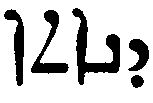


 ; Vulgate donec veniat qui mittendus est (reading שָׁלֻחַ: compare Σιλωάμ (ὃ ἑρμηνεύεται Ἀπεσταλμένος),
John 9⁷); TargumOnkelos עד עלמא עד דייתי משיחא דדילהּ היא מלכותא;
TargumJonathan לד זמן די ייתי מלכא משיחא זעיר בנוי.
This last curious rendering (‘the youngest of his sons’) is followed by Kimchi and others; and apparently rests on a misunderstanding of שִׁלְיָתָהּ
(‘afterbirth’) in Deuteronomy 28⁵⁷ (TargumOnkelos זעיר בנהא).—עד כי־]
Only here with imperfect. With perfect (26¹³ 41⁴⁹, 2 Samuel 23¹⁰) it always marks a limit in the past (‘until’); but עַד
alone sometimes means ‘while,’ both with perfect and imperfect (1 Samuel 14¹⁹, Psalms 141¹⁰), and so עַד שֶ־
(Canticles 1¹²), עד לא
(Proverbs 8²⁶), and עד אשד לא
(Ecclesiastes 121. 2. 6): see Brown-Driver-Briggs, page 725 a. The translation ‘as long as’ is thus perhaps not altogether impossible, though very improbable.—שילה] MSS
and The Samaritan Recension of the Pentateuch שלה,
probably the original text. The scriptio plena
may have no better foundation than the common Jewish interpretation שִׁילוֹ,
‘his son,’—an impossible etymology, since there is no such word as שִׁיל
in Hebrew, and the two forms which appear to have suggested it (viz., New Hebrew שָׁלִיל
= ‘fœtus’ and שִׁלְיָה
= ‘afterbirth’ [Deuteronomy 28⁵⁷†])
are obviously superficial and fallacious analogies. The Massoretic vocalisation is therefore open to question, and we are free to try any pronunciation of the Kethîb שלה
which promises a solution of the exegetical riddle with which we are confronted. In spite of the unanimity of the Versions, the pointing שֶׁלֹּה
is suspicious for the reasons given above,—the presence of —שֶׁ
in an early document, and the want of a subject in the relative sentence. On the other hand, the attempts to connect the word with √ שׁלה,
‘be quiet,’ are all more or less dubious. (a) There
is no complete parallel in Hebrew to a noun like שִׁילֹה from a ל״ה
root. If it be of the type qîtôl, the regular form would be שִׁילוֹי;
although König (ii.
page 147) argues that as we find בֶּכֶה
alongside of בְּכִי,
so we might have a שִׁילֹה
alongside of שִׁילוֹי.
Again, if ô be an apocopated form of the nominal termination ôn, the √ would naturally be not שׁלה but שׁיל
(in Arabic = ‘flow,’ whence seil, ‘a torrent’) or שׁול.
It is true there are a few examples of unapocopated nouns of this type from ל״ה verbs (קִיִצוֹן, אִיתוֹן,
[Ezekiel 40¹⁵?], הֵרוֹן
[Genesis 3¹⁶†—probably
an error for the regular הֵרָיוֹן,
Hosea 9¹¹, Ruth 4¹³†]);
and the possibility of deriving the form in ô from a root of this kind cannot be absolutely excluded (compare אֲבַדֹּה with אֲבַדּוֹן). (b) But
even if these philological difficulties could be removed, there remains the objection that שׁלה
(as contrasted with שׁלם)
is in Old Testament at most a negative word, denoting mere tranquillity rather than full and positive prosperity, and is often used of the careless worldly ease of the ungodly. For all these reasons it is difficult to acquiesce in the view that שִׁלֹה
can be a designation of the Messiah as the Peaceful or the Pacifier; while to change the pointing and render till tranquillity (שֶׁלֶה)
‘come,’ is exposed to the additional objection that the וְלוֹ
of the following line is left without an antecedent.—יקּהת]
(Proverbs 30¹⁷†) Dagesh forte dirimens. The √
appears in Arabic waḳiha, ‘be obedient’; Sabaean וקה.
That a verb (יִקָּהֲלוּ, יִקָּווּ?)
would be more natural (Ball) is not apparent; the verbs in TargumOnkelos-Jonathan paraphrase the sense given above. The √ was evidently not understood by LXX, Theodotion (προσδοκία), Vulgate (expectatio), Aquila (σύστημα), Peshiṭtå
; Vulgate donec veniat qui mittendus est (reading שָׁלֻחַ: compare Σιλωάμ (ὃ ἑρμηνεύεται Ἀπεσταλμένος),
John 9⁷); TargumOnkelos עד עלמא עד דייתי משיחא דדילהּ היא מלכותא;
TargumJonathan לד זמן די ייתי מלכא משיחא זעיר בנוי.
This last curious rendering (‘the youngest of his sons’) is followed by Kimchi and others; and apparently rests on a misunderstanding of שִׁלְיָתָהּ
(‘afterbirth’) in Deuteronomy 28⁵⁷ (TargumOnkelos זעיר בנהא).—עד כי־]
Only here with imperfect. With perfect (26¹³ 41⁴⁹, 2 Samuel 23¹⁰) it always marks a limit in the past (‘until’); but עַד
alone sometimes means ‘while,’ both with perfect and imperfect (1 Samuel 14¹⁹, Psalms 141¹⁰), and so עַד שֶ־
(Canticles 1¹²), עד לא
(Proverbs 8²⁶), and עד אשד לא
(Ecclesiastes 121. 2. 6): see Brown-Driver-Briggs, page 725 a. The translation ‘as long as’ is thus perhaps not altogether impossible, though very improbable.—שילה] MSS
and The Samaritan Recension of the Pentateuch שלה,
probably the original text. The scriptio plena
may have no better foundation than the common Jewish interpretation שִׁילוֹ,
‘his son,’—an impossible etymology, since there is no such word as שִׁיל
in Hebrew, and the two forms which appear to have suggested it (viz., New Hebrew שָׁלִיל
= ‘fœtus’ and שִׁלְיָה
= ‘afterbirth’ [Deuteronomy 28⁵⁷†])
are obviously superficial and fallacious analogies. The Massoretic vocalisation is therefore open to question, and we are free to try any pronunciation of the Kethîb שלה
which promises a solution of the exegetical riddle with which we are confronted. In spite of the unanimity of the Versions, the pointing שֶׁלֹּה
is suspicious for the reasons given above,—the presence of —שֶׁ
in an early document, and the want of a subject in the relative sentence. On the other hand, the attempts to connect the word with √ שׁלה,
‘be quiet,’ are all more or less dubious. (a) There
is no complete parallel in Hebrew to a noun like שִׁילֹה from a ל״ה
root. If it be of the type qîtôl, the regular form would be שִׁילוֹי;
although König (ii.
page 147) argues that as we find בֶּכֶה
alongside of בְּכִי,
so we might have a שִׁילֹה
alongside of שִׁילוֹי.
Again, if ô be an apocopated form of the nominal termination ôn, the √ would naturally be not שׁלה but שׁיל
(in Arabic = ‘flow,’ whence seil, ‘a torrent’) or שׁול.
It is true there are a few examples of unapocopated nouns of this type from ל״ה verbs (קִיִצוֹן, אִיתוֹן,
[Ezekiel 40¹⁵?], הֵרוֹן
[Genesis 3¹⁶†—probably
an error for the regular הֵרָיוֹן,
Hosea 9¹¹, Ruth 4¹³†]);
and the possibility of deriving the form in ô from a root of this kind cannot be absolutely excluded (compare אֲבַדֹּה with אֲבַדּוֹן). (b) But
even if these philological difficulties could be removed, there remains the objection that שׁלה
(as contrasted with שׁלם)
is in Old Testament at most a negative word, denoting mere tranquillity rather than full and positive prosperity, and is often used of the careless worldly ease of the ungodly. For all these reasons it is difficult to acquiesce in the view that שִׁלֹה
can be a designation of the Messiah as the Peaceful or the Pacifier; while to change the pointing and render till tranquillity (שֶׁלֶה)
‘come,’ is exposed to the additional objection that the וְלוֹ
of the following line is left without an antecedent.—יקּהת]
(Proverbs 30¹⁷†) Dagesh forte dirimens. The √
appears in Arabic waḳiha, ‘be obedient’; Sabaean וקה.
That a verb (יִקָּהֲלוּ, יִקָּווּ?)
would be more natural (Ball) is not apparent; the verbs in TargumOnkelos-Jonathan paraphrase the sense given above. The √ was evidently not understood by LXX, Theodotion (προσδοκία), Vulgate (expectatio), Aquila (σύστημα), Peshiṭtå  all of which probably derived from √ קַוַה (Aquila from √ קוה, II.: Brown-Driver-Briggs).
11, 12. As usually understood, the verses give a highly coloured picture of Judæan life after the conquest, in a land where vines are so common that they are used for tethering the ass, and wine so abundant that garments are washed in it. As a description of the vine-culture for which Judah was famous, the hyperbole is perhaps extreme; and Gressmann (l.c. 287) takes the subject to be not the personified tribe, but the Ruler of verse ¹⁰, the verses being a prediction of the ideal felicity to be introduced by his reign. Whether this be the original sense of the passage or not is hard to decide; but Gressman is doubtless right in thinking that it supplied the imagery for the well-known picture of the Messianic king in Zechariah 9⁹.—12. LXX, Vulgate take the adjectives as comparatives: ‘brighter than wine (v.i.) ... whiter than milk’: but this is less natural.
The section on Judah lacks the unity of the first two oracles, and is very probably composed of strophes of diverse origin and date. Verse ⁸ opens with a play on the name, like verses 16. 19, while verse ⁹ starts afresh with an animal comparison, like verses 14. 17. 27 (see Introductory Note, page 510). The impression of discontinuity is partly confirmed by the poetic form; verse ⁸ being an irregular tristich, and the remainder a series of 7 perfect trimeter distichs. The dekastich 10‒12 seems distinct from what precedes (note the repetition of the name in ¹⁰), but is itself a unity. The proposal to remove verse ¹⁰ as a late Messianic interpolation, and to make verse ¹¹ the continuation of verse ⁹, does not commend itself; and the excision of the third line in verse ¹⁰ (Meier, Fripp) merely avoids an exegetical difficulty by sacrificing the strophic arrangement.
11. אסרי] with archaic case-ending: compare בני below, and perhaps חכלילי in verse ¹².—שׂרֵקָה] ἅπαξ λεγόμενον = שׂרֵק, Isaiah 5², Jeremiah 2²¹ [שָׂרֹק, Isaiah 16⁸]; probably from the red colour of the best grapes.—סותה] The Samaritan Recension of the Pentateuch כסותה, ‘covering’ (Exodus 21¹⁰ etc.). סוּת (√ סָוָה?) does not occur elsewhere.—12. חכלילי] In Proverbs 23²⁹ חַכְלִלוּת עינים means ‘dulness of eyes,’ the effect of excessive drinking. This is the only sense justified by etymology (Assyrian akâlu, ‘be gloomy’; Arabic ḥakala, IV, ‘be confused’: see Brown-Driver-Briggs, s.v. חכל), and must be retained here, although, of course, it does not imply reproach, any more than שׁכר in 43³⁴. LXX χαροποι[οί], ‘glad-eyed’; and similarly Vulgate, Peshiṭtå.
13‒15. Zebulun and Issachar.
¹³ Zebulun shall dwell by the shore of the sea,
And ... shore of ships (?),
And his flank is on Ẓidon.
¹⁴ Issachar is a bony ass
Crouching between the panniers (?):
¹⁵ And he saw that rest was good,
And that the land was sweet;
So he bent his shoulder to bear,
And became a labouring drudge.
13. shall dwell] An allusion to the etymology in 30²⁰. It is plausibly conjectured that יִשְׁכֹּן has been substituted by mistake for the original יִזְבֹּל (Gunkel al.).—The second and third lines are unintelligible, and the text is probably corrupt. The comparison of Zebulun to a recumbent animal, with ‘itself’ (וְהוּא) towards the sea-coast, and its hind-parts towards Ẓidon (Dillmann, Gunkel, al.), is unsatisfying and almost grotesque. Deuteronomy 3319b shows that it is the advantageousness of Zebulun’s geographical position which is here celebrated.—Ẓîdôn] may be a name for Phœnicia, in whose commercial pursuits it has been surmised that Zebulun became more and more involved (Stade, Geschichte des Volkes Israel, i. 171).—14. bony] i.e. strong-limbed. Issachar had strength enough, but preferred ease to exertion.—הַמִּשְׁפְּתָֽיִם] The common interpretation ‘sheep-pens’ has no appropriateness here, and may be a conjecture based on Judges 5¹⁶. Equally unsuitable are the renderings of the old Versions (‘boundaries,’ etc.), and the ‘fire-places’ or ‘ash-heaps’ which the Hebrew etymology would suggest. The form is dual, and one naturally thinks of the ‘panniers’ carried by the ass (v.i.).—15. מְנוּחָה] A technical term for the settled, as contrasted with the nomadic, life (Gunkel).—a labouring drudge] literally ‘became a toiling labour-gang’; compare Joshua 16¹⁰. מַס is a levy raised under the system of forced labour (corvée). That a Hebrew tribe should submit to this indignity was a shameful reversal of the normal relations between Israel and the Canaanites (Joshua 16¹⁰ 17¹³ [= Judges 1²⁸], Judges 130. 33. 35).
The two northern Leah-tribes found a settlement in Lower Galilee, where they mingled with the Canaanite inhabitants. According to Joshua 1910‒16, Zebulun occupied the hills north of the Great Plain, being cut off from the sea both by Asher and by the strip of Phœnician coast. We must therefore suppose that the tribal boundaries fluctuated greatly in early times, and that at the date of the poem Zebulun had access at some point to the sea. The almost identical description on Judges 5¹⁷ is considered by Gunkel to have been transferred from Zebulun to Asher,—a view which, if it can be substantiated, affords a reliable criterion of the relative dates of the two oracles. The district of Issachar seems to have been between the Great Plain and the Jordan, including the Vale of Jezreel,—a position in which it was peculiarly difficult for a Hebrew tribe to maintain its independence. The tribe is not even mentioned in the survey of Judges 1, as if it had ceased to be part of Israel. Yet both it and Zebulun had played a gallant part in the wars of the Judges (Judges 46. 10 514. 18 6³⁵ 5¹⁵). The absence of any allusion to these exploits lends colour to the view that this part of the poem is of older date than the Song of Deborah.
13. חוף ימים]
Judges 5¹⁷; compare ח׳ הים,
Deuteronomy 1⁷, Joshua 9¹, Jeremiah 47⁷, Ezekiel 25¹⁶†: חוף
is never found with any other genitive except in the next line.—והוא וגו׳]
One is tempted to construe prosaically thus: ‘And that a shore for ships, with its flank on Ẓidon’; but this would entail elision of לְ,
to the detriment of the rhythm: besides, the repetition of חוף
and the unique combination ח׳ אניּת
are suspicious. Ball reads יגור for לחוף
(after Judges 5¹⁷), and deletes the last line.—על]
The Samaritan Recension of the Pentateuch, LXX,
Vulgate, Peshiṭtå, TargumOnkelos-Jonathan ע͏ד.—14. חמר גרם]
The Samaritan Recension of the Pentateuch ח׳ גרים,
‘ass of sojourners’ (unless גָּרִים
be an adjective from גרם). LXX τὸ καλὸν ἐπεθύμησεν (= חָמֶד גָּרַם:
Ginsburg, Introduction of the Massoretico-critical edition of the Hebrew Bible page 254); Peshiṭtå 
 ,
Aquila and Vulgate support on the whole Massoretic Text.—בין המשפתים]
Judges 5¹⁶†, but compare
Psalms 68¹⁴. The three passives are somehow interrelated, although no sense will suit them all. Versions mostly render ‘territories,’ or something equivalent, both here and in Judges. But the διγομίας of LXX
in Judges (see Schleusner) is noteworthy, and shows that the rendering above has some show of authority. So the late Græcus-Venetus ἡμιφόρτια.
For the rest, see Moore on Judges 5¹⁶.—15. טוב]
The Samaritan Recension of the Pentateuch טובה.—למס עבד] LXX ἀνὴρ γεωργός (Ginsburg, l.c.).—On מס, see
Brown-Driver-Briggs, and Moore, Judges page 47.
,
Aquila and Vulgate support on the whole Massoretic Text.—בין המשפתים]
Judges 5¹⁶†, but compare
Psalms 68¹⁴. The three passives are somehow interrelated, although no sense will suit them all. Versions mostly render ‘territories,’ or something equivalent, both here and in Judges. But the διγομίας of LXX
in Judges (see Schleusner) is noteworthy, and shows that the rendering above has some show of authority. So the late Græcus-Venetus ἡμιφόρτια.
For the rest, see Moore on Judges 5¹⁶.—15. טוב]
The Samaritan Recension of the Pentateuch טובה.—למס עבד] LXX ἀνὴρ γεωργός (Ginsburg, l.c.).—On מס, see
Brown-Driver-Briggs, and Moore, Judges page 47.
16‒21. Dan, Gad, Asher, and Naphtali.
¹⁶ Dan shall judge his people,
As one of the tribes of Israel.
¹⁷ Be Dan a serpent on the way,
A horned snake on the path,
That bites the hoofs of the horse,
And the rider tumbles backwards!
¹⁸ [I wait for thy salvation, Yahwe!]
¹⁹ Gad—raiders shall raid him,
But he shall raid their rear!
²⁰ Asher—his bread shall be fat,
And he shall yield dainties for kings.
²¹ Naphtali is a branching terebinth (?)
Producing comely tops (?).
16. Dân ... judge] See on 30⁶.—his people] Not Israel, but his own tribesmen. The meaning is not that Dan will produce a judge (Samson) as well as the other tribes (TargumOnkelos-Jonathan), nor that he will champion the national cause (Ewald, Delitzsch, Dillmann, al.); but that he will successfully assert an equal status with the other tribes. Note that in Judges 182. 11. 19 the Danites are spoken of as a ‘clan’ (מִשְׁפָּחָה).—17. The little snake, concealed by the wayside, may unhorse the rider as effectually as a fully armed antagonist: by such insidious, but not ignoble, warfare Dan in spite of his weakness may succeed.—שְׁפִיפֹן] ἅπαξ λεγόμενον is probably the cerastes cornutus, whose habits are here accurately described (see Driver, and Tristram, The Natural History of the Bible, 274).—18. An interpolation, marking (as nearly as possible) the middle of the poem (so Olshausen, Ball, Sievers, al.). The attempts to defend its genuineness as a sigh of exhaustion on Jacob’s part, or an utterance of the nation’s dependence on Yahwe’s help in such unequal conflicts as those predicted for Dan, are inept.—Dan was one of the weakest of the tribes, and perhaps the latest to secure a permanent settlement (Judges 134 f., Joshua 19⁴⁷, Judges 18). Its migration northward, and conquest of Laish, must have taken place early in what is known as the Judges’ period; and is apparently presupposed here and in Judges 5¹⁷.—19. Strictly: ‘A marauding band shall attack him, but he shall attack their heel’ (reading עֲקֵבִם, v.i.); i.e., press upon them in their flight. The marauders are the warlike peoples to the East, specially the Ammonites (1 Chronicles 518 ff., Judges 10 f.), who at a later time dispossessed the tribe (Jeremiah 49¹). As yet, however, Gad maintains its martial character (compare 1 Chronicles 128‒15), and more than holds its own.—20. Asher settled in the fertile strip along the coast, North of Carmel. The name occurs as a designation of Western Galilee in Egyptian inscriptions of the time of Seti and Ramses II. (see Müller, Asien und Europa nach altägyptischen Denkmälern, 236 ff.).—fat] Probably an allusion to the oil (Deuteronomy 33²⁴) for which the region was, and still is, famous.—royal dainties] fit for the tables of Phœnician kings (compare Ezekiel 27¹⁷).—21. The verse on Naphtali is ambiguous. Instead of אַיָּלָה, ‘hind,’ many moderns read אֵילָה (‘a spreading terebinth’). The following clause: ‘giving fair speeches,’ suits neither image; on the one view it is proposed to read ‘yielding goodly lambs’ (אִמְּרֵי), on the other ‘producing goodly shoots’ (אֲמִרֵי). No certain conclusion can be arrived at.
17. שפיפן LXX ἐνκαθήμενος, taking the ἅπαξ λεγόμενον
as an adjective.—ויפל Ball וַיַפֵּל
(after Peshiṭtå  ).—19. גָּד]
The name is here (otherwise than 30¹¹) connected with גדוד,
‘band’ (1 Samuel 308. 15. 23, 1 Kings 11²⁴, 2 Kings 5² 6²³ etc.), and with √ גוד,
‘assail’ (Habakkuk 3¹⁶, Psalms 94²¹†).—עקב] Read עקבָם, taking the ם
from the beginning of verse ²⁰.—20. מאשר] Read with LXX, Peshiṭtå, Vulgate אָשֵׁר.—שמנה]
The Samaritan Recension of the Pentateuch שמן.—21. אִיָּלָה שלחה]
So Aquila, Vulgate (Jerome, Quæstiones sive Traditiones hebraicæ in Genesim).
Peshiṭtå and TargumJonathan probably had the same text, but render ‘a swift messenger.’ On Jerome’s ager irriguus (Quæstiones sive Traditiones hebraicæ in Genesim)
and its Rabbinical parallels, see Rahmer, Die Hebräischen Traditionen in den Werken des Hieronymus page 55. LXX στέλεχος seems to imply אֵילָה;
but Ball dissents.—הנתן] After either אַיָּלָה or אֵילָה, נֹתְנָה
would be better.—אִמְרֵי]
‘words,’ is unsuitable, and caused Peshiṭtå and TargumJonathan to change the metaphor to that of a messenger. An allusion to the eloquence of the tribe is out of place in the connexion. The reading אֲמִרֵי,
‘topmost boughs,’ has but doubtful support in Isaiah 17⁶ (see the commentary). אִמֵּר,
‘lamb,’ is not Hebrew, but is found in Assyrian, Phœnician, Aramaic, and Arabic. LXX ἐν τῷ γενήματι
is traced by Ball to בִּפְרִי; but?—שֶׁפֶר] ἅπαξ λεγόμενον.—Ball
argues ingeniously, but unconvincingly, that אַיָּלָה
belongs to verse ²², and that the פרת
of that verse stood originally in ²¹. His amended text reads:
).—19. גָּד]
The name is here (otherwise than 30¹¹) connected with גדוד,
‘band’ (1 Samuel 308. 15. 23, 1 Kings 11²⁴, 2 Kings 5² 6²³ etc.), and with √ גוד,
‘assail’ (Habakkuk 3¹⁶, Psalms 94²¹†).—עקב] Read עקבָם, taking the ם
from the beginning of verse ²⁰.—20. מאשר] Read with LXX, Peshiṭtå, Vulgate אָשֵׁר.—שמנה]
The Samaritan Recension of the Pentateuch שמן.—21. אִיָּלָה שלחה]
So Aquila, Vulgate (Jerome, Quæstiones sive Traditiones hebraicæ in Genesim).
Peshiṭtå and TargumJonathan probably had the same text, but render ‘a swift messenger.’ On Jerome’s ager irriguus (Quæstiones sive Traditiones hebraicæ in Genesim)
and its Rabbinical parallels, see Rahmer, Die Hebräischen Traditionen in den Werken des Hieronymus page 55. LXX στέλεχος seems to imply אֵילָה;
but Ball dissents.—הנתן] After either אַיָּלָה or אֵילָה, נֹתְנָה
would be better.—אִמְרֵי]
‘words,’ is unsuitable, and caused Peshiṭtå and TargumJonathan to change the metaphor to that of a messenger. An allusion to the eloquence of the tribe is out of place in the connexion. The reading אֲמִרֵי,
‘topmost boughs,’ has but doubtful support in Isaiah 17⁶ (see the commentary). אִמֵּר,
‘lamb,’ is not Hebrew, but is found in Assyrian, Phœnician, Aramaic, and Arabic. LXX ἐν τῷ γενήματι
is traced by Ball to בִּפְרִי; but?—שֶׁפֶר] ἅπαξ λεγόμενον.—Ball
argues ingeniously, but unconvincingly, that אַיָּלָה
belongs to verse ²², and that the פרת
of that verse stood originally in ²¹. His amended text reads:
נפתלי פֹּרָת שְׁלֻחָה
הנתנה פְּרִי שפר
Naphtali is a branching vine,
That yieldeth comely fruit.
22‒26. Joseph.
²² A fruitful bough (?) is Joseph—
A fruitful bough by a well (?).
²³ And ... dealt bitterly with him,
And the archers harassed him sorely.
²⁴ Yet his bow abode unmoved,
And nimble were the arms of his hands.
Through the hands of the Mighty One of Jacob,
Through the ⸢name⸣ of the Shepherd of the Israel-Stone,
²⁵ Through thy father’s God—may he help thee!
And El Shaddai—may he bless thee!
Blessings of heaven above,
Blessings of Tĕhôm ⸢ ⸣ beneath,
Blessings of breast and womb,
²⁶ Blessings of ... (?),
Blessings of the eternal, ⸢mountains⸣,
⸢Produce⸣ of the everlasting hills—
Be on the head of Joseph,
And on the crown of the consecrated one of his brethren.
The section is full of obscurities, and the text frequently quite untranslatable. Its integrity has naturally not passed unquestioned. We may distinguish four stages in the unfolding of the theme: (1) The opening tristich (²²), celebrating (as far as can be made out) the populousness and prosperity of the central double-tribe. (2) Joseph’s contest with the ‘archers’ (23. 24a). (3) A fourfold invocation of the Deity (24b. 25aαβ). (4) The blessing proper (25aγδb. 26), which closely resembles the corresponding part of the Blessing of Moses (Deuteronomy 3313‒16), the two being probably variants of a common original. Meyer (Die Israeliten und ihre Nachbarstämme, 282 ff.) accepts (1), (2), and (4) as genuine, but rejects (3) as a later addition, which has displaced the original transition from the conflict to the blessing. Fripp (Zeitschrift für die alttestamentliche Wissenschaft, xxi. 262 ff.) would remove (3) and (4) (24b‒26), which he holds to have been inserted by an Ephraimite editor from Deuteronomy 33: Holzinger seems in the main to agree. Sievers also (II. 362) questions the genuineness of 24b‒26 on metrical grounds. But we may admit the northern origin of some of the verses, and the resemblance to Deuteronomy 33, and even a difference of metre, and still hold that the whole belongs to the earliest literary recension of the Song to which we have access. The warm enthusiasm of the eulogy, and the generous recognition of Joseph’s services to the national cause, are no doubt remarkable in a Judæan document; but such a tone is not unintelligible in the time of David, when the unity of the empire had to be maintained by a friendly and conciliatory attitude to the high-spirited central tribes.
22. On the ordinary but highly questionable rendering, the image is that of a young thriving vine planted by a fountain and thus well supplied with water, whose tendrils extend over the wall.—a fruitful bough] Or ‘A young fruit-tree’: literally ‘son of a fruitful [tree’ or ‘vine’]. There is probably an etymological allusion to Ephraim (פְּרָת = אֶפְרָת: Wellhausen).—23, 24. The figure is abruptly changed: Joseph is now represented as beset by troops of archers, whose attack he repels.—dealt bitterly ...] The following word וָרֹבּוּ requires some amendment of text (v.i.).—24. abode unmoved] or ‘constant.’ Taken with the next line, this suggests a fine picture: the bow held steadily in position, while the hand that discharges the arrows in quick succession moves nimbly to and fro (Gunkel). The expressions, however, are peculiar, and a different reading of the second line given in some Versions is approved by several scholars (v.i.).—Strong One of Jacob] A poetic title of Yahwe, recurring Isaiah 49²⁶ 60¹⁶, Psalms 1322. 5, and (with Israel for Jacob) Isaiah 1²⁴. See, further, the footnote below.—Through the name] מִשֵּׁם, the reading of Peshiṭtå and TargumOnkelos, though not entirely satisfactory, is at least preferable to the meaningless מִשָּׁם of Massoretic Text.—the Shepherd of the Israel-Stone] A second designation of Yahwe as the Guardian of the Stone of Israel,—either the sacred stone of Bethel, or (better) that of Shechem (Joshua 2426 f.), which was the religious rendezvous of the tribes in early times (see page 416): so Luther, Die Israeliten und ihre Nachbarstämme, 284¹. Both text and translation are, however, uncertain (v.i.).—25, 26. The construction is ambiguous: it is not clear whether the lines beginning with Blessings are a series of accusatives depending on the וִיבָרְכֶךָּ of 25a (‘may he bless thee with blessings,’ etc.), or subjects to תִּֽהְיֶין in 26b. The second view is adopted above; but the ambiguity may be an intentional refinement.—25aαβ. ’Ēl Shaddai] For the reading, v.i.; and see on 17¹.—25aγδb, 26a. The blessings, arranged in three parallel couplets,—the first referring to the fertility of the soil.—Blessings of heaven above] Rain and dew, the cause of fertility (so Deuteronomy 33¹³ emended).—Tĕhôm ... beneath] The subterranean flood, whence springs and rivers are fed: see on 1².—Blessings of breasts and womb] Contrast the terrible imprecation, Hosea 9¹⁴.—26a. Passing over the first four words as absolutely unintelligible (v.i.), we come to the third pair of blessings: ... of the eternal mountains ... of the everlasting hills (Deuteronomy 33¹⁵, Habakkuk 3⁶)] In what sense the mountains were conceived as a source of blessing is not clear,—perhaps as abodes of deity; compare the ‘dew of Hermon’ (Psalms 133³).—The word rendered produce is uncertain; we should expect ‘blessings,’ as LXX actually reads (v.i.).—26b. Be on the head] as in benediction the hand is laid on the head (48¹⁴): compare Proverbs 10⁶ 11²⁶.—נְזִיר אֶחָיו] So Deuteronomy 33¹⁶. The נָזִיר is either the Nazirite—one ‘consecrated’ to God by a vow involving unshorn hair (Judges 135. 7 etc.)—or the prince (so only Lamentations 4⁷). For the rendering ‘crowned one’ there are no examples. The second interpretation is that usually adopted by recent scholars; some explaining it of the Northern monarchy, of which the Joseph-tribes were the chief part; though others think it merely ascribes to Joseph a position of princely superiority to his brethren. The other view is taken by Sellin (Beiträge zur israelitischen und jüdischen religionsgeschichte ii. 1, 132 ff.) and Gunkel, who conceive the ancient Nazirite as a man like Samson, dedicated to single-handed warfare against the foes of Israel (compare Schwally, Semitische Kriegsaltertümer, 101 ff.), and hold that Joseph is so designated as being the foremost champion of the national cause. The interpretation is certainly plausible; but it derives no support from the word קָדְקֹד (∥ ראשׁ), which is never used in connexion with the Nazirite, and is quite common in other connexions (see Deuteronomy 33²⁰).
The opinion confidently entertained by many scholars (see Wellhausen, Die Composition des Hexateuchs und der historischen Bücher des Alten Testaments² 321), that the Blessing of Joseph presupposes the divided kingdom, rests partly on this expression, and partly on the allusion to an arduous struggle in 23 f.. But it is clear that neither indication is at all decisive. If נָזִיר could mean only ‘crowned one,’ we should no doubt find ourselves in the time of the dual monarchy. In point of fact, it never denotes the king, and only once ‘princes’; and we have no right to deny that its import is adequately explained by the leadership which fell to the house of Joseph in the conquest of Canaan (Judges 122 ff.). Similarly, the ‘archers’ of verse ²³ might be the Aramæans of Damascus, in which case Joseph would be a name for the Northern kingdom as a whole; but they may as well be the Midianites (Judges 6 ff.) or other marauders who attacked central Israel between the settlement and the founding of the monarchy, and whose repeated and irritating incursions would admirably suit the terms of the description. The general considerations which plead for an early date are: (1) The analogy of the rest of the poem, some parts of which are earlier, and none demonstrably later, than the age of David or Solomon. (2) The incorporation of the blessing in a Judæan work is improbable at a time when Israel was a rival kingdom. (3) Although Joseph sometimes stands for the Northern kingdom, it can hardly do so here in an enumeration of the tribes. Consequently it takes us back to the time when Joseph was still a single tribe, or when at least the separation of Ephraim and Manasseh was not clearly recognised: the addition in Deuteronomy 3317b is instructive in this regard (see Gunkel, and Sellin, l.c. 134).
22. בן פרת] בֵּן
is construct state: the rhythmic accent forbids the usual shortening of the vowel with Maqqeph (בֶּך).—פֹּרָת]
Contracted from פֹּרִיָּת,
‘fruitful’ (Isaiah 17⁶ 32¹², Ezekiel 19¹⁰, Psalms 128³), or פֹּרַיַת,
with archaic feminine termination. פֹּארָה,
‘bough’ (Ezekiel 17⁶ 315. 6), might be thought of, but would be hardly suitable as genitive after בן.—Down to עין
the Versions have substantially the same text.—בנות צעדה עלי שור]
defies explanation. Literally filiæ discurrerunt super murum
(Vulgate). But בנות
= ‘tendrils,’ has no analogy; צעד
means ‘march’ or ‘stride,’ but not ‘extend’; and the discord of number is harsh (notwithstanding Gesenius-Kautzsch § 145 k).
The Versions reveal early corruption of the text, without suggesting anything better. LXX υἱός μου νεώτατος
(= The Samaritan Recension of the Pentateuch בני צעירי) πρὸς μὲ ἀνάστρεψον (= עָלַי שׁוּב).
Peshiṭtå 


 (? בִּנְיָן סָעֻד הָעֹלֶה שׁוּר).—Zimmern’s
zodiacal theory, which identifies Joseph with the sign Taurus, finds two tempting points of contact in the consonantal text: reading פָּרָת = פָּרָה,
‘juvenca,’ at the beginning, and שוֹר,
‘ox,’ at the end. But the reconstruction of the text on these lines, with the help of Deuteronomy 33¹⁷ (see Zeitschrift für Assyriologie, vii. 164 ff.; Das Alte Testament im Lichte des alten Orients²,
399), has no title to respect: against it see Ball, page 116.—23. וָרֹבּוּ] From √ רבב,
a by-form of רבה,¹
‘shoot,’ with intransitive perfect (Gesenius-Kautzsch § 67 m).
The simple perfect between two consecutive imperfects being suspicious, the least change demanded is וַיָּרֹבּוּ.
The Samaritan Recension of the Pentateuch, LXX (ἐλοιδόρουν) and Vulgate (jurgati sunt) read וַיְרִיבֻהוּ,
‘strove with him.’ Parallelism suggests a noun as subject to וַיְמ׳;
we might read רַבִּים,
‘bowmen’ (Jeremiah 50²⁹), or (since the line is too short) רֹבֵי קֶשֶׁת
(21²⁰)—24a. LXX καὶ συνετρίβη μετὰ κράτους τὰ τόξα αὐτῶν [= וַתִּשָּׁבֵר בְּאֵיתָן קַשְׁתָּם].—ותשב] Peshiṭtå
(? בִּנְיָן סָעֻד הָעֹלֶה שׁוּר).—Zimmern’s
zodiacal theory, which identifies Joseph with the sign Taurus, finds two tempting points of contact in the consonantal text: reading פָּרָת = פָּרָה,
‘juvenca,’ at the beginning, and שוֹר,
‘ox,’ at the end. But the reconstruction of the text on these lines, with the help of Deuteronomy 33¹⁷ (see Zeitschrift für Assyriologie, vii. 164 ff.; Das Alte Testament im Lichte des alten Orients²,
399), has no title to respect: against it see Ball, page 116.—23. וָרֹבּוּ] From √ רבב,
a by-form of רבה,¹
‘shoot,’ with intransitive perfect (Gesenius-Kautzsch § 67 m).
The simple perfect between two consecutive imperfects being suspicious, the least change demanded is וַיָּרֹבּוּ.
The Samaritan Recension of the Pentateuch, LXX (ἐλοιδόρουν) and Vulgate (jurgati sunt) read וַיְרִיבֻהוּ,
‘strove with him.’ Parallelism suggests a noun as subject to וַיְמ׳;
we might read רַבִּים,
‘bowmen’ (Jeremiah 50²⁹), or (since the line is too short) רֹבֵי קֶשֶׁת
(21²⁰)—24a. LXX καὶ συνετρίβη μετὰ κράτους τὰ τόξα αὐτῶν [= וַתִּשָּׁבֵר בְּאֵיתָן קַשְׁתָּם].—ותשב] Peshiṭtå  = וַתָּֽשָׁב.
The sense ‘abide’ for ישׁב
is justified by Leviticus 12⁴, 1 Kings 22¹, Psalms 125¹, and nothing is gained by departing from Massoretic Text.—באיתן]
Literally ‘as a permanent one’ (בְּ essentiæ).—ויפזר]
2 Samuel 6¹⁶†. LXX καὶ ἐξελύθη, Peshiṭtå
= וַתָּֽשָׁב.
The sense ‘abide’ for ישׁב
is justified by Leviticus 12⁴, 1 Kings 22¹, Psalms 125¹, and nothing is gained by departing from Massoretic Text.—באיתן]
Literally ‘as a permanent one’ (בְּ essentiæ).—ויפזר]
2 Samuel 6¹⁶†. LXX καὶ ἐξελύθη, Peshiṭtå  may represent ויפזרו
(see Ball).—[LXX יָדָם] זרועי ידיו]
is a hard combination, but perhaps not too bold.—24b. אֲבִיר]
occurs only in the passive cited above. It is reasonably suspected that the Massoretic changed the punctuation to avoid association of ideas with אַבִּיר,
‘bull,’ the idolatrous emblem of Yahwe in North Israel. Whether the name as applied to Yahwe be really a survival of the bull-worship of Bethel and Dan is another question; אַבִּיר
(strong) is an epithet of men (Judges 5²², Job 24²² 34²⁰, Jeremiah 46¹⁵, 1 Samuel 21⁸ etc.),
and horses (Jeremiah 8¹⁶ 47³ 50¹¹) much more often than of bulls (Psalms 22¹³ 68³¹ 50¹³, Isaiah 34⁷), and might have been transferred to Yahwe in its adjective sense. On the other hand, the parallelism with ‘Stone of Israel’ in the next line favours the idea that the title is derived from the cult of the Bull at Bethel, which may have had a more ancient significance than an image of Yahwe (compare Meyer, Die Israeliten und ihre Nachbarstämme, 282 ff.; Luther, Zeitschrift für die alttestamentliche Wissenschaft,
xxi. 70 ff.). The further inference (Nöldeke, Luther, Meyer) that Jacob was the deity originally worshipped in the bull is perhaps too adventurous.—מִשָּׁם] So LXX,
Vulgate; but Peshiṭtå, TargumOnkelos מִשֵּׁם.—אבן ישראל] Compare צור יש׳,
2 Samuel 23³, Isaiah 30²⁹; also א׳ הָעֶזָר,
1 Samuel 4¹ 5¹ 7¹². The translation above agrees with Peshiṭtå; Massoretic Text puts רֹעֶה
in apposition with א׳ י׳
(so Vulgate); LXX ♦ἐκεῖθεν ὁ κατισχύσας Ἰσραήλ omits אבן,
and may have read עזר
(Ball). The line is too long for the metre, but אבן
is the one word that should not be omitted.—25. ויעזרך ... ויברכך]
Compare Psalms 69³³, and see Ewald § 347 a.—ואת־]
Read with The Samaritan Recension of the Pentateuch, LXX (ὁ θεὸς ὁ ἐμός), Peshiṭtå וְאֵל: though שֶׂדַּי
alone (Numbers 244. 16) would be suitable in an ancient poem.—רבצת]
Metrically necessary in Deuteronomy 33¹³, but here redundant; probably, therefore, a gloss from the other recension (Sievers).—26. אביך גברו על־ברכת הורי עד־]
There are two stages of corruption, one remediable, the other not. The last line is to be restored with LXX ברכת הַרְרֵי עַד,
‘blessings of the eternal mountains’ (Deuteronomy 33¹⁵, Habakkuk 3⁶). But the first three words, though represented by all Versions, must be wrong; for to put ברכת
under the regimen of על
destroys the parallelism, and the verb גָּֽבְרוּ cuts off תהיין
from its subject. What is obviously required is a line parallel to ברכת שדים ורחם.
Gunkel’s suggested emendation, though far from satisfying, is the best that can be proposed: ברכת אָב אַךְ נֶּבֶר וָעֻל
= ‘Blessings of father, yea, man and child.’—אביך]
The Samaritan Recension of the Pentateuch, LXX + ואמך,
suggested no doubt by the previous line.—הורי]
Vulgate, Peshiṭtå, TargumOnkelos-Jonathan render ‘my progenitors,’ by an impossible derivation from √ הרה,
‘be pregnant.’—תאות]
English Version ‘utmost bound’ (so Delitzsch, from √ תאה or תוה;
see Brown-Driver-Briggs), has no real philological or traditional justification. If the text were reliable, it might be the common word ‘desire,’ from √ אוה (LXXcursives,
Old Latin Version, Vulgate, TargumOnkelos-Jonathan), in the sense of ‘desirable things.’ With some hesitation I follow above Olshausen, Gunkel, al., reading תבואת
after Deuteronomy 33¹⁴. But LXXᴮ ברכת
has great weight (all the greater that the translator has lost the thread of the thought), and ought perhaps to be preferred.—נזיר]
is not necessarily a derivative from the noun נֵזָר,
‘diadem,’ = ‘the crowned one’; more probably it comes from the verb directly,—נזר
= ‘dedicate’ (compare נדר)—which
admits various shades of meaning. Of the Versions LXX,
TargumJonathan represent the idea of ‘prince’ or ‘ruler,’ TargumOnkelos ‘the separated one,’ Vulgate, Saadya ‘the Nazirite,’ Peshiṭtå ‘the crown’ (נַזָר).
may represent ויפזרו
(see Ball).—[LXX יָדָם] זרועי ידיו]
is a hard combination, but perhaps not too bold.—24b. אֲבִיר]
occurs only in the passive cited above. It is reasonably suspected that the Massoretic changed the punctuation to avoid association of ideas with אַבִּיר,
‘bull,’ the idolatrous emblem of Yahwe in North Israel. Whether the name as applied to Yahwe be really a survival of the bull-worship of Bethel and Dan is another question; אַבִּיר
(strong) is an epithet of men (Judges 5²², Job 24²² 34²⁰, Jeremiah 46¹⁵, 1 Samuel 21⁸ etc.),
and horses (Jeremiah 8¹⁶ 47³ 50¹¹) much more often than of bulls (Psalms 22¹³ 68³¹ 50¹³, Isaiah 34⁷), and might have been transferred to Yahwe in its adjective sense. On the other hand, the parallelism with ‘Stone of Israel’ in the next line favours the idea that the title is derived from the cult of the Bull at Bethel, which may have had a more ancient significance than an image of Yahwe (compare Meyer, Die Israeliten und ihre Nachbarstämme, 282 ff.; Luther, Zeitschrift für die alttestamentliche Wissenschaft,
xxi. 70 ff.). The further inference (Nöldeke, Luther, Meyer) that Jacob was the deity originally worshipped in the bull is perhaps too adventurous.—מִשָּׁם] So LXX,
Vulgate; but Peshiṭtå, TargumOnkelos מִשֵּׁם.—אבן ישראל] Compare צור יש׳,
2 Samuel 23³, Isaiah 30²⁹; also א׳ הָעֶזָר,
1 Samuel 4¹ 5¹ 7¹². The translation above agrees with Peshiṭtå; Massoretic Text puts רֹעֶה
in apposition with א׳ י׳
(so Vulgate); LXX ♦ἐκεῖθεν ὁ κατισχύσας Ἰσραήλ omits אבן,
and may have read עזר
(Ball). The line is too long for the metre, but אבן
is the one word that should not be omitted.—25. ויעזרך ... ויברכך]
Compare Psalms 69³³, and see Ewald § 347 a.—ואת־]
Read with The Samaritan Recension of the Pentateuch, LXX (ὁ θεὸς ὁ ἐμός), Peshiṭtå וְאֵל: though שֶׂדַּי
alone (Numbers 244. 16) would be suitable in an ancient poem.—רבצת]
Metrically necessary in Deuteronomy 33¹³, but here redundant; probably, therefore, a gloss from the other recension (Sievers).—26. אביך גברו על־ברכת הורי עד־]
There are two stages of corruption, one remediable, the other not. The last line is to be restored with LXX ברכת הַרְרֵי עַד,
‘blessings of the eternal mountains’ (Deuteronomy 33¹⁵, Habakkuk 3⁶). But the first three words, though represented by all Versions, must be wrong; for to put ברכת
under the regimen of על
destroys the parallelism, and the verb גָּֽבְרוּ cuts off תהיין
from its subject. What is obviously required is a line parallel to ברכת שדים ורחם.
Gunkel’s suggested emendation, though far from satisfying, is the best that can be proposed: ברכת אָב אַךְ נֶּבֶר וָעֻל
= ‘Blessings of father, yea, man and child.’—אביך]
The Samaritan Recension of the Pentateuch, LXX + ואמך,
suggested no doubt by the previous line.—הורי]
Vulgate, Peshiṭtå, TargumOnkelos-Jonathan render ‘my progenitors,’ by an impossible derivation from √ הרה,
‘be pregnant.’—תאות]
English Version ‘utmost bound’ (so Delitzsch, from √ תאה or תוה;
see Brown-Driver-Briggs), has no real philological or traditional justification. If the text were reliable, it might be the common word ‘desire,’ from √ אוה (LXXcursives,
Old Latin Version, Vulgate, TargumOnkelos-Jonathan), in the sense of ‘desirable things.’ With some hesitation I follow above Olshausen, Gunkel, al., reading תבואת
after Deuteronomy 33¹⁴. But LXXᴮ ברכת
has great weight (all the greater that the translator has lost the thread of the thought), and ought perhaps to be preferred.—נזיר]
is not necessarily a derivative from the noun נֵזָר,
‘diadem,’ = ‘the crowned one’; more probably it comes from the verb directly,—נזר
= ‘dedicate’ (compare נדר)—which
admits various shades of meaning. Of the Versions LXX,
TargumJonathan represent the idea of ‘prince’ or ‘ruler,’ TargumOnkelos ‘the separated one,’ Vulgate, Saadya ‘the Nazirite,’ Peshiṭtå ‘the crown’ (נַזָר).
27. Benjamin.
²⁷ Benjamin is a ravening wolf:
In the morning he devours the prey,
And at eve divides the spoil.
Benjamin is praised for its predatory instincts, and its unflagging zest for war. The early history contains a good deal to justify the comparison: its fight with Moab (Judges 315 ff.), its share in the struggle with the Canaanites (Judges 5¹⁴), its desperate stand against united Israel (Judges 19 f.); it was famous for its skill in slinging and archery (Judges 20¹⁶, 1 Chronicles 8⁴⁰ 12², 2 Chronicles 14⁷ 17¹⁷). But a special reference to the short-lived reign of Saul is probable: the dividing of spoil reminds us of the king who clothed the daughters of Israel with scarlet and ornaments (2 Samuel 1²⁴).—The contrast between this description and the conception of Benjamin in the Joseph-stories is an instructive example of how tribal characteristics were obscured in the biographical types evolved by the popular imagination.
27. זאב יטרָף] Descriptive imperfect, see Davidson § 44, R. 3, § 142. On pausal ā see Gesenius-Kautzsch § 29 u.—עד] = ‘booty,’ Isaiah 33²³, Zephaniah 3⁸ [? Isaiah 9⁵]; LXX ἔτι.
28abα (to אביהם) is the subscription to the poem; the remainder of the verse belongs to Priestly-Code, and probably continued 1a in that source.—the tribes of Israel, twelve in number] The division into 12 tribes is an artificial scheme, whose origin is uncertain (see Luther, Zeitschrift für die alttestamentliche Wissenschaft, xxi. 33 ff.; Peters, Early Hebrew Story, 55 ff.). It obtained also amongst the Edomites, Ishmaelites, and other peoples; and in Israel betrays its theoretic character by the different ways in which the number was made up, of which the oldest is probably that followed in the Song of Jacob. In Deuteronomy 33, Simeon is omitted, and Joseph divided into Ephraim and Manasseh; in Priestly-Code (Numbers 2) Joseph is again divided, to the exclusion not of Simeon, but of Levi.
The recently revived theory of a connexion between the original sayings of the Blessing and the signs of the Zodiac calls for a brief notice at this point. The most striking correspondences were set forth by Zimmern in Zeitschrift für Assyriologie, vii. (1892), 161 ff.; viz., Simeon and Levi = Gemini (see page 517); Judah = Leo, with the king-star Regulus on its breast (בין רגליו); and Joseph = Taurus. This last comparison, it is true, rests on Deuteronomy 33 rather than Genesis 49, and is only imported into this passage by a violent reconstruction of verse ²² (page 530). Other possible combinations mentioned by Zimmern are Issachar = Aselli (in Cancer), Dan = Serpens (North of Libra), Benjamin = Lupus (South of Scorpio), and Naphtali = Aries (reading אַיִל for אַיָּלָה). Stucken (Mittheilungen der vorderasiatischen Gesellschaft, 1902, 166 ff.), after a laboured proof that Reuben corresponds to Behemoth (hippopotamus), an old constellation now represented by Aquarius, completed the circle after a fashion, with the necessary addition of Dinah = Virgo as the missing sign; and his results are adopted by Jeremias (Das Alte Testament im Lichte des alten Orients², 395 ff.). A somewhat different arrangement is given by Winckler in Altorientalische Forschungen, iii. 465 ff. These conjectures, however, add little to the evidence for the theory, which must in the main be judged by the seven coincidences pointed out in Zimmern’s article. That these amount to a demonstration of the theory cannot be affirmed; but they seem to me to go far to show that it contains an element of truth. It is hardly accidental that in each series we have one double sign (Gemini, Simeon-Levi) and one female personification (Virgo, Dinah), and that all the animal names occurring in the Song (lion, ass, serpent, ram?, ox?, wolf) can be more or less plausibly identified with constellations either in the Zodiac or sufficiently near it to have been counted as Zodiacal signs in early times. The incompleteness of the correspondence is fairly explained by two facts: first, that the poem has undergone many changes in the course of its transmission, and no longer preserves the original form and order of the oracles; and second, that while the twelve-fold division of the ecliptic goes back to the remotest antiquity, the traditional names of the twelve signs cannot all be traced to the ancient Babylonian astronomy. It may be added that there is no prima facie objection to combinations of this sort. The theory does not mean that the sons of Jacob are the earthly counterparts of the Zodiacal constellations, and nothing more. All that is implied is that an attempt was made to discover points of resemblance between the fortunes and characteristics of the twelve tribes on the one hand, and the astro-mythological system on the other. Such combinations were necessarily arbitrary, and it might readily happen that some were too unreal to live in the popular memory. Where the correspondence is plausible, we may expect to find that the characterisation of the tribe has been partly accommodated to the conceptions suggested by the comparison; and great caution will have to be observed in separating the bare historical facts from the mythological allusions with which they are embellished. In the present state of the question, it may be safely said that the historical interpretation must take precedence. The Zodiacal theory will have to be reckoned with in the interpretation of the Song; but it has as yet furnished no trustworthy clue either to the explanation of obscure details, or to the restoration of the text.
28. שבטי ישראל] LXX υἱοὶ Ἰακώβ.—איש אשר כְּ׳] Such a construction is impossible. We must either omit the relatives (Versions) or read איש איש (Olshausen, Delitzsch, Kautzsch-Socin, Gunkel, al.).
Jacob charges his sons to bury him in the family sepulchre at Machpelah, and expires (28b‒33). Joseph causes the body to be embalmed; and, accompanied by his brethren and an imposing cortège, conveys it to its last resting-place in Canaan (501‒14). He pacifies and reassures his brethren, who fear his vengeance now that their father is gone (15‒21). He dies in a good old age, after exacting an oath that his bones shall be carried up from Egypt when the time of deliverance comes (22‒26).
Sources.—4928bβ‒33 belongs to Priestly-Code, with the possible exceptions of ³² (a gloss), and the clause 33aβ; note the reference to chapter 23 and the identical phraseology of the two passages; also the expressions גוע, אחזה, נאסף אל־עמיו (bis).—In chapter 50, verses 12. 13 are from Priestly-Code (Machpelah, etc.: note also that the suffix in בניו refers back to 49³³). Verses 1‒11. 14 are mainly Yahwist (ישראל, ²; מצא חן בע׳, ⁴; גּשֶׁן, ⁸; הכנעני, ¹¹: note the reference [5 f.] to Joseph’s oath [4729‒31]); and 15‒26 Elohist (אלהים, 19. 20. 24. 25; כלכל, ²¹ [45¹¹ 47¹²]; התחת אלהים אני ¹⁹ [30²]): the resemblance to 455. 7; and the backward reference in Exodus 13¹⁹, Joshua 24³²). The analysis might stop here (Dillmann, Wellhausen, Driver, al.); but a variant in ¹⁰ (10b ∥ 10aβ), and the double name of the place of burial suggest that there may be two accounts of the funeral (see Kautzsch-Socin An. 242). Holzinger, Gunkel, Procksch, however, seem to me to go too far in the attempt to establish a material difference of representation (e.g., that in Elohist’s account Joseph’s brethren did not go up with him to the burial). Traces of Yahwist in 15‒26 are equally insignificant (see the notes).
28b‒33. Jacob’s charge to his sons.—28bβ. The sequel to 1a in Priestly-Code. Note the close formal parallel to 28¹ (Priestly-Code): And ... called ... and blessed ... and charged ... and said ...—each with a special blessing] v.i.—29, 30. See on chapter 23.—31. Abraham and Sarah his wife] 25⁹ 23¹⁹. The burying-place of Isaac (35²⁹) is not elsewhere specified; and the burials of Rebekah and Leah are not recorded at all.—On the possibility that the notice of Rachel’s burial (48⁷) stood here originally, see page 504 f.—32. Probably a gloss (v.i.).—33. drew up his feet into the bed] The clause may have been inserted from Yahwist; compare 482b.—As in the case of all the patriarchs except Joseph, the actual account of the death is left to Priestly-Code.
29. ויצו אותם] LXX omits.—אל־עַמִּי] Read אל־עַמַּי (compare ³³): see on 25⁸.—30. For בשדה המ׳, LXX has simply במכפלה, and for the following השדה, המערה.—31. קברתי] LXX קָֽבְרוּ.—At the end of the verse Budde would add ואת־רחל as Priestly-Code’s original statement (Zeitschrift für die alttestamentliche Wissenschaft, iii. 82).—32. The verse has no syntactic connexion with the preceding, the construction is cumbrous in the extreme, and the notice superfluous after 30b. It should probably be deleted as a marginal variant to 30b (so Delitzsch, Gunkel).—מקנה] LXX במ׳.
L. 1‒14. The burial of Jacob.—1. The forms in which Joseph’s grief expressed itself were doubtless conventional, though they are not elsewhere alluded to in Old Testament.—2. The Egyptian practice of embalming originated in ideas with which the Hebrew mind had no sympathy,—the belief that the ka or ghostly double of the man might at any time return to take possession of the body, which consequently had at all costs to be preserved (Erman, Life in Ancient Egypt, 307). In the cases of Jacob and Joseph (verse ²⁶), it is merely an expedient for preserving the body till the burial could take place. On the various methods employed, see Herodotus, ii. 86‒88; Diodorus, i. 91; and Budge, The Mummy, 160 ff., 177 ff.—the physicians] In Egypt the embalmers formed a special profession.—3. forty days ... seventy days] The process of embalming occupied, according to Diodorus, over 30 days, according to Herodotus, 70 days; exact data from the monuments are not yet available (Erman, 315, 319 f.; Budge, 179). The mourning for Aaron and Moses lasted 30 days (Numbers 20²⁹, Deuteronomy 34⁸); the Egyptians (who are here expressly mentioned) are said to have mourned for a king 72 days (Diodorus, i. 72).—4‒6. Joseph seeks Pharaoh’s permission to absent himself from Egypt. Why he needed the court to intercede for him in such a matter does not appear.—5a. Compare 4729 ff..—have digged] The rendering ‘have purchased’ is possible, but much less probable (compare 2 Chronicles 16¹⁴). The confused notice Acts 7¹⁶ might suggest a tradition that Jacob’s grave was in the plot of ground he bought near Shechem (33¹⁹ Elohist), which is the view maintained by Bruston (Zeitschrift für die alttestamentliche Wissenschaft, vii. 202 ff.). On any view the contradiction to 47³⁰ remains.—7‒9. The funeral procession is described with empressement as a mark of the almost royal honours bestowed on the patriarch. Such processions are frequently depicted on Egyptian tombs: Erman, 320 f.; Ball, Light from the East, 119 f.—horsemen, however, never appear in them: “We have no representations of Egyptians on horseback; and were it not for a few literary allusions, we should not know that the subjects of the Pharaoh knew how to ride” (Erman, Life in Ancient Egypt, 492 f.).—10, 11. The mourning at the grave.—Gōren hā-Āṭād] ‘the threshing-floor of the bramble’; the locality is unknown (v.i.).—11. Ābēl Miẓraim] one of several place-names compounded with אָבֵל = ‘meadow’ (Numbers 33⁴⁹, Judges 11³³, 2 Samuel 20¹⁵, 2 Chronicles 16⁴); here interpreted as אֵבל מִצְרַיִם ‘mourning of Egypt.’ The real name ‘meadow of Egypt’ may have commemorated some incident of the Egyptian occupation of Palestine; but the situation is unknown.—The record of the actual burying in Yahwist and Elohist has not been preserved.
It is difficult to say whether Gōren hā-Āṭād and Ābēl Miẓraim are two different places, or two names for one place. Jerome (Onomastica Sacra, 8515 ff.) identifies the former with Bethagla (= ‛Ain Ḥaǧla, or Ḳaṣr Ḥaǧla, South of Jericho [Buhl, Geographie des alten Palaestina, 180]), but on what authority we do not know. The conjecture that it was in the neighbourhood of Rachel’s grave depends entirely on a dubious interpretation of 48⁷. Since there appears to be a doublet in verse ¹⁰ (10aβ ∥ 10b), it is natural to suppose that one name belongs to Yahwist and the other to Elohist, and therefore there is no great presumption that the localities are identical (בג׳ הא׳ in ¹¹ may be a gloss). According to the present text, both were East of the Jordan (10a. 11b); but such a statement if found in one document would readily be transferred by a redactor to the other; and all we can be reasonably confident of is that one or other was across the Jordan, for it is almost inconceivable that א׳ בע׳ הירדן should be an interpolation in both cases. Since it is to be assumed that in Yahwist and Elohist the place of mourning was also the place of burial, and since the theory of a détour round the Dead Sea and the East of Jordan to arrive at any spot in West Palestine is too extravagant to have arisen from a fanciful etymology, it would seem to follow that, according to at least one tradition, Jacob’s grave was shown at some now unknown place East of the Jordan (Meyer, Die Israeliten und ihre Nachbarstämme, 280 f.). Meyer’s inference that Jacob was originally a transjordanic hero, is, however, a doubtful one; for the East is dotted with graves of historic personages in impossible places, and we have no assurance that tradition was more reliable in ancient times.
2. חנט] verse ²⁶, Canticles 2¹³†. Apparently a Semitic √, meaning in Arabic ‘become mature,’ applied in Hebrew Aramaic and Arabic to the process of embalming.—3. חנֻטים] ἅπαξ λεγόμενον; abstract plural. = ‘embalming.’—4. בכיתו] The feminine only here, for בְּכִי. The suffix probably genitive object (weeping for Jacob).—דברו־נא] Add with LXX עָלֵי.—5. השביעני] The Samaritan Recension of the Pentateuch, LXXA, al. + לפני מותי.—הנה אנכי מת] LXX omits. The phrase occurs in Elohist 48²¹, and (without הנה) 50²⁴.—כריתי] LXX, Vulgate, TargumJonathan ‘have digged’; Peshiṭtå ‘have purchased,’ TargumOnkelos אַתְקְנֵת = ‘have prepared.’ The first sense preponderates in usage (the second, Deuteronomy 2⁶, Hosea 3², Job 6²⁷ 40³⁰†), and is here to be preferred.—את־אבי] The Samaritan Recension of the Pentateuch + כאשר השביעני.—10. אטד] The word for ‘bramble’ in Jotham’s parable from Gerizim, Judges 914 f. (only Psalms 58¹⁰ again). Can there be an allusion to the threshing-floor of this passage at Shechem?—11. בג׳ האטד] Possibly a gloss from verse ¹⁰. If so, שמהּ (The Samaritan Recension of the Pentateuch שמו), referring to גרן (whose gender is uncertain), must have been substituted for שם המקום (so Vulgate, TargumJonathan, Gunkel).
12, 13. The account of the actual burial (from Priestly-Code).—It is significant that here the Egyptians take no part in the obsequies: the final redactor may have assumed that they were left behind at the mourning place East of the Jordan.—See further on 4929 ff..—14 (Yahwist). The return to Egypt.
12. בניו לו] The suffixes find no suitable antecedents nearer than 49³³, the last excerpt from Priestly-Code.—כאשר צום] LXXB, al. καὶ ἔθαψαν αὐτὸν ἐκεῖ.—13. שדה] LXX τὸ σπήλαιον, and so again for את־השדה.—14. אחרי—אביו] LXX omits.
15‒21. Joseph removes his brethren’s fears.—The verses contain a variation of the theme of 455 ff. (Gunkel), as if to emphasize the lesson of the whole story, that out of a base intent God brought good to His people.—15. saw] i.e. ‘realised,’—took in the full significance of the fact (compare 30¹). If it were meant that they ‘learned’ for the first time that their father was dead, the inference would surely be not merely that the brethren had not been present at the funeral (Gunkel), but that Elohist had not recorded it at all.—16, 17. They send a message to Joseph, recalling a dying request of their father (not elsewhere mentioned).—the servants of the God of thy father] Religion is a stronger plea than even kinship (Gunkel).—18. Compare 44¹⁶. The verse may have been inserted from Yahwist (v.i.).—19. am I in God’s stead?] (30²): to judge and punish at my pleasure.—20. Compare 455. 7. 8.—21. The continuance of the famine seems presupposed, in opposition to the chronology of Priestly-Code (47²⁸).
15. לוּ וגו׳]
Conditional sentence with suppressed apodosis, Gesenius-Kautzsch § 159 y.—16. ויצוו] LXX καὶ παρεγένοντο,
and Peshiṭtå  , seem to have read וַיִּגְּשׁוּ,
which if correct would make the excision of verse ¹⁸ from Elohist almost imperative (see on the verse). But the sense of צִוָּה,
‘to commission,’ is justified by Exodus 6¹³, Jeremiah 27⁴, Esther 3¹² etc.; and נגש
would not properly be followed by לאמר.—17. אָנָּא]
a strong particle of entreaty; in Pentateuch only Exodus 32³¹.—18. גם—לפניו] LXX omits.—For וילכו,
Ball (after Vatke) reads ויבכו,
which would give point to the following גם.
But the change is not necessary: וילכו
would mean ‘they went away’ only if they had previously been present. That certainly seems implied in 17b (apart from the reading of LXX,
Peshiṭtå in ¹⁶); and hence there is much to be said for assigning verse ¹⁸ to Yahwist (Dillmann, Holzinger, Procksch).—19b. LXX reads τοῦ γὰρ θεοῦ ἐγὼ εἰμί.—20. אלהים]
The Samaritan Recension of the Pentateuch והא׳: LXX,
Peshiṭtå, Vulgate also have the copula.—21. ועתה] LXX εἶπεν δὲ αὐτοῖς.
, seem to have read וַיִּגְּשׁוּ,
which if correct would make the excision of verse ¹⁸ from Elohist almost imperative (see on the verse). But the sense of צִוָּה,
‘to commission,’ is justified by Exodus 6¹³, Jeremiah 27⁴, Esther 3¹² etc.; and נגש
would not properly be followed by לאמר.—17. אָנָּא]
a strong particle of entreaty; in Pentateuch only Exodus 32³¹.—18. גם—לפניו] LXX omits.—For וילכו,
Ball (after Vatke) reads ויבכו,
which would give point to the following גם.
But the change is not necessary: וילכו
would mean ‘they went away’ only if they had previously been present. That certainly seems implied in 17b (apart from the reading of LXX,
Peshiṭtå in ¹⁶); and hence there is much to be said for assigning verse ¹⁸ to Yahwist (Dillmann, Holzinger, Procksch).—19b. LXX reads τοῦ γὰρ θεοῦ ἐγὼ εἰμί.—20. אלהים]
The Samaritan Recension of the Pentateuch והא׳: LXX,
Peshiṭtå, Vulgate also have the copula.—21. ועתה] LXX εἶπεν δὲ αὐτοῖς.
22‒26. Joseph’s old age and death.—22. a hundred and ten years] Compare Joshua 24²⁹. It is hardly a mere coincidence, but rather an instance of the Egyptian affinities of the narrative, that 110 years is at least three times spoken of as an ideal lifetime in Egyptian writings (Stern, Zeitschrift für Ägyptische Sprache und Altertumskunde, 1873, 75 f.).—23. Joseph lived to see his great-grandchildren by both his sons,—another token of a life crowned with blessing (Psalms 128⁶, Proverbs 13²² 17⁶ etc.). The expressions used of Ephraim’s descendants are somewhat difficult (v.i.).—Mākîr] the most powerful clan of Manasseh, in the Song of Deborah (Judges 5¹⁴) numbered among the tribes of Israel, and possibly therefore an older unit than Manasseh itself (see Meyer, Die Israeliten und ihre Nachbarstämme, 507, 516 f.).—The expression born on Joseph’s knees implies the adoption of Machir’s sons by Joseph (see on 30³), though the action does not seem to have any tribal significance.—24, 25. Joseph predicts the Exodus (as did Jacob, 48²¹), and directs his bones to be carried to Canaan. For the fulfilment of the wish, see Exodus 13¹⁹, Joshua 24³².—his brethren are here the Israelites as a whole (verse ²⁵).—26. The death of Joseph.—in a coffin] or mummy-case, the wooden inner shell, shaped like the mummy, which was placed in the stone sarcophagus (see Erman, Life in Ancient Egypt, 315 f.; Ball, Light from the East, 121). A mythological allusion to the ‘coffin’ of Osiris (Völter, 55) is not to be thought of.
“This ‘coffin in Egypt,’” remarks Delitzsch, “is the coffin of all Israel’s spiritual satisfaction in Egypt.” Gunkel shows sounder judgement and truer insight when he bids us admire the restful close of the narrative, and the forward glance to the eventful story of the Exodus.
22. ובית] LXX καὶ οἱ ἀδελφοὶ αὐτοῦ καὶ πᾶσα ἡ πανοικία.—23. בני שלשים] The Samaritan Recension of the Pentateuch בנים ש׳: so LXX, Peshiṭtå TargumOnkelos-Jonathan. שִׁלֵּשִׁים means ‘great-grandchildren’ (Exodus 34⁷); hence בני ש׳ ought to mean ‘great-great-grandchildren’ (not, of course, of Ephraim, but of Joseph in Ephraim’s line). But there being no reason why the descent should be carried further in the line of Ephraim than in that of Manasseh, we must understand ‘great-grandchildren,’ whether we read with The Samaritan Recension of the Pentateuch, or take בני ש׳ as appositional genitive (see Dillmann).—על־ברכי] The Samaritan Recension of the Pentateuch בימי, ‘in the days of,’—‘a bad correction’ (Ball), supported by no other Version.—24. נשבע] LXX + ὁ θεὸς τοῖς πατράσιν ἡμῶν.—25 end. Add with Hebrew MSS, The Samaritan Recension of the Pentateuch, LXX, Peshiṭtå, Vulgate אִתְּכֶם, ‘with you.’—26. ויישם] The Samaritan Recension of the Pentateuch ויושם. See on 24³³.
VOLUMES NOW READY
Numbers. By the Rev. G. Buchanan Gray, D.D., Professor of Hebrew, Mansfield College, Oxford.
“Most Bible readers have the impression that ‘Numbers’ is a dull book only relieved by the brilliancy of the Balaam chapters and some snatches of old Hebrew songs, but, as Prof. Gray shows with admirable skill and insight, its historical and religious value is not that which lies on the surface. Prof. Gray’s Commentary is distinguished by fine scholarship and sanity of judgment; it is impossible to commend it too warmly.”—Saturday Review (London).
Crown 8vo. $3.00 net.
Deuteronomy. By the Rev. S. R. Driver, D.D., D.Litt., Regius Professor of Hebrew, and Canon of Christ Church, Oxford.
“It is a pleasure to see at last a really critical Old Testament commentary in English upon a portion of the Pentateuch, and especially one of such merit. This I find superior to any other Commentary in any language upon Deuteronomy.”
Professor E. L. Curtis, of Yale University.
Crown 8vo. $3.00 net.
Judges. By Rev. George Foot Moore, D.D., LL.D., Professor of Theology in Harvard University.
“The work is done in an atmosphere of scholarly interest and indifference to dogmatism and controversy, which is at least refreshing.... It is a noble introduction to the moral forces, ideas and influences that controlled the period of the Judges, and a model of what a historical commentary, with a practical end in view, should be.”—The Independent.
Crown 8vo. $3.00 net.
The Books of Samuel. By Rev. Henry Preserved Smith, D.D., Professor of Old Testament Literature and History of Religion, Meadville, Pa.
“Professor Smith’s Commentary will for some time be the standard work on Samuel, and we heartily congratulate him on scholarly work so faithfully accomplished.”—The Athenæum.
Crown 8vo. $3.00 net.
The Book of Psalms. By Charles Augustus Briggs, D.D., D.Litt., Graduate Professor of Theological Encyclopædia and Symbolics, Union Theological Seminary, New York, and Emilie Grace Briggs, B.D.
“Christian scholarship seems here to have reached the highest level yet attained in study of the book which in religious importance stands next to the Gospels. His work upon it is not likely to be excelled in learning, both massive and minute, by any volume of the International Series, to which it belongs.”—The Outlook.
2 Volumes. Crown 8vo. Price, $3.00 each net.
Proverbs. By the Rev. Crawford H. Toy, D.D., LL.D., Professor of Hebrew in Harvard University.
“This volume has the same characteristics of thoroughness and painstaking scholarship as the preceding issues of the series. In the critical treatment of the text, in noting the various readings and the force of the words in the original Hebrew, it leaves nothing to be desired.”
Crown 8vo. $3.00 net.
Amos and Hosea. By William Rainey Harper, Ph.D., LL.D., late Professor of Semitic Languages and Literature and President of the University of Chicago.
“He has gone, with characteristic minuteness, not only into the analysis and discussion of each point, endeavoring in every case to be thoroughly exhaustive, but also into the history of exegesis and discussion. Nothing at all worthy of consideration has been passed by. The consequence is that when one carefully studies what has been brought together in this volume, either upon some passage of the two prophets treated, or upon some question of critical or antiquarian importance in the introductory portion of the volume, one feels that he has obtained an adequately exhaustive view of the subject.”—The Interior.
Crown 8vo. $3.00 net.
Esther. By L. B. Paton, Ph.D., Professor of Hebrew, Hartford Theological Seminary.
This scholarly and critical commentary on the Book of Esther presents in full the remarkable additions to the Massoretic text and the variations in the various versions beginning with the Greek translation and continuing through the Vulgate and Peshitto down to the Talmud and Targums. These are not given in full in any other commentary, yet they are very important both for the history of the text and the history of the exegesis.
Crown 8vo. $2.25 net.
Ecclesiastes. By George A. Barton, Ph.D., Professor of Biblical Literature, Bryn Mawr College, Pa.
“It is a relief to find a commentator on Ecclesiastes who is not endeavoring to defend some new theory. This volume, in the International Commentary series, treats the book in a scholarly and sensible fashion, presenting the conclusions of earlier scholars together with the author’s own, and providing thus all the information that any student needs.”—The Congregationalist.
Crown 8vo. $2.25 net.
St. Matthew. By the Rev. Willoughby C. Allen, M.A., Fellow of Exeter College, Oxford.
“As a microscopic and practically exhaustive study and itemized statement of the probable or possible sources of the Synoptic Gospels and of their relations, one to another, this work has not been surpassed. I doubt if it has been equaled. And the author is not by any means lacking in spiritual insight.”—The Methodist Review (Nashville).
Crown 8vo. $3.00 net.
St. Mark. By the Rev. E. P. Gould, D.D., sometime Professor of New Testament Exegesis, P. E. Divinity School, Philadelphia.
“The whole make-up is that of a thoroughly helpful, instructive critical study of the Word, surpassing anything of the kind ever attempted in the English language, and to students and clergymen knowing the proper use of a commentary it will prove an invaluable aid.”—The Lutheran Quarterly.
Crown 8vo. $2.50 net.
St. Luke. By the Rev. Alfred Plummer, D.D., sometime Master of University College, Durham.
“We are pleased with the thoroughness and scientific accuracy of the interpretations.... It seems to us that the prevailing characteristic of the book is common sense, fortified by learning and piety.”—The Herald and Presbyter.
Crown 8vo. $3.00 net.
Romans. By the Rev. William Sanday, D.D., LL.D., Lady Margaret Professor of Divinity, and Canon of Christ Church, Oxford, and the Rev. A. C. Headlam, M.A., D.D., Principal of Kings College, London.
“We do not hesitate to commend this as the best commentary on Romans yet written in English. It will do much to popularize this admirable and much needed series, by showing that it is possible to be critical and scholarly and at the same time devout and spiritual, and intelligible to plain Bible readers.”—The Church Standard.
Crown 8vo. $3.00 net.
Ephesians and Colossians. By the Rev. T. K. Abbott, D.D., D.Litt., formerly Professor of Biblical Greek, now of Hebrew, Trinity College, Dublin.
“An able and independent piece of exegesis, and one that none of us can afford to be without. It is the work of a man who has made himself master of this theme. His exegetical perceptions are keen, and we are especially grateful for his strong defense of the integrity and apostolicity of these two great monuments of Pauline teaching.”—The Expositor.
Crown 8vo. $2.50 net.
Philippians and Philemon. By Rev. Marvin R. Vincent, D.D., Professor of Biblical Literature in Union Theological Seminary, New York.
“Professor Vincent’s Commentary appears to me not less admirable for its literary merit than for its scholarship and its clear and discriminating discussions of the contents of these Epistles.”—Dr. George P. Fisher.
Crown 8vo. $2.00 net.
St. Peter and St. Jude. By the Rev. Charles Bigg, D.D., sometime Regius Professor of Ecclesiastical History in the University, New York.
“The careful and thorough student will find here a vast amount of information most helpful to him in his studies and researches. The international Critical Commentary, to which it belongs, will prove a great boon to students and ministers.”—The Canadian Congregationalist.
Crown 8vo. $2.50 net.
Genesis. By the Rev. John Skinner, D.D., Principal and Professor of Old Testament Language and Literature, College of Presbyterian Church of England, Cambridge, England.
Crown 8vo. $3.00 net (Postage additional).
The Books of Chronicles. By the Rev. Edward L. Curtis, Ph.D., D.D., Professor of Hebrew, Yale University, and Rev. Albert A. Madsen, Ph.D.
Crown 8vo. $3.00 net (Postage additional).
EDITORS’ PREFACE
THEOLOGY has made great and rapid advances in recent years. New lines of investigation have been opened up, fresh light has been cast upon many subjects of the deepest interest, and the historical method has been applied with important results. This has prepared the way for a Library of Theological Science, and has created the demand for it. It has also made it at once opportune and practicable now to secure the services of specialists in the different departments of Theology, and to associate them in an enterprise which will furnish a record of Theological inquiry up to date.
This Library is designed to cover the whole field of Christian Theology. Each volume is to be complete in itself, while, at the same time, it will form part of a carefully planned whole. One of the Editors is to prepare a volume of Theological Encyclopædia which will give the history and literature of each department, as well as of Theology as a whole.
The Library is intended to form a series of Text-Books for Students of Theology.
The Authors, therefore, aim at conciseness and compactness of statement. At the same time, they have in view that large and increasing class of students, in other departments of inquiry, who desire to have a systematic and thorough exposition of Theological Science. Technical matters will therefore be thrown into the form of notes, and the text will be made as readable and attractive as possible.
The Library is international and interconfessional. It will be conducted in a catholic spirit, and in the interests of Theology as a science.
Its aim will be to give full and impartial statements both of the results of Theological Science and of the questions which are still at issue in the different departments.
The Authors will be scholars of recognized reputation in the several branches of study assigned to them. They will be associated with each other and with the Editors in the effort to provide a series of volumes which may adequately represent the present condition of investigation, and indicate the way for further progress.
Charles A. Briggs
Stewart D. F. Salmond
ARRANGEMENT OF VOLUMES AND AUTHORS
THEOLOGICAL ENCYCLOPÆDIA. By Charles A. Briggs, D.D., D.Litt., Professor of Theological Encyclopædia and Symbolics, Union Theological Seminary, New York.
AN INTRODUCTION TO THE LITERATURE OF THE OLD TESTAMENT. By S. R. Driver, D.D., D.Litt., Regius Professor of Hebrew and Canon of Christ Church, Oxford.
[Revised and Enlarged Edition.
CANON AND TEXT OF THE OLD TESTAMENT. By Francis Crawford Burkitt, M.A., Norrisian Professor of Divinity, University of Cambridge.
OLD TESTAMENT HISTORY. By Henry Preserved Smith, D.D., Professor of Old Testament Literature, Meadville, Pa.
[Now Ready.
CONTEMPORARY HISTORY OF THE OLD TESTAMENT. By Francis Brown, D.D., LL.D., D.Litt., President and Professor of Hebrew, Union Theological Seminary, New York.
THEOLOGY OF THE OLD TESTAMENT. By A. B. Davidson, D.D., LL.D., sometime Professor of Hebrew, New College, Edinburgh.
[Now Ready.
AN INTRODUCTION TO THE LITERATURE OF THE NEW TESTAMENT. By Rev. James Moffatt, B.D., Minister United Free Church, Dundonald, Scotland.
CANON AND TEXT OF THE NEW TESTAMENT. By Caspar René Gregory, D.D., LL.D., Professor of New Testament Exegesis in the University of Leipzig.
[Now Ready.
THE LIFE OF CHRIST. By William Sanday, D.D., LL.D., Lady Margaret Professor of Divinity and Canon of Christ Church, Oxford.
A HISTORY OF CHRISTIANITY IN THE APOSTOLIC AGE. By Arthur C. McGiffert, D.D., Professor of Church History, Union Theological Seminary, New York.
[Now Ready.
CONTEMPORARY HISTORY OF THE NEW TESTAMENT. By Frank C. Porter, D.D., Professor of Biblical Theology, Yale University, New Haven, Conn.
THEOLOGY OF THE NEW TESTAMENT. By George B. Stevens, D.D., sometime Professor of Systematic Theology, Yale University, New Haven, Conn.
[Now Ready.
BIBLICAL ARCHÆOLOGY. By G. Buchanan Gray, D.D., Professor of Hebrew, Mansfield College, Oxford.
THE ANCIENT CATHOLIC CHURCH. By Robert Rainy, D.D., LL.D., sometime Principal of New College, Edinburgh.
[Now Ready.
THE EARLY LATIN CHURCH.
[Author to be announced later.
THE LATER LATIN CHURCH.
[Author to be announced later.
THE GREEK AND EASTERN CHURCHES. By W. F. Adeney, D.D., Principal of Independent College, Manchester.
[Now Ready.
THE REFORMATION. By T. M. Lindsay, D.D., Principal of the United Free College, Glasgow.
[2 volumes. Now Ready.
CHRISTIANITY IN LATIN COUNTRIES SINCE THE COUNCIL OF TRENT. By Paul Sabatier, D.Litt.
SYMBOLICS. By Charles A. Briggs, D.D., D.Litt., Professor of Theological Encyclopædia and Symbolics, Union Theological Seminary, New York.
HISTORY OF CHRISTIAN DOCTRINE. By G. P. Fisher, D.D., LL.D., sometime Professor of Ecclesiastical History, Yale University, New Haven, Conn.
[Revised and Enlarged Edition.
CHRISTIAN INSTITUTIONS. By A. V. G. Allen, D.D., sometime Professor of Ecclesiastical History, Protestant Episcopal Divinity School, Cambridge, Mass.
[Now Ready.
PHILOSOPHY OF RELIGION. By Robert Flint, D.D., LL.D., sometime Professor of Divinity in the University of Edinburgh.
THE HISTORY OF RELIGIONS. By George F. Moore, D.D., LL.D., Professor in Harvard University.
APOLOGETICS. By A. B. Bruce, D.D., sometime Professor of New Testament Exegesis, Free Church College, Glasgow.
[Revised and Enlarged Edition.
THE CHRISTIAN DOCTRINE OF GOD. By William N. Clarke, D.D., Professor of Systematic Theology, Hamilton Theological Seminary.
[Now Ready.
THE DOCTRINE OF MAN. By William P. Paterson, D.D., Professor of Divinity, University of Edinburgh.
THE DOCTRINE OF CHRIST. By H. R. Mackintosh, Ph.D., Professor of Systematic Theology, New College, Edinburgh.
THE CHRISTIAN DOCTRINE OF SALVATION. By George B. Stevens, D.D., sometime Professor of Systematic Theology, Yale University.
[Now Ready.
THE DOCTRINE OF THE CHRISTIAN LIFE. By William Adams Brown, D.D., Professor of Systematic Theology, Union Theological Seminary, New York.
CHRISTIAN ETHICS. By Newman Smyth, D.D., Pastor of Congregational Church, New Haven.
[Revised and Enlarged Edition.
THE CHRISTIAN PASTOR AND THE WORKING CHURCH. By Washington Gladden, D.D., Pastor of Congregational Church, Columbus, Ohio.
[Now Ready.
THE CHRISTIAN PREACHER. The Rev. A. E. Garvie, M.A., D.D., Principal of New College, London, England.
RABBINICAL LITERATURE. By S. Schechter, M.A., President of the Jewish Theological Seminary, New York City.
>>> OTHER VOLUMES WILL BE ANNOUNCED LATER.
VOLUMES NOW READY
An Introduction to the Literature of the Old Testament. By Professor S. R. Driver, D.D., D.Litt.
“As a whole there is probably no book in the English Language equal to this ‘Introduction to the Literature of the Old Testament,’ for the student who desires to understand what the modern criticism thinks about the Bible.”—Dr. Lyman Abbott, in The Outlook.
Crown 8vo. $2.50 net.
A History of Christianity in the Apostolic Age. By Arthur C. McGiffert, Ph.D., D.D.
“The clearness, self-consistency, and force of the whole impression of Apostolic Christianity with which we leave this book goes far to guarantee its permanent value and success.”—The Expositor.
Crown 8vo. $2.50 net.
Christian Ethics. By Newman Smyth, D.D.
“As this book is the latest, so it is the fullest and most attractive treatment of the subject that we are familiar with. Patient and exhaustive in its method of inquiry, and stimulating and suggestive in the topic it handles, we are confident that it will be a help to the task of the moral understanding and interpretation of human life.”—The Living Church.
Crown 8vo. $2.50 net.
Apologetics; or, Christianity Defensively Stated. By Alexander Balmain Bruce, D.D.
“We have not for a long time taken a book in hand that is more stimulating to faith.... Without commenting further, we repeat that this volume is the ablest, most scholarly, most advanced, and sharpest defence of Christianity that has ever been written. No theological library should be without it.”—Zion’s Herald.
Crown 8vo. $2.50 net.
Old Testament History. By Henry Preserved Smith, D.D.
“Prof. Smith has, by his comprehensive and vitalized history, laid all who care for the Old Testament under great obligations.”—The Independent.
Crown 8vo. $2.50 net.
The Ancient Catholic Church. By Robert Rainy, D.D., LL.D.
“As a comprehensive work on the formative stage of the Church’s experience the volume will easily find its place in the front rank among books on the subject composed in the English language.”—The Interior.
Crown 8vo. $2.50 net.
The Reformation in Germany. By Thomas M. Lindsay, M.A., D.D.
Crown 8vo. $2.50 net.
The Reformation in Lands Beyond Germany. By Thomas M. Lindsay, D.D.
“Together these two volumes will at once take their place as the classical English History of the Reformation.”—The Expository Times.
“The good balance of material which he has attained by a self-denying exclusion, as well as by much research and inclusion of fresh material, makes the work a real addition to our materials for study.”—The Congregationalist.
Crown 8vo. $2.50 net.
Canon and Text of the New Testament. By Casper René Gregory, D.D., LL.D.
“The book is a treasury of learning, and its fairness in dealing with the matter in hand is admirable. From first to last, the purpose of the author is not to show upon how slight basis our confidence in the canonicity of the New Testament is based, but rather upon how solid a foundation our confidence rests.”—Journal and Messenger.
Crown 8vo. $2.50 net.
The Greek and Eastern Churches. By Walter F. Adeney, M.A., D.D.
“It seems to me an excellent and most useful piece of work. I do not know anything in English which covers the same ground and am sure Dr. Adeney has put us all in his debt by his scholarly, well-balanced and judicious treatment.”—Prof. William Adams Brown.
Crown 8vo. $2.50 net.
The Christian Doctrine of God. By William N. Clarke, D.D.
Crown 8vo. $2.50 net. Postage Additional.
The Theology of the New Testament. By George B. Stevens, D.D., LL.D.
“It is a fine example of painstaking, discriminating, impartial research and statement.”—The Congregationalist.
Crown 8vo. $2.50 net.
History of Christian Doctrine. By George P. Fisher, D.D., LL.D.
“It is only just to say that Dr. Fisher has produced the best History of Doctrine that we have in English.”—The New York Evangelist.
Crown 8vo. $2.50 net.
The Christian Pastor and the Working Church. By Washington Gladden, D.D., LL.D.
“A comprehensive, inspiring and helpful guide to a busy pastor. One finds in it a multitude of practical suggestions for the development of the spiritual and working life of the Church, and the answer to many problems that are a constant perplexity to the faithful minister.”—The Christian Intelligencer.
Crown 8vo. $2.50 net.
Christian Institutions. By Alexander V. B. Allen, D.D.
“Professor Allen’s Christian Institutions may be regarded as the most important permanent contribution which the Protestant Episcopal Church of the United States has yet made to general theological thought.”—The American Journal of Theology.
Crown 8vo. $2.50 net.
The Theology of the Old Testament. By A. B. Davidson, D.D., LL.D., D.Litt.
“We hope every clergyman will not rest content until he has procured and studied this most admirable and useful book. Every really useful question relating to man—his nature, his fall, and his redemption, his present life or grace, his life after death, his future life, is treated of.”—The Canadian Churchman.
Crown 8vo. $2.50 net.
The Christian Doctrine of Salvation. By George B. Stevens, D.D., LL.D.
“Professor Stevens has performed a task of great importance, certain to exert wide and helpful influence in settling the minds of men. He has treated the subject historically and has given to Christ the first place in interpreting his own mission.”—Congregationalist and Christian World.
Crown 8vo. $2.50 net.